These ideas run from a single lantern on the table to string lights across the whole dining space, so the right pick depends on whether your room needs one quiet glow or a whole corner that feels like an iftar gathering.
A small scented candle does the former for most of a month if you trim the wick; paper lanterns on removable hooks do the latter without touching the drywall.
1. Lanterns and Lights
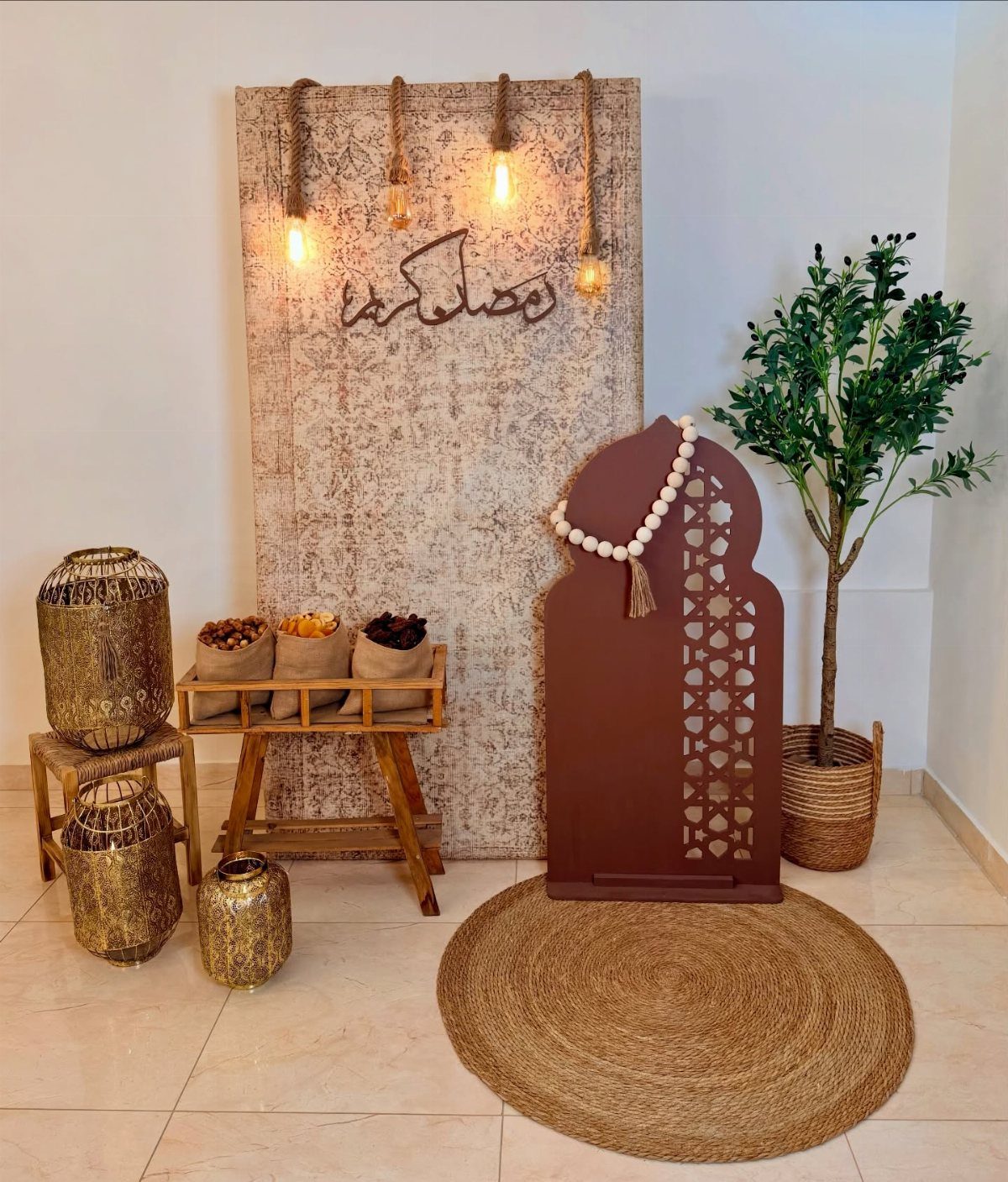
A corner hung with Edison bulbs and filled lanterns turns a blank wall into the softest kind of gathering place.
I like this for renters because the heavy lifting is vertical: a tension rod or removable hooks hold the strand, and the cart below moves when you need the floor back.
Fill lanterns with fairy lights rather than open flame for the same glow without the smoke alarm risk in small spaces.
Mix heights and metals, brass beside weathered wood, so the corner reads collected over time rather than bought in one trip.
This one suits someone who wants atmosphere without a single hole in the drywall.
2. Elegant Table Settings
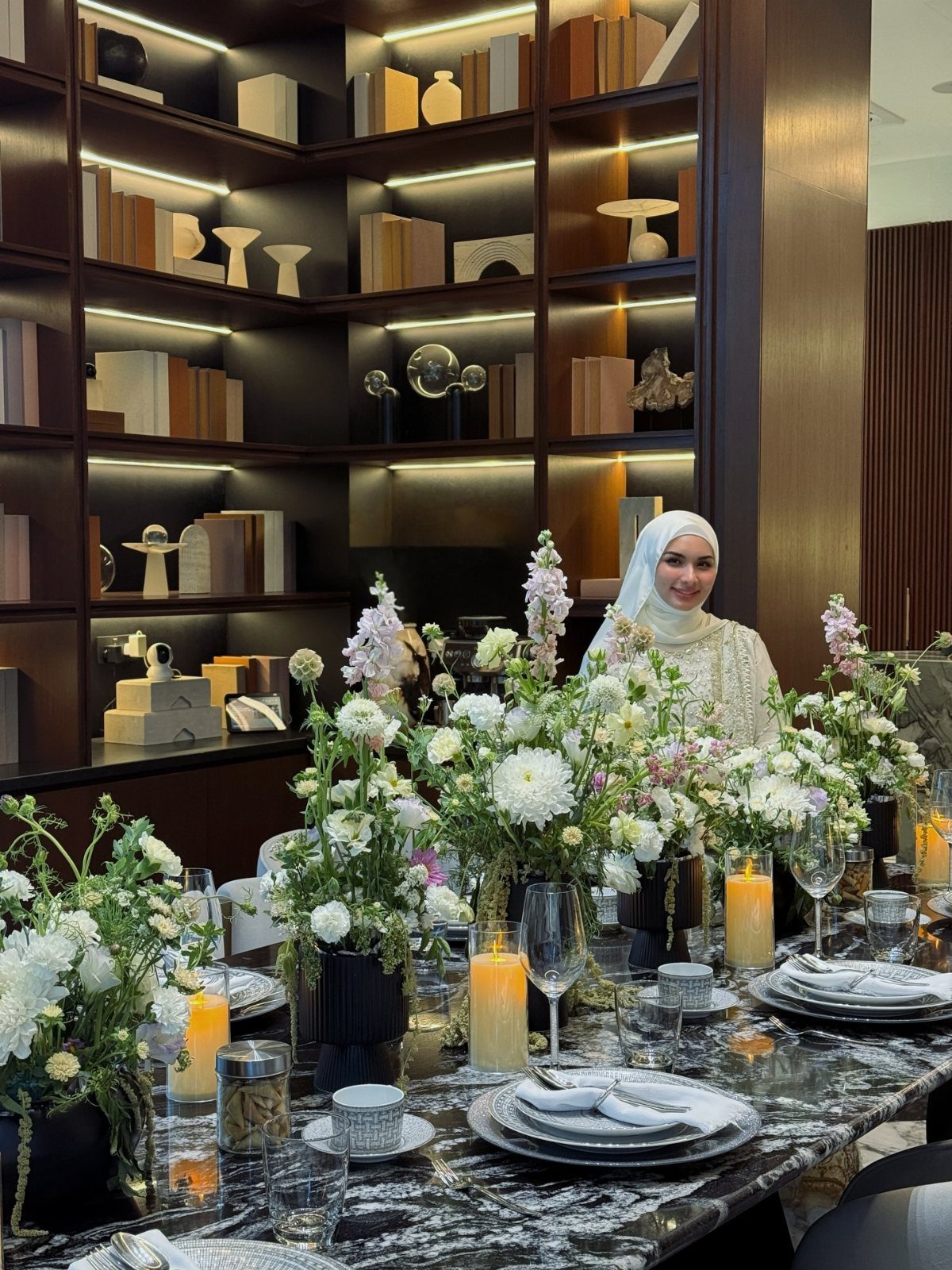
A black marble table dressed in white plates and grey linen sets a tone that feels considered without trying too hard. The reader I have in mind owns no complete service for twelve and does not want to buy one.
Layer what you have: a borrowed tablecloth, plates in mismatched neutrals, then one metallic element that repeats, napkin rings or a single pitcher.
Fresh lilies or roses sit in the center, though at this time of year grocery store roses suffice if you strip the leaves below the waterline.
The trade is time for money. An hour of ironing and arranging does what a matched set would cost.
3. Cozy Dining Space
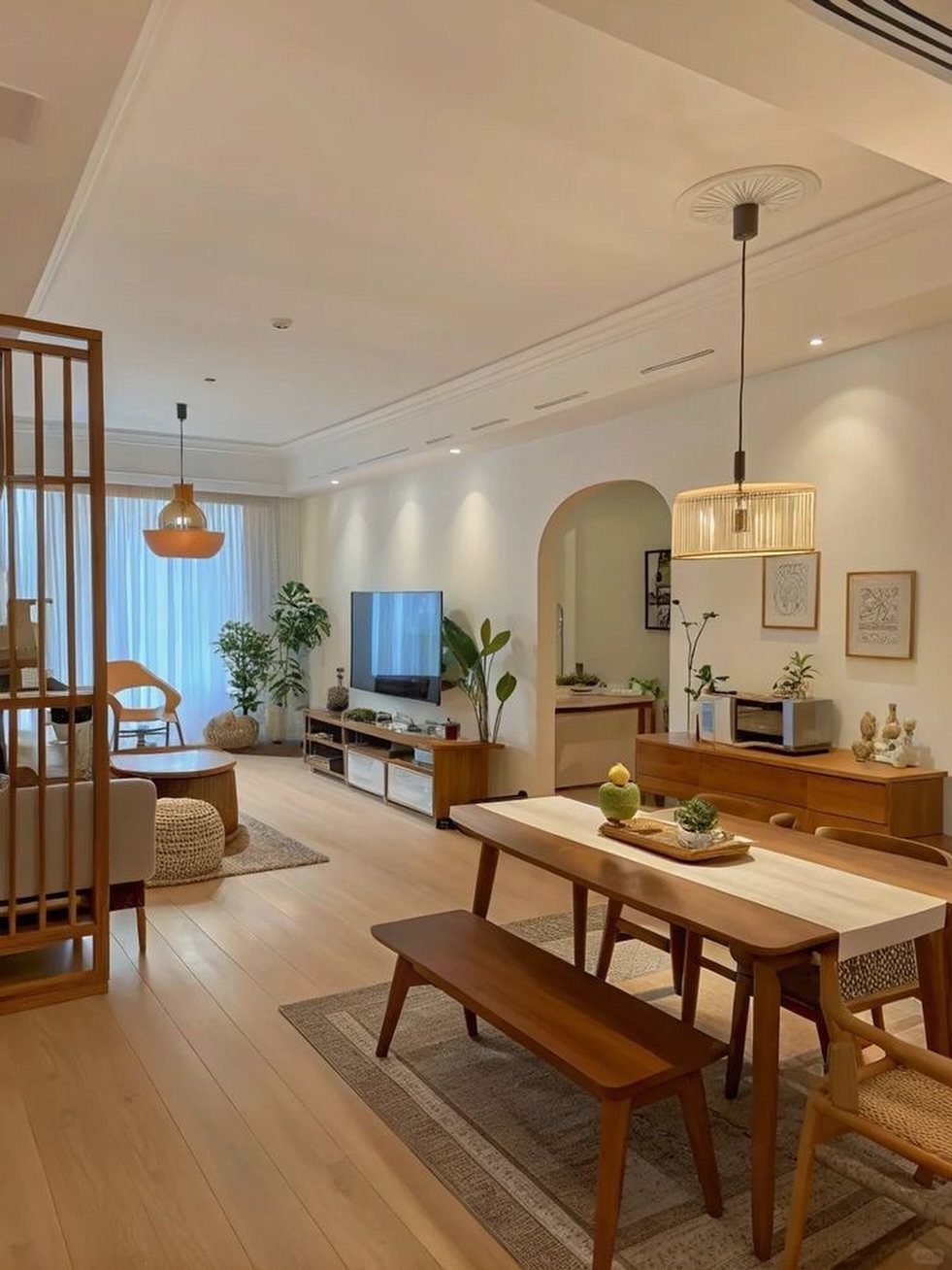
A long wooden table with a bench on one side and chairs on the other already says stay a while, which is what iftar asks of people.
Pendant lamps dropped low enough to pool light on the surface without crowding the conversation above it.
I would add one soft thing the photo does not show: a runner or a folded throw across the bench, something to lean into after the meal.
Soft textiles and elegant settings together make the room, but if the budget only stretches to one thing, spend on the light fixture.
Best for the person whose dining area is also the living area and needs one zone to feel separate.
4. Crescent Moons and Stars
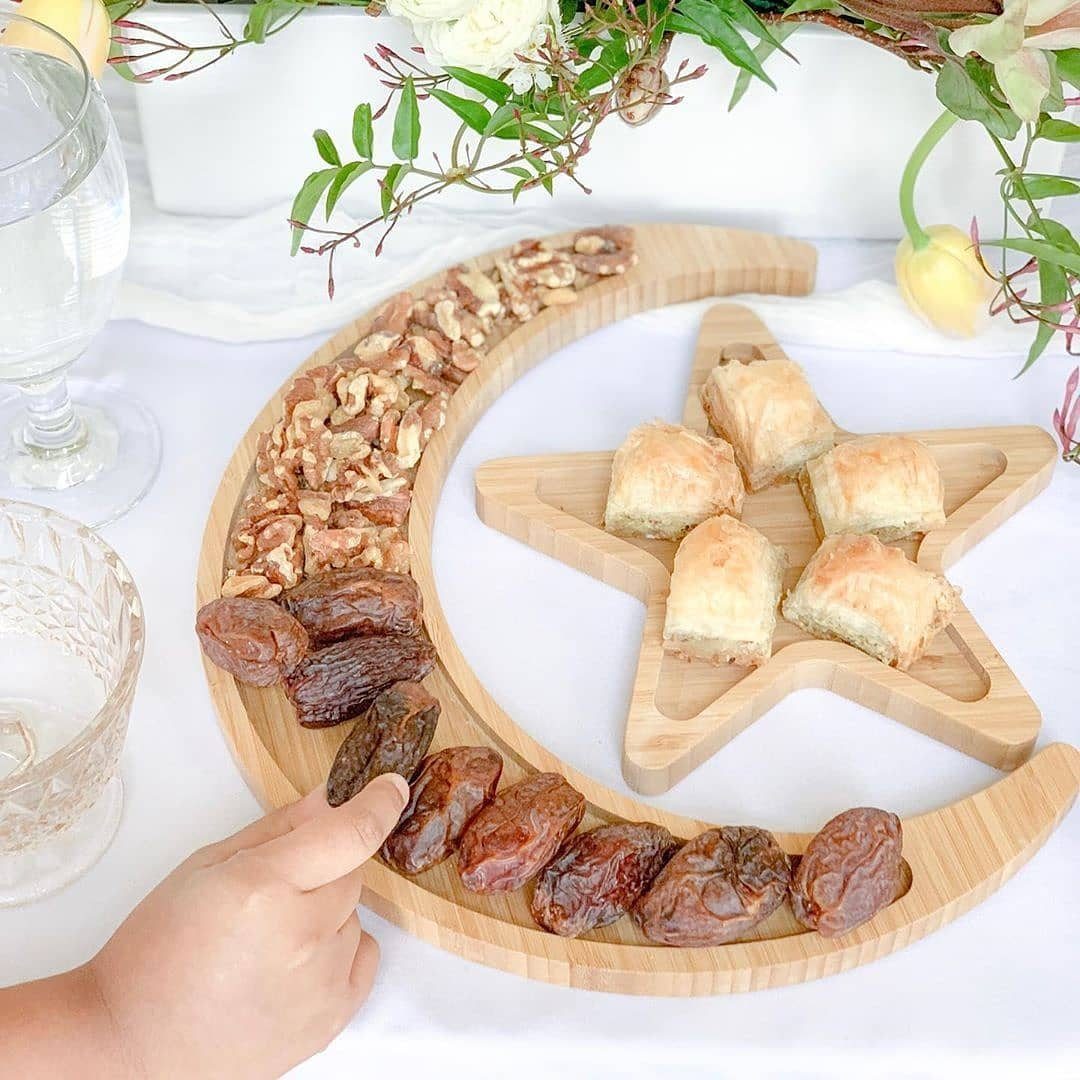
Wooden crescent and star trays holding dates and baklava make the symbol part of the meal itself rather than decoration tacked on afterward.
The shape turns up in serving pieces, which is the easier path for someone mid-project: buy one or cut one from plywood if you have the tools.
Garlands and wall ornaments work too, though combining those with string lights is harder to do well in a small room.
The trays travel from table to sideboard to shelf and mean something each place they land.
A child old enough to handle a brush could stain or paint a wooden version in an afternoon, which answers the notes’ suggestion about involving family without committing to a full craft project.
5. Decorative Cushions and Throws
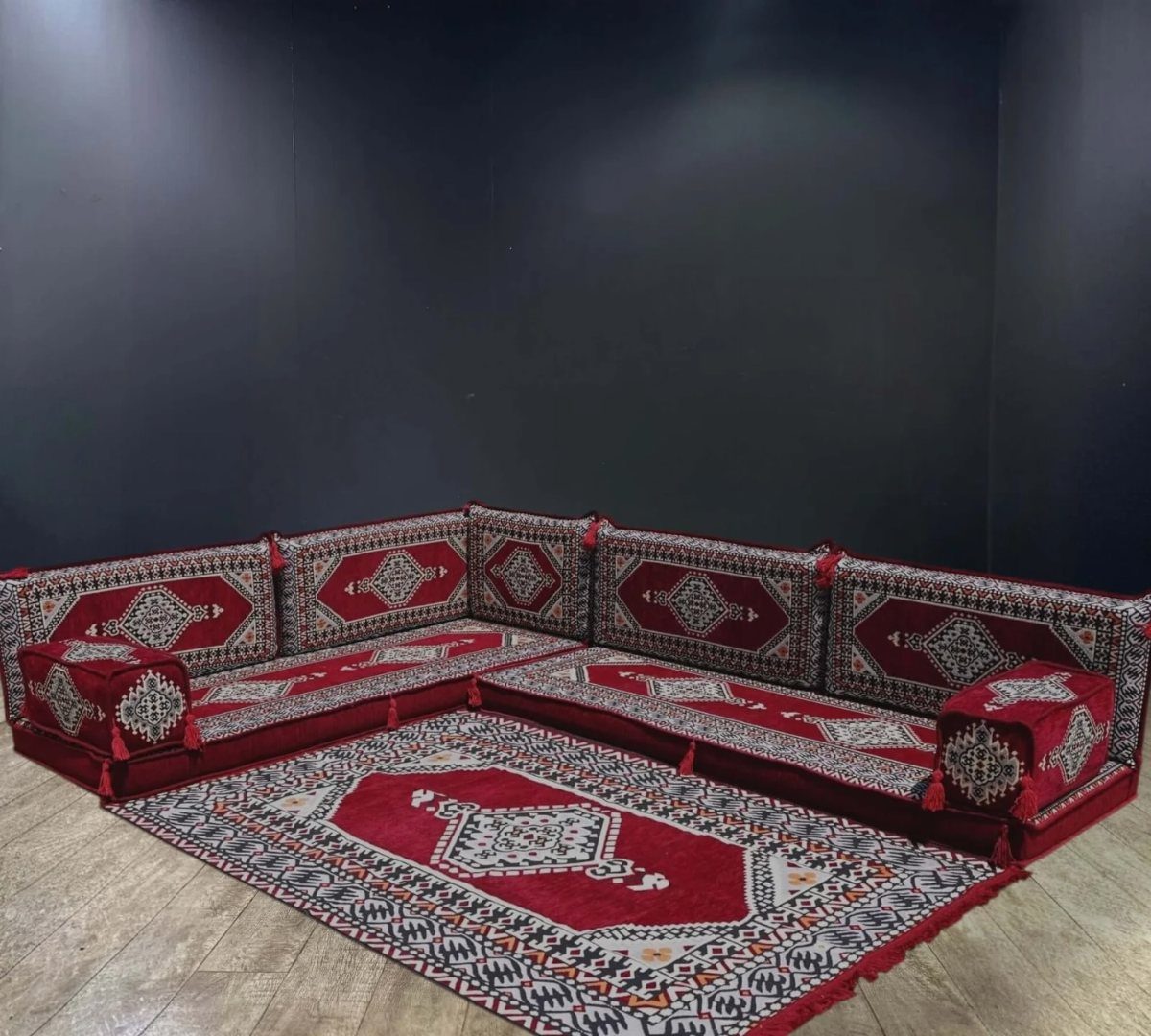
Floor seating with cushions in red and white geometry reads as both festive and lived-in, the kind of space where people actually sit.
Look for covers rather than whole cushions if storage is tight; deep blue and gold are alternatives, though red has more warmth for this purpose.
A throw across the corner hides the seam and invites someone to pull it over their shoulders after the meal.
This trades the formality of chairs for the flexibility of moving pieces, which suits the host who never knows exactly how many are coming.
6. Islamic Art and Calligraphy
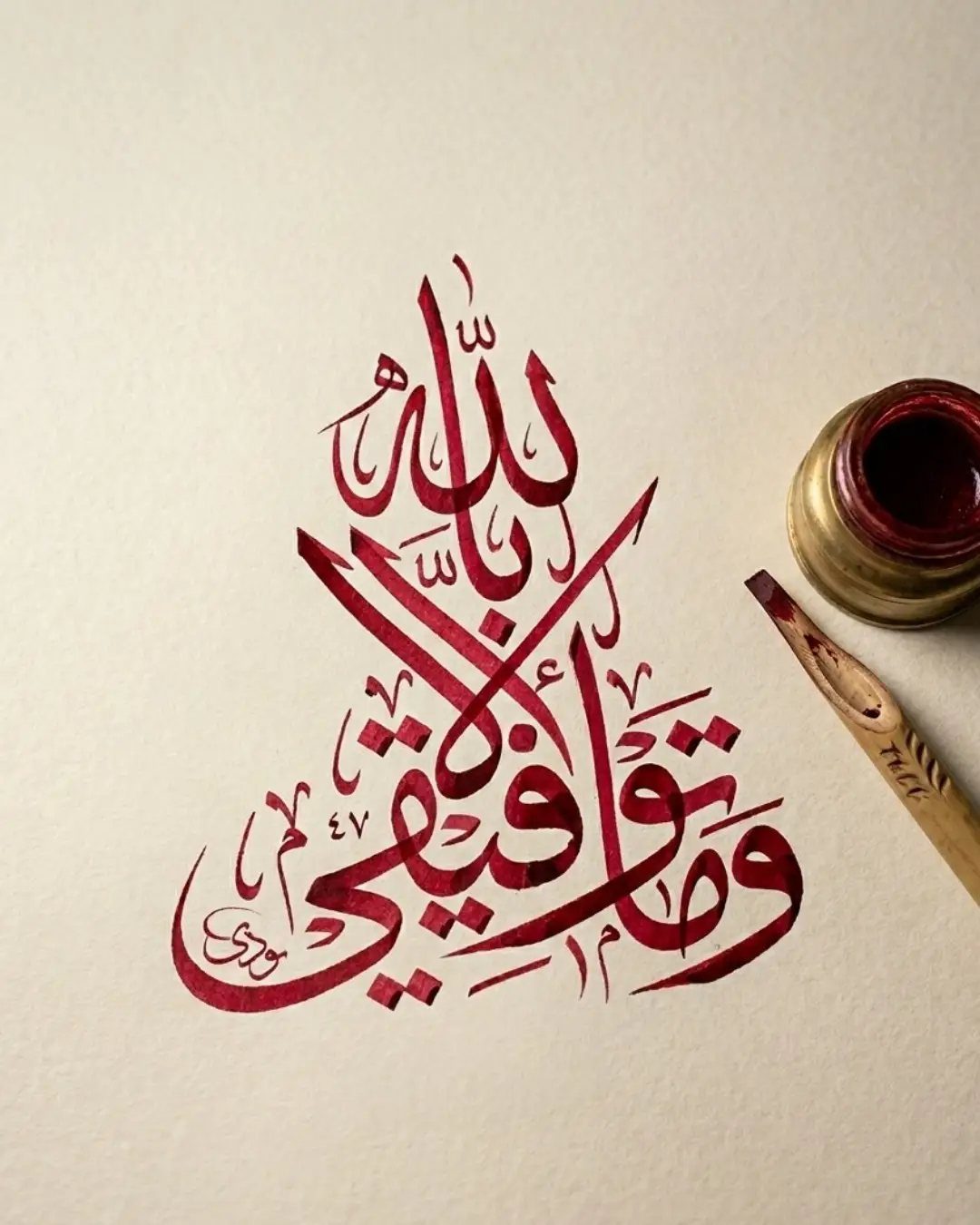
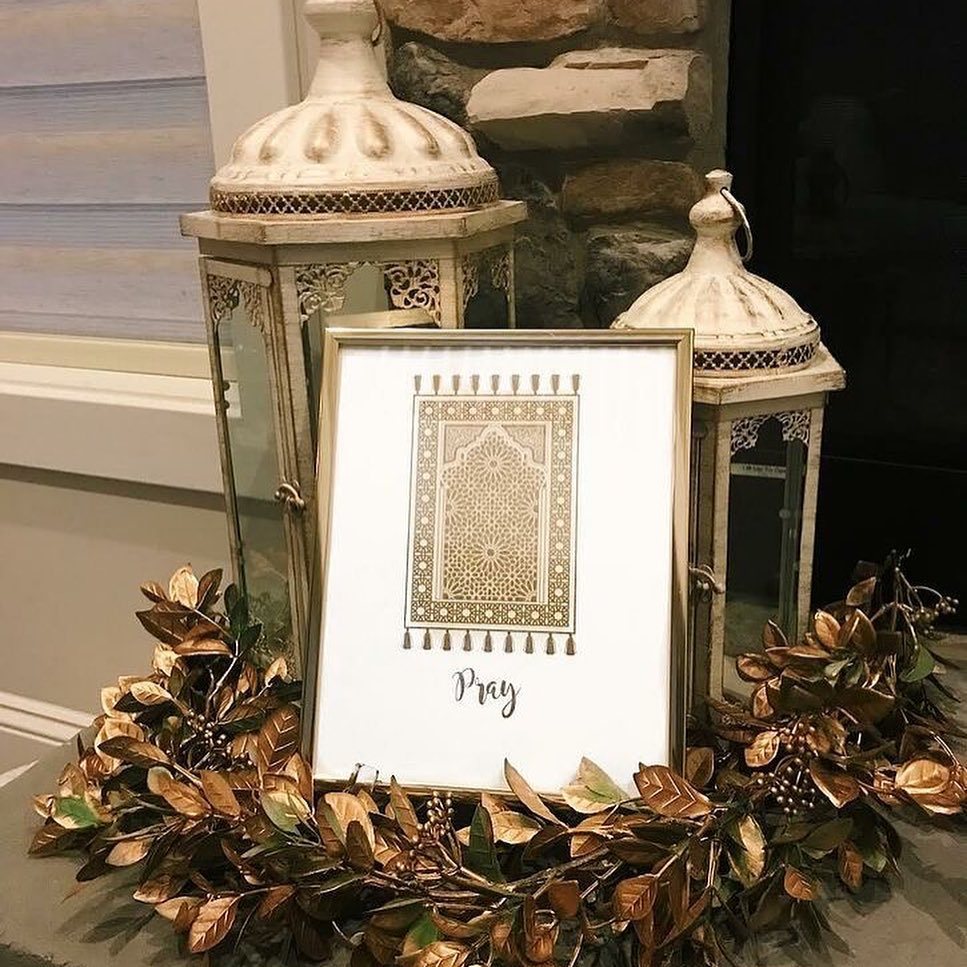
A single piece of calligraphy in brass ink and cream paper brings meaning into a room without shouting, which is the balance I think most readers want.
Framed Quranic verses or phrases in harmonious palettes work well; the frame matters as much as the text, a simple wood or metal border that does not compete.
The visible piece sits beside its tools, a reminder that this is practice as much as product, and a hand-drawn version carries that same spirit if you have the skill or know someone who does.
For those who do not, printed reproductions in a good frame still do the work of turning the eye upward and inward.
7. Scented Candles
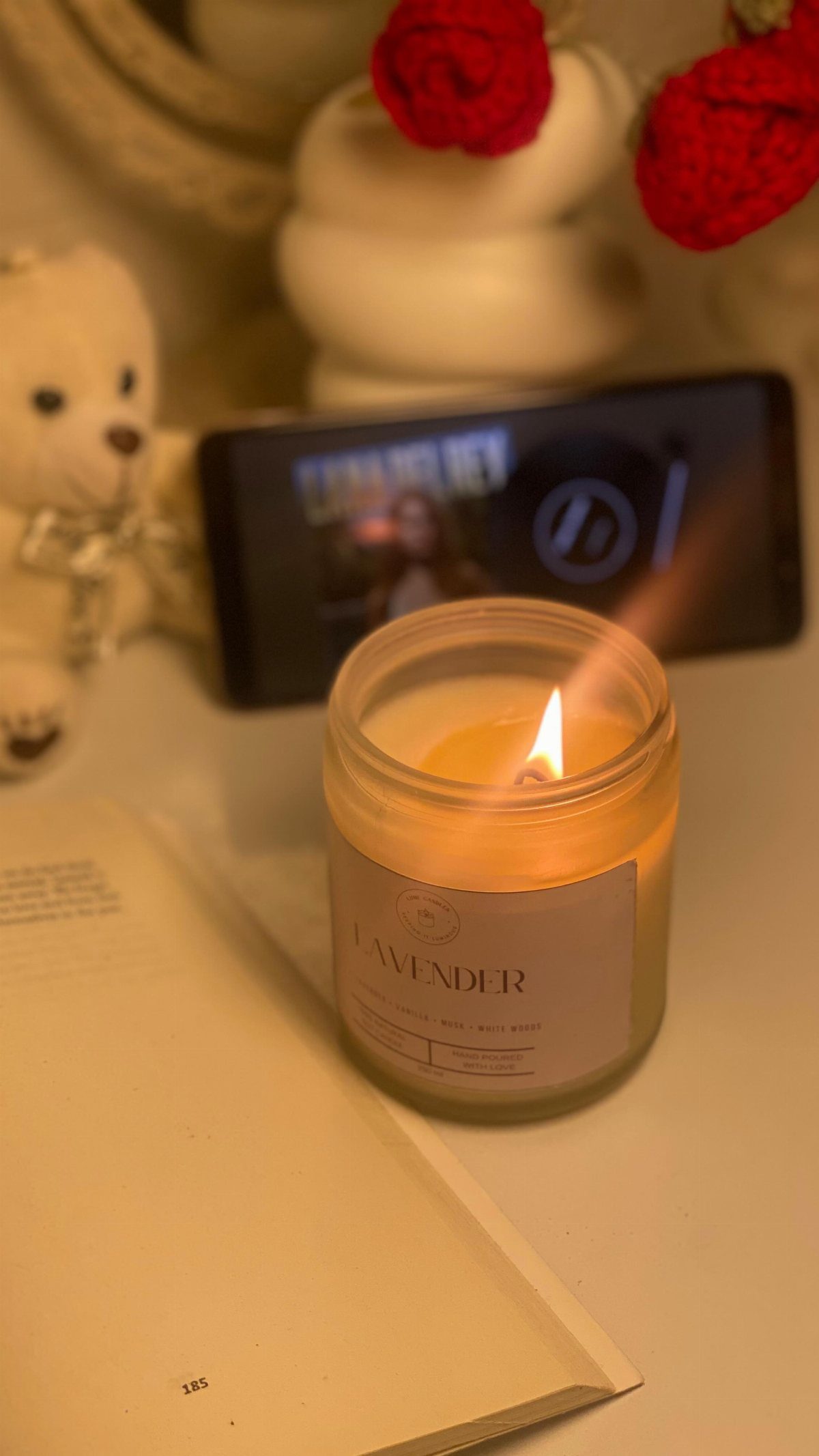
A single lavender candle in a clear glass jar gives a small room its own weather, something calmer than the kitchen smells that follow iftar. I light mine while washing dishes, and the evening feels finished rather than merely over.
Oud or rose would do the same work with a different accent; oud reads heavier, better for a larger space, rose softer and closer to the floral notes already in Middle Eastern desserts.
A candle lasts most of the month if I trim the wick and keep burns short.
The risk is treating scent as background noise: one candle in a closed room is plenty, two in the same air and no one notices either.
Creating a Peaceful Atmosphere
The dining area carries most of the gathering weight during Ramadan, so it pays to think about how people move through it. A well-set table for iftar or suhoor does more than look nice; it signals that this hour matters.
Outdoor spaces need the same care. Hanging lanterns and string lights over a patio or garden carry conversation past the meal itself.
Cushions and throws on outdoor furniture make post-iftar sitting feel natural rather than like an afterthought. Relaxed beats staged every time.
A space that invites people to stay without shouting for attention.
Importance of Lighting
Soft light does the heavy lifting after sunset. Lanterns and candles shift a room from cold to warm without changing a single piece of furniture.
The glow matters more than the fixture.
Ramadan lanterns carry particular weight. Soft light from lanterns and candles makes a room feel warm, and warm feels like an invitation.
The warmth becomes physical. Beauty becomes something guests step into rather than observe.
A welcoming space during this month starts with what the eye reads first: not color, not layout, but whether the light asks people to settle in.
Involving Children in Decor
Kids connect with Ramadan through their hands. A DIY project done together lodges the month in muscle memory, not just calendar memory.
The project itself does not need to be elaborate. Paper lanterns, painted crescents, simple garlands.
The value sits in the doing and the choosing, in a child seeing their own work become part of the household’s observance. They remember the making.
The spiritual and cultural meanings follow.
Personalizing Decorations
A borrowed aesthetic never quite settles.
The decorations that last through a season are the ones that carry something of the people living with them: a color preference that survived three apartments, a textile collected on a trip, a pattern that reads as home rather than trend.
Lanterns work this way too. The same warm glow means something different in each room because of what surrounds it.
Ramadan offers a fixed structure; the filling in is individual. Favorite pieces, chosen accents, a signature that guests recognize before they name it.
The month returns every year. The setup should feel like coming home to yourself.
Often, Ramadan/Eid decoration styles tend to derive from the same region as the origins of the faith – Arabia.
Frequently Asked Questions
What are some good decorations for Ramadan?
Lanterns, crescent moons, and elegant table settings are the ones I return to. Layer mismatched plates with one metallic element that repeats, and the table reads considered without the cost of a complete service for twelve.
Do Muslims put up decorations for Ramadan?
Many do, though the practice varies by household and culture.
The decorations I see most often aim at warmth and gathering rather than spectacle: soft light from lanterns, floor cushions that invite people to stay, a table set with care for iftar or suhoor.
The point is signaling that this hour matters, not creating a showroom.
What are the best Islamic home decor options?
A single piece of calligraphy in brass ink and cream paper brings meaning without shouting, and the frame matters as much as the text. Lanterns and prayer rugs both turn the eye upward and inward.
What are some popular decorations for Eid Mubarak?
Festive table settings, wreaths, and themed decor carry the gathering forward from Ramadan into Eid. The same lanterns and string lights work for both, though Eid tends toward brighter color and more florals.
Pampas and dried flowers mixed with traditional elements make a display more personal; one repeating metallic detail still ties it together.