
You reach for a moving house checklist about eight weeks out, when quotes start coming in and the first box hasn’t been taped yet.
Without one, a screenshot of a mover’s estimate turns out to be the wrong company entirely, or the dispatcher has your street number wrong and you only catch it because you called about parking.
Working through the full timeline takes roughly two months: budget setting and decluttering first, then packing non-essentials, then the final scramble of labels, confirmations, and the essentials box that keeps you from buying a second phone charger at 11 p.m.
Two Months Before
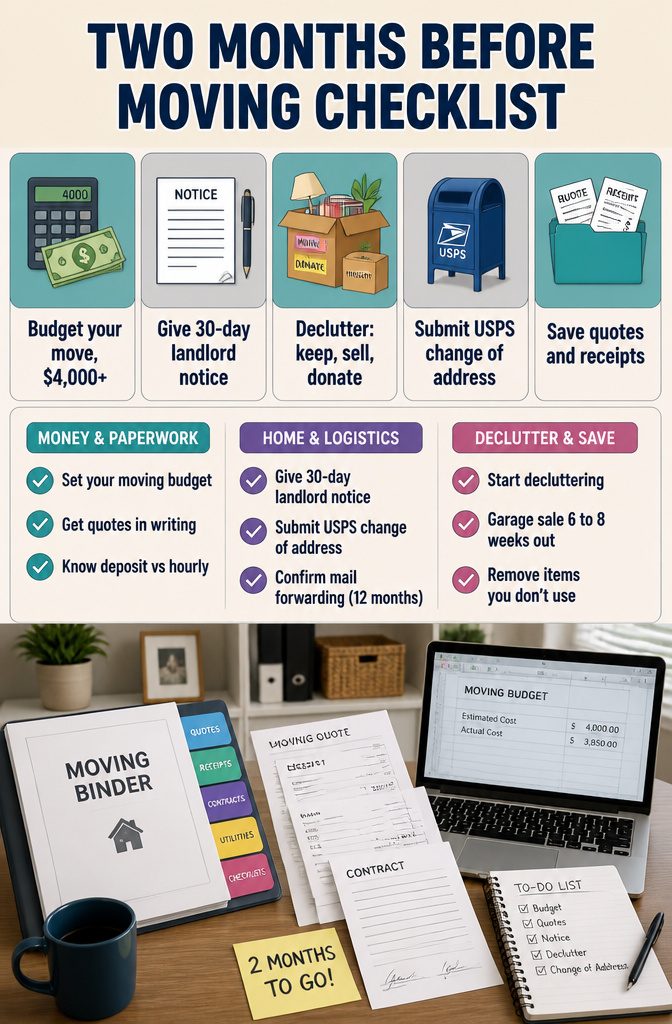
Two months out is when the money gets decided and the paperwork starts.
I learned this the hard way on my last move, when a quote I thought I saved as a screenshot turned out to be from a different company entirely.
A moving binder, digital folder, or app keeps quotes, receipts, contracts, and utility confirmations in one place.
Screenshots and PDFs saved to a dedicated album on your phone beat digging through email threads when a mover changes a pickup time or an overcharge shows up.
The average long-distance move runs about $4,000, while an intrastate move averages $1,500. Set your budget now, before you start calling companies.
Some movers require deposits; others charge by the hour. Get the numbers in writing and know which is which.
This is also the window to:
- Give your landlord 30-day notice if you’re renting
- Begin decluttering into keep, sell, donate, and discard piles
- Submit your USPS change-of-address for mail forwarding, which lasts 12 months
A garage sale six to eight weeks before moving day cuts the clutter that would otherwise add cost and packing time. The stuff you do not use is the stuff you should not pay to move.
One Month Before
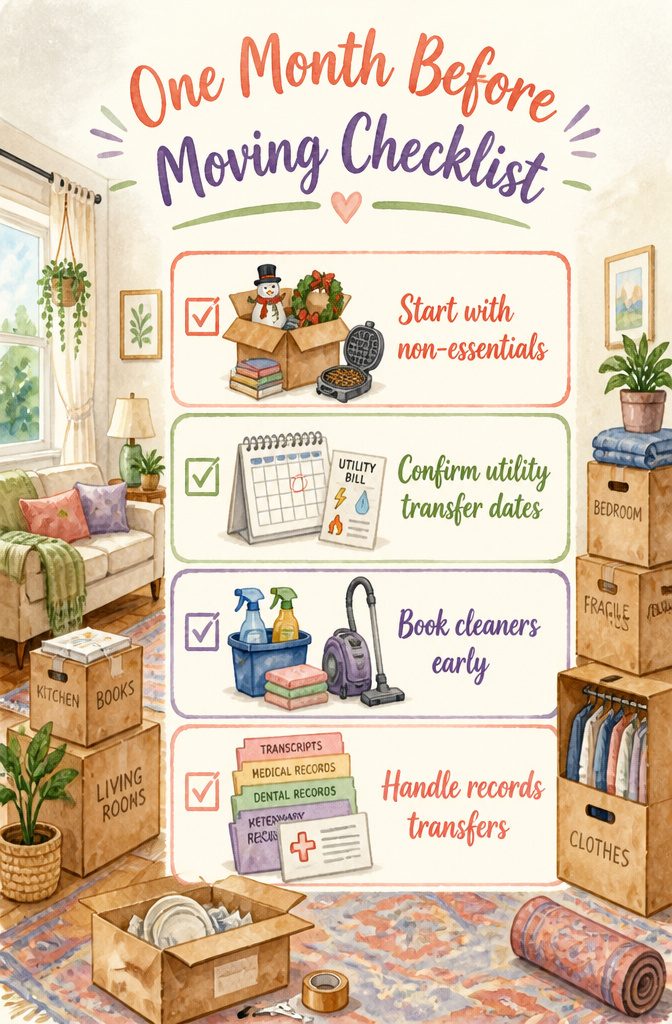
The packing phase starts with the things you touch least.
- Start with non-essentials: seasonal decorations, books, the waffle iron, anything you won’t need before you unpack again. Boxes run $1–$4 each at hardware stores; specialty boxes for TVs or mirrors run $20–$40. I buy the cheap ones for books and the single-wall cardboard for dishes, then splurge on one wardrobe box so clothes arrive wearable.
- Confirm utility transfer dates now, not the week of. A gap means paying for two places or sitting in the dark; overlap beats scramble every time.
- Book cleaners early if you’re using them. Move-out slots fill fast, and rugs and draperies should be cleaned before they go; most cleaners return them wrapped, ready to stay packed until the new place.
- Handle school and medical record transfers this month, not after you’re gone. For a long-distance move, this matters more; insurance networks change, and you may never contact the same institutions again. Request copies of transcripts, medical records, dental records, and veterinary records directly, then follow up to confirm they sent.
Two Weeks Before
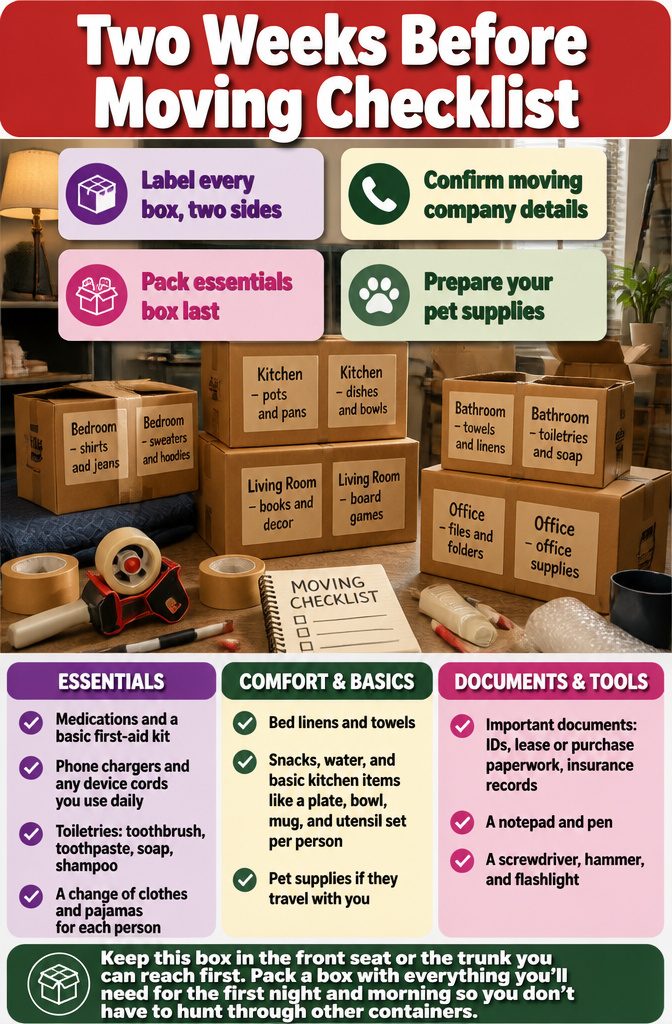
The last two weeks are where a move locks in or unravels.
Most of my own close calls happened here, and almost all of them traced back to one of three things: boxes without labels, a moving company that thought we were next Thursday, or the realization at 11 p.m. that my phone charger was at the bottom of a stack in the truck.
Finish packing with labels on two sides of every box, not the top. Movers stack, and the top becomes invisible.
Write the room and the contents: "Kitchen — pots and pans," not just "Kitchen." Color-coding by room speeds up unloading, but the words matter more.
Call the moving company to confirm the date, arrival window, and your address.
Ask for the driver’s direct number. One of my moves nearly derailed because the dispatcher had the wrong street number, and I only caught it because I called to ask about their parking policy.
Pack the essentials box last, and load it into your own car, not the truck. Here is what goes inside:
- Medications and a basic first-aid kit
- Phone chargers and any device cords you use daily
- Toiletries: toothbrush, toothpaste, soap, shampoo
- A change of clothes and pajamas for each person
- Bed linens and towels
- Snacks, water, and basic kitchen items like a plate, bowl, mug, and utensil set per person
- Important documents: IDs, lease or purchase paperwork, insurance records
- A notepad and pen
- A screwdriver, hammer, and flashlight
- Pet supplies if they travel with you
Keep this box in the front seat or the trunk you can reach first. Pack a box with everything you’ll need for the first night and morning so you don’t have to hunt through other containers.
One Week Before
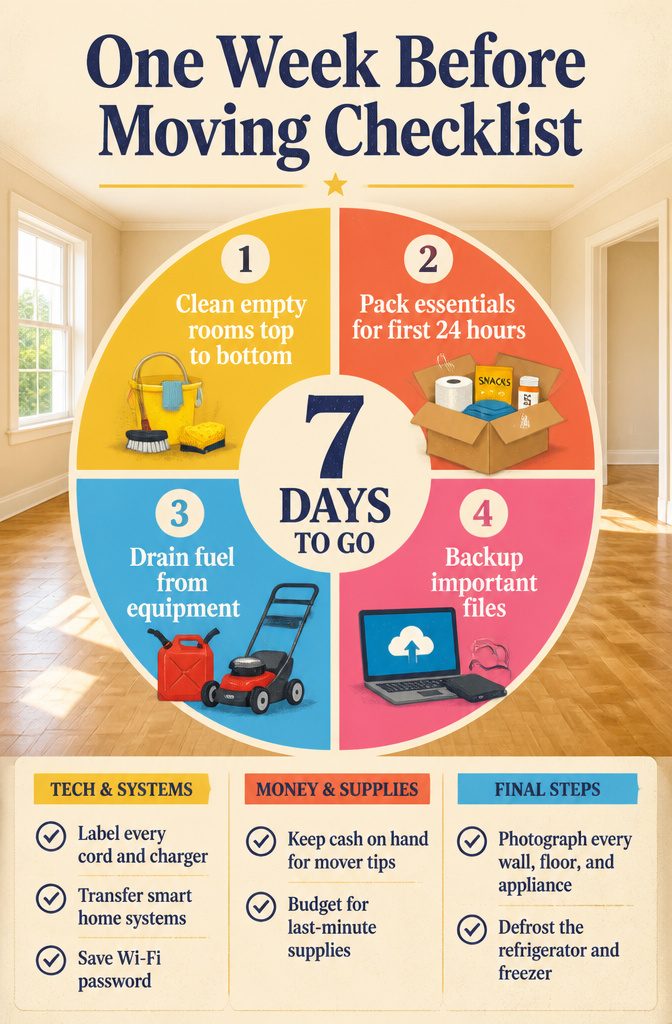
The last seven days are where the details you meant to handle earlier either get done or get expensive. I usually find one box I never labeled and one cabinet I never emptied.
- Clean the empty rooms in order, top to bottom, so you are not tracking dust back into spaces you finished. Fill nail holes with putty and touch up nicks before the final vacuum; landlords notice walls first, and buyers photograph them.
- Pack a single essentials box for the first twenty-four hours: toilet paper, snacks, phone chargers, prescriptions, and a change of clothes. Tape it shut last and load it last so it comes off first.
- Drain oil and gas from lawn mowers, snow blowers, and any other fuel-powered equipment. Turn off the grill tank and disconnect it; movers will not take pressurized containers.
- Back up files, label every cord and charger, and transfer smart home systems before you unmount devices. Save your Wi-Fi password somewhere you will not lose it in the shuffle.
- Keep cash on hand for mover tips and last-minute supplies. The amount is up to you, but having nothing on you when the truck is loaded is a bad position.
- Photograph every wall, floor, and appliance in your old place after cleaning. Documentation protects your security deposit or closes a sale without argument.
- Defrost the refrigerator and freezer the night before; lay a towel underneath so the floor does not stain.
Moving Day
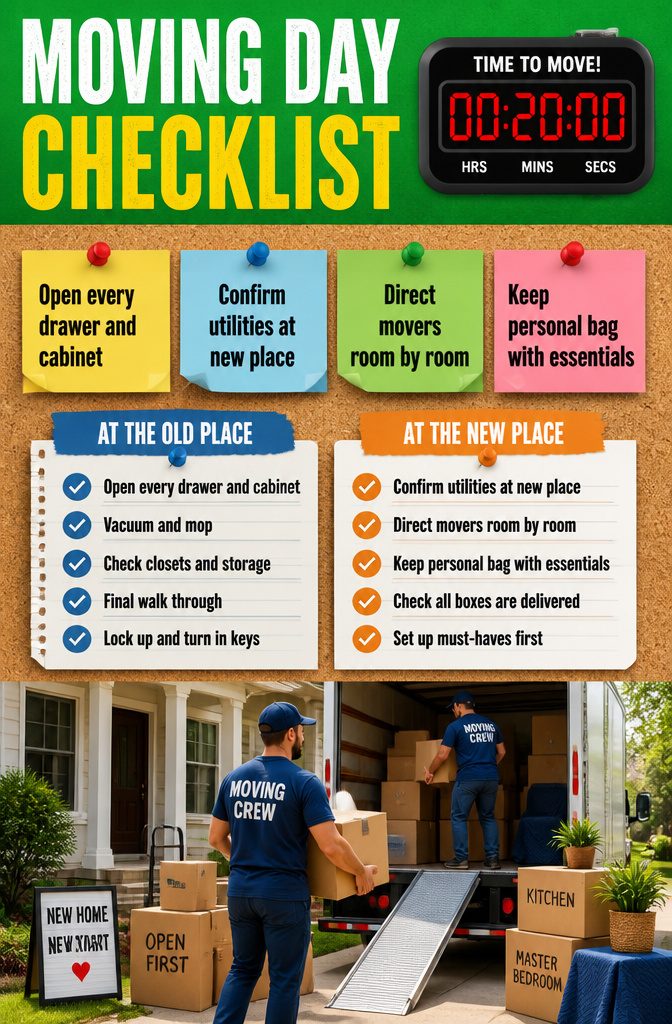
The kitchen was where I found the phone charger I’d already replaced once. That last walk through every room costs maybe twenty minutes and saves the cost of buying everything twice.
- Open every drawer and cabinet, even the ones you never use. Check the top shelf of closets, the back corner of the garage, and any outdoor storage before you lock up for good.
- Confirm utilities are live at the new place before the truck arrives if you can swing it. Nothing stalls a move faster than a dark house and no running water when the crew shows up.
- Direct the movers room by room as they load. Heavy furniture toward the front of the truck, boxes labeled "open first" where they come off last. The load order decides what your evening looks like.
- Keep a bag with IDs, medication, toiletries, bedding, snacks, and pet food on your person, not in the truck. You’ll need it before you find the box marked "master bedroom."
- Vacuum and mop once the house is empty. Baseboards and crevices matter if you want your security deposit back or just want to leave the place decent for whoever comes next.
After Moving In
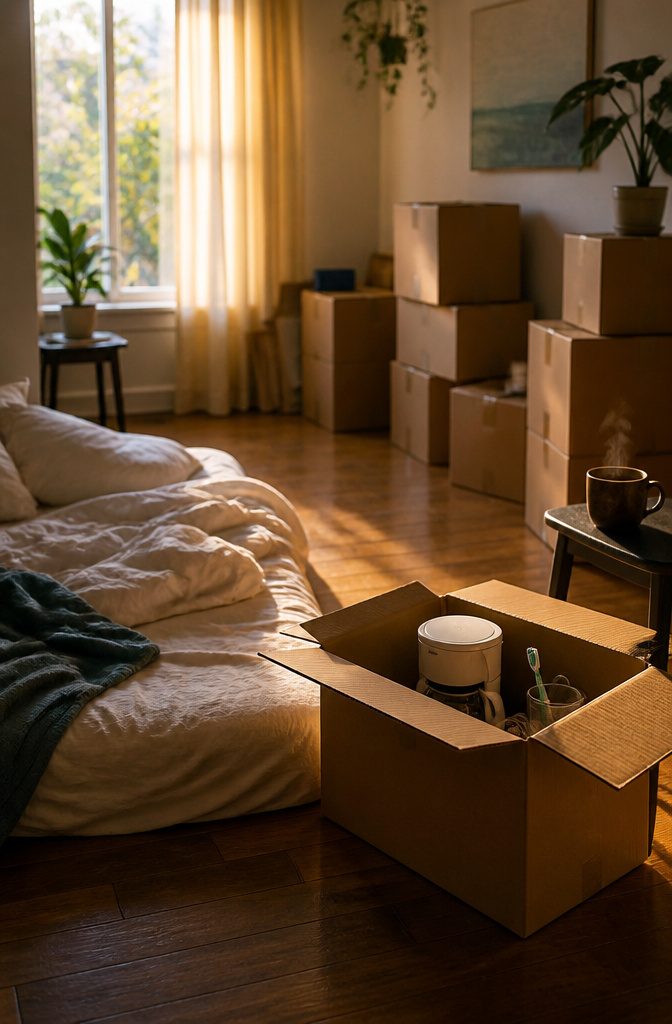
The first night in a new place, the mattress is on the floor and the toilet paper is who-knows-where. An "open first" box keeps this from becoming a midnight rummage through the truck.
Mine held toothbrushes, phone chargers, bed linens, a change of clothes, basic tools, and the coffee maker. The coffee maker mattered most.
After that box comes security. Changing the locks takes an hour and about thirty dollars in hardware.
You cannot know how many spare keys the previous owners handed out to neighbors, dog walkers, contractors. I did this before the first grocery run.
Then the administrative reset.
USPS forwarding handles the mail for twelve months, but it does not reach your bank, your insurance provider, your employer, your cell carrier, or your doctor’s office. Each needs its own update.
I knocked out the financial and medical ones first, then worked through memberships and delivery services. The whole list took two evenings.
Utilities should already be live, but confirm they are in your name, not the previous occupant’s. Internet and cable are the usual delays; schedule the technician as early as the company allows.
By day three, the beds are assembled, the coffee is in the right cabinet, and the place starts feeling less like a storage unit and more like yours.
What I Pack First and Last
The six-week mark is when most moves start to go sideways, because that feels too early until suddenly it is not.
Start with guest bedrooms, seasonal gear, and anything decorative; these are the rooms you can seal up without touching your daily routine.
I learned that the hard way during my last move, when three weeks out I was still staring at a fully decorated bookshelf I had not touched.
Kitchenware, toiletries, and a couple days’ worth of clothes stay out until the final day.
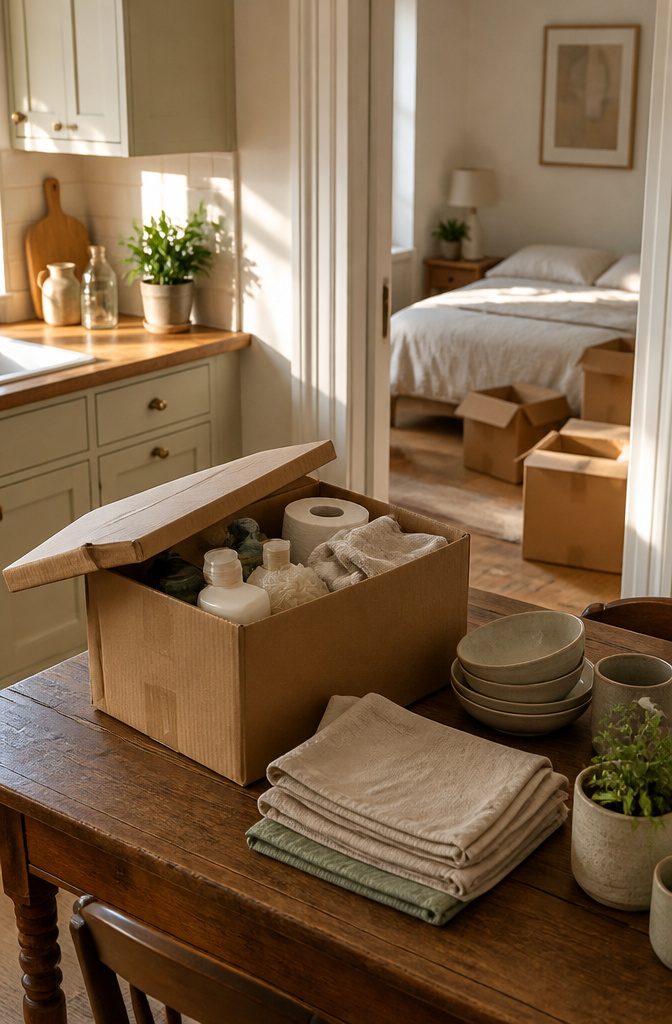
The real lifesaver is the essentials box, labeled clearly so it does not disappear into the stack. Mine held bed linens, basic tools, chargers, medications, and a change of clothes.
The firstam list also includes toiletries, snacks, water, important documents, and pet supplies if they apply; U-Haul narrows it to IDs, medications, chargers, toiletries, basic kitchen items, snacks, water, pet supplies, and a few changes of clothes.
Either framing works, but the box only works if you treat it as the single thing you open before sleep on moving day.
Where the two approaches split is order of attack after that box.
Rocket Mortgage suggests setting up primary bedrooms, kids’ rooms, or home offices first to re-establish routine. U-Haul puts beds, bathroom supplies, and Wi-Fi ahead of kitchen basics if you are cooking that night.
For a renter on a weekend timeline, beds win. A made bed changes the feel of the place before a single picture is hung.
Pets and Kids on Moving Day
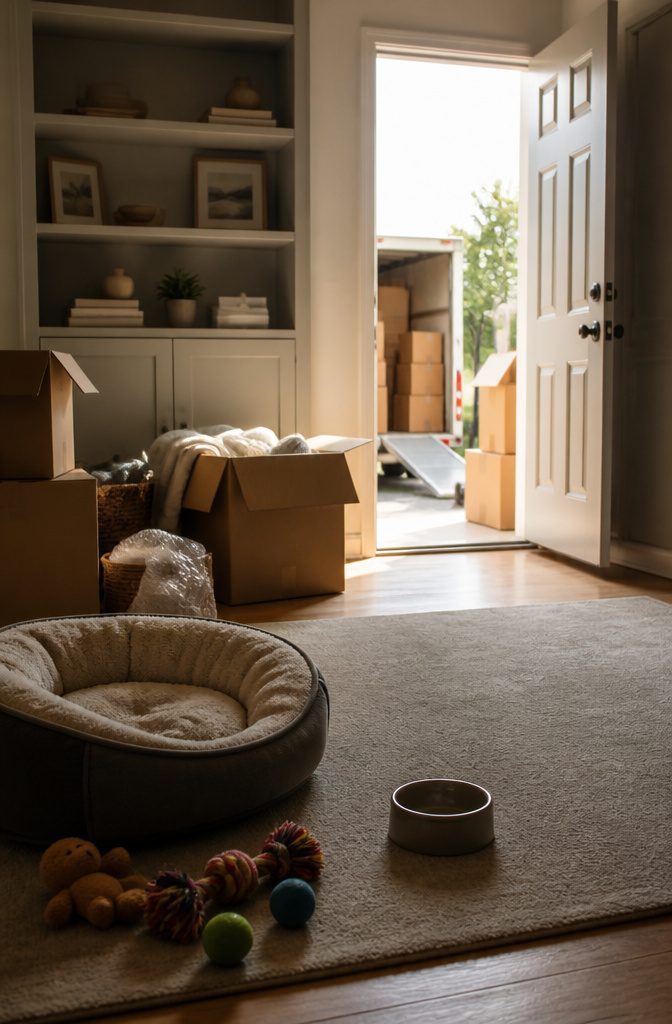
The movers will have your front door wedged open for hours, which is exactly when a dog decides the neighbor’s azaleas need inspecting.
Send pets to a friend or family member’s house for the full day; boarding works too, but get them out of the traffic path entirely.
I learned this after my sister took mine in, though not before twenty minutes of panic and a guilty bouquet for the neighbors.
Kids need the same separation. A cleared path through the house does nothing to stop a toddler from running toward the moving truck because they heard the ramp clang.
If you cannot arrange off-site care, designate one closed room as the safe zone and rotate a responsible adult inside it. The person directing movers cannot also be the person pulling a child out from under a dolly.
Hydration and breaks matter for the humans doing the lifting, not just the ones being lifted.
Keep a first-aid kit where the kitchen boxes aren’t blocking it. Small injuries happen when people are rushing around furniture; knowing where the bandages are saves the ten minutes of tearing open "Kitchen / Fragile" to find them.
Frequently Asked Questions
What should I include in my moving house checklist?
A moving house checklist should cover timelines for packing, transportation reservations, utility transfers, address changes, budgeting, cleaning, and move-in preparation. Two months out, focus on quotes, contracts, and decluttering.
One month before, start packing non-essentials and confirm utility dates. In the final two weeks, label boxes, confirm mover details, and pack an essentials box.
How far in advance should I start packing?
Start packing about six weeks before moving day, beginning with items you use least.
Guest bedrooms, seasonal decorations, and decorative pieces go first; kitchenware, toiletries, and daily clothes stay out until the final day. This staggered approach keeps your routine intact while cutting last-day pressure.
What should go in an essentials box?
An essentials box holds medications, phone chargers, toiletries, a change of clothes and pajamas per person, bed linens, towels, snacks, water, basic kitchen items, important documents, a notepad and pen, and basic tools like a screwdriver and flashlight.
Pack it last, keep it in your car not the truck, and label it clearly so it does not disappear into the stack.
What are 12 items I should throw away before moving?
Common candidates include expired pantry items, worn-out linens, broken gadgets you never fixed, duplicate kitchen tools, clothes you have not worn in a year, and anything that would cost more to move than replace.
A garage sale six to eight weeks out helps clear the excess before it adds weight to your bill.
In what order should I pack my house to move?
Pack room by room, starting with spaces you use least.
Guest bedrooms, seasonal gear, and decorative items seal up first without disrupting daily life. Move next through books, off-season clothes, and occasional-use kitchenware.
Save kitchen essentials, toiletries, and a few days of clothing for the final day. Color-code or label every box by room and contents on two sides, not just the top.
What documents do I need to change when I move house?
USPS forwarding handles mail for 12 months but does not reach banks, insurance providers, employers, cell carriers, or doctors.
Each needs its own address update. Also update government benefits like Social Security and Veterans Affairs within 10 days, transfer or obtain new homeowners insurance, update your driver’s license, and redirect monthly subscriptions.