
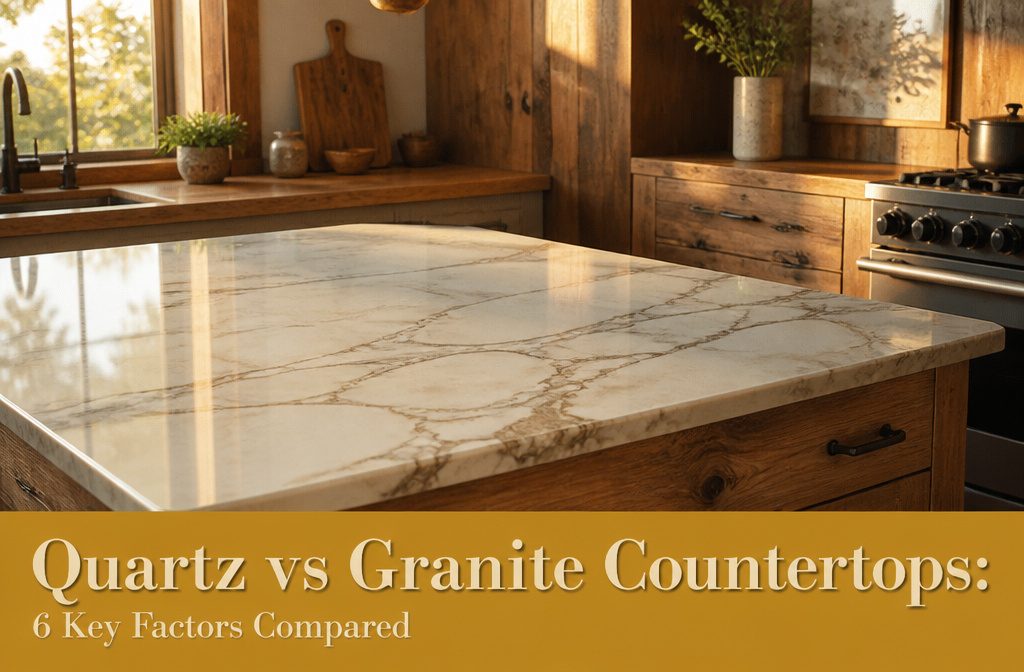
Quartz wins for anyone who wants a low-maintenance kitchen and does not set hot pans down directly.
Granite pulls ahead if you cook hard, use your counters as landing zones for 450°F roasting pans, and do not mind resealing every year or two.
The 300°F ceiling on quartz is not theoretical; I have heard the crack a half-second too late.
Appearance
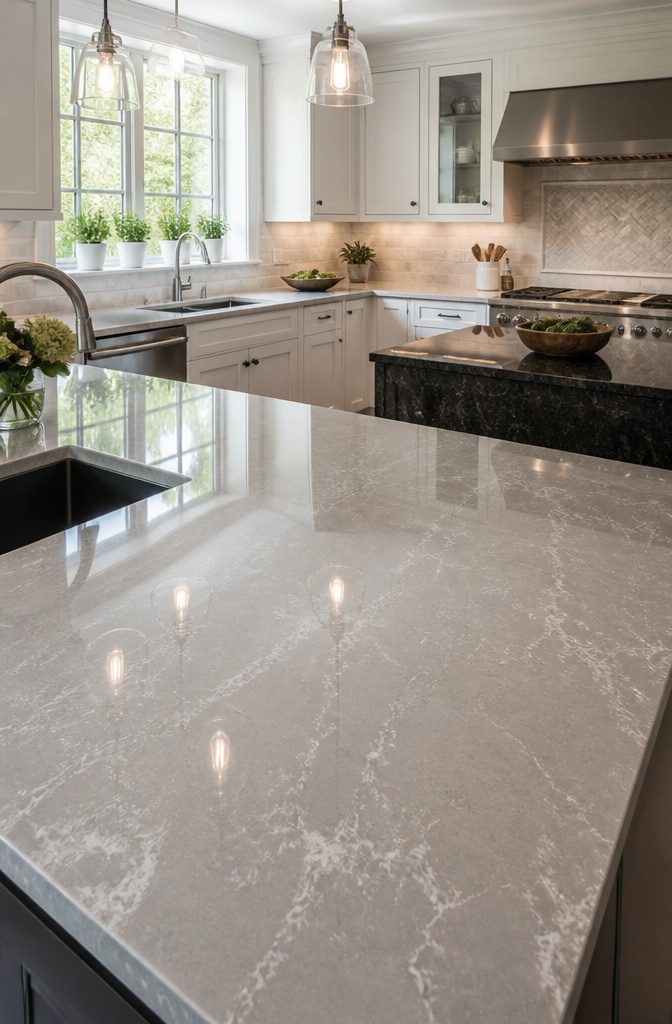
Quartz gives you a uniform surface with consistent color and pattern, which makes it easier to match from sample to full slab.
The manufacturing process blends ground natural quartz with resins and pigments, so you get a wider range of colors than granite typically offers, including solid tones that read more modern.
Granite carries the variation of actual stone.
Each slab comes with its own veining, flecks, and movement; no two pieces are identical. That uniqueness can feel like a feature or a gamble, depending on your tolerance for surprise.
One thing to watch: a small granite sample in the store may look quite different from the full slab that arrives, so ask to see the actual stone before it gets cut.
For renters and first-home owners scrolling Pinterest for kitchen inspiration, the choice often breaks along style lines. Quartz suits a clean, contemporary look or a large island where consistency matters.
Granite fits traditional kitchens or anyone drawn to natural, earthy patterning. Both are genuinely attractive in person; the question is whether you want your countertop to anchor the room or blend into it.
Durability
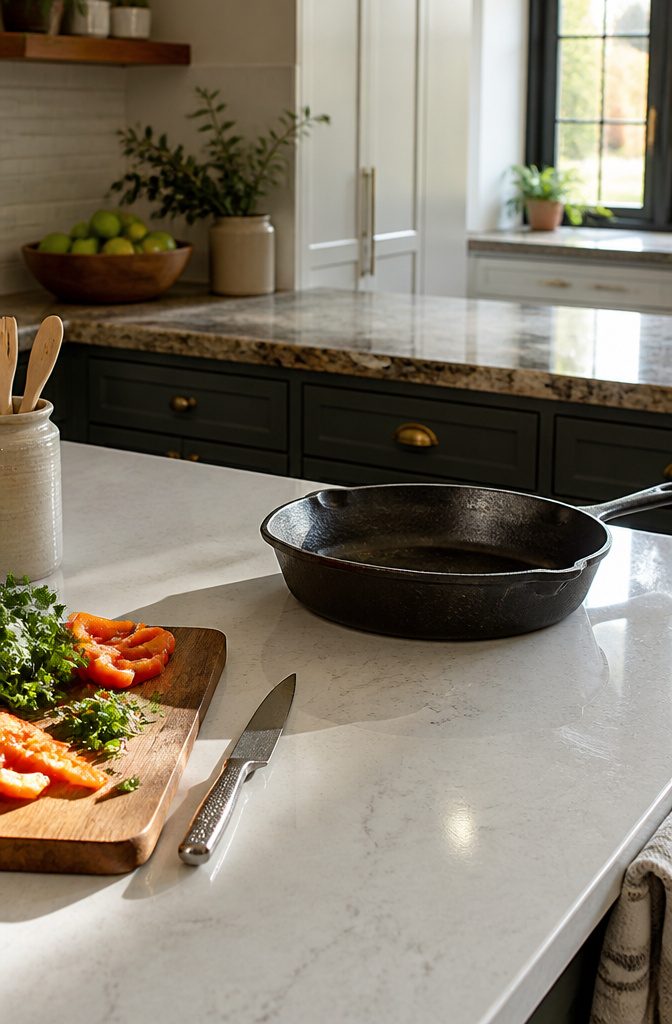
Quartz countertops carry 93 to 95 percent ground natural quartz bound with resin, and that engineered mix shows up most clearly under abuse.
A dropped cast-iron skillet that chips a corner off granite will often glance off quartz, the slight flex from the resin absorbing impact that cracks solid stone.
Daily life matters more than lab tests here: kids with juice boxes, the heavy stockpot that slips, the corner of a baking sheet swung too fast.
Scratch resistance runs closer than sources sometimes admit. Granite can dull a knife dragged across it, which tells you something about its surface hardness.
Quartz resists fine scratches from the same abuse, though dragging metal or glass across either surface is a habit worth breaking. Neither material forgives careless treatment forever.
The real split is structural. Granite is 100 percent natural stone, porous and rigid; seal it yearly and it lasts decades, but skip that maintenance and stains creep in along with weakness.
Quartz needs no sealing, its non-porous body shrugging off red wine or oil that would etch into neglected granite.
Both survive ordinary kitchens for twenty years or more. The difference is what "ordinary" means in your house: impacts and skipped maintenance favor quartz; open heat and a tolerance for annual upkeep keep granite competitive.
Maintenance
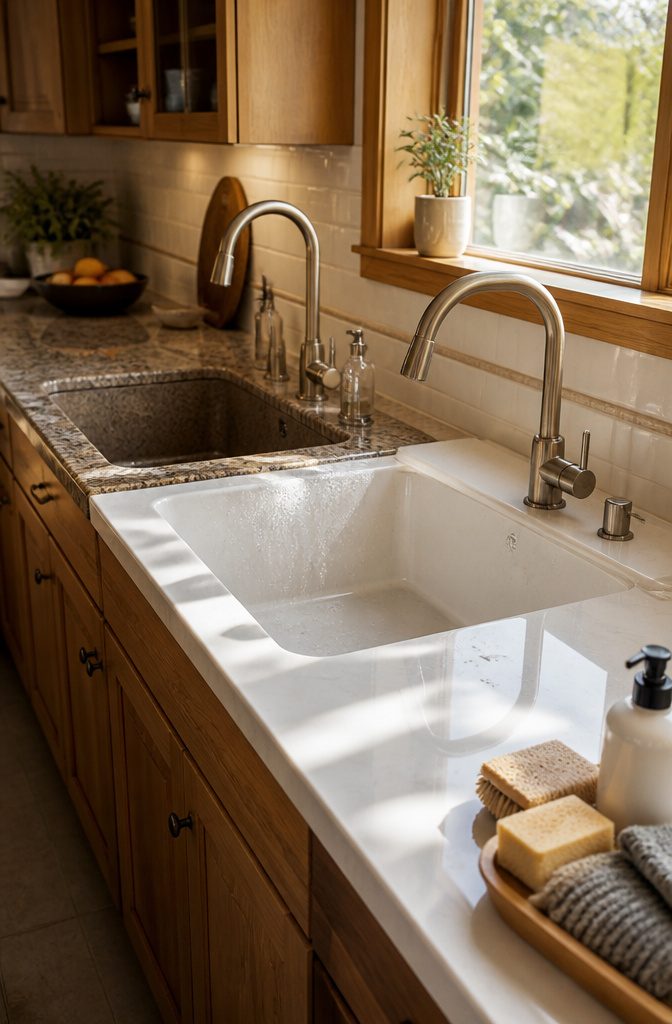
Quartz ships from the factory already non-porous, which means the maintenance stops at soap and water.
Granite arrives sealed, but that factory finish wears and the stone opens up. Plan on resealing granite every one to two years, more often if the surface sees heavy use or if the slab is light-colored and porous.
Skip the sealing and oil, wine, and juice seep in fast. The stains do not lift with scrubbing because they have settled below the surface, and repair runs more than routine upkeep ever would.
A bottle of premium stone sealer costs roughly $30 to $50 and covers a standard kitchen with some left for the bath.
The job itself takes an evening: clean, dry, apply, wait, wipe. Not hard, but it is a recurring task that quartz simply does not ask for.
For a weekend-project household, that difference matters. One material stays done after install; the other adds a calendar item and a small recurring cost.
Cost
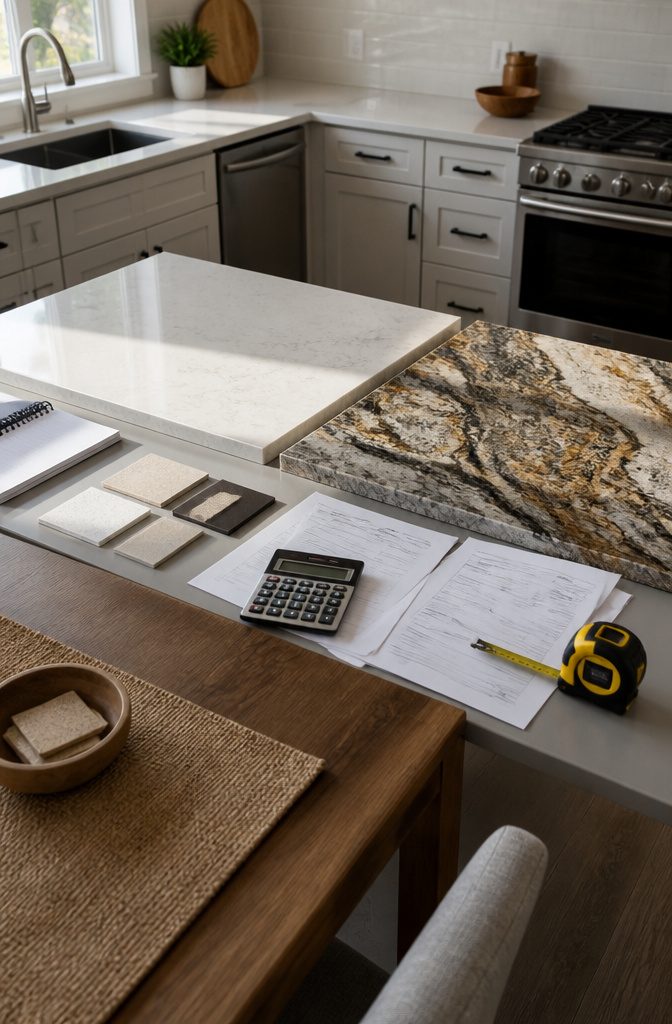
Installed prices for quartz run $50–$200 per square foot, while granite lands at $60–$225. That overlap surprises people who expect one material to clearly undercut the other, but both have bargain tiers and showpiece slabs that push the top of the range.
Entry-level quartz and common granite colors both start around $50–$70 per square foot.
What drives granite past $150 is rarity: a slab quarried from a single remote vein, or one with dramatic movement that cannot be replicated, carries the kind of premium no factory can manufacture.
Quartz pricing depends more on brand reputation, slab thickness, and how much mineral content versus resin fills the mix. Cambria and similar premium lines price alongside those exotic granites.
For a typical 40-square-foot kitchen, most projects fall between $2,400 and $6,000 regardless of which material you choose. Long-term, quartz edges slightly ahead because it never needs sealing.
Granite sealer runs $15–$30 per application and takes about half an hour annually; over twenty years that adds $300–$600 plus the time, and one missed year risks a stain that no sealer fixes retroactively.
Heat Resistance
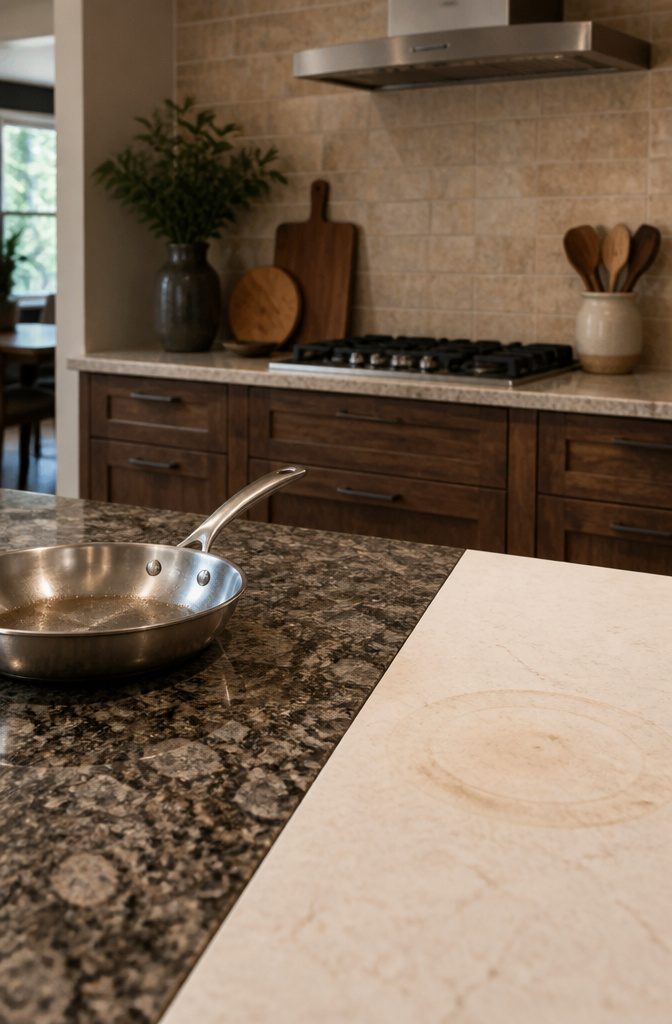
Granite handles direct heat far better than quartz, and this is where the two materials split most sharply.
Quartz tops out around 300°F, while granite withstands up to 1,200°F. The resin binders in engineered quartz soften and discolor under a blazing pan; granite, being pure stone, shrugs off temperatures that would sear a steak black.
Scorching on quartz does not always show immediately. The damage can sink deep enough that the color changes throughout the slab, and that kind of wound does not buff out.
Thermal shock cracks from a 450°F roasting pan are not theoretical; manufacturers explicitly recommend trivets, though in a lived-in kitchen those trivets migrate to junk drawers or get used as coasters while the counter takes the hit.
I have set a skillet down on quartz without thinking, heard the faint crack a half-second too late, and spent the next week running my thumb over a hairline fracture that caught the light wrong.
The trivet rule is real, but the follow-through is human.
Granite forgives that lapse. Quartz remembers it.
Environmental Impact
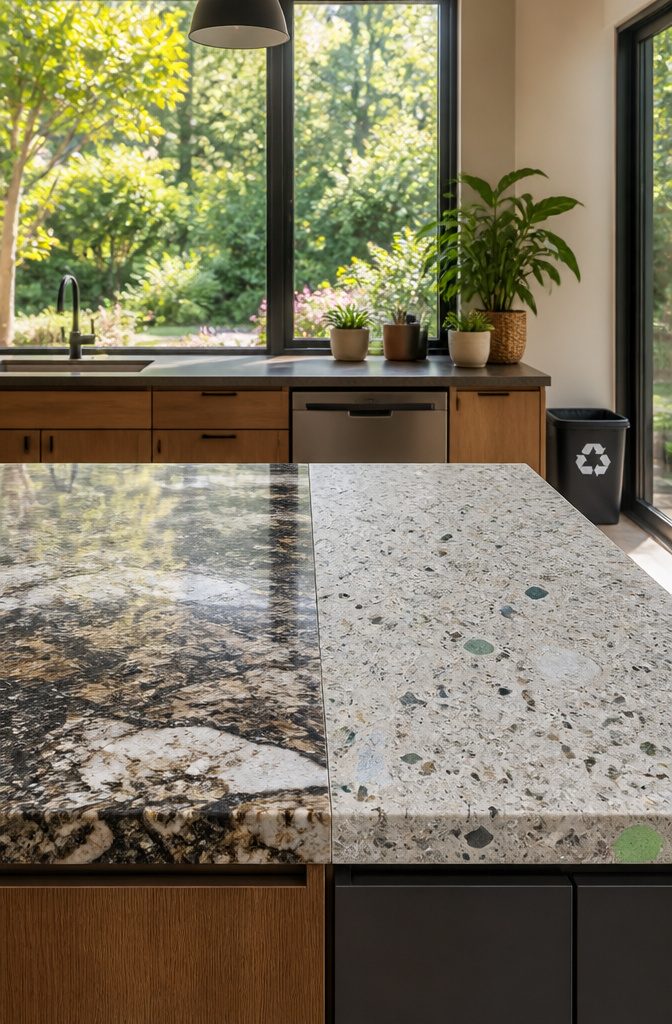
Granite is 100% natural stone pulled straight from the earth, which sounds cleaner than it is. Quarrying cuts into habitat and burns fuel for extraction, then those heavy slabs ship internationally with a carbon footprint that adds up fast.
Some brands of quartz use recycled stone materials mixed in with the crushed quartz, which cuts down on waste, but the resins and pigments that bind it together come with their own manufacturing toll.
The production involves energy-intensive crushing, mixing, and curing that generally outpaces what granite processing demands.
Neither material gets a free pass.
Both create an environmental impact during transport, and the distance those slabs travel matters more than most buyers realize. Locally sourced stone of either type shrinks that footprint, though availability varies sharply by region.
If sustainability ranks high on your list, the honest answer is that both quartz and granite force tradeoffs: raw natural material with quarrying damage, or recycled content with synthetic binders and higher production energy.
Picking one over the other on environmental grounds alone means deciding which compromise sits easier with you.
Side-by-Side Comparison
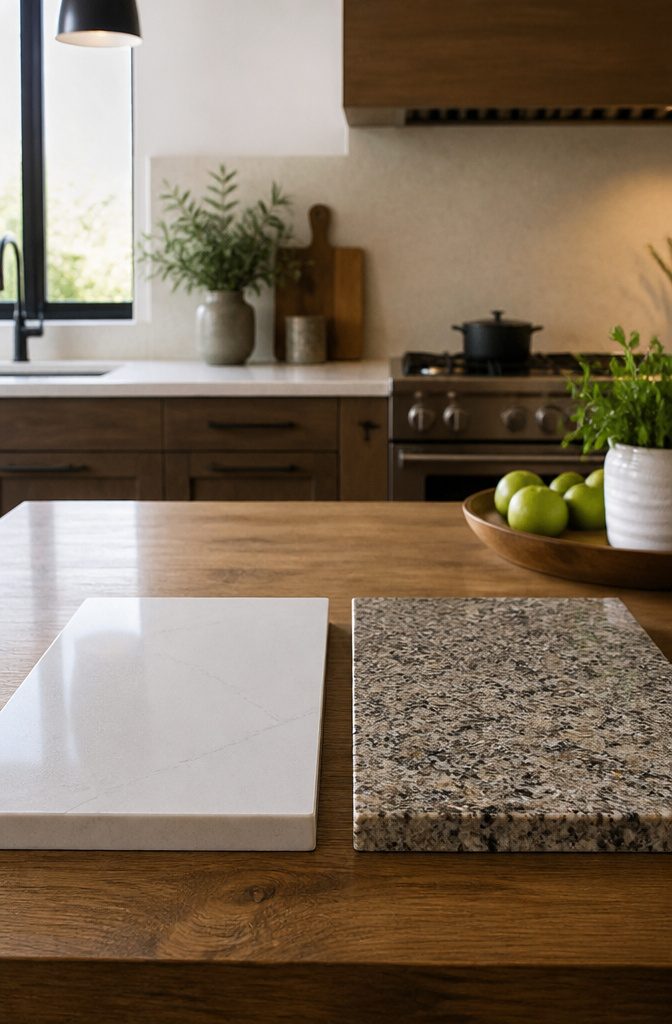
After pricing both materials for my own kitchen, I noticed the installed cost ranges overlap more than the marketing suggests.
Quartz runs $50–$200 per square foot installed, while granite lands at $60–$150; the mid-range sweet spot is nearly identical, and granite only pulls ahead if you chase exotic slabs.
| Attribute | Quartz | Granite |
|---|---|---|
| Appearance | Consistent, engineered patterns; can mimic stone or read modern | Unique natural veining; no two slabs match |
| Durability | Very scratch-resistant; more prone to cracks | Harder on the Mohs scale; handles impact well |
| Maintenance | Non-porous; no sealing needed | Requires sealing every 1–2 years |
| Cost (per sq ft installed) | $50–$200 | $60–$150 |
| Heat Resistance | Moderate; trivets required above ~300°F | Excellent; withstands up to 1,200°F |
| Environmental Note | Engineered with resin binders | Quarried natural stone; extraction impact |
The heat gap is the clearest separator. Quartz’s resin binders soften under a hot pan straight from the burner; granite shrugs it off.
For renters or weekend renovators, that matters less than you’d think, trivets are cheap and kitchens already own them. For resale-obsessed owners, granite’s natural pedigree still reads premium to buyers who do not cook much anyway.
Installation Reality
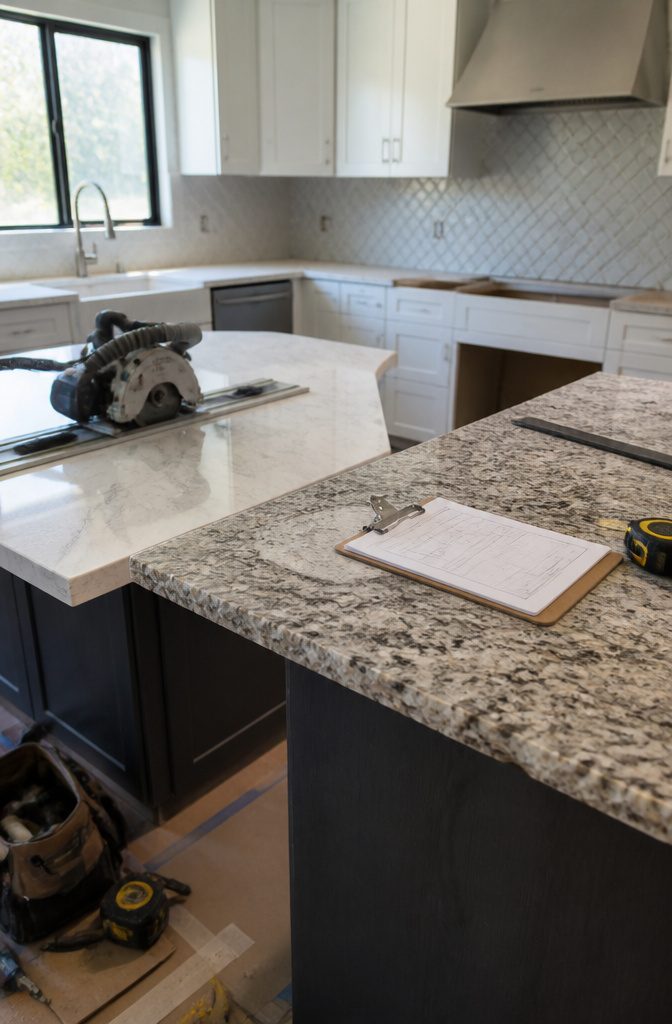
Quartz’s uniform density makes it easier to cut and install than granite, which translates to shorter timelines if you are racing a move-in date or trying to minimize kitchen downtime.
The material handles seams across long runs or large islands more predictably, and the consistent pattern means fewer on-site adjustments.
Granite demands more care.
Natural variation in each slab requires precise templating before any blade touches the stone, and thin or heavy sections may need extra reinforcement. Veins and color shifts take time to align at seams if you want visual continuity.
Both materials weigh enough and cut badly enough that professional installation is the practical choice for most homeowners. The fabrication cost runs similar for either material, so the complexity gap does not necessarily widen the total price.
What you save in quartz’s simpler labor you may pay back in the slab itself; entry-level quartz and common granite both start around $50 to $70 per square foot installed, and both can climb past $150 for premium options.
Resale Value
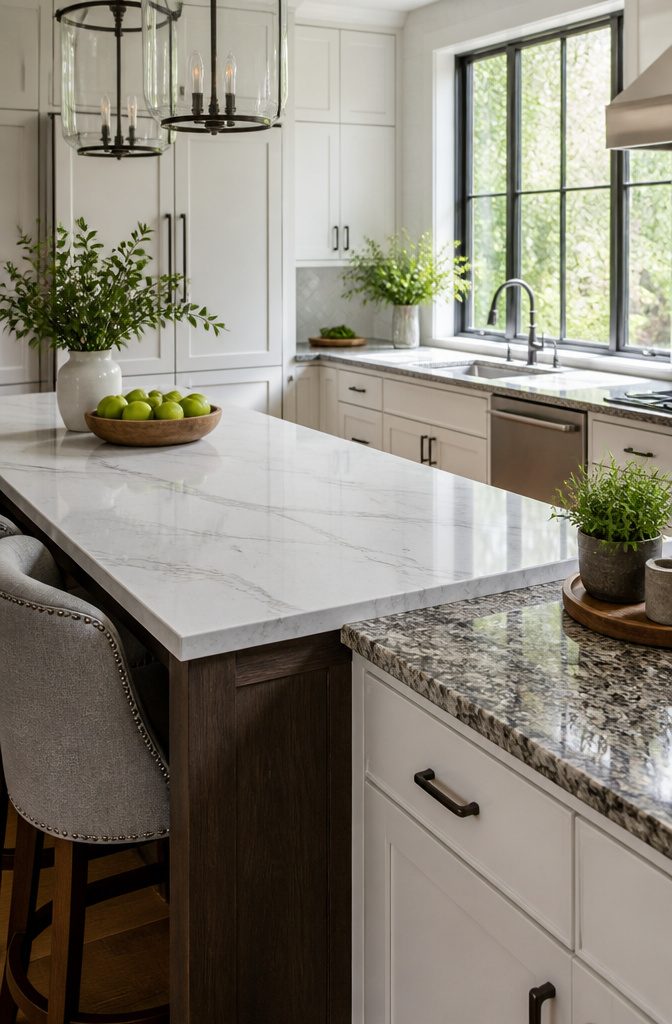
Countertops are one of the few kitchen upgrades that buyers actually notice during a walk-through, and both quartz and granite signal that the work has already been done.
In younger, high-end markets especially, quartz is increasingly the safer bet for resale because buyers want that clean, modern look without the maintenance homework.
Granite still reads as luxury, particularly when the slab has an unusual pattern or color that stands out from the beige-era installs everyone remembers.
Either material beats laminate or dated tile, so if you are replacing one of those, the jump in value is immediate.
For first-home owners planning to sell in five to ten years, quartz probably wins. Buyer preference has been trending that direction, and the low-maintenance appeal ages well in a listing description.
Granite will not hurt you, but it may not help as much in a market full of buyers who have never sealed a countertop and do not plan to start.
What I Chose and Why
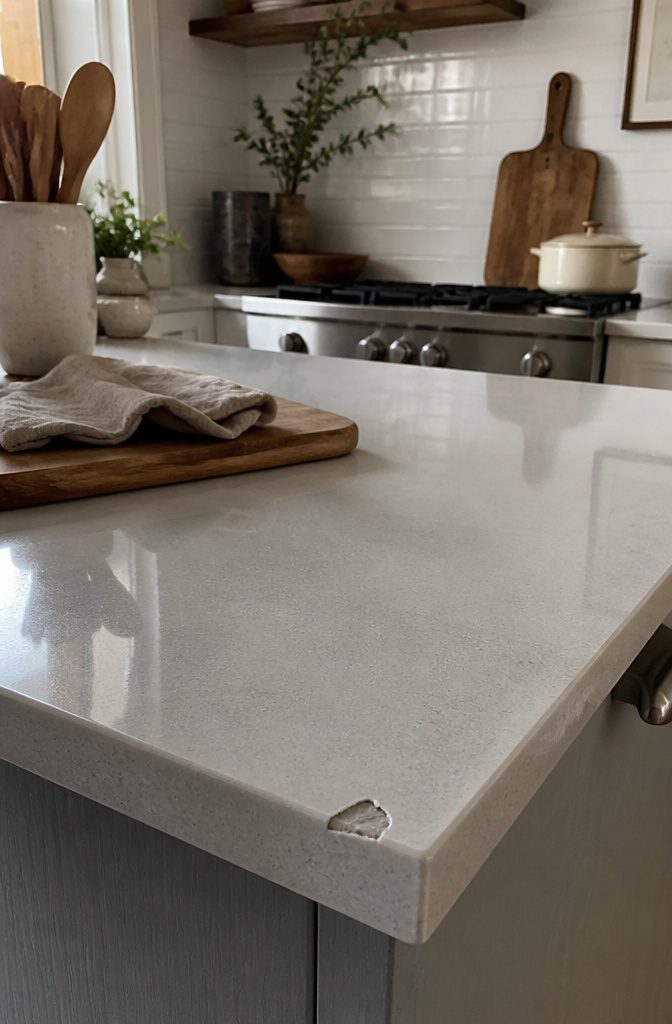
The chip happened three months in, right by the sink where a cast-iron skillet slipped from soapy hands.
I had gone with quartz at $72 per square foot installed, middle of the entry-level $50 to $70 range cited for budget options, because the kitchen is small and the seams would be few.
The repair kit costs less than a granite resealing, but the dent is still there, faint as a thumbprint, and I notice it every morning.
Granite would have taken the hit differently, probably cracked rather than chipped, and the annual sealer at $15 to $30 per application would have run me maybe $450 over the life I expect to stay here. Quartz won on maintenance, not on toughness.
I do not set hot pans down directly; the resin binders soften above 300°F, and that is a limit I live with. For a rental or a first home where you cook hard and move often, the math tilts differently.
Frequently Asked Questions
Which is more expensive: quartz or granite?
Quartz runs $50–$200 per square foot installed, while granite lands at $60–$225. The ranges overlap heavily; entry-level options for both start around $50–$70, and exotic granite or premium quartz can push either material past $150.
Which countertop material is easier to maintain?
Quartz is easier to maintain because it ships non-porous and never needs sealing. Granite requires resealing every one to two years, and skipping that maintenance lets stains settle below the surface where scrubbing cannot reach them.
Can you put hot pans on quartz or granite?
Granite handles direct heat up to about 1,200°F without issue. Quartz tops out around 300°F; the resin binders soften and can discolor or crack under a blazing pan, so trivets are essential.
Do quartz countertops last longer than granite?
Both last decades with proper care.
Granite can exceed 25 years if sealed annually; quartz typically runs 15 to 25 years or longer. The bigger factor is how you treat them, not which one you choose.
Which is stronger: quartz or granite?
Quartz resists chips and surface damage better because its resin content adds slight flex. Granite is harder on the Mohs scale and handles impact well, but its rigidity means it can crack rather than chip under sharp blows.
Why don’t people use granite anymore?
People still use granite, but buyer preference has shifted toward quartz in many markets, especially younger, high-end ones. The low-maintenance appeal and clean, modern look of quartz now often win in resale value calculations.
Why is quartz on the decline?
Quartz is not broadly declining; it remains the growth leader in many U.S. markets.
Can you use Clorox wipes on a quartz countertop?
For quartz, soap and water handle daily maintenance; harsh chemicals can degrade resin binders over time, so manufacturers typically recommend mild cleaners.
What is the downside of quartz countertops?
The main downside is heat sensitivity.
Resin binders soften above 300°F, so a forgotten trivet can mean permanent discoloration or cracks that do not buff out. Quartz also lacks the unique, one-of-a-kind patterning of natural stone.





