
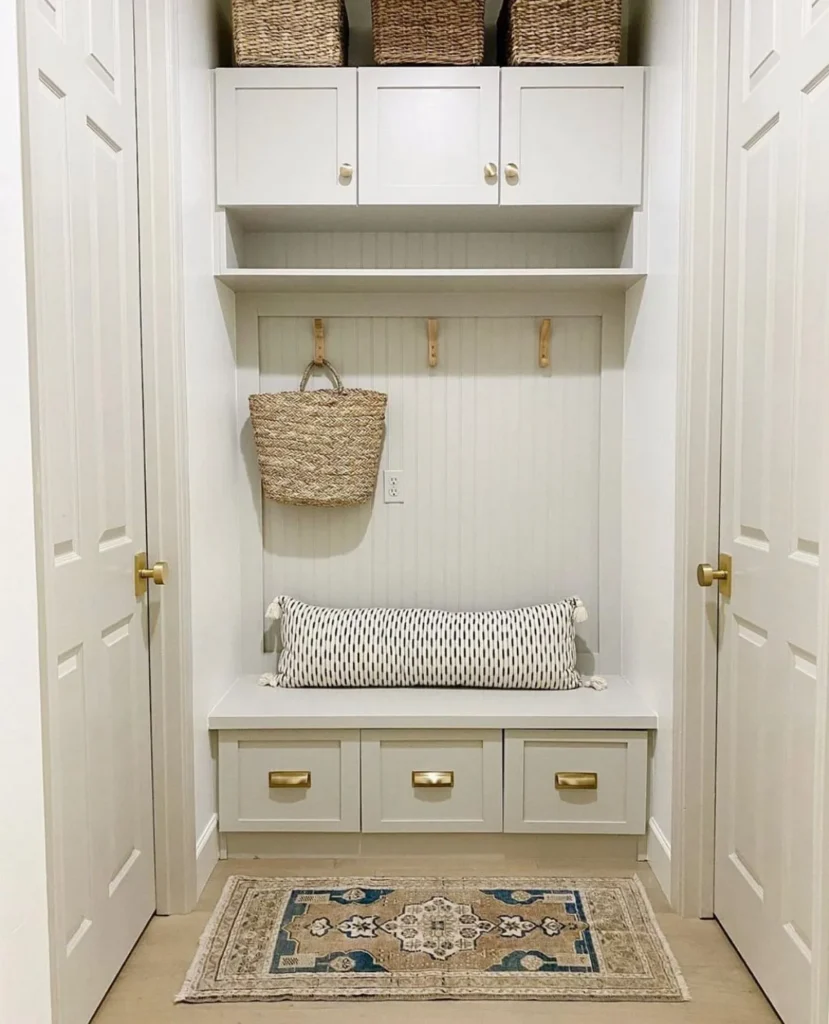
A small mudroom can be as simple as a boot tray or as built-out as custom cabinetry measured to your actual gear, and the deciding factor is what you walk in carrying: wet parkas need hooks that spread load across old plaster, while keys and sunglasses only need a divided tray.
1. Wall Hooks
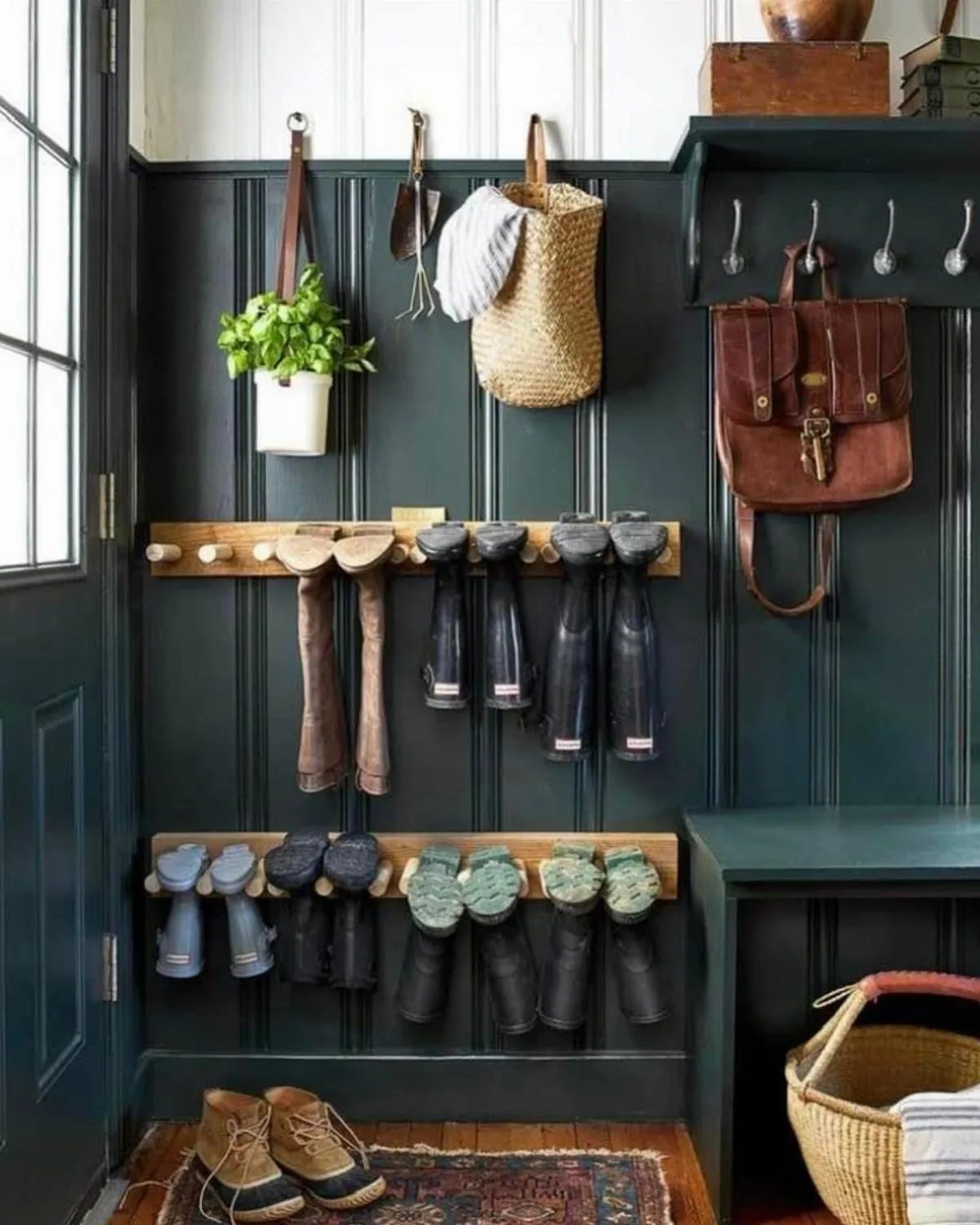
Hooks at varying heights turn a narrow wall into storage for three generations of coats without eating floor space.
Metal hooks handle bags and baskets while wooden peg racks mounted upside down grip boots by their shafts, keeping pairs paired and mud off the floor.
The right spacing depends on who lives there: adults need hooks high enough for coats to hang clear, kids lower where they can actually reach them.
For smooth drywall, a stud finder is cheap insurance; anchors in plaster or tile add time but hold fine. I would skip the ledge unless keys and mail actually land there in your house.
2. Closed Storage
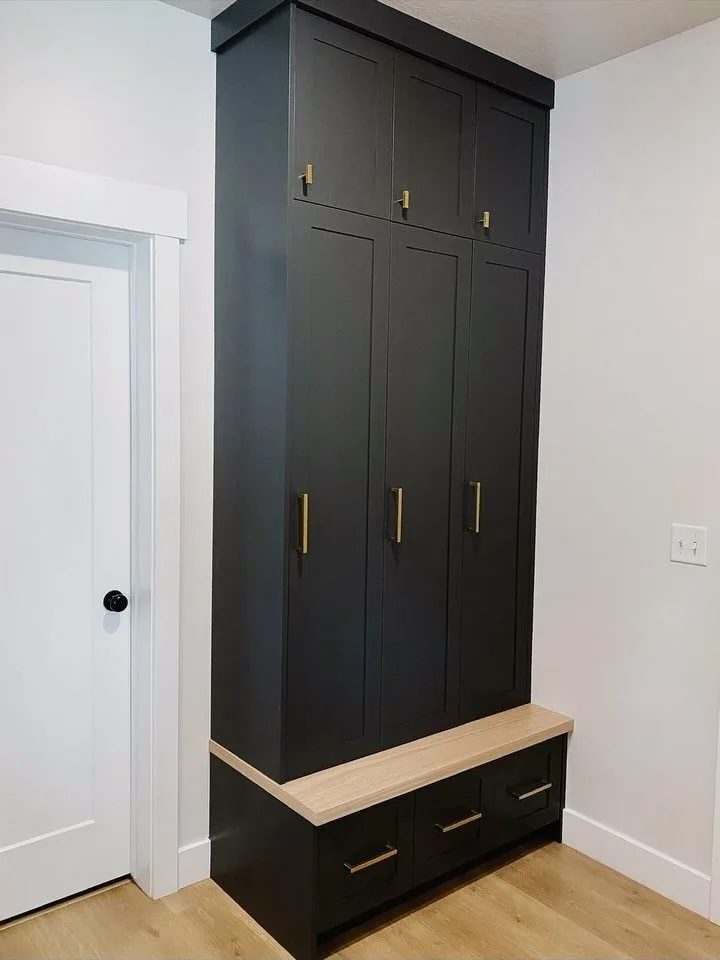
A bank of closed cabinets hides what open storage cannot: the bulky stuff that kills a small room. A dark finish reads as one solid shape, which helps a tall unit feel less like furniture and more like architecture.
Seasonal rotation is where this pays off. Beach gear in October, boots in July; if the cabinet goes floor to ceiling, the top shelf handles holiday decorations too.
Drawers under the bench seat add the one thing lockers lack: a place to sit while lacing up. Check your door swing before committing to depth; a generous cabinet eats storage but fights you in a tight hallway.
In a small room that’s literally designed to hide mess, pro Kylee Shintaffer decided to cover every inch of the walls, including the nearly concealed cabinets and drawers, in a crisp coat of brightly painted shiplap that lifts the eye upward.
3. Tile Flooring
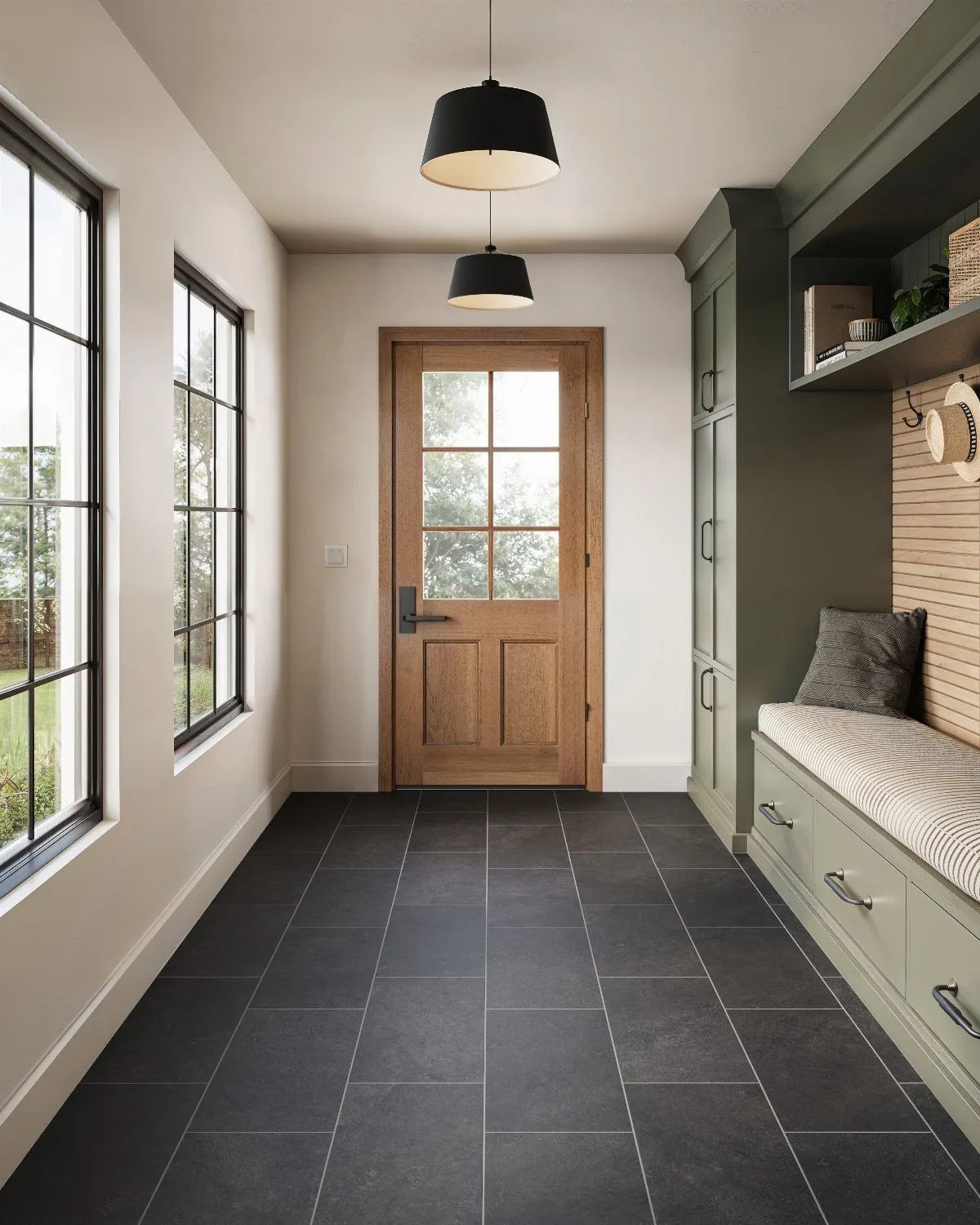
Tile takes the beating that wood or carpet cannot. Dark rectangles with light grout hide grit between moppings and show the layout of the space without shouting for attention.
Sealed concrete or brick work too, but tile offers more grip when wet. Matte tiles look softer, but any glaze helps with the slush and salt that destroy entry floors in northern winters.
I would order extra for cuts around doorframes and the inevitable crack years later.
4. Durable Rugs
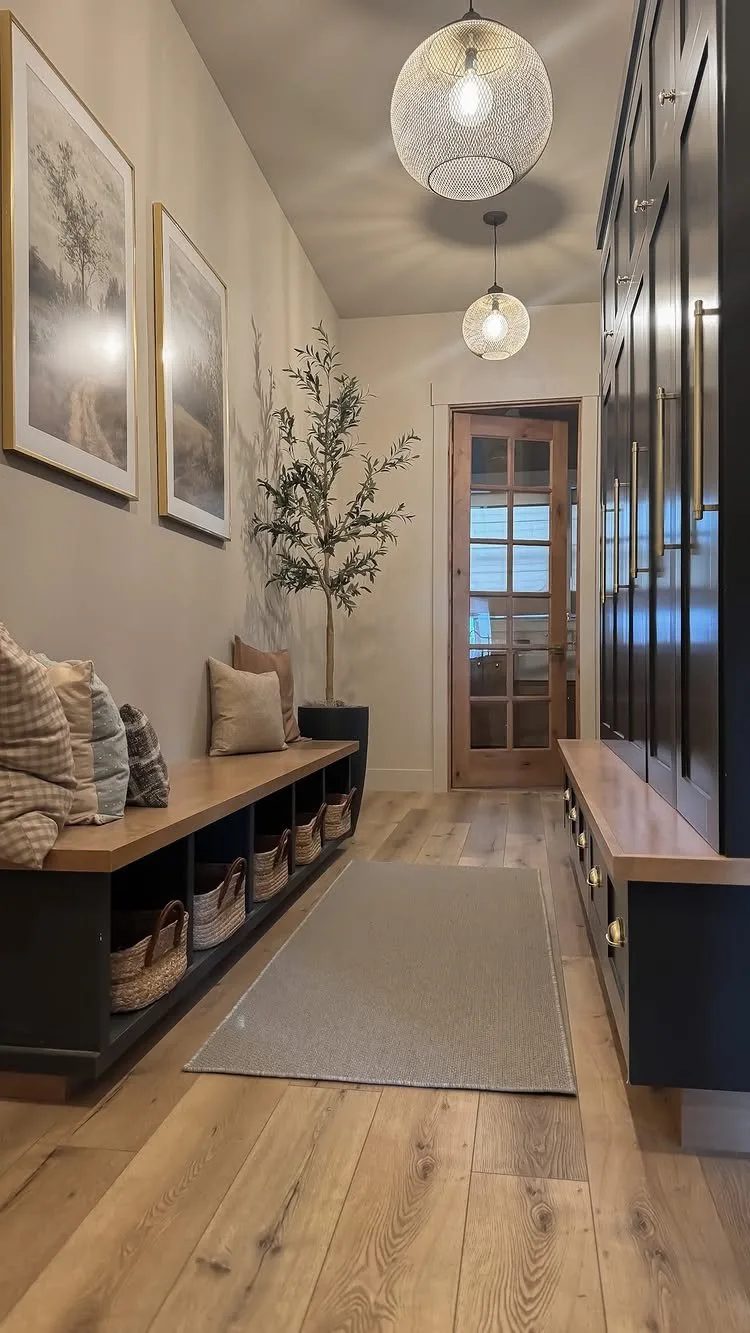
A runner warms the floor you stand on to unlace boots, and it dies so the wood beneath lives.
A long rectangle runs the length of a narrow hall, which works better than a small rug that shifts every time a door opens.
Jute shakes clean and ages honestly; synthetic blends hose off but look tired faster. Thickness matters: a thin rug lies flat under door clearance, but your knees feel it during the shoe ritual.
In a house with dogs, I would size up so the water bowl lives on the rug too, containing the secondary mess.
5. Shoe Benches
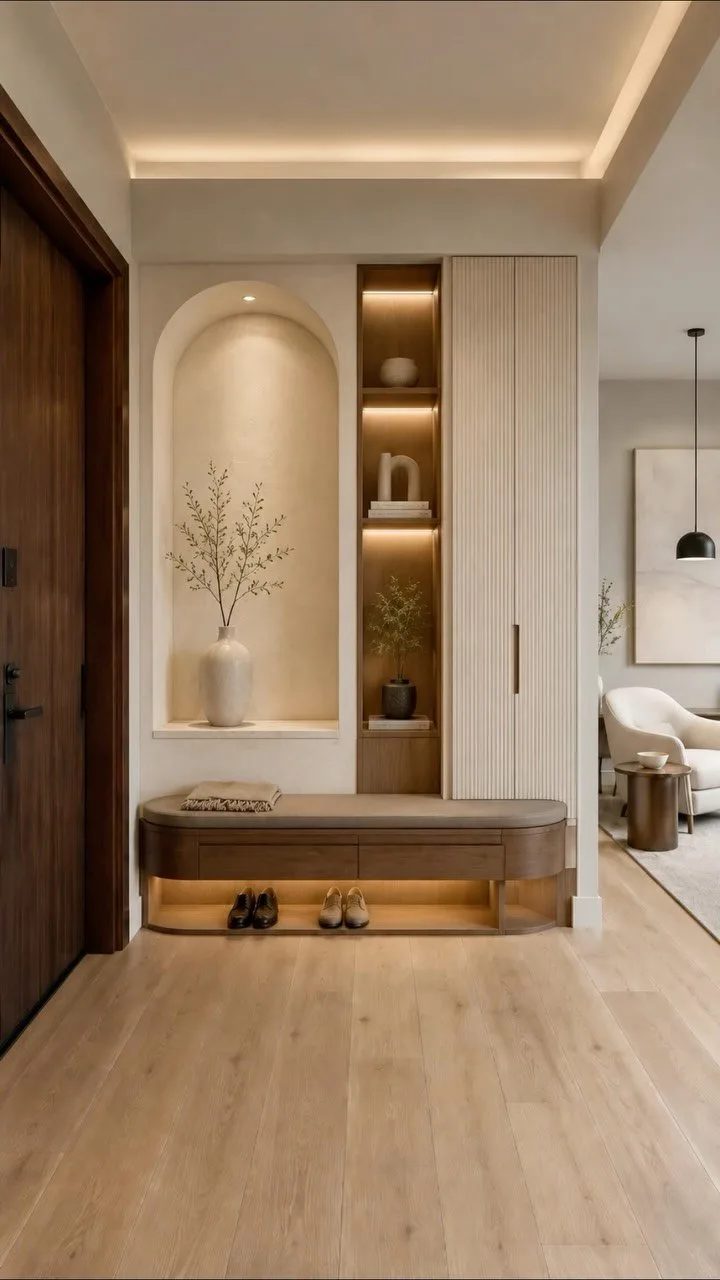
Shoe benches fail when they ask too many steps. An open shelf lets a kid kick sandals straight in; no basket to pull, no lid to lift, no excuse for the pile that otherwise forms.
Slim cabinets against the wall hide more but need discipline. I have seen the open version work in a house where the alternative was shoes on the stairs; the closed one works where someone enforces the system.
The notched back shelf mentioned by the builder of the Poplar Cottage example lets taller boots tuck in without flopping forward; worth copying if you build your own.
6. Hooks and Racks
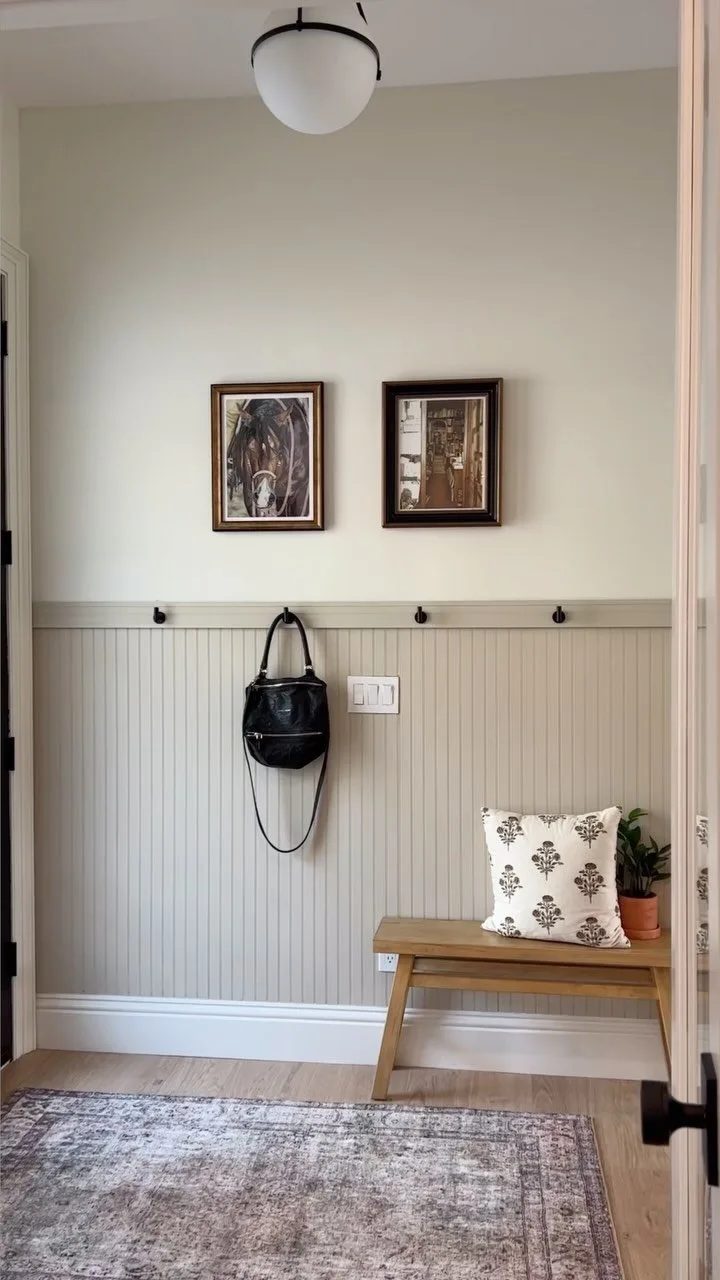
Hooks and racks are not the same decision. Hooks suit bags and single coats; a rod or rack lets you hang three damp parkas to dry without overlapping seams.
Beadboard works with both: hooks for immediate grab, the bench back for structure. Shaker pegs spread load across more wall area than single hooks, which matters in old plaster.
For a family of four, count the winter maximum, not the average; the day everyone comes home soaked is the day you need the extra peg.
Over-the-door hardware works when wall space is truly gone, though it bangs every time the door moves.
7. Drop Zone Tray
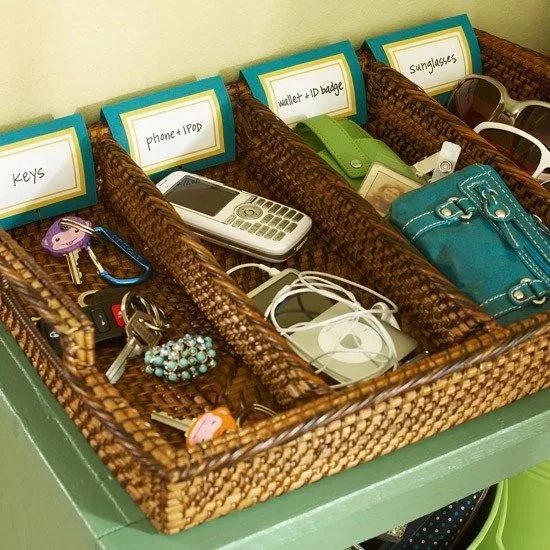
A divided tray turns the first flat surface inside your door into a decision-free landing pad.
Keys, phone, wallet, sunglasses: each gets its own compartment with a label facing up, so nothing gets set down in a heap that buries what you need on the way out.
Woven trays with sections work best for families where multiple people dump pockets at once; a single shallow tray suits one or two residents fine.
The labels matter more than the material. Write them for what you actually carry, not what you wish you carried.
A tray without sections works if you add small dishes inside, but compartments prevent the evening scramble through a pile of identical black rectangles.
The trade is countertop or bench space. In a 3-foot-wide mudroom, a wall-mounted mail sorter with a small ledge underneath beats a tray that eats your only horizontal surface.
8. Small Bench with Storage Underneath
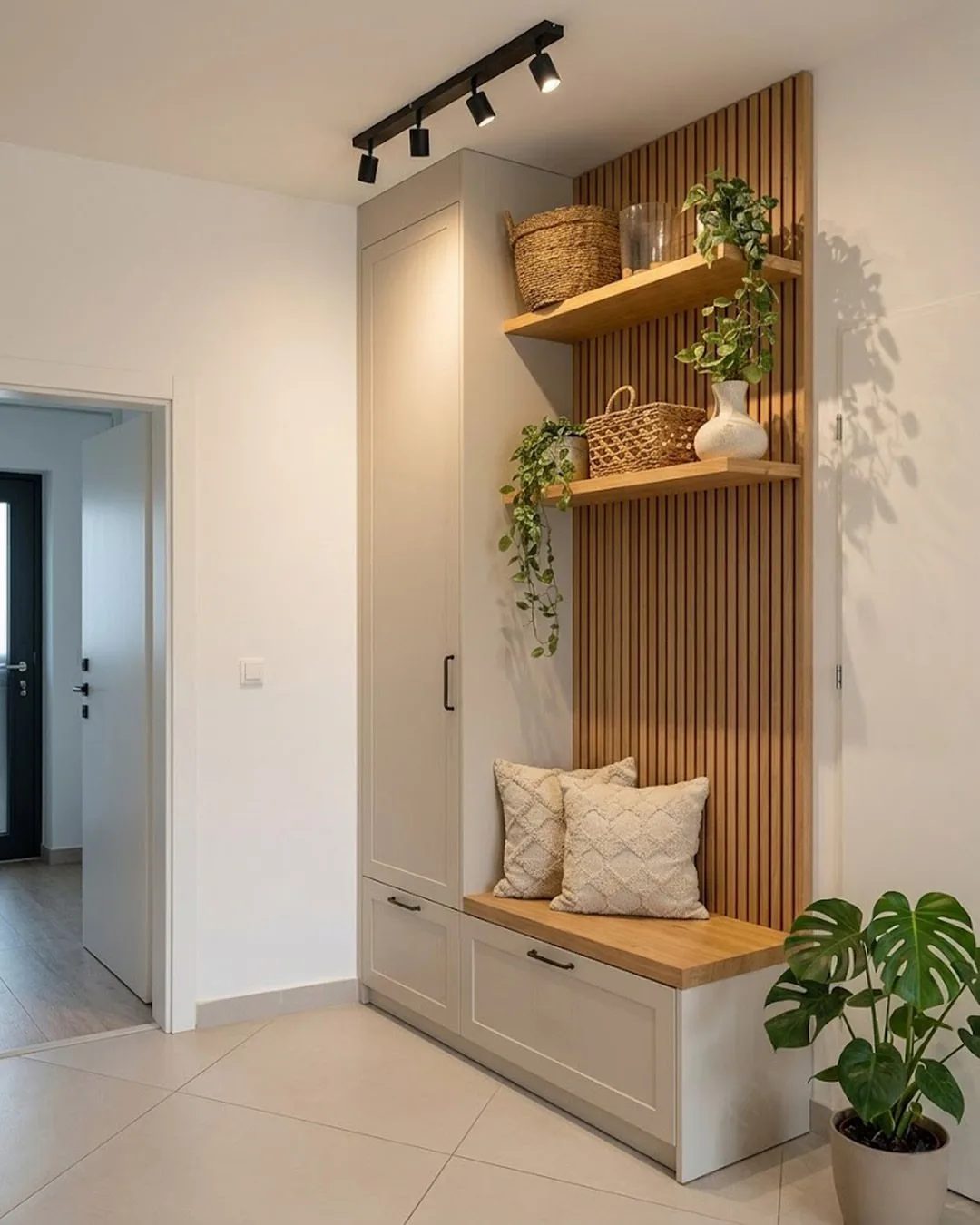
Built-in benches with drawers underneath turn the act of sitting down into the act of putting things away.
A short blank wall fits a one-piece unit with hooks above, bench in the middle, and shoe storage below.
Renters should look for a standalone bench with a hinged lid or fabric bins underneath; nothing gets screwed into the landlord’s drywall.
The seat height matters: standard dining chair height is too tall for a mudroom bench, since you’re leaning forward to tie laces, not sitting back to eat. Check your own knee angle against a chair at home before you order.
Wood seats look warmer but feel harder in winter; a cushion helps if you have the 2 inches of depth to spare. Drawers keep dust out better than open cubbies, though cubbies let wet boots breathe.
9. Family Organization Board
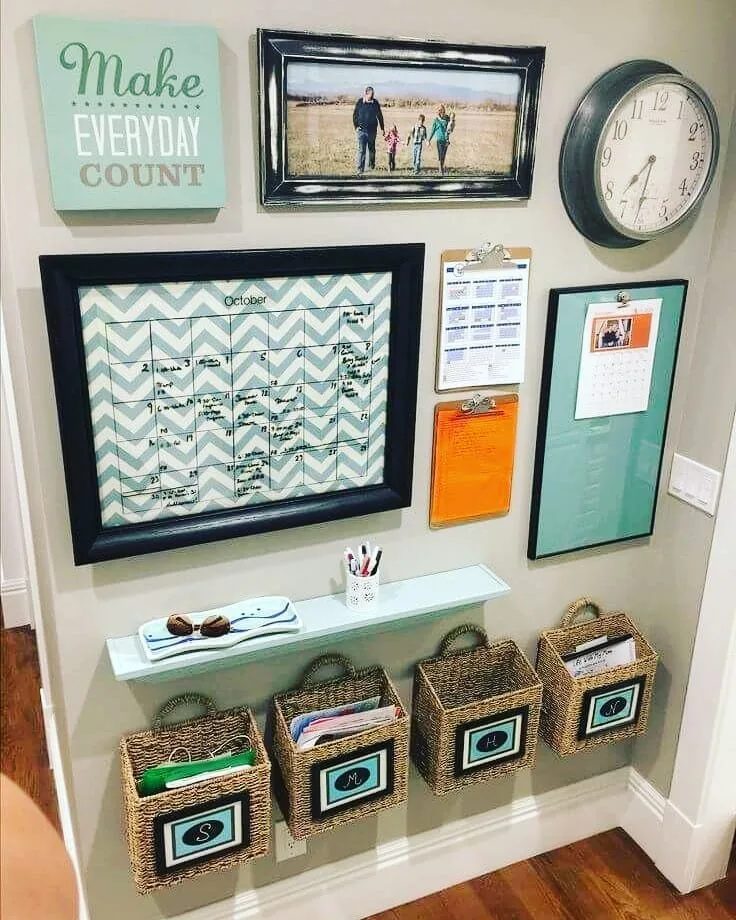
A wall-mounted board corrals the paper that otherwise migrates to every flat surface in the house.
Dry-erase calendars work for shifting schedules; chalkboard paint on a framed panel costs less and lasts longer but needs weekly rewriting. Clipboards let you swap pages without thumbtack holes, which matters if you’re renting.
The baskets below catch what has no date but still needs a home: permission slips, sunglasses, the dog leash someone left on the counter.
I would skip the clock unless your mudroom is where you actually stand before leaving; most people check phones. The real question is who updates the board.
If one person maintains it, it lives. If everyone is supposed to, nobody does.
Start with a calendar and one clipboard, add only what proves necessary.
10. Baskets and Bins
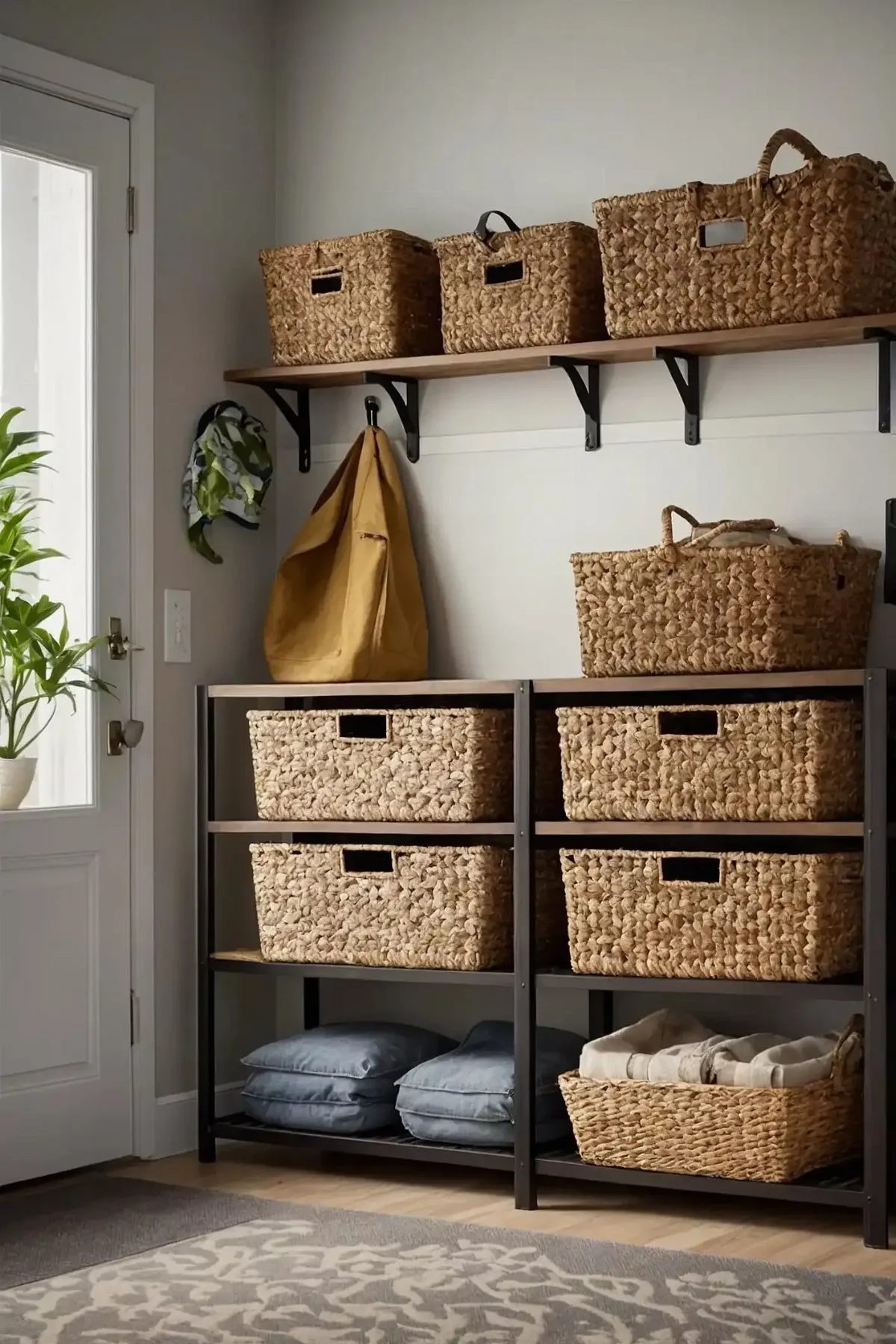
Baskets and bins hide what you need but don’t want to look at.
Woven seagrass handles gloves, hats, and the dog’s winter coat; wire baskets let damp sports equipment dry without mildewing; clear bins with labels front-load the hunt for kids’ belongings on school mornings.
The material choice tracks what goes inside, not what matches the room. Wet boots in a sealed woven basket rot the bottom in 2 seasons.
Measure your opening before buying a laundry cart on casters; a cart that fits “perfectly” under one shelf may not fit under yours if the height differs.
Label the bin, not the shelf it sits on. Shelves get rearranged; bins move.
For renters, over-the-door wire racks with baskets beat built-ins, and they travel to the next apartment.
11. Overhead Lights
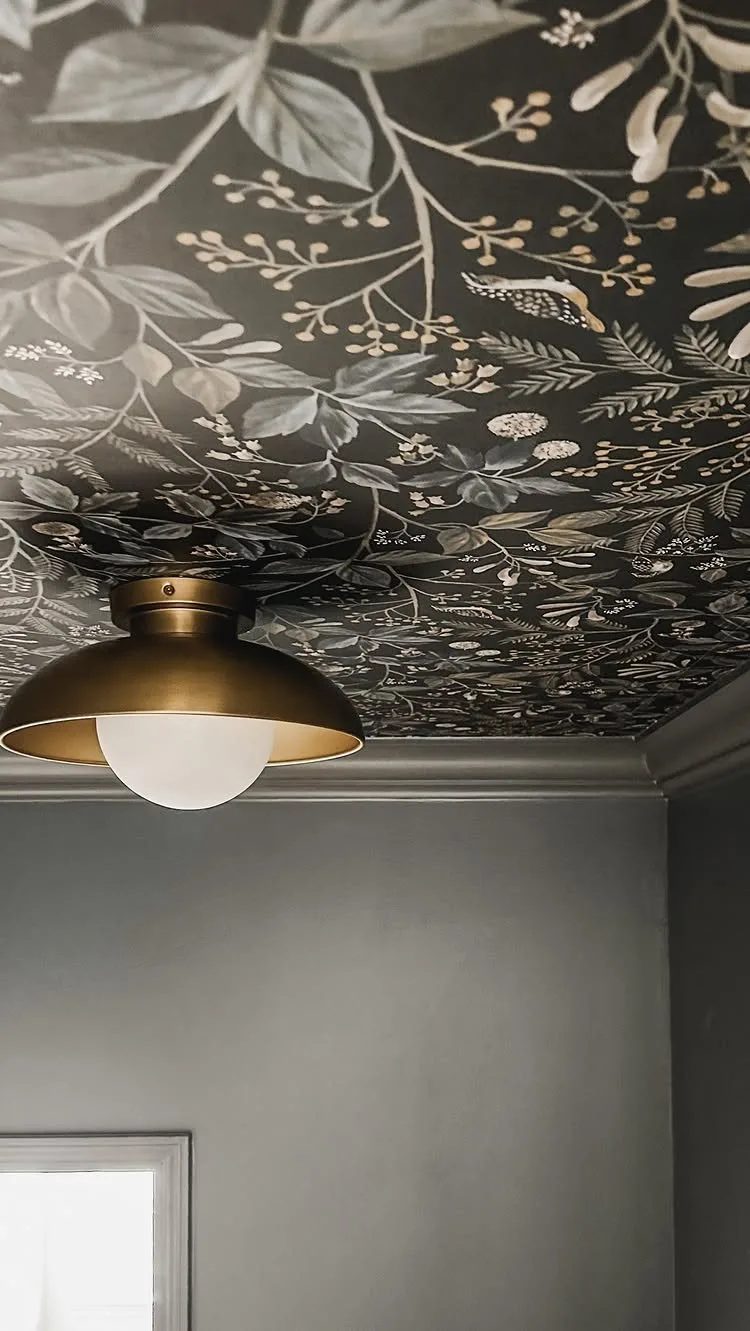
Overhead light in a mudroom does work that lamps cannot: it fills the whole space evenly, so you’re not hunting for a matching boot in your own shadow.
A brass flush-mount sits close to the ceiling, which matters when headroom is already tight; a pendant would bang foreheads in most standard spaces.
Multiple sources beat one bright fixture. A can light or flush-mount overhead, plus a lamp on a shelf or a sconce near the mirror, erases the cave effect that makes small mudrooms feel like afterthoughts.
Natural light through a door with glazing helps if you’re replacing the door anyway; retrofitting glass into an exterior door is not a weekend budget.
Dark paint or wallpaper drinks light, so plan your fixtures accordingly. If your walls already run deep, budget for a brighter bulb or a second fixture, not a higher wattage in the same socket.
12. Mirror Addition
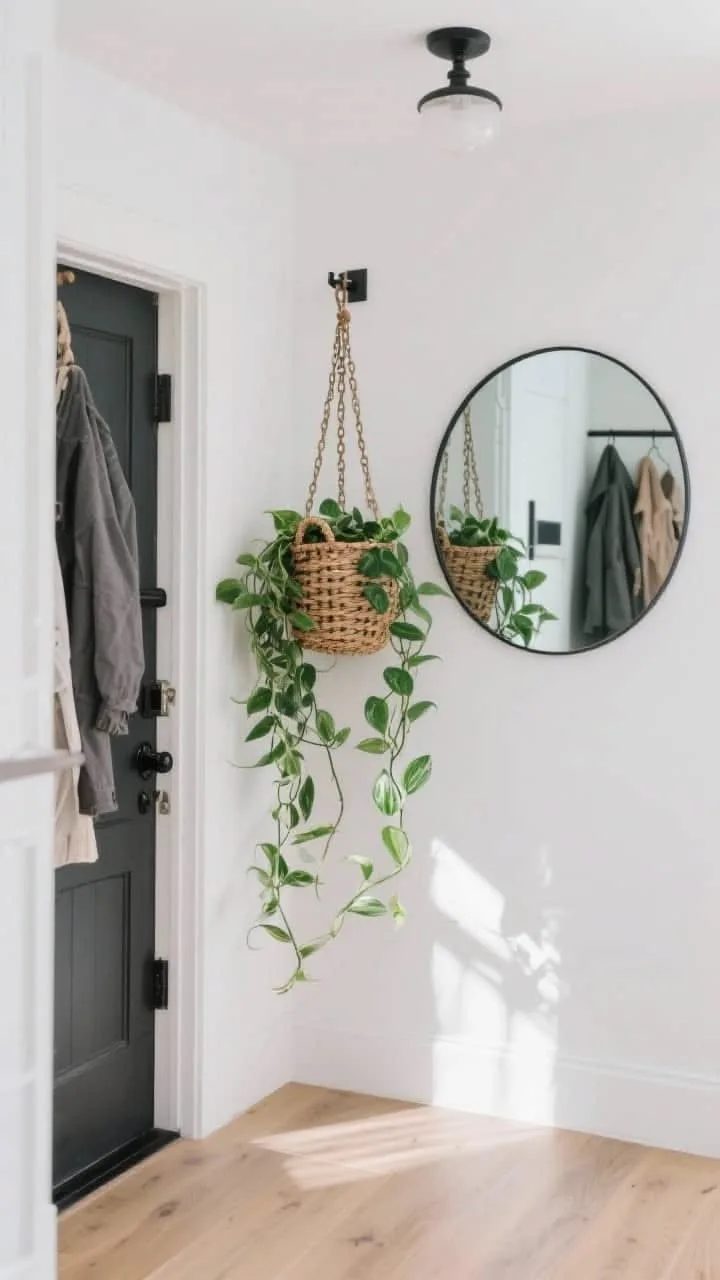
A mirror in a mudroom does two jobs: the obvious one, and the one where it bounces light from the door or fixture into the corners that overhead light misses.
Placement depends on what you check last. Near the door, you see your coat and your face together; opposite the door, it doubles the visual depth of a narrow space.
The frame matters less than the height: the center of the mirror should hit at a comfortable eye level, or you’re stooping or stretching.
Renters should lean a large mirror on a shelf rather than wall-mounting; it travels, and it covers nothing permanent.
The illusion of space only works if the mirror reflects something worth seeing; aimed at a blank wall, it just doubles the blankness.
13. Custom Cabinetry
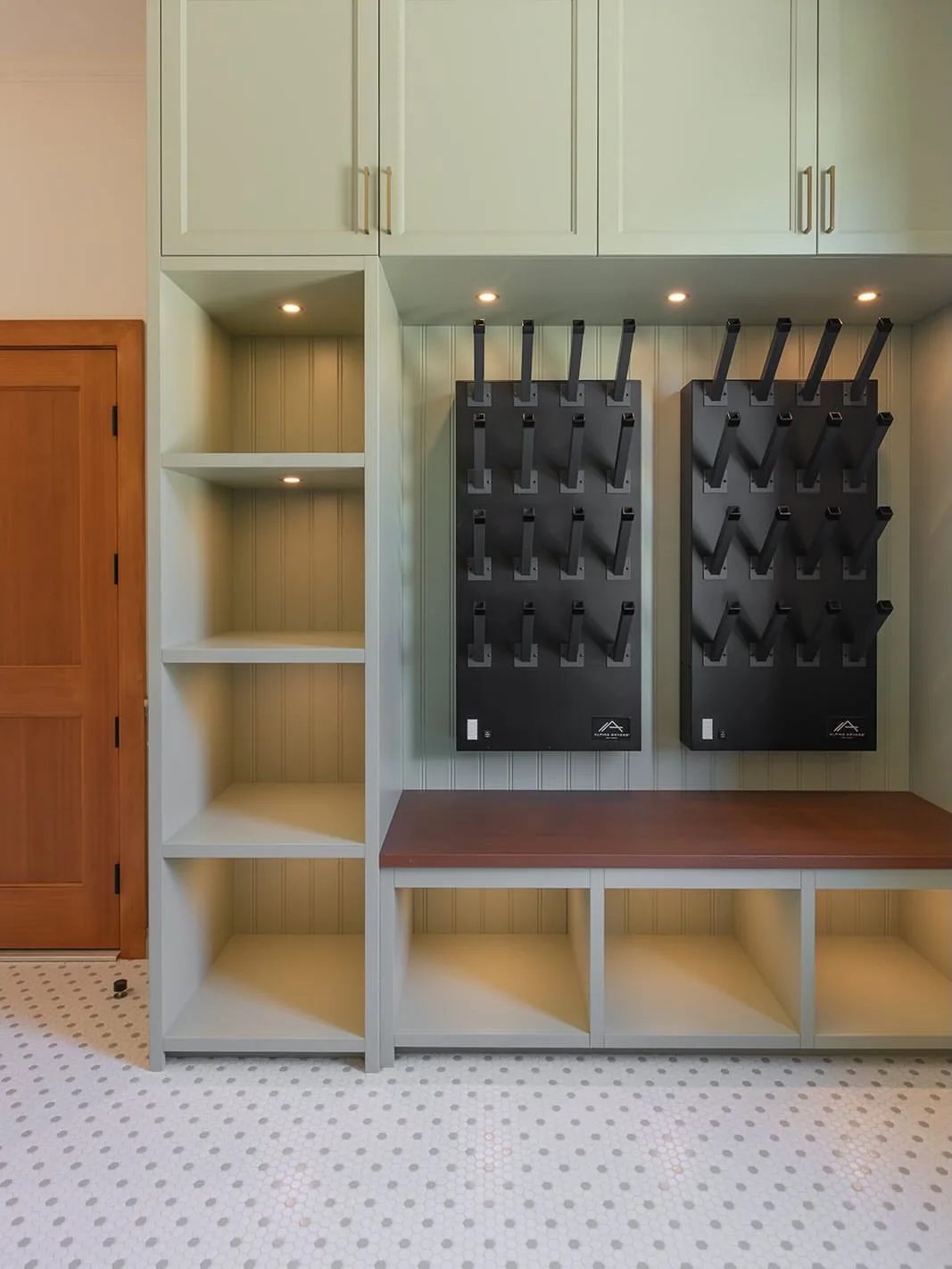
Built-ins let you claim every inch that standard furniture wastes.
What changes the answer is what you actually store. Tall boots need taller cubbies than sneakers.
More people means more coats, and more coats need more hooks.
I’d have a carpenter measure your actual gear before drawing anything. The bench height that suits my reach may not suit yours.
14. Washer and Dryer
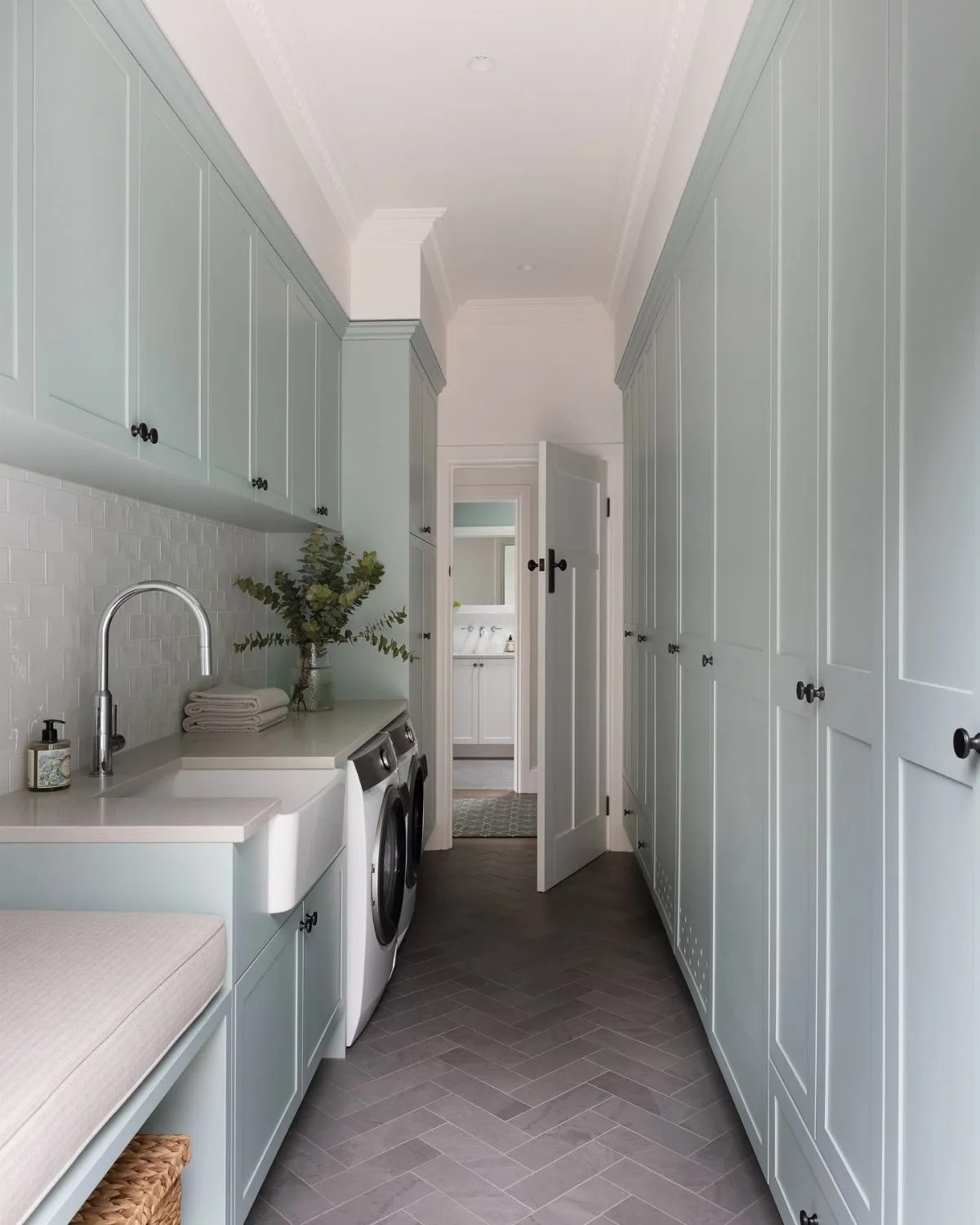
A front-loading washer and dryer tucked into the same wall as your coat storage turns a pass-through room into a genuine utility space.
A narrow galley layout puts machines at one end and a bench with sink at the other, with tile running the full length.
What kills this idea is ventilation. These machines need an exhaust route, and older homes often lack one near the entry.
The drain line matters too; a sink sharing the wall helps.
A soft bench cushion looks inviting, but I’d pick something wipeable. Wet laundry hands brush everything on the way past.
15. Tall Cabinets in Narrow Spaces
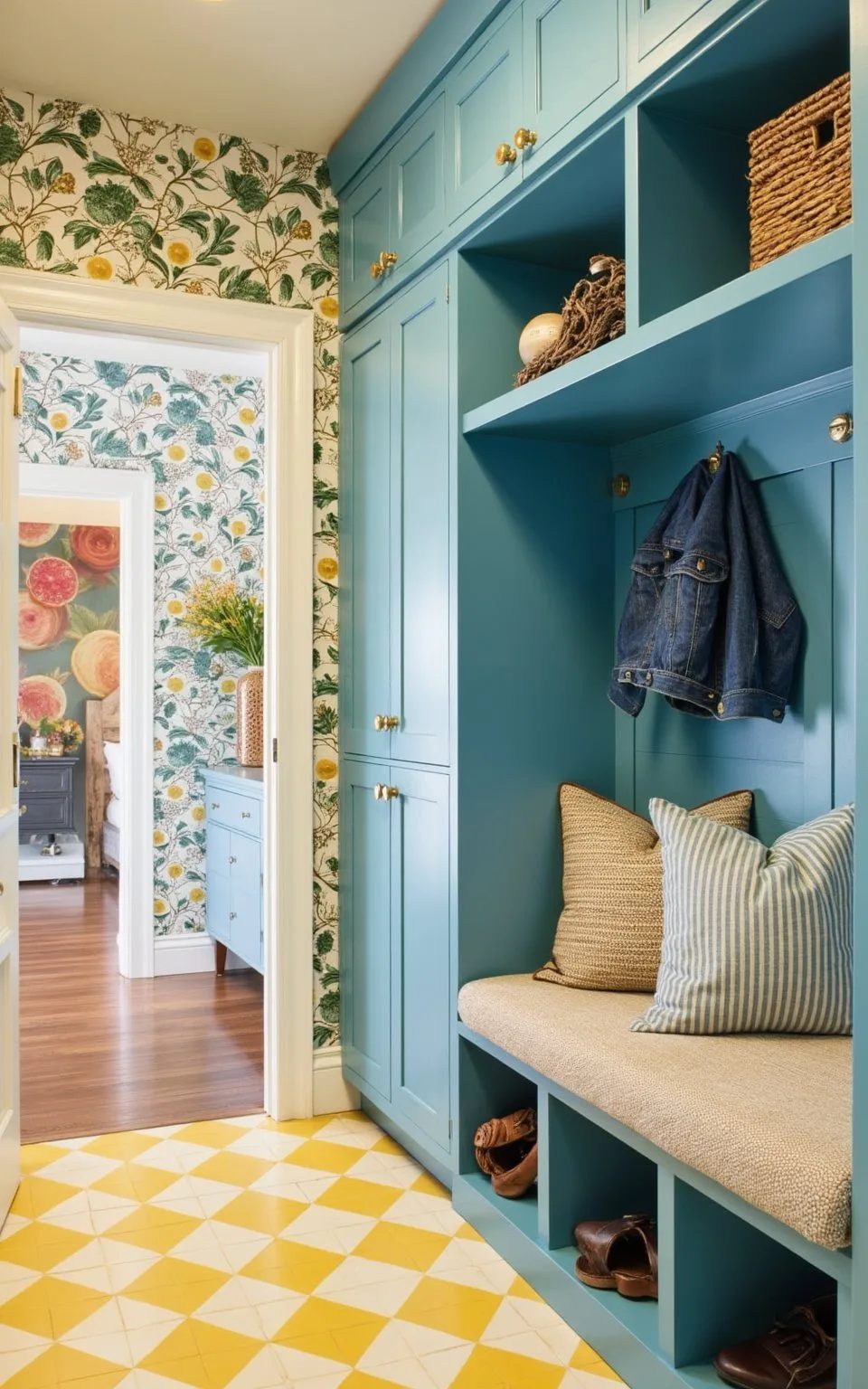
Floor-to-ceiling cabinets in a hallway barely wider than a door frame turn dead space into a mudroom that does not feel like an afterthought.
A tall unit with doors, open cubbies, and a bench with shoe storage below can work in about the depth of a coat on a hanger.
Door swing makes or breaks a narrow space. Sliding or bi-fold doors eat less floor space than standard hinged ones; tall panels like these likely slide.
Your hallway width minus door depth minus bench depth leaves your walking lane, and 30 inches is tight for two people passing.
Botanical wallpaper and checkered tile, like here, help a narrow space feel intentional rather than squeezed.
16. Use of Color
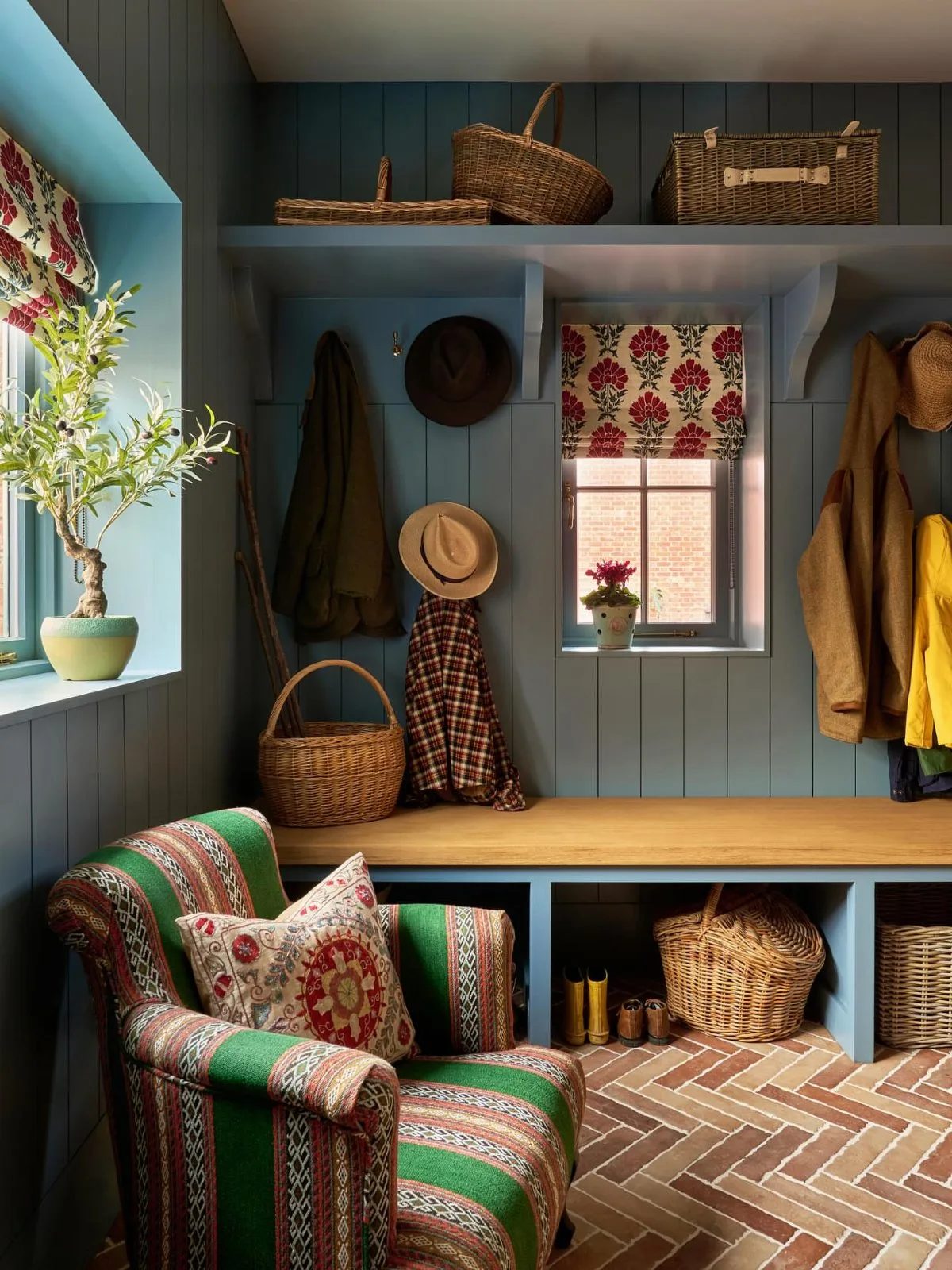
Mudrooms collect grime, so color here is a choice, not a default. Blue-gray paneling sets off brick herringbone floors, woven baskets, and a patterned armchair that would look eccentric anywhere else but feels right here.
Small rooms can handle darker or bolder hues than you’d risk in a living room. You pass through; you do not linger.
Hunter green on millwork, like one direction I’ve seen, hides scuff marks better than pale sage.
What I’d check: the light source. A windowless hall needs either a strong overhead fixture or a lighter ceiling to keep moody walls from feeling like a cave.
17. Geometric Floor Tile
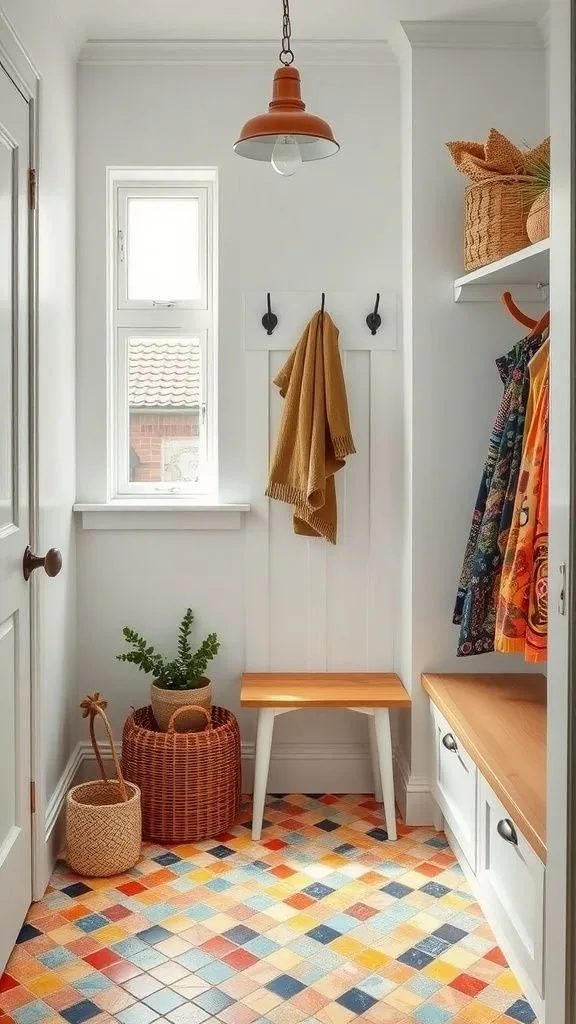
A geometric floor tile in blues, yellows, and reds does the decorating so the rest of the room can stay simple.
The bench is plain white, the baskets are natural wicker, the hooks are basic black; the floor carries the whole personality.
This trades away flexibility. A bold rug you can swap out anytime; tile commits you.
Small rooms keep the cost lower than a kitchen would, but I’d still price the install before falling in love with a pattern.
An upholstered bench built hard against the wall saves the gap a freestanding piece would need behind it.
18. Multi-Functional Storage Benches
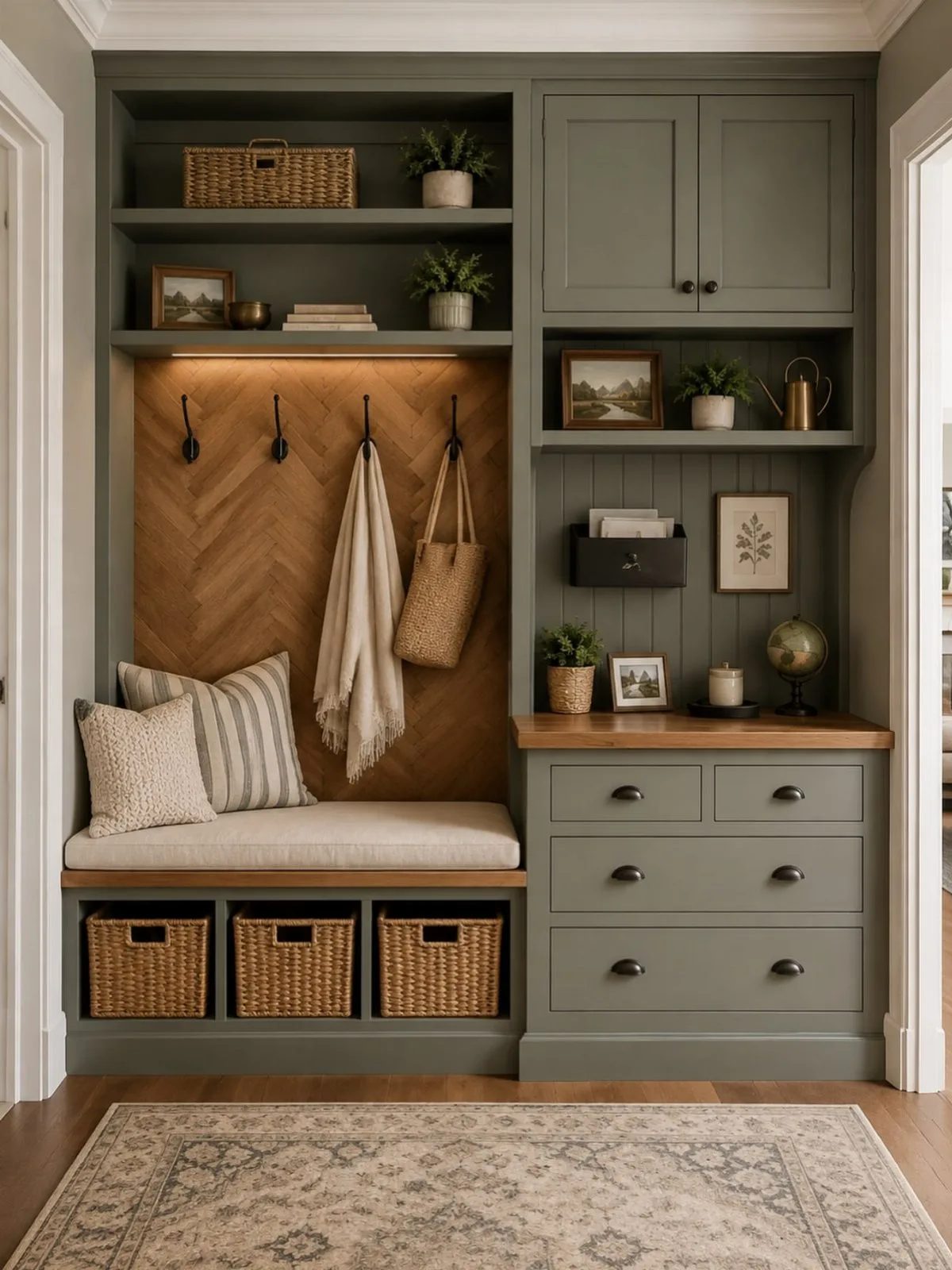
A bench with storage underneath, like the sage green built-in here, gives you a place to sit for boots and a place to hide what you do not want to look at.
Wicker baskets slide below the cushion; cabinets flank the bench; hooks and a shelf handle what needs air.
What I’d watch is the cushion material. If you have kids or pets, the wipeable option wins.
Freestanding ottomans with lift-tops work too, and you can move them when the layout changes.
19. Boot Trays
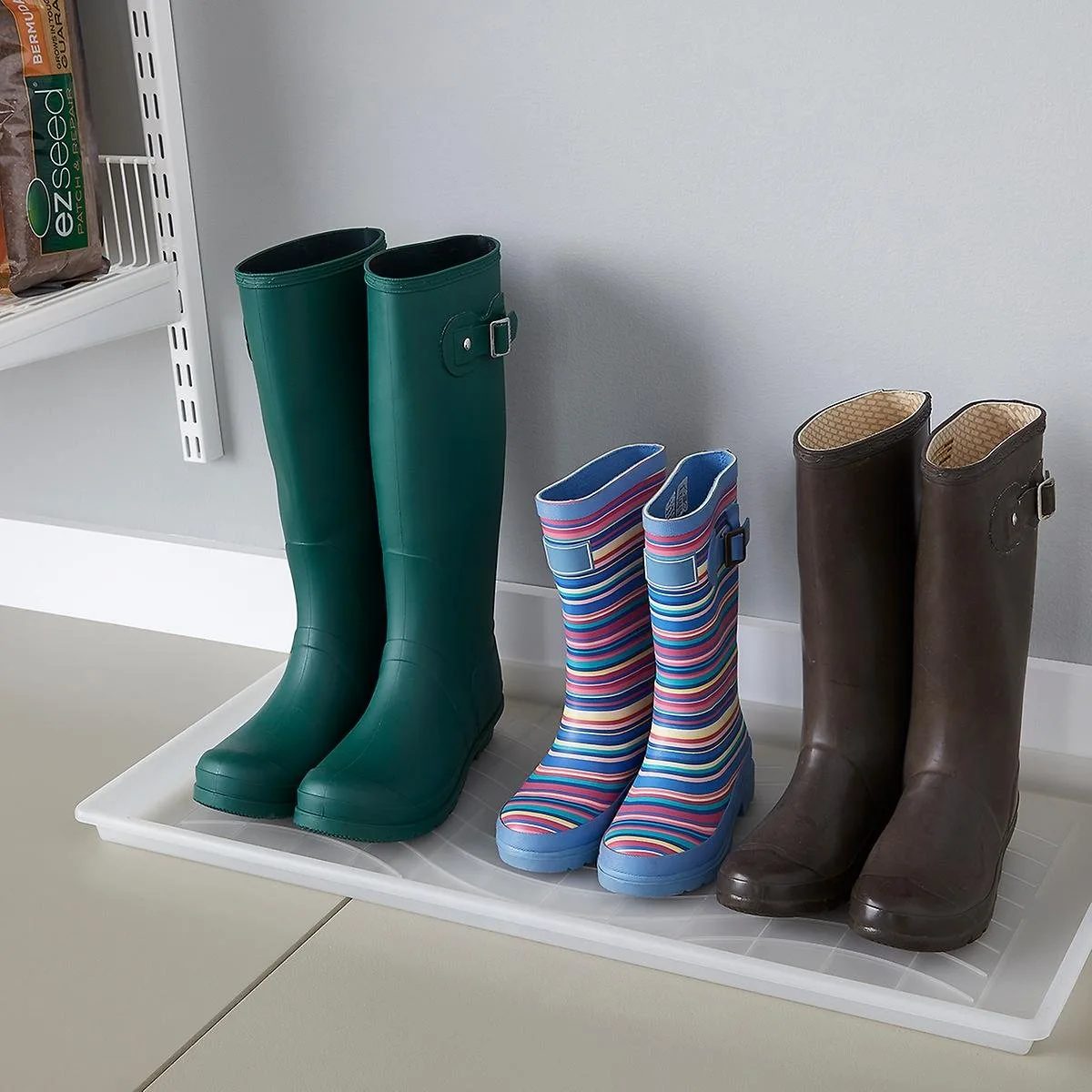
A boot tray keeps the mess at ankle level instead of tracking it across your floor.
In wet or snowy climates, this is the cheapest insurance against water damage. A white plastic tray wipes clean with a rag.
Slide it right inside the door where you already step out of boots; no installation, no commitment to a permanent piece. The raised edges buy you time if you forget to empty it.
You lose some visibility. A tray works best when boots stand in a row, not a pile, so it suits adults and older kids more than a family of five in January.
For heavy use, pair it with a bench nearby so wet gear comes off in one motion.
20. Umbrella Stand
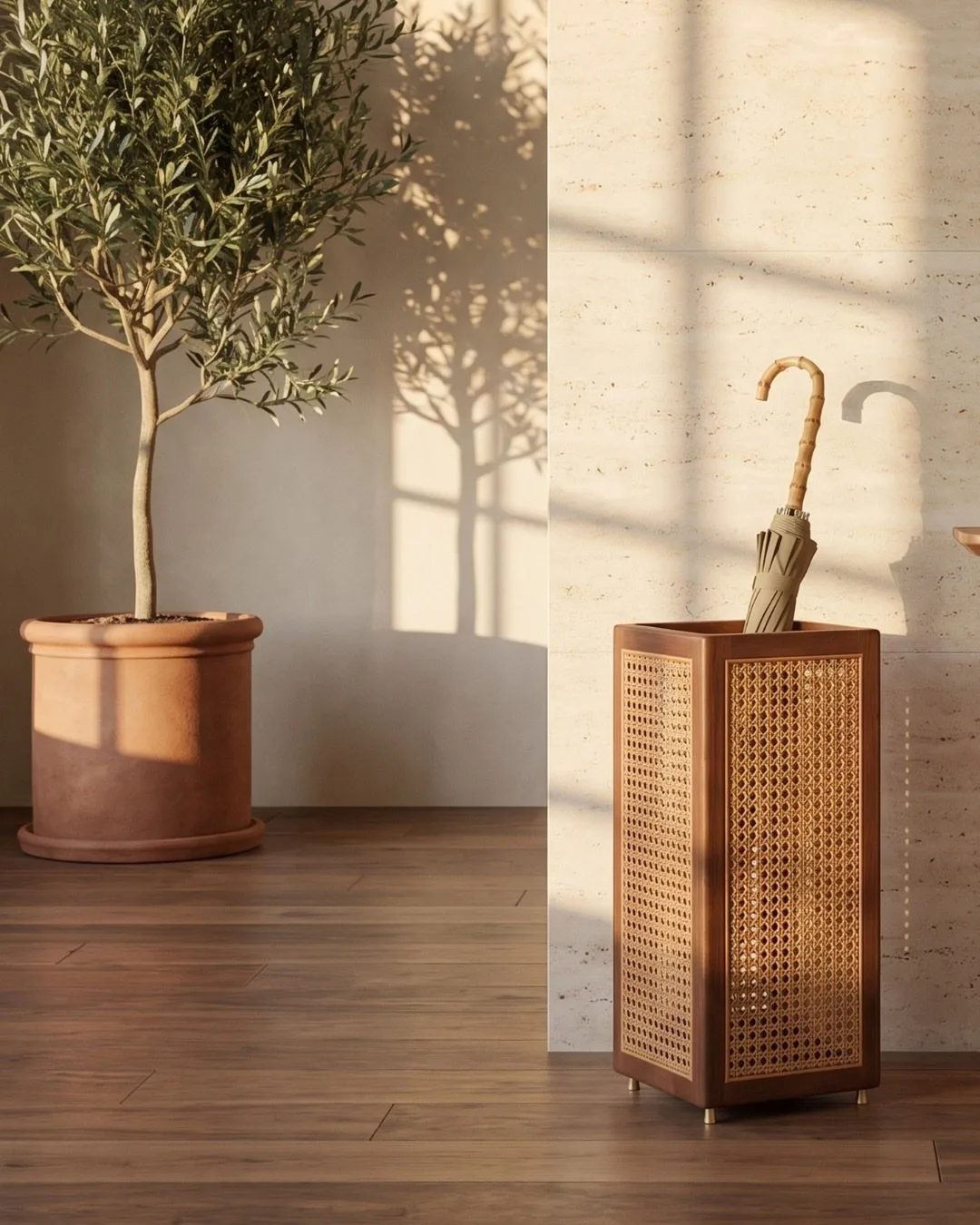
An umbrella stand sounds minor until you are dripping in the doorway with nowhere to lean it.
Cane and rattan warm up a corner that tile or painted wood would leave cold. Material matters more than shape here: woven fibers hide water spots and scratches, while metal rings or ceramic cylinders show every mark.
Set it within arm’s reach of the door you actually use in rain, not the formal front entry you never open.
I would skip this in a narrow mudroom where you need every inch of walkway. The stand needs floor space and breathing room; crammed beside a bench, it becomes one more obstacle.
For tight spots, a single hook at sitting height, hidden behind the door, holds one folded umbrella without the footprint.
Regular Decluttering
A mudroom fills itself if you let it. I would set a calendar reminder for the month after each season changes, when the wrong gear is still hanging there out of habit.
Winter coats in May, sun hats in November; they crowd what you actually need and hide the bottom of the closet from sight.
Swapping seasonal items to a top shelf or another closet keeps the daily grab uncluttered. A jacket that hangs through August has usually gone invisible; set a phone reminder to audit the hooks every season.
One misplaced coat can bury the bag you reach for twice a week. Moving seasonal coats to a bedroom closet and hanging the daily bag at eye level keeps the bench clear without thinking about it.
Creating a Functional Layout
A functional layout starts with how people move, not what fits. Two kids with backpacks need passing space wider than a single adult with a briefcase.
I would map the path from door to interior on paper before buying anything; the tight spot is usually where the door swing meets the bench.
Multiple users means multiple stations, not shared piles. One hook per person, spaced so arms do not cross.
The person who leaves last needs their gear closest to the exit, not buried behind someone else’s. In a hallway under 5 feet wide, a bench on one side and hooks on the other leaves more aisle than cabinets on both.
Incorporating Personal Touches
A mudroom can feel like a checkpoint or a threshold; the difference is what hangs on the wall besides coats. A framed print over the bench gives the eye somewhere to land that is not storage.
I would pick something that reads from 3 feet away, since this is not a room for standing and studying.
A potted plant on a shelf or windowsill does what plants do in every room: signals that someone chose to be here. Hardy varieties handle the temperature swing near a door better than delicate ones.
Family photos work if the frames survive the humidity of wet coats drying nearby; otherwise, a single postcard-sized image in a sealed frame risks less.
Choosing Durable Materials
Flooring in a mudroom earns its keep or fails in 2 seasons. I would pick vinyl tile only where floor height limits the build; it is the budget option that works, not the one that looks cheap.
Brick or stone adds character but costs more and needs professional install. Sealed concrete suits a modern house and takes abuse without complaint.
Tile offers the most styles and the surest grip. Whatever the material, the seal matters more than the surface; an unsealed stone drinks stains, and a poorly sealed concrete dusts forever.
Frequently Asked Questions
How to create a mudroom in a small space?
Define a corner or wall with hooks, a small bench, and shoe storage to turn any entry into a mudroom without building walls.
Vertical storage matters most: wall hooks at varying heights hold coats for multiple people without eating floor space, and a bench with open shelving below keeps shoes off the floor.
A coat closet with the door taken off becomes a pocket mudroom fast; the back wall still holds coats while the side wall picks up leashes, keys, and the bag you grab on the way out.
What are the latest mud room trends?
Bold color on millwork and geometric floor tile that carries the room’s personality are showing up more than safe neutrals.
Hunter green and blue-gray paneling hide scuff marks better than pale shades, and patterned tile lets the rest of the room stay simple and cheap.
Multi-functional benches with storage underneath and durable materials like tile or sealed concrete continue to dominate, since they survive real traffic.





