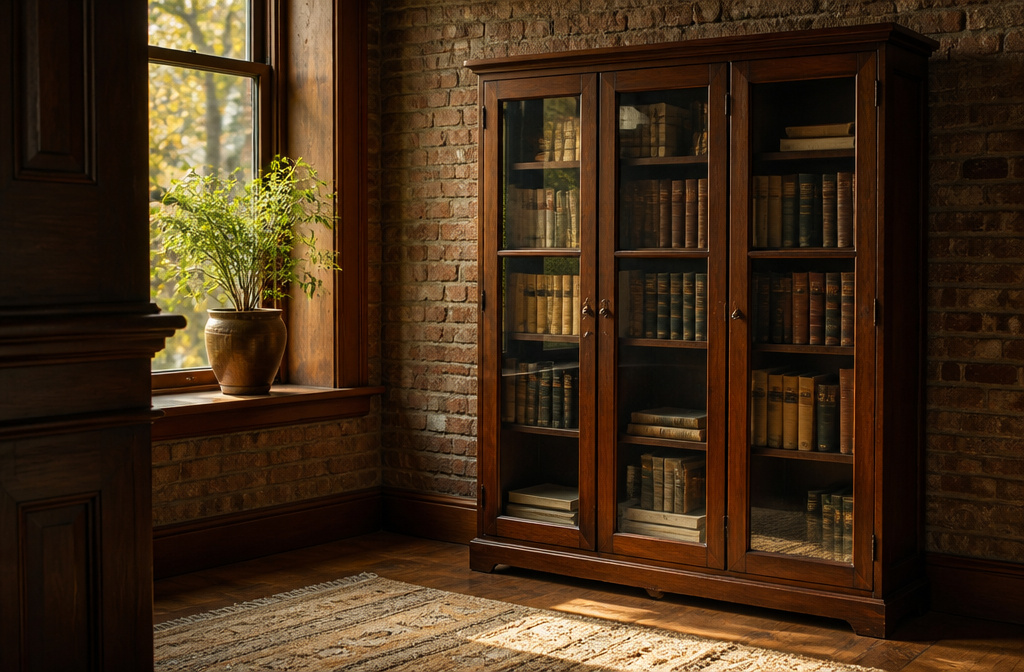
A book shelf with doors is any enclosed shelving unit with hinged, sliding, or glass panels that cover the contents.
The catch is that the door style changes where you can actually use it: sliding panels save floor space but cut usable depth by a couple of inches, while swinging cabinet doors need clearance equal to the shelf depth plus the arc of the door.
A bottom-track sliding system handles heavier loads but leaves a ridge you will feel underfoot in a hallway.
Sliding Door Bookshelves
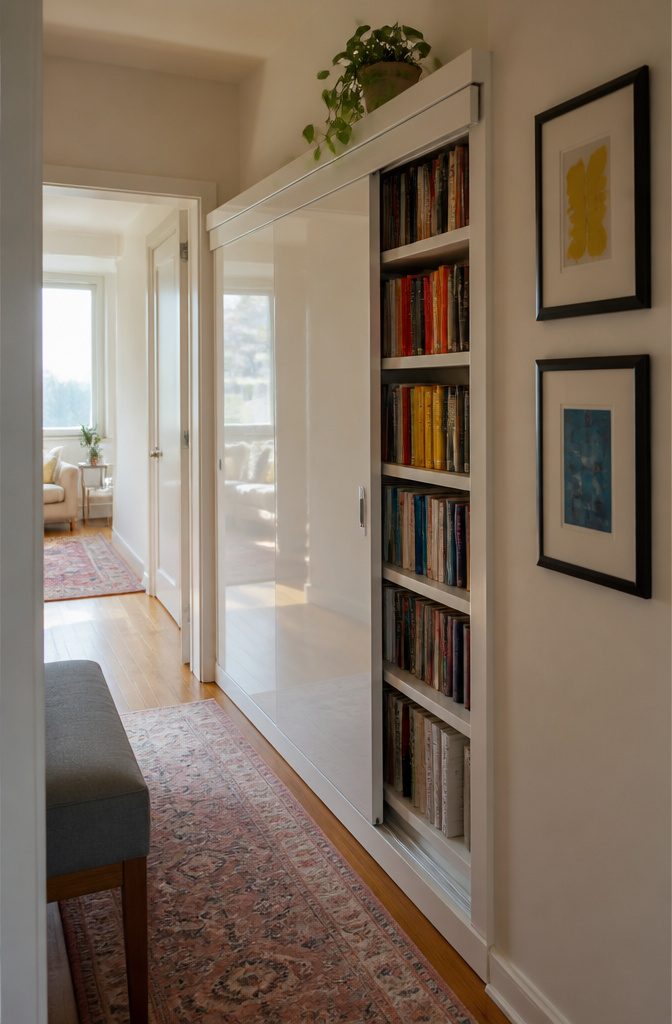
A sliding door bookshelf keeps the footprint tight because the panels glide on a track instead of swinging out into the room.
In a narrow apartment hallway or a bedroom where the bed sits close to the wall, that missing door swing can be the difference between a layout that works and one that constantly annoys you.
The hardware matters more than the doors themselves. A bottom-track system handles heavier loads and stays level longer, but it leaves a small ridge you will feel underfoot if the unit sits in a walkway.
A top-hung system keeps the floor clear, yet it needs solid anchoring into wall studs; a ceiling mount in a rental with plaster and lath is asking for trouble unless you hit the joists dead-on.
What convinced me, reading through a dozen of these installs, is that sliding doors suit renters best when the unit is self-contained: a bookcase with its own frame and track, not a built-in that tears up the drywall on the way out.
You lose a few inches of depth to the sliding mechanism, so a 12-inch-deep carcass becomes roughly 10 inches of usable shelf behind the doors. Plan for that, or your wider books and binders end up stored flat.
Cabinet Bookshelves
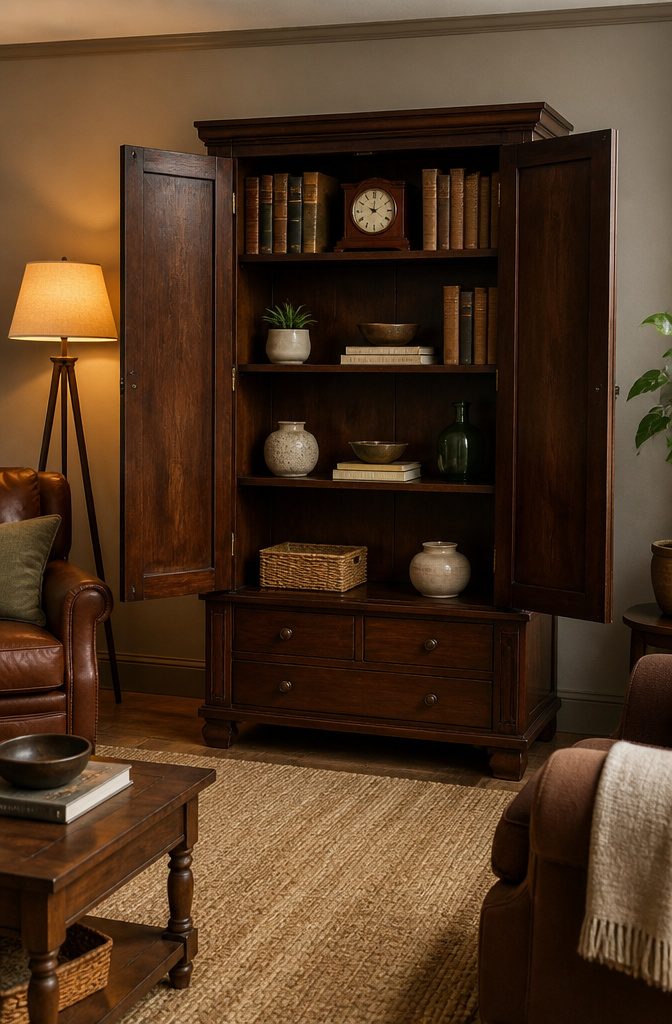
Cabinet bookshelves with hinged doors carry the weight of a familiar shape. The doors swing outward on simple butt or Euro-style hinges, and that motion defines how the piece lives in a room.
You need clearance in front, roughly the depth of the shelf plus the arc of the door, or you’ll find yourself shifting furniture to reach a paperback.
The enclosed box feels finished, almost furniture-like in the way it anchors a wall.
Sliding door versions read differently.
They disappear into the frame and leave the face uninterrupted, but they trade instant access for that smoothness. A cabinet door opens to full exposure; a slider always covers half the shelf at minimum.
I think the hinged style suits actual daily use, the kind where you grab and replace without thinking. The sliding profile works better when the bookshelf is more display than storage.
For renters, the classic cabinet form has another edge. A standalone unit with proper doors looks intentional enough that a landlord rarely questions it, while a wall-mounted sliding system reads as installed, and installed means negotiation.
Solid sides and a back panel also hide wall damage when you move it out.
The weight runs higher, though, and a tall cabinet with loaded shelves needs leveling feet or it will rock on any floor that is not dead flat.
Glass Door Bookshelves
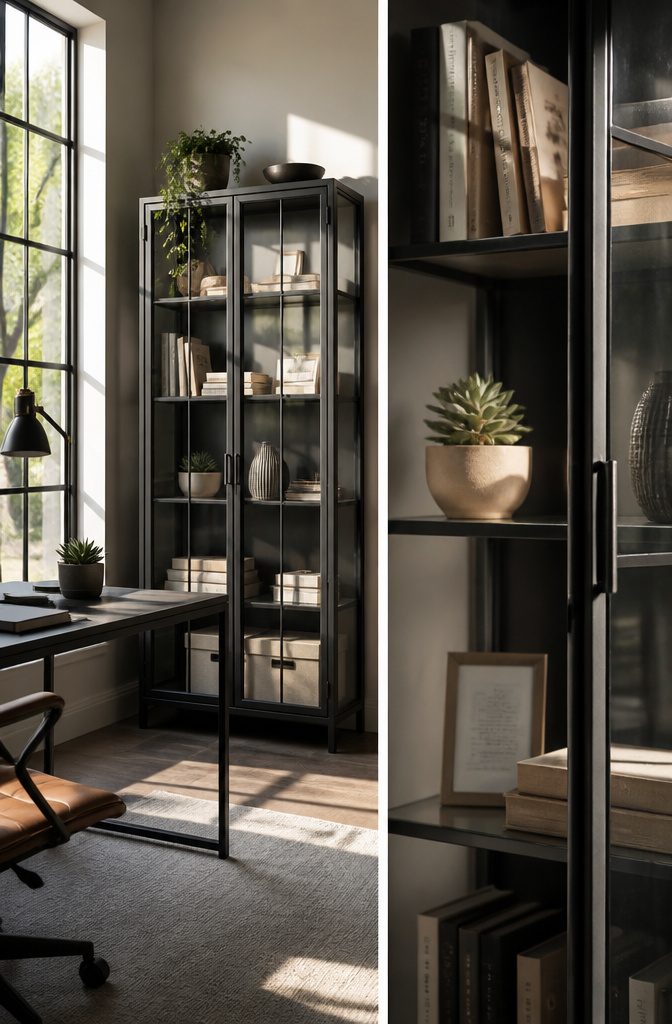
Glass doors keep the contents visible while stopping dust from settling on spines and page edges.
That visibility matters when the books themselves are part of the room’s look: a row of vintage clothbounds, a color-sorted set, or a collection you spent years assembling.
The glass turns storage into display without the constant upkeep of open shelving.
What convinced me, reading through a dozen of these builds, is how much the frame material changes the feel.
A thin metal frame reads industrial and sits lighter in a small space; a wooden frame with mullions feels more traditional and can tie into existing trim.
The frame width around each pane is what makes or breaks the proportions, and narrower frames cost more because the glass needs better edge support.
For renters, the weight is the real limit. A full glass-door unit runs heavy, and wall anchors or floor placement become structural questions rather than style choices.
If you are mounting anything tall, check what your lease allows for wall fastening before you fall for a piece that needs bolts into studs.
Corner Bookshelves with Doors
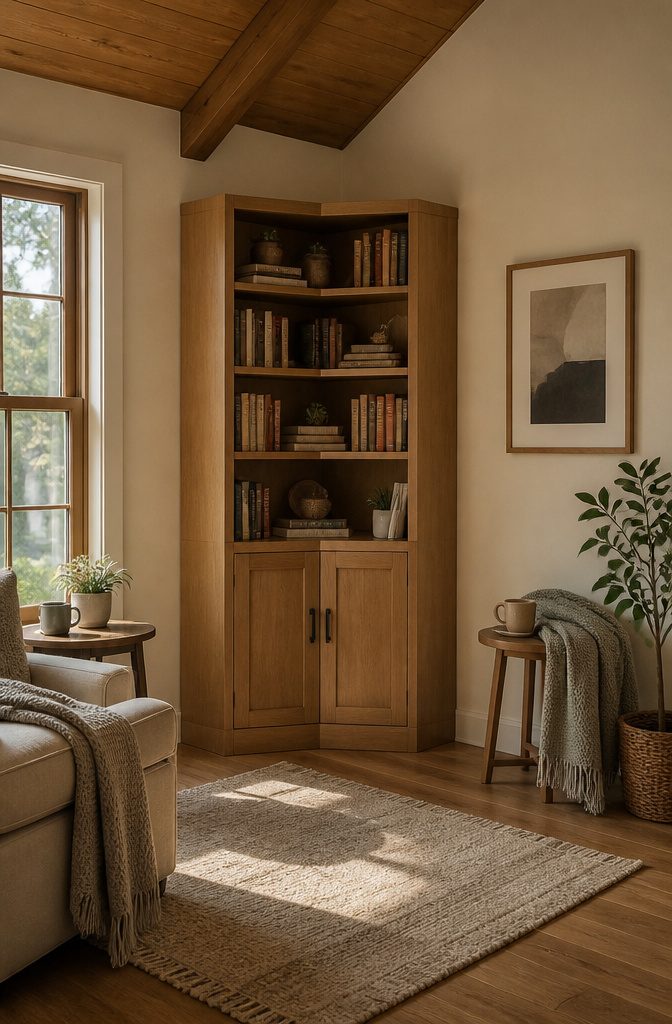
A corner book shelf with doors fills the wedge where two walls meet, turning dead space into storage you actually reach for.
Most units angle across the front to create a flat face, though a few build triangular shelves deep into the corner.
Either way, the footprint is small and the visual weight stays low, which matters in a room where every flat surface already has a job.
The catch is selection. A standard rectangular bookcase ships by the thousands; corner models with doors move in much smaller numbers, and the designs that do exist tend toward either ornate traditional pieces or extremely modern minimalist boxes.
Finding something that reads middle-of-the-road takes more hunting than it should.
Installation also shifts.
You are bracing into two walls that may not meet at a true 90 degrees, especially in older construction, so the first thing to check is the angle at the floor and the angle at the ceiling. They often differ.
Measure both, then order or build to the tighter of the two. A gap that reads as trimmable at 1/8 inch becomes a problem at 3/4 inch when the door gap is only 1/16.
For renters, the appeal is obvious: the unit tucks into geometry you cannot change and adds enclosed storage without claiming wall space you might need for something else.
The trade is that corner shelves with doors rarely come in the budget-friendly particleboard finishes that flat-wall bookcases do, so the price floor runs higher for the same shelf count.
I would not plan a room around one unless I had the corner already and knew the wall angle was sound.
Floating Bookshelves with Doors
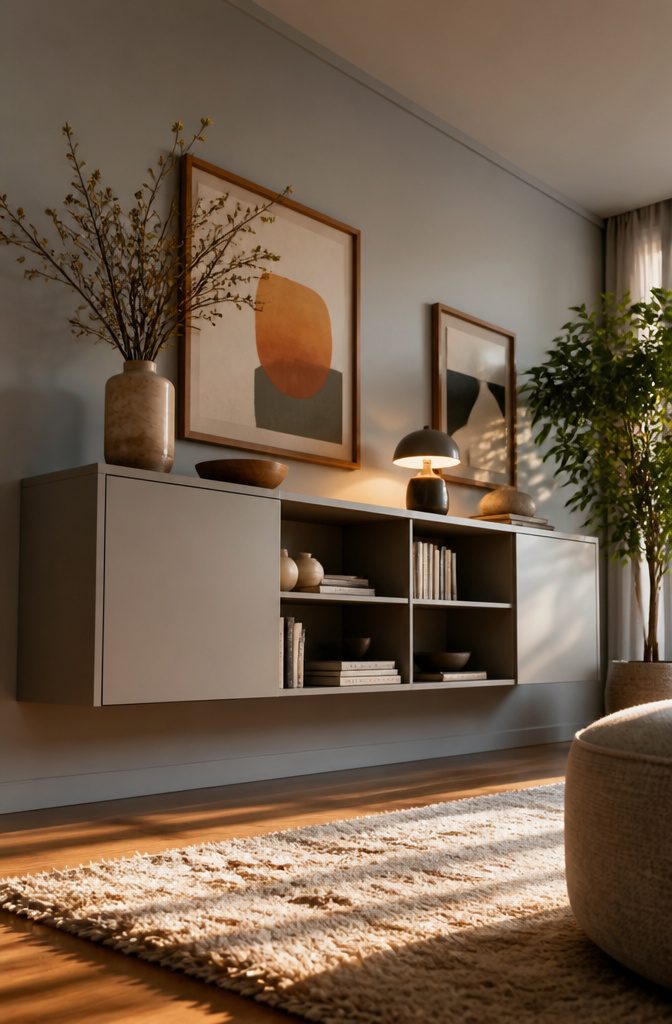
Wall-mounted bookshelves with doors create the most contemporary look in this category because the hardware hides completely.
The shelves appear to hover against the wall with no brackets or visible support structure, and the clean face of a door keeps that line uninterrupted. This is the option most often photographed in current shelter magazines for that reason.
Installation works differently than with freestanding units. These mount directly to studs with a cleat or bracket system rated for the loaded weight, and the finished shell drops over it.
A door adds swing or slide hardware that must clear both the wall and whatever sits below. In a rental, the lag bolts leave holes that need patching later, so the commitment level sits higher than rolling in a cabinet.
For a first home, the payoff is the floor space left open underneath and the gallery-like presence the unit gives a room.
Solid Wood, Engineered Wood, and Metal
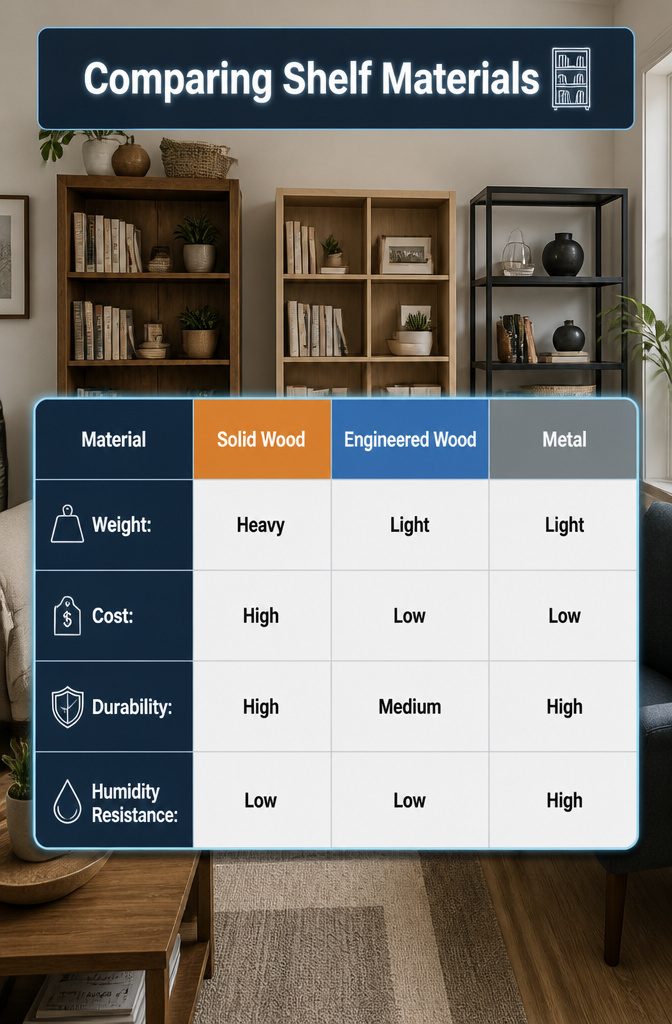
Solid wood carries weight in a way engineered boards never quite match, and that heft is the first thing you notice when you slide a door along its track.
Oak, pine, and walnut shelves dent instead of crumbling, and over years the surface acquires the kind of wear that looks intentional rather than tired.
The trade is upfront cost and the reality that a solid unit can exceed two hundred pounds before a single book lands on it, so wall anchors and floor loading matter from day one.
Engineered wood, plywood and MDF under veneer, solves the weight problem and keeps the grain visible at a lower price point. What separates the usable from the disposable is the core density.
A shelf with an MDF center will sag under hardcovers in three to five years; plywood holds its span longer and takes a screw more securely if you ever need to replace a hinge or a slide.
Metal frames with wood or glass infill panels read as modern and travel light.
Powder-coated steel resists the humidity swings that warp wood near bathrooms or kitchenettes, though the coating chips at corners if the door hardware is adjusted too aggressively.
For renters, the lower weight is the deciding factor, since a metal bookcase can be emptied, tipped, and carried out without leaving the wall scars that solid wood almost guarantees.
Contemporary, Traditional, and Farmhouse Styles
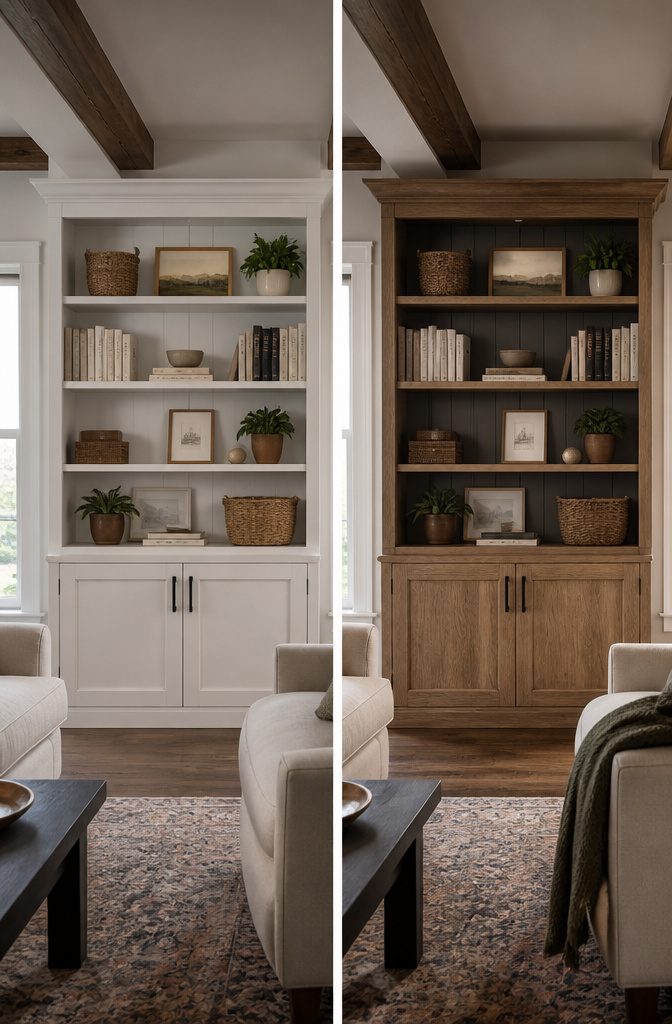
A book shelf with doors should look like it grew out of the room, not like a separate decorating decision you made on Tuesday.
Contemporary styles keep lines clean and hardware minimal; the doors sit flush, the finish is matte or lightly textured, and the whole piece reads as wall rather than furniture.
That works when your living room already leans modern, but dropped into a traditional space it can look like a storage unit that wandered in from the office.
Traditional builds bring in crown molding, raised panels, hardware with some weight to it, finishes that read as walnut or cherry even when they are not.
The detail catches light and competes with other ornate pieces, so I would not park one next to a heavily carved mantel unless you want the room to feel like a furniture showroom.
Farmhouse splits the difference with rustic warmth, beadboard panels, barn-style door hardware, paint that looks like it aged in place.
It softens rooms that feel too sterile and grounds rooms that feel too fussy. The trick is matching the existing wood tones in your floors or trim, not the ones in the catalog photo.
Measuring Height and Width Before You Buy
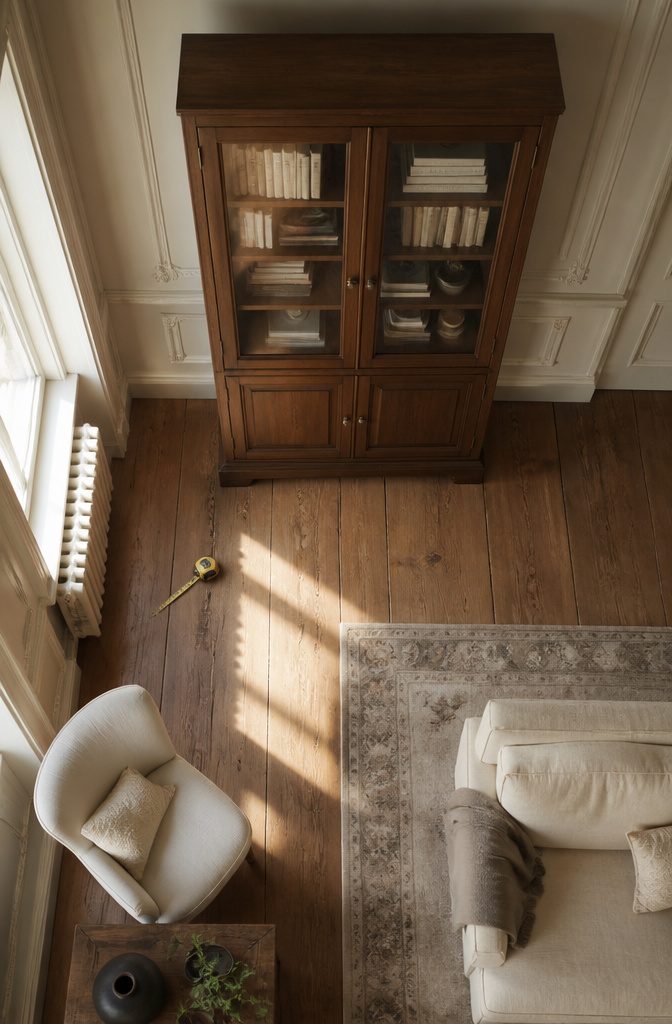
A book shelf with doors that looks right in the room starts with the tape measure, not the finish. Wall space is obvious, but the clearance a door needs is where most people trip up.
A swinging cabinet door wants a clear arc in front of it; a sliding track needs inches above and beside the frame that the unit itself doesn’t show in photos.
I learned that one the hard way eyeing a tall cabinet for a spot under a soffit.
Ceiling height matters more for tall units than you’d think, because the visual weight changes fast.
A six-foot shelf reads as furniture; the same footprint stretched to eight feet starts to read as architecture, and it needs the headroom to pull that off.
In corners the diagonal depth is what actually limits you, not the two wall lengths.
Measure from the corner out to where you want the front edge, then check that against the shelf’s true footprint, not the wall-side dimensions. The number of returns sitting in garages with a quarter-inch of interference taught me that one.
Frequently Asked Questions
What types of bookshelves with doors are available?
The main types are sliding door, cabinet, glass door, corner, and floating bookshelves.
Sliding doors glide on a track, cabinet doors swing outward on hinges, glass doors keep contents visible while blocking dust, corner units fit where two walls meet, and floating shelves mount directly to studs with hidden hardware for a clean, wall-hugging look.
How do I choose the right bookshelf with doors for my space?
Start with the tape measure, not the finish.
Check wall width and ceiling height, then account for door clearance: swinging doors need an open arc in front equal to the shelf depth plus the door swing, while sliding tracks need extra inches above and beside the frame that product photos rarely show.
Match the style to your room so the piece looks like it belongs, not like a storage unit that wandered in from elsewhere.
What materials are commonly used for bookshelves with doors?
Solid wood, engineered wood, and metal are the three common options. Solid wood carries heft and dents rather than crumbling, but a loaded unit can exceed two hundred pounds before any books go on it.
Engineered wood and MDF keep grain visible at lower cost, though shelf sag under hardcovers is a real risk with lower-density cores.
Metal frames with wood or glass infill travel light and resist humidity swings, and the lower weight makes them easier to move out of a rental without wall damage.