
A shelf for shoes is a storage rack built to hold footwear off the floor, and the right one depends on whether you rent, own, or move every year.
We compared six models for 2026, from the $25 Oceanstar bamboo rack to the $88 Yamazaki tower that squeezes five pairs into the footprint of one.
Resin slats hold up against winter slush where bamboo bows and grays; tool-free assembly takes minutes, while screw-together frames need a hex key and patience.
Seville Classics 3-Tier Resin Slatted Shoe Rack
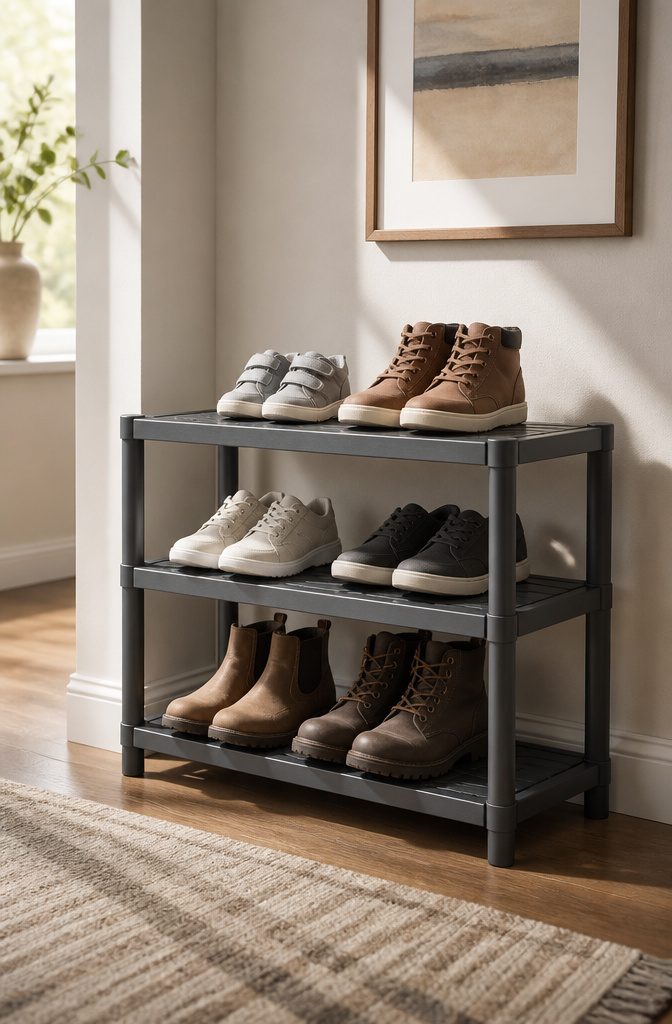
The Seville Classics 3-Tier Resin Slatted Shoe Rack is one of those pieces that does its job without asking for attention.
It stacks vertically or links horizontally, so the footprint grows only when you need it to, and shelves lift out entirely if a pair of boots needs the full height.
Assembly takes minutes and needs no tools. The frame settles flat against the floor without the shimmy that cheaper racks develop after a month of use.
Three tiers hold 9–12 pairs depending on how you load them; toddler sneakers and men’s size-12s both sit steady on the slats, and the spacing handles heels better than most wire grids. A one-year warranty covers the hardware.
The utilitarian look is the tradeoff.
It is heavy to move once loaded, and the resin finish reads more back-closet than entryway. For a renter who wants the shoes off the floor and the rack out of mind, that is often the right compromise.
Oceanstar 2-Tier Bamboo Shoe Rack
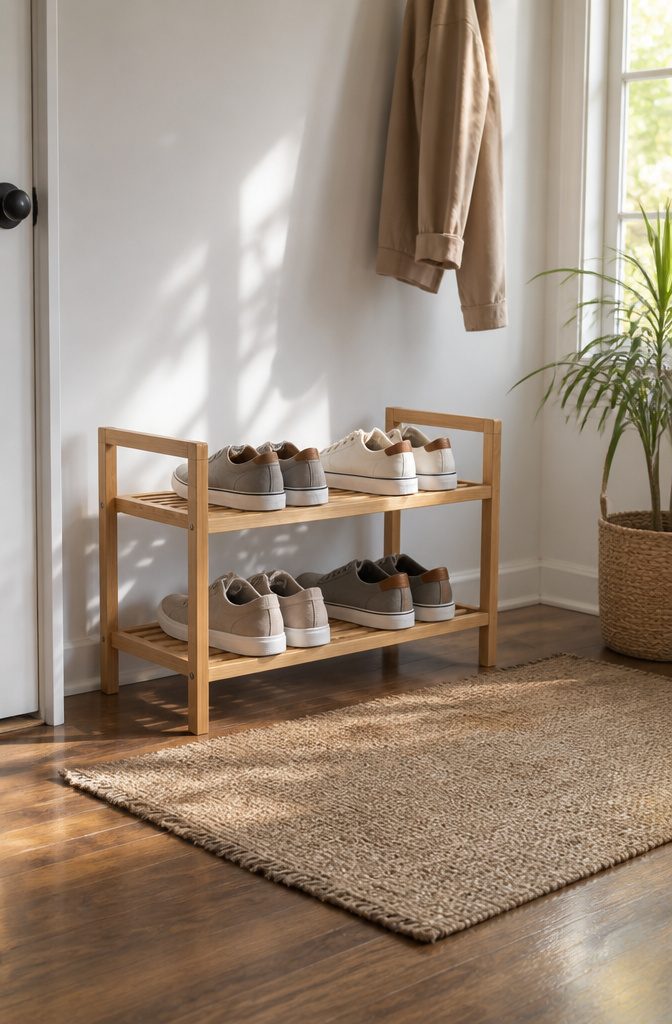
Bamboo lands differently than resin in a small rental.
The Oceanstar 2-Tier rack weighs almost nothing, which means you carry it up stairs or slide it into a closet without asking for help. $25 at Walmart or Home Depot puts it in the same impulse-purchase range as a takeout dinner, and the 8-inch shelf clearance fits sneakers or low boots without wasted height.
The tradeoff shows up in assembly and flexibility. Screws hold this together, not the snap-fit joints you find on resin racks, so plan on a screwdriver and ten extra minutes.
Once built, the shelves stay where they are: no adjusting height, no reconfiguring for heels or winter boots. That portability matters more if you move yearly; the customization matters more if your shoe collection keeps changing.
Yamazaki Home 6-Tier Shoe Rack
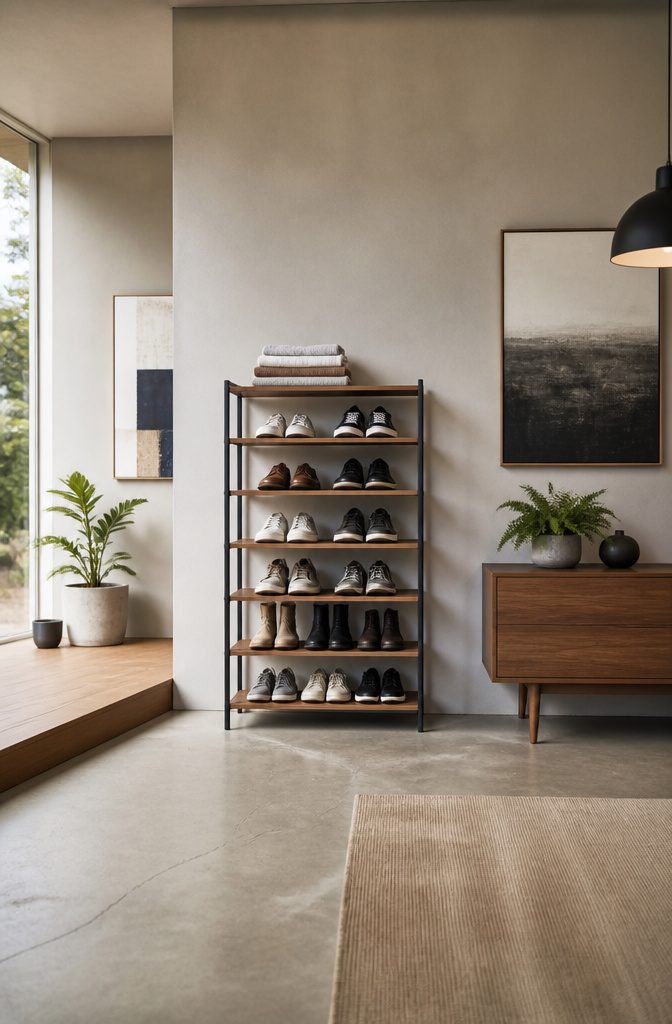
The Yamazaki Home 6-Tier Shoe Rack reads as furniture first, storage second.
Its steel frame and wood-finish shelves sit light on the eyes in a way that wire grids and plastic slats never manage, which matters when the only place for your shoes is the wall someone sees walking through your front door.
Capacity lands between 18 and 24 pairs depending on whether you store sneakers or bulkier boots.
The six tiers give enough vertical spacing that men’s size 12s don’t hang off the edge, and the open sides mean you can angle a pair slightly without blocking the next shelf over.
What sold me on this style, reading through enough listings to numb my scrolling thumb, is that it functions as a display shelf in a pinch.
Stack folded sweaters on two tiers, leave the rest for shoes, and the rack still looks intentional in a studio apartment where your "entryway" is a two-foot strip beside the door.
The trade is price: you’re paying roughly double what a resin slatted rack costs for that visual quiet.
For renters who can’t drill into walls and first-home owners who want one piece to handle shoes now and maybe bathroom towels later, this is the rack that doesn’t need hiding behind a curtain.
Yamazaki Home Tower Shoe Rack–Tall
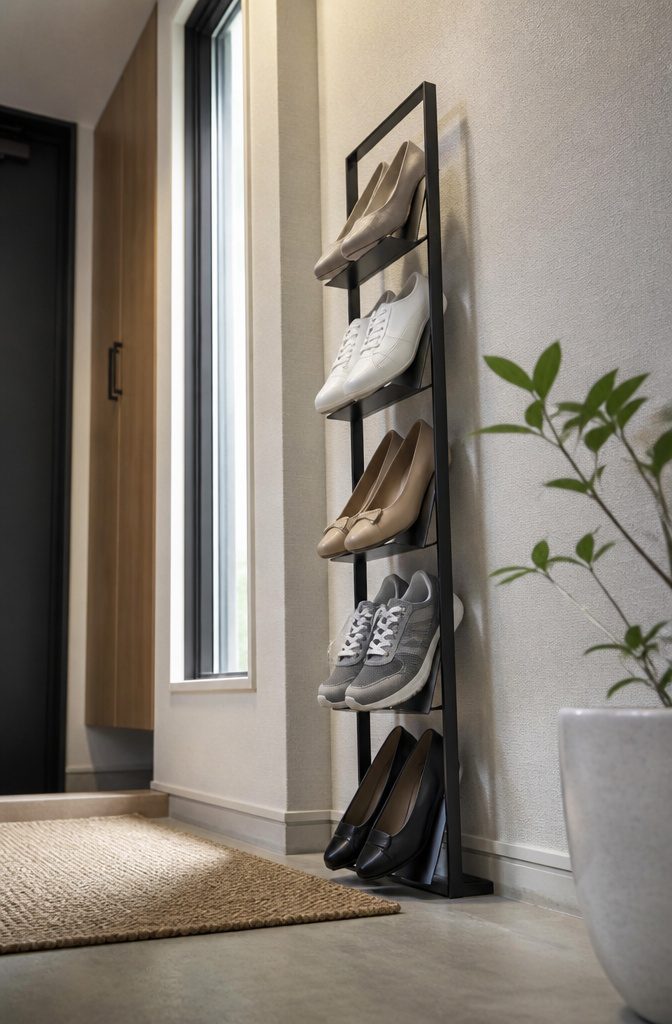
The Yamazaki Home Tower Shoe Rack–Tall occupies the same floor space as one pair of shoes while holding five. That footprint is the whole argument for it.
In a narrow apartment hallway or a closet where the door barely clears the jamb, a standard rack steals walking room you do not have. This one tucks into corners and behind doors that would thud into anything wider.
The tradeoff shows up fast if you need storage for small kids’ shoes.
The spacing that lets adult pairs sit upright leaves children’s pairs swimming, or slipping through. For a household with only adult sizes, that is not a loss.
The handle on top matters more than it looks. A rack this slim is easy to move to vacuum behind, or to shift from closet to entry when seasons change.
At $88, it sits in the middle of the range for a metal rack with some design attention. You are paying for the vertical squeeze, not for more pairs.
Five pairs is enough for a single person’s daily rotation, or for keeping guest slippers and rain boots from colonizing the floor. For a renter measuring a closet in inches, that math usually wins.
IKEA Bissa
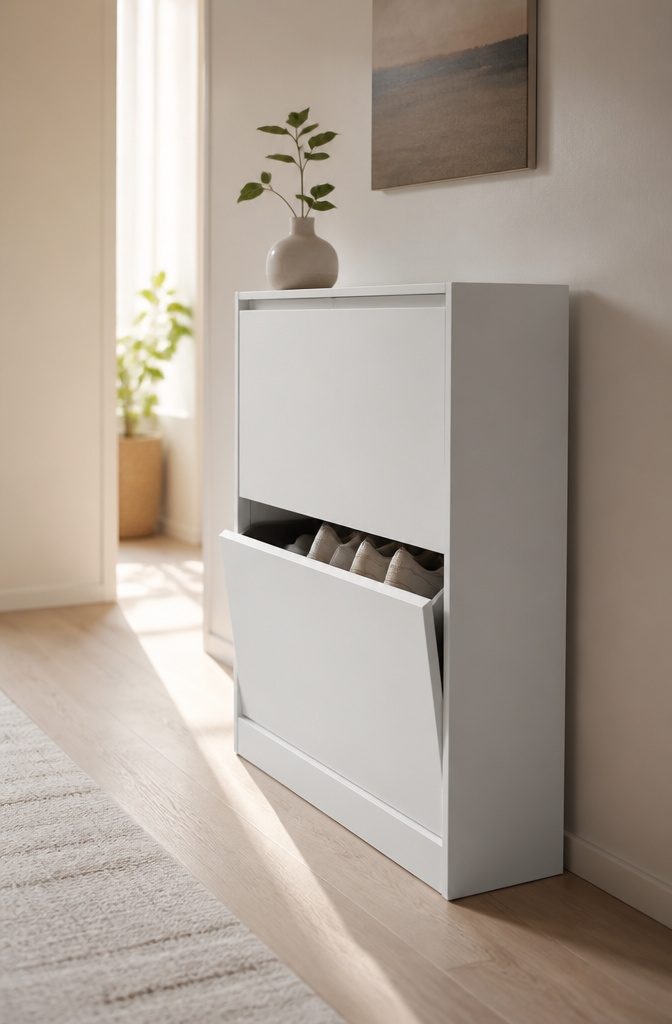
The IKEA Bissa is a slim cabinet that hides shoes behind a clean front, and at $50 it is the cheapest closed storage we compared. That price matters because most shoe cabinets cost far more for the same out-of-sight result.
The Bissa is slimmer than the other cabinet we tested, with thinner walls that waste less space in a narrow entryway, and it assembles far easier than anything else in its category.
Closed storage like this differs from an open rack in what it asks of the room and what it gives back. Shoes stay invisible, which helps when the only spot is a hallway guests walk through.
But the Bissa stores fewer pairs than a freestanding open rack of similar footprint, and the closed body needs wall anchoring so it does not tip forward when the door opens.
Shoes also shift a little inside when the cabinet moves.
For renters in tight entryways, the trade is clear: less capacity and a drill hole in the wall, in exchange for a footprint that no open rack can match and a sightline that stays clean.
Whitmor 36-Pair Over-the-Door Shoe Rack
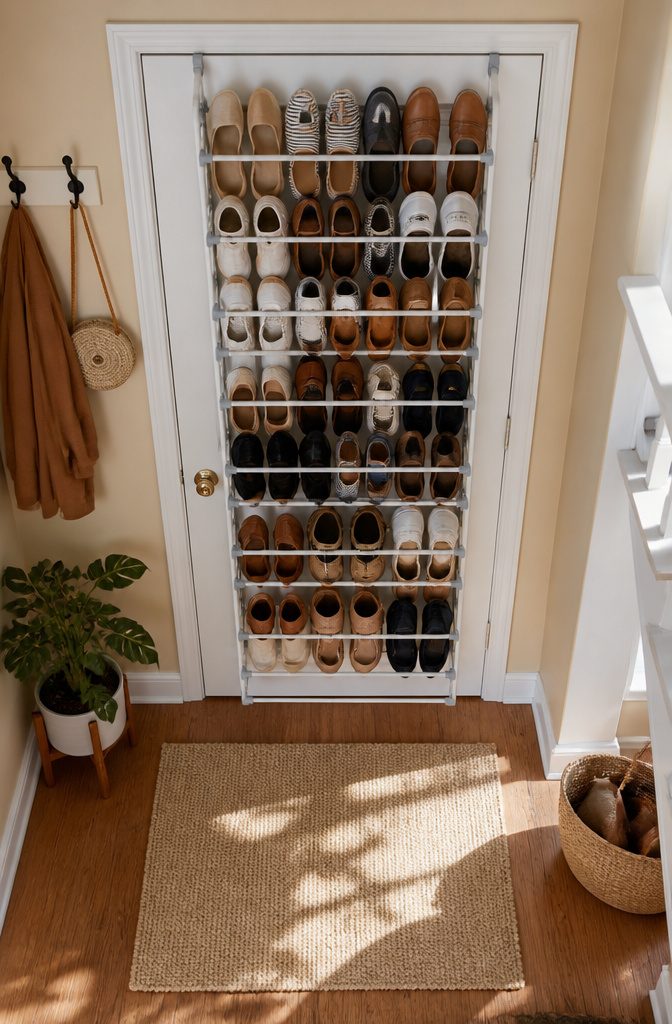
The Whitmor 36-Pair Over-the-Door Shoe Rack runs $54 on Amazon and $30 at Walmart, though that lower price may not last.
What the price buys is door space instead of floor space, which matters in apartments where every square foot of closet or hallway counts.
Rubber-lined hooks keep the rack steadier than competitors’ hardware, and the shelves adjust to fit different shoe sizes.
That flexibility helps if you own anything from narrow flats to wide sneakers, but the rack still shares the limits of every over-the-door design.
Heavy boots or work shoes strain the hooks over time, and a door you open and close all day becomes awkward to live with.
A bedroom door you leave propped open works fine; a bathroom door you push through with an armful of laundry does not.
For renters who cannot drill into walls and have no closet rod to spare, this is the hanging option that stays put.
Just know the trade before you buy: you gain storage, but you lose the easy swing of that door.
What Holds Up Over Time
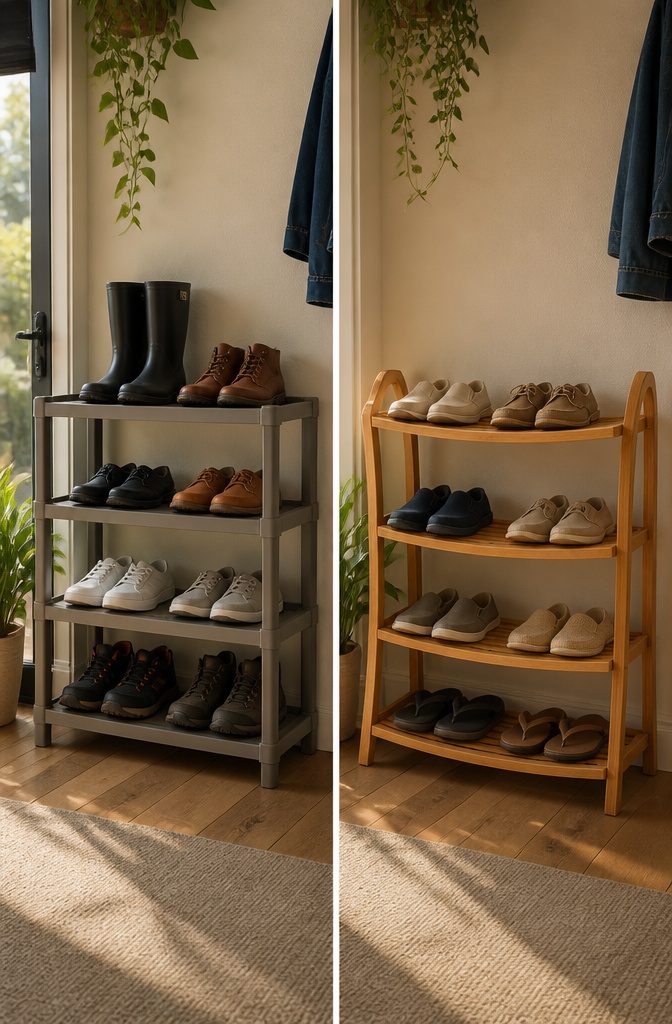
Resin racks carry weight better than bamboo ones, which matters once you load up a third row of boots.
The slatted resin frames from Seville Classics stay flat under pressure where lighter bamboo builds, like the Oceanstar line, start to bow after a few months of daily use.
That bowing is subtle at first, just enough to let shoes slide forward and bunch against the bar.
Humidity is where the gap widens. Bamboo soaks up bathroom steam and winter slush drips, then dries unevenly and checks along the grain.
Resin shrugs off the same cycle; it does not swell or split, and mold wipes off with a cloth instead of burrowing into fibers.
After a year, a resin rack still looks like itself, while bamboo turns the dull gray of old cutting boards.
The trade is feel and footprint. Resin wins for damp entries and heavy loads, but bamboo looks warmer in a bedroom closet and weighs half as much when you need to move it for cleaning.
For renters who might relocate the rack twice a year, that lightness is not nothing.
Putting It Together
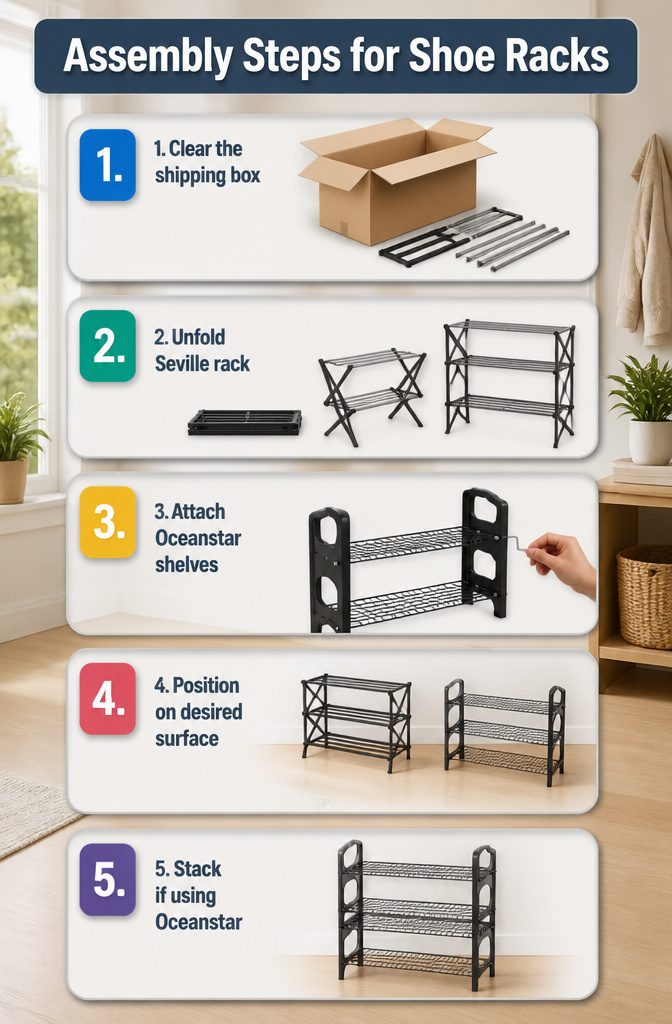
Tool-free assembly sounds like the obvious win until you actually compare the two side by side. The Seville Classics rack unfolds and snaps together in about the time it takes to clear the shipping box off your floor.
No screws, no hex key to lose in a junk drawer, no moment where you wonder if the leg is on backward.
The Oceanstar, by contrast, needs eight minutes with a small hex key to attach its two shelves to the end pieces.
That is still quick, but the gap between unfolding and screwing is the difference between setting something down and starting a mini project.
Where the frustration actually lands depends on your flooring more than your patience. The Seville sits stable enough on most surfaces, while the Oceanstar has no stabilizing feet and can slide around on sleek floors.
Stack two Oceanstar units and the weight keeps them seated securely, but pick the rack up by its top handle and the frames separate.
Sliding them back together is easy, yet it is the kind of annoyance that shows up every time you vacuum behind it.
For a renter who moves yearly, the Seville’s lighter, locked-together frame wins. For someone parking the rack in a closet and leaving it, the Oceanstar’s eight-minute setup is a one-time cost.
How Many Shoes Actually Fit
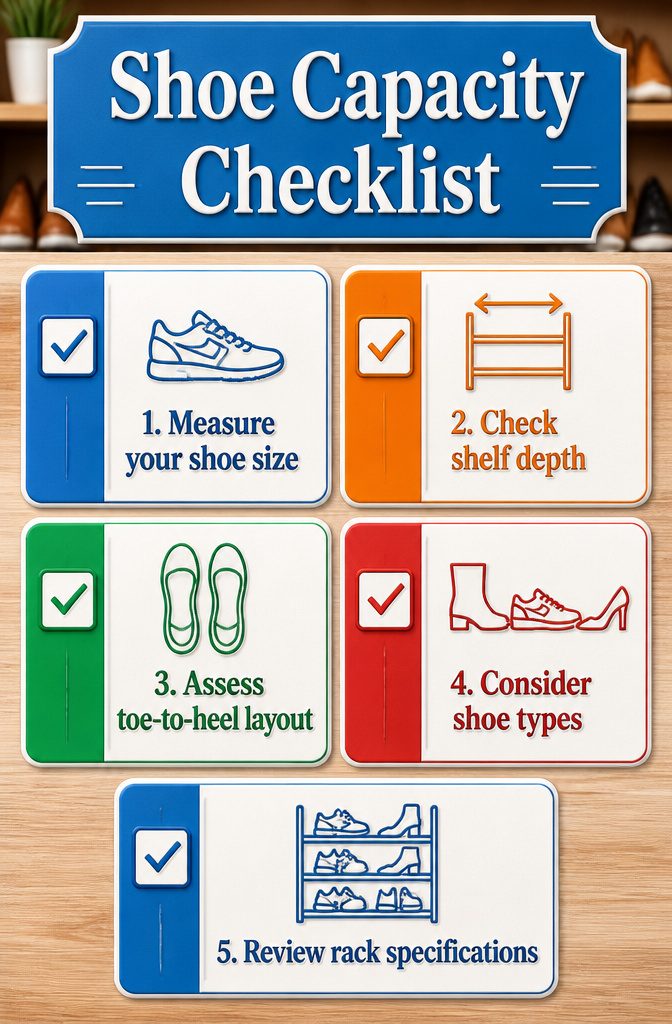
A men’s size 12 sneaker swallows nearly twice the shelf depth of a women’s size 7 flat, which is why the pair counts stamped on boxes rarely survive contact with a real closet. Seville’s slatted rack claims 9–12 pairs, and Yamazaki’s tower promises 18–24.
Those brackets exist for a reason. Figure half the upper number if you wear boots or men’s sizes, or if you store shoes toe-to-heel instead of side by side.
In my own sorting, the Seville held 8 pairs of my husband’s sneakers where the label suggested 12, while the same rack carried 14 of my narrower flats.
The Yamazaki tower’s generous 18–24 claim shrank to 11 pairs of winter boots, or held true only when I stacked sandals in alternating directions. Capacity is a negotiation between the rack’s geometry and the actual shapes walking through your door.
Where the Rack Lives
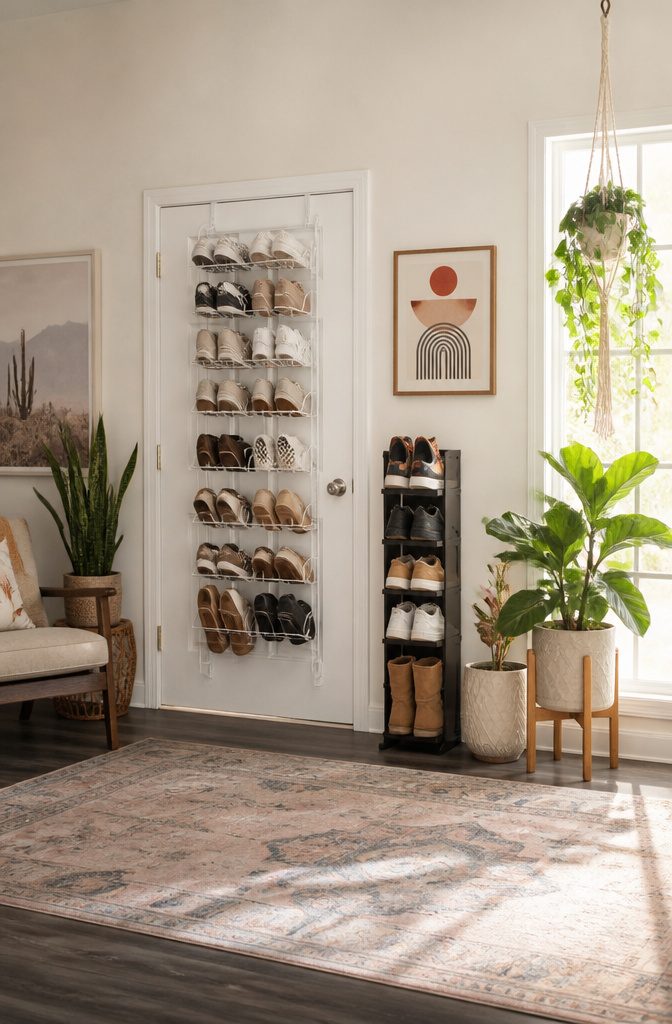
Floor space is the first thing that disappears in a rental entryway, and the Whitmor 36-Pair Over-the-Door Shoe Rack is built for exactly that problem.
Its rubber-lined hooks grip more securely than any other door-mounted model, and the configurable shelves adjust to fit different shoe sizes without wasting a square inch of tile.
The catch is the door itself: most over-the-door racks bulk up enough that the door will not close flush, and this one is no exception.
If the bedroom or closet door is your only path in and out, the hassle of bumping it every morning adds up fast.
For renters who can spare a footprint, vertical height is the cheaper trade. The Yamazaki Home Tower Shoe Rack–Tall stacks upward instead of outward, which keeps the same narrow slot by the wall useful.
The standard Yamazaki Home Tower Shoe Rack does the same at a lower height if ceiling clearance is tight.
Both leave shoes visible, which matters more than it sounds: out of sight becomes out of rotation, and a rack you forget exists does not solve the pile by the door.
The IKEA Bissa narrows down to fit shallow entryways where even a tower feels intrusive. Hidden storage behind a cabinet door keeps the visual noise down, though that concealment costs you the instant scan of what is clean and ready.
Two ways to play this: if the entryway is also the living room sightline, the hidden route wins. If you grab shoes on the way to the car, visible racks save ten seconds every morning.
Frequently Asked Questions
What is the best shoe rack?
The Seville Classics 3-Tier Resin Slatted Shoe Rack is the best overall pick.
It stacks vertically or links horizontally, assembles without tools in minutes, and holds 9–12 pairs on slats that handle heels better than wire grids. The resin frame stays flat under weight where lighter builds start to bow.
How many pairs of shoes can a shoe rack hold?
It depends on the rack and your shoe sizes. The Seville Classics holds 9–12 pairs, while the Yamazaki Home 6-Tier holds 18–24.
Cut those numbers roughly in half for boots or men’s sizes, or if you store shoes toe-to-heel. A women’s flat takes far less depth than a men’s size 12 sneaker, so real capacity varies by what you actually own.
What is the best shoe rack for small spaces?
The Yamazaki Home Tower Shoe Rack–Tall is built for tight spots. It covers the same floor space as one pair of shoes while holding five, tucking into corners and behind doors where standard racks steal walking room.
The handle on top makes it easy to shift when seasons change or you need to vacuum behind it.





