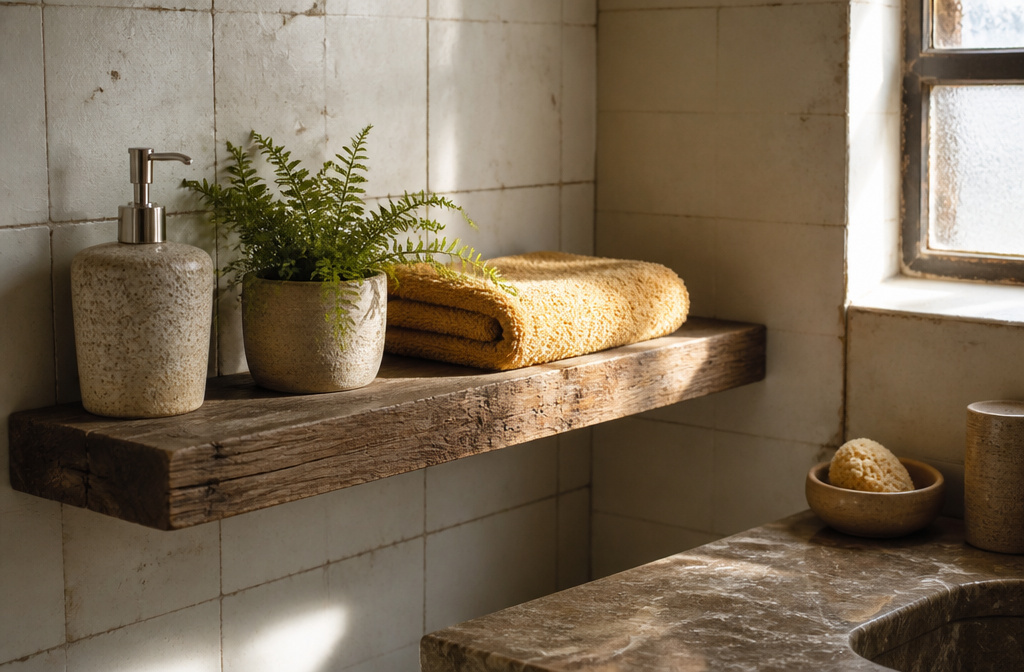
A shelf for bathroom walls is a mounted storage surface, usually glass or metal, that holds toiletries and towels without eating floor space.
The catch is that "wall-mounted" means drilling into tile or drywall you may not own, and the hardware kit rarely includes the tile bit or the patience required to find a stud behind mortar.
A 10-inch corner unit from Nameeks runs $97 and turns dead space into usable storage; a 24-inch floating shelf at $96 holds two folded bath towels side by side.
Floating Bathroom Shelves in Chrome and Black
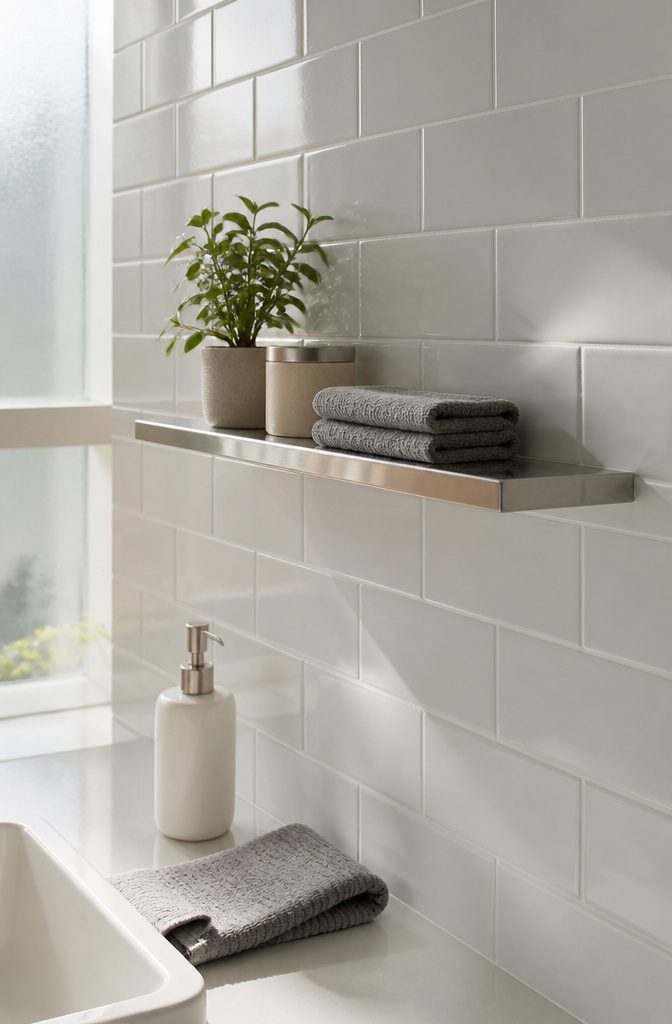
Nameeks makes a 21" stainless steel floating shelf in polished chrome that runs about $84, model NCB92, and the same line comes in black at $99, model NCB119.
Both mount straight to the wall with hidden hardware, which keeps the look clean and leaves no brackets to knock a towel against.
The black finish costs more but reads as more intentional in a rental with white tile and chrome fixtures everywhere else.
Remer’s 20" brass shelf in polished chrome, model LN20, lands at $177. The inch difference is negligible in practice, though the brass substrate under that chrome plating adds weight and a slightly warmer edge than the all-steel Nameeks options.
Wall-mounted installation on these means finding studs or using proper anchors, nothing exotic. The modern styling is flat planes and thin edges, the kind of thing that looks built-in without the commitment of a full renovation.
For renters doing one project a year on a tight budget, the Nameeks chrome shelf is where most start.
The black only makes sense if you are already running matte hardware elsewhere; otherwise it fights the mirror and faucet finishes you did not choose.
Corner Floating Glass Shelves
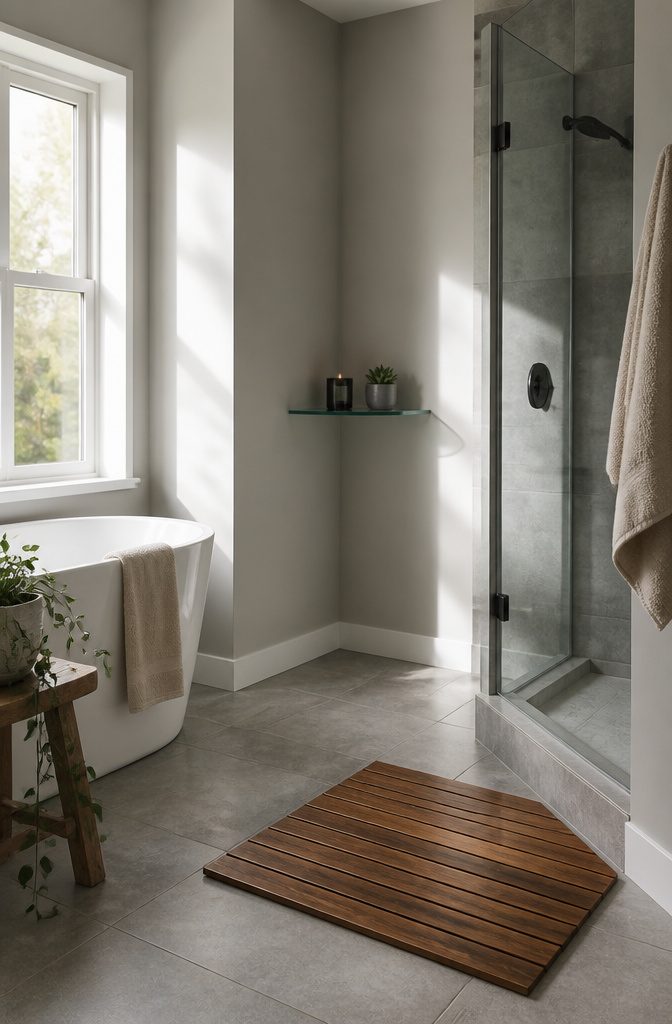
Corners in a small bathroom are dead space until they aren’t. A 10-inch matte black corner shelf by Nameeks, model NFA039 at $97, turns that triangle where two walls meet into usable storage without stealing walking room.
The finish reads modern without going industrial, and the glass keeps the visual weight low so the walls still feel open.
The 12-inch polished chrome Gedy shelf, model 2119-30, runs $64 and sits flatter to the corner as a compact standard.
Chrome bounces light around, which matters when the window is small or the paint is dark. Either shelf mounts at whatever height clears the faucet or the tallest bottle you keep there.
Wide Glass Shelves for Towels and Bottles
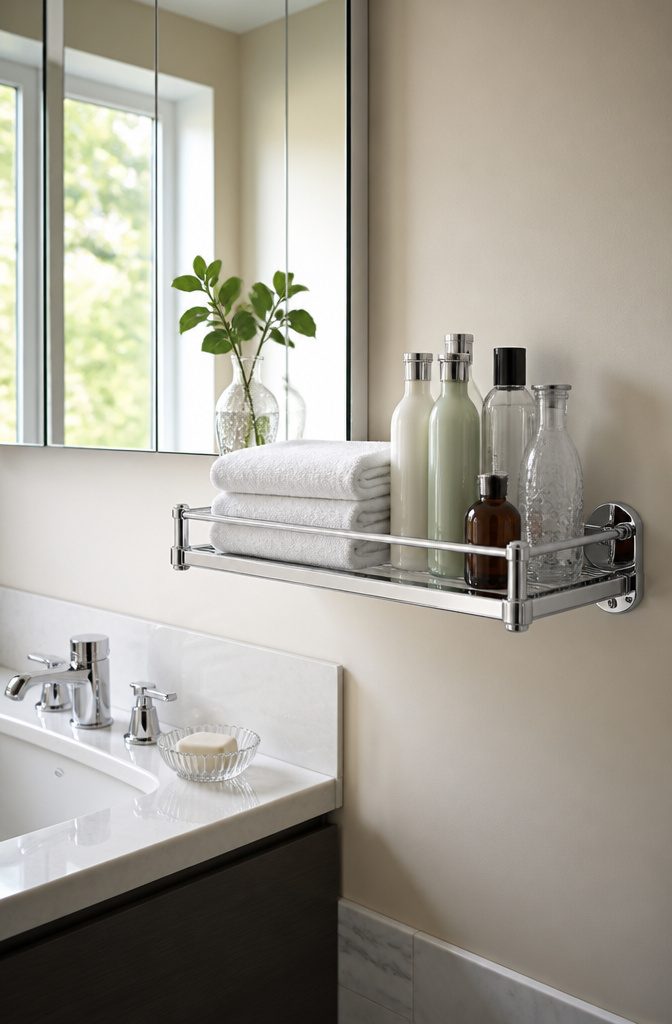
A 24-inch shelf changes what a bathroom wall can hold. The Nameeks NNBL0051 runs $96 in polished chrome and earns its price when you are done balancing a single soap bottle on a ledge barely wider than your hand.
Two folded bath towels fit side by side with room left for a stack of washcloths, or a row of full-size shampoo and conditioner bottles without the circus act of tipping them against each other.
The 24-inch width also spans most standard studs, so the bracket or concealed mount actually hits something solid instead of relying on anchors that pull out in tile after a humid summer.
Renters graduate to this size once they have lived through the smaller options and measured what they actually reach for each morning.
Glass Shelves With Rails
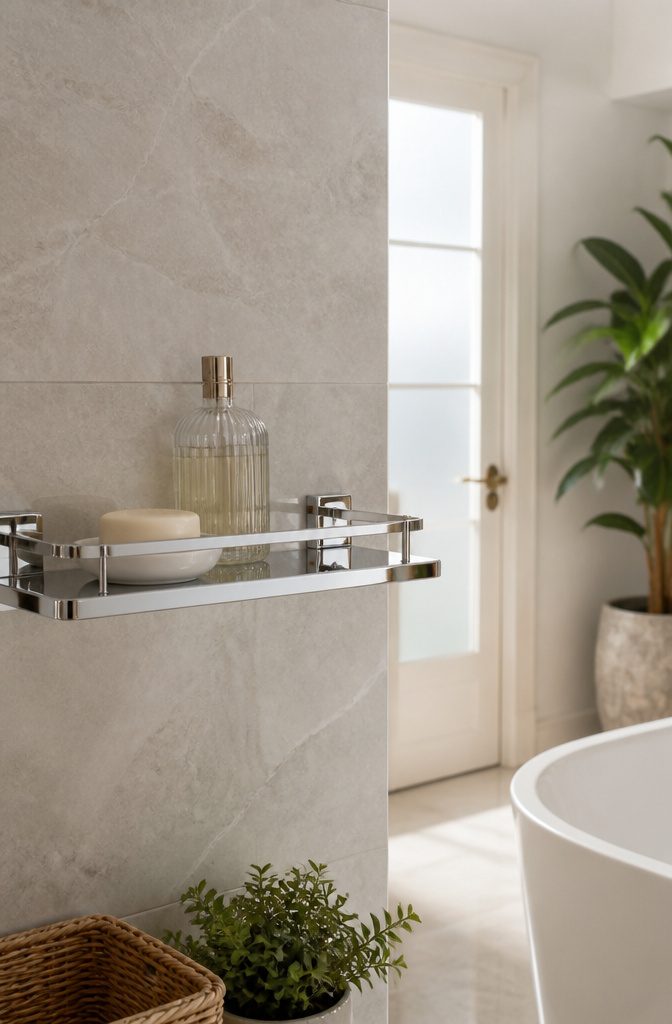
Glass shelves with rails solve the problem that plain glass shelves create: everything slides.
The rail adds maybe an inch of metal lip along the front edge, and that lip keeps a wet soap dish or a glass bottle from scooting off when you bump it reaching for the faucet.
StilHaus builds these in polished chrome at 16 inches and 24 inches, plus a double 18-inch with rail that runs about $380 (model EL694-08).
The double deck costs more because you are buying two shelves and twice the bracket hardware, not because the rail itself is expensive.
The rail is a bent strip of brass or steel; the machining is in the polished finish and the wall anchors.
The same line comes in gold and brushed nickel if chrome reads too clinical against your tile.
The StilHaus 766-16 in gold sits around $322, the 819-36 stretches to 36 inches if you have the wall space, and the smaller 766-08 drops to $238.
Gold costs more than brushed nickel at every size, and both cost more than chrome. Whether the warmth is worth it depends on what your mirror frame and faucet already decided.
Towel Racks With Built-In Shelves
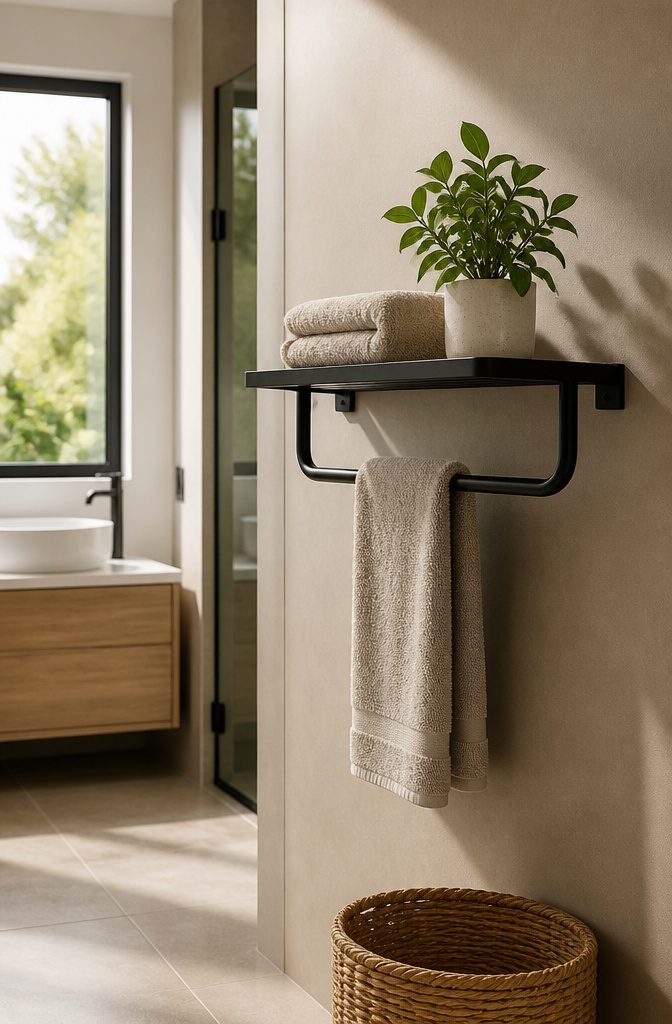
A towel rack with a built-in shelf fills a gap that pure storage cannot.
The bar keeps one towel ready to use while the shelf above holds a second roll, a phone, or a small plant. That dual job matters in a bathroom where wall space is tight and every inch competes.
Matte black and polished chrome are the two finishes that keep showing up in searches, and they read differently in the same room.
Matte black softens under warm bulbs and hides water spots longer, which suits a bathroom with windows that steam up fast.
Polished chrome reflects more light, so it works when the space already feels dim or when the fixtures around it are bright metal.
The trade against separate units is drilled holes and wall anchors. One combined piece needs one set of holes, not two, and the spacing is already solved.
For a renter, that means half the patching later. For a first-time owner, it means one trip to the hardware aisle instead of guessing whether two different brands will line up.
The downside is flexibility: a shelf and bar locked together cannot be split if you later want the bar lower or the shelf wider.
I would buy combined only after measuring the tallest bottle I plan to set above and the longest towel I hang below, because both need to fit the single bracket spacing without crowding.
Double Glass Shelves for Layered Storage
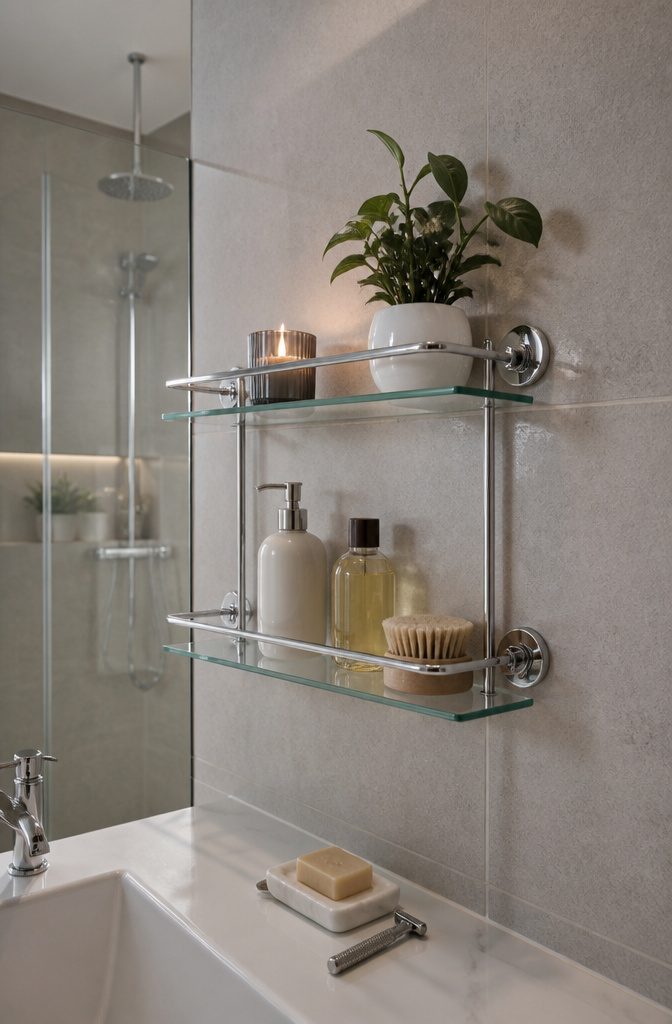
Two tiers of glass make more sense than one wide plank when the wall above your sink is narrow and the counter below it already crowded.
The StilHaus double 18" shelf in polished chrome, model G694, runs $429 and stacks one shelf at about hand-washing height, another a foot above it.
Toiletries that roll or drip, a toothbrush cup, a small plant each get a level instead of competing for the same real estate.
The double with rail, model EL694-08, drops the price to $380 and adds a front bar I read as more useful than decorative.
In a rental, that rail keeps a shelf from becoming a ledge where things walk off every time the door slams.
The "luxury" label here mostly means solid brass hardware under the chrome and glass thick enough that it does not flex when loaded.
For a space you do not own, that translates to something that installs once, survives a lease, and moves with you without the flaking you get from plated steel in humid air.
One wide shelf at 18 inches holds the same total weight, but everything ends up in one plane.
Two tiers let you store taller bottles on the lower level and keep the upper one clear for what you grab twice a day.
Corner Shower Caddies in Chrome and Black
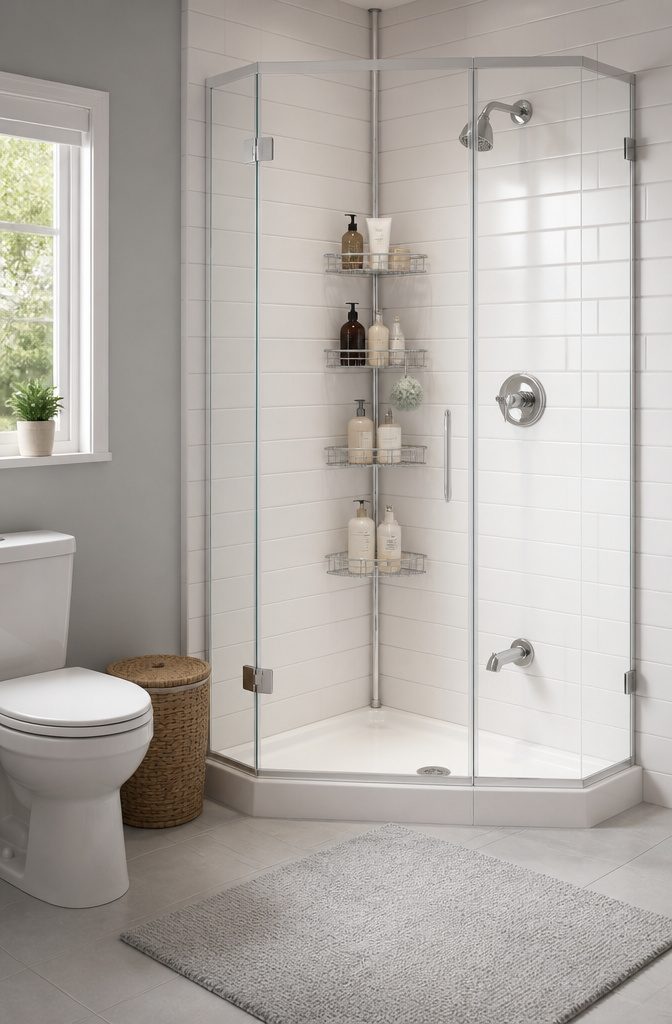
Corner shower caddies that clamp onto the wall with tension rods or adhesive backing solve the renter’s dilemma of tiled showers.
The polished chrome double and triple basket versions sit on stainless steel poles that extend from floor to ceiling, and the weight of the baskets themselves usually keeps the unit stable even before bottles go in.
Matte black has joined the line recently, though in my reading the finish tends to show soap film faster than chrome and needs wiping more often.
Metal construction matters more than the color. Thin alloy tubes rust at the joints inside of a year; solid stainless steel or at least a thick metal plating survives the steam cycle.
The baskets themselves should be wire rather than sheet metal, since water needs to drain and sheet pockets collect mildew.
A double basket set at staggered heights keeps tall shampoo bottles on top and bar soap or razors below without the knocking-over problem that flat shelves create.
The triple adds a third tier for washcloths or a loofah, though in a standard tub-shower the top basket ends up above comfortable reaching height for anyone under about five-foot-six.
For renters, the no-drill install is the real selling point, and the unit travels to the next apartment when the lease ends.
Flat Wall Shower Caddies
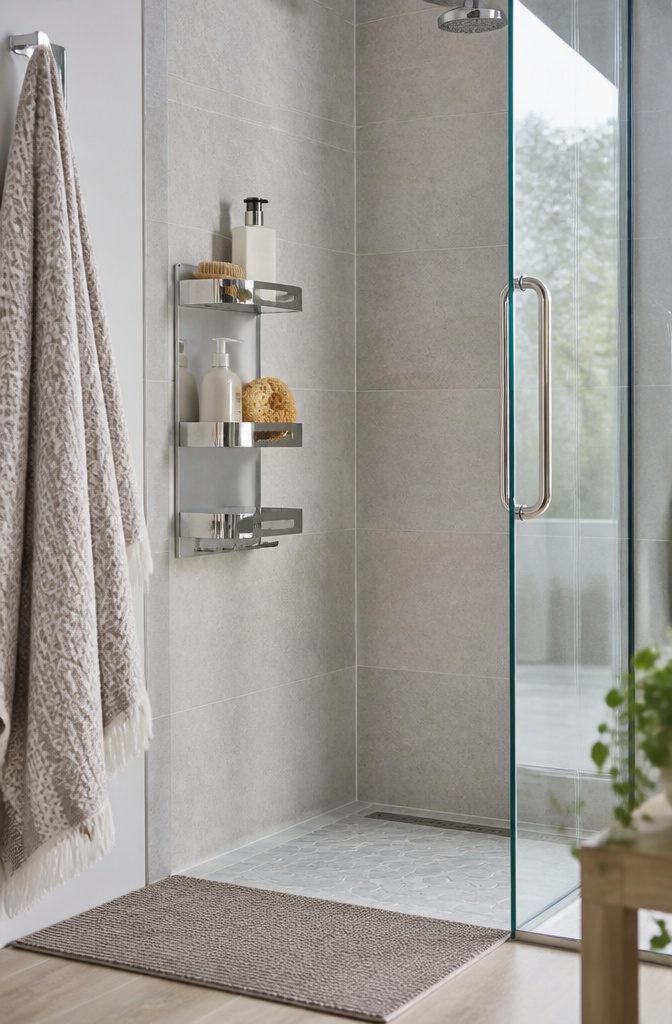
A polished chrome flat wall caddy mounts against the back or side wall of the shower instead of gathering in the corner.
That placement matters when your shower head sprays across a corner and leaves one side perpetually damp, or when the corner itself is taken up by a bench or a narrow enclosure that makes a triangular shelf awkward to reach into.
You need a flat stretch of tile or surround roughly 8 to 10 inches wide and at least 15 inches tall for a single unit with a rail, less than the footprint of two corner shelves stacked.
The depth runs shallow, usually 4 to 6 inches, so bottles stand in a single row rather than clustering. For renters, the smaller profile means fewer drilled holes and less chance of hitting a stud or missing it.
Chrome here is a finish choice, not the underlying material.
Brass and stainless steel both take that chrome plating, and the listed caddies come in chrome, matte black, glossy white, gold, and wenge. The chrome shows water spots fastest, which is the trade you make for matching existing polished fixtures.
A corner unit wins when two people share the shower and want separate zones; the flat wall caddy wins when one wall is all you have, or when you want everything in front of you as you stand under the spray.
Over-the-Door Shower Caddies
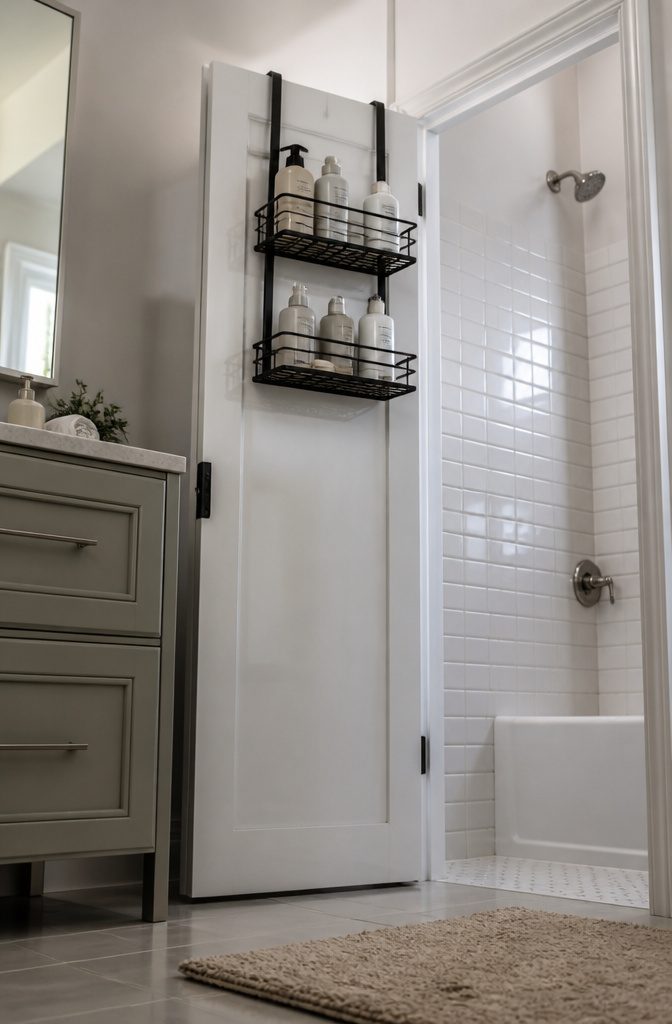
Double basket over-the-door shower caddies in matte black and polished chrome are built for renters whose lease forbids drilling into tile entirely.
The hooks drape over the shower frame or door edge, and the two-tier design keeps shampoo on top, conditioner below, with enough separation that bottles are not constantly knocking together.
What convinced me, reading through a dozen of these setups, is that the matte black versions hide water spots far better than polished chrome, which shows soap residue by day three and demands weekly polishing to stay presentable.
The trade-off is movement. Every time the door opens or closes, the caddy sways, and heavier bottles slide toward the front rail.
Some units ship with suction cups or adhesive pads to anchor the lower frame to the wall, but those fail on textured tile or old grout.
Renters should expect to reposition the bottom grip every few weeks, or live with the gentle clatter of bottles against metal. The chrome option looks sharper in a modern bathroom, yet the maintenance cost is real time with a cloth.
For a weekend install with zero landlord risk, this is the shelf for bathroom storage that asks nothing permanent, but it gives back only as much stability as the door itself provides.
Wall-Mounted Soap Holders and Dishes
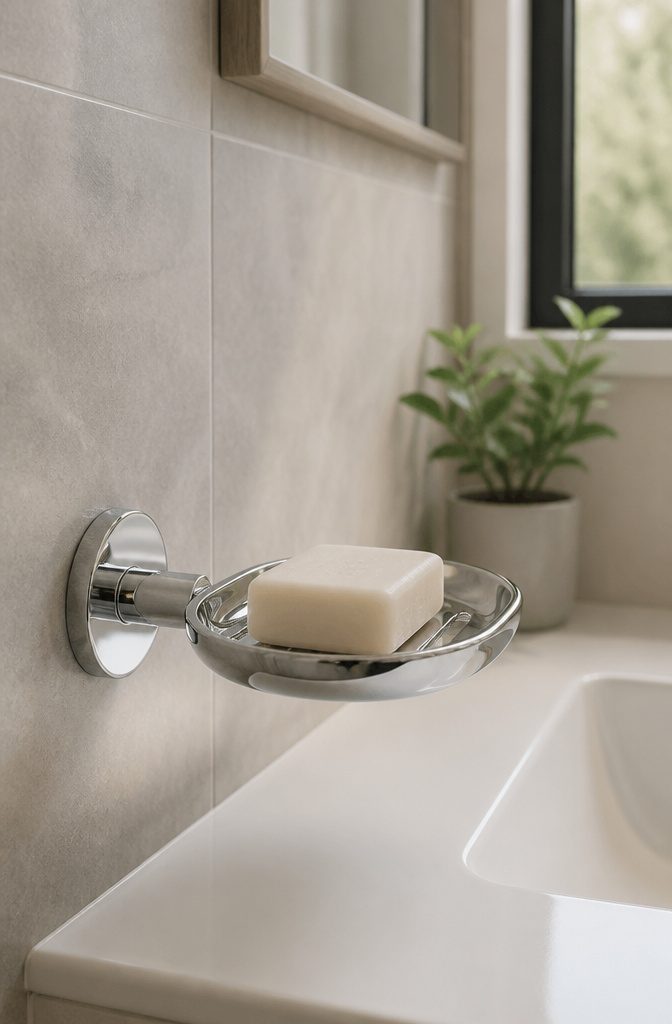
A soap bar left on the edge of a sink or a shelf leaves a ring of residue that has to be wiped every few days.
Mounting the dish to the wall fixes that, and the hardware now comes in finishes that match the rest of the bath: polished chrome, matte black, and brushed nickel or brass.
Corner holders make sense when the sink sits against two walls.
The dish tucks into the angle and the soap stays within thumb’s reach without eating counter space. Flat wall dishes work better above a pedestal sink or anywhere the counter is already shallow.
The square chrome dish that shows up in most modern lines looks almost architectural, a small tray with a raised lip rather than a saucer.
Stainless steel versions lean the same direction but read slightly quieter. Both drain water through slots or a slight tilt, which matters more than it sounds: a puddle of soft soap is what turns a dish into a cleaning job.
Prices for these run roughly $0 to $50 for basic brass or stainless steel, with chrome and matte black clustering in the same bracket.
The mounting hardware is usually two small screws through a backplate, something a renter can patch later with less trouble than a shelf footprint.
Stainless Steel, Glass, and Brass
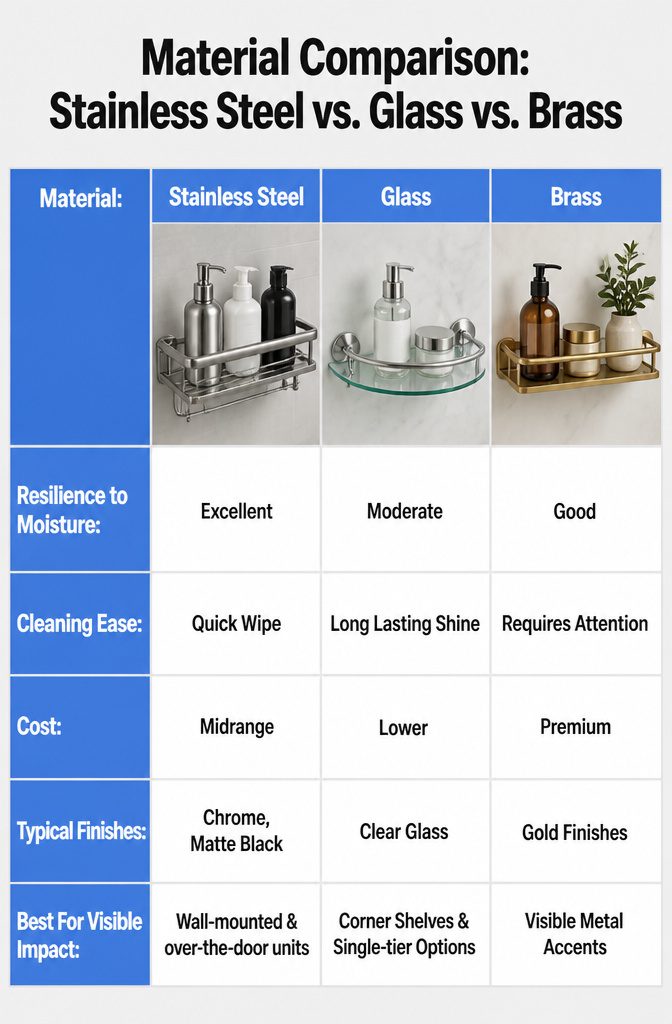
Stainless steel earns its spot in bathrooms the hard way.
The alloy resists the moisture that warps wood and rusts lesser metals, which is why it shows up across so many of the wall-mounted and over-the-door units already on the list.
Chrome and matte black are the usual finishes, and both wear the same 304-grade core underneath.
Glass reads cleaner longer than it actually stays clean. Water spots sit on the surface rather than soaking in, so a quick wipe restores the look even when daily life has been messy.
Clear glass dominates the corner shelves and the single-tier options, though some rails and brackets use engineered wood for the hidden supports.
Brass sits at the top of the material filter for a reason.
It costs more than stainless or glass, and the gap is not small. Gold finishes on brass hardware read as luxury in a way chrome does not, but the metal needs more attention to keep that warmth from dulling.
Whether the upgrade is worth it depends on how much visible metal the shelf actually leaves exposed; a rail-thin bracket shows less than a solid frame, and paying the brass premium for hidden hardware is money spent on a detail no one sees.
Wall Mounting and What the Hardware Includes
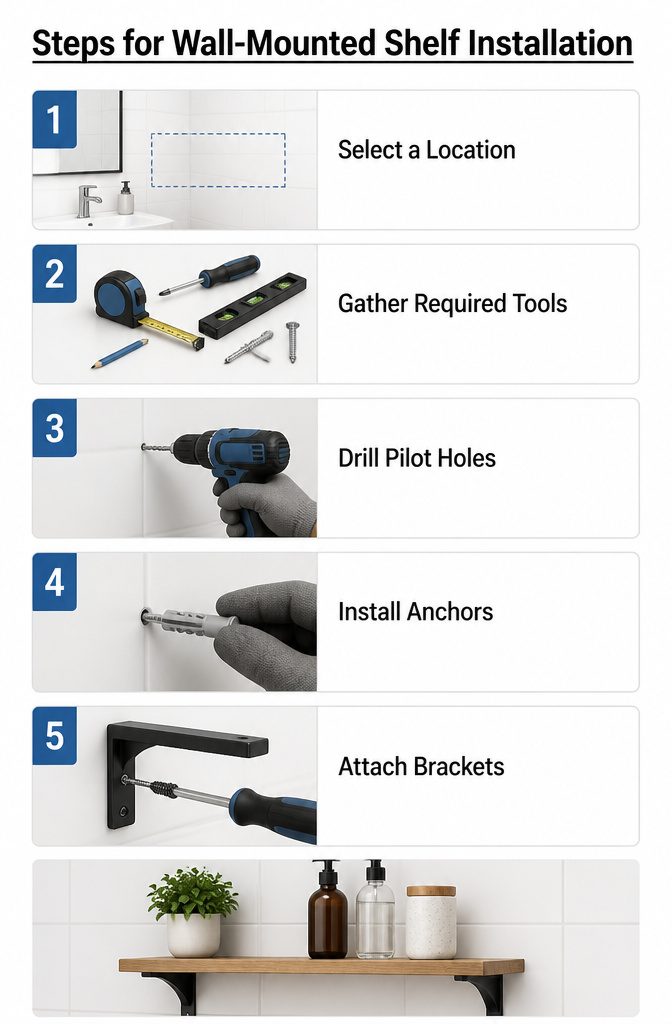
Most shelves marketed for bathroom use arrive with the brackets, anchors, and screws already in the box, which matters more than I expected before I started comparing options.
Wall-mounted hardware saves the floor space that a standing unit would eat in a room where every square inch usually counts.
The catch is what "wall-mounted" actually asks of your wall. Drywall accepts the included anchors without much fuss, but tile demands a different conversation.
Drilling through ceramic or porcelain risks cracks that do not forgive, and the hardware kit rarely includes a tile bit or the patience required to locate a stud behind mortar.
Sources keep pushing wall-mounted installation because it clears countertops and keeps bottles out of standing water, yet they gloss over how many renters face tile surrounds they cannot safely alter.
If you own the place, the method is straightforward. If you do not, the same hardware becomes a liability you may not want to explain at move-out.
Sizing From 10 Inches to 24 Inches
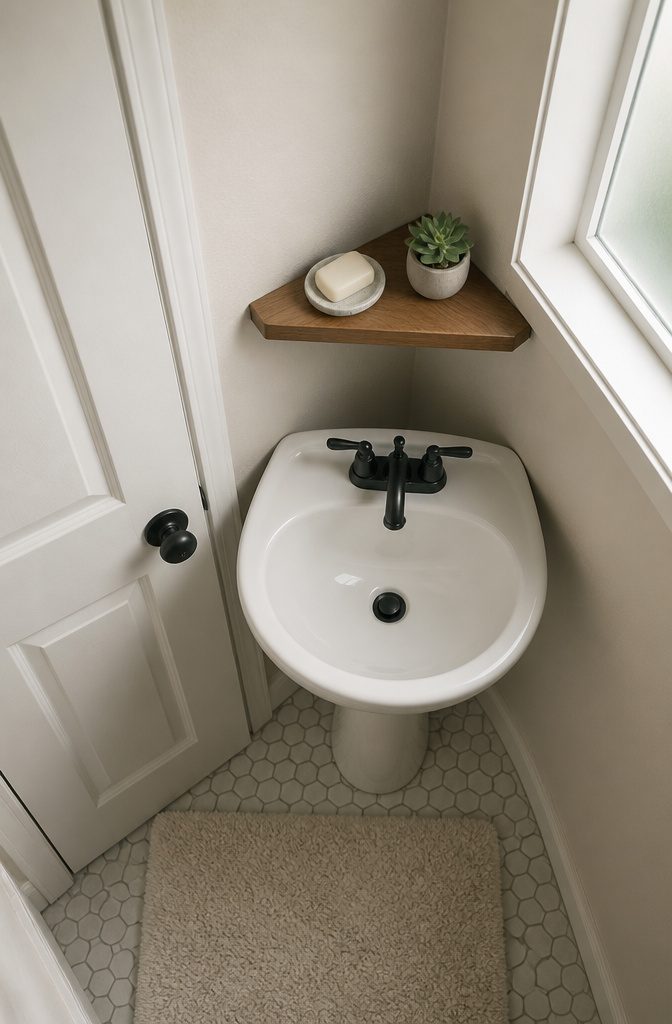
A 10-inch shelf clears the tight triangle behind most bathroom doors or squeezes beside a pedestal sink without becoming a hip hazard.
Twelve inches starts to feel like furniture; sixteen inches is where a single rail becomes useful for keeping bottles from sliding.
The jump to 18 inches and 20 inches moves the piece from accent to storage, the kind of width that holds a folded hand towel with room to spare.
At 21 inches and 23 inches you are in the zone of balancing act: enough surface for daily use, not so much that the wall starts to look crowded in a standard five-foot bath.
Twenty-four inches is the common ceiling for corner units and the widest floating option that still ships with standard wall-mount hardware.
Depth matters as much as span. A 4-inch ledge holds a phone and a soap dish; 8 inches swallows a stack of washcloths.
My own rule after sorting through the sizing charts: measure the wall, subtract two inches for visual breathing room, and buy the next size down if the result splits options.
Modern and Luxury Design Labels
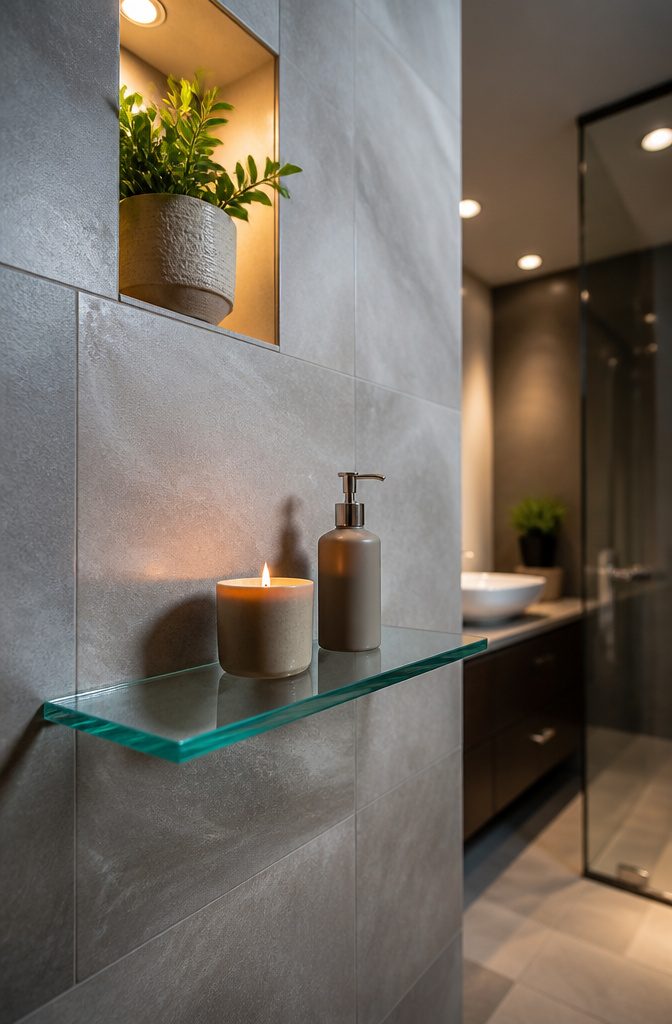
The words modern and luxury on a shelf for bathroom listing are not style guarantees. They are price signals with a few visual rules attached.
Modern usually means clean lines, hidden brackets, and minimal hardware that does not interrupt the plane of the wall. Luxury tends to add weight, thicker glass or solid brass, and a price jump that outruns the function.
StilHaus builds toward the luxury label with items that read heavier and cost more than the same footprint in a standard line.
The Nameeks modern collection does the opposite, stripping down to essentials: thin profiles, matte or glossy white finishes, and mounting that tries to disappear.
Both names sit in the same filter menus on retailer pages, but the experience of installing them differs.
StilHaus hardware often needs blocking or a stud because the piece itself carries more load. Nameeks can hang on standard anchors in rental drywall if you stay under the weight limit.
The trick is reading past the adjective. A modern shelf from one brand may be a glass rectangle with no rail, which looks right until a bottle slides off.
A luxury shelf may solve that with a lip or a rail, but charge twice as much for a problem a cheaper rail shelf already fixed.
The label tells you what the manufacturer thinks the shelf is worth. Your wall and your morning routine tell you what it actually costs to live with.
Price Points From $64 to $429
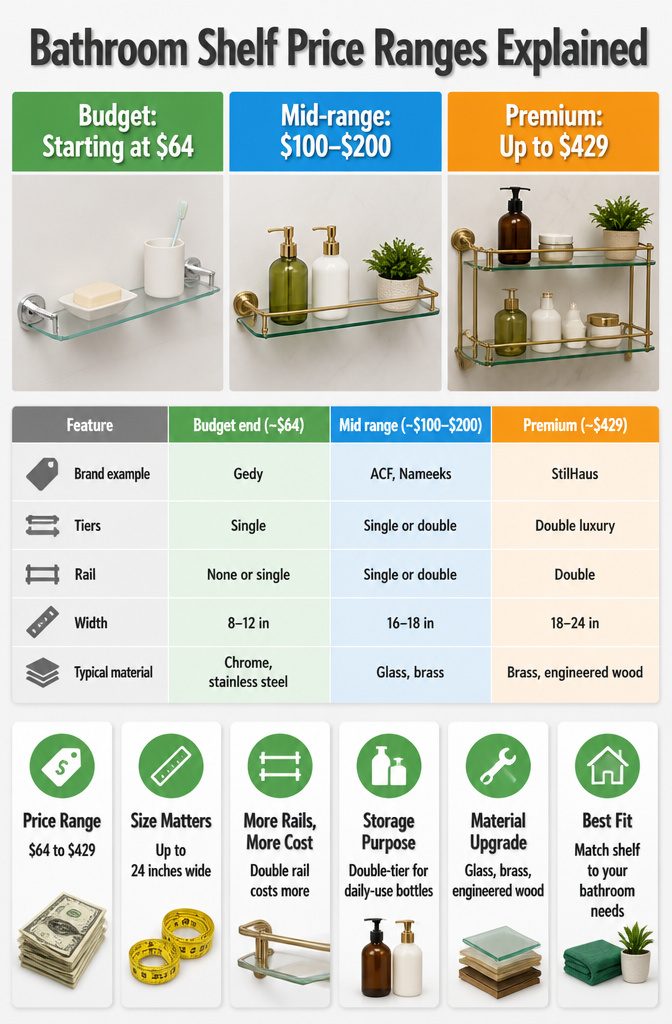
A shelf for bathroom wall can run anywhere from $64 to $429 depending on what the money actually buys.
The cheapest end gets you a single 12-inch Gedy shelf in basic chrome or white. Step up toward $150 and the material shifts to thicker glass or brass hardware, or the depth pushes past 6 inches to hold full-size bottles.
Rails add cost too; a single rail shelf sits lower than a double-rail version with the same footprint.
| Feature | Budget end (~$64) | Mid range (~$100–$200) | Premium (~$429) |
|---|---|---|---|
| Brand example | Gedy | ACF, Nameeks | StilHaus |
| Tiers | Single | Single or double | Double luxury |
| Rail | None or single | Single or double | Double |
| Width | 8–12 in | 16–18 in | 18–24 in |
| Typical material | Chrome, stainless steel | Glass, brass | Brass, engineered wood |
The StilHaus double luxury shelf at $429 is not just a name markup. It pairs two tiers with a full rail system and widths up to 24 inches, which is the largest standard size in the lineup.
For a renter doing one bathroom refresh on a weekend, the Gedy at $64 does the job if you only need a soap dish and a toothbrush off the counter.
The jump to double-tier pays off only when you are storing bottles you reach for daily, not backup stock.
Frequently Asked Questions
What are the best bathroom shelves?
The best bathroom shelves balance how you actually use the space with what your walls can handle.
Floating shelves in chrome or black work well for clean, modern looks without visible brackets, while glass shelves keep visual weight low in tight corners.
If you need storage for daily bottles and towels, a 24-inch wide shelf or a double-tier unit with rails prevents the sliding and crowding that smaller ledges create.
How do I install bathroom shelves?
Most shelves arrive with brackets, anchors, and screws included. Wall-mounted units need either studs or proper anchors in drywall; tile demands a tile bit and extra care, since cracks do not forgive.
Corner shower caddies and over-the-door options need no drilling at all, which makes them the safer pick for renters who cannot alter tile surrounds.
What materials are bathroom shelves made of?
Bathroom shelves commonly come in stainless steel, glass, and brass. Stainless steel resists moisture and warping, usually finished in chrome or matte black.
Glass wipes clean of water spots quickly but needs a rail to keep bottles from sliding. Brass costs the most and reads as luxury, though it needs more upkeep to keep its warmth from dulling in humid air.