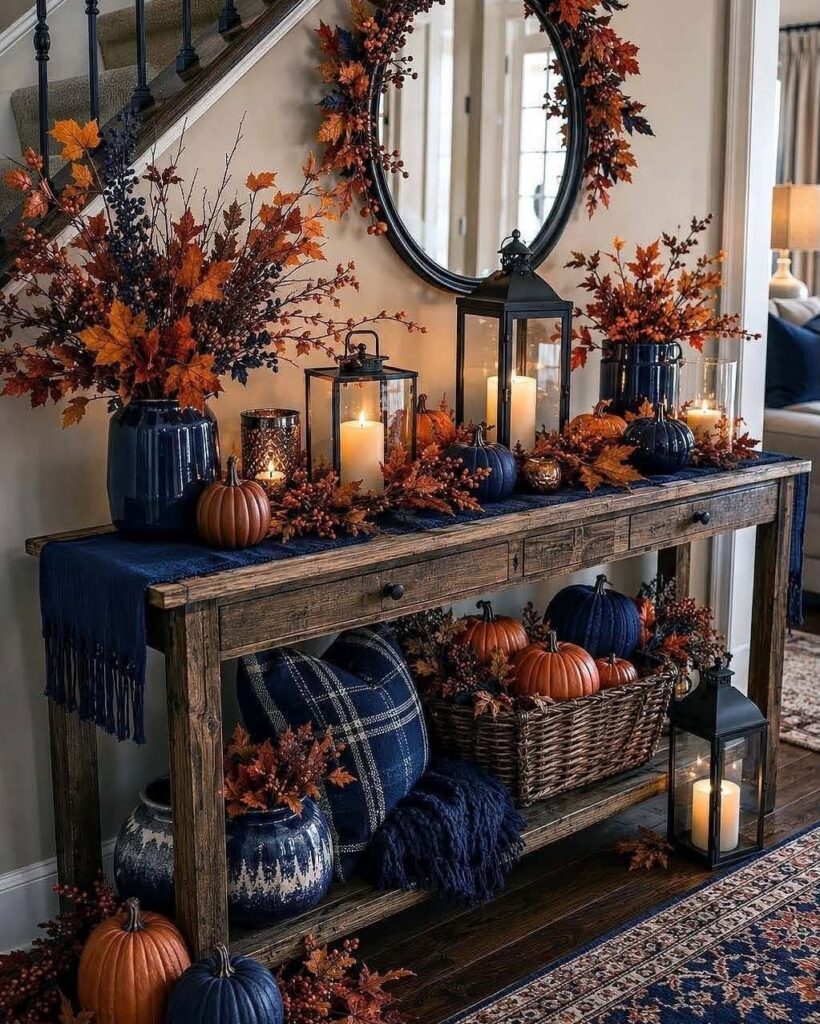
Fall entry tables run from a $30 framed print swap to layered runners and ceramic pumpkins, and the right choice depends on whether you own the furniture or you’re working around what a landlord provided.
Renters without install rights will gravitate toward candle arrangements, framed prints, and welcome mats that move out in November with nothing left behind; homeowners with a permanent table can build vertical depth with stacked books and tall branch arrangements that stay through the season.
1. Natural Autumn Decor
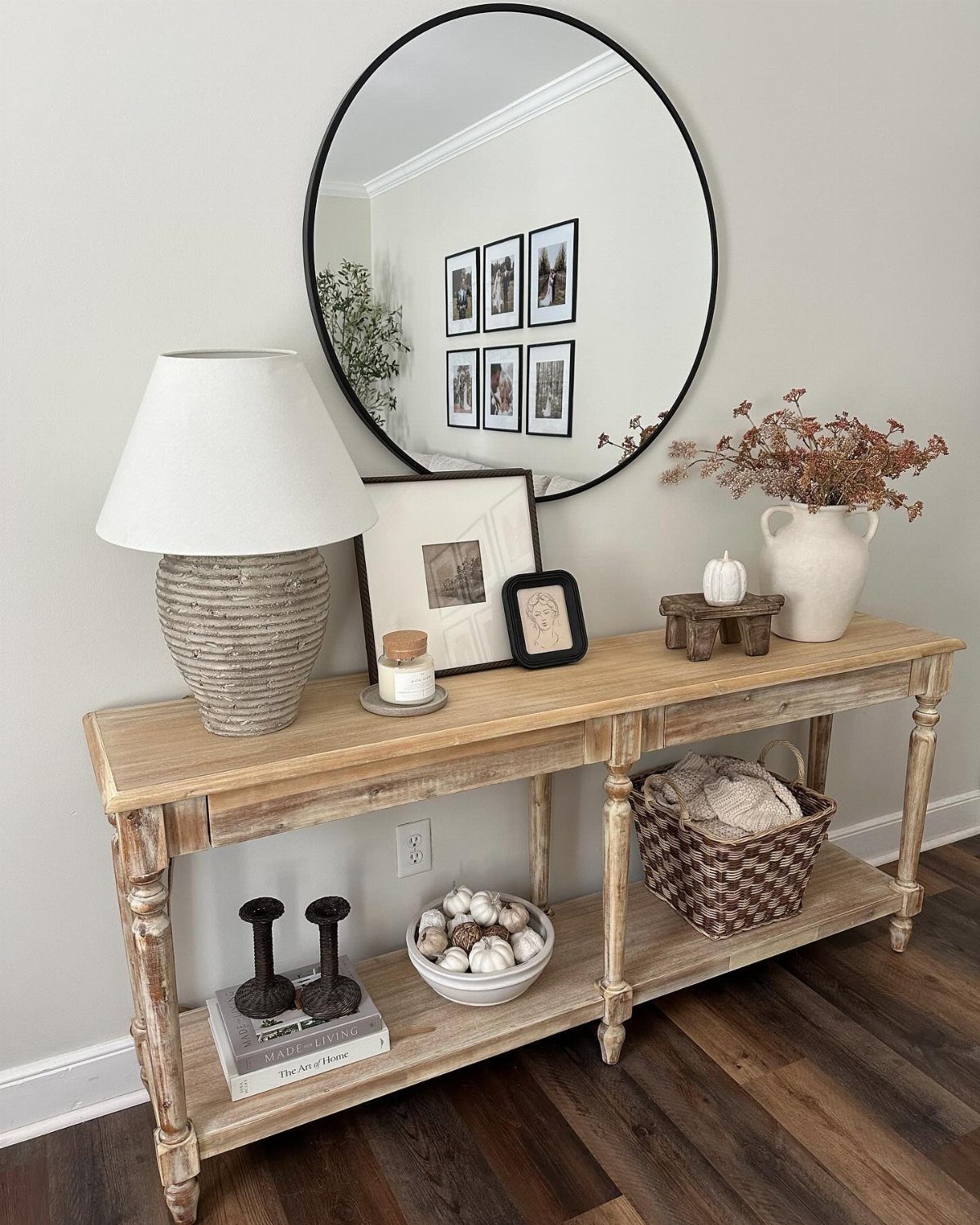
A console table gives an entryway its bones, and fall is the right season to load it with weight and warmth.
I like starting with a runner in rust or deep burgundy, then building height with stacked books or a ceramic vase of dried branches.
Woven baskets tucked on the lower shelf add storage and another layer of texture without costing much.
This works best when you want the space to feel finished but not staged. If your walls are light, the muted palette keeps things grounded; if they’re already dark, cream and olive tones open the room back up.
2. Create a Fall-Inspired Color Palette
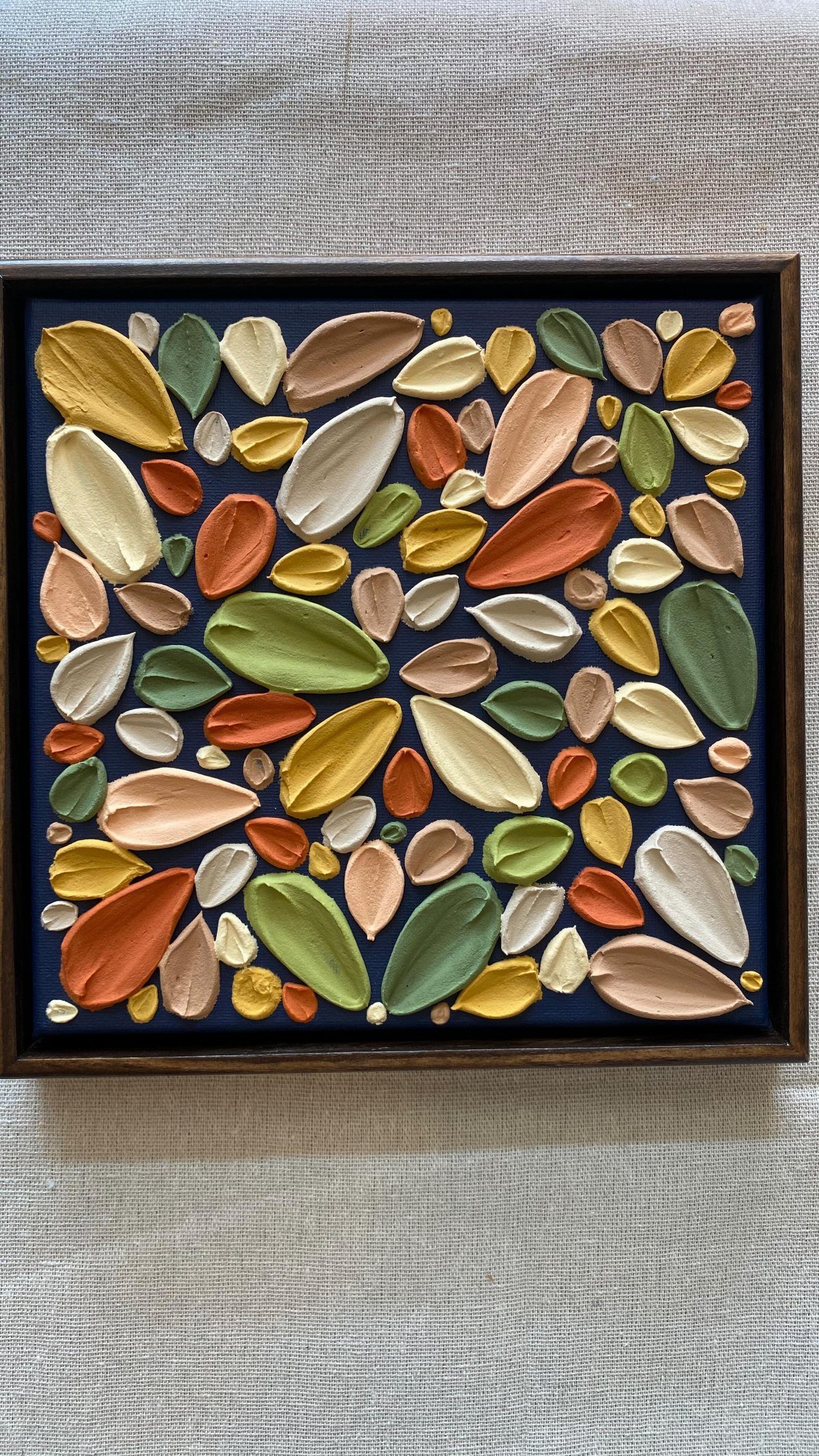
A restrained palette of mustard, terracotta, and sage against navy carries further than you’d think. I tend toward neutrals with small pops of rust or deep plum; they read seasonal without shouting, and they survive past Halloween.
Cream, soft gray, and natural wood do the same work if you prefer quieter rooms.
Two or three accents in your chosen range are enough. A bowl, a floral arrangement, a single framed piece; spread them across the entry and the eye ties it together.
3. Incorporate Natural Elements
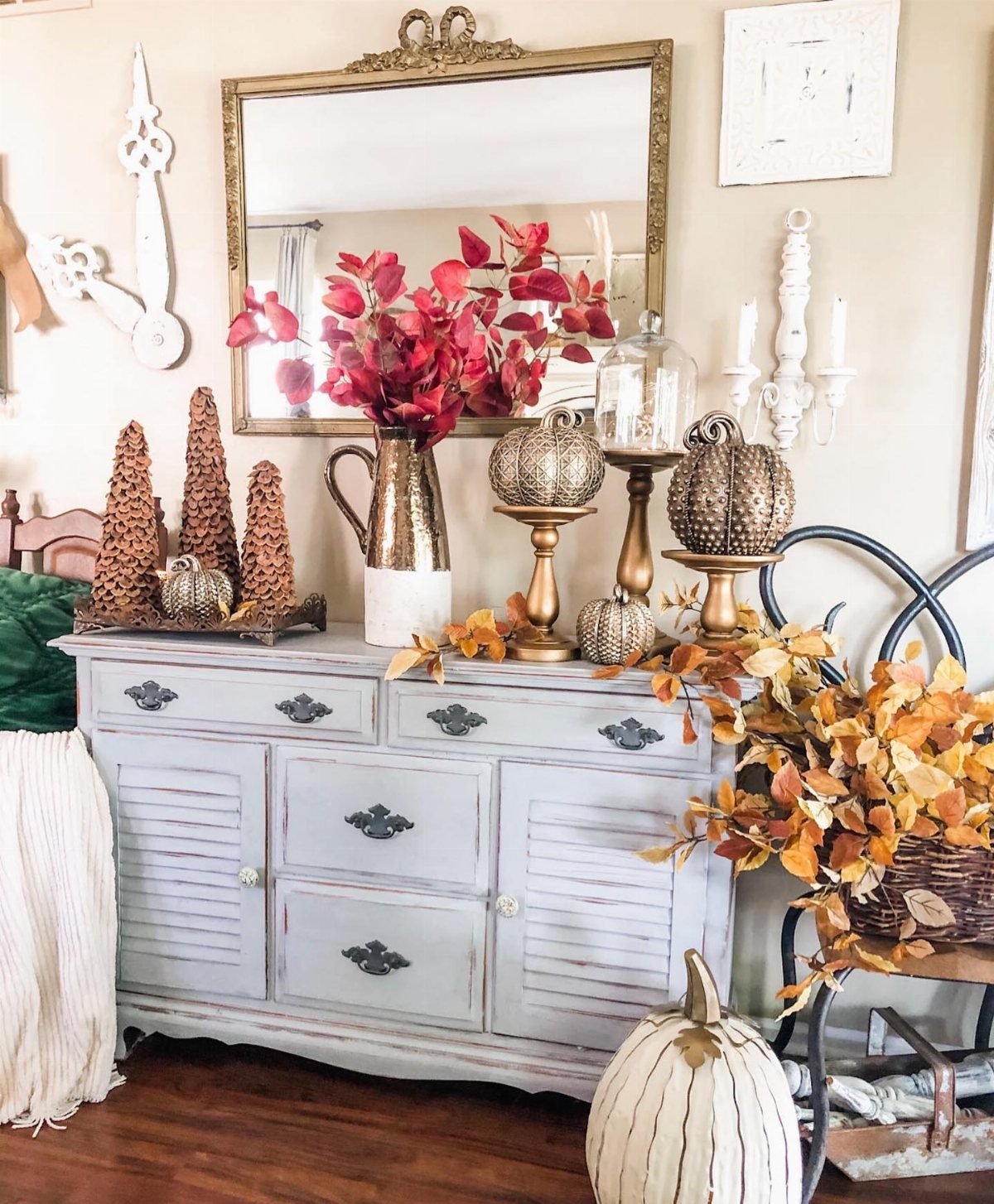
Gold and ceramic pumpkins mixed with real autumn leaves feel lived-in in a way that all-store-bought never quite manages. Small gourds or pinecones in a decorative bowl are something I can set out fast and leave alone.
Weathered wood trays and burlap layers underneath add depth without clutter.
This approach suits renters especially; nothing is installed, everything moves. If real pumpkins soften too fast, ceramic ones last the season and store flat.
4. Candle Arrangements
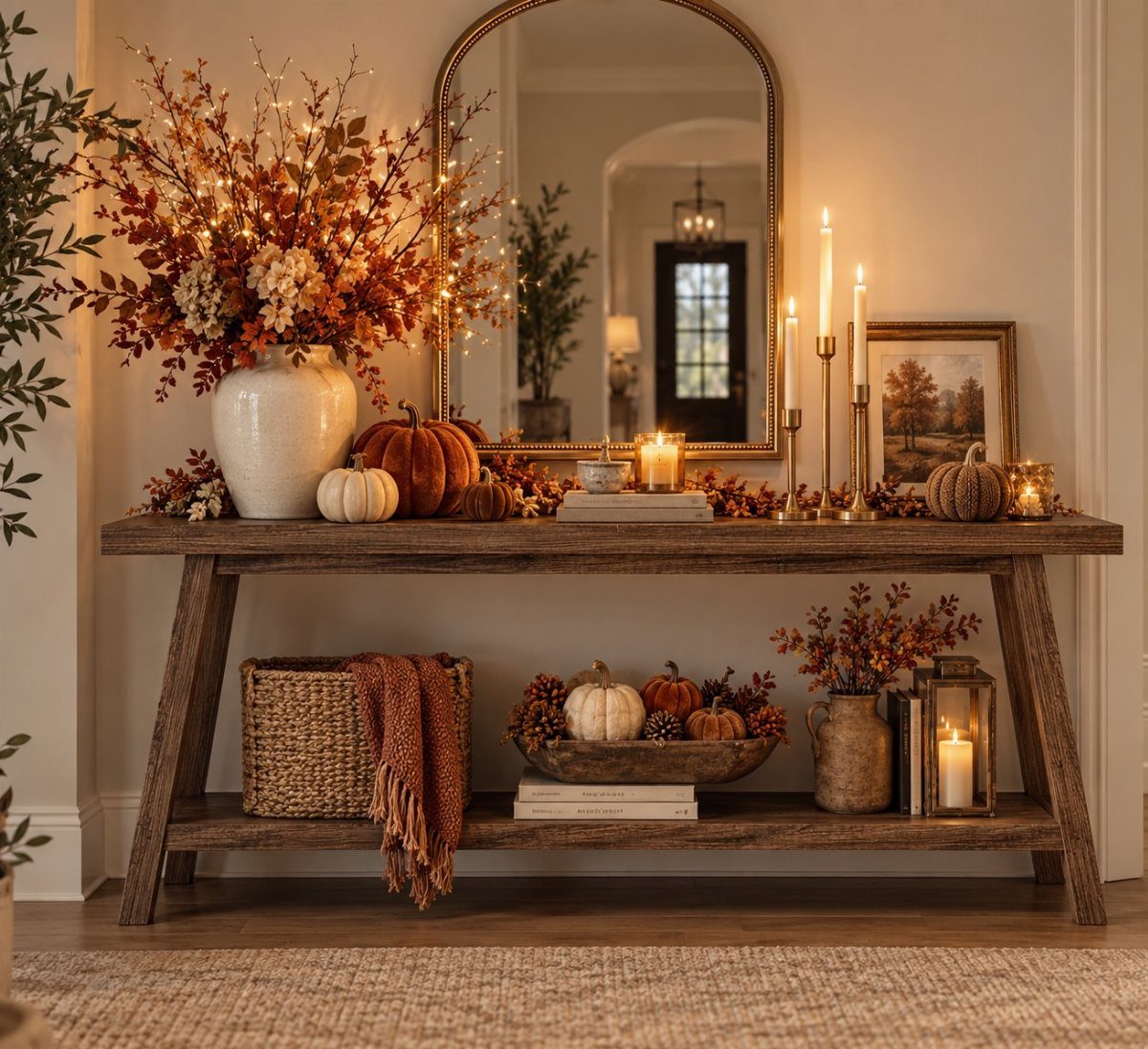
Candles do what color cannot, which is to make an entryway feel warm after sunset. I favor spiced cider or woodsy scents, something that greets whoever walks through the door.
A decorative match cloche beside the candle finishes the arrangement and saves the hunt through a drawer. This is the easiest entry on the list, and often the one guests notice first.
5. Cozy Fall Foliage Entryway
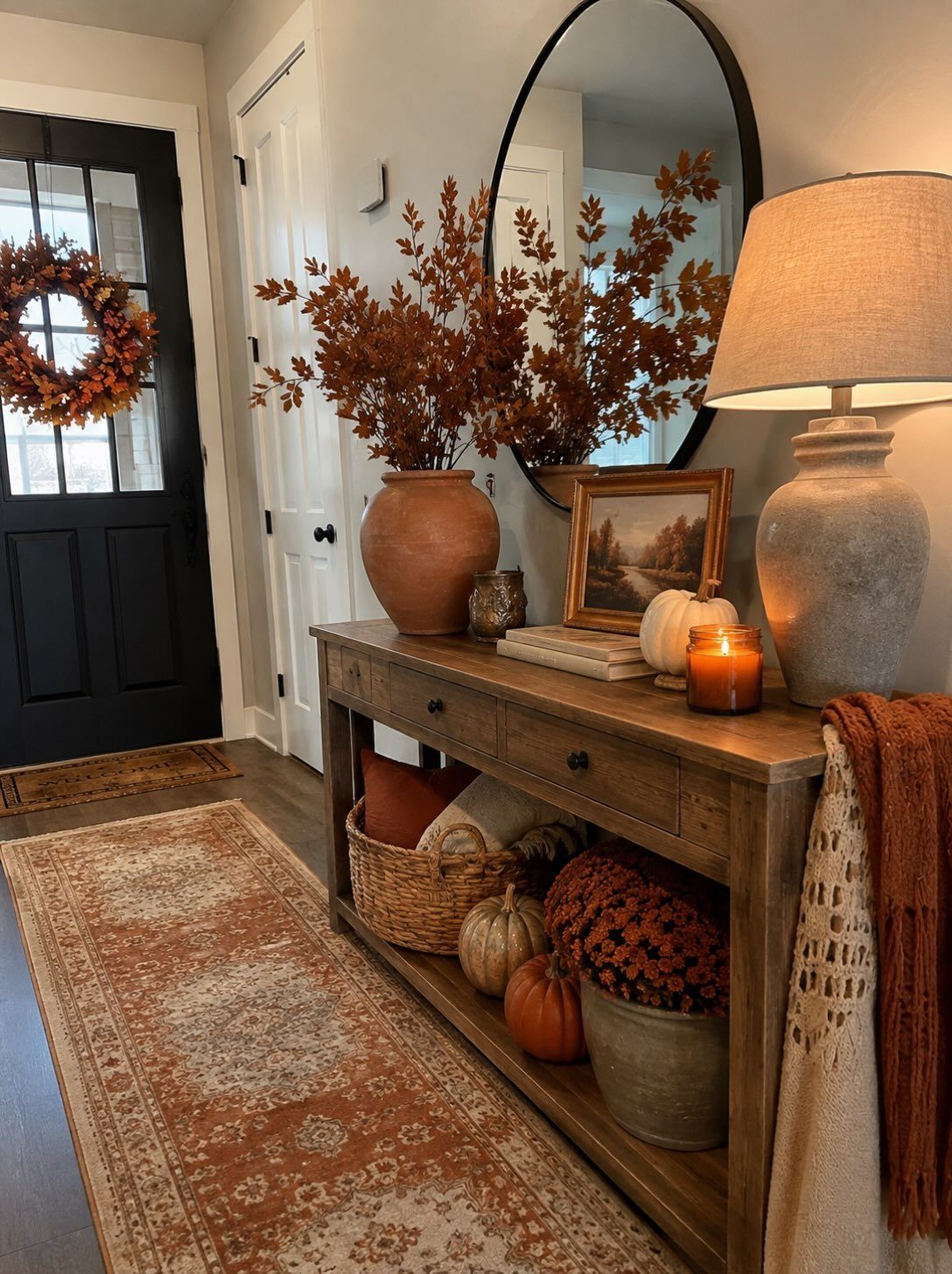
A neutral console table lets you change the whole mood with leaves and a throw, and the lower shelf holds more than you’d think. Extra blankets stored there from October on warm up the look and actually get used.
Versatility matters in a small entry. Earthy browns and subdued oranges work with farmhouse pieces or modern ones, and when November ends you swap the foliage for evergreen and the palette still holds.
Fresh or good faux branches need replacing each year, which is the one ongoing cost.
6. Framed Fall Prints
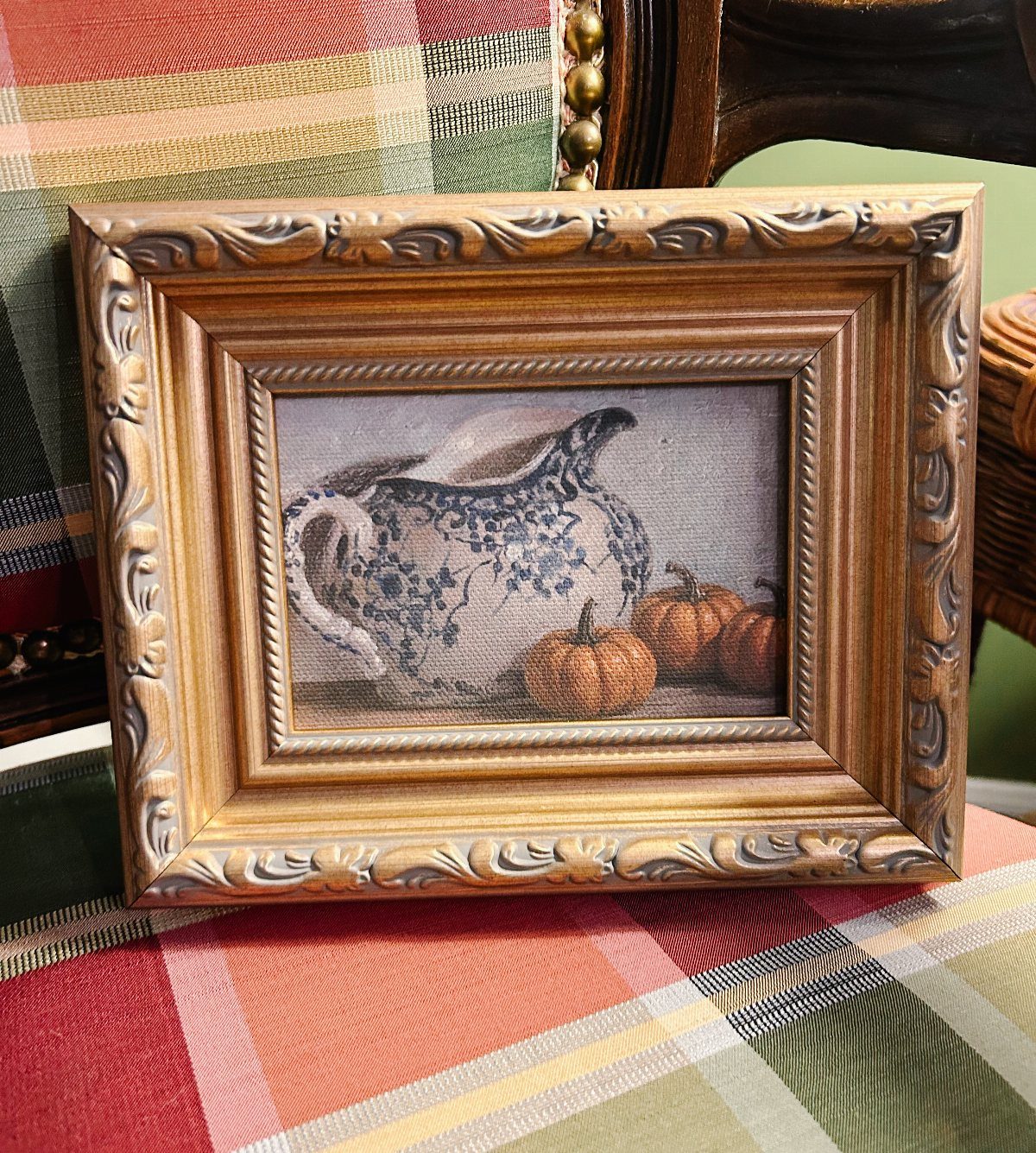
Framed fall prints run small, around 8 by 6 inches for the piece its maker describes, so they fit narrow walls or crowded tabletops where larger art won’t go.
Reclaimed or distressed wood frames push the rustic angle; gilt ones like this read more collected and less thematic.
I swap mine in from late September, usually just two or three, and move the summer botanicals to a closet. The cost runs about $30 and up per framed print, and the storage footprint is minimal.
7. Welcome Mat
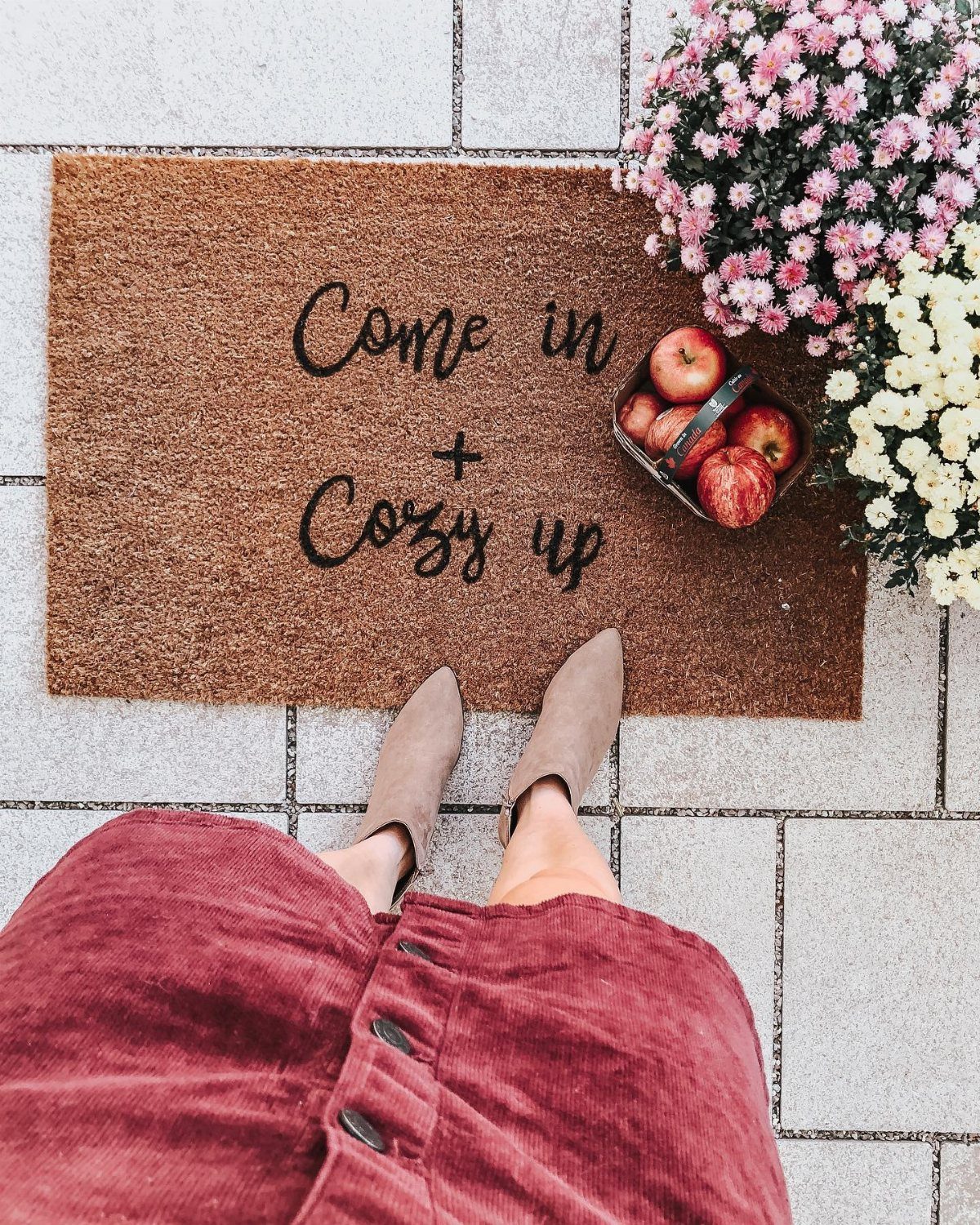
A fall-themed welcome mat sets the tone before anyone crosses your threshold. Coir’s natural texture hides tracked leaves better than printed synthetics, so a message printed on it stays readable longer.
Coir mats are cheap enough to replace each season outdoors, which is about when they start shedding anyway. I look for ones with low-profile backing so the door swings clear.
If your porch is covered, a smaller mat inside the door works too. Just keep the messaging to one or the other.
8. Simple Decor Arrangements
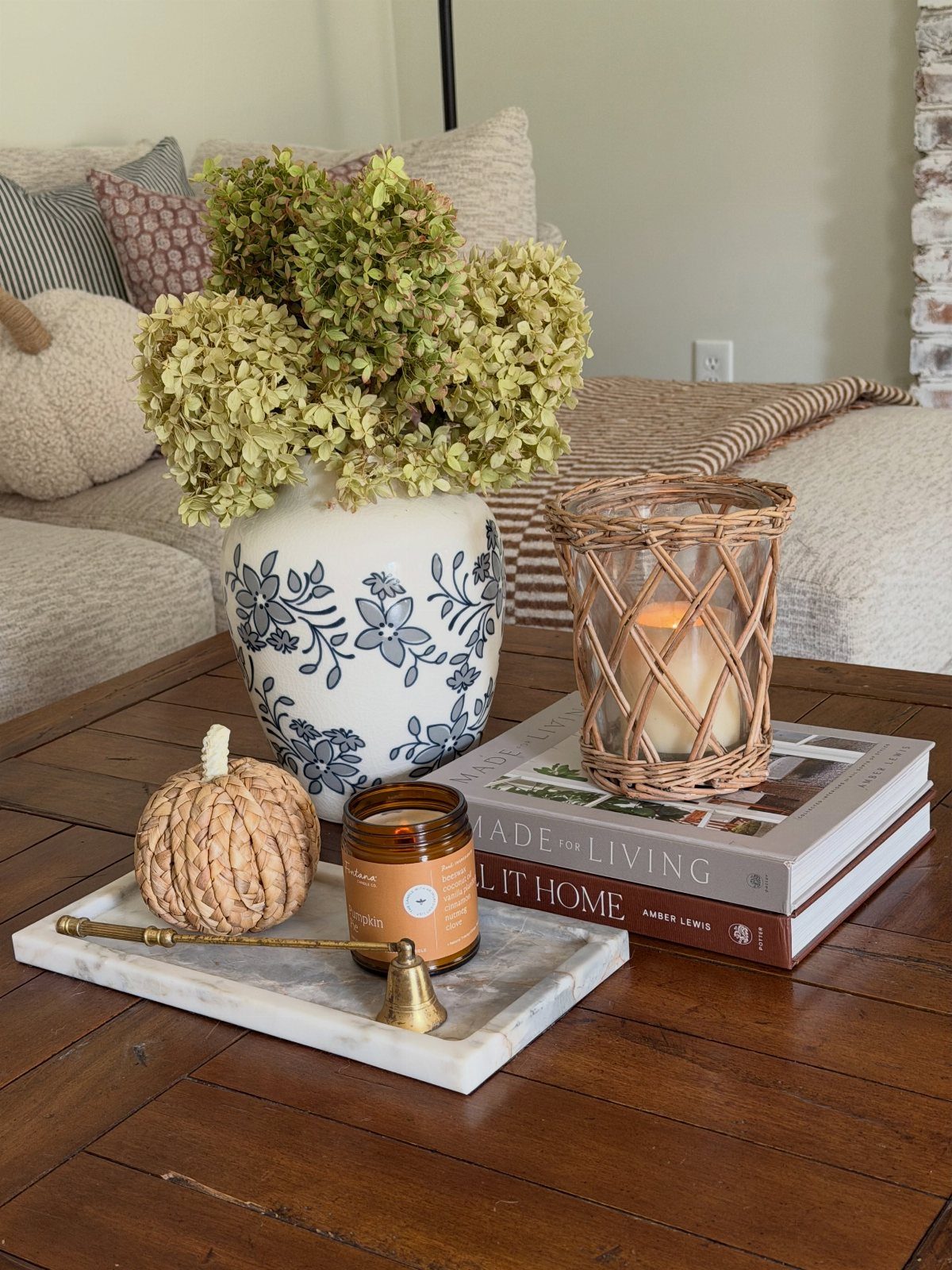
Three objects on a surface can read as cluttered or deliberate depending on height and spacing. Keep each piece at a different level: flowers tallest, candle mid, pumpkin low and textured.
For a fall entry table, I start with one vertical element like eucalyptus or sunflowers in a vessel that already lives there. A single faux pumpkin or woven candle holder sits off-center, never dead center.
The maker of this piece notes her home does not look styled most days; build a setup you can recreate quickly when company is due, not maintain perfectly.
Small woven baskets thirft well if you want to tuck in a second, lower arrangement.
9. Seasonal Welcome Sign
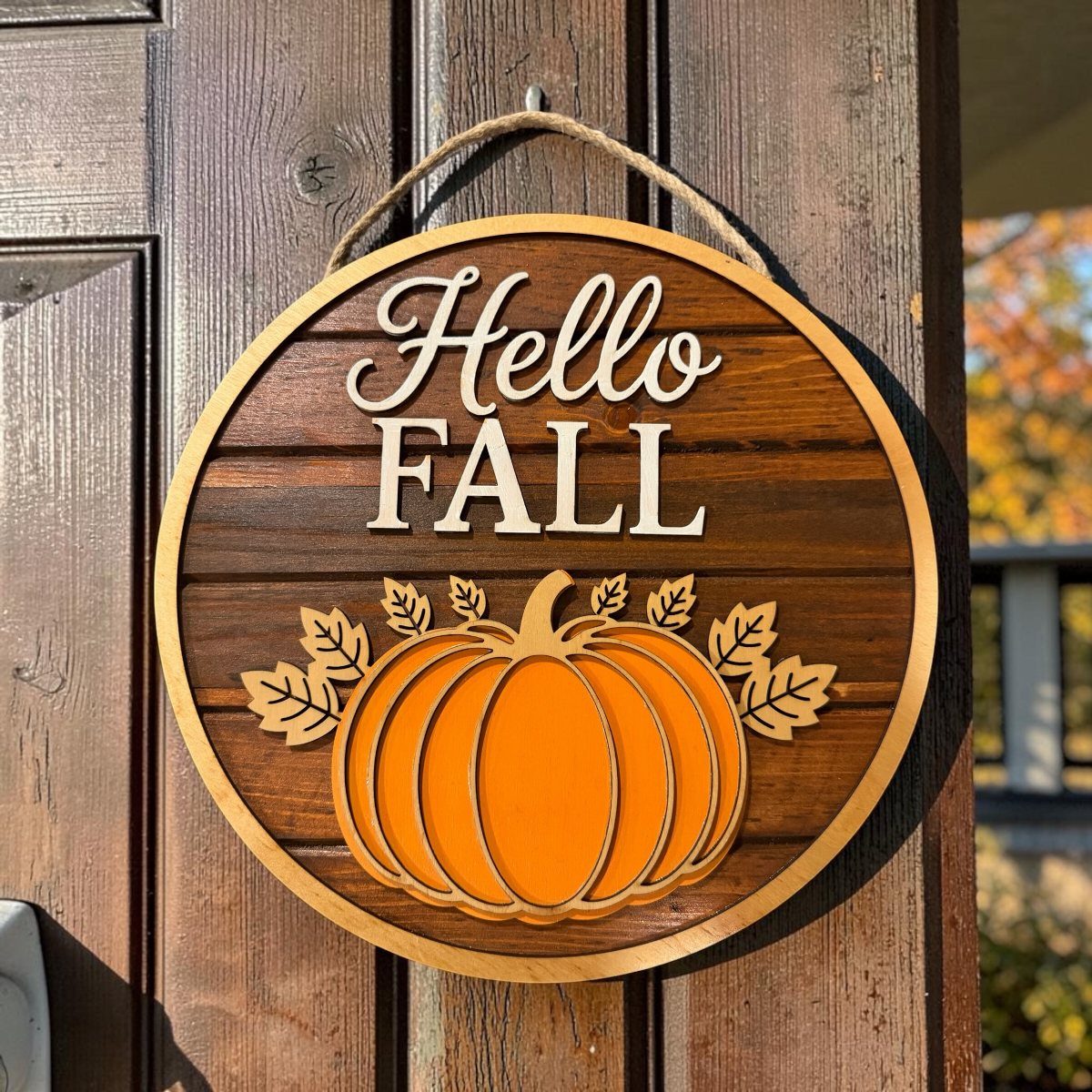
A circular wooden sign with a seasonal greeting bridges the gap between wall and door when your entry lacks a table.
Plywood rounds from the craft store are cheap enough to experiment with; stain or leave them raw depending on your door’s finish.
Paint sticks well to sanded edges, and a nail hole an inch from the top keeps the sign from tipping forward when hung.
Phrases like "Gather Here" or "Harvest Blessings" work at 10–12 inches across; smaller than that and the lettering disappears from the sidewalk.
Leaned against the wall on a narrow shelf, the same sign reads more casual and needs no hardware at all.
Creating a Cohesive Design
A cohesive fall entryway starts before you reach the table. I carry whatever color palette I’m using right through the front door and into the foyer, so the transition feels intentional rather than like two separate spaces.
That might mean repeating a warm terracotta from the living room in a ceramic vase, or pulling in the same sage green from kitchen textiles through a bundle of dried eucalyptus.
Layering matters more than individual pieces.
A flat row of pumpkins reads like a grocery display; stacking a wooden riser on a runner, setting a squat candle on top, and tucking a sprig of wheat behind it builds depth without extra clutter.
Stepping back to the doorway shows the angle guests actually see, and that distance reveals whether the pieces actually talk to each other.
Timing for Decorating
I start my fall entryway in early September. The decoration sits for two and a half months at minimum, so rushing it up after Labor Day only shortens the season I paid for.
Climate does shift the timing slightly. In zones where September still carries summer heat, I lean harder into dried materials and skip anything that wilts; the aesthetic reads as autumn regardless.
Up north, an early October freeze might dictate when gourds come inside.
Your own start date matters more than any external signal. If you’re itching to unpack the bin by the last week of August, that’s valid too.
What I avoid is treating the entryway as an afterthought to the mantel or dining table. It’s the first thing anyone sees, including me coming home with arms full of groceries.
Choosing the Right Base
The table itself does more work than anything you set on it. I measure my space before shopping, not after falling for a silhouette online.
A console crammed into a narrow alcove leaves no room for movement; one sized to an open foyer anchors without blocking.
Farmhouse and modern farmhouse styles pair well with weathered wood bases that show some age. Natural and homemade themes read cleaner on simpler profiles with visible grain rather than heavy turned legs.
I look for surfaces that can handle moisture from a dripping rain boot or a condensation ring, since the entryway is a functional zone first.
Height matters for layering. A table back around 30 inches tall gives enough vertical room for a lamp, a stack of books, and a tall branch arrangement without crowding.
Anything lower starts to feel like a ledge rather than a surface meant for display.
Balancing Decor Elements
Overcrowding kills an entryway faster than bareness.
I group small items in threes on a tray rather than scattering them across the full width; the tray corrals the visual noise and lets me lift everything at once when I need the surface for sorting mail.
Natural materials add the texture that makes fall read as fall. Weathered wood, burlap, and dried foliage bridge the gap between interior and whatever’s happening outside.
I use these as the quiet background, not the starring pieces. A burlap runner under ceramic pumpkins adds more depth than three more gourns would.
The balance I aim for: one tall element, one medium, one low and horizontal. Swap in a different item in the same visual weight if the proportions feel off.
I edit more than I add.
Frequently Asked Questions
What are some good things to put on an entryway table?
A tall branch arrangement, a mid-height candle, and a low textured piece like a ceramic pumpkin or woven candle holder make a balanced grouping. A decorative match cloche beside the candle finishes the setup and saves hunting through drawers later.
What are some good fall decor ideas for my entryway?
Layer a rust or burgundy runner with stacked books or a ceramic vase of dried branches, tuck woven baskets on the lower shelf for storage, and add candles that warm the space after sunset.
Coir welcome mats outside and framed small prints inside carry the season through the whole entry.
When should I decorate my entryway for fall?
Early September works for most climates, giving you two and a half months minimum for the display. Up north, an early October freeze might dictate when gourds come inside, but your own readiness matters more than any external signal.
What kind of console table works best for a fall entryway?
A table around 30 inches tall gives enough vertical room for a lamp, books, and a tall arrangement without crowding. Weathered wood bases suit farmhouse styles, while simpler profiles with visible grain read cleaner for natural themes.