These 18 nightstand ideas run from a foldable tray table to a wall-mounted floating shelf, with most landing in the space between a weekend project and a single afternoon.
The one that fits your room depends on whether you have floor space to give up or only wall space left to claim.
A narrow bookshelf beside the bed solves the same kind of awkward gap that a ladder-style nightstand fills, going vertical with three or four shelves where a standard piece gives you one surface and maybe a drawer.
1. Floating Shelf
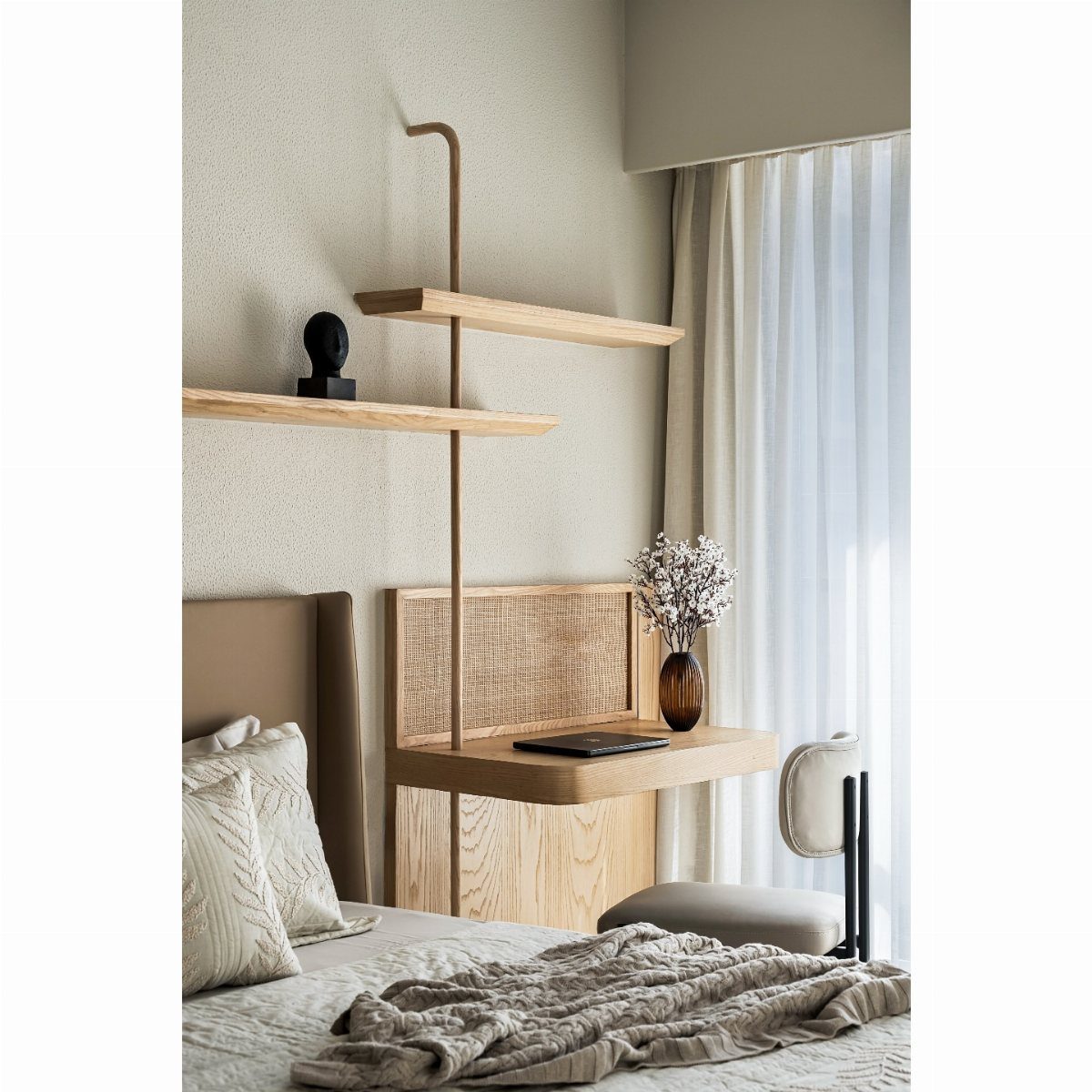
A floating shelf keeps everything off the floor. In a tight bedroom, that matters: the wall takes the weight, and shoes or a basket slide underneath without argument.
Mount it at bed height or slightly above, leaving just enough depth for a lamp base, a small tray, and one book you are actually reading. The look stays calm because the surface stays nearly empty.
I would keep the color close to the wall tone so the shelf reads as architecture, not furniture. One person can install this in an afternoon with a stud finder and a level.
2. Stacked Vintage Suitcases
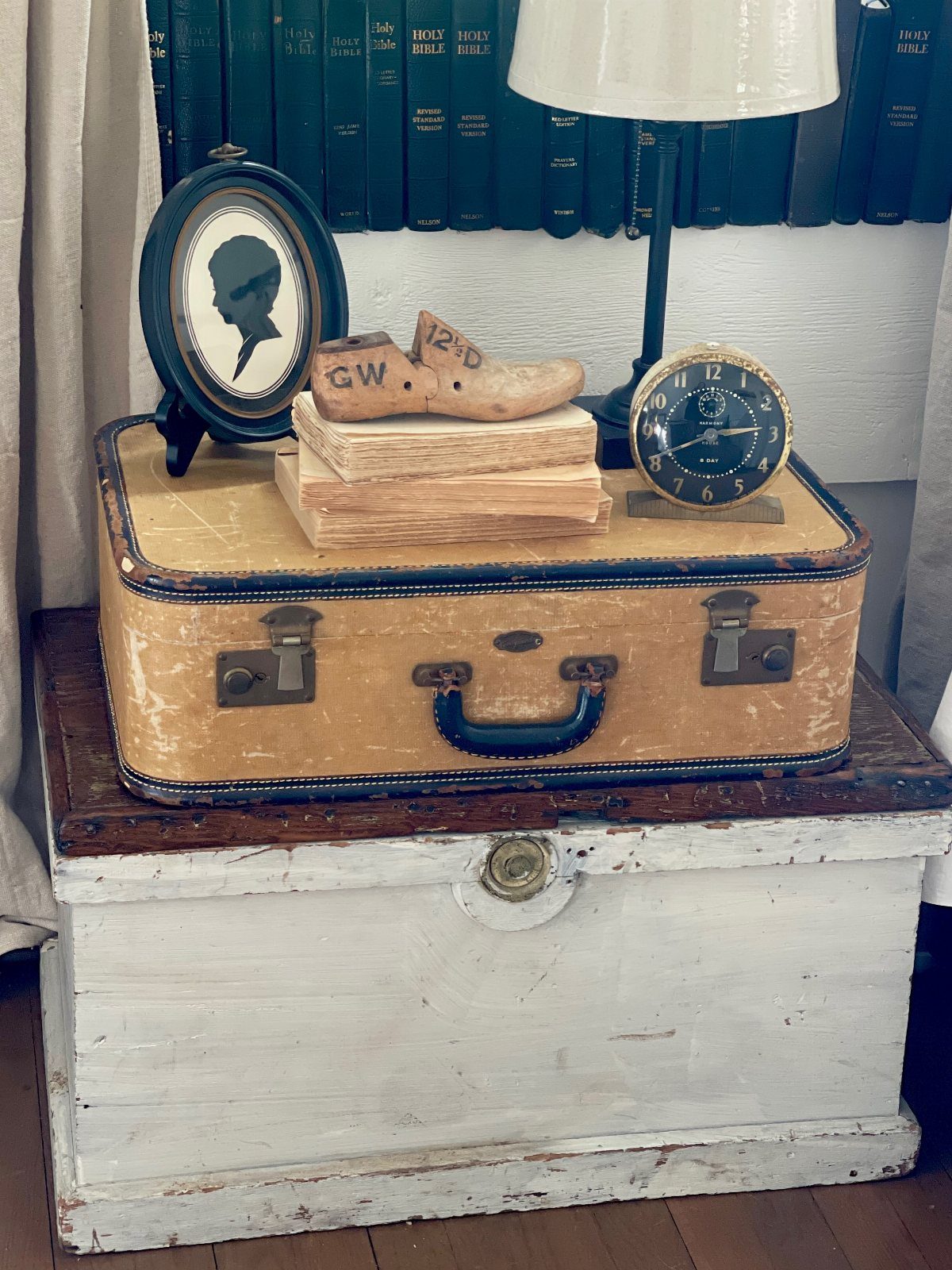
Two or three vintage suitcases stacked beside the bed give you storage inside each one. The outside stays charming without trying too hard; the brass corners and worn leather do the work.
I like this for renters because nothing mounts to the wall, and the height adjusts by adding or removing a case. If you find one suitcase already near bed height, skip the stack and use it alone.
Look for hard-sided pieces with working latches, or the contents collect dust. The maker of one version used ordinary finds and let the patina speak.
3. Bar Cart Nightstand
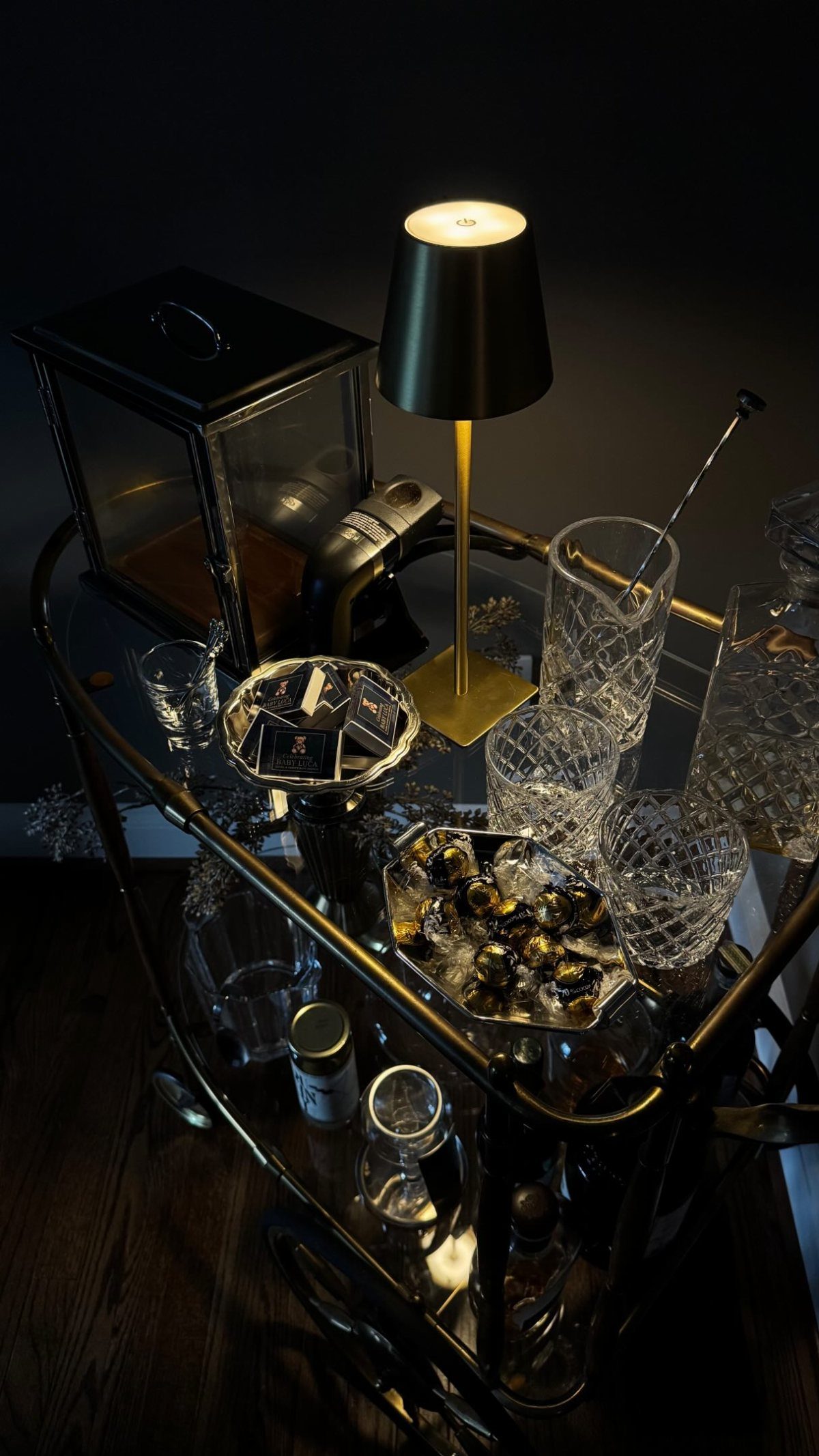
A small bar cart on wheels becomes a bedside table that rolls away when you need the floor space.
The glass shelves keep the look light, and the second tier holds the book you finished and the water glass from last night. I would style it sparely: one lamp, a small tray for jewelry, nothing more.
The gold frame warms a cool room, though black metal suits others better. A bar cart you already own costs nothing to move beside the bed, and the wheels make it easy to roll out for cleaning.
4. Corner Shelving Unit
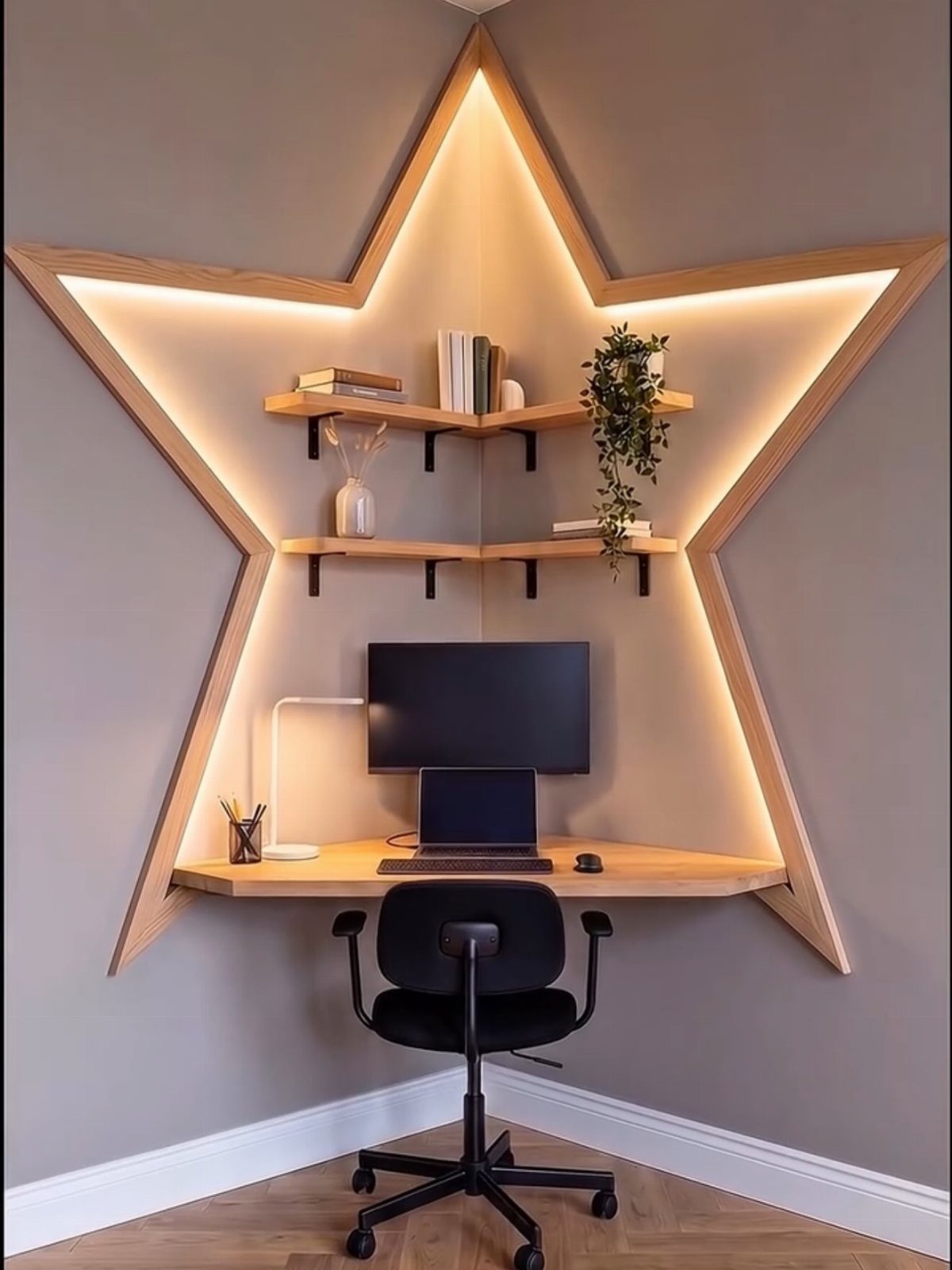
A corner shelving unit climbs the wall instead of spreading across the floor. A corner unit uses vertical space for a desk and two small ledges, but simpler versions work the same way: height replaces width.
I would add one near a bed pushed into a corner, with the lowest shelf at mattress level for a lamp and phone, higher ones for books and a plant.
The tiered look draws the eye up, which helps a low ceiling. Warm lighting finishes the piece after the build, and the corner placement keeps the floor clear.
5. Compact Nightstand with Drawers
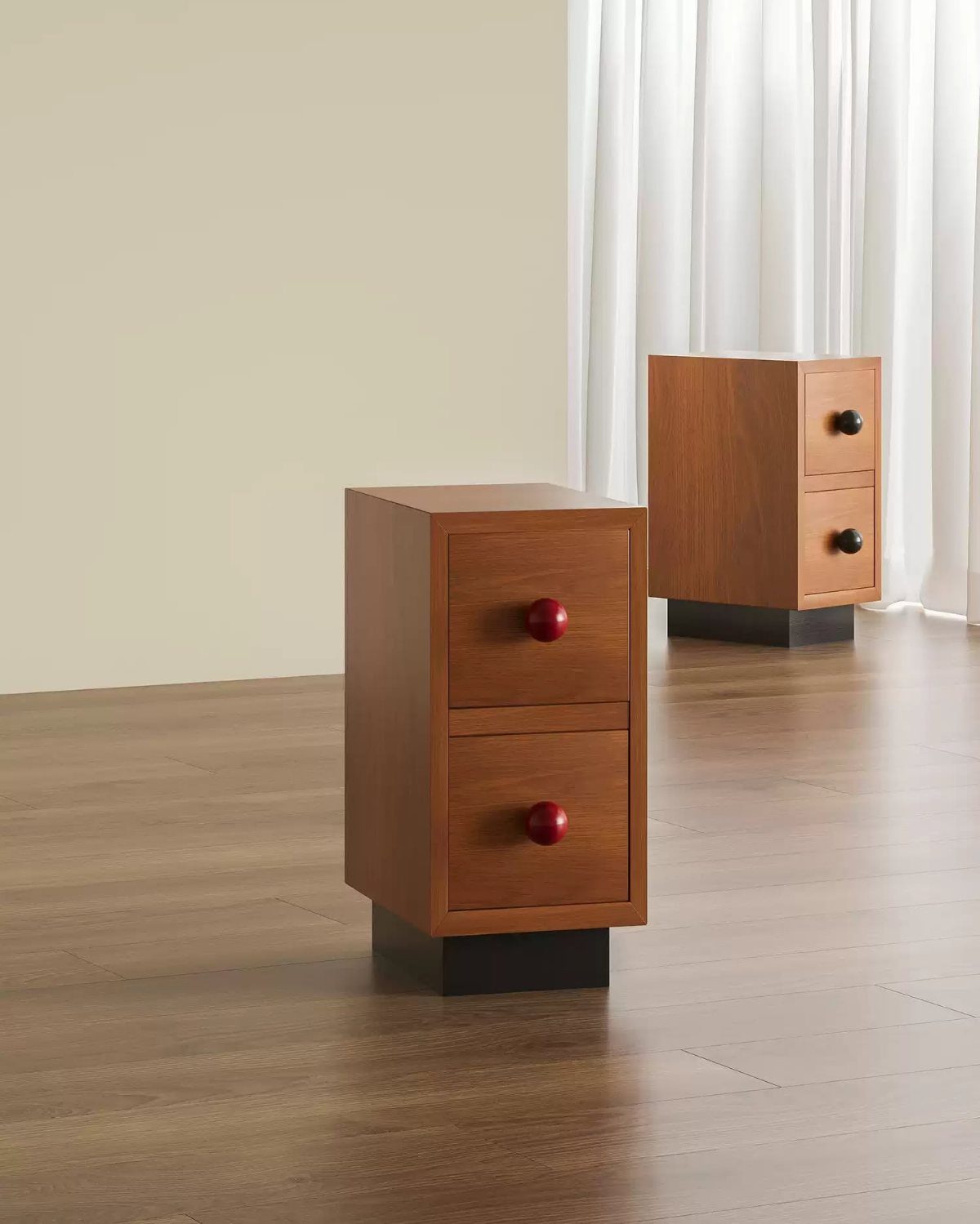
A compact chest with two drawers fits where a wider nightstand would block the closet door or crowd the path to the bed.
The drawers swallow chargers, hand cream, and the notebook you keep meaning to write in, so the top stays clear for a lamp and alarm. Round knobs in a contrast color turn plain wood into something intentional.
I would measure the floor space beside my bed first, then shop for the footprint, not the photo. One version built from birch plywood and common boards runs four drawers deep if you need more.
6. DIY Rustic Crate Nightstand
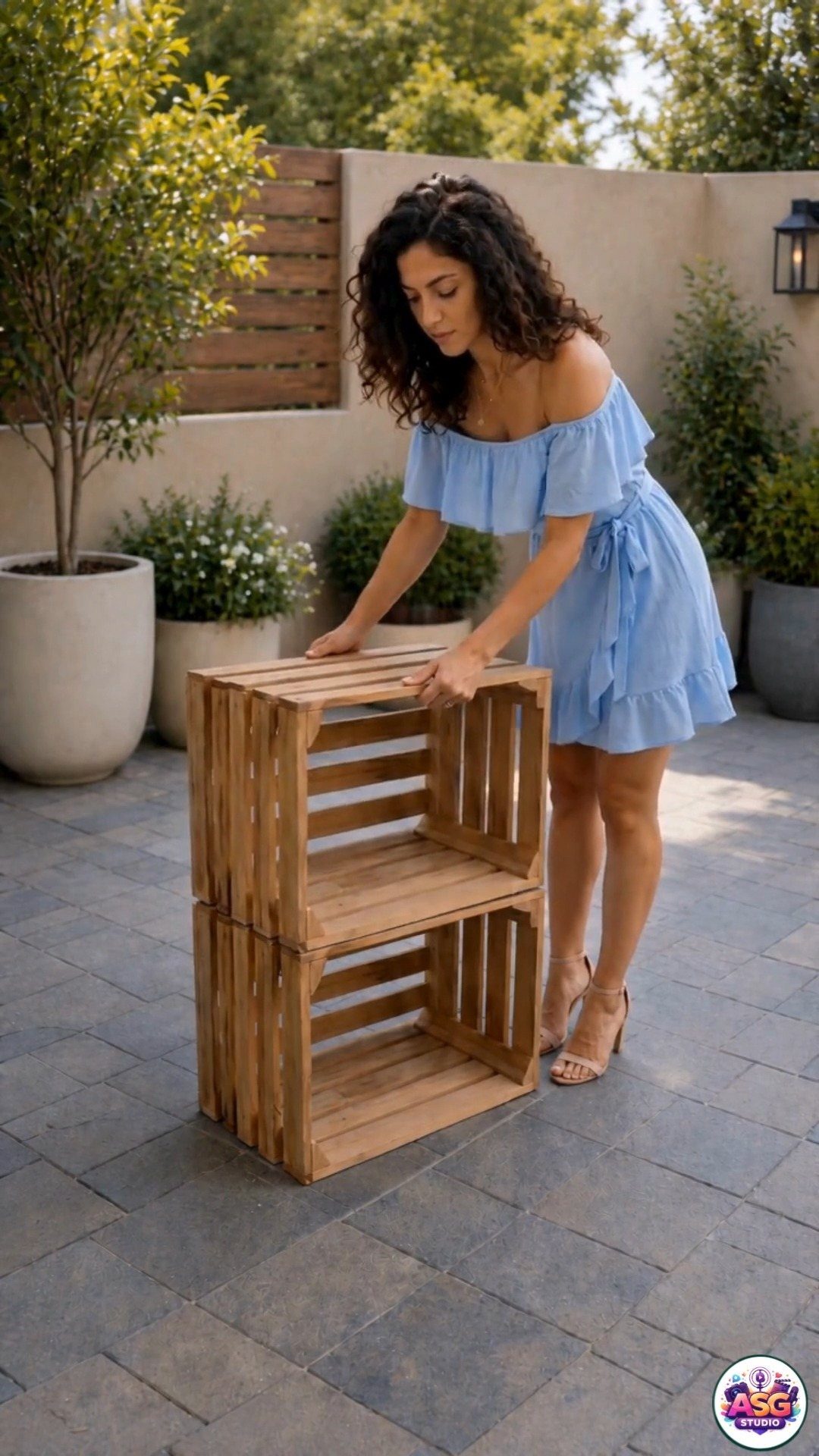
Two wooden crates stacked vertically give you open cubbies for books, a plant, and whatever else collects beside the bed. Leave them raw for a farmhouse feel, or paint them to match the walls so the storage nearly disappears.
The maker of this version used ordinary crates and stood them on end; I would add small furniture feet underneath to lift the bottom crate off the floor and protect it from vacuum bumps.
No tools required beyond a screwdriver if you add a top board, though the crates stand alone just fine. Crates from a craft store or salvage yard keep the cost low, and the rustic finish hides any dents or wear.
7. Mood Lighting
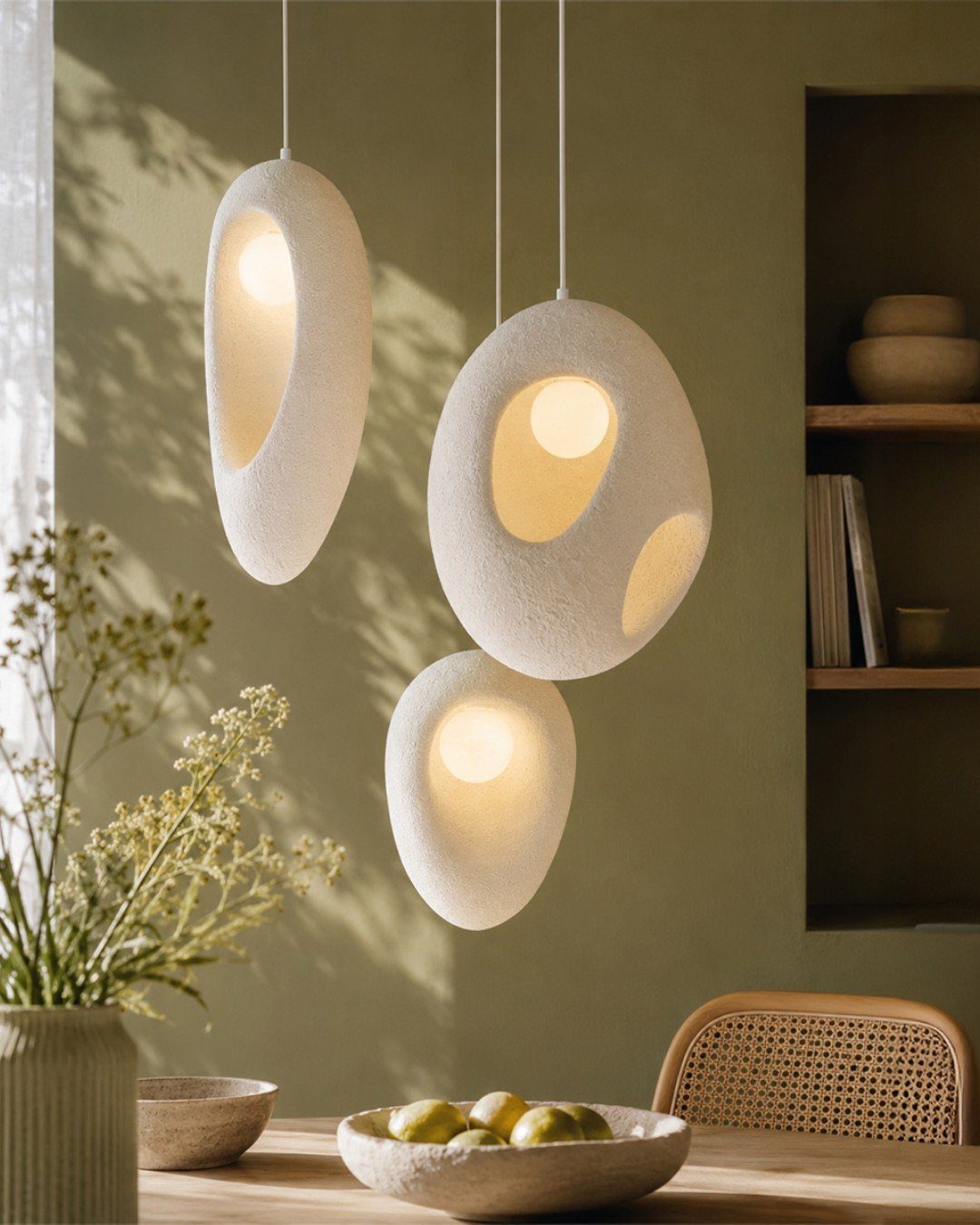
A bedside lamp does more than help you find your glasses. A lamp with a warm bulb softens the bedroom after dark and adds some vertical lift so your nightstand doesn’t turn into a flat line of stuff.
Dimmable bulbs let you wind down without that harsh overhead glare. When the table itself is tiny, moving the light to the wall or ceiling keeps that surface clear for the things you actually need within reach.
I aim the bottom of the shade at about eye level for someone sitting up against the pillows. Too high and the light hits your eyes; too low and it pools on the floor.
8. Greenery
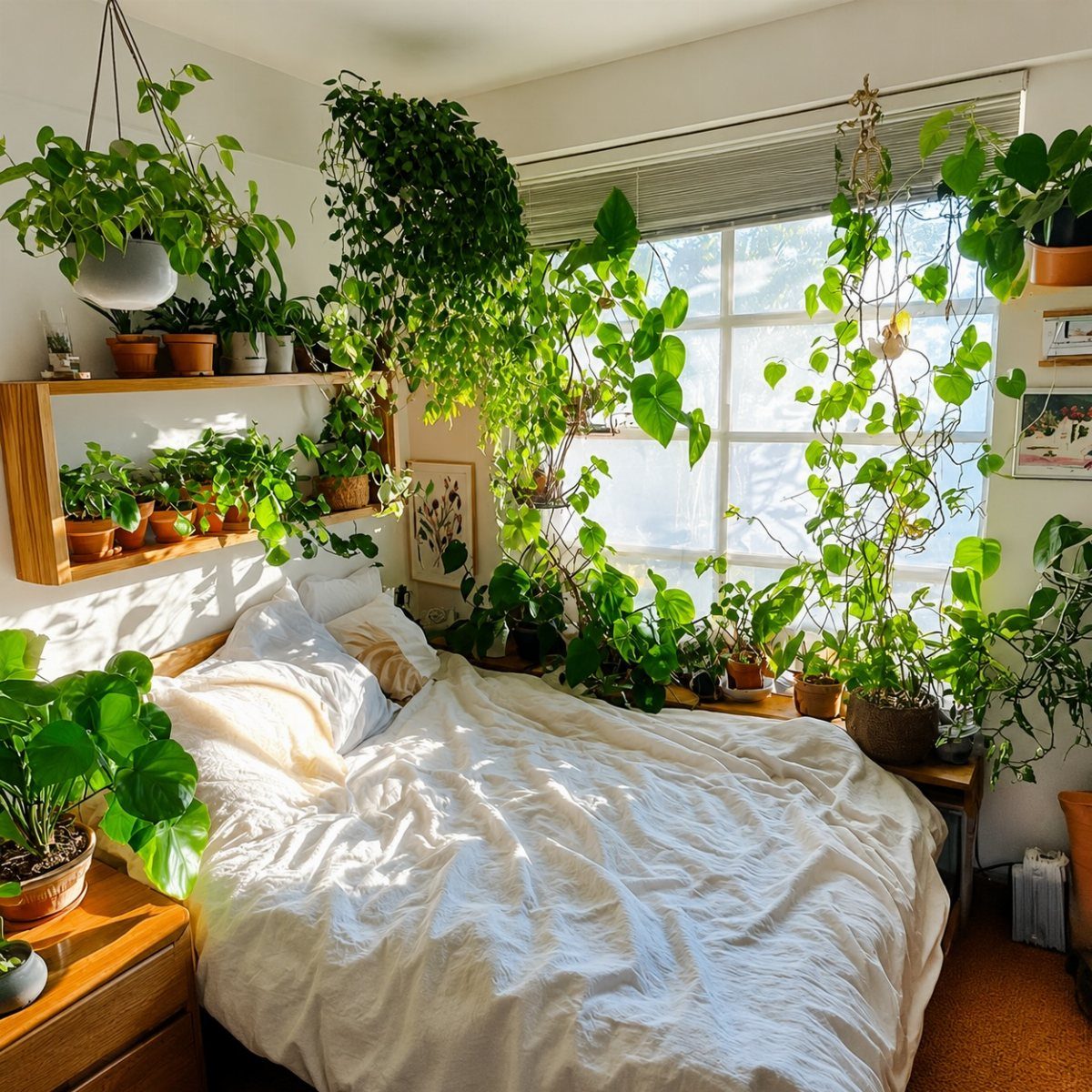
One stem in a slim vase is enough to make a bedside table feel less like furniture and more like a corner you chose on purpose. A little greenery breaks up the hard edges of books, chargers, and alarm clocks.
Snake plants and succulents handle indoor light without much attention. Water them when you remember and they keep the corner alive.
Real plants aren’t the only option. Good faux stems work too, especially if your window faces north or you travel often.
9. Ladder-Style Nightstand
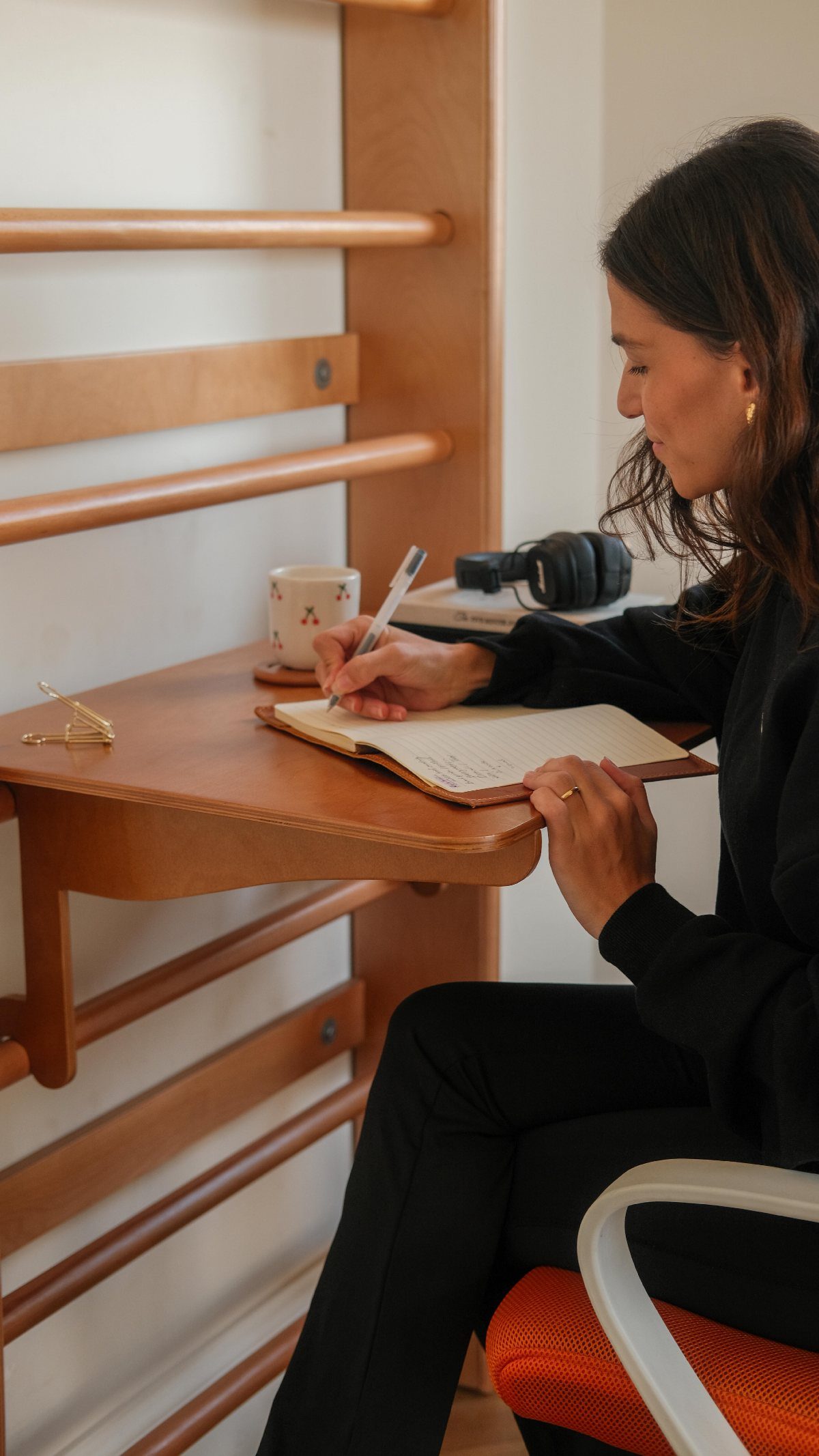
A ladder-style shelf leans against the wall and claims almost no floor space. The lower rungs hold what you reach for at midnight; the upper ones carry whatever you only need at dawn.
Lower shelves work best for books, glasses, or a small lamp. Higher shelves can take a plant, a framed photo, or nothing at all, leaving the room feeling open.
The lean itself is part of the look. It should angle enough to feel intentional, not accidental.
10. Narrow Pedestal Table
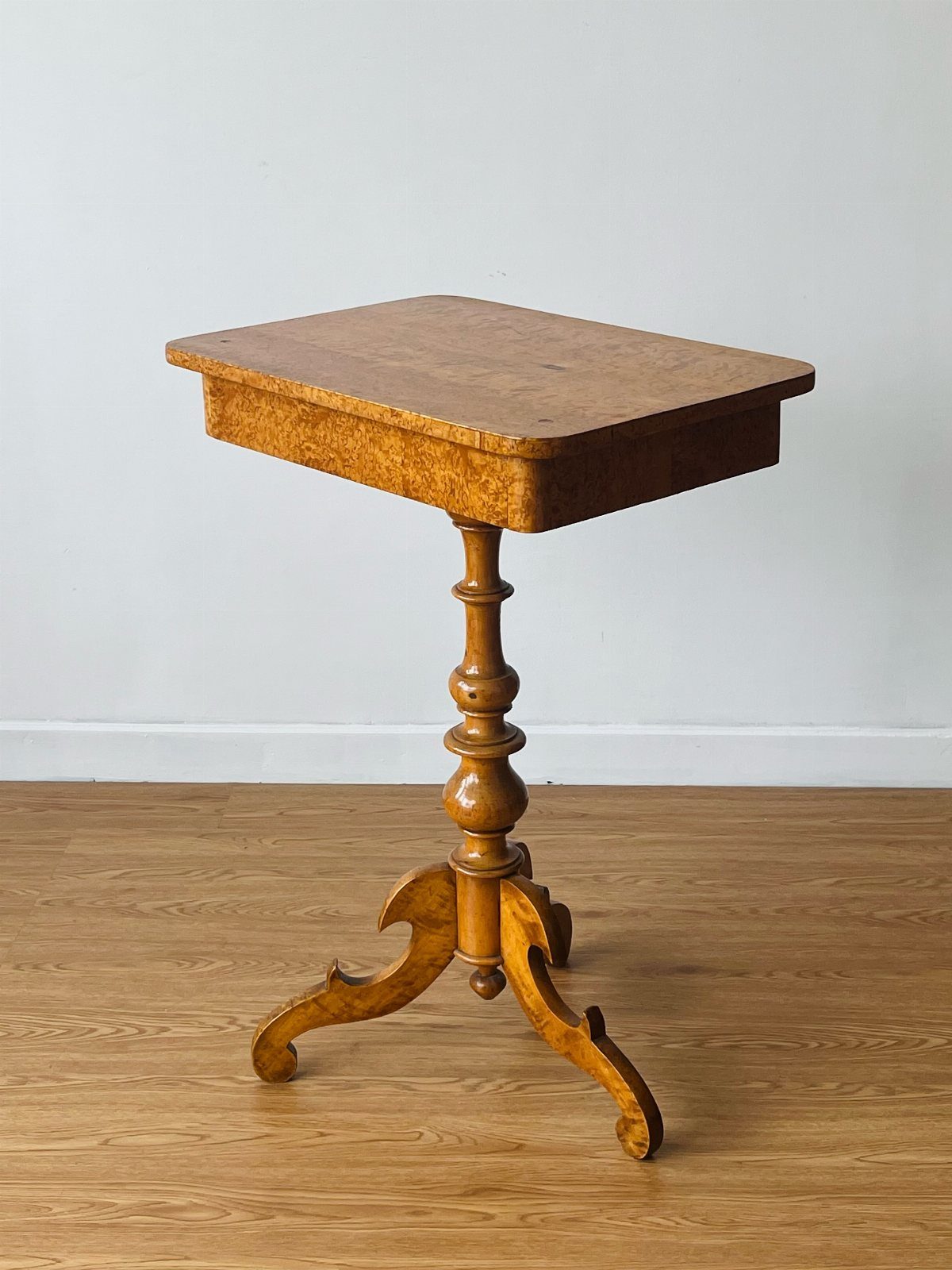
The small square top still holds a lamp, a book, and a glass of water. That’s enough for most nights.
Painted ones disappear against busier wallpaper.
11. Nesting Tables
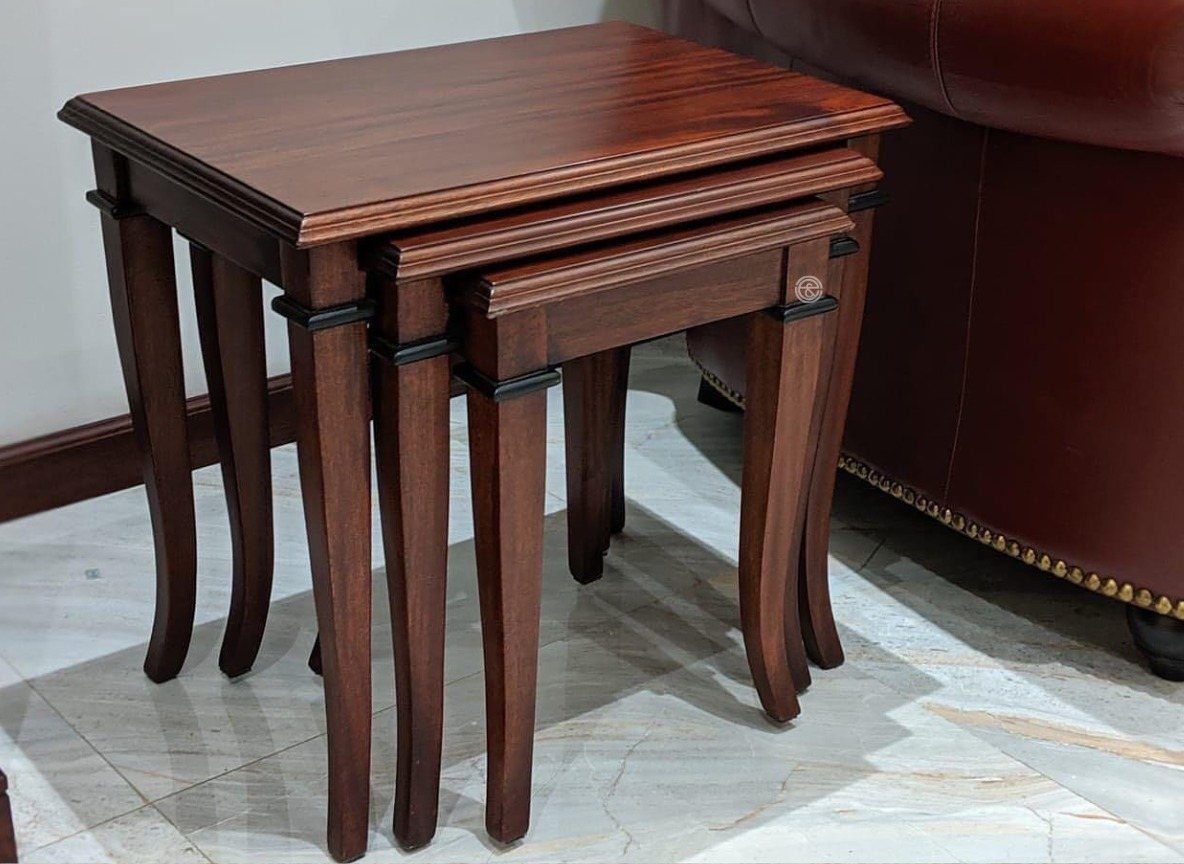
Nesting tables let you size the bedside surface to the night.
Keep the smallest two tucked under the largest for everyday use; pull one out when you need space for a laptop, a breakfast tray, or a project that wandered upstairs.
Solid wood sets, like this one designed and crafted locally, hold up to being shifted often. The curved legs add something worth looking at during insomniac hours.
Two tables stacked read as one piece. Three can feel busy beside a narrow bed.
12. Storage Ottoman
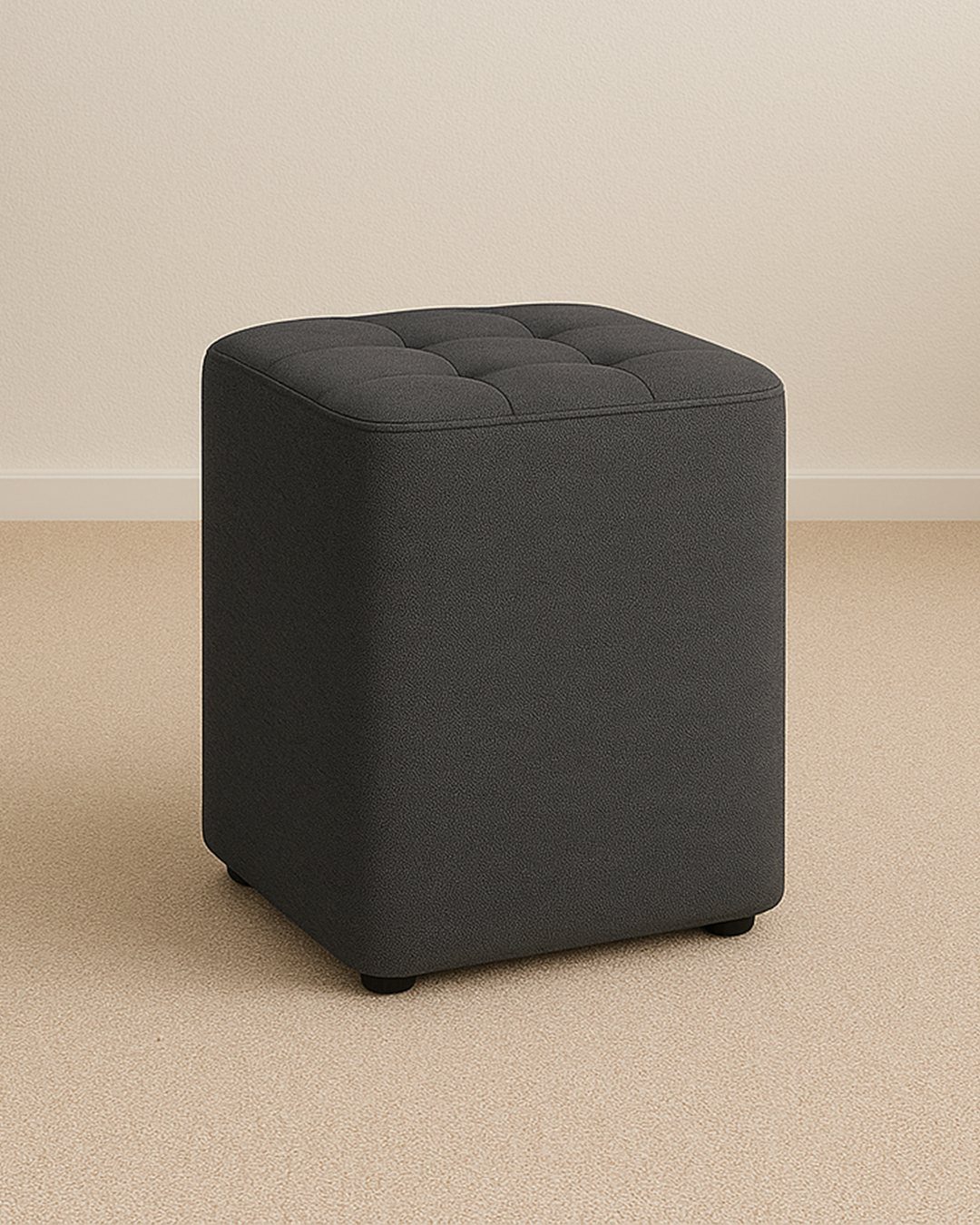
An ottoman with a hinged lid stores what you don’t want to look at: spare chargers, off-season bedding, the book you gave up on. The flat top still carries a lamp and a clock.
Uphstered surfaces invite you to sit while you tie your shoes or fold laundry. That dual use matters in a bedroom with no other seating.
Tufted tops collect less dust than flat ones. Dark fabric hides the scuffs that come from daily use.
13. Wall Pocket Organizer
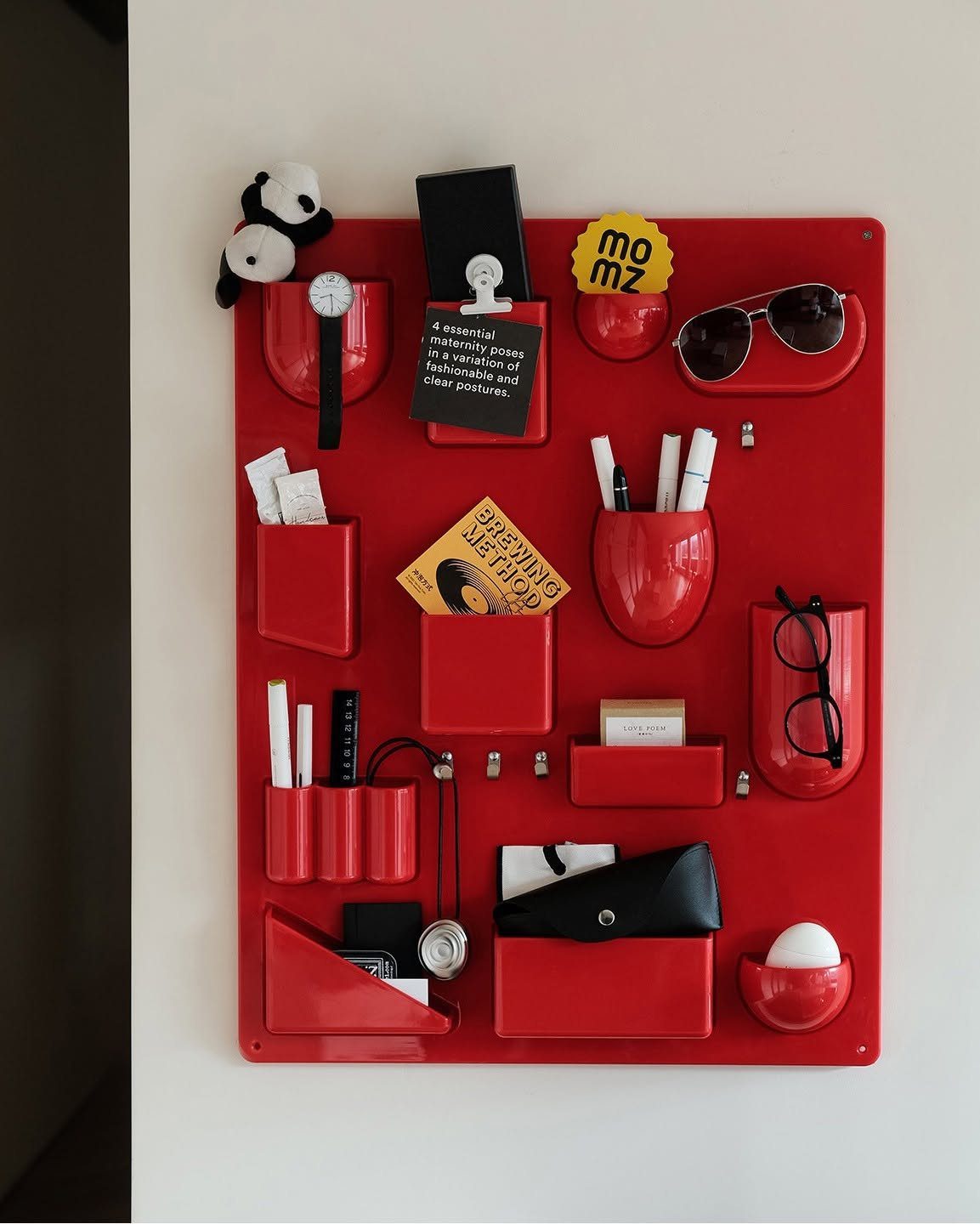
A wall pocket organizer hangs right beside your pillow and holds the small stuff that usually ends up on the floor by morning: your phone, the book you fell asleep reading, your glasses, tomorrow’s to-do list written on a scrap of paper.
I like these for the tightest spaces, the ones where even a narrow shelf steals walking room. The pockets keep essentials vertical and visible, not buried in a drawer.
Mount it at arm’s length from where you sleep, high enough that the bottom pocket clears your mattress.
Wall pockets work best for light, everyday items; leave the heavy stuff and the display pieces for real shelves. This is for function first, style second.
Pair it with a small shelf or clip lamp if you still need a surface for water or a clock.
14. Round Side Table
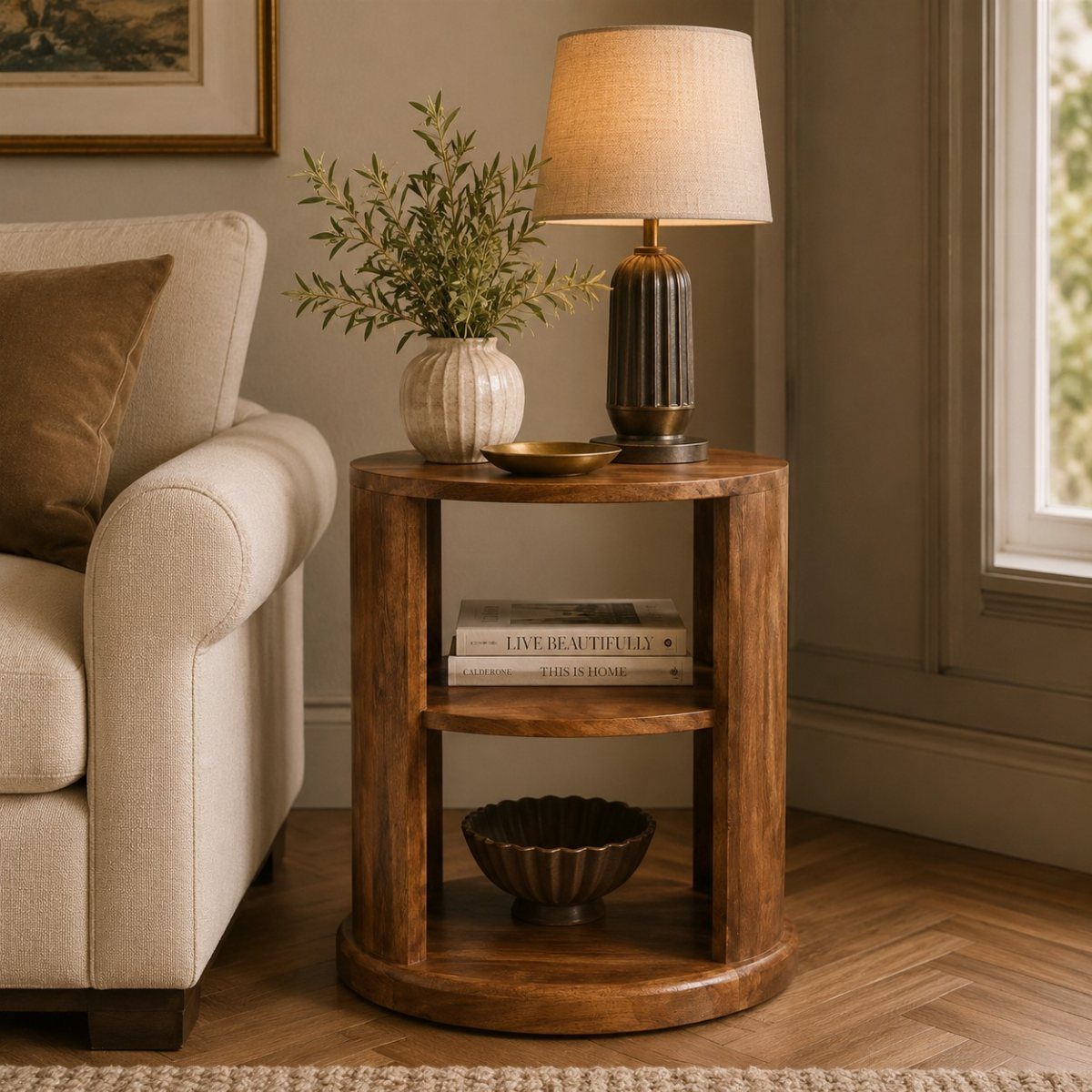
Round side tables slide into corners where square edges would fight the wall. Their curve leaves more passing room in a narrow bedroom, and the shape reads softer at eye level when you’re half-awake.
Mango wood takes stain evenly and holds up to daily use; a warm teak tone keeps it from reading too rustic or too modern.
Two shelves let you separate what you need at arm’s reach from what you just need nearby; the top holds the lamp and the water glass, the bottom swallows the clutter you will not deal with tonight.
No back panel means the wall color shows through, which keeps a small room from feeling boxed.
I’d pick this shape for any bedroom under 120 square feet, or anywhere the bed sits close to the door.
Open frames show everything, so a lidded box on the lower shelf buys you a place for the mess that accumulates by Wednesday.
15. Narrow Bookshelf
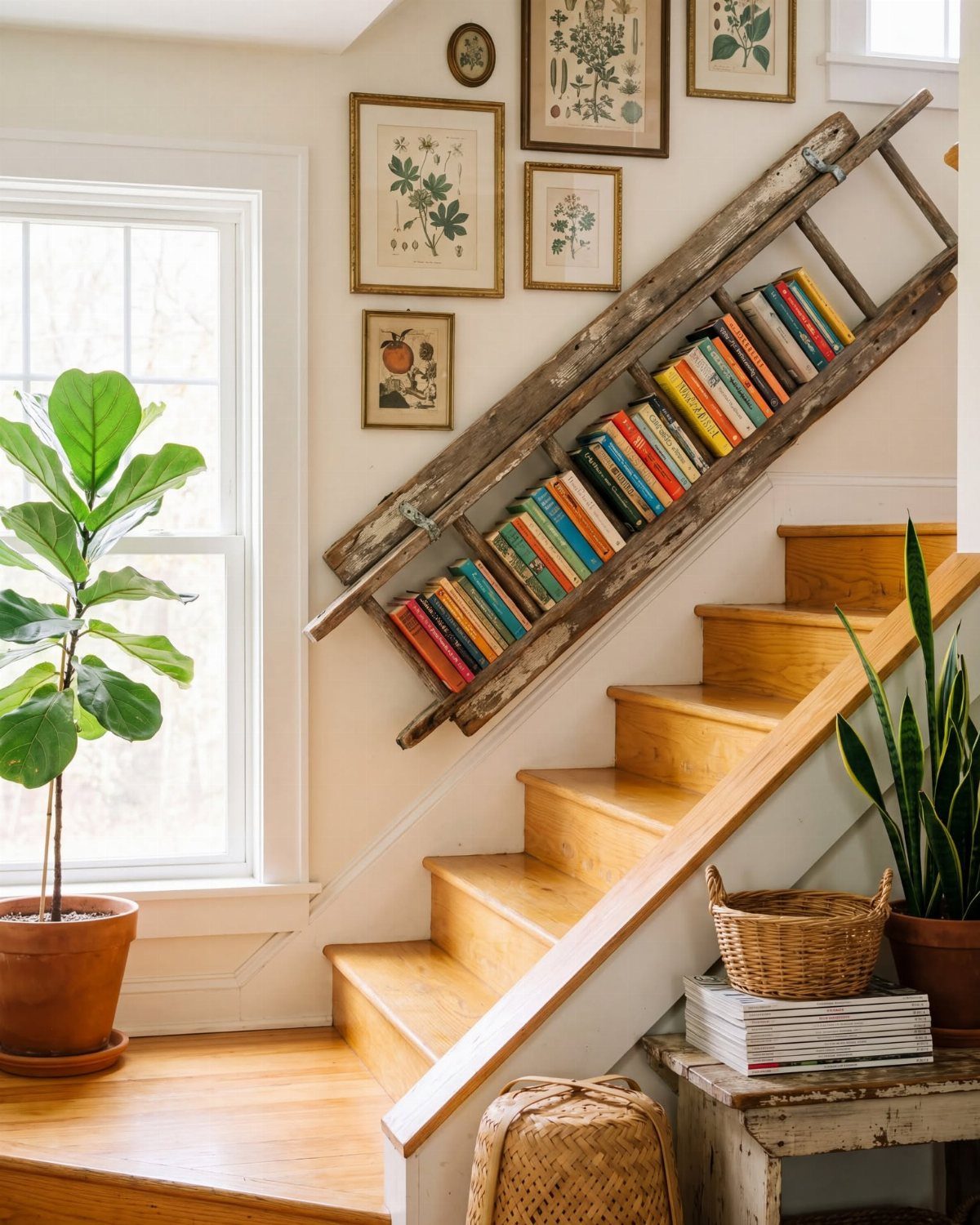
A narrow bookshelf stands in for a nightstand by going vertical instead of wide. A ladder-style leaner against the wall turns vertical space into storage without the bulk of a cabinet; rustic wood rungs warm up a narrow gap.
The real advantage is shelf count: three or four levels where a standard nightstand gives you one surface and maybe a drawer.
Keep the shelf at pillow height for your lamp and current read; use higher rungs for decor you see before sleep, lower ones for backup tissues or the charger you only need sometimes.
This works best when your bedroom doubles as your library, or when you’ve got more books than floor.
The maker notes it as a smart way to fill an awkward stairway wall; beside a bed, it solves the same kind of leftover space.
16. Foldable Tray Table
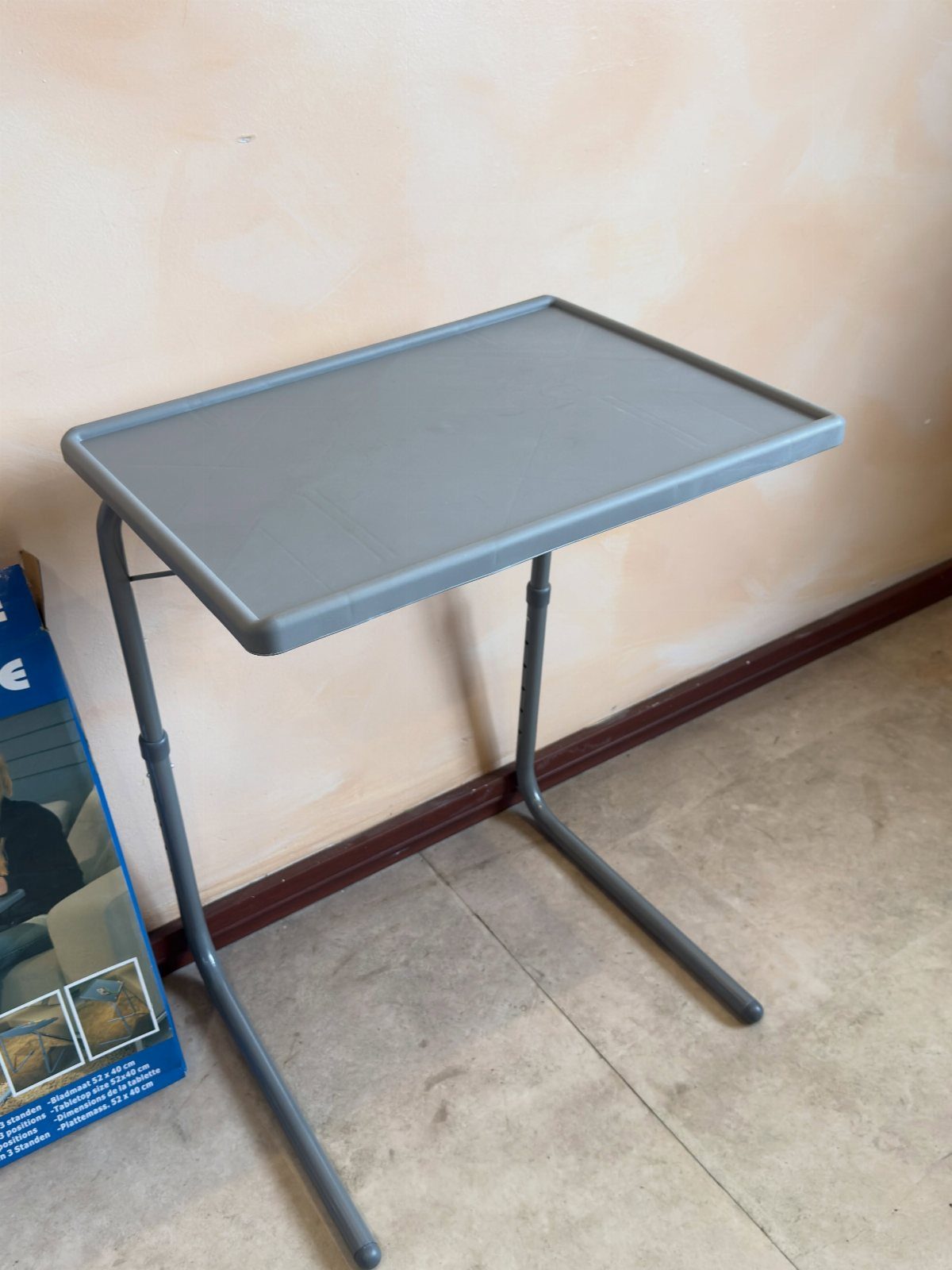
A foldable tray table sets up at bedtime and disappears by morning. The plastic top and thin metal legs weigh almost nothing, so moving it to the closet or sliding it behind the dresser takes one hand.
A foldable tray table earns its keep as backup: guest nights, sick days, or any week when the regular nightstand gets drafted into project duty. The raised edges catch your water glass if you bump it reaching for the alarm.
Folded flat, it slides behind a door or into the gap between dresser and wall.
The surface flexes under real weight; this is not where your heavy ceramic lamp lives full-time. But for a temporary setup or a rented room you can’t fill with furniture, the portability wins.
Most big-box stores stock these for less than a spare sheet set.
17. Tabletop Organizers
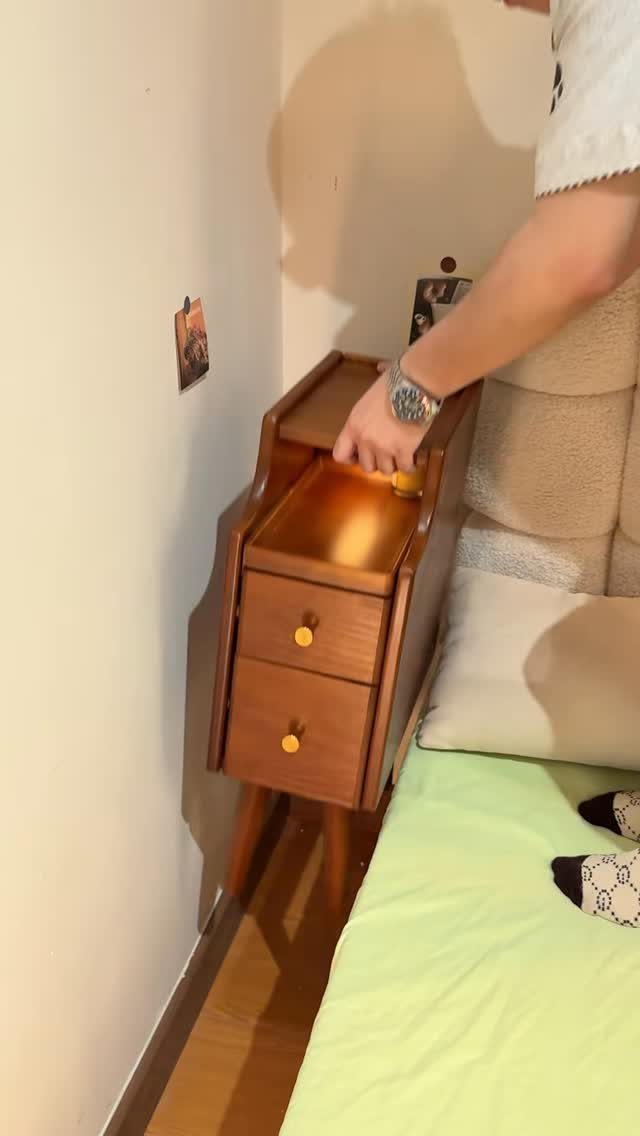
Tabletop organizers corral the small debris that collects by your bed: coins, hair ties, the lip balm you bought three of because you kept losing it.
Built-in tiered compartments keep the top clear; the same logic works with any flat surface and a few small boxes or trays.
A shallow tray or divided box eats less room than the clutter it replaces. I use one with a small section for jewelry I forget to take off, a wider slot for my phone, and nothing else.
The constraint forces me to clear it weekly or live with the overflow.
Basic wood or bamboo organizers run less than a takeout lunch. The payoff is visual calm when you wake, which matters more than I expected before I tried it.
18. Personal Touches
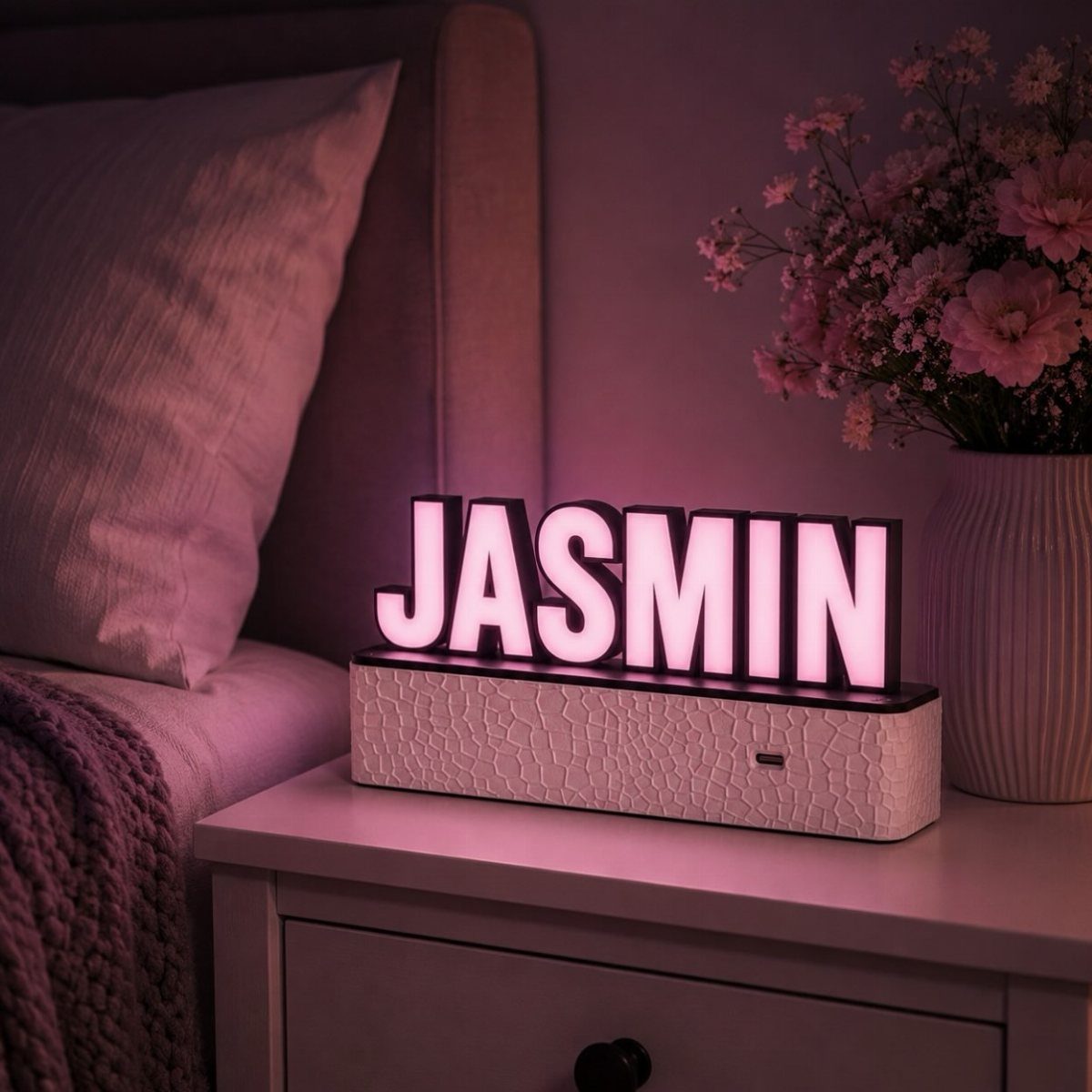
A neon name glow turns a purchased piece into something that reads as yours alone. A framed photo, a ceramic dish from a trip, the letter you kept: these sit alongside functional items and claim the space.
I add one personal item per side, never more. Two photos and a souvenir become a museum shelf; one meaningful piece against a clean backdrop reads intentional.
This costs nothing extra if you already own the object. The risk is sentimentality: a nightstand is not a shrine, and you see it at 6 AM when your tolerance for clutter is lowest.
Rotate pieces seasonally, or when one starts feeling like background noise.
Start with Function
Mine starts with the lamp, a spot for my phone, and a coaster for water. Those three things use most of the real estate, and they are the reason I reach over in the dark without knocking something over.
Once the working pieces have homes, there is usually room left for one or two things that make the surface feel finished.
A small tray keeps the lamp base and coaster from looking scattered, and it corrals the phone cord so it does not drape onto the floor.
If your nightstand is a foldable tray table or something else that moves, the same rule applies: the things you touch every night get placed first. Everything else is optional.
A portable surface only works if you are not constantly clearing it to use it.
Balance and Visual Weight
A nightstand needs something nearby that holds it down visually, or the whole side of the bed feels adrift.
That anchor might be a tall lamp on the surface, a wall sconce mounted above, or a piece of art hung behind. In one room I set up, a window beside the bed did the work without anything extra.
The height matters more than the object itself. A low lamp on a low table disappears; the same lamp against a dark wall or under a framed print reads as intentional.
I look at what is already on the wall before I decide what sits on the table.
If there is nothing behind the nightstand, no mirror, no art, no wallpaper, the surface itself has to carry the weight. That usually means something vertical: a ceramic vase, a small stack of books, anything that draws the eye up.
Clutter Management
The nightstand collects clutter faster than any other surface in the house because it is reached for half-asleep. A small organizer or divided tray keeps the essentials from spreading into a pile that has to be cleared every morning.
A shallow box corrals the small stuff that used to drift across the top: lip balm, hand cream, the notebook that stays closed more days than not. The surface holds only what gets touched between midnight and 7 AM.
Wall-mounted pockets or a narrow shelf above the table can take over when the tabletop is too small. Storage is not an invitation to own more; it is a way to keep what is already there from spreading out.
Personalization
The items that make a nightstand feel like yours do not have to be expensive or large.
A smooth stone picked up on a hike, a photograph turned face-down because the light catches it wrong, a ceramic dish in a color you have bought twice before.
One or two of these pieces are enough. The nightstand is not a shrine; it is a place you pass in the dark.
The personal item should be something you can identify by touch.
Frequently Asked Questions
What to put instead of a nightstand?
A floating shelf, stacked vintage suitcases, a small bar cart, or two wooden crates work well. Ladder-style shelves, narrow pedestal tables, and wall pocket organizers all work when floor space is tight.
Each option trades floor space for wall space or vertical storage, which matters in small bedrooms.
What are the trends for nightstands in 2026?
Bar carts roll away when you need the floor, nesting tables expand for busy nights, foldable tray tables store flat in a closet, and storage ottomans give you somewhere to sit.
Vertical designs like ladder-style shelves and narrow bookshelves also replace wide cabinets in tight rooms.
What are the current trends for bedside tables?
Built-in flexibility is the main thread. Round side tables and open frames are showing up more in narrow bedrooms because they leave more room to pass.