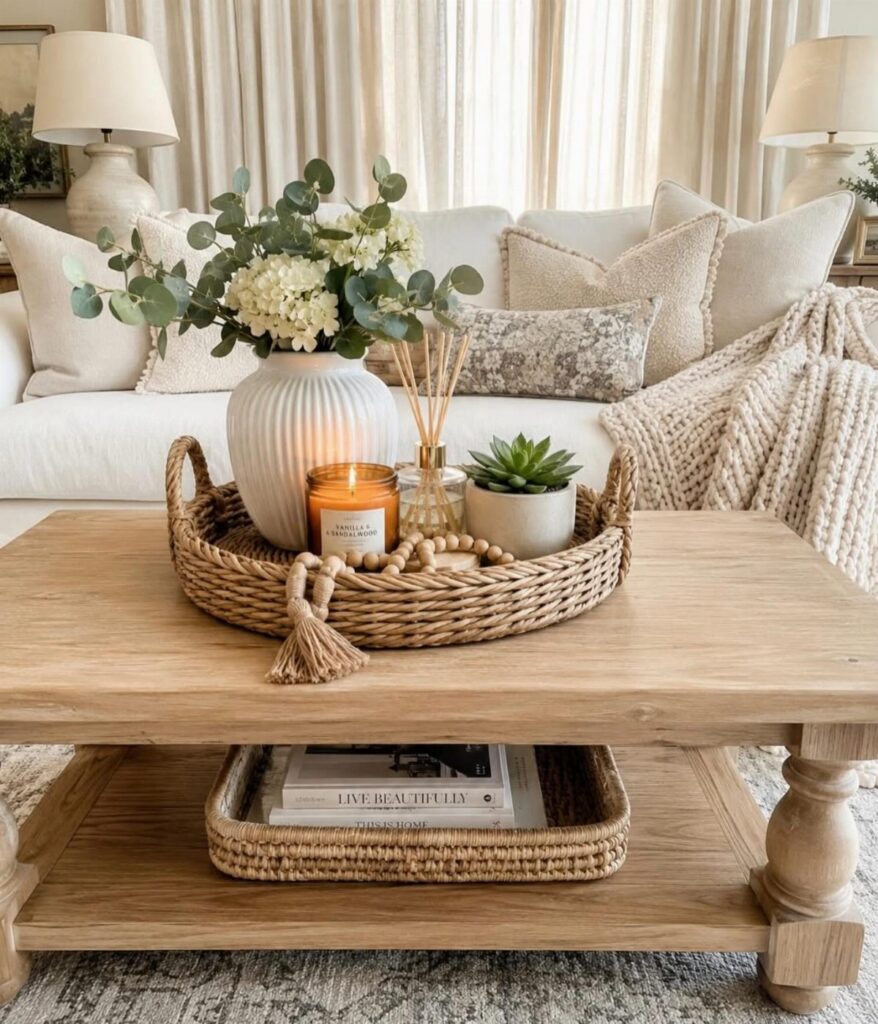
Most of these ideas land between a free stack of books already on your shelf and a small rotating budget for fresh stems.
1. Stack Coffee Table Books
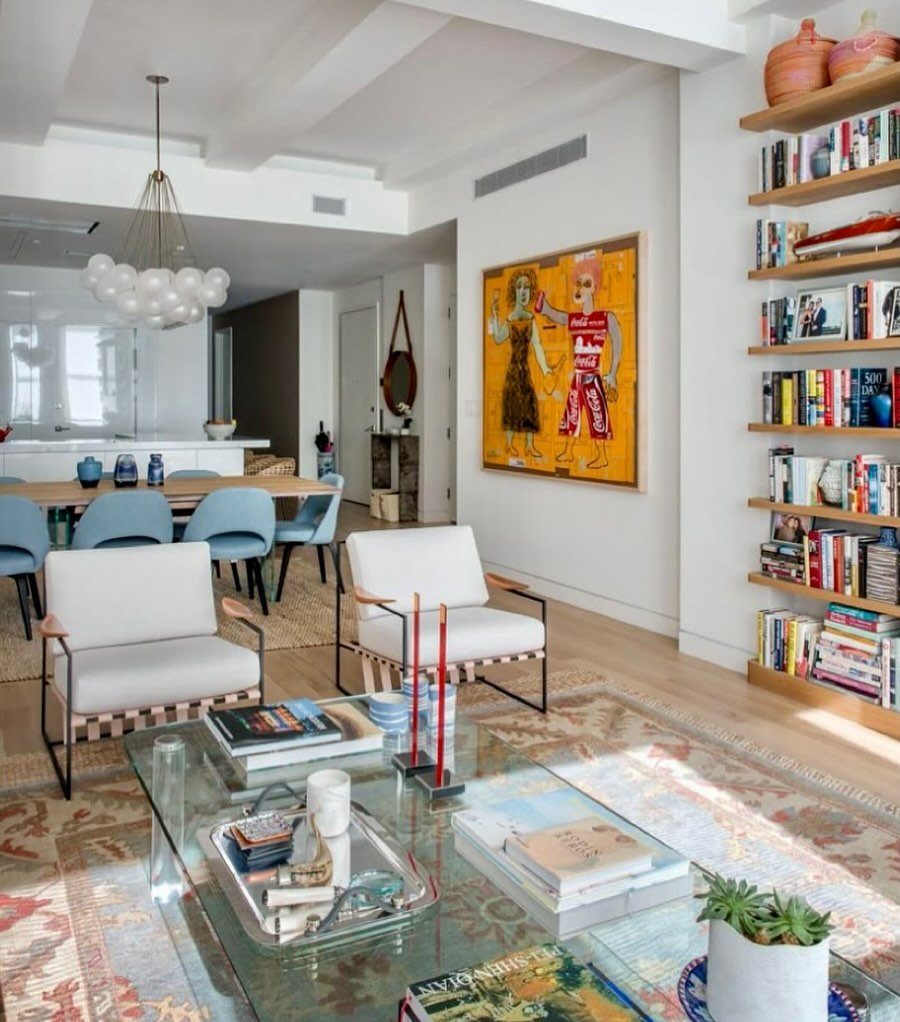
A stack of hardcover books builds a soft base for everything else on the table. A mix of heights keeps the pile from looking staged; a small vase or candle on top anchors the layer.
Two or three books is usually enough; beyond that, you’re building a tower, not a surface.
Neutral spines keep the look flexible if you rotate decor seasonally. This trick costs nothing if you already own the books.
2. Incorporate Fresh Flowers
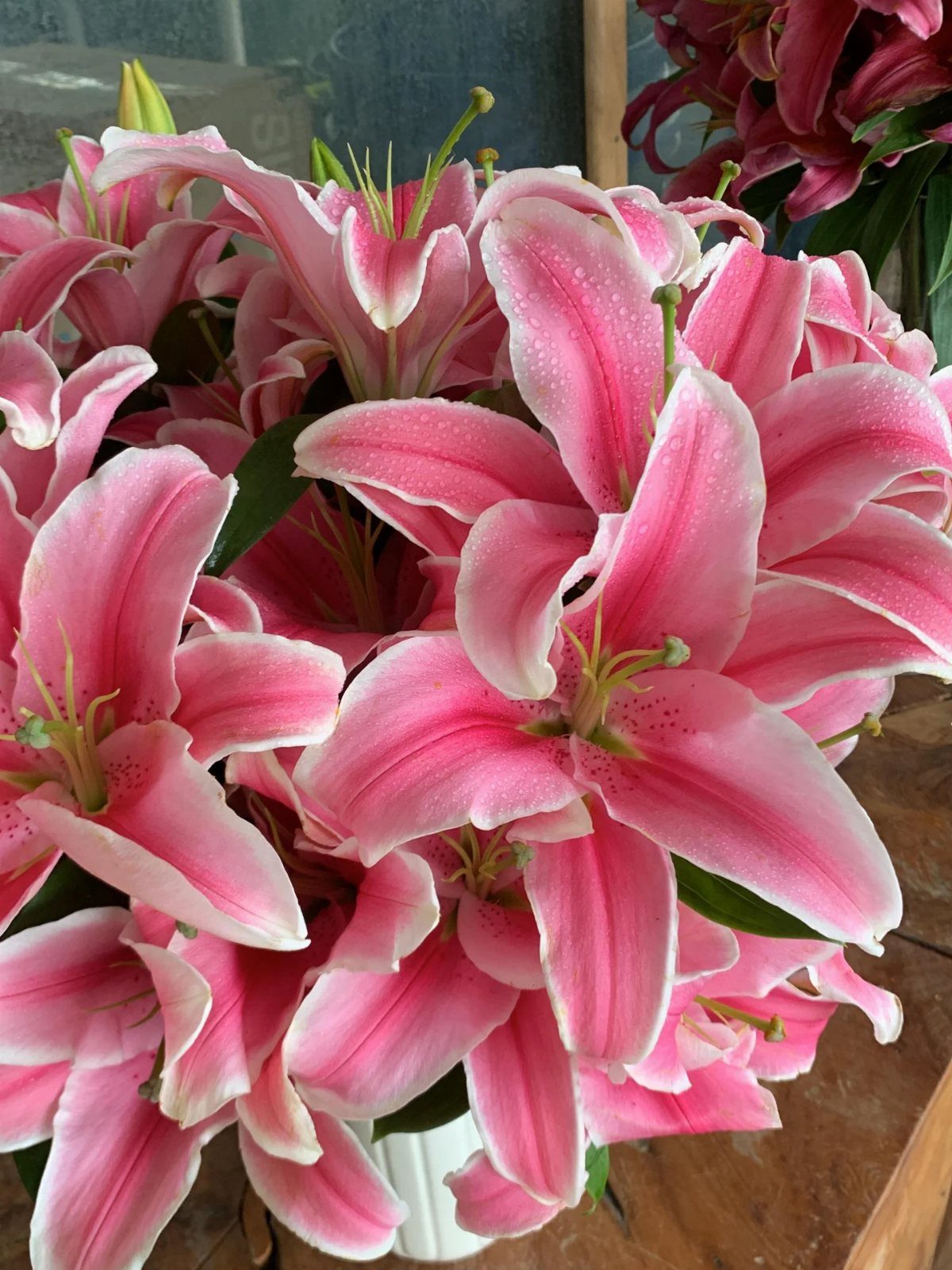
Fresh stems in a simple glass vase do what no other object can: they shift and droop and demand to be replaced. That impermanence is the point.
A petite bouquet of grocery-store blooms, trimmed short so the stems sit visible, reads as intentional rather than leftover.
Swapping in fresh tulips or daisies often enough to keep them from drooping adds up, so I treat it as a rotating expense rather than a one-time buy.
Faux branches work if your budget or schedule won’t bend; choose ones with enough variation in the leaves to read real from across the room.
3. Layer with Candles
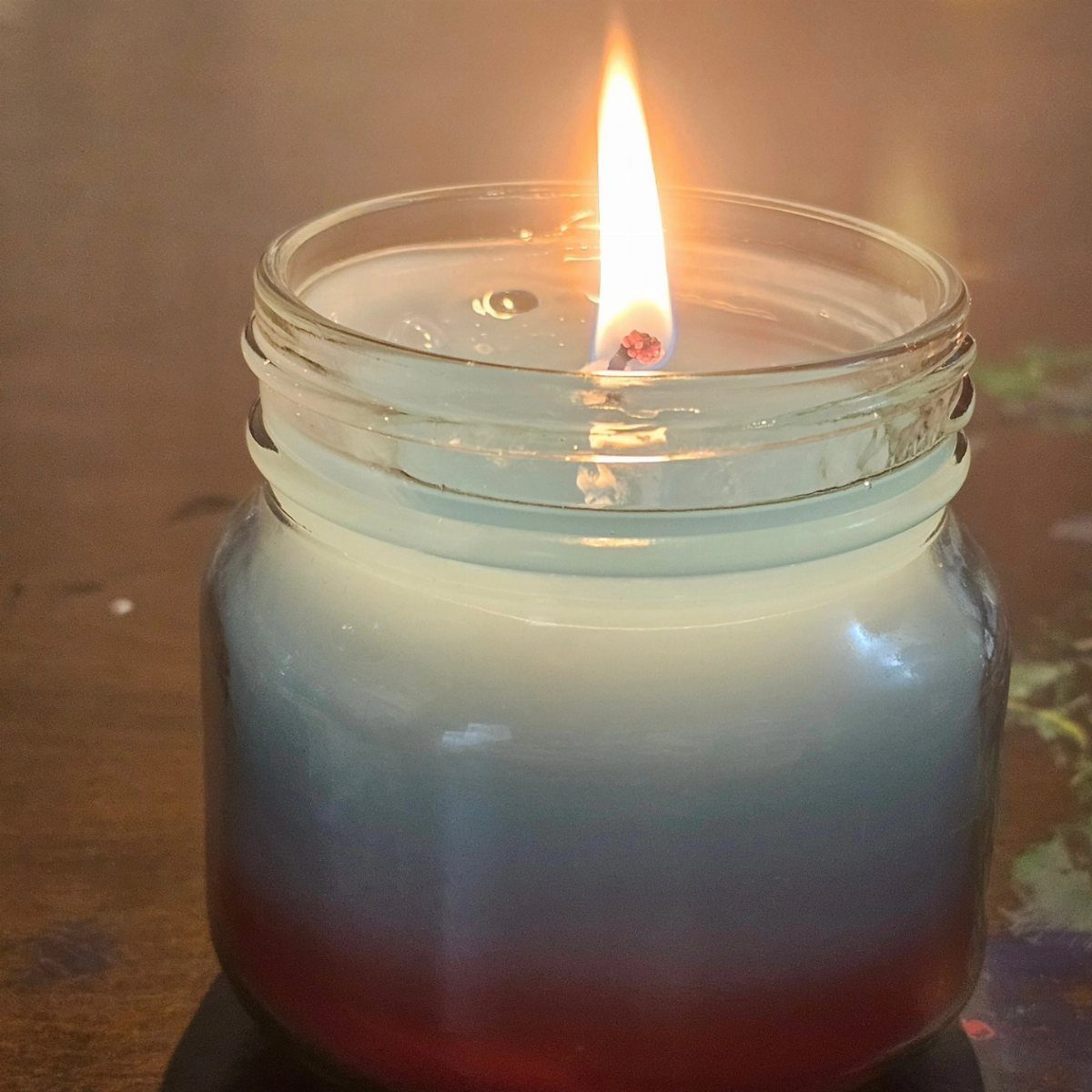
Candle height matters more than scent when you’re building an arrangement.
One chunky pillar kept low pairs well with something taller, a taper in a brass holder or a slim jar candle, so the light sources read at two levels rather than one flat plane.
Electric candles have improved enough that I use them on tables where drinks pass over open flame too often.
The holders do as much visual work as the wax; a ceramic or sculptural base carries the style even when the candle is unlit.
4. Add a Match Cloche
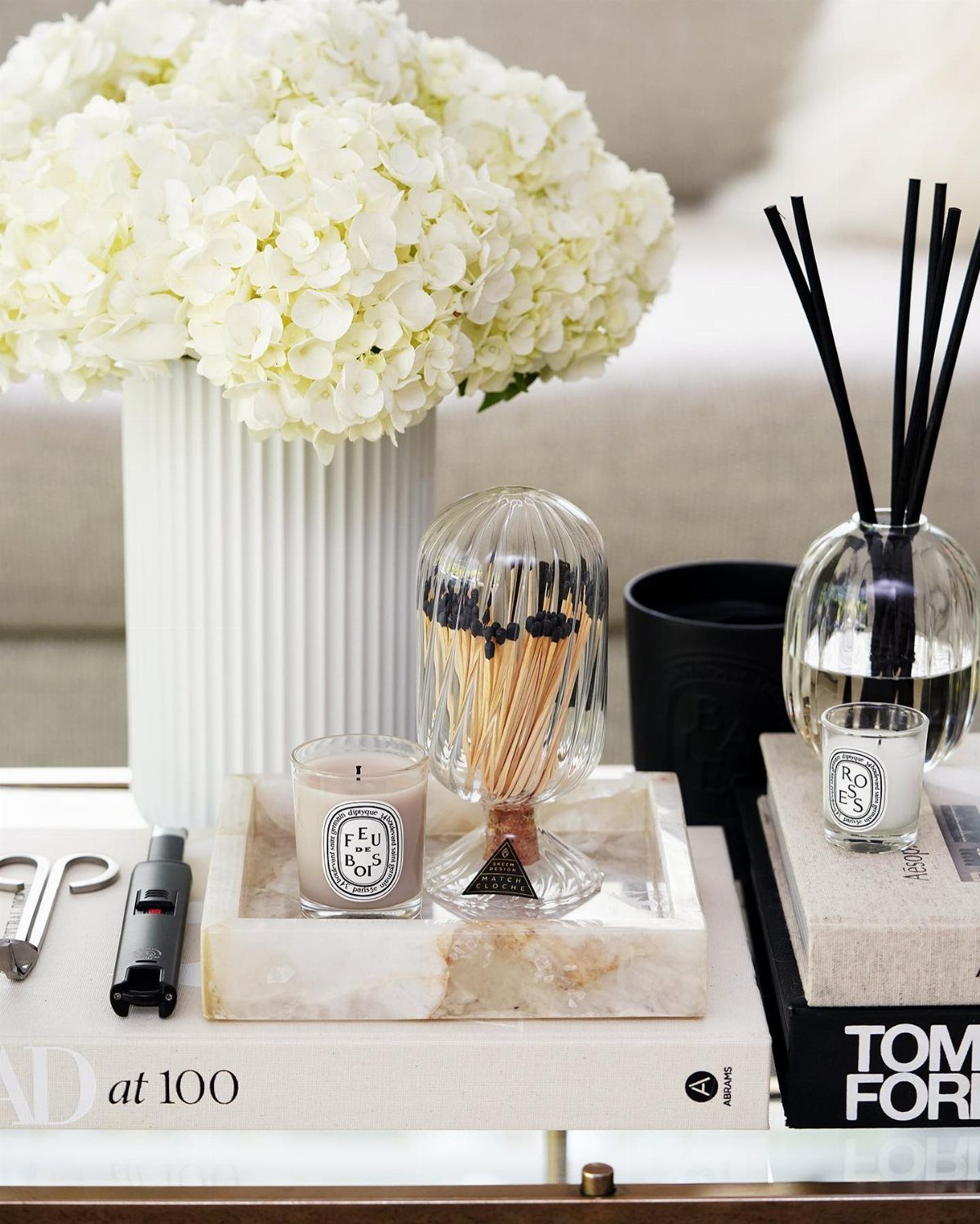
A glass match cloche turns a utility item into something worth leaving out. A good cloche sits heavy enough that it doesn’t slide when you reach for it, and holds enough matches to last a while.
I set mine beside a candle rather than across the table; the pairing reads as deliberate, not random.
The strike strip on the base wears faster than the glass, so I check it every few months.
5. Decorative Bowls

A wide, shallow bowl corrals the small objects that otherwise drift across a coffee table. I use mine for remotes, loose hair ties, and the odd piece of mail I mean to deal with later.
The rim should be low enough that you reach over it without thinking.
Thrift stores turn up ceramic and brass bowls in this shape more often than you’d expect. Thrifted white glazed pieces work well for this; mine now holds potpourri in fall and wrapped peppermints through December.
The bowl does the organizing; what fills it changes with the month.
6. Add Sculptural Objects

One sculptural object, placed slightly off-center, reads as art rather than clutter. I look for pieces with a silhouette that differs from everything else on the table: rounded if my books are rectangular, angular if my vase is soft.
A metal fruit form or a ceramic knot both work; the material should catch light differently than its neighbors.
Scale is the common mistake. The piece needs enough mass to hold its own against the sofa back, not so much that it blocks the view across the room.
The test is sitting where you normally would and checking what reads first.
7. Incorporate Natural Elements
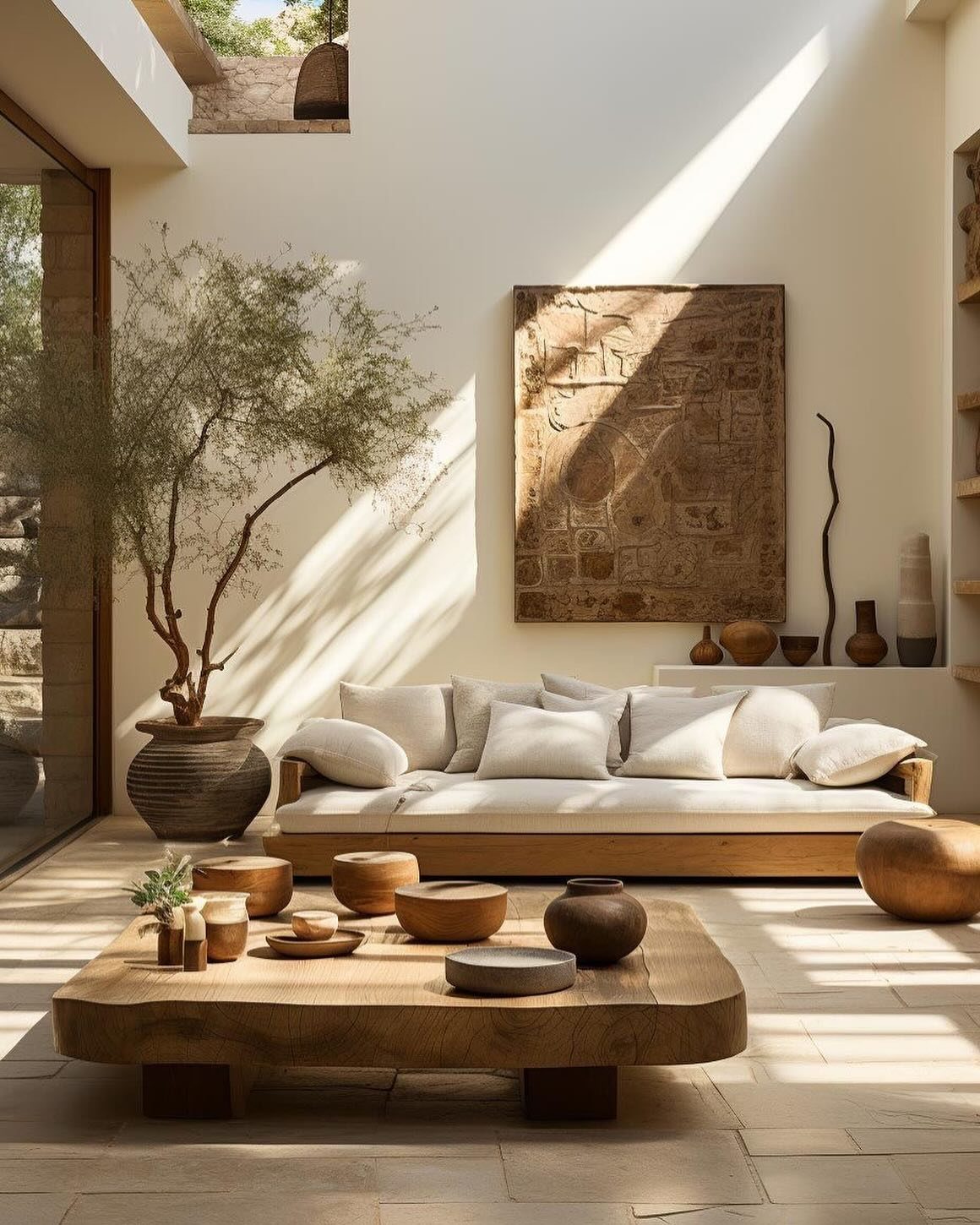
A few stones, a piece of driftwood, or a small ceramic bowl in an earthy glaze can soften the whole feel of a coffee table without adding clutter.
Mix textures that already live in your room. Wood, clay, and stone play well together because each reads as found rather than bought.
I tend toward matte finishes over glossy ones; they catch light more quietly and do not compete with anything else on the table.
A woven basket or a smooth wooden bowl works for remotes and coasters too, so the piece earns its spot.
This approach suits renters who cannot change the bones of a space but want warmth that reads as intentional, not accumulated.
8. Add a Statement Piece
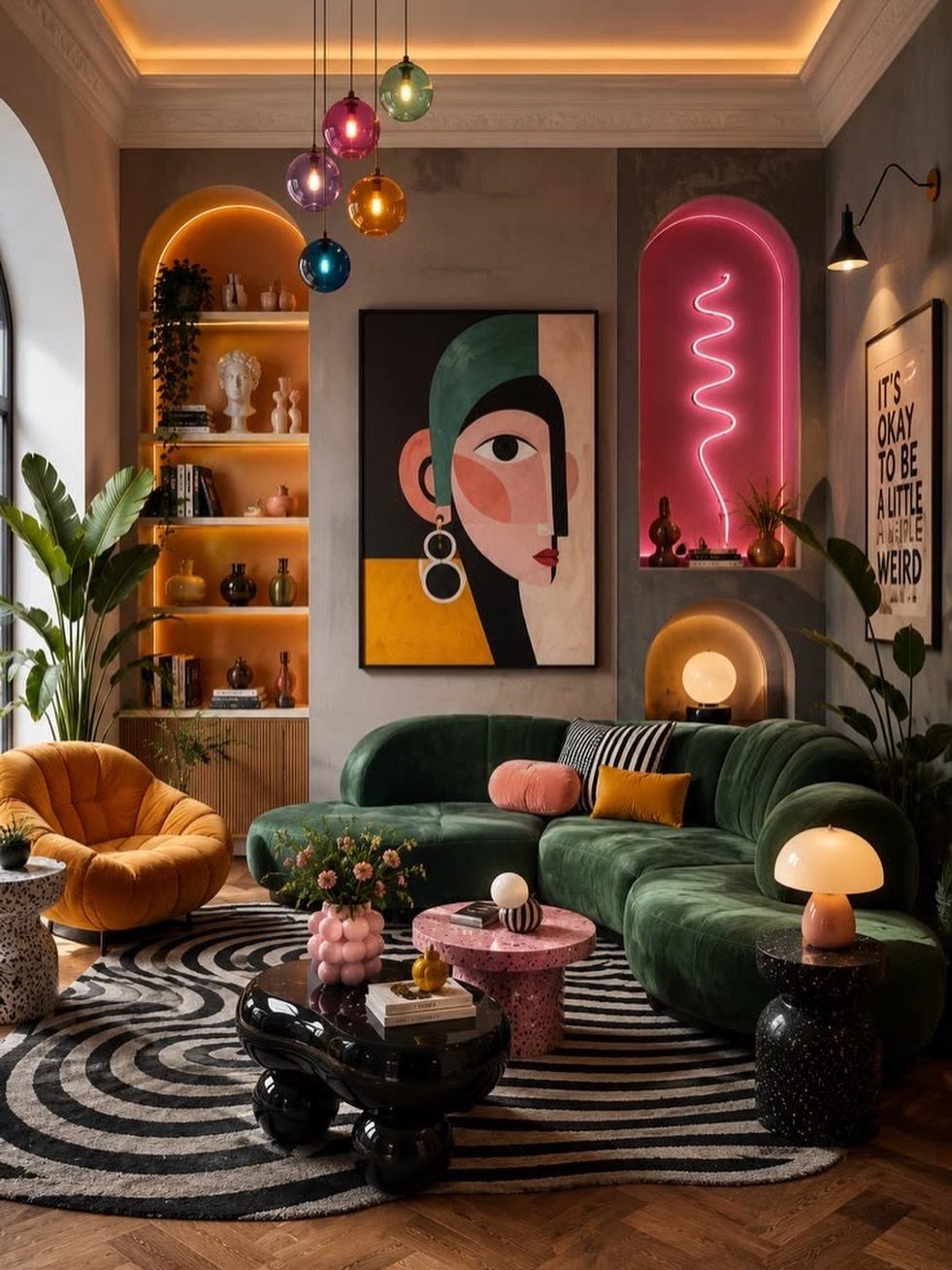
One oversized piece does the work of three small ones.
A sculptural vase, a metal candle holder with some height, or a figurine that means something to you becomes the reason everything else on the table exists.
I like placing it slightly off-center and letting the surrounding space do its job; negative space reads as calm, not empty.
Pick something whose shape stands apart from whatever sits nearby. A rounded form against rectangular books, or a vertical shape beside a low bowl, gives the eye two distinct things to read instead of one decorative lump.
This trades away the layered look for something bolder. It suits small tables where several items would crowd each other, or rooms where the coffee table faces the door and needs to make a quick impression.
9. Use a Decorative Object
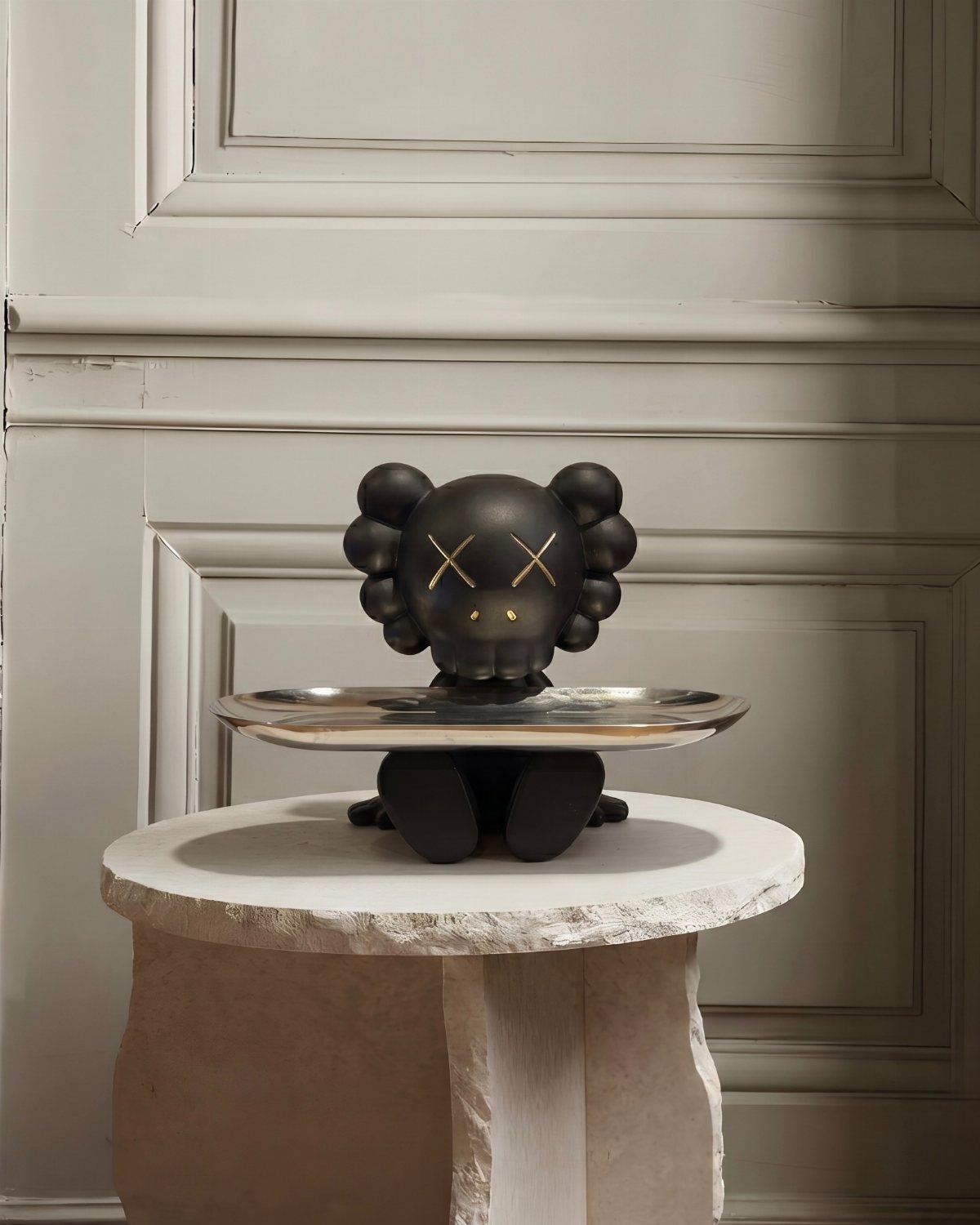
The right odd object turns a coffee table into something someone asks about.
A brass animal figurine, a sculptural knot, a small globe if you travel: the piece should spark recognition, not just fill space.
Thrift stores and estate sales are where I find mine; something with weight and a story beats a generic shelf piece every time.
If the object is small, raise it. A white stone pedestal or a stack of two books gives it presence without demanding more stuff around it.
One thing that makes you smile when you walk past is enough; a cluster is not the point.
This works best when the rest of the table stays practical. The conversation piece gets its moment because nothing else vies for it.
10. The Tray, Edited
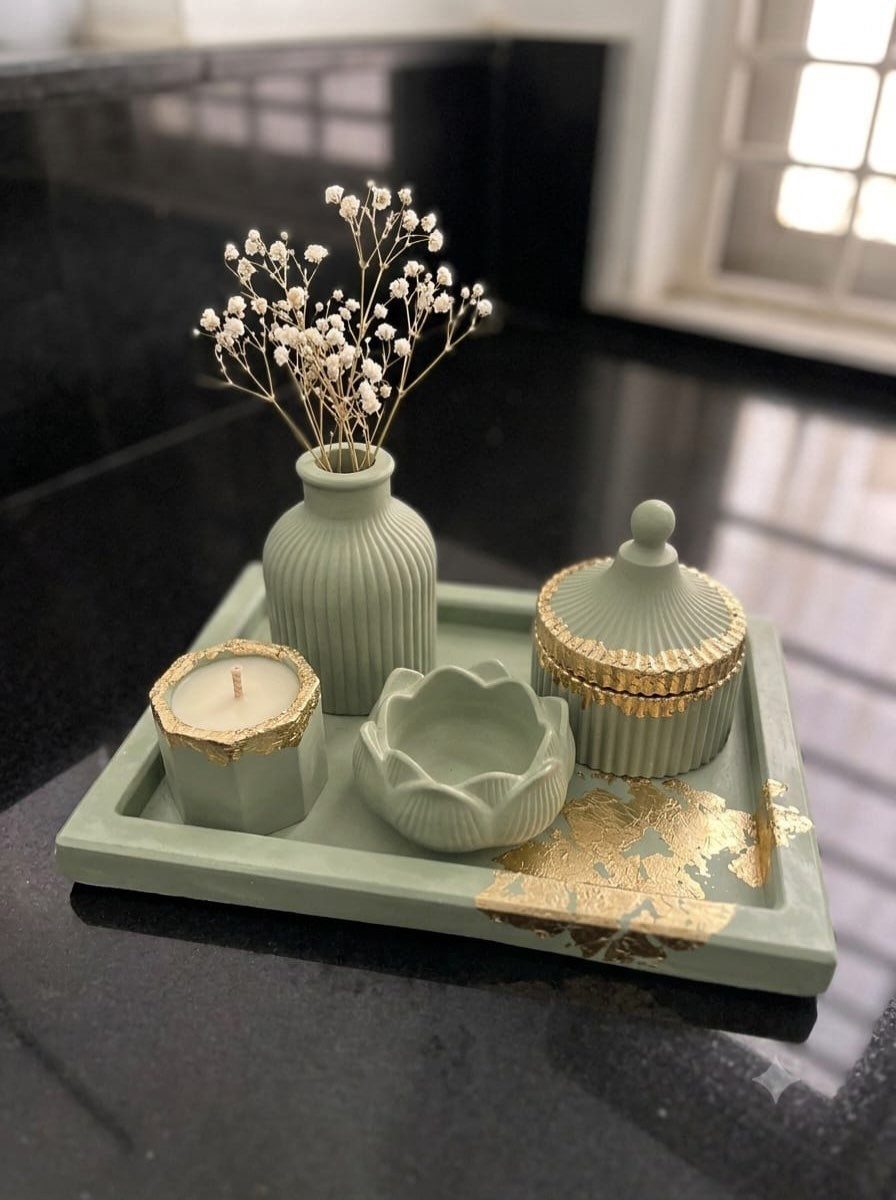
A tray corrals the living-room debris that gathers despite every good intention.
Four pieces read as one because the tray gives them a boundary.
Round trays soften rectangular tables; elongated trays suit square ones. The shape should relate to the table without copying it exactly.
This approach suits anyone sharing a space where remotes and coasters need a home. It trades the scattered look for something contained, and editing becomes as simple as lifting the whole tray when you need the surface clear.
11. Use a Low Bowl with Florals
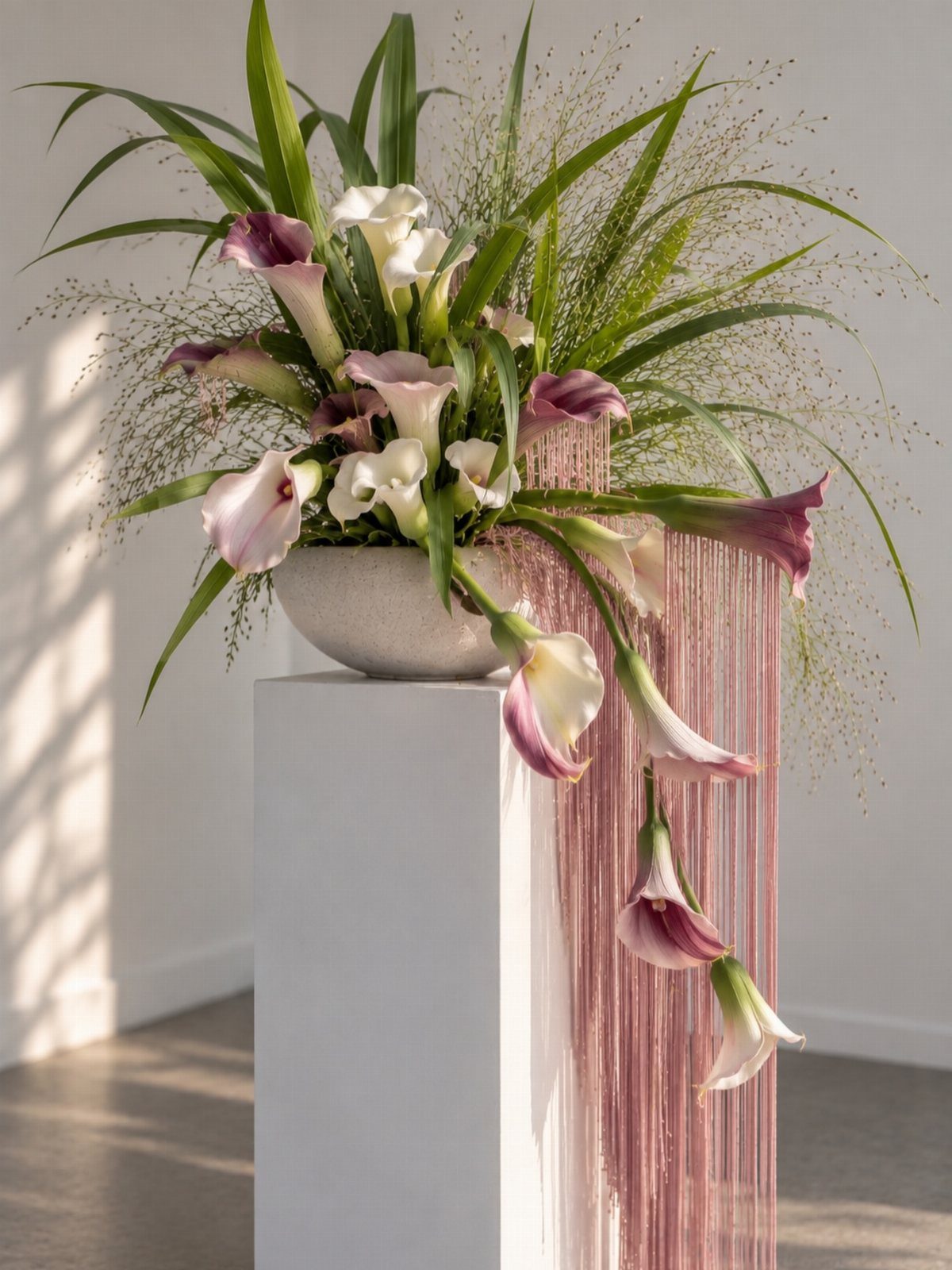
Low flowers keep the sight lines open across a sofa.
A shallow bowl in stone or ceramic, filled with stems cut to sit below eye level when you are seated, adds elegance without the barrier a tall arrangement creates.
A heavy base grounds light flowers and keeps the whole thing from reading as temporary.
I use this when I am expecting company and want the room to feel considered, not staged. Fresh stems need water and attention; dried grasses or branches hold up if keeping plants alive is not your habit.
Fresh flowers ask more of you. This suits hosts more than everyday living, though a good dried arrangement can bridge both.
12. Use Color to Tie Decor Together
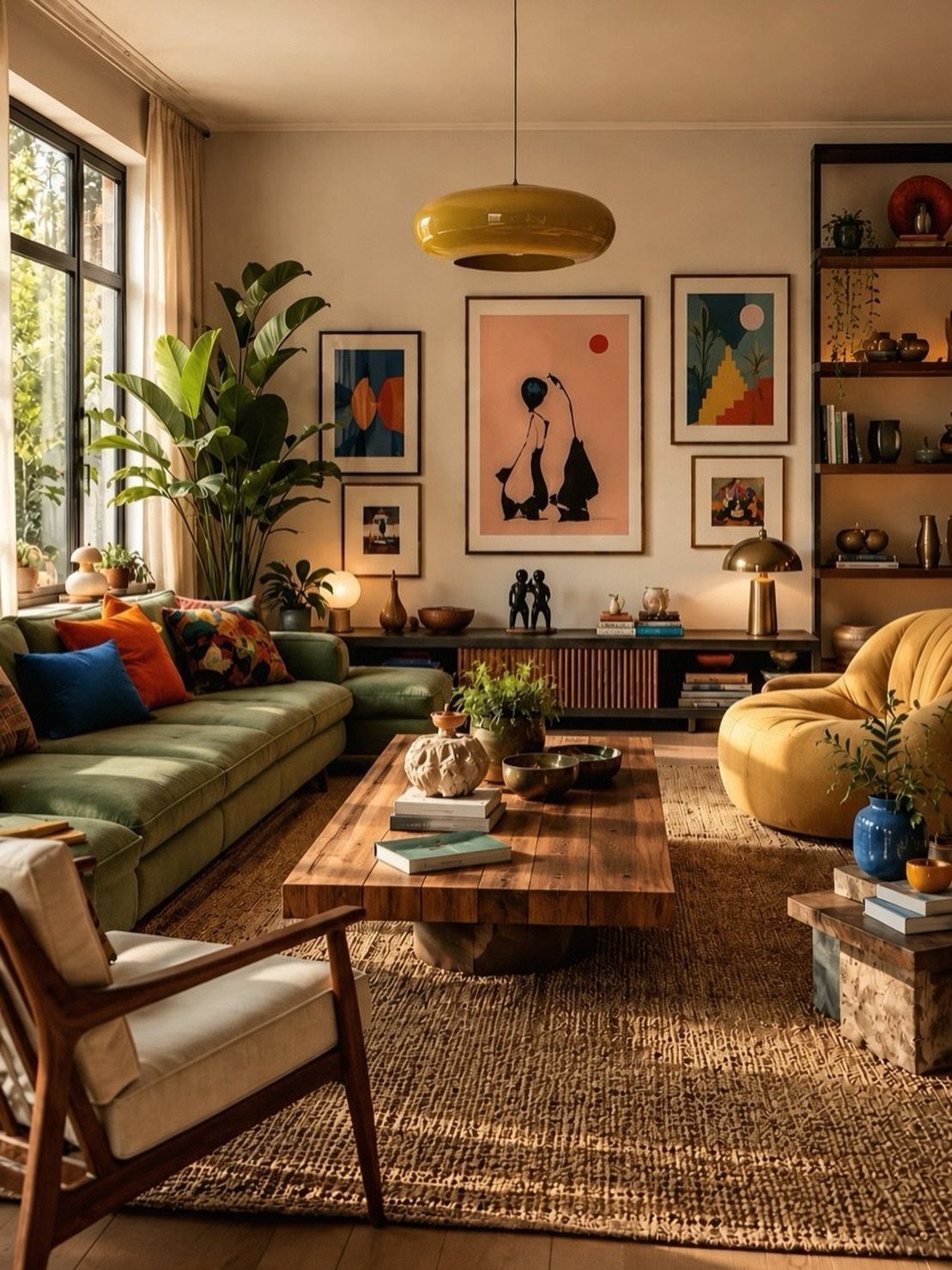
Pulling one color from the room onto the table makes the whole space feel planned.
Small bowls or a vase on the wood surface can pick up a color from a pendant or chair across the room; the eye travels and rests without finding anything that sits wrong.
I start with whatever color already dominates the walls or the largest piece of furniture, then repeat it in a smaller dose.
Tone-on-tone works, or a single bright against neutrals; decide on your approach and stop before a second color crashes the party.
This does not mean matching exactly. A black vase holding yellow flowers ties to black window frames or lamp bases just as well.
It suits anyone who collects pieces over time and needs them to read as one room rather than one shopping trip. The limit is patience; waiting for the right shade beats forcing a near-match that reads as mistake.
13. Incorporate a Small Plant

A single small plant in a tiny glass bottle changes the whole feel of a coffee table. One bottle with one cutting works just as well on a tighter surface.
Pothos and philodendron root easily in water and survive for months with nothing more than an occasional refill. A narrow-necked bottle keeps the stem upright and the water tidy, which matters on wood surfaces where spills leave marks.
This suits renters who want living decor without the commitment of a full planter. Faux stems work too; keep the scale small enough that the plant reads as an accent, not a garden.
14. Tray with Beads
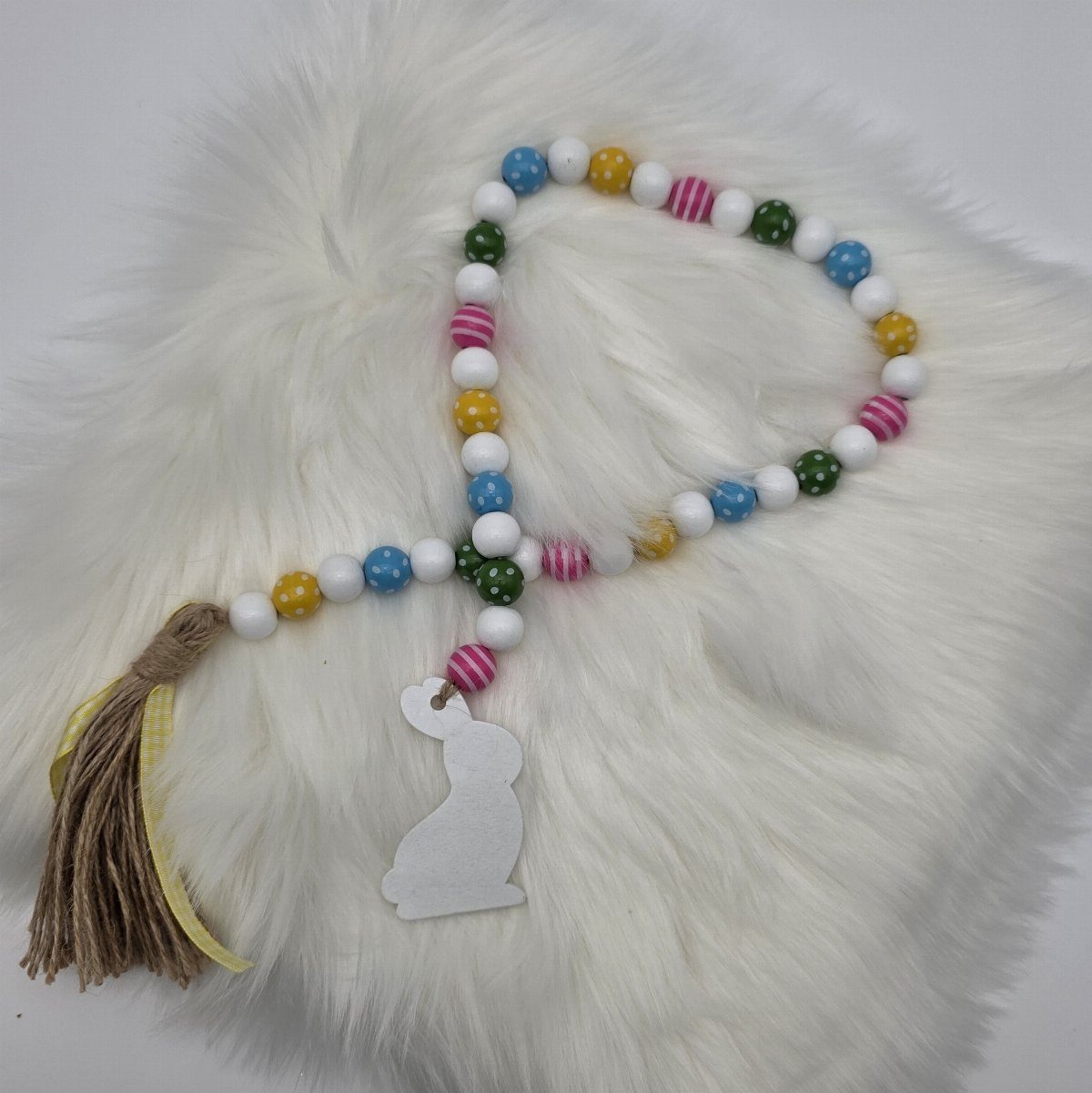
Wooden beads with a tassel finish a tray the way a frame finishes a print. Natural unstained wood blends with almost any palette already in the room.
I lay the strand so the tassel hangs slightly over the tray edge; the drop of movement catches the eye without asking for attention. Ceramic or wood bowls underneath keep the beads from looking dropped there by accident.
This costs little and stores flat in a drawer when you want the table clear. It trades the polish of a single statement piece for something more relaxed, which fits the lived-in rooms where people actually put their feet up.
15. A Vase or Planter
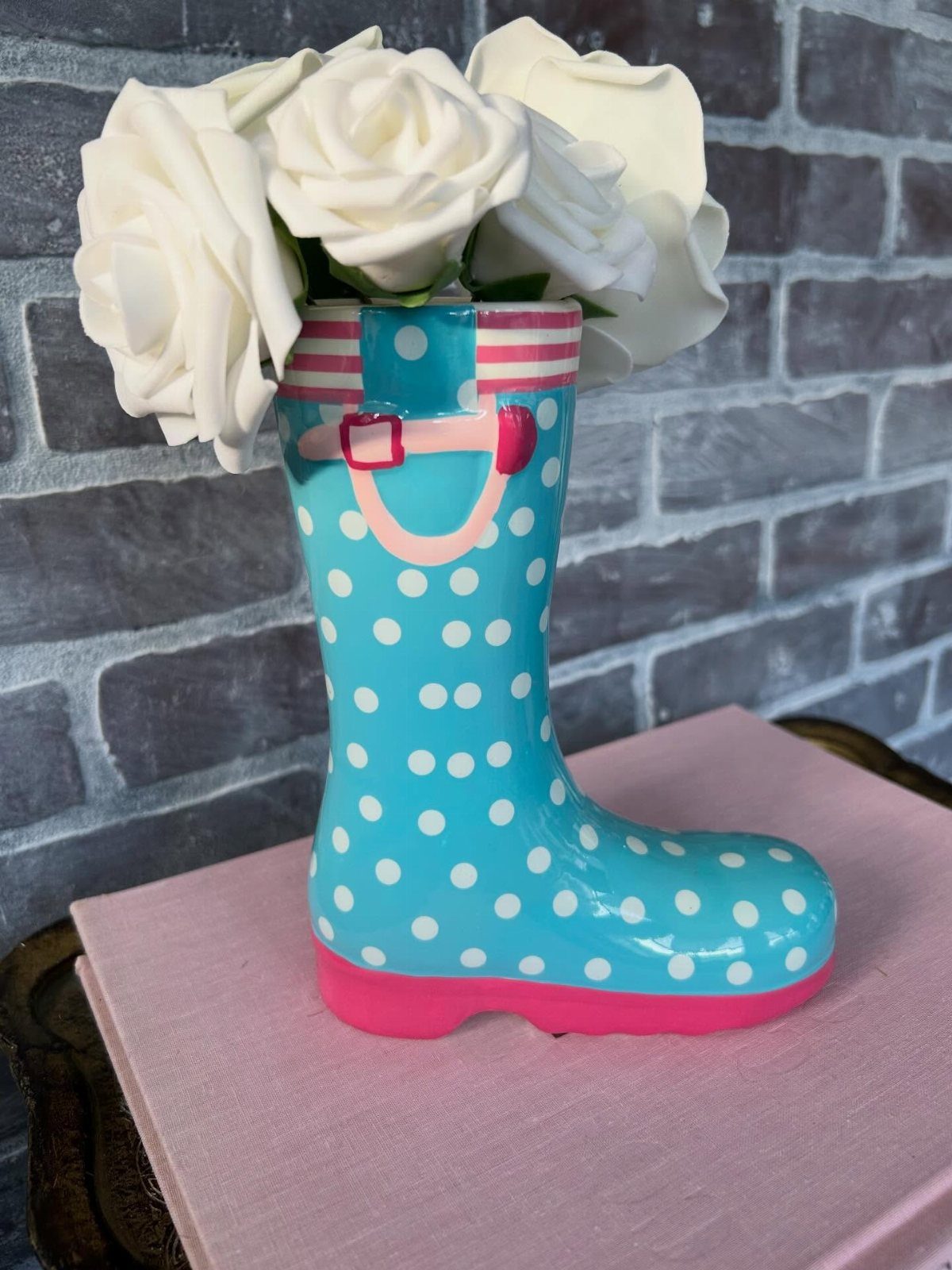
A vase or planter does not have to mean a vase or planter in the expected shape.
A boot holds roses exactly as well as crystal would, and the polka dots add the kind of personality a plain cylinder never manages.
Height matters more than vessel style. A tall arrangement needs a stable base and room to breathe; a low one can sit forward on the table where people reach across it.
I check that any container holding water seals well, or I line it with a plastic cup cut to fit.
For wooden tables, a tray underneath catches drips and gives permission to use whatever container strikes you. The rule is simple: if it holds water or a plant and you like looking at it, it works.
16. Metal Tray and Accessories
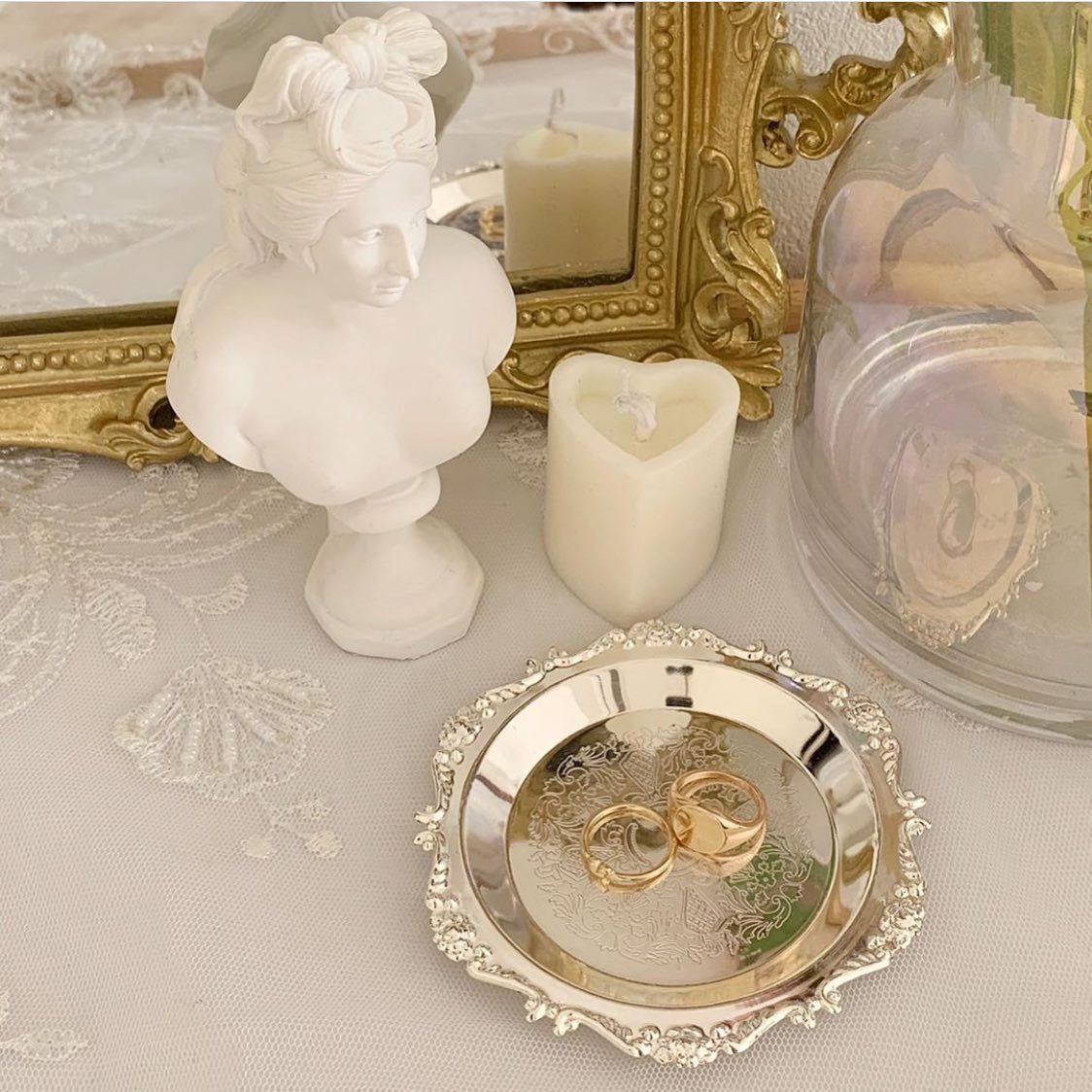
A metal tray gives structure to scattered objects without looking like you tried to organize them. Small ornate trays work, but larger plain versions serve the same purpose for less.
Stacking three books on one side anchors the arrangement and leaves space for smaller pieces: mini containers with greenery, a cloche over stacked plates, whatever you collect.
The metal reflects light and reads as one unifying surface even when the objects on it share nothing else.
This approach suits people who pick things up on trips and want to display them. A tray corrals the story without making it feel like a museum case.
17. Create a Lived-In Look
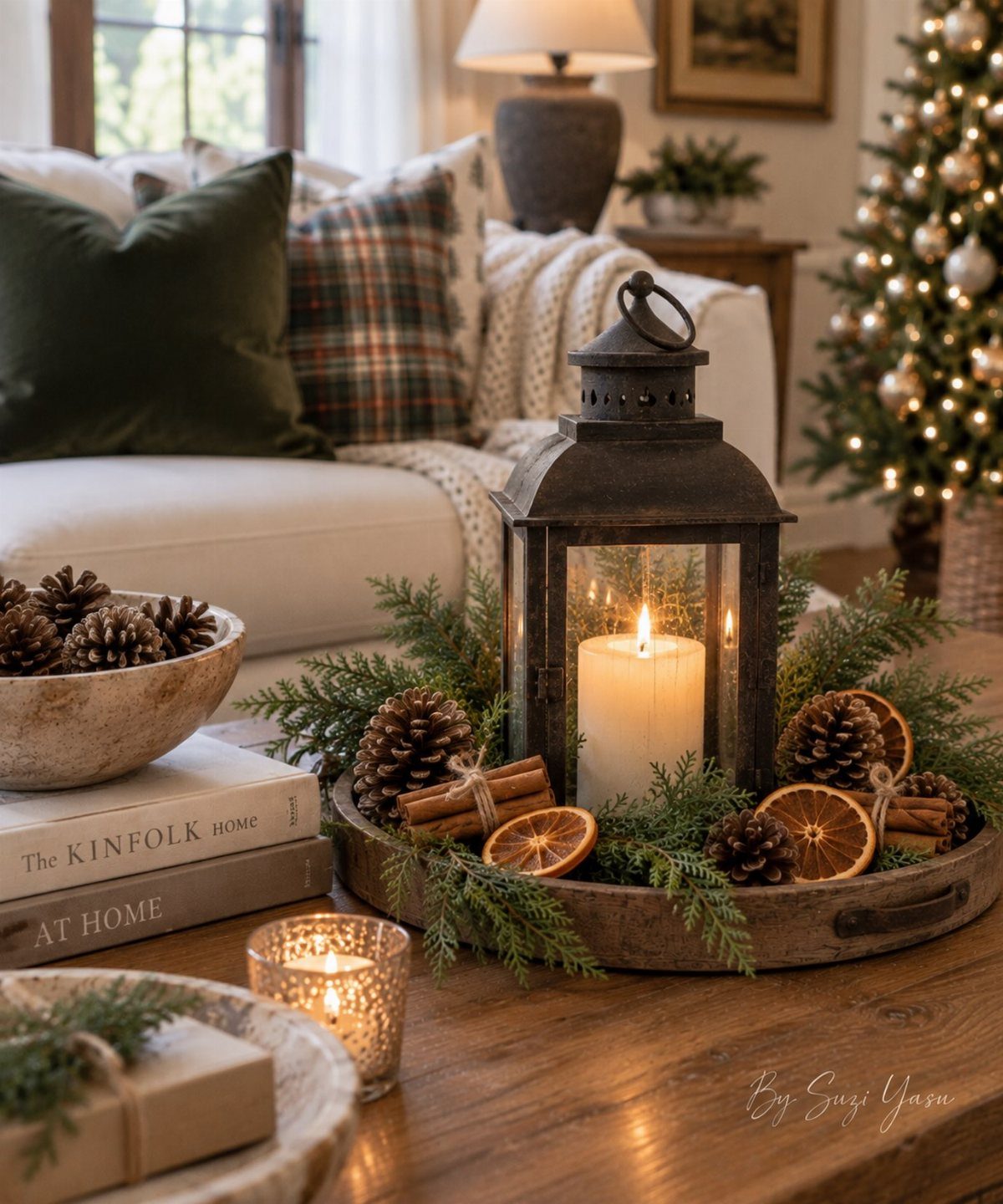
A coffee table that looks used is more welcoming than one that looks staged. Leaving a book open, its spine relaxed and pages weighted by whatever was at hand, signals that someone was just here and will return.
Evergreen and lanterns read winter, but the principle works year-round: a half-finished crossword, a mug ring on a coaster you actually own, a remote dropped beside the tray rather than hidden inside it. Stop one move short of tidy.
This costs nothing and takes no skill. It trades the crispness of a magazine shot for warmth, which matters most in small spaces where the coffee table sits close enough to touch.
18. Incorporate Seasonal Decor
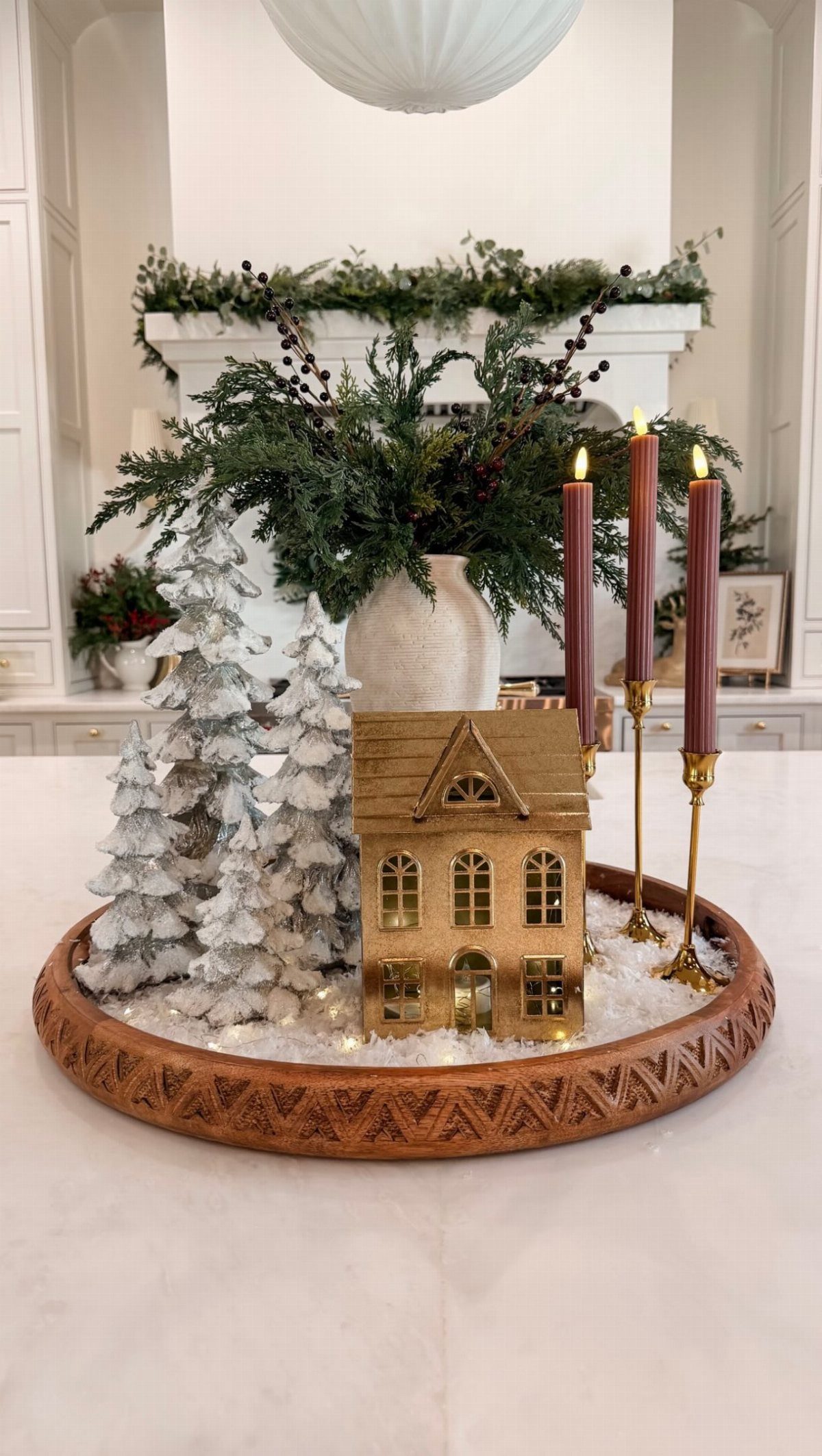
Seasonal decor on a coffee table does not require storage bins full of dedicated pieces.
A tray, some filler, and a few small objects in a unified palette carry any season; come spring, the same tray holds tulips in a copper pitcher or clipped branches from the yard.
Swap out one or two elements each season and leave the rest alone. The rhythm keeps the room from feeling static without demanding constant attention or much budget.
A small box stashed nearby holds the off-season pieces; the tray itself never moves.
This works best for people who enjoy marking time but dislike clutter. The trade is that each season reads subtly rather than dramatically, which suits most everyday rooms better anyway.
19. Use a Fabric Runner
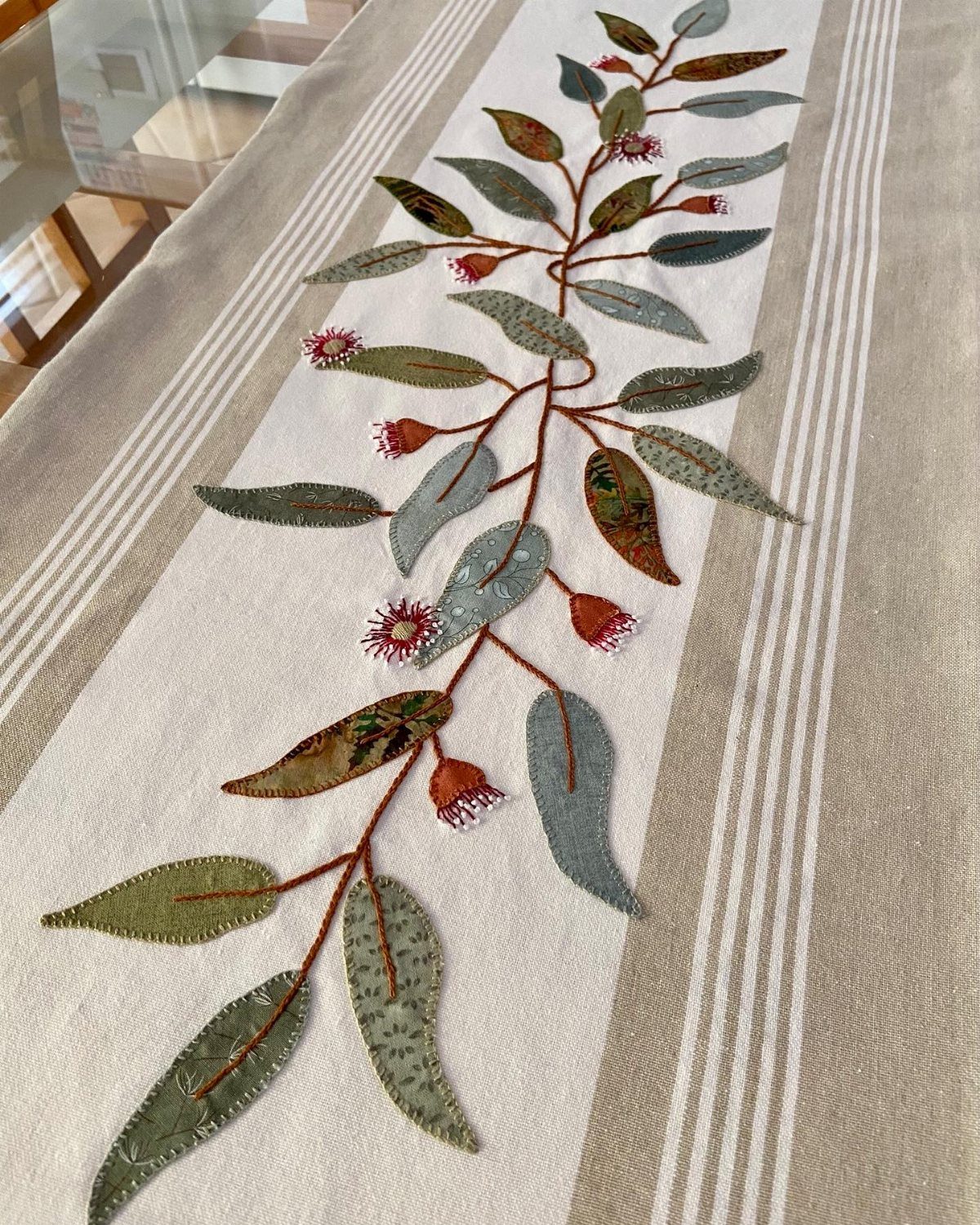
A fabric runner turns a hard surface into something you actually want to rest your forearms on. Linen or a loose weave works best for coffee tables, since the texture shows without competing with whatever sits on top.
Fringe or raw edges keep it from feeling too finished, which matters in a small space where everything else is already trying hard.
A runner needs some air around it; leave enough exposed tabletop on all sides so the surface still shows and the arrangement has room to breathe.
In a minimalist room, this is often the only textile in sight, so it carries more warmth than its size suggests.
Skip it if your table is already wood with character; the runner fights rather than helps.
20. Use Glass Cloches
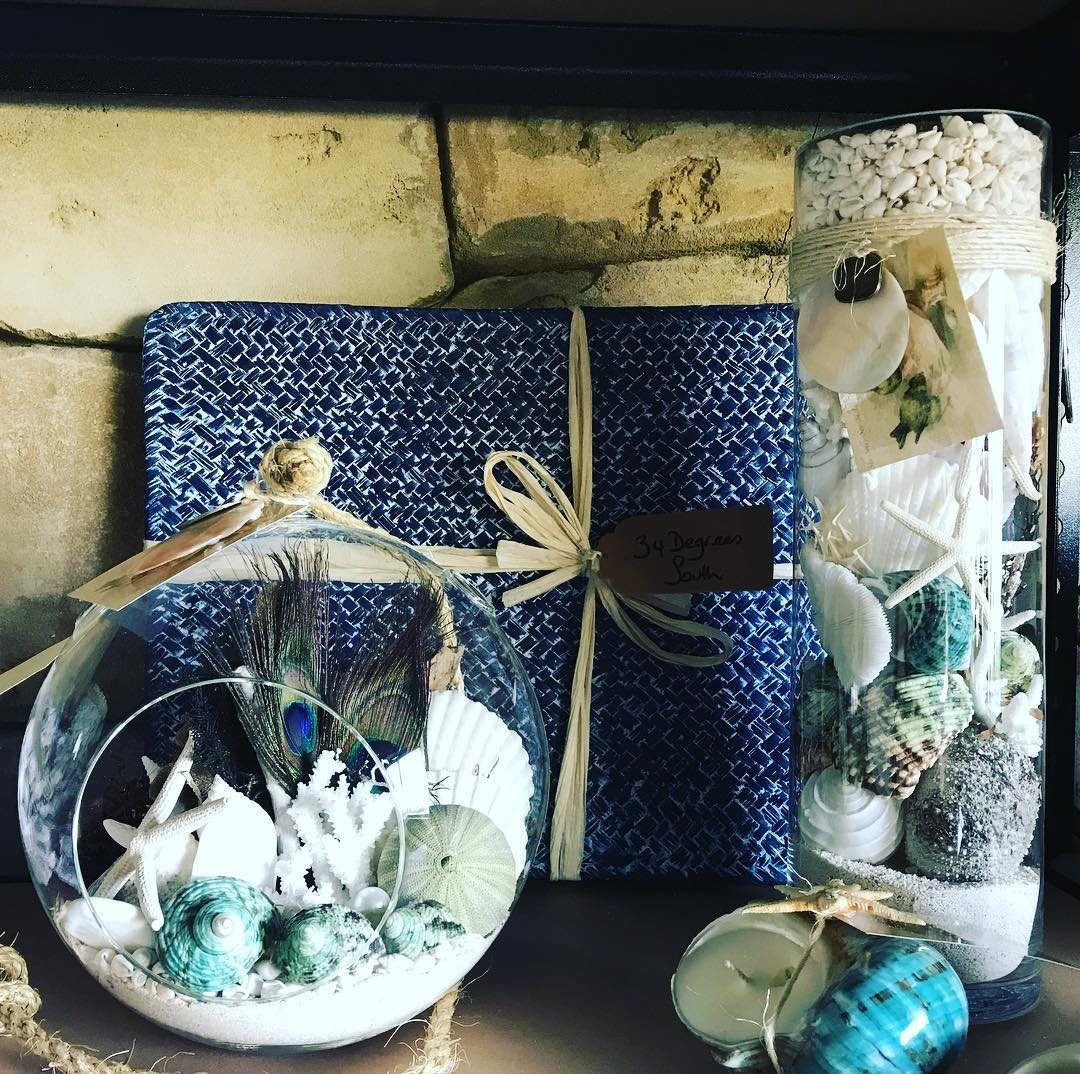
Glass cloches let you display fragile or sentimental pieces without the constant dusting. A dome over shells or dried botanicals keeps the arrangement readable from every angle while protecting it from coffee cups and curious hands.
The base matters as much as what goes inside. Wood or metal reads differently; painted ceramic can feel precious in a way that tips the whole thing toward fussy.
Low profiles matter on a coffee table, since sight lines across a living room flatten quickly and anything too tall blocks the view.
A single cloche draws the eye without competing for attention. Two of different heights create a small grouping, though matching the contents in tone keeps it from looking like a rummage sale under glass.
Layering Techniques
A coffee table looks flat until you give it layers. I start with the lowest piece, usually a tray or a shallow bowl, and build upward from there.
A stack of two or three books raises a small object to eye level; a candle beside it sits lower, and a thin stem in a bud vase catches the height in between. Three levels is enough.
Four starts to feel like a display case.
Texture matters as much as height. Glossy ceramic against rough linen, warm wood against cool metal.
The contrast is what makes the eye move. Three matte white objects grouped together will disappear; mix finishes so something actually reads.
Nothing caught the light.
Leave breathing room. A layer needs space around it to read as its own thing, not as clutter pressed together.
Editing Decor
Every coffee table reaches a point where it collects too much. The matches, the remote, the coaster someone left.
I edit mine every few weeks, usually when I find myself walking around objects instead of using the surface.
If an item just sits there untouched, it leaves the table. Decorative or not.
A match cloche stays because I reach for it. A small sculpture that just sits there goes back to the shelf.
I also limit myself to one focal point. Two objects competing for attention means neither wins.
The rest supports that single piece or gets stored. A clean table with three considered items beats a crowded one with ten.
The editing is the styling. Everything else is just shopping.
Functional Considerations
A coffee table still has to work as a table. I leave at least a third of the surface clear, more if it’s small.
Drinks need landing spots; boards and cards need space to spread.
The functional pieces can still look intentional. A match cloche holds matches and becomes part of the arrangement.
A small tray corrals coasters so they read as one object instead of four scattered discs. A brass candle snuffer within reach warms the whole grouping and earns its spot through actual use.
Height helps here too. Low objects stay in the open zone where drinks go.
Taller pieces move to the edges or corners, where they won’t block conversation across the table. Style the table so no one has to move half the display to set down a glass.
Personalization
The objects that stay on my table longest are the ones that mean something. A ceramic bowl from a market trip, a stone picked up on a hike, a book I actually open.
These carry weight that bought decor doesn’t.
I don’t mean family photos or anything that formal. Just objects with a small history attached.
A match cloche picked up after a weekend of borrowed matches at a cabin rental. A small vase that held the first flowers brought into a new place.
These anchor the arrangement in a specific life rather than a catalog look.
The trick is choosing one or two, not turning the table into a memoir. One personal object among neutral pieces draws the eye and starts conversation.
Three or four starts to feel like a shrine to yourself. Edit the story down to its best sentence.
Frequently Asked Questions
What do you put in the middle of a coffee table?
A statement piece with enough mass to hold its own against the sofa back works best: a sculptural vase, a metal candle holder with height, or a figurine that means something to you.
Pull it an inch or two off dead center and let the bare wood or glass around it breathe; the empty space reads as intentional, not unfinished.
A single big piece does the job of three small ones, which matters on a narrow table where a cluster of items just becomes a traffic jam.
What are the trends for coffee tables in 2026?
Natural materials and found textures lead the way: wood, clay, stone, and woven elements that read as collected rather than bought. Matte finishes catch light more quietly than glossy ones, and earthy glazes soften a space without adding clutter.
Bowls that corral remotes through January and hold potpourri by June, or trays that lift off entirely when board games hit the surface, stretch the same table across seasons.
What should be placed on a coffee table?
A working mix of three levels keeps the arrangement from going flat: a low tray or shallow bowl as base, a stack of two or three books to raise a small object, and something thin and tall like a bud vase or taper candle to catch height in between.
Sheen against weave, or a warm oak coaster against a steel lamp base, gives the eye more reason to travel than height alone ever could. Leave breathing room around each layer so it reads as its own thing.
What are some ideas for a centerpiece for a coffee table?
A wide, shallow bowl in stone or ceramic makes a practical centerpiece that corrals remotes, loose hair ties, and mail you mean to deal with later.
The rim needs to sit low enough that my hand slides over it without a second thought when I reach for a drink.