

These bedroom ideas range from a free lamp rescue to a canopy frame that asks for floor space and a real investment, and the right pick depends on whether you are dressing a room you own or one you will leave behind.
1. Warm Color Palette
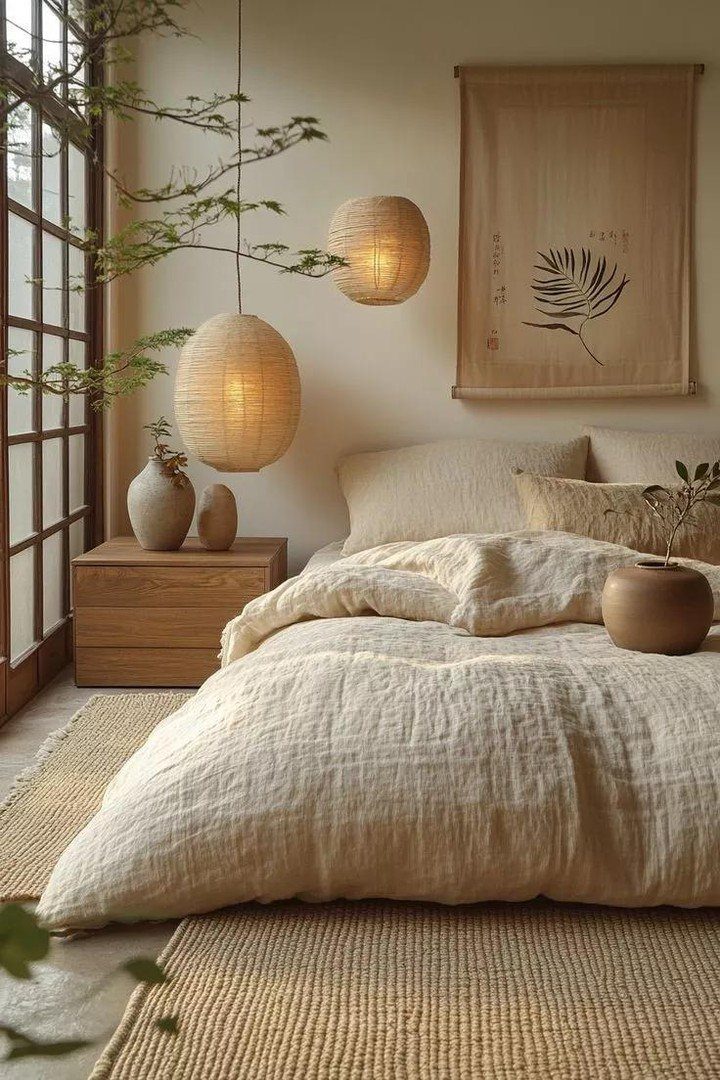
A warm color palette wraps the whole room in one continuous tone instead of breaking it into competing pieces.
Pick two or three related shades, cream through tan or amber through chocolate, and repeat them across bedding, curtains, and whatever sits on the nightstand. Subtle shifts in shade do the work of contrast so nothing needs to clash.
2. Use Quilts
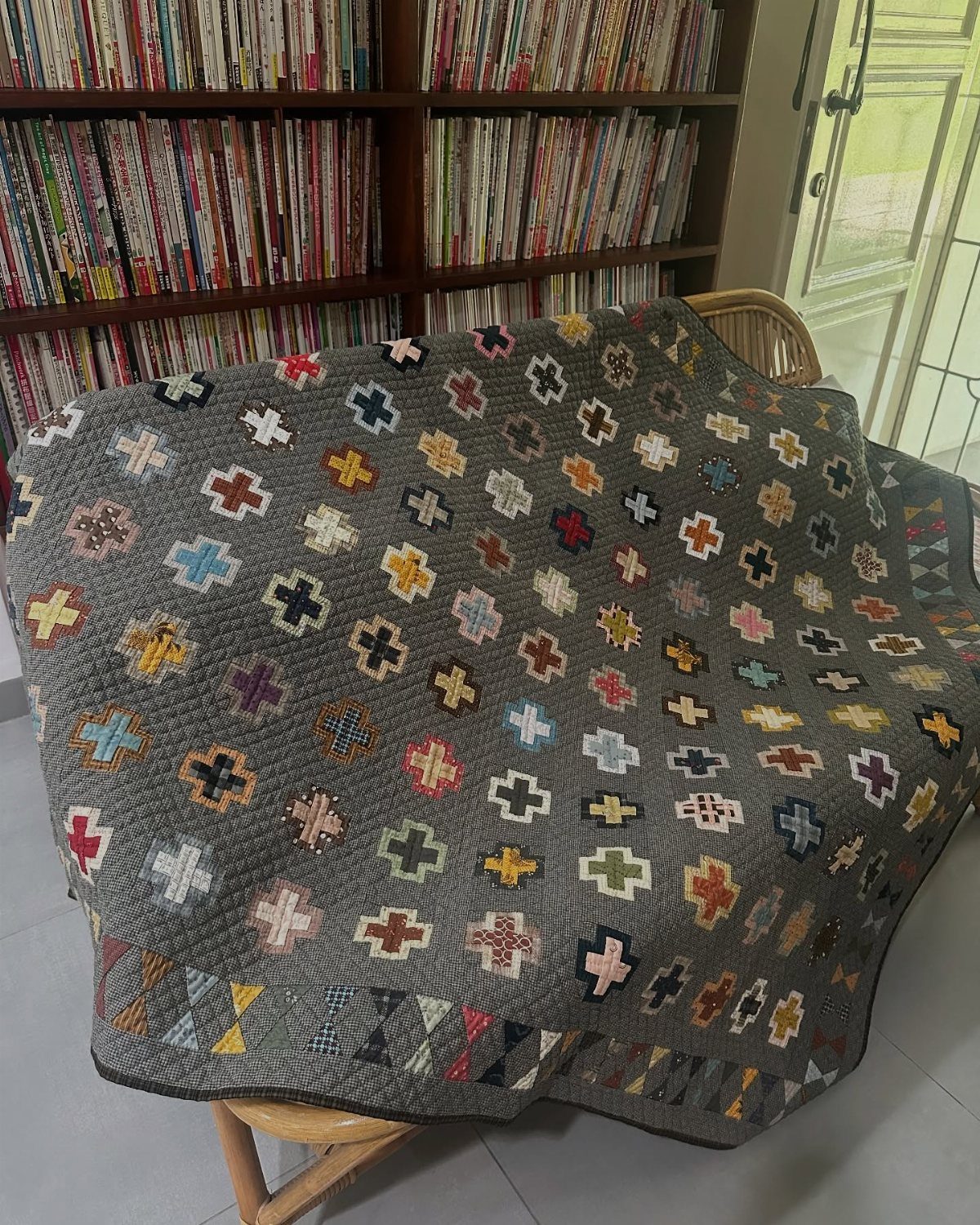
Quilts carry texture that a flat duvet never quite matches, especially the patchwork kind with cross-shaped blocks and slight unevenness from hand-guided stitching.
Layer one over your regular bedding, folded at the foot or spread full and rumpled; the bed looks slept-in and inviting instead of staged. I like cotton batting for weight without the sauna effect of synthetic fill.
A vintage or handmade quilt from an estate sale carries wear as part of its character; the price sits below most department-store bedding. This is for anyone who wants warmth that looks like it came from somewhere.
3. Textured Rugs

The rug you step onto at 6 AM matters more than the one guests see in the living room.
Plush wool or jute with a raised weave gives actual cushion underfoot, and natural fibers wear better than the polyester that pills inside a year.
A solid warm neutral rug in a common bedroom size starts at a mid-range price point; layer a smaller sheepskin or flatweave on top near the bedside for extra softness where you stand.
One maker of these grid-patterned rolls notes that textured rugs add dimension that makes a space feel finished. This works best when the bed is low enough that the rug edge stays visible.
4. Layer Textures
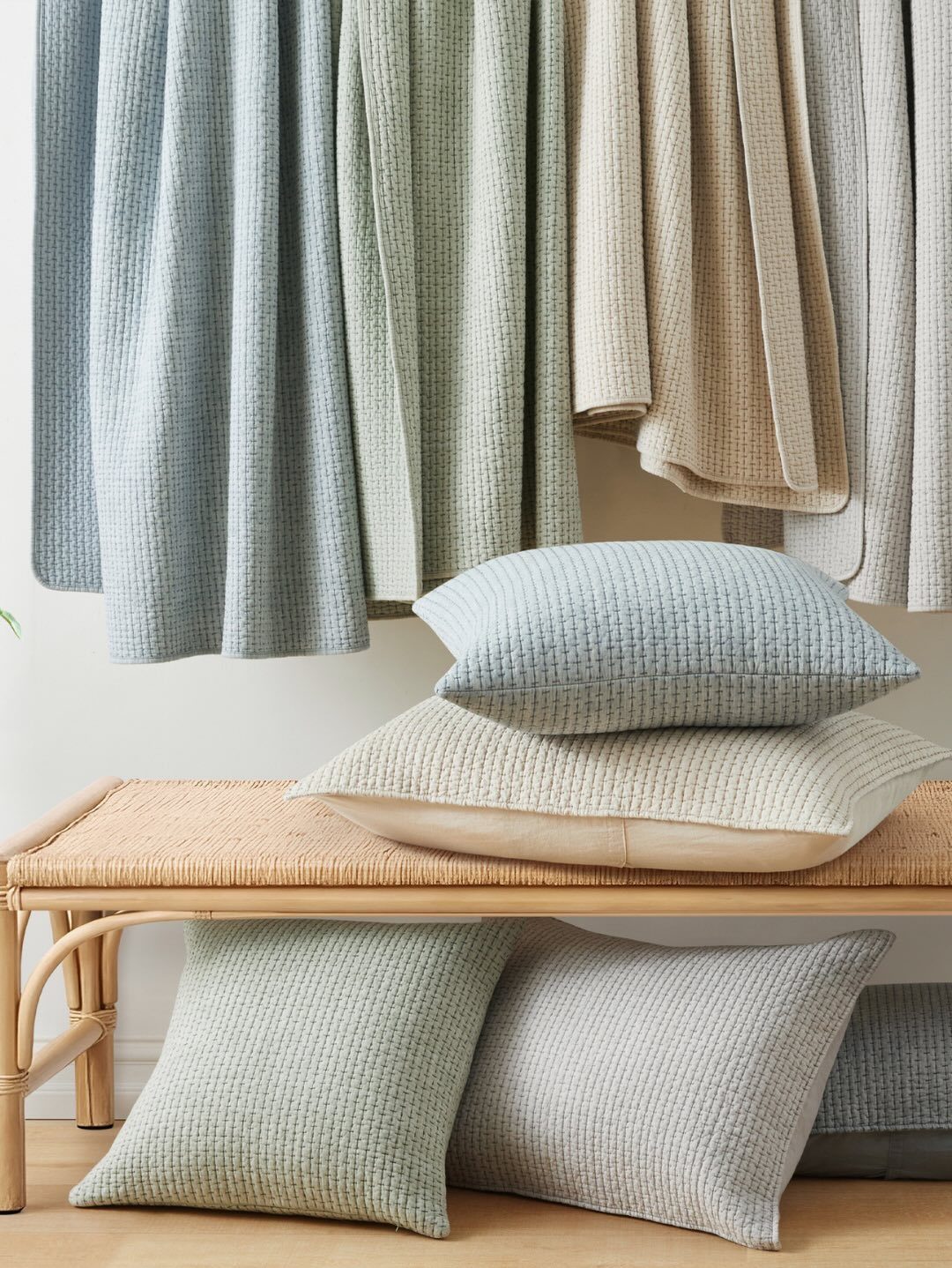
Layering texture means mixing materials that read differently even in the same color family: velvet against linen, a chunky knit across smooth cotton, rattan beneath both.
The eye travels across these shifts and reads the room as deeper than it is.
I start with sheets I already own, add one throw pillow in a new fabric, and build from there; one change at a time keeps the budget under control. Cotton, velvet, and a single knit piece are enough to start.
This approach suits small rooms that need visual depth without extra clutter.
5. Soft Lighting

Overhead lighting in a bedroom is a mistake I made once and never repeated. Bedside lamps with warm bulbs, 2700K or softer, let you lower the brightness to match dusk instead of fighting it.
Dimmable sconces save nightstand space; candles or their flameless equivalents fill the gap between off and full glow. A thrift-store lamp plus spray paint costs less than a pizza if you are willing to hunt.
A warm lamp glowing near the window through early evening keeps an orange throw looking like sunset rather than traffic cone. Best for anyone who reads or unwinds in bed and needs light that steps down gradually.
6. Add Plants
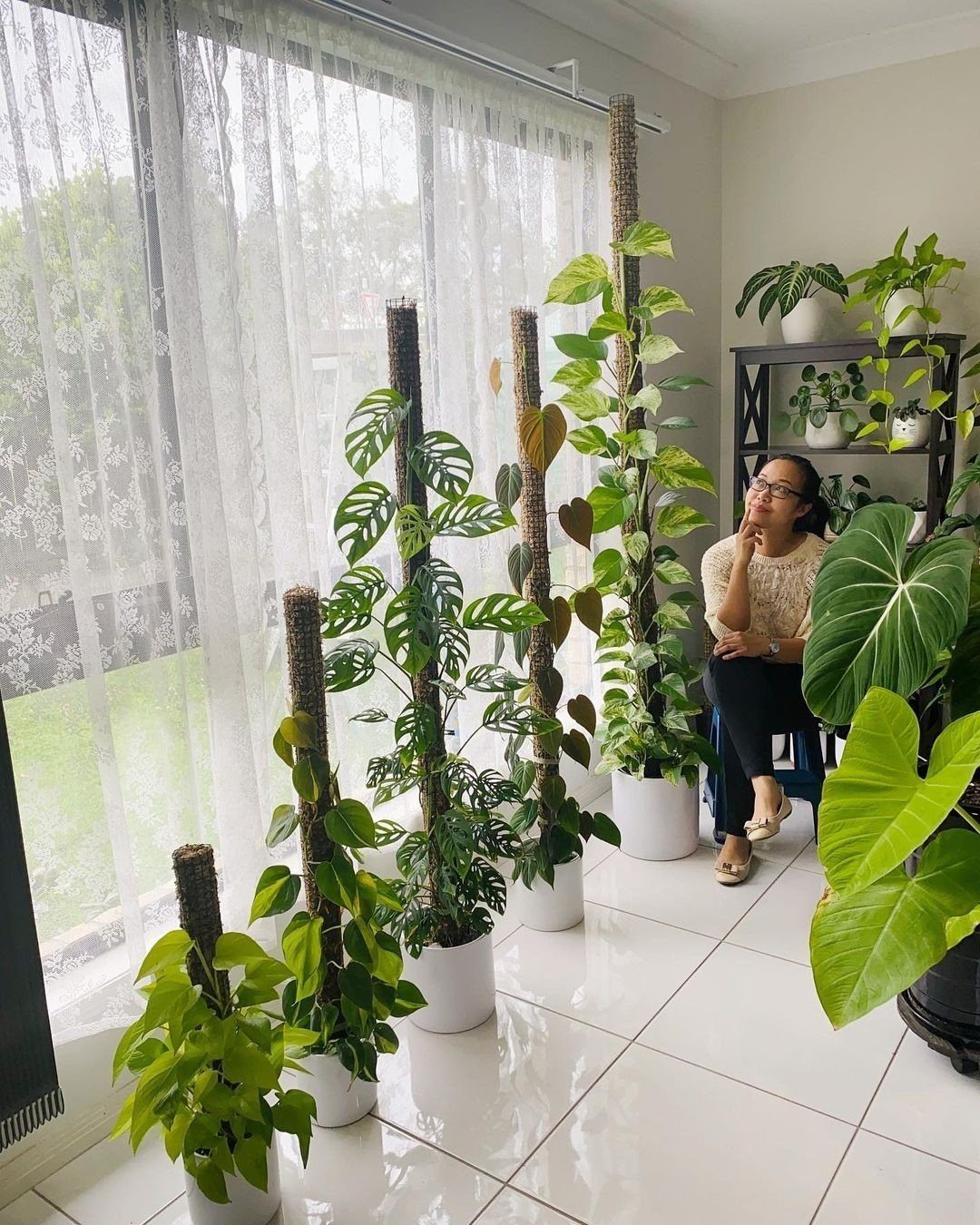
Plants in a bedroom do not need to become a jungle to matter. One tall moss pole with a climbing vine, placed where morning light reaches, adds height that furniture alone rarely achieves.
Pothos and philodendron handle lower light and forgive missed waterings; their leaves also filter air in a way that reads as fresher even if you cannot measure it.
The maker of this scene extended a marble queen up its pole two days before photographing it, a slow project that asks for patience, not skill. This suits rooms with one good window and an owner who travels weekends.
7. Pattern Play
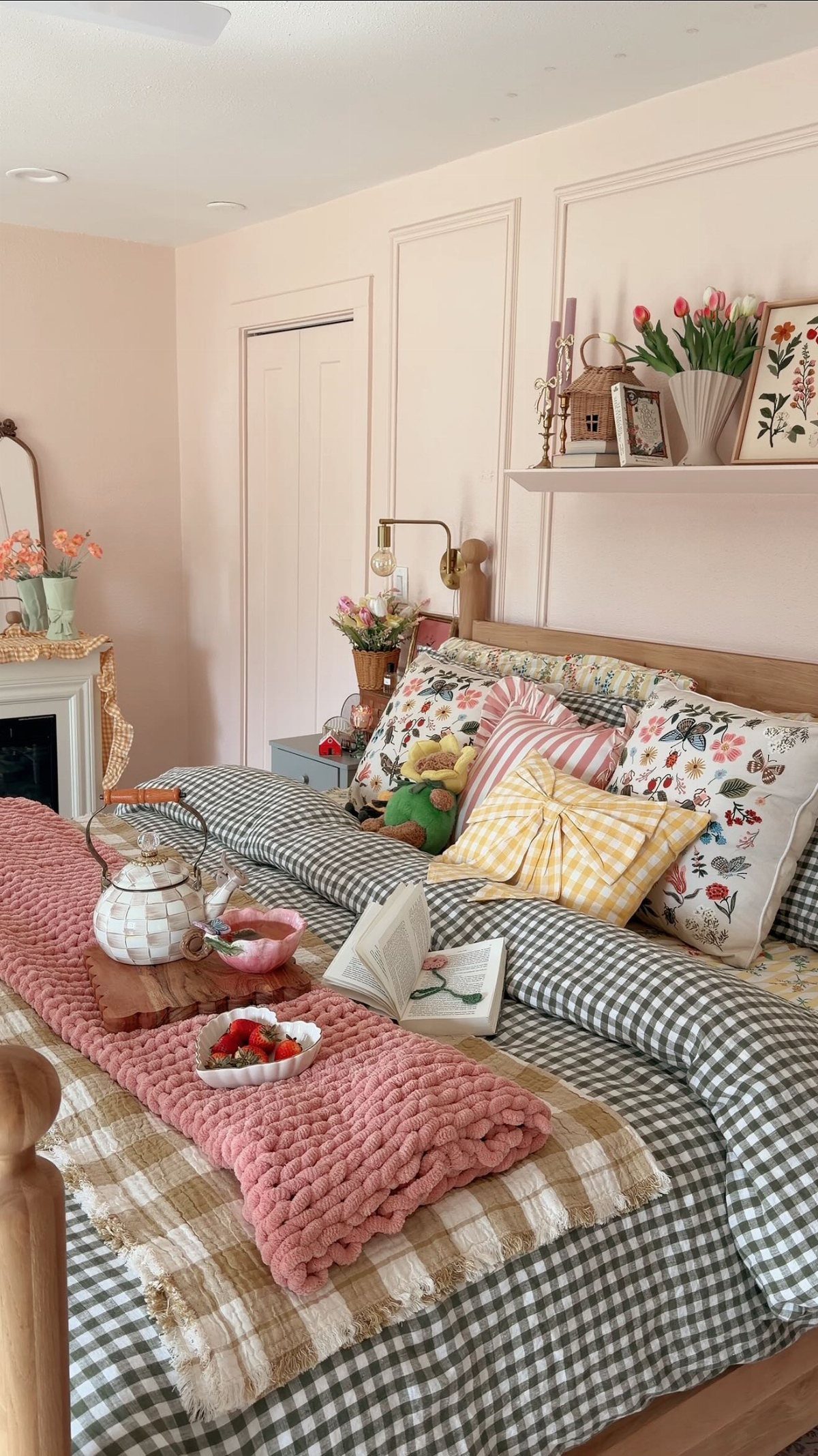
Pattern play works when you keep the colors tight and let the shapes fight a little. Mixing gingham, floral, and a yellow check works when all three share the same green family.
The eye reads them as belonging together even while each print does its own thing.
I’d start with one pattern I already own, then hunt for a second that shares two of its colors but nothing else in shape.
A floral pillow against striped sheets, or a houndstooth throw on a plaid bed, both work if the palette holds steady. Three patterns is my ceiling for a small bedroom; four starts to feel like a fabric store exploded.
This suits renters who tire of beige but can’t repaint. The risk is buying all new bedding at once and forcing a match.
Build slowly, and return what doesn’t play nice.
8. Personal Touches

The letter on the bed, painted with a kid’s name and propped beside a handmade elephant, is the kind of thing no store sells and no guest expects. That’s exactly why it belongs in a cozy bedroom.
A personal touch doesn’t need crafting skills. My own bedside holds a ceramic dish my grandmother made, lopsided and glazed the wrong blue, and a photograph from a camping trip where everyone looks terrible and happy.
A shelf of mismatched objects feels lived-in only if someone chose them and chose to keep them.
For renters wary of nail holes, a narrow picture ledge above the bed holds framed photos and small objects you can swap without commitment.
More objects mean more dusting, but waking up to something that isn’t from a catalog is worth the trade.
9. Create a Reading Nook
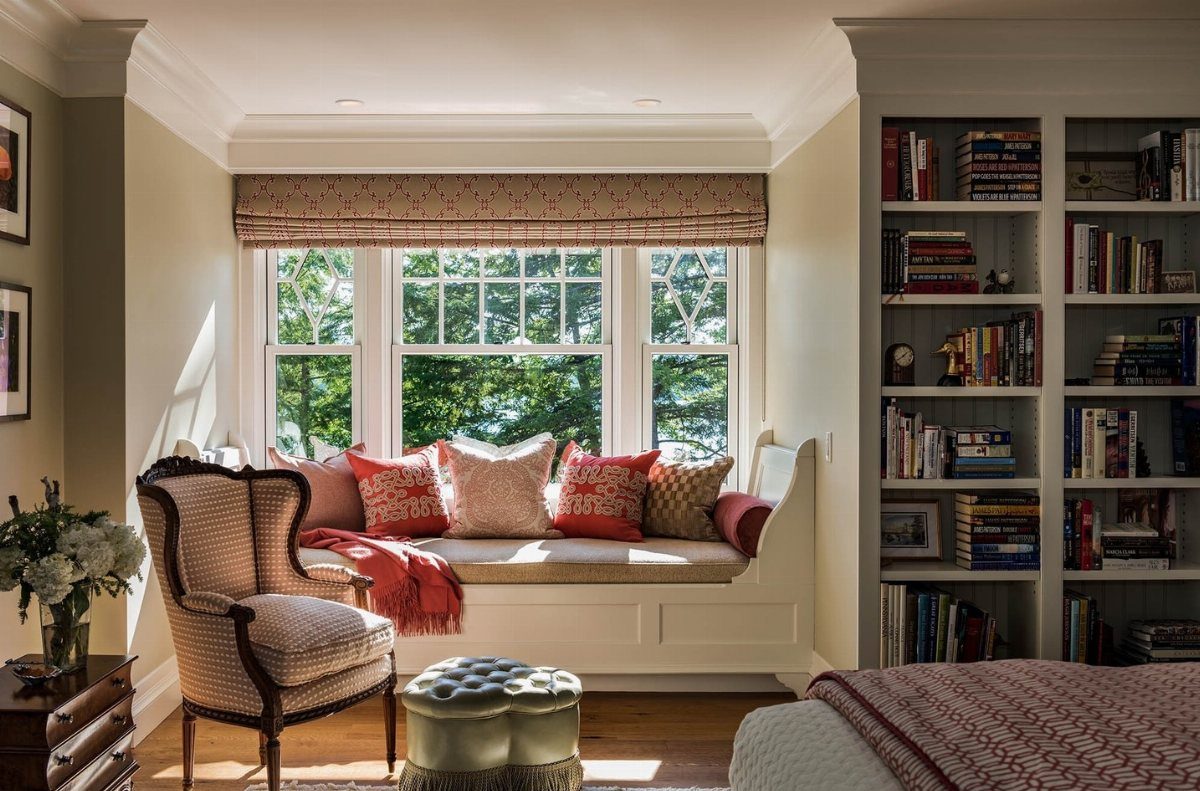
A reading nook needs three things: a seat you actually want to sink into, light that falls on the page from behind your shoulder, and a flat surface for a mug.
A reading nook needs three things: a seat wide enough to curl into, light angled over your shoulder, and storage close enough that you don’t have to stand to choose the next volume.
A solid reading nook can come from an IKEA Kallax unit on its side, a cushion cut to fit by a local upholstery shop, and a floor lamp you already own.
The critical measurement is seat depth: 20 inches lets you tuck your legs up, 15 leaves you perching like a bird.
This works best in a bedroom with an unused corner or a window with a view worth facing. Without either, a slim armchair angled toward the bed does almost the same job in half the space.
10. Install a Canopy Bed
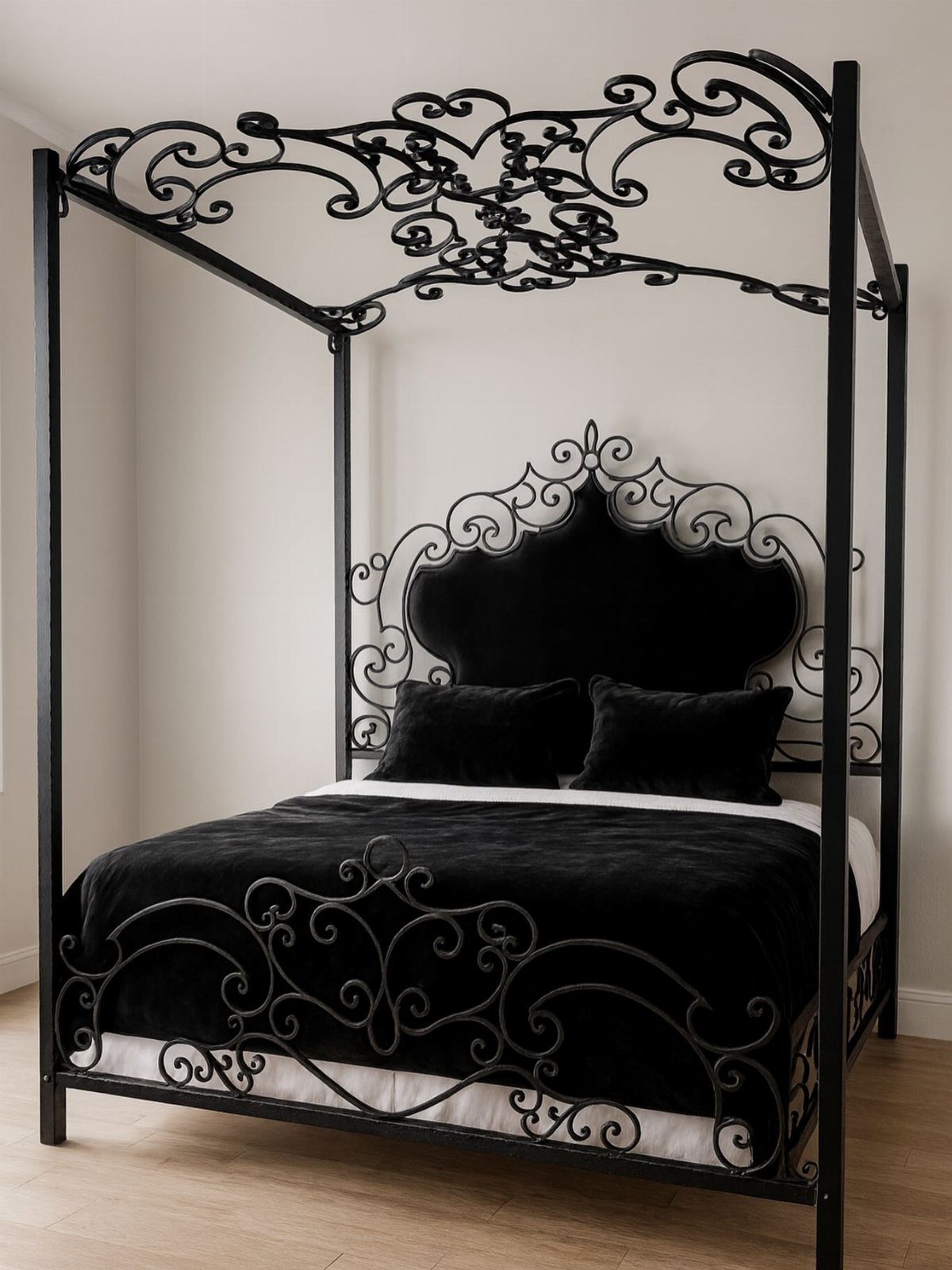
A black canopy looks dramatic, but the coziness comes from the same trick as curtains: a frame around the bed makes the space inside feel smaller and safer.
A simple metal frame without any draped fabric still gives that enclosed feeling. A simple metal frame with no curtains still carves out a zone.
For renters, a freestanding canopy frame sits on standard legs and moves when you do. The one tradeoff is making the bed; the frame adds corners to reach around.
In a low-ceiling room, keep the canopy height under 80 inches or the proportions turn squat. In a large bedroom, the enclosure helps the bed hold its own against empty space.
11. Add a Headboard
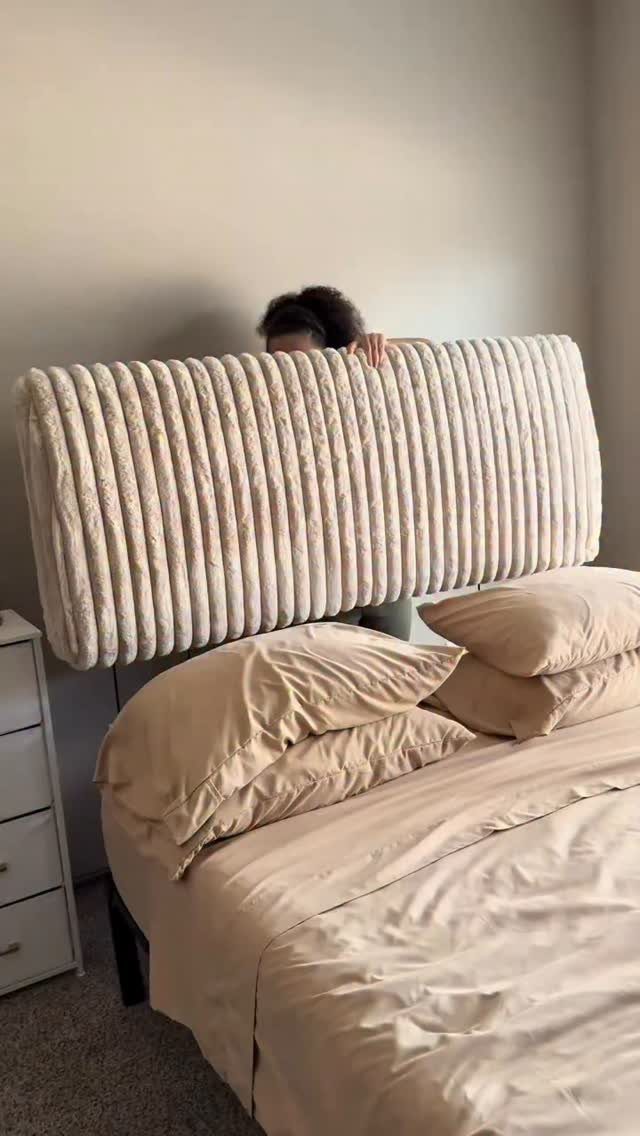
An upholstered headboard should pass the paperback test: lean against it for an hour without wishing for a pillow behind your back. A wooden or metal frame looks fine but invites you to pile pillows against it instead.
A budget headboard can come from a sheet of half-inch plywood, a layer of batting, and a curtain panel stapled to the back. Height matters more than width on a headboard.
Tall reads as intentional; short reads as unfinished.
Renter-friendly options include wall-mounted panels that hang like art or a leaning floor headboard that needs no attachment. Floor-style headboards shift when you roll against them, so wedging them behind the bed legs keeps them in place.
12. Incorporate Vintage Decor
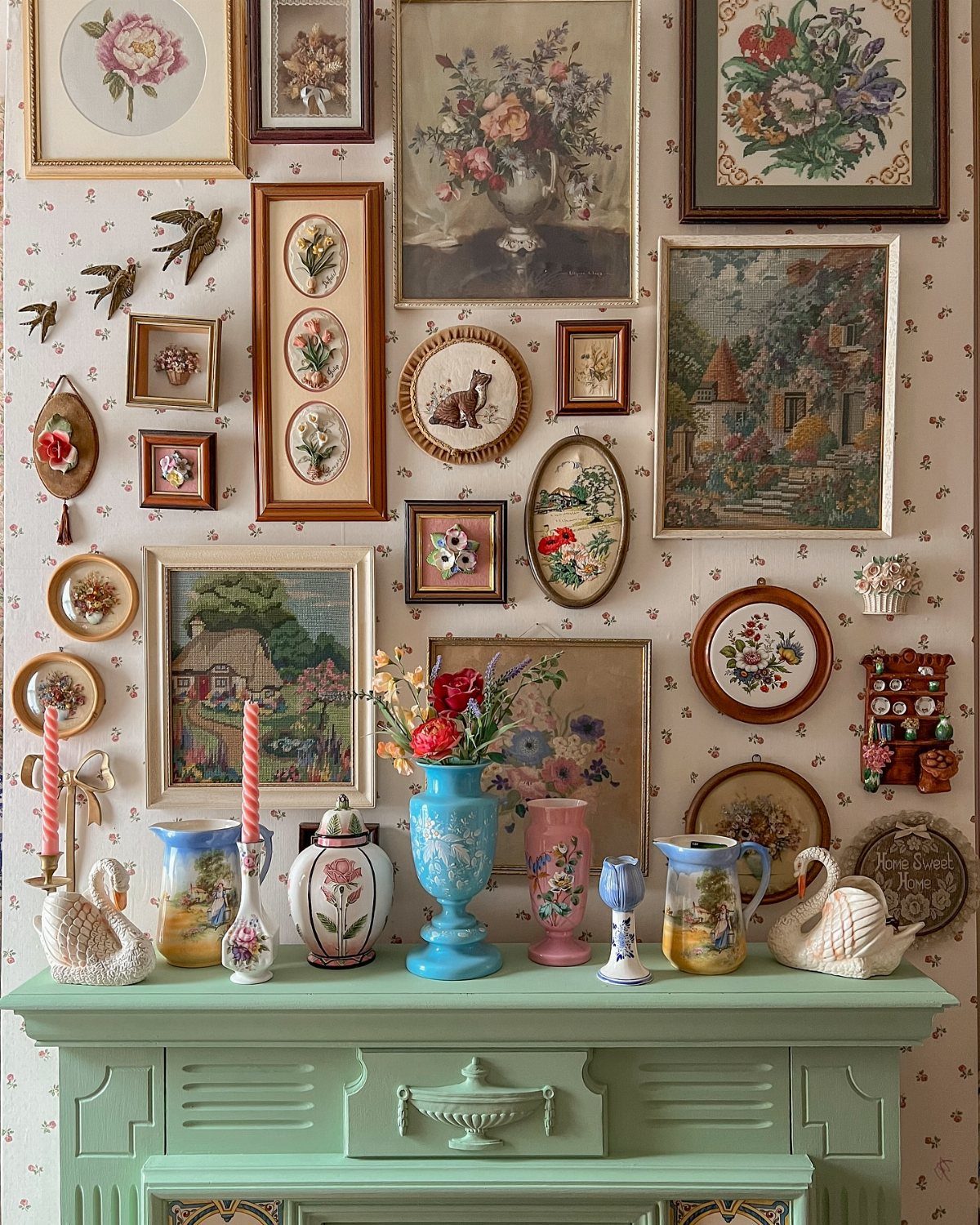
Vintage pieces carry the wear and odd proportions that new furniture works hard to fake.
A bedroom looks gathered rather than staged when one piece is older than the others and shows it: crazed glaze, worn edges, a patina that can’t be ordered new. The contrast is the point.
Estate sales and Facebook Marketplace are good hunting grounds for vintage, with a hard ceiling on what you’ll spend on any single piece that might not settle in.
The risk is clutter. One vintage piece per room reads as character; five read as hoarding.
I’d rather rotate than accumulate. A sideboard looks intentional when the objects on it share a palette, not an era.
13. Eclectic Bedroom
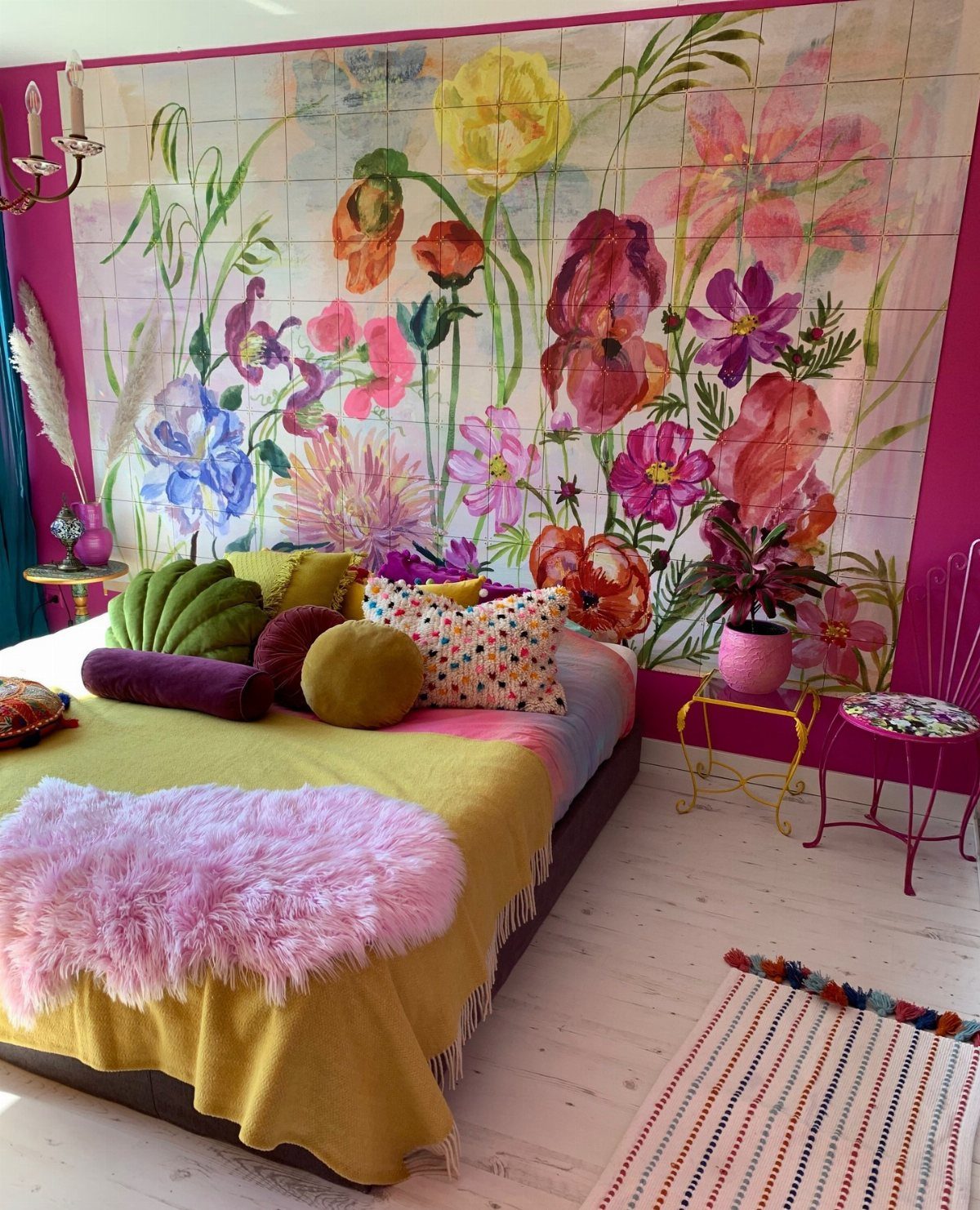
Choose two or three unifying threads first: a color that repeats, a texture that shows up twice, or a metal finish on both the lamp and the frame.
After that, a modern bed with vintage nightstands, or a tribal print beside glam lighting, reads as intentional rather than accidental.
This approach works best if you already own pieces you love from different eras and do not want to choose.
It trades the calm of a single style for energy and surprise; if you prefer quiet walls, start with a neutral base and layer in one bold element at a time.
14. Use Curtains
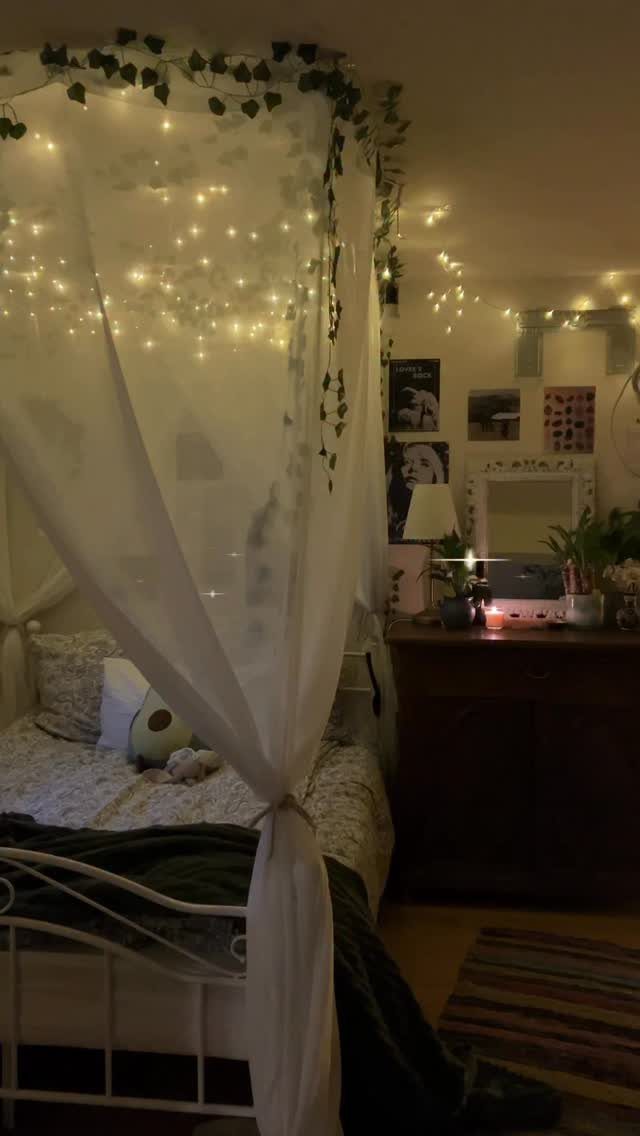
Sheer fabric draped over a canopy frame softens every edge in the room, but curtains also close out streetlight and morning glare when you need rest.
I would pick linen or velvet in a heavier weight for the main panels, hung high and wide so the fabric pools an inch or two on the floor.
That extra length makes the ceiling feel taller and the whole room feel finished, even with plain walls.
In a small bedroom, one solid panel per side keeps it simple; in a larger space, a double width gathered onto the rod adds the depth that makes a bed feel tucked in.
The canopy above the photo uses the same principle with lighter material, more for atmosphere than blackout.
15. Incorporate Scented Candles

A lit candle on the nightstand gives off a color temperature no bulb matches, and the small ritual of lighting it signals the end of the day.
Lavender and chamomile are the usual choices for sleep, though plain beeswax works when you want only the flicker without competing scents.
Flameless versions with a timer and remote solve the safety worry if you are prone to dozing off; they have improved enough to fool the eye from across the room.
One or two pillars grouped on a tray look deliberate, while a single votive tends to read as leftover. Keep the arrangement off the direct path to the bathroom; night vision and open flames do not mix well.
16. Create a Hotel-style Seating Area
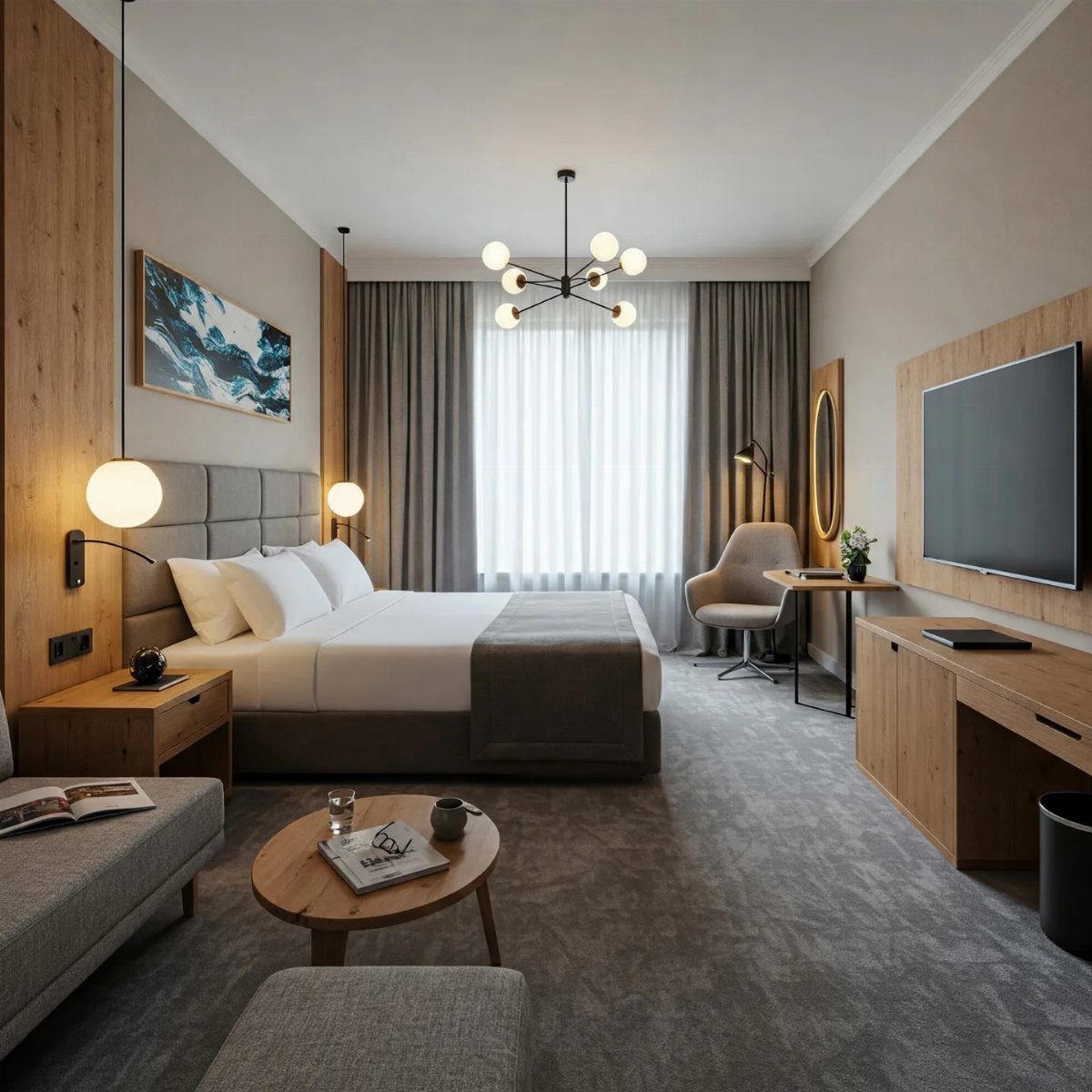
A slim armchair and small desk by the window turn a corner of the bedroom into somewhere to sit that is not the bed itself.
You do not need much square footage: a bench at the foot of the bed, 48 to 60 inches long, gives the same effect in a tighter room.
Give the spot its own light source, a lamp or sconce with a warmer bulb than your overhead, so it feels separate from the workspace and inviting late at night.
Fresh flowers on that surface help, though a small stack of books and a candle do the same job on a lower budget.
This trades some floor space for a sense of occasion; if the room is under 120 square feet, a window seat with a cushion might fit where a chair cannot.
17. Create a Clutter-free Space
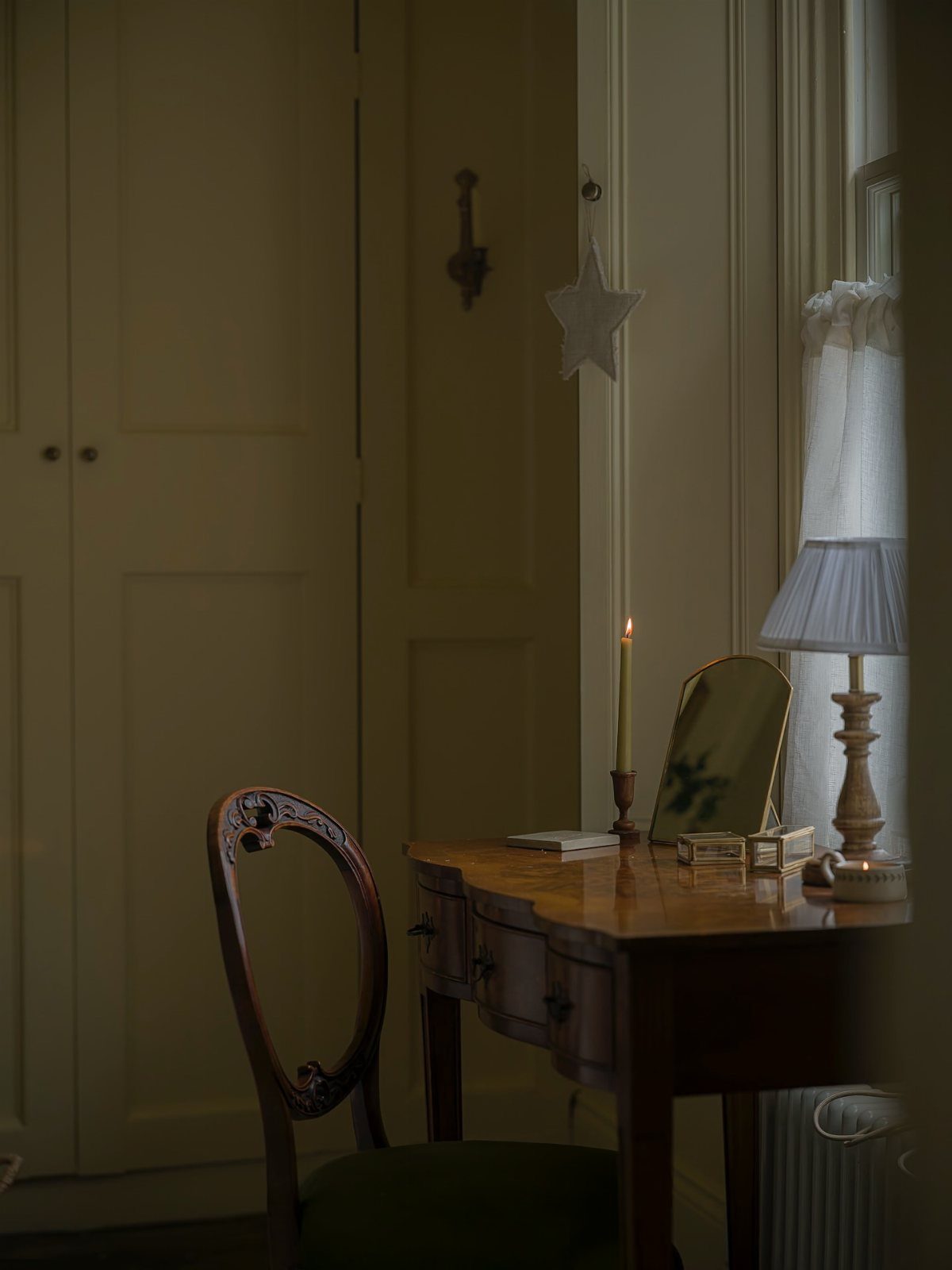
Plush textures read as cozy only when they are not fighting a pile of clothes or a drift of paperwork.
Smart storage means giving every category a contained home: under-bed boxes for off-season bedding, a lidded ottoman at the foot of the bed for the throw you rotate, wall-mounted shelves for the five books you are actually reading.
Color-matched baskets keep the visual noise down so a sheepskin or velvet pillow can do its job.
This is less about minimalism than about editing. A tidy surface with one good object on it beats a crowded one with ten.
Time spent putting things away buys a morning in a room that does not already feel tired.
18. Use a Statement Chandelier
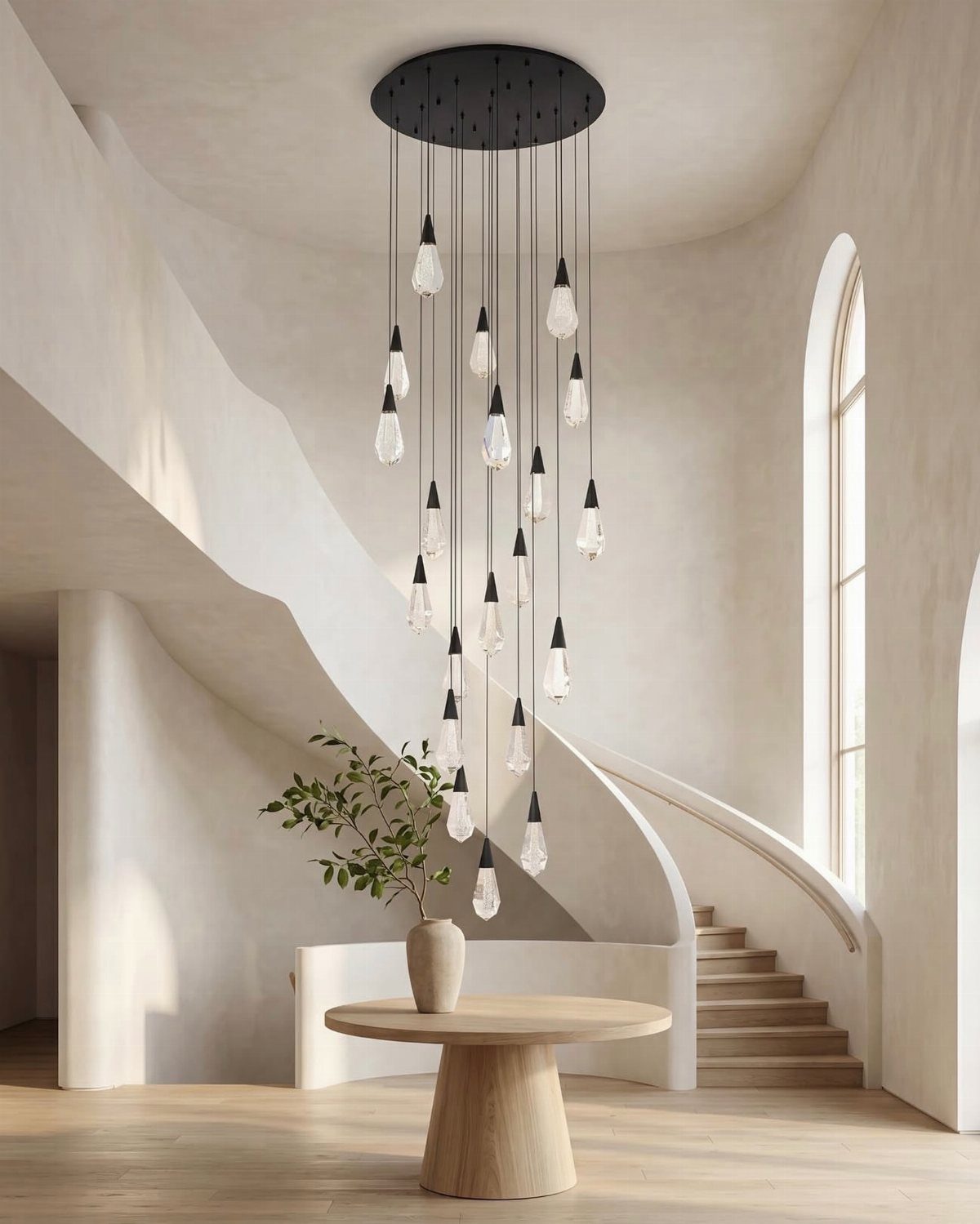
A chandelier with teardrop glass and black cord adds vertical interest to a room where most elements sit below eye level.
Scale matters more than style: a flush or semi-flush mount keeps headroom under lower ceilings; taller rooms can handle a wider piece that anchors the whole space without crowding the bed.
Dimmer switches are non-negotiable, since full brightness turns even the most sculptural fixture into an interrogation light.
19. Use a Patterned Bedskirt
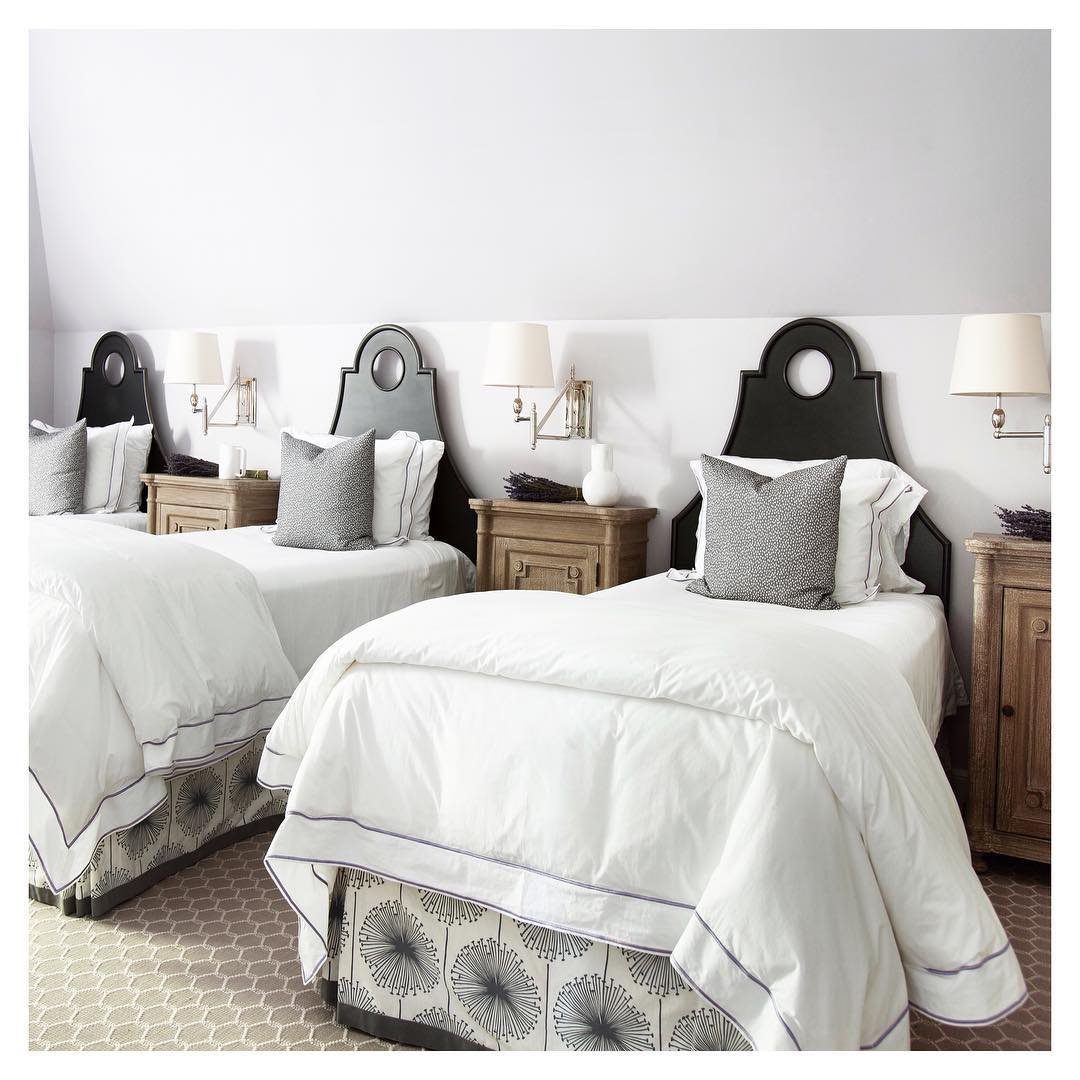
A patterned bedskirt hides the frame and whatever you’ve shoved underneath, but it also gives the bed a finished shape that plain bedding alone rarely achieves.
A white, hotel-clean top keeps the bed simple; the skirt carries a grey botanical print that picks up the room’s quieter tones.
I like this move for renters because the skirt travels with you and asks nothing of the walls.
Look for cotton or a cotton-linen blend with a drop between 14 and 18 inches; measure from the top of your box spring to an inch above the floor. A gathered style forgives slightly imperfect lengths.
Skip this if your bed sits flush to the ground on a platform frame, or if you actually use the under-bed space for storage you reach for daily.
For everyone else, it is the fastest way to make a mattress look like a deliberate choice rather than a leftover.
Importance of Soft Textiles
Soft textiles do the heavy lifting in a bedroom that actually feels restful.
A quilt spreads warmth without the stiff formality of a bedspread, and a chunky knit throw across the foot of the bed adds weight that settles the body like a weighted blanket.
Plush rugs under bare feet bridge the gap between getting up and feeling awake.
Layering matters more than any single piece. Botanical prints in soothing shades, paired with shaded lamps on a large chandelier, turn a room quiet after dark.
The textiles do not need to match; they need to relate. A rust-toned pillow, a mauve throw, a chocolate brown rug: each layer adds depth without demanding attention.
Two years in, a good chunky knit blanket still earns its place. That is the test.
If a textile looks inviting but never gets used, it is decoration, not coziness.
Role of Color in Coziness
Warm colors invite the eye to slow down. Amber, rust, mauve, merlot, and chocolate brown read as comfort especially in fall, though they work year-round if the light in the room supports them.
Swapping pillow covers and adding one warm-toned blanket shifts the whole mood without a repaint.
Deep greens and soft blues act differently: they lower the pulse. A bold orange stripe behind a leather headboard proves color can stimulate without overstaying, but that takes nerve and a specific room.
For most bedrooms, warm neutrals do the steady work of making a space feel held.
The leather headboard in that Roman bedroom grounds the color wash around it. Without something solid, warm colors float; without something warm, solid colors go cold.
The balance is the whole trick.
Frequently Asked Questions
How can I make my bedroom look cozy?
Layer textiles, warm lighting, and personal touches that mean something to you. Quilts, chunky knit throws, and plush rugs add texture that reads as lived-in rather than staged.
What are some cozy things to put in my bedroom?
Soft bedding like patchwork quilts with cotton batting, warm-toned throws, and rugs with actual cushion underfoot.
A plant on a moss pole adds height and freshens air, while a ceramic dish or framed photo that holds memory turns a surface into something personal.
What are the 2026 bedroom trends?
Warm colors, layered textures, and natural materials carry forward. Flokati rugs, the handwoven Greek wool shags with deep fluffy pile, are noted as enduring pieces that outlast trends.
Genuine flokati runs 100% wool at 1,800 grams per square meter or heavier, suited to bedrooms though it sheds at first.
What are the 7 golden rules for bedroom design?
Layering textures and fabrics comes after you set your color palette. Cotton sheets, velvet pillows, and varied finishes add depth and warmth across modern, cozy, or minimalist styles.





