These ideas run from free clipped branches to store-bought garlands with lights, and the right one depends on whether your mantel faces a television, sits low to the ground, or belongs to a rental where nail holes cost your deposit.
1. Halloween Mantel Decor
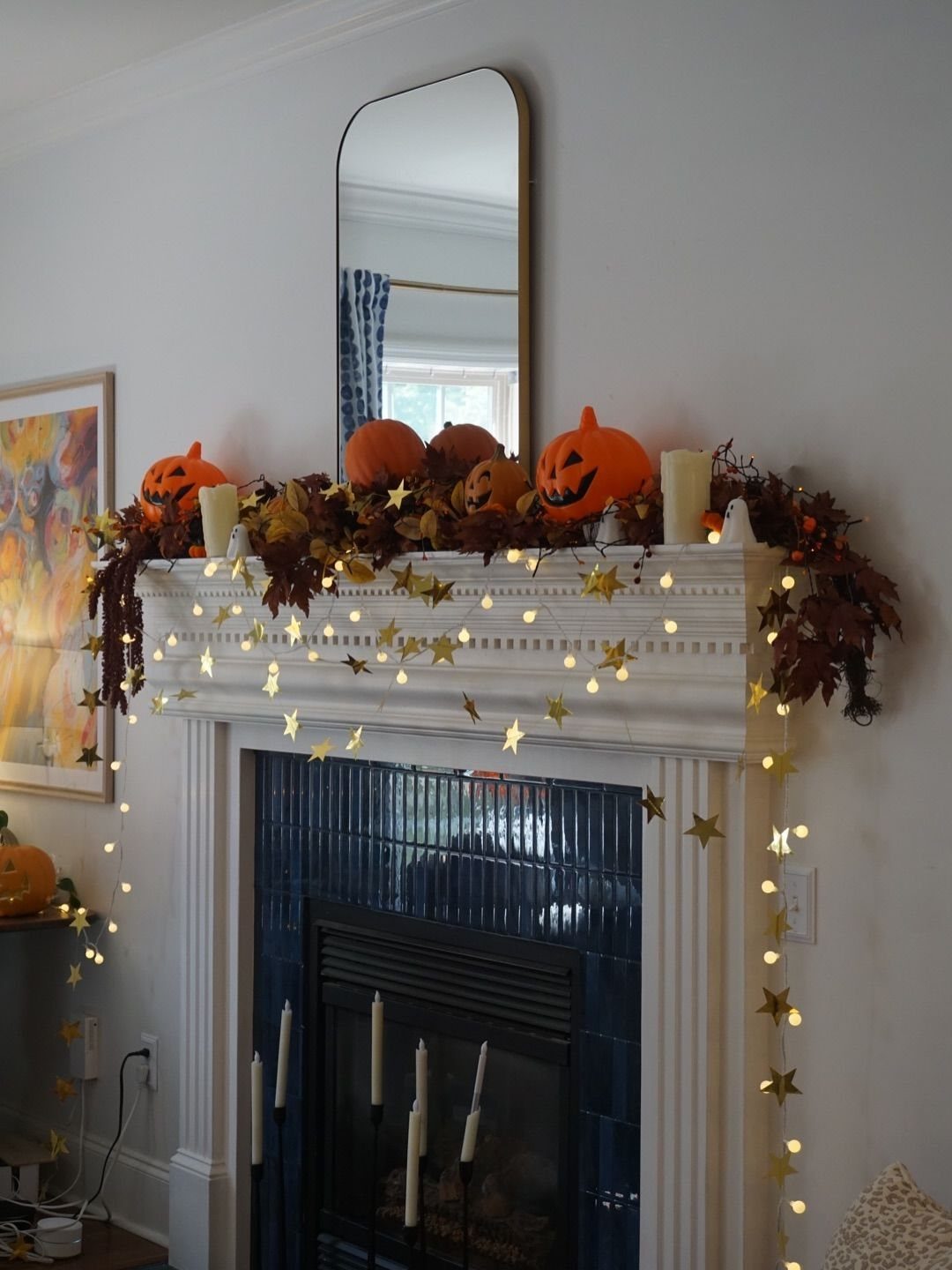
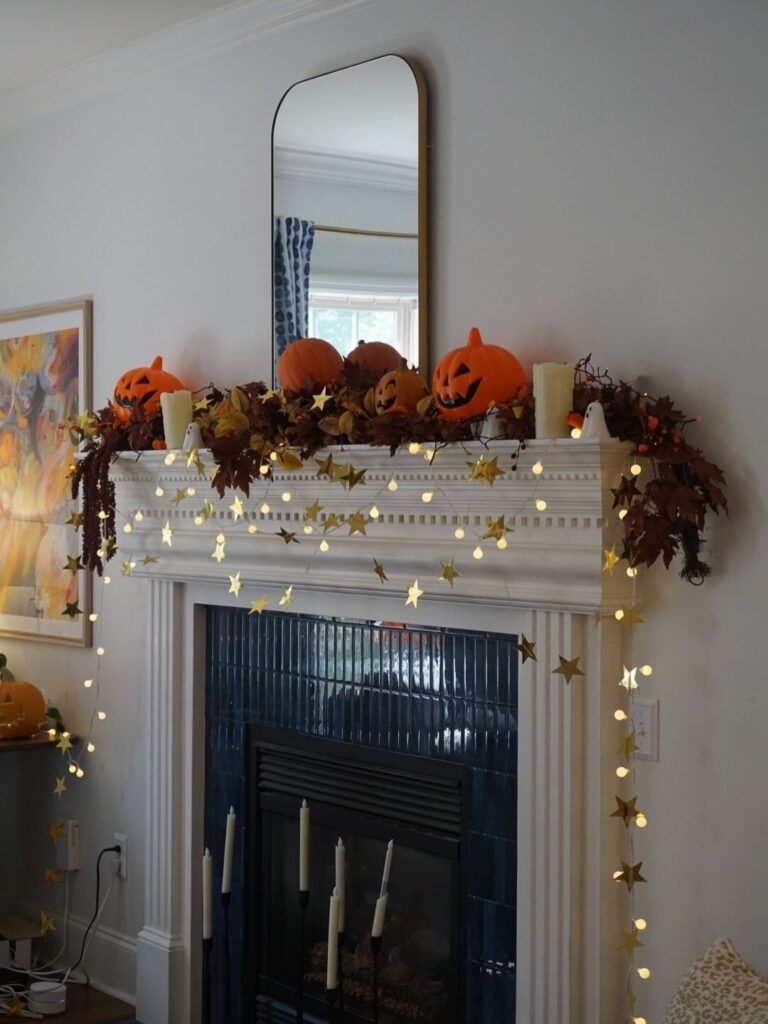
A Halloween mantel that still reads as autumn works best when the spooky pieces sit on top of fall’s usual colors and textures.
Orange jack-o’-lanterns, black candelabras, and paper bat garlands layer over the leaf garlands and fairy lights you probably already own.
Swap the skeletons and spiderwebs in after mid-October, then pull them before November so the pumpkins and candles carry you straight to Thanksgiving.
I’d pick this route for anyone who wants one setup that stretches across both holidays without feeling stale.
Antiques with an old-world feel are always great for the fall season. Take a cue from this well-curated mantel, including a wall-mounted horse, and make a unique vintage find part of your decor.
2. Fall Wreath
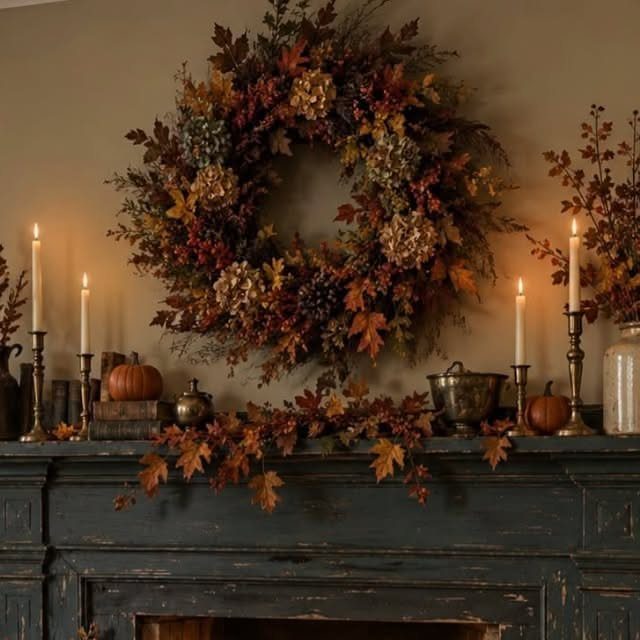
A wreath hung above the mantel does the heavy lifting of a whole display. Golden wheat, magnolia leaves, and eucalyptus bring in texture and a faint fresh scent that artificial garlands never match.
Long dried floral strands drape wide enough to anchor a broad mantel, or you can loop a shorter one around candles below.
Brass holders and small pumpkins on the shelf pick up the warm tones without competing. This suits renters especially; one nail hole above the fireplace replaces a shelf’s worth of damage.
3. Dried Flowers
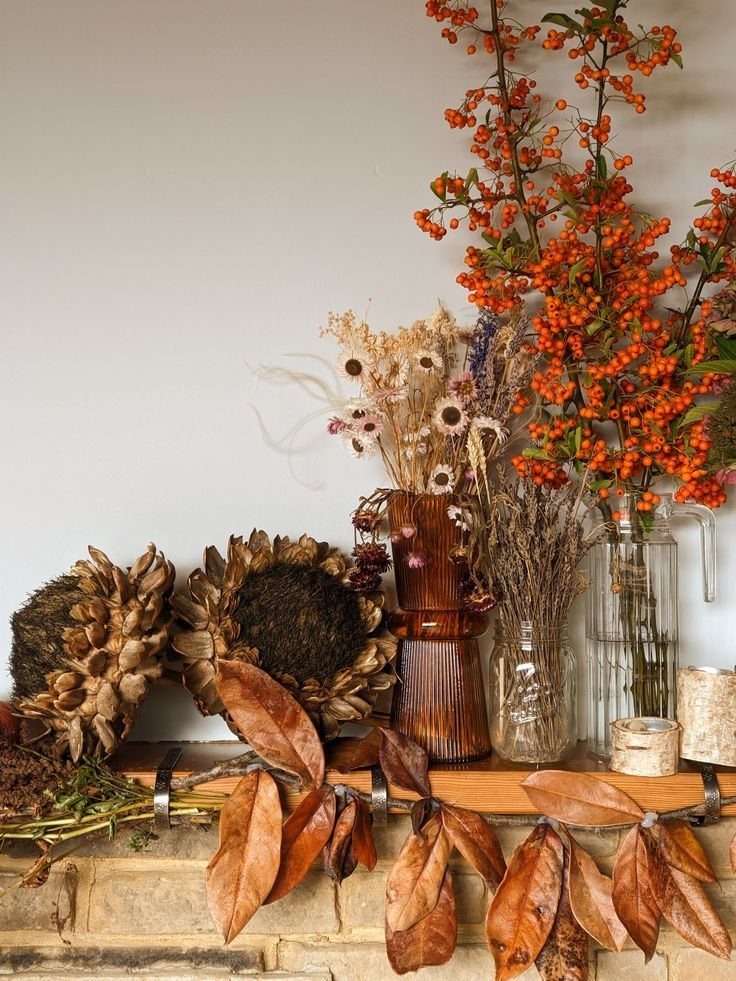
Fresh marigolds and sunflowers last maybe a week. Dried stems in amber jars and wooden vases hold their shape through Thanksgiving with no water, no dropping petals, no guilt about the grocery store bouquet you forgot to change.
Sunflowers, berry branches, and mixed dried bouquets arranged low across a wooden mantel keep the wall behind clear.
I’d cluster the tallest pieces off-center and let the rest trail downward; symmetry reads stiff with materials this informal. Good for anyone who travels weekends or just forgets to tend plants.
4. Wooden Crates or Logs
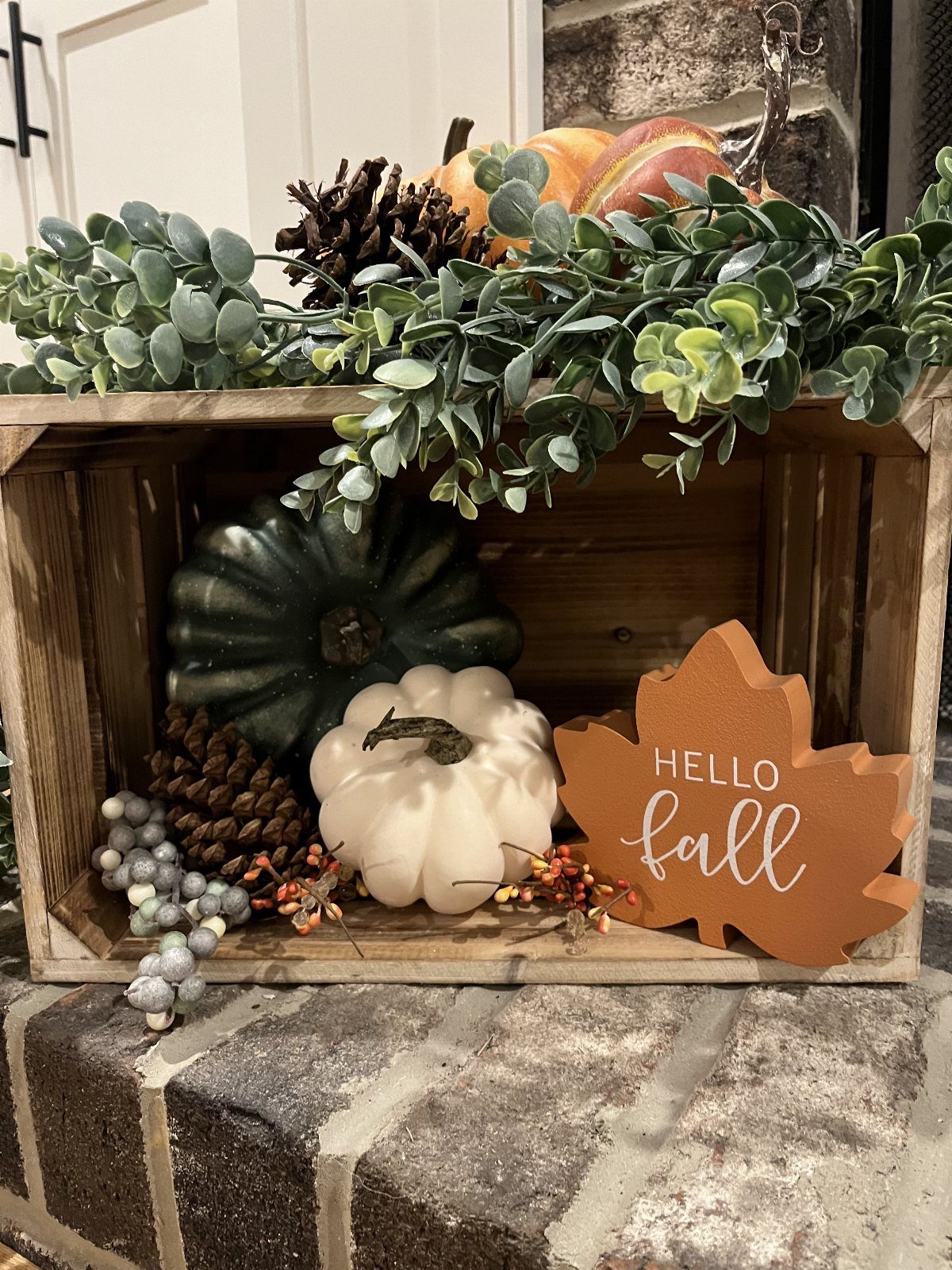
A single wooden crate packed with pinecones, eucalyptus, and pumpkins turns a bare hearth into a finished corner fast.
The "HELLO fall" sign leaning against the front gives it a focal point, but a plain crate works too; the wood itself carries the rustic note. Brick hearths especially need this, their hard surfaces soften with the raw grain.
I’d use a crate with slatted sides so the greenery spills through rather than sitting in a lump. No tools, no budget stretch, and you store it flat come December.
5. Uncarved Pumpkins
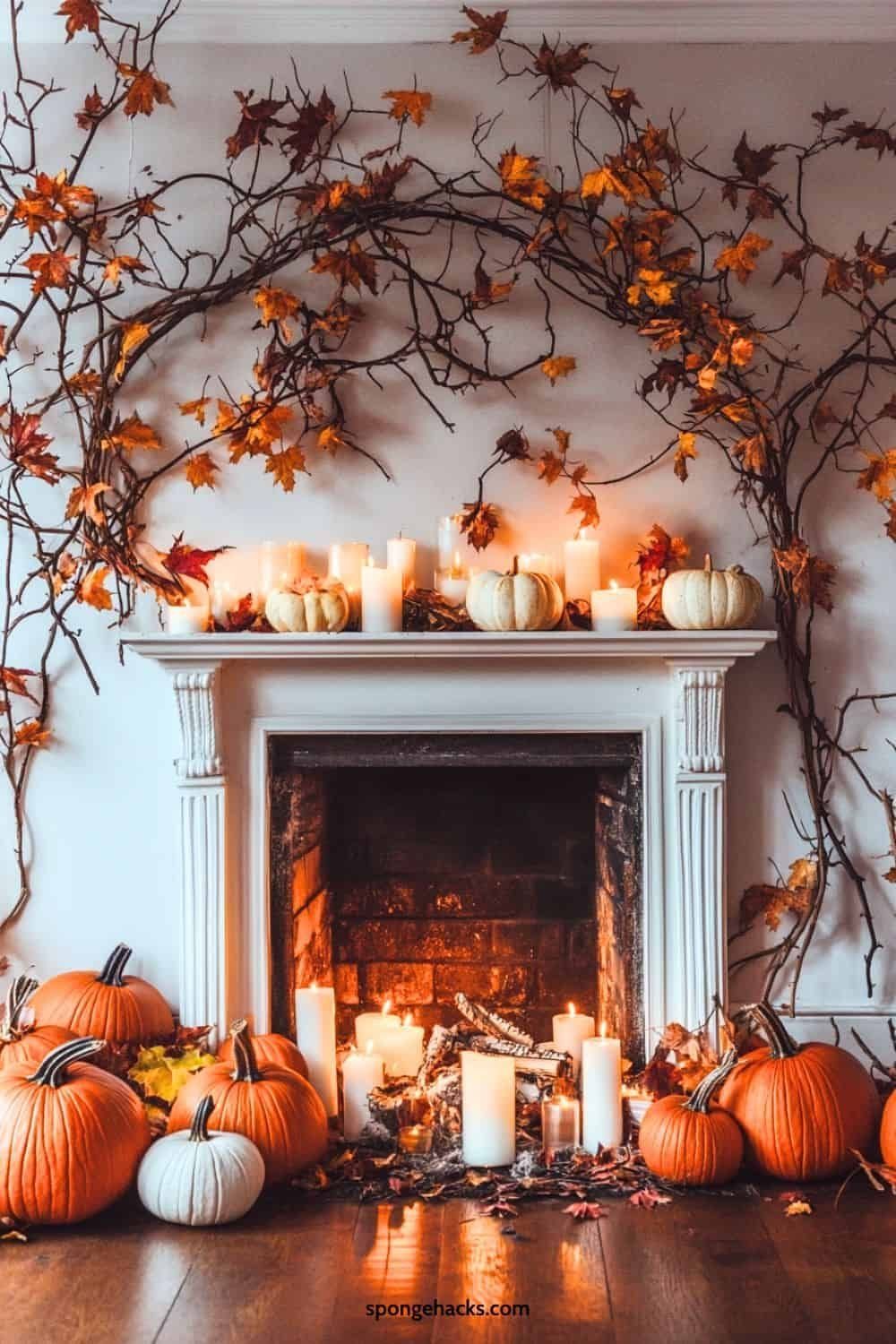
Uncarved pumpkins in white and orange, clustered on the mantel and spilling onto the hearth, give a harvest feel without the mess of jack-o’-lantern carving.
The uncarved ones keep up to 12 weeks, so you buy once in late September and ignore them until Thanksgiving cleanup.
Candlesticks and gathered leaves fill the gaps between sizes, which matters: a uniform row of identical pumpkins looks grocery-store deliberate, and not in a good way.
An arch of autumn branches overhead frames the whole thing without requiring a garland purchase. Best for mantels that sit low; tall arrangements behind them compete.
6. Candles
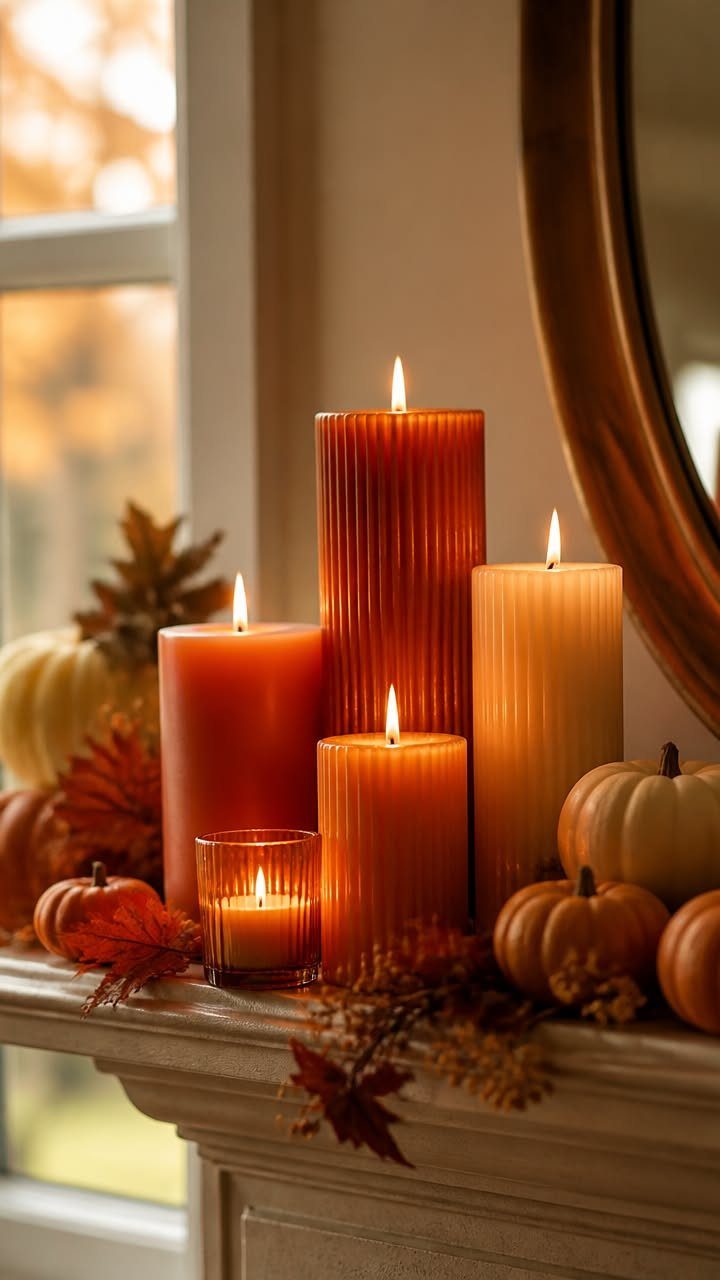
Pillar candles in graduated heights, set among mini pumpkins and scattered leaves, give the shortest days of fall their own light source.
Bronze or brass candlesticks warm the metal toward autumn’s palette; wrought iron or wood go rougher if your room already has enough polish. Orange and cream candles read warm even unlit, which matters for mantels you use mornings too.
Flameless pumpkin wax candles skip the wax drip and the watching, though I’d only use them on a high shelf where the plastic wick doesn’t show.
Red and orange tapers in ornate holders suit the reader who wants color without committing to a garland.
7. Leaning Mirrors
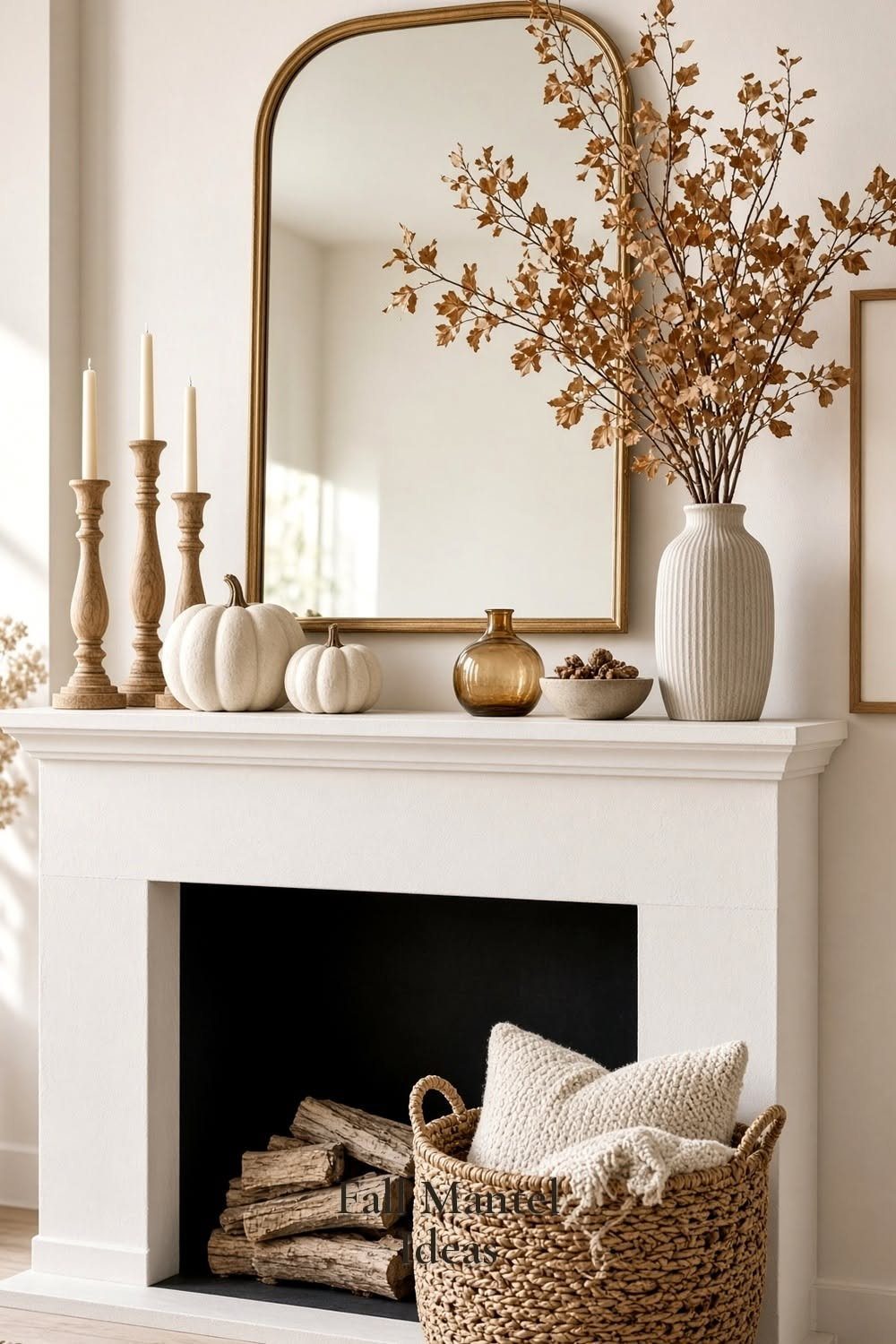
A leaning mirror behind your candles and pumpkins catches window light and throws it back into the room, which matters more than you might think once the afternoons shrink.
Gold spray paint on an old frame turns a yard sale find into something that reads intentional against white pumpkins and bare branches.
The weight is the thing to check: a tall mirror needs a wide base or a wall bumper behind it, and a mantel with any slope at all wants a small dot of museum putty at each front corner.
I would not use this idea in a house with cats who sprint the length of a room, but for a rental where holes in plaster cost your deposit, leaning beats hanging.
8. Branches or Dried Grasses
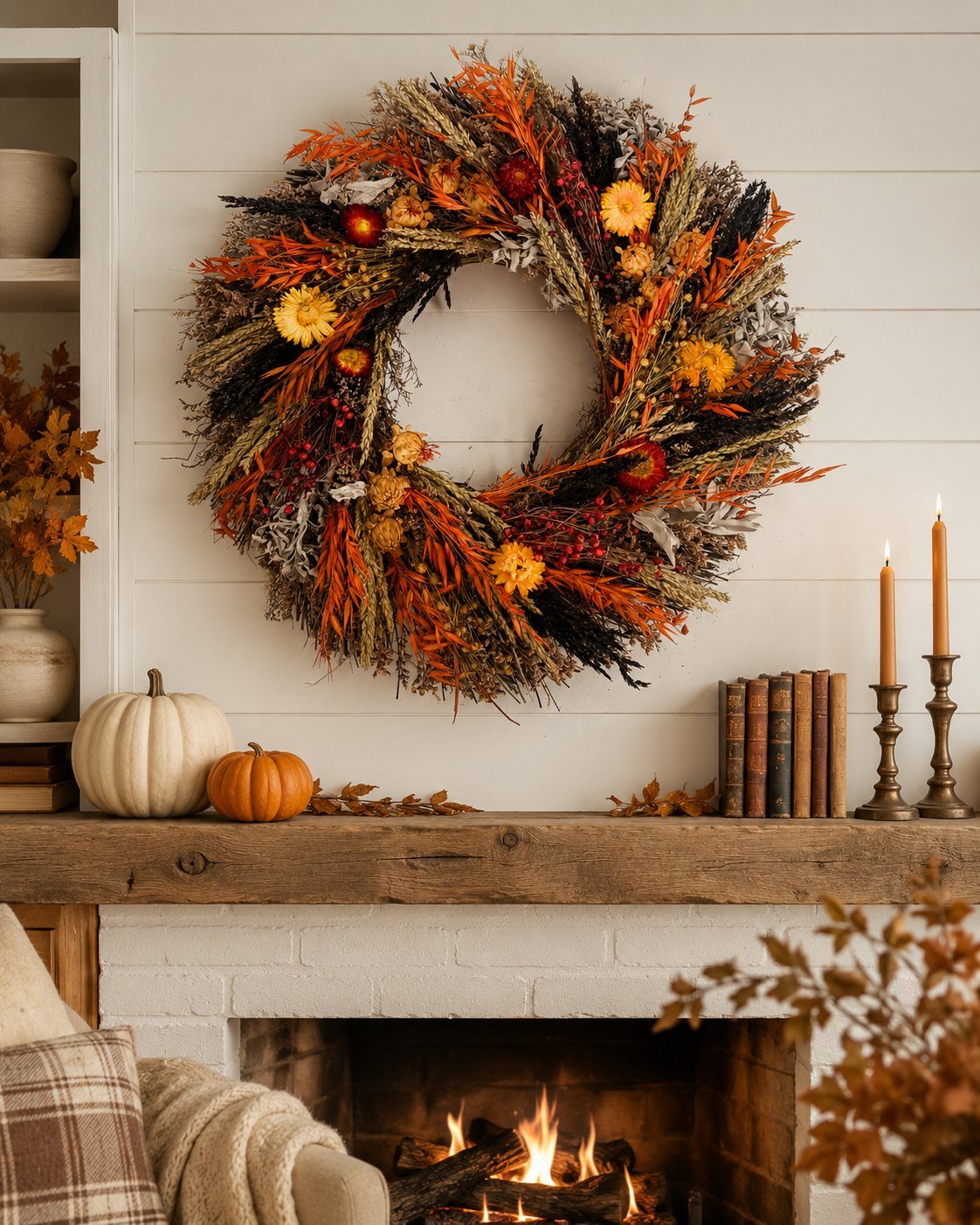
Branches and dried grasses cost nothing if you have a yard or a neighbor who does not mind you clipping.
Pieces with the seed heads already dry, not green, drop less and draw fewer ants. Pampas grass, miscanthus, or even tall goldenrod from a roadside ditch hold up for weeks in a vase with no water.
One or two stems in a narrow neck read as modern; a bundled armful in a crock reads farmhouse.
A wreath above the mantel and loose stems below doubles the texture without doubling the effort. I gather mine on a Saturday morning walk and have them arranged before lunch.
9. Framed Art Leaned Against Wall
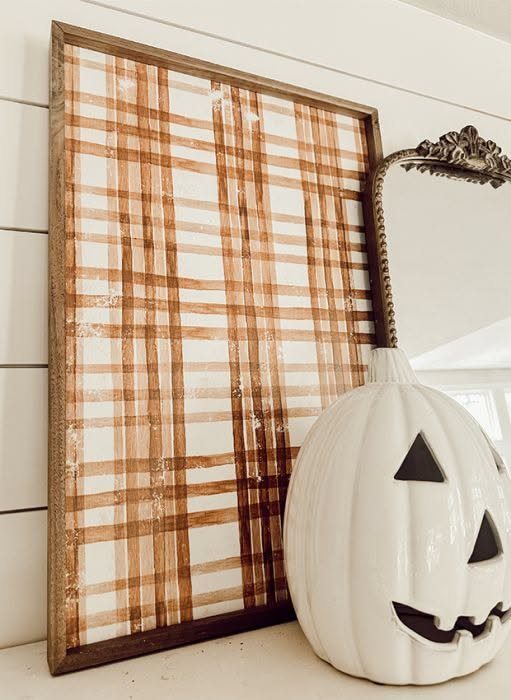
Leaning art against the wall rather than hanging it lets you swap the print when November turns to December, and it adds depth because the frame casts a small shadow.
Plaid works for fall because the lines read cozy without trying; a landscape in amber tones does the same job.
The frame width matters more than the image. A thin metal frame disappears, while a wide wood border holds its own against pumpkins and candlesticks.
I set mine so the bottom edge sits an inch or two behind the tallest mantel object, which locks the arrangement together. For a narrow mantel, one piece is enough; trying to layer several just creates a traffic jam.
10. Berry Branches
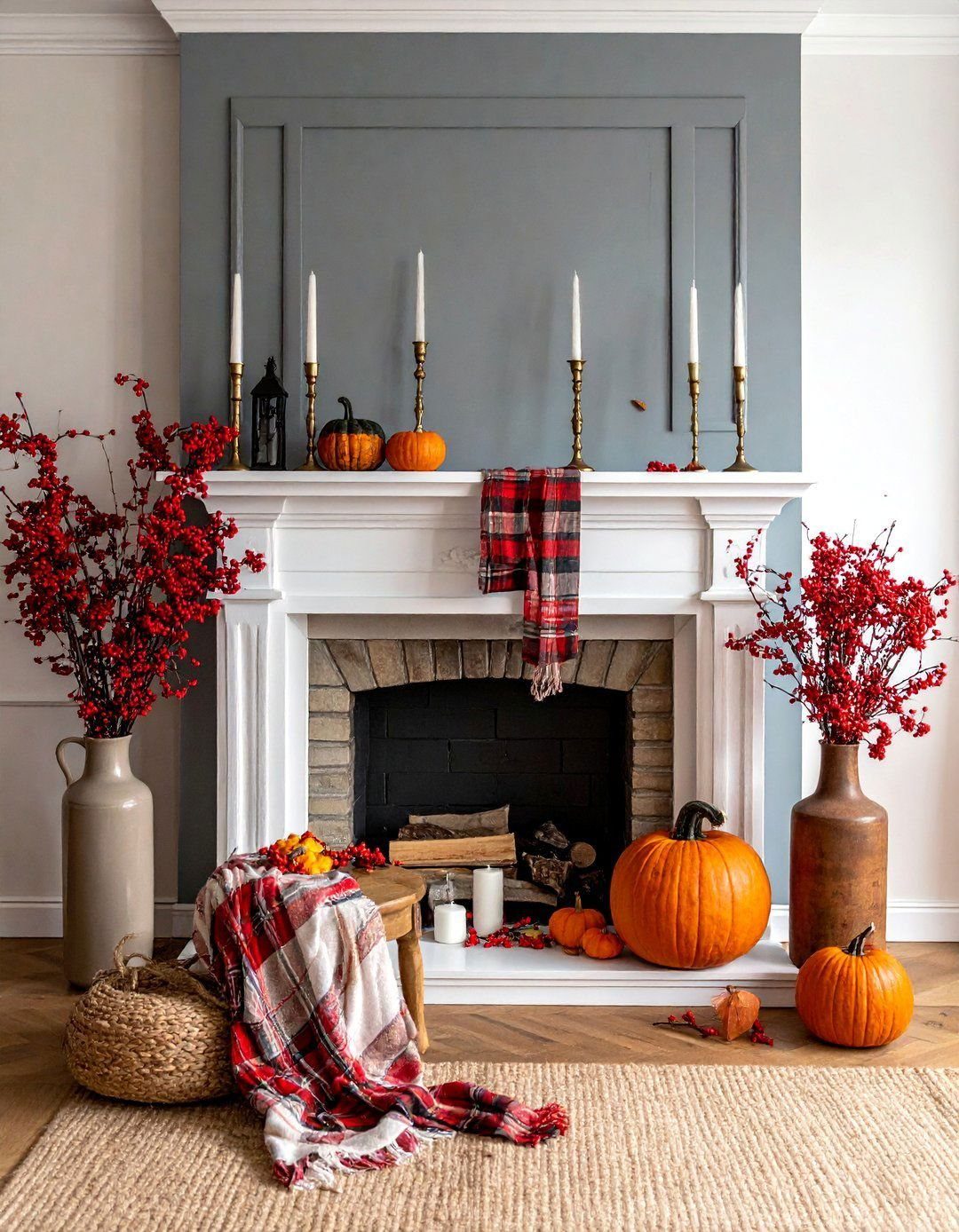
Red berry branches in a pair of jugs flanking the mantel give height where most fall decor sits low and round.
Ceramic or dark glass hides the stems, which tend to be woody and unpretty; the berries themselves do the work.
Faux branches solve the problem of dropping fruit if you have a white hearth to keep clean, and good ones now cost little at craft stores.
The scale is what to watch. Branches that reach only halfway up your mirror look apologetic; branches that scrape the ceiling look like a mistake.
A plaid scarf or throw draped on the mantel front ties the red into the horizontal plane so the color does not float.
11. Incorporating Fall Colors
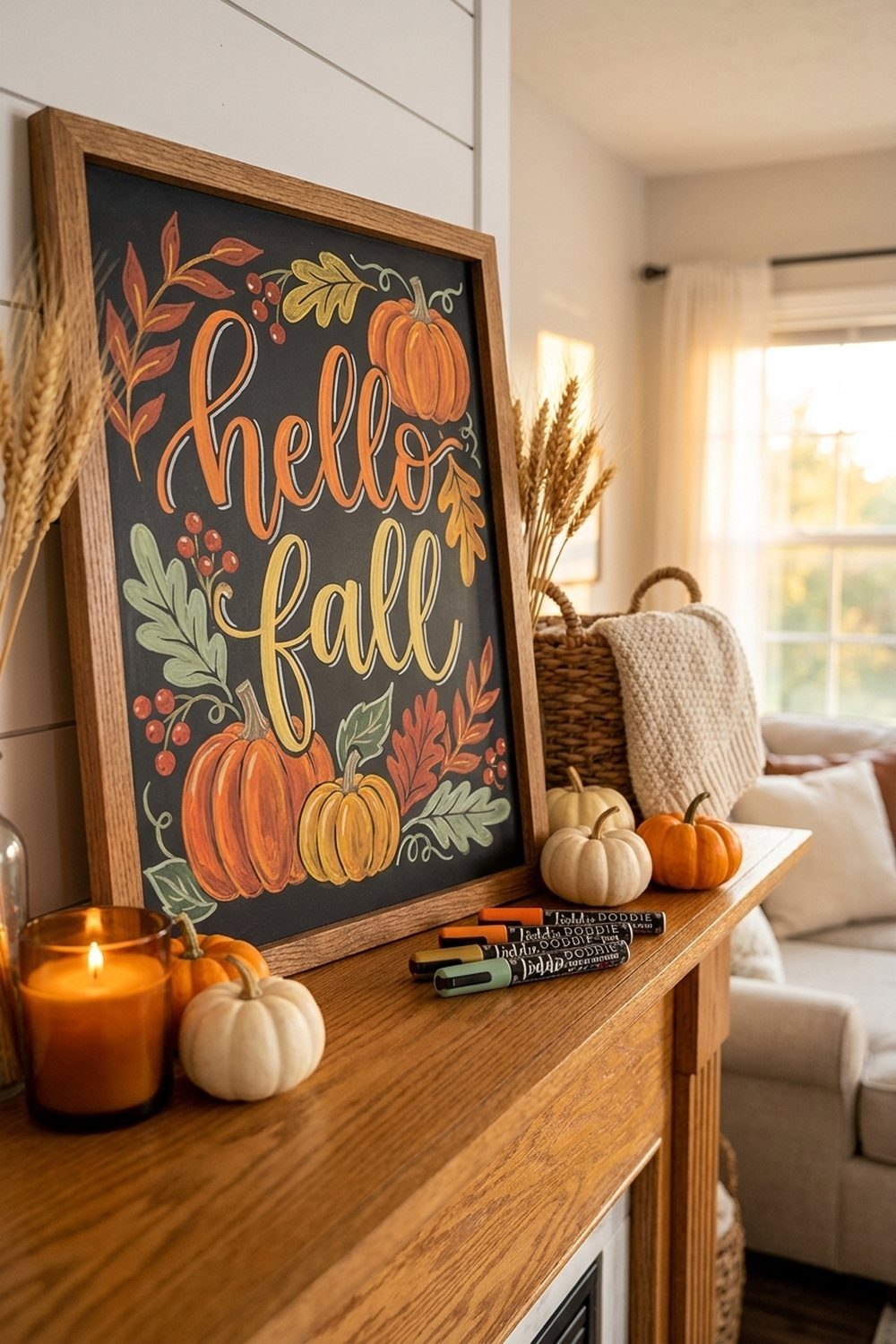
Fall color on a mantel works best when it talks to the room around it, not when it shouts over it.
Navy walls want amber and rust, not more blue; sage or cream rooms can handle the brighter orange. A chalkboard, wheat, and small pumpkins against wood keeps everything in the same warm register.
I start with one thing I already own, a pillow or a bowl, and match the mantel to that rather than buying new.
One strong hue used several times beats a scatter of colors used once each. If your mantel faces a television, keep the palette quieter; the screen supplies enough color on its own.
12. Garlands
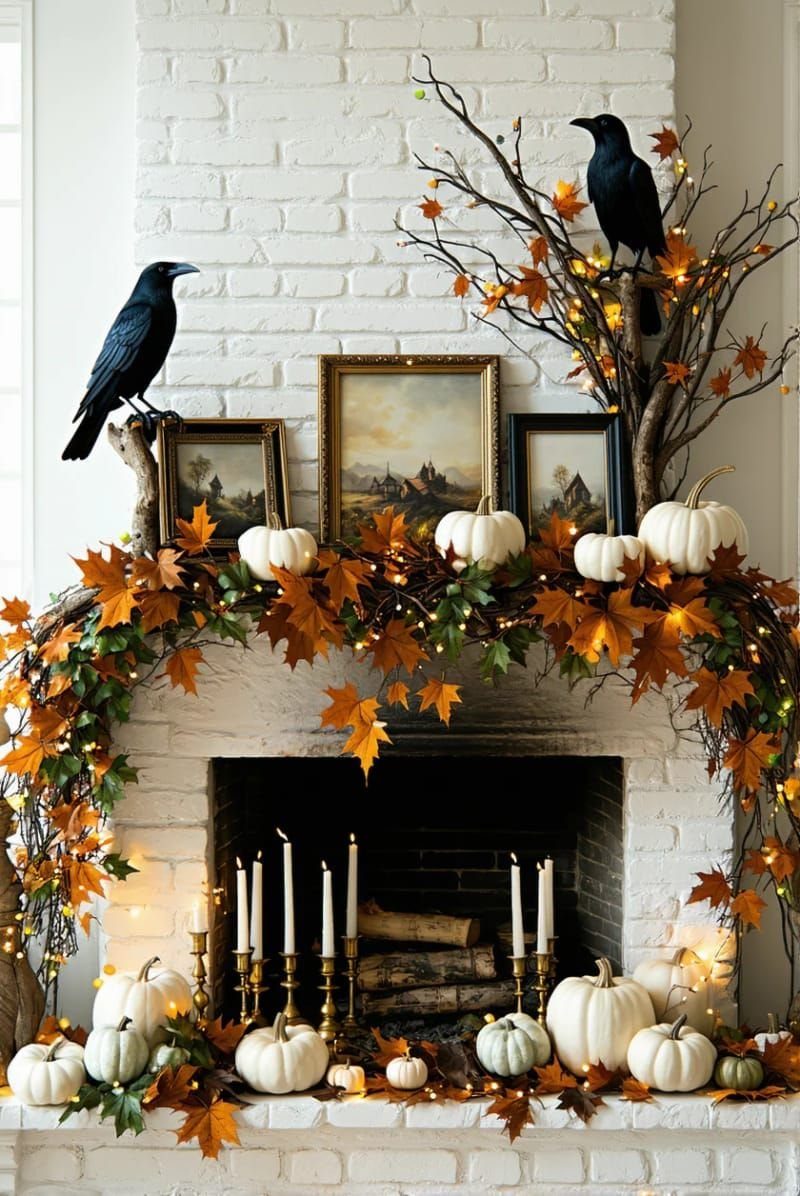
A garland across the mantel adds texture that single objects cannot, and draping it rather than stretching it tight keeps the line from looking like a pipe.
Faux leaves last the season without browning; wire or twine forms let you bend the shape to your mantel length, which is rarely a round number of feet.
Fairy lights woven through only work if you have an outlet or good battery packs.
I skip the lights and let the leaf shapes carry the idea, or I use the lights alone in a jar if the garland is already busy.
For a Halloween bridge, black crows or small bats perched in the branches turn the same garland from harvest to haunted fast.
13. Whites and Creams Color Scheme
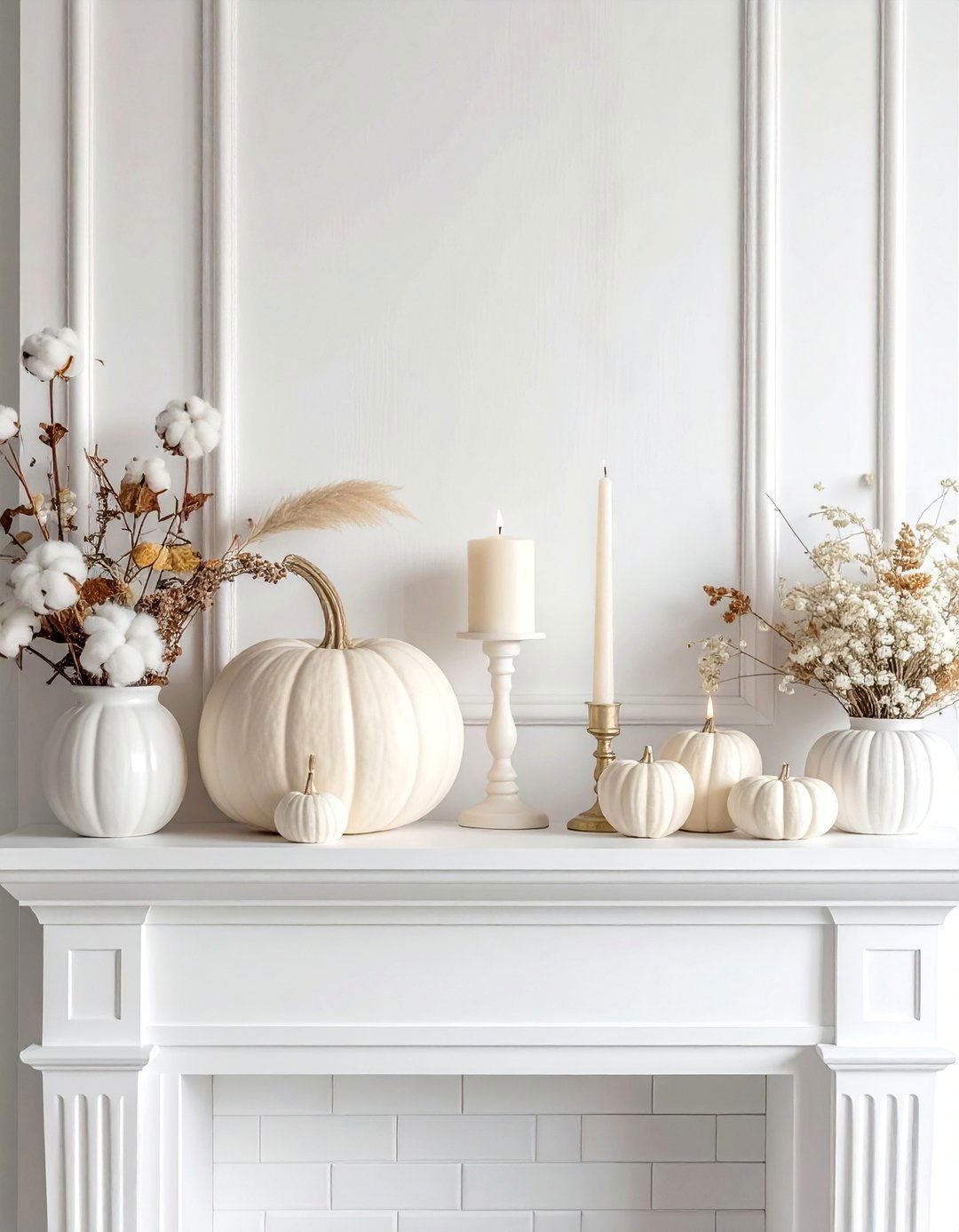
A white-and-cream mantel reads as intentional restraint rather than leftover summer. The pumpkins carry the season without shouting orange, and cotton stems give texture where color used to do the work.
The risk here is flatness.
Varying finishes, matte against glossy ceramic or ribbed glass, keeps one tone from going dead. I would add one warm element, maybe a brass candlestick or a dark wood frame, so the eye has somewhere to land.
This palette suits renters who want fall spirit that still matches their existing sofa or their landlord’s beige walls. It trades the immediate cheer of traditional autumn colors for calm that lasts from October straight through Thanksgiving without looking dated.
14. Fabric Banners
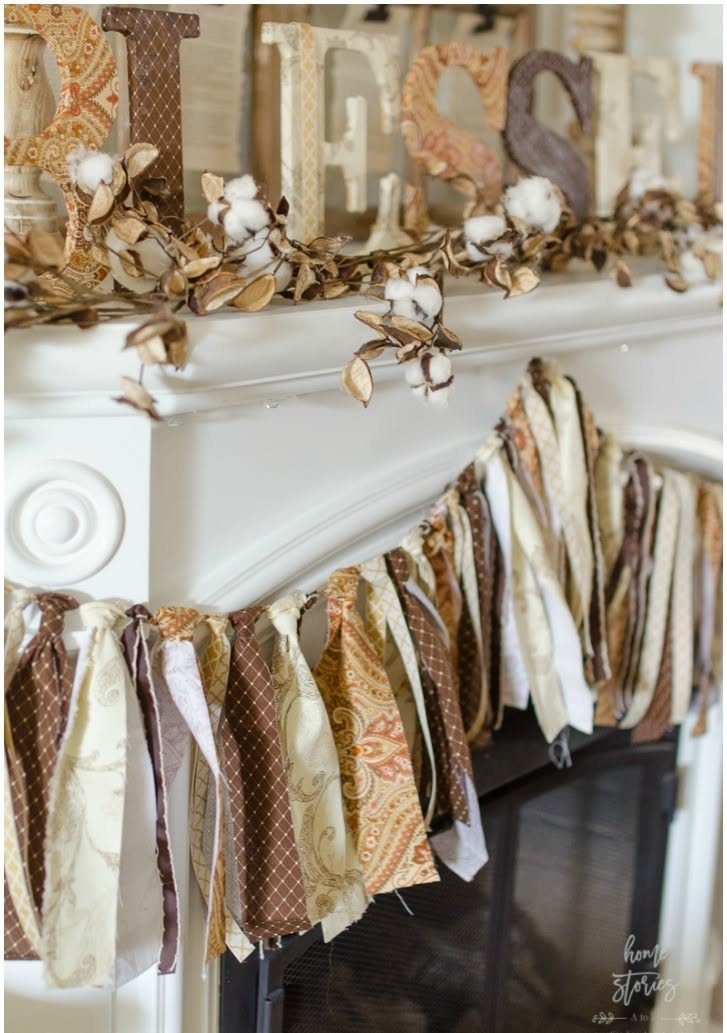
Torn fabric strips tied to a string take maybe 5 minutes and zero skill, which is the point. Burlap, ticking stripe, or leftover quilting cotton in browns and creams reads cozy without the craft-store precision of a paper banner.
Mini clothespins on jute twine mean no hot glue, no sewing, no measuring. The uneven edges are the style, not a mistake to fix.
I would hang it slightly off-level on purpose, or let one end trail lower.
Too neat and the charm collapses into something a child made at school. This works best for someone who wants mantel change they can roll up and store in a shoebox come November.
15. Fairy Lights or Candles
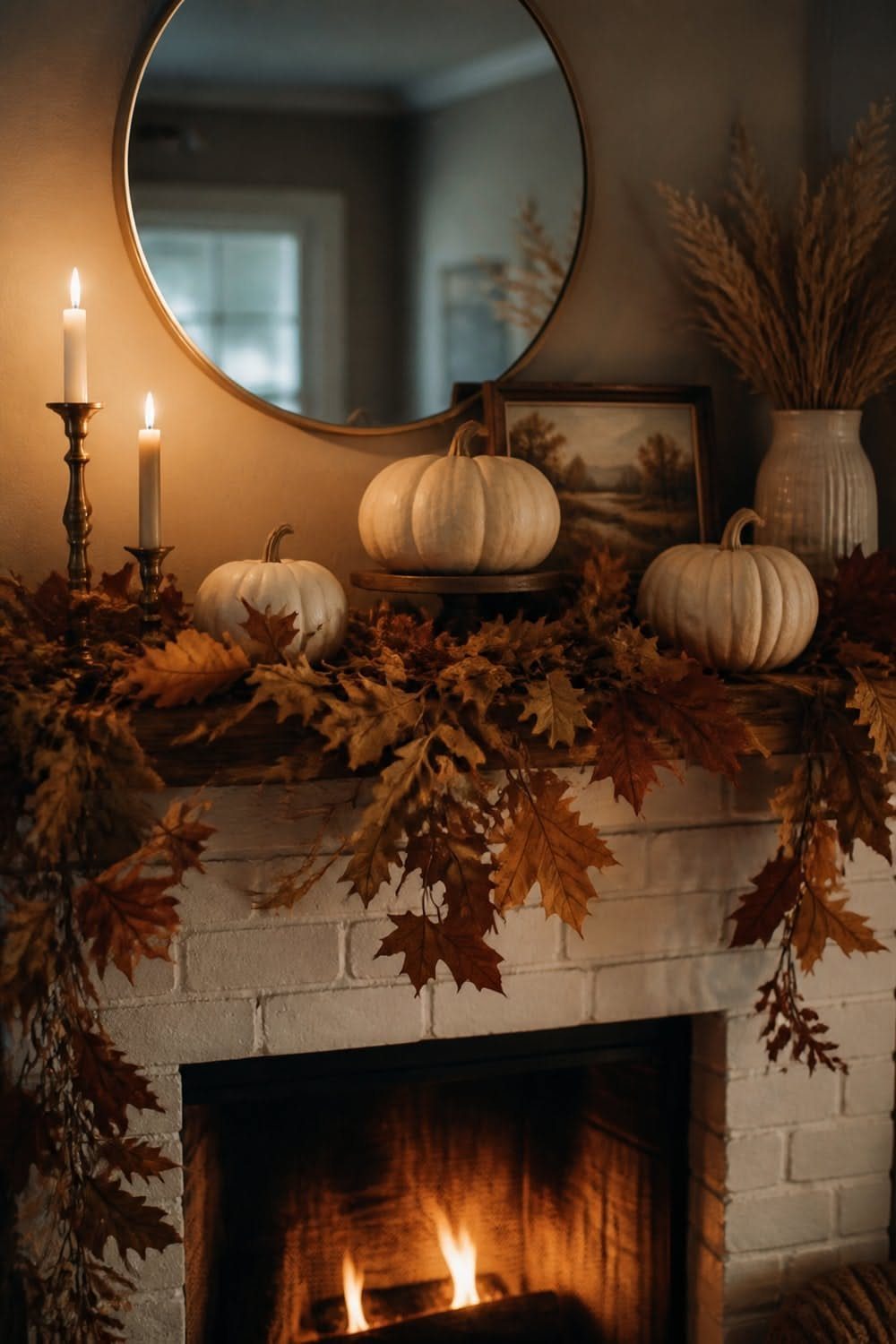
Candlelight does what overhead fixtures cannot. It lowers the ceiling psychologically, pulls people closer, and forgives every other choice on the mantel if those choices turn out mediocre.
Tapers in dark holders give height and a little formality; fairy lights woven through a garland read more casual.
Battery-operated strands suit mantels without outlets or households with small children. Real flame needs tending, checking, blowing out before bed, which some evenings I have energy for and some I do not.
The glow matters more than the source.
A single lit candle between 2 pumpkins turns the same objects from daytime arrangement to evening scene. I would start with what I already own for holders and add light before buying anything new.
16. Chalkboard Signs
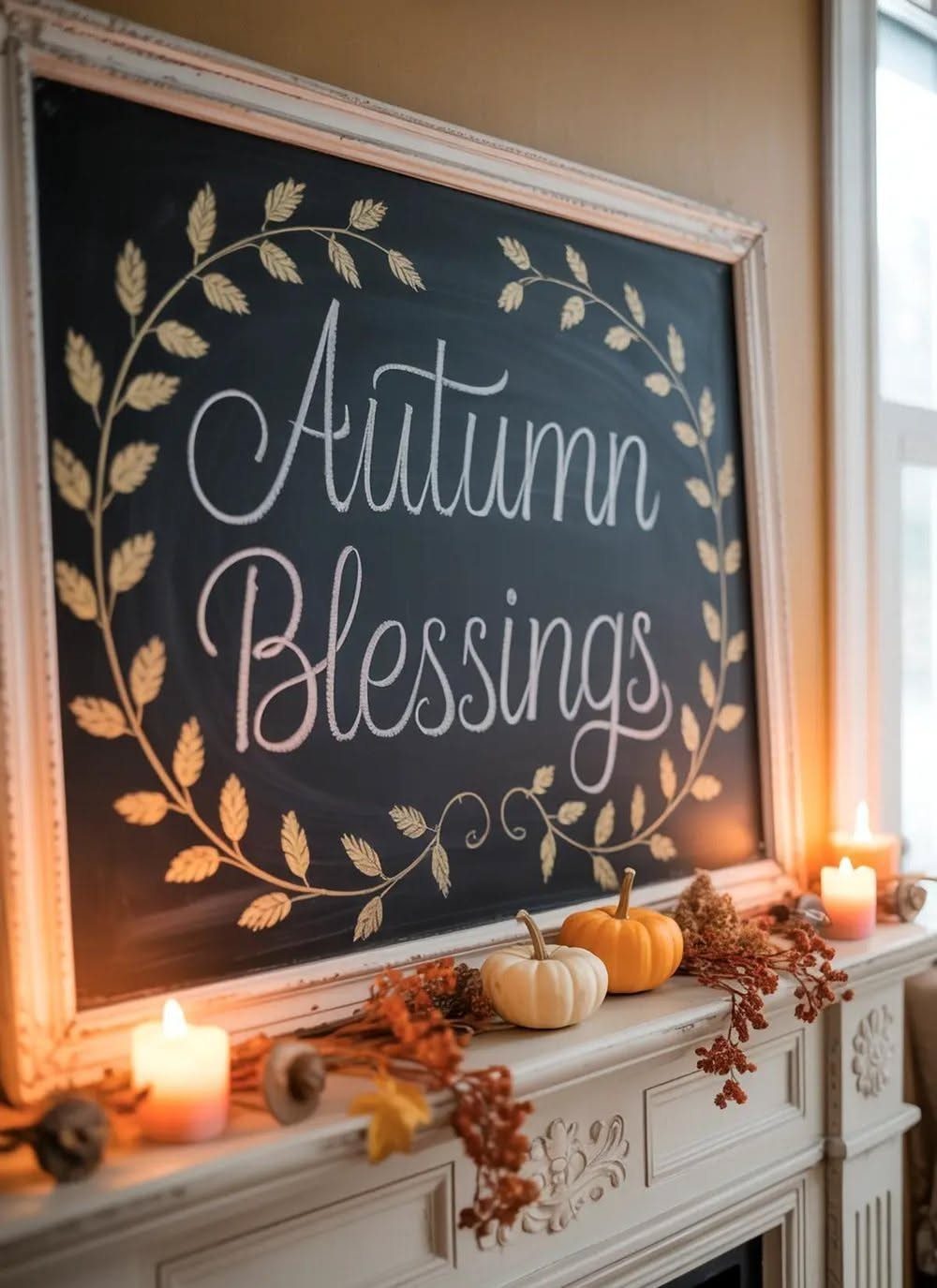
A chalkboard sign shifts with your mood or your month, which fixed lettering cannot. "Autumn Blessings" in October becomes "Start Each Day With a Thankful Heart" before Thanksgiving without new materials.
Framing elevates it from cafe menu to mantel piece. One metallic note, like a gold leaf wreath, is enough; more shimmer would compete with the message.
Hand-lettering with real chalk gives a softness that paint markers lose. If your script shaky, print a font you like at size, rub chalk on the back, and trace.
This idea suits hosts who greet people often and want one less decoration to store, since the board stays up year-round with new words.
Creating a Cozy Atmosphere
Warm light does more than show your decor; it changes how the room feels.
Candles, fairy lights, or a small lantern on the mantel edge drop the ceiling visually and pull people toward the center. That matters in fall, when the windows go dark by six and the room can feel cavernous.
Natural elements carry their own scent and texture.
Dried orange slices, cinnamon sticks, or a handful of pinecones in a wooden bowl give the eye something irregular to rest on. The point is dimension without complication.
A mirror behind the arrangement catches what light there is and pushes it back into the room.
If your window shows trees or sky, the reflection brings that in too. I would not overthink the palette; one amber cloth or a rust-colored vase against what you already own is enough.
Using What You Have
The rust in its plaid became the filter: which pumpkins stayed, which leaves looked right, what had to move to another room.
Matching the mantel to something you live with daily keeps the whole house from feeling like a staged set.
Natural finds cost nothing and read as more personal than store-bought.
Twigs from the yard, pinecones from a walk, dried grass from a roadside ditch; these carry the season without carrying a price tag. The beauty is in letting them look found, not arranged with precision.
Layer what you have. A wooden bowl from the kitchen, a stack of novels from the shelf, a scrap of ticking stripe from a sewing drawer.
The uneven edges and mixed sources are what make it look inhabited rather than purchased. I would rather see a mantel that grew across an afternoon than one that arrived in a single shopping trip.
Balancing Decor with Focal Points
A television above the mantel is a black rectangle that does not negotiate.
One tall piece off to the side sets the height, medium objects carry that line across, and small accents close the open spots. The eye travels up and down instead of fixing on the screen.
Balance does not mean symmetry.
A tall candlestick on the left and a cluster of 3 shorter items on the right can weigh the same visually. The test is whether the arrangement holds together when you squint; if one side collapses into blur, adjust.
The television supplies its own color and movement; competing against it just creates noise. I would choose one warm hue and repeat it, letting the eye rest between the decor and whatever is playing.
Layering and Texture
Flat mantels read as forgotten, not minimal. The eye moves, the arrangement breathes.
Texture matters as much as height. A single material throughout, even varied in size, goes dead.
No mantel does not mean no display.
A buffet, console table, or open shelving takes the same principles: tall at the back or to one side, medium supporting, small filling in. The vignette logic holds wherever you place it.
I group by threes when I am unsure.
Two similar heights and one different, or two similar textures and one contrast. The rule is loose enough to break, but it gets me started when the surface looks blank and the afternoon is short.
Frequently Asked Questions
What are some cheap and beautiful fall decor ideas?
Branches and dried grasses cost nothing if you have a yard or a willing neighbor.
What month should you decorate for fall?
Uncarved pumpkins keep up to 12 weeks, so buying in late September carries you straight to Thanksgiving cleanup.