

Fridge wraps range from a single vinyl decal to a custom-printed full cover that can cost more than a used appliance.
The deciding factor is how long you need it to last and whether your lease ends soon or not for years.
1. Fridge Decal
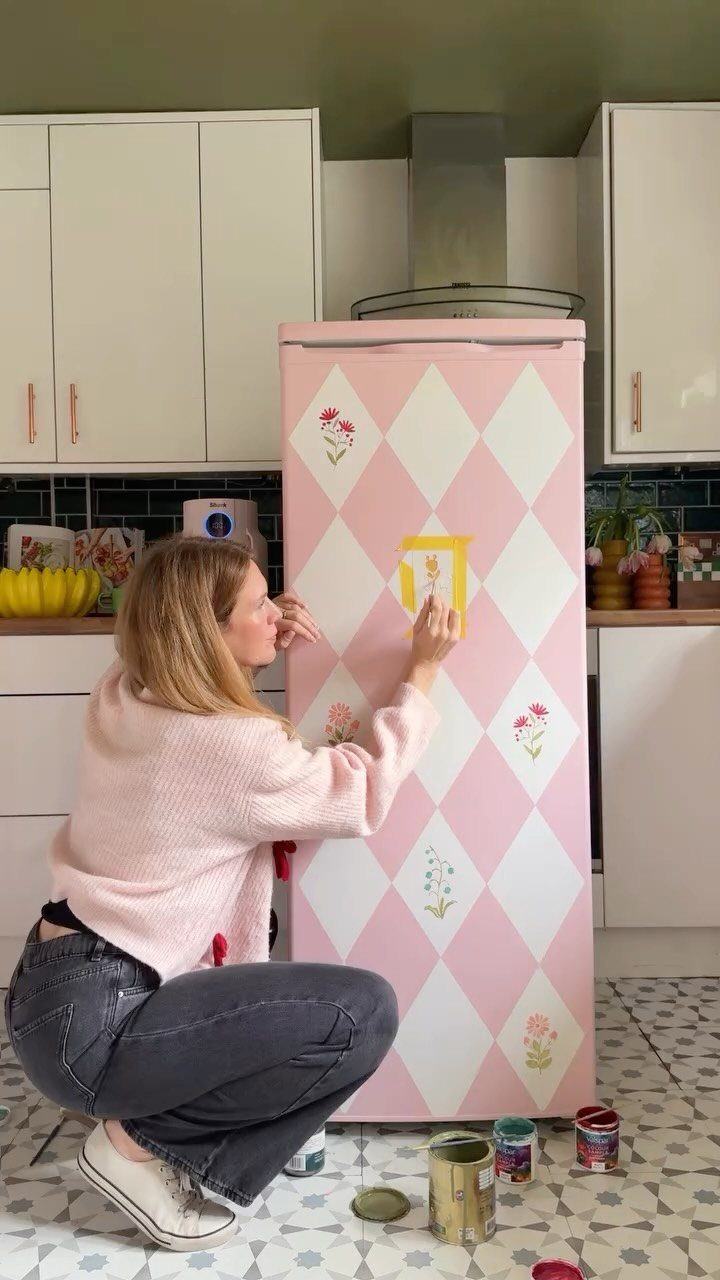
A fridge decal is the smallest commitment in this list: one shape or pattern stuck where you want it, nothing more.
The maker of this piece taped her harlequin pattern out by hand before painting, but a peel-and-stick decal skips that labor entirely.
Small vinyl cutouts ship flat and cost less than a takeout dinner; you position them on doors, sides, or even the handle edge if the surface is smooth.
I’d aim for a single bold shape on an otherwise plain fridge, something that reads as intentional rather than leftover. Decals suit renters who want personality they can peel off fast when the lease ends.
2. Easy Application
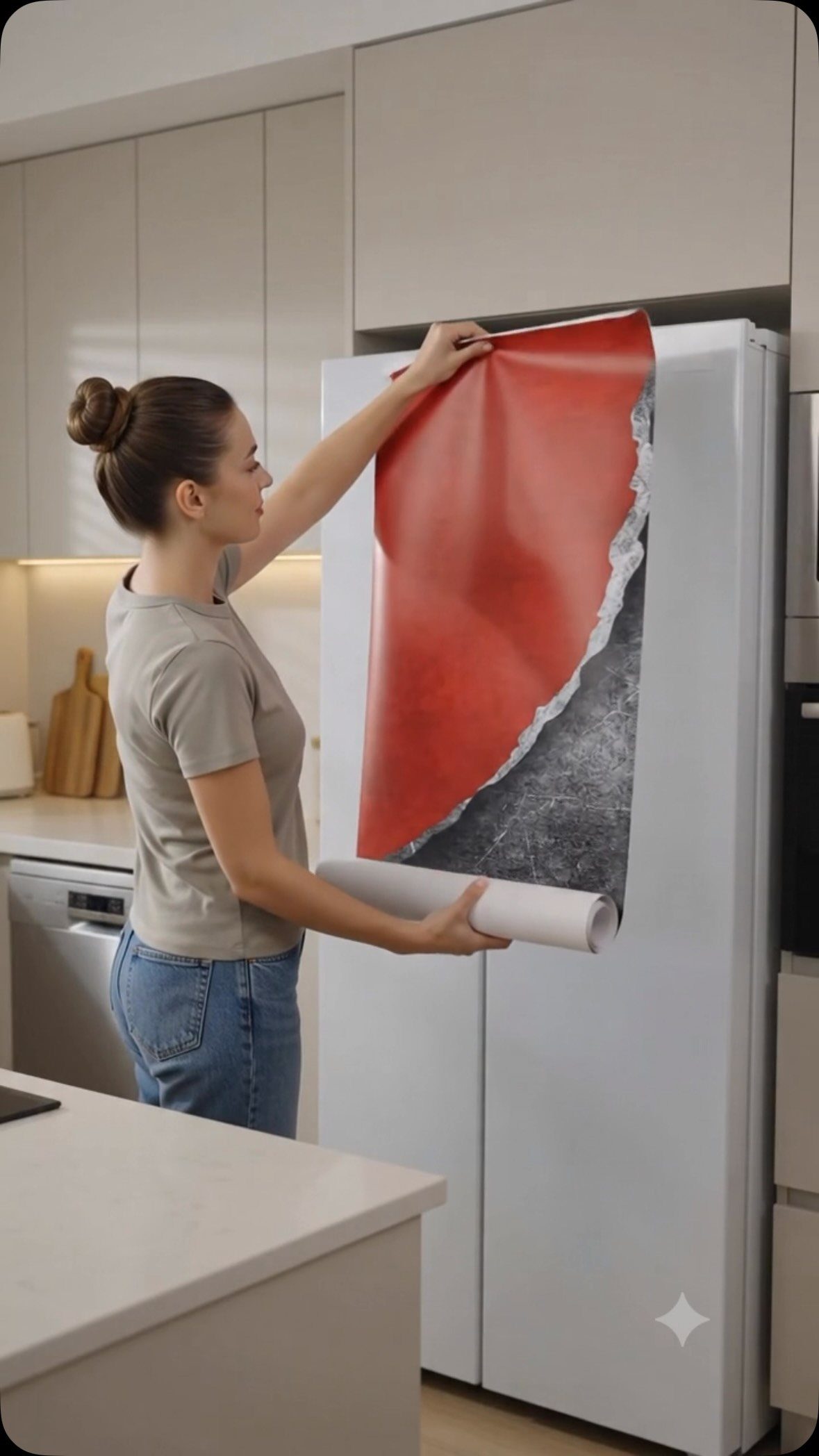
Peel-and-stick vinyl sounds simpler than it is, though the learning curve is gentle enough for a Saturday morning.
Full sheets work the same way as smaller pieces; smooth the surface first, peel a few inches of backing, and press from the center outward with a squeegee or credit card edge.
Bubbles lift if you catch them in the first hour. One supplier ships custom prints in three steps: design, print, delivery to your door.
No heat gun, no adhesive spray, no helper required unless the sheet is wider than your arm span.
For a standard top-freezer model, plan for an afternoon and a spend closer to stock prices than custom printing if you want to keep it modest.
3. Full Fridge Wrap
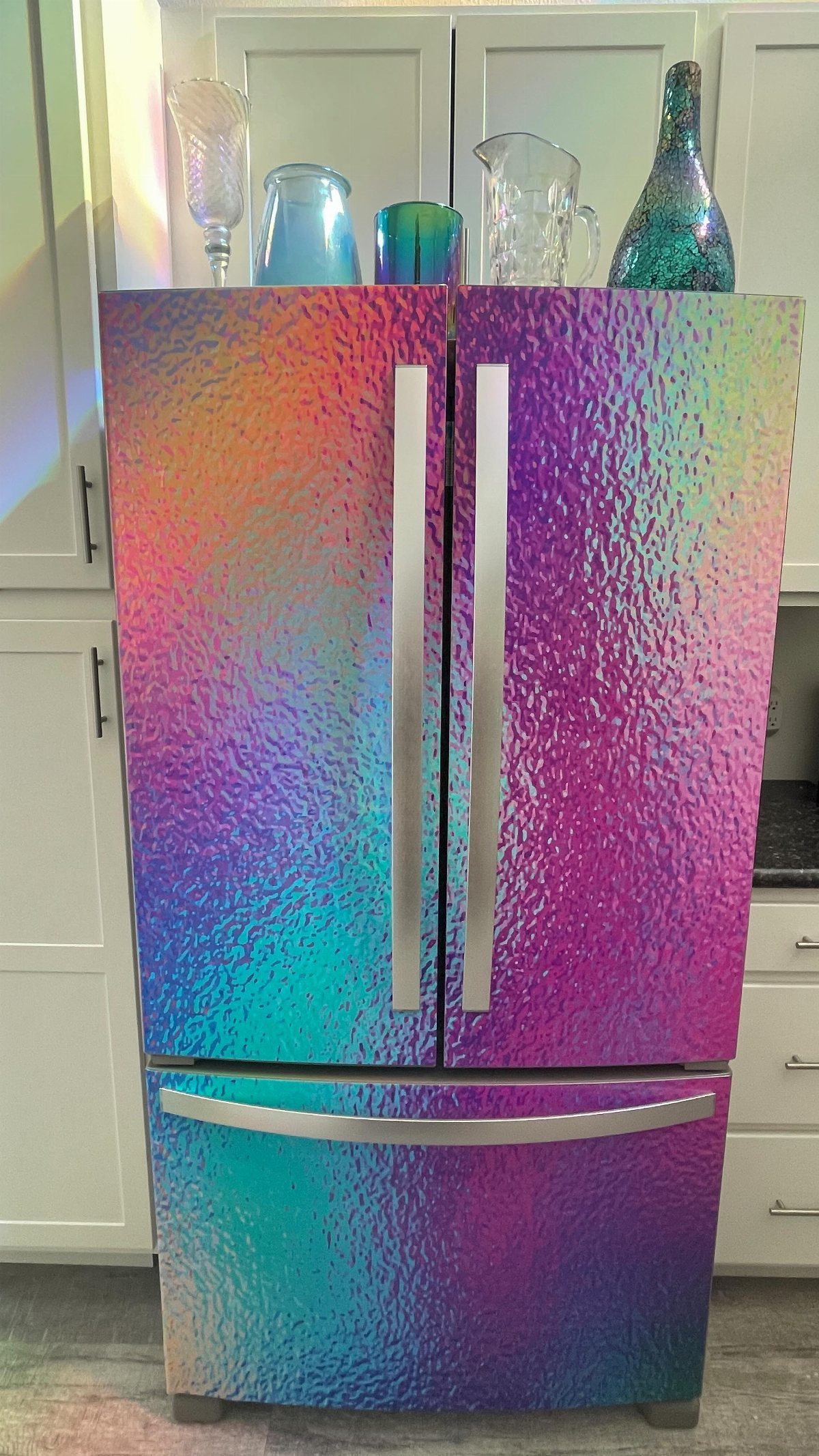
Full coverage means every door, every side panel, the whole visible box changed in one afternoon.
Holographic wrap reads as high drama because it catches light differently from every angle; more subdued options like wood grain or matte color behave the same way structurally.
A true full wrap needs precise cutting around handles and dispenser panels, so measure twice and order once. French-door and side-by-side owners should check whether their supplier sends one continuous sheet or separate panels; the latter forgives minor measurement errors.
This is the choice when your fridge works fine but embarrasses you every time someone enters the kitchen.
4. Custom Designs

A custom wrap starts with your own image, your own text, your own dimensions. A freezer chest can carry a specific product in a specific language; that level of precision is available to anyone with a file to upload.
One supplier offers more than 200 stock designs but emphasizes the upload option for one-of-a-kind results.
Expect to pay more than stock, wait a few extra days for proofing, and measure every door panel separately since no two brands share identical proportions.
I’d use this for a secondary fridge in a garage, basement, or home business where the appliance doubles as signage. What feels clever now has to survive daily encounters long enough to justify the effort.
5. Vintage Designs
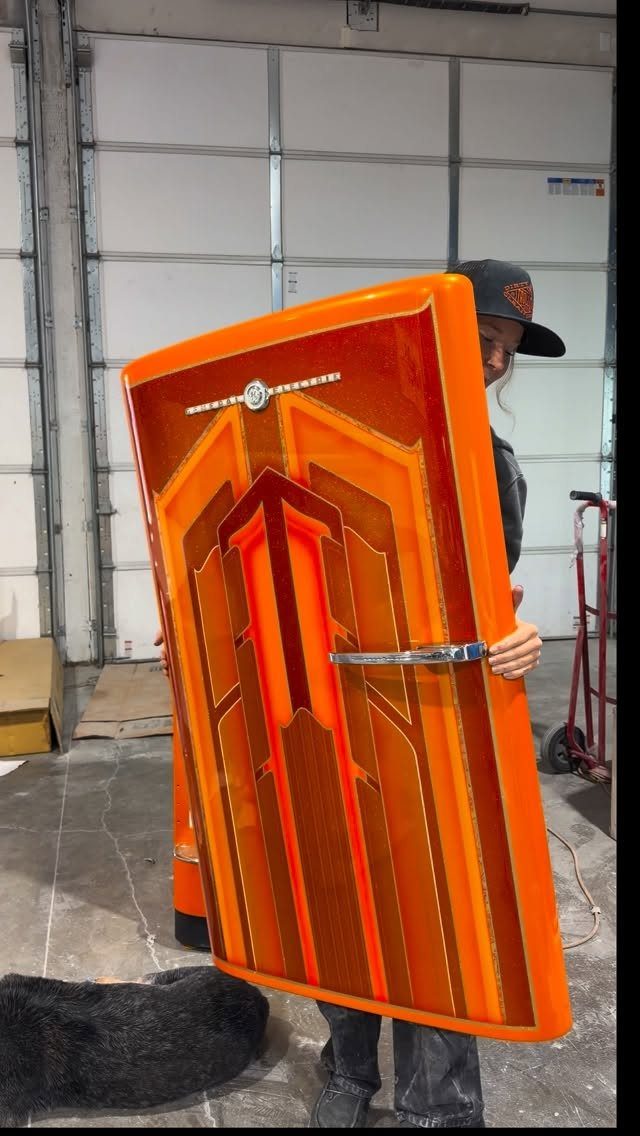
Retro patterns carry an emotional charge that plain color rarely manages. Geometric doors with gold and red accents on orange can pass for original vintage or a careful revival depending on the surrounding kitchen.
Vintage wraps work best when you commit to the bit: pair them with cabinet hardware, light fixtures, or at least a dish towel that doesn’t fight the era.
Stock retro designs run through the same suppliers as modern options, so pricing stays comparable. I’d avoid this if your kitchen already has strong contemporary elements; the fridge becomes a costume in the wrong play.
Renters with dated appliances get a bonus here, since the wrap disguises the manufacturer’s own tired finish rather than adding novelty to something already clean.
6. Nature Themes
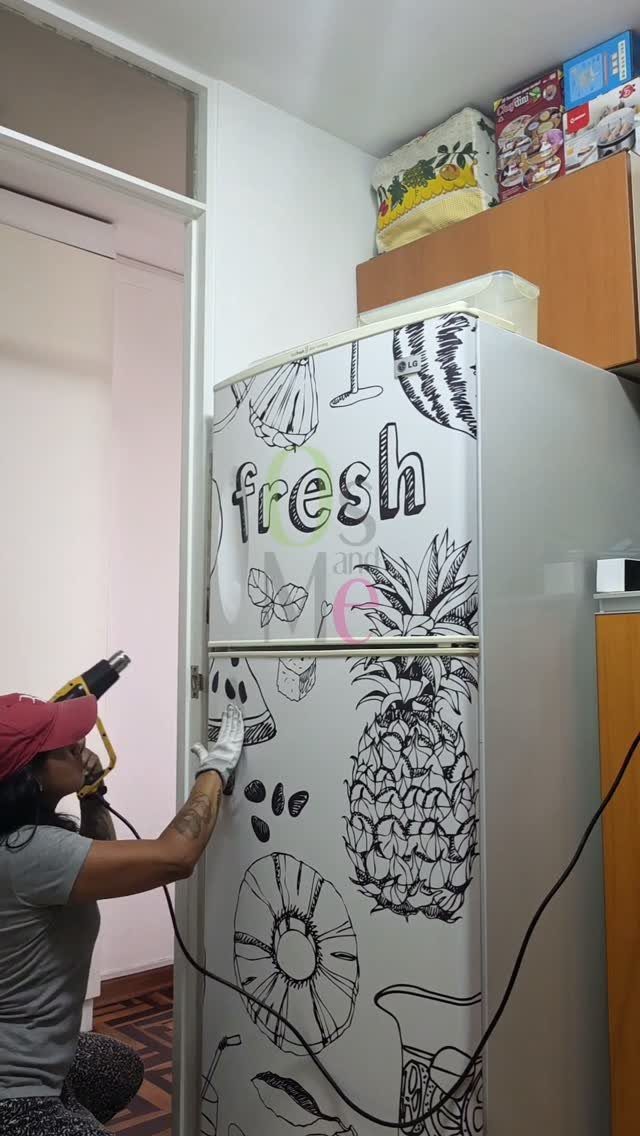
Line-drawn fruit and botanicals read as playful without tipping into cartoonish, at least in black on white. Pineapples and citrus stay legible from across the room when the illustration style is consistent and the spacing is generous.
Nature themes range from dense floral repeats to single large landscapes; the busier the pattern, the more carefully you need to align seams at door edges.
One supplier lists trees, flowers, and landscapes among their 200-plus options, with custom uploads available if you have a specific botanical in mind. White gloves prevent fingerprint oils from showing on light vinyl during application.
This suits kitchens with live plants, wooden cutting boards, or any other natural material you want to echo rather than contrast.
How to Apply a Fridge Wrap
Start with a fridge that is actually clean, not just wiped. Grease behind the handle and dust along the gasket will show through vinyl later, so soap and water first, then a full dry.
Handles come off most units with a screwdriver and save you from fighting around them. If yours are fixed, you will trim later instead.
Start by folding back just a couple inches of the backing paper so you can set the top edge straight before the rest of the vinyl touches the door. Gravity works against you once the full sheet is loose.
A squeegee pushes air out as you pull the backing away in stages; do not rip it all off at once. Work top to bottom, center to edges.
Run a sharp blade along each side to cut away the overhang, then screw the handles back on once the surface is smooth and set. Small bubbles usually settle in a day or two of normal kitchen heat.
Care Tips for Fridge Wraps
Most splashes and fingerprints lift off with a damp rag and a drop of dish soap. Abrasive sponges scratch vinyl, and solvents can lift the edges or dull the finish, so keep both away.
Direct heat is the bigger threat long-term. The side panel next to an oven, the surface above a toaster oven, or any spot that gets regularly hot will shorten the wrap’s life.
If your layout forces that placement, expect to replace sooner.
Standard kitchen cleaners work fine for everyday wiping, though I would spot-test anything new in a corner first. The wrap itself is moisture-resistant, so splashes are not the problem; how you clean them is.
Frequently Asked Questions
What can I wrap my fridge with?
Vinyl wraps, skins, and decals are all made for refrigerator surfaces. A full wrap swallows the whole appliance, a skin changes just one door’s look, and a decal is a sticker you place exactly where the blank space bothers you.
Peel-and-stick vinyl ships flat and needs no heat gun or adhesive spray; smooth the surface, press from the center outward, and trim the overhang.
What are some creative ideas for fridge wrap?
Holographic vinyl throws light around the room, wood grain or flat matte color keeps the mood calm, and retro geometry does what solid color cannot: it makes the fridge feel like a choice rather than an appliance.
Nature themes like line-drawn fruit or botanicals stay playful without tipping into cartoonish, and custom uploads let a freezer chest carry your own image or text.
Vintage wraps land better when the handles and nearby hardware share their decade; otherwise the fridge looks like a prop that wandered off set.
How much does it cost to wrap a refrigerator?
A small decal costs about what you’d spend on a pizza delivery, while stock prints sized for a standard top-freezer sit in a middle range well below anything custom.
Uploading your own image and dialing in exact dimensions pushes the price up and adds a proofing round that stretches the timeline by a few days.
Every brand builds its doors to slightly different heights and widths, so measure each panel on its own and place one order rather than two.
Can I vinyl wrap my refrigerator?
Vinyl made for refrigerators exists for this exact job, and putting it on asks nothing harder than a free Saturday and some patience.
Start a full sheet the same way as a small one: free a few inches of backing, square the top edge before the weight pulls it crooked, then work outward from the middle with whatever flat edge you have.
Bubbles surrender if you find them within the first hour; the tiny ones often flatten themselves after a day or two of the kitchen’s normal warmth.