
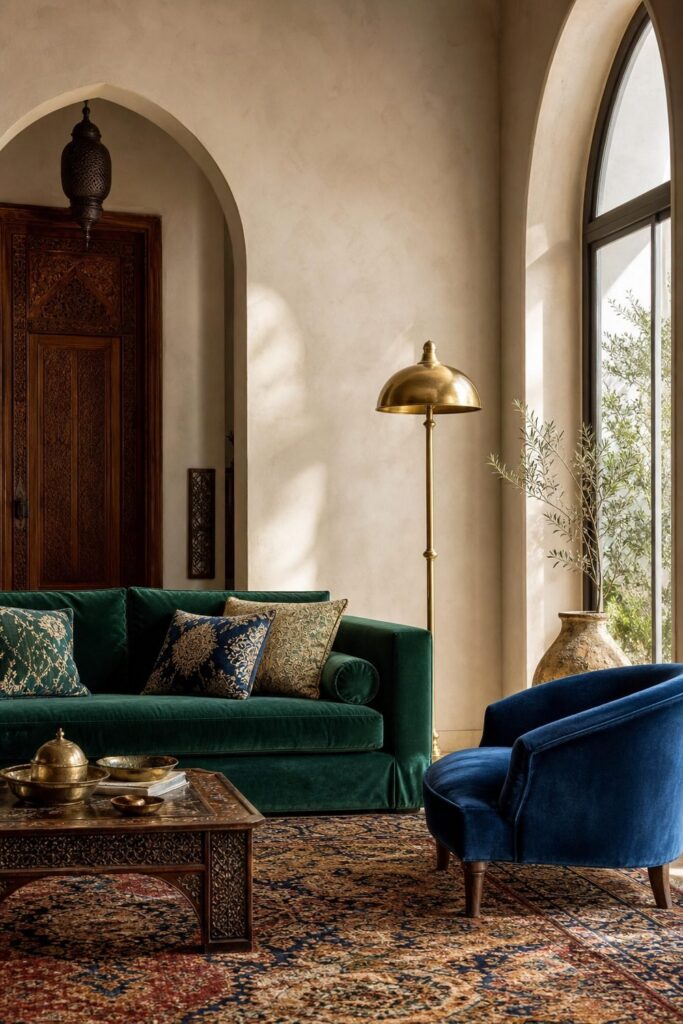
These 9 ideas range from a single clay pot to a full ceiling recess, and the right one depends on whether you rent or own, since that alone decides what you can alter and take back.
1. Low Seating Furniture
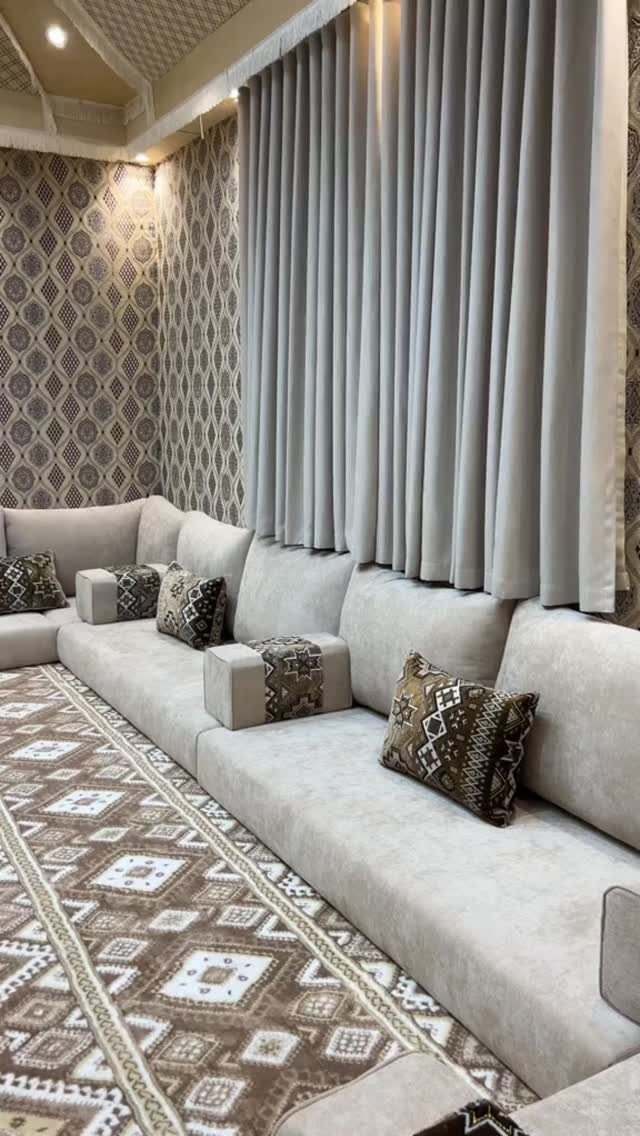
A majlis-style seating area starts with the floor, not the walls. Floor cushions, poufs, or a low-profile modular sofa keep conversation at eye level and make a small room feel wider than it is.
I would choose linen or leather upholstery with brass legs for something that cleans up after real use.
Look for low seating built with frames and finishes meant for daily sitting, not display; the cushions should hold their shape after real use.
Layer two or three cushion heights so guests can settle in without sinking to the rug.
This works best when you entertain regularly; it trades away back support for flexibility, and anyone with knee trouble may prefer a low-back sofa at standard seat height instead.
2. Lighting Style
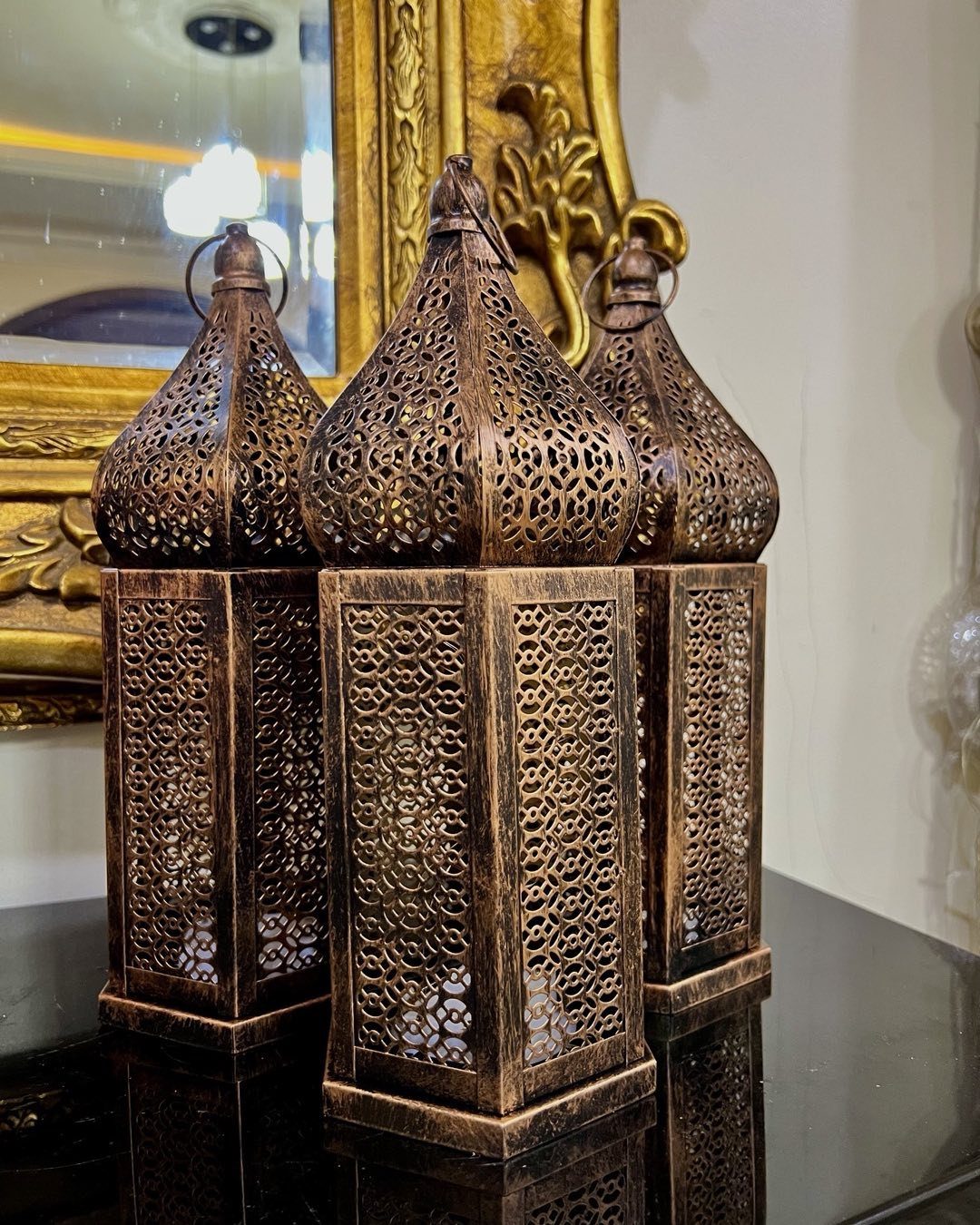
Lanterns with hand-punched geometric cutouts do two jobs at once: they light the room and paint the walls with shadow. A cluster of fixtures at varying heights beats a single overhead light for atmosphere in a sitting area.
Warm bulbs around 2700K with a dimmer let one room shift from functional to intimate without swapping anything out.
Brass, smoked glass, or punched metal all age well; plastic resin looks right under the camera and wrong in person. For a weekend project, start with one table lantern and one hanging piece near where you actually sit.
This suits renters who can swap fixtures back before move-out; if your lease forbids even that, a corded pendant and a stack of books as a base gets most of the effect.
3. Traditional Arabic Patterns
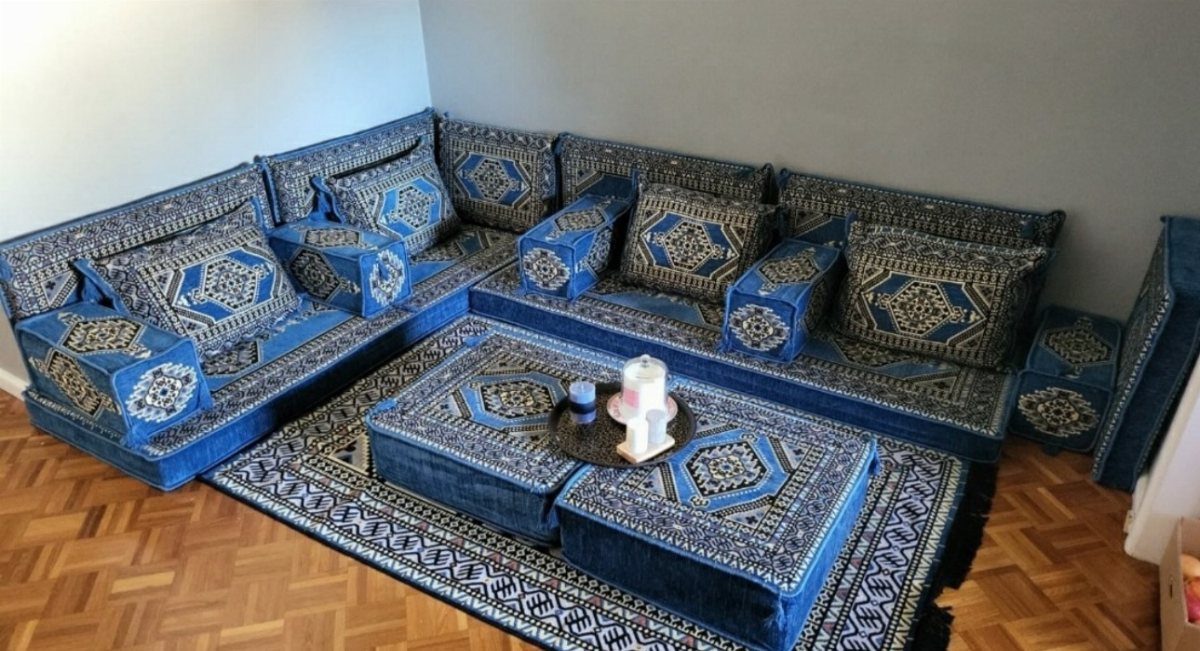
Geometric patterns carry the style when you strip everything else away. Islamic star and polygon repeats read as texture from across a room and reward closer inspection on cushions or textiles.
I add them through pillow covers first, since covers store flat and swap faster than furniture.
For a single accent, a rug with traditional motifs anchors the seating area and survives foot traffic longer than wall art. Embroidered fabrics or printed throws layer in at lower cost than tile or stenciling.
This approach suits someone mid-project who already owns neutral basics. The busier visual noise means stopping at two patterned elements in view at once.
4. Warm and Earthy Colors
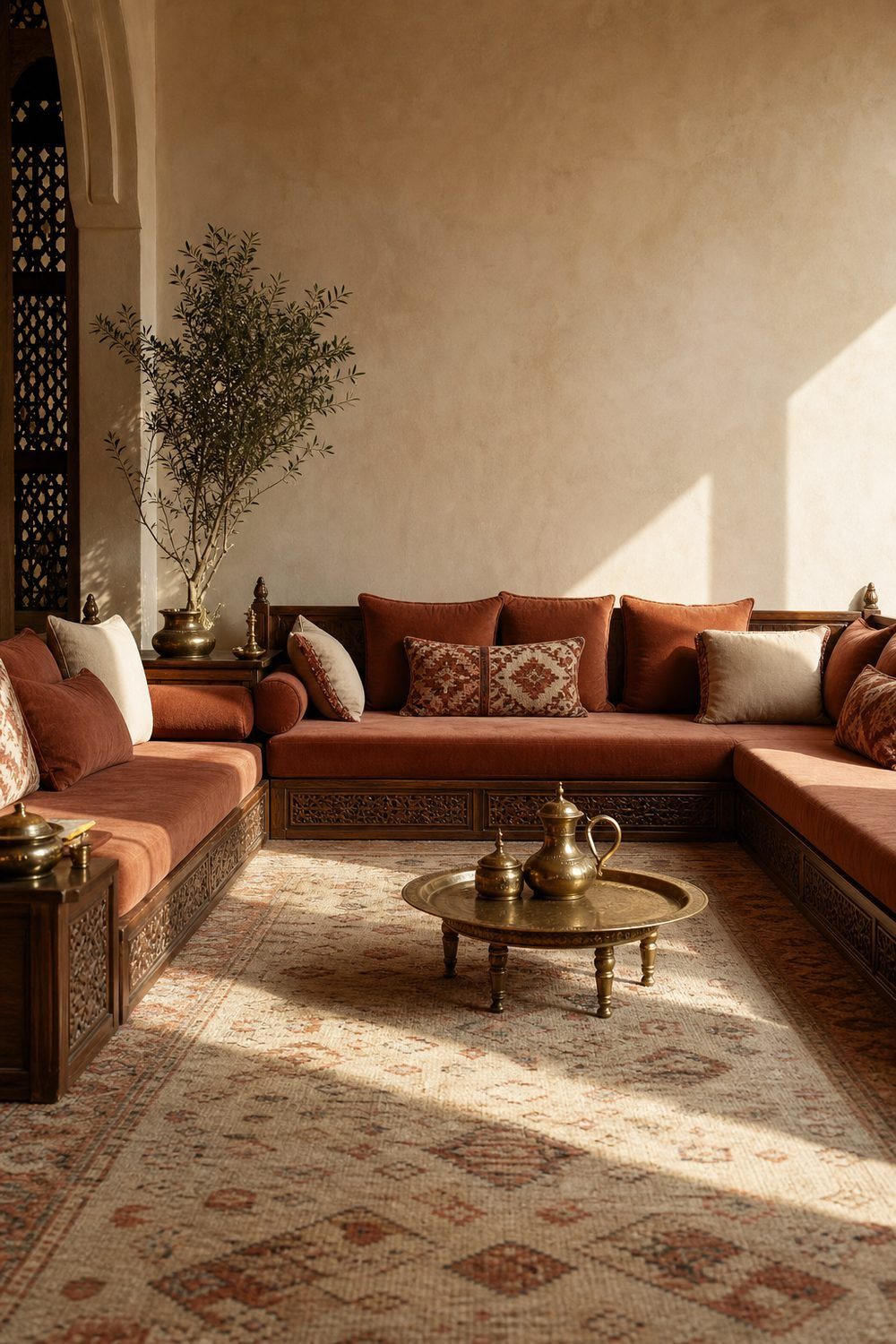
Terracotta, olive, and deep gold warm up a north-facing room faster than any lamp. An earthy wall base lets brass and wood read as intentional, not accumulated, in a warm palette.
I start with paint or a single large rug in the warmest tone I can stand, then cool the rest with beige or brown so the room does not flatten into one note.
Curtains and cushions spread the color without commitment; a painted wall takes a day and a gallon, but textiles move with you. This palette hides wear and pairs with almost any metal finish, which saves money over time.
It trades away the crispness of white or gray; if your space lacks natural light, I would keep the warm tones to fabrics and use a lighter wall.
5. Indoor Plants

A single Monstera in a simple clay pot breaks up the warmth before the room turns sepia. Ceramic or terracotta containers keep the earthy thread running; glazed white feels modern but drifts from the style.
I water when the top inch dries and wipe leaves monthly so dust does not dull the green.
For a corner with floor space, a tall palm or olive tree does the same vertical work as a lamp without adding another light source.
Artificial versions work if you travel often; several makers sell both live and quality faux options. This is the fastest change on the list, but it demands some maintenance or a good fake.
6. Layered Rugs
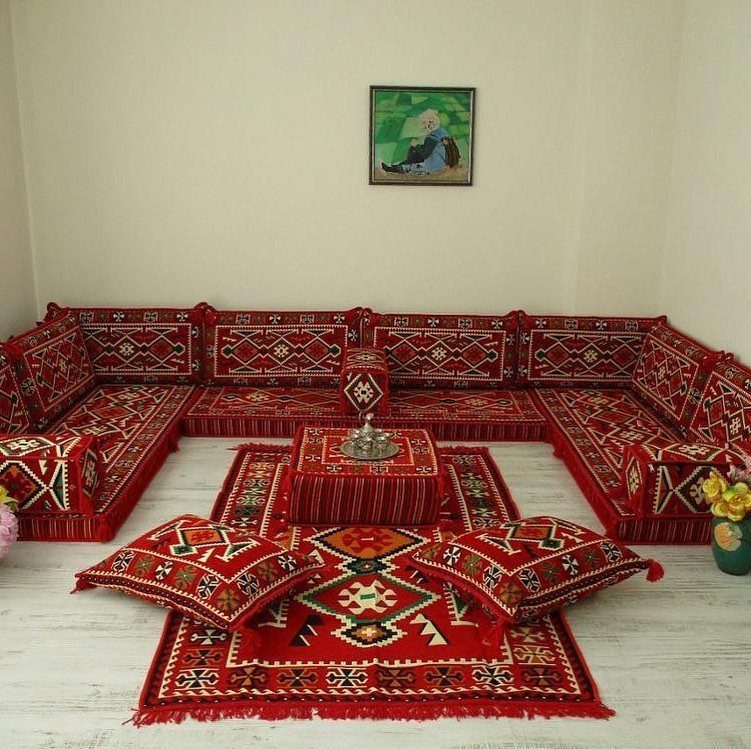
Layered rugs define where sitting happens and soften the hard edge of a low-profile arrangement. Stack two rugs so the top piece takes the wear and the bottom adds cushion; geometric reds work well layered in a corner.
I start with a large flatweave as the base, then add a smaller, thicker piece where feet actually land.
Traditional patterns read as heritage on the bottom and art on top, or you can match tones and vary scale for a quieter effect. This works in rentals where wall changes are restricted; the floor becomes your feature instead.
The cleaning is harder, since uneven layers do not take a robot vacuum easily. For a weekend timeline, one good rug beats two cheap ones.
7. Arabic Coffee Tables
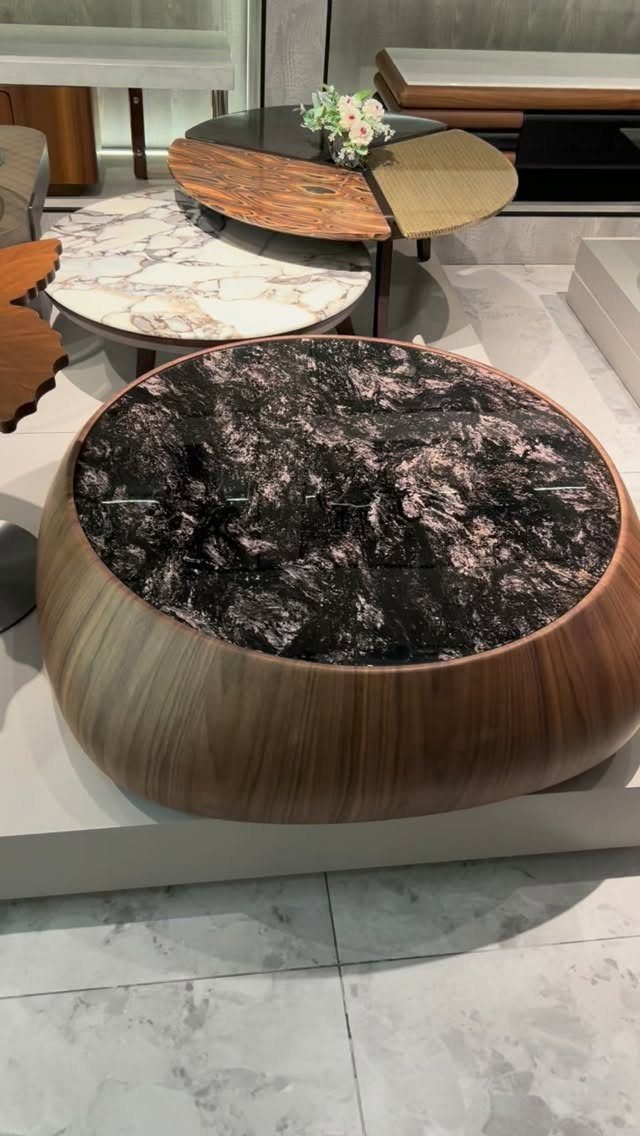
A round coffee table with a dark stone top and curved wooden base sets the tone for this piece.
I look for tables that mix materials in ways that hold up to daily use: marble or stone surfaces that resist ring marks, brass or carved wood bases that age well.
Marble mixed with wood is one way to do it; a brass table with hand-tooled edges is another if you want more warmth.
A low table keeps the sight lines open in a room with floor seating. That height matters more than the diameter.
A round top just wide enough for a small group on cushions keeps the conversation from splitting into separate pockets.
Mosaic inlay or carved apron details add the pattern without demanding a rug or wall to carry it. Those details also hide the small scratches that collect on any table used for coffee, dates, and late conversation.
I would not buy a piece so delicate that a tray feels required; the table should earn its place through use, not despite it.
8. Intricate Ceiling Designs
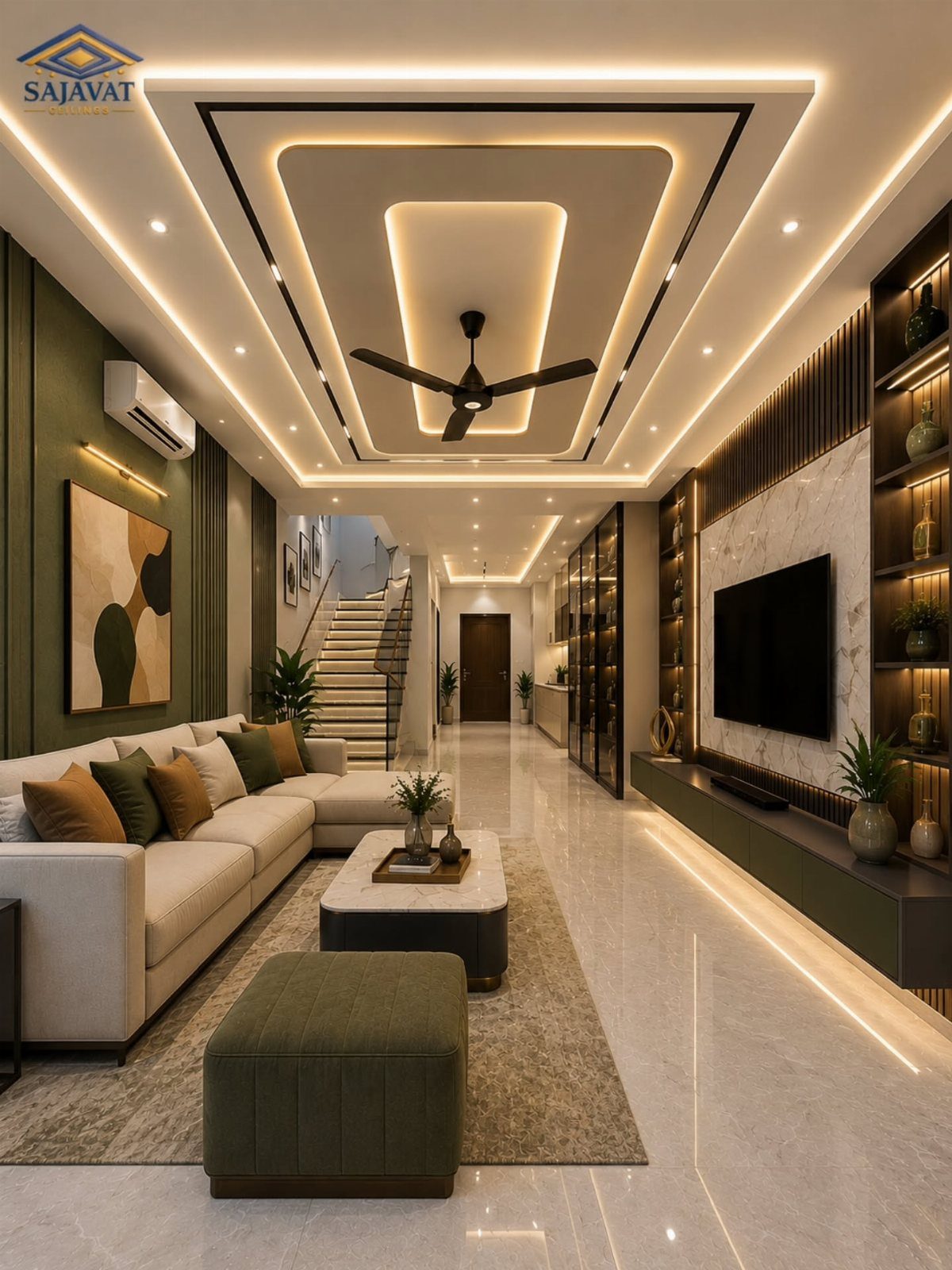
Recessed planes with a thin line of light at each step give the ceiling its depth.
That built-in glow does the work of a fixture without hanging anything into the room’s vertical space, which matters when the seating stays low and the eye travels upward.
Geometric gypsum shapes or arabesque borders at the recess edges give the ceiling its character. Painted detail can read flat; light catches three-dimensional trim more honestly.
Gold or bronze leaf on those edges reads as warmth after dark, not ornament during the day.
A ceiling fan, like the black one visible here, needs clearance from any dropped detail. I would plan the recess depth around the blade sweep first, then fit the design inside what remains.
LED strips run cooler than old incandescent rope lighting and last through years of evening use; the install is a day’s work for an electrician if the ceiling is already finished.
This suits rooms where the walls stay simple and the floor carries pattern elsewhere. The trade is cost and commitment: a painted ceiling recovers easily, gypsum detail does not.
9. Statement Arches and Doorways
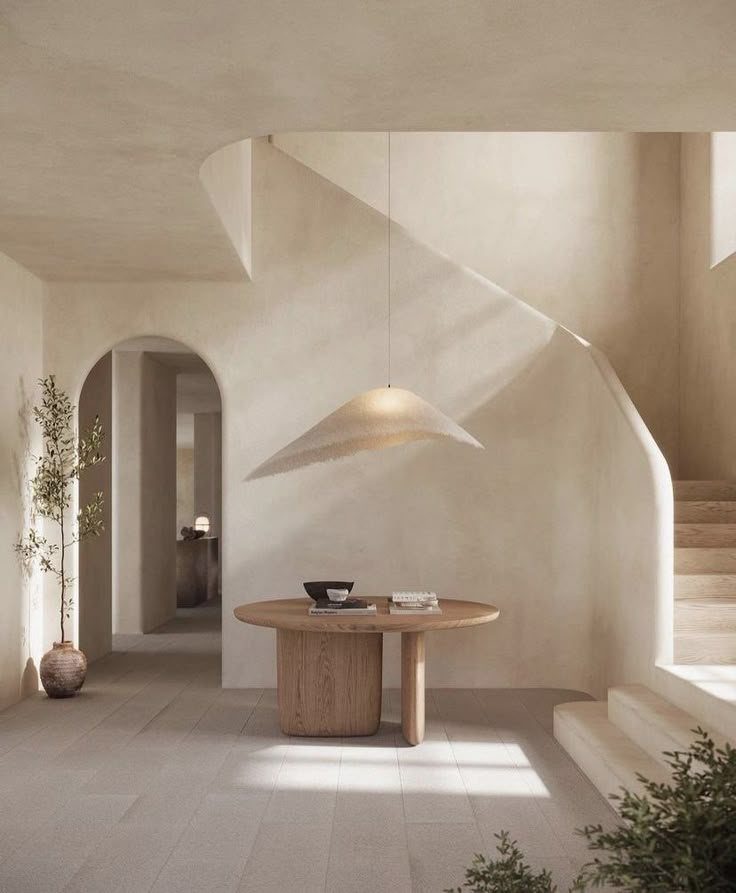
An arch that frames a doorway without surrounding trim lets the shape speak for itself. That quiet curve is enough to recall Arabic building traditions without turning the room into a set piece.
I would start smaller if the architecture does not already provide it. An arched mirror leaning on a console, or a bookcase with a curved top rail, tests the shape in your space before you cut into walls.
Framing an actual doorway with a smooth, continuous curve takes a carpenter a weekend and about the same lumber as a standard header; the finish work is where the hours collect.
Matte plaster or limewash on the wall beside the arch softens the transition, especially in the sandy neutrals visible here. Gloss paint makes the curve read as deliberate in a way that can feel theatrical.
The shape works best where traffic moves through rather than stops. A living room with several doorways gains rhythm from repeated arches; a single arch in a closed room can feel like a stage entrance.
I would skip it entirely in a space where the furniture already carries curves, like a room with rounded sofas or circular tables. One source of softness is usually enough.
Creating a Welcoming Space
An Arabic living room works in small spaces when you keep the décor minimal and the furniture compact.
Light colors on walls and floors open the room up, and low seating without bulky frames takes less visual space than a standard sofa set.
Large rooms are where this style originally lived. Low sofas and cushions stacked along the floor line up a big room without the furniture looking like it drifted apart.
Layered rugs help anchor separate zones so the room feels intimate rather than empty. Screens or open dividers break up the volume without blocking light.
The proportions that suited palaces still suit tall ceilings and wide floors today.
Combining Tradition and Modernity
Modern Arabic design keeps the bones of the traditional style and updates the finishes. I would keep the low seating and the warm palette, but choose cleaner lines on the frames and simpler patterns on the textiles.
The balance is in the mix: one ornate piece, like a carved coffee table or a detailed ceiling, against plain upholstery and uncluttered walls. Heritage becomes an accent rather than a theme park.
Light colors and minimal décor keep the room from feeling like a set. The result reads as contemporary first, with the cultural reference clear but quiet.
That is the combination that lasts past the first season of interest.
Frequently Asked Questions
What are Arabic couches called?
Floor-level seating in Arabic tradition is called a majlis, a low gathering area built from cushions, poufs, or low-profile modular pieces rather than standard-height couches.
The term refers to the arrangement and the room itself, not a single piece of furniture. Modern versions use framed seating with linen or leather upholstery and brass legs for daily durability.
How can I incorporate Arabic style into a modern home?
Low seating and warm tones still read Arabic, but modern frames run straight and textiles stay simple. Light colors and minimal décor prevent the room from feeling like a set.
What is a Majlis, and how is it modernized today?
A majlis is a traditional Arabic seating area built at floor level for conversation and hospitality. Today’s versions use low sofas or modular pieces with earthy tones and materials that survive real use, such as linen, leather, and brass.
The height stays low to keep eye level intimate, but frames and upholstery now suit daily sitting rather than occasional display.
Is Arabic interior design suitable for small spaces?
Yes, when you keep décor minimal and furniture compact. Light colors on walls and floors open the room visually, and low seating without bulky frames takes less space than a standard sofa set.
Two patterned elements visible at once is the practical limit in a small room.





