These ideas run from a colored bulb and paper bats to a carved bed frame that anchors the whole room, with most falling somewhere between a thrifted frame and a gallon of paint.
What separates one idea from another is whether you can paint walls, change fixtures, or touch nothing at all.
The raised slat accent wall with gold trim tape takes a full weekend and a miter saw; the peel-and-stick damask wallpaper comes down clean when the lease ends.
1. Regal Purple Majesty
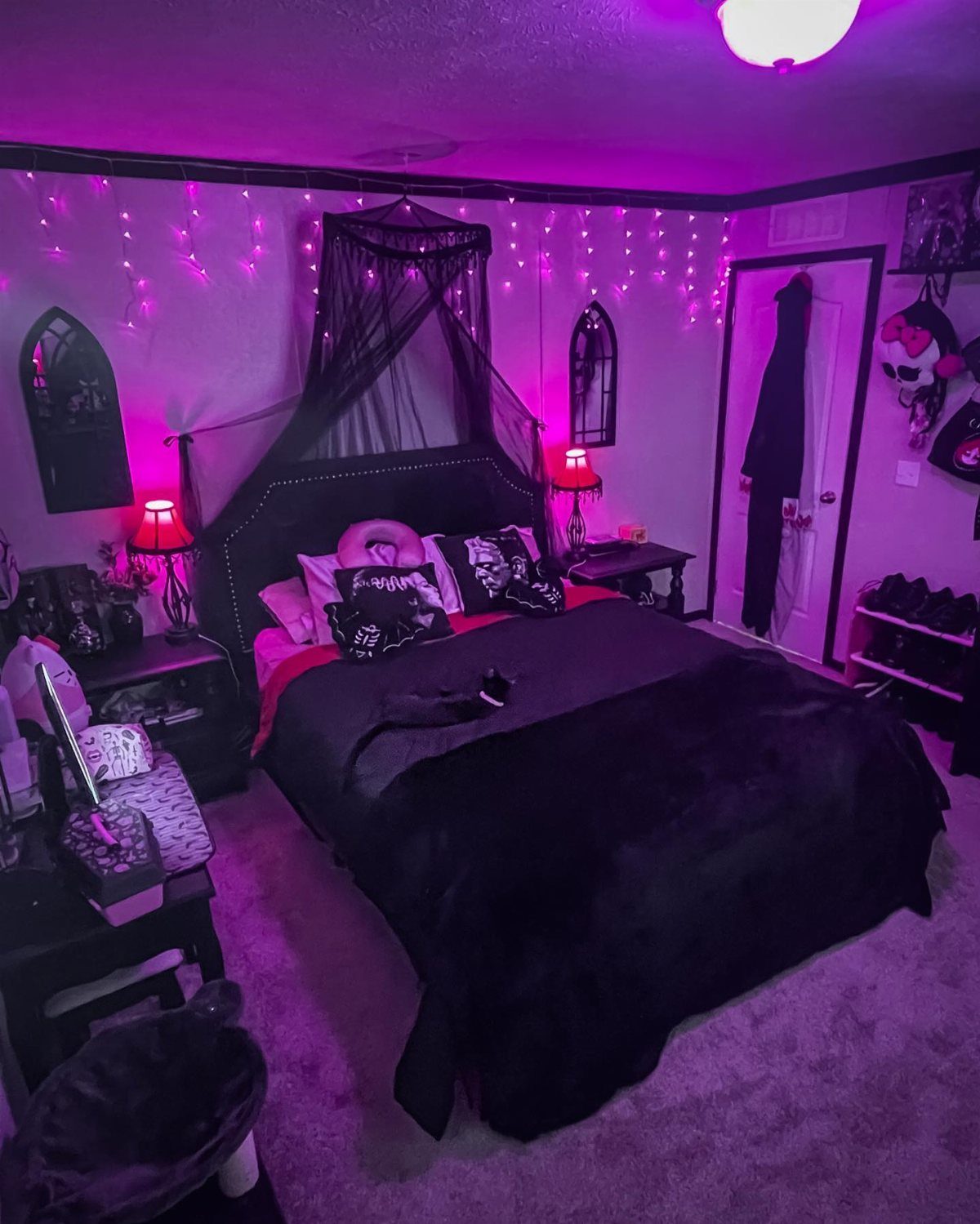
Purple reads as royalty in a gothic room without needing gold leaf or castle walls. A smaller canopy keeps the drama without giving cats a climbing gym to destroy.
Deep plum or violet paired with black bedding gives the drama without the weight of all-black everything.
I’d aim for one statement piece, like a canopy frame or a velvet headboard, then let string lights do the rest of the work.
A sheer black canopy over dark linens catches light differently than solid fabric; it glows instead of absorbs.
This one suits renters best. Purple LED strips or a colored bulb in an existing fixture costs little and leaves no trace at move-out.
2. Gothic Bedroom Wall Art
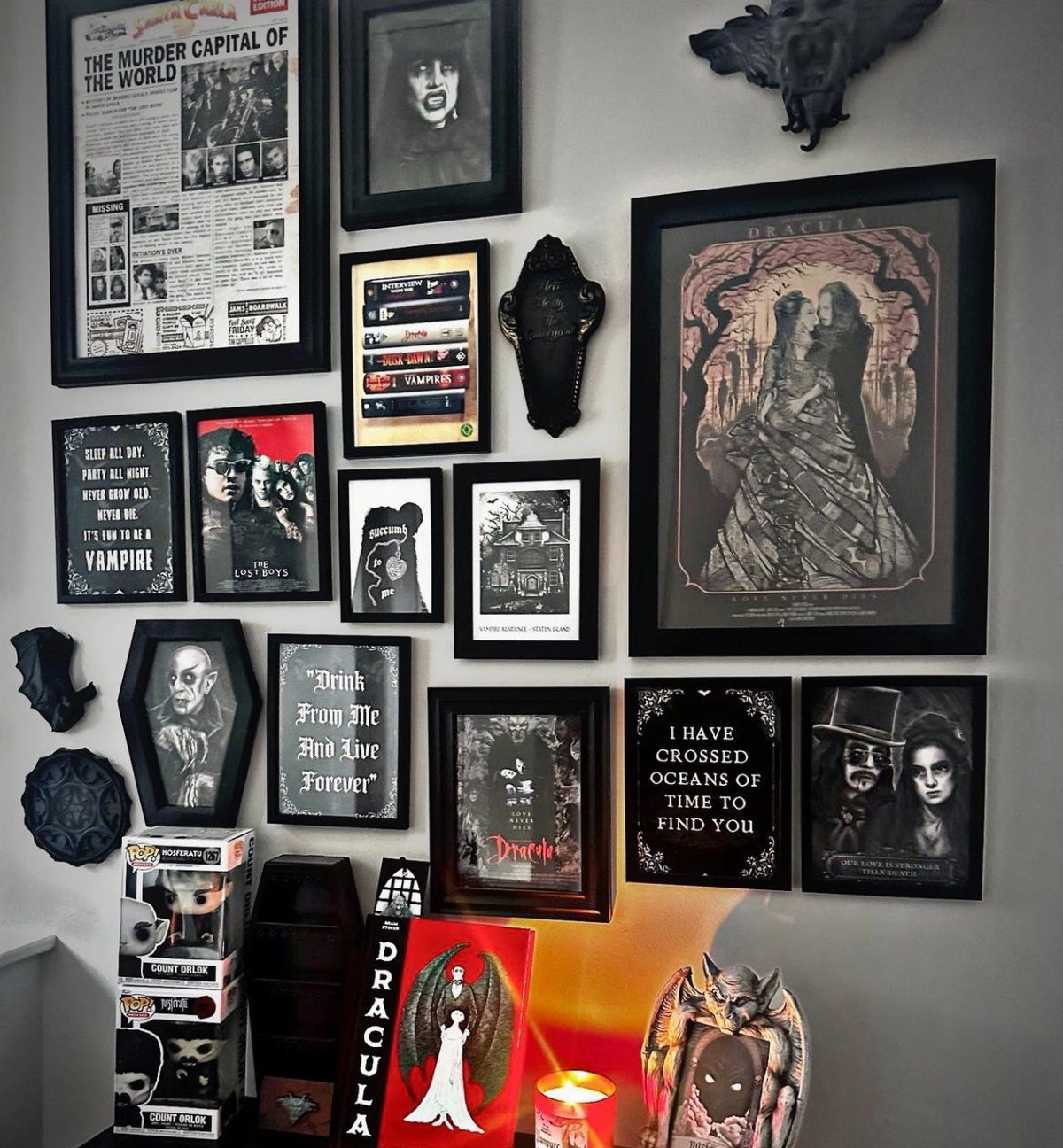
A gallery wall is the lowest-stakes entry point into gothic style. Black frames against a light wall unify portraits, typography, and illustration into one coherent grid.
Start with what you already own or can thrift: mismatched black frames, one skull print, one botanical, one piece of old sheet music. Matching frame color is what holds together different styles of art.
I’d hang the largest piece at eye level to center, then work outward in a loose grid rather than a tight one. Gaps of 2–3 inches between frames keep it from looking like a museum installation.
For renters, Command strips rated for the frame weight beat nails. A full wall of framed pieces stays cheap if you source prints online and frames from thrift stores.
3. Victorian Gothic Bedroom Ideas
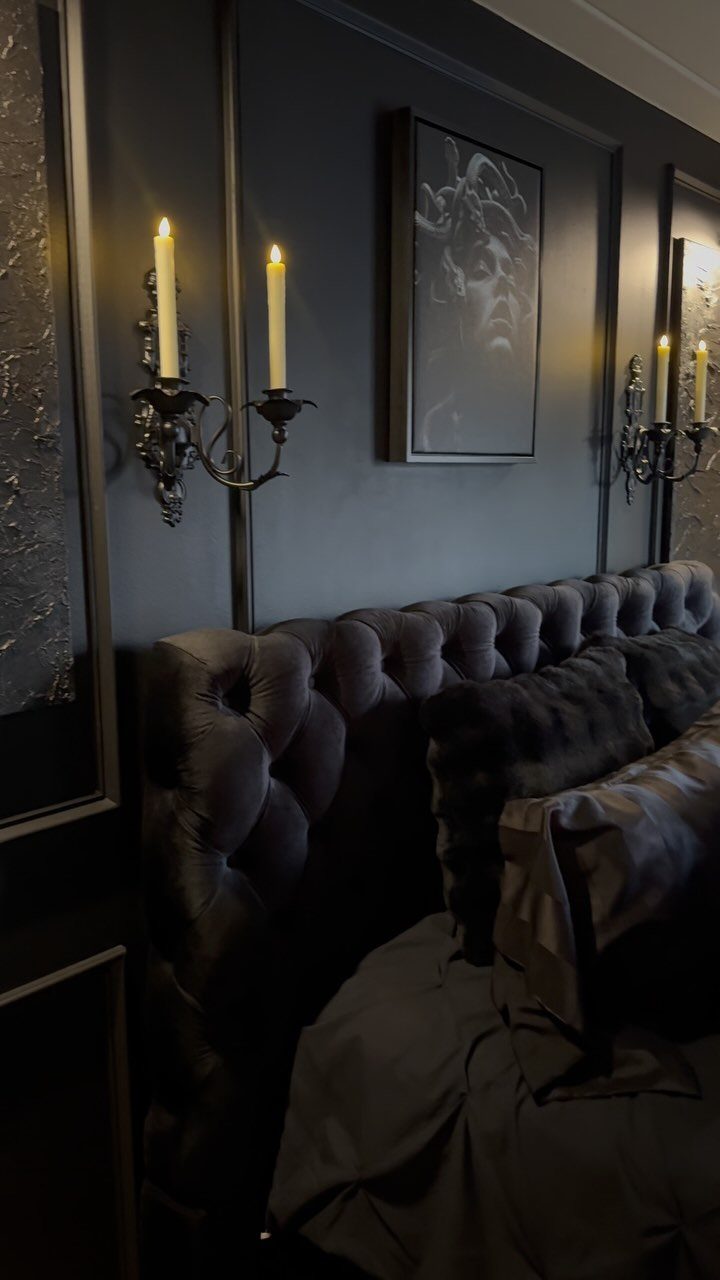
Victorian gothic leans on texture more than color. Tufted charcoal headboards, paneled walls, and candle-style sconces each add weight without clutter.
A tufted velvet headboard in charcoal or deep green anchors the look and lasts longer than trend pieces.
If that is out of budget, a heavy velvet throw in plum or forest green draped over your existing bed frame does similar work. Electric wall sconces matter for insurance and for not burning down a rental.
Look for ones with flicker bulbs at hardware stores or online.
This trades the clean lines of modern gothic for ornament. It suits someone with patience for hunting thrift stores and zero interest in minimalist Instagram aesthetics.
4. Blackened Candlelight Calm
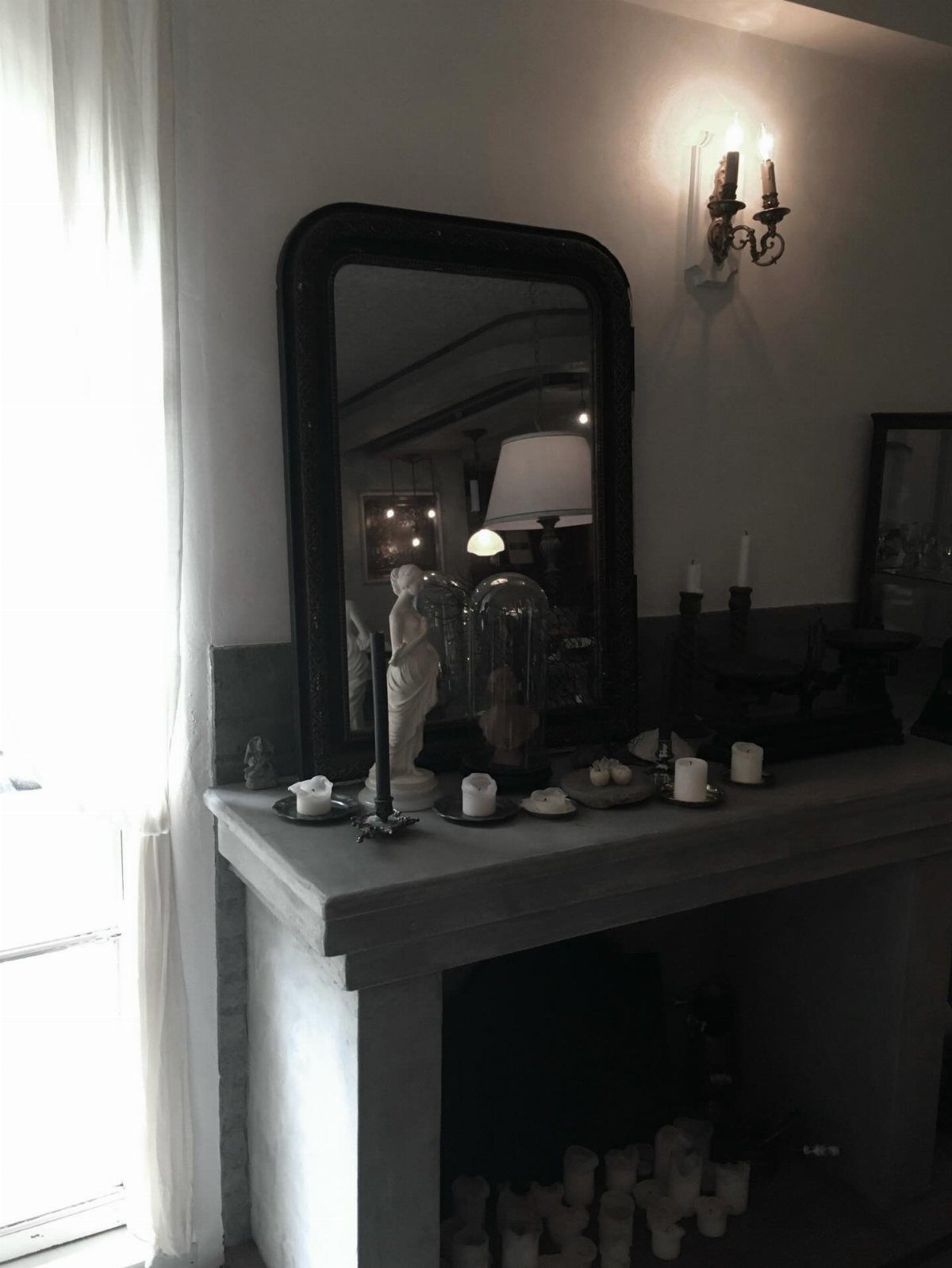
Matte black walls and candlelight create a stillness that busy patterns cannot touch. A painted shelf or narrow console table against a black wall gets you most of the way to that mantelpiece look.
Real candlesticks need watching. LED tapers in wrought iron holders flicker convincingly and remove the fire risk near curtains.
Warm-toned Edison bulbs in a simple black fixture read as candlelight without the fire department risk.
This idea trades visual noise for depth. It works best in a small bedroom where every object has to earn its place.
5. Gothic Black Bedroom Décor
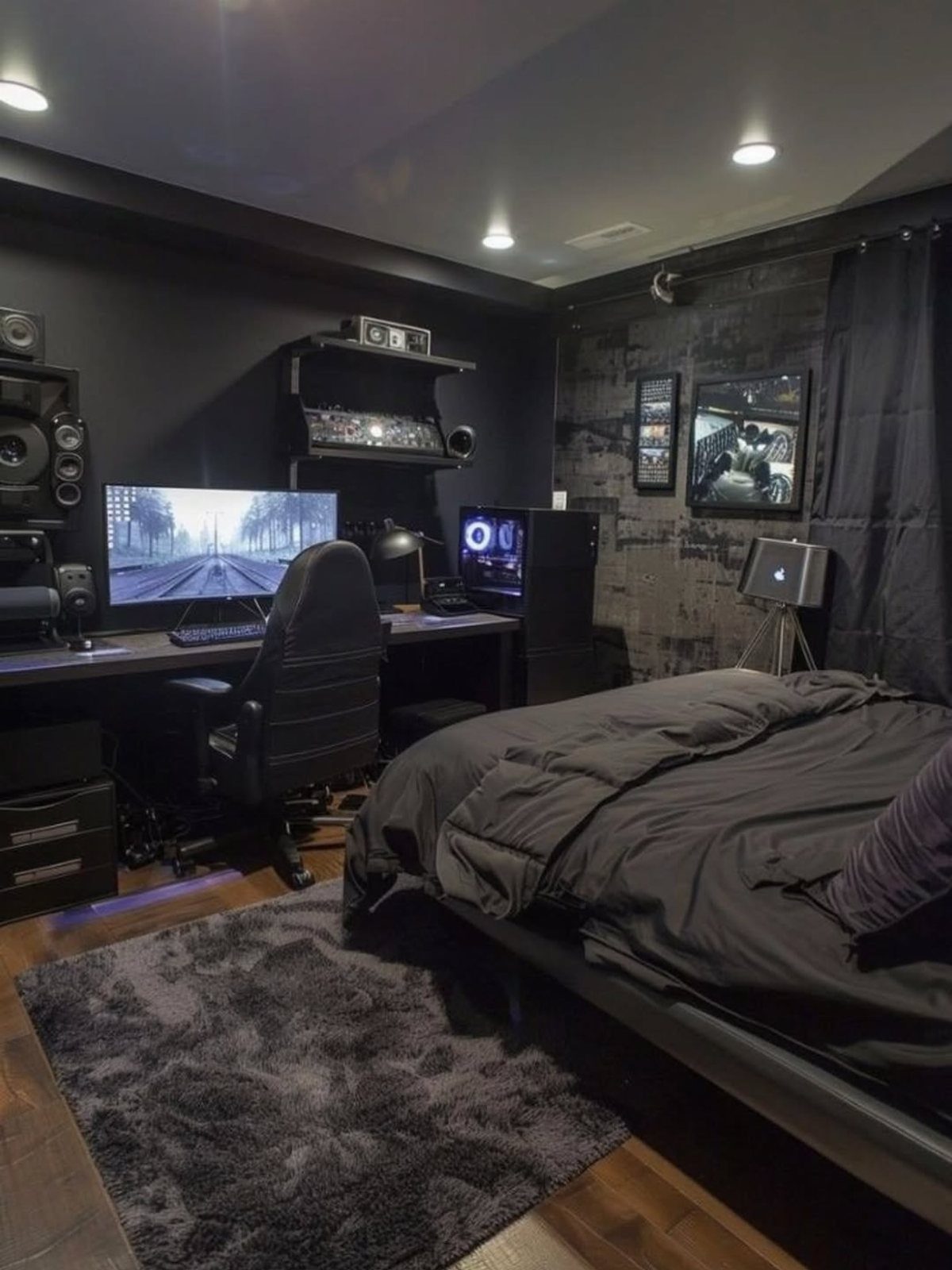
Black as a foundation color sounds obvious until you try living in it. Black walls, black bedding, and black curtains stay livable with a grey shag rug and recessed lighting that keeps it from reading as a cave.
A grey or charcoal rug underfoot breaks up the black and keeps the room from feeling like a void.
Task lighting saves an all-black room from feeling like a storage unit: one bright monitor, one strip behind the desk, and the darkness becomes intentional instead of accidental.
This is the most adaptable idea on the list. Black paint and black bedding are widely available, and the look scales from a studio to a master bedroom without rethinking the formula.
6. Accent Wall Ideas
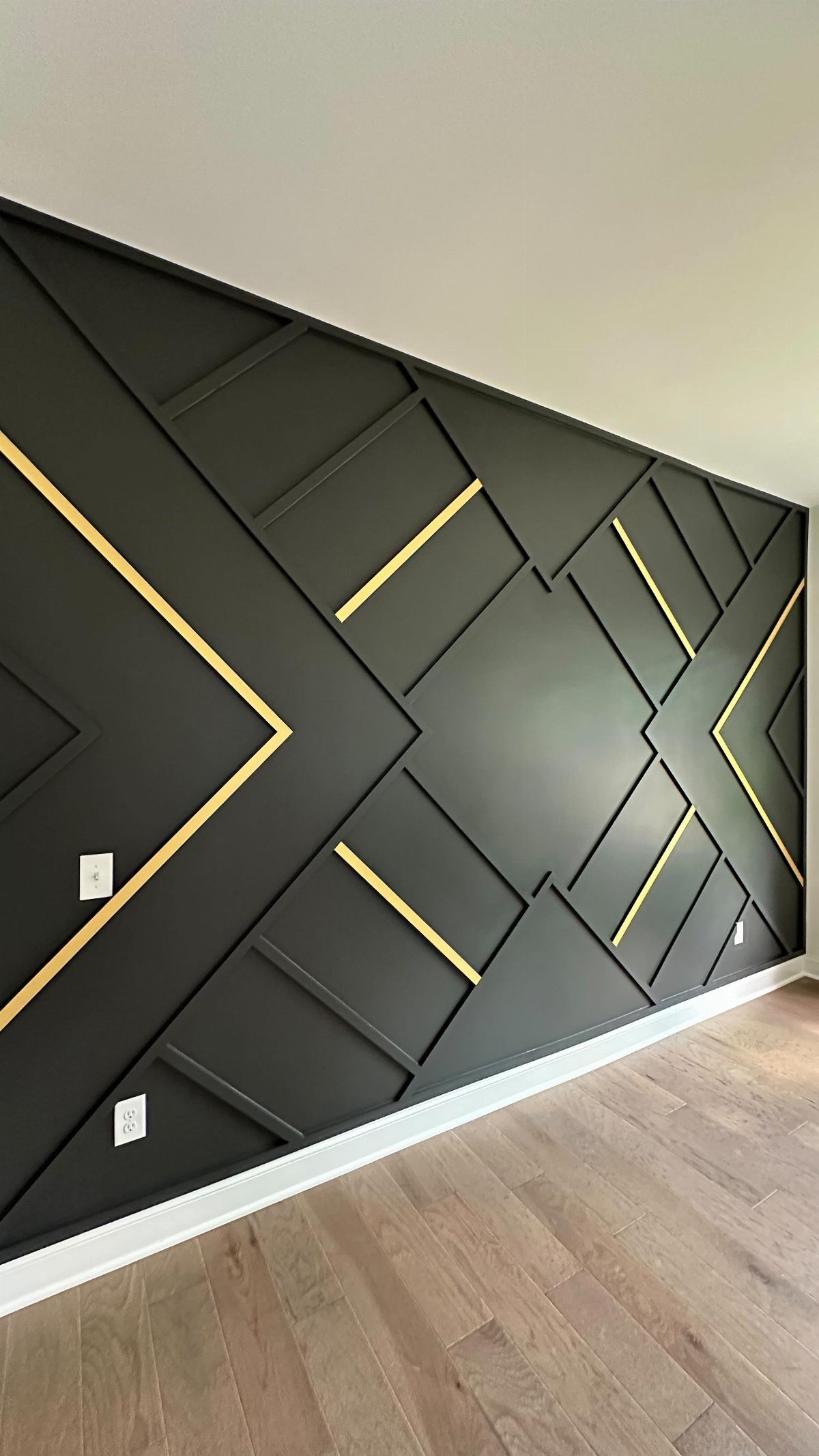
One dark wall changes a room’s temperature without committing the whole space.
Painting a single wall in charcoal or deep grey takes a few hours and one gallon. The raised slat treatment is more involved: vertical strips of 1×2 lumber, spaced evenly, with gold trim tape at the joints.
I’d budget a full weekend, a miter saw or very patient hand saw, and wood primer to keep the black from reading as craft project. The gold lines catch lamplight and keep the black from flattening into a void.
This suits someone who wants the mood but shares the room with a partner who prefers mornings bright.
7. Gothic Wallpaper
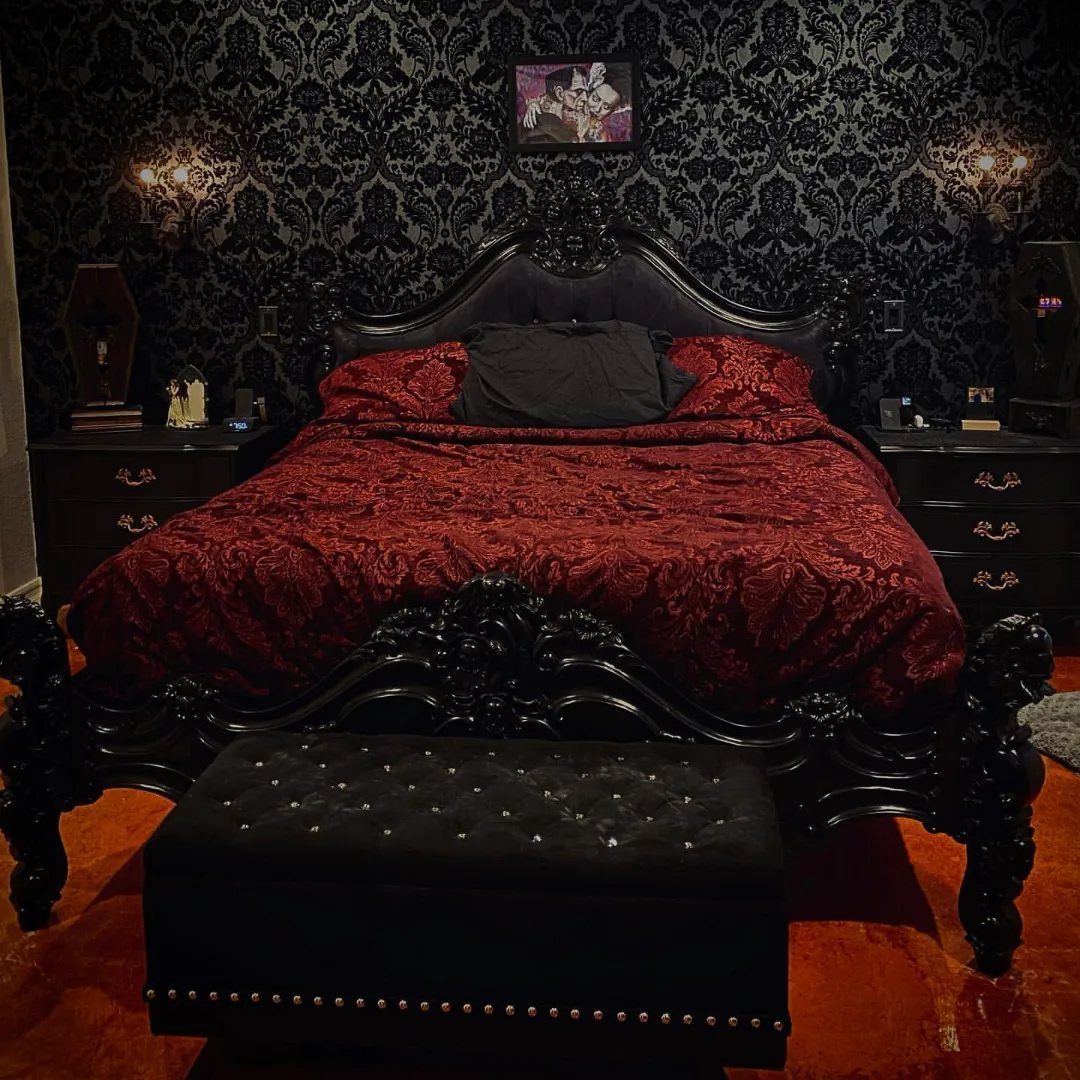
Black damask wallpaper turns one wall into the whole mood without touching a paint can. A single accent wall of patterned wallpaper does enough work that the other three walls can stay plain white indefinitely.
Peel-and-stick wallpaper comes down clean when the lease ends, which matters if your landlord flinches at dark colors. Pair it with a pendant light that throws actual shadows through the pattern; the wallpaper becomes a filter, not just a backdrop.
Best for renters who want the look without the commitment of paint or plaster.
8. Gothic Decor for Teens
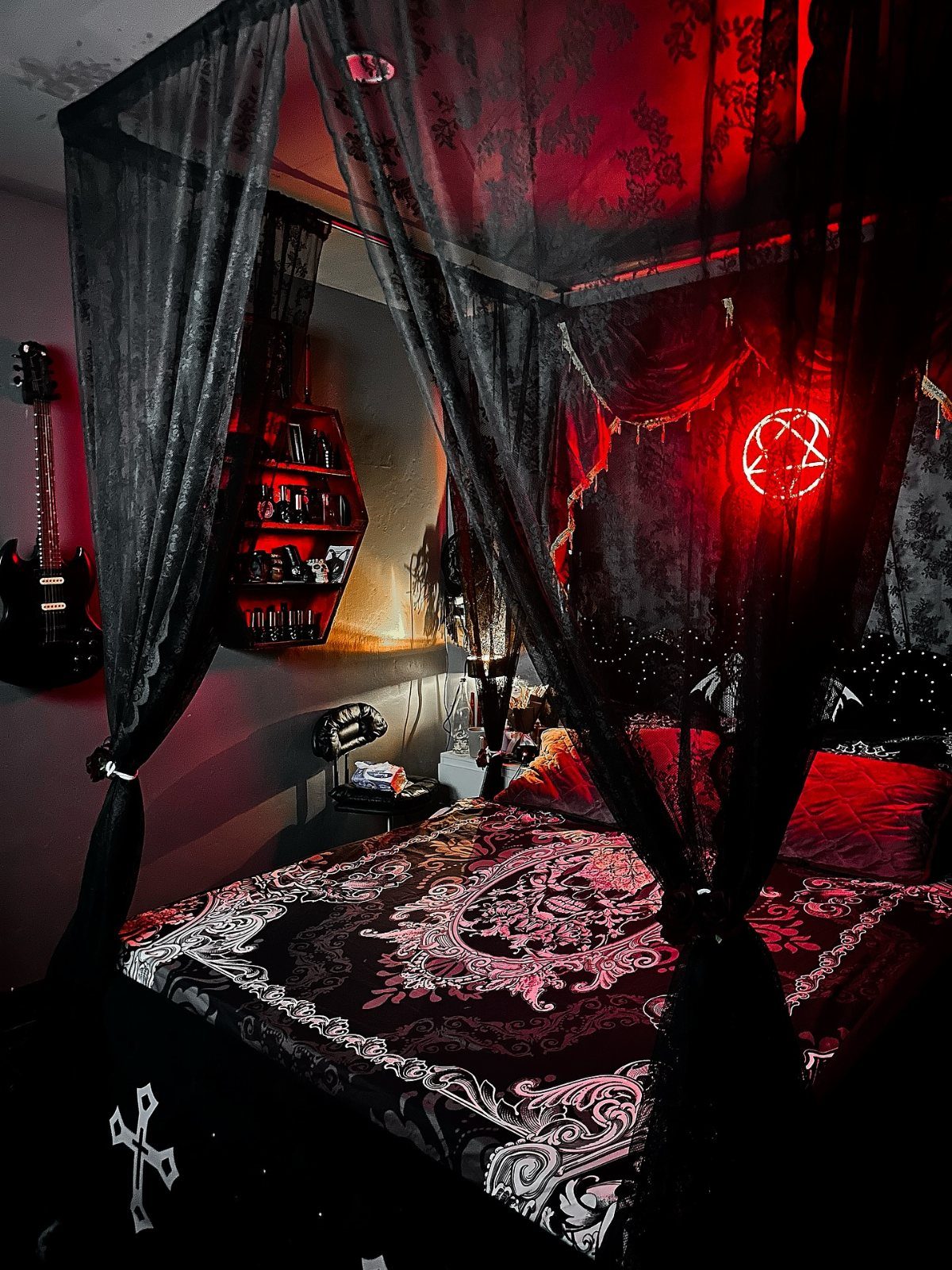
A neon sign and a guitar leaning in the corner turn gothic into something a teenager actually wants to come home to.
The black canopy frame is doing the heavy lifting, but the red light keeps it from feeling like a museum diorama.
I would start with the lighting; a colored bulb in a cheap floor lamp lets them audition the vibe before anyone drills for wall mounts. The drapery hides a messy bed on school mornings, which is half the battle.
This one trades timelessness for immediacy, and that is exactly the point at sixteen.
9. Vampiric Velvet Dreams
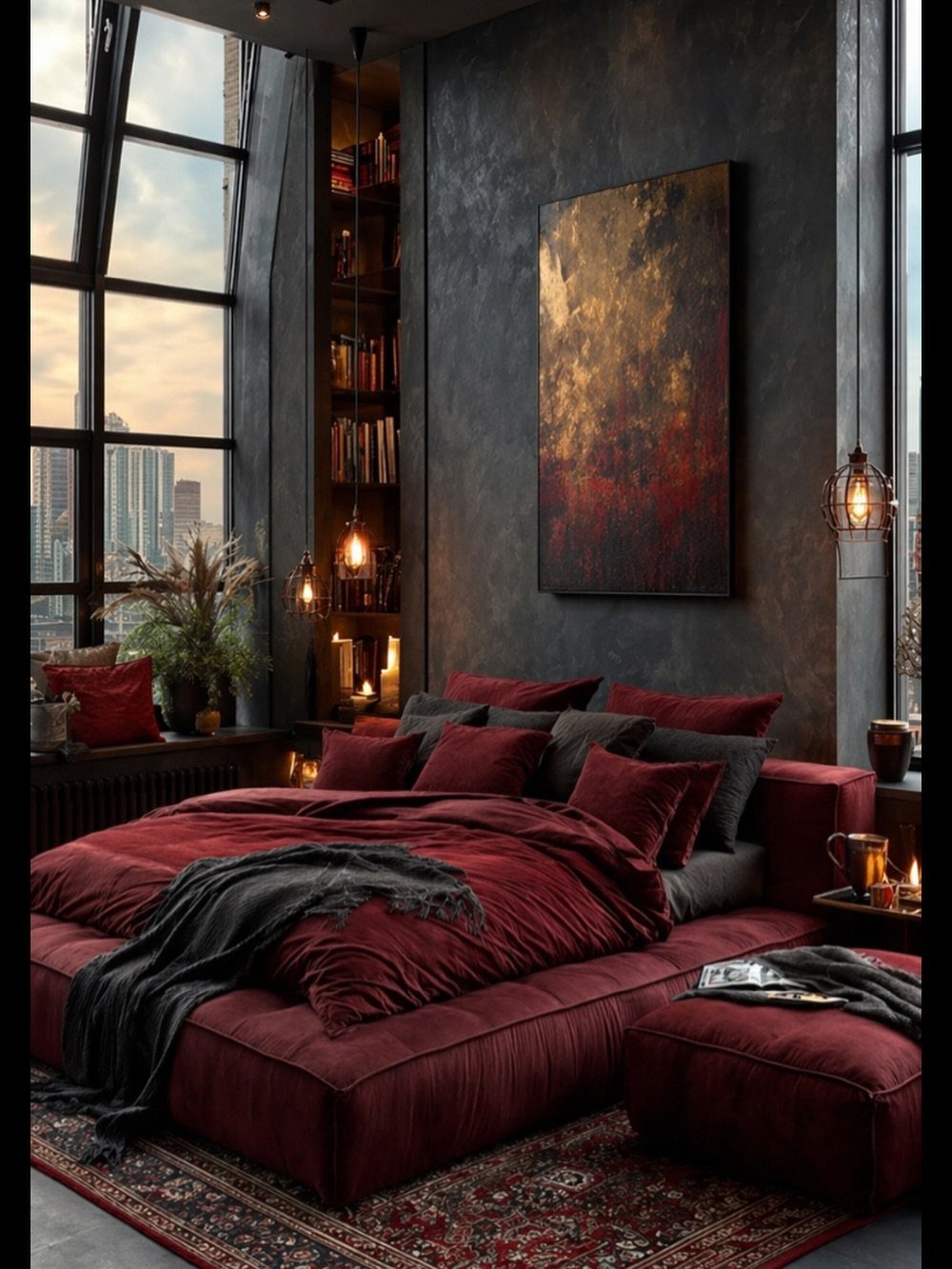
Crimson velvet against charcoal walls reads expensive even when the bedding came from a big-box store on clearance.
Weight matters most with velvet; thin fabric looks like a costume, but a dense weave with cotton backing drapes like it belongs in a real room.
I layer two duvets, one folded at the foot, to get that sunken, piled look without owning a dozen pillows.
Silk or satin sheets underneath keep the bed from feeling like furniture; the contrast of textures matters more than matching brands.
Best for someone who wants the romance without the full vampire lair, though the line is thin and I cross it happily.
10. Gothic Bedroom for Kids
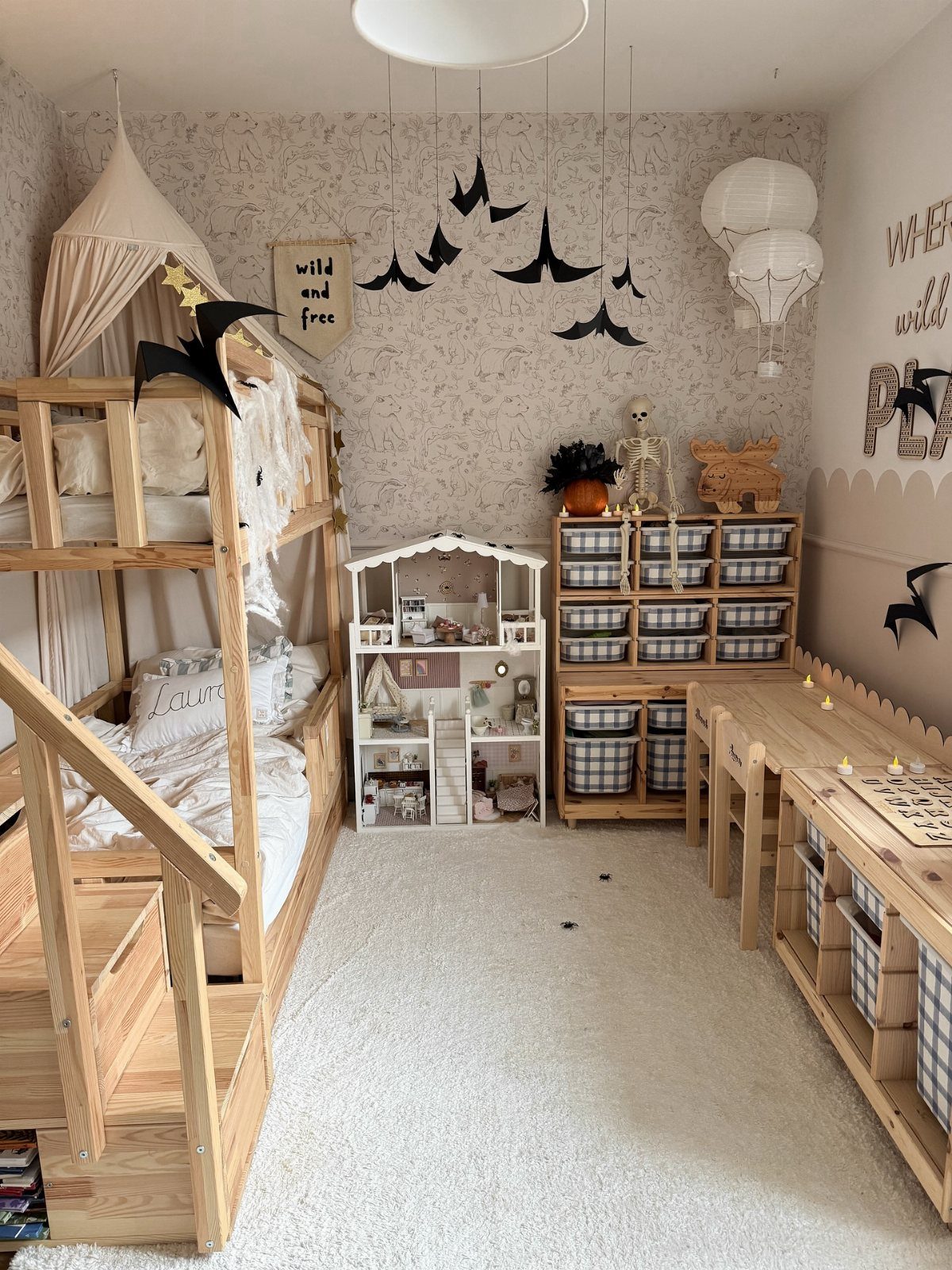
Black paper bats taped to the ceiling and a white canopy over light wood keep gothic playful instead of nightmare fuel.
The wallpaper has a faint pattern, nothing too literal, and the dollhouse stays because this is still a kid’s room, not a set design.
Glow-in-the-dark constellations or bats on a navy ceiling give them something to watch at bedtime that settles rather than scares. This works for parents who want atmosphere but draw the line at their child sleeping in a coffin-shaped bed.
11. Detailed Carved Bed Frame
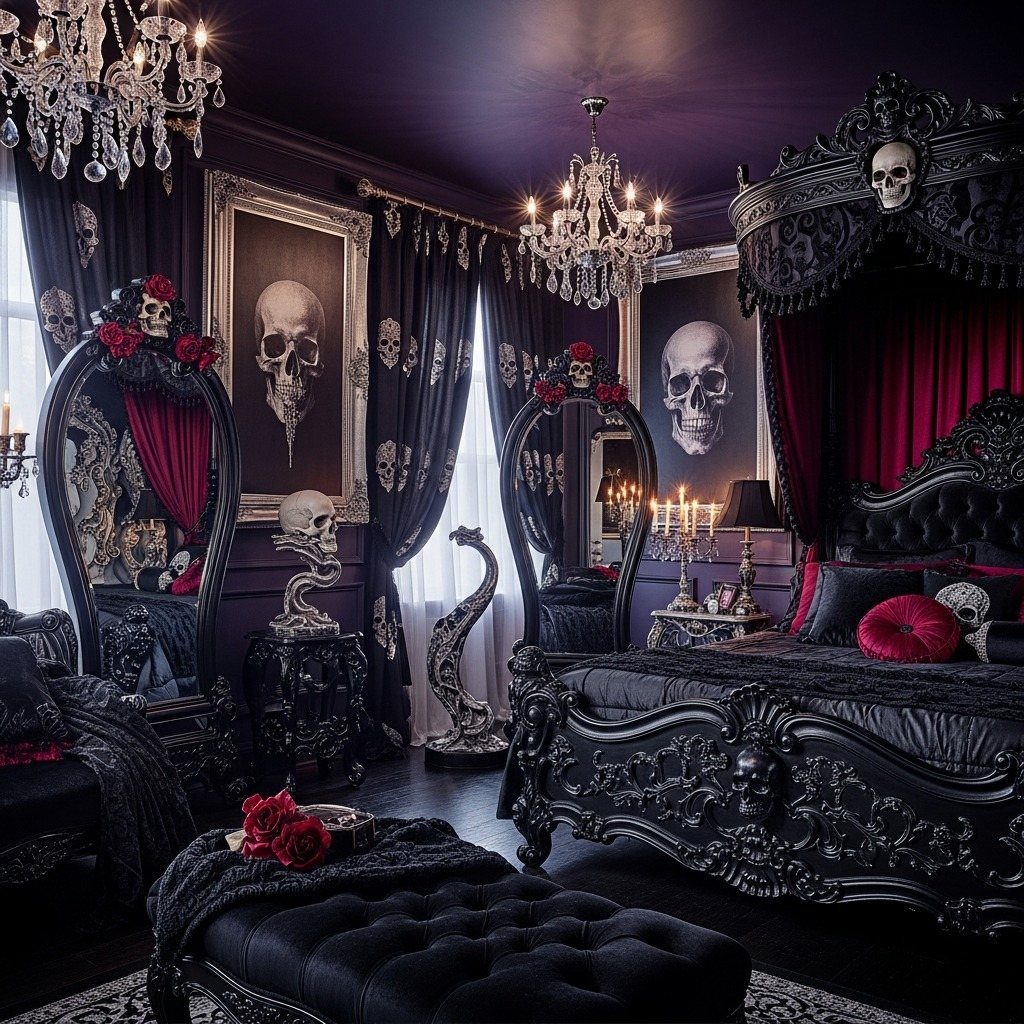
A carved black bed frame with skull details does not ask for matching furniture; it announces itself and lets everything else settle around it.
If the real thing is out of budget, metal frames with cast details weigh less and ship flat, though they sound hollow when you knock.
I would keep bedding simple, maybe a single velvet throw in deep red, because the frame already brought the noise. This is for someone who builds the room backward from the bed.
12. Layering Textures
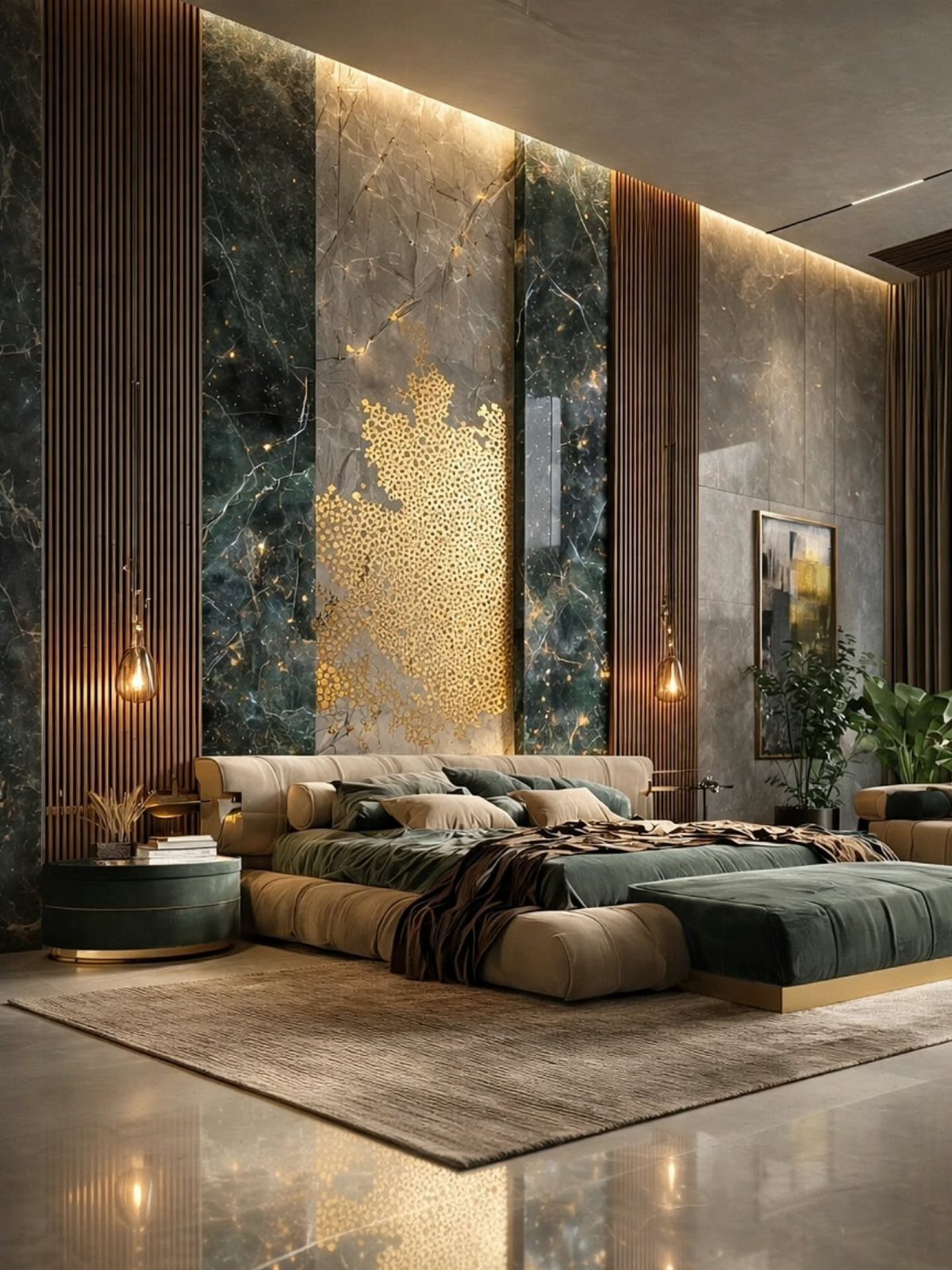
Velvet against satin against a textured rug builds a room you want to touch as much as look at.
The green and brown palette here is doing something smarter than black-on-black; it stays moody without the flatness that comes from zero variation in tone.
I add one unexpected texture, usually something rough like raw linen or a worn leather pillow, to keep the luxe fabrics from feeling like a hotel suite.
Silk curtains need weight to hang right; checking the grams per square meter before buying saves the headache of fabric that billows and tangles.
Best for cold climates where heavy fabrics earn their keep, and for people who do not own a cat.
13. Industrial Gothic Edge
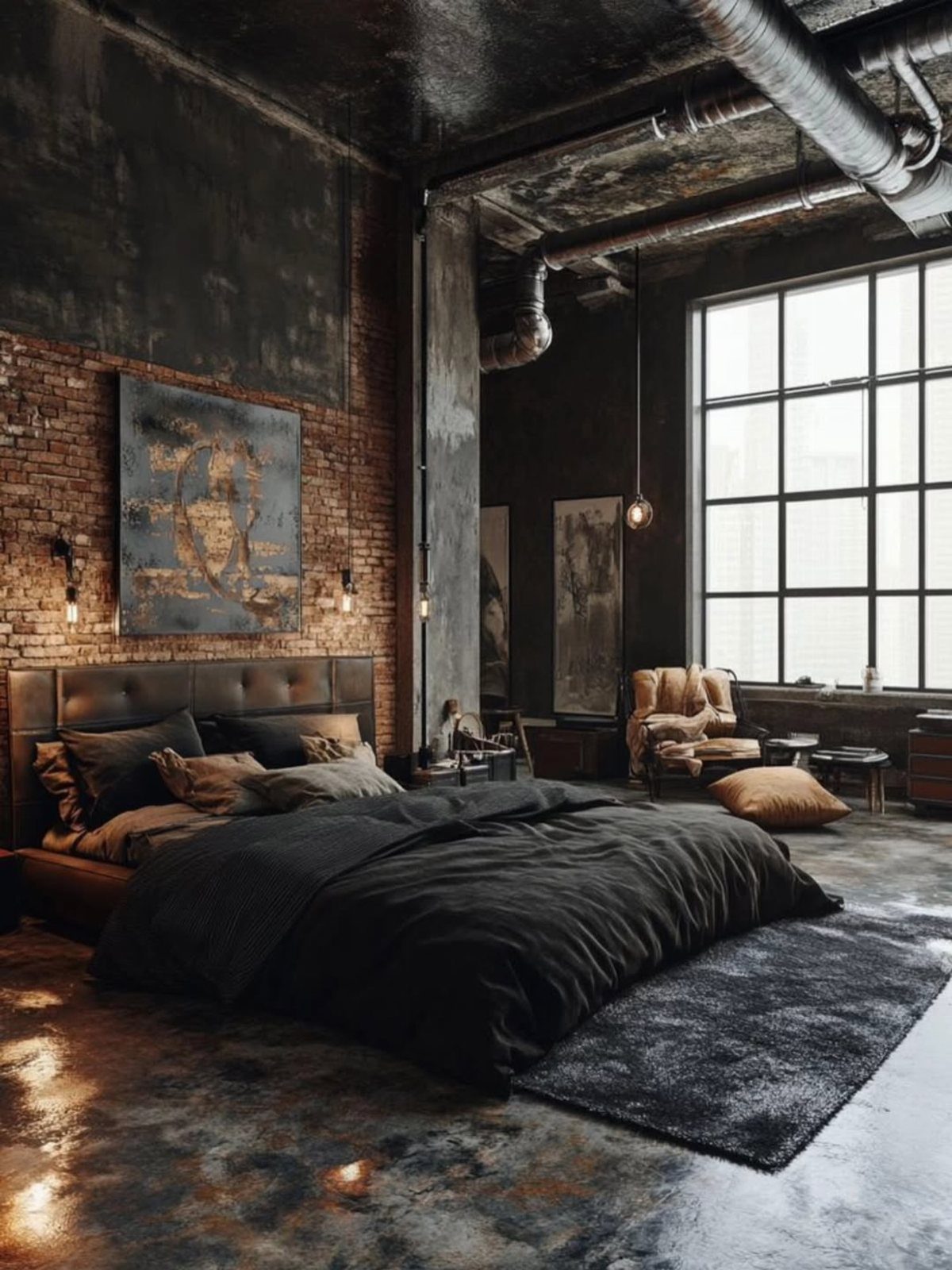
The industrial bones do the heavy lifting; you add darkness through linens, lighting and whatever metal you can leave bare.
This suits renters who cannot paint walls but can swap fixtures and soften concrete with textiles. If your space has ductwork or brick already, lean into it.
Strip drywall from a single wall to expose what’s underneath, or paint one flat wall in matte black and add a metal pendant where a ceiling fixture was.
Comfort takes a hit with this look. Industrial gothic runs cold and echoing, so budget for thick rugs and heavy curtains to absorb sound.
Without softness, the room feels like a set piece rather than a place to sleep.
Best for lofts, basements or any space where the building’s structure already tells a story. Skip it if your bedroom is small; the darkness and hard surfaces shrink the room further than velvet or carved wood ever would.
Choosing the Right Gothic Colors
A gothic bedroom lives or dies on its palette, and the colors that do the work are the ones you already picture: black, purple, red, green.
Pure black on every surface flattens into a void, so I treat dark colors as layers of shadow rather than absence of light. Gold or silver catches what little light the room gets and keeps the darkness from swallowing itself.
Dark forest green or midnight blue keeps the drama without the funeral-parlor weight if you want something softer.
I put the darkest shade on the ceiling and step lighter down the walls; the room wraps around you instead of pressing down. Variation in sheen or undertone matters more than the specific hue.
The gothic bedrooms that work as sanctuaries instead of caves almost always have that variation built in.
Creating a Gothic Atmosphere
Low lighting does the heavy lifting in a gothic atmosphere. I skip overhead fixtures in favor of candles, sconces, and lamps that pool light in pockets rather than flooding the room.
Ornate furniture with visible weight, carved detail, or metalwork grounds the space. Rich textures, velvet, brocade, aged leather, give the eye somewhere to rest and the hand something to notice.
In a larger room, scale up: an oversized mirror or chandelier fills the vertical space without cluttering the floor.
For a different direction, dark walls softened with vines, florals, or layered botanical details shift gothic toward fairytale without losing the mood. The goal is immersive, not theatrical.
I want a room that feels lived-in after dark, not staged for a scene.
Incorporating Gothic Elements
Antique-style furniture with visible construction, turned legs, cabriole shapes, or patinated finishes carries gothic weight better than sleek modern pieces. The dark palette works best as a base to build on, not the whole structure.
I look for gothic-themed decor that reads as personal collection rather than matched set. Layering textures is the practical bridge between furniture and color.
A velvet throw over carved wood, a worn rug against smooth wall paneling, creates the depth that makes a dark room feel furnished rather than empty.
Mixing one modern element, a clean-lined lamp, a simple frame, keeps the room from becoming a period piece. The balance of darkness and elegance is what separates gothic from gloomy.
I judge a gothic bedroom by whether I want to stay in it after the lights go down.
Frequently Asked Questions
What colors are good for a gothic bedroom?
Black, purple, red, and green carry most of the load, though coating every surface in pure black collapses into something lifeless.
I build dark colors as stacked shadows instead of erased light, then let gold or silver grab whatever the room offers.
How do I make my room look gothic?
Begin with light that gathers in pools instead of washing every corner flat: candles, sconces, and table lamps beat overhead fixtures for this.
Furniture with real visual weight or carved detail anchors the room, and dense fabrics like velvet, brocade, or worn leather give the eye a place to land.
What makes a bedroom look tacky?
Overwhelming use of one color without variation reads as cheap, especially pure black on every surface with no shift in sheen or undertone.