These ideas run from a single pothos on the nightstand to skim-coating every wall, and the right one depends on whether you rent or own, which decides if you can paint, mount, or replaster.
The rule that picks one is light: north-facing rooms need warm beiges and mirrors placed to catch what sun arrives, while bright spaces can stay cooler and bare.
One figure that proves this list is real: five to seven small pools of light per room, all at the same warm white temperature, because Danes treat lighting as an art form and full brightness is only for cleaning.
1. Neutral Color Palette
Soft whites and pale grays do the heavy lifting in a Scandinavian bedroom, letting sunlight bounce around and keep things feeling open.
I start with white sheets as my base, then layer in muted pastels through bedding or a woven throw. A blush pillow or dusty blue blanket adds just enough warmth without fighting the calm.
Quiet walls let whatever color you bring in actually read instead of fighting the room. Pastel pinks and blues show up often, but any subtle shade works if it feels like you.
Best for smaller rooms or anyone renting who can’t paint bold. If your space already gets great light, lean cooler; north-facing rooms need those warmer beiges to keep from feeling flat.
2. Soft Ambient Lighting
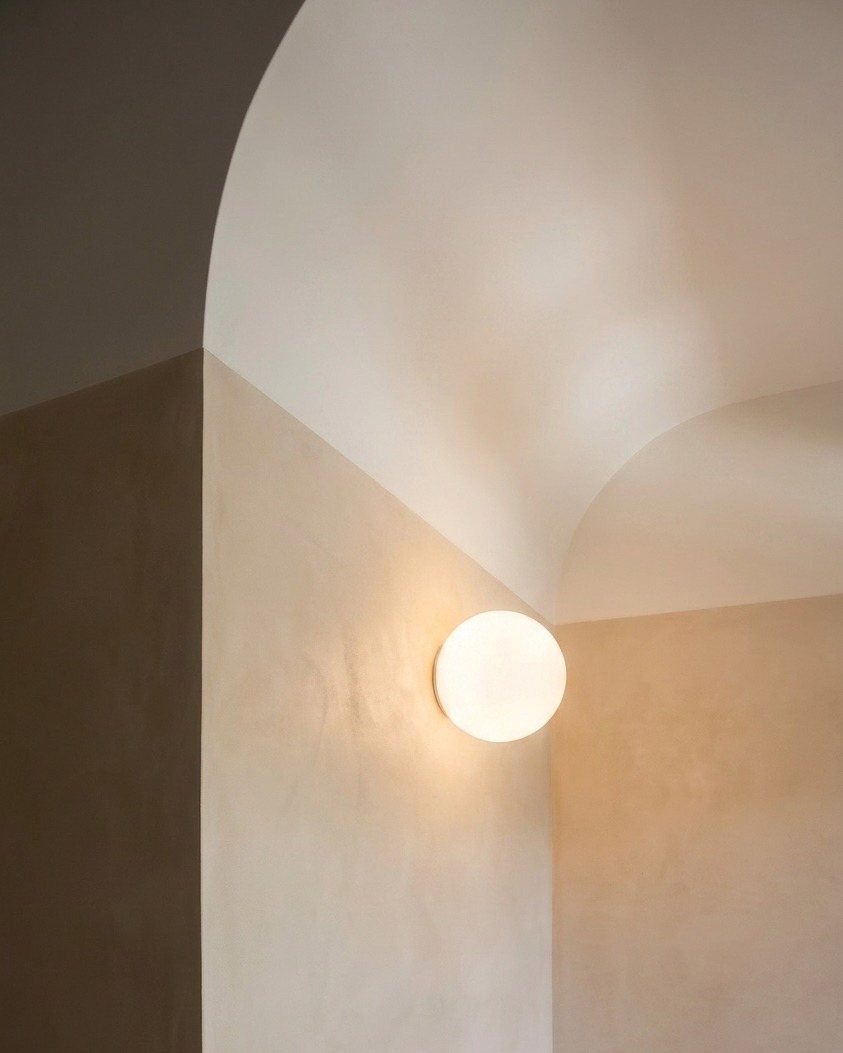
Danes treat lighting like an art form, building five to seven small pools of light per room instead of one overhead blast.
In my bedroom, that means bedside lamps at sleeping height, maybe a sconce or two, and a floor lamp tucked where I read. All of it at the same warm white temperature so nothing clashes.
Dimmable fixtures matter here. Full brightness is for cleaning; 30% is for actually living in the space.
Paper lanterns in white cast that soft, ethereal glow Scandi rooms are known for. If you want one statement piece, a pendant with ash wood detail hits the mark without cluttering surfaces.
3. Statement Decor
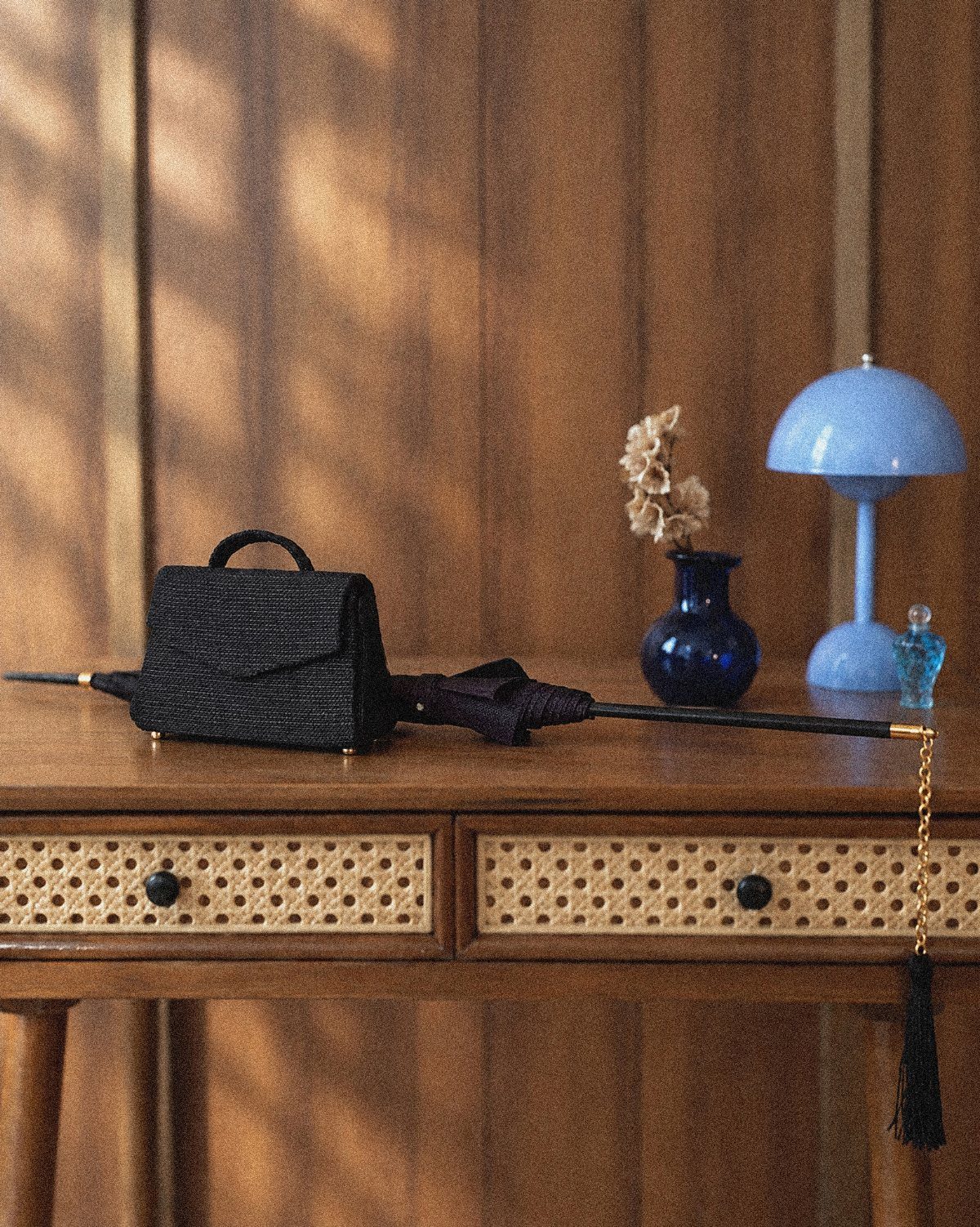
A single sculptural piece on your dresser or wall does more than a shelf of small stuff. I look for clean lines, maybe a curve that breaks up all the straight edges in the room.
A ceramic vase with dried stems, a solid wood tray, or one large abstract print above the headboard keeps things personal without crowding.
The restraint is the point. Modern Scandi design builds interest through shape and material, not volume.
This suits anyone who collects bits of travel or art but hates clutter. If your taste runs maximalist, try one statement zone, like the wall over your bed, and keep the rest bare.
4. Use of Earthy Tones
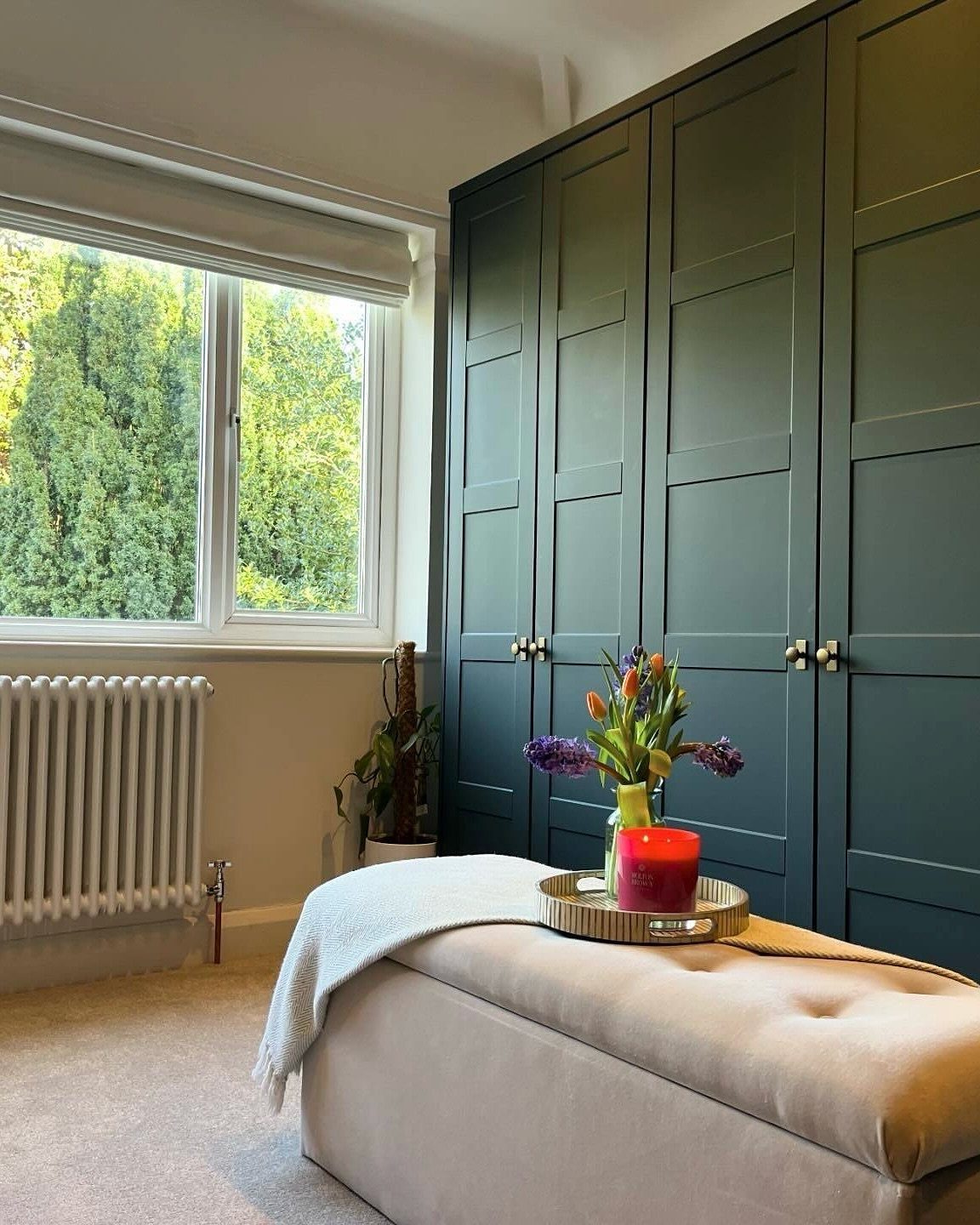
Warm caramel and terracotta ground a pale room without darkening it. I use these as accents against white or cream walls, through a throw, a ceramic lamp base, or even painted built-ins if you own the place.
Olive and muted blues work the same way, pulling in forest and lake tones that feel native to Scandinavian palettes.
Natural materials carry these colors best. Wood, jute, cotton, and clay all deepen the earthy effect without adding weight.
Renters can get here with textiles and small objects. If your space is already busy with wood tones, stick to one earthy accent color and repeat it three times so it feels intentional.
5. Artistic Wall Decor
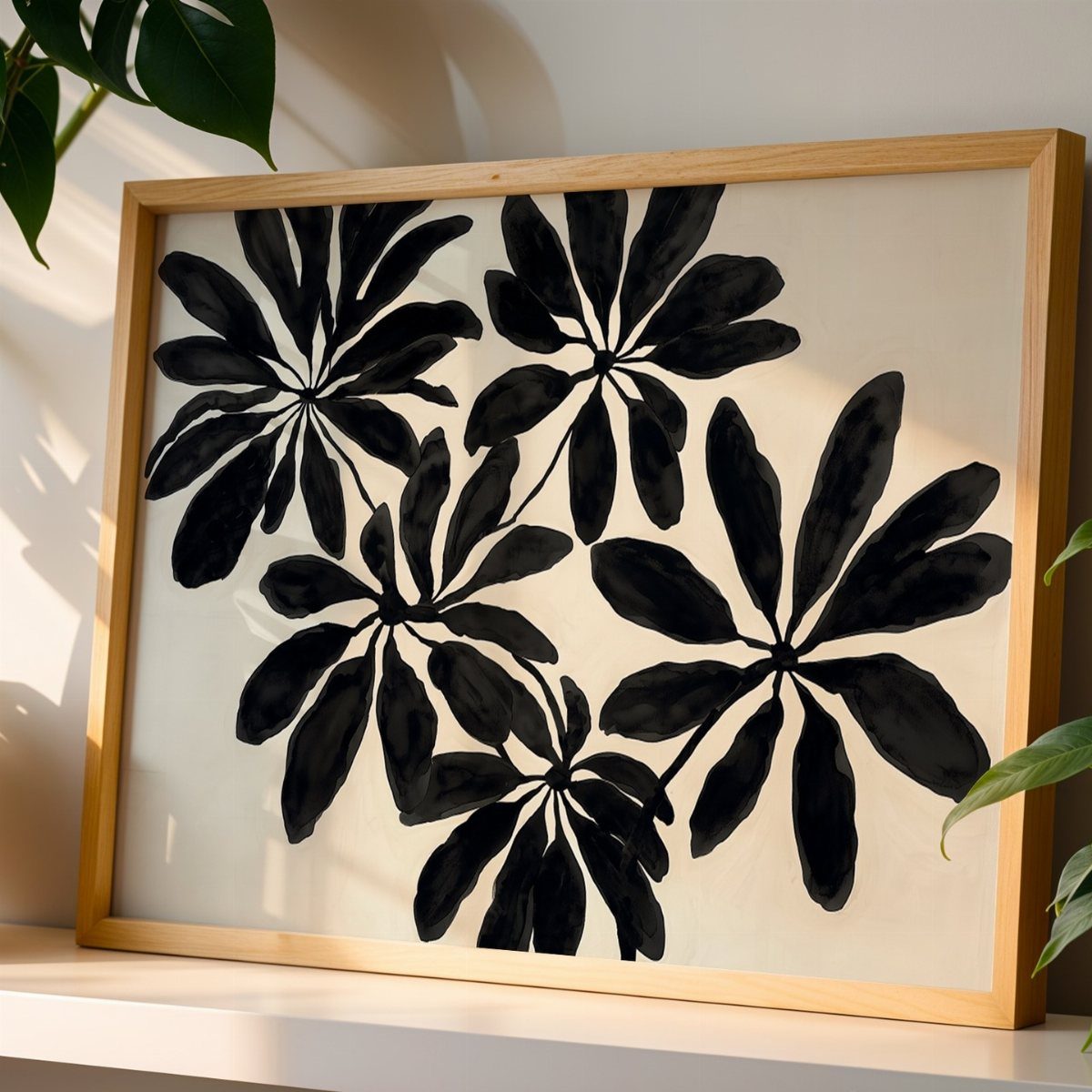
One large abstract print over the headboard beats a gallery wall for Scandi calm. I prefer slim black frames and landscapes that read as relaxed nature, not literal scenes.
Botanical silhouettes in black and white hit the same note with even less fuss.
The scale matters more than the subject. A piece too small over a queen bed looks like an afterthought; go big enough to anchor the wall.
This is where personality enters without chaos. If you’re unsure, a single framed piece on a shelf, propped rather than hung, lets you move it until it feels right.
6. Use of Mirrors
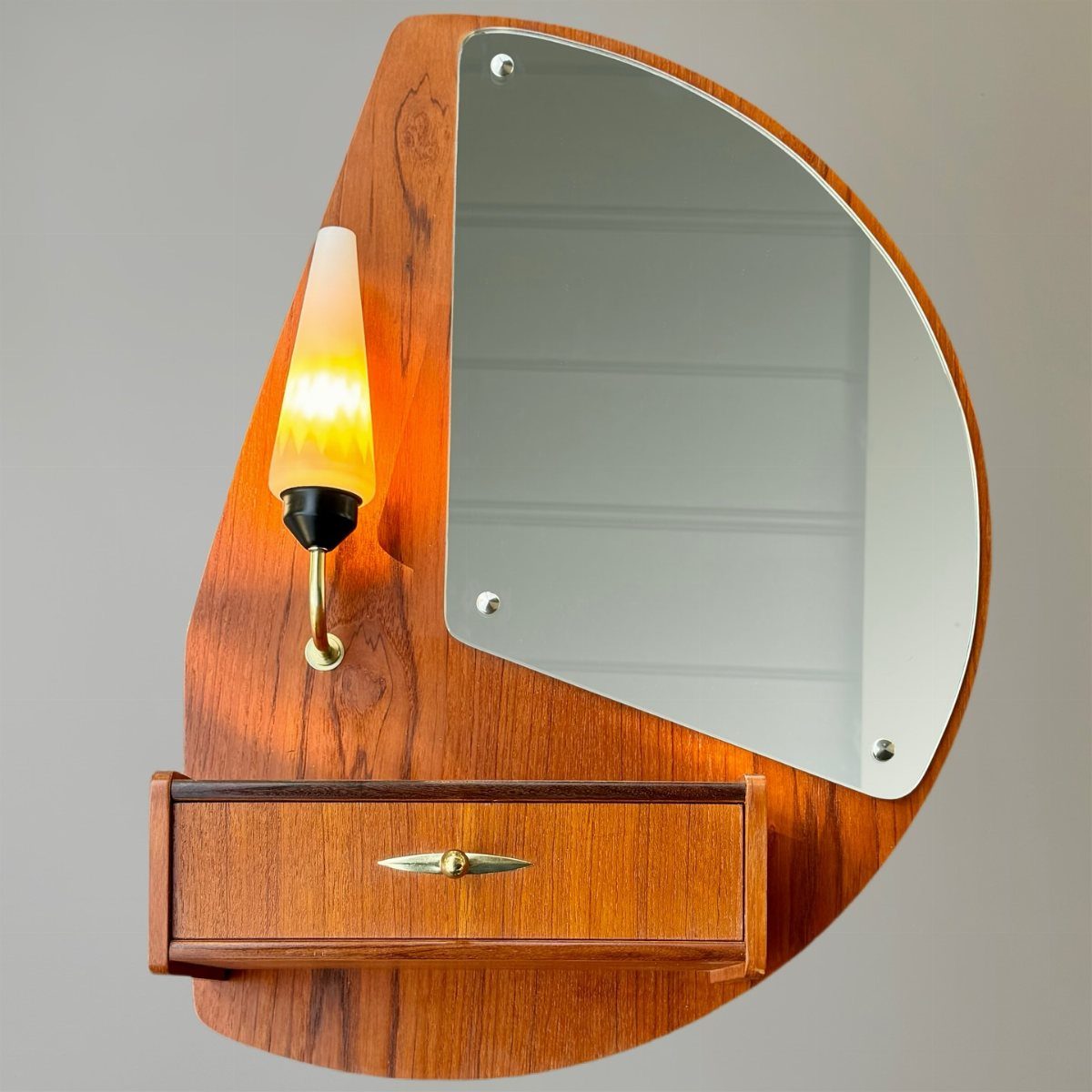
A mirror placed where it catches window light effectively doubles it. I angle mine to bounce morning sun toward darker corners, not to reflect the bed directly.
In tight bedrooms, this trick reads as extra square footage without moving a wall.
Mid-century modern pieces with integrated storage hit two Scandi notes at once: function and clean line.
Small rooms benefit most. If your layout already has good light everywhere, skip the mirror and let wall space stay bare; the restraint itself is the Scandinavian move.
7. Minimalist Accessories
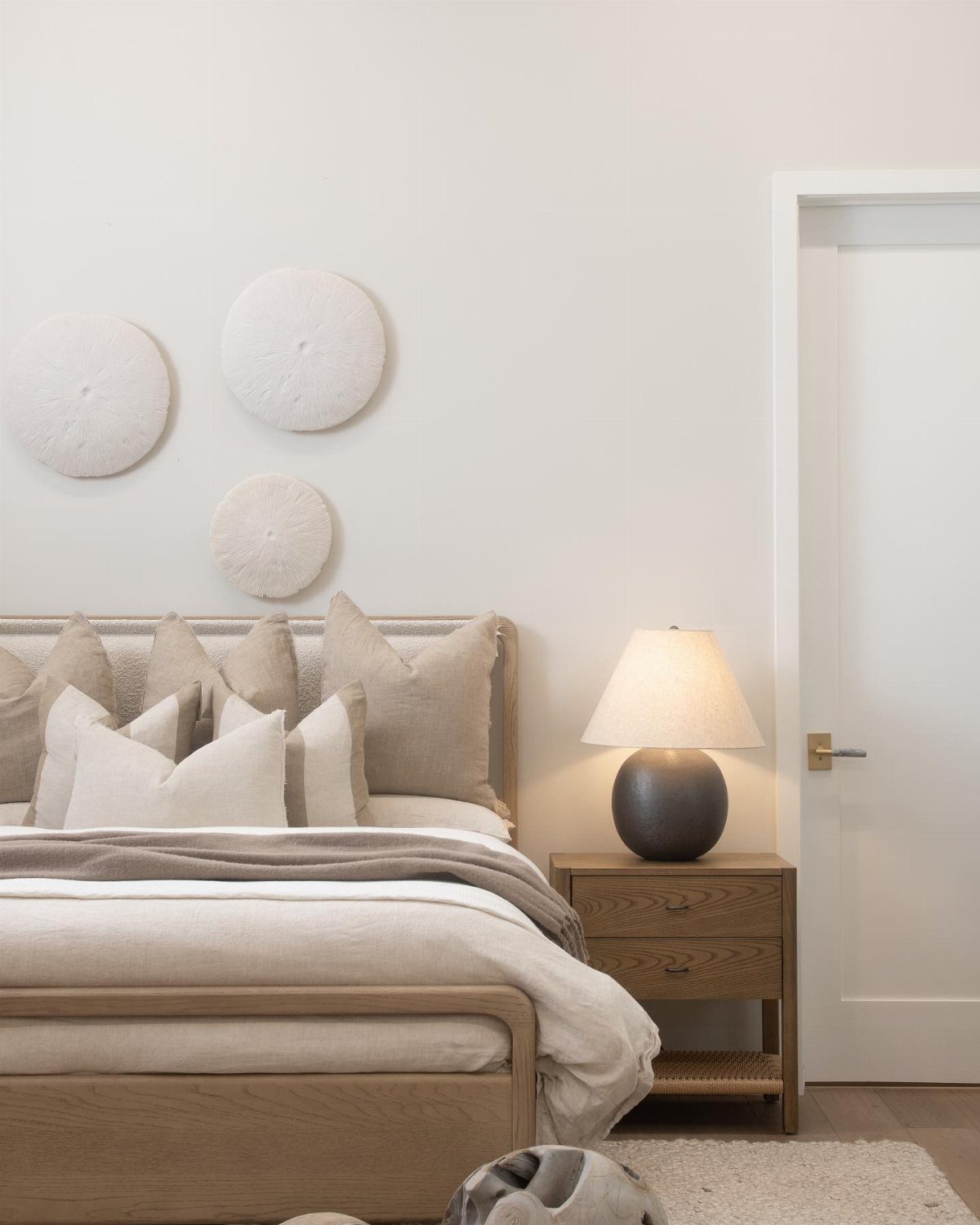
Oversized, textured sand-dollar forms make quiet wall interest without adding clutter above a bed. That is the move: pick one or two objects that carry weight, and give them room.
A single sculptural lamp on a bare nightstand beats a crowded surface. One large print over the headboard, or a set of slim black-and-white pieces, fills a wall without noise.
I would rather skip the shelf entirely than load it with small things that fight each other.
This suits renters who move often; one box holds the whole look, and nothing leaves nail holes behind.
8. Use of Textiles
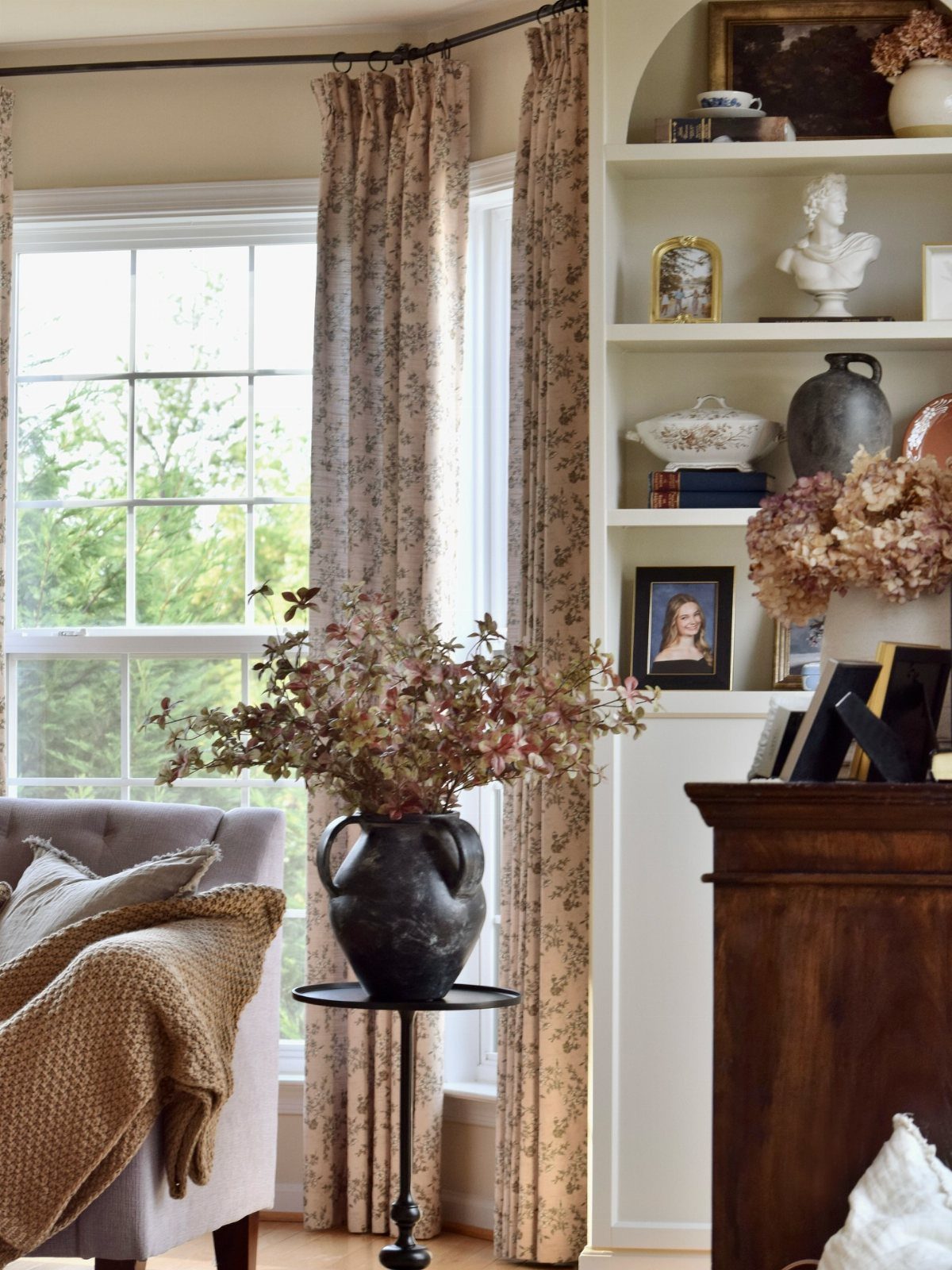
Rough wool throws and soft floral curtains sit well against smooth built-in paint. Mixing cotton, wool, and linen in one room is what builds the warmth Scandinavian minimalism needs to survive real life.
I layer a thin cotton cover over a heavier wool blanket in winter, then peel back to linen alone by June. The fabrics do the seasonal work so the furniture does not have to.
A single textured piece, badly placed, reads as clutter. Drape the throw where you actually sit, run curtains to the floor to stretch the wall height, and let the eye move through the textures rather than stopping at any one.
9. Light Wood Furnishings
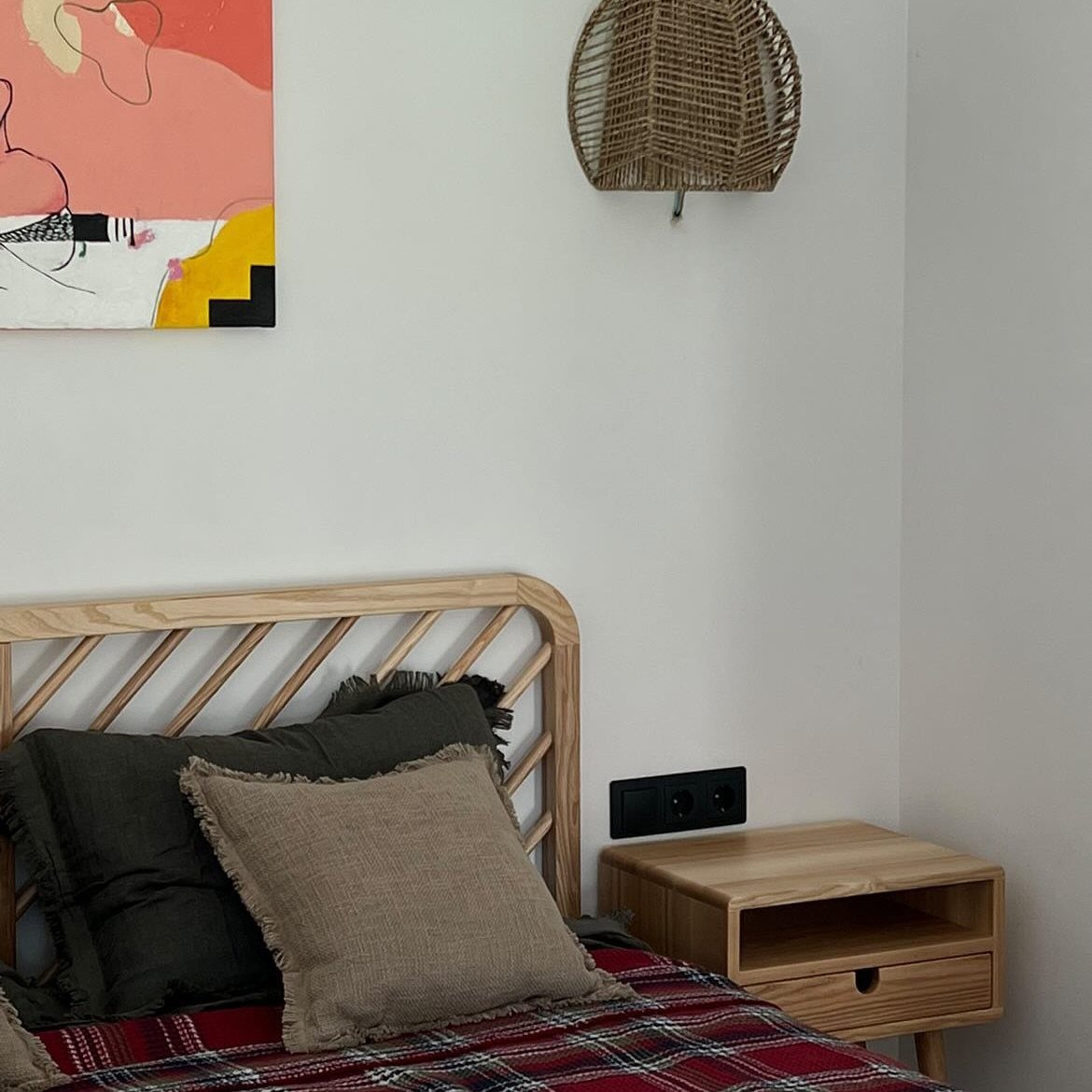
Pale ash or pine beds work best matched to nightstands with the same clean lines and tapered legs.
That matching is the trick: one wood tone across bed, side table, and any dresser keeps the room from feeling collected by accident.
Oak, beech, or ash will all read as Scandinavian; pine costs less and dents more, which some people like and others do not.
I have found that a set from one range, even a modest one, looks more intentional than expensive mismatched pieces.
Paint the walls warm white, not cool, or the wood flattens out and the room turns clinical.
The maker of this bed chose grey pillows and a single plaid accent to sit against the pale frame; that restraint is what lets the wood speak.
10. Hygge Elements
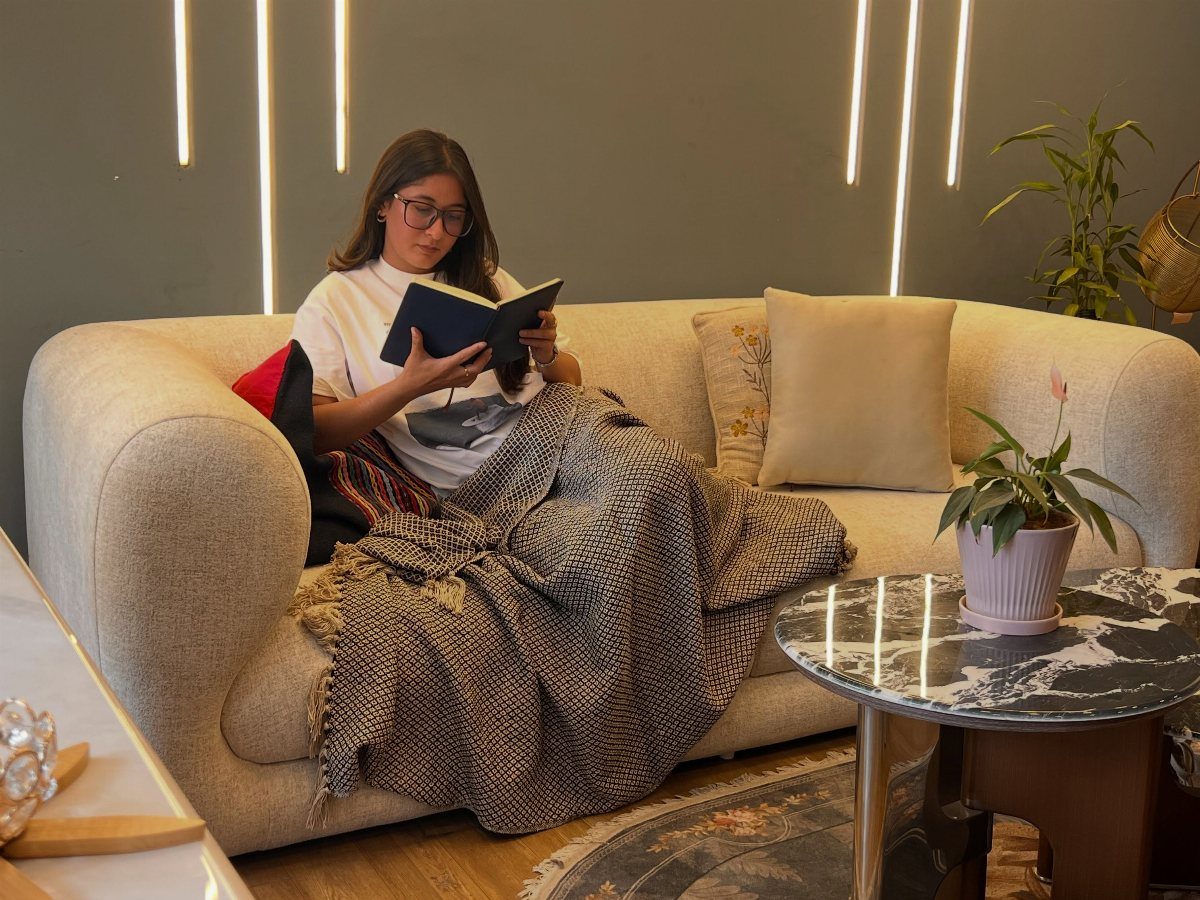
A textured throw and soft vertical light behind a reading spot are the easy parts of hygge; the hard part is letting the room stay lived-in.
That is hygge as I understand it: not a look to stage, but a setup that invites you to actually stop moving.
A plush rug beside the bed, a lamp dimmed to yellow, bedding you can sink into; these are the elements, and the order of adding them does not matter.
I build the cocoon from whatever I have, layering down in July and up in January.
Candles help if your lease allows them; otherwise, a string of warm LEDs behind the headboard gives the same signal to your nervous system.
A room that waits for you at the end of a day beats one that performs for a camera.
11. Soft Linen Bedding
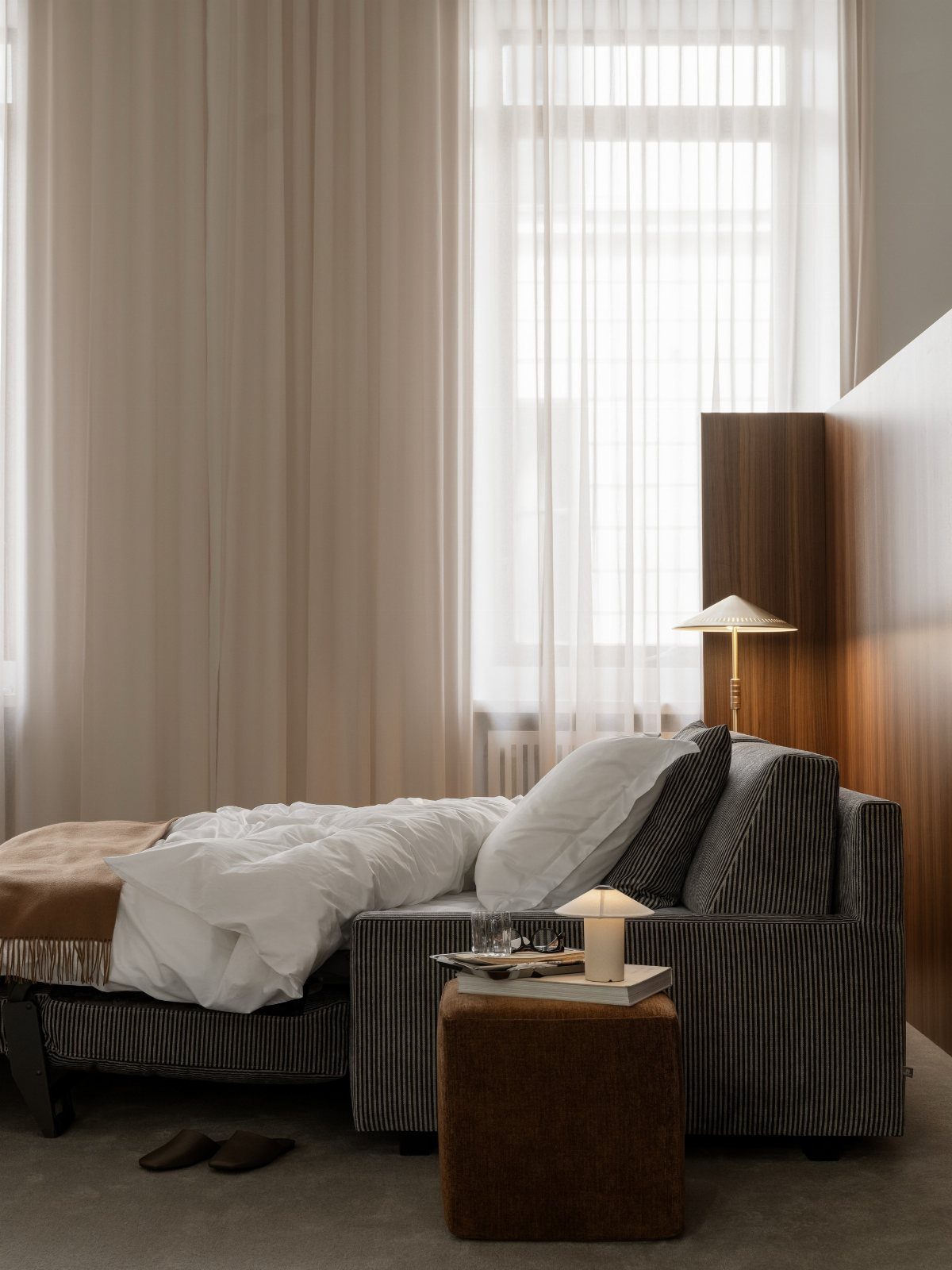
White linen looks best rumpled, the way fabric gets when it has been slept in and not staged.
Organic linen or cotton, washed until soft, is what Scandinavian bedrooms reach for; the breathability matters more in summer, but the texture reads right year-round.
I buy linen in off-white or pale grey and let it age. It costs more upfront than cotton jersey, and it lasts longer if you skip the dryer for the first few washes.
One brown throw and a small velvet ottoman are enough; two accents, not five, keep the calm intact.
Striped upholstery on the frame itself is a bolder move than I would make, but plain white bedding pulls it back to quiet.
12. Sculptural Lighting Fixtures
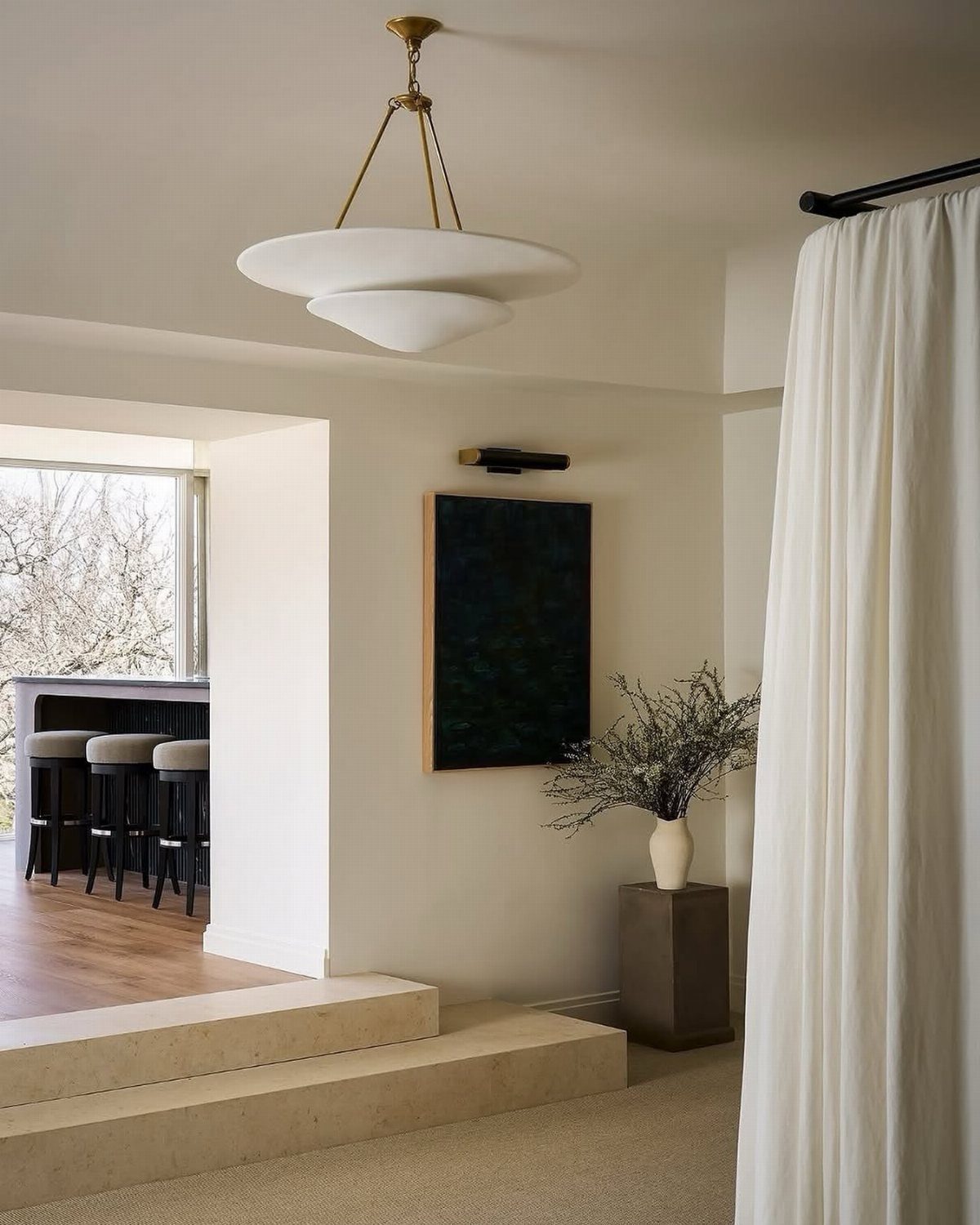
A sculptural light does the work of art without taking up a wall or a surface; in a small bedroom, that trade is worth making.
I look for one piece with a shape that reads from the door, hung low enough to cast light where you need it but high enough to walk under.
Paper, plaster, or matte metal all suit the palette; glossy or colored finishes fight the room instead.
This is where I would spend if the budget has one splurge. A bed can be simple, walls can be bare, but a single strange beautiful light overhead makes the room feel designed rather than assembled.
13. Textured Wall Treatments
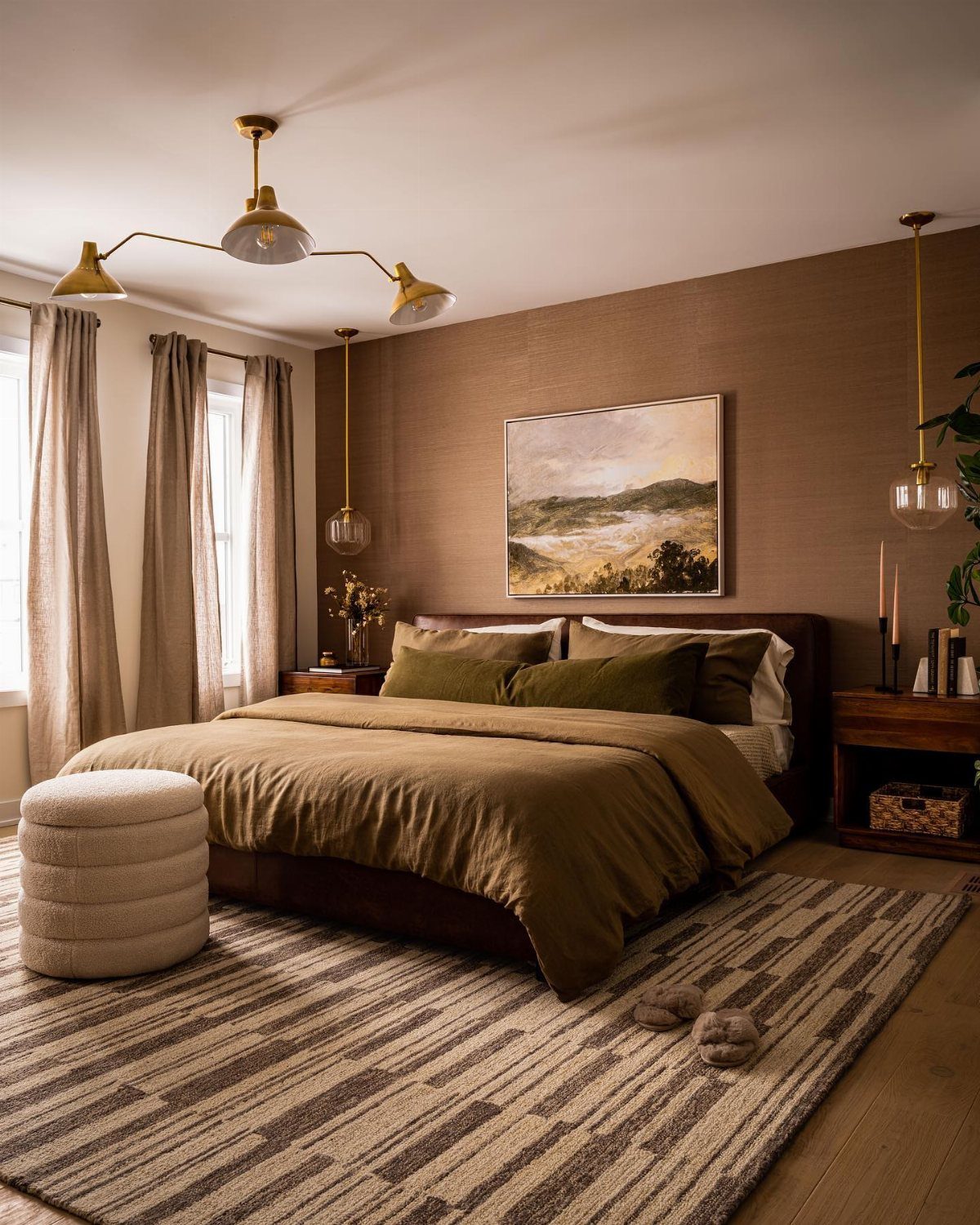
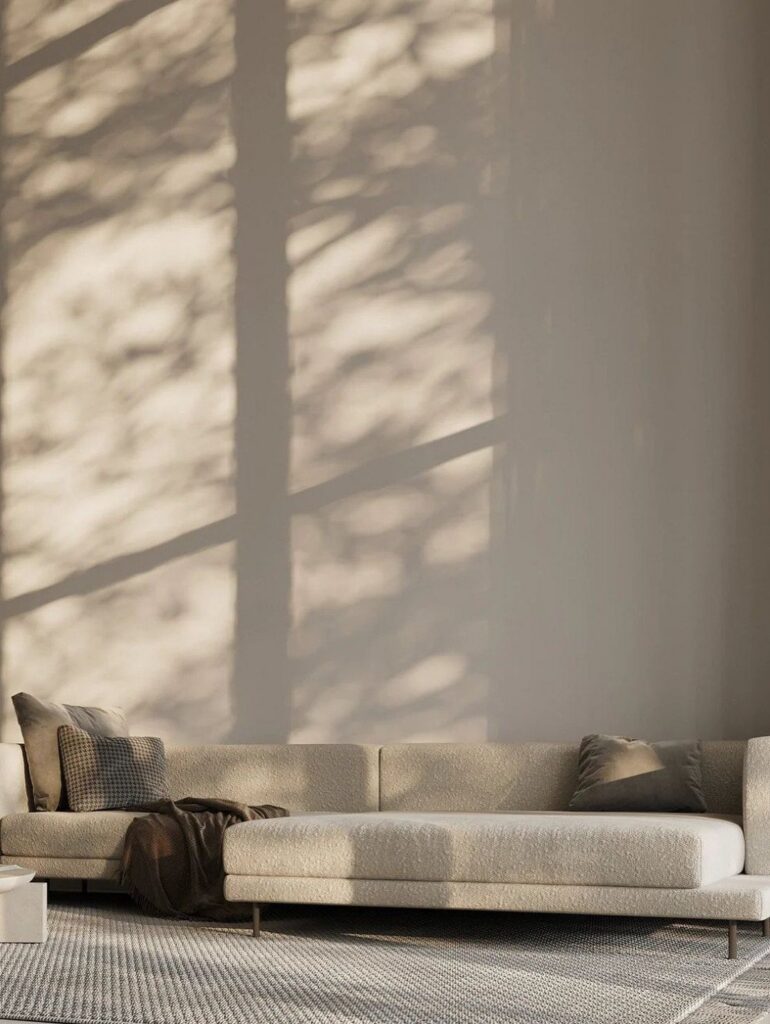
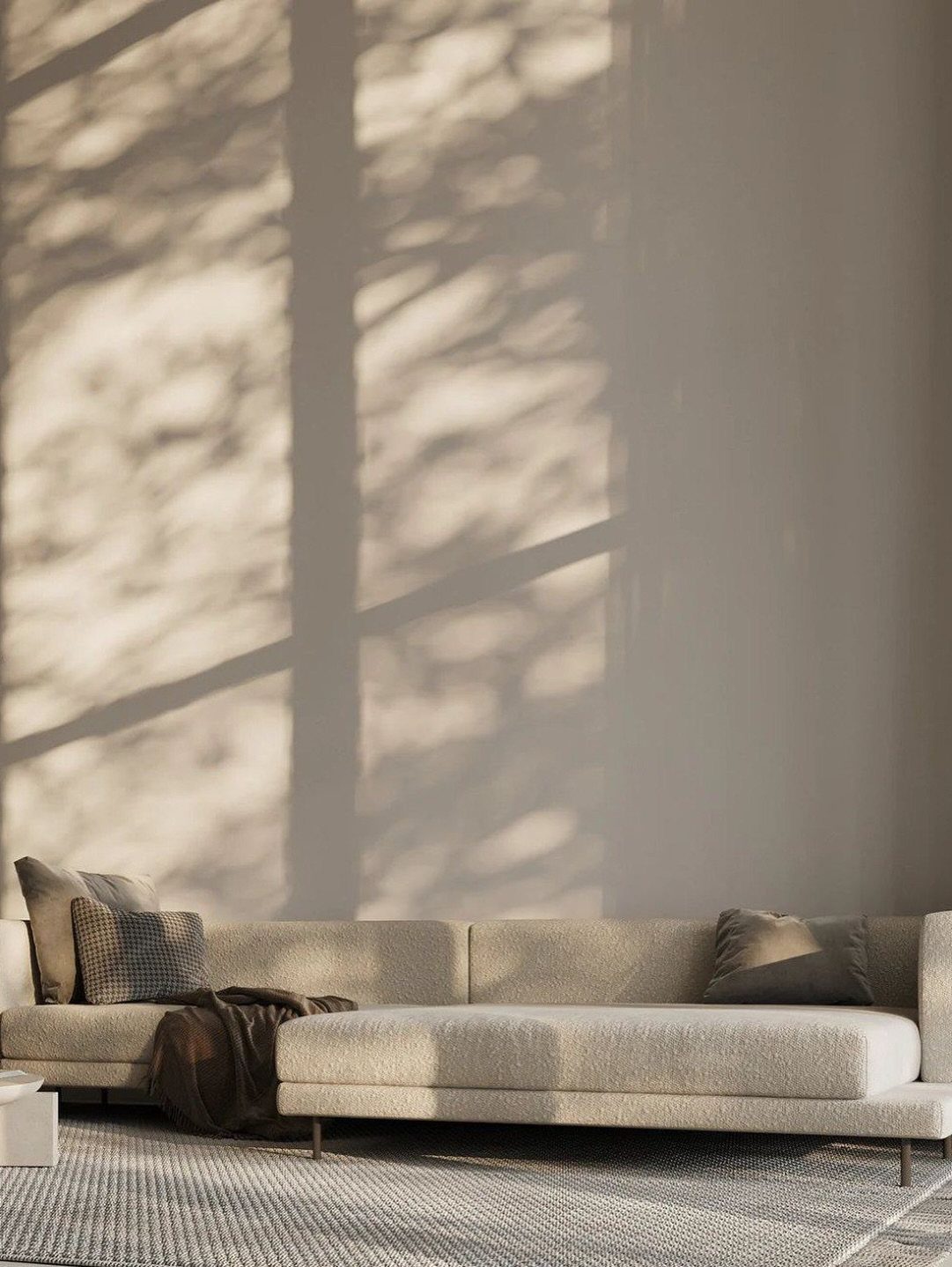
Textured walls do what flat paint cannot: they catch morning light and cast soft shadows that shift through the day. In a Scandinavian bedroom, that movement matters more than color.
Wood paneling or lime plaster both work. Pine boards run vertically work best in a warm white with a hint of yellow, enough that the grain still shows through.
The wall became the room’s quiet focal point without a single frame hung on it.
Plaster takes longer and costs more, but it ages well. Small cracks turn into character instead of flaws.
If your walls are currently textured drywall in that orange-peel style common to apartments, skim-coating first saves you from a result that looks accidental rather than chosen.
14. Layer Textures
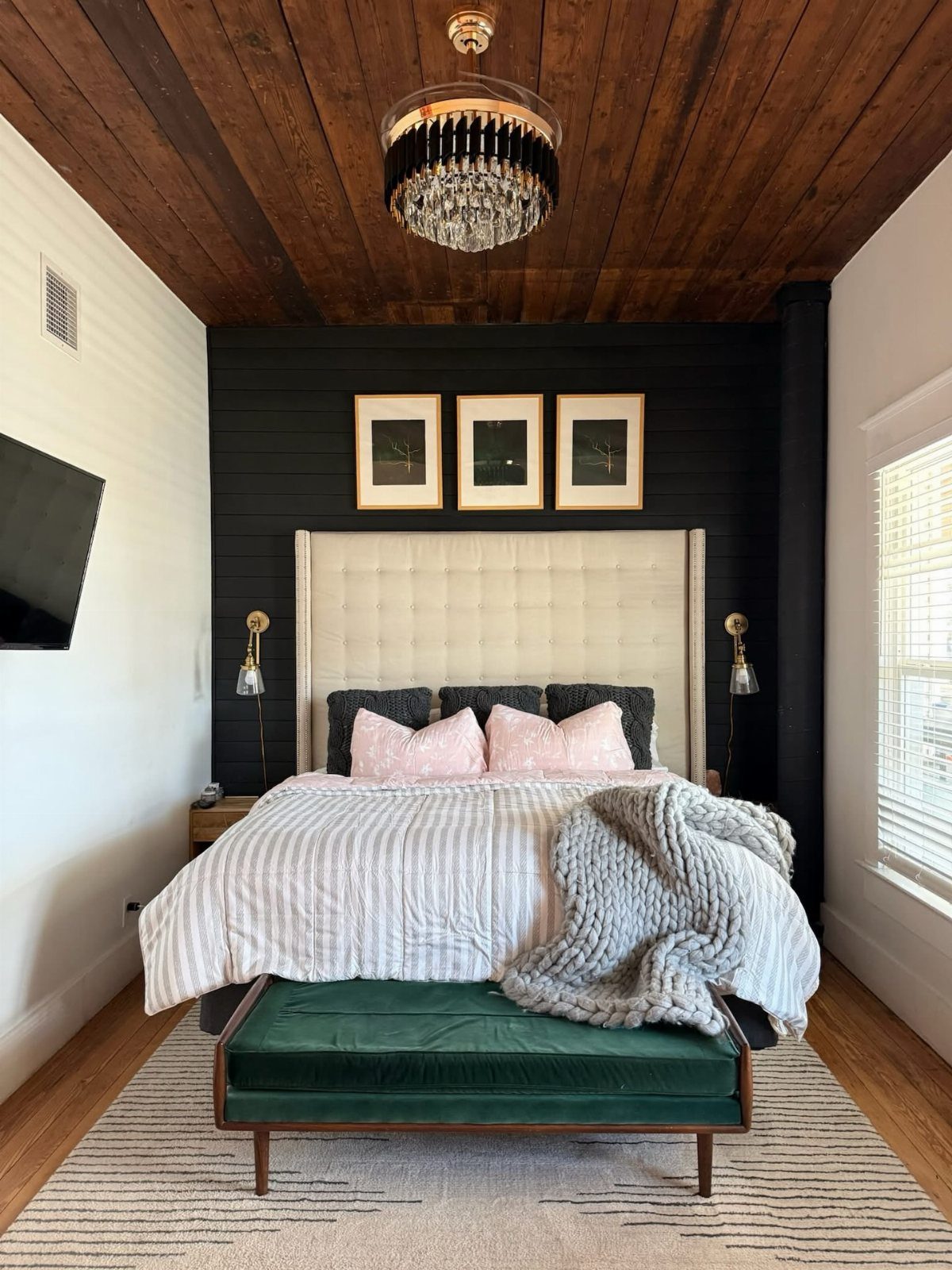
A bed built from layers reads as inviting even when it is perfectly made.
Start with cotton sheets in a neutral base, add a linen duvet cover with the slight slub that marks real flax, and fold a wool throw at the foot.
Mixing weaves matters more than mixing colors. My own setup runs white on white: smooth percale against nubby linen against a chunky knit picked up on sale.
Each layer catches light differently, so the bed has depth without clutter.
A wool rug at the foot of the bed extends the same logic to the floor. Touchable variation beats a catalog display.
Pull the throw loose, let the pillows sit slightly askew. Scandinavian warmth lives in the signs of use.
15. Scandinavian Modern Table Lamps
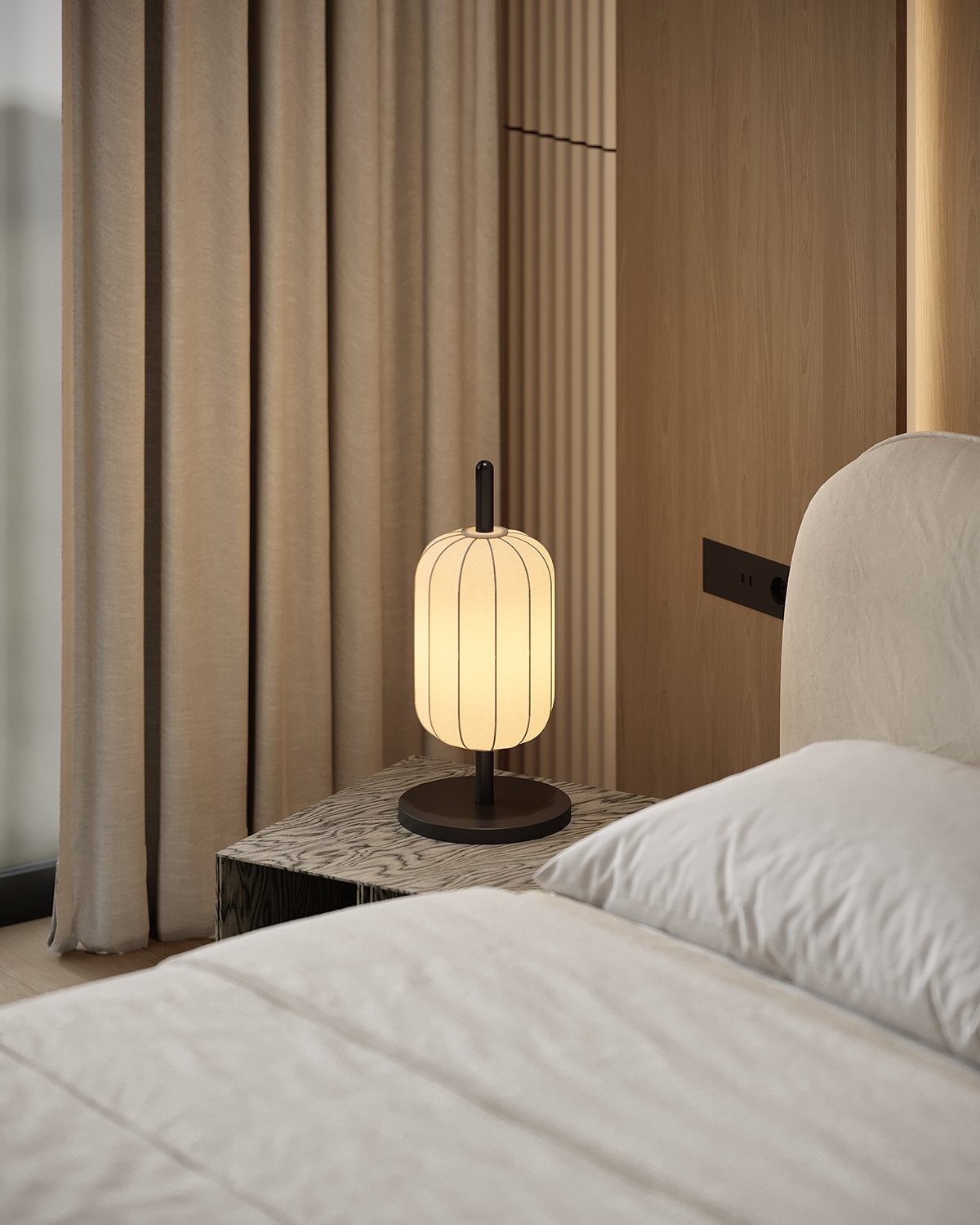
A bedside lamp in Scandinavian design tends toward the sculptural: a ribbed ceramic base, a domed shade in matte metal, a capsule form that reads as object even when switched off.
Vertical ribbing on a ceramic base catches enough shadow to hold its own against pale wood panels.
I prefer a lamp with a touch dimmer. Three levels: bright enough to find an earring, soft enough to read by, low enough to leave on while falling asleep.
USB charging ports matter less than they sound; my phone lives across the room overnight.
Cordless rechargeable lamps have improved enough to consider now. They move to a dresser or a reading chair when you rearrange, and they solve the rental problem of no outlet where you need one.
16. Greenery and Plants
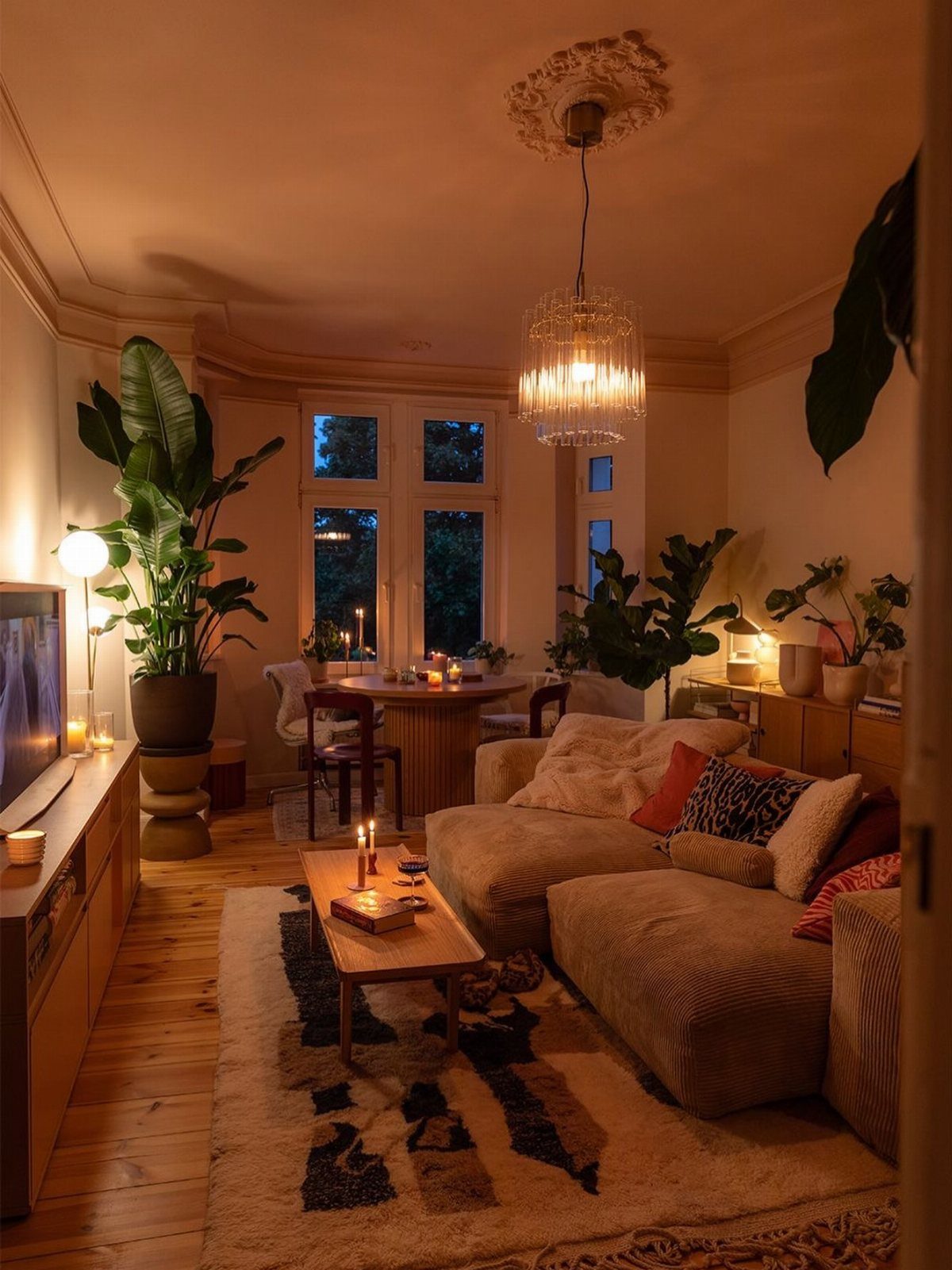
A single trailing pothos on a high shelf does more for a bedroom than a dozen small pots crowded on a windowsill. The vertical green breaks the horizontal lines of bed, dresser, rug, and the eye travels upward without effort.
Succulents and ferns both suit the low light of many bedrooms, though ferns need more humidity than winter heating provides. A bathroom shelf or weekly misting is non-negotiable for keeping these alive.
Botanical prints work where plants die. A framed vintage fern print against a white wall carries the same natural reference without the maintenance.
Real plants give living texture; prints work on walls where light does not reach.
17. Simple Window Treatments
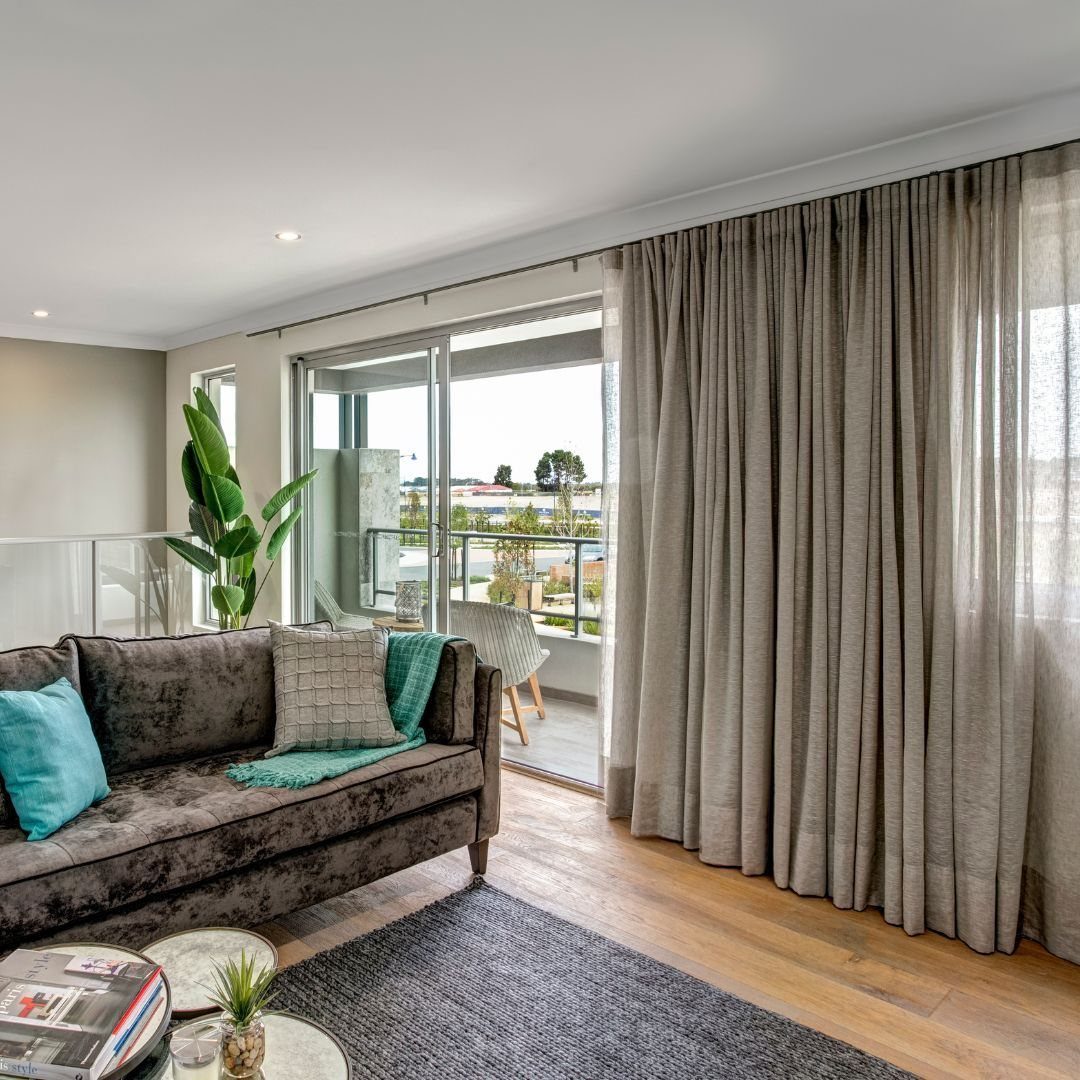
Floor-to-ceiling sheers in a natural linen or cotton filter light without blocking it, and they stack to almost nothing when drawn.
Roller shades in a warm white or pale gray suit a more modern line. A clean rectangle of shade improves a wall even when the windows themselves cannot be changed.
Avoid heavy drapes in dark colors. They swallow the light that Scandinavian design depends on, and in a small bedroom they read as bulk the room cannot afford.
If you need blackout for sleep, mount it as a separate roller behind the sheer, not as one thick layer.
18. Paper Lantern Pendant Lighting
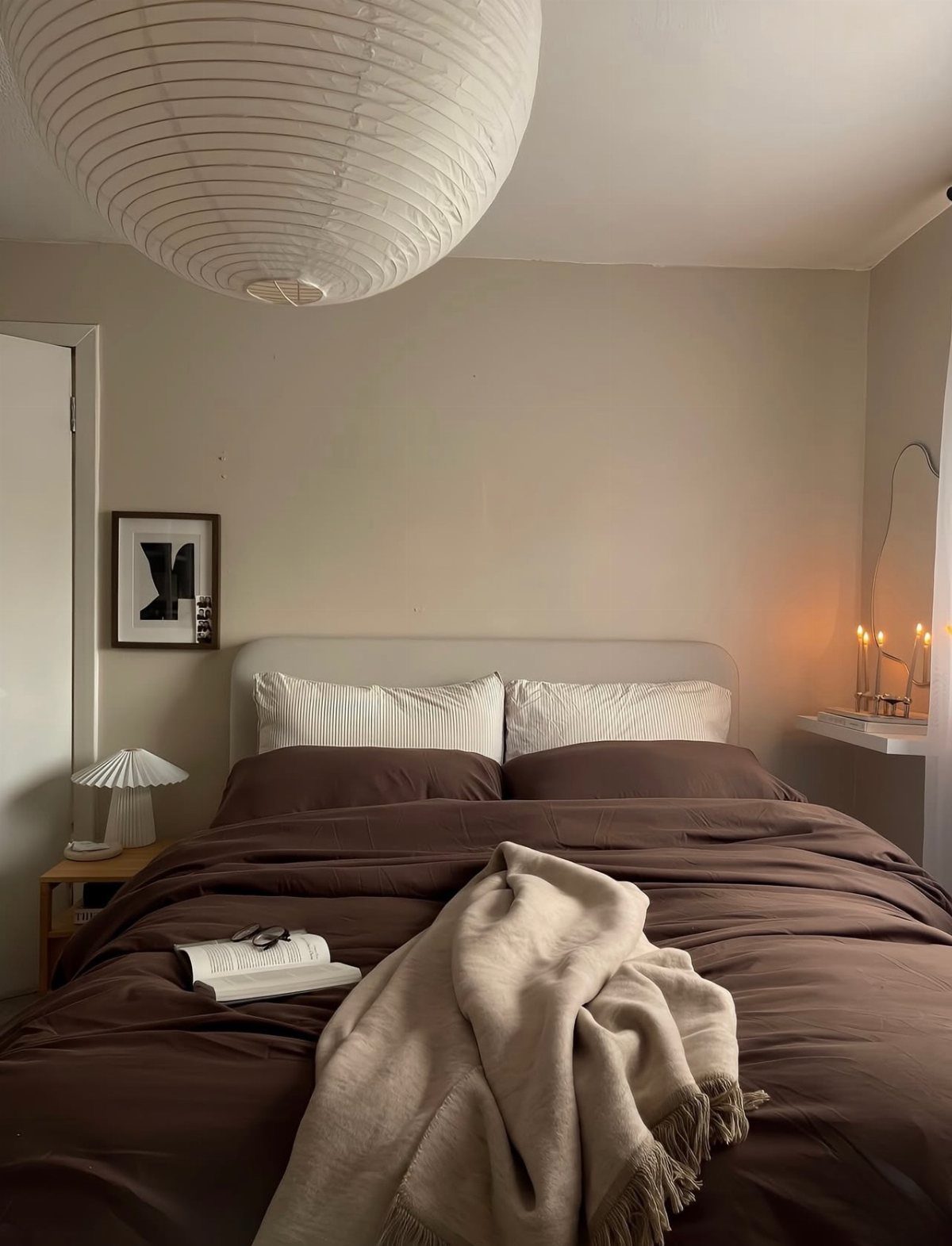
A paper lantern pendant spreads light from above instead of cluttering your nightstands with lamps.
One large shade over the bed leaves both surfaces clear for books, water, or nothing at all, which suits a small room or a minimalist who wants the floor plan open.
Rice paper over a steel frame casts the warm, soft glow that makes a bedroom feel finished once the sun goes down.
White keeps it airy; a version with ash wood trim ties in pale Scandinavian floors without adding another material battle.
Size it to the bed: too small and it looks like a mistake, too large and it lowers the ceiling visually.
This trades task lighting for atmosphere. If you read in bed, add a single swing-arm sconce or a slim clip light rather than breaking the calm with a table lamp.
19. Arched Wooden Headboard
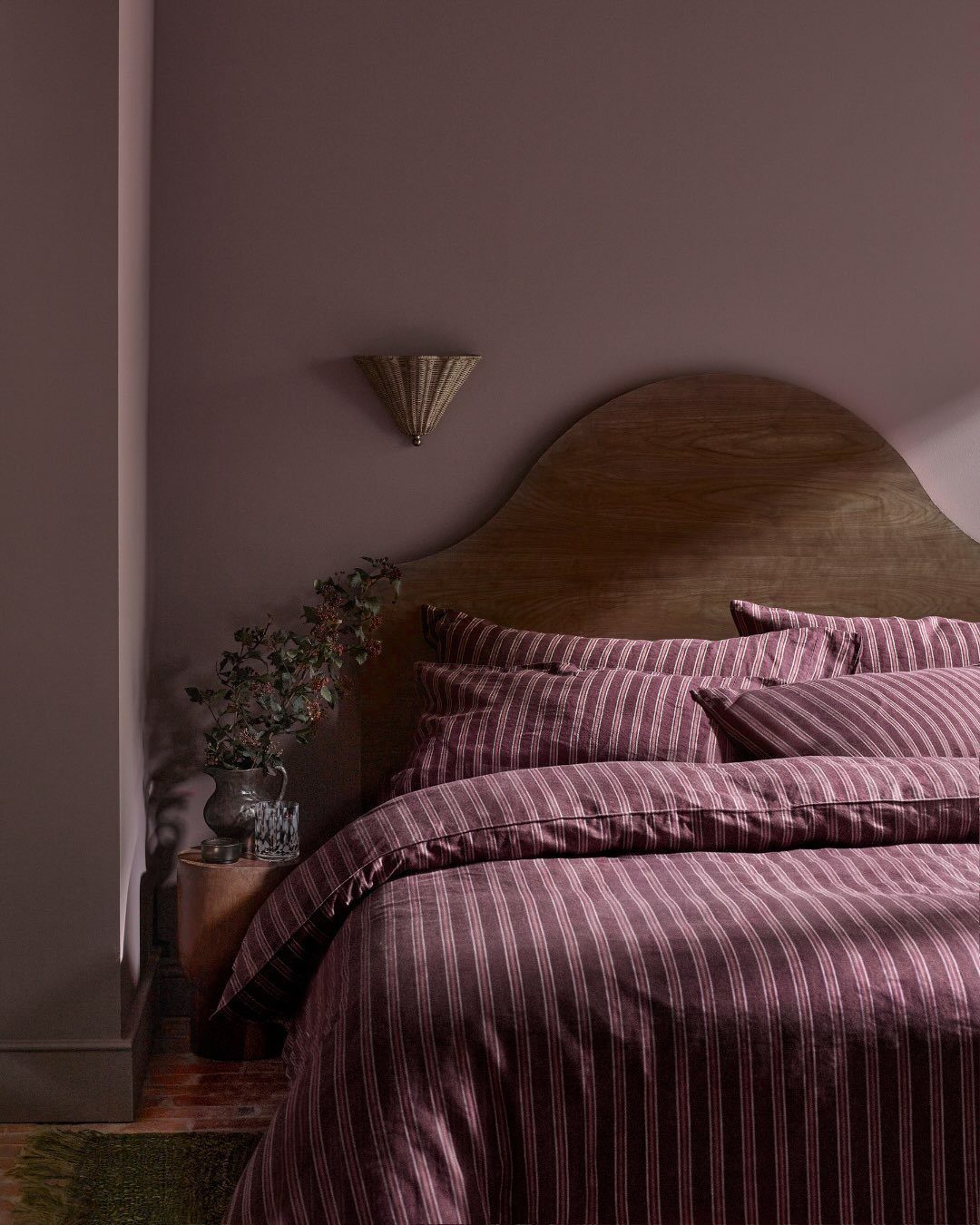
An arched headboard in pale oak or ash adds curve to a room full of straight lines without going decorative. The arch reads as architecture, not ornament, which keeps it Scandinavian rather than romantic.
Rubberwood or oak with a natural lacquer finish works here; pine goes too yellow over time and fights the muted wall colors this pairs with.
Match the bed frame and nightstands to the same wood tone, mixing ranges is where the Nordic look falls apart. Striped bedding in a dusty mauve or slate picks up the warmth without competing.
The height matters more than the width. An arch that starts too low makes sitting up in bed awkward; test where your shoulders hit before you commit.
I’d put this in a room with standard ceilings where the curve draws the eye up without needing anything else on that wall.
20. Scalloped Edge Area Rug
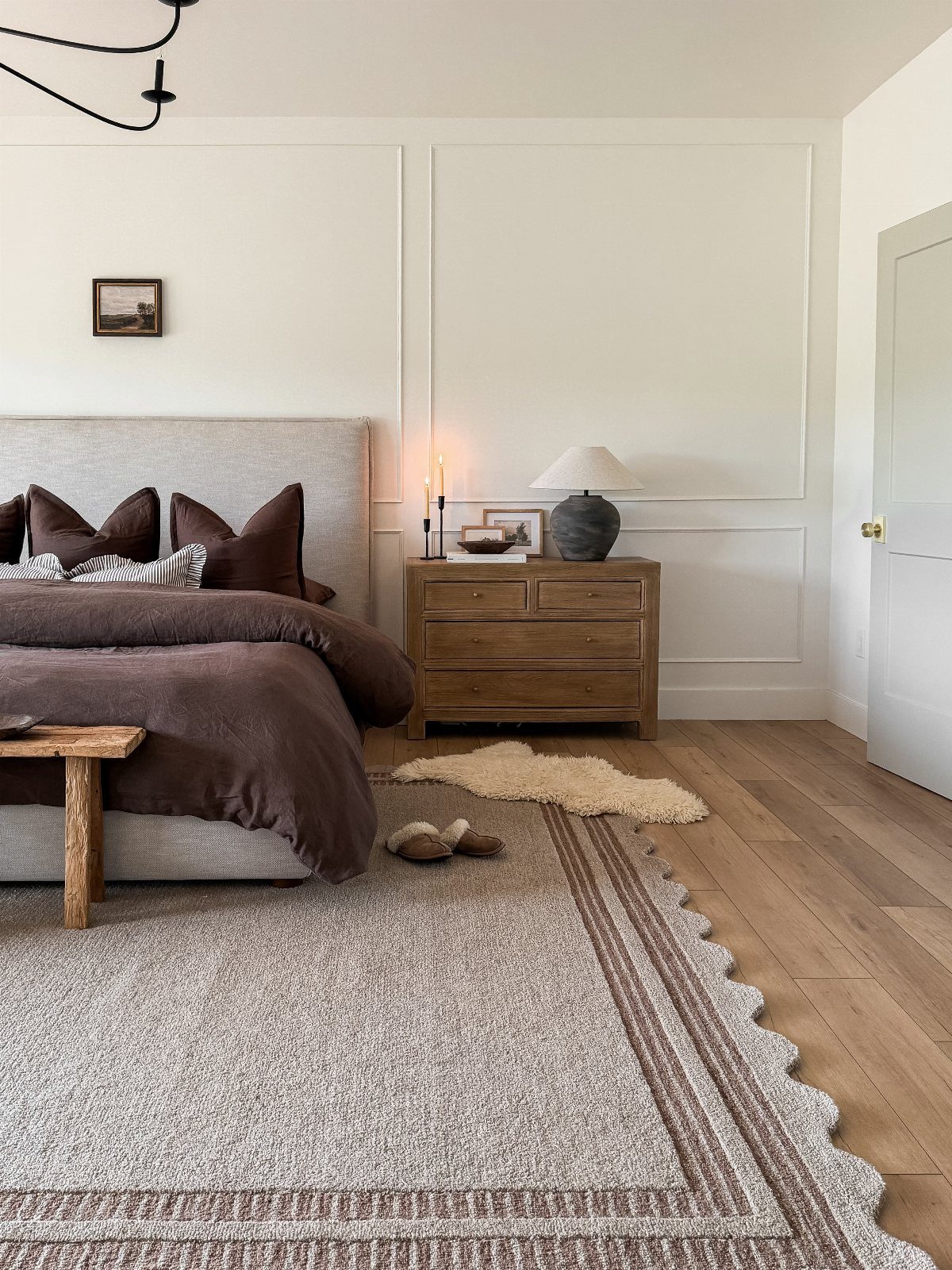
A rug with a scalloped edge does two jobs: it softens the rectangle of a bed frame and it hides the fact that most bedrooms are just boxes.
The wavy border breaks the line where floor meets furniture without adding pattern that competes with plain bedding.
Wool hand-woven or hand-loomed holds up to morning traffic and vacuums back to life. Chunky weave adds the texture Scandinavian rooms build from; flatweave reads as bare, especially against light wood floors.
Neutral with a dark band at the scallop keeps the focus on the shape, not the color.
Size it to extend past the bed on three sides, enough to land on when you swing your legs out.
This is not the place for a small accent rug floating in the middle of the room; the scallop wants space to read. Budget for real wool; synthetic scallops curl and the clean edge is what sells the look.
21. White Metal Twin Beds
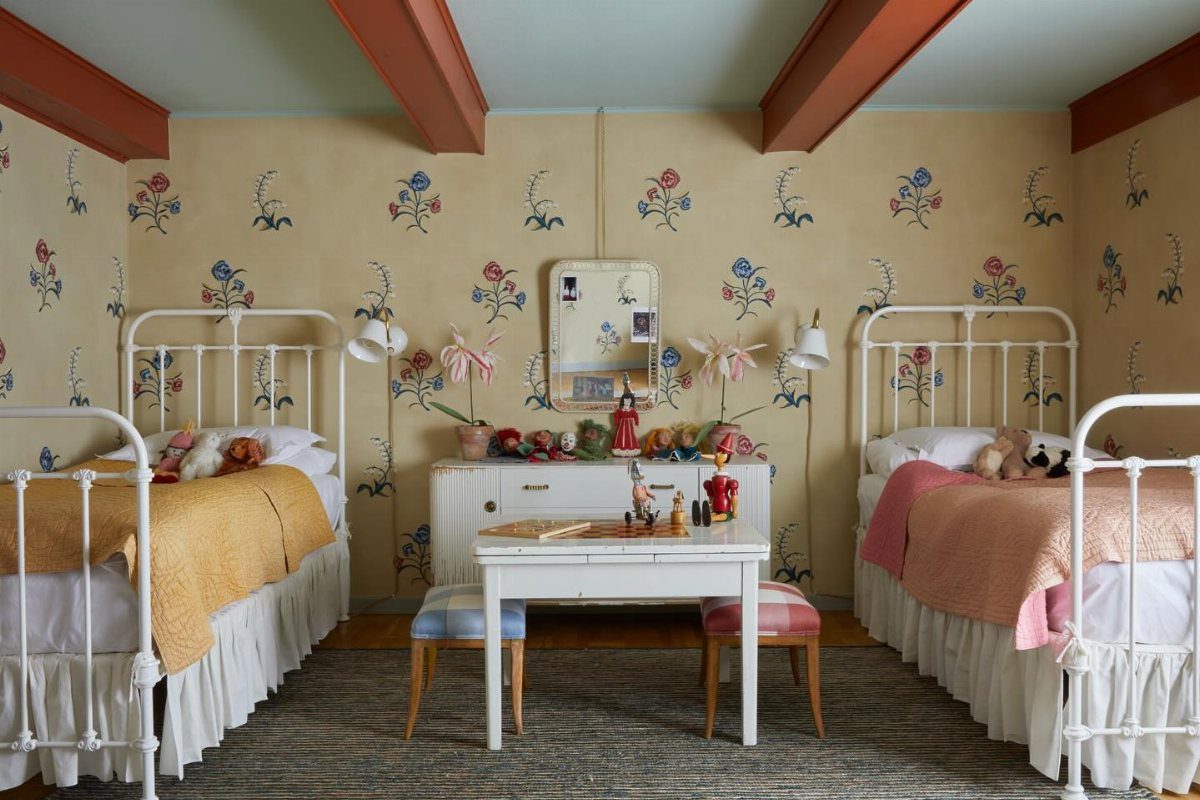
Two white metal twin beds turn a shared room into something intentional instead of temporary.
The vintage frame style, thin tubing and simple vertical spindles, reads as collected rather than bought as a set, which helps when the occupants are siblings who want their own territory.
Metal in white reflects light and keeps the room from feeling crowded, especially important when two beds eat most of the floor space.
Against floral wallpaper and exposed beams, the beds calm things down; in a plainer room, they carry the interest on their own. Performance velvet or crisp cotton bedding in color keeps the frames from reading as institutional.
This setup works until roughly age twelve, when the vintage twin starts feeling assigned rather than chosen. After that, the frames move to a guest room or sell fast on local marketplaces.
22. Minimalist Wardrobe with Integrated Lighting
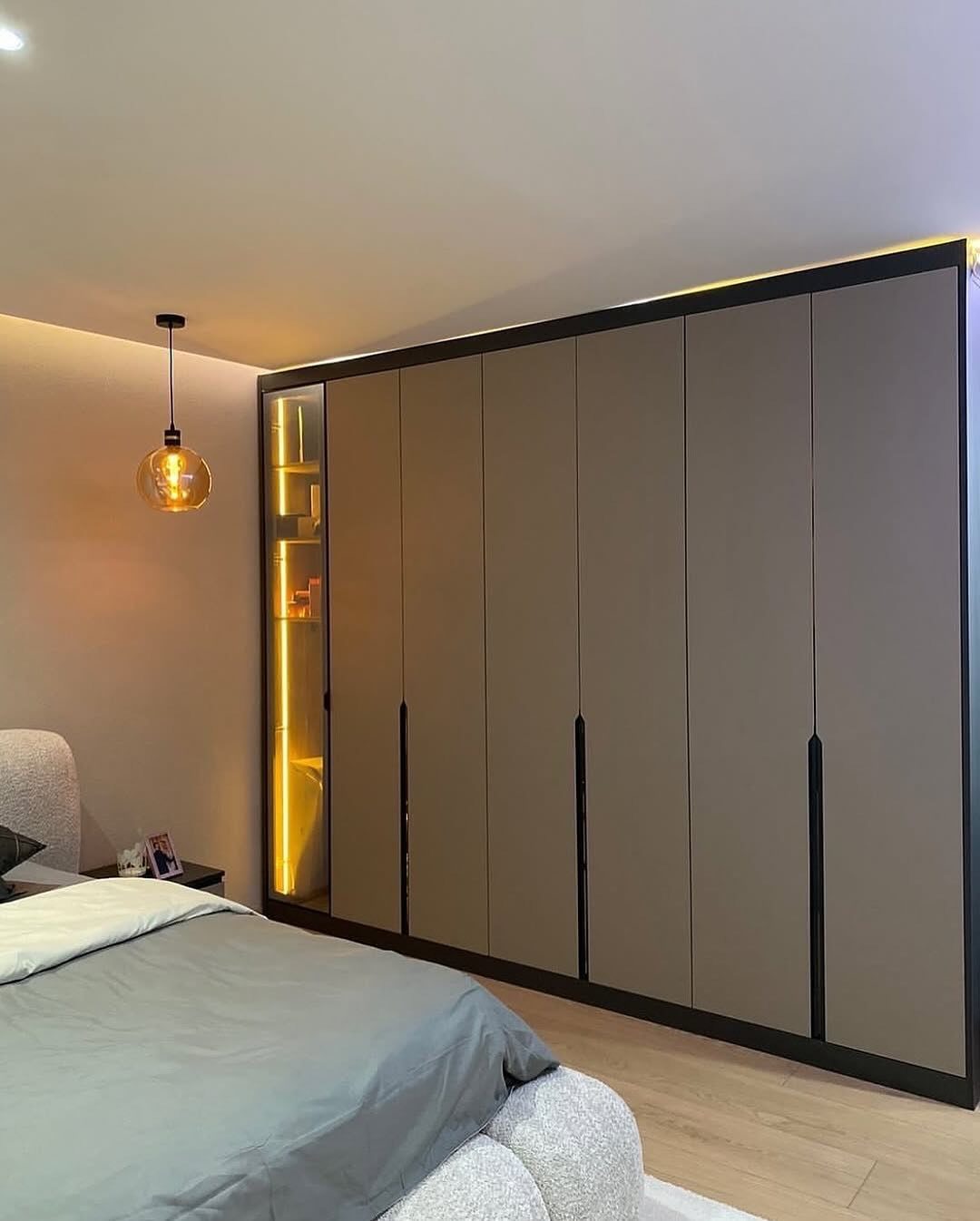
Floor-to-ceiling wardrobe with light built into the frame turns clothing storage into something that reads as furniture. The glow along the interior edge finds what you need without a ceiling fixture blasting the whole room when you first wake up.
Glass-front one section if you want the depth to show; solid doors everywhere else keep the visual weight flat.
Warm light color, around 2700K, keeps the grey from going cold; anything bluer and the bedroom starts feeling like an office corridor. Handles in black break the grey without adding a third material.
Check your ceiling height before ordering. These units read as built-in only if they hit the crown; a gap above looks like a mistake or a rental limitation.
Integrated lighting needs an outlet or hardwiring inside the unit, so this is a plan-ahead choice, not a Sunday afternoon build.
23. Dark Paneled Accent Wall
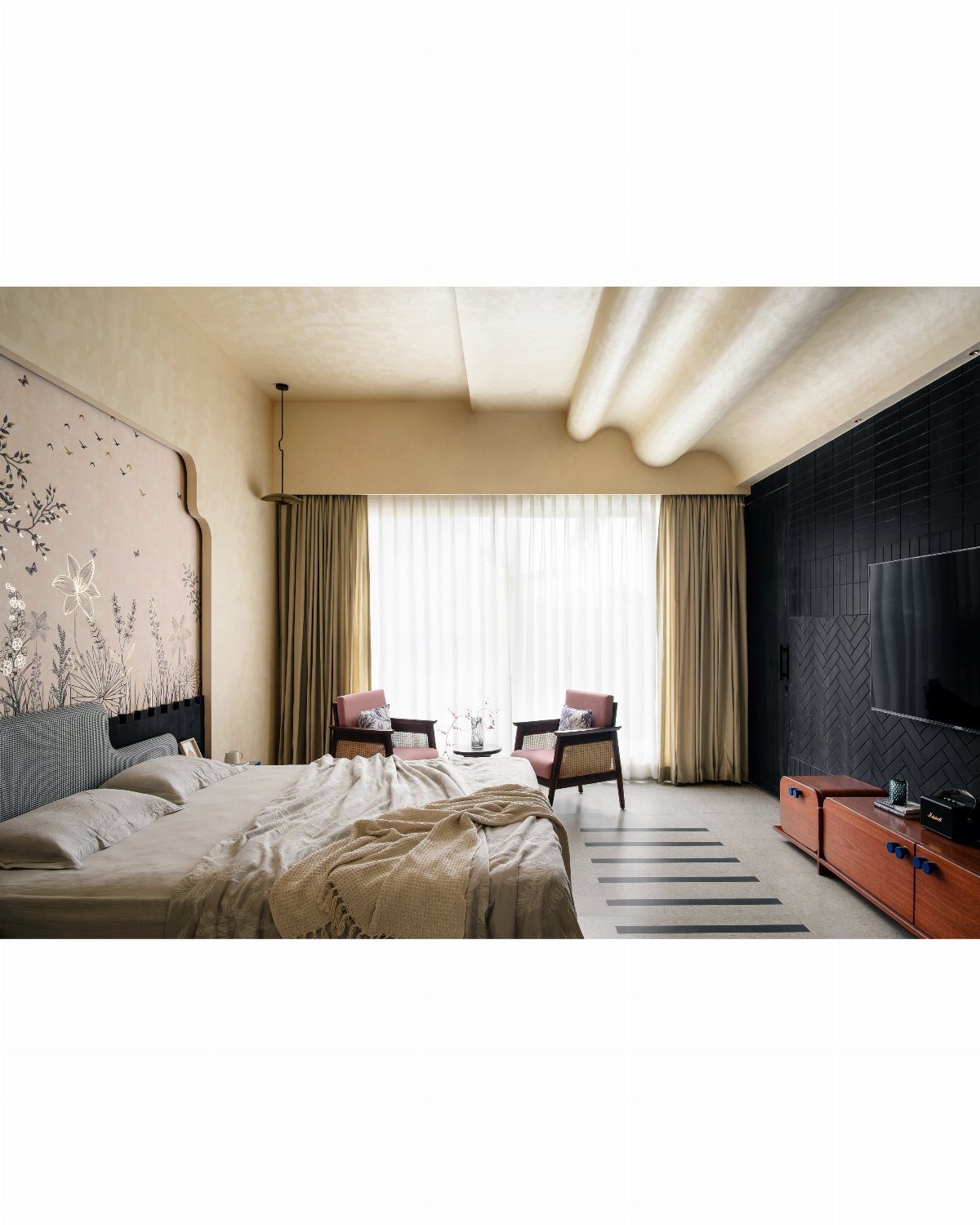
A dark paneled wall behind the television or opposite the bed gives a large room an anchor that pale Scandinavian colors cannot manage on their own.
The depth of charcoal or black-brown stops the eye and makes the light wood and neutral bedding in front of it stand out.
Paneling adds texture even when the color goes flat; a smooth painted wall at this darkness reads as a hole. Keep the panels horizontal and low-profile, shadow-gap style, to stay modern; vertical tongue-and-groove goes cottage fast.
This trades the airy brightness Scandinavian rooms are known for. Use it in a space with big windows or generous square footage, where the dark wall balances rather than overwhelms.
In a small room, stick to one dusty pastel accent wall instead.
24. Botanical Wallpaper Accent Wall
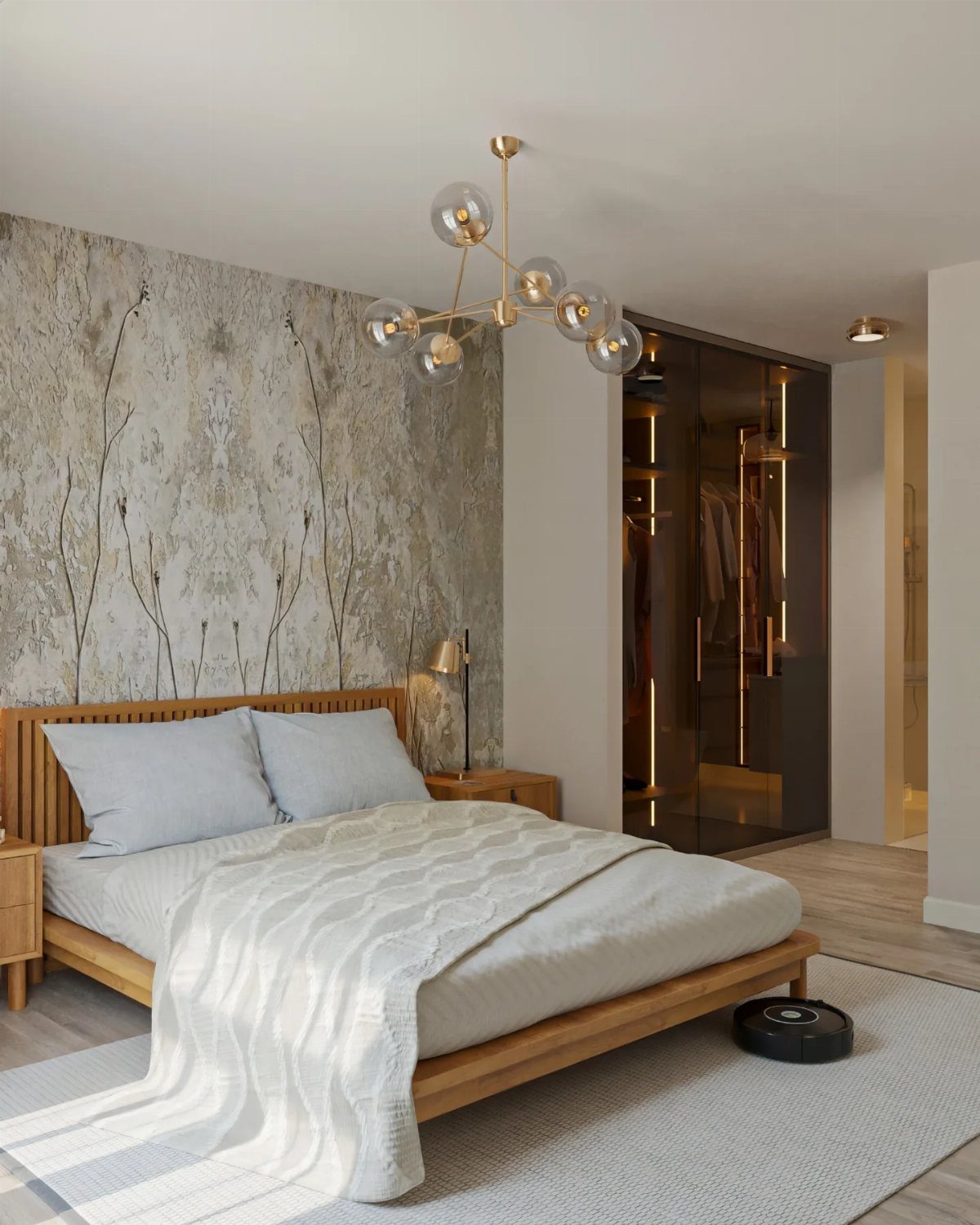
A botanical wallpaper accent wall brings living pattern into a Scandinavian bedroom without adding clutter. A muted, large-scale print reads as texture from across the room rather than busy floral detail.
I would stick to papers with a white or cream ground and green or grey stems; anything darker fights the light you are trying to keep.
Two double rolls usually cover a queen-width wall with margin; decent vinyl-backed paper runs mid-range per roll. Paste-the-wall types save mess and let you slide the piece into place, which matters when you are lining up stems around a headboard.
This works best when the rest of the room stays quiet: plain linens, light wood, no competing prints. The wall becomes the personality, so your art and textiles need to stay minimal.
25. Hanging Globe Pendant Lights
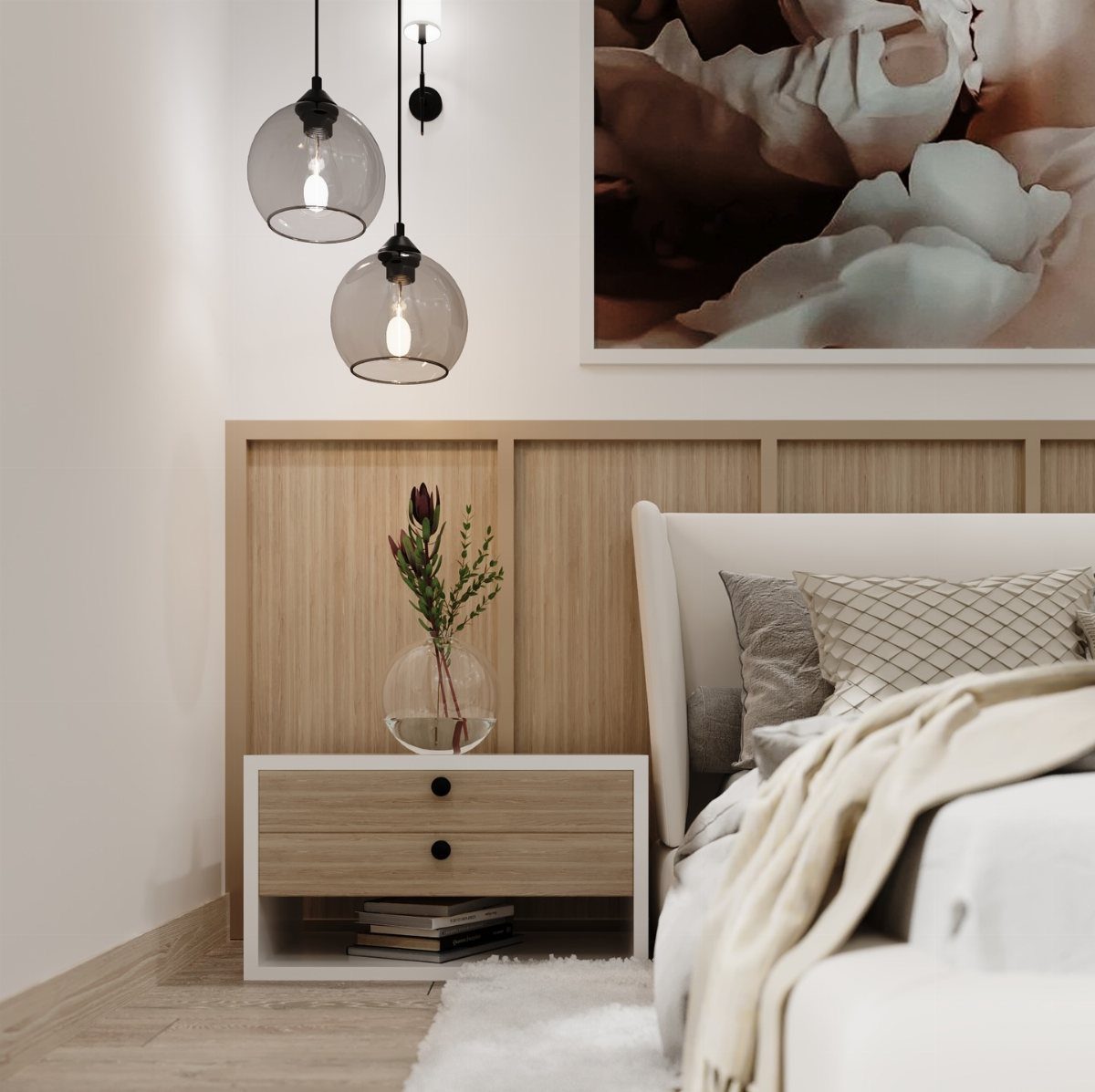
Two small globe pendants hung at bedside height replace the standard table lamp and free up the entire surface of your nightstand. Simple clear glass on black cord keeps them from reading too decorative against the vertical wood paneling behind.
Hang them low enough to avoid glare but high enough that you won’t bump them making the bed; eye level when sitting up in bed is about right.
Most electricians charge a couple hundred to add a ceiling box and switch where none exists, but if you already have a centered overhead fixture, splitting that circuit to two pendants is often simpler than it looks.
Clear glass spreads light in all directions, so use dimmable bulbs and a wall switch you can reach without getting up. Frosted globes are easier to live with if your partner reads later than you do.
26. Woven Pendant Light Fixture
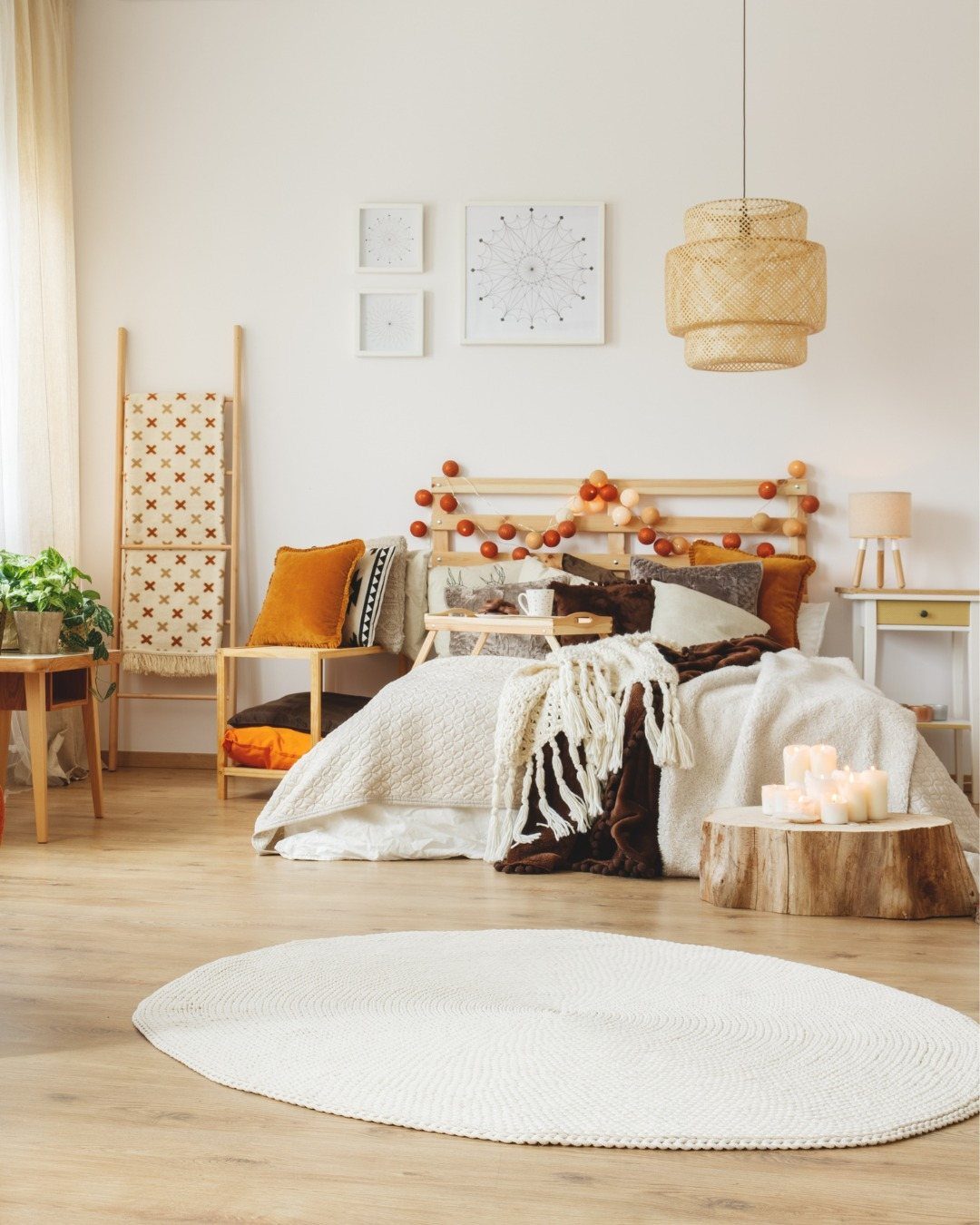
A woven pendant over the bed casts striped, softened light that makes white walls feel warmer without changing their color.
Natural fiber, probably rattan or seagrass, in a loose drum shape lets bulbs breathe and avoids the fire risk of tighter weaves.
I would choose an LED bulb labeled 2700K; anything cooler turns the weave grey and kills the warmth you bought the fixture for. Raw wood tables paired with the pendant double down on texture but keep the palette tight.
Ceiling height matters. The bottom of the shade should clear your head when you are standing on the bed to change sheets, which usually means a shade on the shorter side.
Taller ceilings can take the larger rice-paper-and-steel versions that show up in Danish catalogs, but shipping on those runs high.
27. Swing-Arm Bedside Lamp
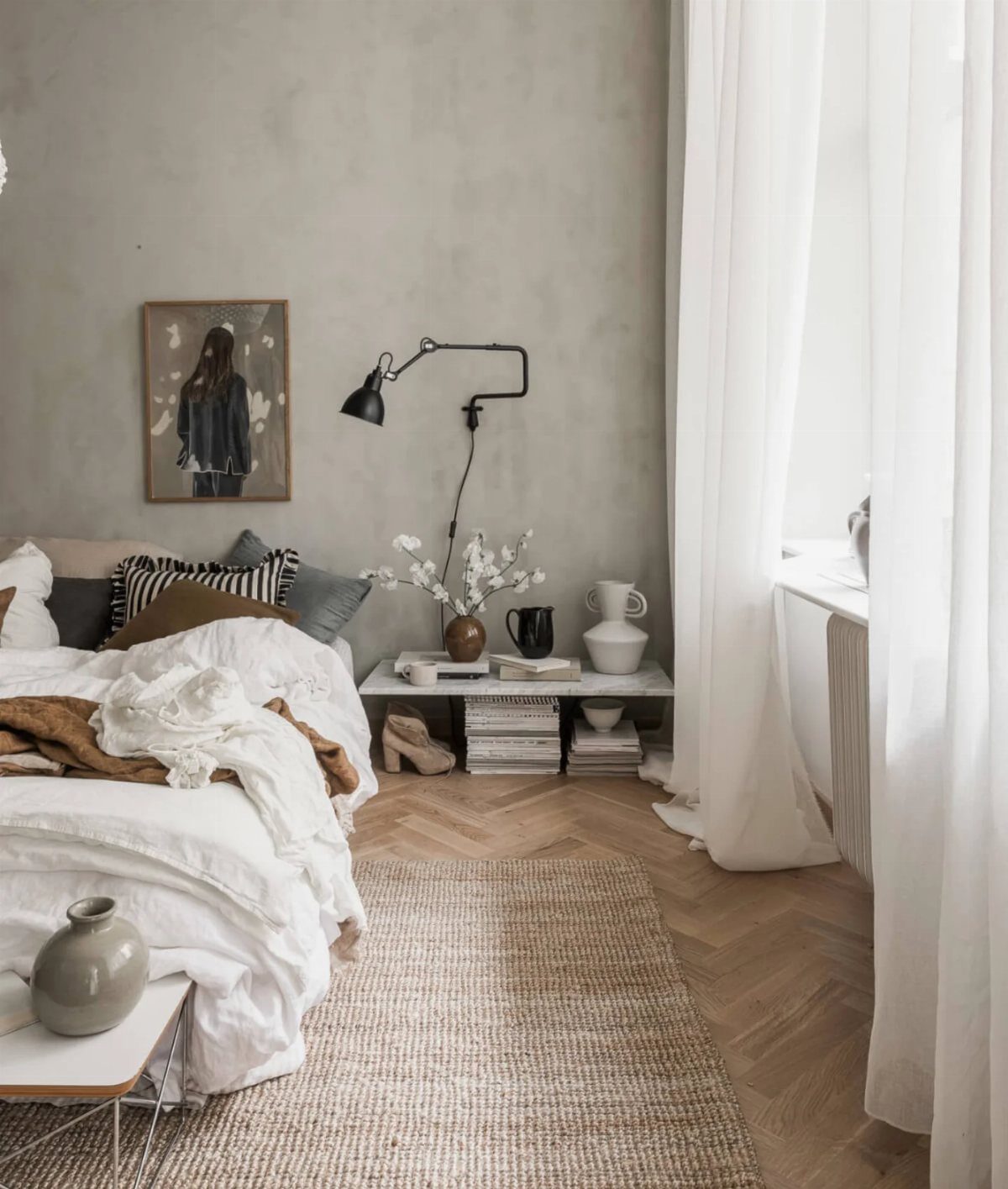
A swing-arm lamp mounted to the wall does the work of a bedside lamp while taking zero space on the table below.
A black finish extends over a low marble ledge that would not fit a standard shade-and-base lamp at all.
Most models need a junction box, but plug-in versions with a cord channel exist if you are renting and cannot open the wall.
Swing-arms read more industrial than cozy, so they suit bedrooms that already have some edge, like the textured grey plaster wall shown. In a soft all-white room, a white paper lantern or simple table lamp keeps the peace better.
28. Sage Green Paneled Wall
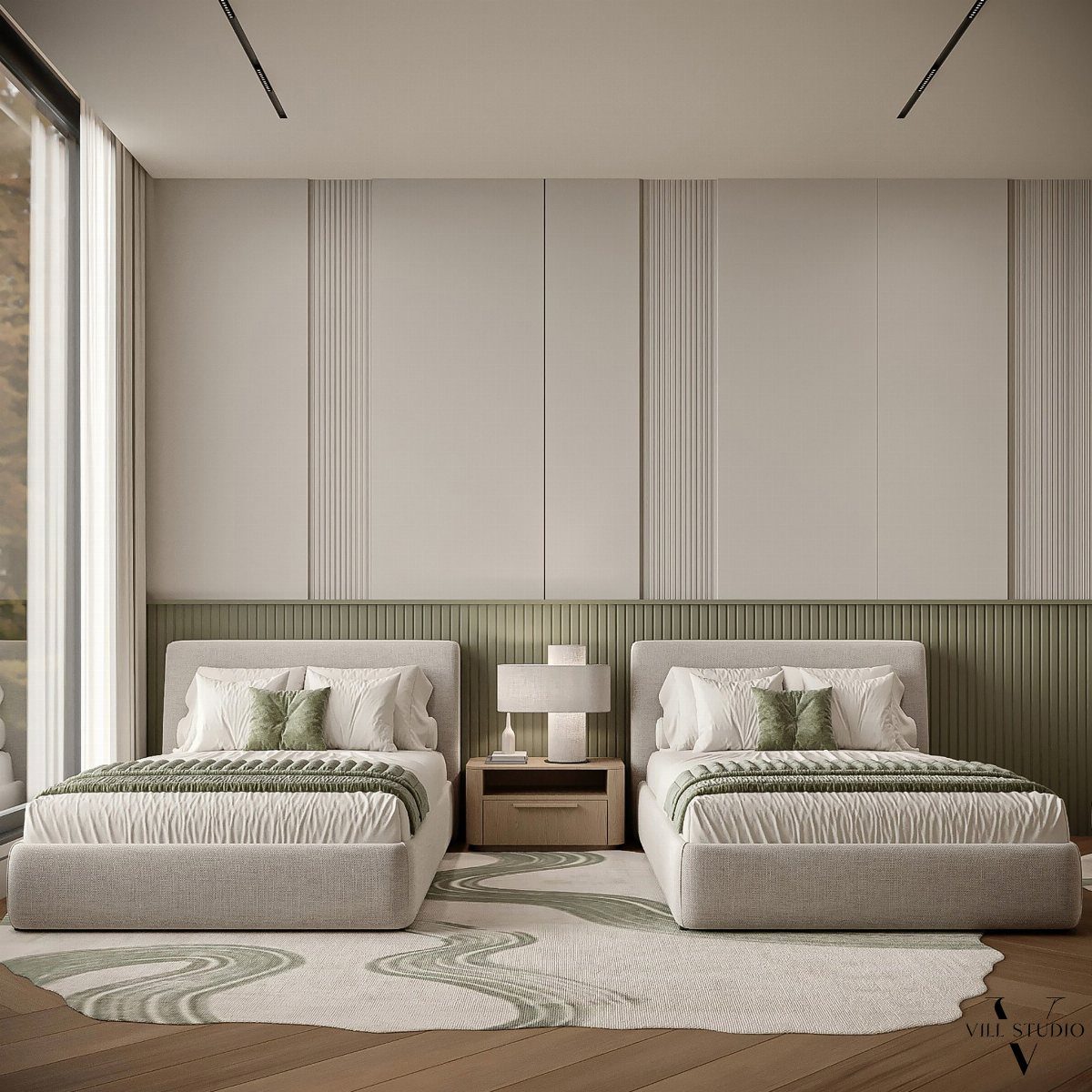
Sage green wall paneling warms a shared room without leaning so young that brothers outgrow it fast. Fluted lower panels sit below a neutral upper wall, which keeps the color from wrapping the room and turning it into a box.
Test the green in both morning and afternoon light before committing; sage shifts dramatically toward grey or toward mint depending on exposure, and the sample that looked muted in morning light can read nursery-bright by late afternoon.
The maker of this room designed it for two children, with climbing and study built in, so the calm wall color balances the activity elsewhere.
Paneling over drywall adds thickness to the wall plane, which matters for door casings and baseboards you may need to extend. MDF slats run a few dollars per linear foot raw; primed and ready to install, the price roughly doubles.
The labor of leveling and spacing them evenly is where the weekend goes.
29. Peach and Ochre Bedding Accents
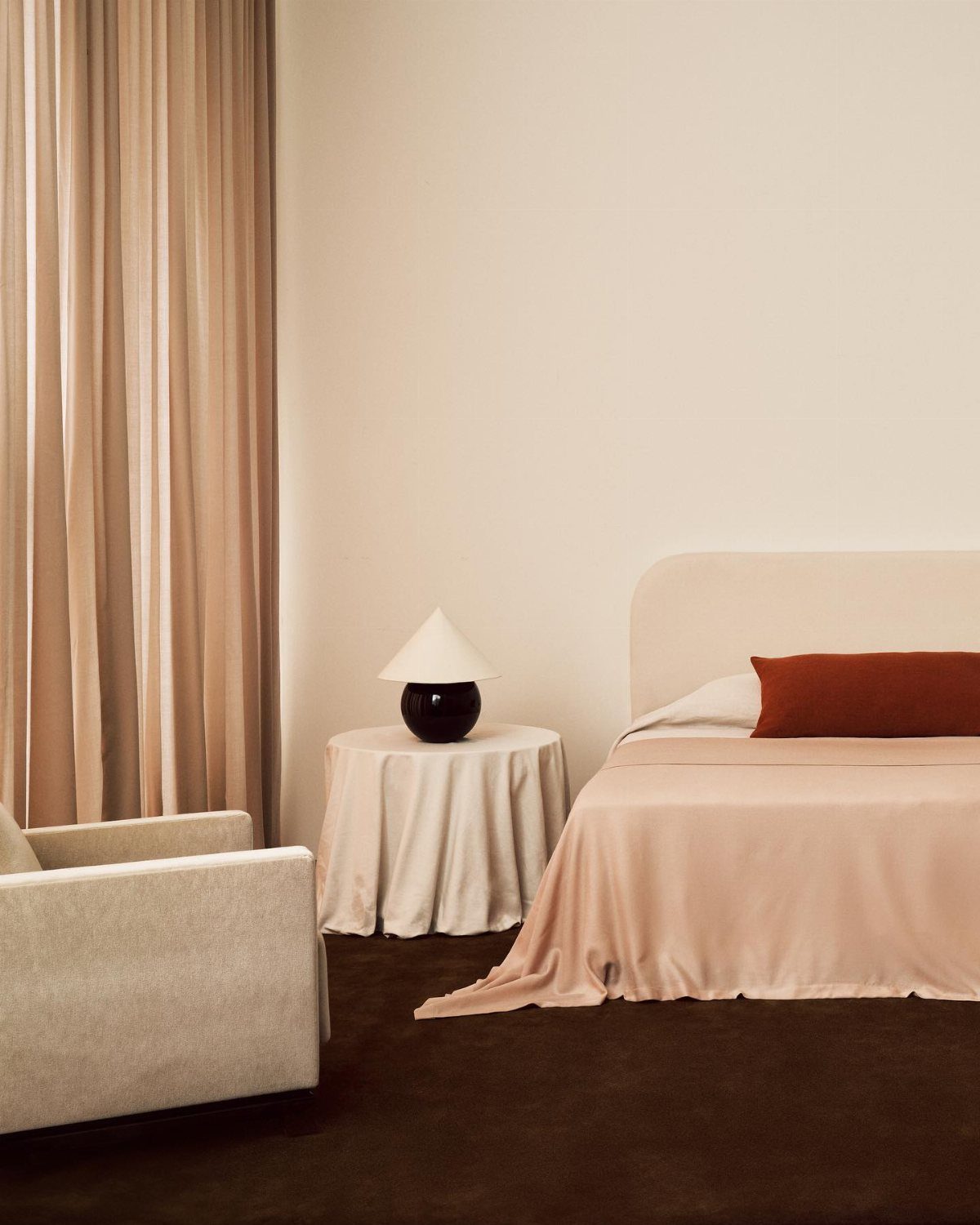
Peach and ochre bedding turns a neutral room warm in one change that costs less than a new chair. Silk-weight peach sheets with a single long ochre pillow doing the accent work instead of a scatter of small cushions.
I would keep the peach to the sheets and the ochre to one or two pieces; both colors at full strength across the whole bed look like a sunset, which is not restful.
The beige upholstered chair in the corner picks up the warm undertone and keeps the palette from floating away into pink.
Machine-washable silk or silk-cotton blends exist now and give the drape without the dry-cleaning bill, though they still need a delicates bag and a cool cycle.
Scandinavian Design Principles
A bedroom only needs what you actually use, and Scandinavian design starts from that idea.
The bedside table from John Lewis shows this plainly: two drawers, tapered legs, no handles, rounded posts that do not catch a hip in the dark.
That tray edge is a small detail that solves a real problem, keeping a glass or a phone from sliding off.
The connection to nature is not decorative. Pale wood, natural texture, and a calm, uncluttered feel come from choosing materials that age well and shapes that do not fight each other.
I would pick this approach for any small bedroom where the furniture has to work hard and the eye needs a place to rest.
Scandinavian-inspired bedrooms aren’t going anywhere fast. With cosy textures, pared-back but impactful design, and neutral tones, it’s the perfect fit for many homes.
Importance of Natural Light
A Scandinavian bedroom lives or dies on how much daylight gets in. Pale wood and white surfaces bounce what light you have, so the room feels larger than its walls.
Layered light matters too, but the layers start with the window, not the fixture.
The Euphoria Interiors example gets this right: natural texture plus layered light plus an uncluttered feel. I would add that the window treatment should be simple enough to open fully in the morning and close without fuss at night.
Heavy hardware or thick folds steal space from the light itself.
If your bedroom faces north or a wall, paint in a warm white and place a mirror where it catches what sun arrives. The brightness is the point, not an afterthought.
Mixing Styles
Japandi blends Japanese craftsmanship with Scandinavian restraint, both traditions built on using only what you need. Clean lines, organic texture, natural materials, and neutral tones give the two styles common ground.
The difference is in the finish: Japandi leans more refined, less rustic than pure Scandi.
The Nordic Bed and Scandic Bench from Satara Australia show this balance. Fluidity matters as much as simplicity; the furniture should feel like it could move, even when it stays put.
I would try this mix if a straight Scandinavian room feels too bare or too cold.
Start with one piece that bridges both, a low bench or a woven screen, and build around it. What you want is a room that works quietly and still looks good ten years from now.
Frequently Asked Questions
What is a Scandinavian style bedroom?
A Scandinavian style bedroom strips back to what you actually use, then builds warmth through pale wood, natural texture, and calm, uncluttered surfaces.
White or cream walls bounce daylight around, while layered textiles in linen, wool, and cotton keep the room from feeling cold.
Small bedrooms actually suit the look well, since the style grew out of rooms where every chair and table had to pull its weight.
What are the 7 principles of Scandinavian design?
Simplicity, functionality, minimalism, natural materials, light, comfort, and connection to nature form the core.
For the bedroom itself, that means bedsides with straight edges and nothing tacked on that doesn’t do work: think a pair of drawers on slim legs, maybe a small lip around the top so your glasses don’t slip behind the thing at 2 a.m. The materials age rather than date: pale ash, oak, or pine; linen that softens with washing; plaster walls that turn small cracks into character.
What are the Scandinavian design trends for 2026?
Open storage solutions and layered textures are heading upward, mixing Nordic simplicity with more lived-in warmth. Japandi continues to grow, blending Japanese craftsmanship with Scandinavian restraint through low benches, woven screens, and fluid shapes that look like they could move.
The shift is toward rooms that function quietly and still look good ten years out, not staged setups that need constant curation.
What are some good ideas for Scandinavian room design?
Start with pale wood furniture in one tone across bed, nightstands, and dresser so the room reads as intentional. Layer white-on-white textiles: smooth cotton sheets, slubbed linen duvet, chunky wool throw folded at the foot.
Add five to seven small light sources at warm white temperature rather than one overhead blast, and hang floor-to-ceiling sheers that filter sun without blocking it.