
These bedroom corner shelf ideas run from a zig-zag scrap plywood build you can finish in an afternoon to a ready-made mango wood triangle set, and the deciding factor is whether you need storage, display, or both in the same footprint.
A single floating shelf mounted at sitting-elbow height can replace a nightstand entirely in a studio where floor space is already gone, and that idea shows up later as its own entry.
1. Corner Bookcase
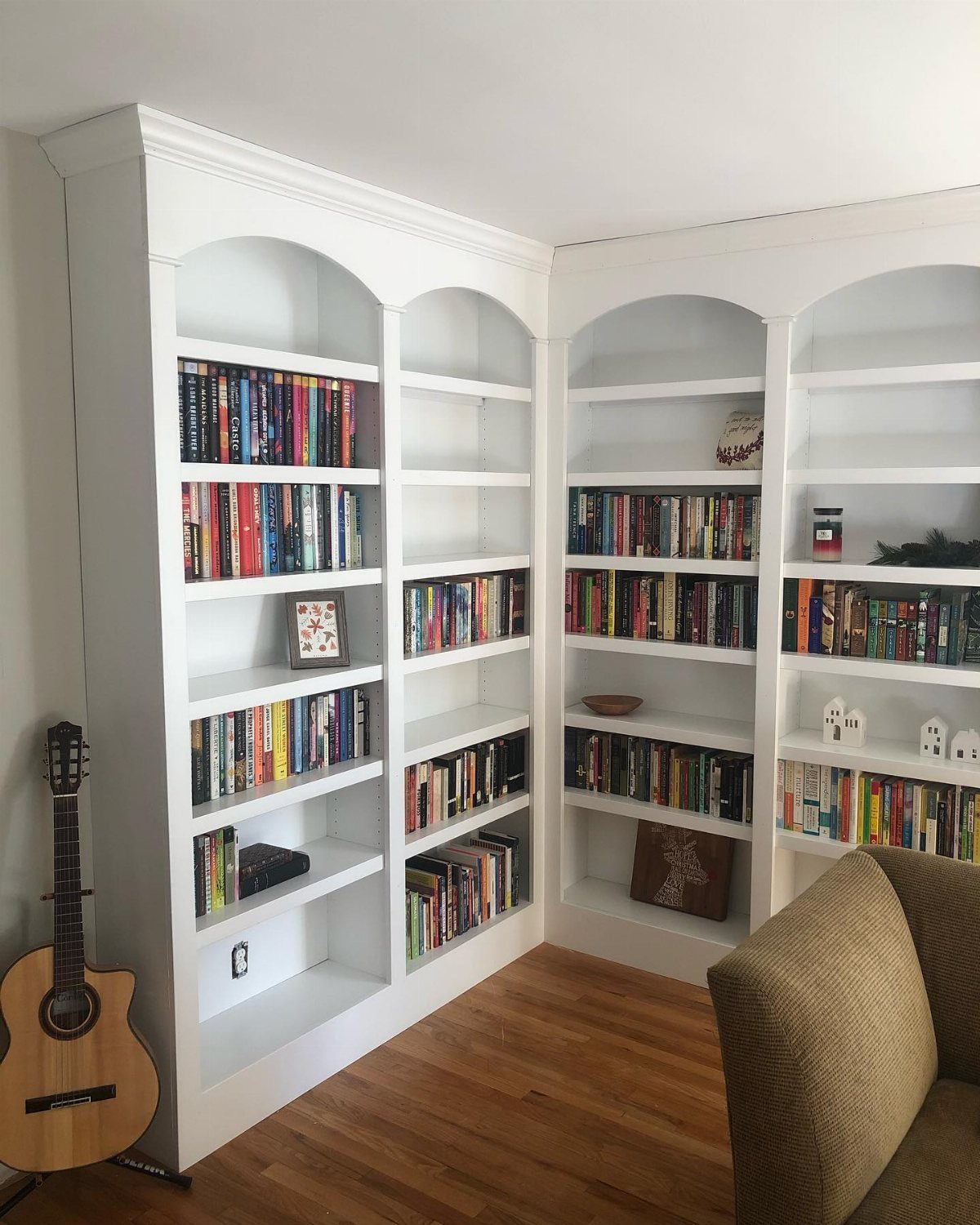
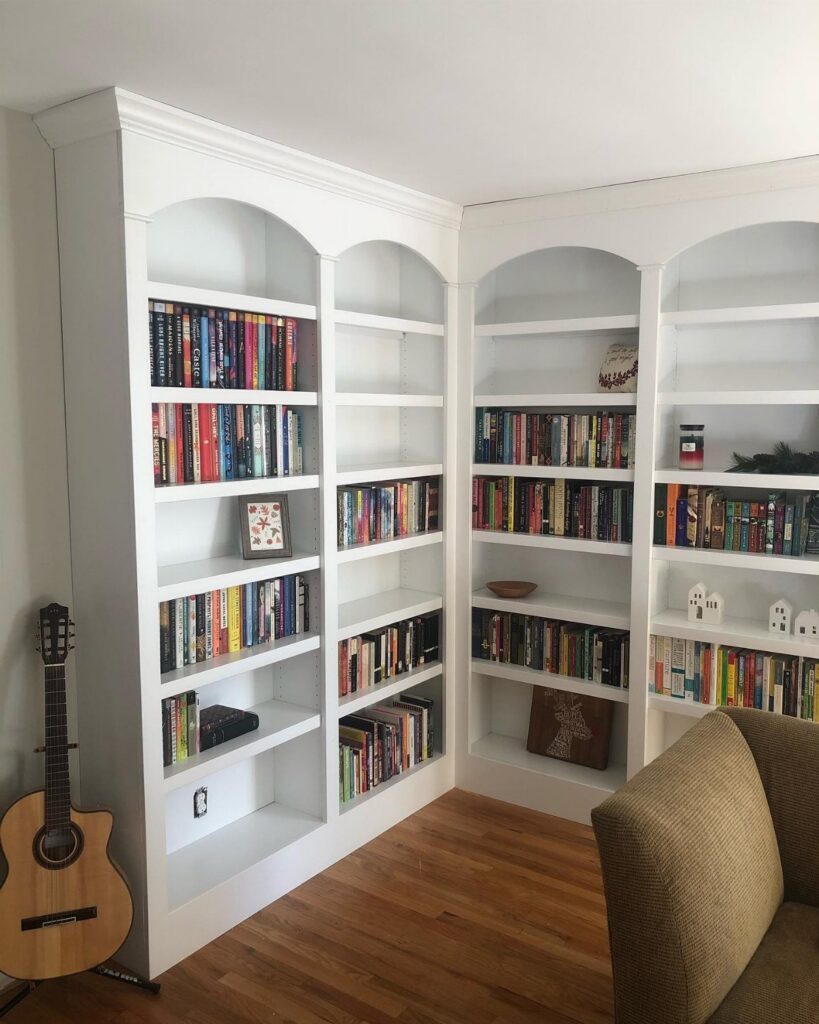
A corner bookcase turns the dead space where two walls meet into floor-to-ceiling storage.
White built-ins that run straight to the ceiling turn a whole corner into one statement piece; sort books by color and the eye reads it as a single unit.
For a rental or first home, a tall standing unit hits the same note without construction. Wayfair carries slim ladder-style units in turquoise-to-mustard gradients that break up book stacks with room for a small plant or framed photo.
Five feet of vertical storage eats a fraction of the floor plan.
I’d pick this for anyone whose book collection keeps outgrowing its shelf. Weight is the real concern; load heavier titles on bottom tiers so the unit stays put.
2. Floating Shelves
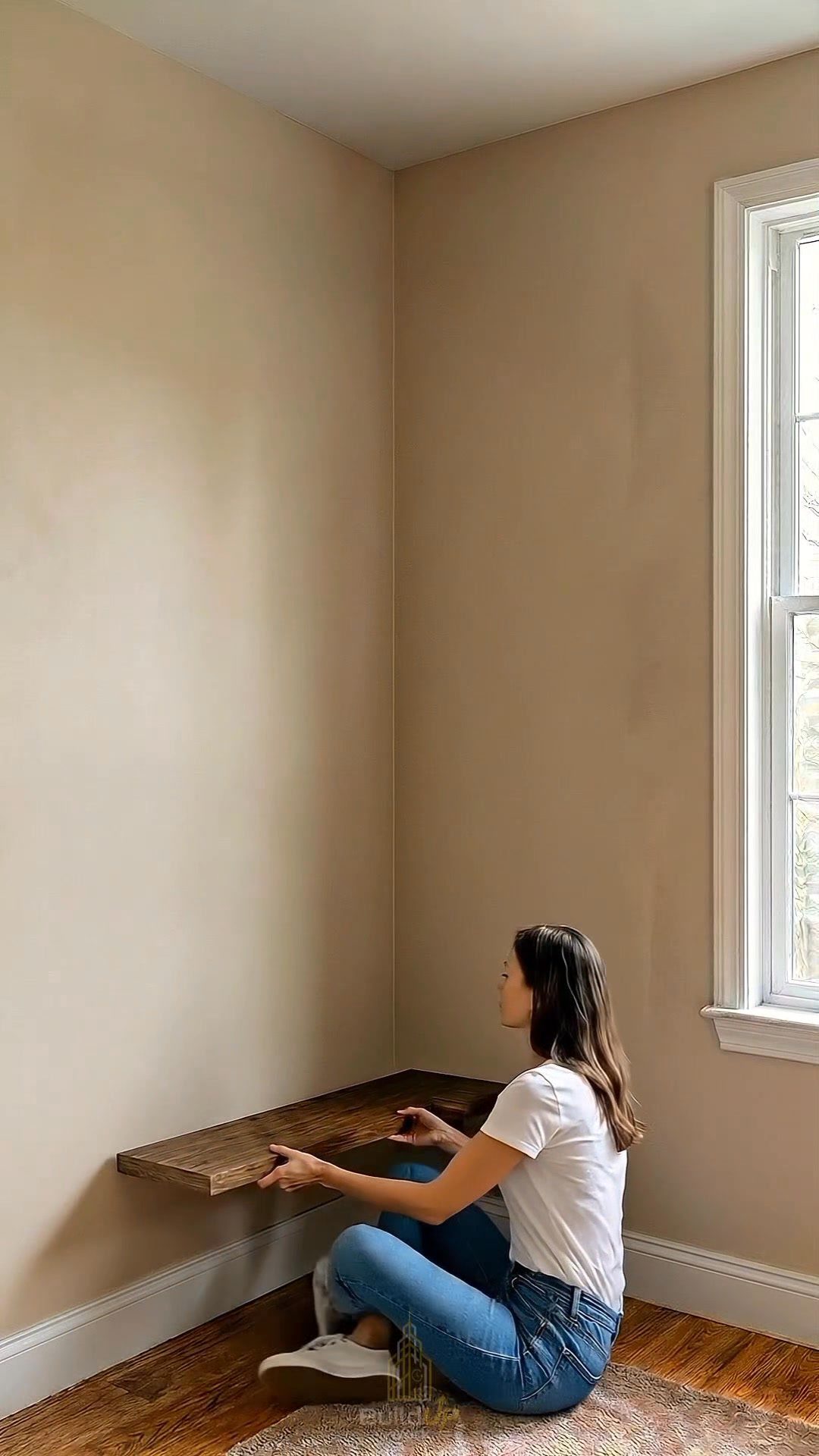
Floating shelves preserve every square foot of floor. Two or three mounted in a vertical column turn a bedroom corner into display space for books, candles, or a trailing pothos without the bulk of a standing unit.
The thick, solid look above comes from building a hidden frame first, then skinning it, which also leaves room inside for secret storage. Solid wood corner shelves start cheap enough that you can test the look without much risk.
A rounded front edge keeps the focus on what sits there, not the shelf itself.
This is the move for tight apartments where a bookcase would block traffic. The limit is capacity; plan on showing a dozen objects, not archiving a library.
3. Rustic Wooden Corner Shelves
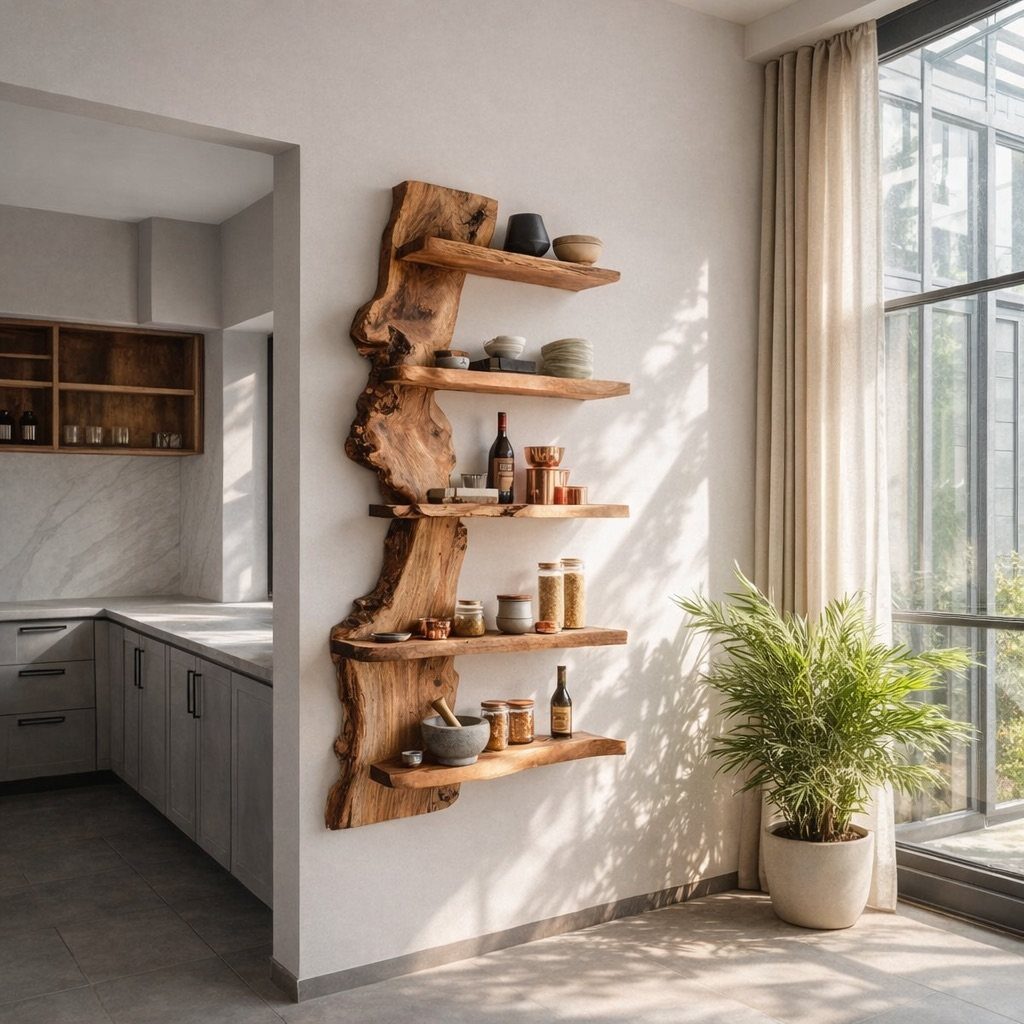
Live-edge boards with the bark still on bring outdoor texture indoors.
Reclaimed wood with black metal brackets against white plaster lets the grain stay central; keep what sits there simple, ceramic bowls or a single potted plant, so the wood does the talking.
Pallet boards or any reclaimed lumber works if the pieces run long enough to meet at the corner with something solid to screw into.
Start your cuts from a middle board sized to the corner angle, then build the rest to fit outward from there. Whitewash reads coastal; honey tone against navy walls reads more cabin.
A rounded-edge pine version at chair height doubles as a bedside table alternative. Stack three paperbacks, add a small lamp, and a corner becomes a reading nook without buying a side table.
Best for five-foot corners that feel too tight for furniture.
4. Minimalist Corner Shelf Design
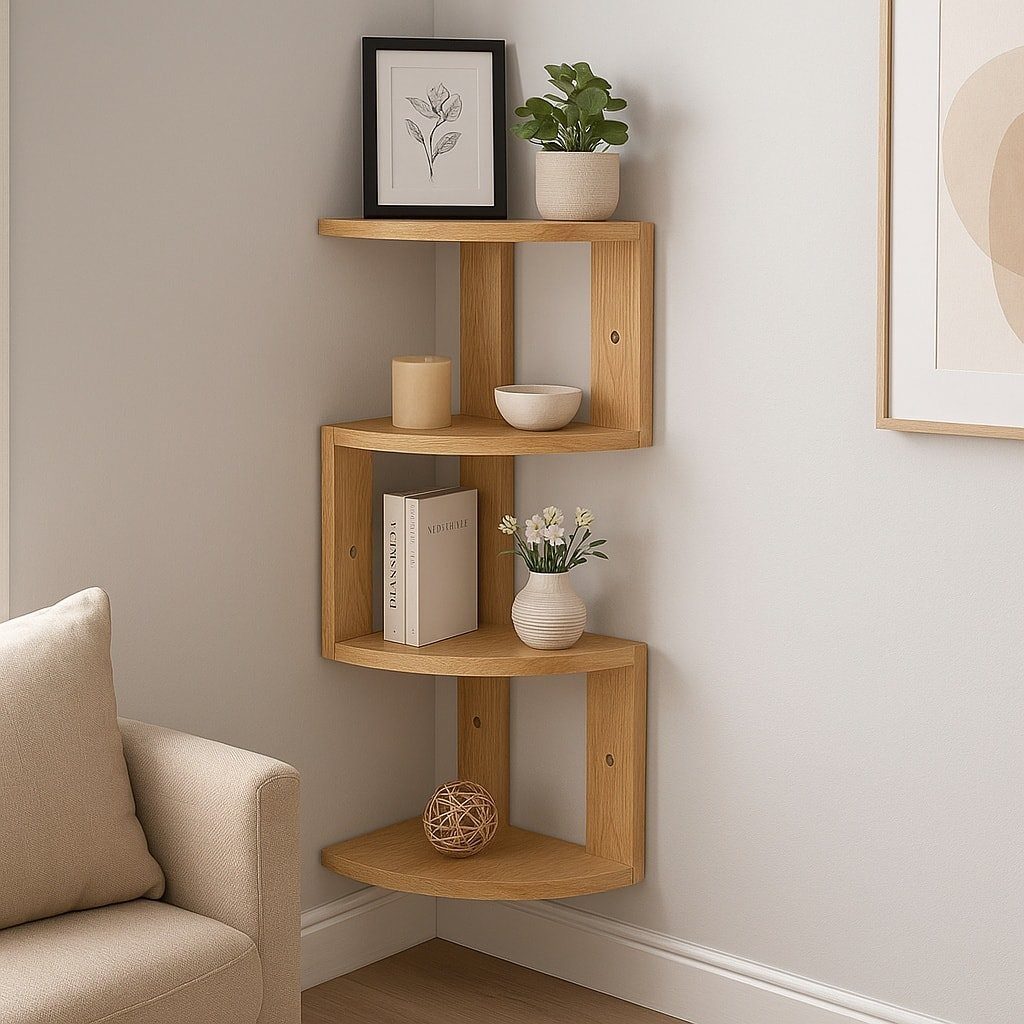
Minimalist corner shelves let the objects do the talking.
Paulownia wood keeps the weight down and the grain subtle. Paint the shelves to match the wall and they disappear entirely, turning the corner into a floating gallery.
This suits anyone whose bedroom collects clutter. The cost is decision fatigue; every piece on display has to earn its spot.
5. Ladder Style Corner Shelves
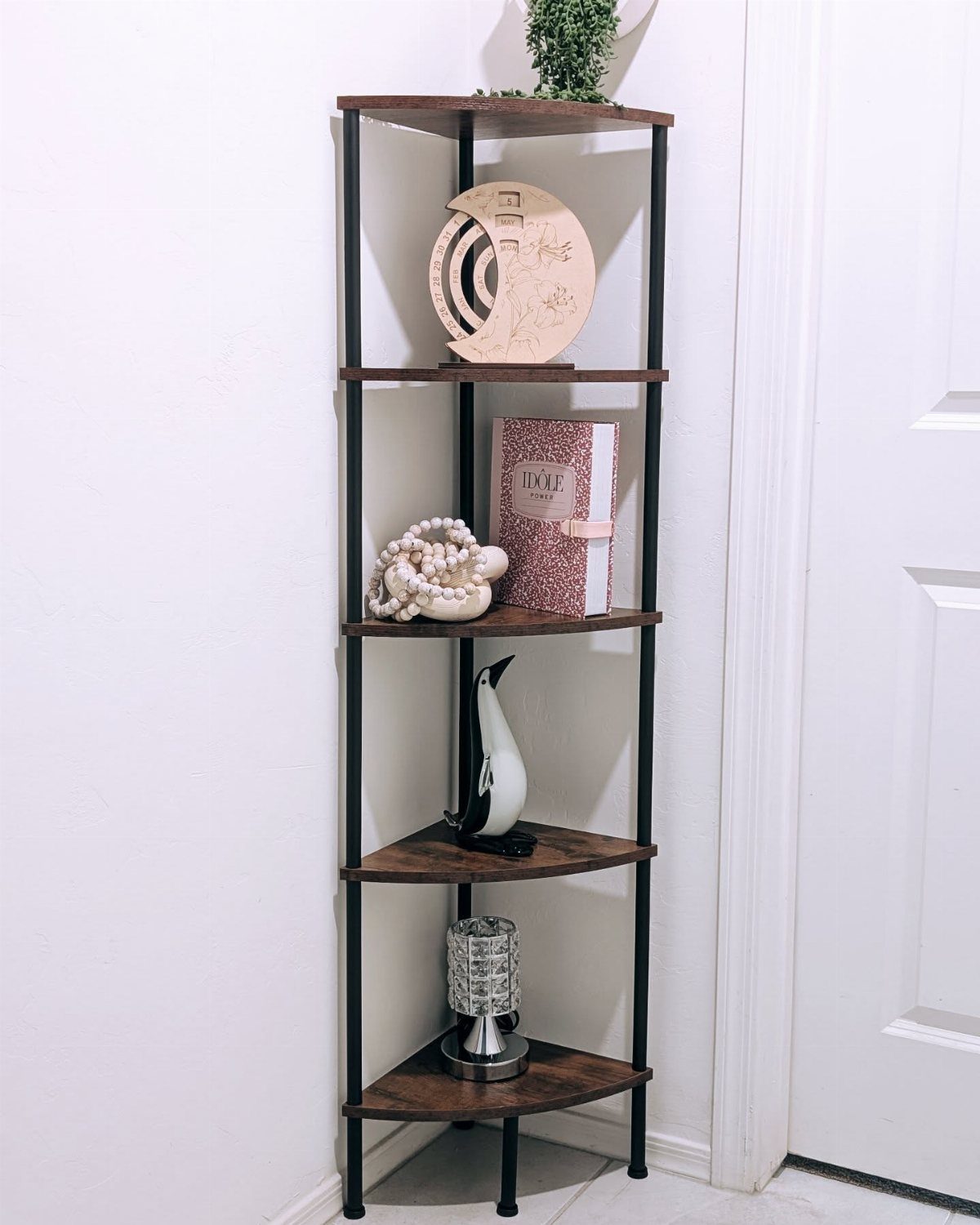
A ladder shelf leans into the corner without a single screw in the wall. A black iron frame rising through four dark wood tiers keeps the corner open; the rails let light pass through so it never feels boxed in.
Cast iron and wood together hit an industrial-farmhouse note. Woven seagrass baskets on the lower tiers hide what you do not want seen; a single trailing plant and a small framed print keep the upper levels airy.
The maker notes five tiers as the right count for small spaces.
Renters take note: no wall damage, and it moves with you. Keep the palette to black, cream, and natural fiber or the graphic lines turn busy.
6. Glass Corner Shelves
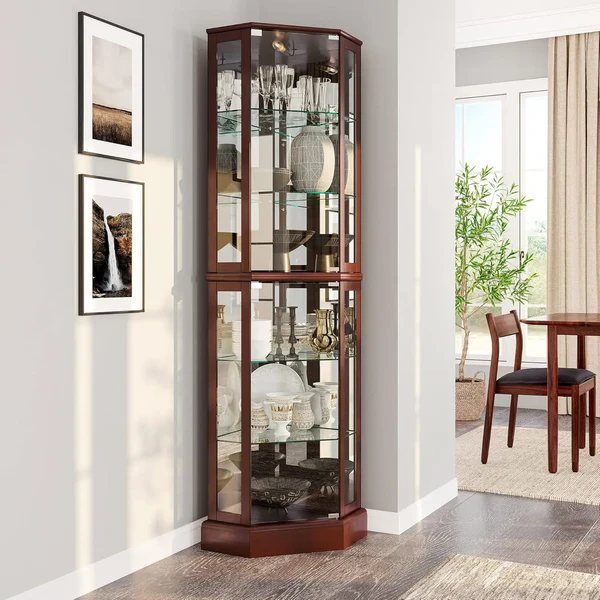
Glass shelves disappear. A dark wood frame with glass all around works best when the interior is painted; glassware and ceramics read as objects in a case, not clutter on a shelf.
The maker builds theirs to 72 inches with interior lighting included.
Transparency keeps a small bedroom feeling open, which is why this works in contemporary spaces where solid wood would read heavy. Fingerprints show on glass, and you will dust more often than with opaque shelves.
7. LED Light Corner Shelves
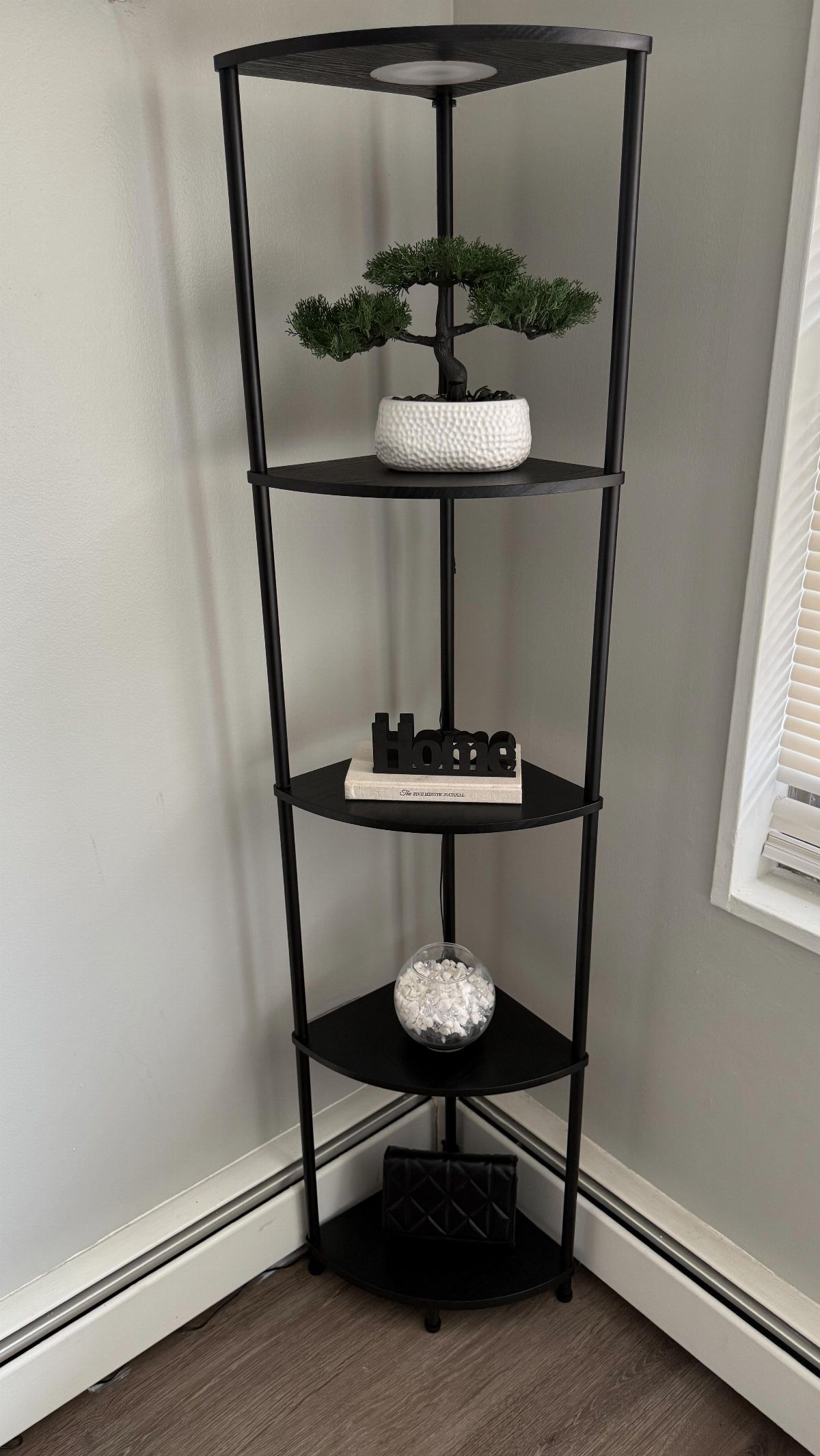
A thin strip of warm white LED tucked under each shelf turns an ordinary corner into something that feels borrowed from a boutique hotel.
I like this for renters because the glow hides a lot: a scuffed wall, mismatched storage boxes, whatever you are not ready to replace yet.
The strips peel and stick, though I would still check that the wall can take a shelf bracket before committing. Smart strips let you dial the color back to amber on nights when you want to fall asleep faster.
For anyone who keeps small collectibles or a rotating stack of paperbacks, the light does the displaying so you do not have to arrange perfectly.
8. Corner Plant Shelf Ideas
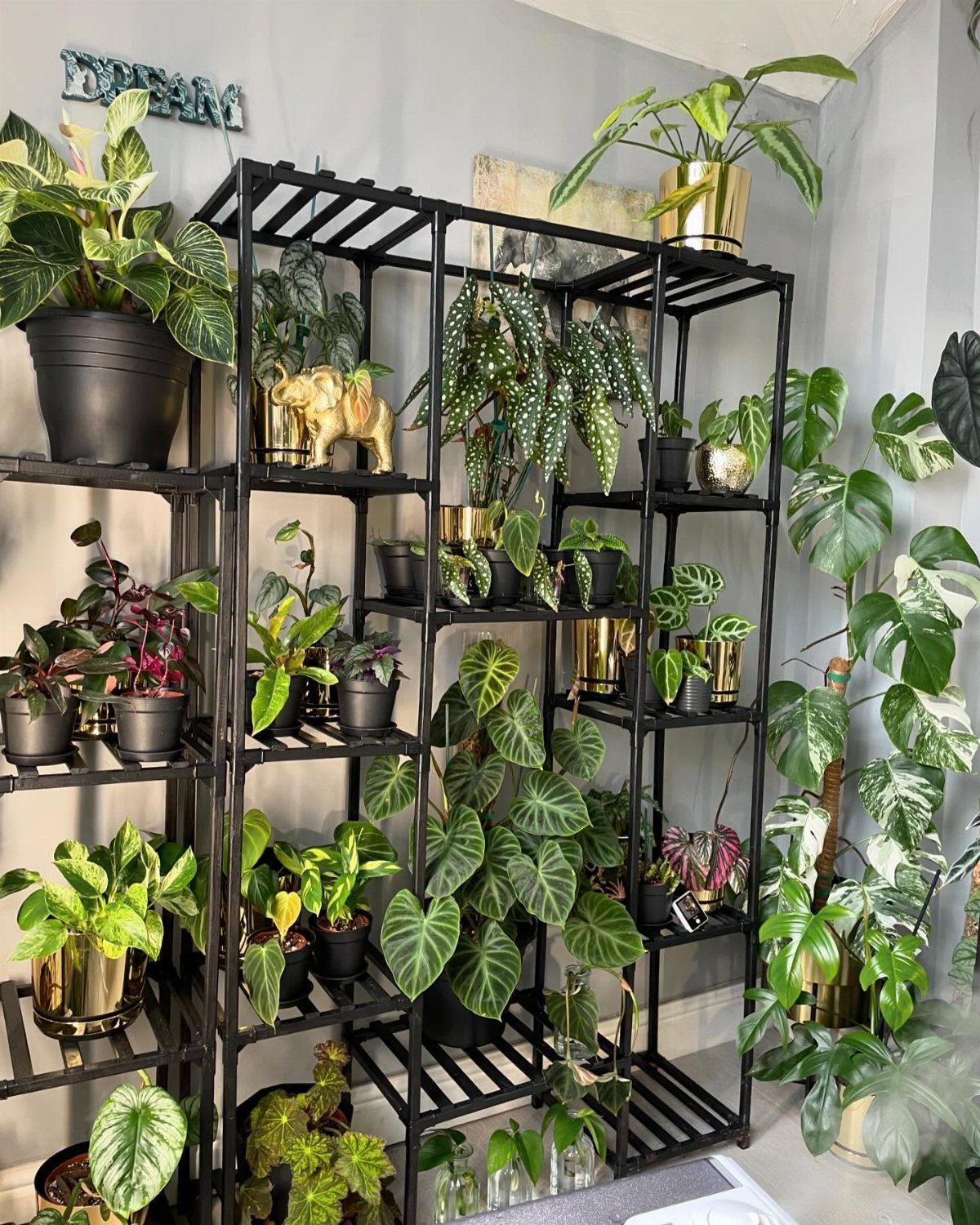
Two or three floating shelves stacked vertical in a corner give trailing plants the height they need without eating floor space.
This works in a bedroom where every other surface is already claimed by a narrow dresser and a laundry basket. Pick plants that forgive inconsistent watering: pothos, philodendron, a snake plant on the top shelf where it stays dry.
Metal brackets hidden in the wall studs hold the weight; a wood shelf in pine takes a drill and some patience. This one suits the person who wants something alive in the room but has killed a succulent before.
9. Triangular Corner Shelves
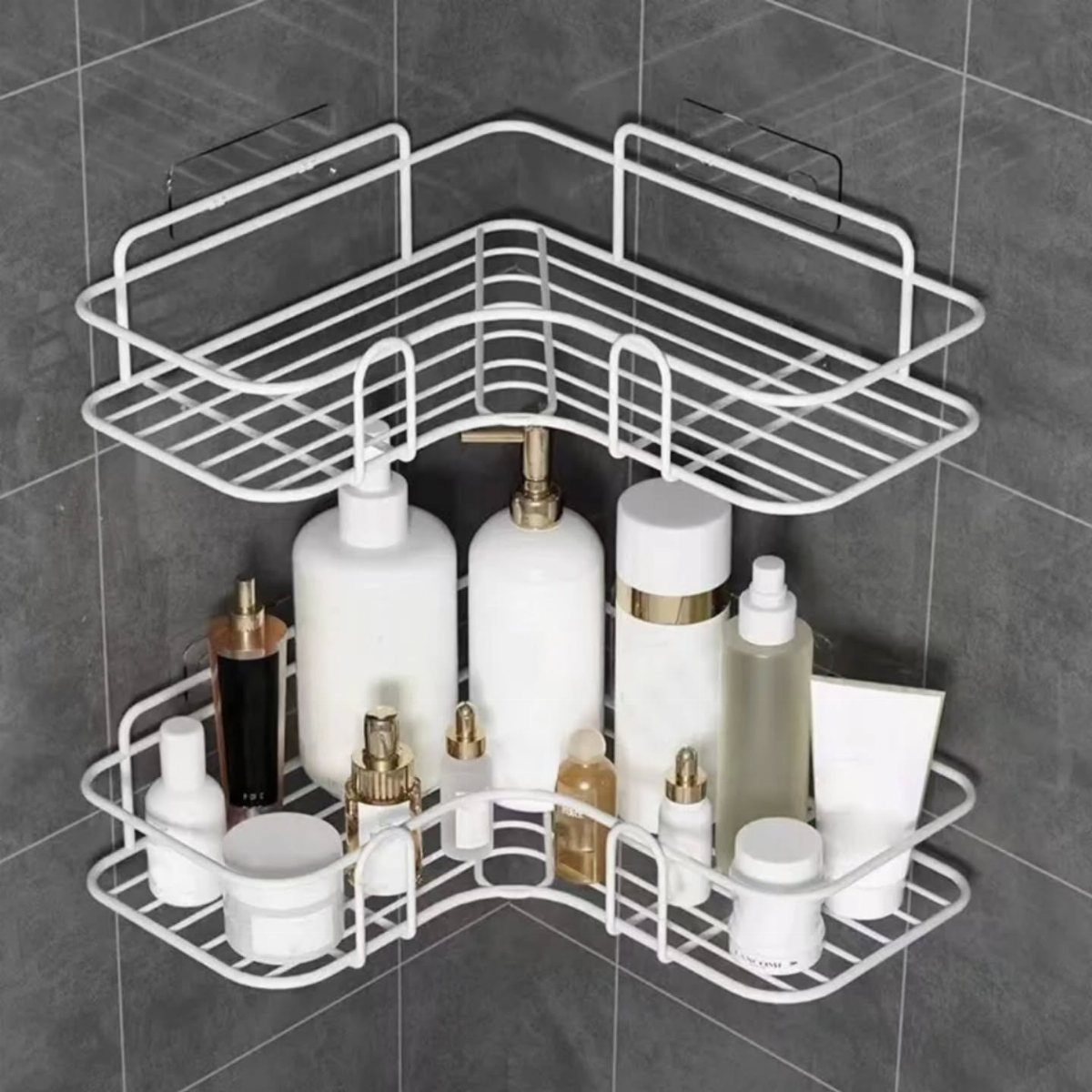
A triangle cut into the corner uses wall space that rectangular shelves leave awkward and empty. The shape itself hides the bracket inside the shelf cavity, so from the doorway you see only wood and whatever you set there.
I would mount these at staggered heights in a hallway or beside a bathroom mirror, where the point draws the eye up without sticking out into the walkway.
Mango wood on a black iron frame runs about $129 ready-made if you would rather buy than build.
10. Macrame Hanging Corner Shelf
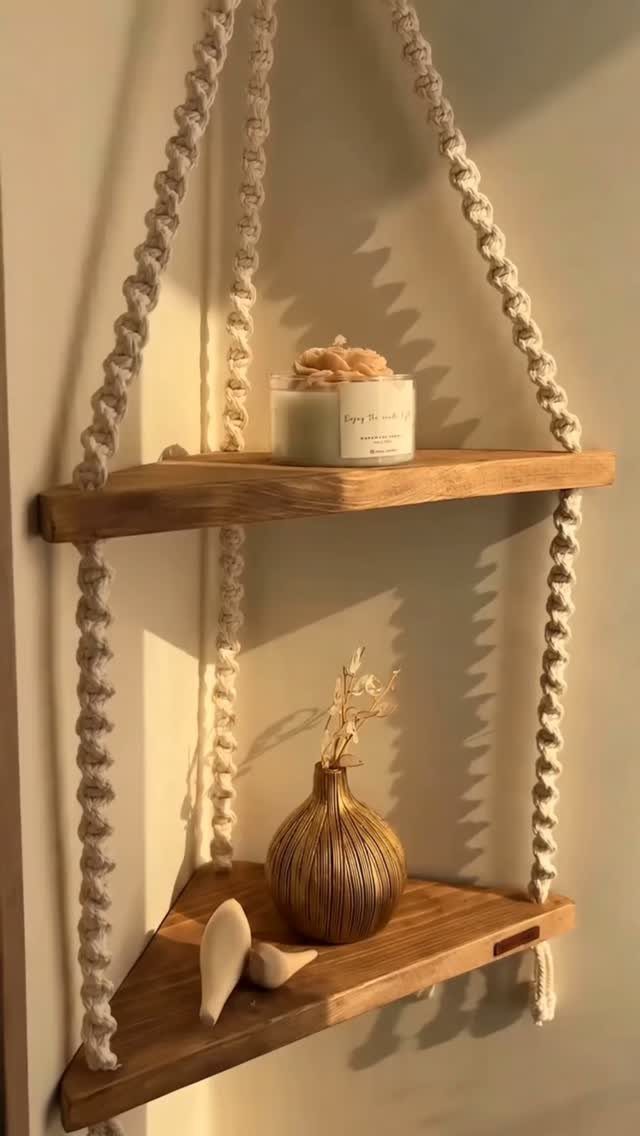
A single round platform hung from braided cotton rope brings movement into a corner that otherwise sits still.
I would put this in a bedroom with terracotta or warm peach walls, where the oatmeal rope picks up something already in the room.
Pine for the shelf and macrame cord for the hanger make a set that looks handmade without the work of starting from scratch.
A small trailing plant, one candle in rattan, and a dried stem are enough; the hanging line keeps the floor clear, which matters in a small room where every square foot counts. This one trades storage for atmosphere.
If you need to set down a glass of water at night, add a narrow side table and let this piece be decorative.
11. Zig-Zag Corner Shelf
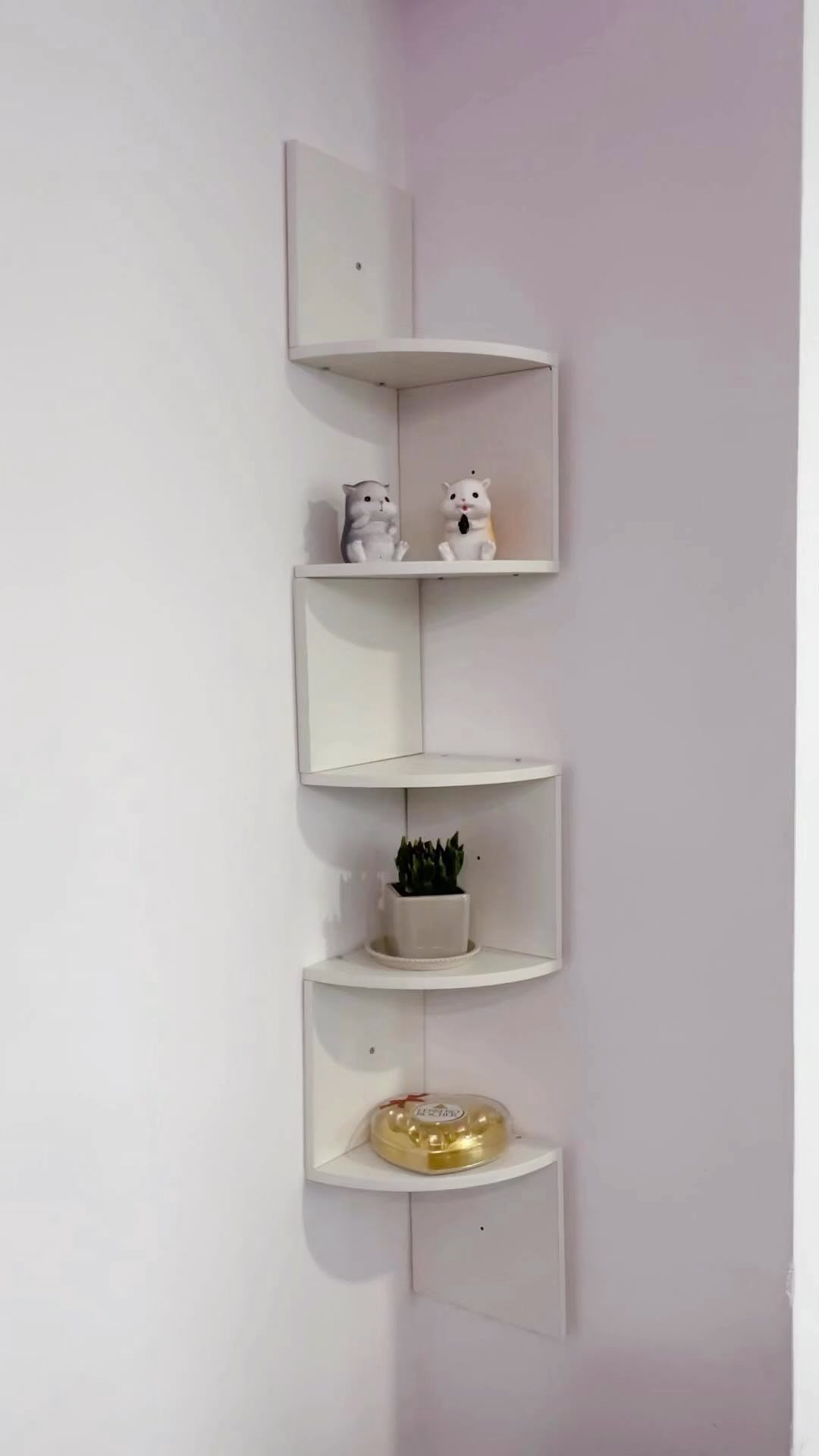
A zig-zag shelf climbs both walls of a corner at once, turning the junction into the feature instead of hiding it.
The cut is straight-line simple, so a jigsaw and a level are the main tools; the instructable version assumes you can cut a true line and sand the edge.
Paint it the wall color and the shadow does the work, or go contrast white like the photo and let the shape read as geometry.
At roughly $100 bought or an afternoon and scrap plywood made, this fits a smaller room where a standard bookcase would crowd the bed.
I would keep the objects small: a figurine, a single trailing vine, nothing that competes with the line itself.
12. Corner Shelf Design with Dressing Table
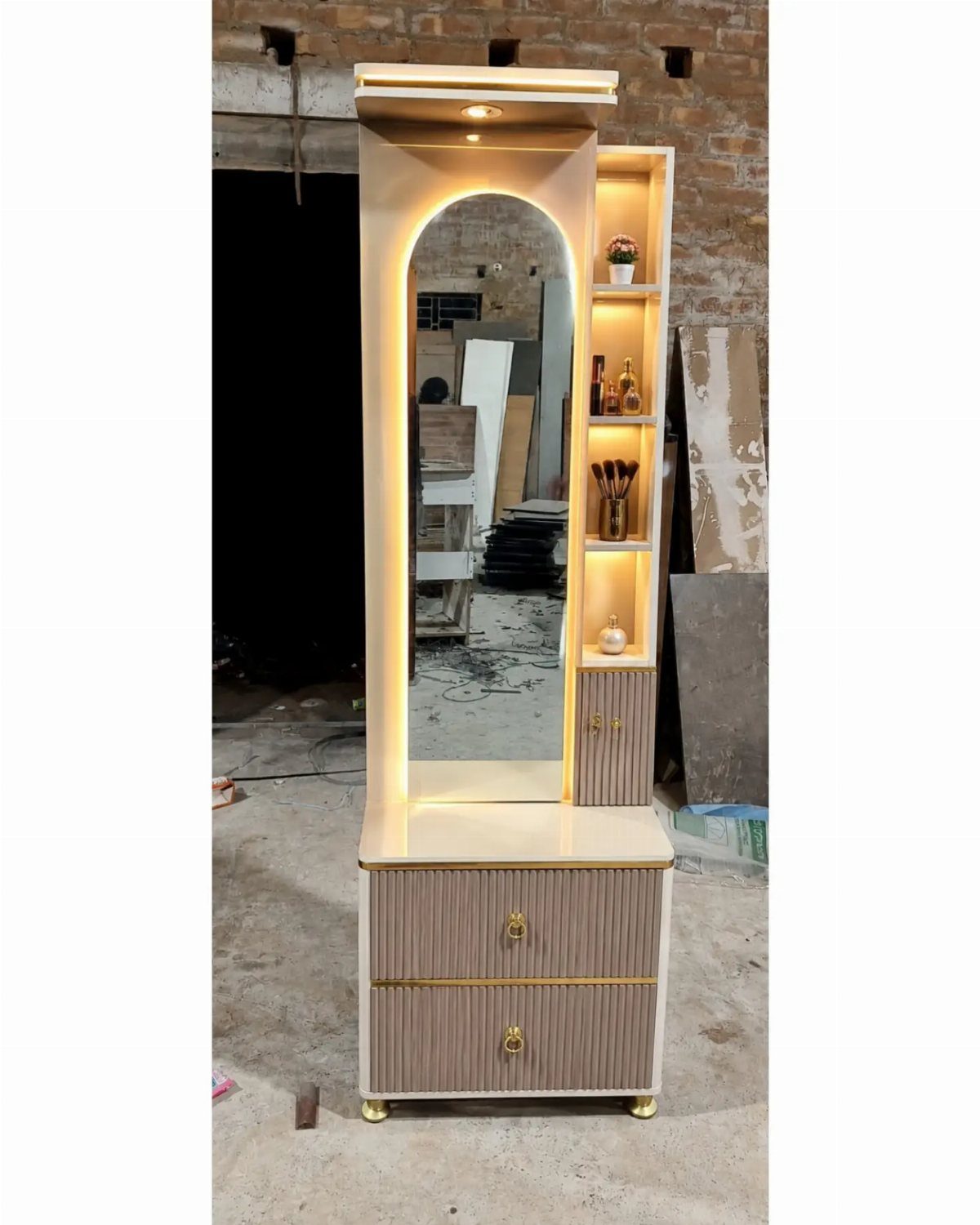
A dressing table built into the corner, with open shelves running up one side, handles two problems in the footprint of one.
Cream paint, arched mirror, gold pulls on two drawers, and vertical cubbies for bottles and small boxes; the idea works in any finish that matches what you already own.
I would place it with the mirror catching window light if possible, and keep the open shelves for daily use while drawers hide backups and clutter.
The trade is flexibility: this piece owns its corner and will not shift easily when you rearrange. For the person tired of balancing a mirror on a desk that was never meant to hold one, that trade is worth it.
13. Cube Corner Shelves
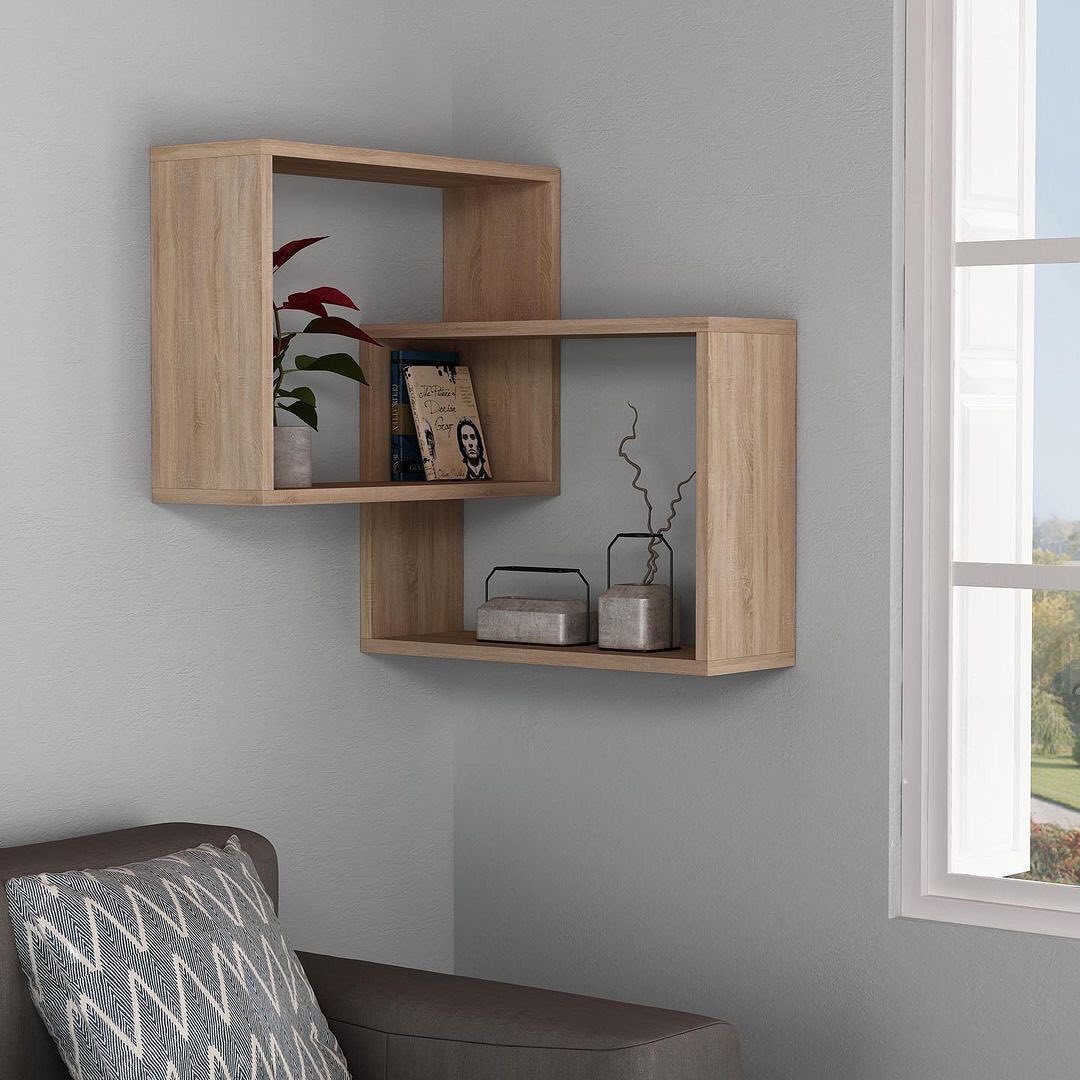
A set of cube-shaped compartments turns an awkward corner into organized storage without looking busy. Each box keeps its own contents separate, so the shelf never reads as cluttered even when it is full.
I like this style for shared bedrooms or any space where one person stores books and another drops jewelry or charging cables. The cubes keep categories apart by default.
Most hardware stores stock cube systems in a few standard widths; a corner unit mounts level with a drill, a level, and some patience, and costs more for solid wood than for laminate.
MDF with a laminate finish costs less, solid wood holds more weight.
If your walls are textured, plan on extra anchors. The individual compartments forgive a slightly uneven install better than a single long shelf would.
14. Corner Shelf Nightstand Alternative
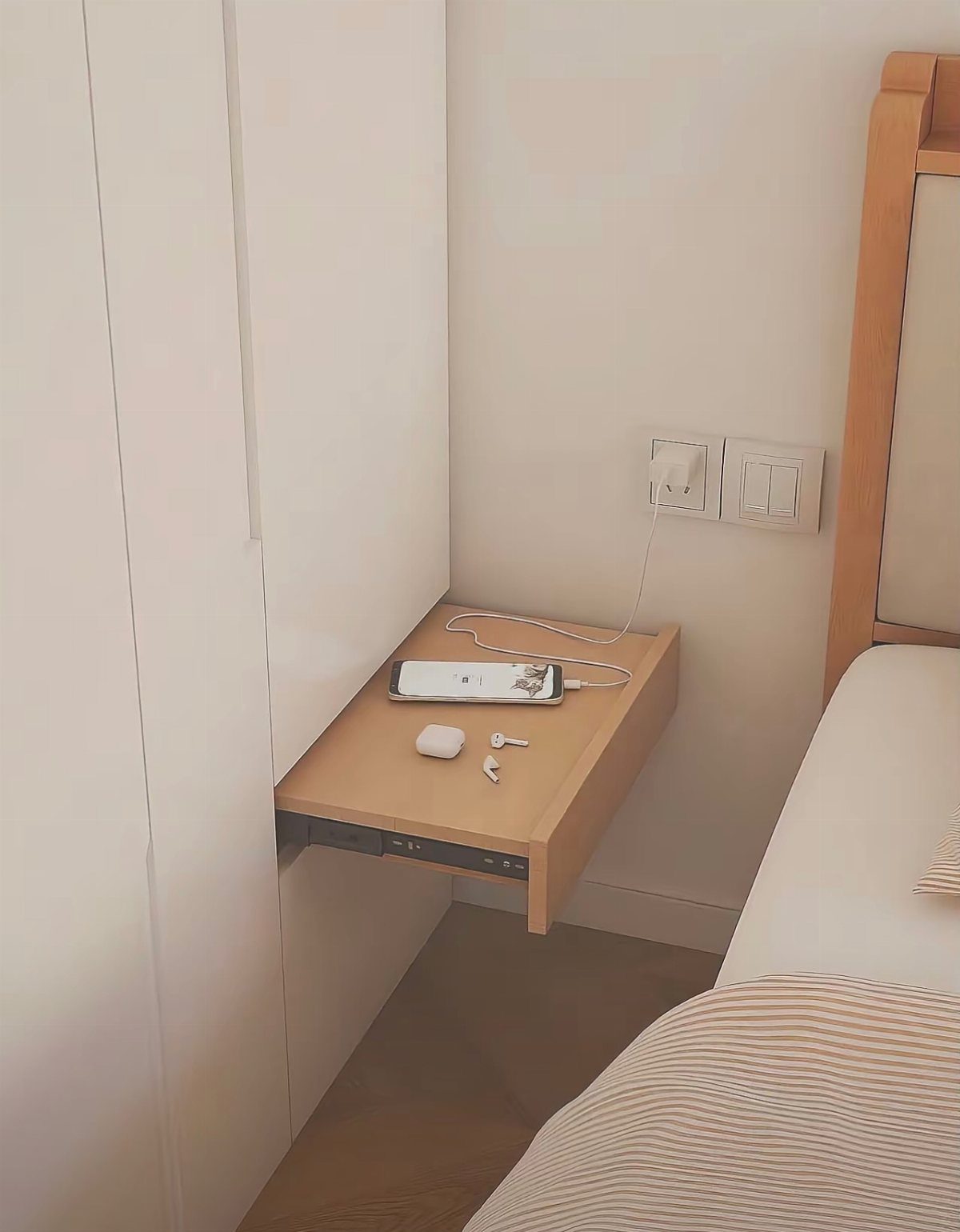
A single floating shelf beside the bed holds a lamp and a book without eating any floor space a nightstand would claim.
Leave enough depth for a glass of water, a phone, and whatever you reach for after the lights go out.
This works in studio apartments and any bedroom where a traditional table blocks a closet door or crowds the mattress. For a loft bed, the same idea works with the shelf mounted higher on the wall.
Set the shelf at sitting-elbow height, high enough to clear the mattress and low enough that your arm drops naturally. Mount into studs if you can; a corner placement often hits two walls, which helps with stability.
Basic metal brackets and a painted board cost less than a finished nightstand; solid wood and hidden hardware cost more.
What you lose is drawer space, so a basket or bin on the floor below helps. If you need storage for glasses or medication, add a small basket on the shelf or accept that some things will live elsewhere.
How to Style a Corner Shelf
Pull in colors already in the room, like a throw pillow or curtain shade, so the shelf feels like it belongs.
Keep the shelf style matched to the bedroom itself. A sleek metal unit looks out of place against a farmhouse quilt, just as rough-hewn wood clashes with clean-lined modern furniture.
For a small apartment, weigh space against style, budget, and how much weight the shelf will actually hold. A narrow corner might need a wall-mounted piece rather than something freestanding.
Check that the depth leaves walking room clear, and that the finish works with what you already own.
Height and Spacing for Corner Shelves
Start corner shelves at 4′ to 4.5′ high. This keeps everyday items within easy reach without bending or stretching.
Leave 12 to 18 inches between shelves. That spacing fits most books, baskets, and small decor without crowding, and it keeps the whole unit visually balanced.
Benefits of Corner Shelves
Corner shelves turn dead space into storage. That dead angle where walls meet is already lost space; a shelf just claims it without asking anything of the floor.
They also add display space. A small bedroom gains a place for books, a lamp, or personal items that would otherwise clutter a dresser.
Done right, they enhance how the room looks. A corner shelf draws the eye up and fills an awkward angle, giving the space more intention without adding bulk.
Materials for Corner Shelves
Wood remains the most common choice for bedroom corner shelves. Solid wood and engineered wood both work well; pick based on your budget and the weight of what you plan to set on them.
Metal shelves suit industrial or minimalist rooms. They tend to be lighter and narrower, which helps in tight corners.
Glass works in modern spaces where you want the shelf to disappear. It shows dust faster and needs more frequent wiping, but it keeps a small room feeling open.
Match the material to your bedroom’s style and to what the shelf needs to hold.
Frequently Asked Questions
How do I fill an empty corner in a bedroom?
Corner shelves turn that dead angle into storage or display space without asking anything of the floor.
A floating column of two or three shelves preserves every square foot, while a tall standing unit gives renters five feet of vertical storage without construction.
Leave a little empty space on the shelf itself so the display reads as intentional, not cluttered.
What are the trending corner shelf styles?
Floating shelves, rustic wooden boards with live edges, and minimalist designs that match or disappear into the wall are the ones I see most.
Keep the shelf style consistent with what you already own so it does not read as an afterthought.
What are some good things to put on a corner shelf?
Books, a small trailing plant, a lamp, or a framed photo all work. In a bedroom, I would add what you reach for at night: a glass of water, your phone, maybe a candle.
A corner shelf reads as intentional when the objects share a color story with the rest of the room. I pull from whatever is already there: a rust pillow, the gray in the curtains, the brass of the bedside lamp.
Height variation matters too. A low bowl, a mid-sized book stack, one taller vase keeps the eye moving without crowding the angle.
What are the best shelves for bedrooms?
Floating shelves and corner units are the most useful because they maximize space that is already lost.
Floating shelves mount to the wall and leave floor space open, which matters when a nightstand would block a closet door or crowd the mattress.
A freestanding corner bookcase or ladder shelf works for renters who cannot drill into walls and moves with you when you leave.





