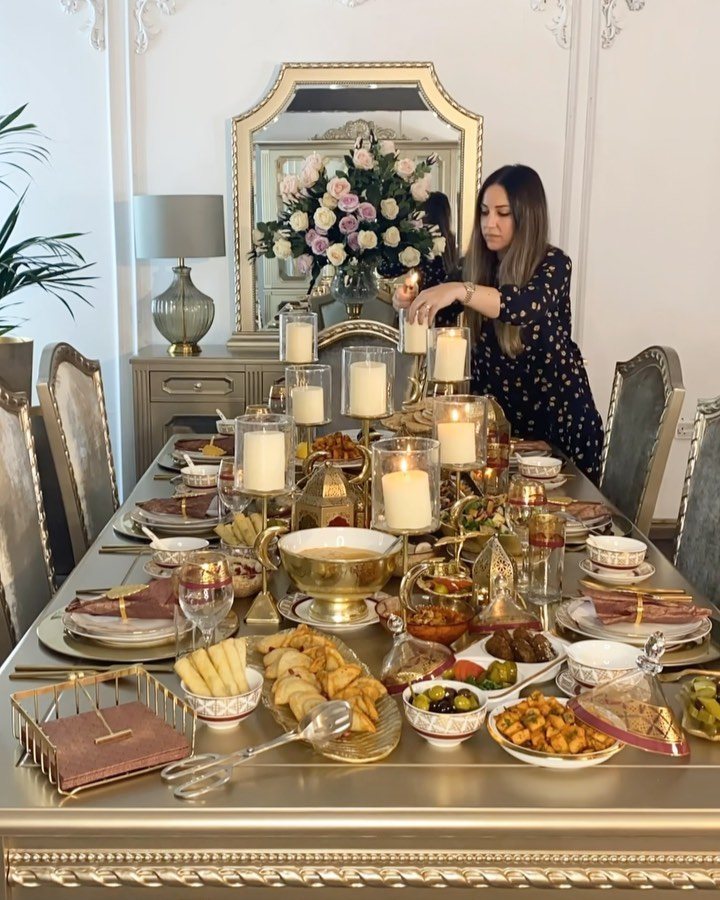
Ramadan table settings range from a single knotted tablecloth to LED candles and decorative trays, and the right mix depends on how many hands will pass dishes across your surface.
A cloth hitting chair-seat level and a single large tray for dates keep a crowded table navigable, while open space between serving pieces matters more than matched sets when a full group sits down together.
LED candles with remote timers solve the spring breeze problem without the wax-and-wick maintenance, and their battery run lasts straight through the month.
1. Elegant Tablecloth and Napkins
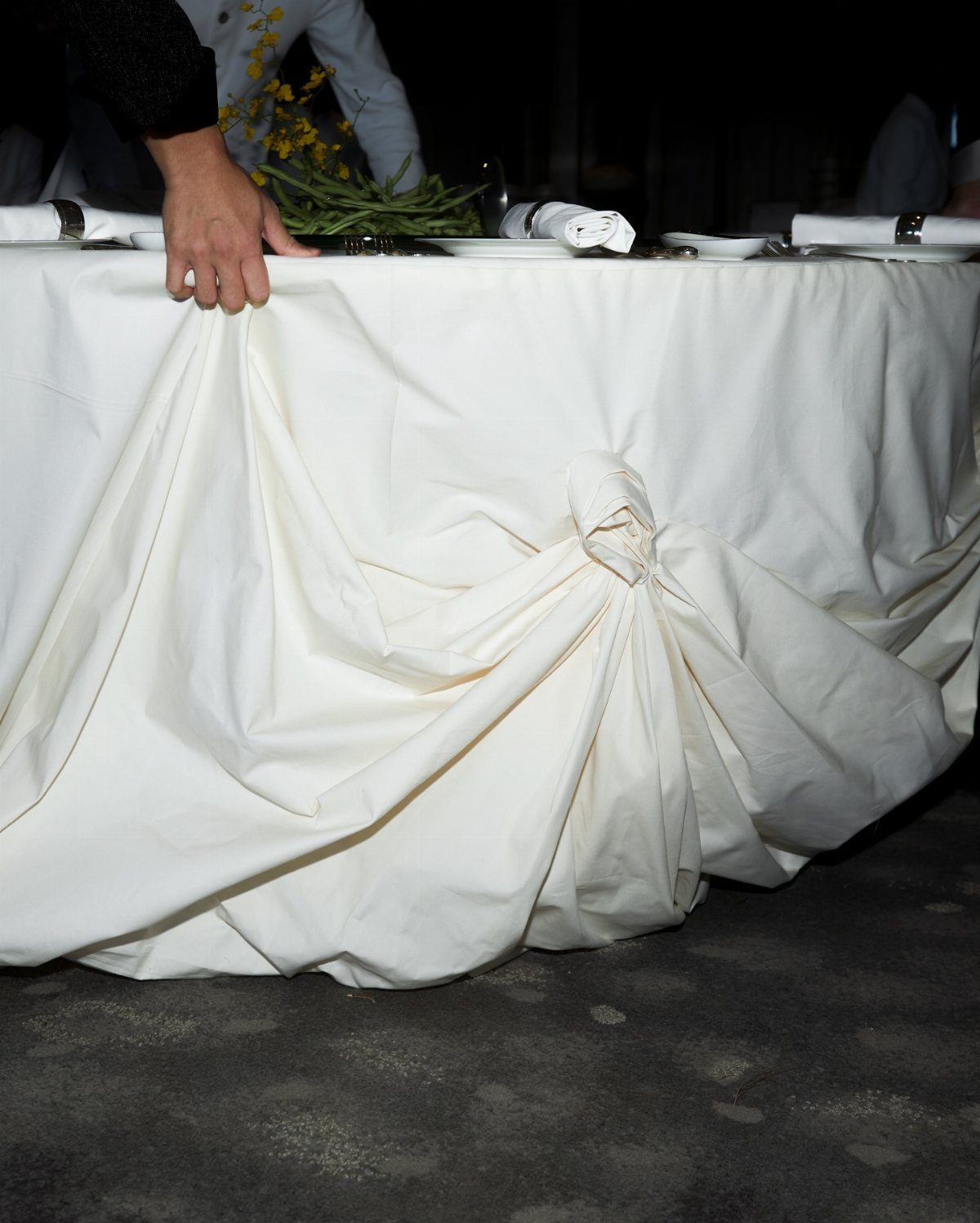
A knotted tablecloth draped asymmetrically turns a basic surface into something intentional without asking for hours of setup. For a Ramadan gathering that still needs room for dishes, this approach buys elegance at a small cost in setup time.
Subtle patterns read better than loud prints under warm lighting, and a cloth with some weight to it stays where you put it through a long evening.
I would skip the full floor-length drop for a crowded table; a cloth that hits chair-seat level is easier to navigate with loaded plates.
Fold napkins simply and let the fabric do the work.
2. Elegant Ramadan Setup for Gatherings
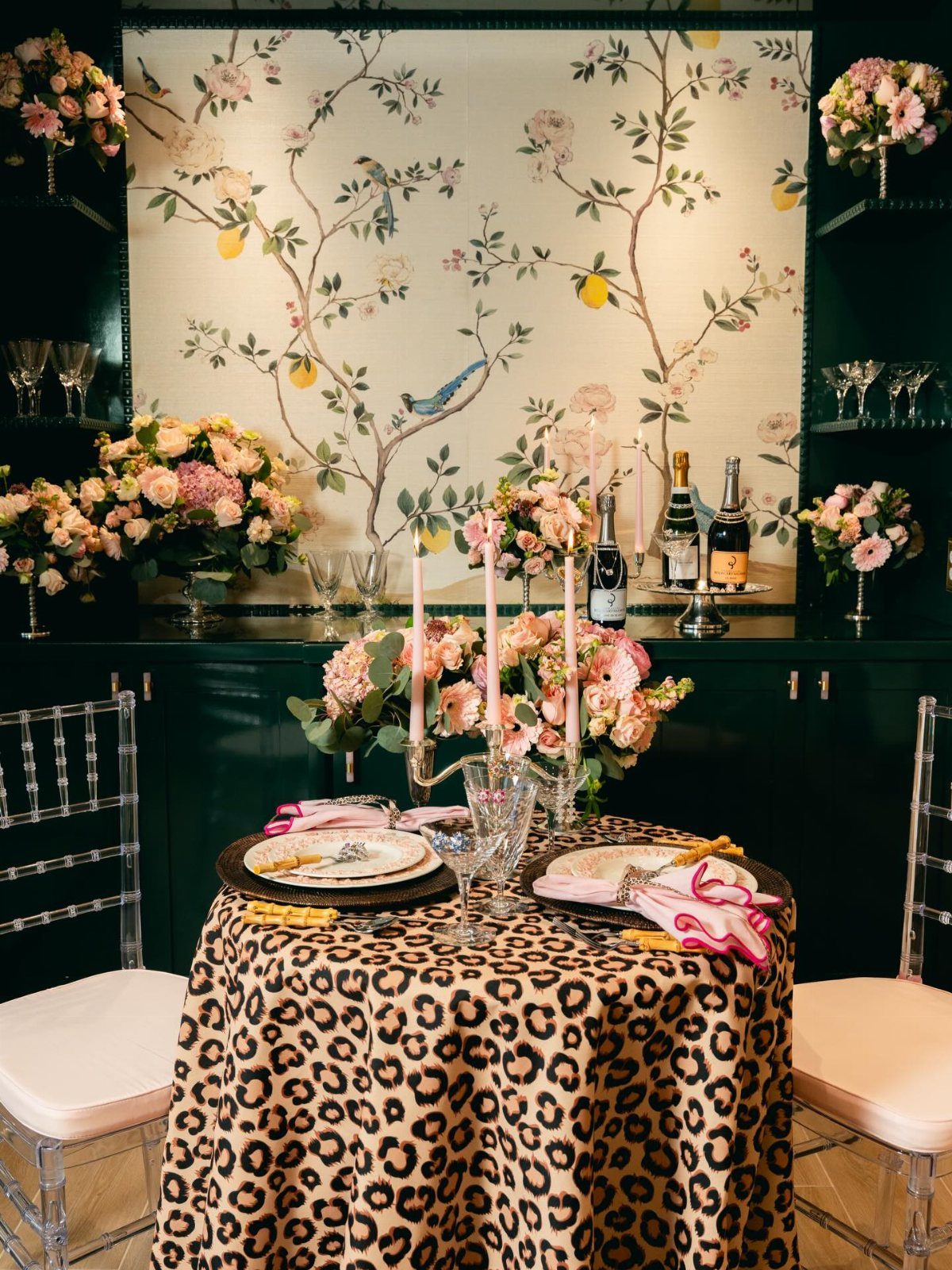
A gathered table for iftar works best when the serving pieces share a single palette rather than matching exactly. Layered trays in one tone, bowls in another, and glassware that picks up either keep the eye moving without chaos.
Leave open space for the food that will arrive; a table set to photograph rarely functions for a group of eight or ten passing dishes hand to hand.
Gold, beige, or deep blue each carry through the month without feeling specific to one night, which matters if you are resetting weekly.
The leopard print and pink go bolder than I would choose, but the principle holds: pick your colors, then repeat them three times across the surface.
3. Decorative Trays
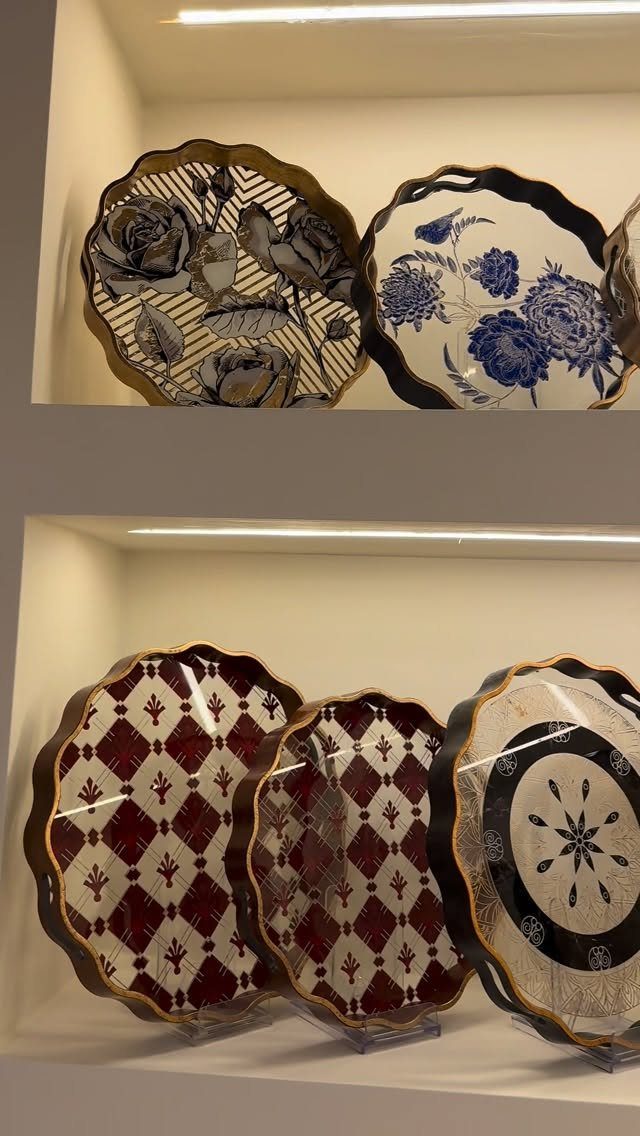
Trays corral the clutter that accumulates on a Ramadan table: dates at one end, small plates for pastries, glasses that otherwise migrate. A scalloped edge or unexpected material turns this organizational tool into part of the décor.
I have found that one large tray anchors a centerpiece better than several small ones competing for attention.
If you are serving from the table rather than a sideboard, a tray with raised edges buys insurance against the elbow bump that arrives with hunger.
Wood, metal, or lacquer each read differently; choose based on what else sits on your surface.
4. Beautiful Vases
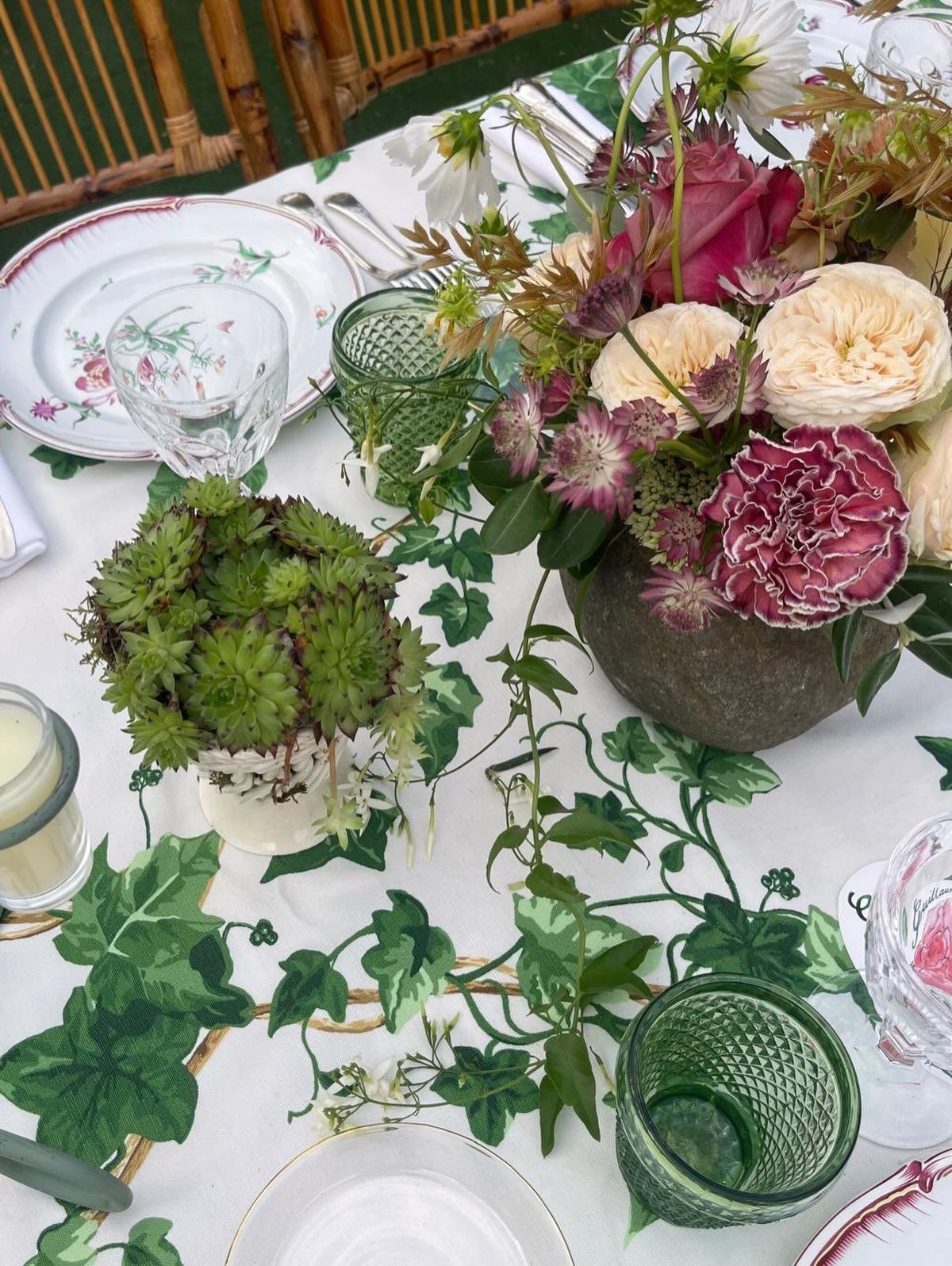
Fresh flowers in a stone vase bring living color to a table that otherwise runs to ceramics and glass. Trailing elements like ivy or succulents soften the geometry of plates and flatware.
For a weekly rotation through Ramadan, I would mix one purchased bouquet with clipped greenery from whatever grows near your door; the cost stays manageable and the arrangement looks less staged.
A heavy vessel stays upright through the reach and pass of a family meal, which matters more than it should.
Water daily and cut stems at an angle; the small effort preserves the welcome for a full week.
5. LED Remote-Controlled Candles
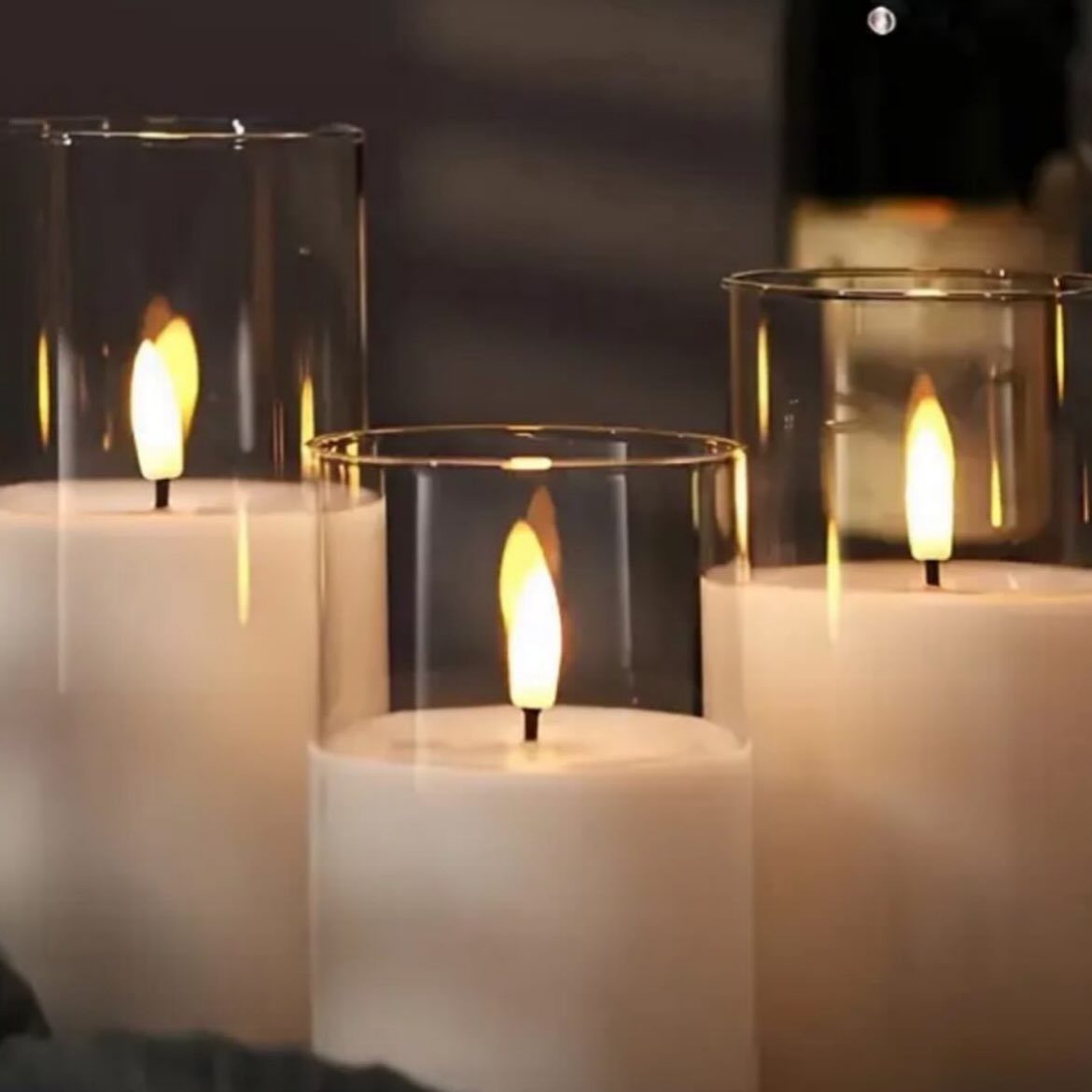
LED candles with remote control solve the problem of open flame where children reach across or where a breeze comes through a window. The warm flicker reads close enough to real that guests often pause to check.
Battery life varies by brand, but most run long enough to set on a timer and forget through the month.
I would cluster three heights, or run a single line down a rectangular table, but never so many that the light becomes the point.
Scent is what you give up: no wax-and-wick smell to signal occasion to those who notice. A diffuser elsewhere in the room closes that gap if it matters to you.
6. Decorative Tissue Box Holder
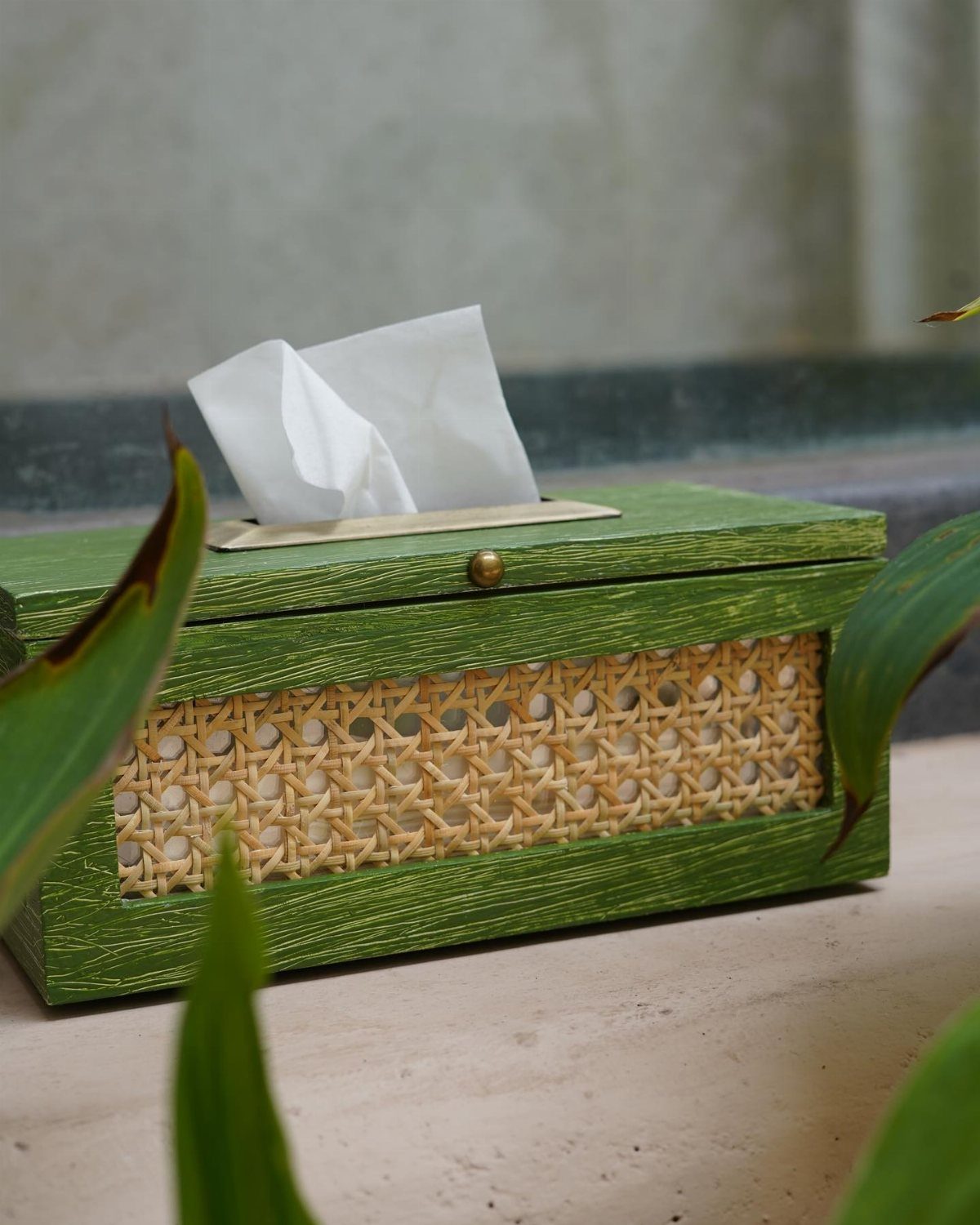
A tissue box holder sounds like a small thing until you notice how often someone needs one during a meal, especially with the dates and pastries of iftar. The rattan-fronted version turns that functional need into texture on the table.
I would place it at the end rather than center, where it reads as part of the setting rather than an afterthought.
Wood or woven materials fit most Ramadan palettes without demanding attention; metallic accents work if your table already carries that tone.
The standard rectangular box fits most holders, so this is not a recurring expense: buy once, swap refills, and the object earns its place through utility dressed up just enough.
Choosing Ramadan Table Décor
Ramadan table décor works hardest when it earns its place all month. I look for pieces that wipe clean and nest flat in a drawer, because Iftar happens nightly and storage space in a rental kitchen is never generous.
A tissue box holder that actually looks good on the table, for instance, keeps tissues where guests need them without the cardboard box breaking the mood.
Coordinated sets help too; a matching runner and napkin ring set reads as intentional even when the flowers are just grocery store tulips and the plates don’t match.
A table that feels pulled together before the food hits it works for any head count, small or large.
Creating a Welcoming Atmosphere
The atmosphere at an Iftar table comes from what guests can actually use, not just look at.
A vase of fresh stems adds color and a little height, but it should sit where it doesn’t block the person across from you from reaching the dates.
LED candles with a remote solve the wind-from-the-open-window problem that blows out real flames during spring evenings, and they stay cool while the meal stretches past sunset into the night.
Neutral linens and warm light do more work than themed items that sit unused.
I think of the table as serving the people first and the holiday second; the spirit of Ramadan shows up in the space left for conversation, not in the density of decoration.
Frequently Asked Questions
Are Muslims allowed to decorate for Ramadan?
Yes, decorating for Ramadan is common and widely accepted. Many Muslim households put up lights, lanterns, and table settings to mark the month and create a welcoming space for family and guests at iftar.
The practice varies by family and region, but there is no religious prohibition against it.
What are some good decorations for Ramadan?
Good Ramadan decorations include knotted tablecloths in subtle patterns, decorative trays for organizing dates and small plates, LED candles with remote controls, fresh flowers in heavy stone vases, and woven tissue box holders.
These pieces work best when they earn their place through daily use rather than sitting unused as themed items.
Are these Ramadan table setup ideas suitable for homes in the USA?
Yes, these ideas work well in American homes.
The setups blend modern home décor with subtle Ramadan elements, using neutral linens, functional serving pieces, and warm light that fits contemporary dining spaces and open-plan layouts common in US rentals and first homes.