
These refrigerator design ideas run from vinyl you can cut and press yourself to a panel-ready unit that needs a cabinet maker and a custom quote, with the deciding factor being how much of your kitchen you are willing to rebuild around the box.
A six-pack and a few condiments fit the retro mini fridge; a full-size integrated column disappears into the cabinetry entirely.
A finished trim that sits an inch proud of its support board has nothing on this list, but it does remind you to measure door swing against your wall before you order.
1. Fridge Drawers and Bins
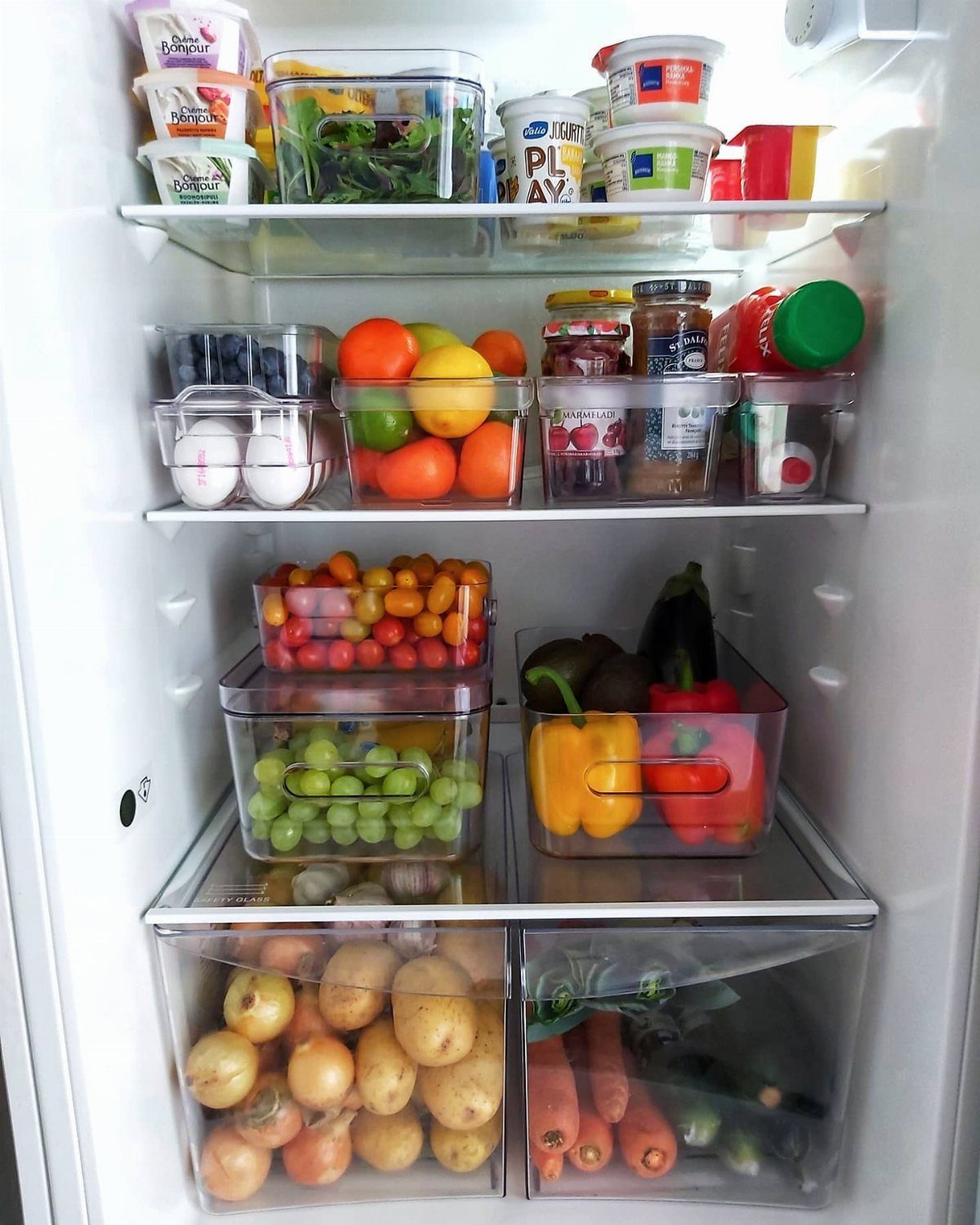
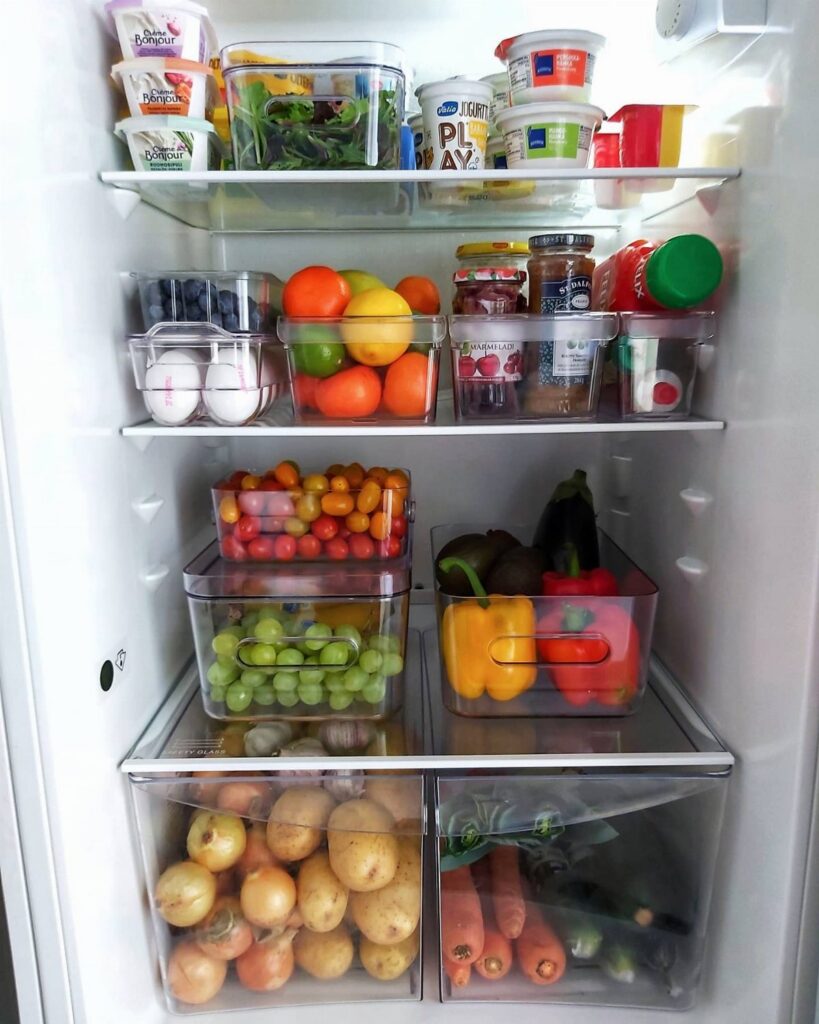
Clear bins and hanging shelf organizers turn a standard fridge into something that behaves like a custom system.
The drawer-style units that clip underneath glass shelves are the ones that sold me; they carve out a whole extra layer without stealing headroom from the milk jug.
Start with pull-out trays, then add divided bins below once you know what you actually reach for daily. The whole swap is quick and cheap enough to redo if your habits change.
If your shelves are already packed, the under-shelf style beats floor bins because it uses the dead zone above a half-full shelf. Weekly grocery runs stay visible this way, and fewer peppers rot in the crisper.
2. Undercounter Fridge
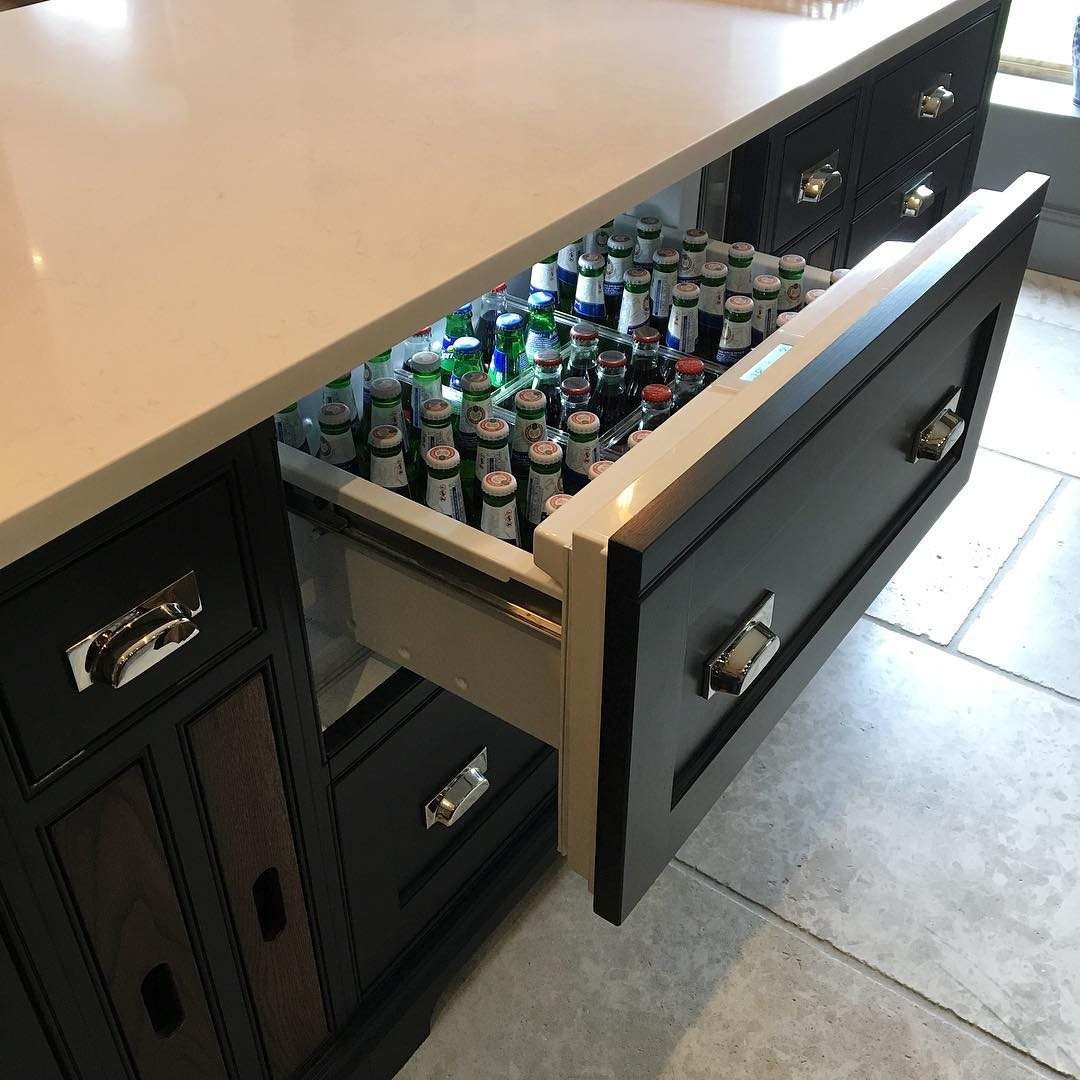
A drawer refrigerator built into the base of an island keeps your eye-level walls open for cabinets or open shelving.
Tucked under a narrow overhang with the toe-kick vented just enough to let the compressor breathe, the fascia can match surrounding drawers so completely that guests assume it is storage until you pull the handle.
The units run about the same width as a dishwasher, and the install needs a cabinet maker or a very patient weekend. What you trade is freezer space, since most undercounter models are all-refrigerator or a single small freezer drawer.
For a basement bar or a kitchen that already has a chest freezer elsewhere, that trade lands in your favor.
3. Mini Fridge with a Counter Above
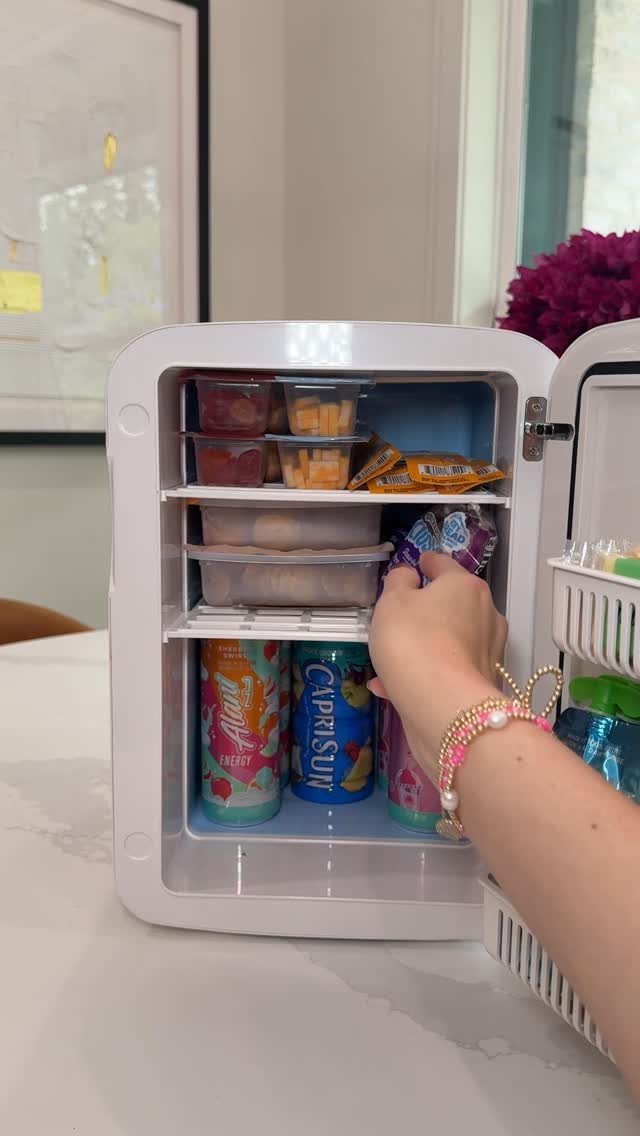
A mini fridge topped with a solid counter turns a corner you were going to waste into a self-contained beverage station.
The critical detail is air gap: leave space behind and above the unit so heat can rise out, or the compressor runs constantly and the counter above it warms up.
A scrap piece of butcher block cut to overhang the front hides the frame and reads like furniture.
The setup works best for coffee gear and grab-and-go snacks, not full meal prep, since the interior is still dorm-size.
Pair it with a wall-mounted mug rack and you have a morning zone that never crosses traffic with the main sink.
4. Compact French Door Models

Compact French door models squeeze the upscale look of a full-size pro kitchen into a footprint closer to a top-freezer unit.
I would pick this for a household that shops produce twice a week and keeps frozen pizza as a backup, not one that bulk-buys meat.
Narrower widths are common, and the hinge swing is shorter than a single full-width door demands. In a galley kitchen where every inch of clearance matters, that geometry can mean the difference between a workable triangle and a traffic jam.
5. Retro Mini Fridge
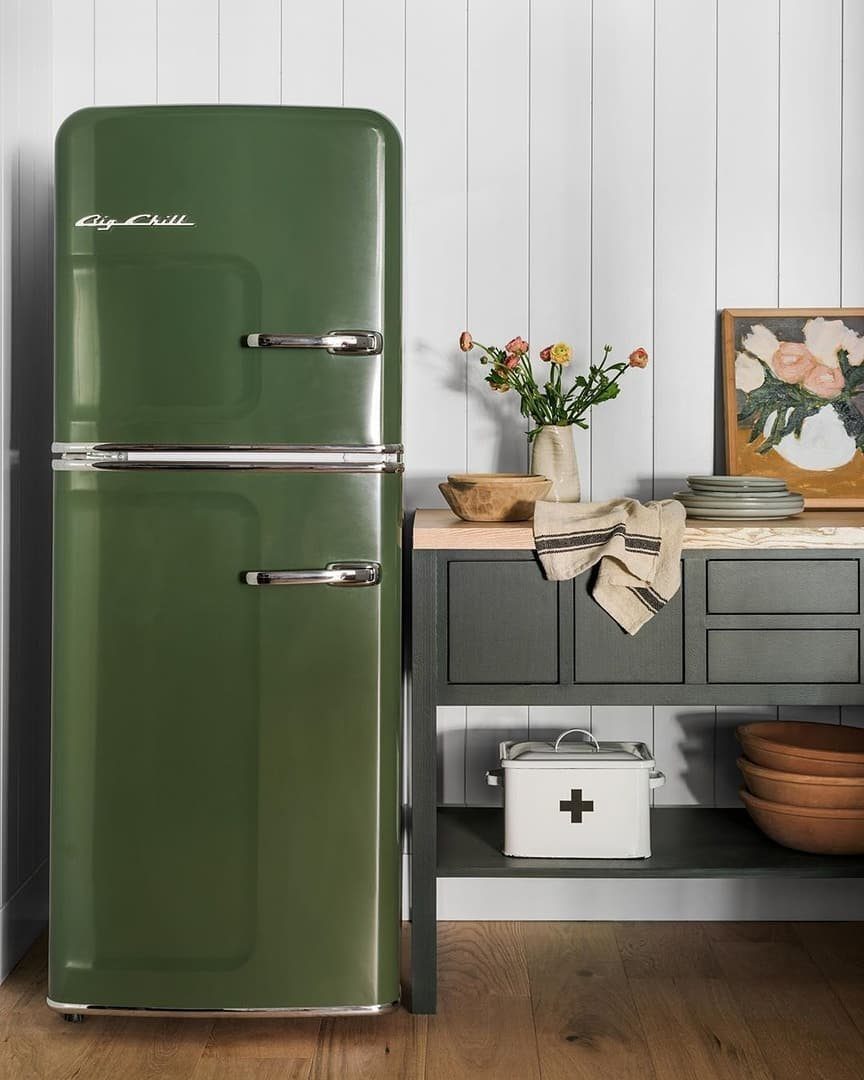
A retro mini fridge in olive or cream reads as intentional furniture rather than an appliance you settled for.
The rounded silhouette and chrome handle turn a corner of the kitchen into a small statement, though the interior is genuinely small: plan on a six-pack, a few condiments, and not much more.
Used as overflow drink storage beside a dining room sideboard, these keep the kitchen fridge free for actual food.
If the color is what you are after, check whether the brand you are considering sells matching toasters or kettles. The coordinated look is what pushes this from cute to pulled-together.
6. Vinyl Wrapping

Peel-and-stick vinyl lets you resurface a fridge for the cost of a few yards of material and an afternoon.
A smoothing tool and a fresh blade on an Exacto knife matter more than the vinyl itself; cut in one pass rather than sawing, or the edge frays.
I would start at a top corner and work down in strips, overlapping the seam by a hair and trimming against the seal with the door open.
A brushed metal finish reads as stainless from across the room, and bolder patterns turn the fridge into something closer to wallpapered furniture.
The wrap lasts until you tire of it, and the original finish underneath stays untouched for move-out day.
Benefits of Hidden Fridges
A hidden fridge cabinet does more than hide the appliance; it lets the kitchen read as one continuous surface.
In open plans, where the kitchen shares sightlines with the living area, that continuity matters more than it would behind a wall. The eye travels across cabinet faces without stopping at a stainless steel rectangle.
The unified look works especially well when the refrigerator sits near a structural column or an awkward corner.
Custom panels can wrap the fridge and a neighboring pantry into a single volume, turning what breaks the room into something that defines it. The result is less visual clutter without less storage.
That said, panel-ready units cost more upfront, and not every cabinet line fits every fridge model. Measure the box precisely, and confirm that your cabinet supplier can match the door style you already chose.
Choosing the Right Fridge
Space comes first. A refrigerator needs breathing room on all sides for ventilation, plus enough clearance for the door swing to open past ninety degrees if you want full access to drawers.
The closet-turned-fridge approach works only when the cavity is deep enough, tall enough, and located near both power and water lines.
Style follows function. A Scandinavian minimal kitchen calls for integrated panels; a vintage-inspired space might want a freestanding unit in color.
Energy efficiency ties the choice together. The yellow EnergyGuide label gives the annual cost in dollars; compare across similar sizes rather than across categories, since a larger efficient fridge can still cost more to run than a smaller one.
Custom panels add lead time. If you are ordering Ikea cabinets and cutting them to fit, confirm the panel thickness with your contractor before the fridge ships.
Fridge Maintenance Tips
Cleaning the coils twice a year extends compressor life.
On most units, the coils sit behind the toe kick or against the back wall; a vacuum with a brush attachment pulls off the dust that forces the motor to run longer.
Organization matters too. A full fridge maintains temperature better than an empty one, but overstuffing blocks airflow and creates warm pockets.
Leave an inch between containers on shelves, and do not stack containers to the point where drawers cannot open fully.
Door seals wear out. Slide a dollar bill into the gasket and close the door; if it pulls free without resistance, the seal is leaking cold air.
Replacement gaskets install with a putty knife and patience.
Custom Fridge Options
Custom fridges now start at the panel, not the box. Integrated units accept cabinet fronts that match the rest of the kitchen, so the refrigerator disappears into the run.
JennAir and Sub-Zero have built this way for years; more mainstream brands now offer the option on select models.
Beyond panels, some brands let you specify interior configuration: wine storage above, freezer below, or columns that split refrigeration and freezing into separate tall cabinets.
A wine fridge paired with a full-size integrated unit gives entertaining flexibility without commanding the whole wall.
Quartz countertops can run over the adjacent cabinet and stop at the fridge panel, or a single stone slab can bridge both for a smoother line.
The East Hampton kitchen that chose this path kept the island large and the surrounding cabinetry quiet, letting the materials do the work.
Frequently Asked Questions
What is the best design for a refrigerator?
The best design depends on your kitchen layout and how you cook. Panel-ready units that accept cabinet fronts create a unified look where the refrigerator disappears into the cabinetry run, which works especially well in open plans.
For smaller kitchens, compact French door models or undercounter drawer units can preserve traffic flow while still giving you adequate cold storage.
What is the ideal layout for a fridge?
Leave at least an inch of air on the sides and back, enough swing for the door to open past a right angle, and a nearby outlet plus a water line if you want ice through the door.
Inside, pull-out trays and divided bins that clip under glass shelves use vertical space better than floor bins alone, since they reclaim the dead zone above half-full shelves.
What are some creative ways to makeover my fridge?
Peel-and-stick vinyl wrapping resurfaces the exterior for the cost of a few yards of material and an afternoon; a brushed metal finish reads as stainless from across the room, or bolder patterns turn the appliance into something closer to furniture.
For a coordinated look, some retro mini fridge brands sell matching toasters or kettles in the same olive or cream.





