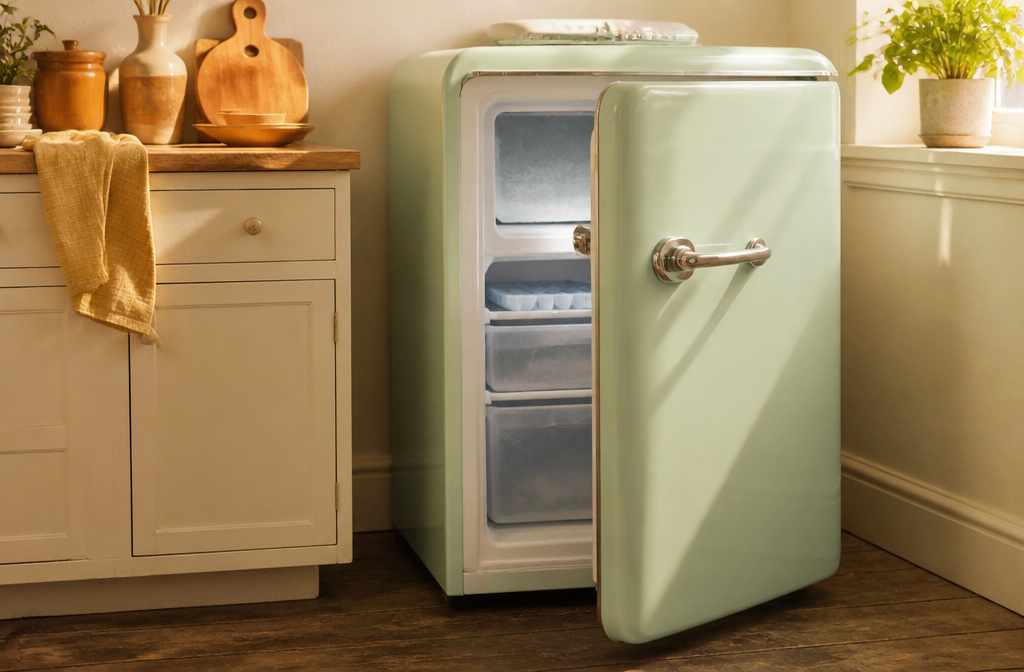
The Frigidaire EFR376 wins for holding 41°F in the fridge and 2°F in the freezer through daily use, which is rarer in this size than the retro shell suggests.
Buy something else if you need quiet: the compressor carries into a studio apartment, and the chrome handle reads 1950s diner whether that matches your space or not.
The 350 kWh yearly draw keeps operating costs reasonable, but only renters who can live with the hum get the temperature consistency they are actually shopping for.
1. Best Overall: Accurate Temperatures in a Retro Shell
The Frigidaire EFR376 sits at 37 by 19 by 21.5 inches and weighs 41.89 pounds, with 3.2 cubic feet of space inside that retro shell.
That footprint fills a gap between dorm-sized units and something you’d need a truck to move, and the 350 kWh yearly draw keeps the operating cost reasonable for a daily-use fridge.
Temperature consistency is where this one justifies the pick.
The fridge averages 41°F, a hair above the 40°F food-safety line, while the freezer holds around 2°F. Those numbers matter because a mini refrigerator with freezer that wanders above 40°F in the fresh section turns your yogurt into a gamble, and a freezer that swings too warm wrecks the ice tray and anything you planned to keep for more than a few days.
The low humidity average of 56% helps, too; leafy greens don’t turn to slime by Wednesday.
Seven color options give it personality, and the shelving adjusts enough to stand a 2-liter bottle upright in the door. The built-in bottle opener is a nice touch until you realize it rattles against cans.
Skip this one if you need whisper-quiet operation or modern lines.
The compressor runs audible in a studio apartment, and the rounded chrome handle reads 1950s diner whether that fits your space or not. For renters who want reliable cold in a kitchen that already has character, it earns its spot.
2. Best Budget: Steady Cold Without the Price Tag
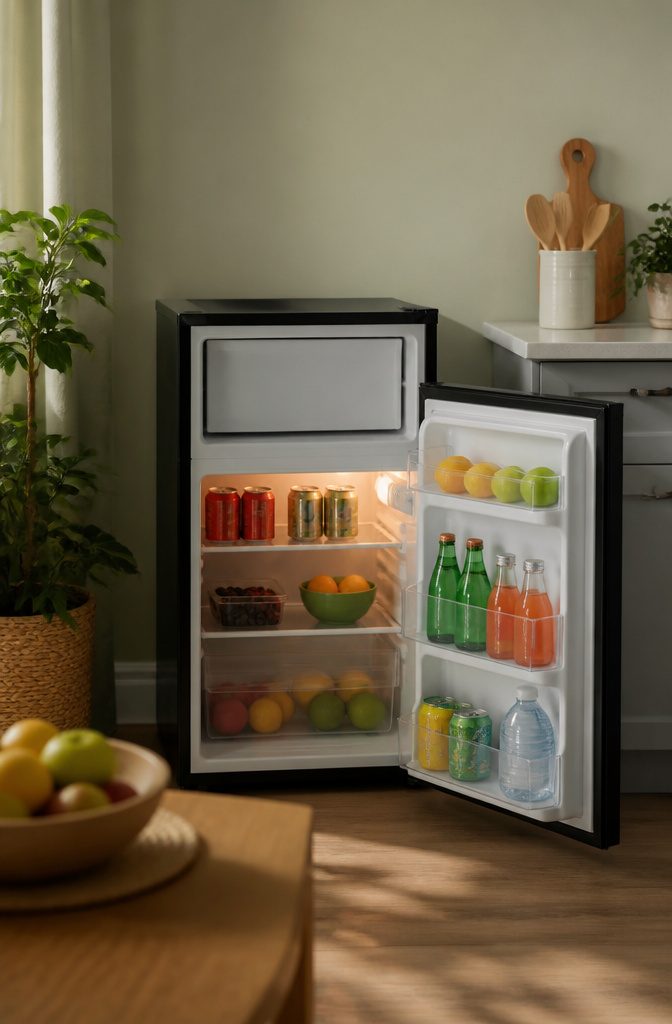
The Whirlpool Compact Mini Fridge runs 19.1 x 21 x 32.8 inches and weighs 52.9 pounds, which lands heavier than the numbers suggest on paper. I would not want to haul this up apartment stairs alone more than once.
The 3.1 cu. ft. capacity and 320 kWh annual draw are modest enough that it will not spike a small kitchen’s energy bill, and the storage layout inside uses its space well for a budget unit.
Temperatures stay steady where it counts: the refrigerator section holds close to the safe zone, and while the freezer wobbles day to day, it averages cold enough for ice trays and a few frozen dinners.
That reliability matters more than looks at this price. Skip it if you need something photogenic for an open studio, or if you are the type to rearrange furniture every few months and want a lighter box to drag around.
3. Best for Reliability: Room for Real Groceries
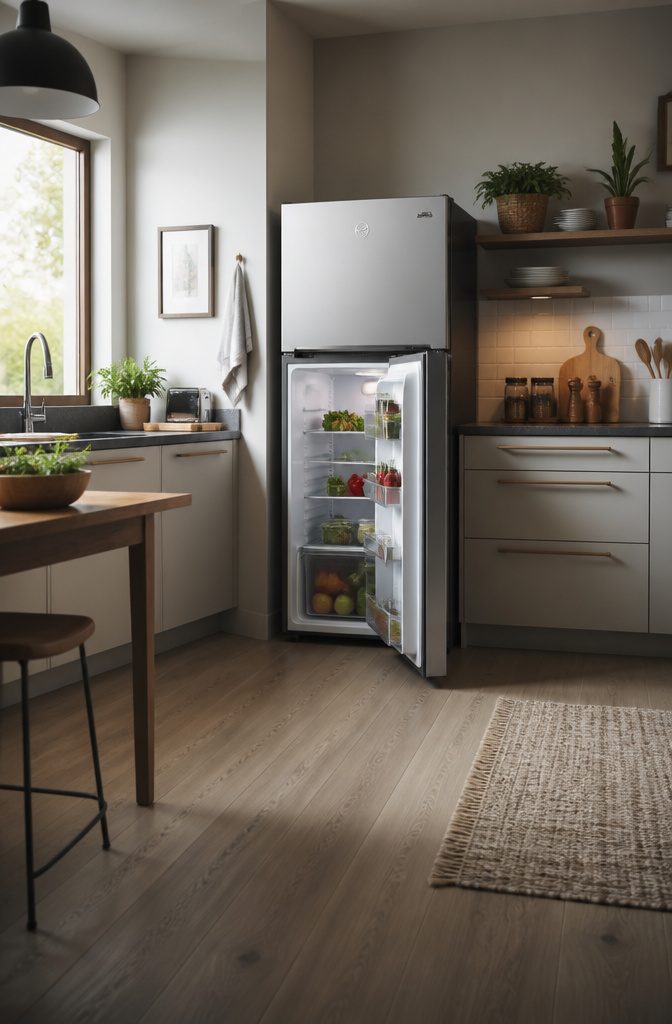
The GE Double-Door Compact Refrigerator runs 20.13 x 33.38 x 18.75 inches and weighs 56 pounds, which puts it at the taller end of what counts as "mini."
That 3.1 cu. ft. total capacity splits across two proper doors, not the usual single-door with a freezer box wedged inside.
The separation matters more than the cubic feet suggest. A frozen pizza stays flat, ice trays don’t melt against the compressor wall, and the main compartment feels like a real refrigerator rather than a dorm cooler with pretensions.
At 321 kWh annually, the power draw sits in the middle of the compact range.
You are paying a little extra for the separate compressor systems and the insulation between compartments. The tradeoff shows up in temperature stability: the freezer actually freezes, and the refrigerator section doesn’t ice over near the divider.
That 33.38-inch height is the deciding factor. In a galley kitchen or under a built-in counter, this unit sticks out awkwardly and the top door can graze low cabinets on the hinge side.
I would skip it for anything tighter than a standard 36-inch counter run. For a garage adjunct, a basement wet bar, or a secondary kitchen where vertical space is cheap, the extra inches buy genuinely usable storage.
4. Best for Dorms: Style That Survives a Semester
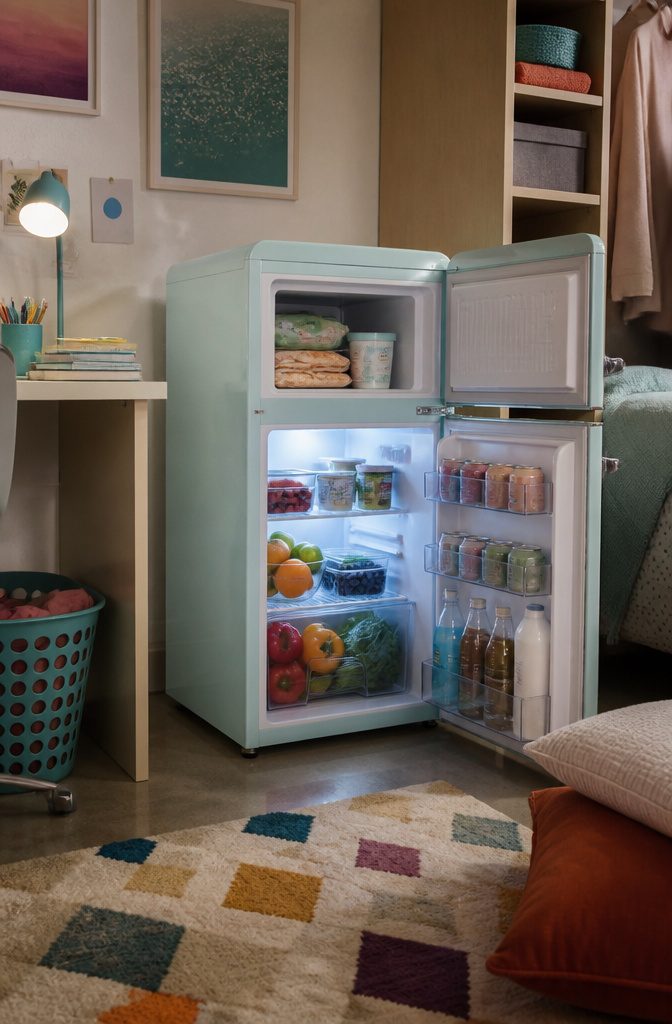
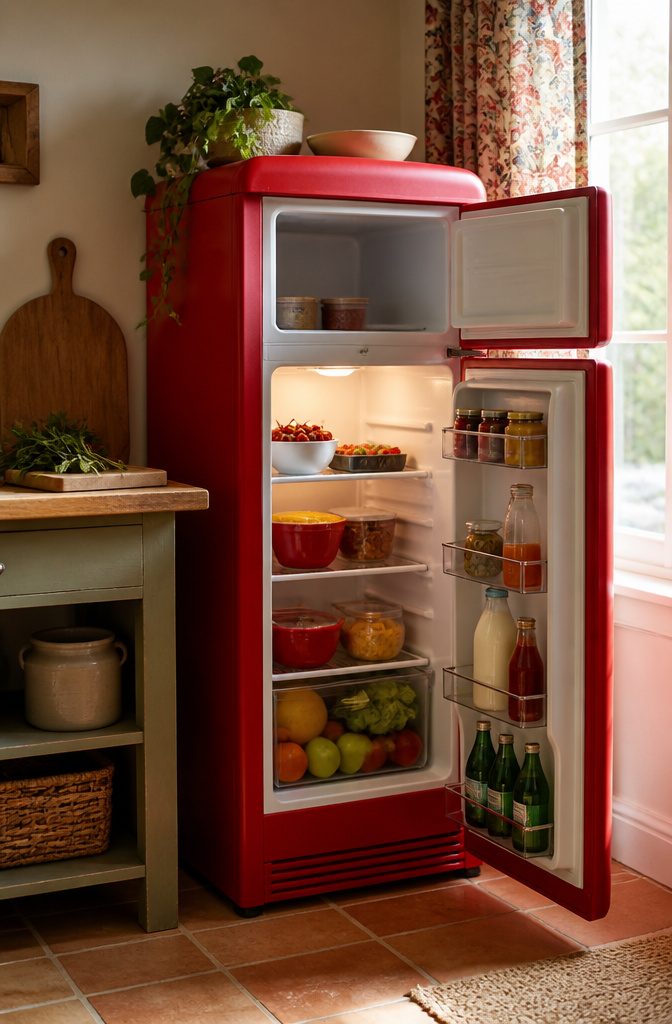
The Galanz Retro Compact Mini Refrigerator measures 19.17 x 23.31 x 35.16 inches and weighs 58.4 pounds, which is manageable for two people on a flat dorm move but a genuine burden up stairs.
Its 3.1 cu. ft. capacity splits between a small freezer up top and a main compartment below, and it draws about 320 kWh per year, roughly middle of the pack for this size.
The rounded corners and chrome handle come in mint, red, black, or cream, and the look is what sells it.
In a cinder-block room with fluorescent lights, it reads as intentional rather than leftover. The freezer compartment is truly separate, not a chiller tray, so ice cream stays firm and frozen meals stack flat.
Skip this one if you swap dorms every August and climb stairs to do it.
At 58.4 pounds, it is not a solo carry, and the retro styling costs more than a plain box that cools just as well. Budget shoppers will find the same cubic footage for less, just without the faceplate.
5. Best for Tight Corners: Small Footprint, Usable Freezer
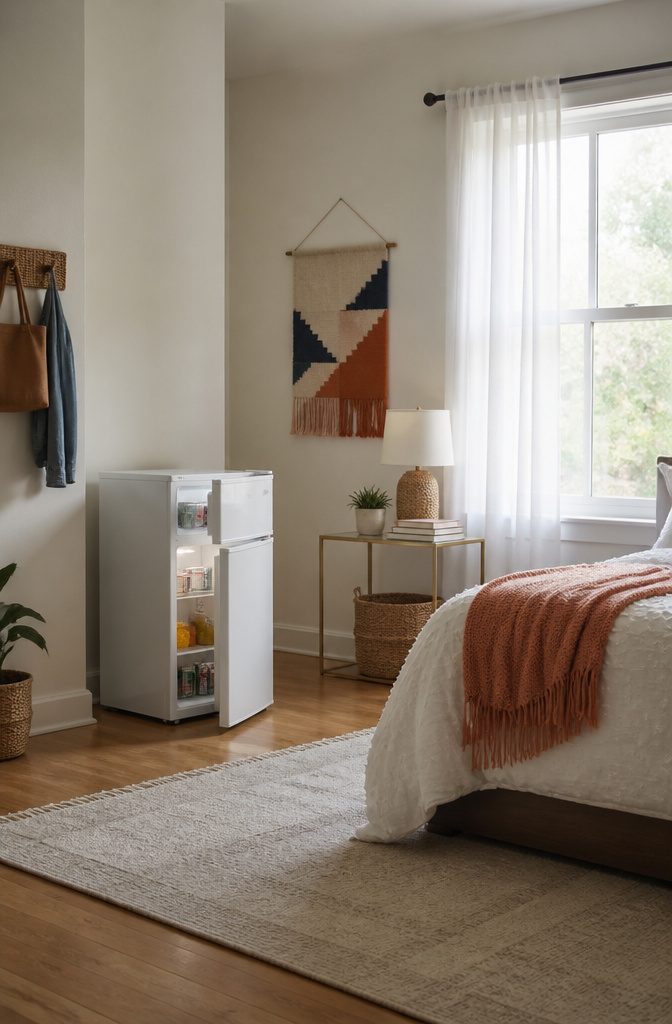
The Magic Chef MCR170 squeezes 1.7 cu. ft. into a footprint small enough to tuck under a desk or beside a nightstand, and its in-door storage actually keeps cans and cartons from tumbling out when you grab a drink.
At $169, it is the cheapest pick in this list by a noticeable margin.
What sold me on including it is the freezer compartment itself.
Most mini fridges in this size class give you a shallow slot that ices over and ruins anything touching it. The MCR170 has a real, contained freezer box.
The New York Times testing found it handles a few ice cream bars fine, keeps vegetables on the fridge shelf from picking up freezer burn, and regulates temperature marginally better than the slot-style alternatives.
One catch: it does not run cold enough for safe meat storage, so think snacks and frozen treats, not a chicken breast stash.
"This model’s freezer compartment is more practical than the slot-style freezer often found in many mini fridges. It’s big enough to store, say, a few ice cream bars, and it’s cold enough to keep them frozen, though not cold enough for the safe storage of meat."
That tradeoff matters most if you are shopping for a bedroom or a studio with thin walls.
The compressor runs slightly louder than pricier picks, loud enough that light sleepers notice it cycling at night. The warranty is standard for the price: one year on parts and labor, five years on the compressor itself.
Skip this one if you need real freezer volume or silence. Buy it if your corner is truly tight, your budget is firm at under $170, and you just want a frozen treat within arm’s reach.
6. Best for Meal Prep Volume: Shelves That Adjust to Containers
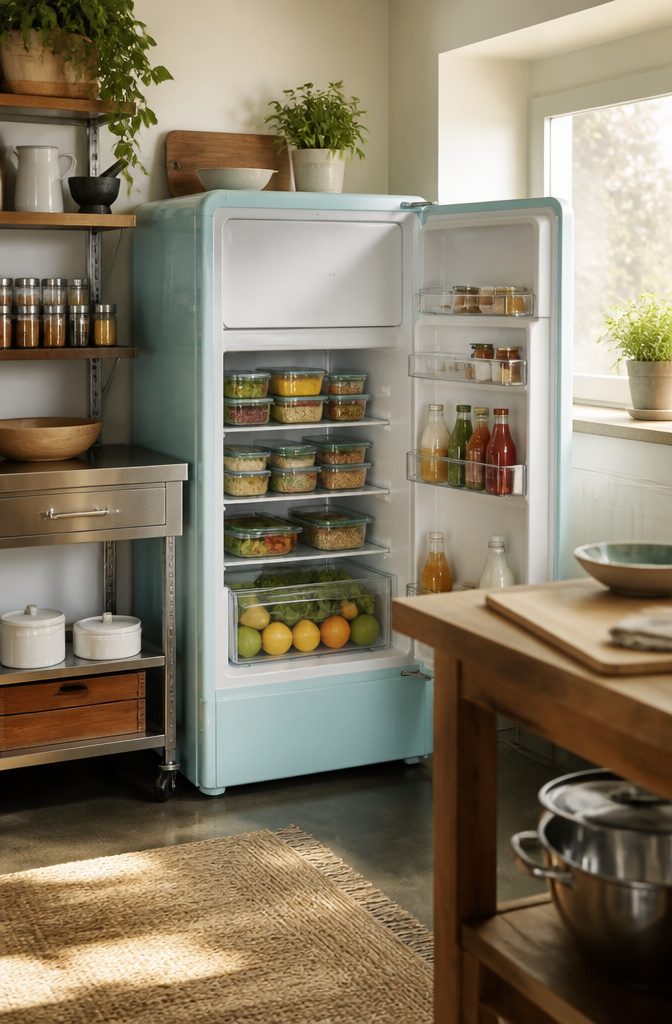
The Frigidaire EFR376 measures 35 x 20 x 20 inches, so it needs a real footprint, not a leftover corner.
At 3.2 cu. ft., the interior space goes to the fridge side, and the shelving is where the money lands: adjustable glass shelves that lift out or shift to fit standard meal prep containers without tilting them sideways.
I see the appeal for anyone who cooks Sunday and stacks five identical boxes for the week. The in-door storage even cradles a 2-liter bottle upright, and the cupholder-style can slots keep drinks from rolling around.
It pulls a 37.4 °F internal temp thirty minutes after plug-in, which is fast, and the Energy Star certification matters if this runs in a garage or basement on its own circuit.
The retro look and seven color options are loud, though. If you want the freezer compartment for more than a few ice trays or a frozen pizza, this model will feel lopsided.
Same verdict if you were hoping for stainless steel to blend with existing appliances: the vintage rounded body and chrome handle read dorm or rec room, not kitchen integration.
At $158, the price sits where renters can justify it for a dedicated prep station, and first-home owners can add cold storage without rewiring for a full second fridge.
Skip it if freezer volume matters more than shelf flexibility, or if the retro shell clashes with cabinets you already own.
What Temperature Consistency Actually Looks Like
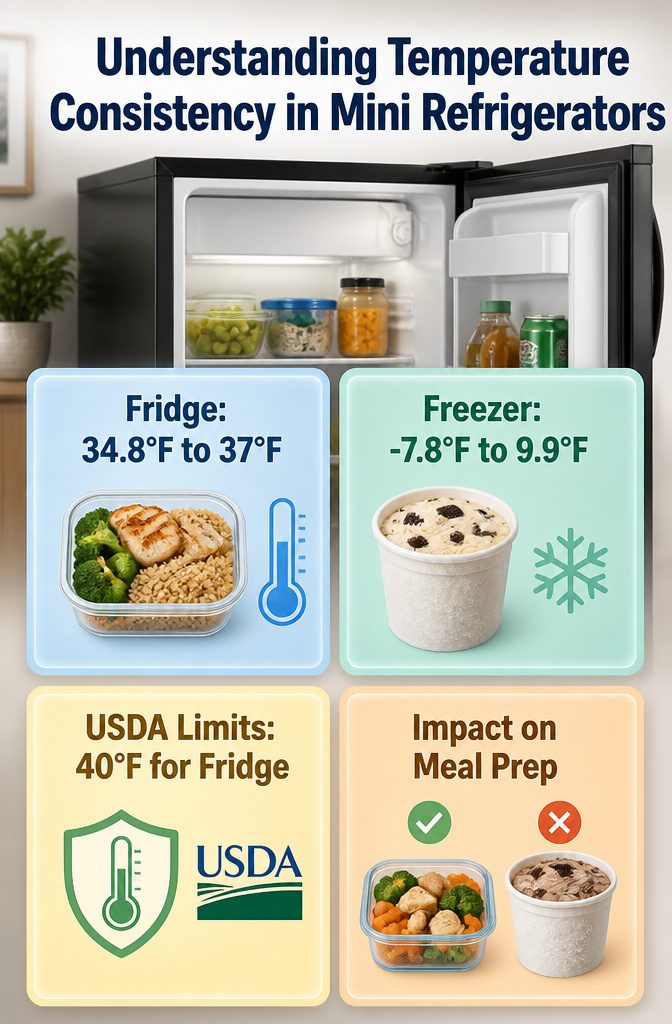
The USDA draws the line at 40°F for the fridge and 0°F for the freezer, and most mini refrigerators with freezer compartments struggle to hold it.
In testing, one model kept its refrigerator section between 34.8°F and 37°F, which is solid, but its freezer swung from -7.8°F all the way up to 9.9°F. That upper range sits above the safety threshold for long-term frozen storage.
For lunch preps, that fluctuation matters differently than it does for ice cream.
A container of cooked grains and vegetables can handle a brief drift above 0°F if it cycles back down quickly. Ice cream, though, partially thaws, turns icy, and never recovers its texture.
The same model that performed well in the refrigerator compartment could store frozen meals and ice cream pints, but only because its average stayed low enough to compensate for the spikes.
Combination units simply cannot keep freezer air as cold as dedicated freezers. The USDA acknowledges this: food that goes in solidly frozen stays safe, but the compartment itself may not maintain 0°F continuously.
If you are meal prepping a week ahead, that distinction determines whether you are storing finished lunches or merely keeping them cold for a day or two.
Reading the Storage Layout Before You Buy
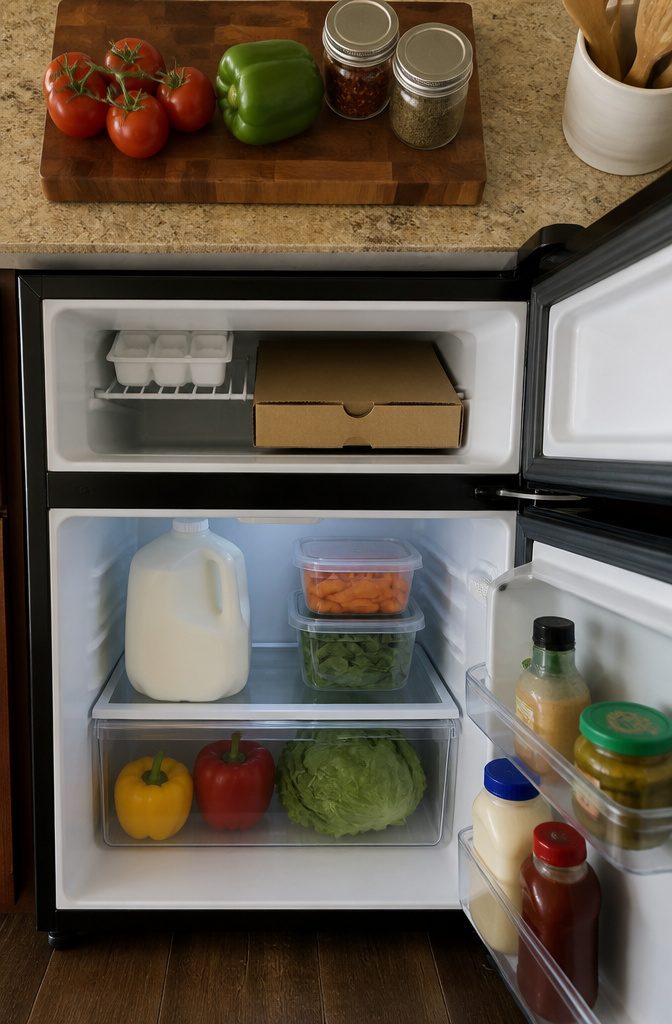
Shelf spacing in a mini refrigerator with freezer matters more than the cubic-foot number on the box.
One model I looked at fits a gallon of ice cream and a frozen pizza easily, yet a gallon of milk will not slide in no matter how you angle it, because a deep crisper drawer steals the vertical room.
Another fits the milk, the eggs, and a 2-liter bottle in the door, but the can dispenser drops cans straight down into foamy-explosion territory.
Door bins and freezer shape are where meal prep plans live or die.
Standard 28–32 oz containers need flat shelf space, not a narrow freezer slot that bows inward. A separate freezer door helps; an open shelf inside the fridge compartment tends to warm-cycle and frost the edges of your containers.
Look for a freezer compartment wide enough for a frozen pizza box, since that shape is a reliable proxy for whether your Sunday prep containers will stack flat.
Taller units do not always mean more usable height.
One retro-styled fridge adds an inch or two of rounded shell without adding interior volume. The difference between models that work and models that fight you is almost always the shelf layout, not the exterior tape measure.
Energy Use: What Those kWh Numbers Mean on Your Bill
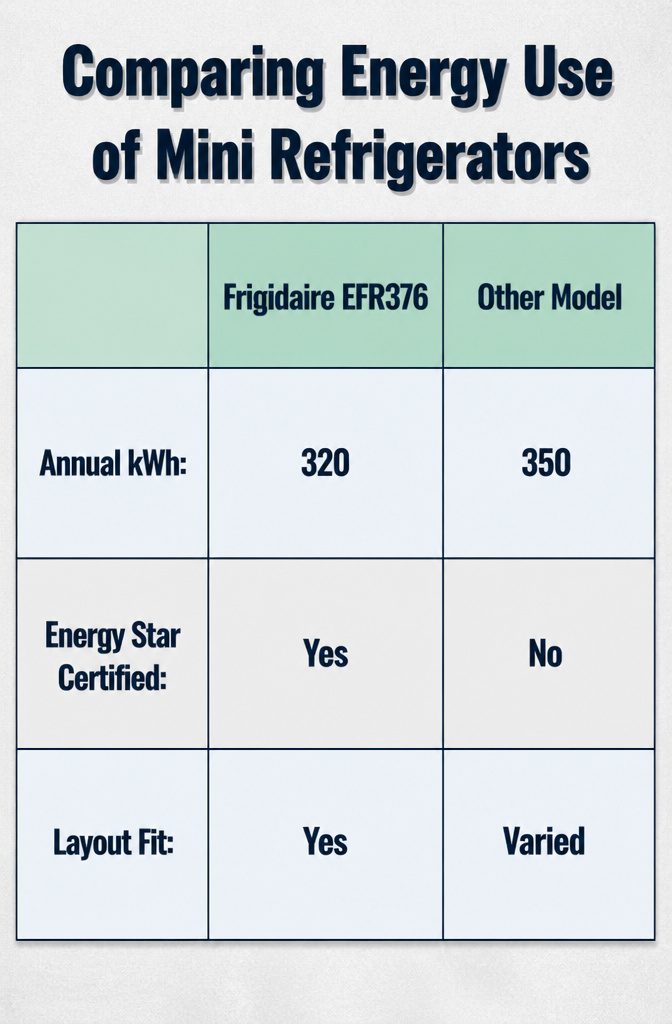
Energy Star certification on a mini refrigerator with freezer is not just a sticker.
It means the unit meets federal standards for using less electricity than the baseline for its size, and for renters paying their own utilities, that gap adds up over a year.
The six picks in this guide all fall in the 320–350 kWh annual range, which is roughly where efficient compact units cluster.
A model at the top of that band is not a bad buy if its layout fits your kitchen, but the lower end leaves more room in the budget for the groceries going inside.
The Frigidaire EFR376, the retro-style 3.2-cubic-foot option, carries that Energy Star label while running the can storage and bottle opener extras. Color choice does not change the draw; the certification covers the mechanics, not the paint.
What matters for the bill is whether the compressor cycles efficiently at partial load, which is what most renters actually ask of it, a few yogurt cups and a frozen pizza rather than a packed household fridge.
When Noise Levels and Warranty Details Matter
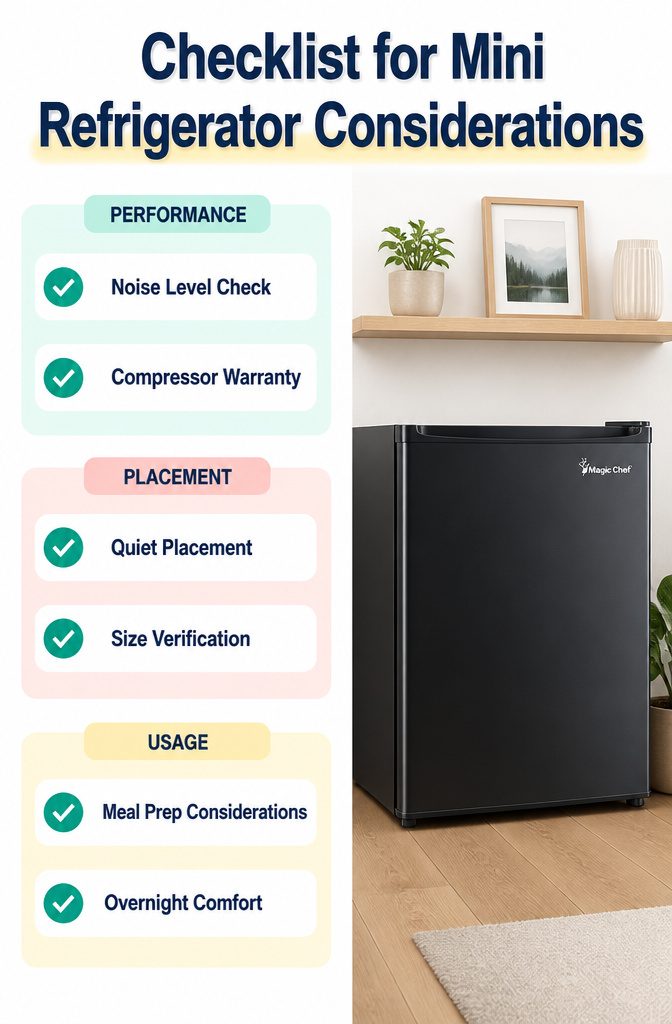
The Magic Chef MCR170 runs a compressor you will hear, especially if you place it somewhere quiet.
In a bedroom or studio apartment, that hum cuts through silence in a way it does not in a kitchenette with a coffee grinder and a running dishwasher.
The noise is not broken, just louder than other cube models, and that distinction matters when your only other sound at 2 a.m. is a phone charger.
Warranty coverage splits the risk the same way: one year on parts and labor, five years on the compressor itself.
The long compressor term suggests where the real failure point sits, and where the manufacturer expects you to live with the machine.
For a garage setup holding overflow drinks, that trade is straightforward. For a bedroom mini refrigerator with freezer kept within arm’s reach of your pillow, the noise becomes the warranty issue you feel every night.
Frequently Asked Questions
What are the best mini fridges with freezers?
The top picks include the Frigidaire EFR376 for overall performance, the Whirlpool Compact Mini Fridge for budget buyers, the GE Double-Door Compact Refrigerator for reliability, the Galanz Retro Compact Mini Refrigerator for dorm rooms, the Magic Chef MCR170 for tight corners, and a second Frigidaire EFR376 configuration for meal prep volume.
Each serves a different use case based on space, budget, and storage needs.
How much do mini fridges with freezers cost?
The models in this guide range from $158 to $169.
The Magic Chef MCR170 sits at the bottom of that range at $169, while the Frigidaire EFR376 configurations land around $158. Price differences mainly reflect styling, door configuration, and shelf flexibility rather than core cooling performance.
What features should I look for in a mini fridge with freezer?
Prioritize temperature consistency first: the fridge section should hold near 40°F and the freezer should stay close to 0°F without wild swings.
Check that the shelf layout fits what you actually store, whether that means upright 2-liter bottles, flat meal prep containers, or frozen pizza boxes.
Energy Star certification keeps annual draw in the 320–350 kWh range, and noise level matters if the unit will sit in a bedroom or studio.