These ideas run from a few quarts of paint to a cast iron bed frame that needs help to move, and the right one depends on whether you are dressing a rental you will leave or a first home you can drill into.
Dark moody green in matte finish hides patched plaster that gloss would spotlight; eggshell keeps the room intentional rather than apologetic.
1. Dark Moody Green Painted Walls
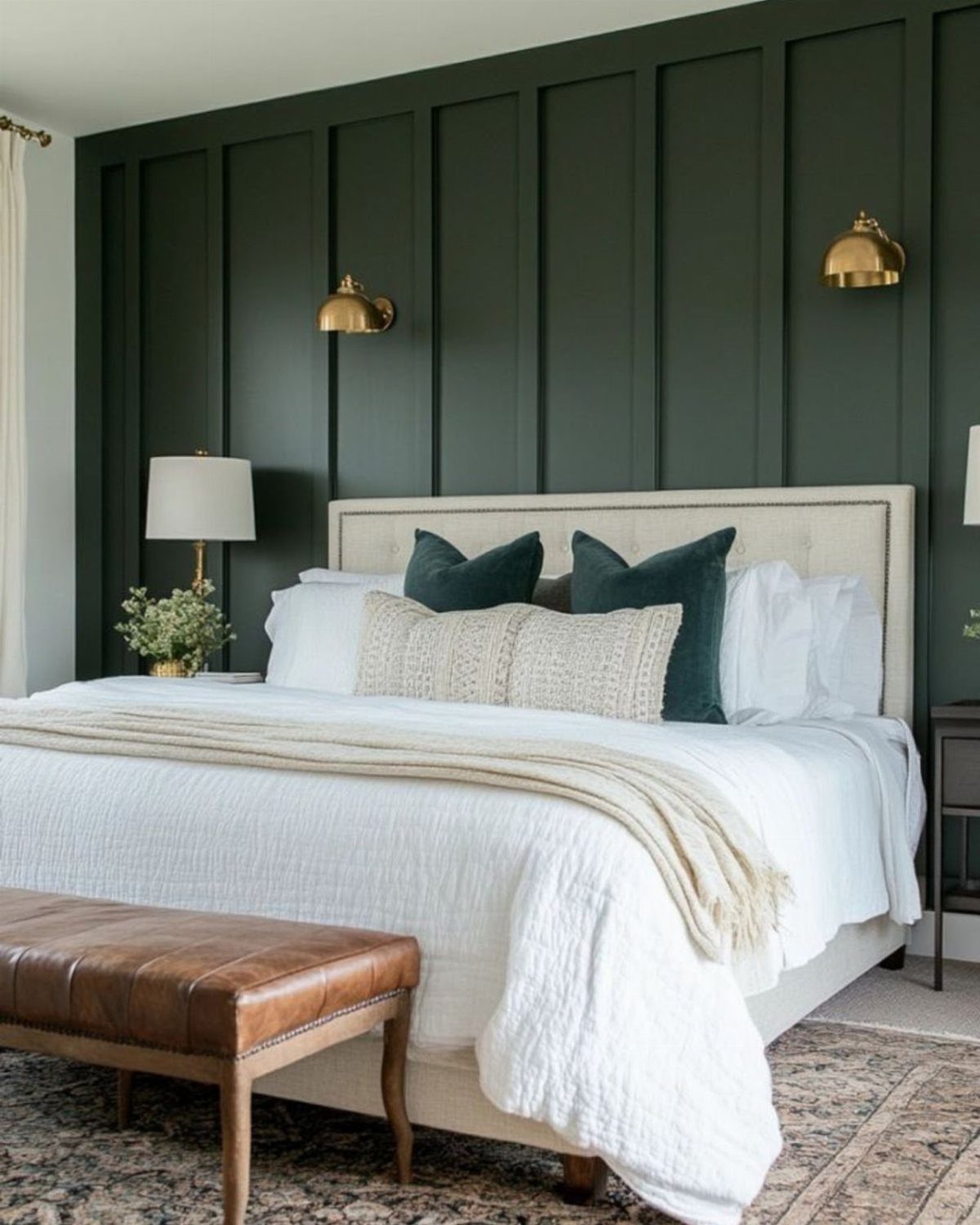
Dark moody green walls absorb light in a way that flatters brass, carved wood, and velvet without asking for perfect trim.
For renters or first-home owners working with older plaster, a soft matte finish in deep olive or forest green hides patches that gloss would spotlight.
Blackened sage paint does the same trick on uneven crown molding that cream never could; the flaws simply fade back.
The finish matters more than the exact shade. High sheen turns every bump into a reflection; eggshell or matte keeps the room feeling intentional rather than apologetic.
If your space is small, keep the ceiling a warm white so the walls don’t close in completely. Daylight is the price you pay, lamps and sconces have to carry the room once noon passes.
2. Ornate Cast Iron Four Poster Bed
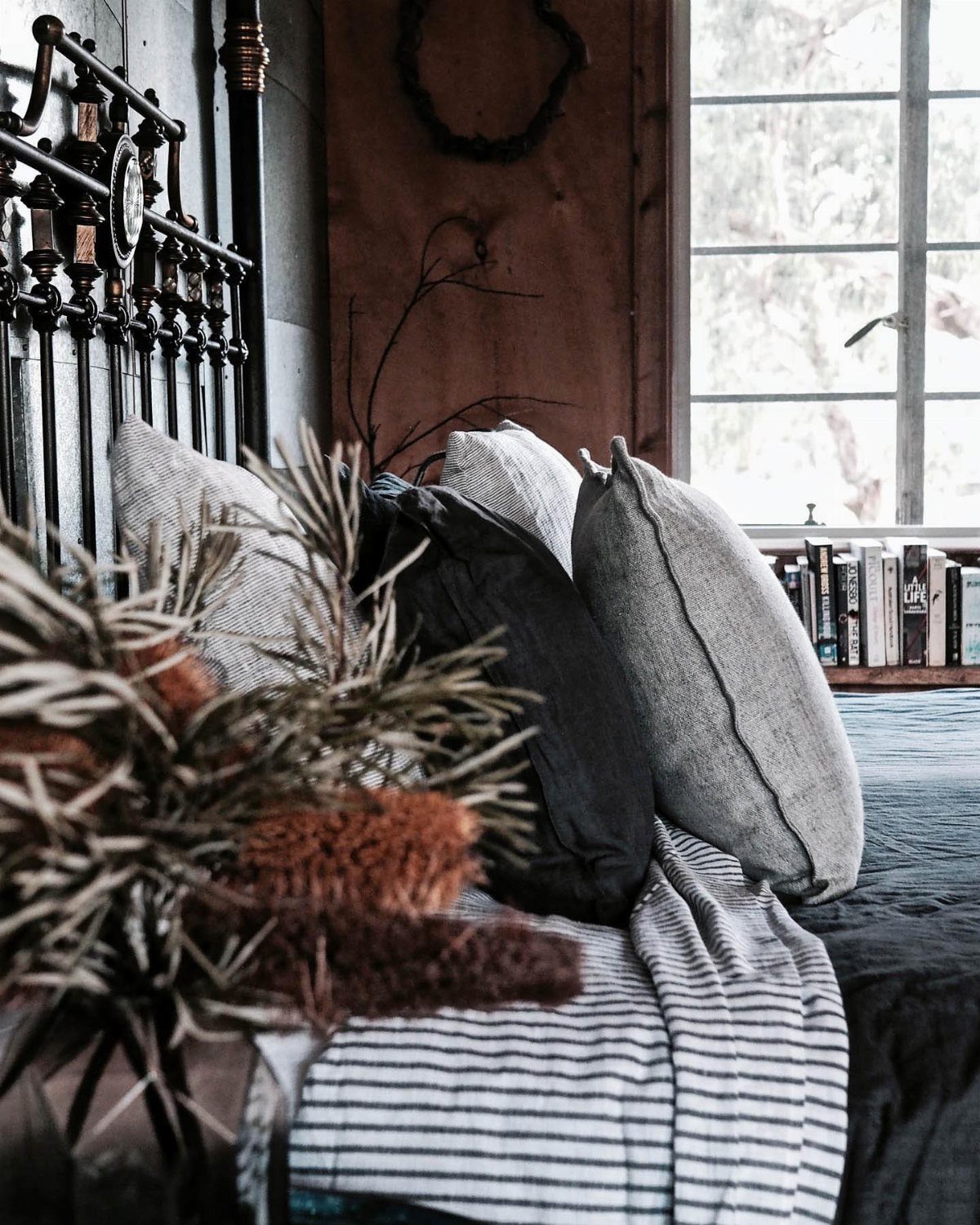
A cast iron four poster bed gives a Victorian bedroom architecture instead of mere furniture.
For rooms under 12 by 12 feet, slim posts keep the ceiling line open and the bed from dominating the floor plan. Powder-coated black is the safest choice, though aged bronze or matte brass warms a room that already leans that direction.
The joinery deserves a hard look before you buy. Cheap versions squeak, and cast iron is not light to move once it arrives.
Frames that rattle at a touch are not worth the money; the solid ones feel heavy at every joint.
A four poster gives you the drama without the commitment to heavy drapery. The metal does the visual lifting on its own.
3. Floral Patterns in Textiles

Floral textiles are the signature most people recognize first in Victorian decor, but the pattern itself needs restraint.
Large-scale blooms on bedding or curtains carry the room if you balance them with solid colors elsewhere. I would not paper every wall in peony print unless you own the place and enjoy stripping curved plaster later.
In a rental, floral pillows, a quilt, or one set of drapes give the same effect without the permanence.
The painterly style, visible brushstrokes rather than flat repeats, reads more authentic to the period. Mix one floral piece with a stripe or a small geometric so the room feels collected over decades, not purchased in a single afternoon.
4. Antique Brass Bed with Layered Linens
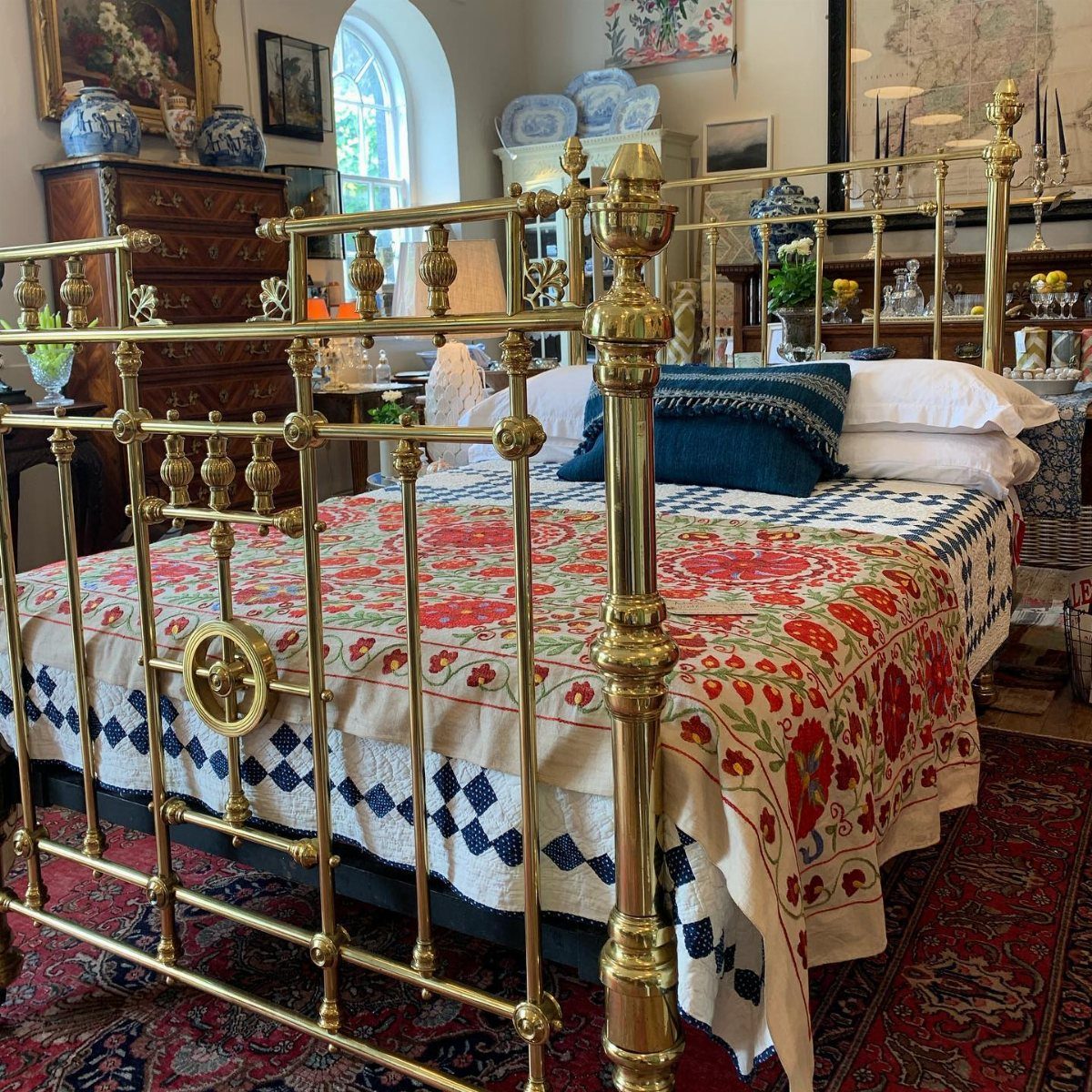
Matching too perfectly is the mistake that kills the look. These rooms were built piece by piece, not bought as sets.
Test the brass finish in both daylight and warm lamplight before you commit. Real aged brass holds depth, while lacquered bright brass can shift orange or greenish depending on the coating.
If the frame squeaks, a little wax on the joints usually quiets it.
5. Carved Wood Vanity with Oval Mirror
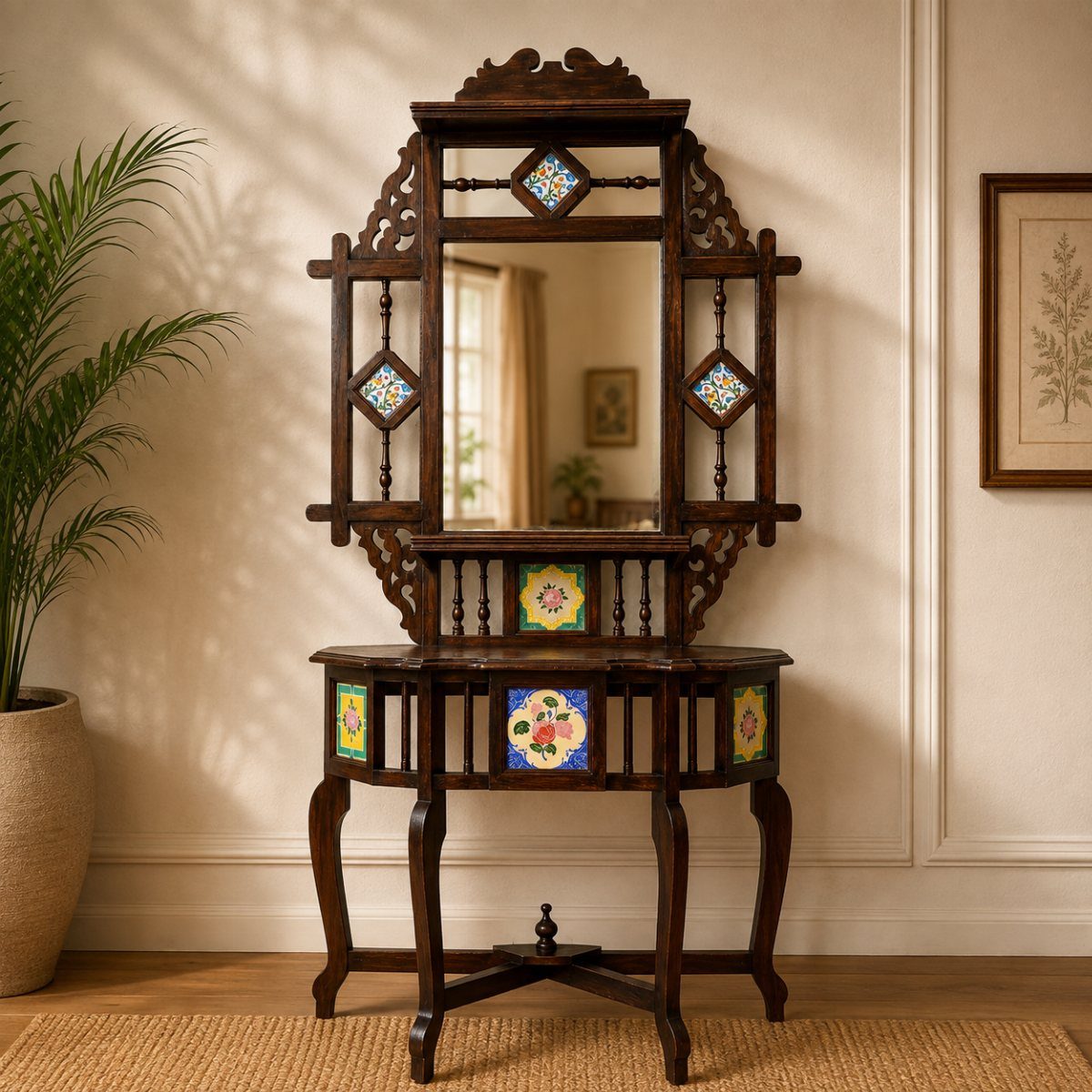
Walnut, mahogany, or dark stained oak carry the right weight; light woods drift toward French country instead.
The maker of the visible piece used hand-carved wood and hand-painted tile inlays. That level of detail turns a hallway wall into a moment, but even simpler versions gain character from real drawers rather than a pretty tabletop.
A vanity that stores nothing becomes clutter the moment hair tools and jewelry appear.
Check seat height before you buy. Too low, and the mirror sits useless for everyday use.
6. Marble Fireplace with Mantel Styling
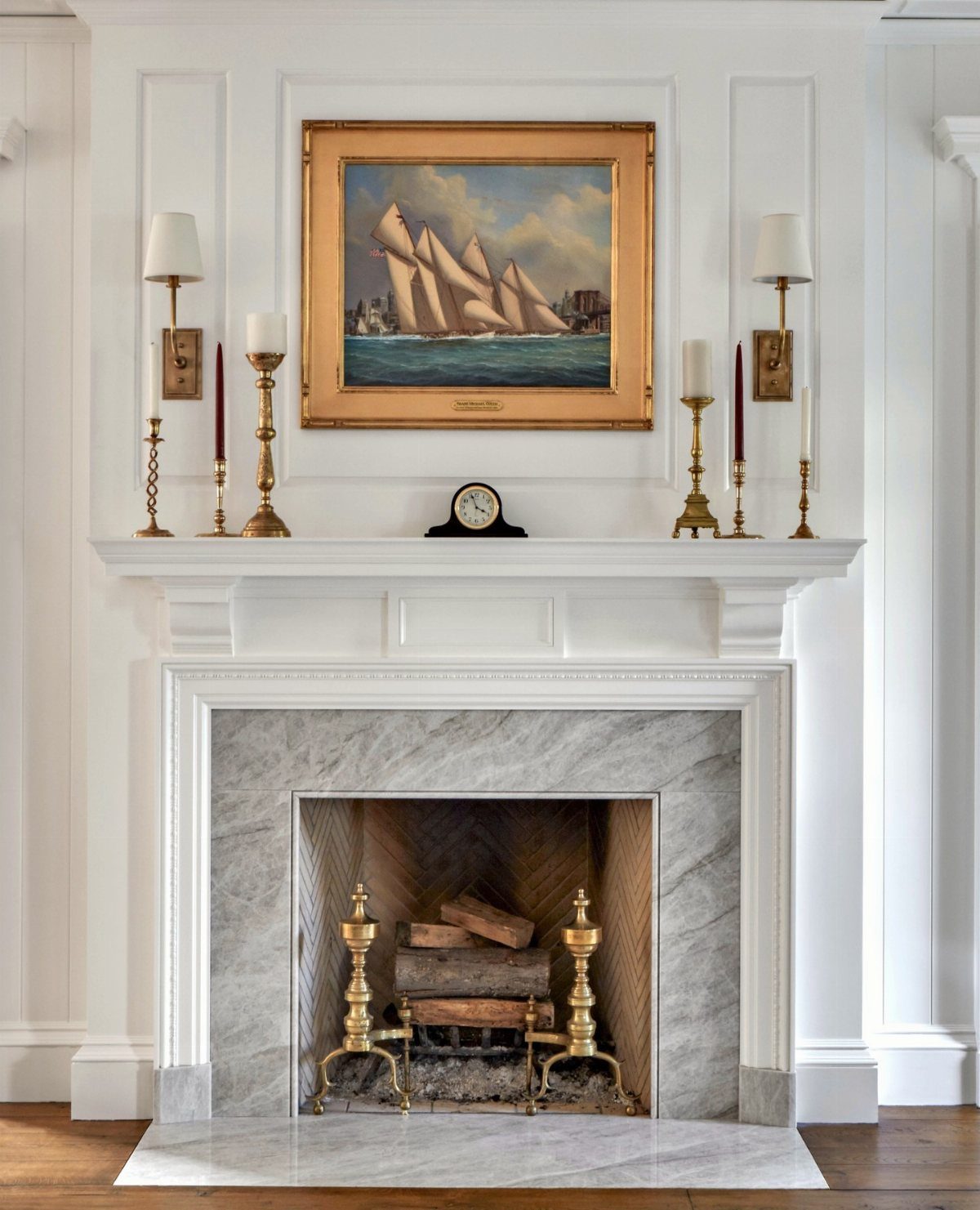
A marble fireplace anchors a Victorian bedroom better than nearly any other single feature.
Original stone with its patina outperforms anything manufactured to look old, though Calacatta-look quartz works when the budget demands it. More than that, and the fireplace reads as a shelf.
If yours does not function, paint the interior matte black or charcoal. The dark firebox sharpens the surround and hides dust between cleanings.
Marble stains, and soot or candle wax leave marks if you are careless, so restraint in styling doubles as maintenance strategy.
7. Lace Curtains with Heavy Velvet Drapes
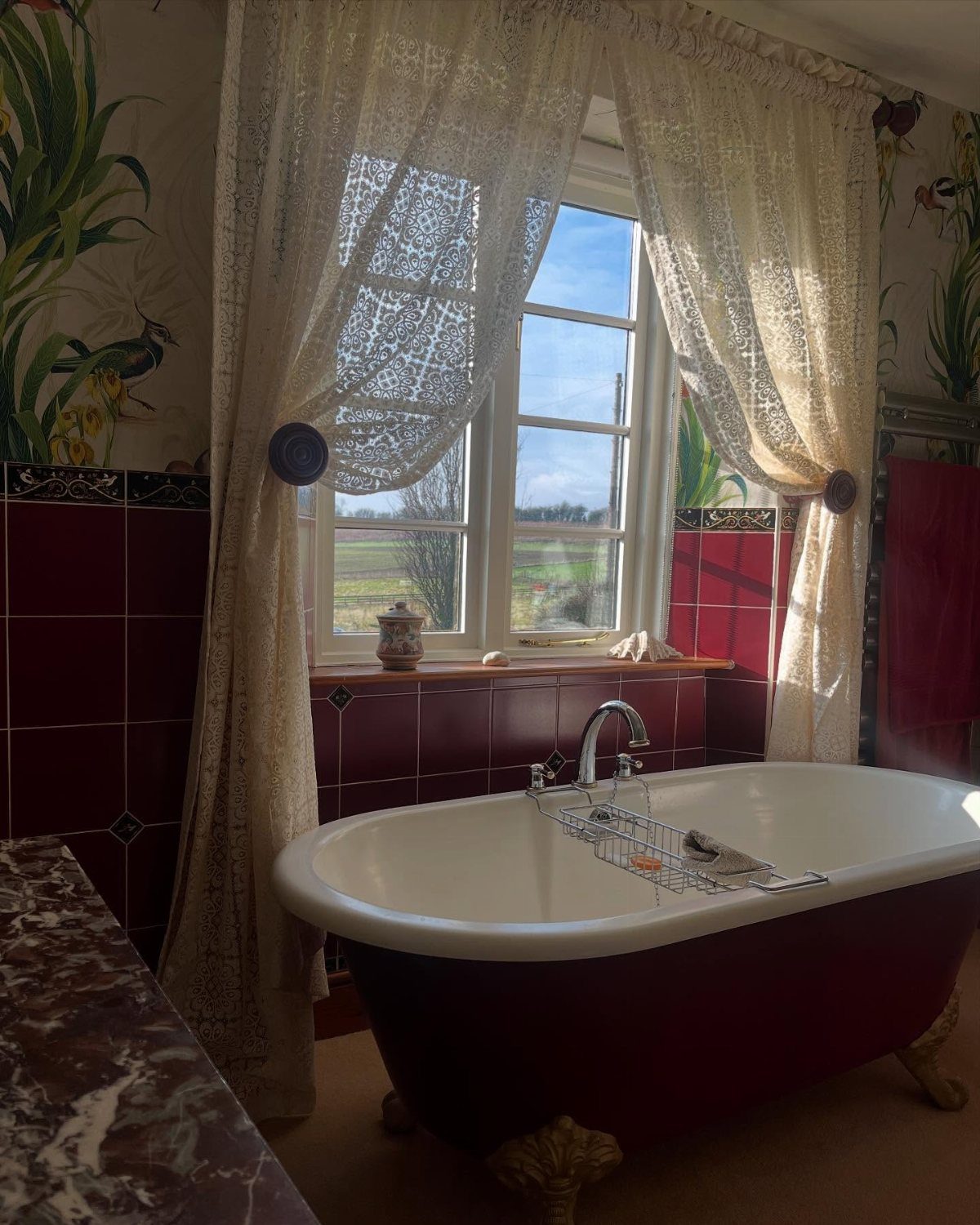
Layered curtains give a Victorian bedroom its depth, and the pairing that works is sheer lace against heavy velvet. Lace softens the daylight that comes in, and velvet does the work of blocking it while the fabric itself holds shape.
Street-facing windows or an early sunrise both call for this kind of double layer.
How full the curtains hang matters more than what you spent on the bolt. Velvet pulled tight across a rod lies dead; the pile needs folds to catch light.
Panels should run two and a half times the window width at minimum. Less than that, and the wall starts to look like you stopped halfway.
If you are mixing lace and velvet, keep the lace simple. Lace with too much pattern or trim slides the room toward something dated in the wrong way; Victorian has more restraint than that.
8. Lighting Fixtures with Vintage Elements
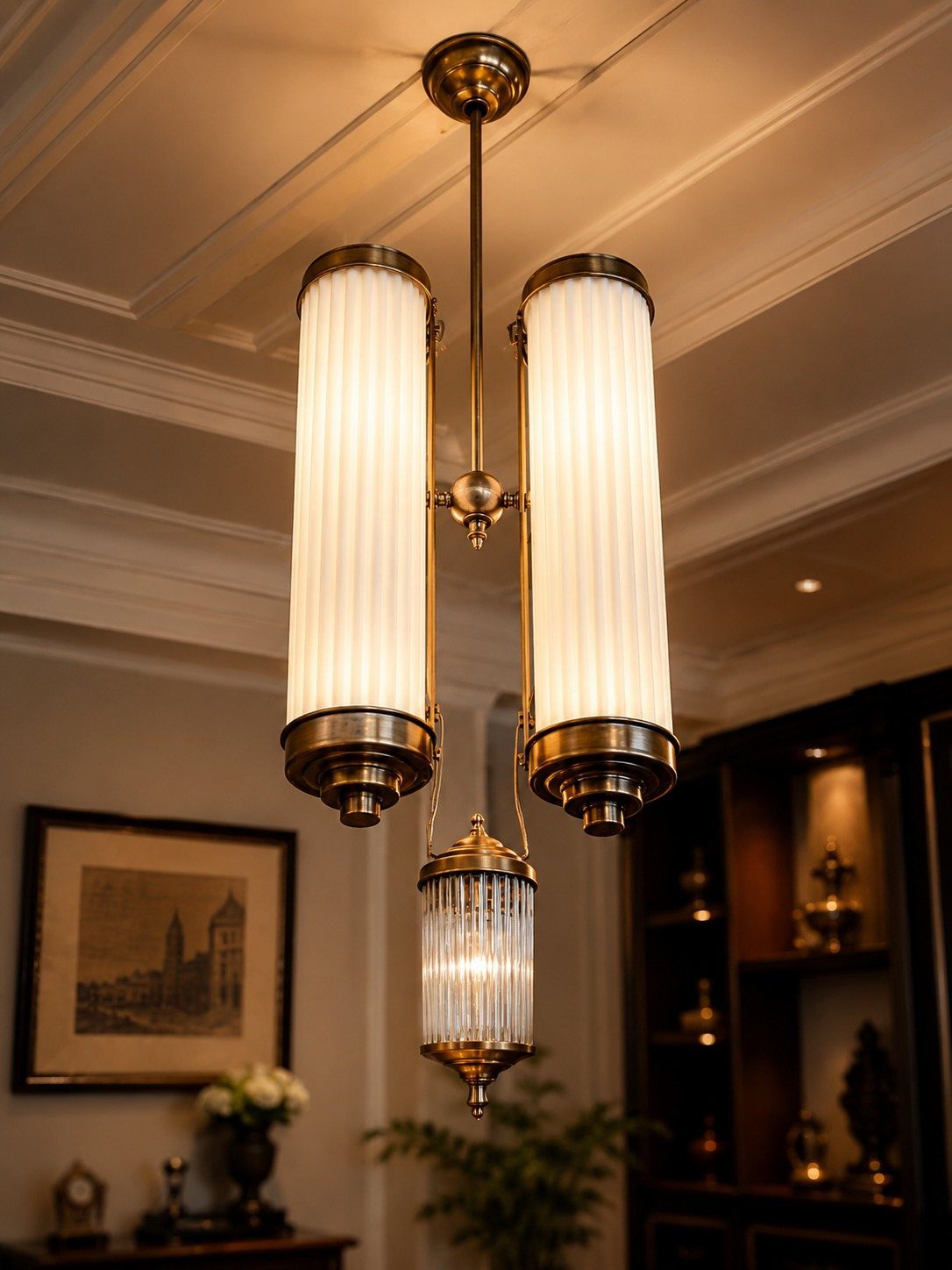
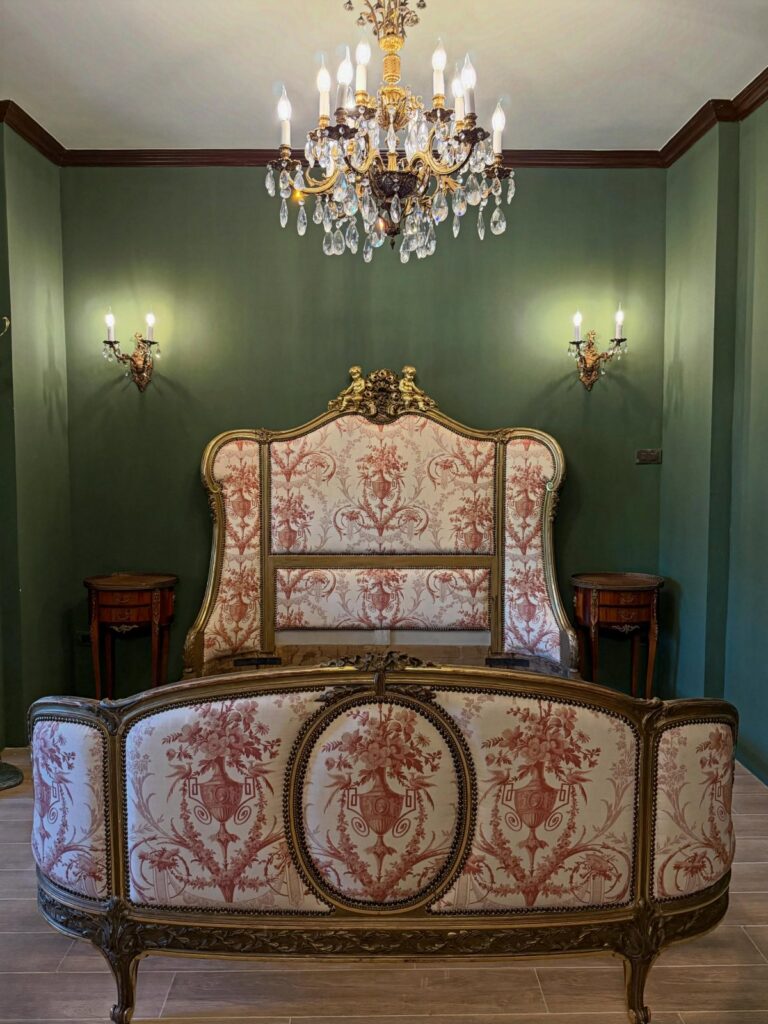
The warm light and the fixture’s visible metalwork do the heavy lifting.
I would pick this one for a small group: a single statement fixture rather than scattered lamps keeps the ceiling interesting and the surfaces clear. Sconces with similar metal finishes work if ceiling height is limited, though they need wiring.
Dimmers matter more than wattage. Victorian interiors relied on gaslight levels, and modern bulbs at full strength wash out the mood entirely.
A dimmer belongs on any bedroom fixture, and the hardware is the kind of small job that fits inside a Saturday afternoon if wiring is already familiar work.
Creating a Restful Atmosphere
A Victorian bedroom can feel like a lot of look to sleep in. Rich jewel tones help, but the wrong lighting turns them oppressive.
I stick to warm, dimmable sources: a brass table lamp on the vanity, maybe a small sconce with a frosted shade. Bedside lamps should give you enough light to read by, not enough to stage a play.
Premium Victorian reproductions cost more than most renters want to spend. Painted walls in deep green do the heavy lifting for the price of a few quart cans.
The cast iron bed or carved wood vanity can wait; color and light set the mood first.
Balancing Ornament with Restraint
The mistake I see most often is treating Victorian as a license to fill every surface. Tall windows and original trim already do half the work.
One ornate piece, the four-poster or the carved vanity, carries the room. Two starts a competition.
Two patterns maximum is the safer bet, usually a floral and a stripe, and never in the same scale. Small florals on the bedding, larger geometry if anywhere else.
The eye needs somewhere to rest, and in a bedroom that should be the bed itself.
Organization matters more than quantity. A brass tray on the vanity corrals the daily clutter.
Books stack horizontal, not vertical, so the spines don’t shout. The restraint reads as confidence; the clutter reads as costume.
Choosing the Right Color Palette
Deep burgundy at #722F37 and forest green at #228B22 are the starting points I return to. Either one covers a wall without looking like a stage set.
Royal purple at #7851A9 works best as an accent, a velvet pillow or the underside of a lampshade.
The neutrals matter as much as the hues. Cream, not white; it softens the transition and keeps the room from feeling like a bistro.
Rich gold at #D4AF37 belongs in small doses, hardware or a mirror frame, not a whole chair.
Peacock blue at #005F69 and ruby at #9B111E are the risks. I use one or the other, never both, and only when the room gets strong morning light.
Otherwise they turn flat and cold by evening.
Incorporating Vintage Accessories
Vintage accessories finish the room, but they can’t rescue it. I add them after the color and the anchor pieces are set.
A small brass clock, a ceramic pitcher that never holds water, a single framed botanical print: these read as collected, not assembled.
The line between vintage and vintage-inspired is thinner than purists admit. A reproduction chandelier with good patina does the same work as a rewired original at a third the price.
I check the weight; real brass is heavier than plated pot metal.
Technology needs hiding. The phone charger lives in the vanity drawer, the router in the closet.
Nothing kills the mood faster than a black cable snaking across a marble mantel.
Frequently Asked Questions
What are some ideas for decorating a Victorian bedroom?
Start with dark moody green walls in matte or eggshell finish, which flatters brass and carved wood while hiding imperfect trim.
Add one ornate anchor piece like a cast iron four poster bed or a carved wood vanity, then layer floral textiles with restraint.
Keep the ceiling warm white so the room does not close in, and use warm, dimmable lighting to maintain the period mood without turning oppressive.
What color was popular in Victorian bedrooms?
Victorian homeowners chose the deepest reds and greens partly because those pigments cost more, so the color itself showed you could afford them. Forest and olive green, burgundy, plum, navy, and warm ochre were common choices.
Cream served as the neutral, not white, and brass or gilt accents warmed everything.
Lighter walls in that era went to muted pinks or gray-greens, always with baseboards and window frames painted several shades darker to keep the room from floating away.
What are essential Victorian bedroom items?
An ornate bed frame, heavy drapes over lace panels, a carved vanity, and a marble fireplace are the pieces that define the room. Layered curtains, floral textiles, and vintage metal lighting complete the look.
The bed and the fireplace do the architectural work; everything else supports them.
What are the key characteristics of a Victorian bedroom?
Every surface in a Victorian room wants something on it, carved, gilded, or upholstered; flat walls read as unfinished.