These ideas run from a few baskets and a strip of crown molding up to a full plywood surround with cabinets above, with costs that scale to match.
The right choice depends on whether you rent, own, or are somewhere in between deciding.
1. Cabinet Above Refrigerator
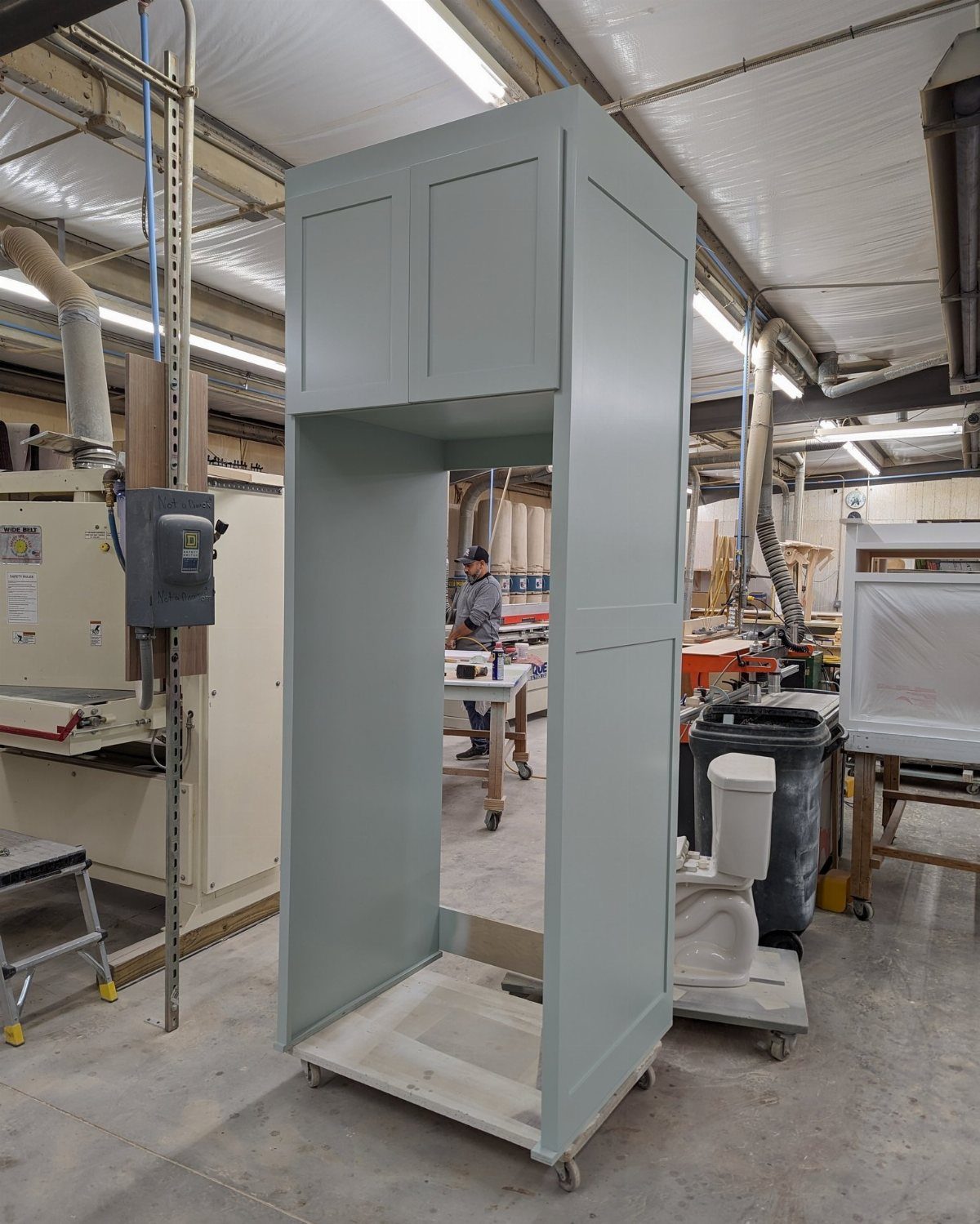
A cabinet mounted directly above the refrigerator turns the dead zone into storage you can actually use. Most big-box stores sell premade over-fridge cabinets, though building to your exact dimensions gives a cleaner fit and more room inside.
Size that cabinet around the largest items you need to hide: the turkey platter, the bread machine, the stockpot that only comes out in November.
Shallow works fine for light, bulky things you rarely touch; full-depth boxes swallow more but need exact clearance so the fridge can still slide out for cleaning.
Leave two and a half inches above the appliance for facing and airflow. Store only what you can lift down without a step stool, or keep one folded inside.
2. Vertical Storage Solutions
Vertical dividers turn that same overhead cabinet into sorted storage for baking sheets, cutting boards, and trays that otherwise slide into a pile.
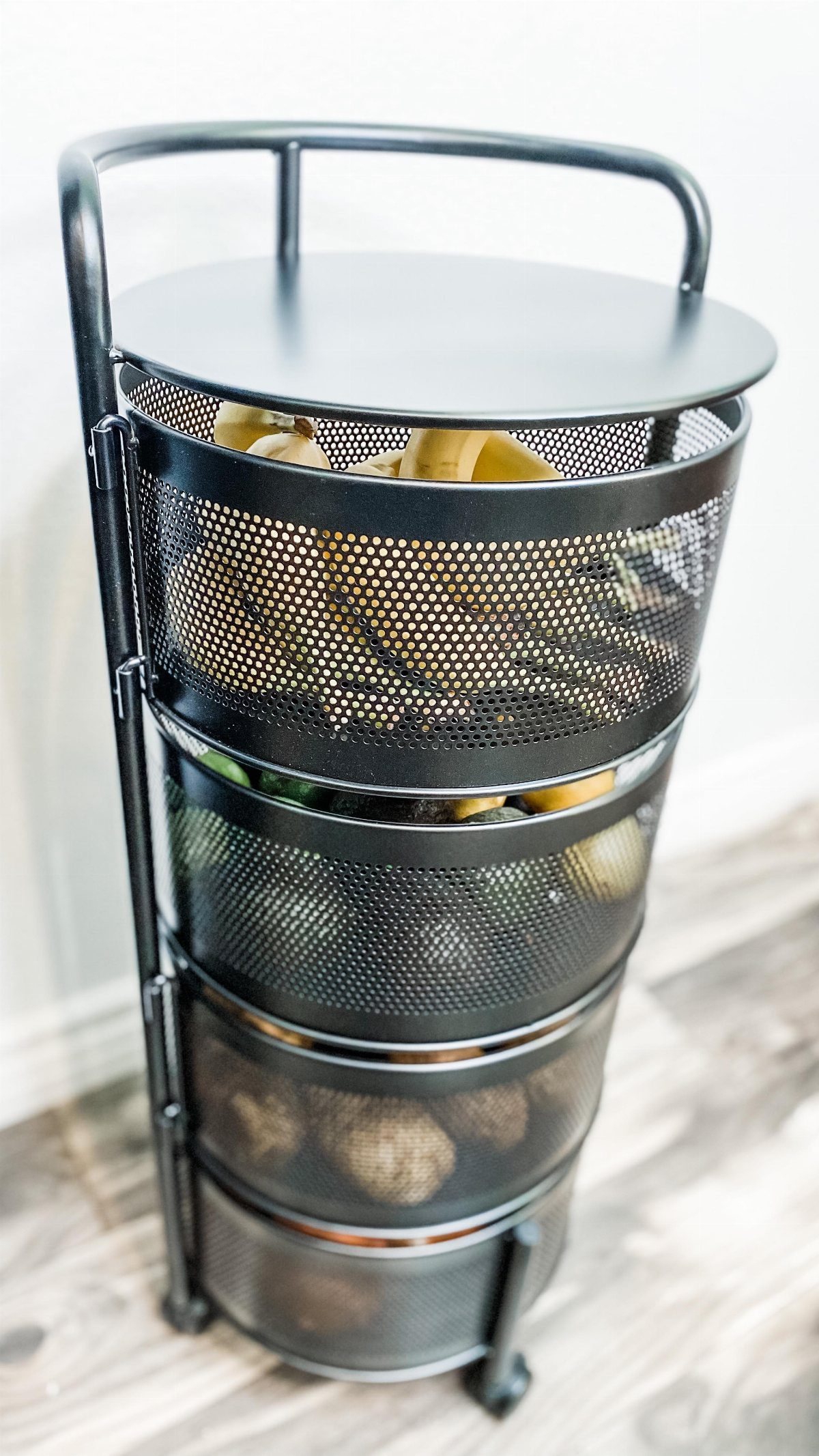
A slim wire basket on the fridge side works for fruit, or magnetic racks for spices if your surface allows.
A short shelf near the top leaves the lower half open for vertical slots. The upper shelf holds low-use platters; the dividers below keep daily pans upright and grab-able.
Reversing that order makes sense if you bake more than you entertain.
Side panels matter too. Hooks for aprons, a narrow rail for towels, or a hanging caddy for wraps use inches that otherwise go blank.
3. Pull-out Trays or Sliding Shelves
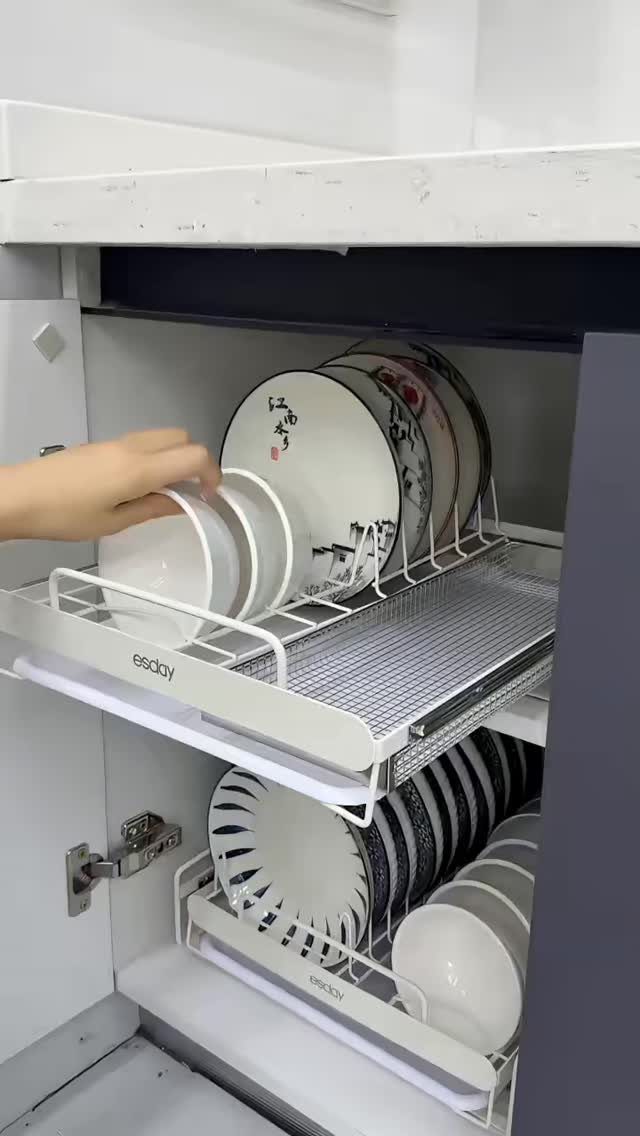
Pull-out trays fix the reach-and-grope problem that makes high cabinets turn into black holes. A sliding shelf brings the contents to your chest instead of your shoulder.
A white metal tray set on full-extension slides brings everything within reach without a step stool. It holds plates and bowls I use for holidays; the rest of the year they stay out of sight but not out of memory.
Seasonal small appliances, the ice-cream maker, the spiralizer, the fondue pot, land here too.
The hardware costs more than fixed shelving but saves your back. Check slide length against cabinet depth; a tray that stops short still leaves items stranded in back.
4. Open Shelving
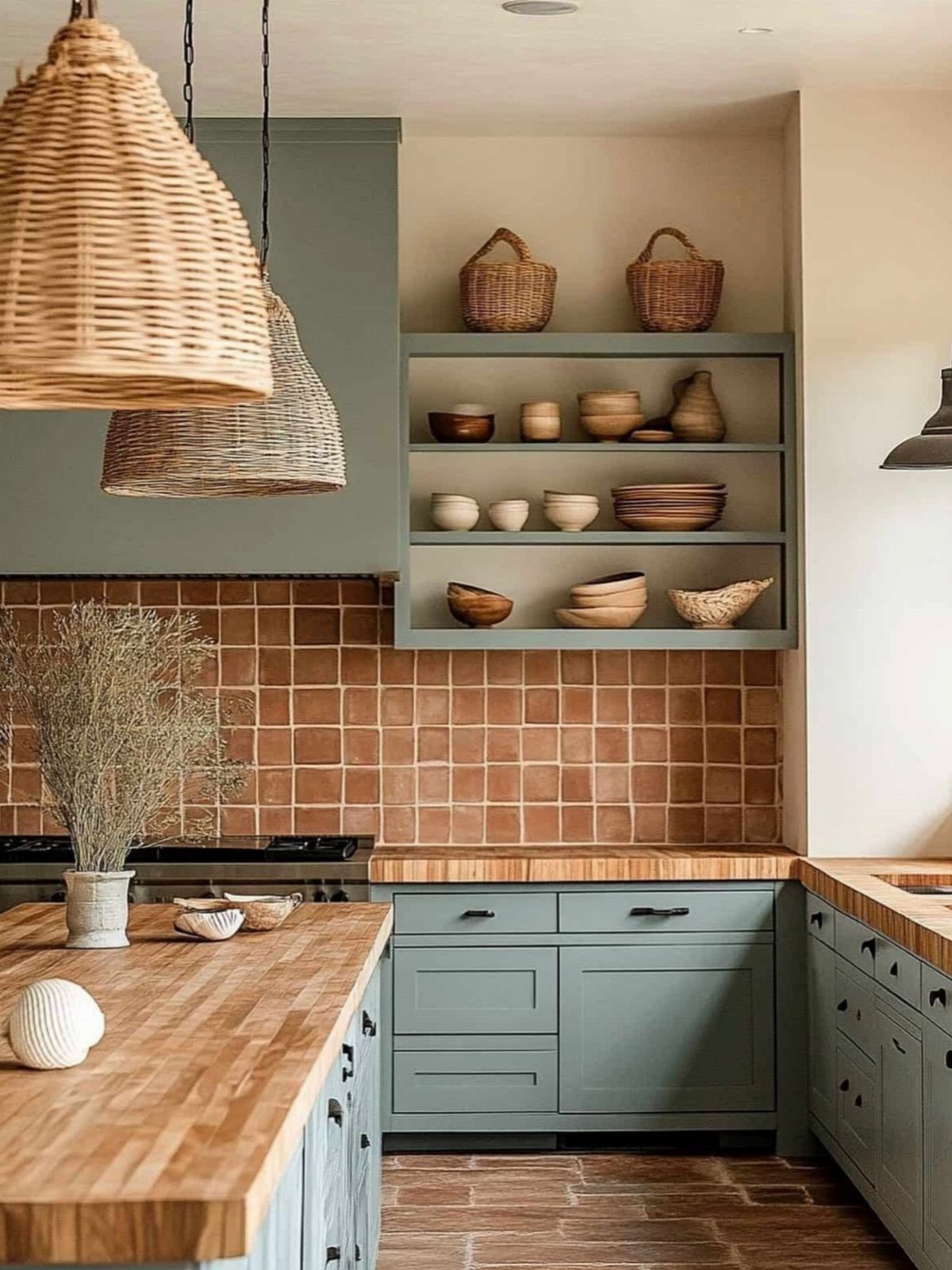
Floating shelves above a counter-depth fridge give the kitchen a lighter look than a full cabinet box, and they cost less.
Style them like any open shelf: a few everyday items in front, the rest behind a basket or moved to a less visible spot.
One basket for things you actually grab, backup coffee filters, the bread knife, and rotate the rest seasonally. Cookbooks stacked spine-out, a small plant, a framed photo: these read as intentional, not leftover.
Measure your fridge height, add two and a half inches for facing and slide-out clearance, then draw a level line around the inside of the cabinet box before you drill.
Low ceilings especially benefit from this; a full cabinet can feel like a lid coming down.
5. Custom Organizing Systems
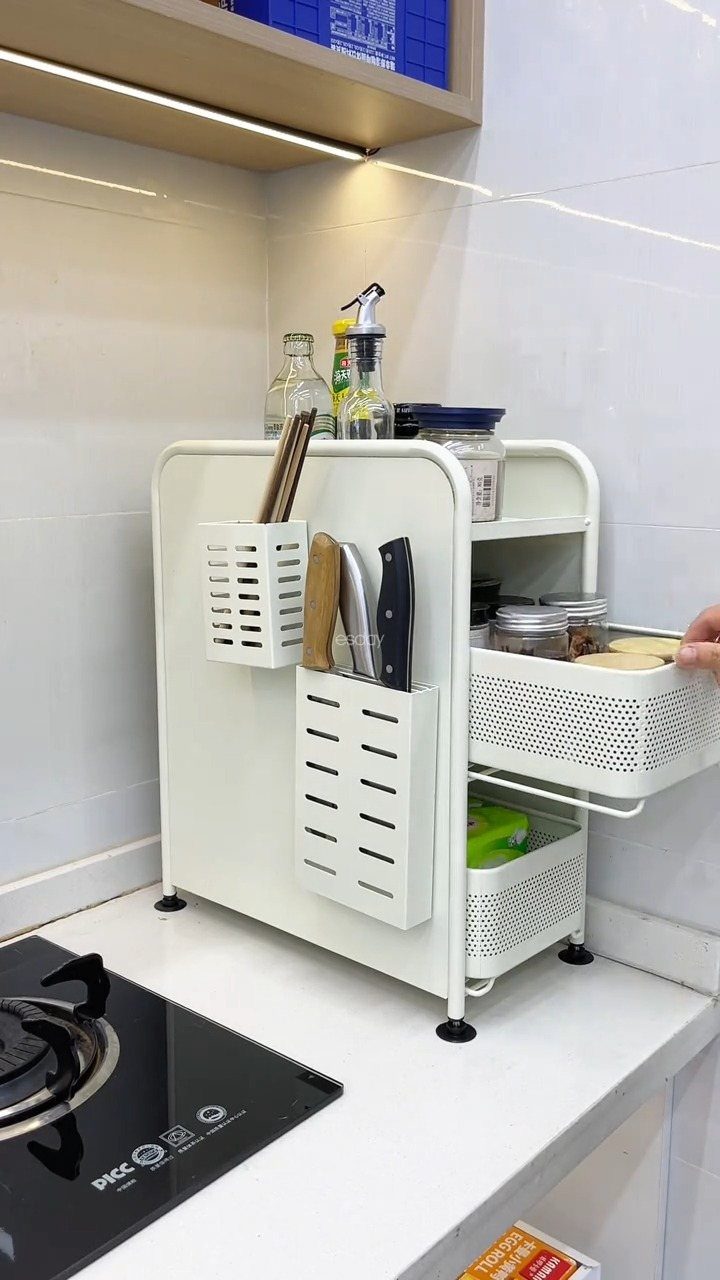
A modular organizer with adjustable shelves and pull-out bins evolves as your kitchen habits shift. A metal unit like this one scales from counter to cabinet interior to top of fridge without changing the logic.
Office file holders work for wraps and lids; stackable mesh drawers hold food bags and backup utensils. The slots for knives and the hanging basket came with the frame; moving the basket to hold dish gloves frees drawer space below.
The whole system cost less than a single custom drawer from a cabinet shop. Reconfigure when your needs change instead of starting over.
6. Glass-front Cabinets
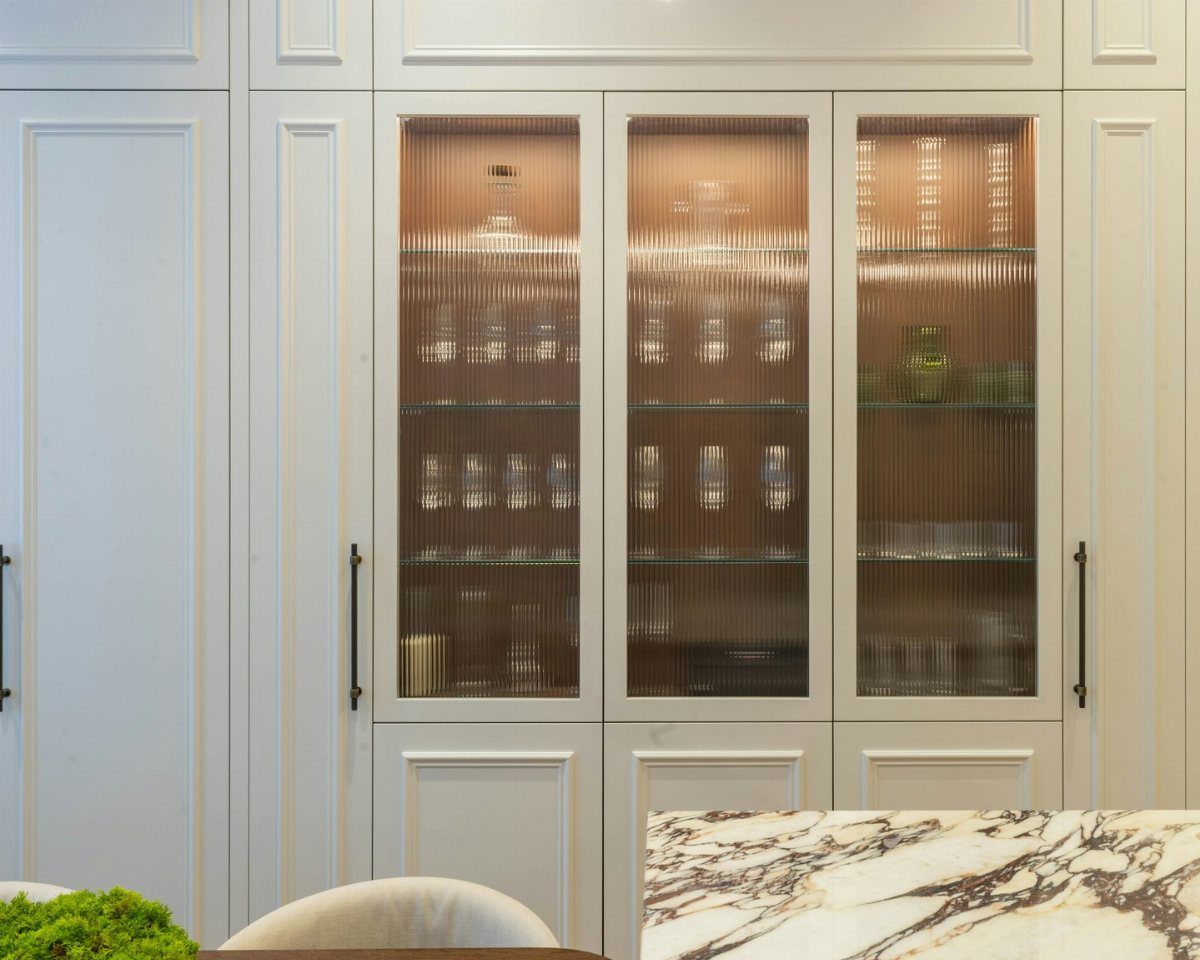
Glass-front doors on a cabinet above the fridge give you the storage of a closed box with the visual lightness of open shelving. Ribbed or seeded glass hides dust and slight disorder better than clear.
I chose this for a narrow galley where solid doors would have read as a wall.
Inside, keep glassware you use monthly, not daily; wine glasses for company, the good tumblers, a set of coupe bowls that only come out for birthdays. The warm light inside turns the cabinet into a lantern after dark.
Full-height units that reach the ceiling maximize every inch in kitchens with tall walls. Match the frame and finish to your existing cabinets so the fridge bank reads as built-in, not afterthought.
7. Wine Rack Above Fridge
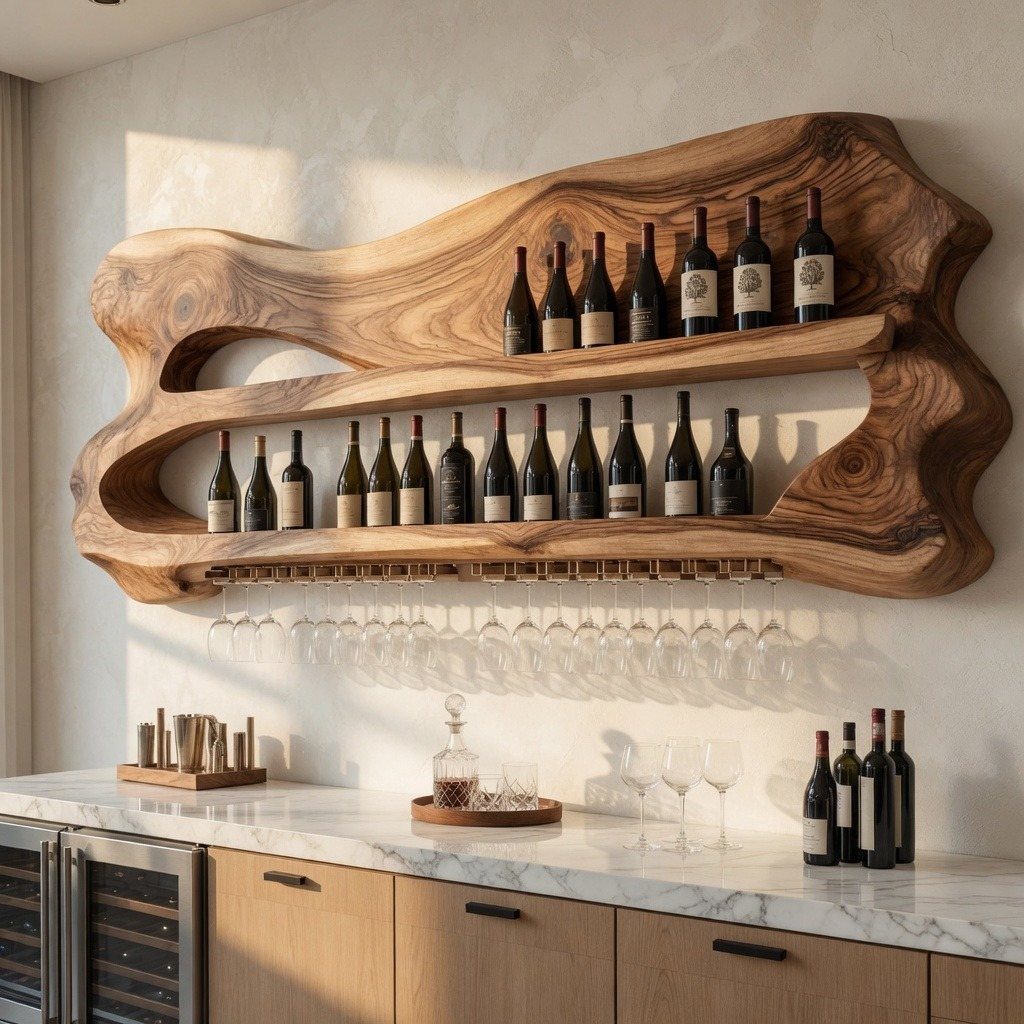
A live-edge wine rack turns the dead space above your fridge into active storage for bottles and hanging stems.
Warm wood brings more to a wine rack than storage; it gives the space above a fridge the feeling of something chosen rather than built in.
The rack fills the gap without looking tacked on, and bottles store flat at the angle they need.
Building one side panel instead of two keeps costs down if you can shift nearby cabinets to tuck the fridge into a corner first.
Best for someone who drinks wine regularly enough that the bottles rotate, not for a display that sits untouched.
8. Decorative Baskets or Bins
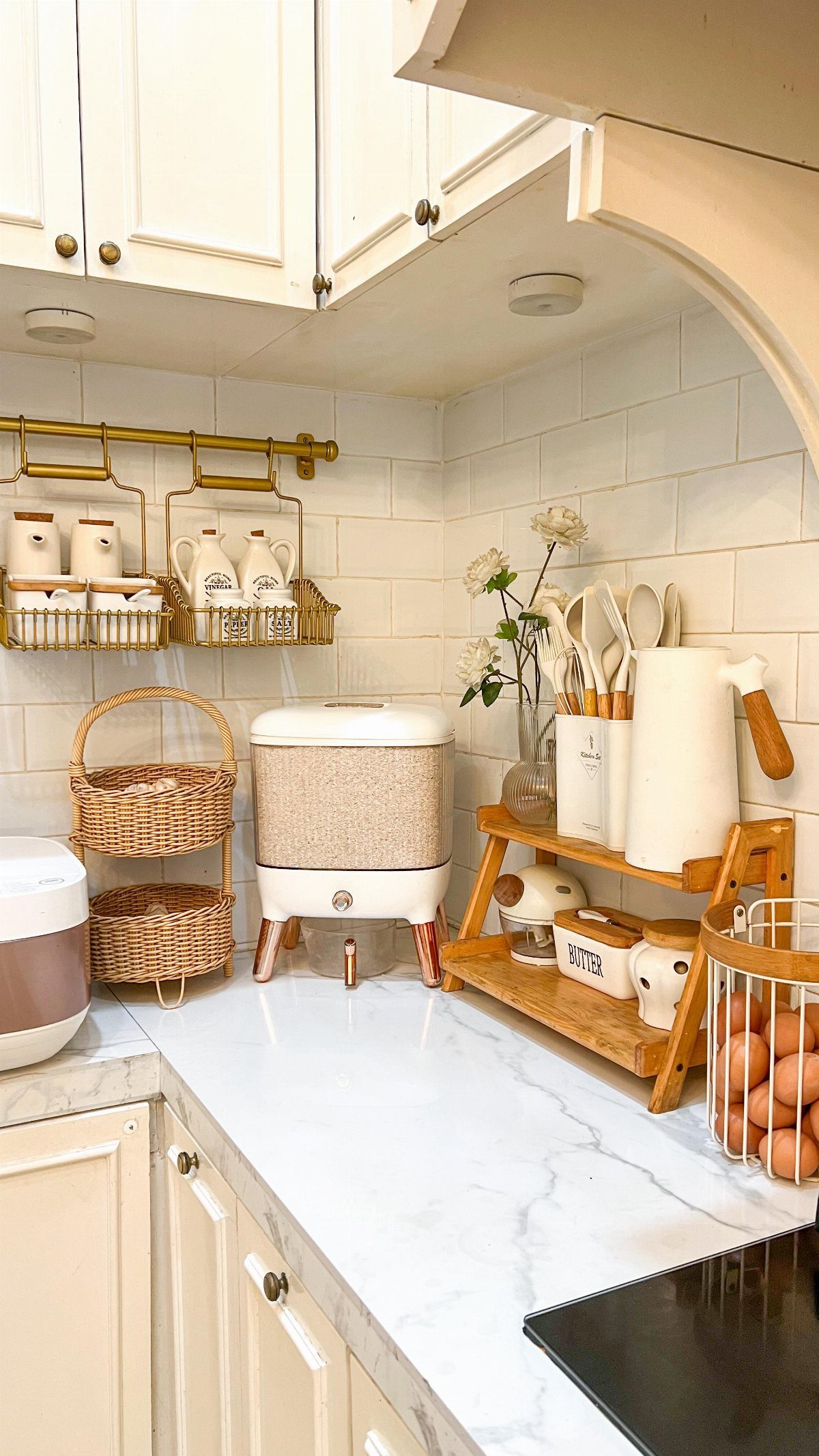
Matching wicker or wire baskets above the fridge keep spare napkins, snack bags, or linens within reach without demanding a full cabinet build.
The look works especially well when the refrigerator faces into living space and you want that sightline to stay tidy.
Labels on the front save you from lifting three lids to find the tea bags. Dividers inside stop everything from sliding into a jumble the first time you open one.
This is the lowest-cost move on the list. It trades built-in structure for flexibility, so it suits renters or anyone still figuring out what they actually store up there.
9. Crown Molding for Fridge Cabinet
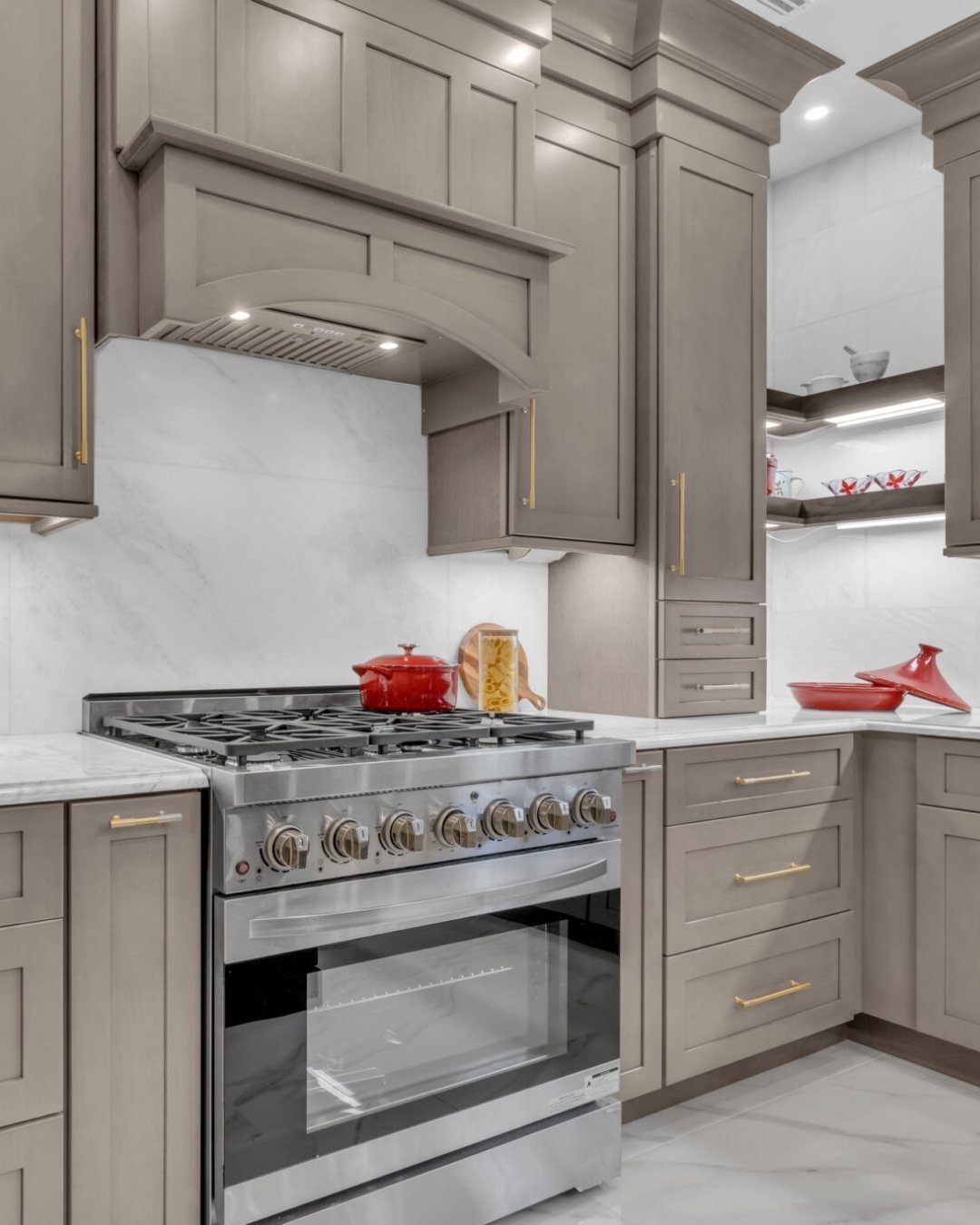
Crown molding bridges the gap between the top of your fridge cabinet and the ceiling so the whole run reads as one intentional line.
The crown molding on the fridge cabinet matches the range hood detail exactly, a reminder to carry whatever trim already lives on your uppers across to this gap.
Leave your ventilation gap as specified by the manufacturer. The trim does not close that off; it just dresses the frame.
A handyman can run this in a morning. If your cabinets are stock and flat-topped, this is the fastest way to stop them from looking like it.
10. DIY Refrigerator Cabinet Surround
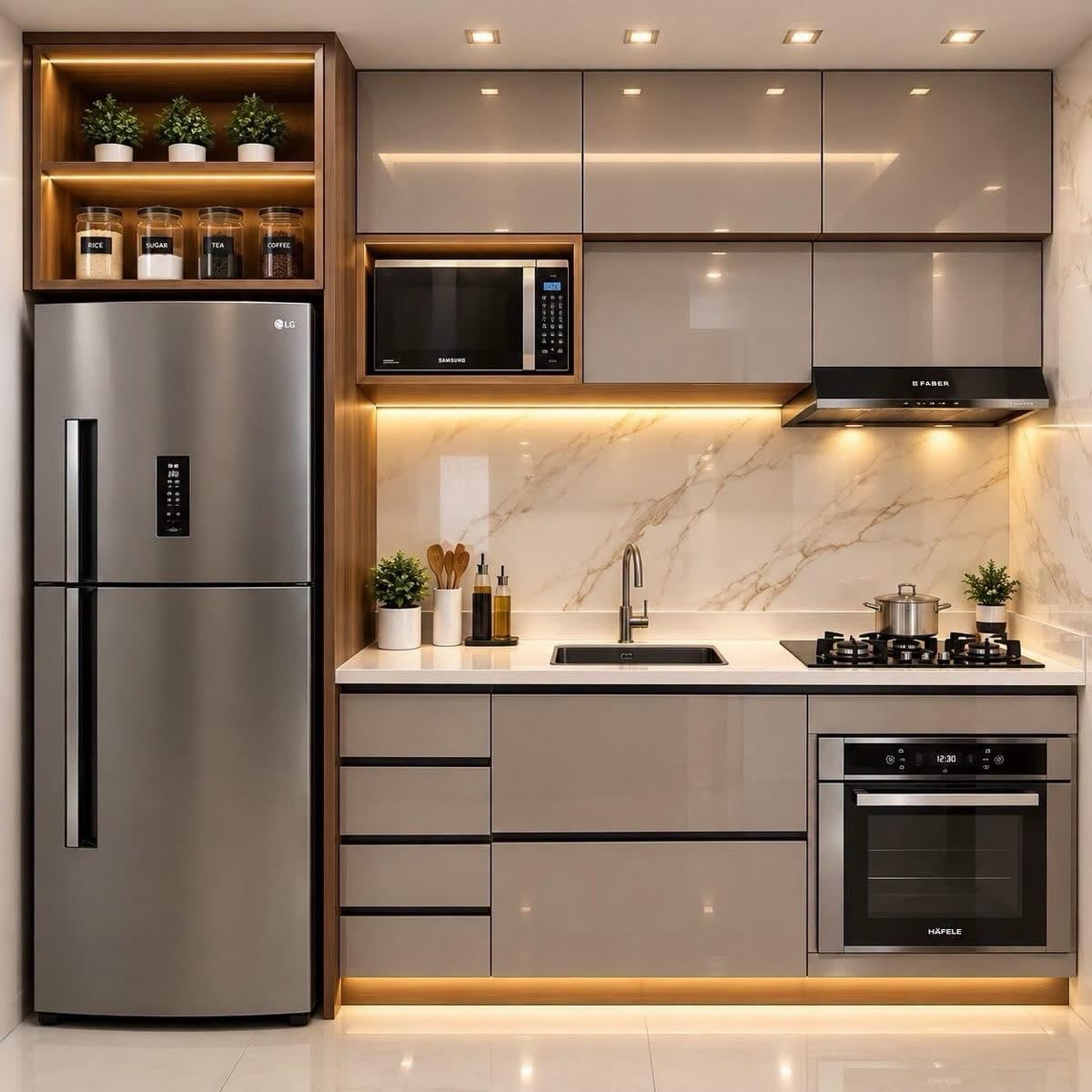
A plywood surround on two sides and a deep cabinet overhead makes a freestanding refrigerator look built in without replacing it.
The builder whose kitchen is shown shifted existing wall cabinets to create a corner pocket first, so only one side panel was needed.
Glossy taupe paint and under-cabinet lighting complete the integration. The same method works with two sides if your layout cannot move.
Plan on a weekend, a helper for the cabinet hanging, and lumber plus finish materials in the low hundreds. A built-in surround means the fridge stays put; rolling it out for a sweep behind becomes impossible.
Best Practices for Above Fridge Storage
Holiday platters, backup baking pans, or that ice cream maker you pull out twice a year all fit the bill.
Skip the heavy cast iron and anything fragile; the height and the heat from the compressor make both a bad bet.
Clear labels on bins or boxes save you from pulling everything down just to check what’s inside. A simple strip of masking tape and a marker does the job, or a label maker if you own one.
If you want the space to look intentional rather than forgotten, stick to one color family or material for your storage. Woven baskets, matching canisters, or a set of vintage kitchenware in similar tones keeps the visual noise down.
Just make sure whatever sits up there can handle a little warmth and lifts out easily when you wipe the cabinet down.
Considerations for Custom Cabinetry
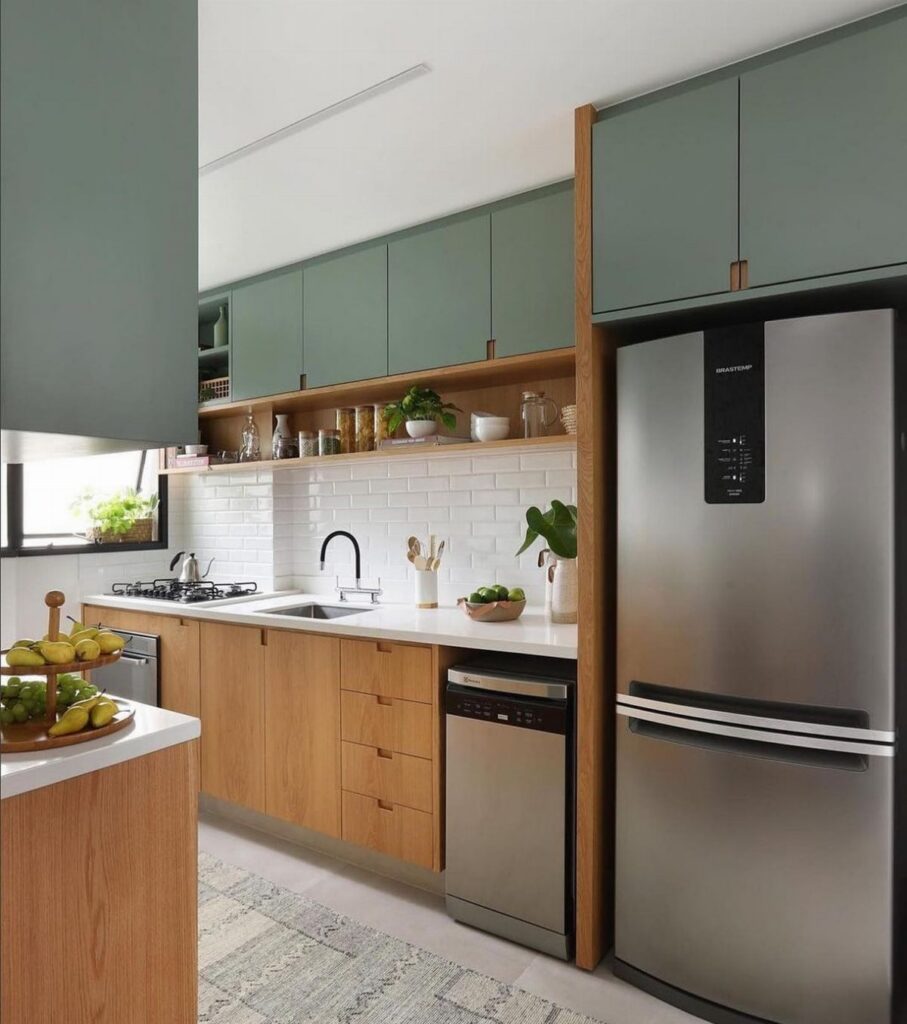
Panel-ready refrigerators exist so the appliance front can wear the same door style as your cabinets.
The cabinetmaker builds custom panels that attach directly to the fridge, and the result reads as one continuous wall of storage rather than a bulky box interrupting the run.
That integration only works if the measurements account for ventilation. Compressors need breathing room, and the specs from the manufacturer tell you exactly how much.
Ignore them and you shorten the life of an expensive machine.
For a truly unified look, match the door style, the finish, and the hardware across every cabinet in the kitchen, including the one overhead.
An integrated refrigerator in a modern kitchen, paired with quartz counters and a centered island, keeps the sightlines clean and the workflow open.
The extra cost of the panel-ready unit and the custom panels pays off in visual continuity, especially in smaller kitchens where every break in the cabinetry catches the eye.
Frequently Asked Questions
How do I make my fridge look like a cabinet?
A panel-ready refrigerator lets a cabinetmaker attach custom panels that match your door style and finish. The appliance front then reads as continuous cabinetry rather than a bulky interruption.
Account for the manufacturer’s ventilation specs in the measurements, or the compressor will overheat.
Is it a good idea to put a cabinet above the refrigerator?
That overhead gap is awkward to reach and easy to ignore, but a cabinet there turns it into storage that earns its keep.
Keep the heavy stuff low enough to grab without climbing, or stash a folding step stool inside the cabinet so it travels to you.
What to put above a fridge instead of a cabinet?
Floating shelves give a lighter look and cost less, styled with everyday items in front and the rest behind a basket or moved to a less visible spot.
A live-edge wine rack or matching wicker bins also work, depending on whether you want active storage or flexible hiding for napkins and snack bags.
Can you enclose a fridge in a cabinet?
Yes, though you need proper ventilation so the compressor does not overheat. Plywood panels on both flanks plus a deep cabinet above can fake a built-in look on a freestanding fridge.
If you can shift the surrounding cabinets first and tuck the appliance into a corner, you drop from two side panels to one.
Budget a full weekend, recruit a second set of hands for the cabinet hanging, and plan on spending a few hundred in materials.