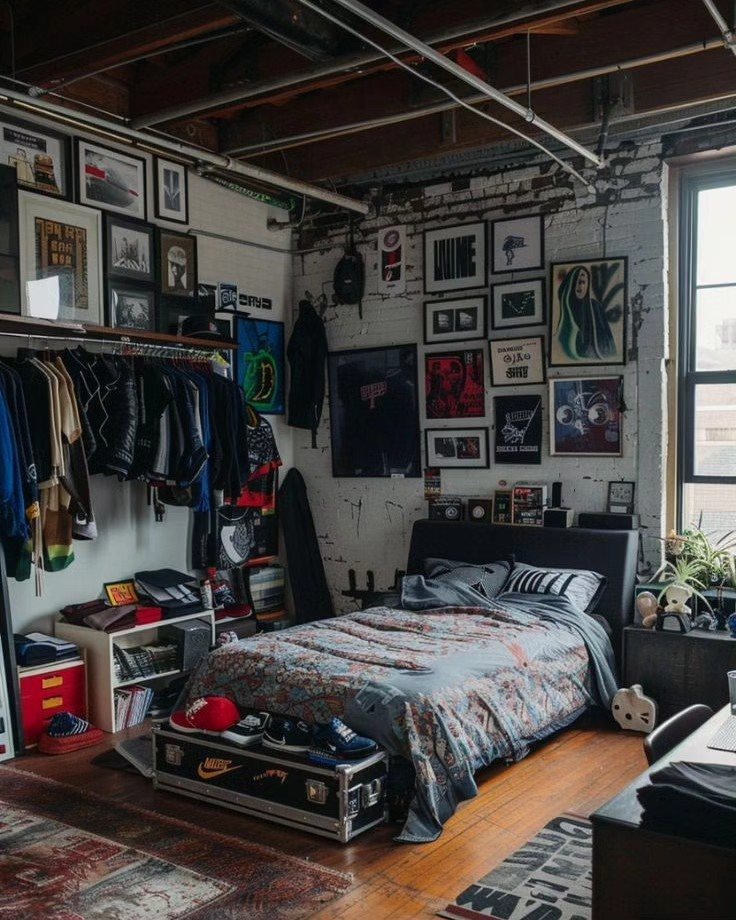
These ideas run from a pipe clothing rack you can break down Sunday night to a full thin brick veneer wall, and the one that belongs in your room depends on whether you rent, own, or just need something temporary.
The common thread is material honesty: brick you leave exposed, steel with its mill scale still on, and reclaimed wood that still carries its saw marks.
Edison bulbs at 2700K show up in more than one idea because the light temperature matters as much as the fixture shape.
1. Exposed Brick Wall
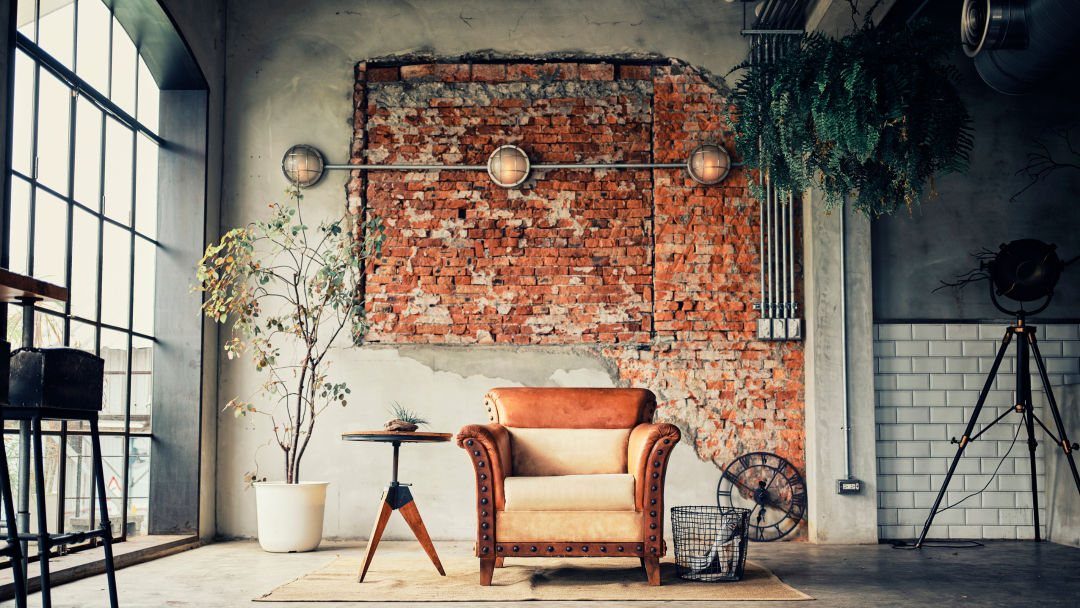
An exposed brick wall behind the bed gives an industrial bedroom its bones, even when the brick is not original to the building.
Thin brick veneer installs over drywall in a weekend, which makes it workable for renters who own the place or have a landlord who signs off.
I would leave the mortar lines visible and skip sealant if you want the chalky, dusty texture that reads authentic rather than retail.
2. Metal Frames
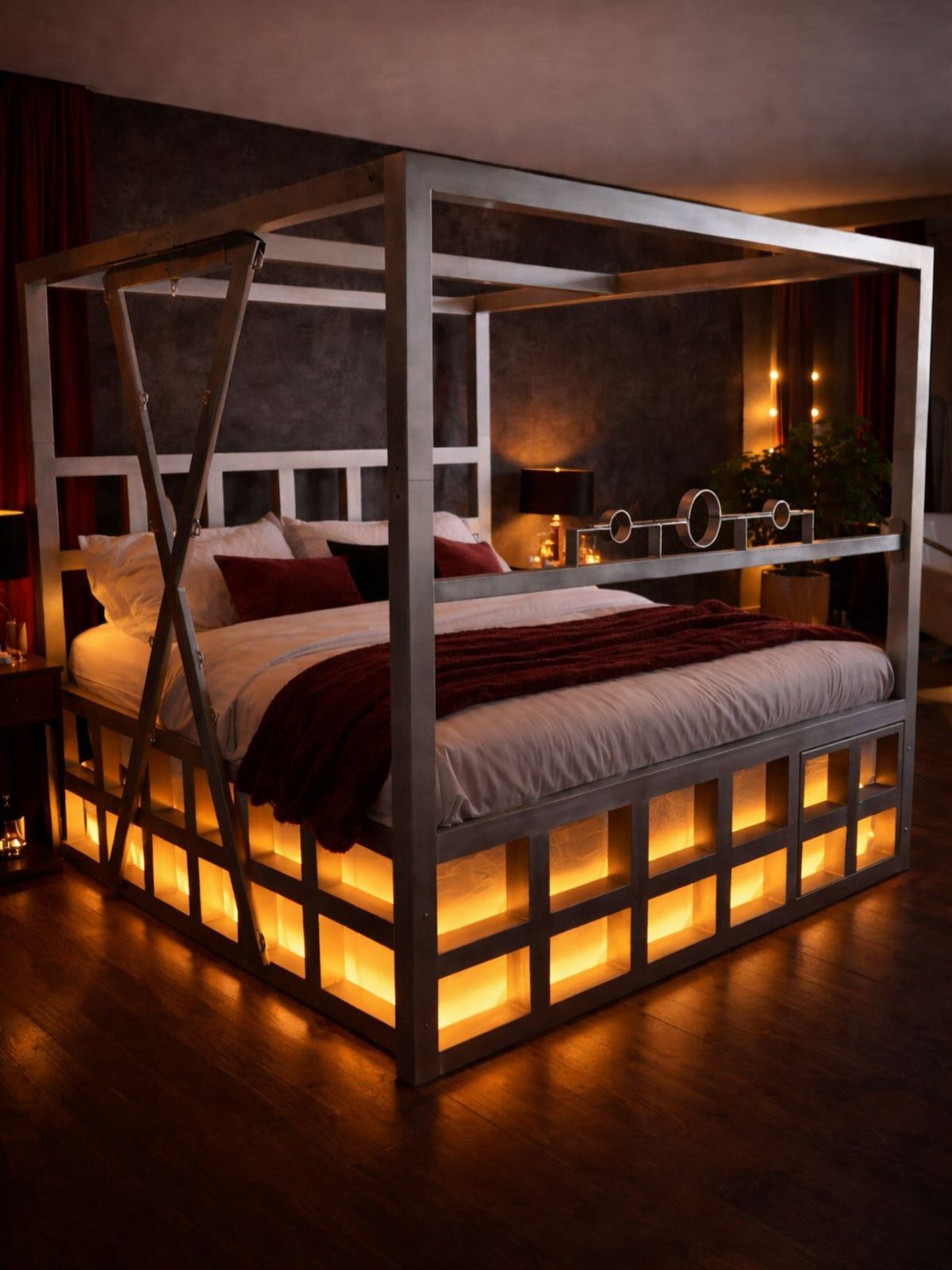
A black iron bed frame with visible welds and simple lines anchors the room without competing with the brick or wood you already have.
A frame too ornate shifts the room toward cottagecore; plain pipe and flat steel keep it industrial. Pair it with warm bedding, the way the deep red throw and white linens do here, or the metal can read cold.
3. Pallet Bed Frame
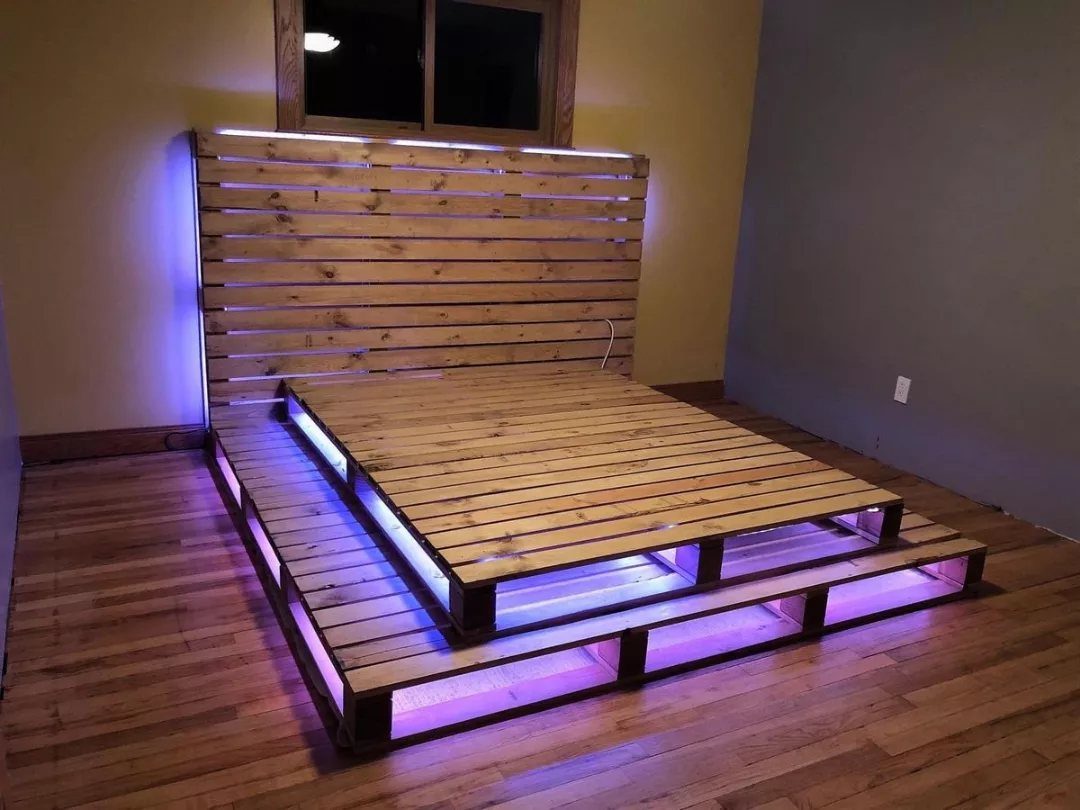
I would sand the slats to 120 grit, nothing finer, since the rough surface is half the point. This goes together fast if the pallets are already broken down and matched in thickness.
Platform beds sit low, which some sleepers never adjust to.
4. Reclaimed Wood Furniture

Salvaged wood with visible knots and saw marks warms up metal and concrete without softening the industrial edge too far.
A bench like this, or a headboard with similar character, works best when you can touch it and feel that the wear is real.
Printed veneer reads fake at arm’s length, so I would shop salvage yards rather than big-box stores. The variation in tone matters more than matching; uniform color is what new wood does.
5. Industrial Lighting

Edison bulbs at 2700K, hung in simple cages or bare pendants, give an industrial bedroom its evening mood.
One statement pendant or a small cluster above the foot of the bed suffices; three bare filaments at full brightness belong in a workshop, not where you sleep.
I would put every fixture on a dimmer and keep the total output low enough for sleeping. Black metal track lighting works for highlighting art if you have a piece worth the beam.
An industrial-style bedroom doesn’t have to be as utilitarian as it sounds. Low lighting, dark neutrals, and rustic reclaimed materials all contribute to a mood setting decor that is perfect for a bedroom and a peaceful slumber.
— Lick
6. Concrete and Steel Accents
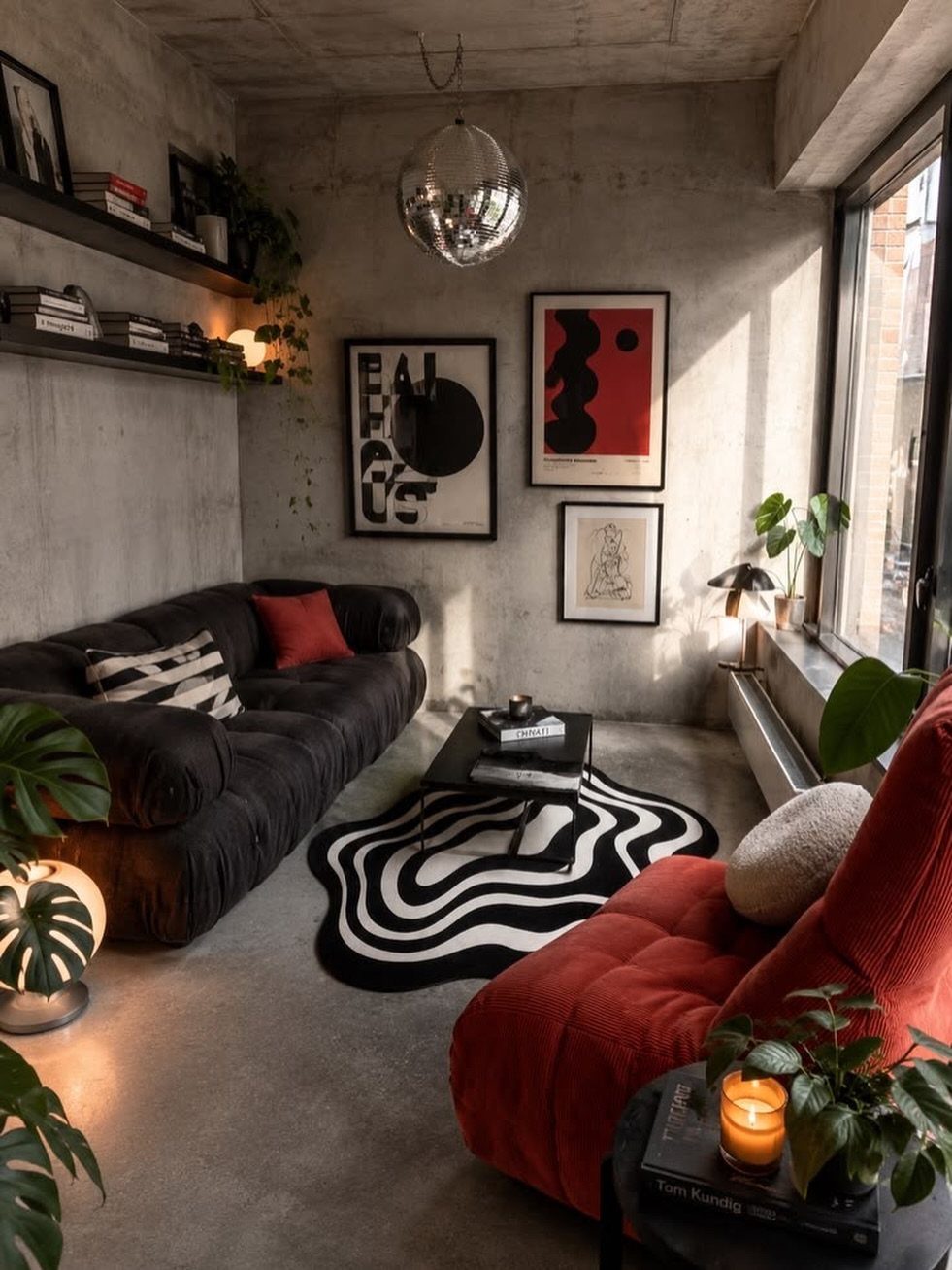
A concrete floor or steel-framed piece grounds the room in the utilitarian spirit that defines this style.
The shade can run pale silver to deep slate; I would test samples against your actual daylight, since concrete changes color across the day. Steel in furniture or shelving keeps the look cohesive without turning the bedroom into a foundry.
Concrete bounces sound hard, which rugs and textiles fix if you add them later.
7. Vintage Industrial Decor

A vintage industrial lamp starts with parts that already lived another life. The maker drilled out the center of a 7-1/2 inch perforated metal cylinder to attach the valves and pipe fittings; the hole was not original.
That kind of repurposing is the whole idea. Old lockers, factory carts, and multi-drawer cabinets work the same way: they store your clothes while they tell a previous story.
Check that drawers still slide and doors still latch before you buy. A seized locker looks right but holds nothing.
The patina you get from a flea market or a place like Urban Remains beats anything new; the rust and wear prove the piece worked somewhere real. One or two of these in a bedroom is enough.
More than that and the room starts to feel like a set.
8. Indoor Plants

Plants survive in an industrial bedroom only if they can handle the light you actually have.
Snake plants and pothos both manage low light and both clean the air; the snake plant even converts CO2 to oxygen at night, which I’d pick for a room with bare walls that echo.
One sits on a dresser, another trails from a shelf. Two is plenty.
The hard part is restraint. A fiddle leaf fig in a corner works if the corner gets some window light.
Otherwise, stick with what tolerates dark.
9. Chunky Knit Throws
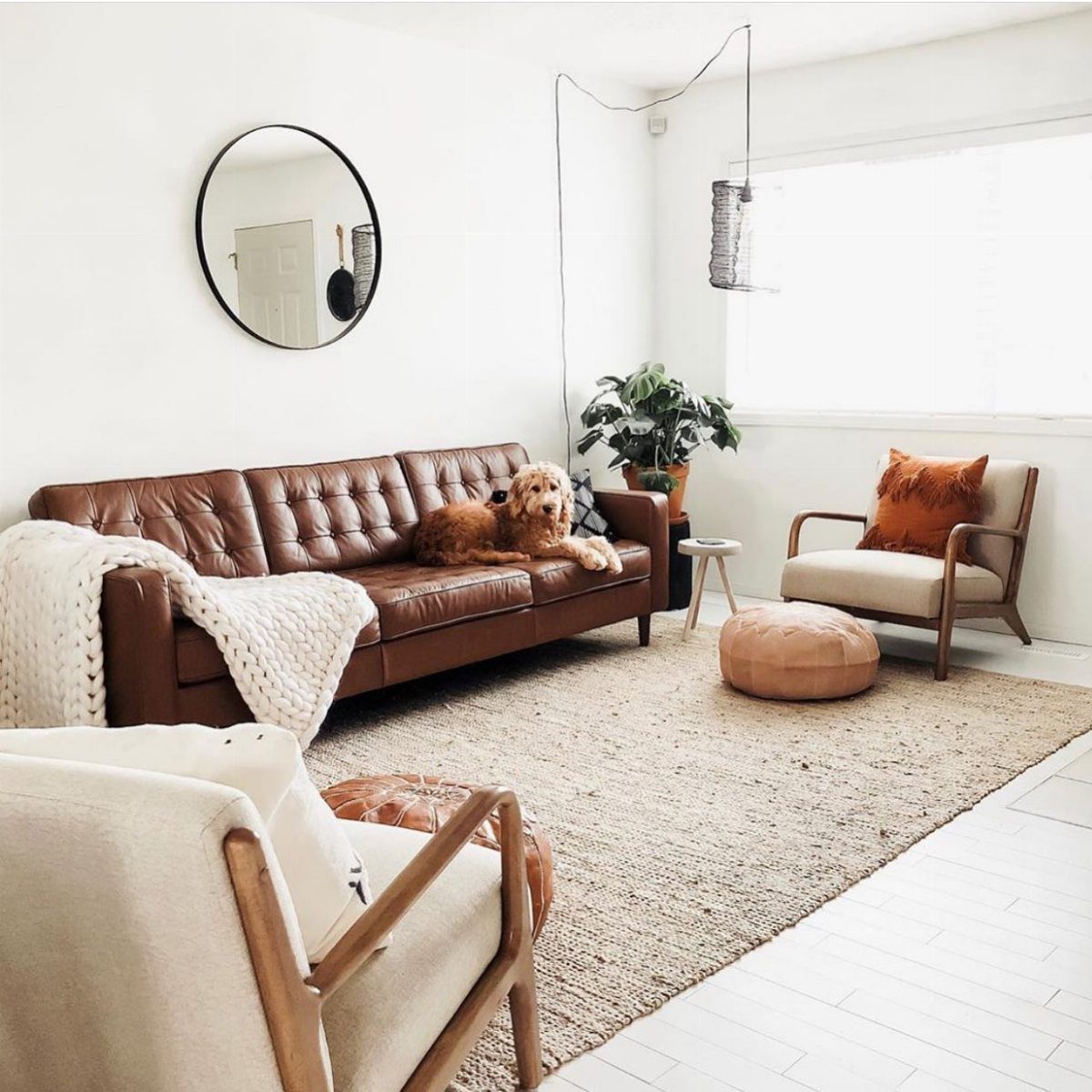
Industrial bedrooms need something soft against all that metal and concrete. Linen bedding starts the job with its rumpled texture, and a chunky knit throw at the foot of the bed finishes it.
Wool works best for the throw; the weight matters as much as the look. Cotton percale or jersey sheets are fine if linen feels too expensive to start.
Layer a quilted coverlet between the sheets and the throw if the room runs cold.
White against brown leather keeps the contrast sharp without adding color. I would do the same: light against dark, rough against smooth.
The dog is optional.
10. Flooring Choices
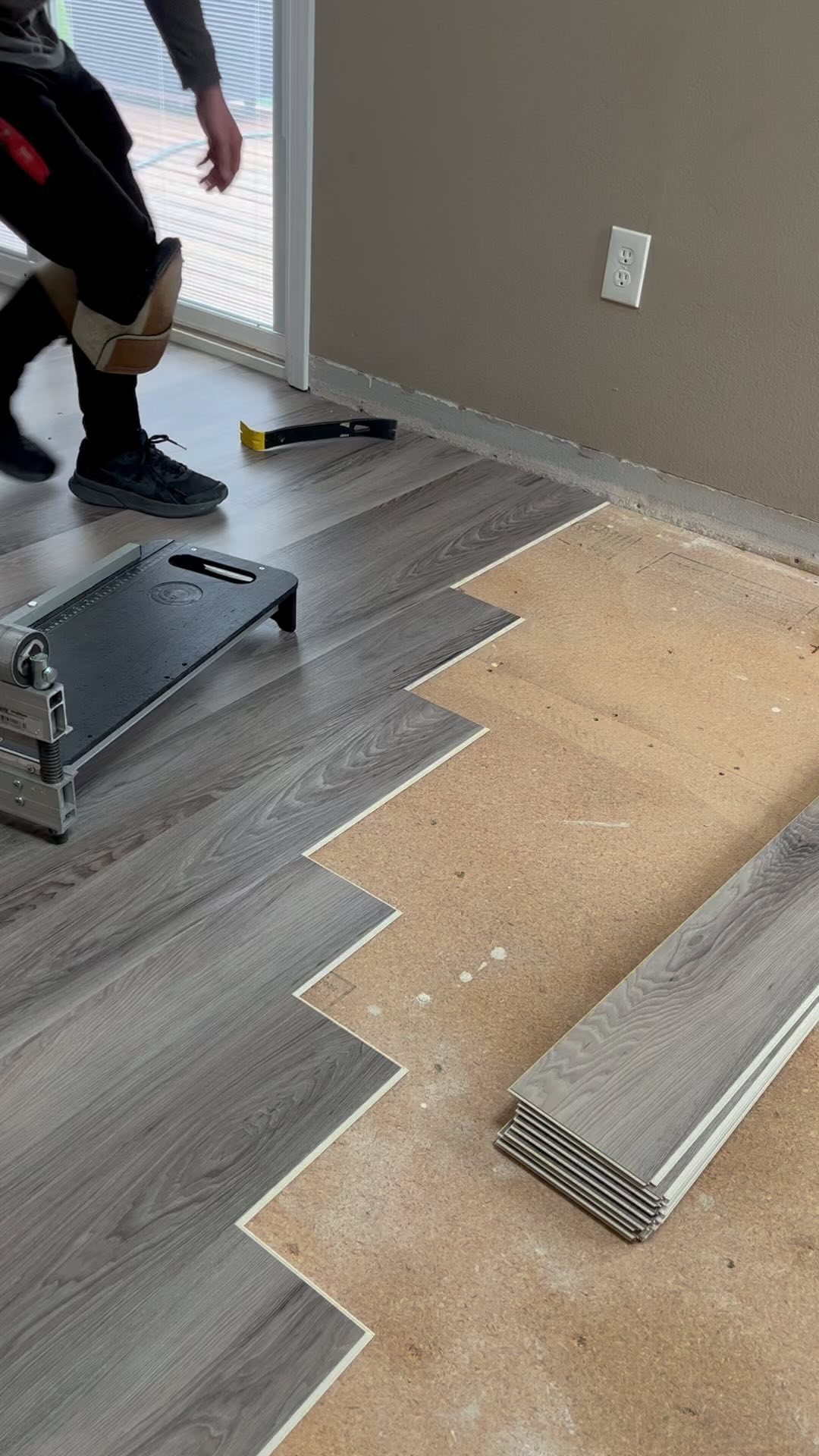
Polished concrete or wide plank reclaimed wood is the floor this style wants, but most renters and first-home owners inherit what they have. Over ordinary wood or even carpet, a large rug under the bed does the real work.
Size it to run at least 18 inches past both sides and the foot; for a queen, an 8 by 10 foot rug placed under the lower two thirds is what I would default to.
A 5 by 8 disappears under the frame and does nothing.
Jute, wool in a neutral, a vintage Persian in muted tones, or a flat weave kilim all suit the style. The vintage rug above reads dark grey and ivory.
Bare feet meet it first thing in the morning, so texture matters as much as color.
11. Minimalist Nightstands
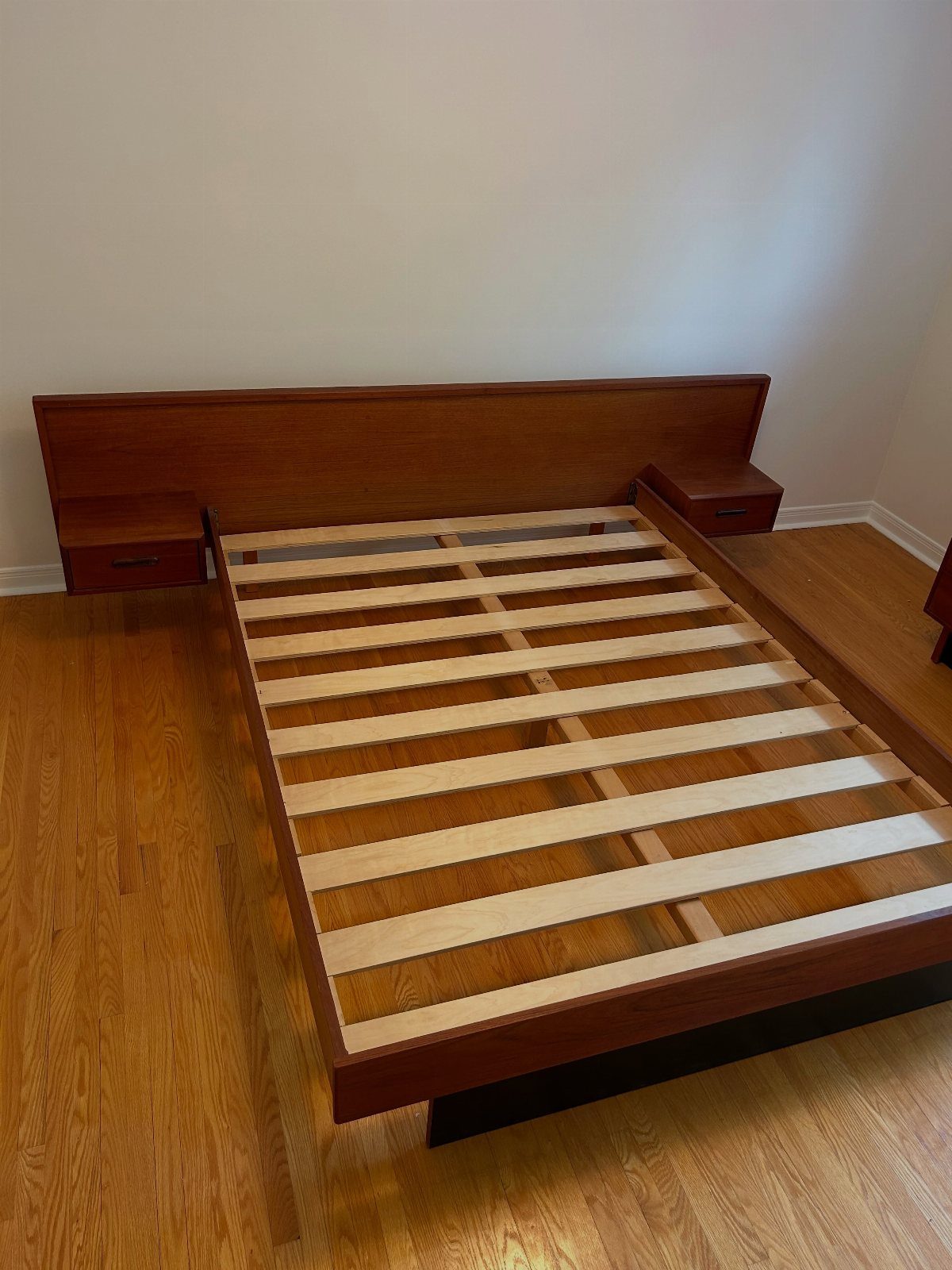
Building nightstands right into the headboard keeps the floor clear and the lines clean. That kind of integration is the goal: nothing extra, nothing that competes with the brick or the pipes or whatever industrial element you already have.
If you are buying separate, look for low profiles in wood or metal, or a mix of both. Open pipe frames work.
Skip drawers if you can. A surface for a lamp and a phone and maybe a book is enough.
The less furniture in the room, the more the factory feel reads as intentional rather than crowded.
12. Articulated Arm Sconces
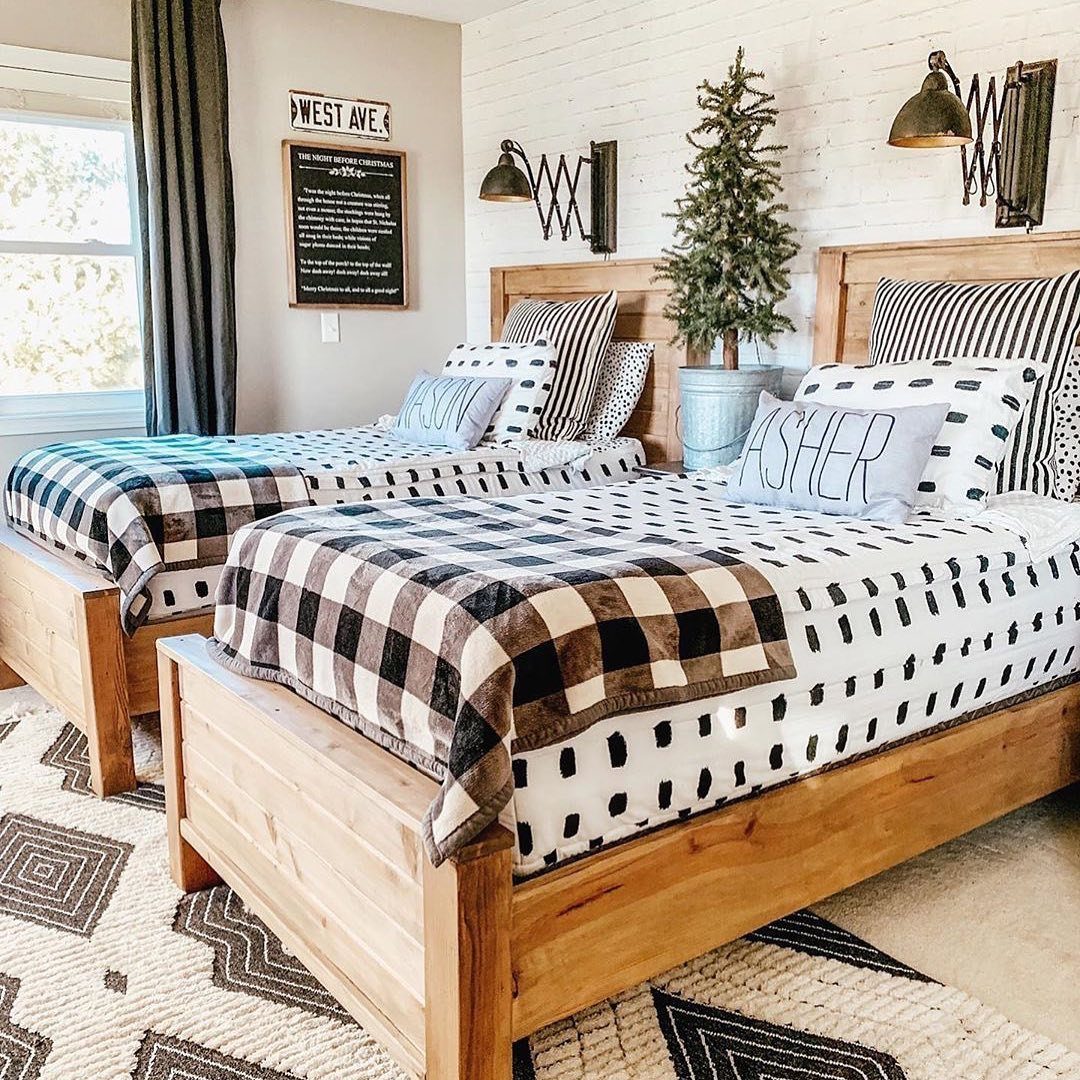
Articulated arm sconces are the one light fixture that signals industrial bedroom faster than anything else. The arms swing and fold, which clears the nightstand surface for whatever else you need there.
Black metal against pale masonry is the contrast this style builds on.
13. Open Wardrobe Solutions
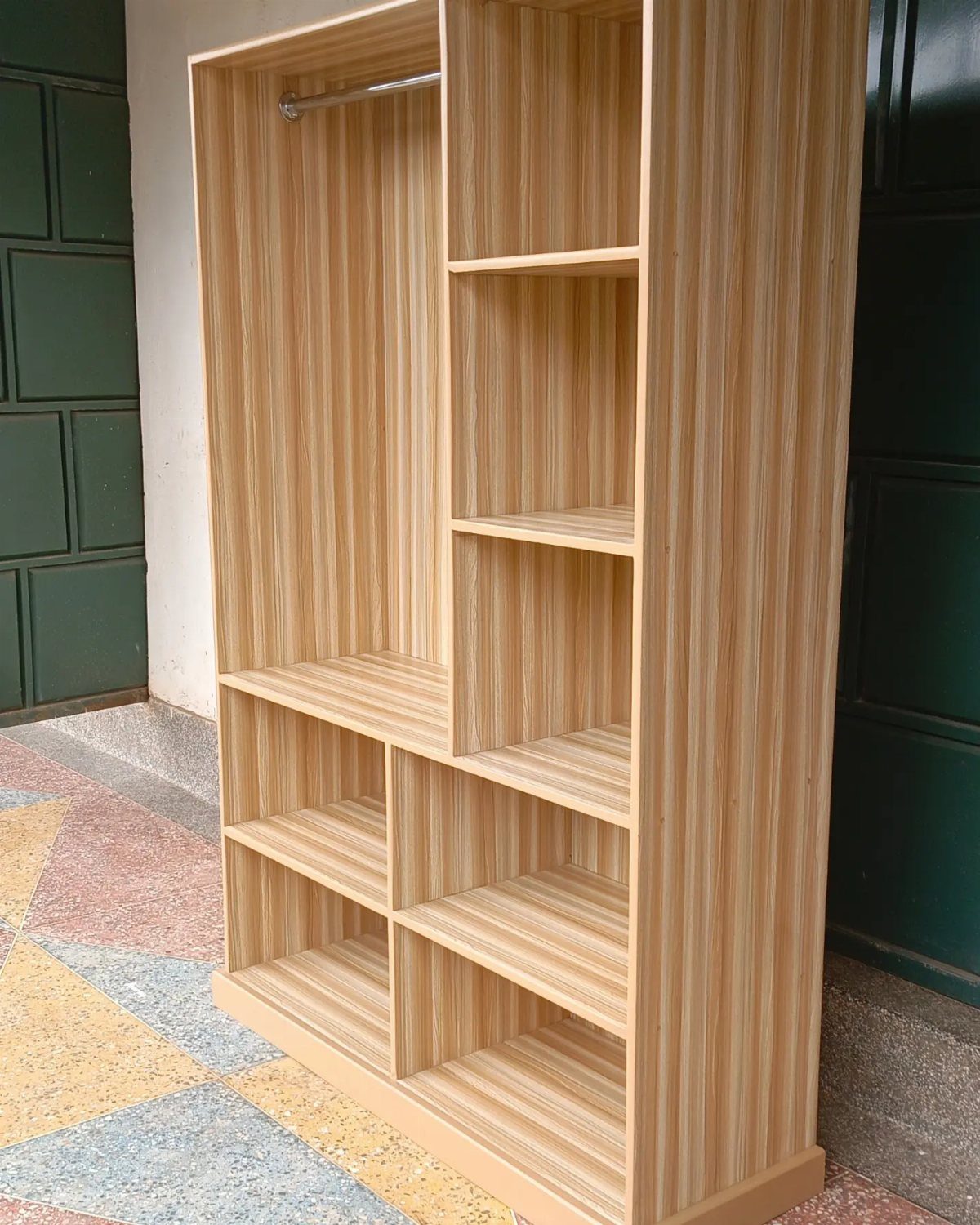
A metal pipe clothing rack turns your everyday wardrobe into part of the room’s architecture. The open setup suits renters because it freestands and moves with you, no closet build-out required.
Black iron or galvanized pipe from the hardware store costs less than you’d think for the frame, and you can add a wood shelf if you want one.
Thread the pipes tight and the rack holds its own weight without wall anchors.
What sells the look is what you leave visible: a row of denim, canvas, and leather in muted tones, with nothing crowded. The rack becomes a display you actually live out of.
If you need closed storage for the rest, a solid wood dresser with black hardware and visible bolts keeps the same honesty. Skip veneer here; drawer edges chip where industrial style leaves them exposed.
14. Space-saving Desk
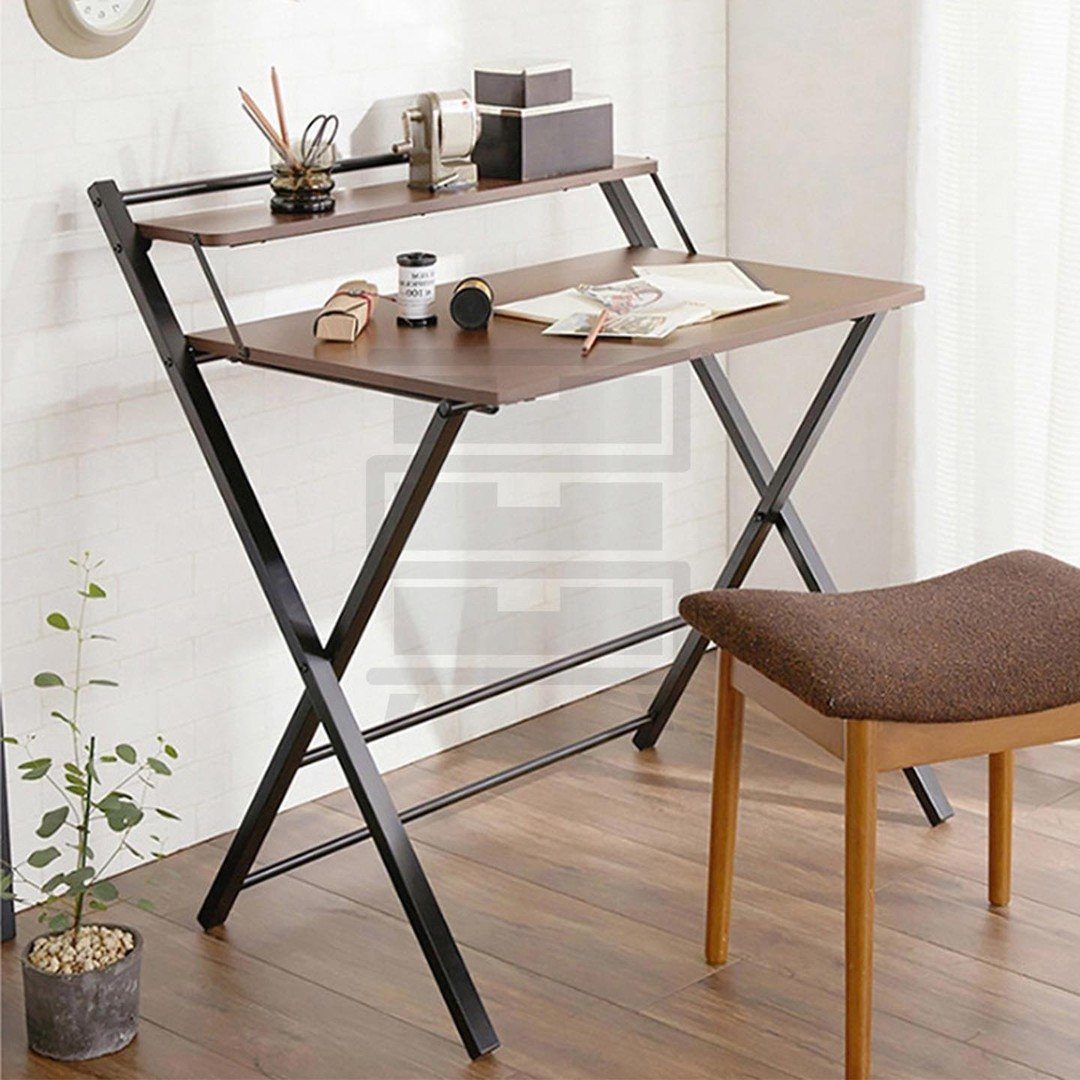
The desk beside a bedroom window has to earn its square footage. A slim profile with an X-frame base and a shallow upper shelf keeps the floor open while hiding the clutter that kills an industrial mood.
I like a desk just deep enough for a laptop and a notebook, narrow enough to tuck against a wall, with drawers nearly invisible in the front rail.
The black metal legs and warm wood top bridge the gap between utilitarian and finished.
For a teen room or a rented corner, this shape slides into spaces a standard desk won’t fit. You lose some monitor space going that slim; a wall-mounted arm fixes that if the project grows.
White brick or a dark accent wall behind it sharpens the contrast the way loft apartments do.
15. Layered Textiles

Industrial bedrooms run cold without something to break the hard surfaces. Linen bedding in charcoal or washed olive, a heavy wool throw, and a high-pile rug underfoot do the work in layers you can swap seasonally.
The fabrics themselves matter more than the pattern. Distressed leather or cowhide on the floor, canvas or unlined linen at the windows, and bare walls where you can manage it keep the palette honest.
A stack of folded quilts on a bench or at the bed’s foot adds the lived-in warmth that metal and wood alone never reach. The textiles soften the room without softening its edges.
16. Wall Paneling
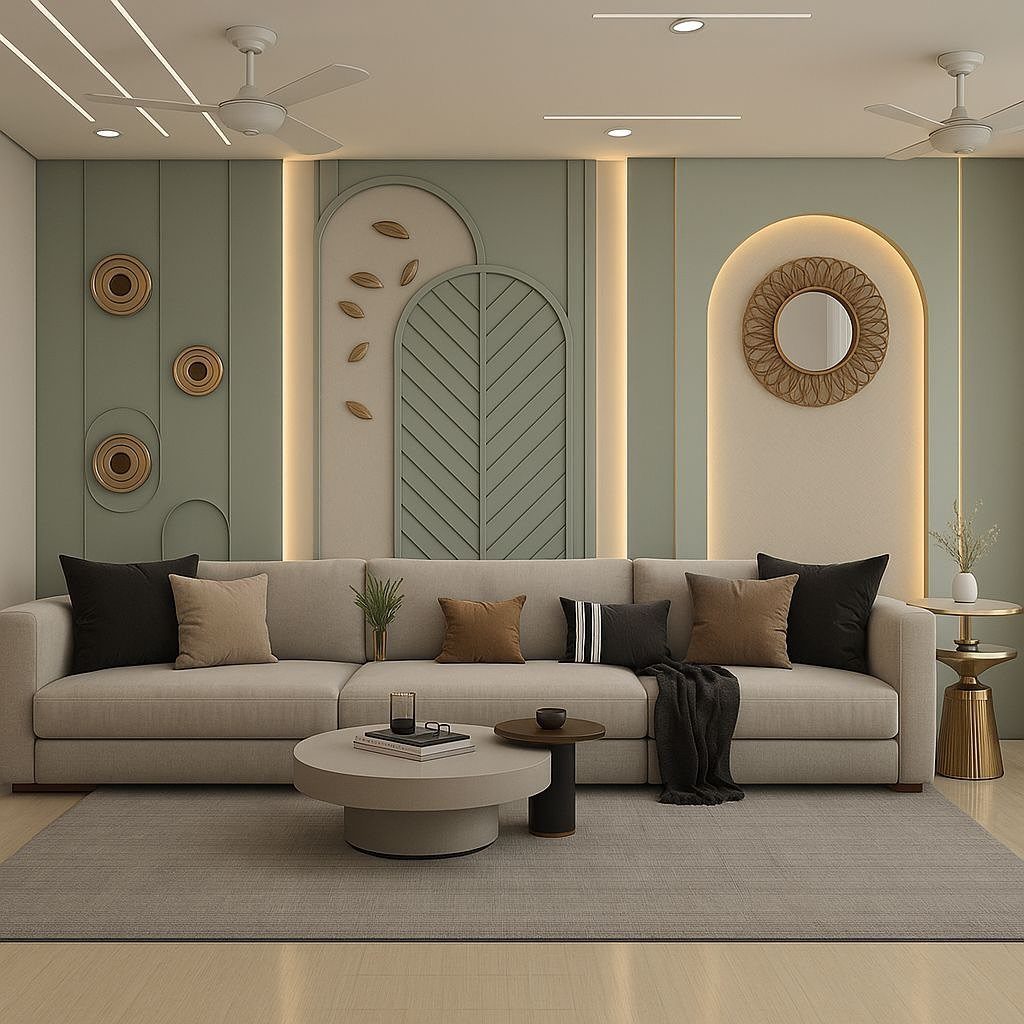
Reclaimed wood shiplap run horizontally gives you the texture of brick without the structural gamble. Untreated boards left to their natural tone warm the room without reading farmhouse; the raw surface is the point.
A single wall behind the bed handles the statement. The boards add visual weight that balances metal fixtures and concrete tones elsewhere, and the subtle gaps between them cast shadows you don’t get with paint.
This is the project for a long weekend and a miter saw. One person can manage an 8-foot wall in a day, though hauling salvaged lumber wants a truck or a delivery fee.
17. Layered Lighting
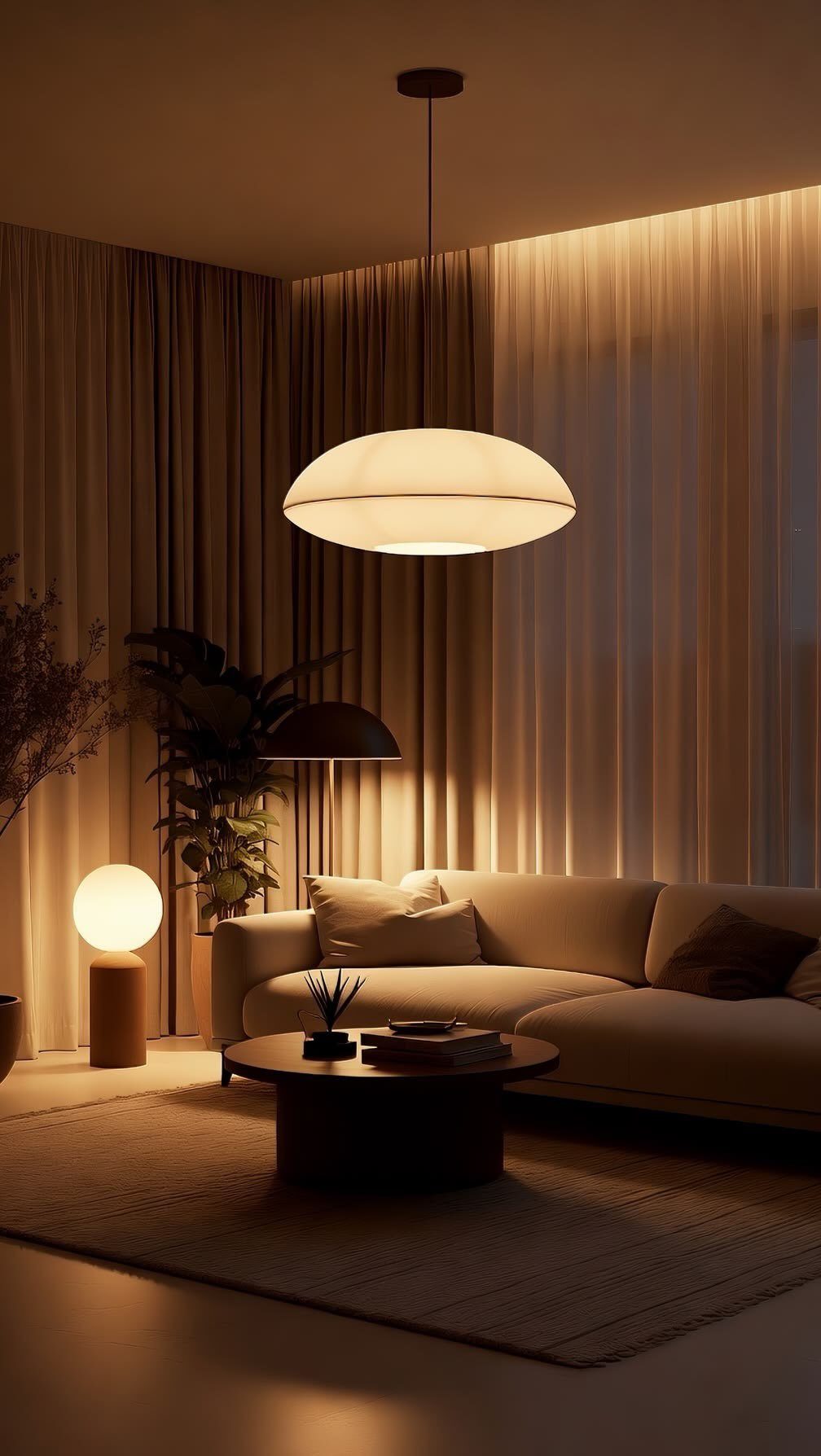
One overhead fixture flattens an industrial bedroom into a showroom. Sconces at bedside height, a pendant over the center, and a floor lamp pulled into a corner let you tune the room from working light to near-dark.
Edison bulbs in exposed filaments give the warmth that standard LEDs miss. Cluster pendants or a single sconce arm with visible hardware keep the mechanical honesty.
The layering matters more than any single fixture. At different heights, the sources cancel the harsh shadows that bare ceilings throw across concrete or dark paint.
A dimmer on at least two circuits is a small upgrade that changes how the room feels once the sun goes down.
Creating a Cozy Atmosphere
A wool rug with a high pile does more than warm your feet. It absorbs sound and breaks up concrete or hardwood that would otherwise dominate the room.
I pair mine with linen bedding, the kind that looks slightly slept-in even when it’s fresh, and a heavy throw at the foot of the bed.
Warm light matters more than almost anything. I aim for 2700K bulbs in bedside sconces and floor lamps, never a single overhead fixture.
Multiple small pools of light feel like evening even at midday.
Exposed beams or ductwork overhead should stay visible once they’ve been cleaned up. Paint everything, beams and ceiling together, in matte black or charcoal.
The single color keeps it intentional, not unfinished. Track lighting aimed upward draws the eye to the depth without adding clutter.
Choosing the Right Materials
Authentic materials carry the style. Exposed brick, whether structural or thin veneer, gives the wall its history.
For floors and accents, raw or polished concrete works; blackened, raw, or galvanized steel handles frames, lighting, and hardware.
Reclaimed wood should show its age. Grain lines, knots, and other marks are exactly what you want on show.
For seating, distressed leather on a headboard or bench only gets better as it darkens.
Linen bedding carries the right texture for this look. The slight rumple and soft hand feel suit the unpolished mood, and it only gets softer with washing.
Cotton percale or jersey are alternatives that work.
Color Palette Considerations
The industrial palette starts with the colors of real materials: terracotta red from brick, cool gray from concrete, matte black on metalwork, warm brown from reclaimed wood and leather. Off-white balances the rest.
Warm wood from a bed frame, nightstands, or floor supplies most of the warmth you need.
If you want color beyond this, choose one. Never all three together.
The restraint in hue lets the textures, the brick and the grain and the steel, do most of the work.
Avoiding Common Mistakes
Fake rust, gears, and novelty signs turn the room into a caricature. The goal is a space you actually live in, not a set.
Faux brick wallpaper and laminate planks pretending to be wood undo the whole premise. Material honesty matters; save for the real thing or skip it.
Raw finishes can read as chilly without some counterbalance. Thick linen sheets, a dense wool rug, and lighting built up in layers are necessities, not add-ons.
They are required.
One overhead fixture leaves the room feeling like a warehouse.
Strong architectural forms need breathing room. Too many small items clutter the sight lines and fight the brick and concrete for attention.
Edit what sits out.
Frequently Asked Questions
How to make a room look industrial?
Raw materials with history built right in do the heavy lifting: thin brick veneer where the real thing isn’t there, blackened steel on windows or shelving, and reclaimed boards that still carry their knots and saw marks.
Keep furniture simple and functional, like pipe bed frames or metal clothing racks, rather than ornate or decorative pieces.
A neutral palette of brick red, concrete gray, matte black, and warm brown lets the textures do the work instead of competing colors.
What are the 2026 bedroom trends?
The direction points toward comfort built on honest materials: layered textiles like linen bedding and heavy wool throws, authentic surfaces such as salvaged wood and real brick, and lighting tuned for mood rather than maximum brightness.
Warmth comes from 2700K Edison bulbs and multiple small pools of light instead of single overhead fixtures. The industrial look specifically keeps raw finishes visible but balances them with textiles that soften without softening the edges.
What are the 7 golden rules for bedroom design?
In an industrial bedroom, one strong architectural piece, like exposed brick or a black iron bed frame, anchors the space. Soft textiles balance every hard surface.
Light at different heights keeps the room from going flat. Honest materials beat imitation every time.
A restrained palette lets texture do the talking. Breathing room around large forms keeps things from crowding.
Editing what sits out keeps sight lines clean. These five or six decisions, taken in order, make the difference between a room that feels lived-in and one that feels like a set.
What makes a bedroom look tacky?
Fake materials kill the look faster than anything: faux brick wallpaper, laminate pretending to be wood, printed veneer on furniture, and novelty items like fake rust or decorative gears turn the room into a caricature.
Excessive clutter fights the strong architectural forms that define industrial style, and one overhead fixture leaves the space feeling like a warehouse rather than a place to sleep. Material honesty and restraint in what you display are the fixes.