The ideas below run from swapping a lampshade to a full terracotta floor install, so the deciding factor is how much of your weekend you are willing to give.
Most take an afternoon; a few need a full Saturday plus Sunday.
A 2700K warm LED bulb in one lamp, swapped in five minutes, can shift the whole room after dark just as much as a sage green cabinet repaint that takes two coats and a Sunday afternoon.
1. Decorate with Textiles
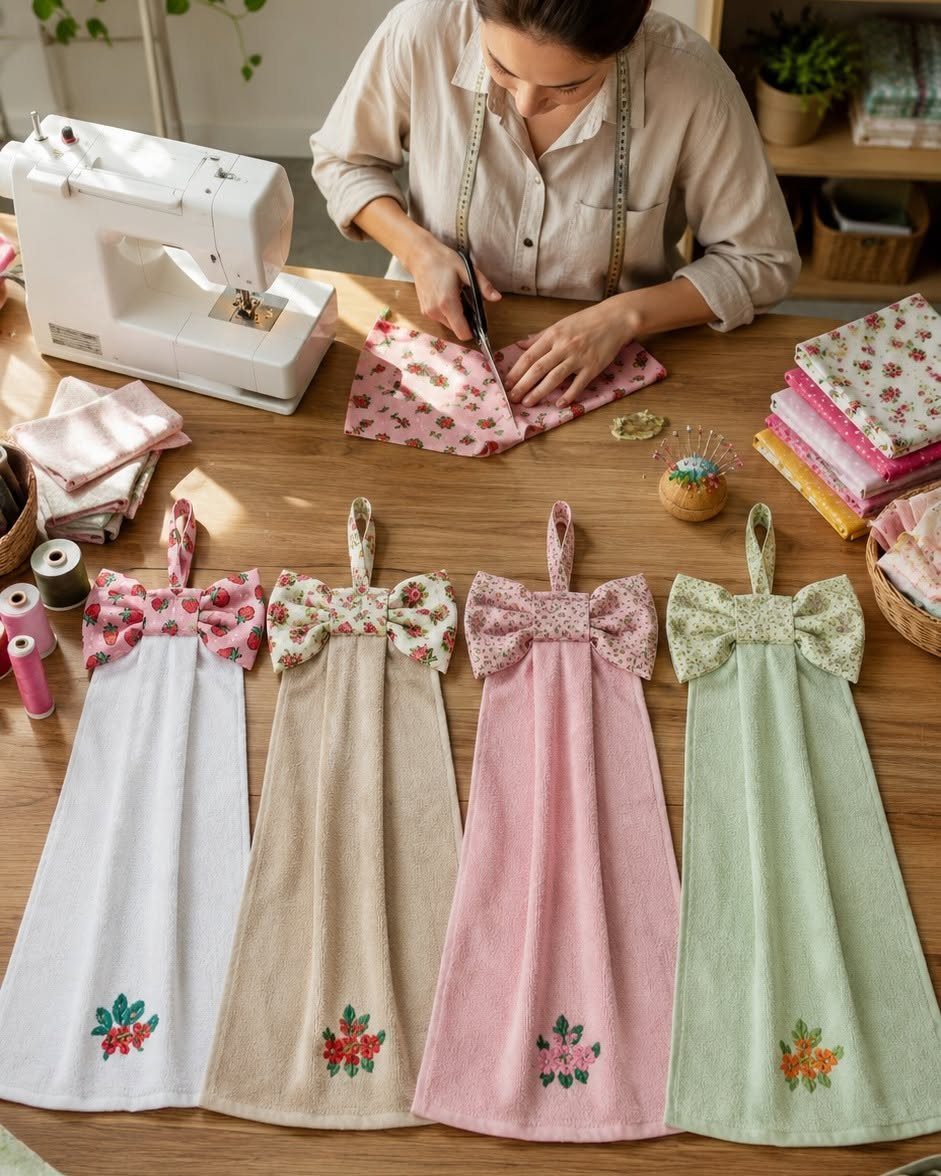
A set of hand-sewn towels with floral embroidery turns an ordinary counter into something personal. Fabric takes up no square footage, which matters when the kitchen is tight and the budget is tighter.
Curtains over a sink window, a narrow runner across a table, or a few cushions on a bench seat add softness without blocking workflow.
Cotton and linen hold up to washing; printed yardage at most craft stores covers two or three small projects for less than a new set of store-bought towels.
I would start with towels or a single curtain panel. An evening of sewing gets you there, and fabric thick enough for daily use is worth the hunt.
2. Add Color to the Kitchen
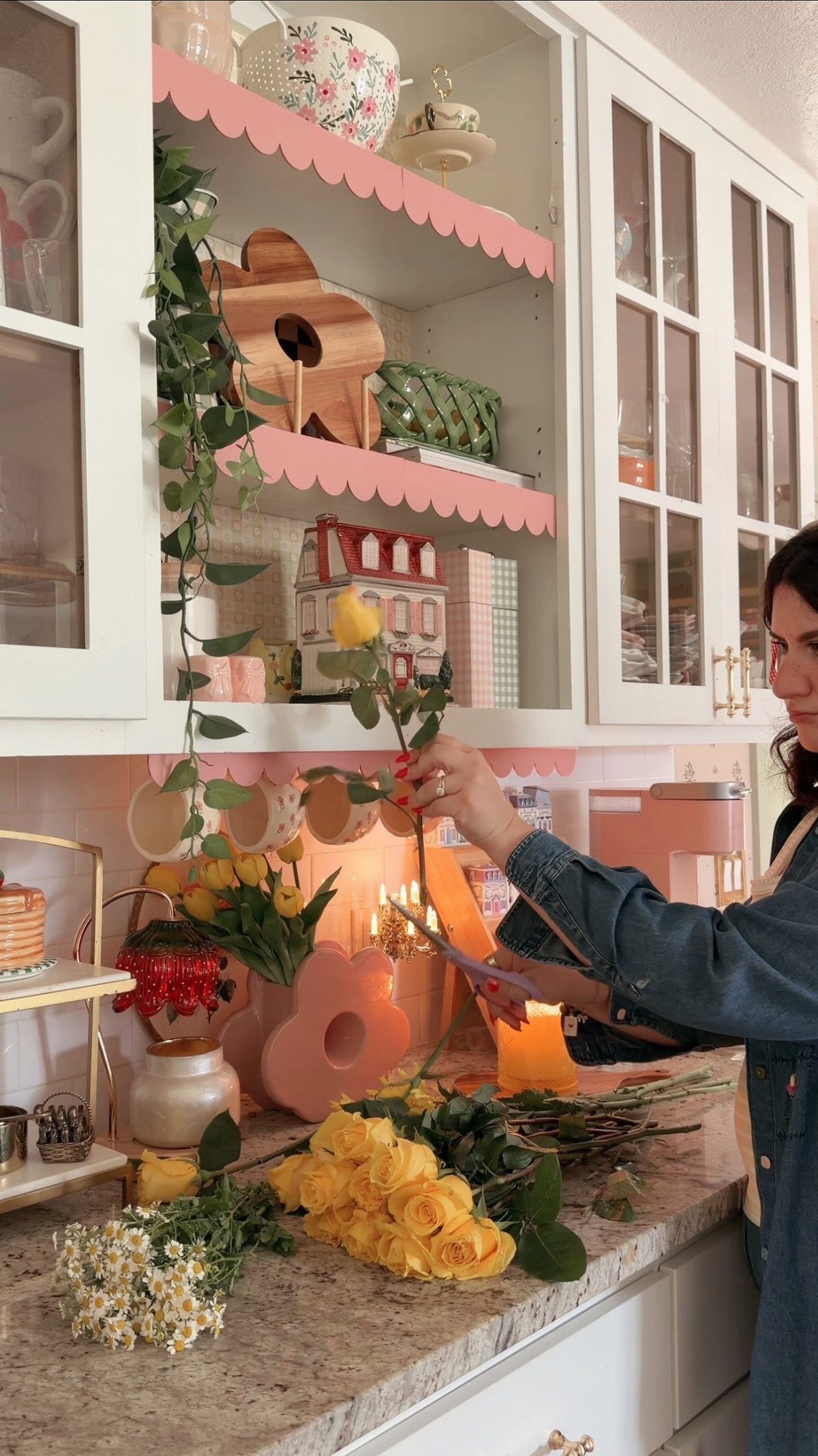
A little color on trim or one bank of cabinets changes the whole room without a full remodel. Paint on trim or a single bank of uppers needs only basic supplies and finishes in a Saturday.
Sage green, warm cream, or a muted ochre read as cozy rather than loud. Keep the saturation low; a pastel or dusty tone sits back and lets the light do the work.
Earthy hues on cabinet bases wrap around a space the way deep browns do in rooms that already feel settled. The job took two coats and a Sunday afternoon.
If you rent, removable peel-and-stick panels in similar tones now come 24 inches wide and cover a flat front cleanly.
3. Try Terracotta Floor Tiles
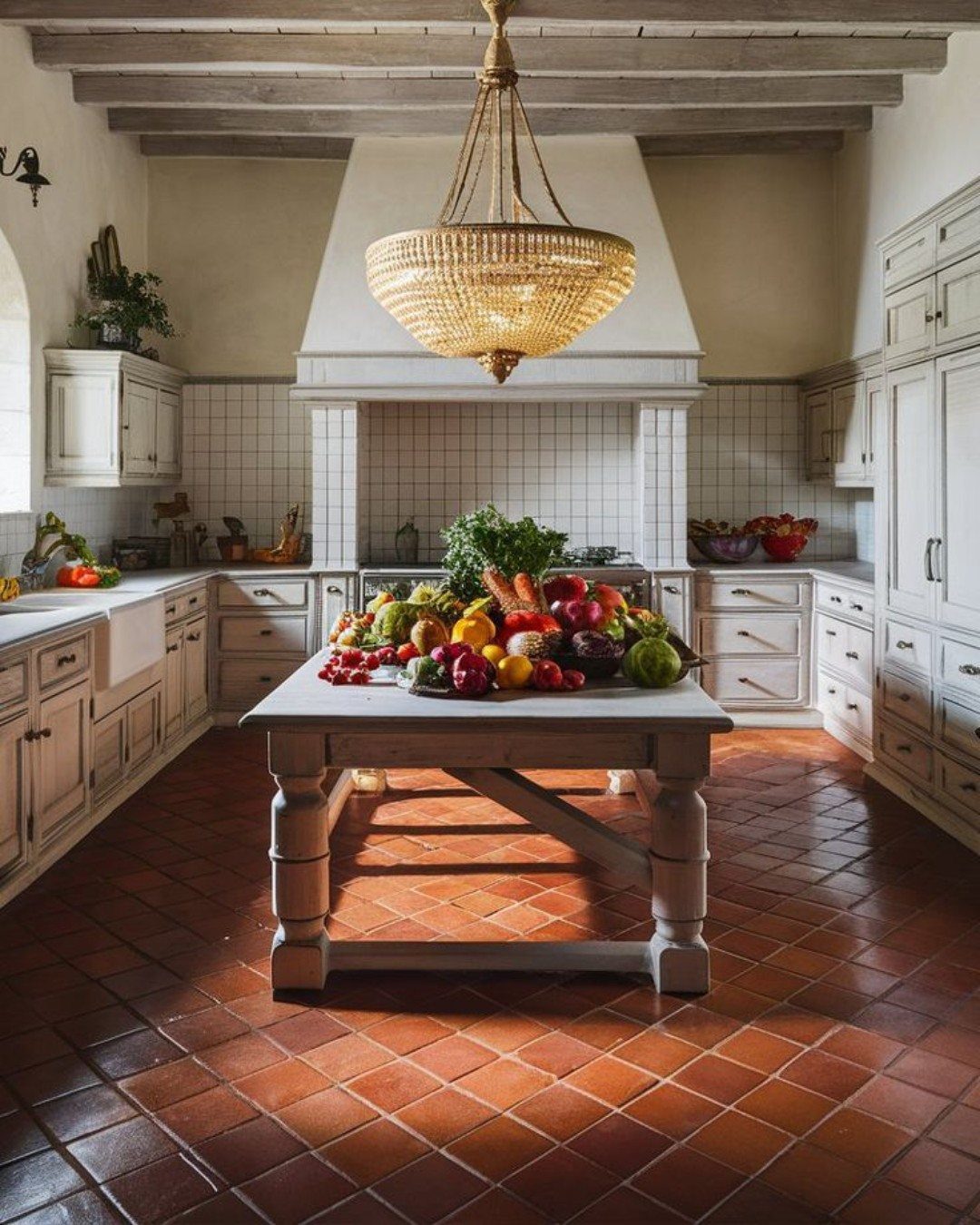
Terracotta tiles carry the color of baked clay straight into the floor, and that warmth rises into the whole room. The handmade ones vary slightly in tone, which hides the small scuffs that a perfect surface would show.
Reclaimed or artisan terracotta installs with standard mortar work, though the tile itself costs more than basic ceramic. These need sealing once a year in a kitchen that sees real cooking.
In a white scheme they add heat, while against olive or wood cabinets they settle the palette.
I would use them only where the subfloor can handle the weight.
4. Window Treatments
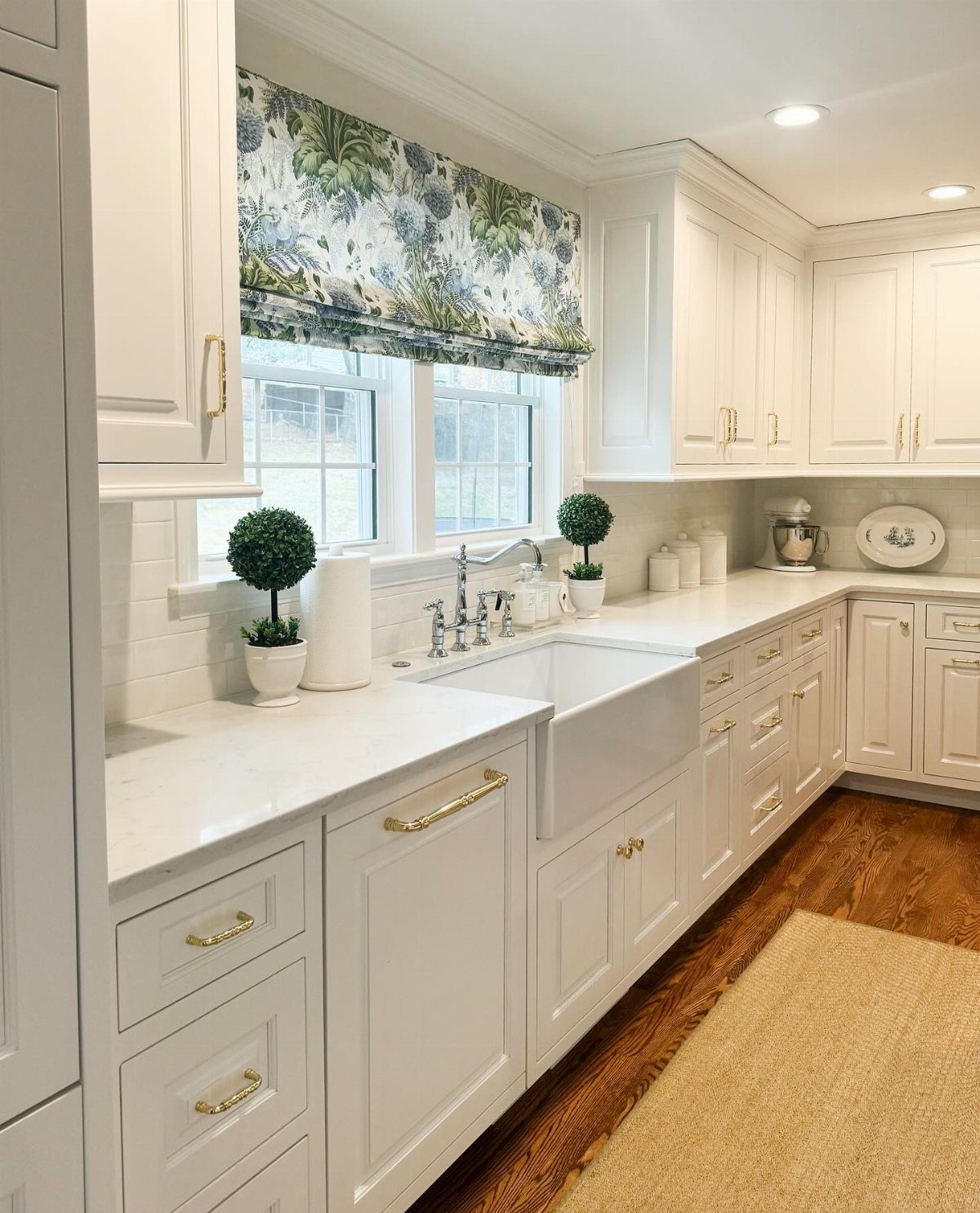
A Roman shade in patterned fabric turns a bare window into a source of color and softens the hard lines of cabinets and counters. Even a simple white shade rounds off the edges when the lights go down.
Linen or cotton blends work best; they filter light without going formal. A ready-made shade or a yard and a half of fabric plus hardware costs about the same either route, sewing or not.
An unlined shade lets the morning in without the step of adding a backing. Privacy matters less in a kitchen than a bedroom, and sheer or lightweight cloth keeps the room from feeling closed off.
5. Embrace Warm Metallics
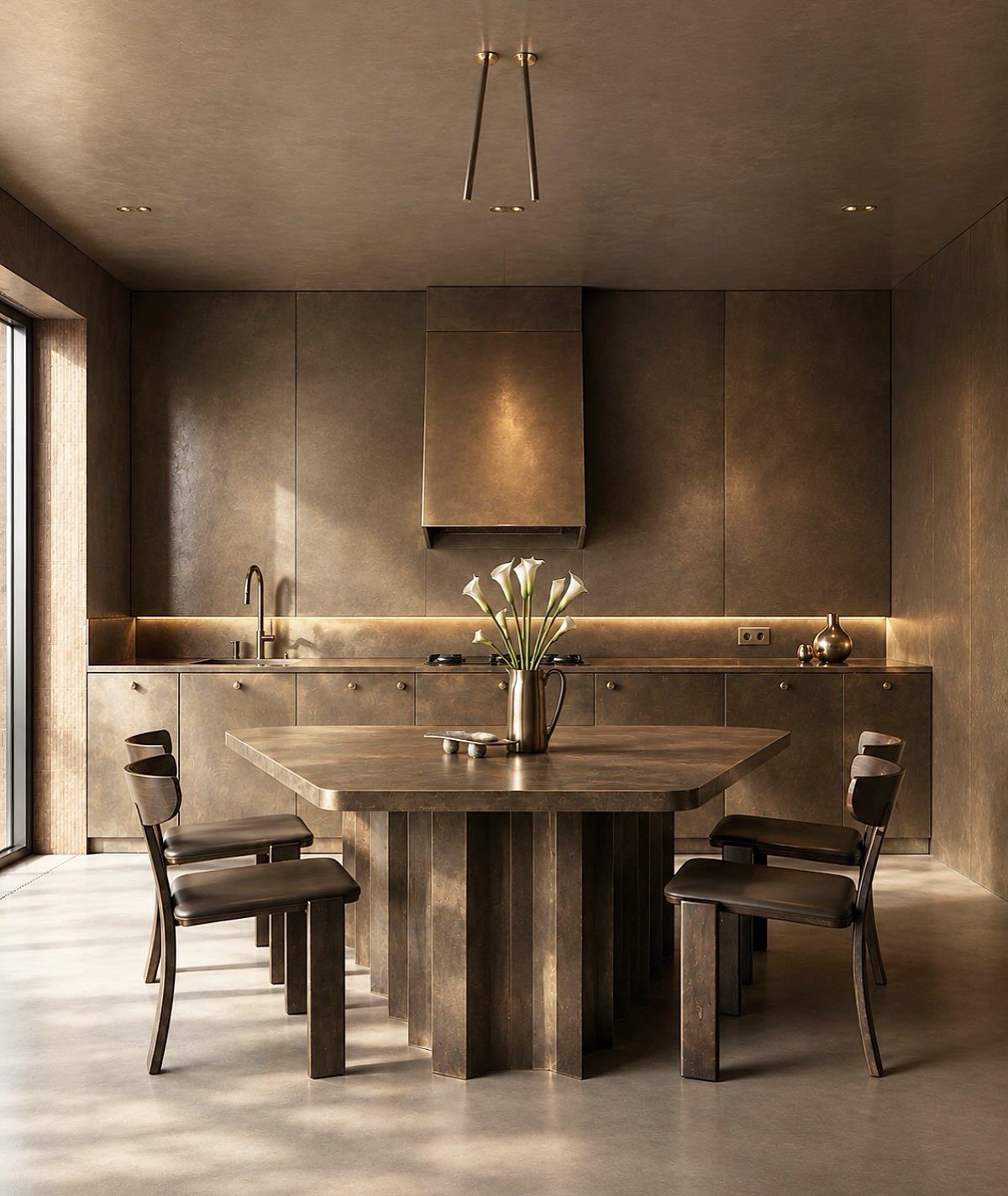
Aged brass hardware catches light differently than chrome, and that difference is what makes a kitchen feel lived-in rather than showroom-fresh. Powder-coated black or antique copper carry the same weight.
Swapping pulls and knobs takes an hour and a screwdriver set. Brass handles run cheap enough online to swap the whole kitchen at once, less if you watch for hardware sales.
The patina changes over time, which is the point; the surface tells a story that polished metal cannot.
Cool-toned cabinet pulls can make a whole room feel like a rental; warm ones do the opposite. The new ones went on in an evening, and the difference was immediate.
For a bigger move, a single copper pot rack over an island does the same work at scale.
6. Display Artwork and Kitchenware
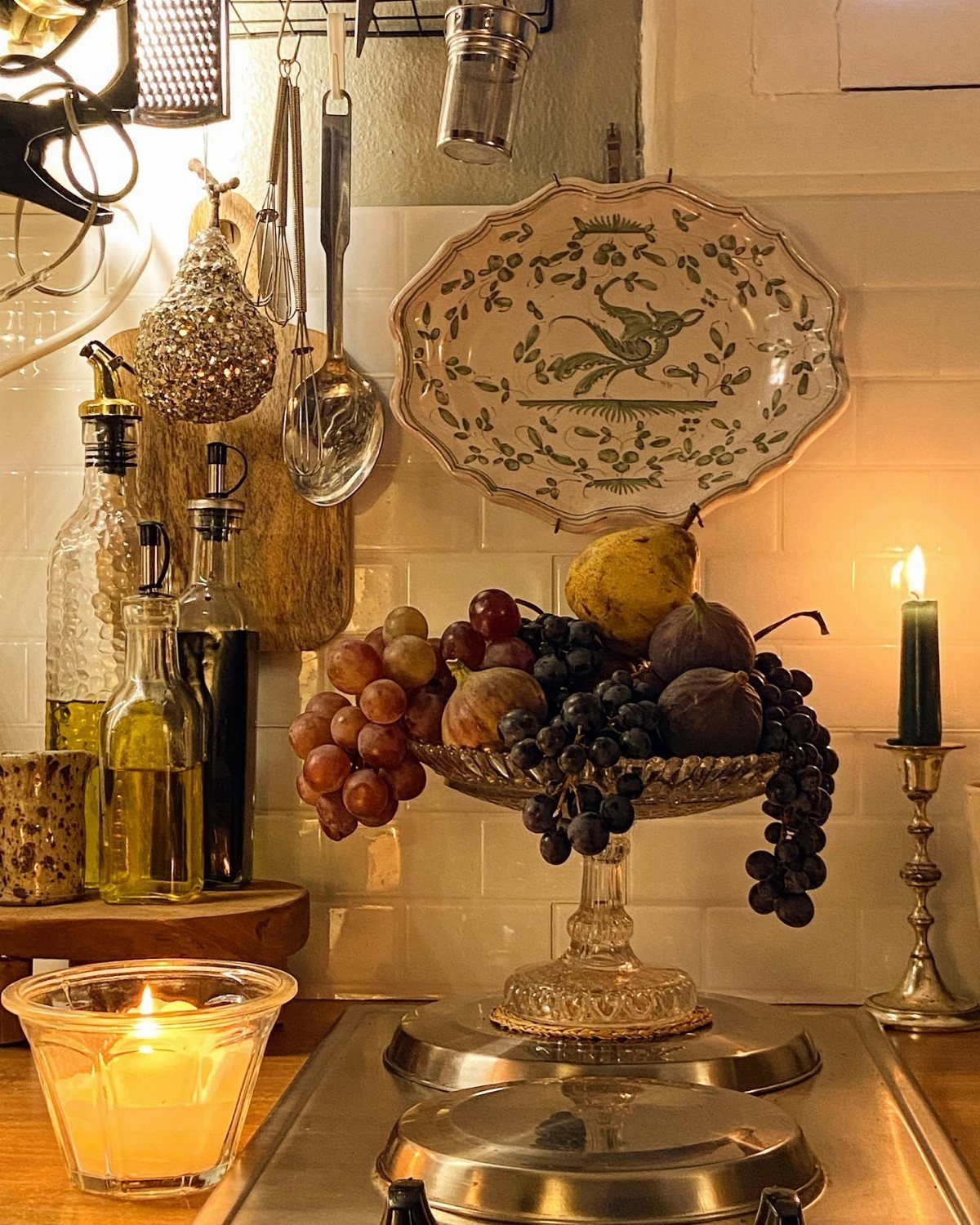
Open shelving puts them at eye level, but a ledge or even the back of a counter works too.
Vintage oil paintings or hand-painted pieces add more depth than mass-market fruit prints. The rule I follow is nothing purely decorative that is not also beautiful; a bowl of pears is still a bowl.
Daily oils and a single taper out on the counter read as lived-in without reading as clutter. They take no effort and a plain candle buys an evening of warmth for less than a coffee.
7. Use Textured Walls
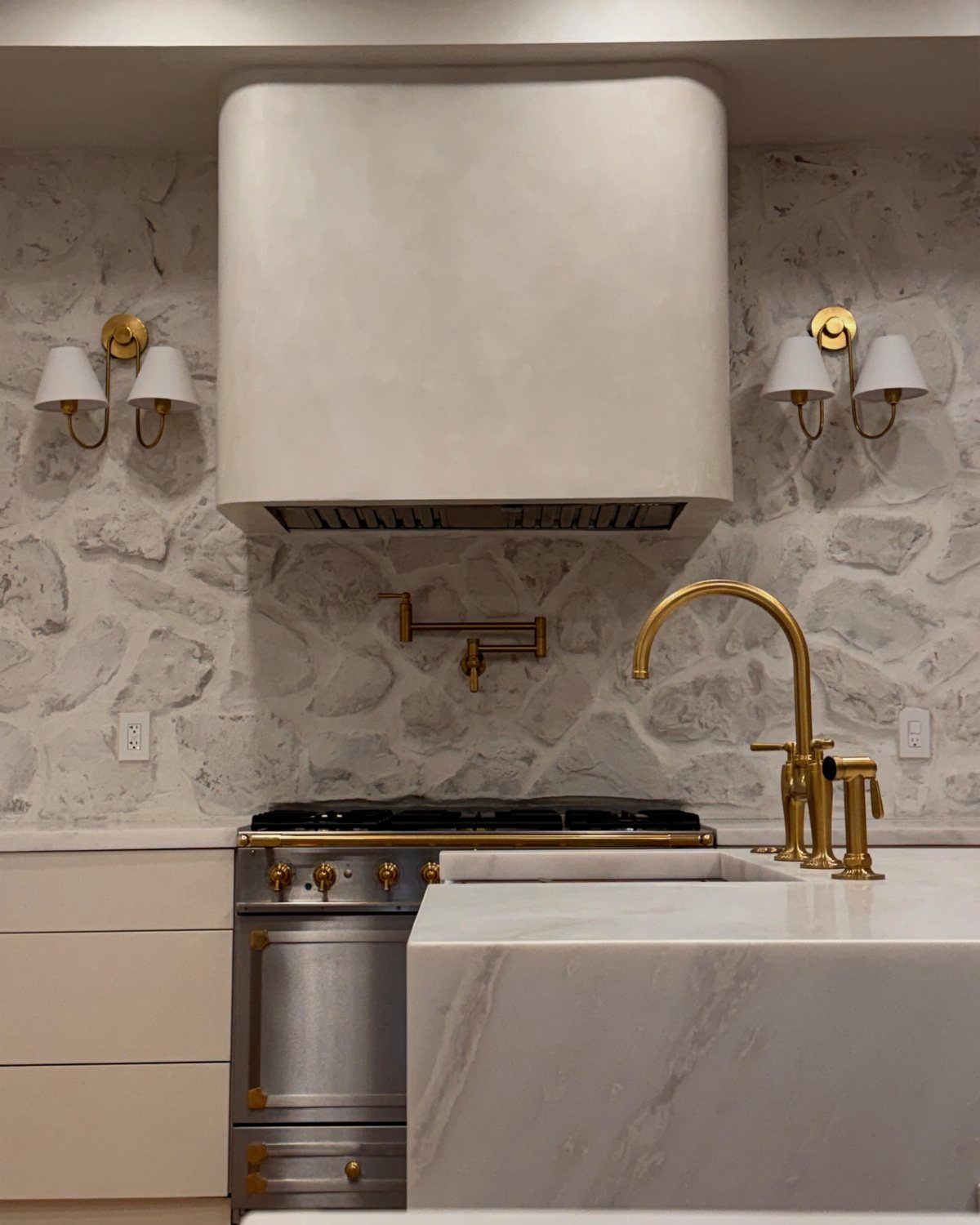
A single textured wall behind the range or sink does more to warm up a kitchen than a full repaint.
Brick veneer or rustic subway tile laid on one accent wall adds depth and makes the room feel older, more settled, more lived-in.
I would skip the MDF backing if your existing drywall is smooth; the tile or brick mounts directly and saves a step. One wall, not four, keeps the cost reasonable, and the change hits the moment you walk in.
8. Cozy Kitchen Soft Green
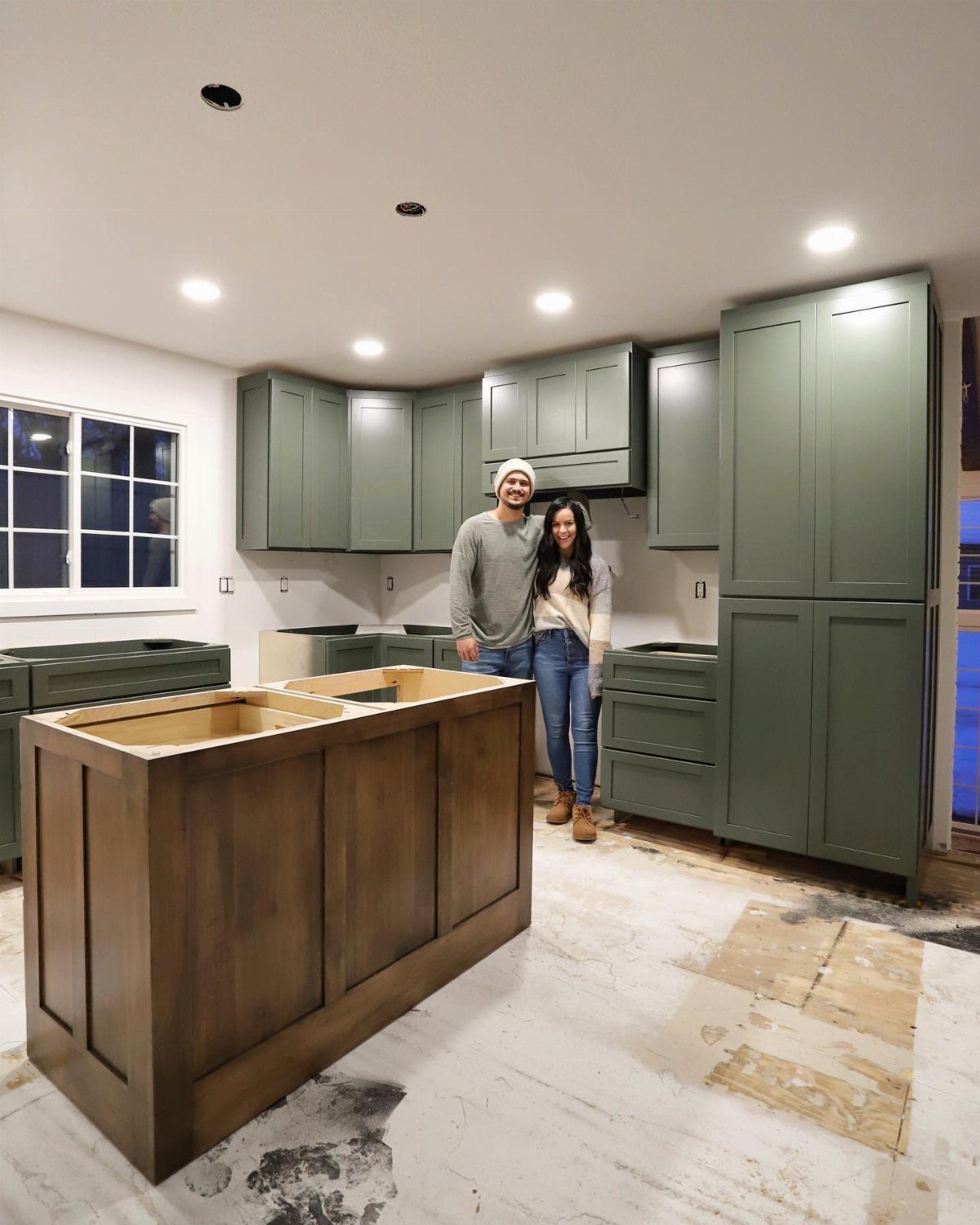
Sage green reads as neutral after a month, but it still carries more life than white or gray. Paired with warm wood floors and counters in a cream tone, the color keeps mornings calm without tipping into clinical.
The brass fixtures matter here. They pick up the warmth in the wood and keep the green from reading too cool.
I would use this palette in a kitchen that gets good natural light; in a darker space the sage can flatten.
9. Warm Minimalist Kitchen
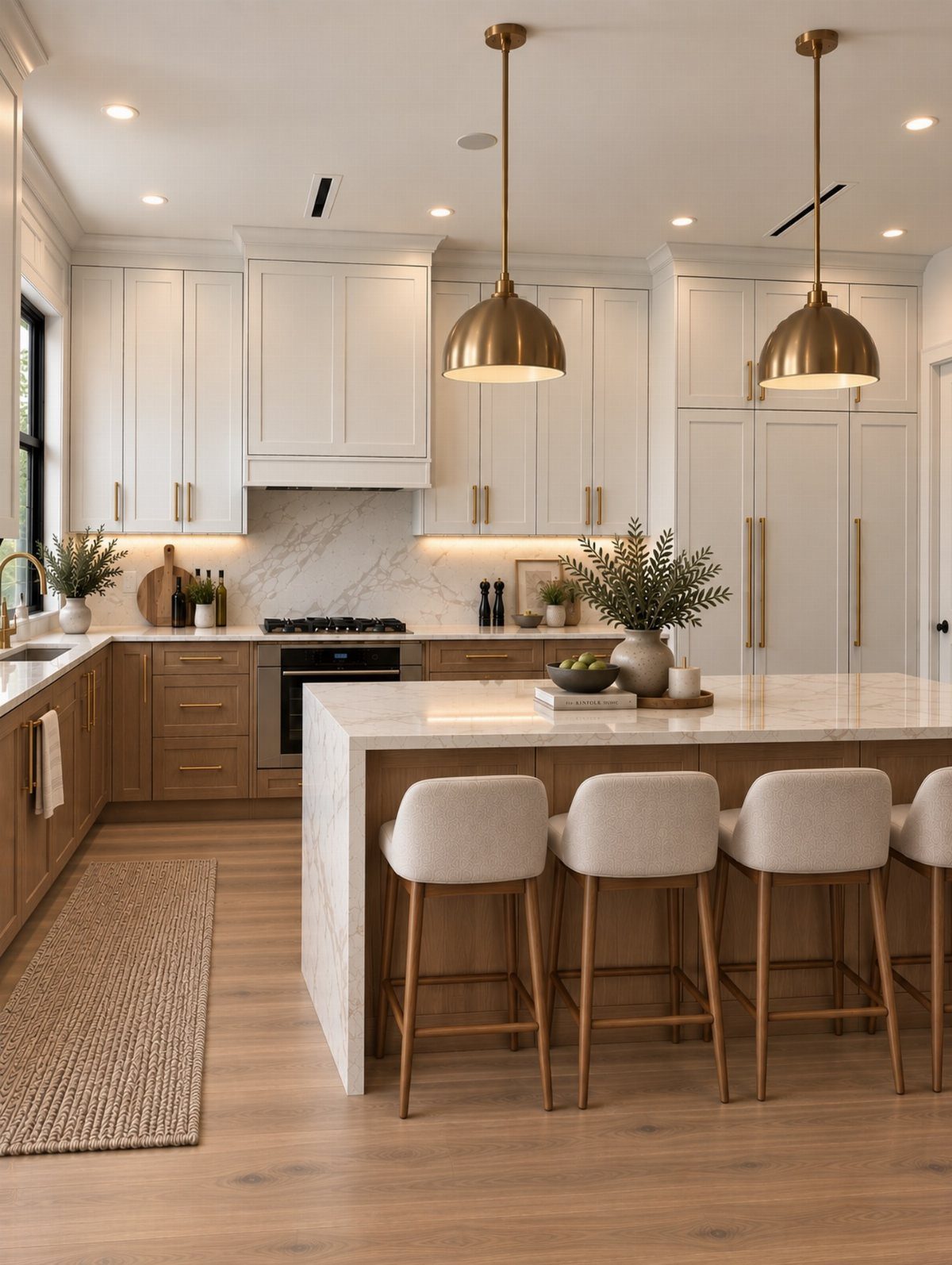
Warm minimalism is the answer when you want less stuff but not less comfort. Clean cabinetry in a soft neutral, one round table with upholstered seating, and lighting that pools rather than blasts.
The jute runner and a few plants do the heavy lifting on texture. Everything else stays hidden in drawers and cabinets.
I would choose this for a small kitchen where visual clutter makes the room feel cramped, or for anyone who cooks daily and needs surfaces clear by default.
10. Add Warmth and Color with a Runner
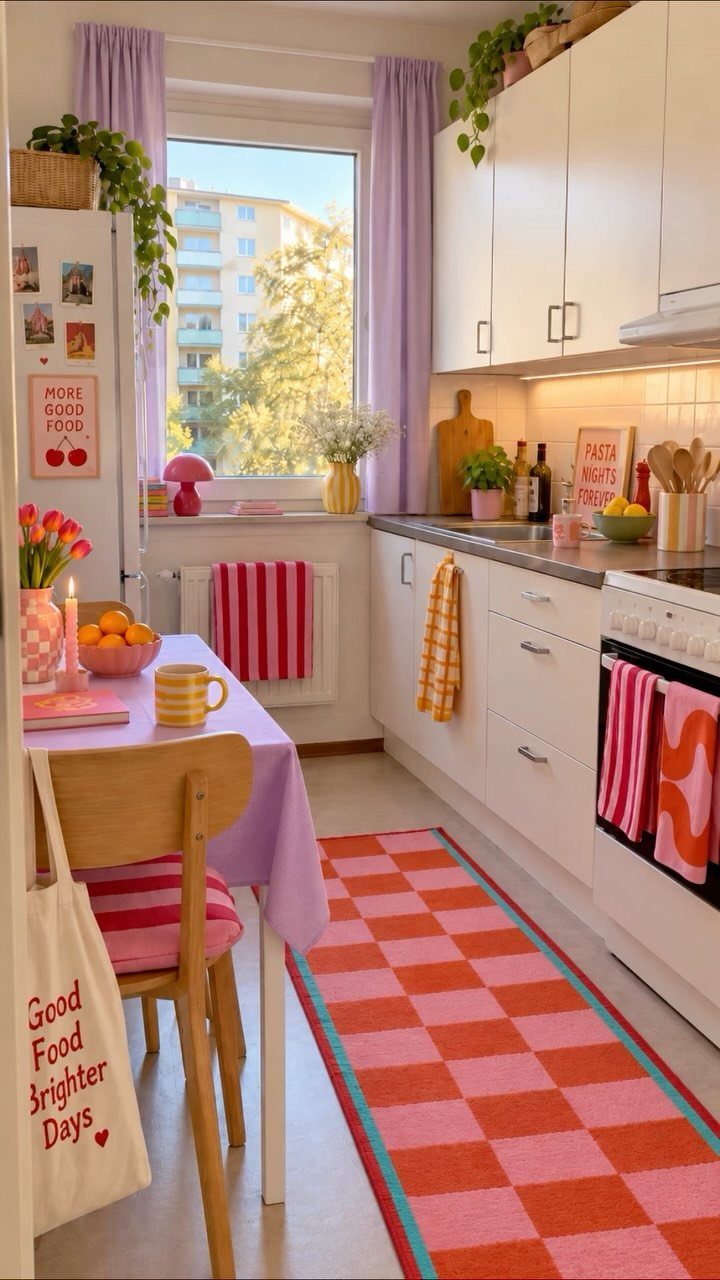
Hard flooring is practical in a kitchen but it steals warmth underfoot and visually. A flatweave runner in a low pile brings back color, pattern, and the softness that tile or wood cannot give.
Fit an underlay so it does not slide; that is non-negotiable near a stove. Machine-washable versions exist and I would hunt for one, since kitchen rugs collect grease and crumbs fast.
Repeating four or five colors through lamps, linens, and the runner itself keeps the room from feeling accidental.
11. Create a Cozy Eat-in Area
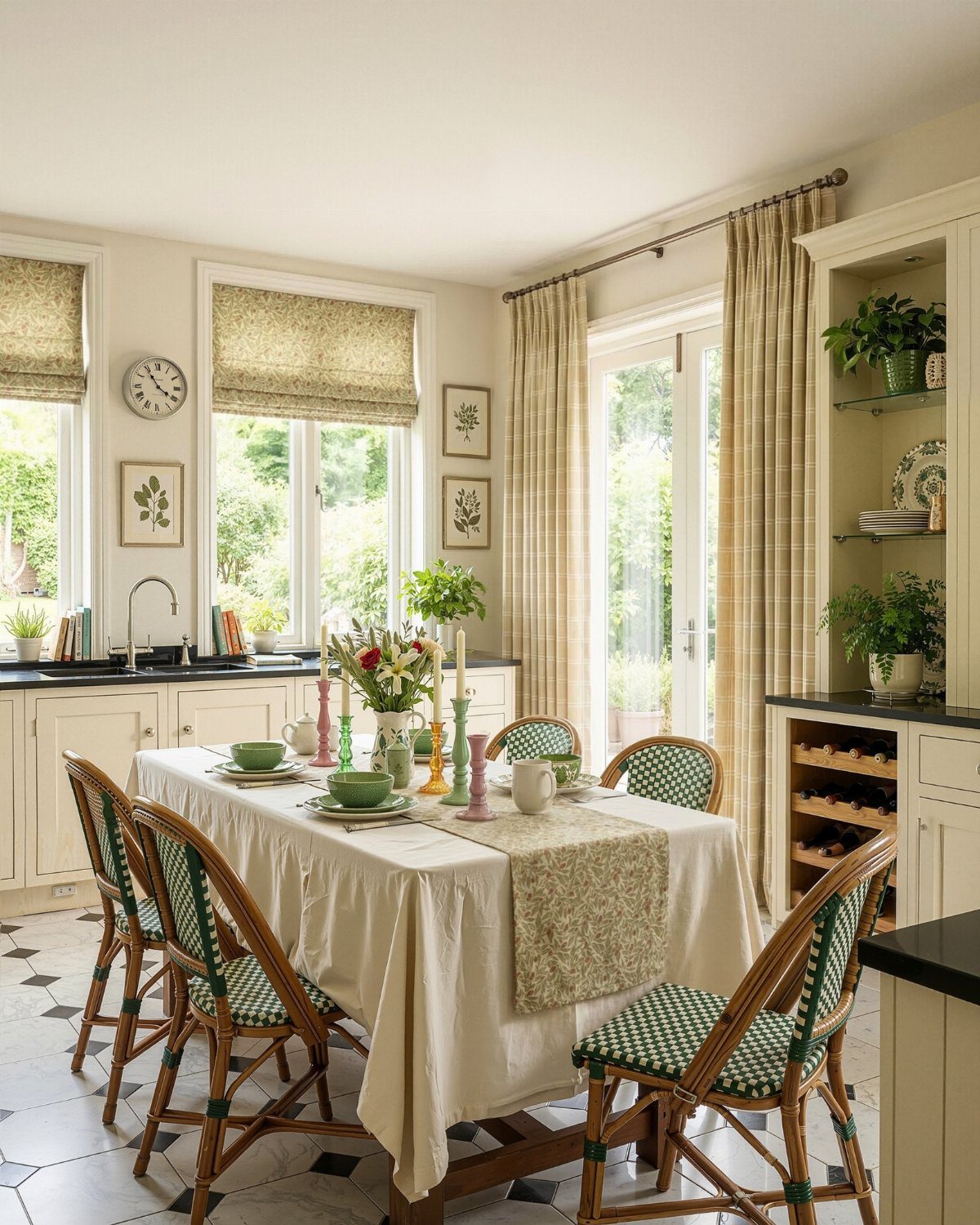
Island seating is useful for a quick breakfast, but a real table against a wall turns cooking into a gathering.
A slim rectangle pushed to one side saves floor space in a small kitchen; a round table softens the room and seats the same number.
The banquette or cushioned chairs add what kitchens lack: fabric, give, somewhere to settle. I would put this near the window if you have one, since morning light and a view make the everyday meal feel less rushed.
12. Embrace the Warmth of Wood
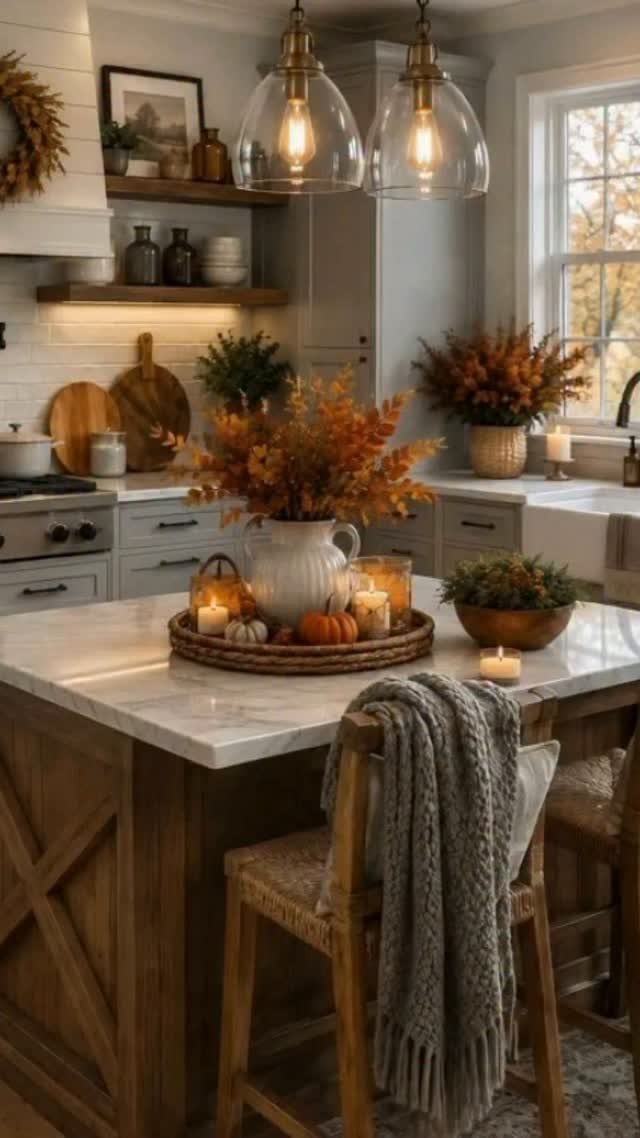
Wood is the one material that looks better the more you touch it. Cabinets, a paneled wall, or even just open shelving and bar stools bring in warmth that paint cannot fake.
Three steps come before any seasonal decorating: add wood where you can, let it age, and care for it with regular oiling.
A wood countertop in particular develops a patina that changes with use, which I find more interesting than stone that stays identical year after year.
13. Keep Counters Functional Yet Pretty
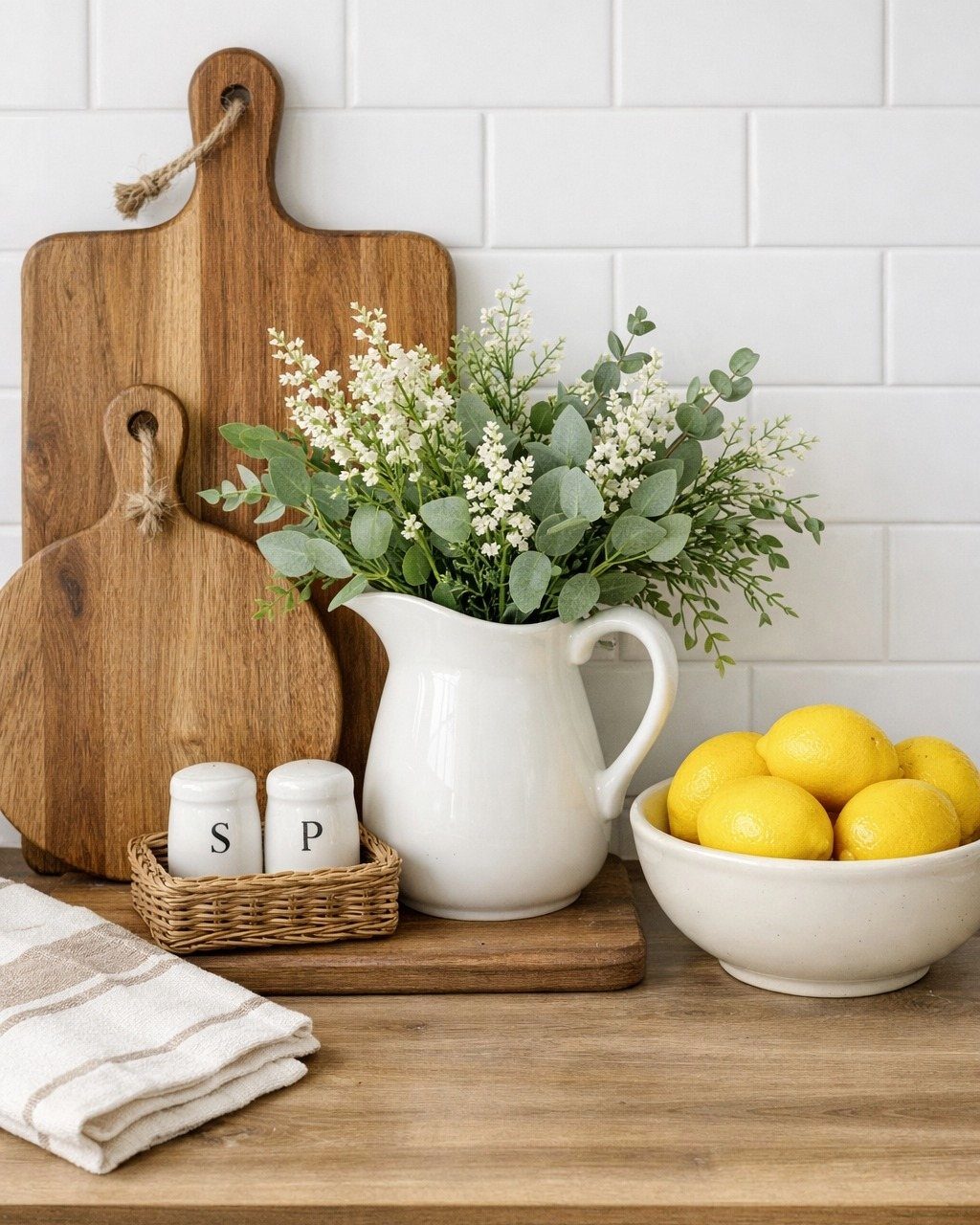
A few well-chosen pieces on the counter do more for warmth than a dozen small items scattered around.
I lean toward bigger pieces with some weight to them: wooden cutting boards propped against the backsplash, a ceramic pitcher that actually holds flowers, a bowl of lemons that gets used.
The boards in this kitchen get pulled down daily for chopping, so they earn their spot. Pick things that work for cooking first and look good sitting still second.
14. Use Open Shelving
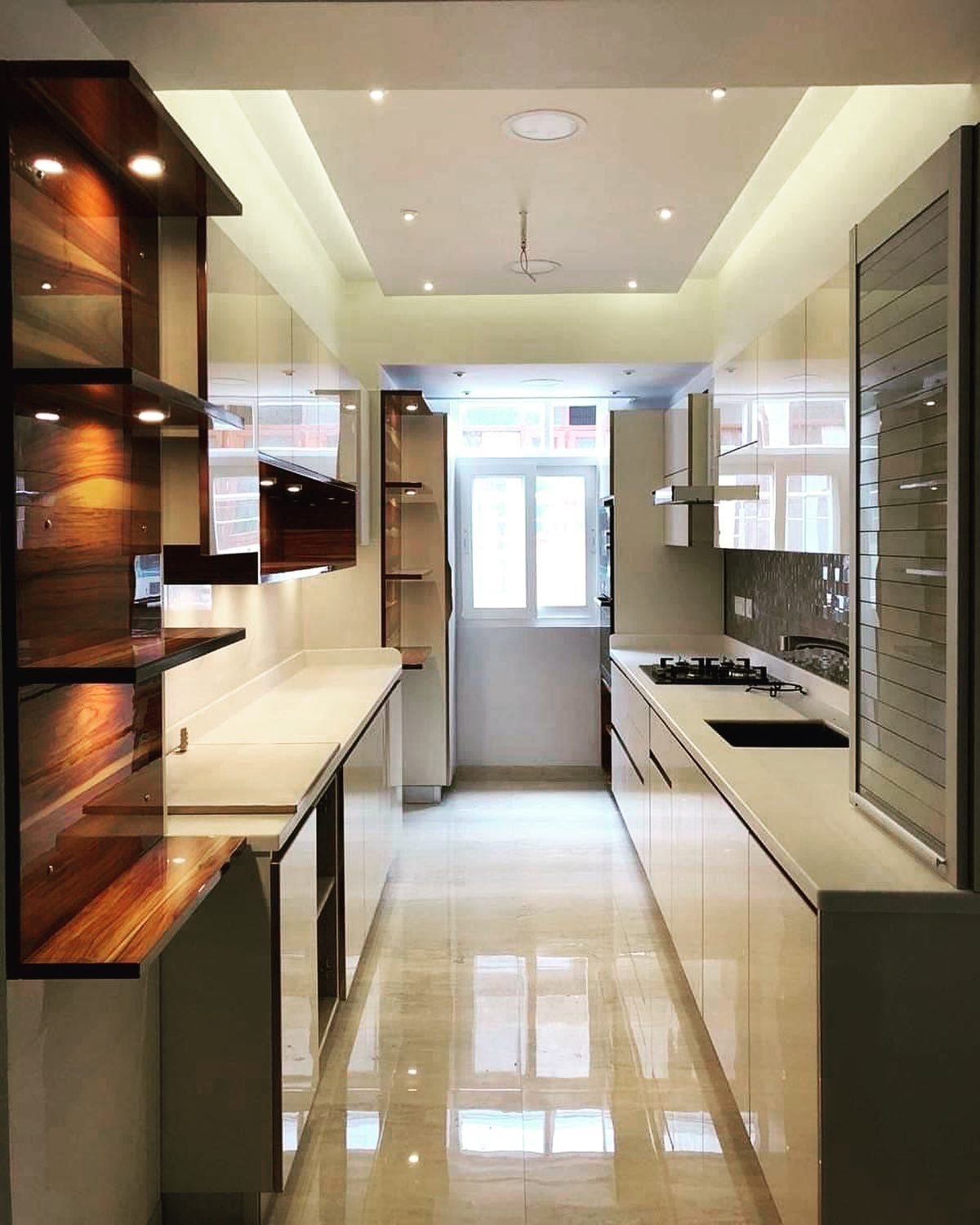
Open shelving turns the dishes you already own into the room’s main decoration. In this narrow galley kitchen, dark wood shelves run one wall while sleek cabinets handle the other, and the lit shelving does most of the visual lifting.
Stack bowls and plates to build height, and tuck in a stem or two of something green, even faux, to break up all that ceramic.
I would not put every dish on display: the everyday stuff stays behind cabinet doors, and the pretty pieces, the ones with some color or an interesting shape, face outward.
15. Incorporate Plants
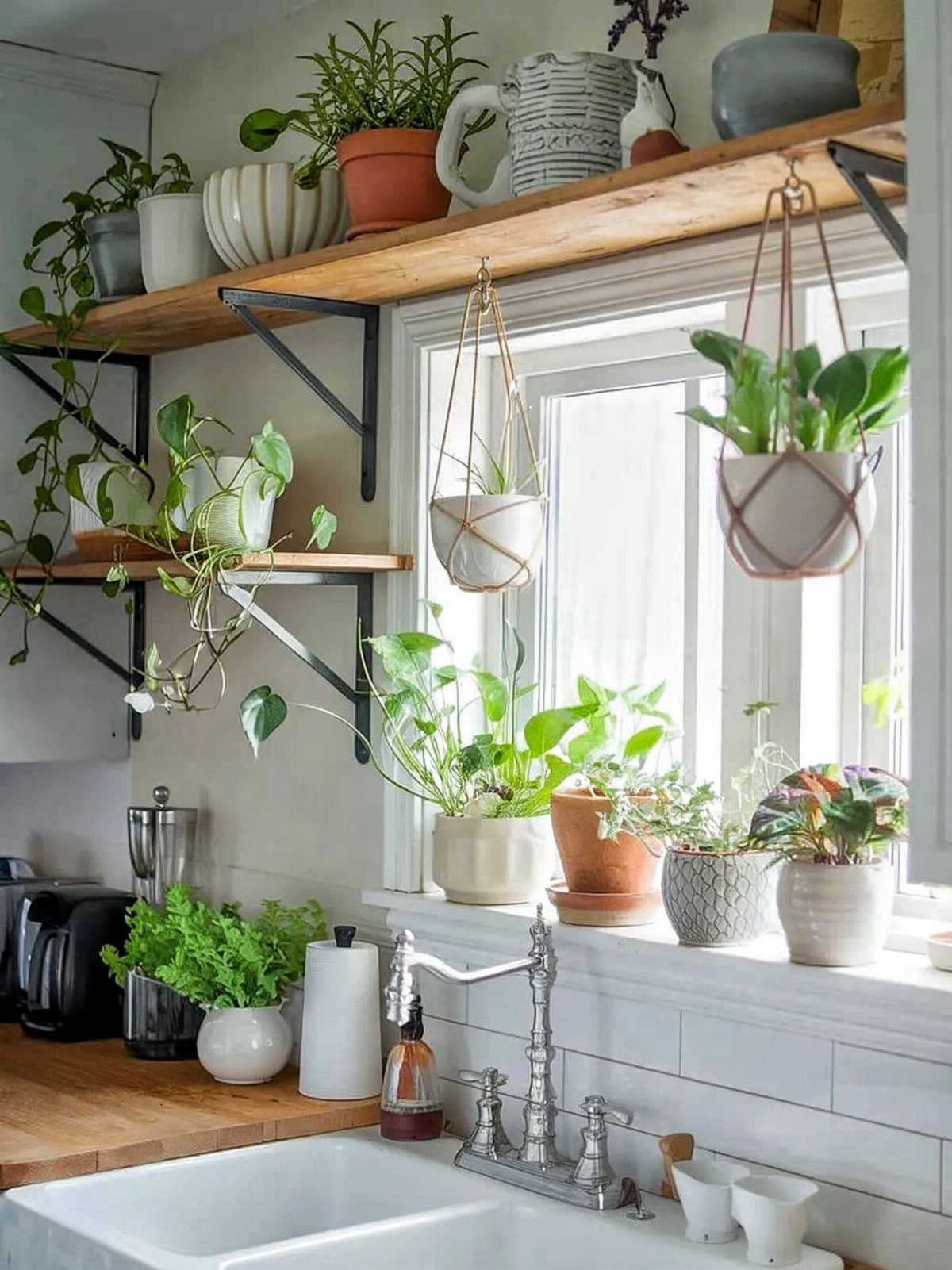
Plants do what paint cannot: they shift and grow and catch the light differently hour by hour.
This kitchen mixes potted herbs on the windowsill, trailing pothos in macrame hangers, and sturdier greens on open shelves, all in simple terracotta and white ceramic pots that do not fight the room.
The farmhouse sink makes watering easy, which matters, because a dead plant kills the mood faster than no plant at all. Herbs earn their place twice, as greenery and as something to cook with.
16. Create a Coffee Station
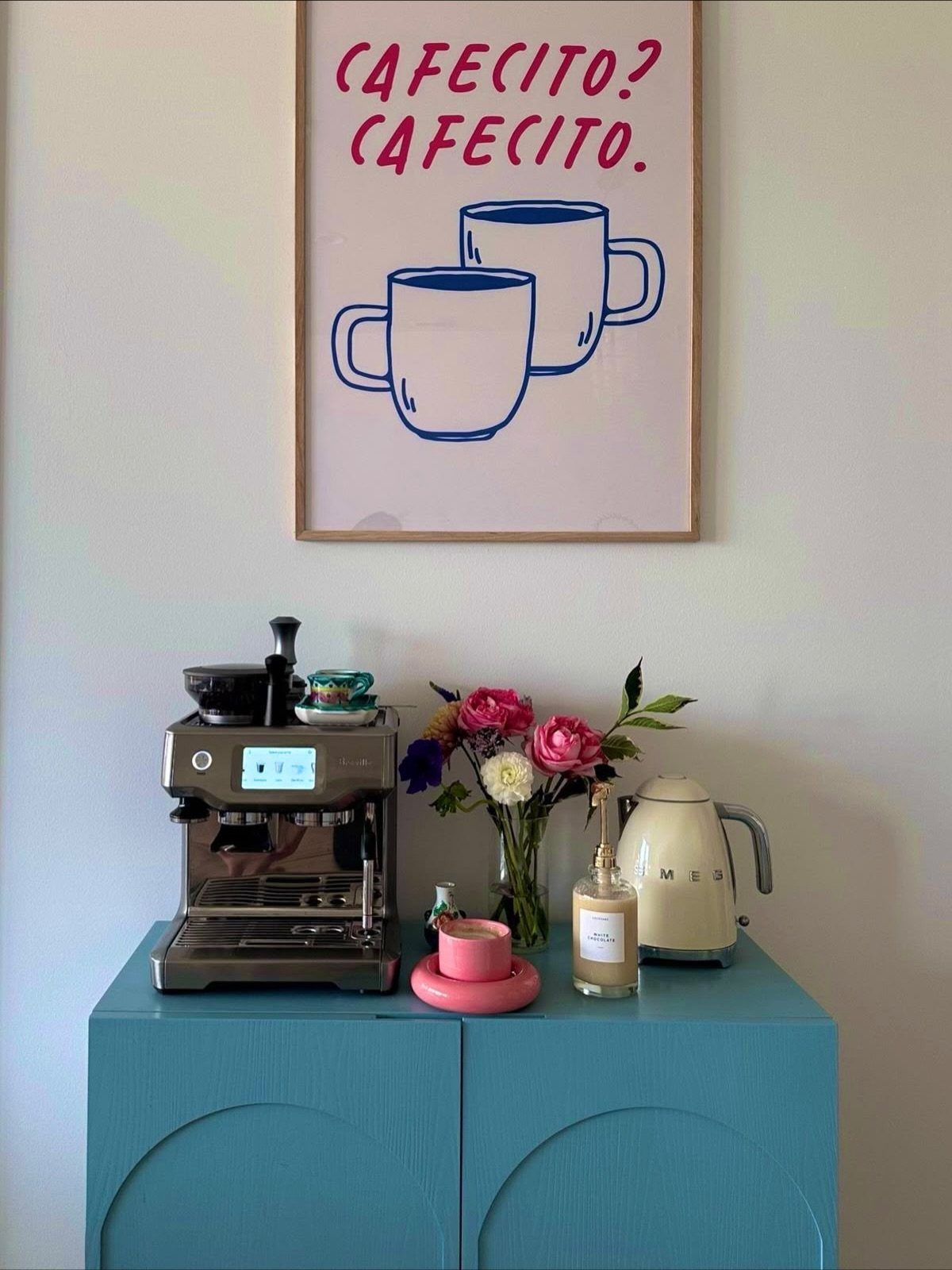
A coffee station needs only a small surface and a little planning to stop feeling like clutter and start feeling like a ritual. I would add one shelf above for mugs, maybe a small lamp for early mornings.
The maker of this setup says she finally finished her seasonal decorating and could turn to baking and handmade gifts, which tells you how a corner like this fits into a slower morning.
17. Use Warm Lighting
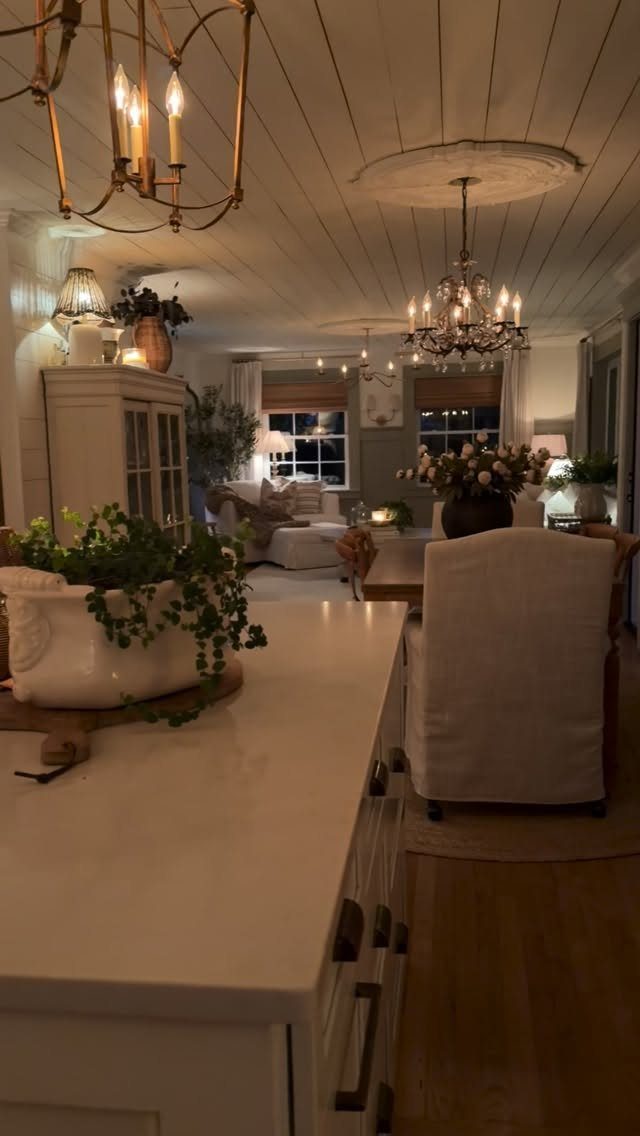
Warm lighting matters more in a kitchen than in almost any other room, because the wrong bulb at 6 a.m. or 6 p.m. can make the whole house feel off.
This space layers a chandelier over the island with smaller lamps in the living area beyond, and the wood ceiling helps bounce that light around softly.
I would swap any daylight bulbs for warm LEDs, 2700K or lower, and add under-cabinet strips if the counters sit in shadow.
One small desk lamp on a side counter, even a rattan drum shade instead of something industrial, can change how the room feels after dark.
18. Add Seasonal Decorations
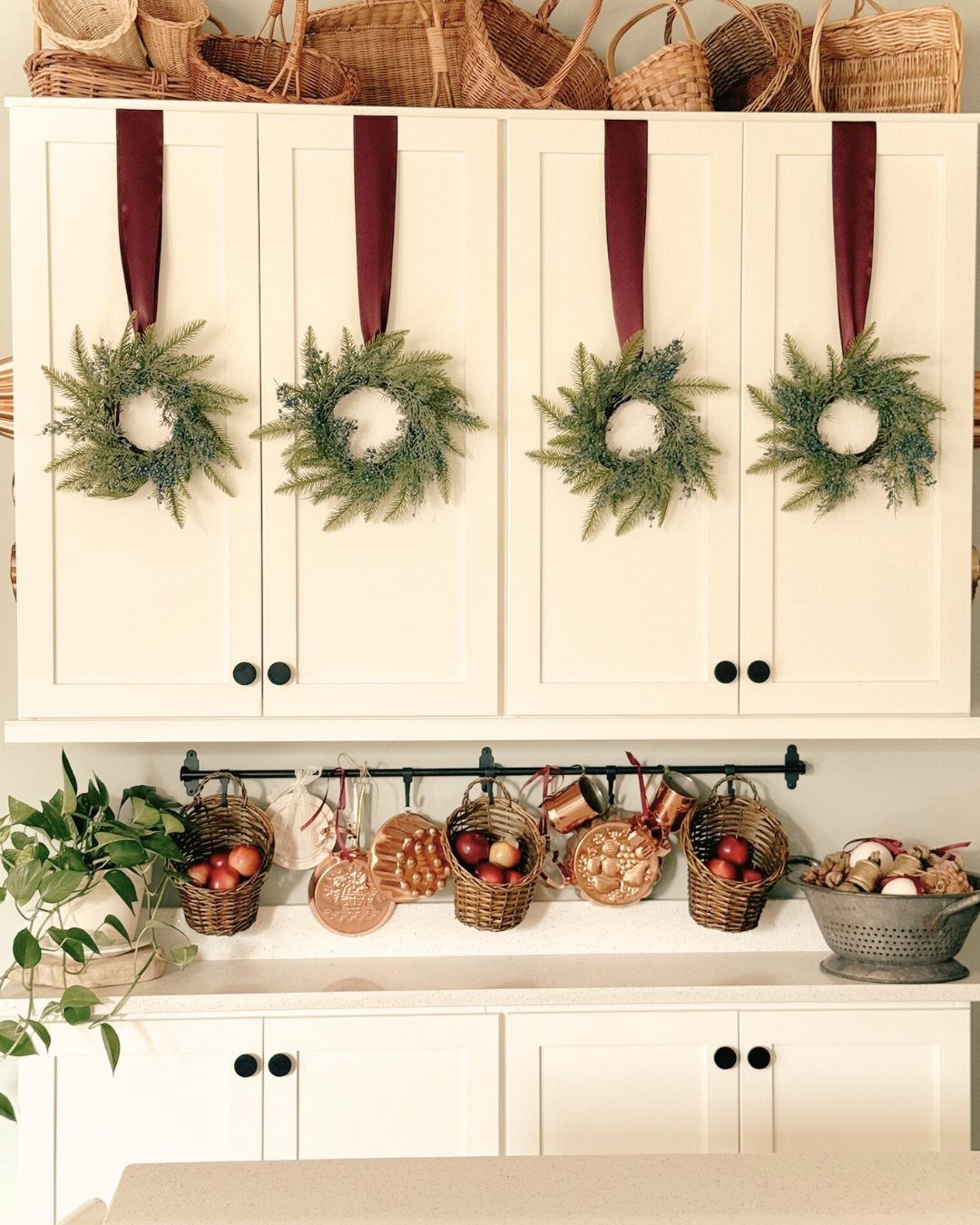
Seasonal decorating in the kitchen works best when it stays small and lives where you already look: a wreath on each cabinet door, a basket of something red hung from a rail, dried stems in a pitcher that held flowers last month.
This kitchen keeps to cream cabinets and woven textures year-round, so the evergreen and burgundy read as a swap rather than an overhaul.
Small pumpkins in October, dried hydrangeas in February, and the room feels tended to without a full Saturday lost to decorating. The person behind this space says she counts on that shift to mark time for baking and making gifts.
Importance of Natural Light
Natural light does more than brighten a room; it changes how the kitchen feels at every hour.
White cabinets bounce daylight deeper into the space, and when they sit against natural wood or a woven basket on the counter, the whole room reads as warm rather than sterile.
I would keep window treatments minimal on east- or south-facing walls, or skip them entirely above the sink if privacy allows. The light itself becomes a material you work with.
After dark, the shift matters. Warm under-cabinet LEDs keep the counters usable without the overhead glare of recessed cans alone.
I like a small accent lamp on a shelf or the back of a counter for evenings; the pool of light makes the kitchen feel occupied and lived-in.
Pendant bulbs over an island should be warm-toned, around 2700K, so the space does not flip from inviting at noon to clinical at seven.
Mixing Materials and Textures
A kitchen with only one material reads flat, no matter how good that material is. Wood cabinets gain life when they sit near metal hardware or a metal shelf bracket; the contrast is what the eye notices first.
I would not match every finish. A matte black faucet against brushed brass pendants, or a copper pot rail above a painted cabinet, gives the room layers without clutter.
Terracotta floors already mix two things at once: the rough, porous surface and the warm color. Against white cabinets they add weight; against olive or merlot paint they settle the tone so it does not go theatrical.
Woven baskets or a vintage ceramic piece on open shelving extend the same idea upward. The rule I follow is one rough texture for every two smooth ones, so the kitchen feels collected rather than busy.
Frequently Asked Questions
What makes a kitchen look cozy?
Warm colors, soft lighting, and personal decor turn a kitchen into a space that feels lived-in rather than staged. Wood that ages with use, textiles that soften hard surfaces, and warm-toned bulbs at 2700K or lower all help.
A couple of wooden cutting boards leaning against the backsplash, or one bowl of lemons, beats a counter crowded with stuff.
What are the best colors for a cozy kitchen?
Sage green, warm cream, muted ochre, and earthy tones on the lower cabinets feel lived-in without shouting. Lower saturation lets morning light do the work instead of fighting the paint.
Against warm wood floors and brass fixtures, sage stays calm without going clinical.
What is the new kitchen trend for 2026?
Cozy kitchens are trending for 2026, with a focus on warmth, comfort, and lived-in details rather than showroom perfection.
The idea is to add elements that increase the cozy factor without a full remodel, using soft colors, natural materials, and thoughtful decor in any space.
What kitchen design never goes out of style?
Natural materials, warm lighting, and a mix of textures hold up over time better than any single trend. Cream cabinets, open wood shelves, and woven textures hold up because they are pleasant to use, not because they followed a trend.
Warm materials that you actually touch and use every day outlast anything that photographs well for a single season.