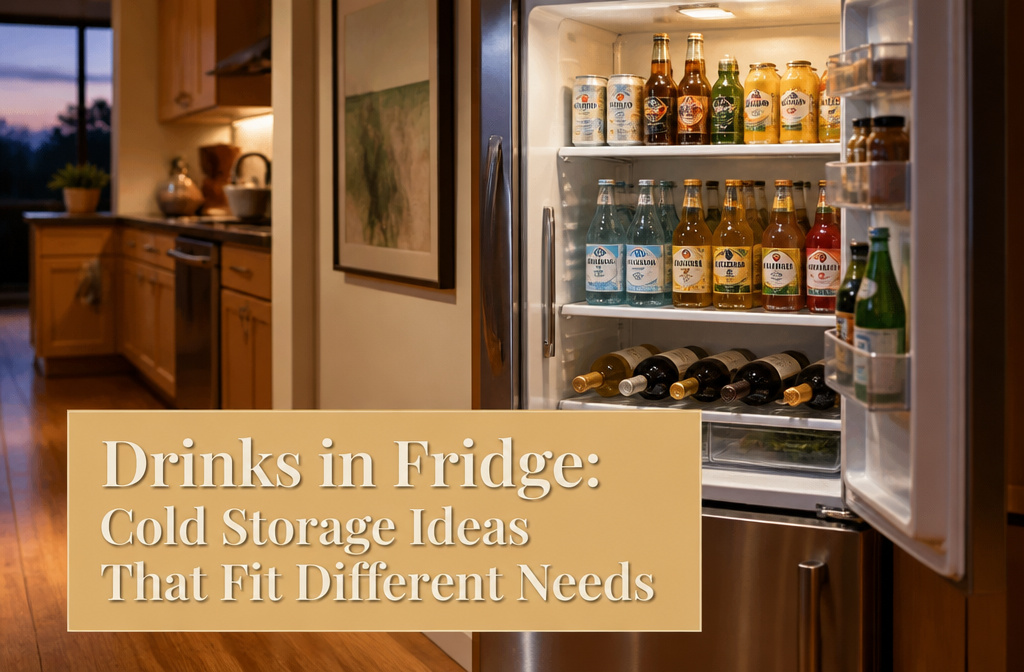
Four cold storage setups cover most households, but only one fits if you need bottles stored longer than a few weeks.
A standard fridge keeps drinks at or below 5°C, which chills beer and soda fine yet mutes wine within days. The real split is between appliances that store drinks and appliances that preserve them.
1. What a Standard Fridge Actually Does for Drinks
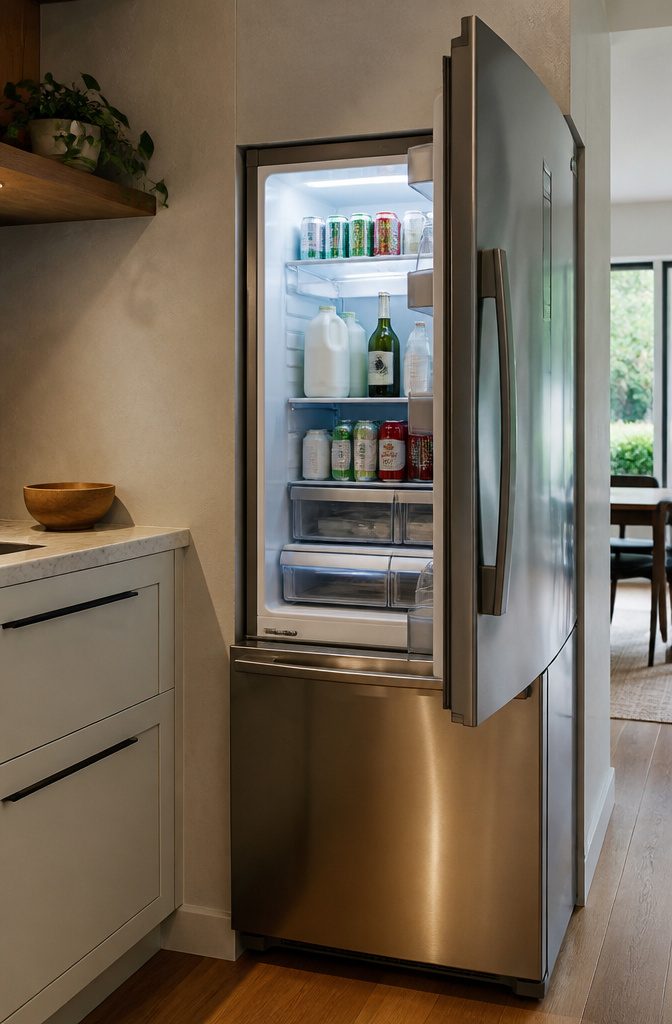
A standard refrigerator keeps everything at food-safe temperatures, generally at or below 5°C. That range protects milk, leftovers, and raw ingredients from bacterial growth, but it is colder than ideal for some drinks.
Beer, soft drinks, and juices handle it fine. They taste cold enough and stay safe indefinitely.
Milk belongs here too, obviously. The problem is wine.
Most reds show better closer to 12–18°C, and even lighter whites suffer when held near freezing for weeks. The standard fridge will not damage the bottle, but it will mute flavors you paid for.
The tradeoff is built into the appliance itself. A 200 to 400+ litre cabinet designed around dinner ingredients treats drinks as guests, not priorities.
Temperature swings from door openings, crisper humidity, and that one shelf jammed with yogurt containers all nudge the climate away from what a bottle of Pinot Grigio wants.
For renters and first-home owners already squeezing function out of every square foot, this matters. The fridge you own stores drinks adequately; it does not store them well.
2. When a Mini Fridge Is Enough
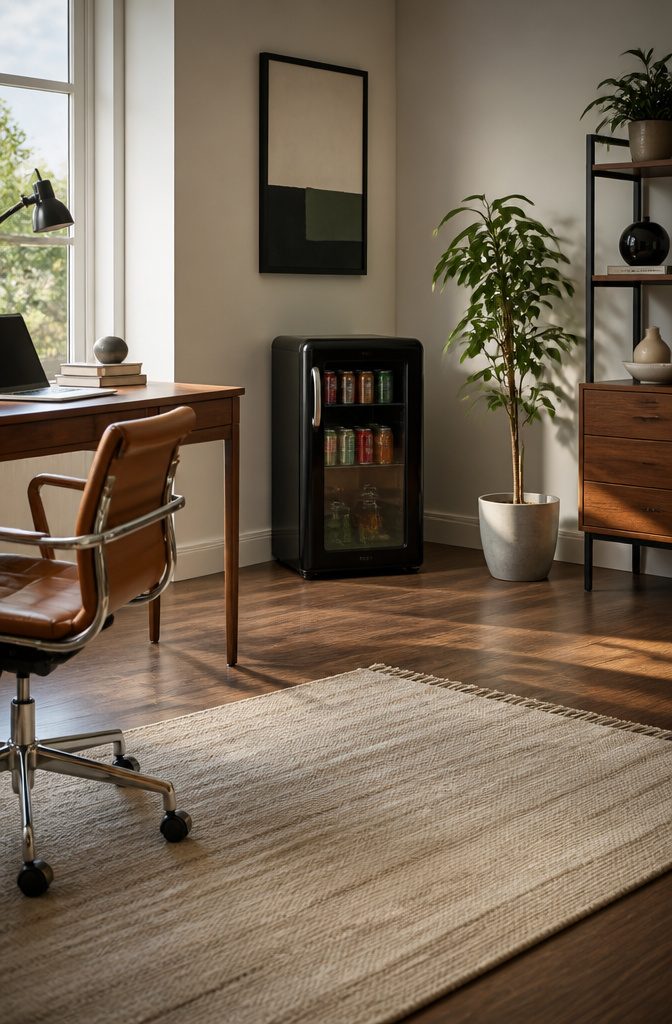
A mini fridge runs at the same food-safe 0–4°C range as a full-sized unit, so drinks chill exactly the same way, just in a smaller footprint.
Most models hold 50–65 liters and fit a scaled-down version of the standard layout: shelves, door storage, sometimes a tiny ice box wedged in the corner.
That makes them workable as a standalone substitute for a regular fridge in spaces where a full appliance is overkill or impossible.
Dorm rooms, home offices, and small apartments are the obvious matches.
The drink selection stays identical, soda cans, bottled water, a pitcher of iced tea, whatever you would stock in a kitchen fridge, but the total volume forces harder choices. A six-pack and a leftover container might fill half the shelf.
What convinced me, reading through the options, is that the limitation is purely cubic, not functional. For a single person or a secondary station, the mini fridge does the same job.
The catch is freezer space: most skip it entirely or offer only that small ice box, so frozen pizza and ice cube trays are out. If your meals are fresh or refrigerated, the trade is livable.
3. What a Beverage Cooler Does Differently
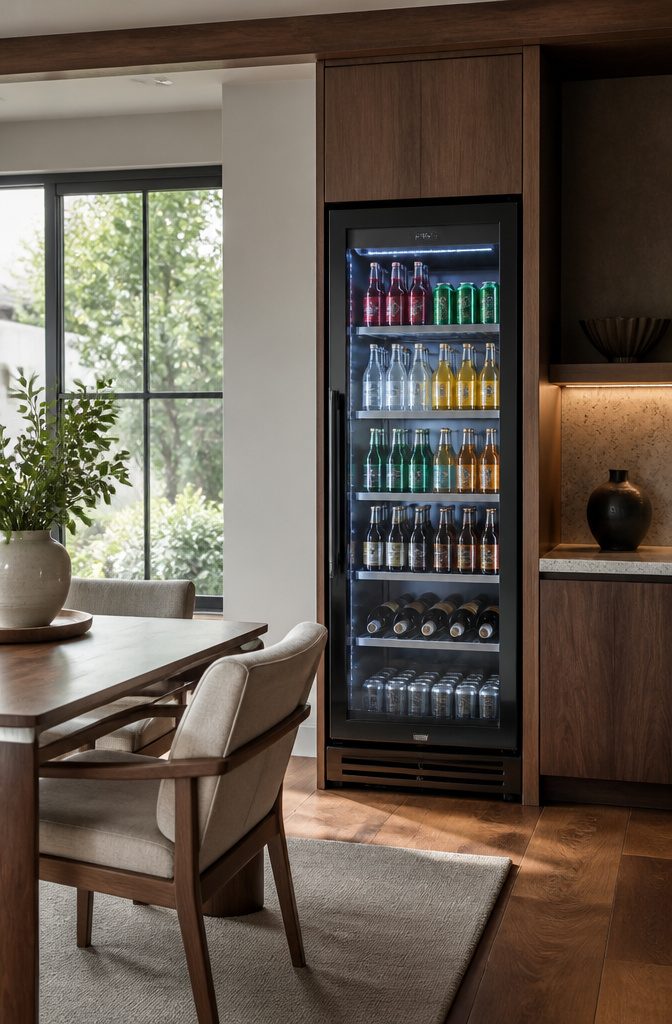
A beverage cooler runs at 8–18°C, a range that keeps wine, beer, and soft drinks at serving temperature but sits well above food-safe levels.
The glass door, LED lighting, and shelves shaped for bottles and cans make the purpose clear: this is display and grab-and-go convenience, not perishable storage.
The design choices reinforce that single job. Interior lighting and racking built specifically for drinks turn the unit into something you park in a kitchen, dining area, or home bar for visual impact as much as function.
It is significantly larger than most mini fridges and carries a more deliberate aesthetic.
Can it double as a fridge?
No. At temperatures starting around 8°C and climbing toward 18°C, dairy, meat, and leftovers sit in the bacterial growth zone.
For anything perishable, you need cooling at 5°C or below. A beverage cooler does one thing better than a standard fridge ever will: dedicated drink storage with capacity and temperature settings matched to what actually goes inside.
4. Why a Wine Fridge Stands Apart
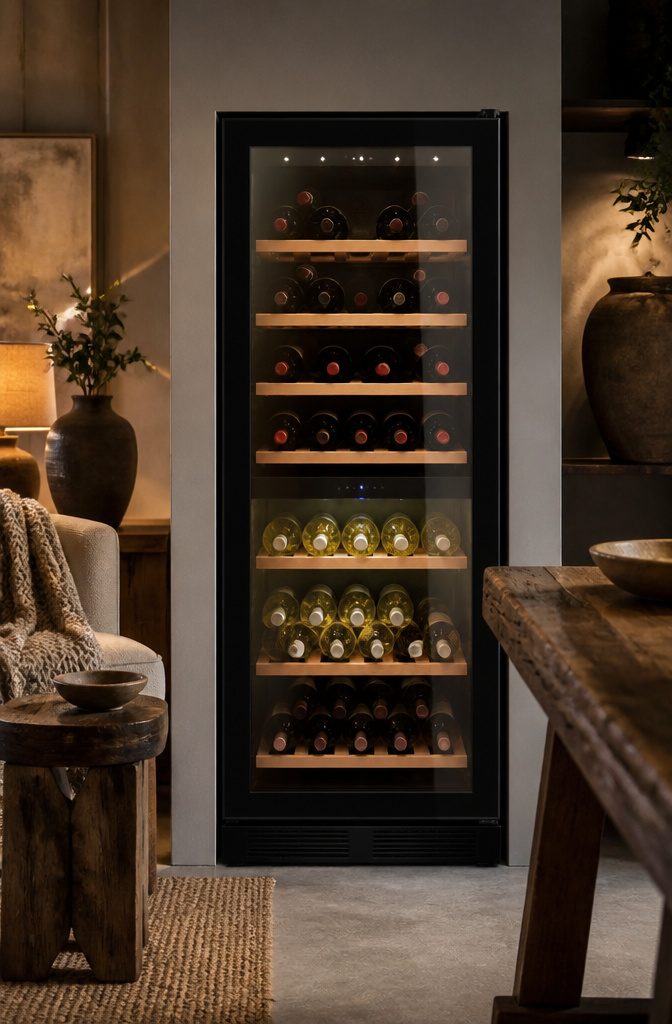
A wine fridge is built around one job: keeping wine alive long enough to drink at its best.
The dual temperature zones split the cabinet so reds sit at 12–18°C while whites and sparkling wines hold at 7–12°C, and both settings stay precise because the compressor is tuned for stability, not speed.
Horizontal shelving keeps corks wet; a dry cork shrinks, lets air in, and turns the bottle. Humidity control and vibration reduction, often from thermoelectric cooling rather than a compressor, protect sediment and labels alike.
Standard refrigerator temperatures run too cold and too dry for this. The air in a kitchen fridge is designed to stop bacteria on meat and milk, not to keep a cork swollen and a label intact.
Pull a decent bottle from ordinary cold storage after six months and the wine may have oxidized quietly from the neck up.
The tradeoff is purpose. A wine fridge does one drink type well and offers no flexibility for beer cans, soda bottles, or the mixed clutter of a household fridge.
For someone building a small collection and actually planning to drink through it, the specialization pays off. For anyone who just wants cold drinks within arm’s reach, it is the wrong machine entirely.
Temperature Ranges That Matter
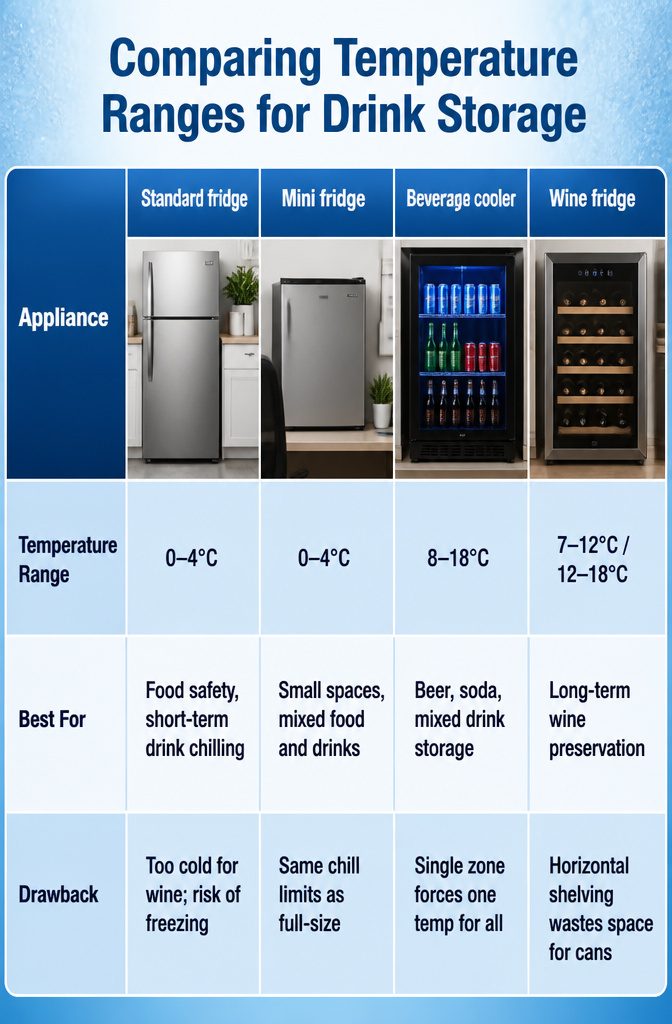
Standard and mini fridges both pull temperatures down to 0–4°C, the food-safe zone that keeps milk and leftovers from spoiling.
That same chill works against most drinks: beer goes icy, wine loses its flavor, and soda cans burst if they freeze.
Beverage coolers step back to 8–18°C, cool enough for refreshment but warm enough that reds taste like something and carbonation stays stable.
Wine fridges split the difference with dual zones, parking reds at 12–18°C and whites or sparkling at 7–12°C so both drink at their proper temperatures without fighting over one setting.
| Appliance | Temperature Range | Best For | Drawback |
|---|---|---|---|
| Standard fridge | 0–4°C | Food safety, short-term drink chilling | Too cold for wine; risk of freezing |
| Mini fridge | 0–4°C | Small spaces, mixed food and drinks | Same chill limits as full-size |
| Beverage cooler | 8–18°C | Beer, soda, mixed drink storage | Single zone forces one temp for all |
| Wine fridge | 7–12°C / 12–18°C (dual zone) | Long-term wine preservation | Horizontal shelving wastes space for cans |
How long you can store depends on that range. Food-safe cold buys weeks for perishables but only days before drink quality slips.
The warmer zones of beverage and wine units trade preservation time for drinking quality: beer stays good for months, wine for years if humidity and vibration control are in play.
A mini fridge in my office kept sodas cold enough, but a bottle of red left there overnight came out tight and flavorless. That 0–4°C gap matters more than the cubic feet inside.
Storage Capacity and What Fits
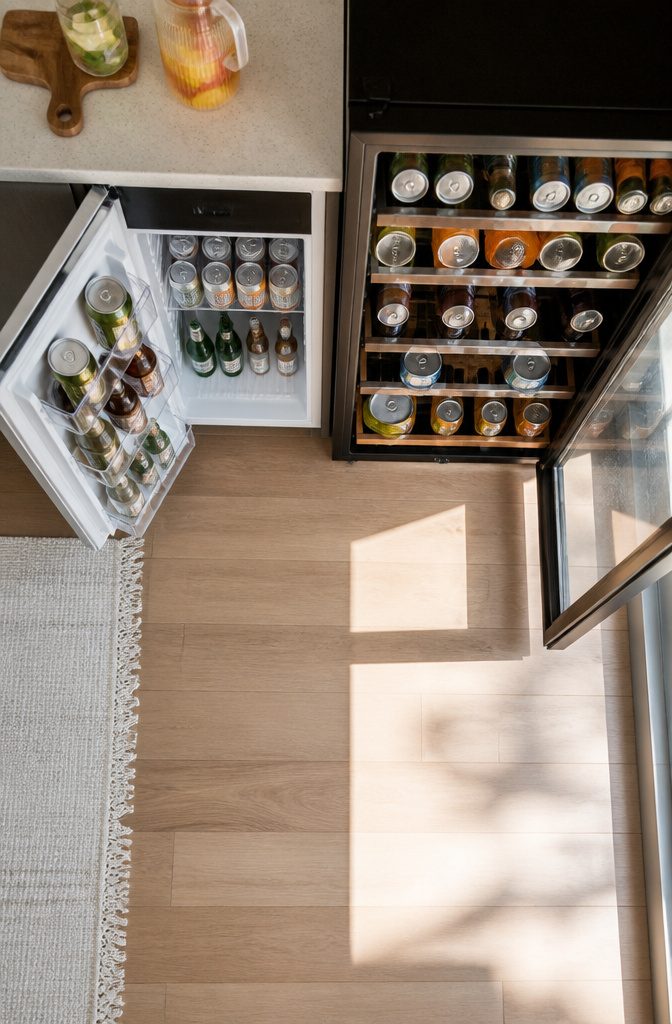
Mini fridges run about 50–65 liters, which sounds like plenty until you try fitting a twelve-pack of bottles alongside a few tall cans. The shelving is usually fixed wire or thin plastic, spaced for standard soda cans standing upright.
A wine bottle or a 750 ml sparkling water will not stand in most of them; it has to lie flat, and then it rolls, and then you have one layer where you hoped for three.
Beverage coolers step up in raw volume and build the whole interior around drink storage.
The shelves are often cantilevered or on rails so you can slide them out, and the depth is calculated for cans in rows or bottles laid front-to-back.
A cooler rated at 120 cans assumes a specific stacking pattern; start mixing in liter bottles and that count collapses fast.
Wine fridges abandon liters entirely and size by bottle count, typically 12 to 50+. The shelves are shallow cradles meant for horizontal storage, which keeps corks wet but wastes vertical space.
A standard Bordeaux bottle fits; a fat Champagne bottle or an odd-shaped Riesling often does not, and the rated capacity assumes uniform cylinders. If your collection mixes formats, plan on 20–30% fewer bottles than the sticker claims.
Design Features That Change Daily Use
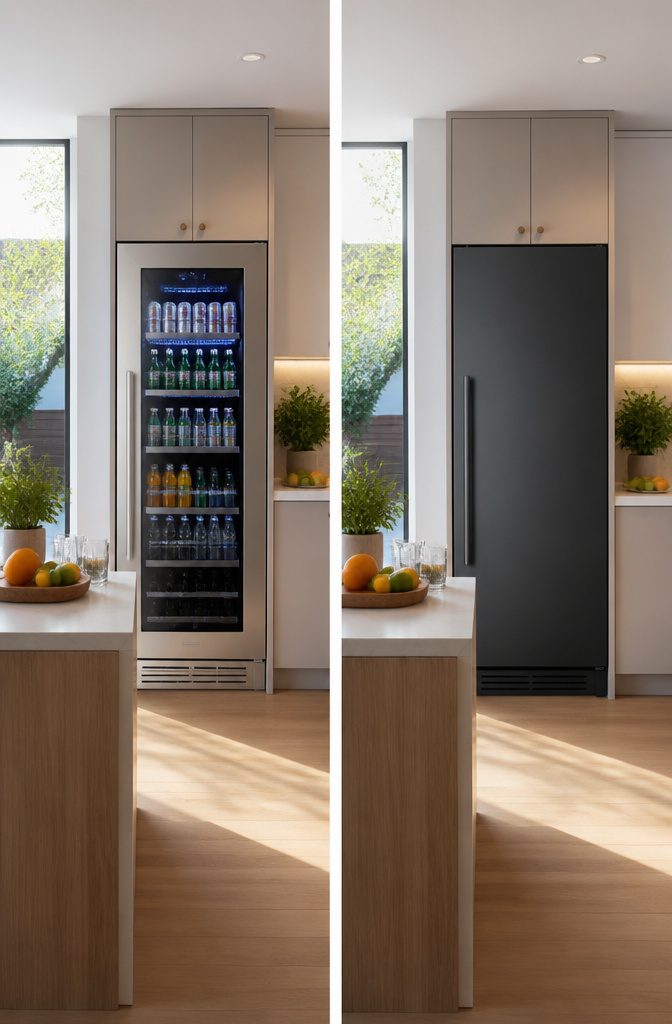
Glass doors and LED lighting turn a beverage cooler into something you walk past and actually use.
The light costs almost nothing to run, and being able to see the last sparkling water without opening the door keeps the compressor from firing up every time you’re thirsty.
For a kitchen where drinks are an afterthought, that visibility is worth the slight efficiency loss.
Solid doors and crisper drawers on a standard or mini fridge do the opposite job. The solid panel insulates better, which matters if the unit sits in a garage that hits 85 degrees in July.
A crisper drawer with its own humidity slider can hold a six-pack and a bag of lemons without turning either into something that smells like regret.
That flexibility is what makes a mini fridge the default for renters: one appliance, no installation, and it still handles overflow when the main fridge is full after a holiday.
Wine fridges add humidity controls and vibration reduction that most people will never need.
The humidity keeps corks from drying out if you’re storing bottles for years, not weeks. Vibration reduction matters for the same long timeline; for a bottle opened next Saturday, the compressor kicking on does nothing you can taste.
If your budget stops around three hundred dollars, skip both features and buy more bottles instead. The premium only pays out once you’re holding wine long enough to forget you own it.
Frequently Asked Questions
Can I use a drinks cooler as a fridge?
No. A beverage cooler runs at 8–18°C, which sits well above food-safe temperatures.
Dairy, meat, and leftovers stored at those temperatures risk bacterial growth and spoilage. You need a standard or mini fridge operating at 5°C or below for anything perishable.
What’s the difference between a wine fridge and a beverage cooler?
A wine fridge uses dual temperature zones to hold reds at 12–18°C and whites or sparkling at 7–12°C, with horizontal shelving to keep corks wet and features like humidity control and vibration reduction.
A beverage cooler has a single zone from 8–18°C and is built for mixed drinks, cans and bottles stored upright, with no long-term wine preservation features.
Can a mini fridge be used as a regular fridge?
Yes.
A mini fridge runs at the same food-safe 0–4°C range as a full-sized refrigerator, so it handles both food and drinks safely. The only real difference is capacity, most models hold 50–65 liters, and freezer space is usually minimal or absent.