
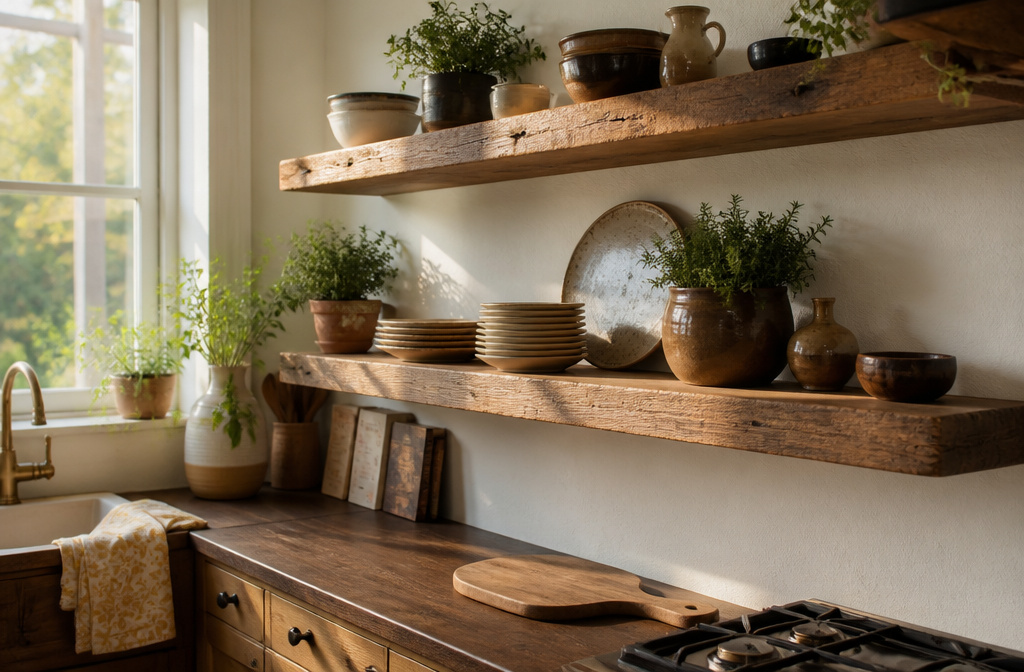
Floating shelves in a kitchen live or die by whether you planned for wiring and weight before the drywall went up.
A properly installed shelf holds 150 pounds, but only into studs or rated anchors; anything less is a wall-mounted accident waiting to happen.
The real divide is custom versus ready-to-ship: exact sizing and grain-matched hardwood for $132 and a weeks-long wait, or stock lengths that ship in two days but leave that one-inch gap beside your range hood.
1. Custom Floating Shelves
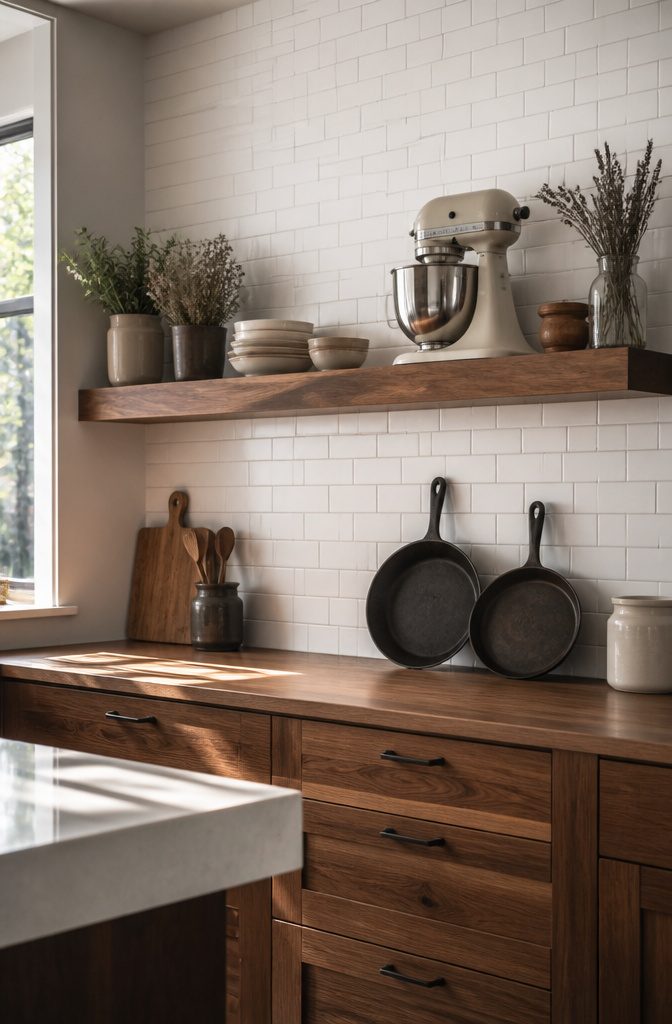
Custom floating shelves start around $100 for a basic U-Paint MDF option, but the real draw is sizing them to the exact inch.
Solid hardwood and engineered wood runs in walnut, oak, or maple, with thickness from 1-3/4" up to 6" and lengths stretching 12" to 84".
That range matters in a kitchen where a standard 24" shelf leaves awkward gaps beside the range hood, or a 10" depth crowds a narrow galley.
The trade against ready-to-ship shelves is patience versus precision. Custom work takes weeks, not days, and the entry point for finished hardwood like rift white oak or maple sits closer to $132–$135.
What you buy back is a shelf that actually fills the wall, with grain and finish chosen to the cabinet color rather than approximated from a stock photo.
Heavy-duty hardware paired with thicker stock also changes what the wall can hold.
A 3" walnut shelf across a 60" span with proper blocking behind drywall handles the weight of a stand mixer or a stack of iron skillets in a way that thinner, bracketless alternatives hesitate to promise.
The question is whether that load-bearing peace of mind justifies the roughly $30–$75 premium over primed or painted MDF, and whether the kitchen project timeline has room for the wait.
2. Ready-to-Ship Floating Shelves
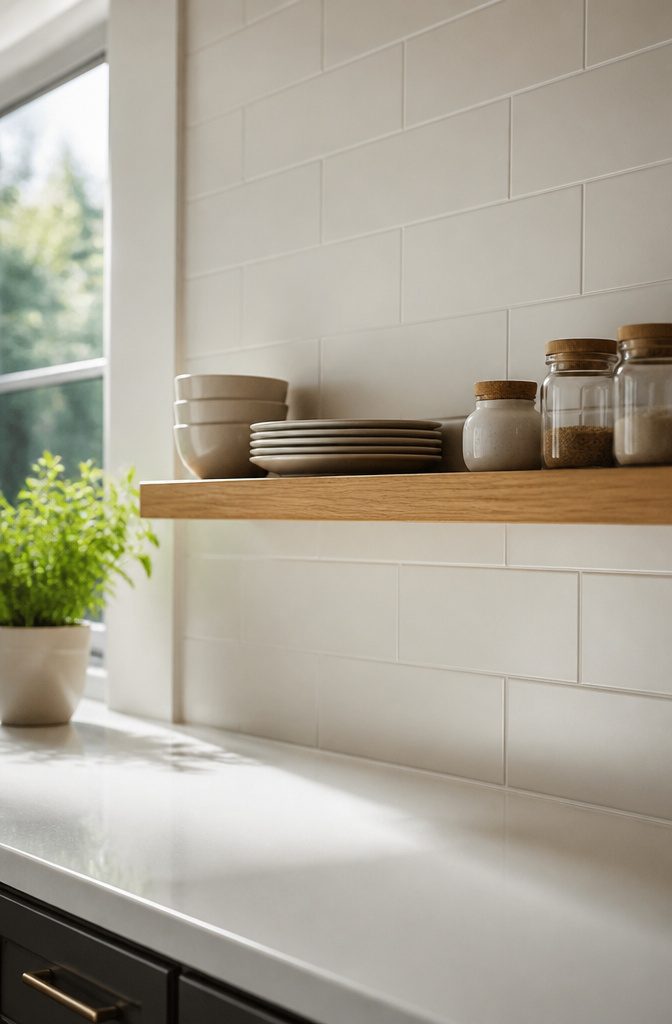
Ready-to-ship floating shelves ship in one to two working days, which is the real advantage when a kitchen project stalls because the wall is bare and the dishes need a home.
The standard lengths run the same ranges as custom, typically 24–48 inches, but the stock sizes mean you are fitting your space to the shelf rather than the shelf to your space.
That one-inch gap at the end, or the stud that lands where the hardware cannot go, is the trade-off you accept for speed.
Wood selection is narrower too. The ready-to-ship line from most makers offers a few finishes, not the full slab range, and you are not getting the same cleat-end detail that hides the bracket on a custom order.
For a rental kitchen where the shelf might follow you to the next apartment, or for a first project where committing to a ten-day build feels like overkill, the faster option usually wins.
The hardware still mounts the same way; the shelf just arrives sooner and asks less of your Saturday.
The corner shelves and slab styles stay in the custom queue, ten working days or more, so ready-to-ship is strictly the straight-run stock.
If your kitchen calls for a mitered corner or a cabinet-top cap, you are already in the other line.
3. Corner Floating Shelves
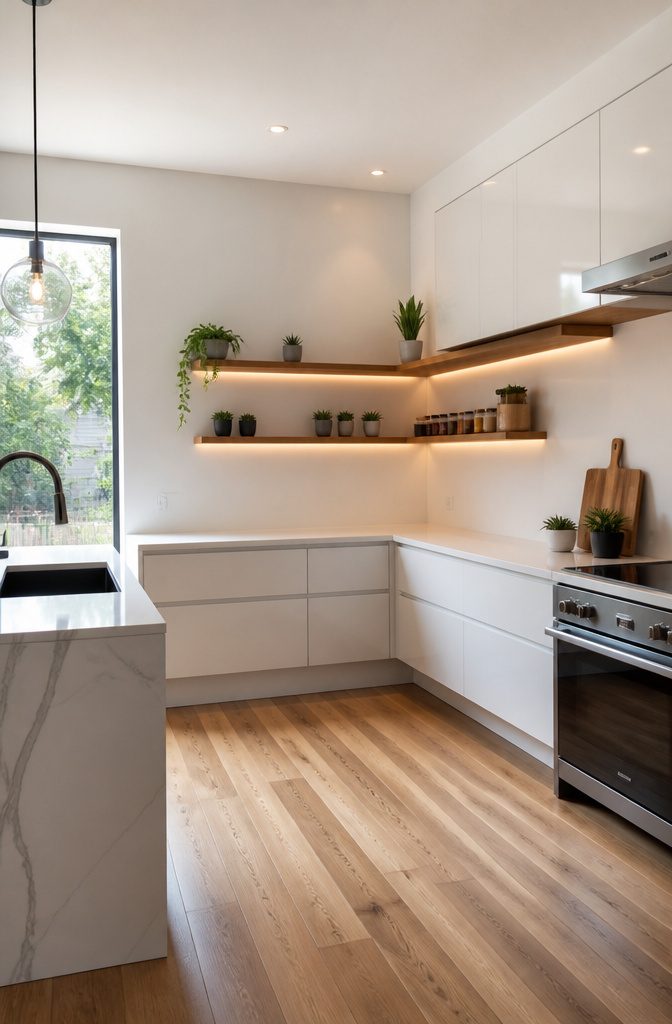
Corner walls in kitchens collect dust and the occasional spider, not much else. Triangular or L-shaped floating shelves change that math by turning the dead zone into storage you actually reach for daily.
The geometry matters more than it looks. A true mitered corner shelf ships as one piece with steel hardware already mounted, so the seam sits tight and the front edge stays clean.
The assembled kind uses separate boards joined with wood cleat ends; the line where they meet is visible up close, though from across the room the difference fades. Either way, the join is the weak point for weight.
Standard wall-mounted shelves spread load across a single hidden bracket running the full length. Corner shelves split that force between two walls and a corner connection, so the real-world capacity drops even when the same hardware is involved.
Plan to store lighter items: mugs, small plants, a row of spice jars, not the stand mixer.
Light is the other practical issue.
Corners shadow themselves, especially under upper cabinets. Strip or puck lights mounted on the underside of the shelf above solve this without rewiring the kitchen.
The wood species, metal, or glass you choose matters mostly for how it catches that light; matte finishes disappear, glossy ones bounce it around.
4. Floating Shelves With Brackets
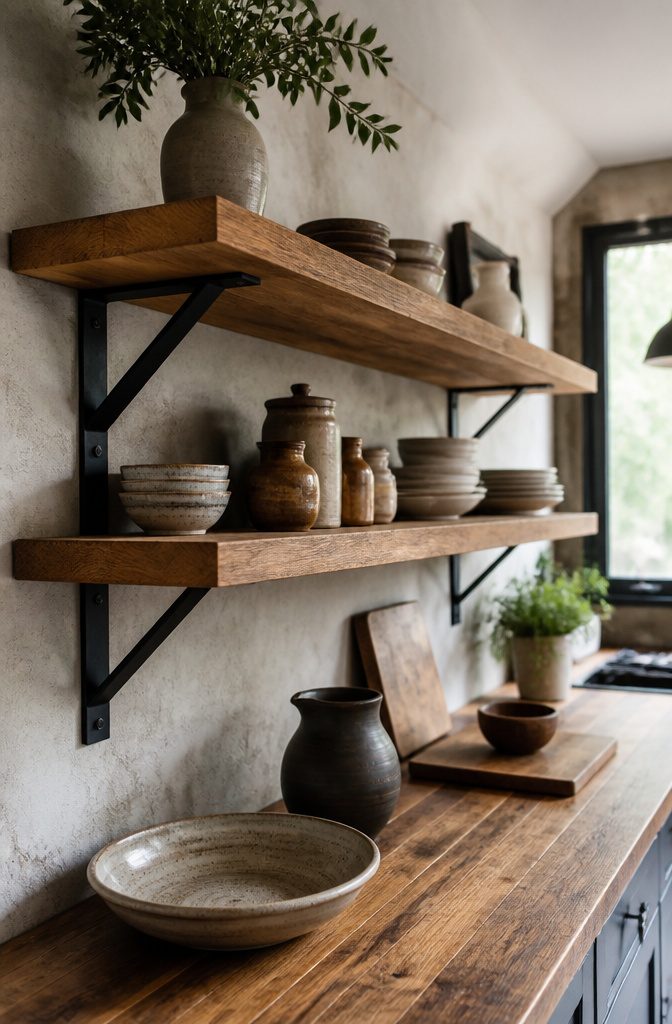
Open shelves with brackets combine a traditional look with modern functionality. The brackets themselves become part of the design, ranging from simple L-brackets to more ornamental styles that lean farmhouse, rustic, traditional, or industrial.
Bracket choice shapes both the look and what the shelf can actually hold.
A shelf’s claimed weight capacity often assumes brackets spaced and anchored perfectly, but real kitchens see uneven loads: a stack of plates off-center, a heavy Dutch shoved to one corner.
Metal brackets paired with wood shelves give that industrial contrast and sturdier support for pots and pans, though the exact capacity depends on stud placement and bracket depth more than the packaging claims.
Some kitchens lean into the bracket look rather than fighting it. The visible hardware reads as intentional, not failed floating, and the style signals that the shelf is doing real work.
A live-edge slab on a pair of black steel brackets looks considered, not temporary, in a way that a hidden-anchor shelf sometimes struggles to match.
The trade is visual clutter for honest structure, and in busy kitchens that trade often wins.
5. Integrated Lighting Floating Shelves
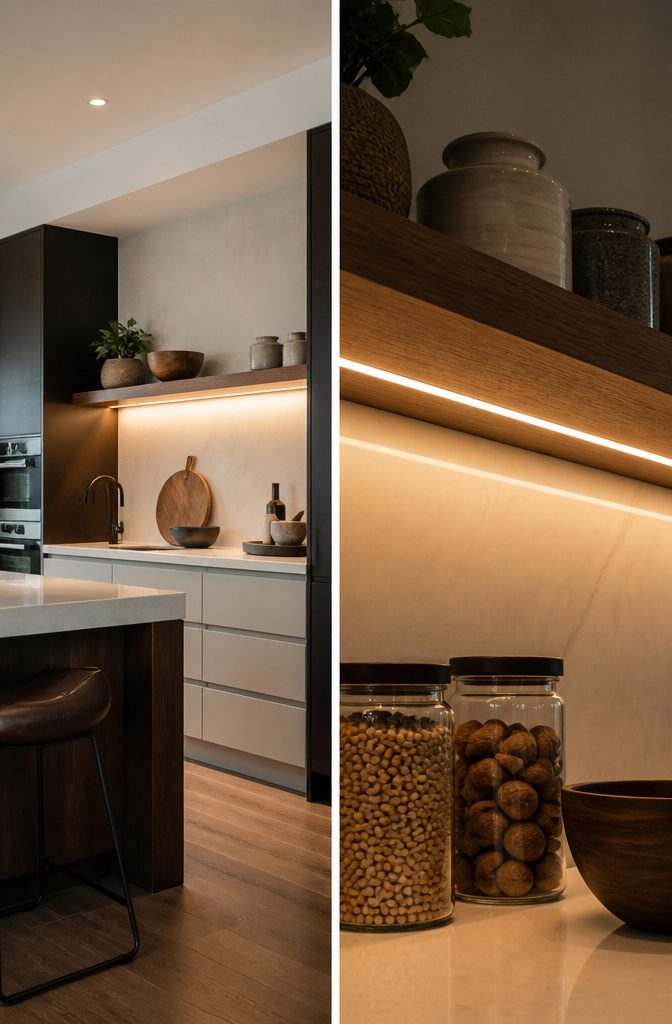
LED channels or puck light holes drilled into the underside of a floating shelf give two ways to run the wiring, and both mean cutting into the shelf itself or chasing cable through the wall before you mount.
The soft glow works as accent lighting, not a replacement for the task light you need at a counter.
That distinction matters when you price it out: integrated wiring adds cost and complexity to a project that is already pushing a weekend timeline, and a burned-out bulb means pulling the shelf or working through a small access hole, not just swapping a fixture at the counter.
Skip integrated lighting unless you already planned for wiring during a kitchen renovation; adding it to existing drywall turns a $200 shelf project into an electrician’s visit.
If the wiring is already there from an old under-cabinet run, puck lights in pre-drilled holes are the lower-risk retrofit.
Otherwise, a rechargeable LED strip stuck to the underside gives most of the accent effect with none of the wall damage, and it moves with you when you leave.
6. Floating Shelves for Plants
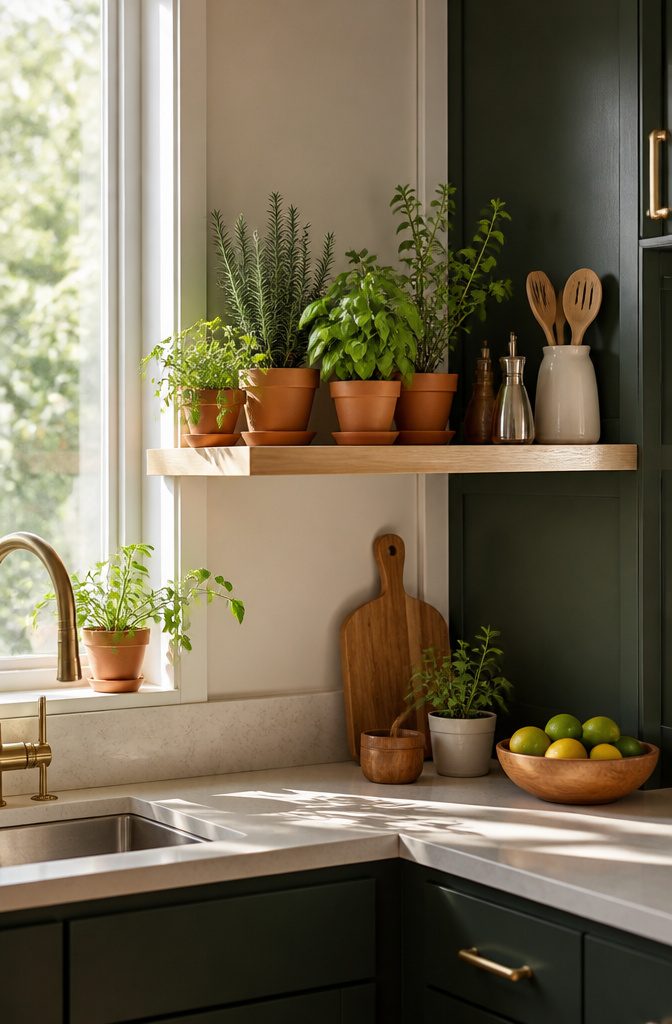
Kitchen humidity turns a charming plant shelf into a maintenance trap faster than most people expect. Wood grain swells when water sits against it, and the underside of a pot is exactly where water likes to collect.
A standard floating shelf with a saucer underneath works fine for a week, then the saucer overflows or the wood beneath it starts to darken.
Purpose-built plant shelves with routed drainage channels or slatted tops solve the rot problem, but they also limit what else you can put there. The shelf becomes a single-use fixture, and kitchens rarely have space to spare for that.
What convinced me, looking through the options, was that a standard shelf with a removable waterproof liner and a slightly oversized saucer beats most custom solutions for anyone who rotates plants seasonally.
Small herbs in four-inch pots fit almost anywhere. A trailing pothos in an eight-inch pot needs twelve inches of depth to keep leaves from brushing the wall every time you water it.
Anything larger belongs on the counter, not the wall, unless you are drilling into studs with serious hardware.
The weight adds up fast: wet soil is heavier than most people guess, and a kitchen shelf that bows under a fern is a shelf that will eventually fail.
What Open Shelving Does to a Kitchen
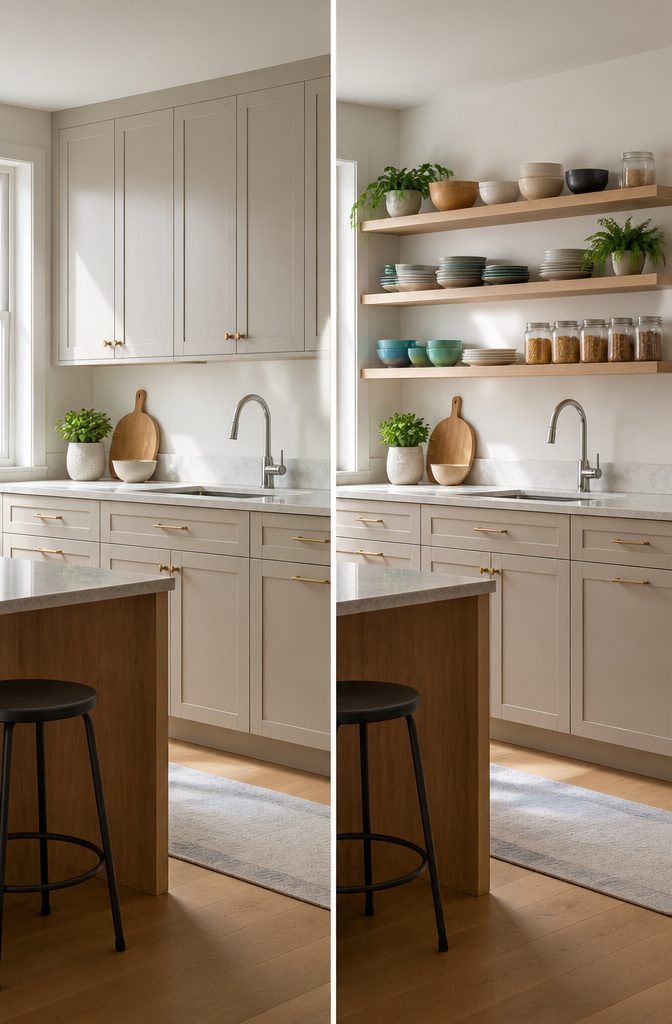
Replacing upper cabinets with open shelves creates a more open and airy feel, and the visual difference is immediate.
A wall of floating shelves reads lighter than the same span of enclosed cabinets, which can make a kitchen appear smaller and heavier.
The trade-off is that everything sits on display, so the shelves only stay generous-looking if you actually keep them neat.
The access is genuinely better during busy cooking times. You reach for a plate or a spice without opening and closing doors, and that small efficiency adds up when you are moving fast.
The same visibility also turns daily dishes into accidental decor, which works if your bowls and glasses are colors you want to live with.
Maintenance is simpler in one sense and harder in another.
The shelves themselves wipe clean easily, but there is no door to hide the dust that settles on what sits there, and no cabinet to absorb cooking grease before it reaches your dishes.
The organization the look demands is not optional; it is the mechanism that makes the openness bearable. If your current cabinets are where clutter goes to die, floating shelves will force a reckoning.
Wood, Engineered Wood, and What Holds Up
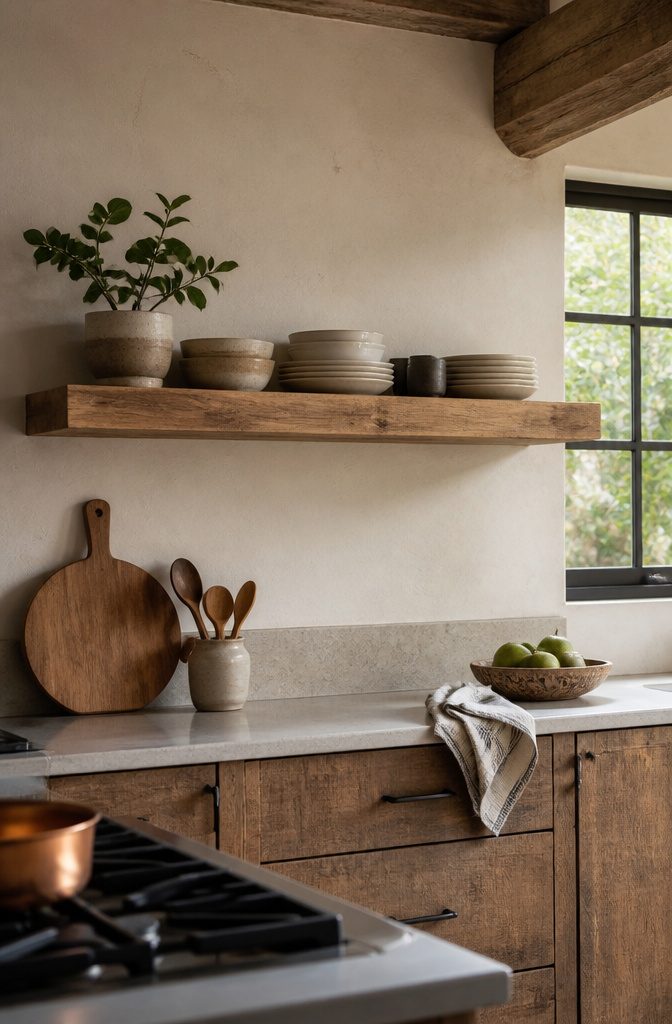
Solid hardwood shelves carry the grain and weight that make a kitchen feel finished.
Walnut, oak, and maple each bring something different: walnut runs dark and dramatic, oak holds its texture under heavy use, and maple stays pale and even enough to disappear against white tile.
The trouble comes later. In a kitchen, humidity swings and airborne grease work into the grain over years.
I have seen oak shelves cup at the edges after two humid summers, and a walnut board split where the wall bracket trapped moisture against the back.
Engineered wood, built in layers with the grain crossed, resists that movement better. It stays flat where solid hardwood warps, and it costs less.
The surface is a veneer, though, and a deep scratch or water ring cuts through to the core in a way you cannot sand out. Reclaimed boards sit somewhere between.
The age and prior use give them character, but old wood is already stressed. Grease and steam find the cracks that time opened, and the finish that held for decades in a barn may fail fast above a stove.
For kitchens with real cooking, engineered wood wins on stability; solid hardwood wins only if you are ready to oil it yearly and keep a vent hood running.
Installation and the 150-Lb Question
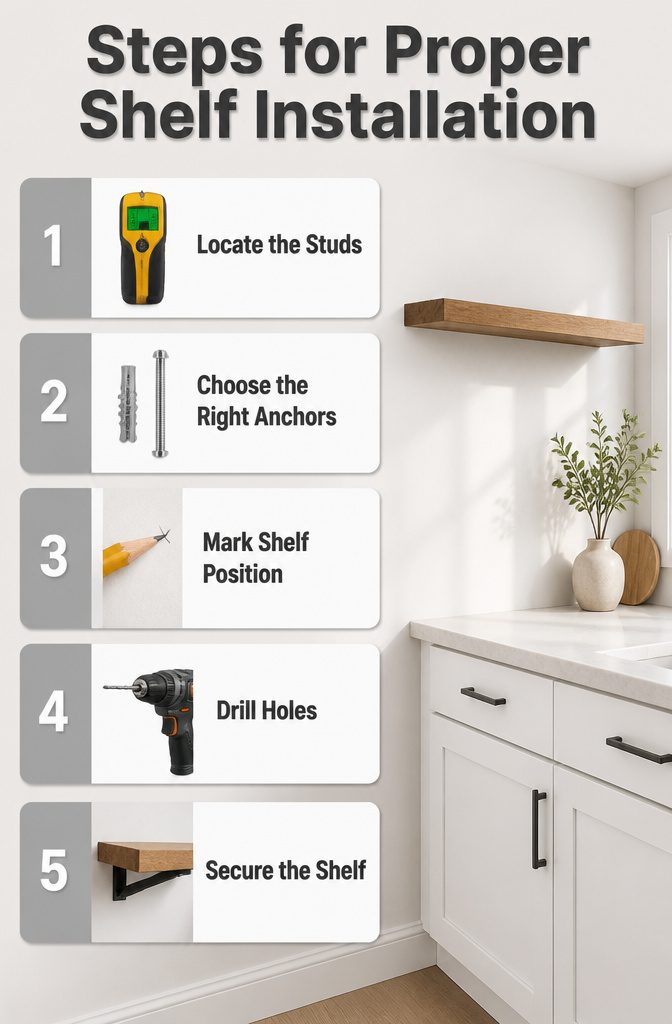
Proper installation separates a floating shelf from a wall-mounted accident waiting to happen.
A properly installed floating shelf can hold up to 150 pounds, but that figure assumes solid mounting into studs or a properly rated wall anchor system, not the drywall alone.
Most kitchen failures I have tracked down started with someone skipping the stud finder or trusting the hollow-wall anchors that came in a bargain kit.
Wall structure matters more than shelf material here. A shelf mounted on a single stud with a cantilevered bracket behaves differently than one with two or more points of contact.
Plaster over lath, old-growth studs spaced at non-standard intervals, or the steel framing found in some newer apartments all change what "properly installed" actually means.
In my own work, I have mounted simple ready-to-ship shelves into standard 16-inch stud spacing without trouble.
Anything heavier, or any wall where the stud finder kept giving false positives, I called in a carpenter with a better eye for structure than I have.
The cost of an hour of professional help beats replacing dishes, patching drywall, or explaining to a landlord why the wall has a new shape.
Matching the Kitchen You Already Have
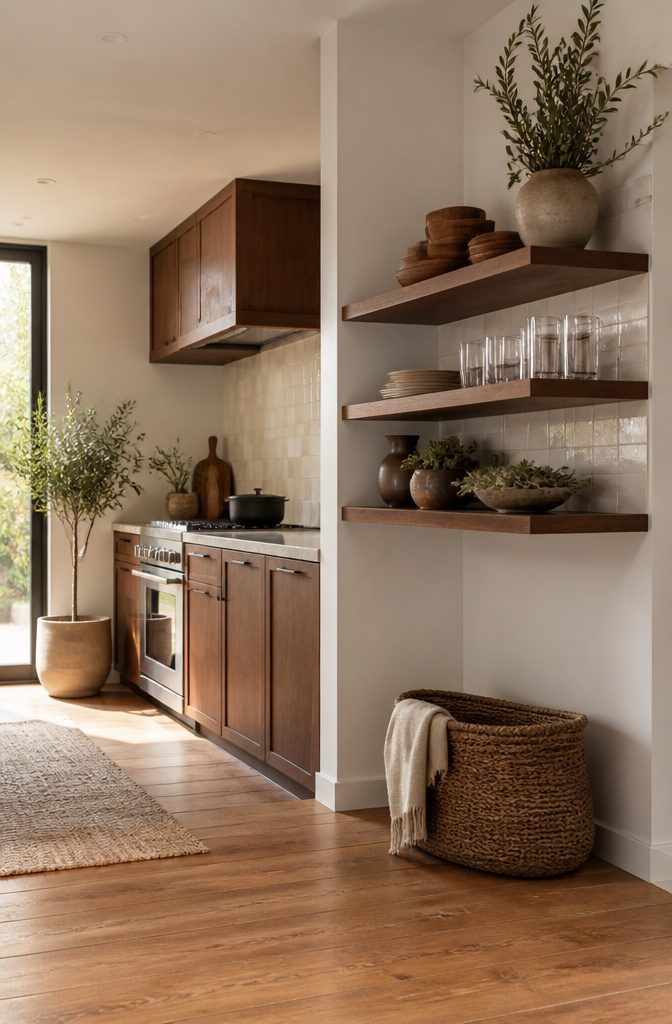
Natural wood shelves in alder, oak, or walnut will match existing cabinetry tone for tone, and that continuity is what keeps them from looking like an afterthought.
I have seen the same floating shelf style read as intentional in one kitchen and tacked-on in another, and the difference is almost always whether the wood relates to something already in the room.
Flooring, base cabinets, even a dining table leg: pick up that grain direction and warmth, and the shelf belongs.
Farmhouse and rustic kitchens already lean on exposed wood texture, so floating shelves fit there almost by default.
Modern and Scandinavian spaces need tighter editing. In those, a clean-lined oak shelf with minimal grain movement works better than something heavily figured.
The beachy coastal and transitional kitchens mentioned in the same breath as natural wood are a reminder that this material crosses more styles than most people assume, but the specific species matters.
Walnut reads darker and more formal; alder stays lighter and casual.
The mistake I notice most often is treating the shelf as a standalone accent rather than a continuation of the kitchen’s material story.
A walnut shelf mounted above painted cabinets with no other walnut in view looks like a floating object, not a floating shelf.
The fix is either to echo that wood elsewhere or to step back to a neutral painted finish that the cabinetry already established.
Shelf Thickness and What Changes
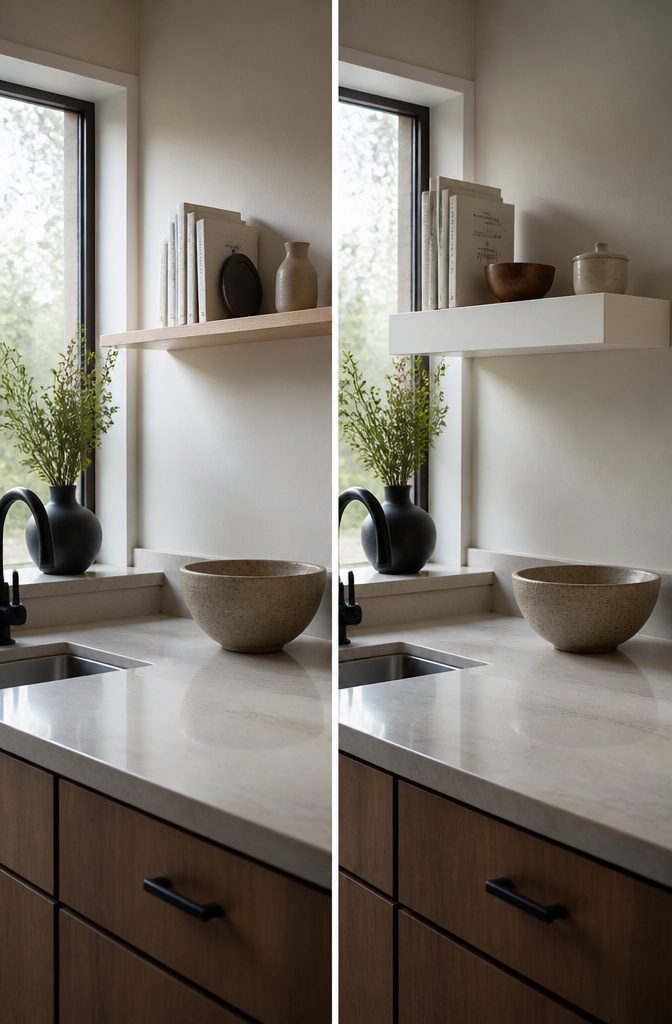
Thickness on a floating shelf does more than hold weight; it changes how the kitchen reads. A 1-3/4" shelf sits almost flush with standard cabinet face frames, so it disappears into the room.
Step up to 3" and the same plank starts looking like furniture. At 6" you are making a statement whether you planned to or not.
The catch is that thickness and strength do not move in lockstep. A 2" shelf with a steel bracket hidden inside can out-carry a 4" hollow box with a weak cleat.
What the wall anchor sees, how far the shelf spans, and whether you load it with cereal boxes or a single ceramic bowl all matter more than the number on the tape.
I have seen 3" shelves sag where 2" shelves held because the install was different, not the wood.
Cost climbs fast.
More material, more shipping weight, and more labor if you are finishing edges yourself. The jump from 1-3/4" to 3" is usually the gentlest; past 4" the price curve steepens.
My advice is to pick the look first, then let the hardware and the stud spacing tell you whether that thickness can actually carry what you are picturing.
Frequently Asked Questions
Do floating shelves in the kitchen stand up to normal use?
Yes, when installed properly with good materials.
A floating shelf can hold up to 150 pounds if mounted into studs or a properly rated wall anchor system, not drywall alone. The key is the installation quality and wall structure, not just the shelf material.
Which kind of wood would you use to make kitchen shelves that float?
Solid hardwood like walnut, oak, or maple is the popular choice for natural grain and strength.
For kitchens with real cooking, though, engineered wood wins on stability because its crossed-layer construction resists the humidity swings and grease that can warp solid hardwood over time.
Can custom floating shelves be installed in a kitchen?
Yes, floating wood shelves work well in kitchens and are strong enough for dishes, cookware, and daily use.
Custom shelves let you size to the exact inch and match cabinet color, though they take weeks rather than days to arrive and cost roughly $30–$75 more than primed MDF options.





