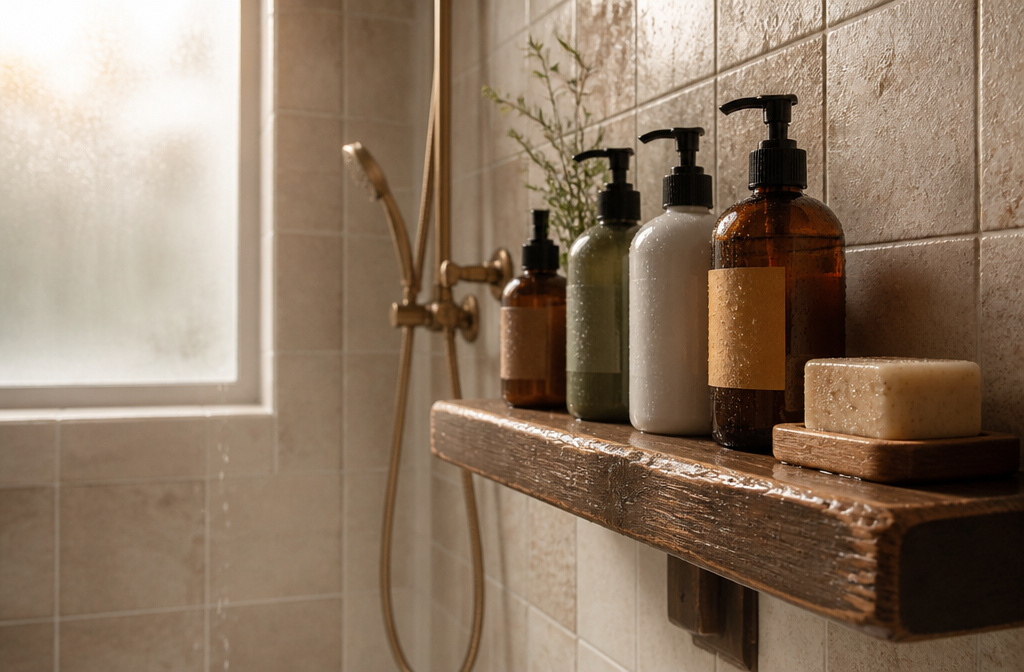
A shelf for the shower is any storage unit built to survive daily hot-water cycles and constant humidity while holding bottles that can weigh a pound and a half each when full.
The problem is most people pick the mount first and only learn the weight limit after a 3 AM crash.
Wall-mounted units properly anchored into studs hold up to 20 pounds without sagging, but drilling tile takes a masonry bit and a tolerance for risk; one slip and the crack outlasts the shelf.
Corner Shelves
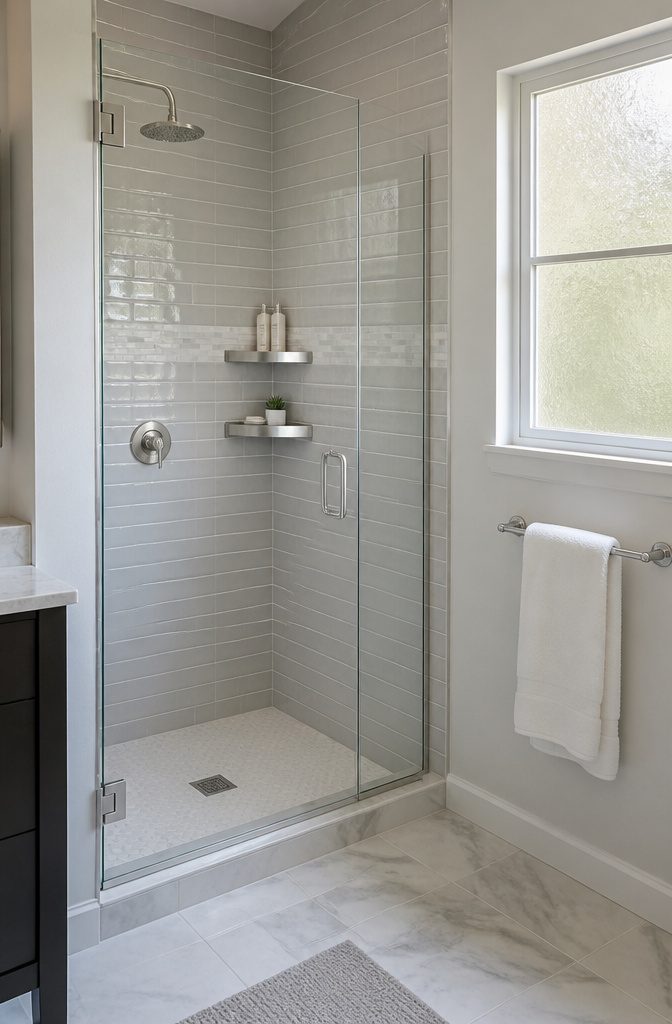
Corner shelves turn the dead space where two shower walls meet into usable storage without eating into your standing room.
Most units are built for a footprint around 12–14 inches on each side, which means they slide into standard 90-degree angles without crowding the showerhead spray or your elbows.
Triangular and quarter-circle shapes are the common picks; the triangle sits flush and leaves the front open, while the quarter-circle curves the edge and sometimes catches drips better.
What makes them flexible is how little they ask from the surrounding layout.
A neo-angle shower with three walls, a standard tub surround with one open end, or a full enclosure with glass on two sides all have that same corner geometry to exploit.
Wall-mounted corner shelves anchor through tile or backer board and stay put for years, though you do need a drill and a willingness to hit studs or use anchors.
Tension-mounted corner units, the ones that expand like a shower curtain rod between floor and ceiling, skip the holes entirely and suit renters fine.
The catch is the pole itself sits in your sight line and can wobble if the ceiling height is off by even half an inch.
I have watched a friend’s tension corner shelf drop twice in one month because her 1950s bathroom ceiling was slightly pitched; she switched to a single wall-mounted triangle and never looked back.
Over-the-Showerhead Shelves
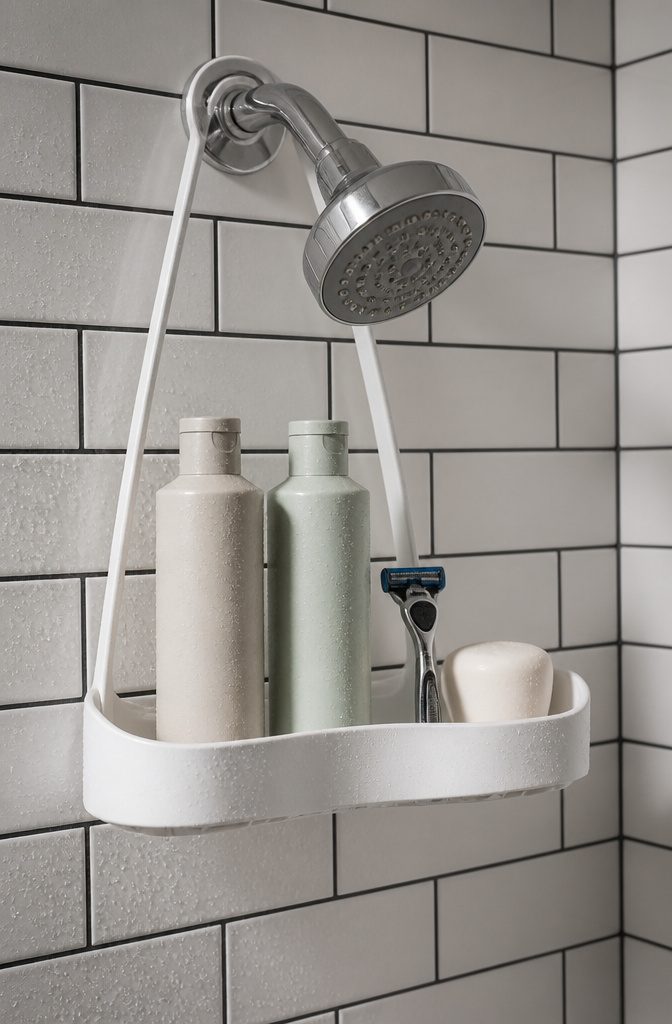
An over-the-showerhead shelf hangs directly on the pipe and drops down about two feet, putting bottles right where your hands already reach.
That access is the whole reason to pick one. No bending, no reaching to a corner, no installation beyond lifting it over the fixture.
The catch is weight sitting that high.
A loaded shelf changes how the showerhead sits in the wall elbow. Two full liter bottles at the top can loosen the joint or tilt the head downward over months.
What convinced me, reading through a dozen owner reviews, was the pattern: people who kept heavy shampoo low and saved the top tier for a razor or a bar of soap had fewer problems.
Most units offset the weight by strapping lower around the pipe with a rubber-lined collar, but the physics do not disappear.
These shelves work best for renters who cannot drill tile and for anyone who moves often.
The tradeoff is a slightly crowded showerhead zone and a shelf that sways when you bump it. If your water pressure runs low already, check that the shelf frame will not block the spray pattern; some wide designs do.
Wall-Mounted Shelves
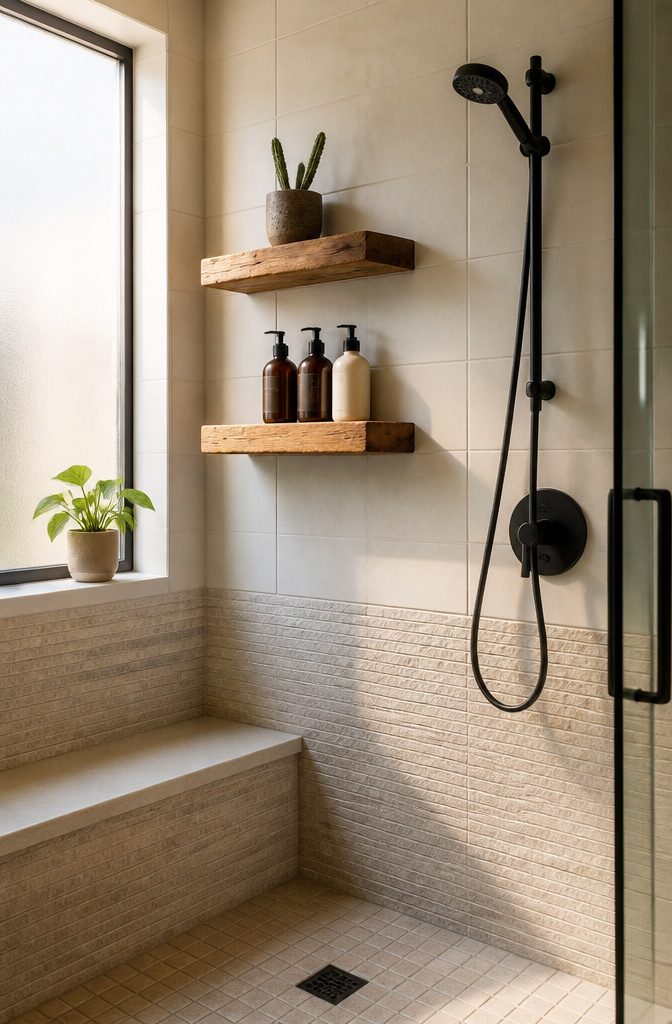
Wall-mounted shelves bolt straight through tile or backer board into studs, and that permanence is exactly what gives them their edge.
A shelf for the shower that is actually fixed to the wall can hold up to 20 pounds when properly installed, which means a full bottle of shampoo, a conditioner, and a scrub brush all at once without the slow sag you get from other types.
Drilling into tile is the part most people pause on, and fairly. One slip with the bit and you have a crack that no caulk hides.
The payoff is a shelf that does not shift when you bump it, does not drop when humidity spikes, and does not need re-securing every six months.
For a first home you own, that trade is usually worth it. For a rental, the holes in the tile are coming out of your deposit, so the math changes fast.
The install itself is a Saturday morning, not a weekend. You mark studs, drill with a masonry bit kept wet to stop heat cracks, seal the flange with silicone, and torque the bracket down.
Done right, the shelf outlasts the grout. Done wrong, you are patching tile before you have even hung a curtain.
Tension Pole Shelves
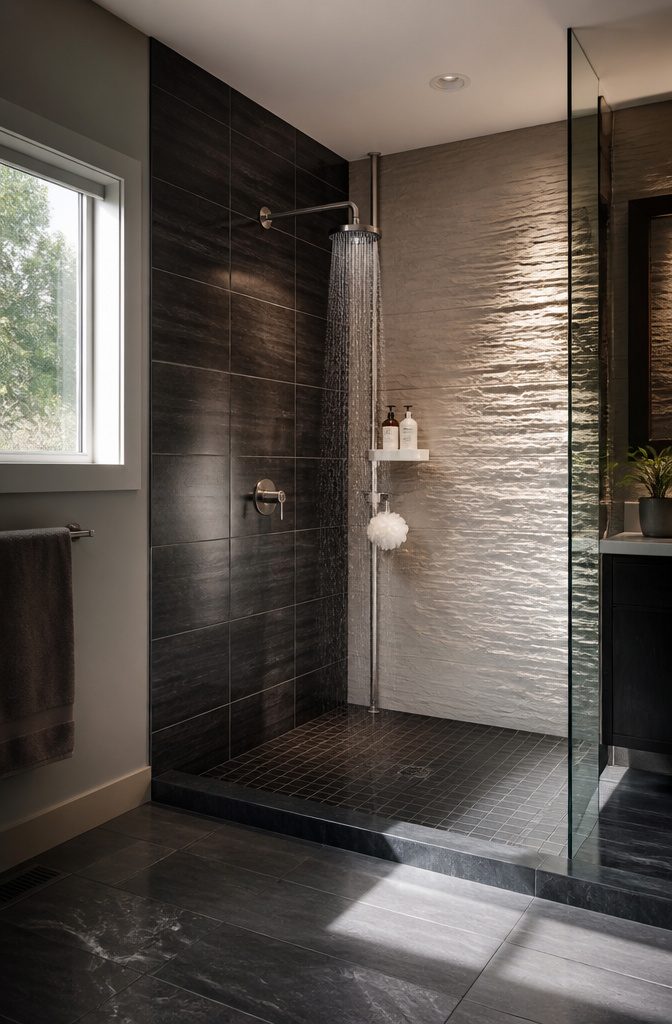
A tension pole shelf for the shower extends from floor to ceiling on spring pressure, usually covering spans between 5 and 9 feet to match standard American shower heights.
No drill, no caulk, no lease violation: that is the whole pitch, and for renters it lands hard.
The rubberized ends press against tile or fiberglass and claim to hold by friction alone.
In practice, they work best in a stall with flat, solid surfaces top and bottom and a ceiling that does not slope. A textured ceiling or a tub surround with any give sends the whole thing sideways under load.
I have watched one walk itself loose over a winter of steam cycles, the metal fatigue in the spring doing what humidity does to every telescoping pole eventually.
Weight sits on a few small plastic shelves clipped to the column, and the column itself eats visual space in a narrow stall.
For a quick fix in a rental you plan to leave, the trade makes sense. For a permanent daily driver, the wobble and the rust behind the rubber feet wear thin fast.
Suction Cup Shelves
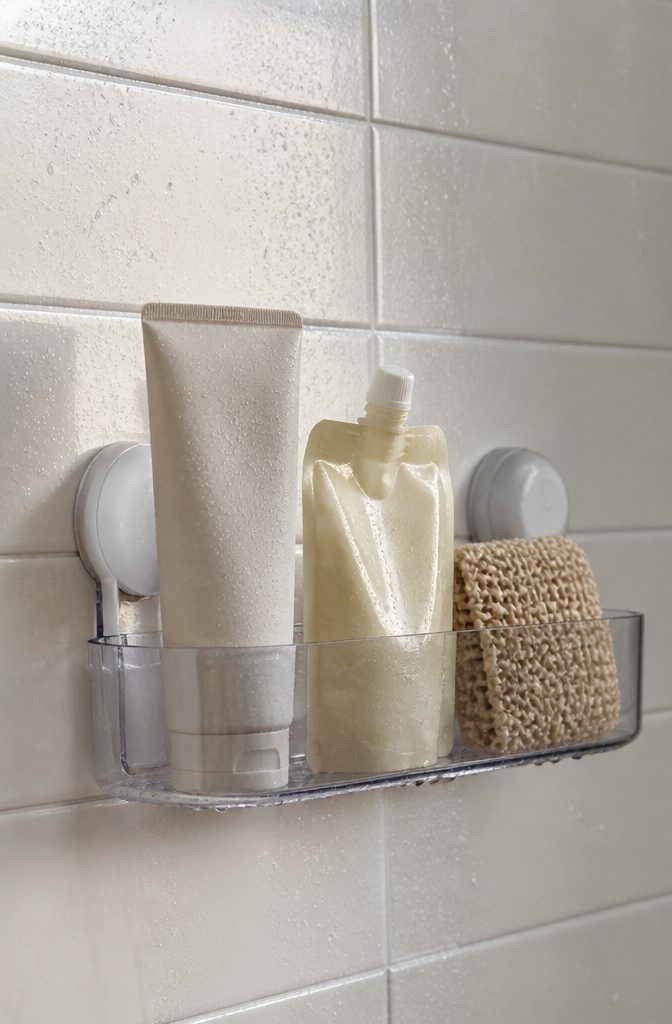
Suction cup shelves promise the cleanest install of any shelf for the shower: no drills, no anchors, no trace left behind when you move out.
The cups press onto tile or glass and hold through humidity cycles that would peel lesser adhesives.
Most units list a five to ten pound capacity, which sounds modest until you realize a full bottle of shampoo weighs about a pound and a half.
The limit becomes real when you start stacking. A wire rack with three large products, a scrub brush, and a heavy conditioner bottle is asking for a 3 AM crash.
I have seen these work beautifully for a single person’s minimal setup and fail within a week for a family of four sharing one caddy.
The cups need re-pressing every few months as temperature swings loosen the seal, and any grout line or textured surface underneath breaks the vacuum entirely.
For renters with smooth porcelain and light toiletries, this is the fastest path to storage. For anyone else, that weight ceiling is the deciding factor that pushes the search toward sturdier mounts.
Caddy Shelves
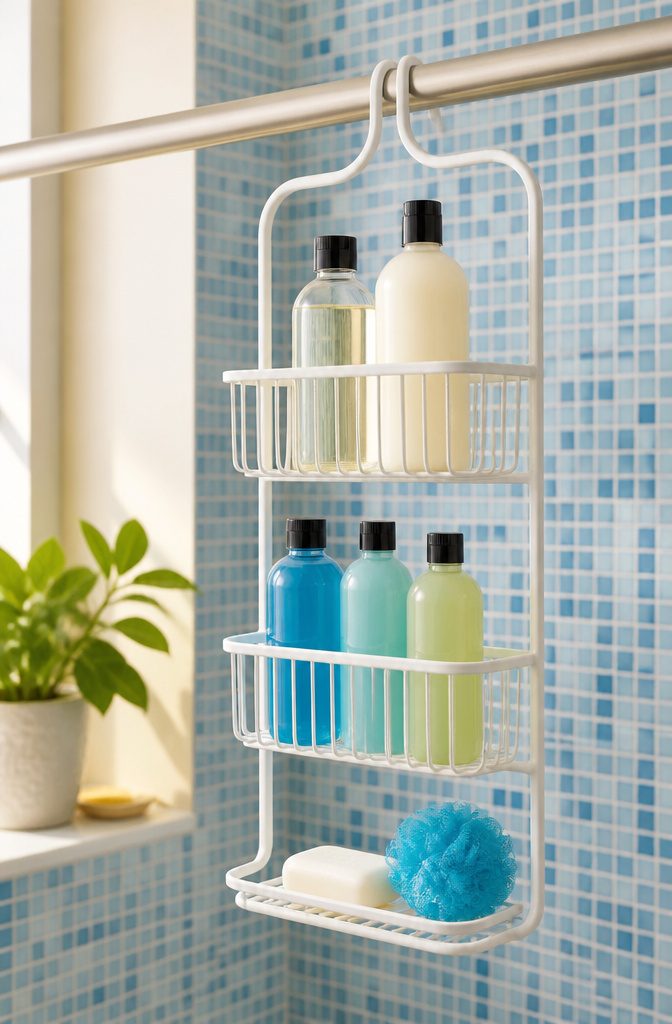
A caddy shelf hung over the shower rod or door gives you two to three tiers of storage, each about 10 inches wide, without touching tile or drilling into anything.
The whole unit lifts off when you move, which makes it one of the few shower storage options that follows you from rental to rental without leaving evidence behind.
The portability cuts both ways. A loaded caddy can swing or rattle when you slide the curtain, and the hooks that drape over the rod wear a finish faster than you would expect.
I have seen chrome ones spot within a year in a hard-water bathroom. Plastic-coated wire costs less and holds up about as well.
For a renter working on a weekend timeline with a few hundred dollars for the whole bathroom, this is the fastest win.
It is not the most stable place for a full-size shampoo bottle, but it keeps the rim of the tub clear and installs in the time it takes to hang a shower curtain.
Material Types
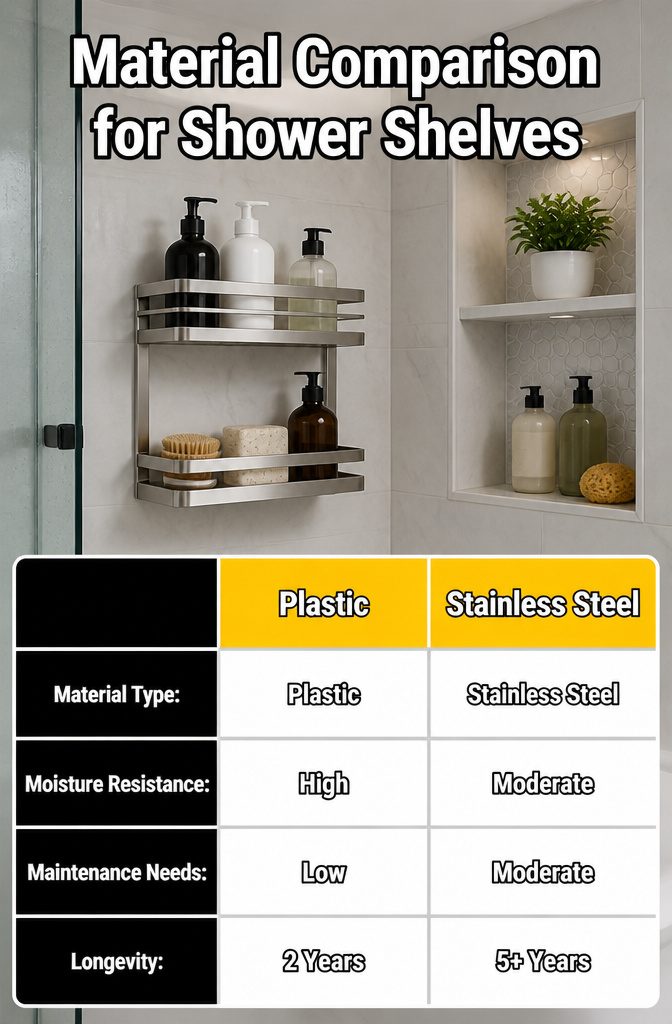
Plastic and stainless steel are the two materials that actually survive a shower environment without turning into a maintenance project.
Plastic resists moisture by nature and never rusts, though the cheap stuff warps or cracks after a couple years of hot water cycling above it.
Stainless steel costs more upfront but holds its weight rating longer; the grade matters, since 304 handles bathroom humidity fine while lesser alloys spot and pit where the finish wears thin.
Either way, check that the welds or seams are sealed, because water collects in hidden pockets and breeds the grime you smell before you see.
Bamboo looks warmer than metal or resin and photographs well for the rental listing, which is why it keeps showing up in styled bathroom shots.
What those shots rarely show is the oiling or drying routine it needs to keep from swelling at the joints.
I would not put bamboo in a shower I share with roommates or kids; the maintenance falls apart the moment nobody owns it specifically.
For a guest bath you wipe down yourself, maybe. For daily family use, the extra ten minutes a week stops feeling like self-care and starts feeling like a chore you inherited from a Pinterest decision.
Material choice shapes longevity in direct proportion to how honestly you assess your own upkeep habits. The shelf that lasts is the one whose failure mode you can live with.
Installation Methods
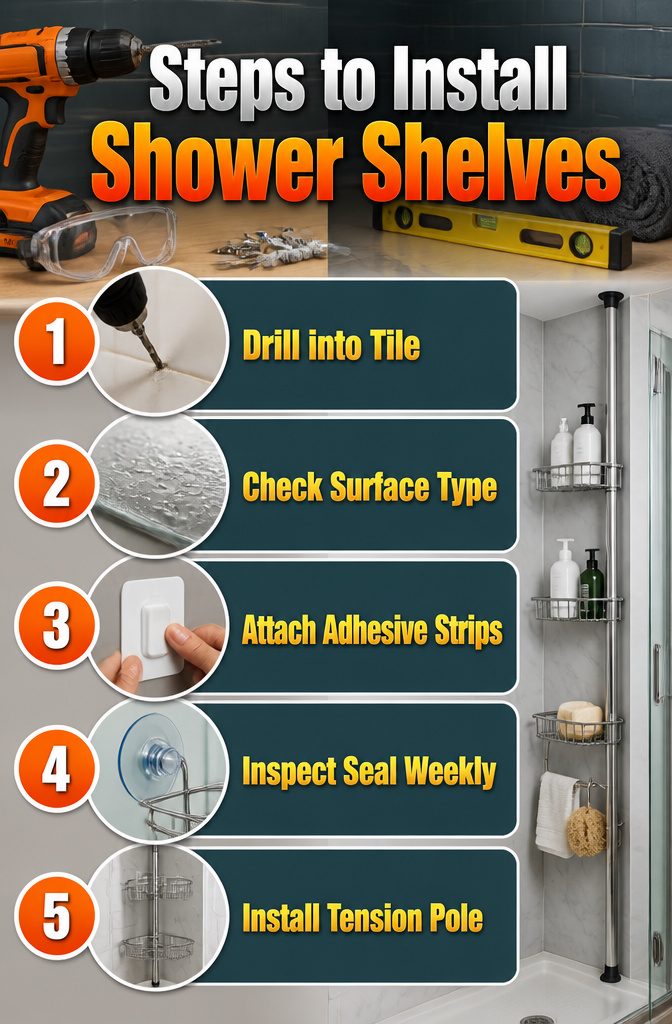
Drilling into tile or fiberglass is the most secure way to hang a shelf for the shower, but it is not reversible.
A masonry bit and patience keep the glaze from cracking; once the anchor is set, that shelf is not moving until you patch the holes.
For renters or anyone who flips layouts often, adhesive strips rated for wet environments hold lighter wire caddies and small corner units.
The backing needs a fully cured, non-porous surface, so a brand-new enclosure is actually a worse candidate than one that has had six months to off-gas.
Suction cups sit at the bottom of the reliability stack, yet they fill a real gap.
A smooth, flat plane of glass or acrylic gives the rubber the seal it needs; textured plastic or stone defeats it every time. The trick is checking the seal weekly, not waiting for the crash at 6 a.m.
Tension poles avoid every surface commitment by running floor to ceiling, though sloped shower thresholds and low ceilings kill the fit.
What convinced me, reading through a dozen install logs, was how many people skipped the plumb-bob check and lived with a pole that leaned and rusted where it rubbed.
Weight Capacity
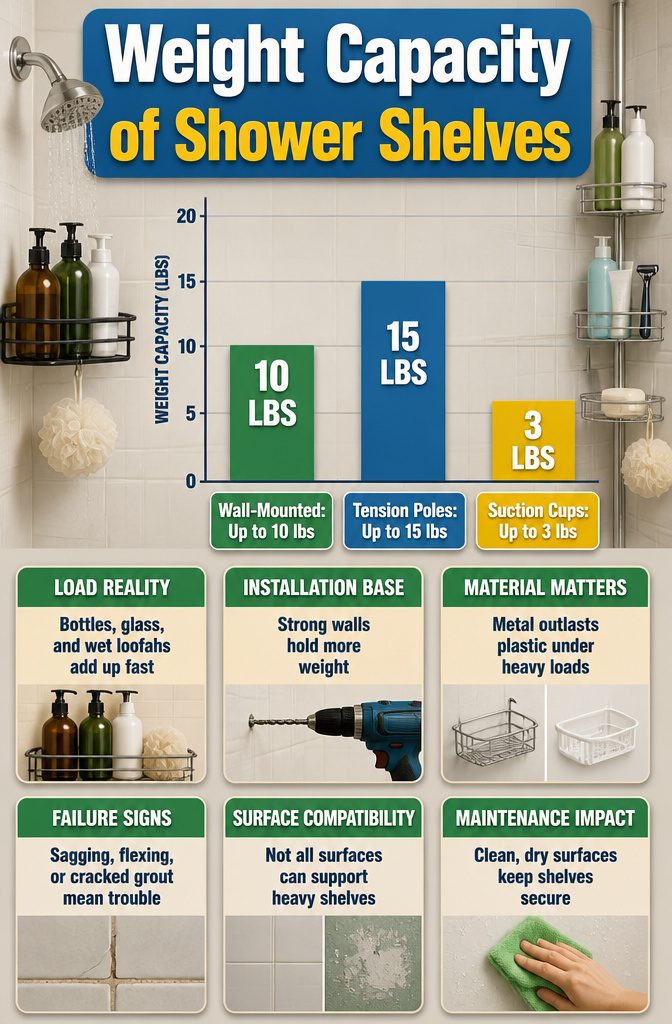
Wall-mounted shelves and the units that hang from the showerhead live or die by what they can actually hold.
A full-size shampoo bottle runs about a pound and a half, and most people store three or four of them plus conditioner, body wash, maybe a razor.
A wall-mounted shelf rated for ten pounds sounds generous until you stack it with glass bottles and a loofah that stays wet and heavy.
Corner shelves that sit on existing ledges or clip into the frame spread load differently, but even they have a point where the plastic flexes or the grout underneath starts to crumble.
Tension poles advertise surprisingly high limits because the spring mechanism bears against the ceiling and floor, though that number assumes perfectly even pressure and a ceiling that does not shift.
In older rentals with plaster and lath, the ceiling can compress or crack before the pole ever slips.
Suction cups are the honest ones: they tell you two or three pounds and mean it, and the failure is immediate and visible when it comes.
The over-the-showerhead caddies are the ones that sag slowly, metal fatigue bending the hook over months until one morning everything tilts into the tub.
Aesthetic Considerations
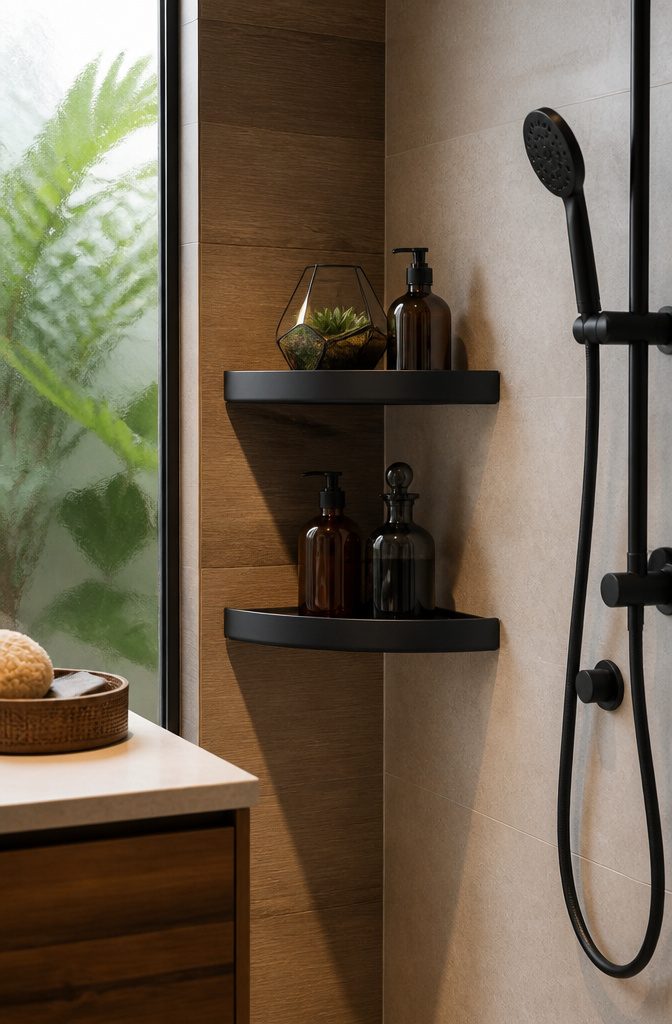
A matte black corner shelf can read as intentional design in a bathroom with dark fixtures, while the same shelf in glossy chrome fights against warm wood vanities.
Most shower shelves come in a narrow band of finishes: chrome, brushed nickel, oil-rubbed bronze, and the newer matte black that has spread from kitchen faucets into bathrooms.
White plastic or clear acrylic options exist too, though they tend to look like afterthoughts against tile.
The shape matters as much as the finish.
Corner shelves disappear into the geometry of the stall. Tension poles with wire baskets read as utility, not decor, which works in a rental where you want function to look temporary.
Wall-mounted shelves with glass shelves and slim metal frames come closest to built-in styling, though they need the drilling that renters often avoid.
What convinced me, looking through dozens of installed examples, is that the shelf looks deliberate when it echoes something already in the room.
Match the metal to your faucet, the glass to any existing shower door, or pick up the tile color in a stone shelf. The alternative is a visual interruption you notice every morning.
Maintenance Tips
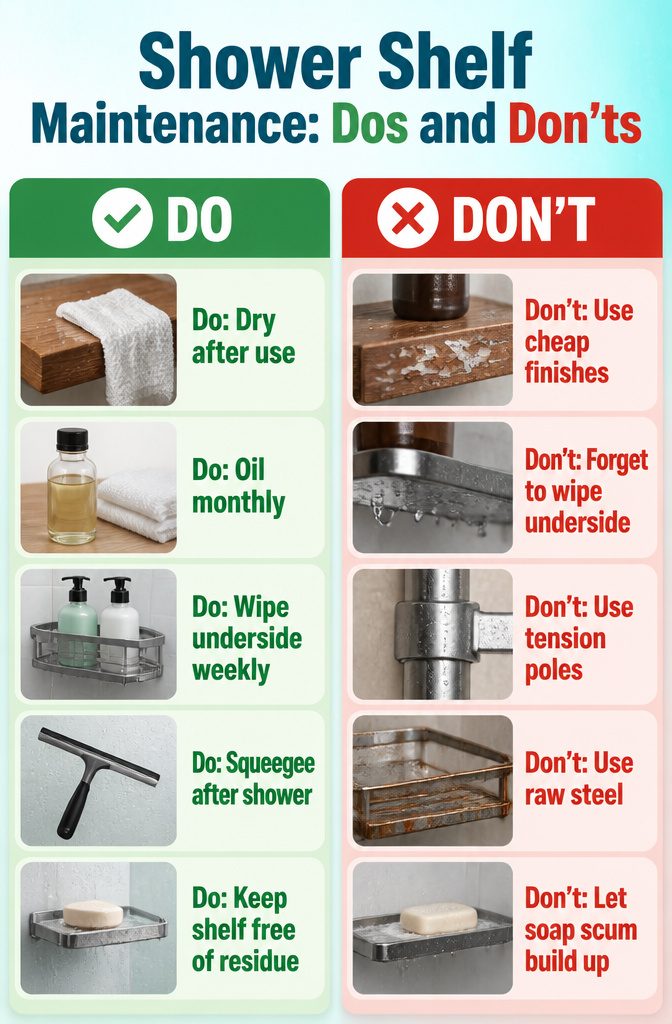
Wood shower shelves need the same care as a cutting board: dry them after use and oil them monthly with a food-grade mineral oil.
The finish matters more than the species. A shelf sold as "teak" but finished with a cheap lacquer will bubble and flake in six months of steam, while an unfinished cedar plank you oil yourself lasts years.
I learned that difference the hard way on a bathroom stool, not a shelf, but the lesson transfers.
Metal shelves fight rust, not rot. Powder-coated aluminum holds up longest in the spray zone; raw steel, even "stainless," pits where the coating scratches.
Wipe the underside of any metal shelf weekly, because shampoo residue collects there and holds moisture against the finish. Tension poles are the worst for this, their vertical tubes trapping condensation in the joint where the shelf meets the pole.
Mold grows on soap scum, not on bare wood or metal.
A shelf kept free of residue resists everything. A quick squeegee of the shelf surface after your shower takes ten seconds and buys you a year of not thinking about it.
Frequently Asked Questions
What type of shelf is best for a shower?
The best shelf for the shower depends on whether you own or rent, how much weight you need to hold, and what your walls allow.
Wall-mounted shelves hold up to 20 pounds and stay put for years, but require drilling into tile.
Tension poles and over-the-showerhead units suit renters who cannot make holes. Corner shelves exploit dead space without crowding your standing room.
How do I install a shower shelf?
Wall-mounted shelves need a masonry bit, wet drilling to prevent heat cracks, silicone around the flange, and anchors or studs for torque.
Tension poles expand floor-to-ceiling on spring pressure with no tools. Suction cups and adhesive strips work only on smooth, fully cured, non-porous surfaces, and the seal needs weekly checks.
What materials are best for shower shelves?
Plastic and stainless steel survive best in wet environments.
Plastic never rusts though cheap grades warp; 304-grade stainless steel handles bathroom humidity, while lesser alloys spot where the finish wears. Bamboo looks warm but needs regular oiling and drying, making it a poor fit for busy shared showers.