These ideas range from a mirror leaned against the wall to a full-room lighting overhaul, and the one that fits depends on whether you rent or own and how long you plan to stay.
A velvet ottoman found on clearance can shift a whole room toward luxury, and a marble side table from the remnant yard carries the same weight in a different material.
1. Use Neutral Colors
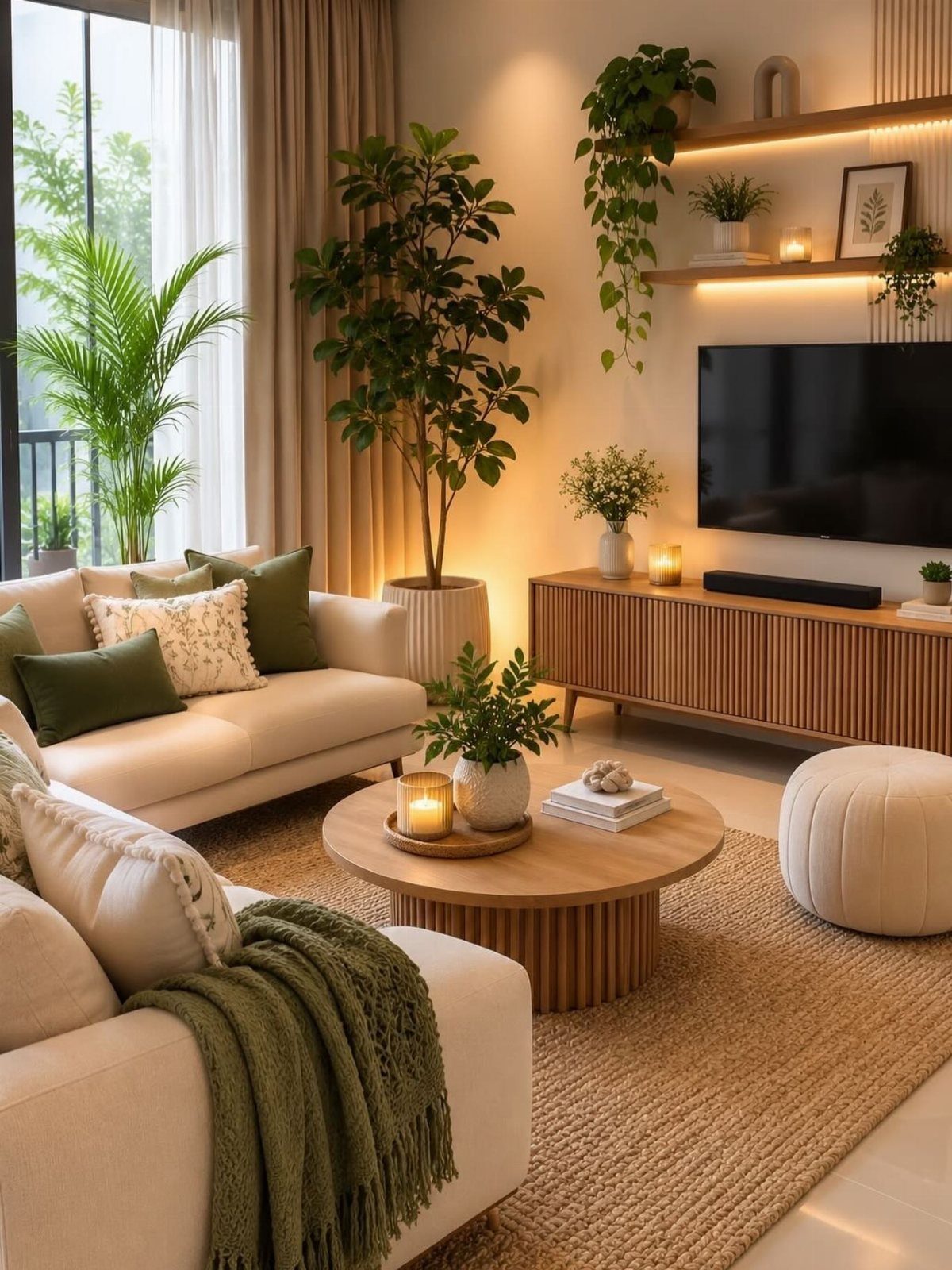
Cream, gray, and beige walls give a glam room its breathing room; the real impact comes when you thread in something darker.
Start with a warm neutral base, then drop in black throw pillows, a navy ceramic lamp, or a forest green velvet ottoman.
The texture does the heavy lifting: a feather accent, a glass coffee table, or a geometric frame catches light differently than flat paint ever could.
A neutral backdrop keeps the look livable for a renter who might not want to repaint when the lease ends.
A new paint job and a free Saturday get you a space that reads expensive without ever feeling like a showroom.
2. Highlight a Bold Statement Piece
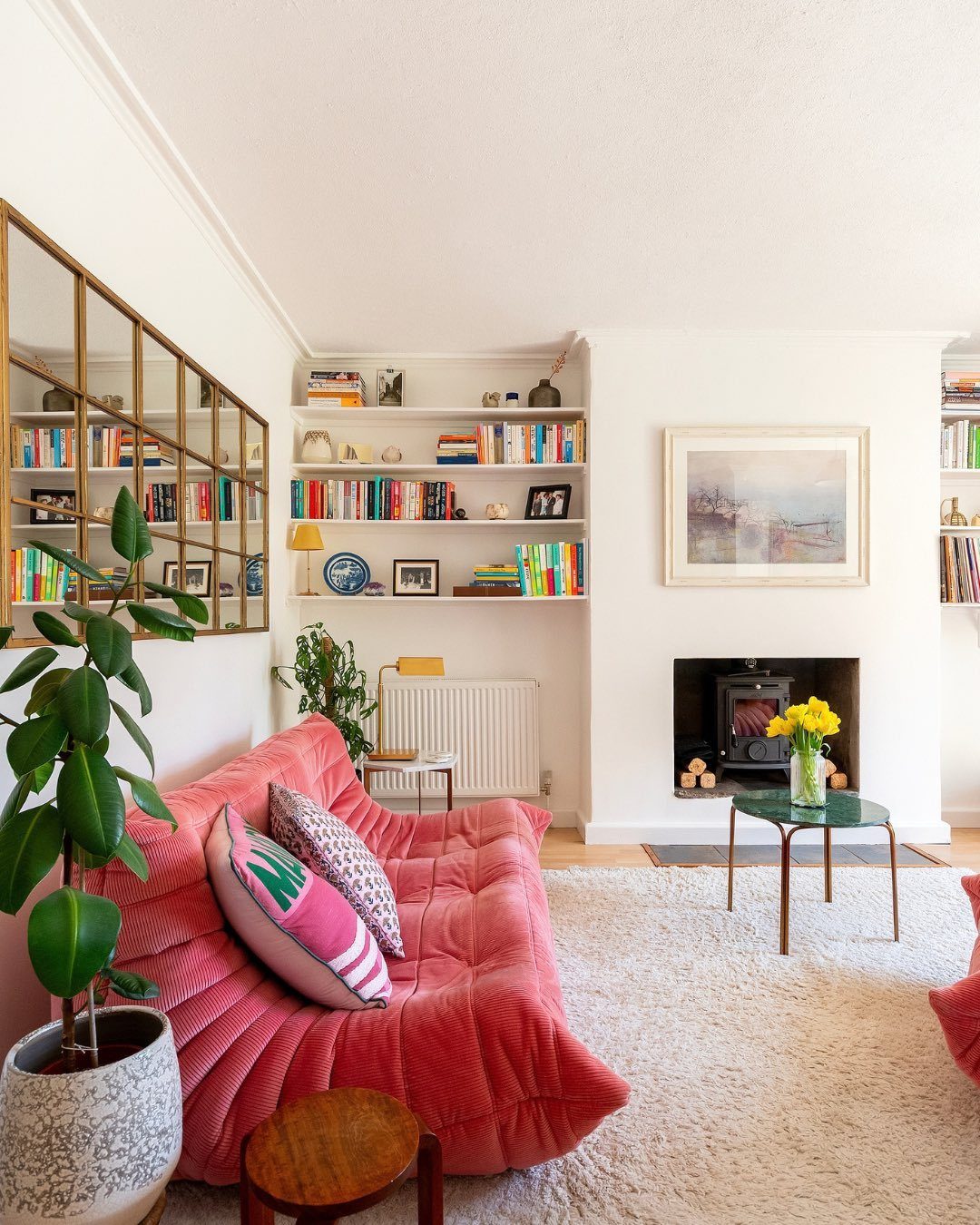
A single saturated piece against quiet walls does more than a room full of competing colors.
Pick your statement first, then build backward. A colorful sofa eats the budget fast, but a bold armchair or an oversized ceramic floor vase can anchor the same way for far less.
Keep the rug, the walls, and the shelving in the same neutral family so the eye has somewhere to rest.
A yellow velvet chair against white built-ins turns a plain rental into something worth photographing, and it can move with you to the next place.
3. Materials Matter
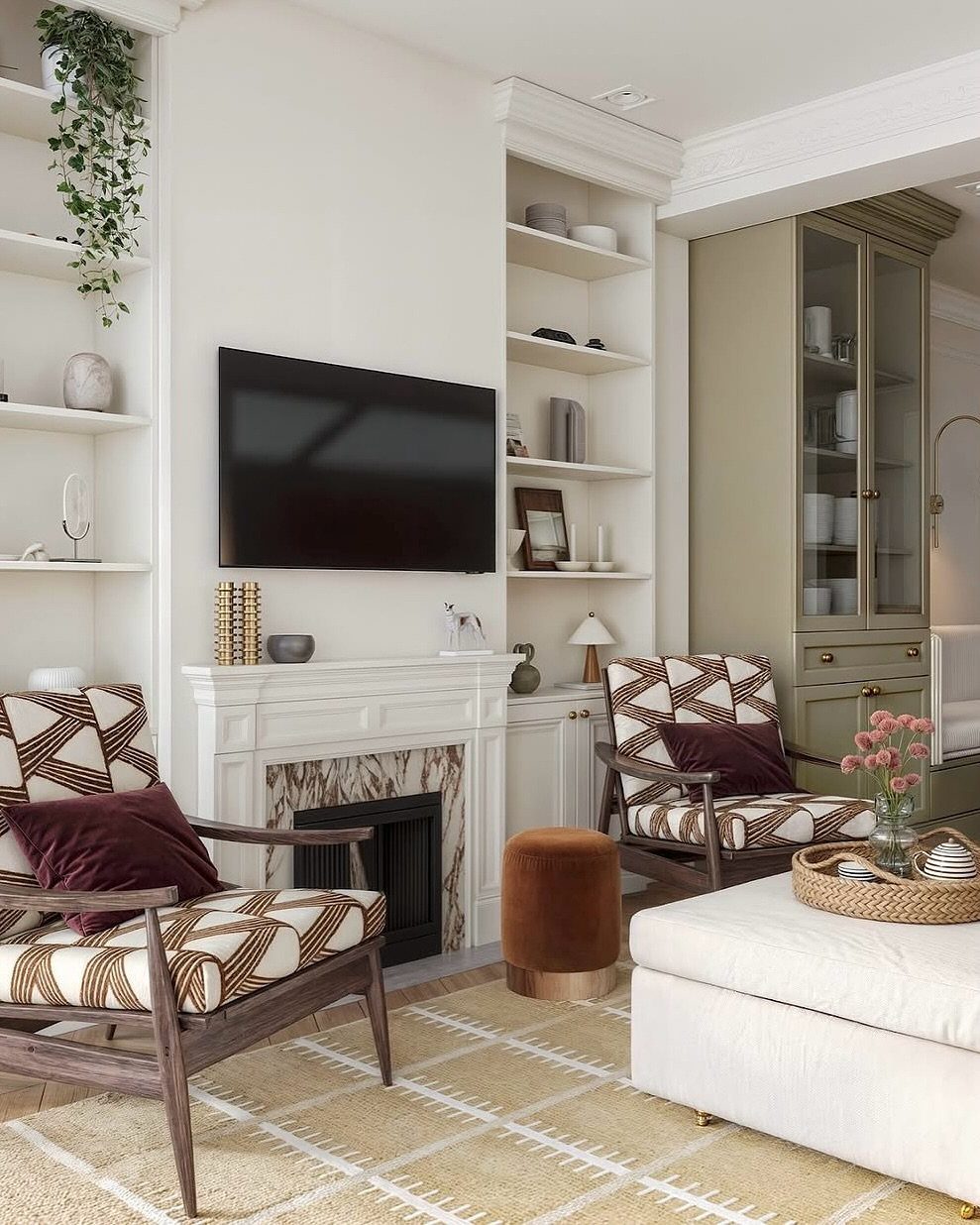
Velvet and silk read as luxury because they catch light at odd angles and invite touch. A velvet ottoman, a silk throw pillow, or a high-pile wool rug adds depth that flat cotton or basic linen cannot replicate.
My first velvet piece, a brown ottoman from a clearance sale, made the rest of the room feel intentional. Sheepskin or a plush synthetic works on a smaller budget and layers well over a jute or flatweave base.
Concentrate your textiles: one rich piece in a seating area, another across the room to echo it, rather than scattering thin versions everywhere. Leather holds up better with pets; silk needs a spot away from direct afternoon sun.
4. Incorporate Mixed Metal Finishes
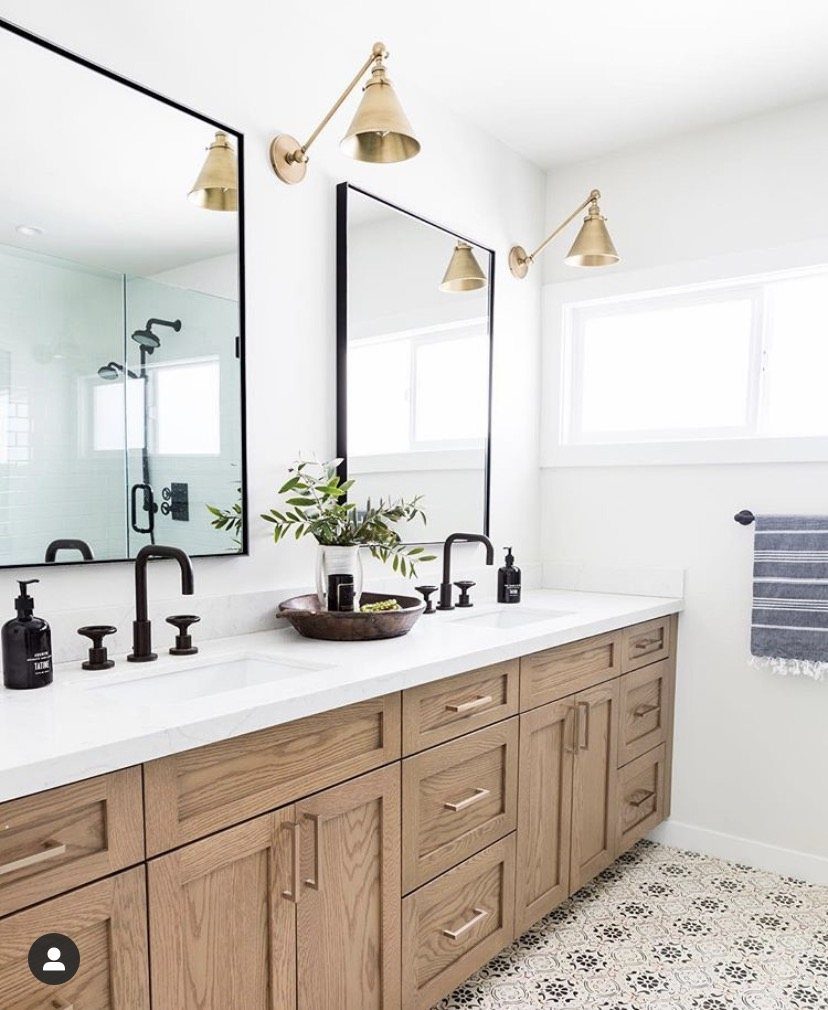
Gold, silver, and bronze can live in the same room without fighting, but the mix needs a reason.
I pair warm metals, gold and bronze, with one cool accent, a silver picture frame or a chrome lamp base, and stop at three finishes total.
Black faucets with gold sconces and black-framed mirrors work because the black repeats and the gold stays minor. In a living room, try brass candlesticks on a coffee table, a silver tray on the ottoman, and oil-rubbed bronze curtain rods.
The controlled dose matters: too many metallic surfaces and the room turns to disco. Mixed-metal bookends or a single sculptural object let you test the waters without commitment.
5. Use Colorful Accents
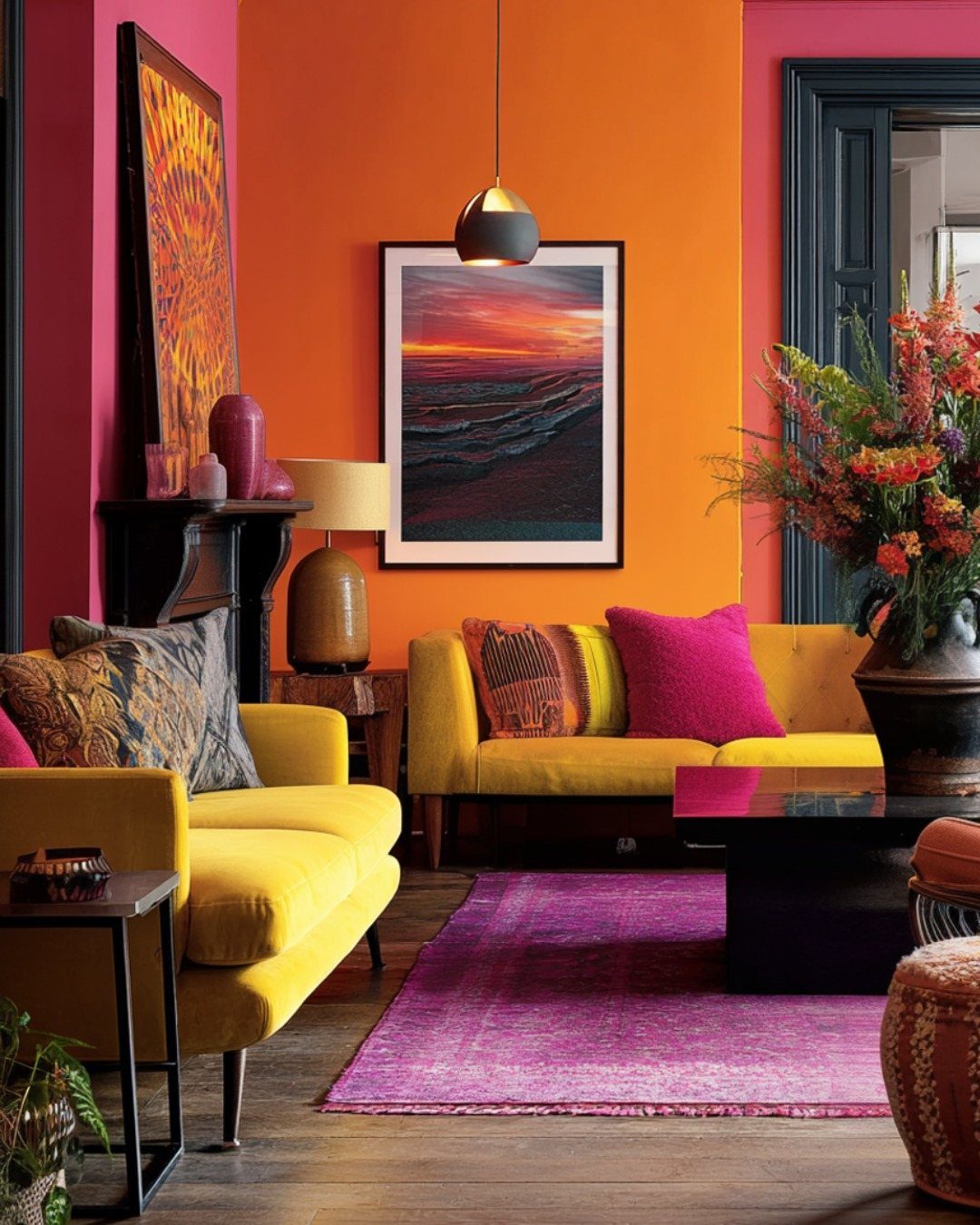
Bright accessories let you test a mood without a sofa you will tire of.
Keep base furniture neutral and rotate accents seasonally. Floral arrangements, framed prints, and even a single neon light strip behind the media console hit the same note.
The trade is saturation for longevity; the gain is a room that feels current without ever fully committing.
6. Use Oversized Mirrors
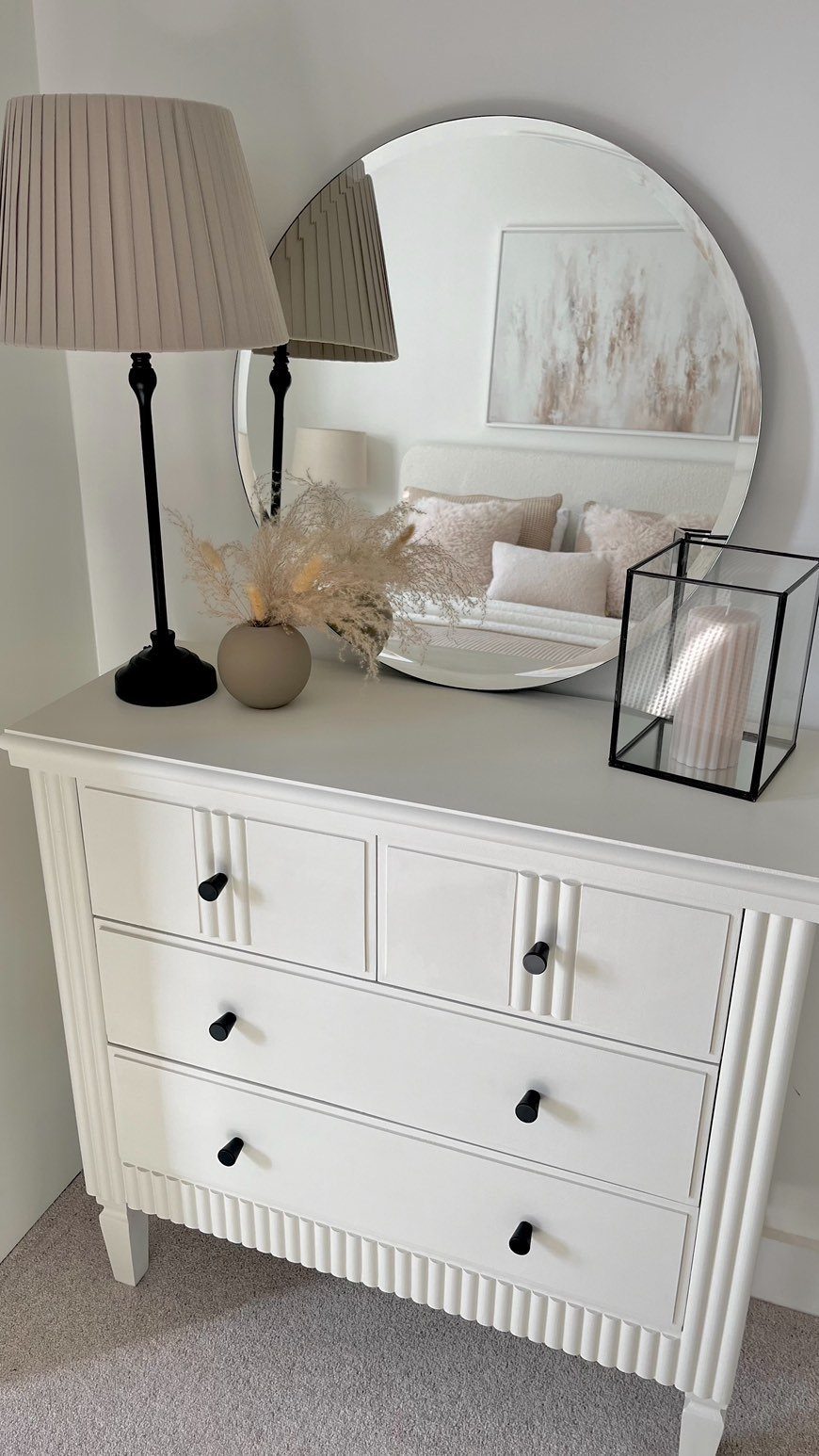
A large mirror does two jobs: it throws back whatever light the room has, and it doubles the sense of depth where walls feel close.
The round mirror above the dresser is scaled to the piece below it, not the wall, and that proportion is worth copying.
For a living room, I look for something at least 30 inches across, hung opposite or angled toward a window.
A basic oversized round mirror costs plenty new, but estate sales and secondhand shops often have gilt or black-framed versions for half that. Leaned against the wall rather than hung, it feels looser and spares you the stud finder.
The only space where this fails is a wall already busy with open shelving; there, the mirror competes instead of opening.
7. Incorporate Faux Fur
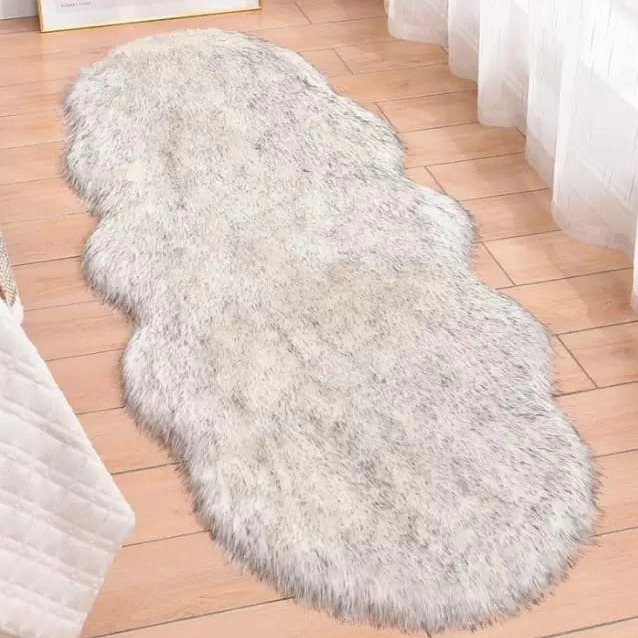
A faux fur throw or pillow does the soft work of glam without the price tag of the real thing. Even a small patch of high pile shifts a whole room toward luxury.
Pillows and throws are the easiest entry point; start with one or two pieces in a single color. I look for acrylic or modacrylic pile with some variation in fiber length; too uniform reads costume.
One throw across a sofa arm is enough. Two pillows max, or the room starts looking like a ski lodge.
This suits renters who want texture they can pack up and carry to the next place. Cleaning takes more care than cotton: most need dry cleaning or a very careful cold wash.
8. Use Crystal Accents
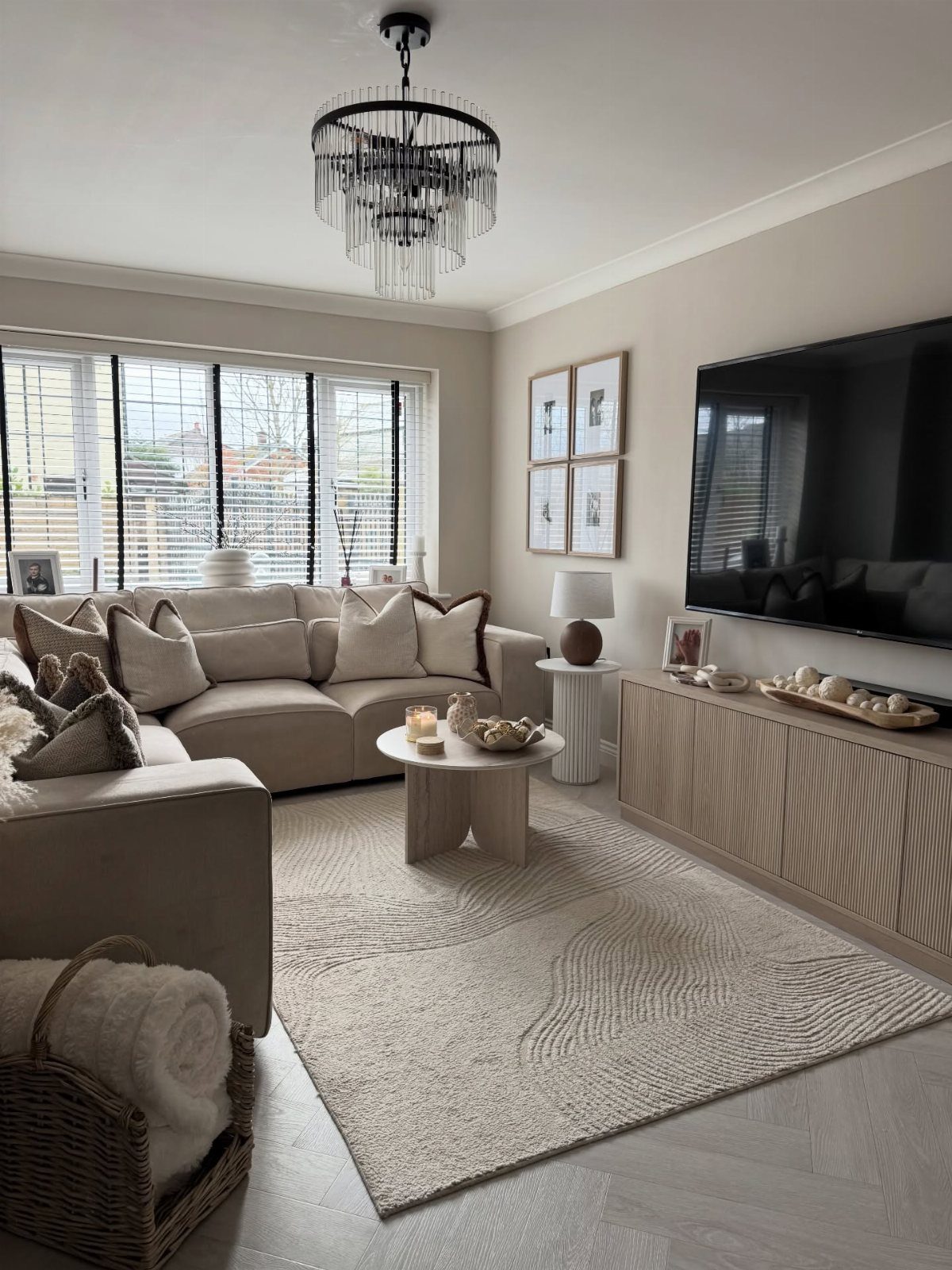
Crystal catches light in a way glass does not quite manage. A single crystal bowl or candleholder on a coffee table does the same work in a smaller room.
I have found the best pieces at estate sales and secondhand shops, usually for less than a new vase. New crystal from a big-box store runs higher and often has less clarity.
Look for lead content if you want real refraction; 24% lead crystal is the standard, though many modern pieces use alternatives that perform nearly as well.
Pair crystal with matte or textured surroundings. Too much shine nearby, and the room turns disco.
9. Incorporate Floral Prints
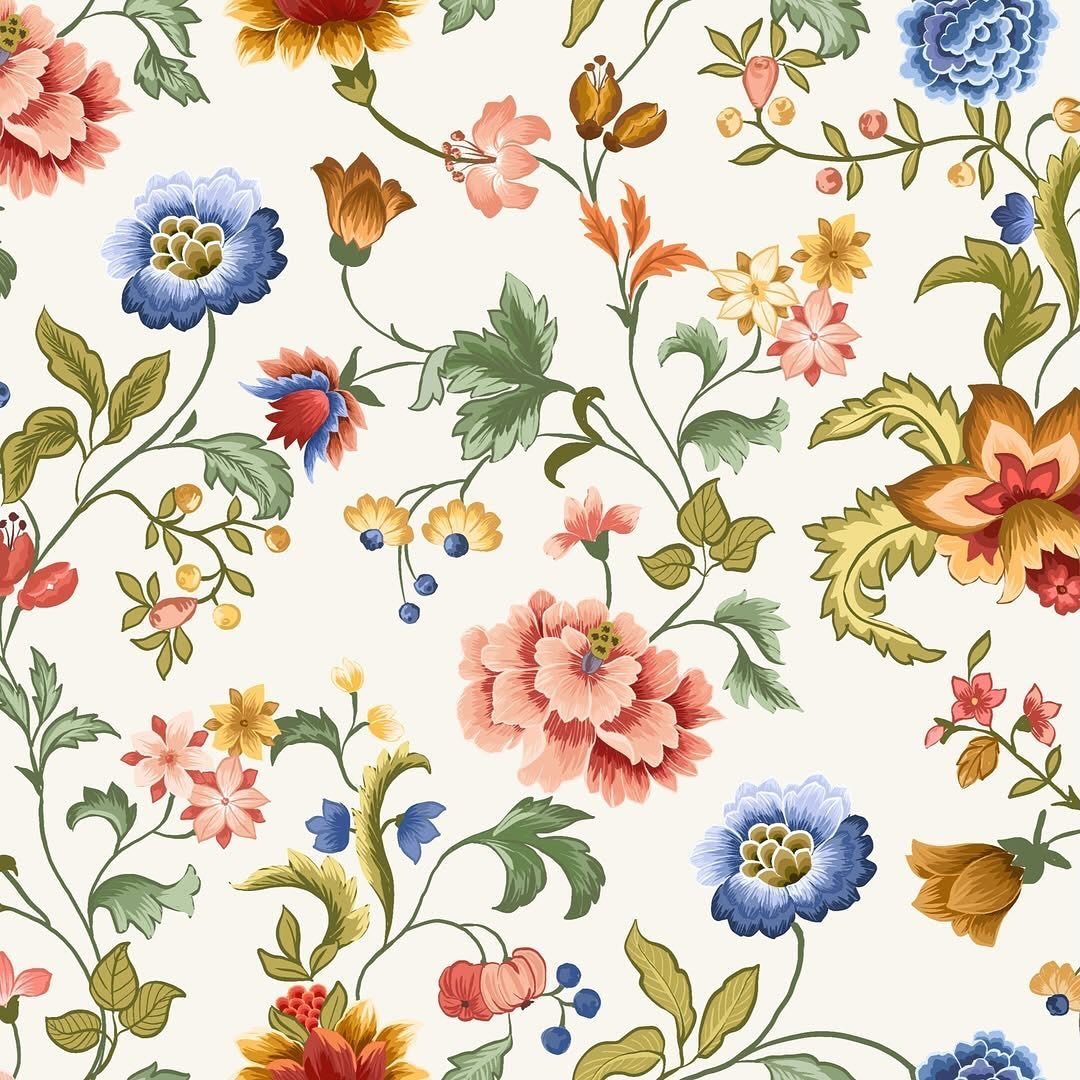
Floral prints in glam read differently than in cottage style: bigger scale, darker grounds, more saturated color. A cream base with dense, varied blooms keeps the pattern from feeling too sweet.
I use florals in controlled doses. One upholstered chair, a set of curtains, or a single large canvas.
Mixed with geometric patterns, the contrast keeps both from going flat. Pull one or two tones, muted blues, warm browns, aged neutrals, and let those travel across the wall.
Good floral velvet costs more than plain cotton, but a little goes far on pillows or a single accent chair. One statement piece beats a room full of competing blooms.
10. Create a Cozy Atmosphere
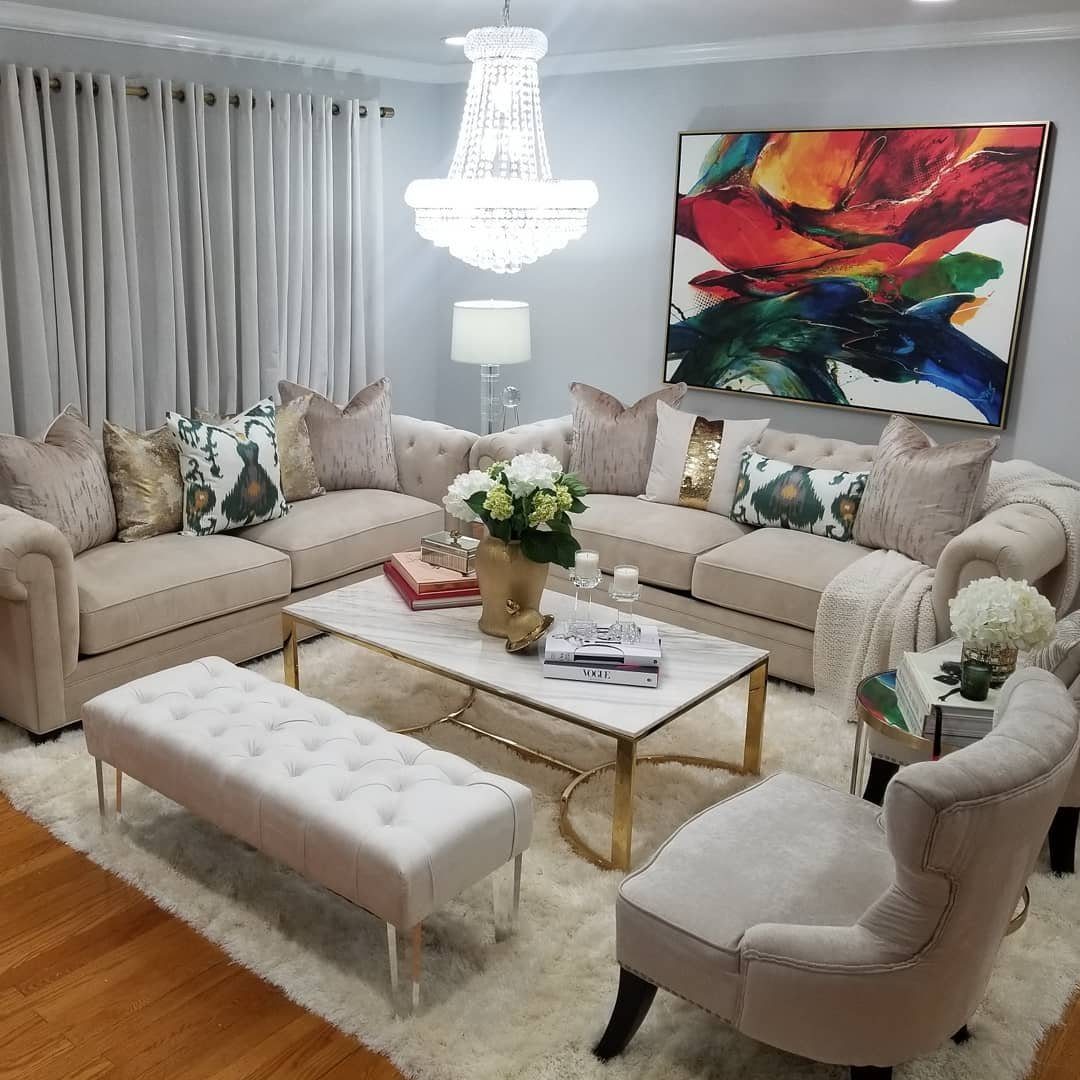
Glam can read cold if you let it. Layers of soft texture under controlled light fix the coldness that glam sometimes brings.
Plush fabrics underfoot, pillows you actually sink into, and lamps dimmed to warm rather than bright.
I aim for three light sources minimum at different heights: a floor lamp, a table lamp, something overhead on a dimmer. Bulbs at 2700K, never higher.
This is where budget glam proves itself. The expensive version buys hard surfaces; the livable version leaves room to actually sit down.
11. Curate the Space
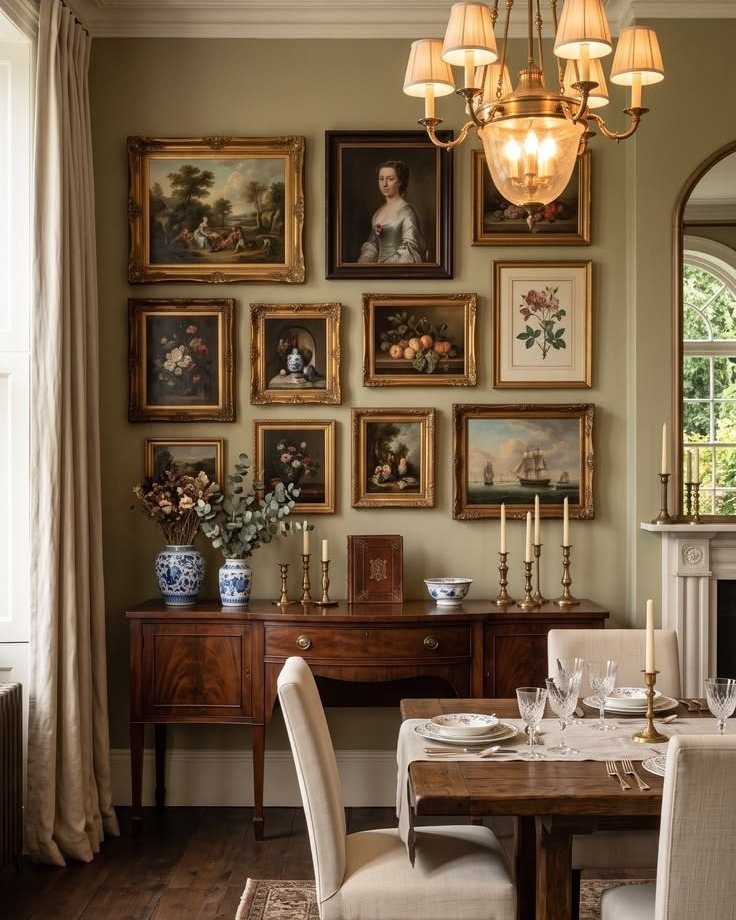
A gallery wall gives a living room the finished feel of a space someone thought about. Gold frames against olive read collected rather than decorated.
I start with one anchor piece, usually the largest, and build outward. Metal frames add the shine that glam wants; black-and-white photographs inside them keep the whole thing from getting busy.
Five to seven pieces is my practical limit for a wall I can hang in an afternoon. More than that, and I am measuring forever.
12. Step Into the Spotlight
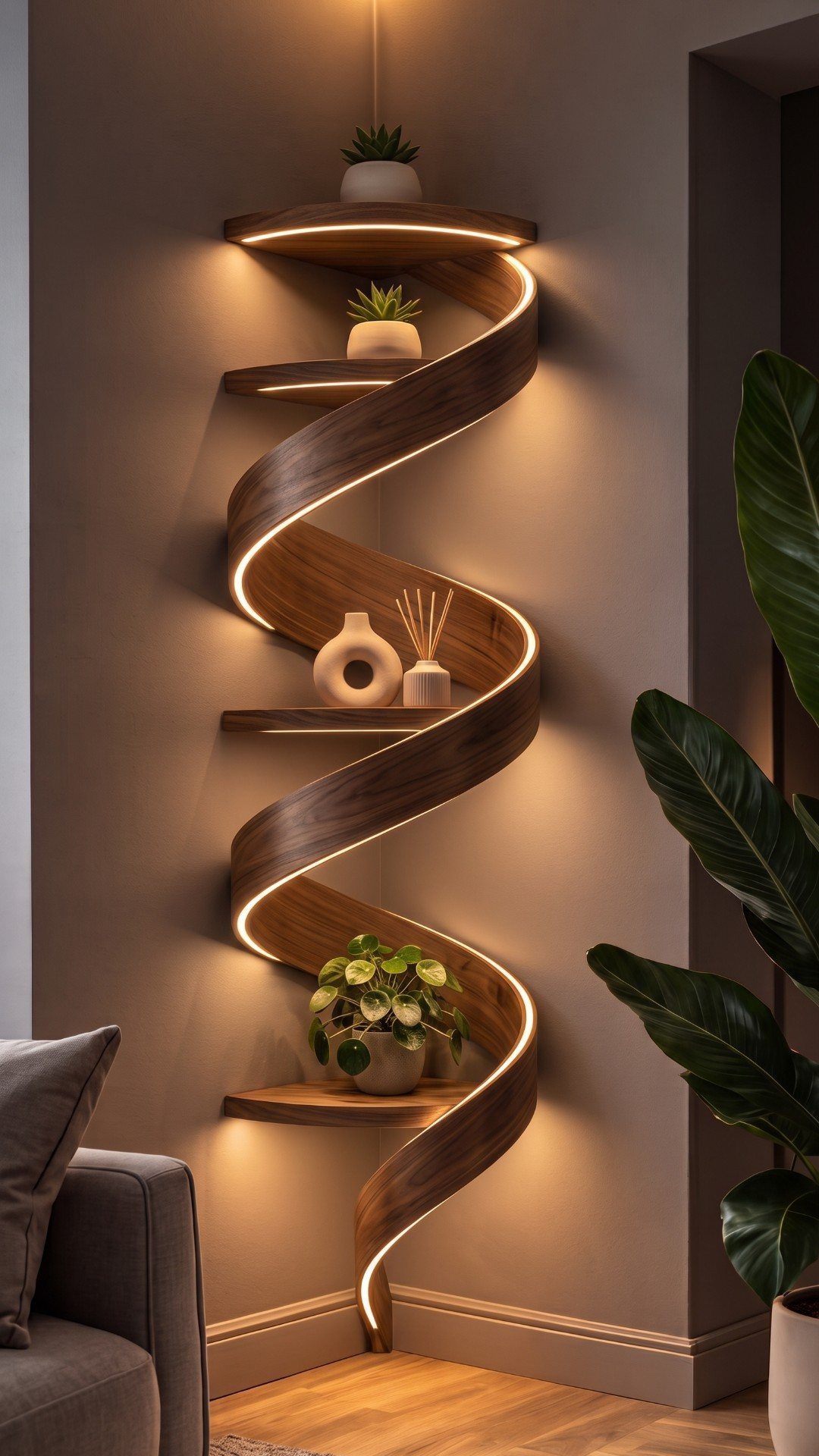
Lighting in glam is not just functional; it is the jewelry of the room. Integrated LED turns storage into sculpture, but the same principle works with fixtures you can swap in yourself.
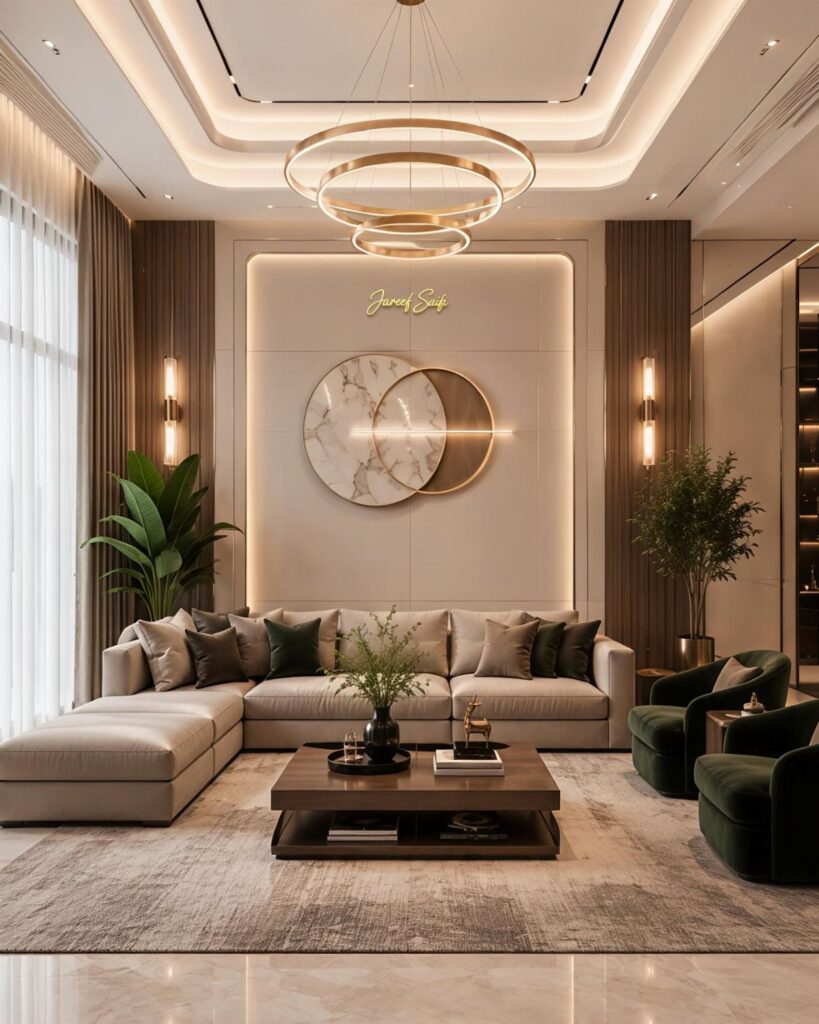
A chandelier with crystal or metallic detailing becomes the room’s center of gravity. Wall sconces at shoulder height cast the kind of shadow that flatters.
I match the metal to other hardware in the room, door handles, curtain rods, for coherence rather than matchiness.
Table lamps with glass bases bounce light around without adding visual weight.
A glam-style chandelier is a weekend job to install if you are comfortable with a ladder and a wire nut; shop secondhand and you will spend less than you expect. Otherwise, hire it out and sleep easy.
13. Incorporate Vintage or Antique Pieces
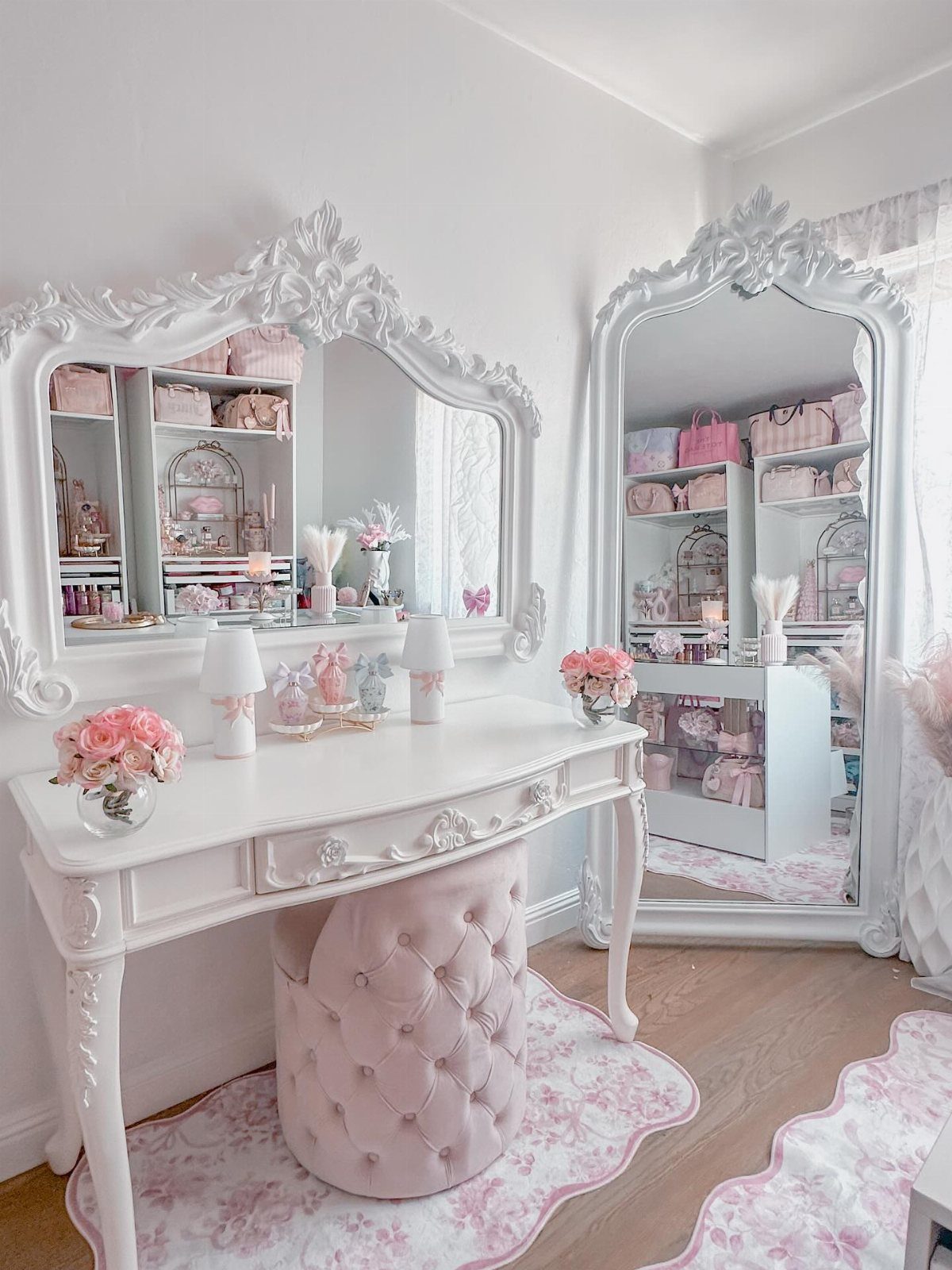
A gilt finish that catches lamplight gives what no new reproduction manages. One vintage anchor against clean walls works better than a whole house of competing eras.
This suits renters who can take a statement piece with them. The right piece rarely arrives on schedule, so patience pays off.
14. Layer Lighting
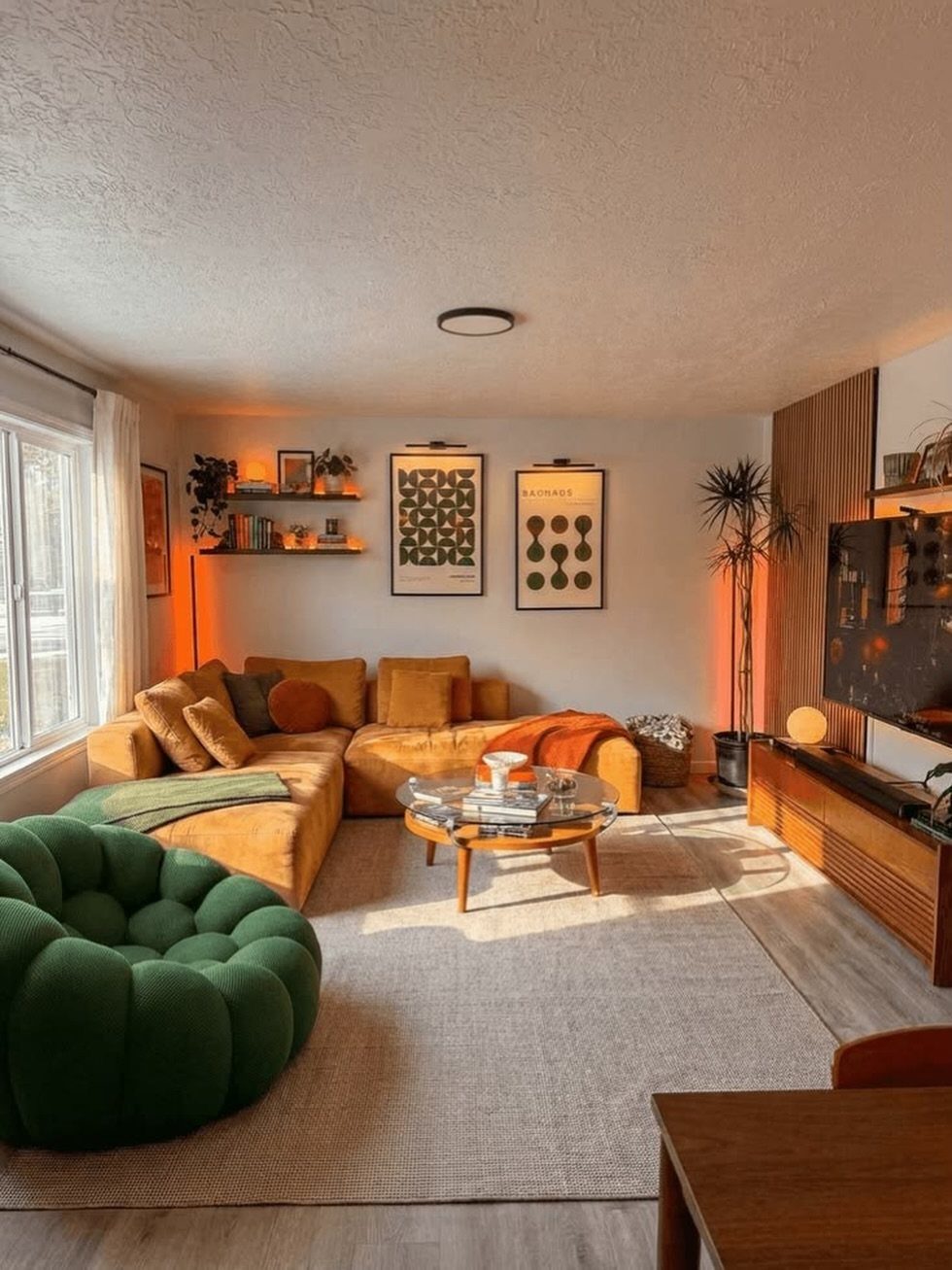
One lamp never carries a glam living room. A sectional in a warm-lit room works when light hits it from three directions: overhead cans, a table lamp, and something casting upward from the floor.
I start with dimmable overhead at about 2700K, then add a single table lamp with a linen shade at sitting height. The floor lamp comes last, and only if the first two leave a shadow where someone actually sits.
Crystal chandeliers earn their reputation, but even a drum shade on a dimmer beats a bare bulb. Budget for bulbs last; they matter more than the fixture.
15. Incorporate Natural Stone Surfaces
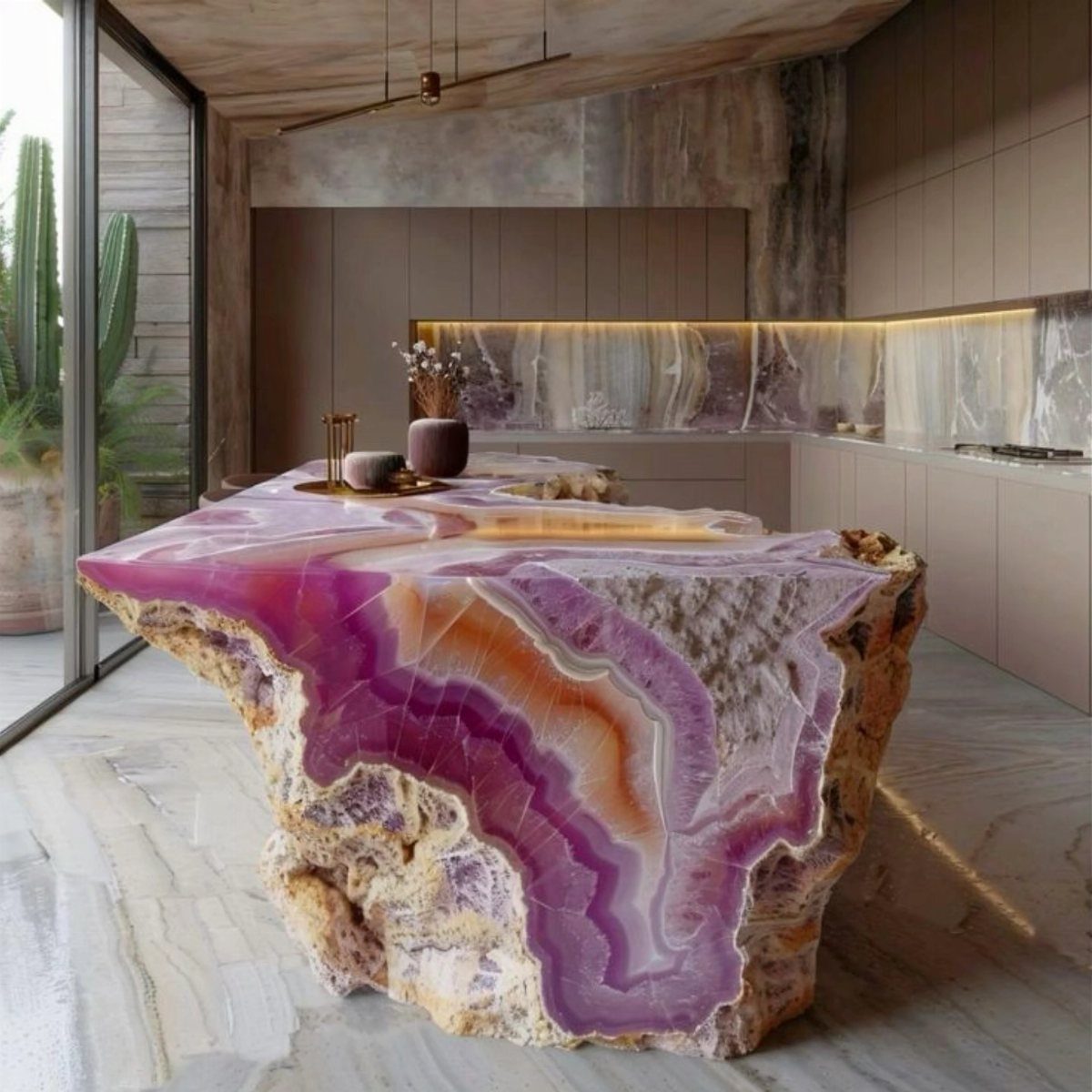
Marble reads expensive even when the piece is small. A stone side table or a single marble shelf achieves the same balance between organic and polished.
A remnant yard sells stone by weight, and a simple bevel edge finishes the top cleanly. The weight surprised me: two people to lift, which limits rearranging but also keeps the piece from feeling temporary.
Stone cools a room heavy on velvet and metal. In a rental, try a marble tray or coasters first; same effect, no commitment.
16. Dramatic Window Dressing
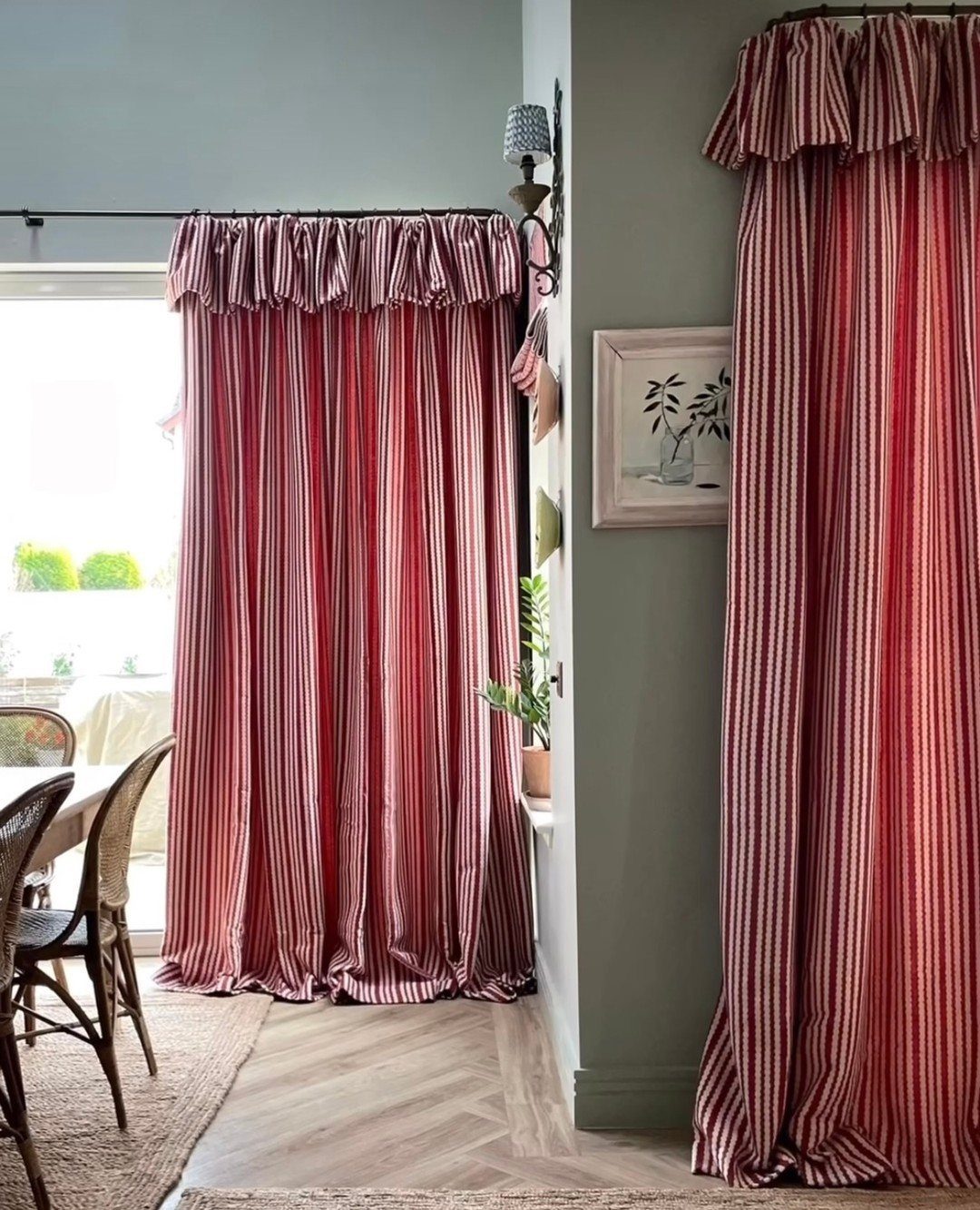
Curtains that pool on the floor announce that someone planned this room. Panels should break on the floor rather than hover above it.
Hanging a first set too short is a mistake that lingers until they are replaced. Black rods against white trim give the eye a line to follow; match the rod finish to other metals in the room, or deliberately don’t.
Width is the other mistake. Panels need to look full when closed, which means roughly double the window width in fabric.
Custom is ideal; ready-made works if you buy two sets and seam them.
17. Feature Wall
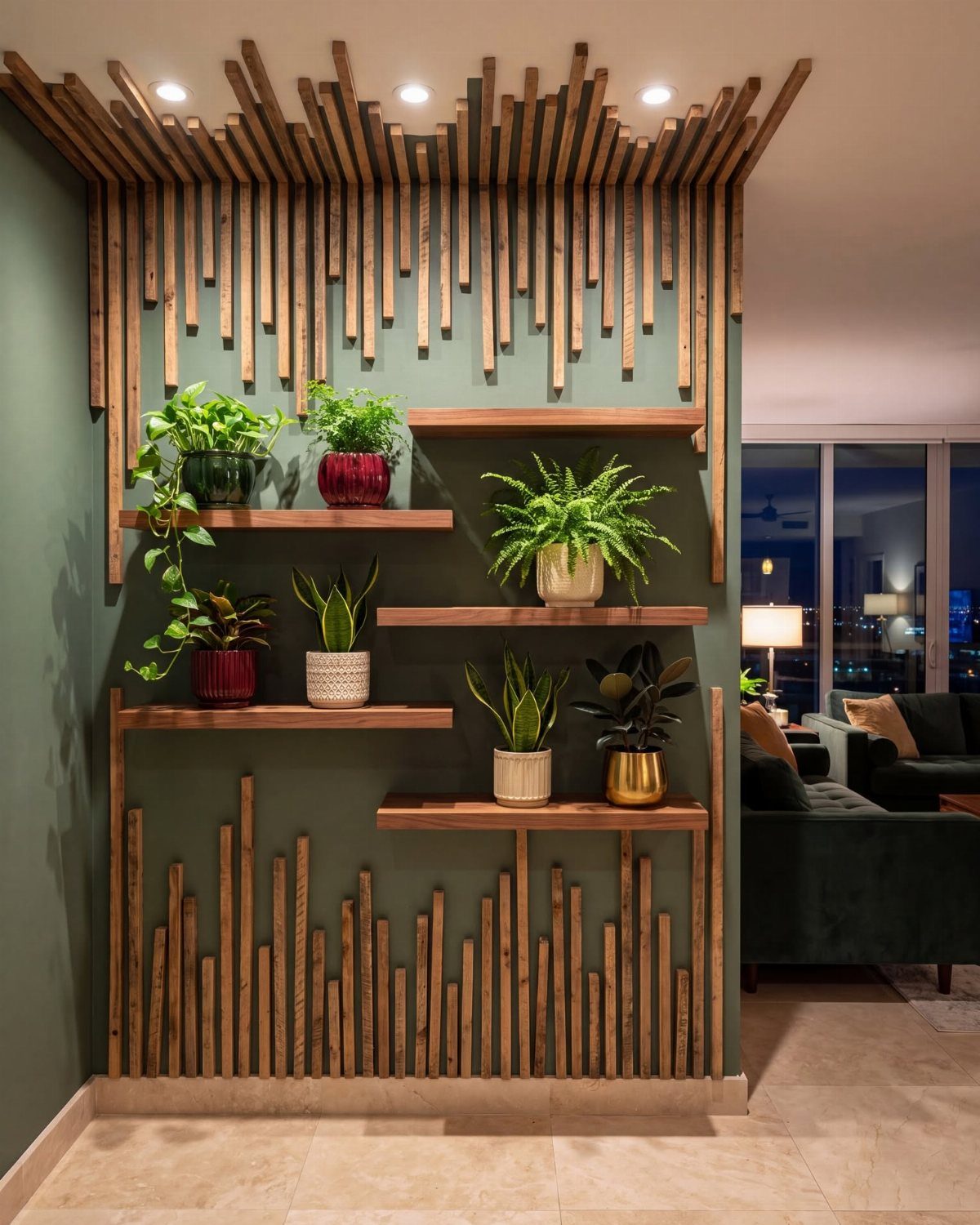
One bold wall gives the rest of the room a direction to follow. A slatted wall with built-in shelves and spotlights starts with one material choice; everything else follows.
A charcoal feature wall in a rental may cost a deposit and still feel worth it.
Start with the wall opposite the entrance, the one the eye finds first. The color or pattern there sets limits on everything else; embrace the constraint.
18. Incorporate Art
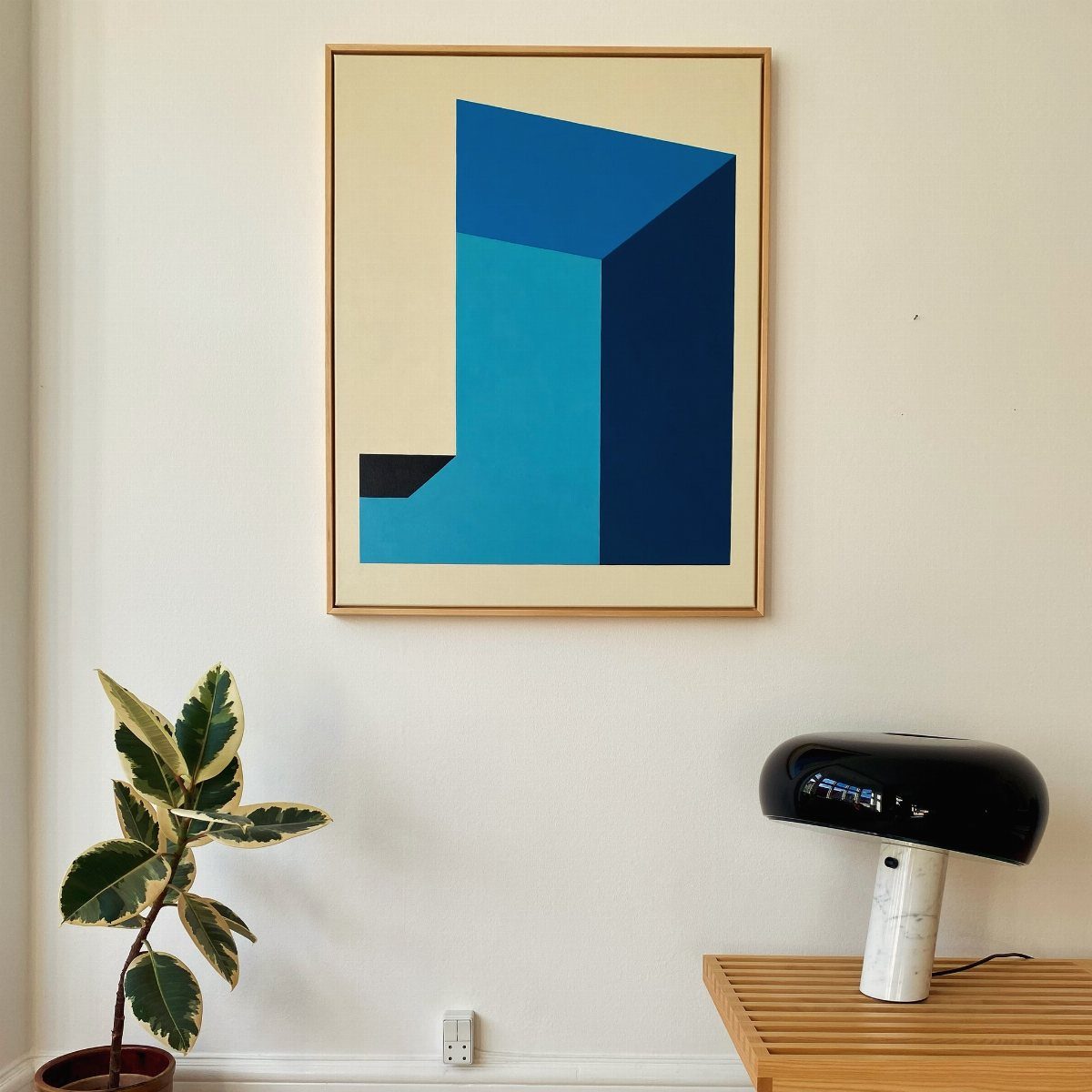
Geometric forms in art echo elsewhere in the room without matching exactly. Hanging art centered on the wall rather than on the sight line from the sofa is a common mistake; centering on the seated eye level works better.
A single large piece beats a cluttered wall. A marble-based lamp sits close enough to relate to the art, far enough to let it breathe.
19. Use Plush Fabrics
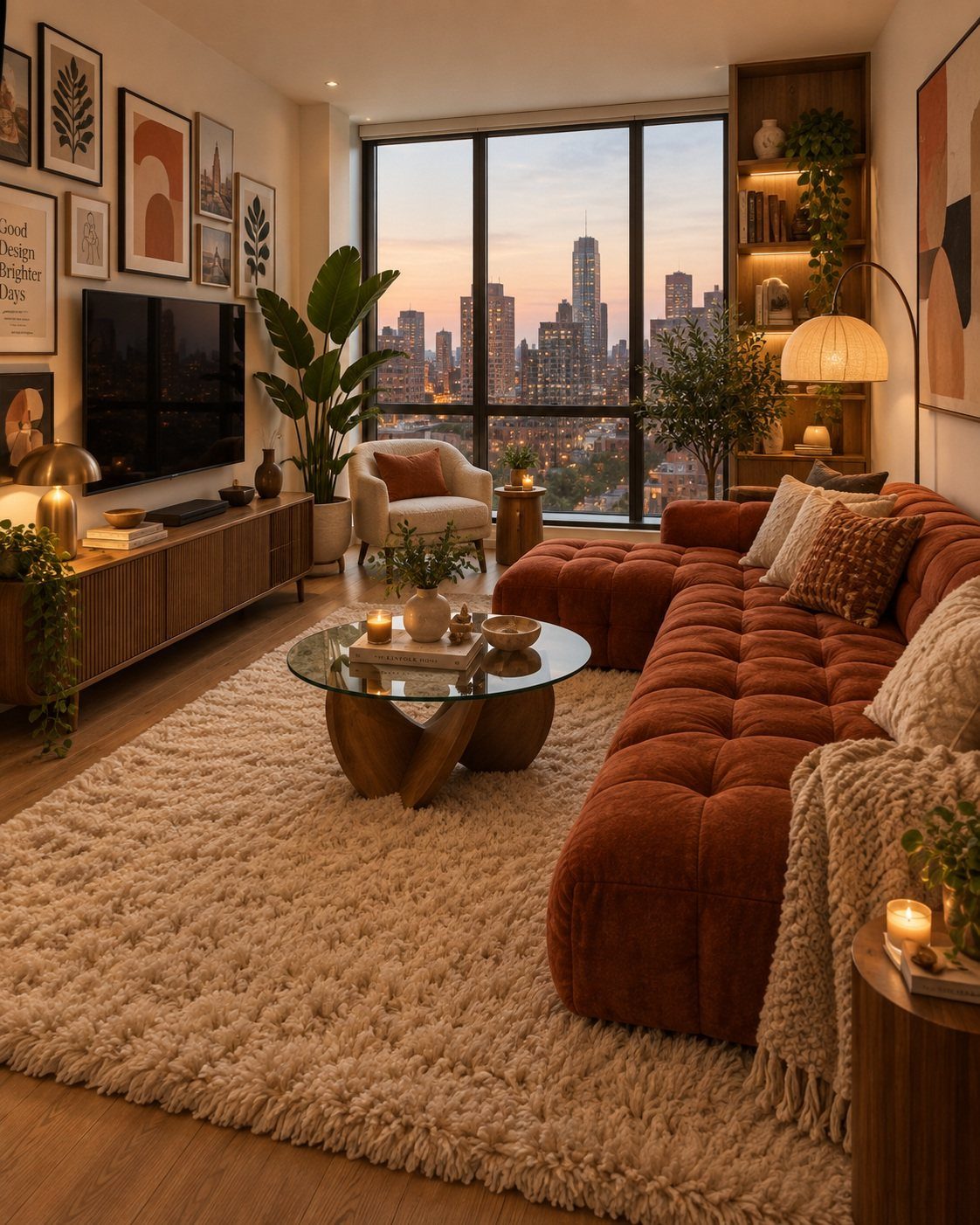
A velvet sofa in terracotta turns a plain living room into something you actually want to sit in. Silk throw pillows and faux fur blankets do the same work if you hunt the right clearance aisle.
Start with one piece in a fabric you cannot stop touching. A high-pile rug underfoot, a velvet armchair, a sheepskin draped over the back of a reading chair.
The rest can stay simple.
This works best in rooms where you already own the big pieces and need to stop them from looking like a showroom floor. The tradeoff: these fabrics collect pet hair and need more care than a basic cotton slipcover.
20. Layer Textures
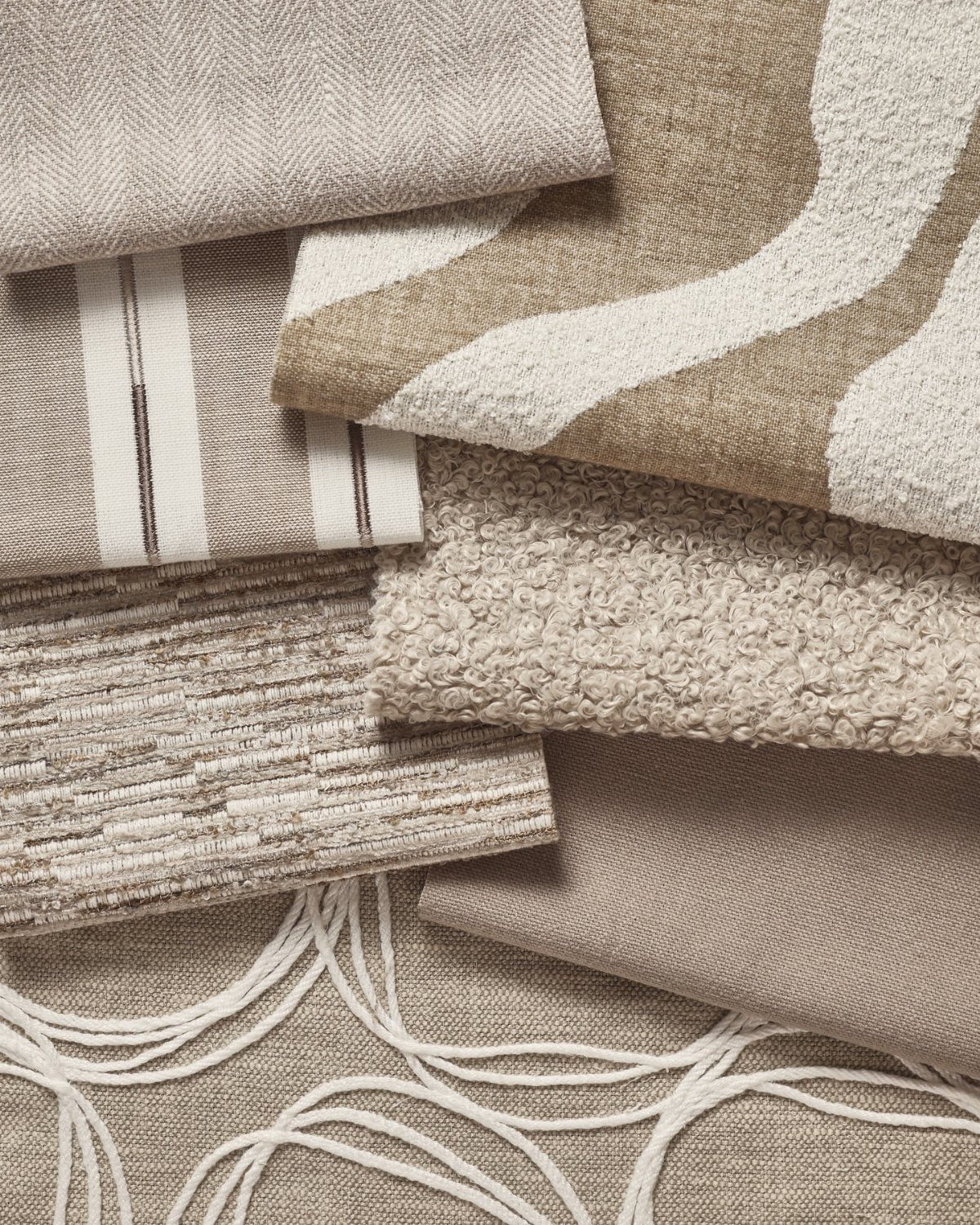
A room full of velvet reads flat until something rough or nubby shows up beside it. A velvet sofa against a painted wall reads like a stage set without something soft across from it.
Start with soft white or charcoal as your base, then build. Linen curtains against a velvet chair.
A wool throw on a silk pillow. Brass and glass against something matte and hand-woven.
Stop before it becomes a pile of competing textures. Two or three in conversation, not a shouting match.
This suits renters who can swap pillow covers and throws but cannot change the floors.
21. Create Intimate Zones
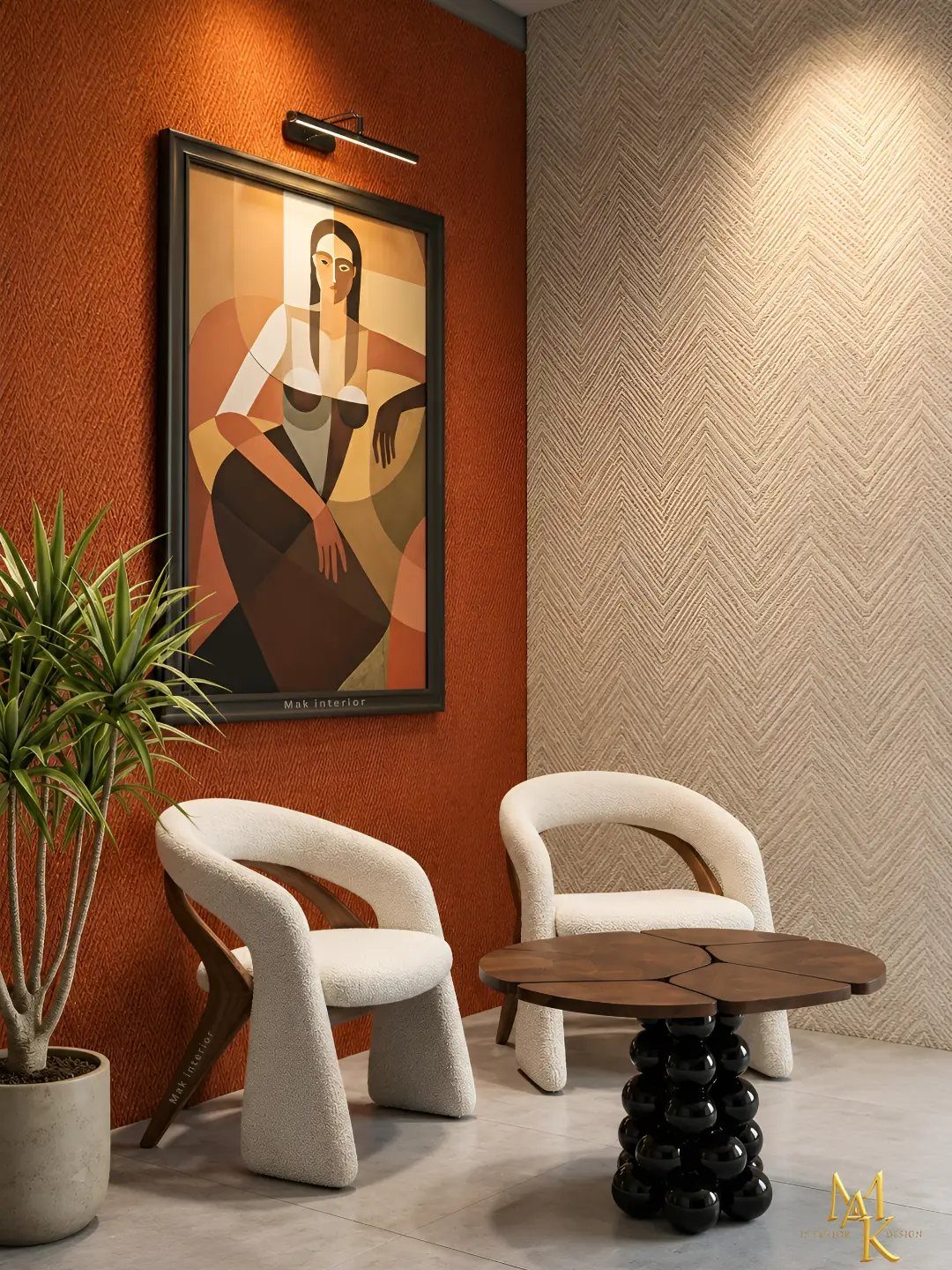
A large living room becomes two smaller rooms with nothing more than furniture placement.
Float a sofa away from the wall, angle a pair of chairs toward each other, and suddenly you have a zone that feels private even with no walls.
Add a floor lamp and a small side table, and the zone reads as complete.
This matters most in open plans where the living area bleeds into dining or entry space. The tradeoff: you lose some walking paths.
Give the pieces enough breathing room, or the zone feels pinched instead of intimate.
22. Use Geometric Patterns
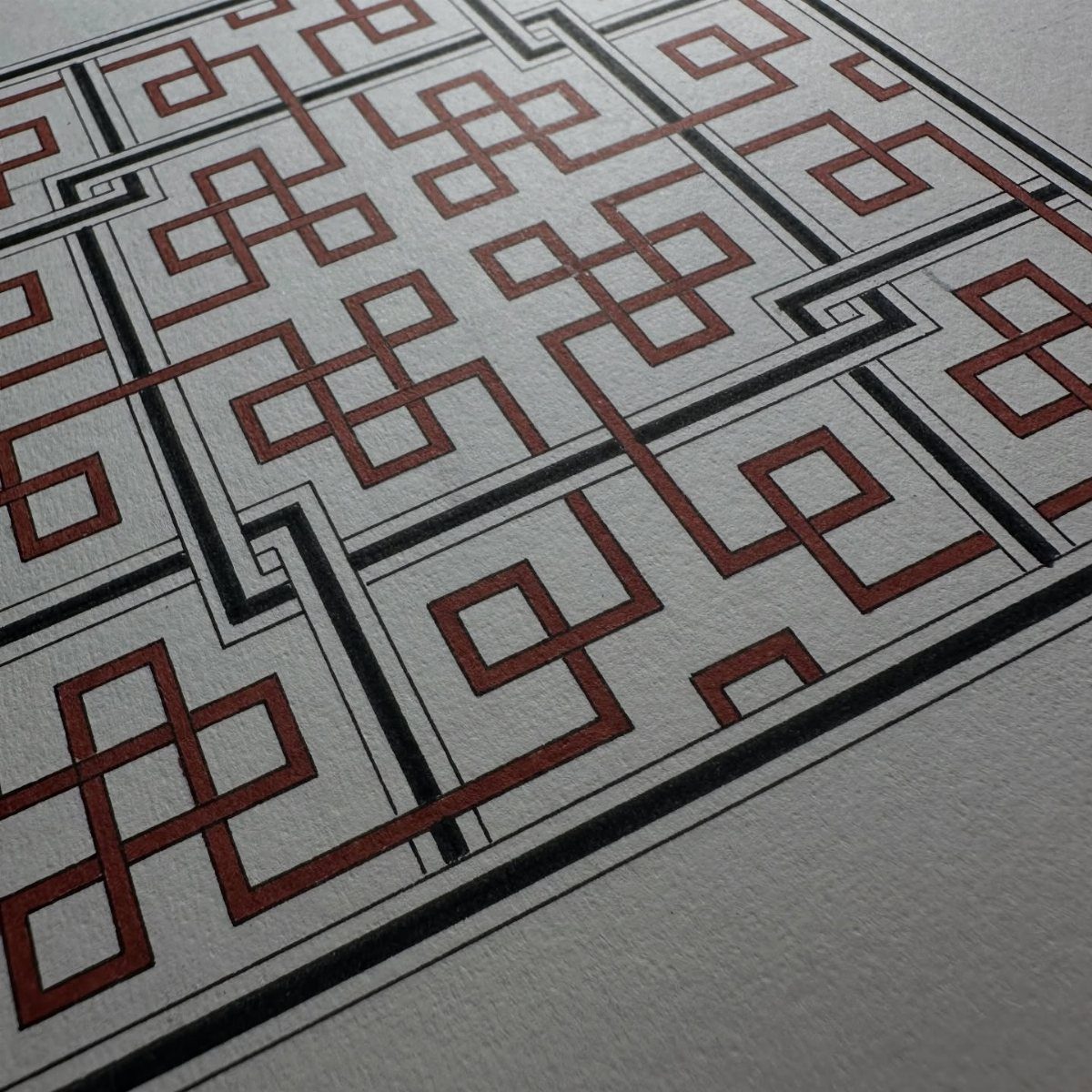
Geometric patterns in a glam room work when they are large enough to read from across the space, not just up close. A rug with repeating squares, a coffee table with clean intersecting lines, wallpaper with a bold lattice.
One maker of geometric art pieces used a brick-and-tile technique from Islamic architecture to build interlocking patterns by hand. The result carries a precision that printed patterns rarely match.
Use geometry on one or two surfaces, not every wall. A patterned rug under solid furniture, or a single geometric accent on a neutral backdrop, keeps the room feeling designed rather than decorated.
This suits anyone who likes glam but worries it will turn fussy.
Tips for Creating Glam Spaces
Large living rooms, anything above 300 square feet, can handle drama that would swallow a smaller space. A substantial crystal chandelier, generous mirrored furniture, and layered seating arrangements all work here.
Breaking the room into zones keeps a glam space from feeling like a showroom. A pair of sofas facing each other, with a console table behind one, sets up a natural spot for conversation.
A sectional anchors another corner. A reading chair tucked into a corner or a small table for cards fills the leftover space without crowding the main area.
The glam elements work because the room has scale to absorb them.
Lighting Importance
Lighting does the heavy lifting in glam design. Crystal chandeliers are the obvious choice, and they earn their place.
A soft, neutral palette everywhere else gives the fixture room to become the focal point. Layered lighting matters too.
Wall sconces, table lamps, and dimmable overhead sources let you shift from afternoon brightness to evening drama without changing a single piece of furniture. The chandelier provides the statement.
The layers provide the control.
Color Palette Choices
Soft white, charcoal, blush pink, champagne, gold, and silver form the core glam palette. Soft white or charcoal makes a solid base to build a glam palette on.
Blush pink and champagne add warmth without competing. Gold and silver are accents, not main colors.
The mix works because none of these shades fight each other. Even the bolder choices stay muted enough to layer.
Pick two or three for any single room and repeat them until the space feels intentional rather than collected.
Furniture Selection
Tufted sofas and chairs bring old-school sophistication that modern glam needs. The tufting adds texture and shadow, which reads as luxury even in a simple shape.
Clean-lined modern pieces keep the room from feeling like a set. A vintage find or two, maybe a gilded mirror or an antique side table, breaks the uniformity.
A green accent wall or a bright pink gallery wall only works if the furniture stays modern and restrained. Gold items read as chic, not costume, when the lines are right.
A dark green couch with pink poufs sounds risky until you see the balance. The bubble chandelier in an all-pink room proves that one sculptural piece can carry the whole look.
Frequently Asked Questions
What is glam style interior design?
Glam style interior design is polished and dramatic, built around shine, texture, and statement pieces that catch light and draw the eye.
It mixes metals like gold and silver with plush fabrics such as velvet and silk, keeping the palette soft and neutral so the materials themselves become the focus.
The look reads expensive without demanding a showroom budget, which is why a single bold piece against quiet walls often carries the whole room.
How to create a modern glam living room?
A warm neutral wall, something like cream or soft gray, gives the room a background you will not tire of; then brass lamps or a chrome coffee table frame can do the metallic work without screaming for attention.
One statement piece, a bold armchair or an oversized mirror, does more work than a room full of competing colors, and it can move with you when the lease ends.
What are key features of modern glam style?
Key features include clean lines in furniture paired with glamorous materials that catch light, like velvet, crystal, and mixed metals.
The style lives in the contrast between smooth and textured, matte and reflective, with two or three textures in conversation rather than a pile of competing surfaces.
A controlled palette of soft white, charcoal, blush, or champagne lets the materials read as intentional rather than busy.