Bedroom lighting ideas run from a quick dimmable bulb swap to a full sculptural fixture install, and the right choice depends on whether your ceiling clears eight feet or falls short.
Flush mounts and wall sconces suit a room with low overhead; taller spaces can carry pendants and chandeliers without the hazard.
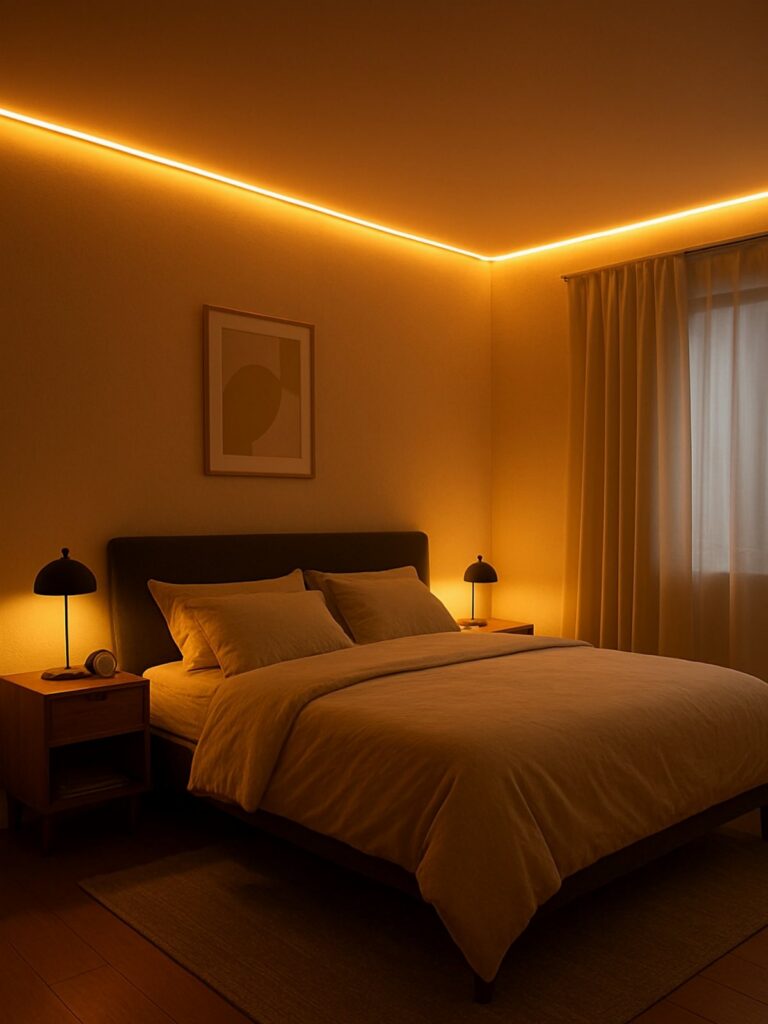
The warm white LED strip behind a headboard is the detail that turns a flat wall into depth after dark.
1. Chandeliers
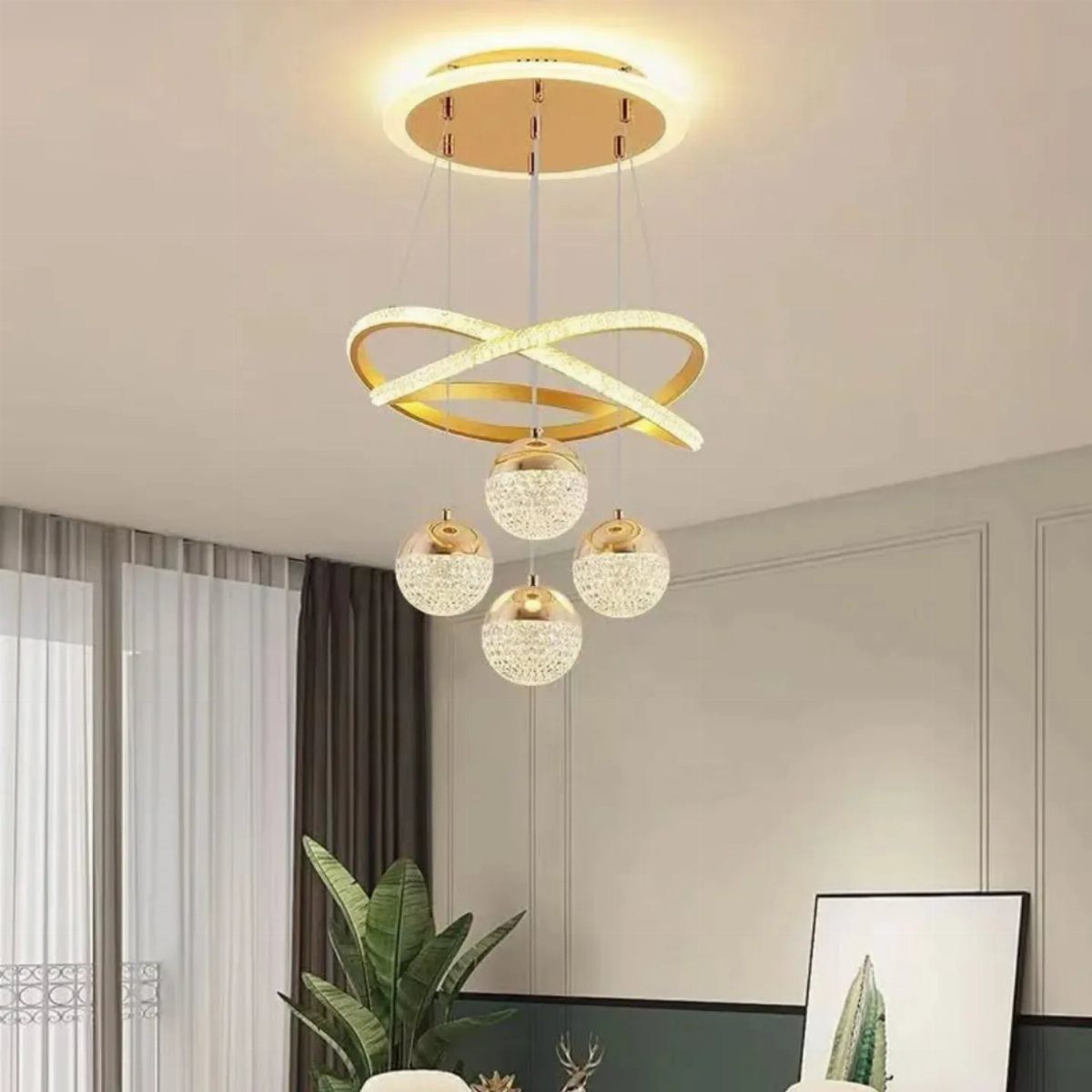
A chandelier in the bedroom works best when its scale matches the room. In a larger space, an oversized piece adds presence without crowding; in a smaller one, a simpler profile keeps the ceiling from feeling low.
I look for fixtures that sit about 7 feet above the floor so no one bumps their head on the walk to the closet. The height of the bed matters too: a tall canopy needs more clearance than a platform frame.
If your ceiling is under 8 feet, skip the drama and go with a flush mount instead. A fixture that blends in during the day earns its attention after dark.
2. Adjustable Lighting
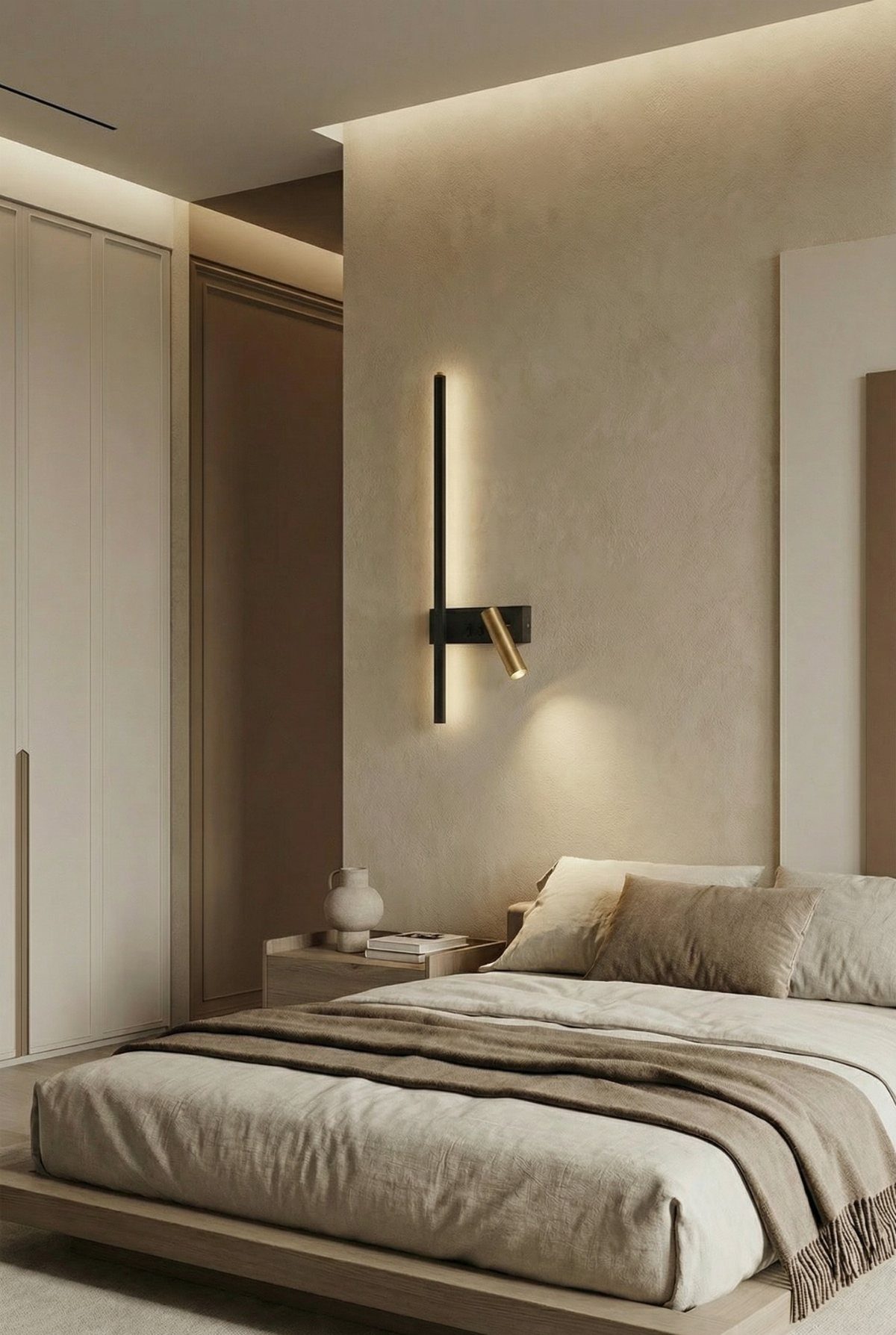
Adjustable lighting lets one fixture handle both reading and wind-down mode. I like pendant lights with a suspension I can shorten or lengthen, or a wall-mounted spot I can angle toward the pillow or away from it.
For a pair of bedside pendants, hang them 20–24 inches above the nightstand surface. That leaves room for a book and a glass of water without the shade blocking your line of sight.
Dimmable bulbs are worth the extra few dollars: full brightness for sorting laundry, low glow for scrolling until sleepy.
In a wide room, a linear suspension over the foot of the bed adds structure without the visual weight of a second chandelier.
3. Floor Lamps
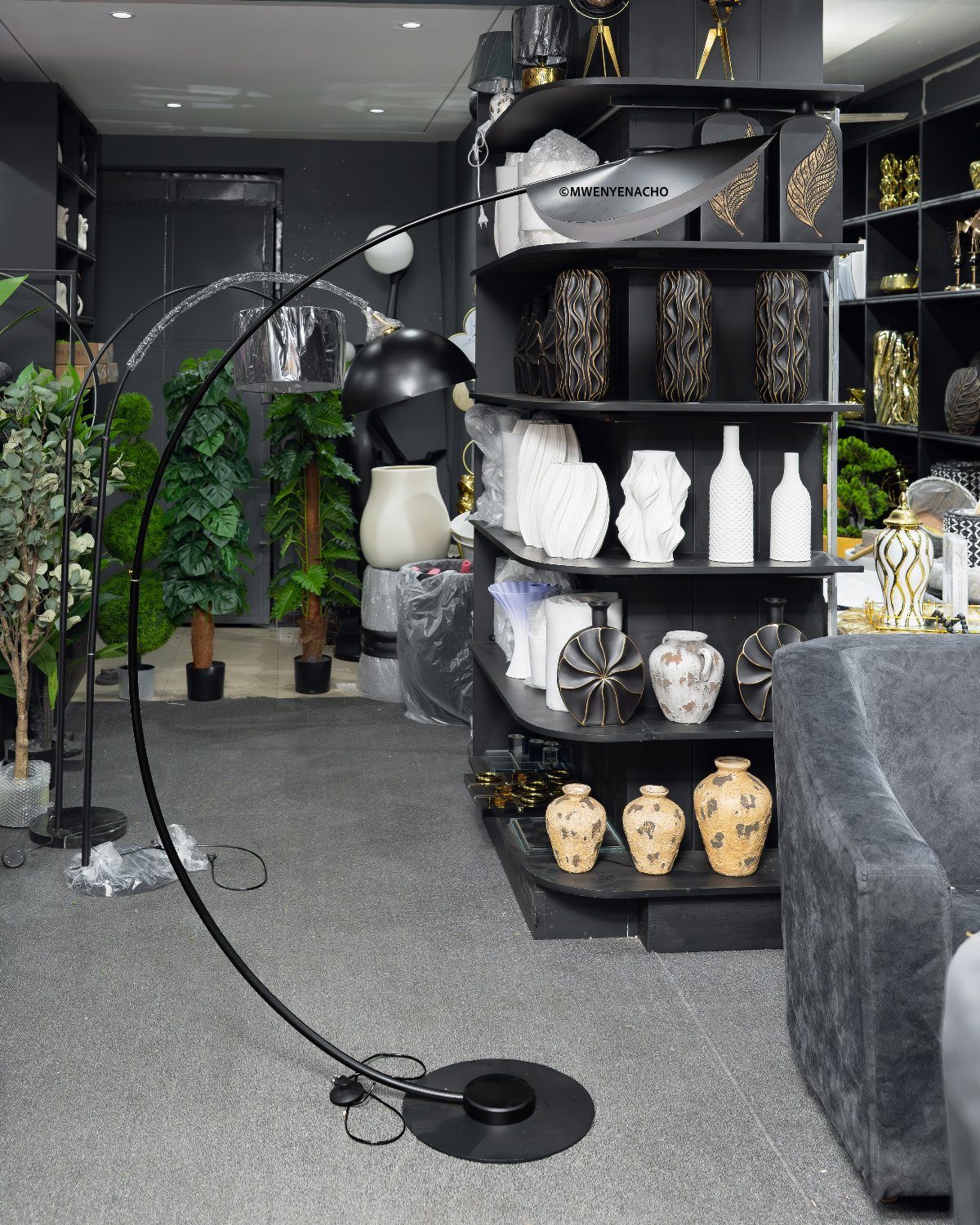
A floor lamp tucked into a bedroom corner adds a pool of light that overhead fixtures never reach.
I look for an arched neck that throws light back toward the wall, which softens the beam and makes the ceiling feel higher.
A black finish reads as furniture rather than gadget, and that matters in a small room where every object competes for attention. A frosted glass shade does the same trick: it disappears against pale walls while still glowing.
Keep the base clear of the traffic path. Placing a floor lamp far enough from the wall to leave a clear walking path matters more than pushing it flush.
4. Accent Lighting
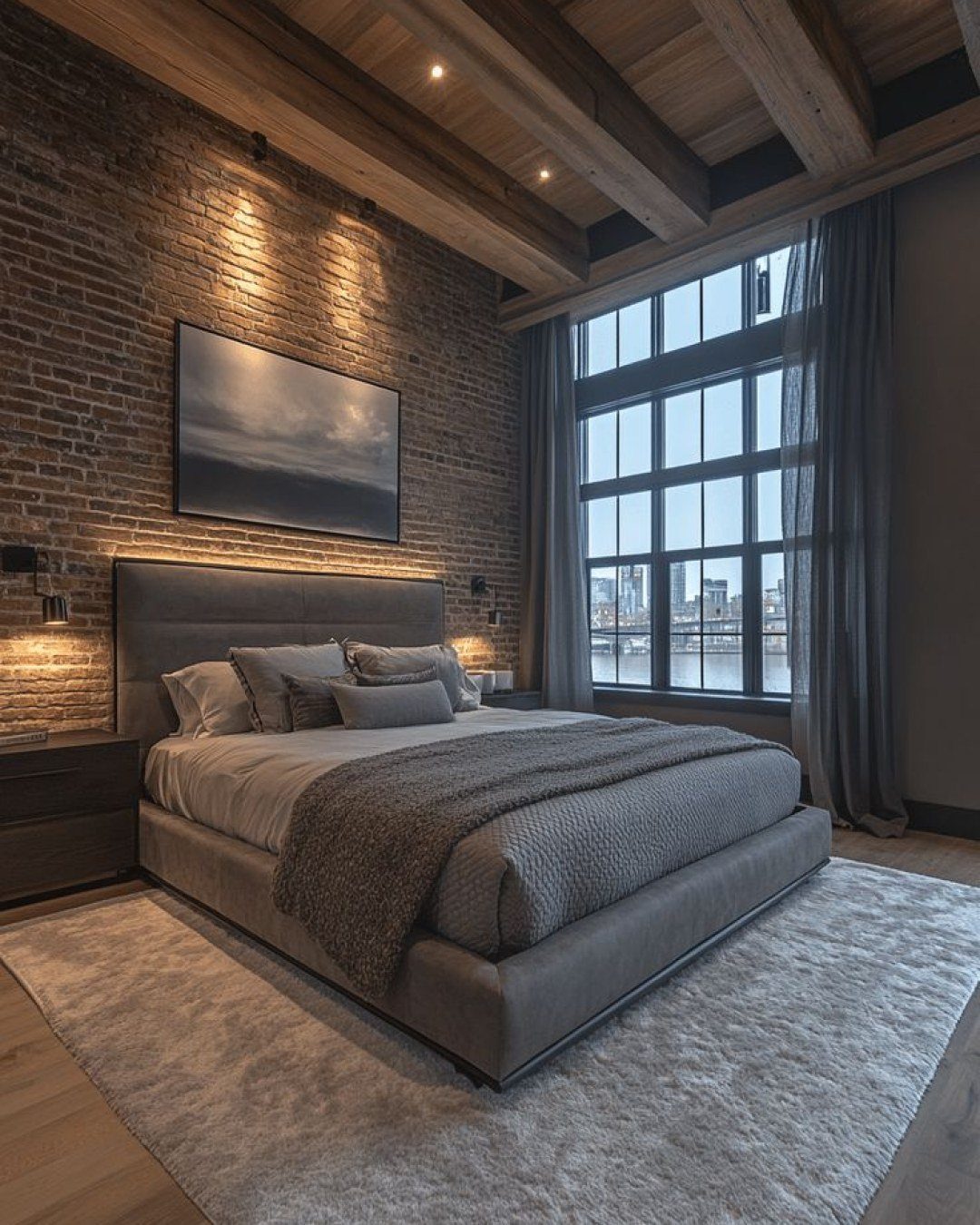
Accent lighting is the layer most people skip, and the one that changes how a room feels after sunset. Small lamps on a dresser or LED strips behind a headboard add depth without adding glare.
A textured wall needs light aimed across it to read as texture rather than shadow. A narrow-beam spot or a strip of warm white LEDs at 2700K does that job.
I aim for about 50 lumens per foot of strip, enough to notice but not enough to read by.
Battery-powered puck lights work if you rent and can’t run wiring. They last roughly 20 hours on a charge, so the routine of clicking them on becomes part of the bedtime ritual.
5. Unique Lamp Bases
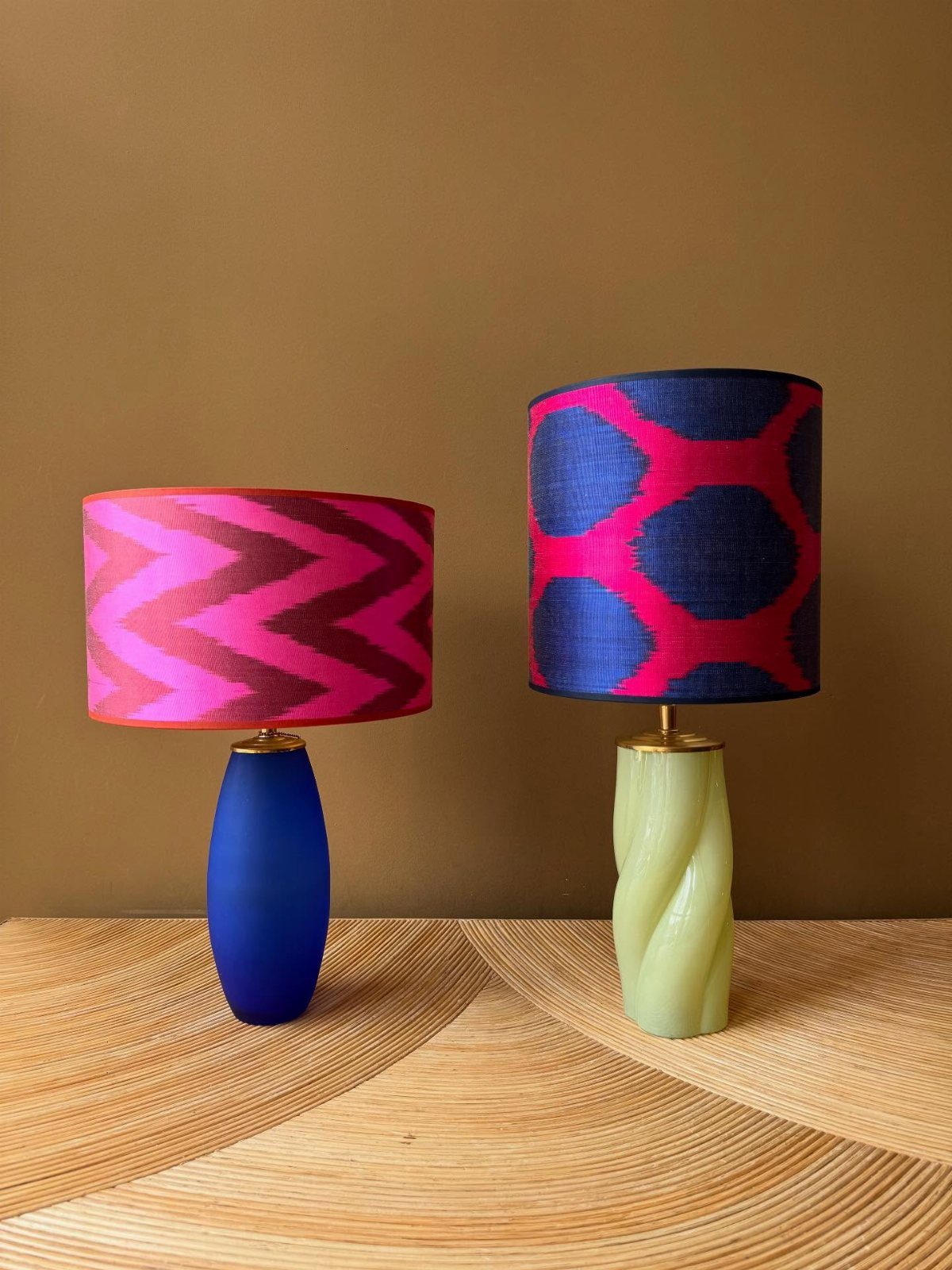
A lamp base with an odd shape or raw material turns a bedside table into something personal. Twisted ceramic and oval blue forms read as collected over time, not bought as a set.
I hunt for concrete, glazed stoneware, or turned wood bases at estate sales and outlet stores. The shade is where I save money: a plain white drum from the hardware store lets the base do the talking.
Scale matters more than style here. A base wider than 8 inches needs a table at least 18 inches deep or it overhangs and wobbles.
If space is tight, a base under 5 inches across leaves room for a clock and a water glass.
6. Layered Lighting
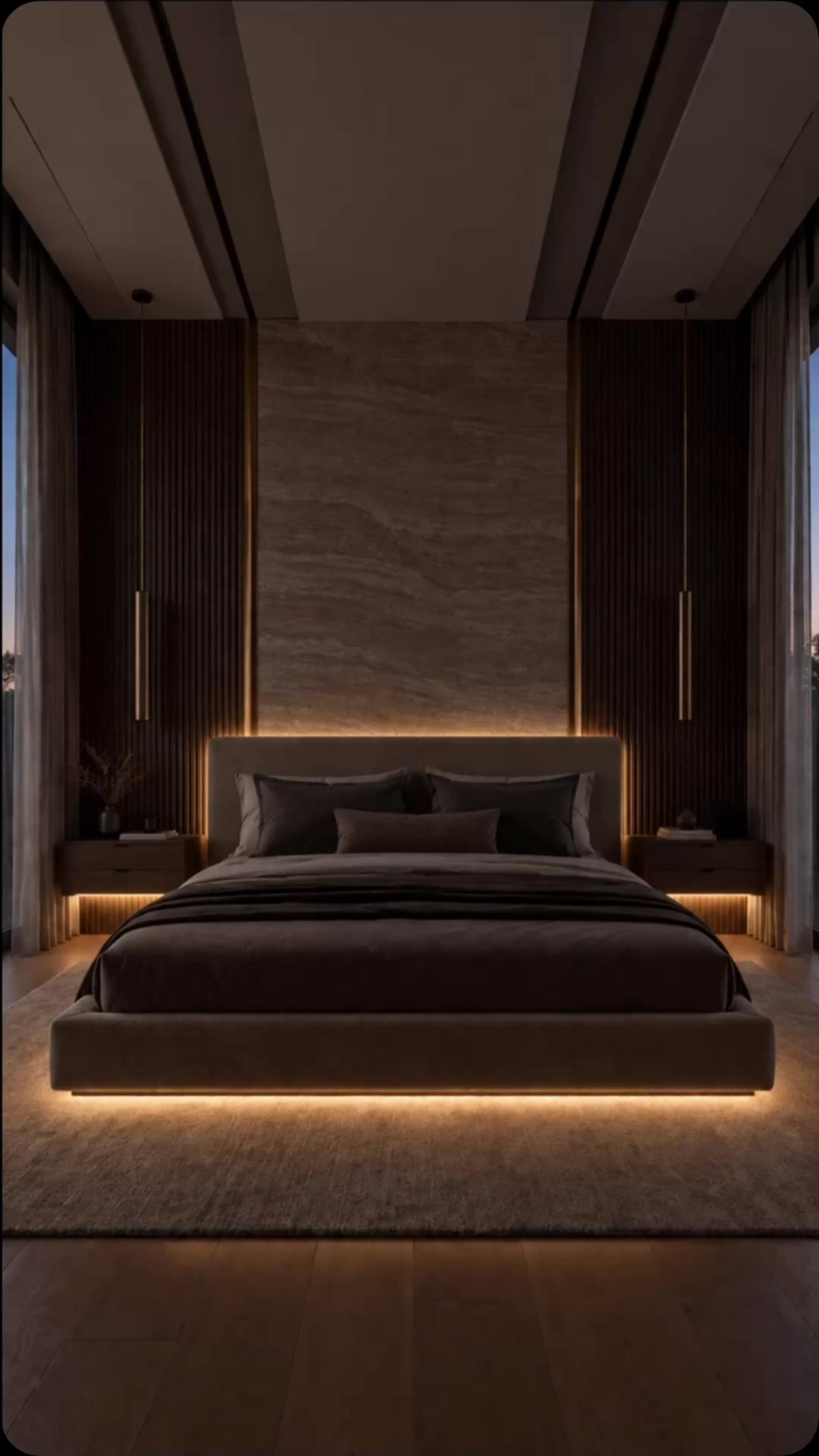
Layered lighting means never relying on one switch to do everything. An under-bed glow, backlit headboard, and pendant pair each answer a different need: ambient, task, and accent.
I start with the overhead fixture on a dimmer, then add bedside reading light at 40 watts equivalent or lower. The third layer can be as simple as a plug-in strip behind the headboard or a small lamp on a dresser.
Three sources at three heights, all controlled separately, give the most useful light.
A room with only overhead light feels like a showroom. A room with layers feels like somewhere you’d actually sleep.
7. Vintage Lighting
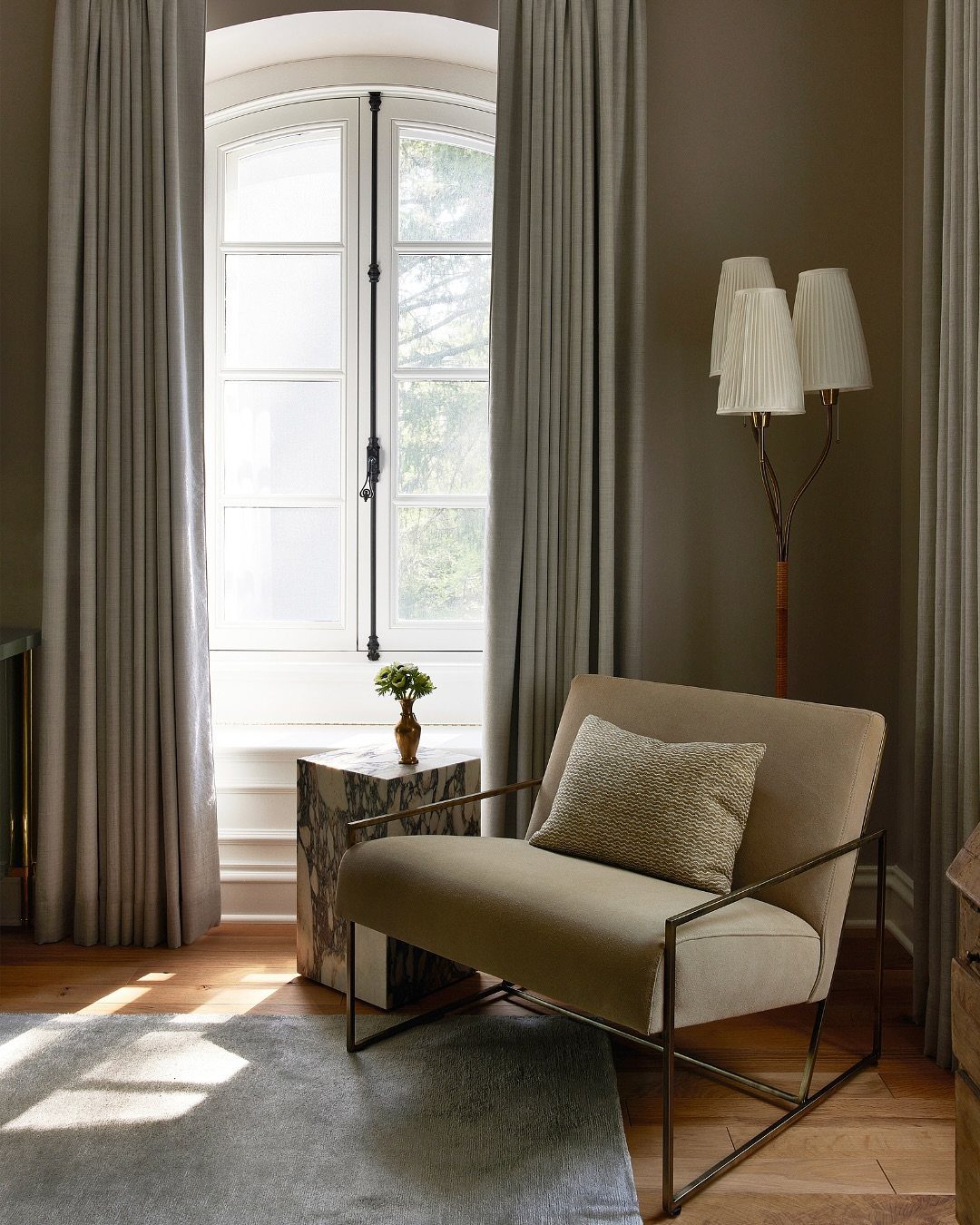
A vintage-style floor lamp with three pleated fabric shades brings instant personality to a corner that would otherwise stay empty. Petite sconces suit small guest bedrooms where larger fixtures would crowd the wall.
I look for pieces that almost fade into the background by day, then step forward when the switch turns on. A modest Max Ingrand pendant from the 1960s does this beautifully against deep colors.
For renters, vintage-inspired reproductions from makers like Lumfardo give the same effect without the hunt or the price tag of true vintage.
Best for rooms that feel too new or too plain; it trades minimalism for warmth, which not every bedroom needs.
8. Natural Materials

Light wood bases paired with wavy amber glass give table lamps a calm, warm quality that plain glass or metal often misses.
Natural materials in lighting work the same way plants do; they soften the edges of a minimalist room without adding clutter. Linen shades carry that texture upward, blending with botanical elements if you already have them.
I choose wood over stone for bedside pieces; stone gets heavy fast and costs more to ship. A rectangular base in ash or oak sits steady on narrow nightstands where round bases wobble.
The wavy glass diffuses light more interestingly than flat panels, so the glow spreads rather than pools.
Small bedrooms with low ceilings benefit most; the materials add presence without adding height.
9. Smart Lighting
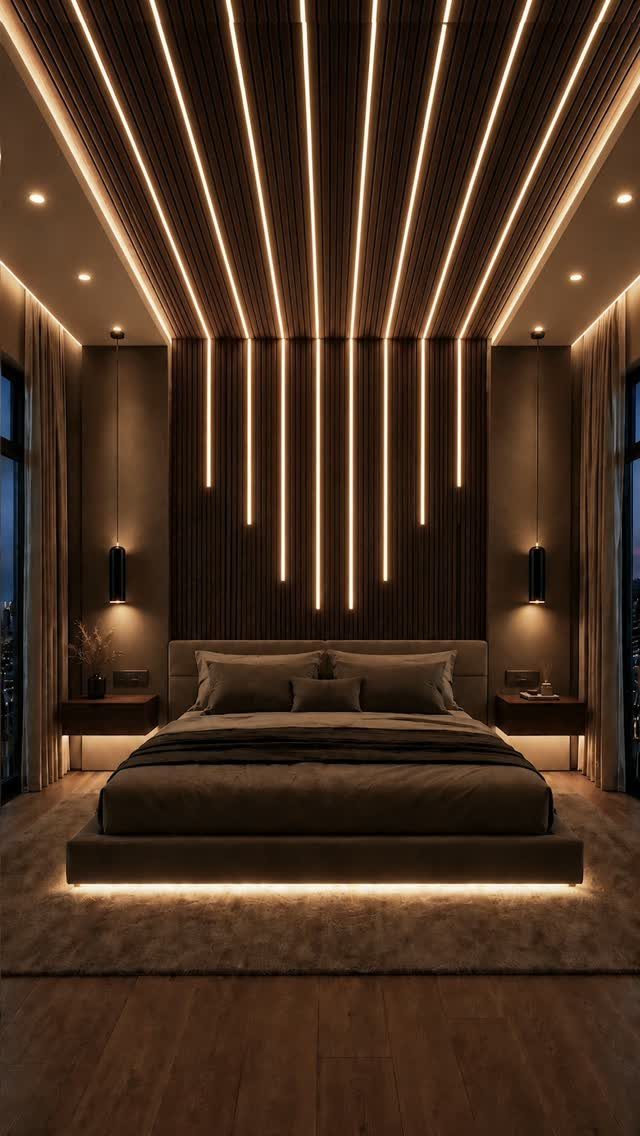
The black pendants above each nightstand keep the human element; the technology hides in the bulbs and the wiring, not in the design.
I set smart bulbs in the pendants and the strips on one zone, then program them to dim together toward evening. The app handles the timing; I do not touch my phone again.
For renters, peel-and-stick LED strips with a battery hub give the same under-bed glow without opening the wall.
An hour of pairing and testing at setup saves months of reaching for switches afterward.
10. Cozy Glow
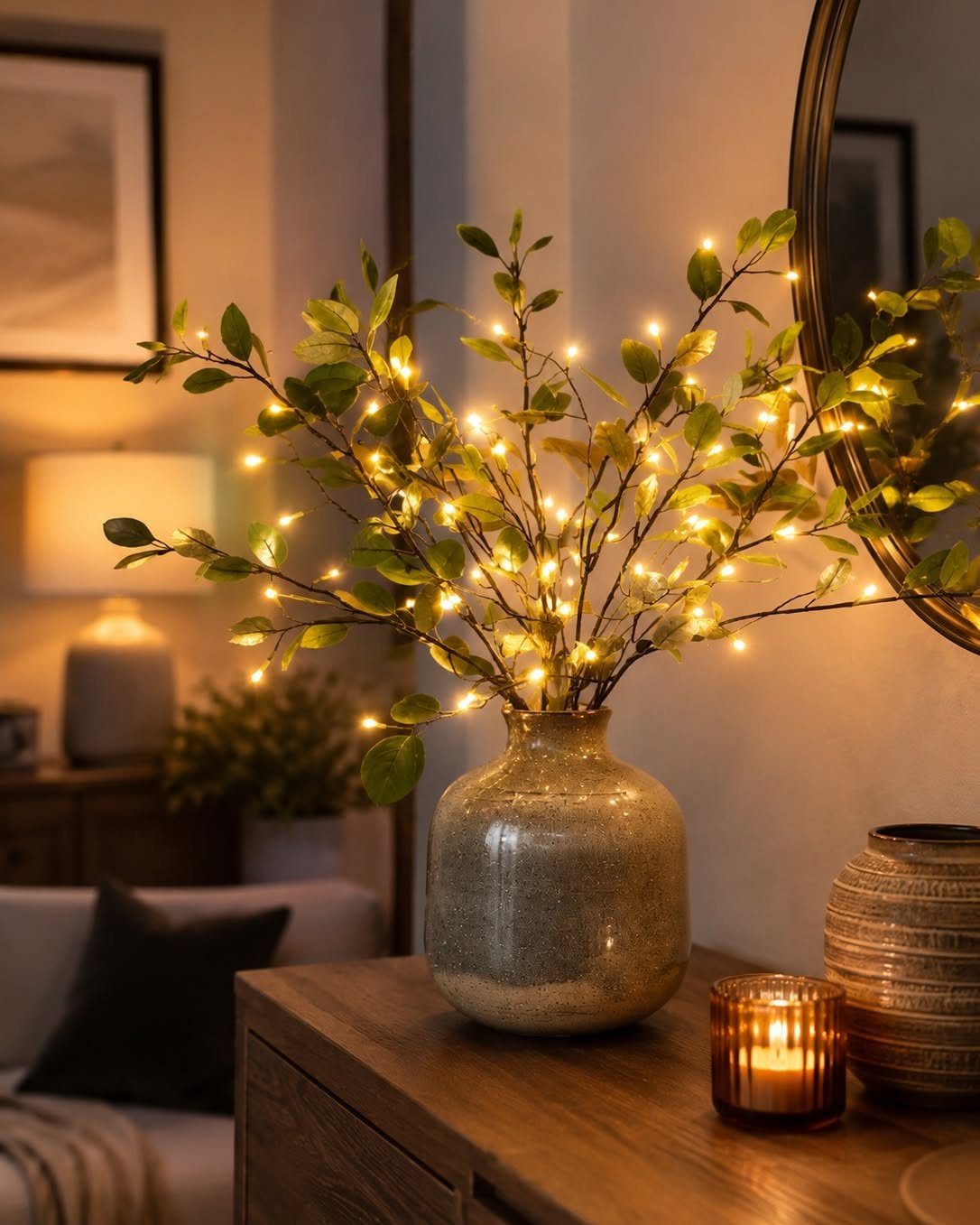
Layered glow comes from mixing sources: a ceramic vase wrapped in warm fairy lights, a candle, and a soft lamp each play a part instead of one fixture doing all the work.
Semi-flush mounts hug the ceiling and keep the overhead layer from overwhelming a small room, but the real comfort comes from mixing sources.
I start with one modern overhead light, add soft light at the bed, then find one accent point to highlight. The stages matter more than the wattage.
Dimmable bulbs let me keep it bright for folding laundry, then drop low for reading. A single strong overhead fixture makes the room brighter without making it feel better.
Best for bedrooms under 12 by 14 feet where a chandelier would hang too low.
11. Bedside Lighting Options
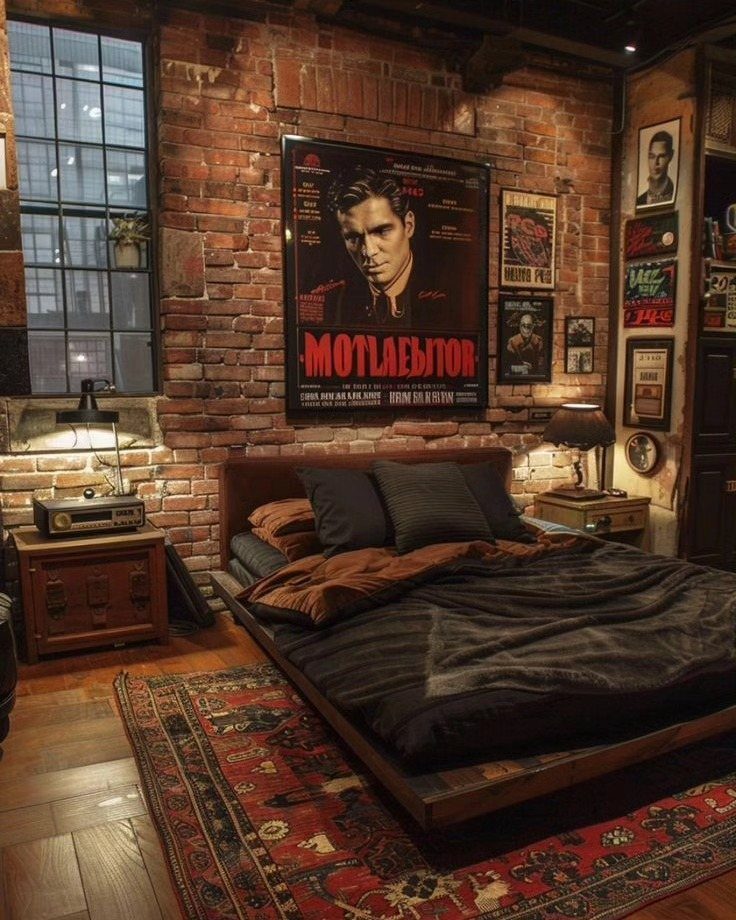
Vintage-style table lamps on wooden nightstands warm up exposed brick and mark where the room shifts into sleep mode.
Bedside lighting should feel soft and easy, not bright enough to wake you fully if you reach for water at 2 a.m.
Lamps win on reliability, though wall sconces save surface space when the nightstand is barely wide enough for a book. Hanging pendants beside the bed give the cleanest look; nothing on the table at all.
FontanaArte makes bedside pendants that manage this without looking like you forgot to finish the room.
Start here if you change nothing else.
12. Pendant Lights

The variety of tones, light and dark, keeps a long row from looking like a hotel corridor.
A single pendant beside the bed gives a more organic, romantic feel than a pair; the glow pools inward rather than spreading across the room.
I measure carefully; the bottom of the fixture should clear your head when you sit up in bed, usually 20 to 24 inches above the mattress.
For lower ceilings, a shorter drop or a semi-flush mount keeps the same clean nightstand without the hazard.
Best for readers who need the surface free for glasses, books, or a morning coffee; it trades the instant adjustability of a lamp for the permanent calm of open space.
13. Wall Sconces
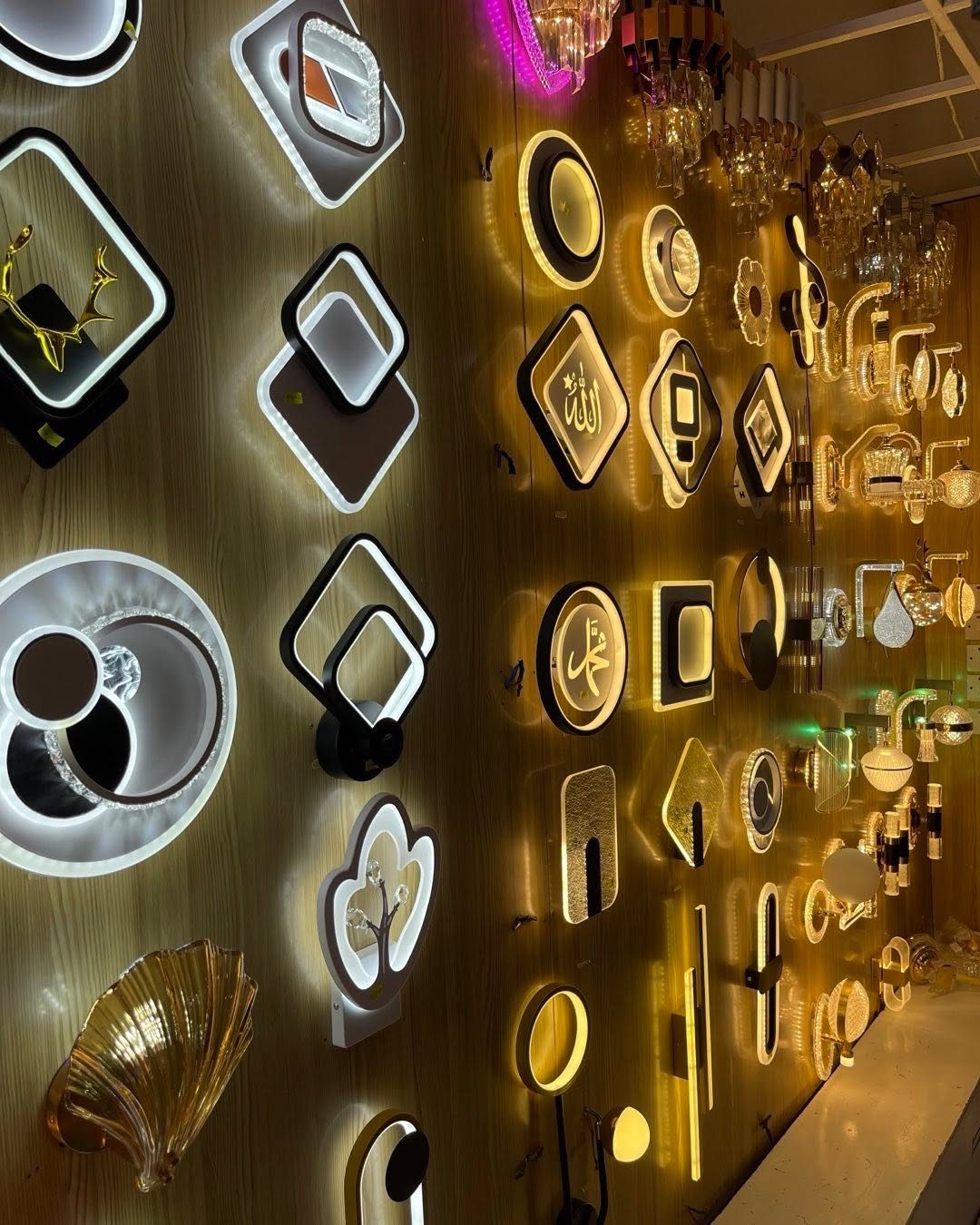
Wall sconces free up the nightstand surface while still giving you light right where you need it for reading. Mount them about 60 inches from the floor, just above the bedside table, so the glow hits at eye level without glare.
Corded models work if you are renting and cannot hardwire; look for ones with a fabric-wrapped cord in a color that blends with your wall.
Texture at eye level pulls the whole room together the way a headboard buckle or a knitted throw does.
14. Flush Mount Lights
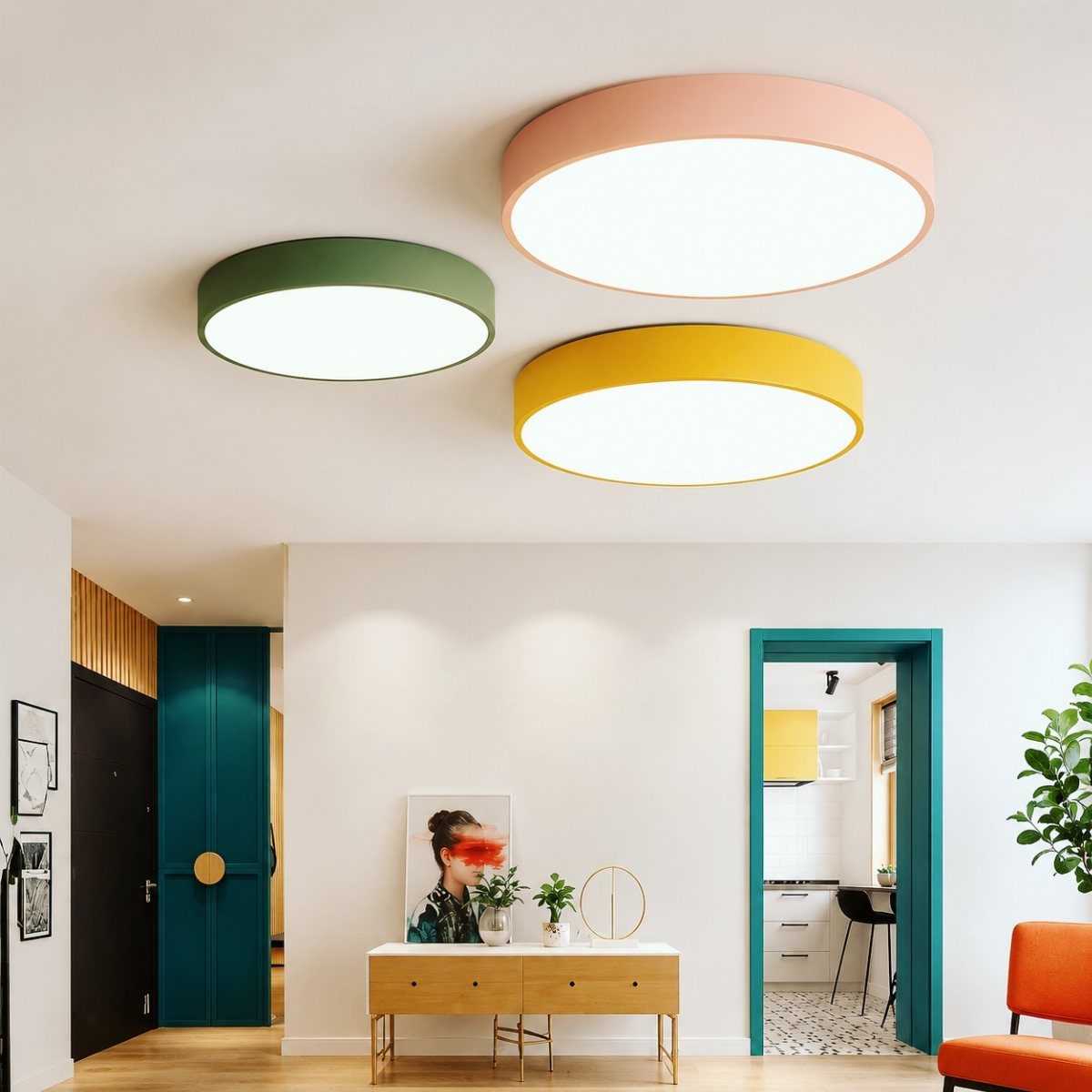
Flush mount lights sit almost flat against the ceiling, which matters more than it sounds in a bedroom with 8-foot ceilings or less.
A Murano glass flower shape gives off a shimmer when lit, but even a simple disk in white or pale wood keeps the room feeling open.
The clean line suits a minimalist space, and the soft, even light means no one corner gets too bright for winding down. Pick one large enough to matter; a 12-inch diameter is the smallest that reads intentional rather than leftover.
15. Sculptural Lighting
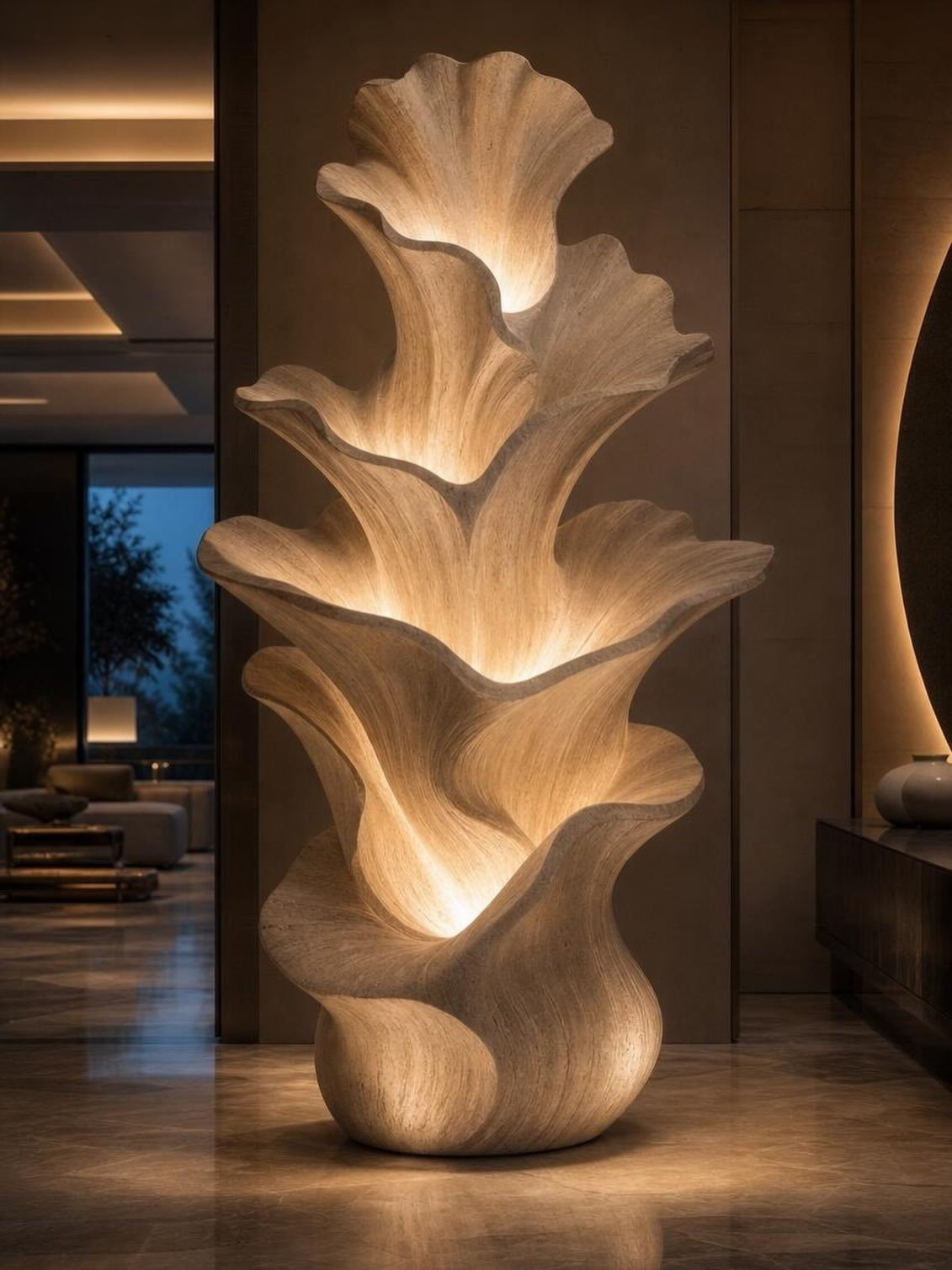
A sculptural light is the one fixture you buy for how it looks turned off as much as on.
A wavy, layered shape in ceramic or plaster throws light through its folds rather than straight out, so the glow itself becomes the sculpture.
Place it where you will actually see the silhouette from bed or the doorway; a corner behind a chair wastes the point.
These work best when the rest of the room stays simple, so the lamp gets the attention it is built for.
16. Color Temperature
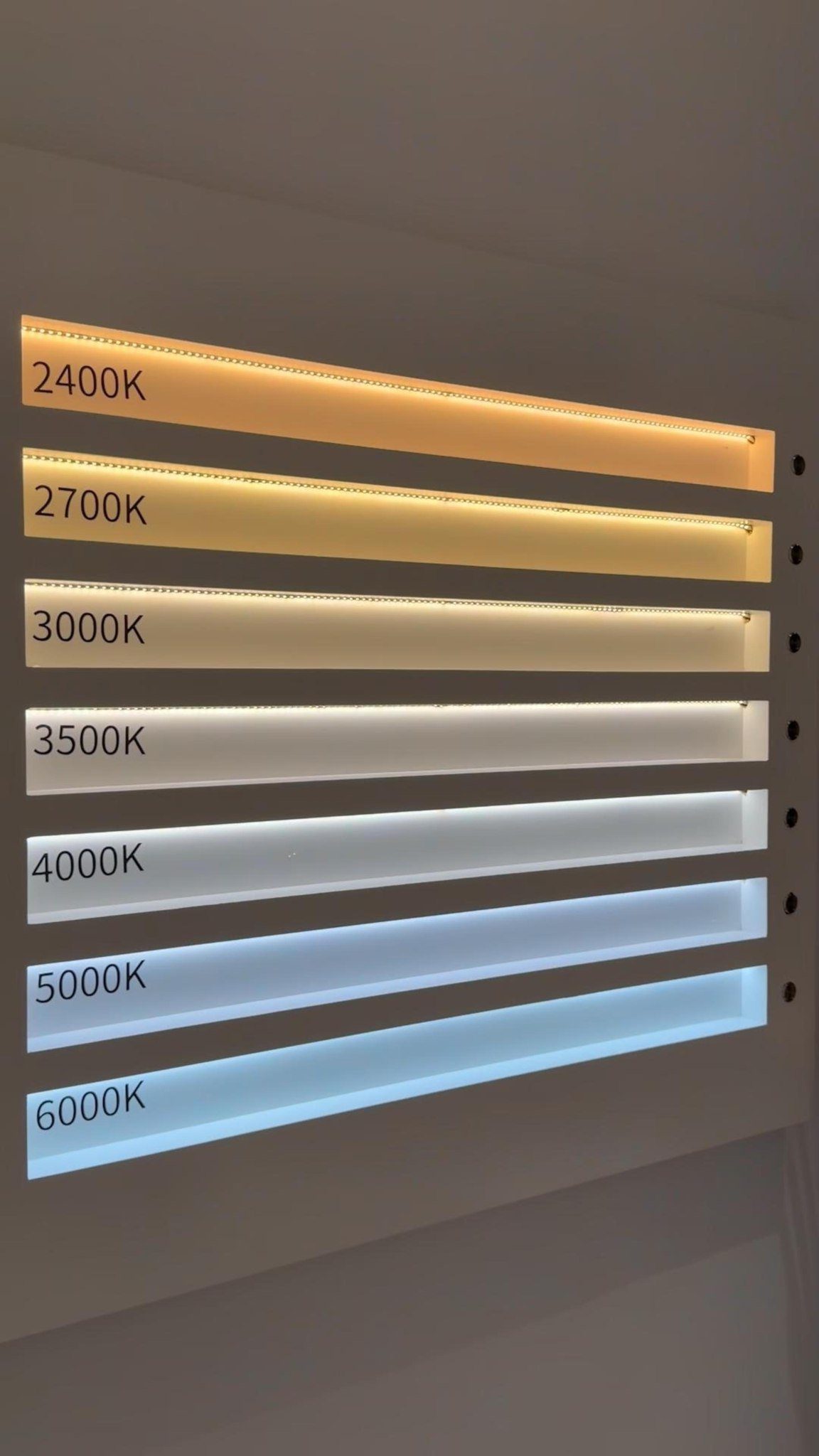
For bedroom lighting, 2700K is the warmer, softer end, the color of late afternoon light; 3000K is slightly cleaner and pairs better with modern fixtures in white or metal. Both are still warm, not clinical.
2700K by the bed and 3000K near the closet or dresser is the split I would use; warmer light relaxes, slightly cooler light lets you actually see what you are grabbing.
A bulb anywhere from 2400K to 6000K will work in some room of the house, but the orange end and the blue end both fight sleep. Stay between 2700K and 3000K for a bedroom.
17. Whimsical Lighting
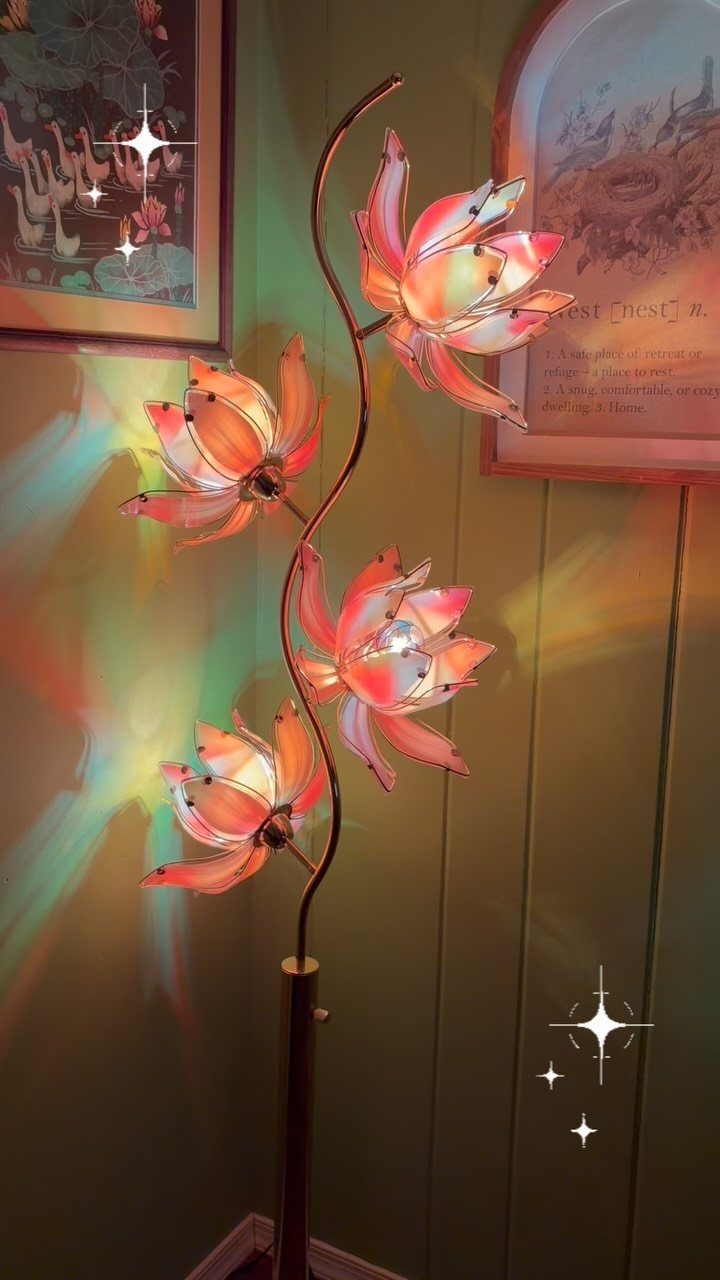
A lamp that casts shadow patterns turns the wall itself into something worth looking at. Lotus-shaped shades throw colored light in overlapping shapes that move as you walk past, which beats any static print on the wall.
These work best against a plain painted wall; wainscoting or busy wallpaper fights the effect. For a smaller version, a single floral sconce beside the bed gives the same quiet movement without taking floor space.
The bulb has to walk a narrow line: dim enough that the shadows still show their shapes, bright enough that you can still find your shoes.
18. Neon Bedroom Lights
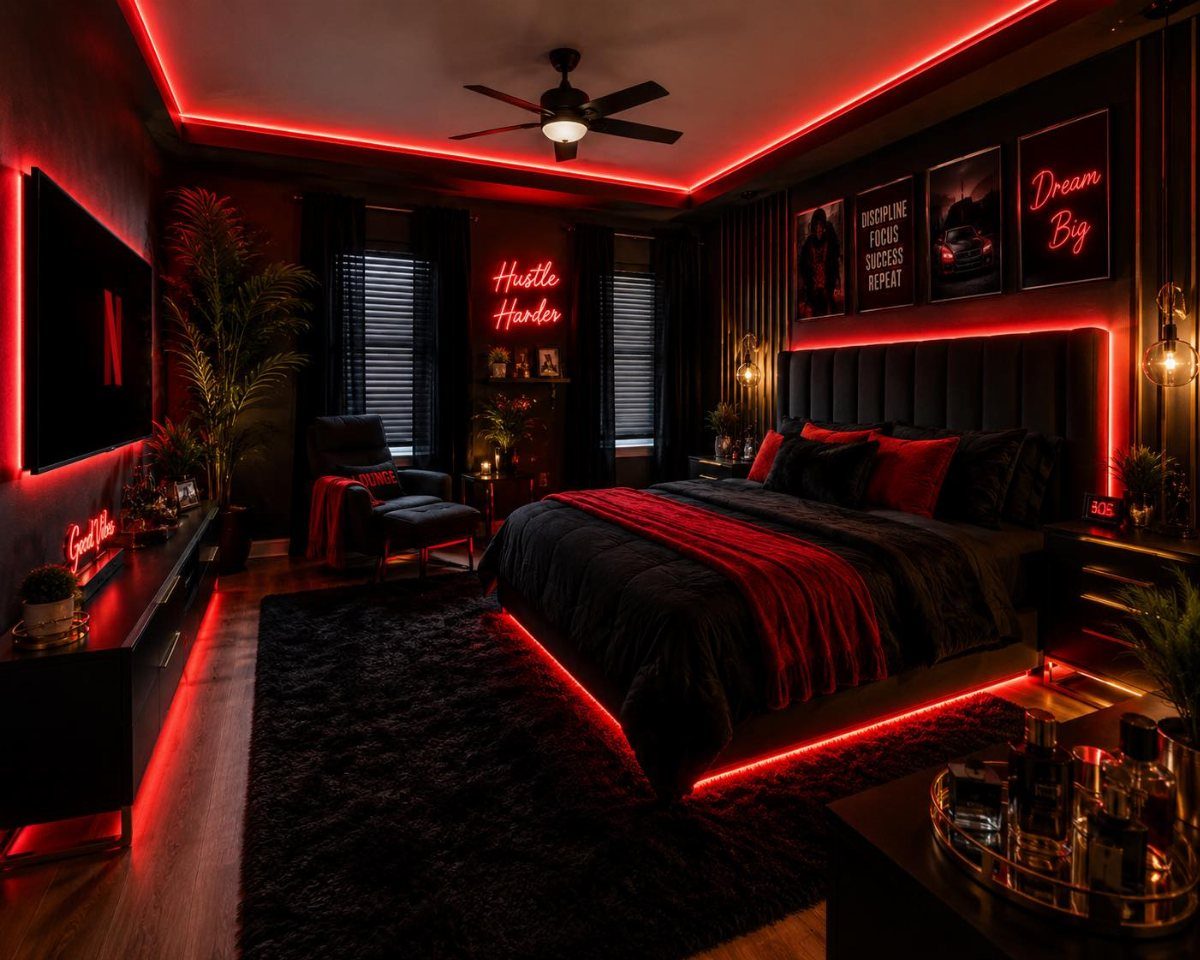
Neon or LED strip lighting is the fastest way to make a bedroom feel like somewhere else entirely.
Run it along the ceiling edge, behind the headboard, or under the bed frame so the glow reflects off the wall rather than hitting your eyes direct.
Red neon reads dramatic in photos; amber or soft white is easier to sleep near and still gives that floating, cinematic feel. Strips with a dimmer let you wind down without killing the mood entirely.
This one suits someone who wants the room to feel active at night, not tucked in; if you prefer morning calm, this is not your move.
Importance of Lighting
The right bedroom lighting does more than let you find your socks. Warm light in the evening cues your body to wind down; cooler light in the morning helps you wake.
A single overhead fixture usually fights against both goals.
I aim for at least two sources in every bedroom: one for overall brightness and one you can dim low for reading or settling in.
Three is better if the room is large enough to hold separate zones for sleeping, dressing, and maybe a desk.
Dimmers matter more than fixture style. A cheap lamp on a dimmer often outperforms an expensive chandelier wired to full blast only.
If your house has older wiring, a smart bulb in a basic socket gets you the same control without touching the wall switch.
Mixing Styles
A ring-style flush mount with a marbled diffuser can sit over a bed in a modern room without shouting for attention. It works best when recessed cans and table lamps already handle the real work of lighting the space.
I like pairing one statement piece with simpler supports. A sculptural pendant over a nightstand reads as art when the ceiling fixture stays plain.
Two loud pieces in the same sightline usually compete; spread them to opposite ends of the room.
Metal finishes don’t need to match. Brass bedside lamps with a black ceiling mount look intentional if the shapes share some logic, both angular or both rounded.
The ring mount’s clean circle, for instance, echoes well with globe bulbs or cylindrical shades.
Natural materials warm up metal and glass. A ceramic base, a linen shade, or a rattan detail keeps the mix from feeling like a showroom floor.