Guest bedroom decor runs from a carafe of water on the nightstand to built-in bookshelves that need a contractor, and the deciding factor is usually how many nights the guest stays.
Weekend visitors need storage they can see and a place to set a bag; longer stays call for a cleared dresser drawer and a surface where work actually happens.
The charcoal accent wall I describe took one quart and a half of paint.
1. Provide Storage Space
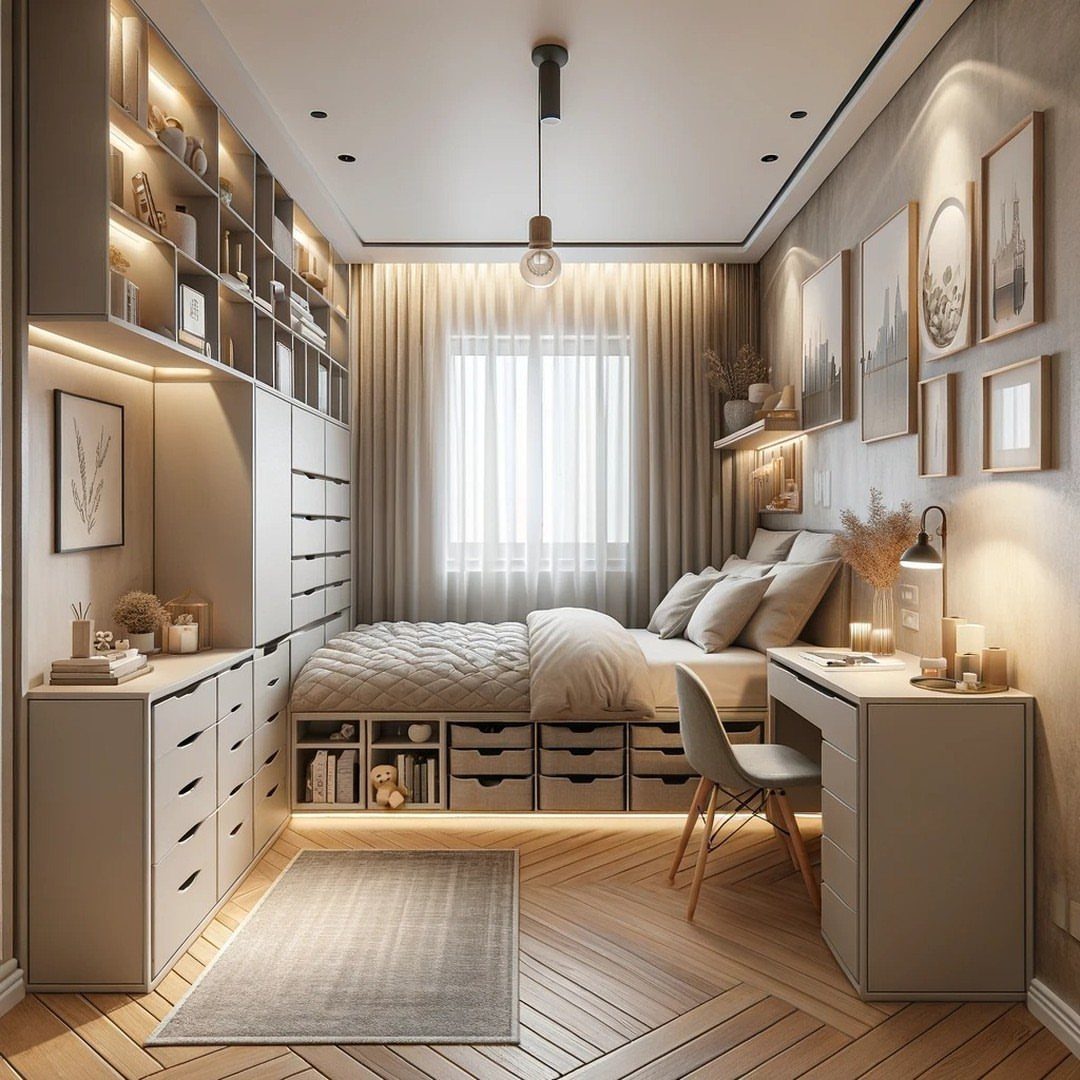
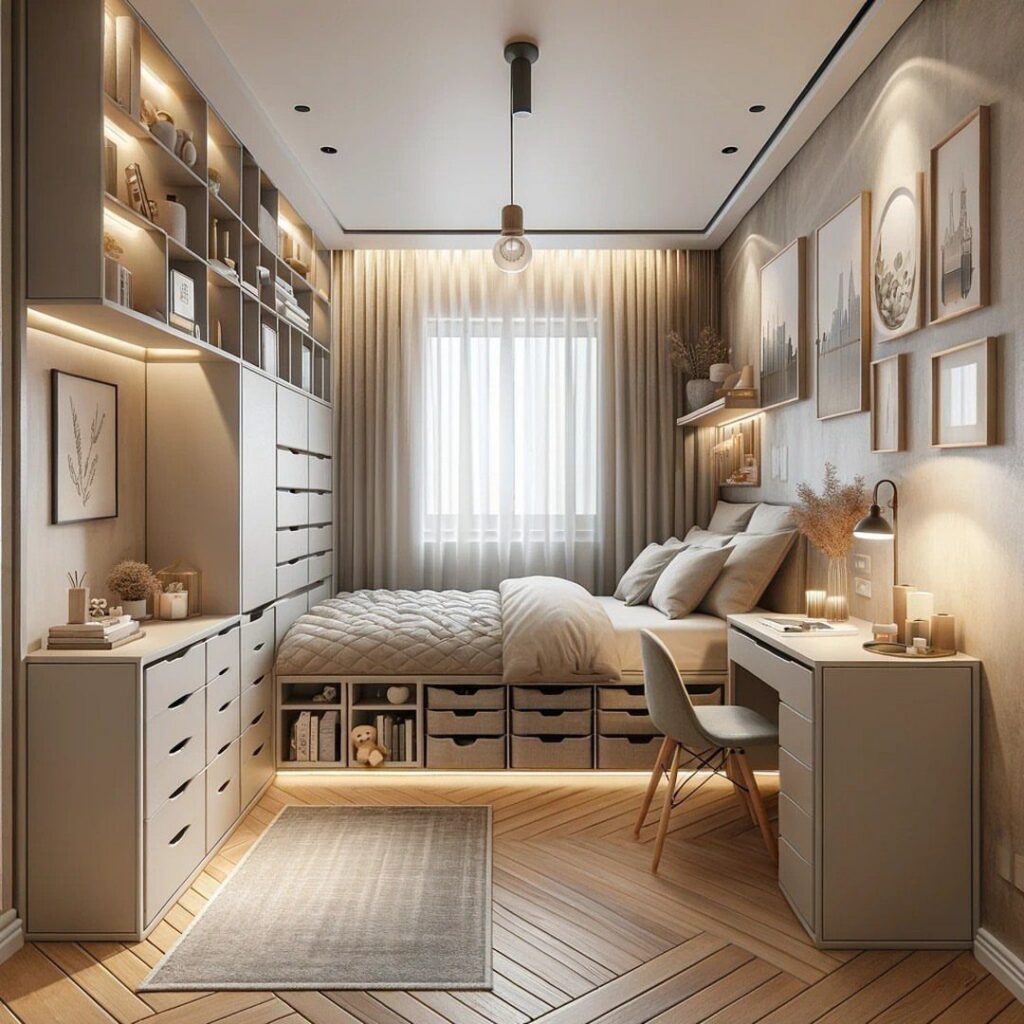
Built-in drawers under the bed keep spare linens out of sight until turnover day, which matters more than guest closet space for most weekend visits.
A luggage rack or 2 slim baskets on the floor let travelers unpack without commandeering the whole room. For longer stays, a lidded basket for worn clothes saves guests from hunting down your hamper.
I cleared out one dresser drawer for my mother-in-law last spring and she used it; my brother tossed his bag on the chair and never opened the others.
Match the storage to how long they stay, not how much you wish you had.
2. Changing the Pillows
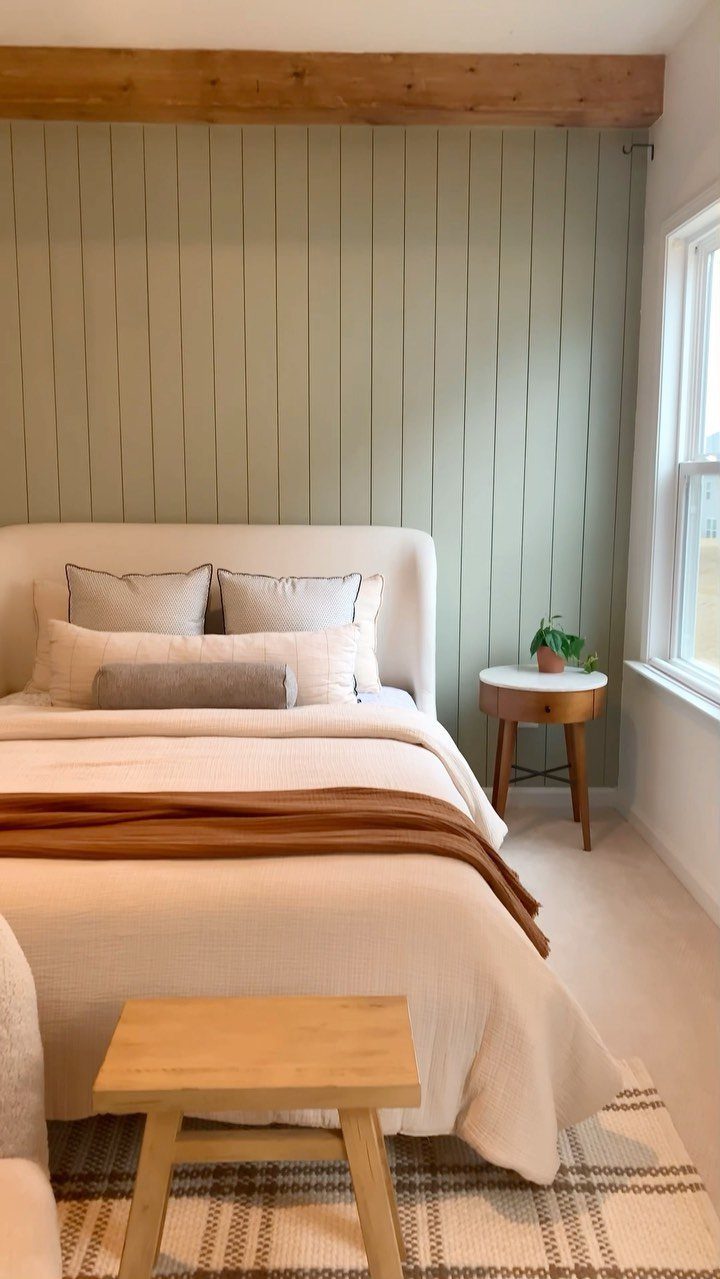
Swapping pillows costs less than replacing the whole bed and shifts the room faster than you’d expect. Layer one solid against one pattern, or switch to all-white shams in mixed textures for a calmer look that still reads finished.
The foam pillow underneath matters more than the throw on top, so guests actually sleep. I’d keep the decorative set small, 2 or 3, so no one fights through a wall of cushions to find the bed.
3. Fresh Flowers
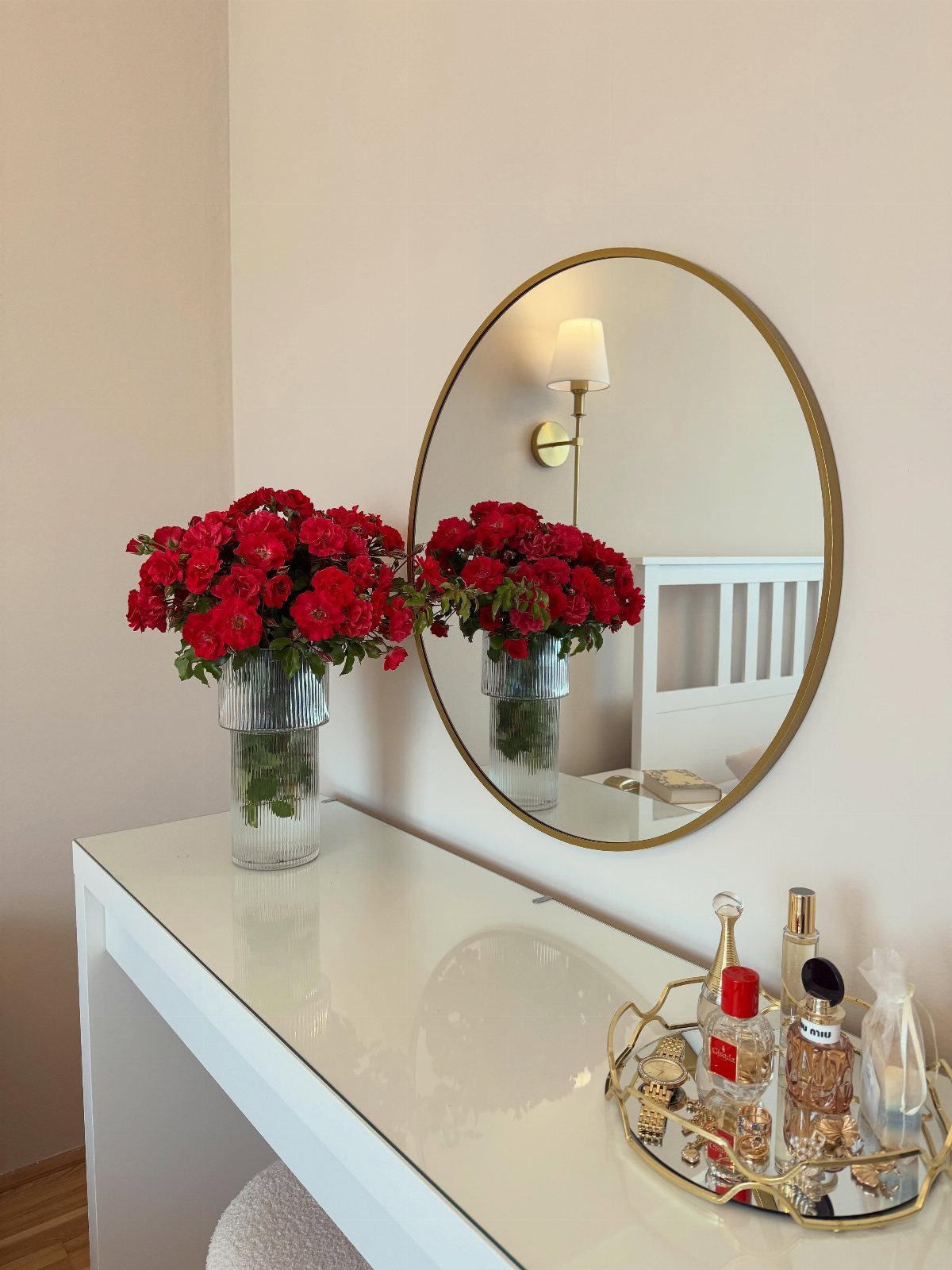
A small vase on the nightstand or vanity, filled with whatever is in season at the grocery store, signals that someone prepared for this arrival. Water in a carafe beside it saves a midnight trip to the kitchen.
Skip the arrangement if your guest has allergies; a scented candle or just the clean room does the same work of welcome. Check your own tolerance too, since you’ll be the one changing the water when it clouds.
4. Add Greenery
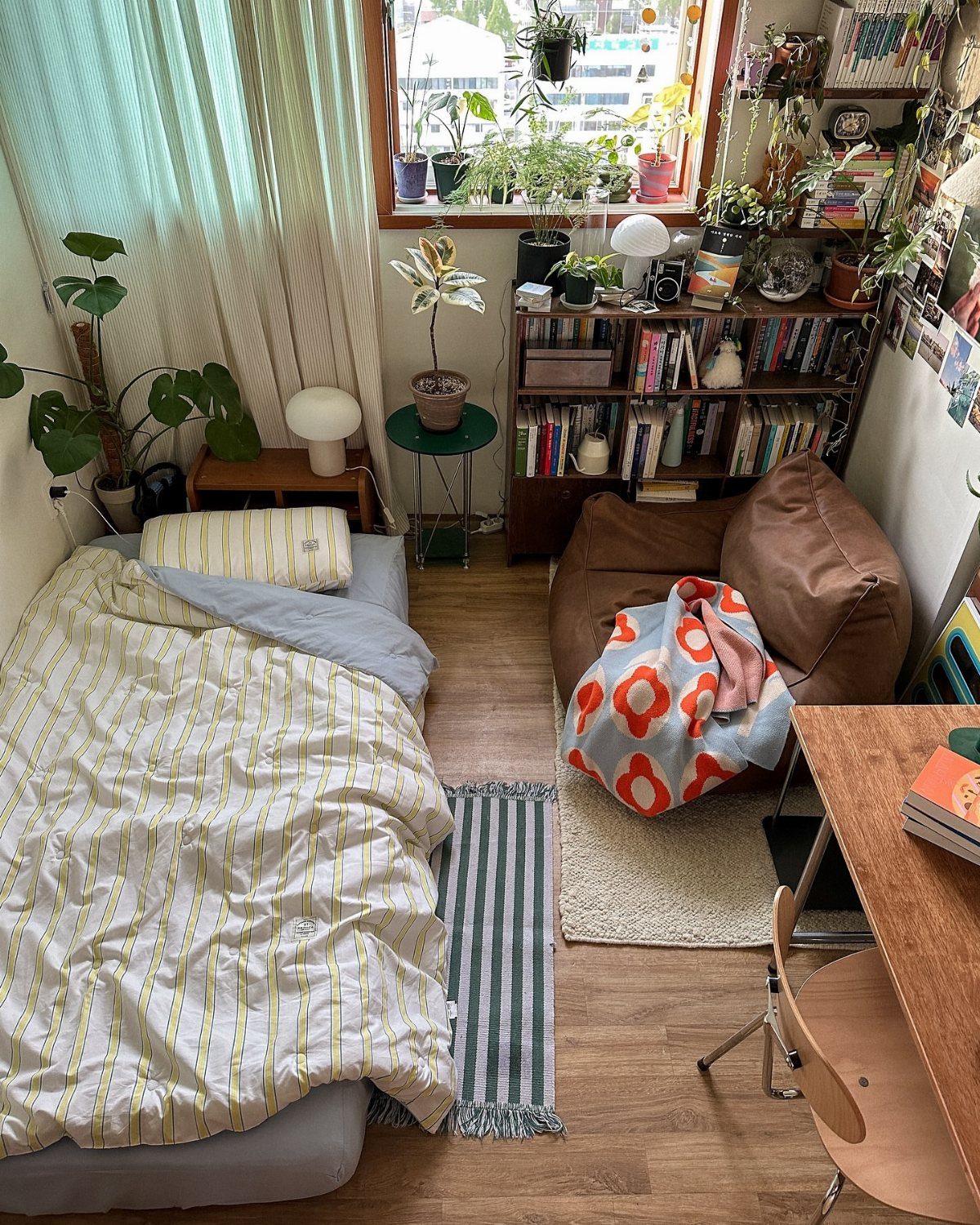
Snake plants and succulents survive the neglect between guests; faux stems survive it even better and rotate through seasons without dropping leaves on the carpet.
A small pot on the nightstand or a trailing vine on the shelf adds color where paint can’t go.
I run fake in my own guest room because the window faces north and I forget to water. Real plants do filter air, but the visual freshness is what most guests notice first.
5. Add a Mirror
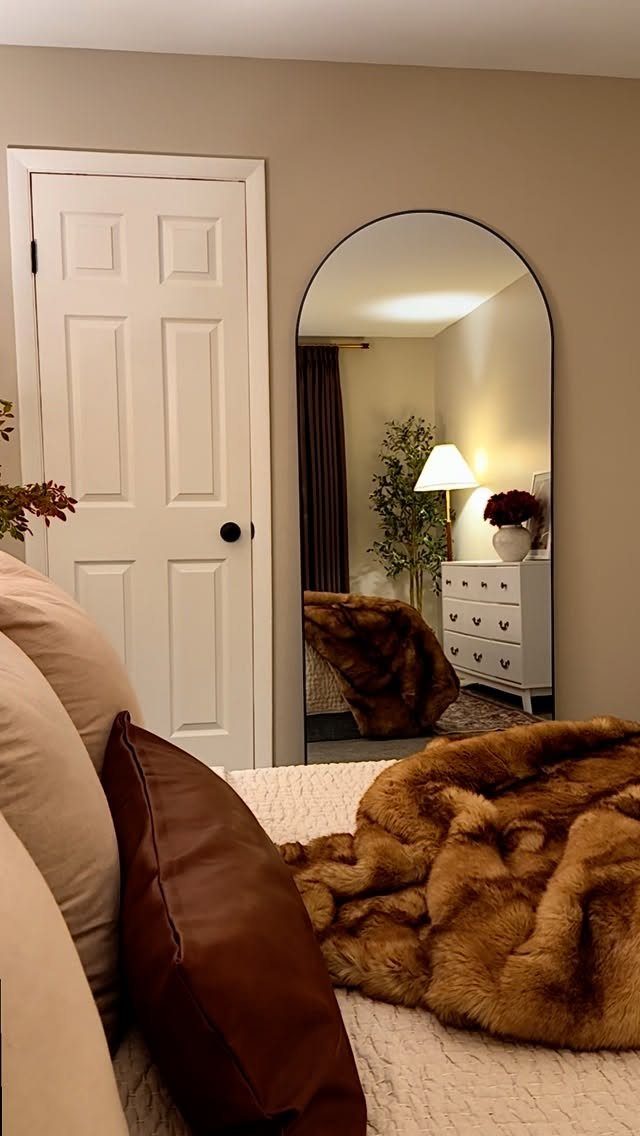
A full-length mirror leaning against the wall or hung on the back of the door lets guests check their outfit without borrowing your bathroom.
The reflection also doubles whatever light the room gets, which helps in basement bedrooms or north-facing spaces.
Position it where it catches the window, not where it catches the unmade bed first thing in the morning. I’d pick a simple frame that moves with whatever else changes in the room.
6. Cozy Reading Nook
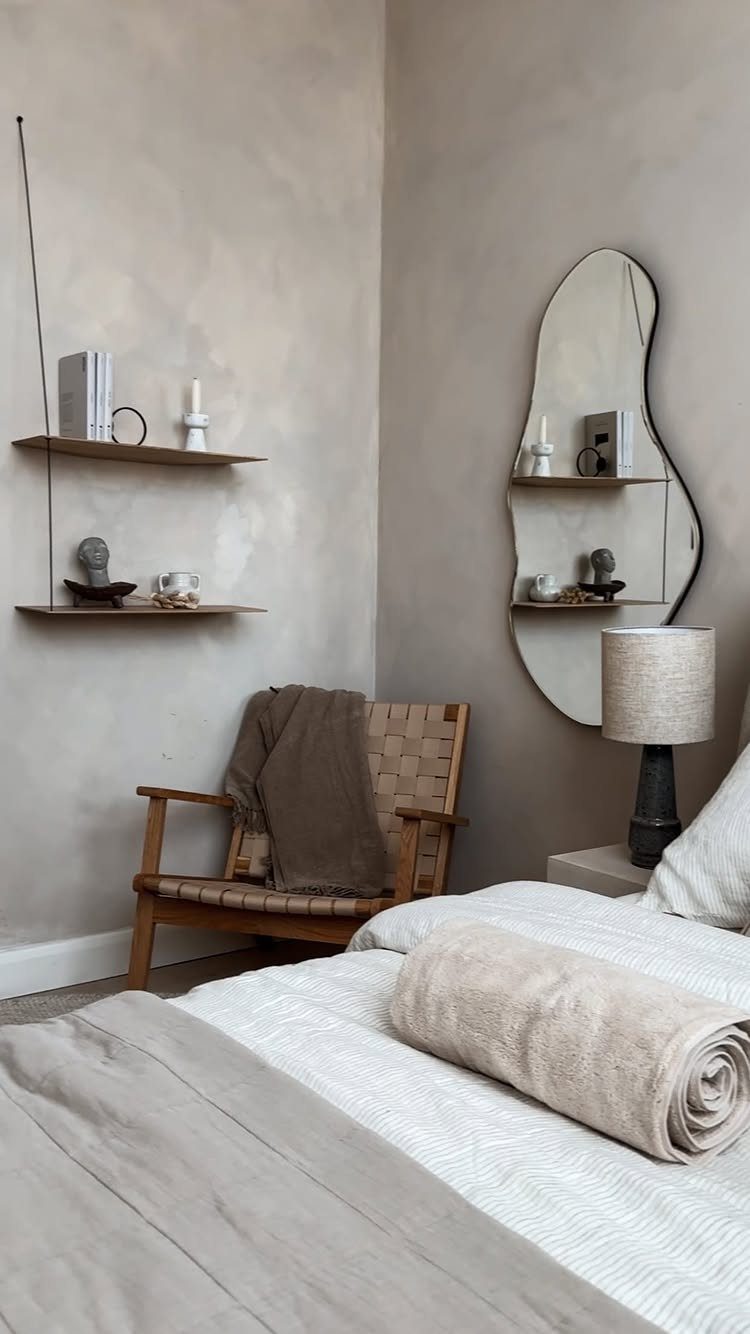
A single woven chair in the corner, close enough to the window for daylight, gives guests somewhere to sit that isn’t the bed they’ve just unmade.
A small side table holds the book and the coffee cup; a throw over the arm invites actual use. Guests need separate seats eventually, even if they arrive as a couple.
7. Incorporate a Desk
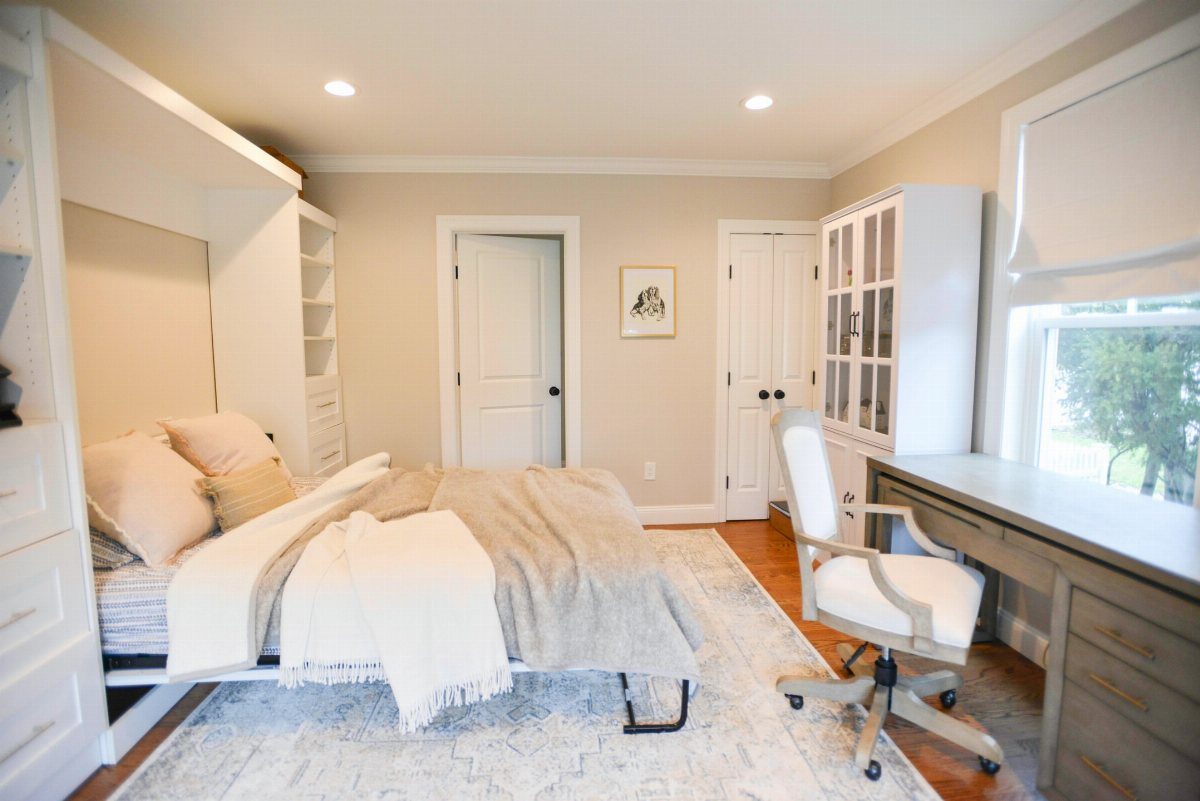
A desk turns the room into something guests use even when they aren’t sleeping over. A desk under the window saves the wall with the bed for the bed itself.
A slim writing desk fits most corners; add a chair with arms if someone will sit there for hours, or a backless stool that tucks underneath if floor space is tight.
I keep a power strip and a spare phone charger in the top drawer of mine. Guests working remotely need that more than they need the desk itself.
8. Fresh Towels
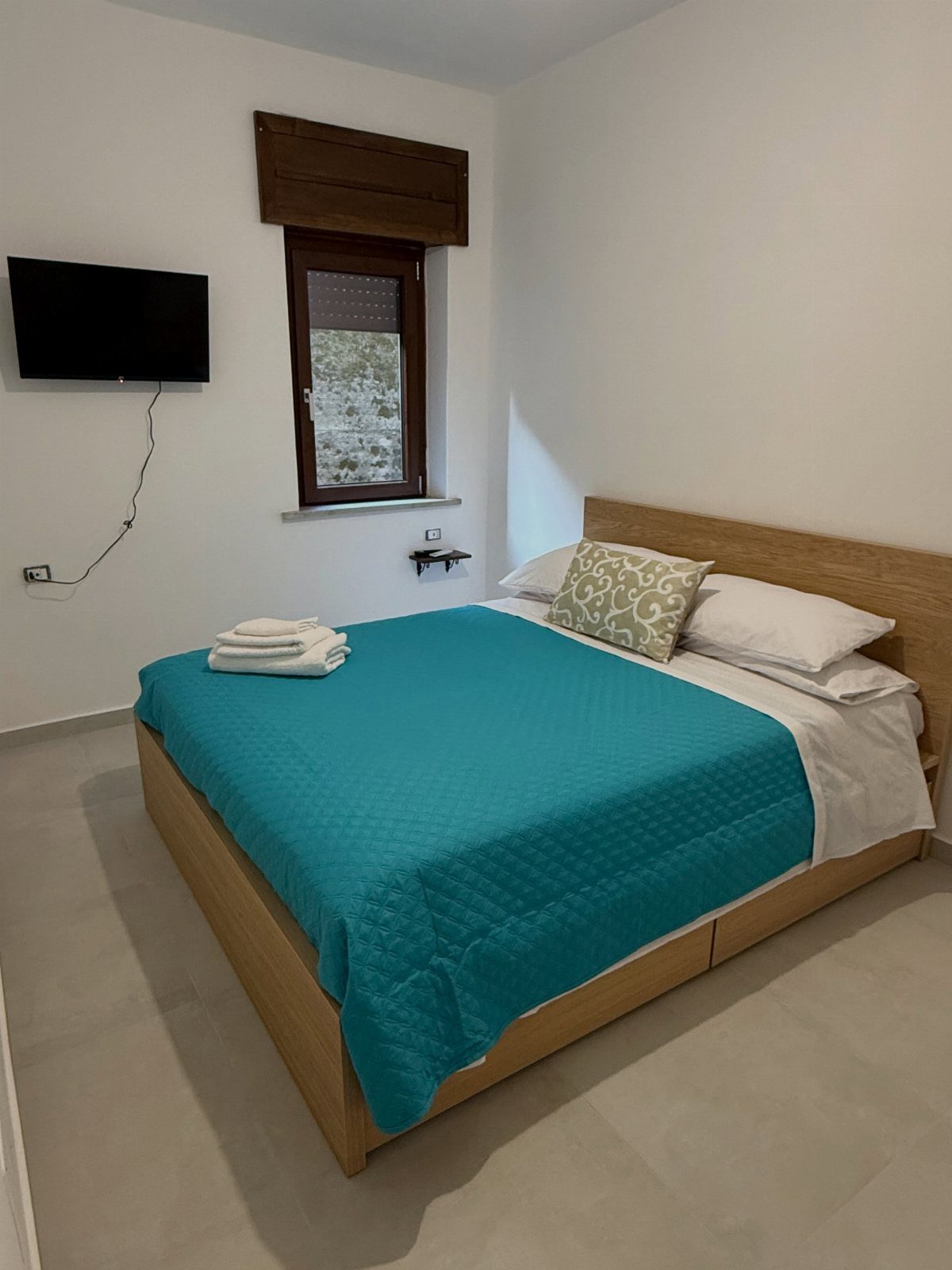
White towels folded on the bed tell a guest they don’t have to ask. I lay out matching bath towels, hand towels, and washcloths per person, stacked where they see them before they wonder where the linen closet is.
A fresh bar of soap beats a used one; I replace it every visit even if it looks untouched.
Toothbrushes, toothpaste, and a hair dryer live in the nightstand drawer at my house. The cost stays reasonable if you’re starting from nothing, then almost nothing to maintain.
9. Accent Wall
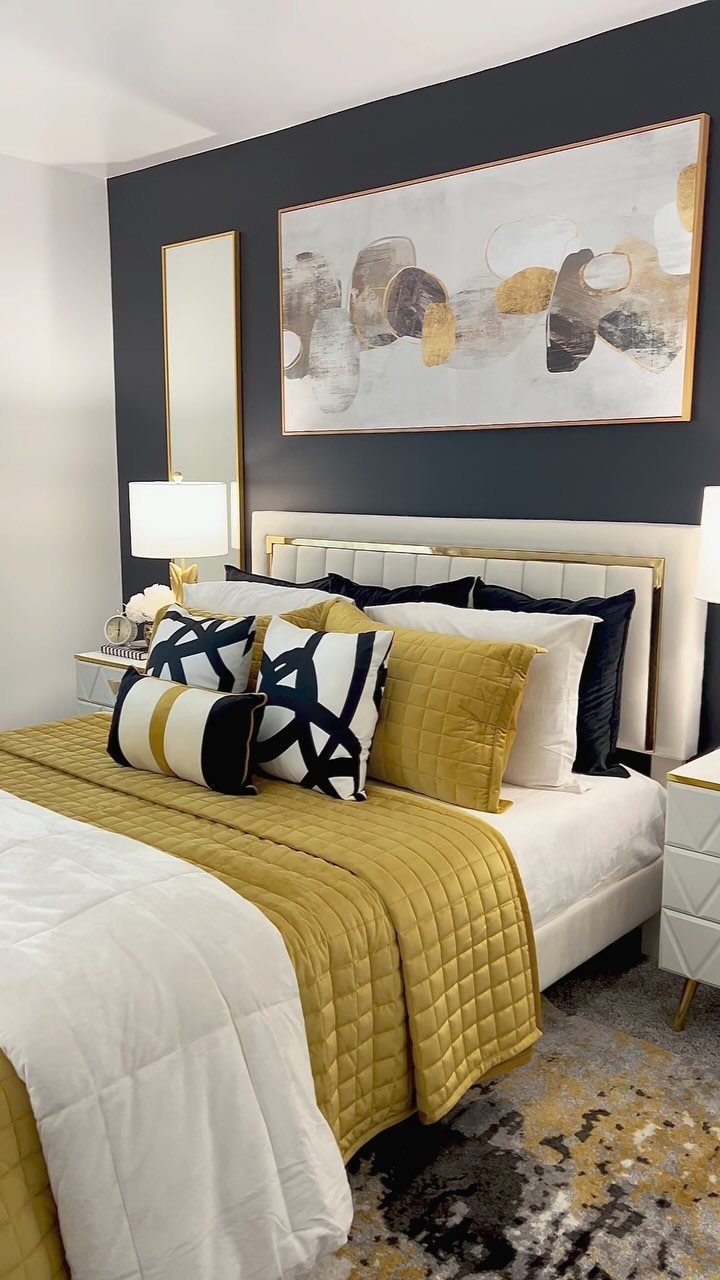
Dark paint behind the headboard does what a whole painted room does at one-quarter the work and one-tenth the panic.
A charcoal wall reads as intentional, not as a cave, because the bedding stays light and the frame around the art is gold.
An accent wall takes an afternoon with a roller and a brush for the edges. 2 coats of matte finish over primer; the whole job took a quart and a half.
If the room gets afternoon sun, a cooler gray holds its color; warm light needs a gray with brown in it or the wall shifts blue by evening.
10. Add Bookshelves
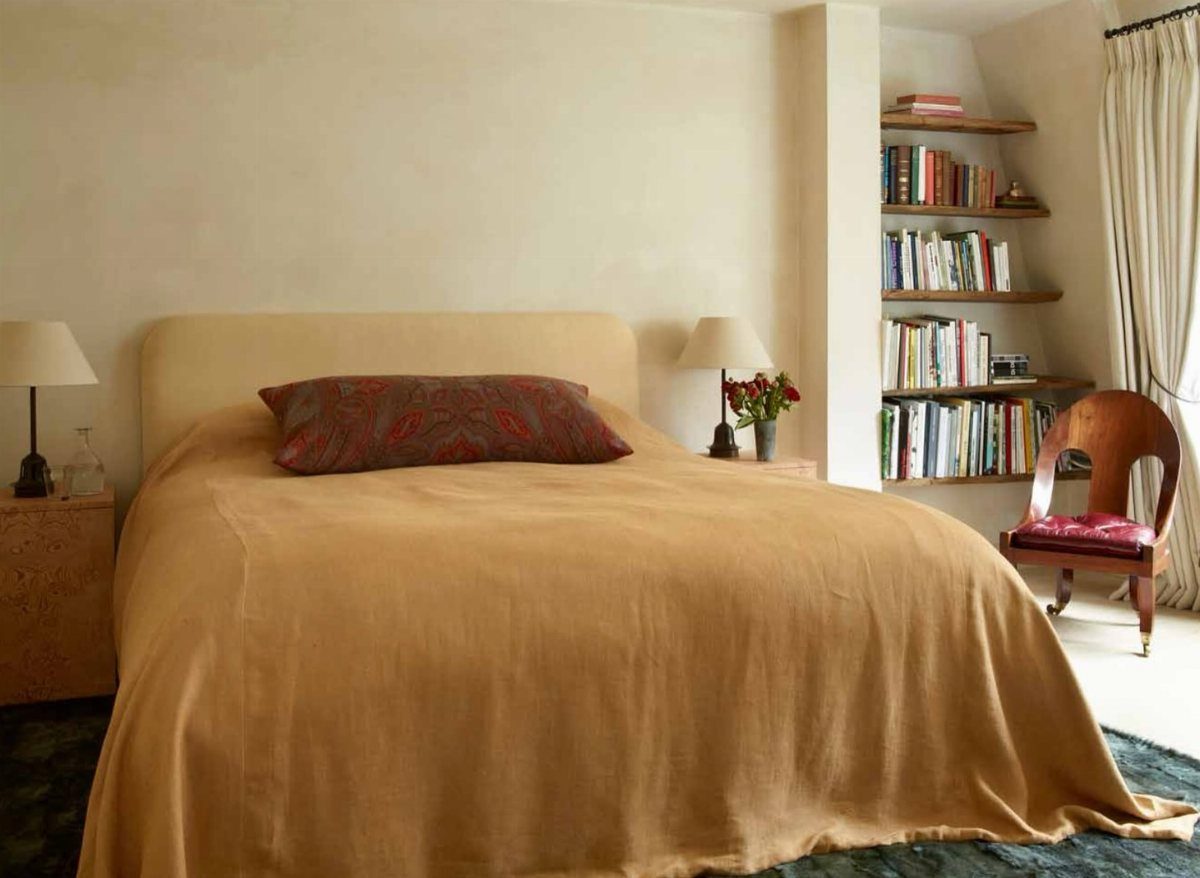
Recessed wall niches built for books turn a blank wall into storage that doesn’t stick out into the room.
Shelves deep enough for a row of paperbacks and a glass of water on the ledge matter more than they sound when a guest doesn’t want to cross the room.
Built-ins require a contractor and serious budget; a pair of floating shelves at bedside height does a similar job for far less and an hour with a level.
I like shelves for rooms that see guests once a month; the niche earns its cost only if the room works hard year-round.
11. Blackout Drapes
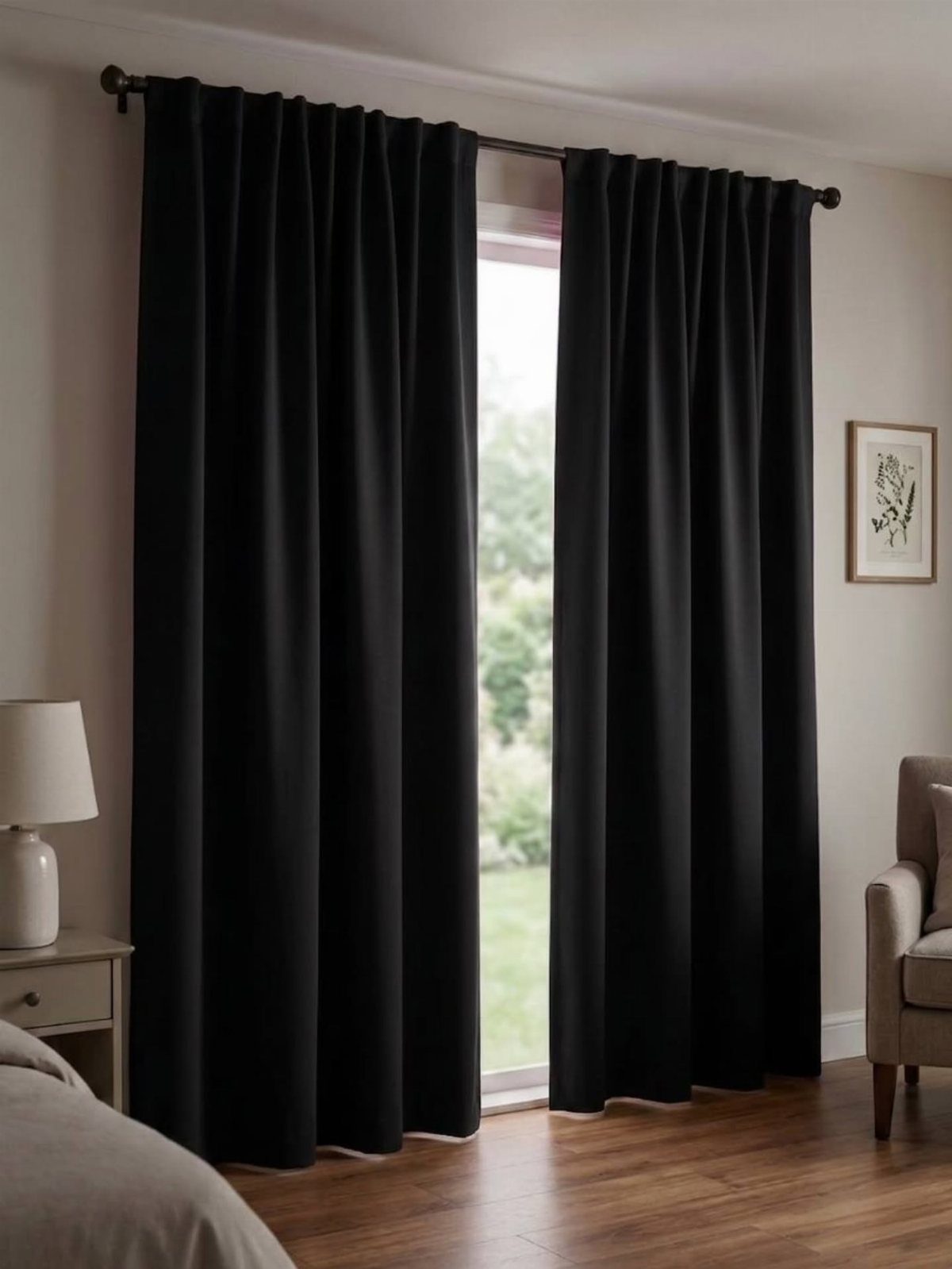
Blackout drapes make the difference between a guest who sleeps in and one who texts you early asking where the coffee is.
Black panels hung floor-to-ceiling on a rod mounted above the frame block the strip of morning light that sneaks over shorter mounts.
Lined panels from the store work as well as custom shades; reasonable cost per window and quick work with a drill.
If the room faces east, the investment is non-negotiable. West-facing rooms get away with room-darkening liners instead of true blackout, which saves money per panel and still handles afternoon naps.
“Blackout drapes block daylight to aid in sleeping, while sufficient bedside lighting allows guests to read at night,” says Tracy Morris, founder and president of Tracy Morris Design in McLean, Virginia. This insight ties into Morris’s overall ethos of emphasizing practicality in guest bedrooms.
12. Patterned Wallpaper
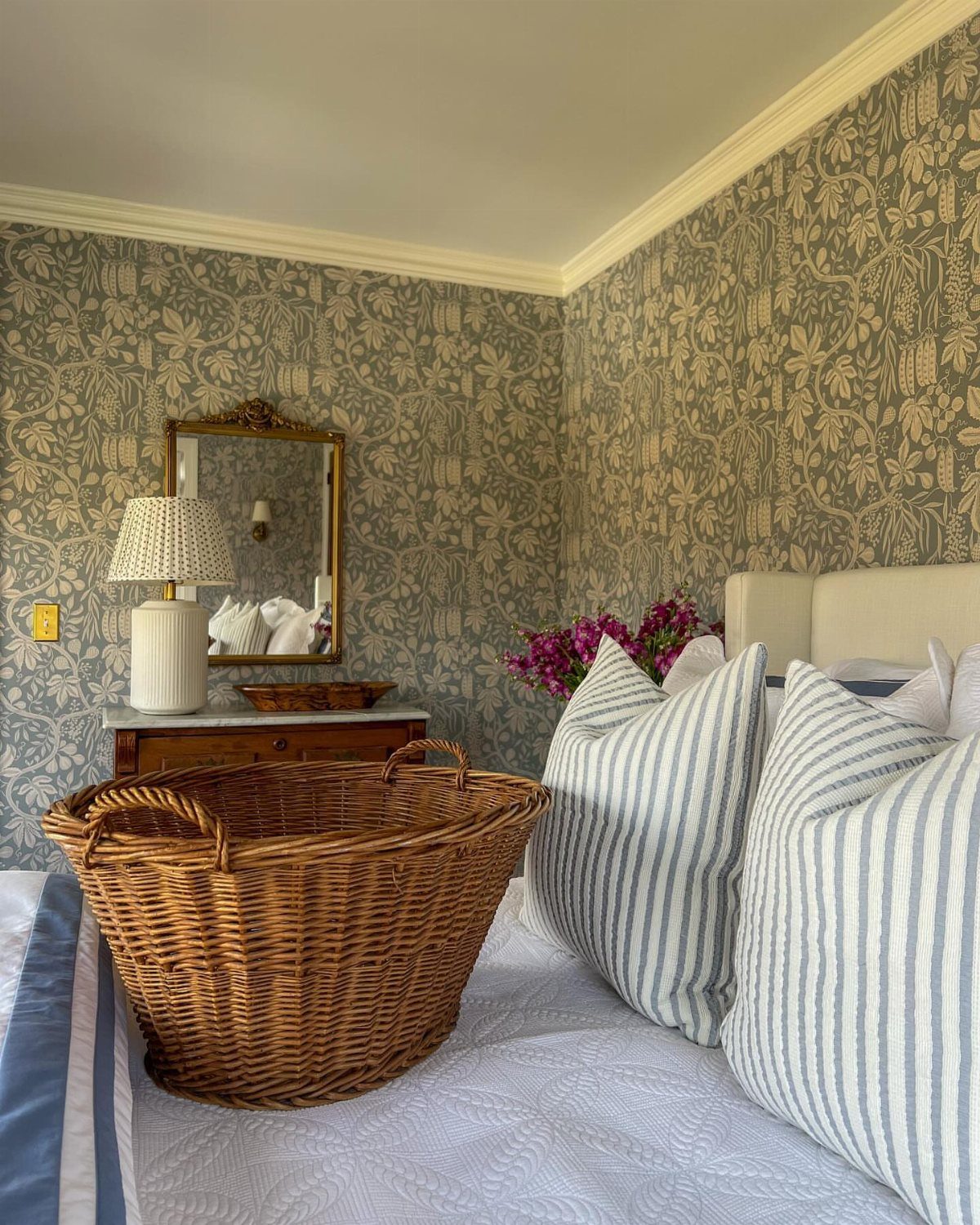
Patterned wallpaper on one wall gives a guest room the personality most hosts are afraid to commit to.
A floral reads traditional; a stripe or small geometric reads modern without trying harder. Paper the wall behind a headboard from top to bottom in manageable strips, smoothing bubbles with a plastic scraper.
Peel-and-stick runs mid-range per roll and comes down clean when you tire of it. Traditional paste paper costs less per roll but needs primer and more patience; I choose it only for rooms where the paper stays put long-term.
A single roll covers a small area after pattern matching, so measure twice and order extra.
13. Use Twin Beds
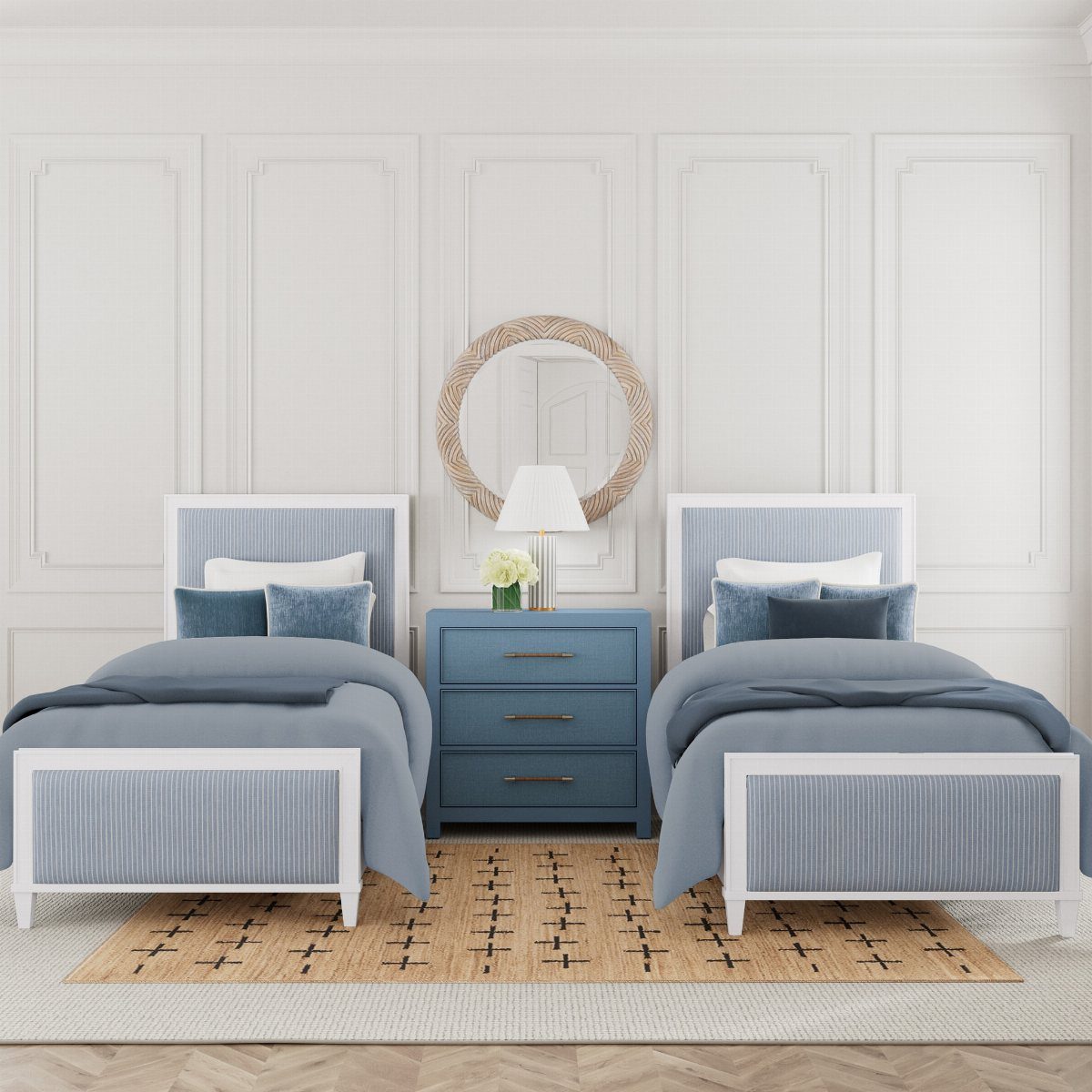
2 twin beds flex better than a single queen when nieces, nephews, or friends visit in pairs. Symmetry calms a room fast: matching frames, a shared nightstand, one mirror above the beds.
Bunk beds or daybeds with a trundle hide even more sleepers in the same footprint, though a standard twin pair costs less and sets up in an afternoon.
I’d pick this arrangement for anyone who hosts kids or siblings more often than couples.
Some couples dislike sleeping apart, so this setup works better for friends or kids than for partners. Keep a full or queen elsewhere for them, or accept that this room serves one guest type well and another not at all.
14. Soft Neutrals
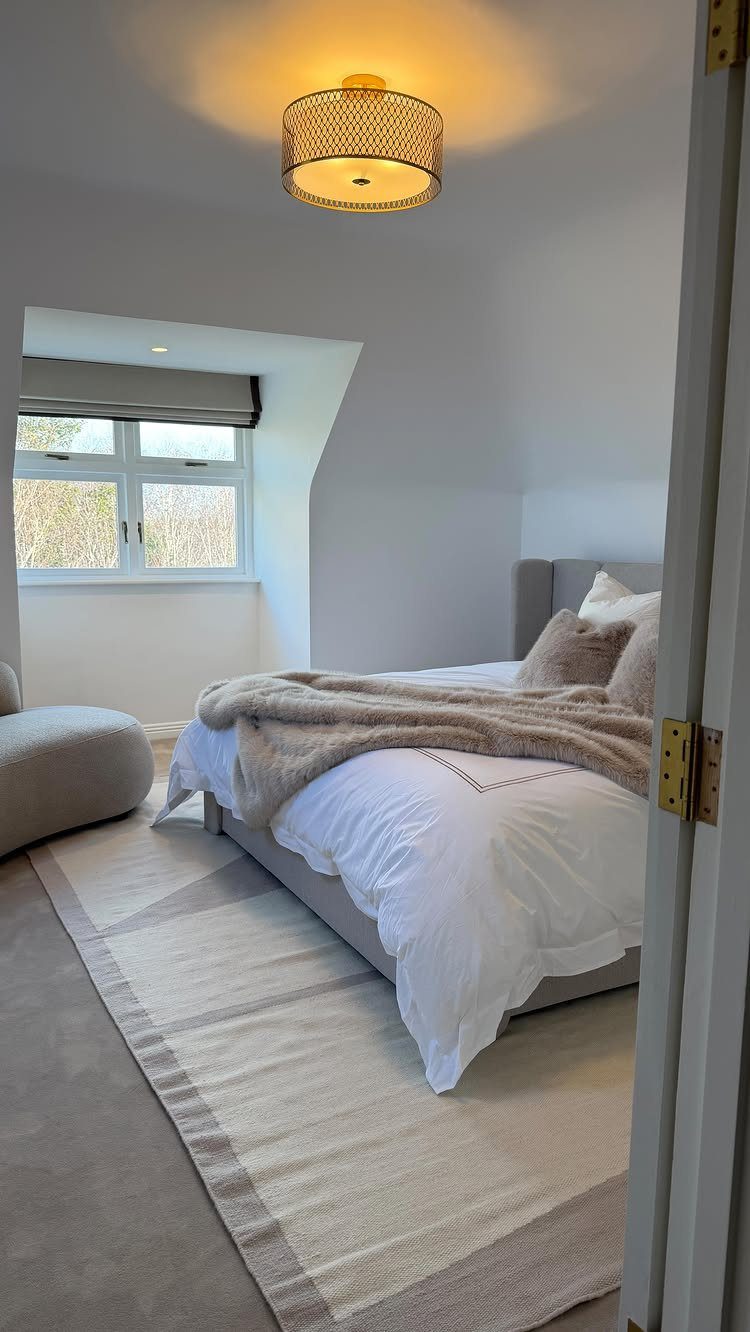
Taupe, warm white, and the palest greige settle a guest faster than any host’s hospitality. Nothing competes for attention, so a tired traveler drops her bag and exhales.
Benjamin Moore’s White Sand OC-10 or Spring Thaw 1508 both do this without going cold or clinical. A fresh coat of paint on a small bedroom takes a Saturday and changes the whole mood.
Soft neutrals suit the host who rents, resells, or simply tires of bold color fast.
The risk is blandness, which a single texture, like the plush throw visible here, prevents. I’d add that texture first, then stop; this palette rewards restraint.
15. Add a Decorative Basket
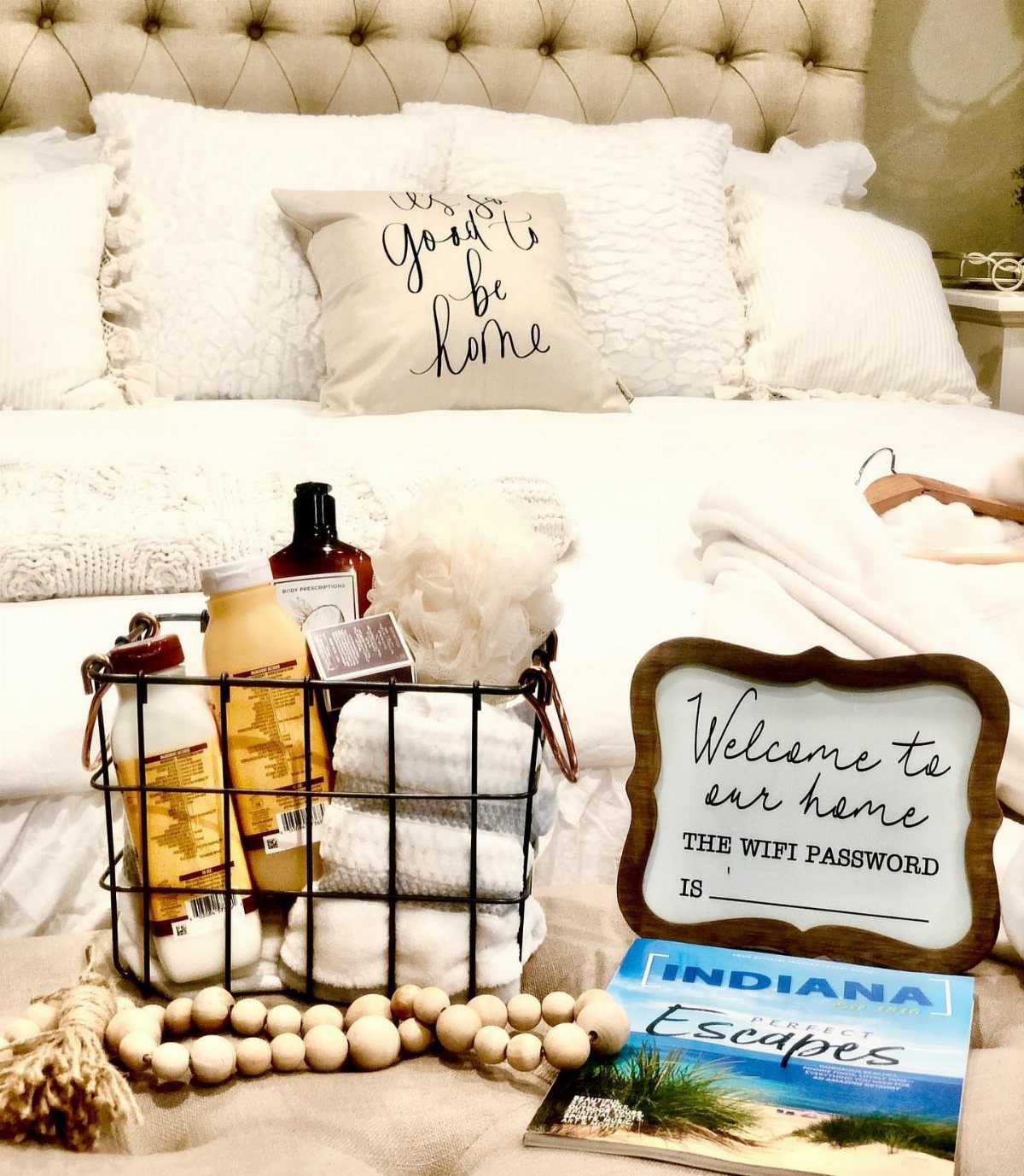
A wire basket on the bed corrals the clutter that guests otherwise hunt for late at night.
Woven rattan or seagrass warms the same function and shows up at most home stores.
Roll in a throw, add a spare magazine, tuck in a backup phone charger. The basket lives on a bench, nightstand, or floor corner when the bed is in use.
This suits hosts who lack closet space to hide extras, or who want decor that works when the room sits empty between visits.
It does not replace a wardrobe; guests with luggage still need a chair or rack. I’d choose wire for modern rooms, rattan for everything else.
16. Provide a Welcome Basket
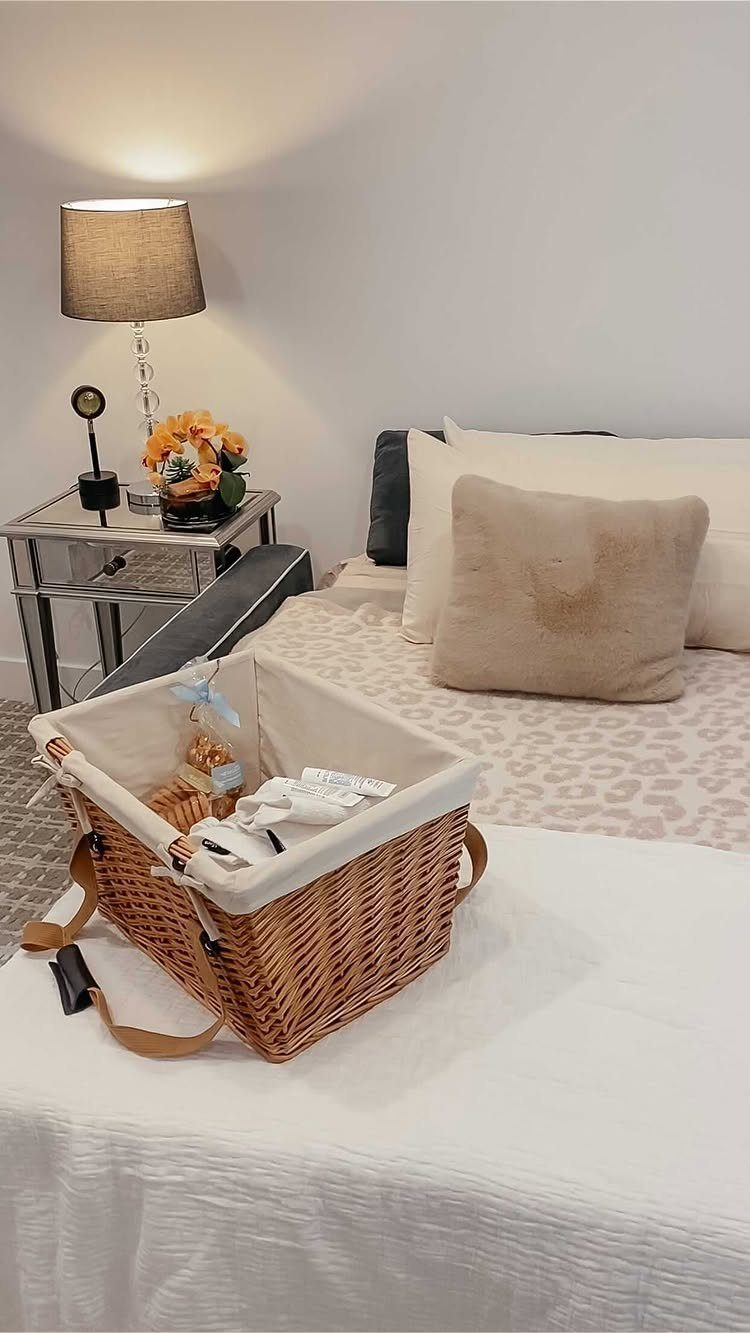
The wicker basket on the bed announces that someone prepared for this arrival.
Packaged treats, toiletries, maybe a water bottle: small consumables a guest forgets to pack and hesitates to ask for. A liner keeps a welcome basket from reading as leftovers or afterthought.
A welcome basket costs little to assemble if you stock travel-size shampoo and granola bars in bulk. Parrot the room’s palette, as the white fabric lining does here, or let the basket itself add contrast.
This rewards hosts who enjoy the performance of hospitality, the visible gesture.
It does less for the minimalist or the host who changes sheets hours before arrival. I’d skip the snack variety and pick one good chocolate bar, one water; abundance reads as pressure, not care.
Importance of Comfort
A guest room that actually comforts someone starts with bedding that forgives.
Two or three pillow types, soft and firm, let a guest choose without knocking on your door. The same logic applies to blankets: a light cotton layer and something heavier, so they control their own temperature.
Lighting matters as much as the mattress.
A bedside lamp dim enough for reading without blasting the whole room saves guests from stumbling to a wall switch. Low wattage and an opaque shade keep the light gentle enough to read by without jarring someone awake.
The real comfort is in what you remove.
Personal photos, your half-read books, the laundry basket you keep meaning to empty: these turn a restful room into a storage closet someone sleeps in. Clean and neutral wins over decorated and busy every time.
Maximizing Small Spaces
A guest room that earns its square footage does more than host sleepers.
A sleeper sofa or daybed folds the room back into daily life the morning after checkout. In tighter spaces, a loft bed with a desk underneath puts a workspace where the floor would otherwise hold only air.
If the bed lacks drawers, slim baskets on casters slide underneath and roll out when you change sheets.
I would not buy a piece that serves only one purpose for a room used twice a month.
The desk from the list doubles as a vanity; the reading chair faces the window but also fills a corner that would look abandoned without it. Every item justifies its footprint.
Creating a Welcoming Atmosphere
The welcome that lands starts before the guest unpacks.
A small frame on the nightstand with the WiFi password saves a text you do not want at 10 pm. Beside it, water and a glass answer thirst without a kitchen trip.
A variety of pillows and blankets does more than comfort; it hands control to the guest.
The same principle runs through snacks: one good item beats a scatter of choices that read as leftover party favors. A single chocolate bar or a sealed bottle of water signals intention, not abundance.
Personal touches work only when they aim at the guest, not at your own story.
A note is welcome; your vacation photos are not. I would frame the password, not the family reunion.
Color Choices
Color in a guest room should lower the heart rate, not raise it.
Neutrals do the same work with less commitment.
White Sand OC-10 and Spring Thaw 1508 both stay warm enough to avoid the clinical feel that sends guests checking for hospital corners. A single throw in a deeper tone or rougher texture keeps the palette from flattening into hotel blandness.
Blankets and throws carry color better than walls if you rent or resell. Match the pattern to your pillows for cohesion; mismatch them if you want energy.
I would add a weighted blanket to the closet for guests who arrive anxious. The heft calms without a word from you.
Frequently Asked Questions
How to decorate a bedroom for guests?
Start with a neutral base for paint and bedding, then add color through pillows, throws, and rugs that are easy to swap.
Guests need somewhere to put their things that isn’t your dresser top: a folding luggage rack, under-bed drawers, or even a pair of slim woven baskets keeps suitcases off the floor and clothes within reach.
A chair that isn’t the bed, a full-length mirror, and fresh towels folded where guests see them before they ask turn a spare room into somewhere people actually want to spend time.
What are some good ideas for guest bedroom decor in 2026?
Soft neutrals like taupe and warm white still settle guests faster than bold statements, with a single texture to keep the room from going bland.
Twin beds instead of one queen flex better for friends and siblings, matched with shared nightstands and one mirror above.
Peel-and-stick wallpaper behind the headboard commits to pattern without the permanence, and blackout drapes floor-to-ceiling handle morning light that shorter mounts let through.
What are some good color ideas for a guest bedroom?
Soft neutrals like Benjamin Moore’s White Sand OC-10 or Spring Thaw 1508 settle a guest without going cold or clinical; a single plush throw prevents the blandness risk.
For something bolder, dark charcoal behind the headboard reads intentional, not cave-like, when bedding stays light and art frames warm the wall.