
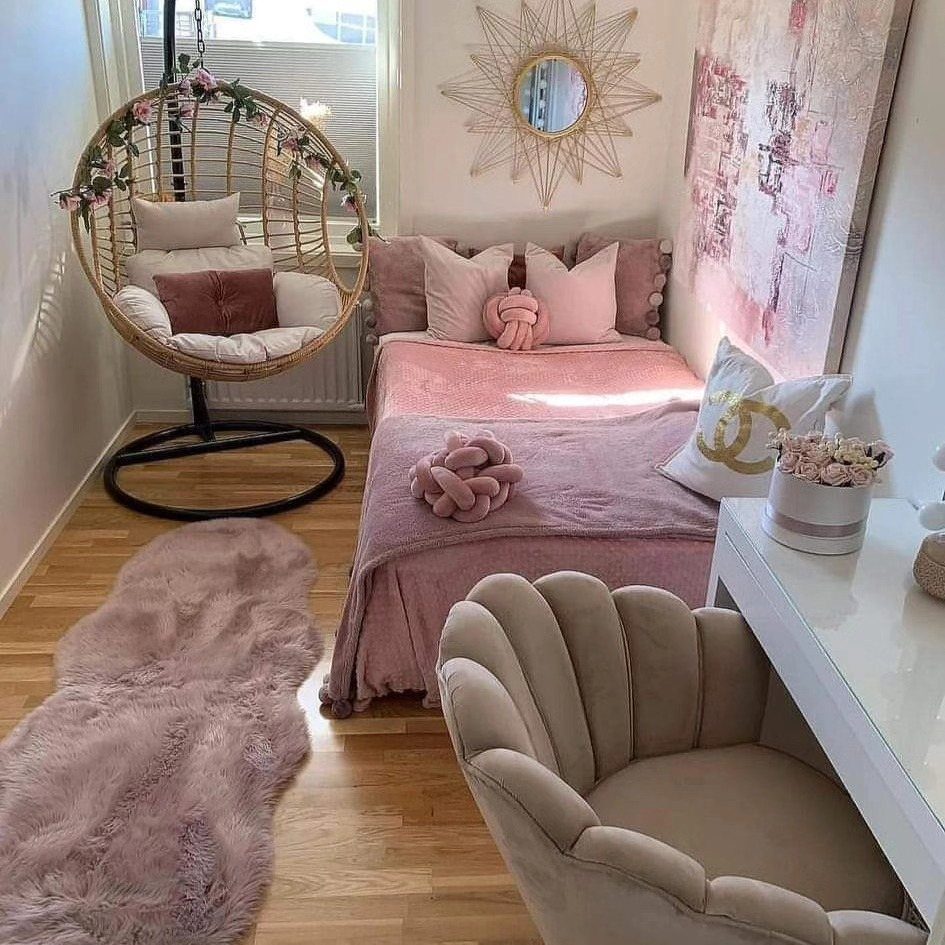
These ideas run from a can of paint to a weekend’s worth of board-and-batten installation, with most landing somewhere between a single trip to the home center and a Saturday with a miter saw.
What separates one from another is not budget but ceiling height: the slatted wood needs to reach all the way up to work, while half-height wainscoting was chosen with rentals and patch jobs in mind.
The 2700K or 3000K bulb temperature, matched across all 3 lighting layers, is the kind of small detail that keeps a tight room from feeling like a hardware store display.
1. Multi-functional Furniture
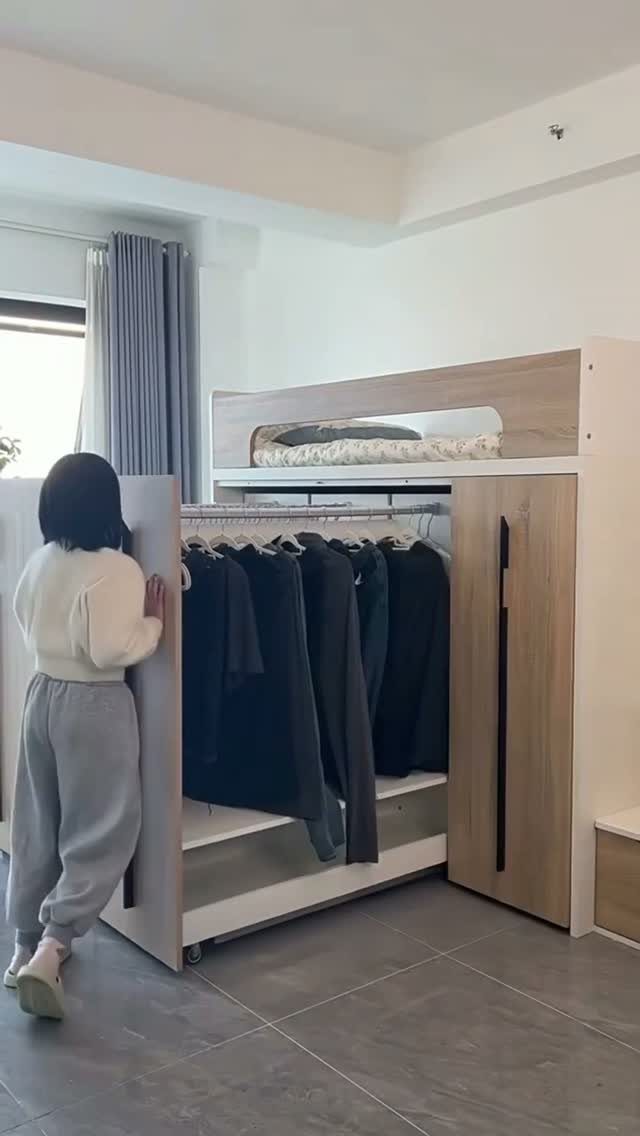
A bed that carries your winter coats underneath leaves the floor open for walking. That trade, storage for square footage, is what makes small-bedroom living possible.
I looked at loft beds for months before committing to one. The version that won me over had a rolling wardrobe on casters, not built-in drawers, because I wanted to pull my clothes out without climbing down.
The frame was light wood and white, which kept it from reading as heavy furniture in an already tight room.
The risk is always the same: you build storage, then you fill it.
My rule now is that anything going into that under-bed unit has to earn its place twice a year. If I haven’t touched it since last spring, it goes.
2. Mirrors
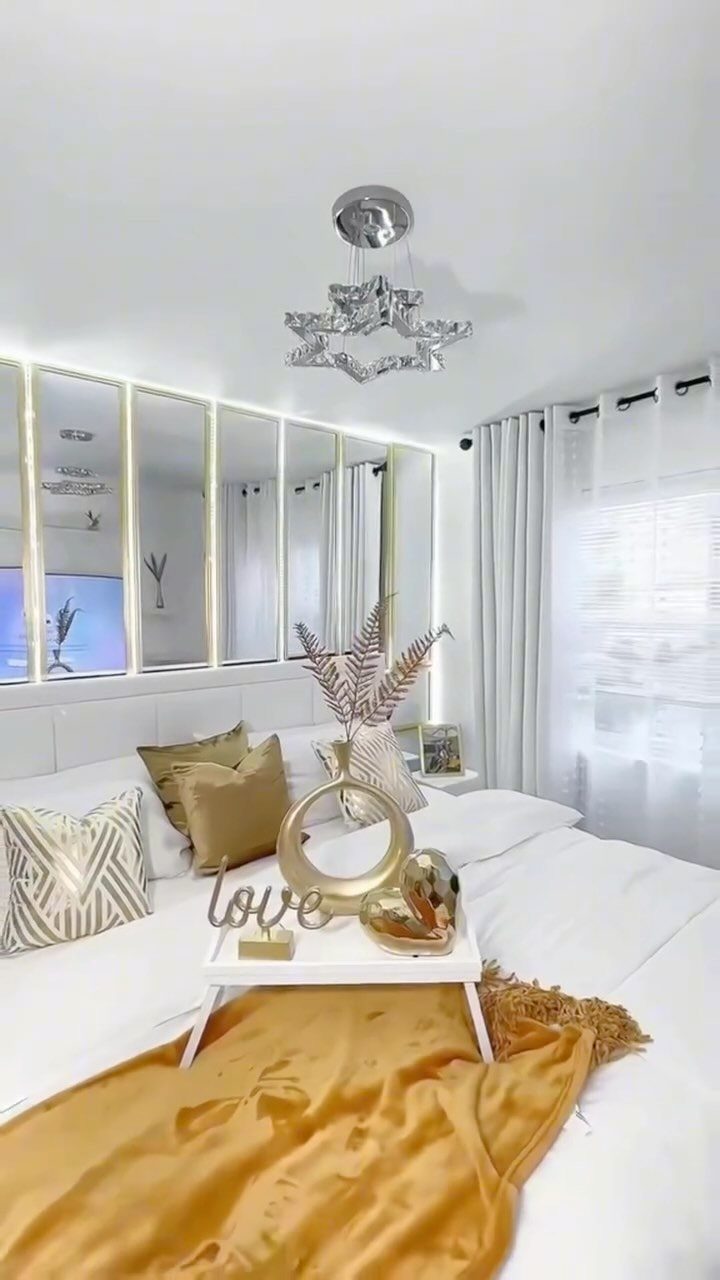
Mirrors do not create space; they create the suggestion of space, which in a room you cannot enlarge is often enough. The move that matters is placement, not size.
Opposite a window, a mirror throws daylight back into corners that otherwise go dim. The effect doubles at golden hour, when the reflected wall seems to hold a second sunset.
I tried this first with a cheap full-length mirror leaned against the wall, then later mounted a grid of smaller rectangular mirrors after I saw how the light moved.
A star-shaped ceiling fixture can show in the mirror’s reflection, so check what you are doubling before you commit to the placement. That was accidental, but it taught me to hang mirrors where they catch something worth seeing twice.
3. Layered Lighting
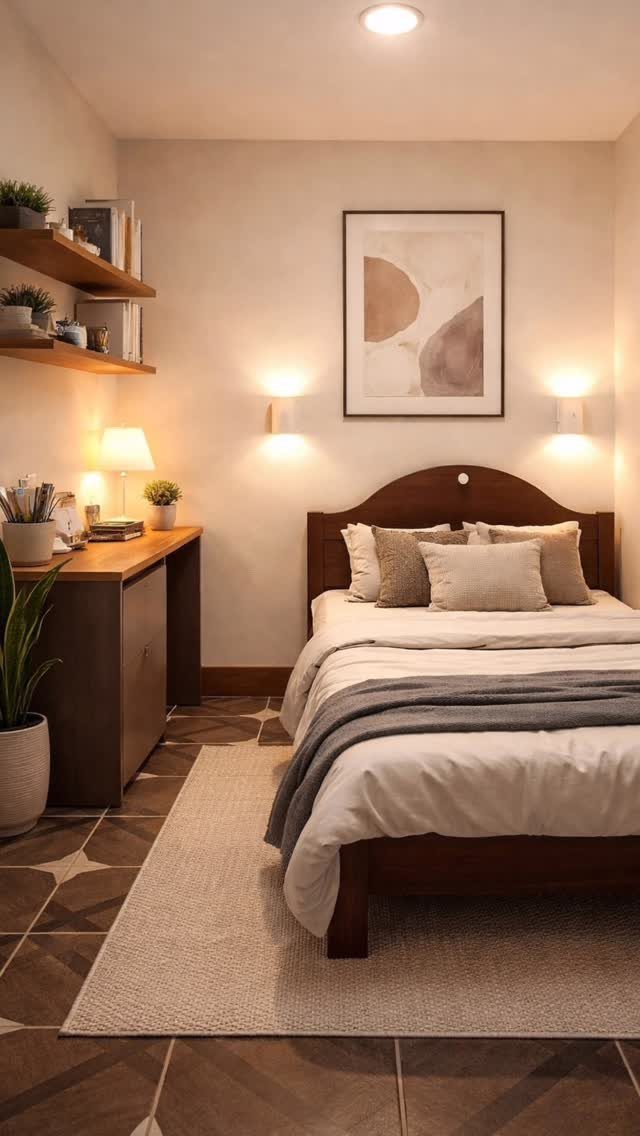
One overhead light flattens everything; three sources at different heights let a small room settle into itself after dark.
The sconces in this bedroom sit at shoulder height, framing the bed and washing the wall in warm light that never hits your eyes directly.
The third layer is task lighting; a desk lamp with a dimmable bulb is the one that sees the most actual use.
The sconces stayed on for atmosphere; the lamp let me read without disturbing anyone. LED strips under the floating shelves came later, more for finding books than for mood.
Matching all your bulbs to the same color temperature is the common early mistake.
A warm sconce beside a cool task lamp creates a jarring stripe across the room. Pick one temperature, 2700K or 3000K, and stay there.
4. Recessed Niches
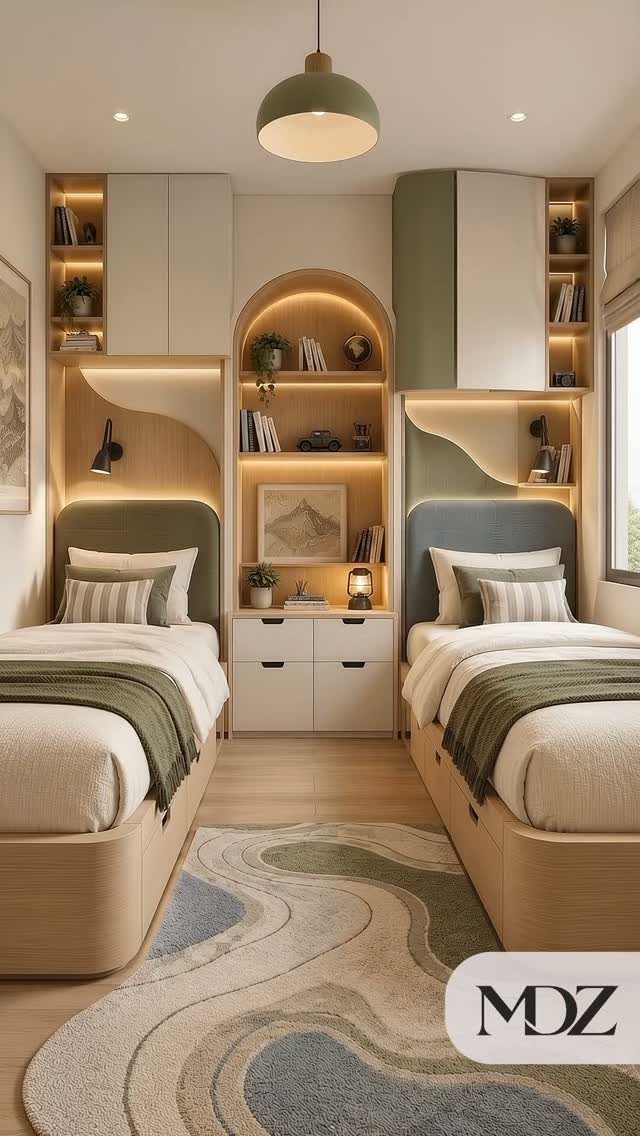
Recessed niches read as architecture, not furniture, which means they do not compete for floor space. An arched niche above twin beds looks intentional rather than cluttered when each shelf carries only two or three objects.
The raw pine shelves sit inside a rust-clay plaster surround.
That contrast, rough wood against colored plaster, is what elevates materials that cost little. Paint and shelves inside a standard alcove can give a similar effect to a recessed niche, with no structural work needed.
Integrated lighting helps, though it is not required. The niche draws the eye upward, which in a small room is its own kind of expansion.
5. Soft Furnishings
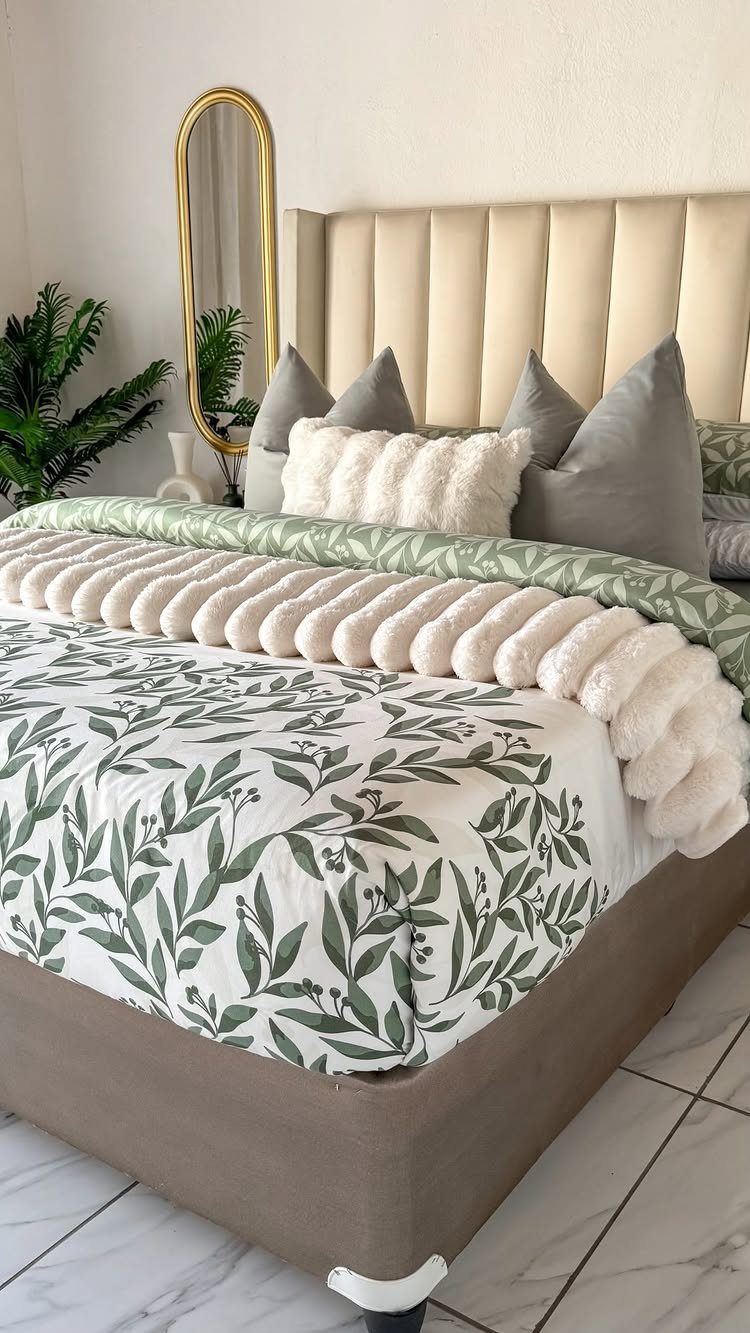
Texture does the work of color in a room too small for many competing hues.
Botanical print bedding with a ribbed faux-fur throw and grey velvet pillows gives each surface a different way to catch light, so the palette stays quiet without going flat.
Matching bedding sets tend to look catalog-perfect and dead; mixing textures matters more than mixing patterns. The shift was adding one piece that did not belong: a hand-me-down quilt, a too-small lumbar pillow, something with a weave the others lacked.
Heavy linen throws work the same way; their slubby irregularity breaks up the smoothness of standard bedding.
The limit is three textures, maybe four. Beyond that, the eye stops resting anywhere.
6. Half-height Wainscoting
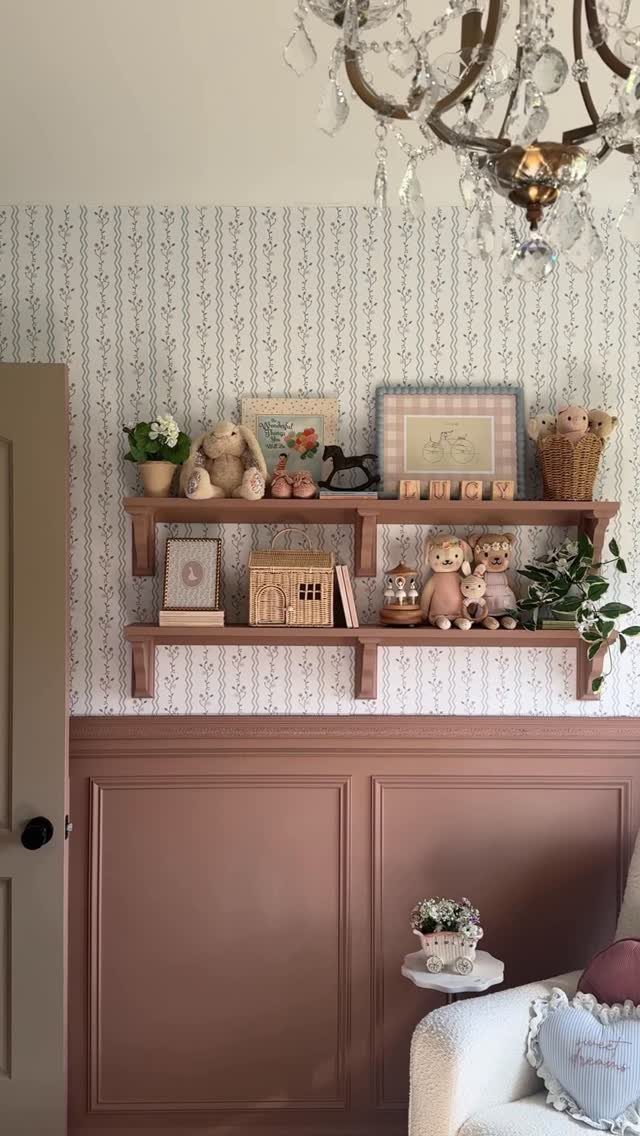
Wainscoting that stops at chair rail height divides the wall horizontally without closing the room in. The dusty rose boards below and patterned paper above in this room create structure that a single color could not manage alone.
Natural pine against a muted blue-grey wall is the cleaner version I prefer for adults; the warmth of the wood keeps the grey from going cold.
Installation is straightforward: horizontal rails, vertical battens, a cap rail on top. Pine from a home center and basic power tools are enough for a half-height wainscoting run; this is a project that fits a single weekend.
In a rental, that matters.
7. Slatted Wood
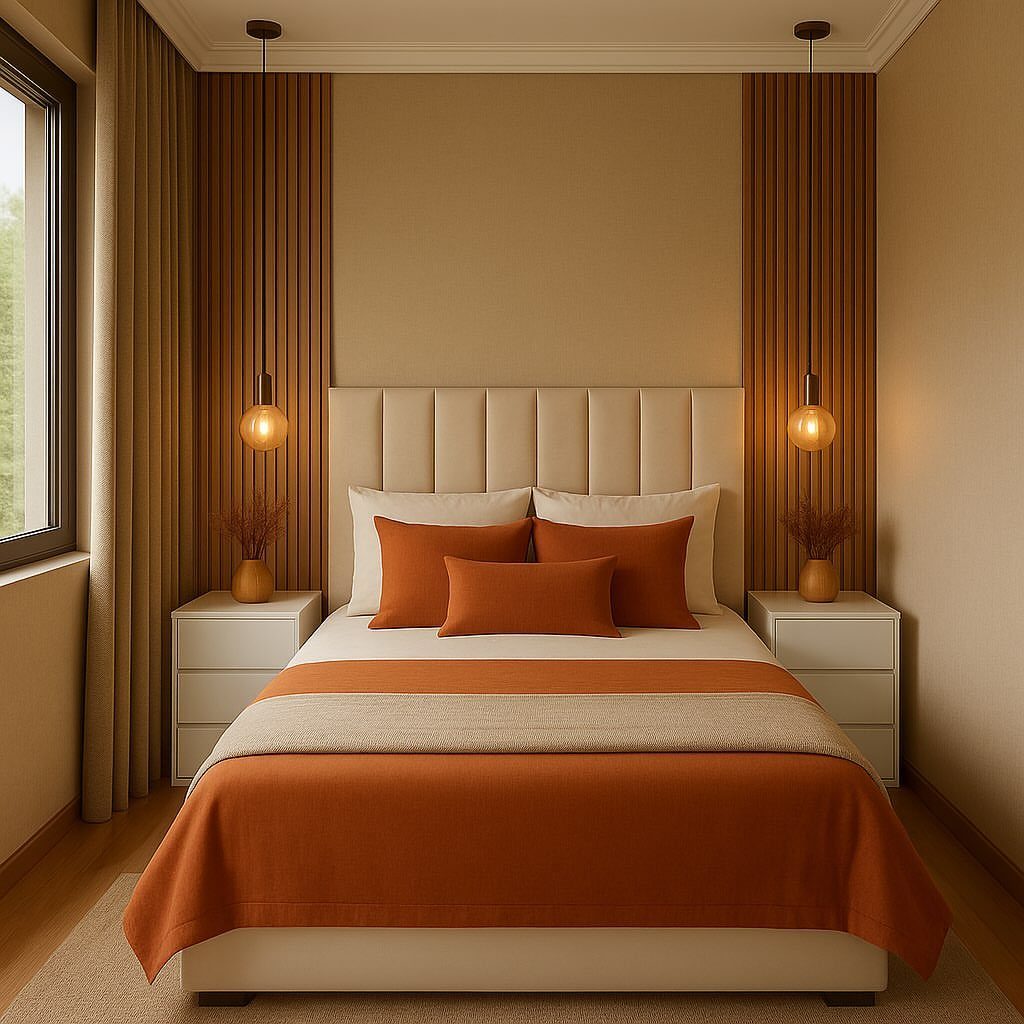
Vertical slatted pine panels run floor to ceiling behind each nightstand, and the gap between each board throws a thin shadow that runs upward like a ladder.
The eye follows it. In a room where you can’t stretch outward, that upward pull matters more than square footage.
The boards claim wall space, not floor space, which is why this survives in a tight footprint.
Check your ceiling height before you order; the slats need to actually reach it to complete the gesture. Stop short and they read as a headboard mistake.
Pair with hanging globe pendants that drop to just above bedside level. The vertical lines rhyme.
8. Board-and-batten
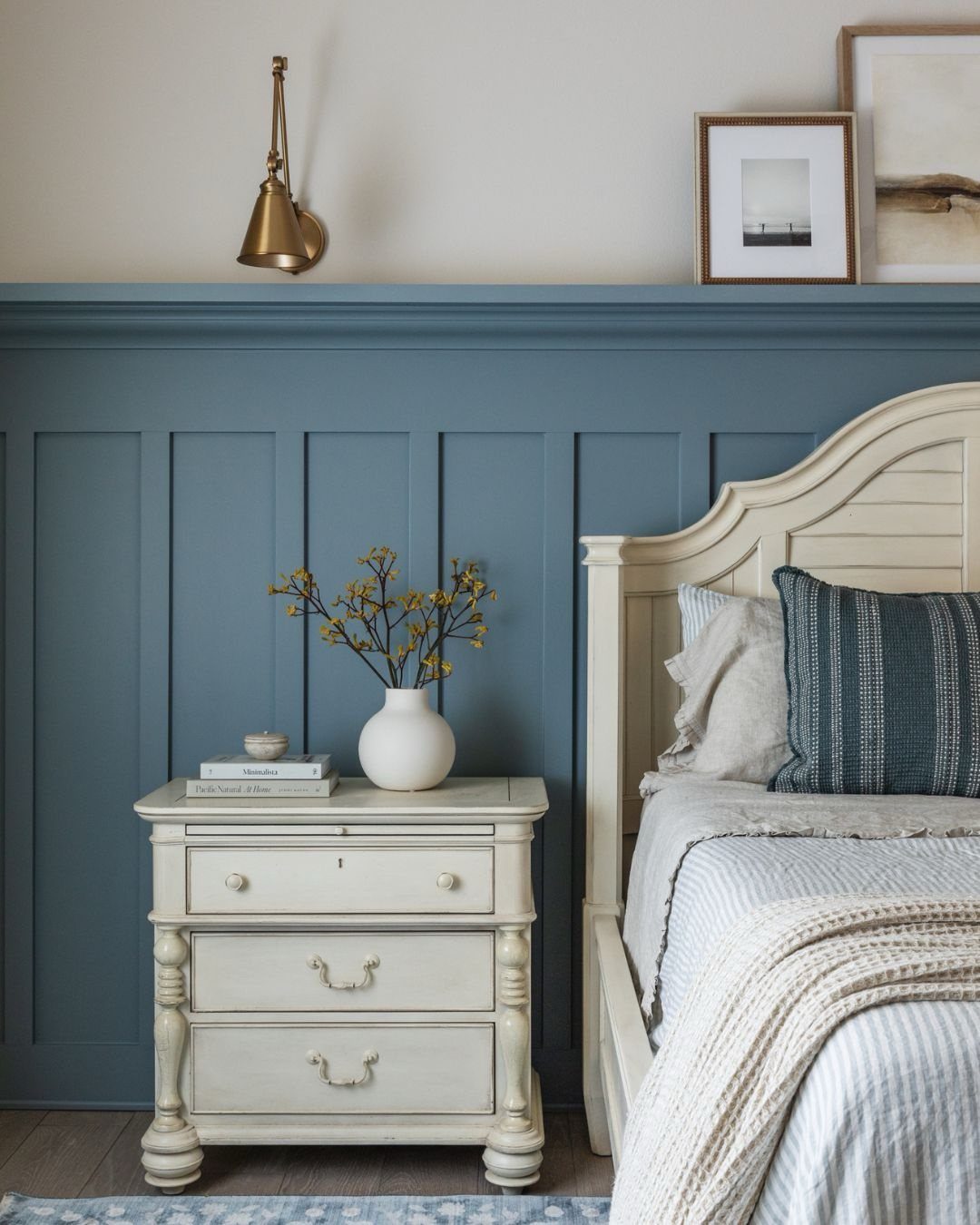
Warm clay board-and-batten rises from the floor in parallel strips, and the shadows between them do what paint alone cannot. This is the cheapest architectural upgrade that still reads as built-in.
I like it behind the bed where the vertical battens frame whatever you hang or don’t. A navy duvet against the warm clay gives sharp contrast without extra art.
This one takes a weekend if your walls are smooth drywall already.
Textured walls need a skim coat first, which adds time and cost you should budget before you start. MDF runs about a third less than poplar and paints fine; the battens hide the seams.
Best for renters who can patch later or owners staying put a few years. Board-and-batten brings visual weight where furniture can’t reach.
9. Moss Green Walls
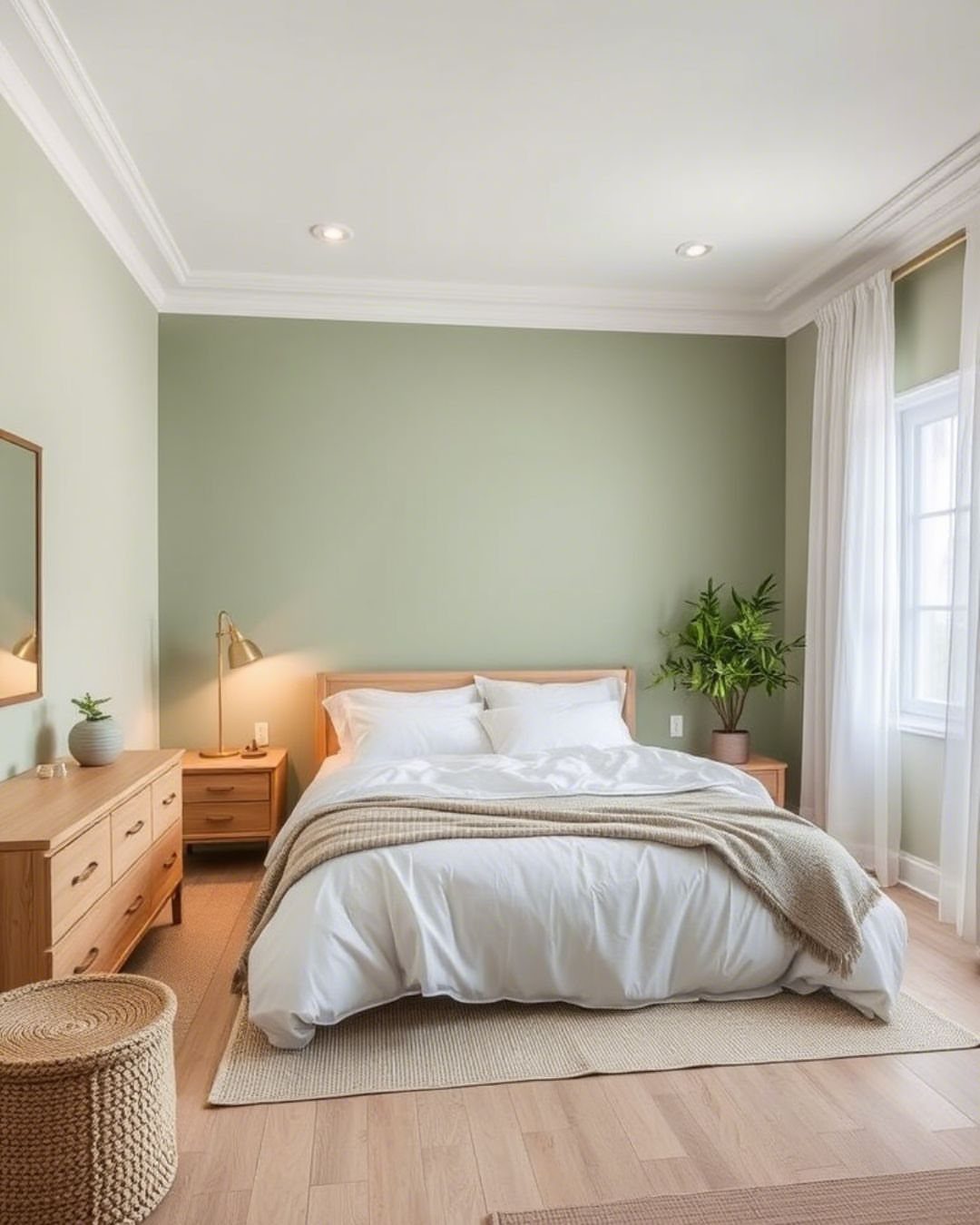
Moss green walls settle a room faster than neutrals do, and this tone sits between sage and forest, warm enough to pair with maple flooring without going cold.
A pothos works; so does a string of hearts.
White linens against the green keep it from feeling like a study.
The curtains do the same job. Skip the white and you’ll need more lamps than a small room wants to hold.
This suits someone who wants calm without boredom. The tradeoff: darker greens show dust and wall imperfections both, so prep matters more than with a forgiving grey.
Psychology of Space
A cluttered room raises cortisol whether you notice it or not. The body reads tight quarters as a threat before the mind catches up, and that low-grade alertness costs focus and sleep both.
The fix is not minimalism for its own sake. It is giving every object a border: a drawer, a shelf edge, a zone on the wall.
When the eye meets a clear boundary, the brain files the contents as handled. Open piles never get that clearance.
Mirrors work on the same circuit. A reflected window tells the nervous system there is an exit, a long view, even when the glass is only doubling what is already there.
Back in the 1980s, a researcher named Roger Ulrich tracked hospital patients and found that the ones who could see trees and grass from their window recovered faster than those staring at a brick wall.
A mirror opposite daylight is the closest proxy in a room with one window and no trees.
Layered lighting completes the trick. Harsh overhead shadows make corners read as dirty and cramped; warm light from below eye level softens the geometry and lets the shoulders drop.
Importance of Light
A single overhead light in a small bedroom flattens the walls inward and pools shadow into every corner.
Layering sources at different heights does the opposite: it lets the same four walls read as larger because the eye travels to multiple points instead of fixing on one.
The zoning trick is to assign each layer a job. Kill the overhead and leave just the bedside lamp running, and the walls outside its pool simply disappear; the room goes edgeless, the space feels adrift.
Mirrors extend this.
In dense urban rooms, this false-window effect breaks the box geometry without construction. The reflected light is real; the expanded horizon is a kindness to a mind that needs distance from 4 close walls.
Match your bulb temperatures. Pick 2700K or 3000K and hold to it everywhere.
Curation of Belongings
A small bedroom forgives nothing. Every object sitting out is one more thing the eye has to process, so the test for what stays is simple: does it work, or does it matter?
I keep a cardboard box in the closet for the maybes.
Anything I move toward donating sits in a holding spot until I am sure I will not pull it back out. If I reach for it, it stays.
If I forget it exists, it goes to the thrift store. The box itself is the only new habit; the sorting happens while I am already in the room doing something else.
Books are where this falls apart for most people.
A small shelf holds twelve, maybe fifteen. The rest live in the living room or not at all.
The same rule applies to jewelry dishes, candle collections, the stack of magazines you will read eventually. Floor space is not storage; it is the negative space that makes the room breathe.
DIY Potential
Most of these projects need only basic tools and a free weekend. Half-height wainscoting, board-and-batten, and slatted wood all run on pine from a home center, a miter saw, and a nail gun.
The board-and-batten entry already notes the skim coat catch for textured walls; budget that extra day before you pick up supplies.
Recessed niches are the exception.
Built-in alcoves need structural work unless you fake the effect with paint and shelves inside an existing recess. That painted version is the renter’s path, and it costs a fraction.
LED strips under floating shelves need no electrician; the adhesive-backed kind plugs into a USB brick. Matching bulb temperature across all 3 sources is the detail that makes layered lighting look intentional rather than assembled from clearance bins.
The moss green walls need prep more than skill.
Sand, prime, and accept that darker pigments show every roller mark. Two coats minimum, three if the wall was previously white.
Frequently Asked Questions
How to decorate a really small bedroom?
A bed that lifts or slides open underneath trades sleeping space for storage space, which is how most small bedrooms stay livable.
Mirrors opposite a window throw daylight back into dim corners, and 3 light sources at different heights let the room settle after dark. Vertical lines, like slatted wood panels or board-and-batten, pull the eye upward where you cannot stretch outward.
What are some trendy ideas for small bedrooms in 2026?
Moss green, sitting between sage and forest with enough warmth for maple flooring, is calming rooms faster than any neutral right now.
Vertical pine slats behind the nightstands, matched with globe pendants that hang low enough to read by, send the eye upward on parallel tracks. Warm clay board-and-batten behind the bed gives sharp contrast against a navy duvet without extra art.
What are the golden rules for bedroom design?
Every object needs a border, a drawer edge or a wall zone, so the brain files it as handled; open piles never get that clearance.
Light from more than one height, matched to one color temperature, keeps harsh shadows from making corners read as cramped.





