These ideas run from a quick throw pillow swap to a full headboard reupholstery, and what picks your project is how much leopard you actually want to wake up to.
The cheapest entry point is two or three accent pillows on solid bedding; the deepest commitment is leopard print bedding or a headboard you recover yourself.
Every piece here, from the warm bulb that keeps the pattern from fighting you at night to the faux fur throw rated by weight so the pile springs back, assumes you are working a real weekend and a real budget, not a blank-check renovation.
1. Leopard Print Bedding
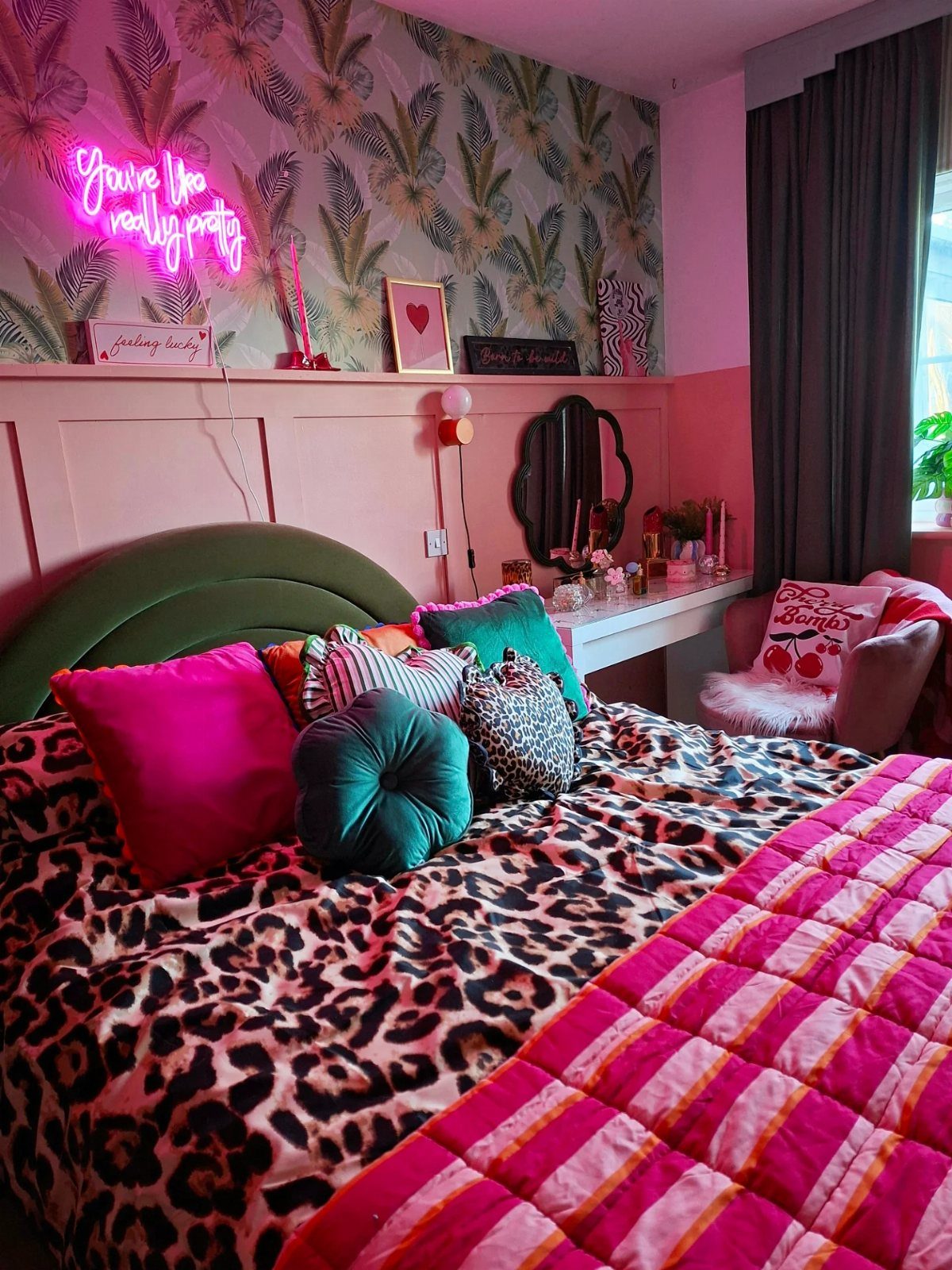
Leopard print bedding turns the whole bed into the statement piece, which means you can pull it out for a season and swap back to solids when the mood shifts.
Keep the sheets underneath quiet; black, cream, or gold work best so the pattern has room to breathe.
I would start with one leopard duvet and two standard shams, then layer in a solid throw at the foot if it still feels busy.
This suits renters especially, since nothing touches the walls and the whole look leaves in a laundry basket.
2. Leopard Upholstered Headboard
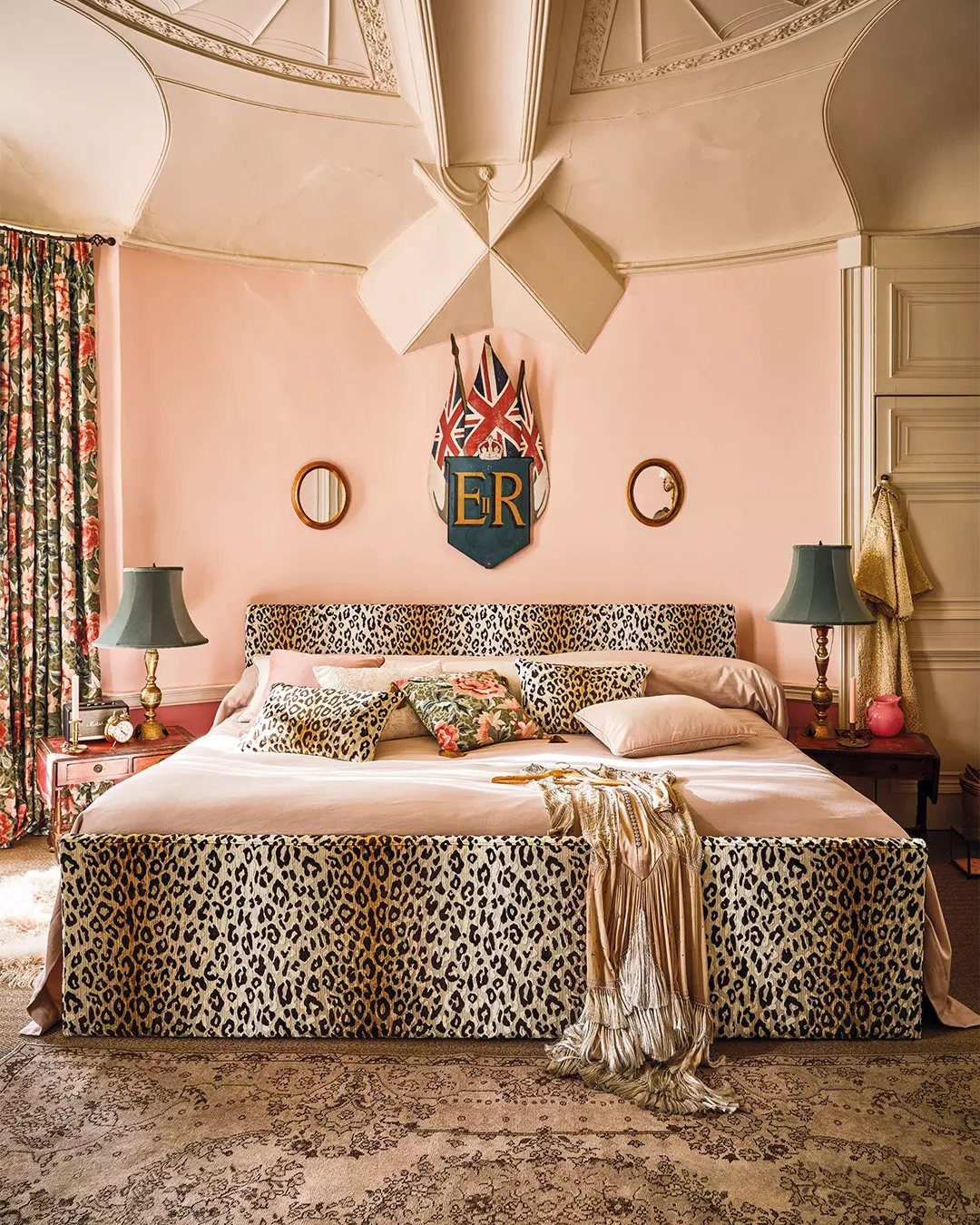
A padded headboard wrapped in leopard fabric gives you one bold hit without the pattern crawling across every surface. Velvet in a warm tan reads softer than high-contrast prints and keeps the headboard from shouting.
Plain bedding in a single color lets the headboard do the work here; anything else competing for attention turns the bed into a fight. Tufting adds texture but skip it if the fabric’s pattern is already dense.
Best for someone with a solid bed frame and time to reupholster, or budget to commission it.
3. Animal Print Area Rug
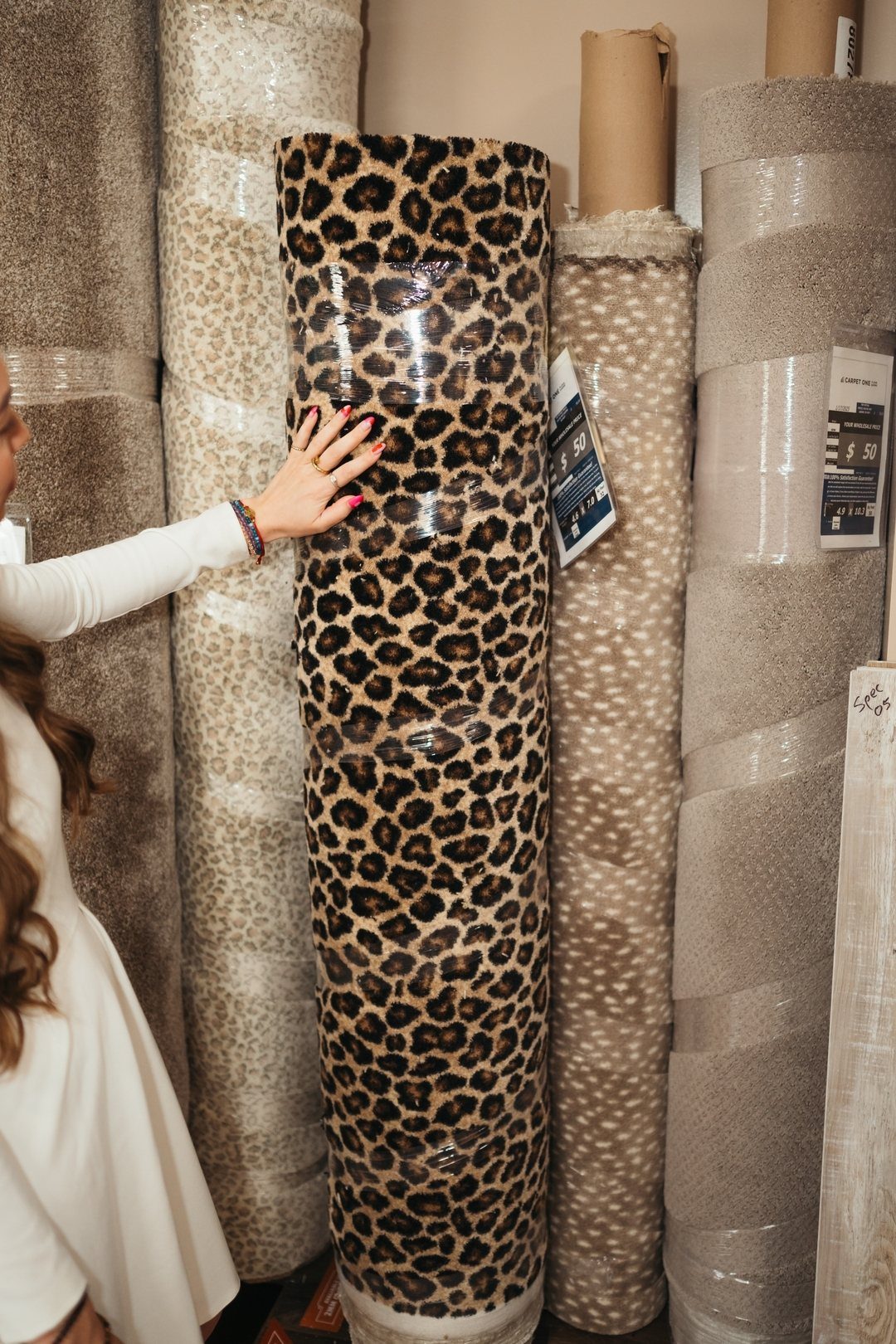
A leopard rug under the bed anchors the whole sleeping area and gives your feet something forgiving first thing in the morning.
Size matters more than pattern here: the rug needs to extend far enough beyond the bed frame that you see it on three sides when the bed is made, otherwise it disappears behind legs and nightstands.
Hardwood or laminate floors help the pattern pop; on wall-to-wall carpet the same rug can look muddy. Choose warm natural tones over high-contrast versions, and keep the surrounding walls neutral so the floor stays the story.
This one trades quiet for impact, so it suits bedrooms that already feel too tame.
4. Use the Wall Above the Headboard
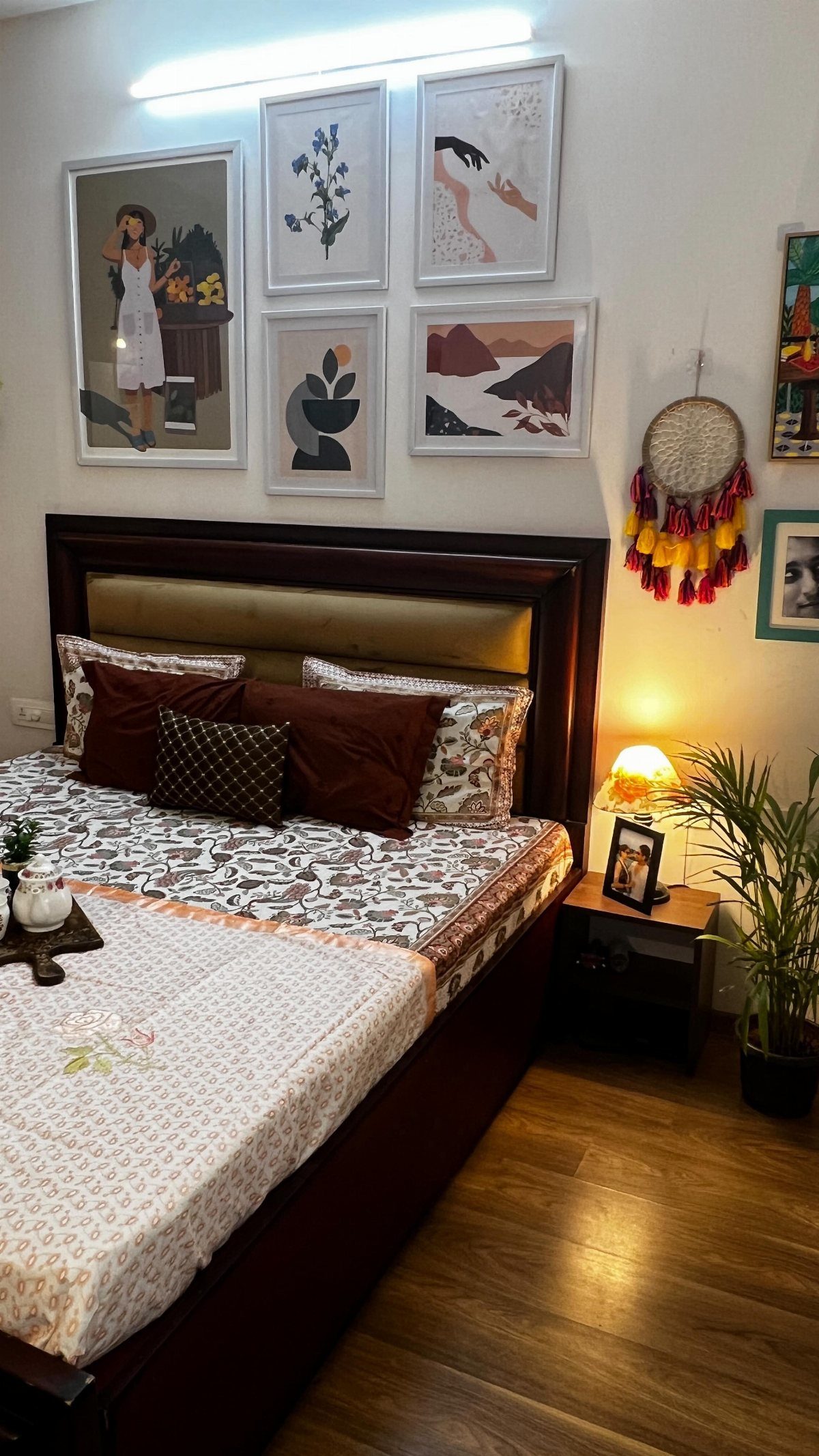
The wall above the headboard is dead space in most bedrooms, and it is the natural place to extend a leopard theme without adding more fabric to the bed itself.
A single large piece or a tight grouping of framed prints both work; simple frames keep the eye on the image, not the border. Gold or black metal reads cleaner than ornate wood against leopard’s already-busy energy.
This move costs less than new bedding and takes an afternoon to hang, though measuring twice matters when you are balancing art over where you sleep. Skip it if your ceiling is low and the wall already feels close.
5. Accent Pillow Collection
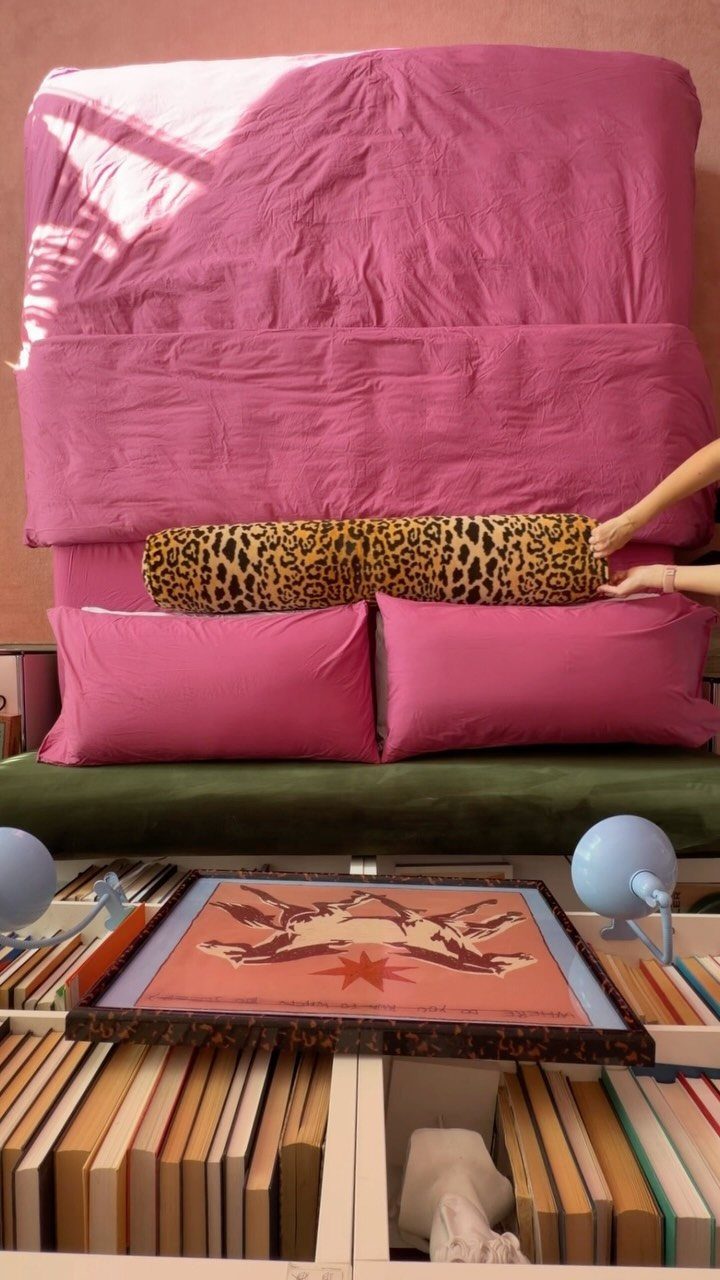
Two or three leopard pillows scattered across solid bedding give you control over how much pattern actually shows up.
The maker of the visible piece paired their leopard bolster with bubblegum pink velvet, which sounds loud but works because the shapes differ; a long lumbar against square Euro shams breaks up the repetition.
Mix in one solid pillow in black, gold, or cream between each leopard piece so the print does not pool too densely.
This is the cheapest entry point on the list, and the easiest to reverse if you change your mind by Tuesday.
6. Leopard Curtain Panels
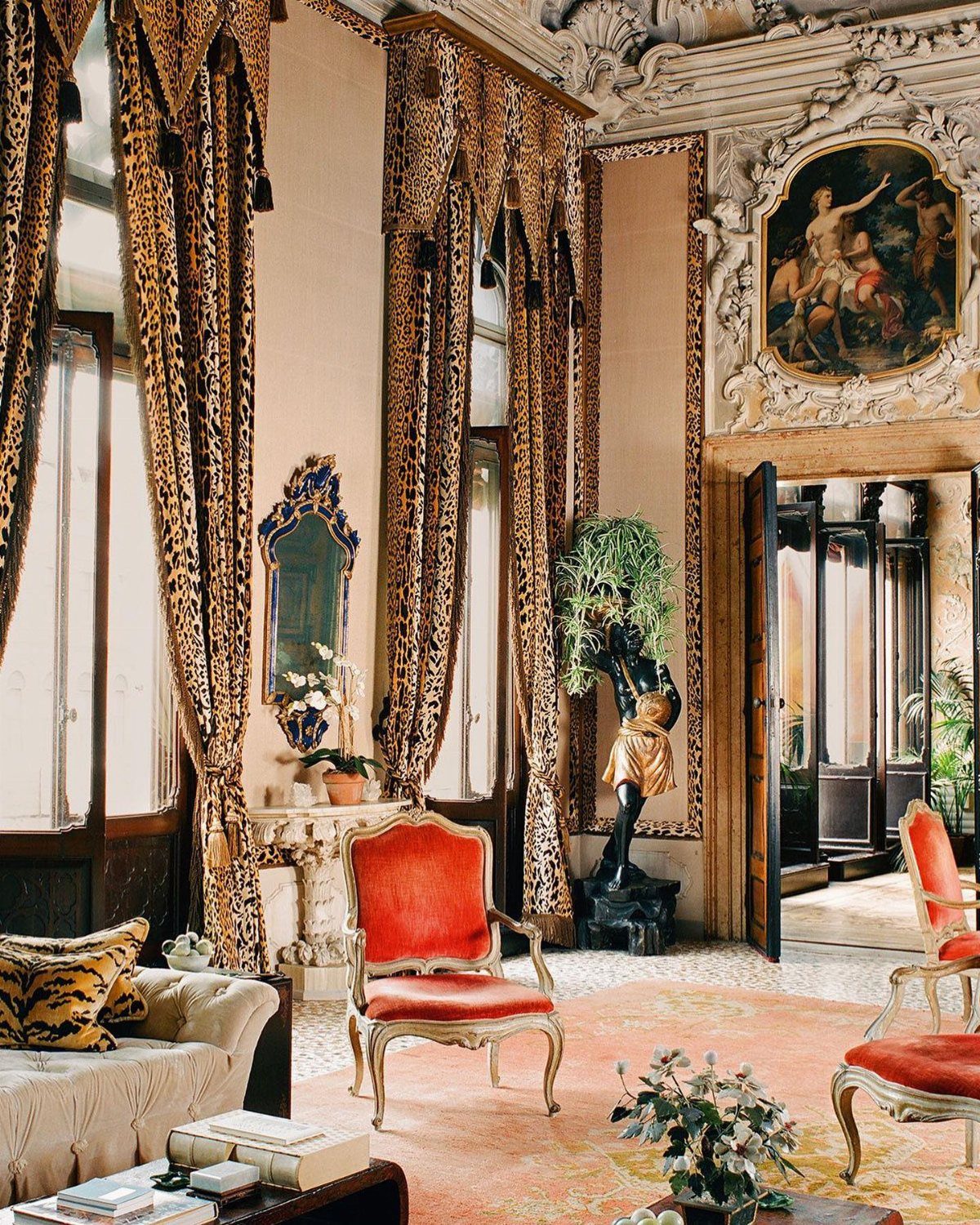
Leopard curtains draw the eye up and make windows feel taller than they are, provided you mount the rod at ceiling height rather than skimming the frame.
The visible panels hang in a room with serious architecture, but the same trick works in a standard rental if you measure for extra length and use rings instead of grommets for cleaner movement.
Layer solid sheers underneath to filter light without introducing a second pattern; two competing prints at one window always looks accidental. One leopard window per room is the limit.
This option trades privacy for drama on any wall facing a neighbor.
7. Leopard Print Lampshade
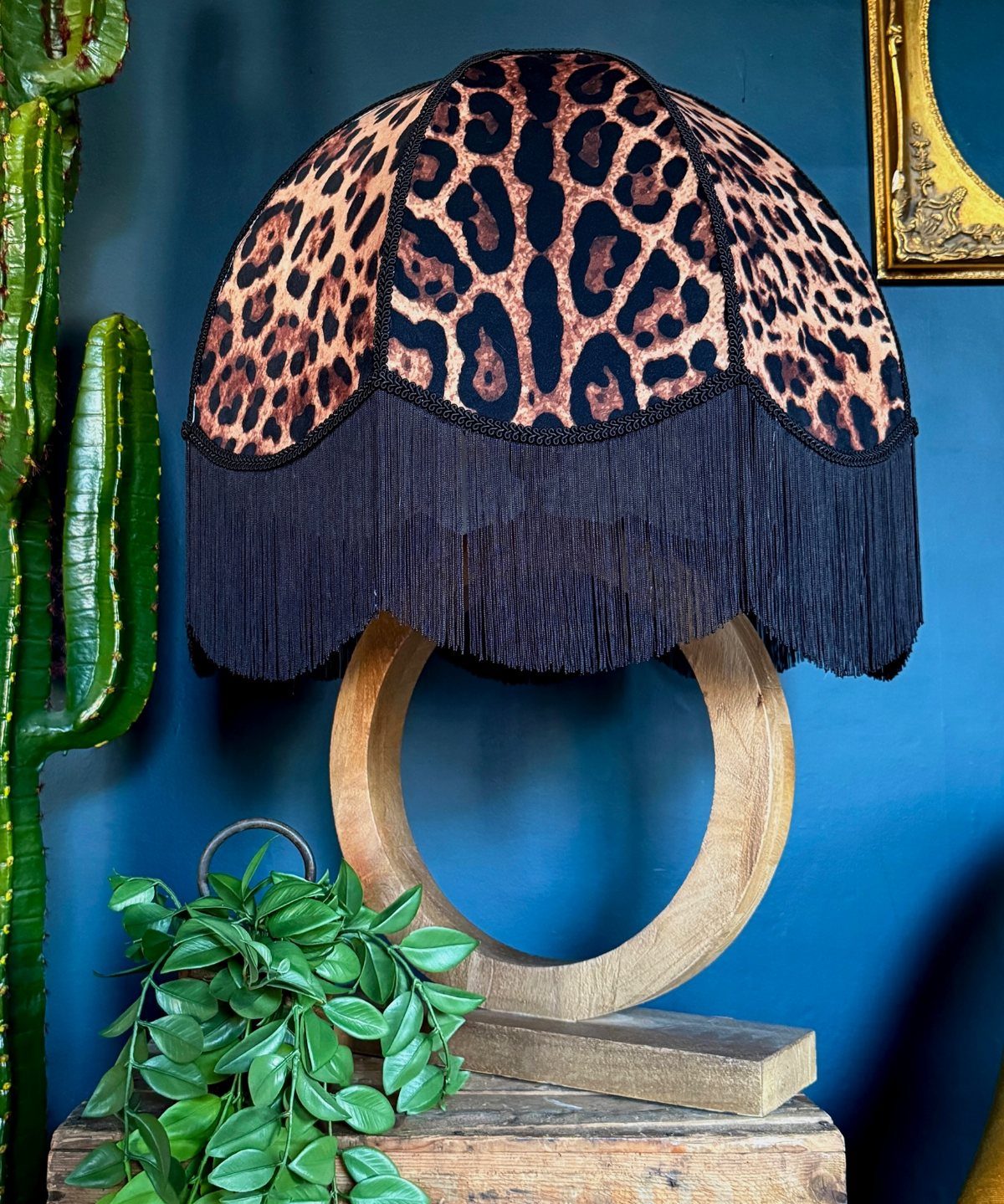
A leopard print lampshade turns an ordinary table lamp into something that reads intentional rather than accidental. A leopard print lampshade on a wooden base with black fringe brushing the rim carries a slightly vintage club feel.
This works best when the base stays plain: wood, black metal, or a solid ceramic in one quiet color. The shade does all the talking.
I would skip anything with a second pattern, a second metallic, or a shaped base that competes for attention.
The fringe is optional. A clean drum shade in leopard voile or linen filters light the same way without the drama.
Either version throws a warm, mottled glow that softens the edges of a room at night.
Position it where you already need a lamp. Nightstand, dresser corner, or a reading chair: the leopard becomes punctuation, not a statement that needs building around.
8. Layer Soft Lighting

Soft lighting matters more in a leopard print room than in most, because the pattern itself is already busy.
Harsh overhead light turns every spot into a demand for attention; layered warmth lets the print recede when you want it to.
Start with what you have. A bedside lamp, maybe a floor lamp in the corner.
Check the bulb temperature: 2700K reads warm and golden, 5000K reads clinical and will fight every textile in the room. Swap if needed.
If you add one thing, make it a second source at a different height. Sconce above the nightstand, or a small lamp on a dresser across from the bed.
Two points of light from two directions smooth out the shadows that leopard print can throw.
More fixtures do not mean brighter; they mean more places for the light to bounce from.
9. Leopard Print Throw
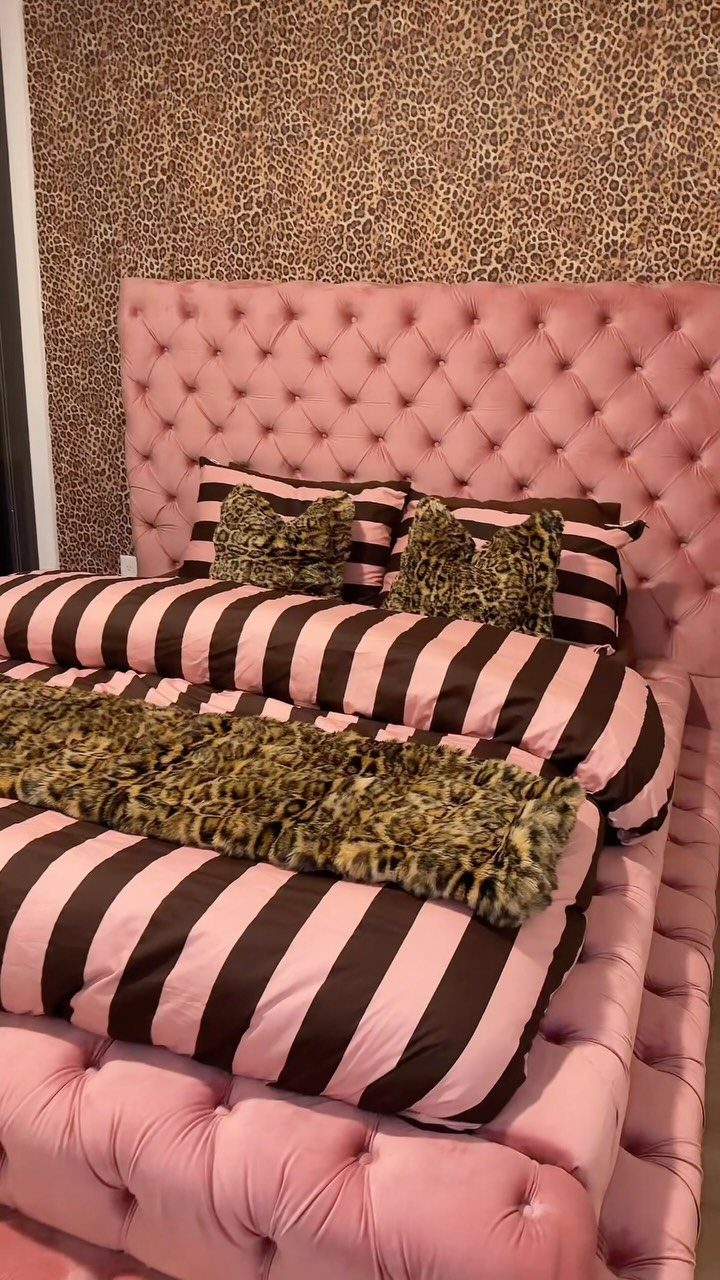
A leopard print throw at the foot of a bed is the lowest-commitment way to test whether you actually want to live with this pattern.
Faux fur throws thick enough that the pile catches light and changes color as you move around them read as the real thing.
Faux fur quality varies enormously. Cheaper versions mat where the knees press; better ones spring back.
If you are buying online, read the weight: a throw that lists as lightweight usually means thin backing and sparse pile. Heavier throws tend to mean the density that looks expensive.
Fold a leopard throw loosely at the foot of the bed rather than spreading it flat like a bedspread. That casual drape is intentional.
It reads as styling, not as an attempt to cover something up.
Pair it with bedding in a color pulled from the leopard itself: the warm brown, the black, or the cream. Echoing a headboard color in the throw’s secondary tones keeps the pairing from looking accidental.
I would have gone with the neutral tones in the throw and let the leopard connect to the wall behind it instead.
10. Leopard Frame Gallery Wall
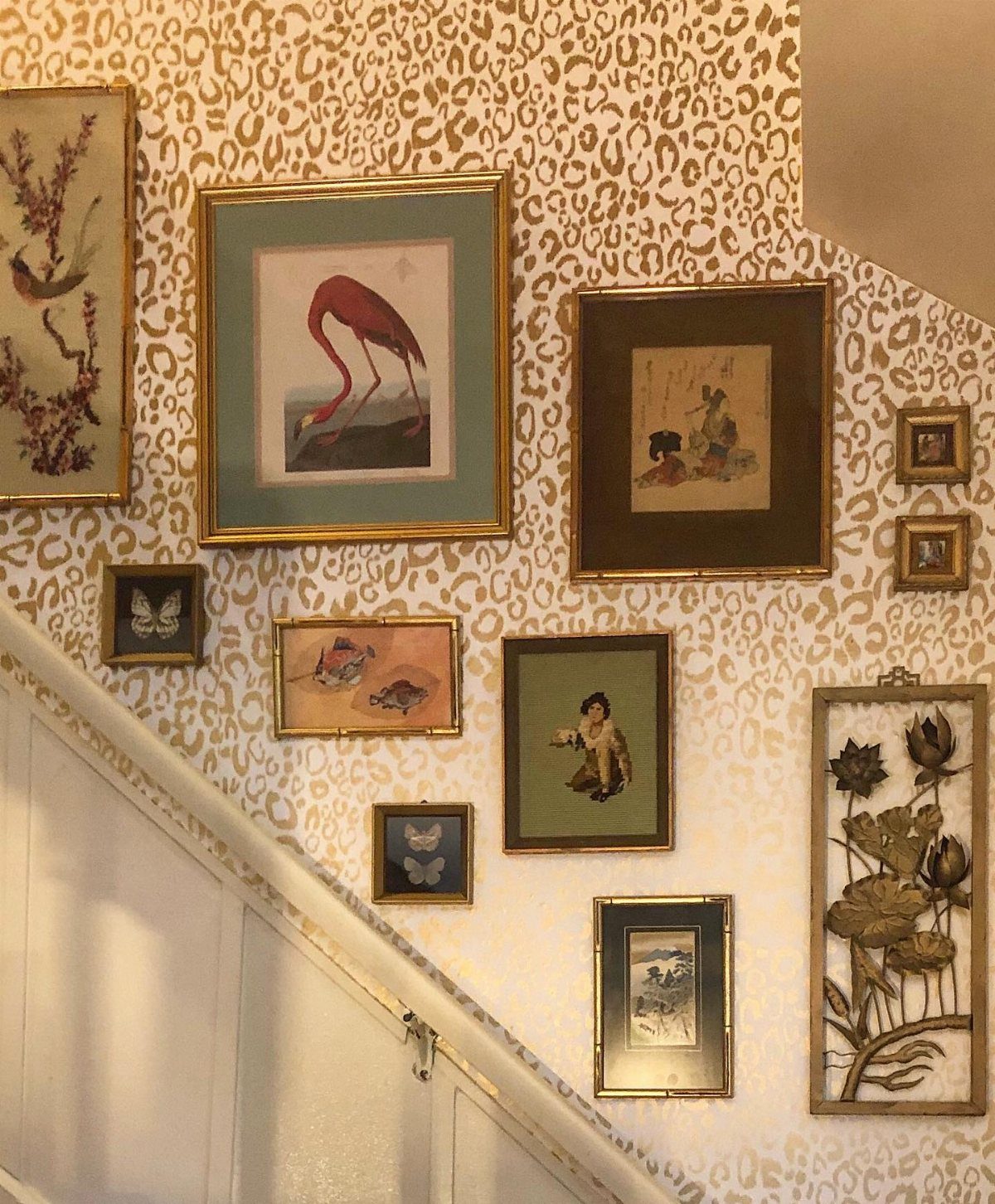
A gallery wall in leopard print frames sounds riskier than it is. Gold leopard wallpaper lets frames pick up that tone without matching it exactly: some gold metal, some black, none of them shouting.
The move is to treat the leopard frame as one texture among several. Frames holding flamingos, butterflies, botanicals: imagery that is decorative rather than personal keeps the wall from feeling like a shrine to the self.
Black-and-white photography works the same way, and prints easier at home.
Asymmetrical arrangement helps. The eye expects balance; asymmetry reads as collected over time, which softens the deliberate pattern-matching.
Start with one central piece at eye level when standing, build outward, and step back often.
If the wallpaper is already leopard, frames in solid black or gold might rest the eye better. Leopard frames that vary in size and sit against an even busier background mean no single frame has to carry the whole theme.
Choosing Colors
Warm neutrals like beige and soft taupe pair well with leopard prints, grounding the bold pattern and creating a cohesive look.
I’d pick ivory as the break between darker tones; it keeps the room from feeling too heavy without washing out the print itself. Black and gold bring drama, but the leopard already carries both.
A soft taupe wall lets the bedding or rug hold the attention instead of fighting it.
Mixing Patterns
One pattern should take the lead, with the others kept smaller so the eye has a place to land. Stripes or delicate florals can work if the leopard stays at medium scale and everything else shrinks down.
I once had to swap out cushion sizes after pairing leopard with a bold geometric; the fix was simple and the result held together fine.
I like two or three leopard pillows against solid black, gold, or cream ones; the bed stays styled instead of busy.
Euro squares stacked with a small lumbar in front gives the pile a sense of order, like someone chose each piece with a purpose.
Lighting Tips
Layered lighting, including soft overhead and task lighting, enhances the luxurious feel of a leopard print bedroom. A dimmable overhead fixture keeps the room from feeling like a showroom when you want it calm.
Bedside lamps with warm bulbs do the actual work of reading or winding down.
Using Accessories
Incorporate leopard print through accessories like pillows and throws for a budget-friendly way to add personality. Small items do the job without demanding a full commitment.
A jewelry box, tissue holder, or decorative tray in leopard adds pattern at a scale that reads as intentional, not accidental. I’d limit it to one or two tiny pieces so the moment stays a surprise rather than a theme.
Quality matters here; cheap leopard can look like a mistake, but a sharp print on a solid object feels collected over time.
Frequently Asked Questions
Is leopard print out of style in 2026?
Leopard print cycles through trends but stays classic when you treat it as an accent rather than a room-wide theme. One or two pieces, paired with quiet neutrals, keeps the pattern feeling intentional rather than dated.
A single throw pillow or lampshade updates faster than wall-to-wall commitment.
Is leopard print tacky or classy?
It depends on scale and restraint. Cheap, oversaturated leopard on too many surfaces reads costume; one well-made piece against solid colors reads collected.
Warm natural tones in the print itself help, as does mixing in quality materials like velvet or linen rather than thin synthetics.
What color pairs best with leopard print?
Warm neutrals like beige, soft taupe, and ivory ground the pattern without competing. Black and gold already live inside leopard itself, so adding more risks overload.
Can I use leopard in a small bedroom?
Yes, and smaller spaces actually benefit from the visual energy if you keep the scale right. Accessories like pillows, a single lampshade, or a small tray add pattern without crowding walls or floors.
One focal piece beats several small ones; the eye needs rest between hits of print.