These ideas run from swapping in warm bulbs to a weekend building a plank door or faux mantel, and the one that belongs in your room is the one that matches how much wall you can change and how much you can spend.
The deciding factor is how permanent the change is, because plank doors and wall treatments need permission while bulb swaps and textile layering do not.
A scalloped detail built from plywood sits right in the middle, reachable with a jigsaw and one Saturday if the sawhorses are yours.
1. Layering Textures
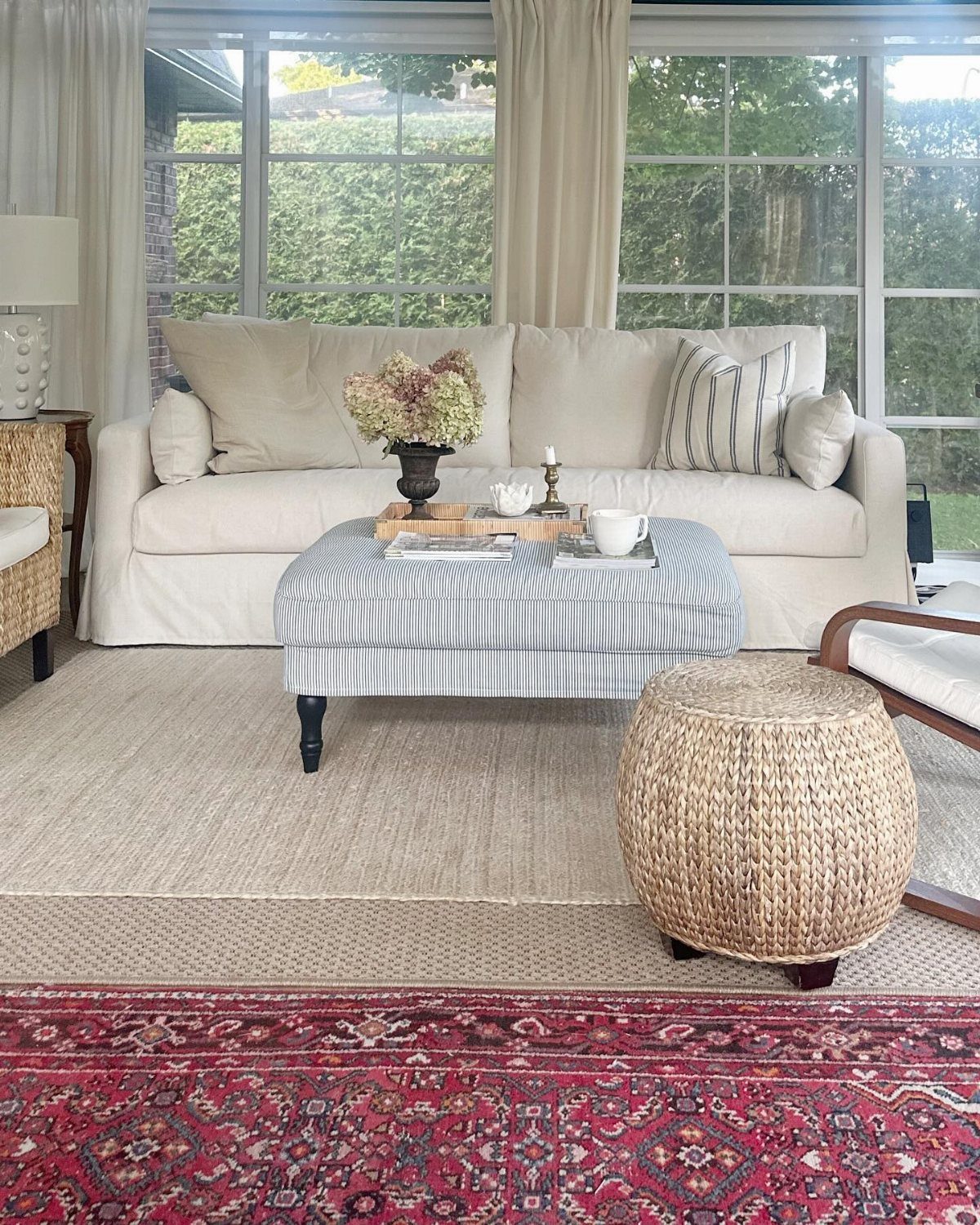
Start with a flatwoven base, add a softer rug on top, then mix in one woven or knitted piece; each layer needs a different weight or fiber to keep the pile from feeling busy. Linen against seagrass, pattern against plain.
Restraint matters more than abundance; two or three textures that differ in weight and weave do more than five similar ones fighting for attention. I’d start with a base rug, add one soft piece and one rough, then stop.
Hunt end-of-season sales for the textiles and plan an afternoon for the swap.
2. Layered Lighting
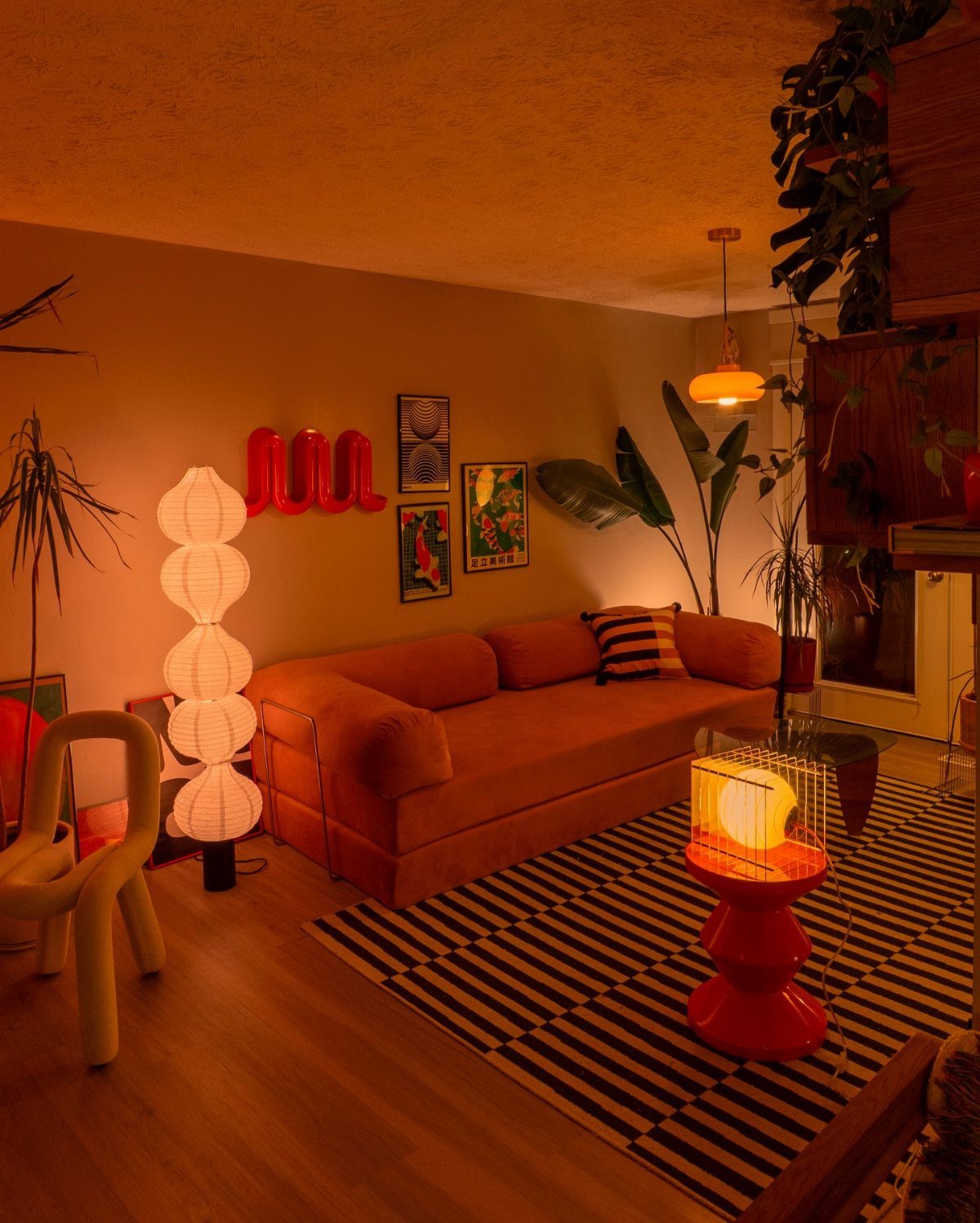
That orange wash comes from bulbs, not fixtures. A paper floor lamp, a red pedestal lamp, maybe a sconce you already own: warm light at three heights turns a room from functional to inviting.
I run dimmers on everything now, even the overhead. Ceramic jug bases or natural wood shapes turn up at most home stores; swap the bulbs to 2700K and you’re most of the way there.
3. Personal Touches
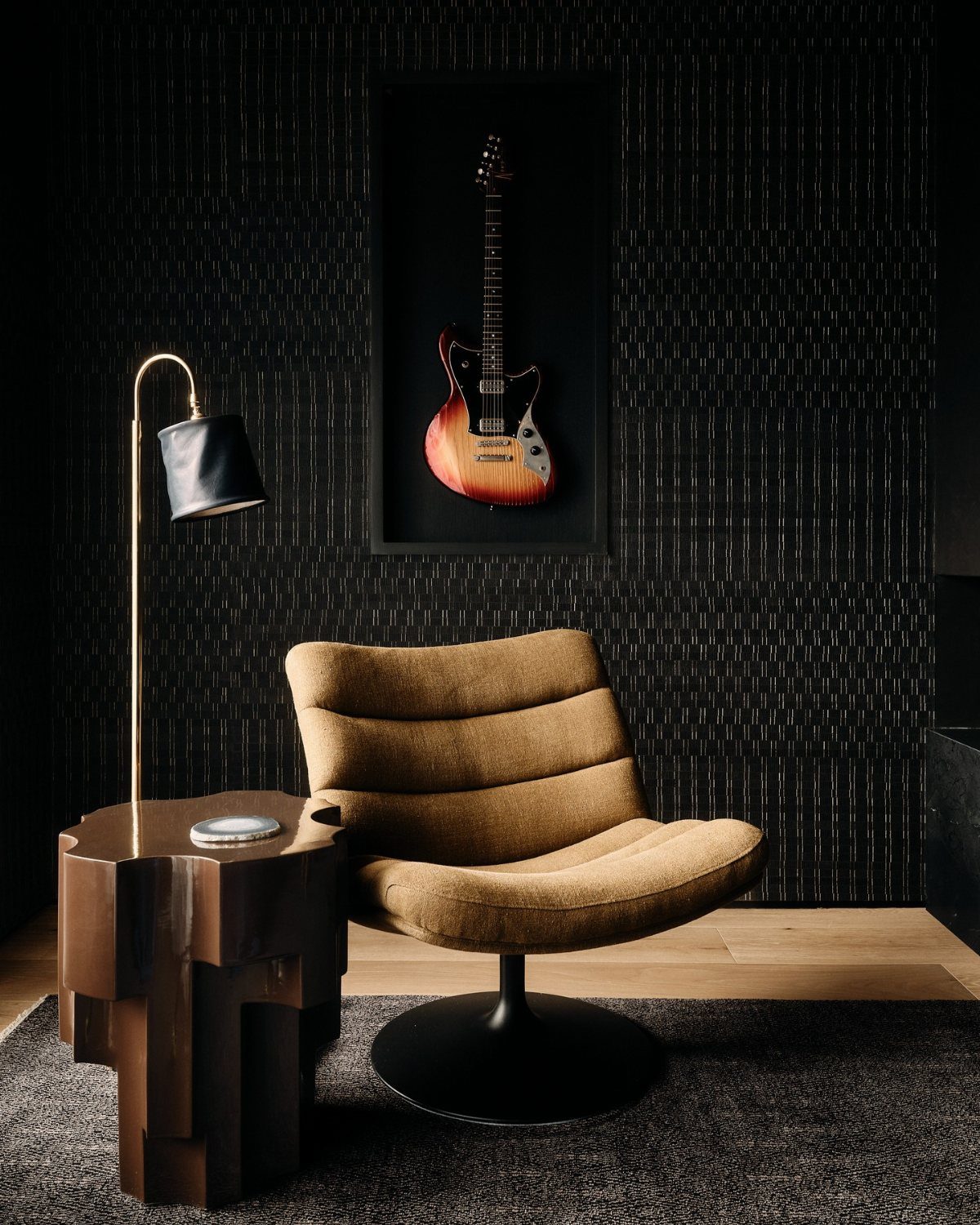
A single object you actually use, hung where you reach for it, makes a room feel occupied instead of decorated. One piece that actually belongs to you beats a shelf of objects bought to fill space.
A hand tool hung above a desk costs nothing and reads as honest in a way store-bought art rarely does.
A single framed photo, a travel stone, a handed-down lamp: choose one thing with a story, give it wall space or a surface, and let everything else support it.
4. Gallery Wall
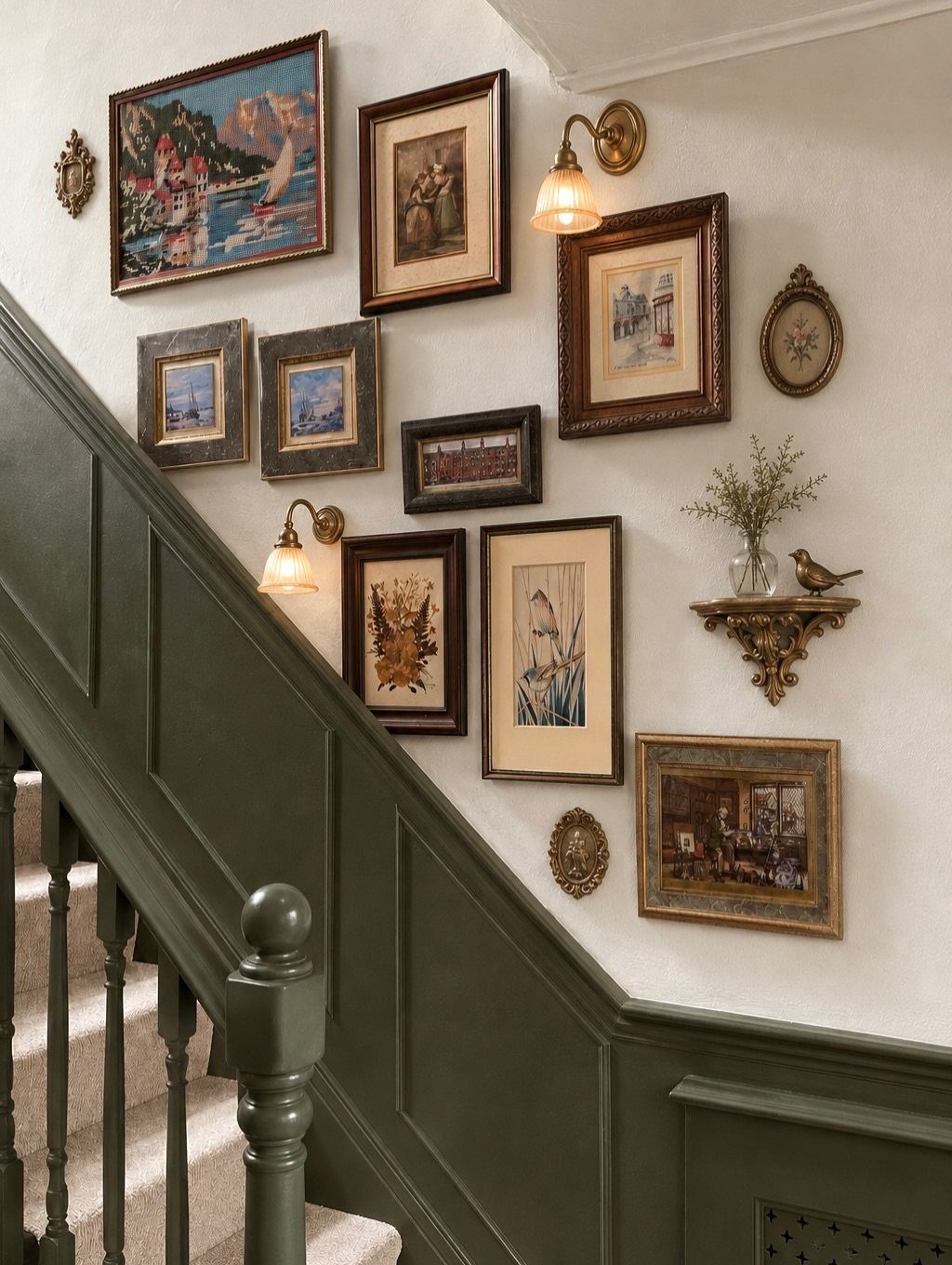
Brass sconces and a small shelf let this gallery wall breathe; the frames don’t crowd because the layout has gaps on purpose.
Vintage art, a mirror, something three-dimensional: mix the contents, keep the frames simple, and lay it out on the floor first. I use craft paper cut to size, taped to the wall, to test spacing.
One person with a level and patience can manage it; a second pair of hands just speeds the hanging.
5. Plants and Greenery
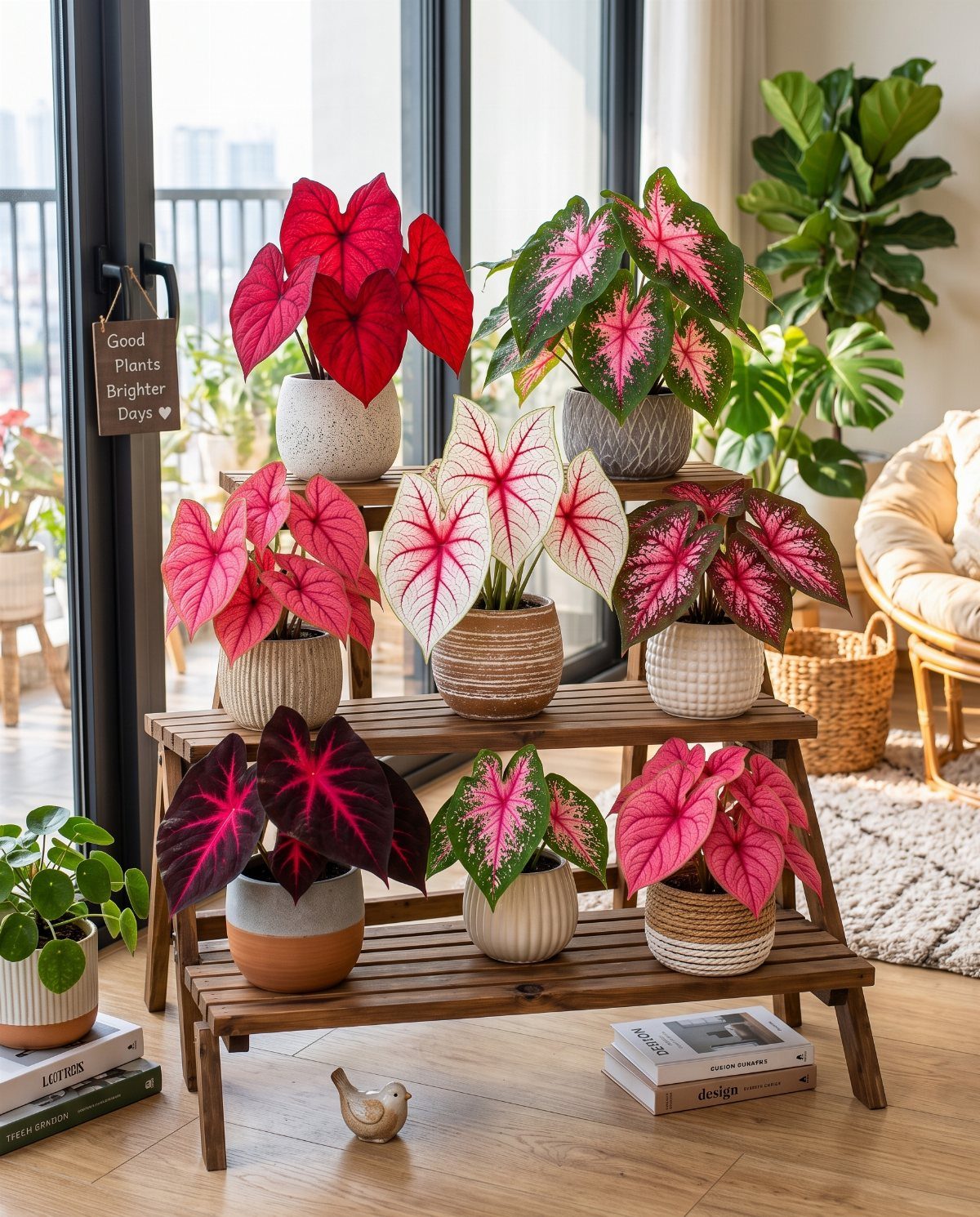
Tiered stands give trailing plants height without eating floor space; one larger specimen in a corner anchors the whole arrangement. Real plants in ceramic or textured pots beat convincing fakes, and the care is part of the cottage feel.
Start with one stand, two or three pots in varied shapes, and plants that tolerate your light. Propagating cuttings or buying small keeps the plant cost low; the stand itself is weekend project material if you build.
6. Warm Lighting
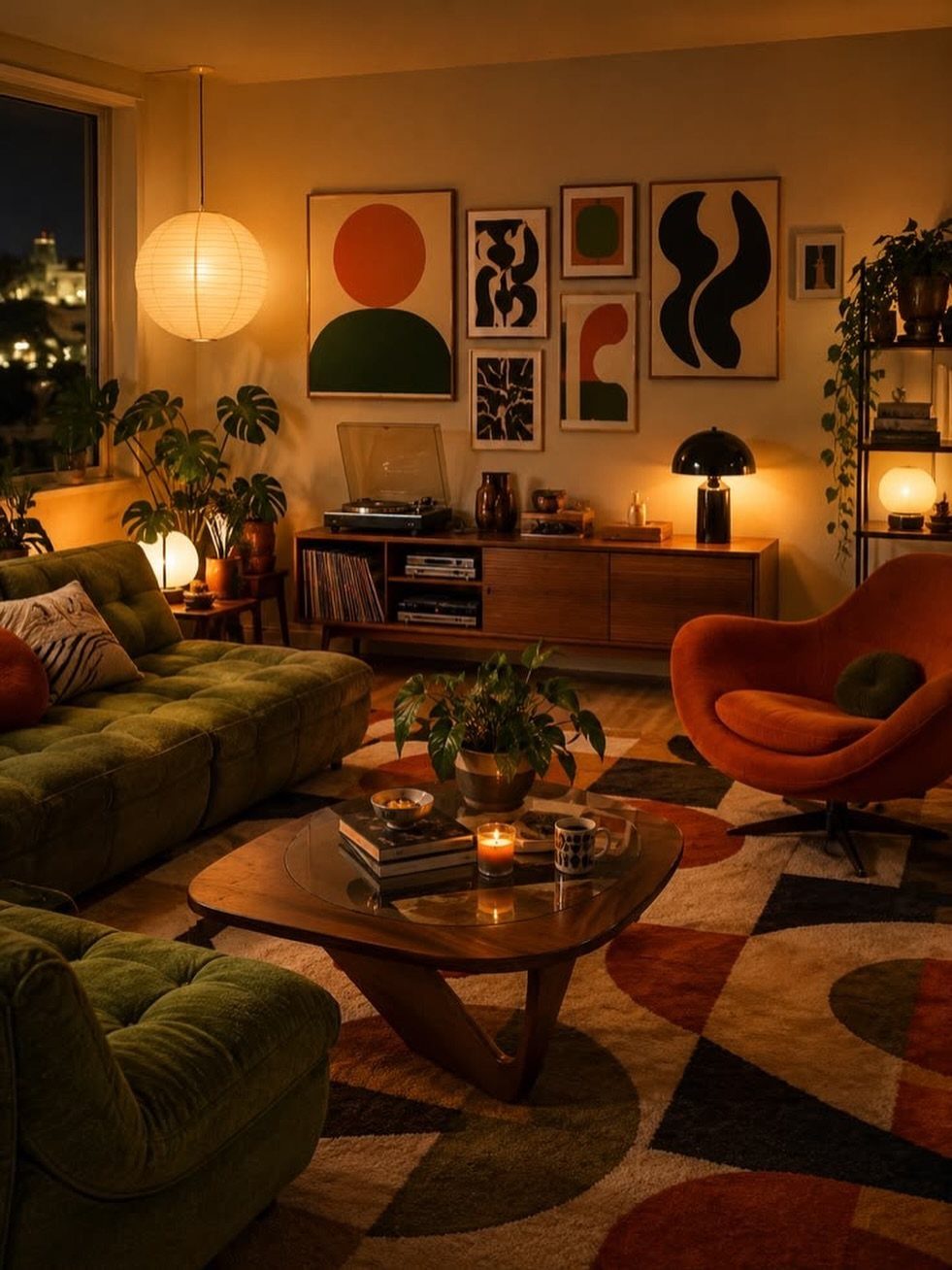
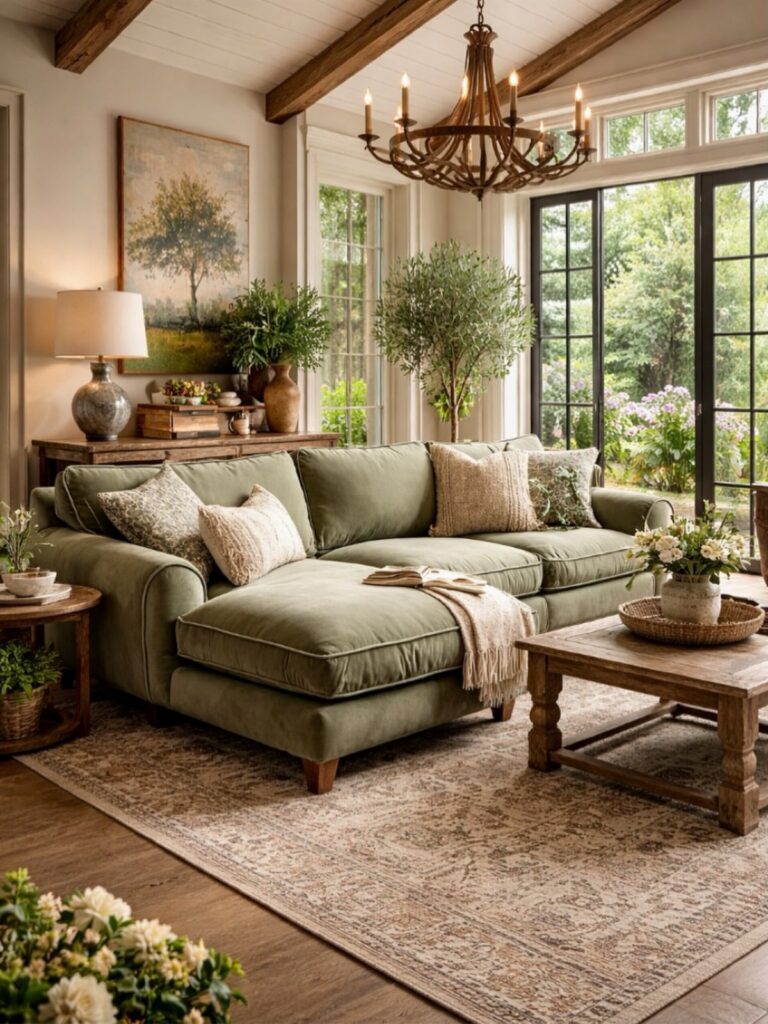
Green velvet and wood read as cozy because the light is warm, not because of the colors themselves. Soft white bulbs, 2700K or lower, change how paint and fabric look after dark.
Overhead bulbs come first, then one table lamp with a dimmer; the layering matters more than buying everything at once.
Bulbs are the cheapest part of the room; the difference shows most in spaces you use once the sun goes down.
7. Cozy Layout
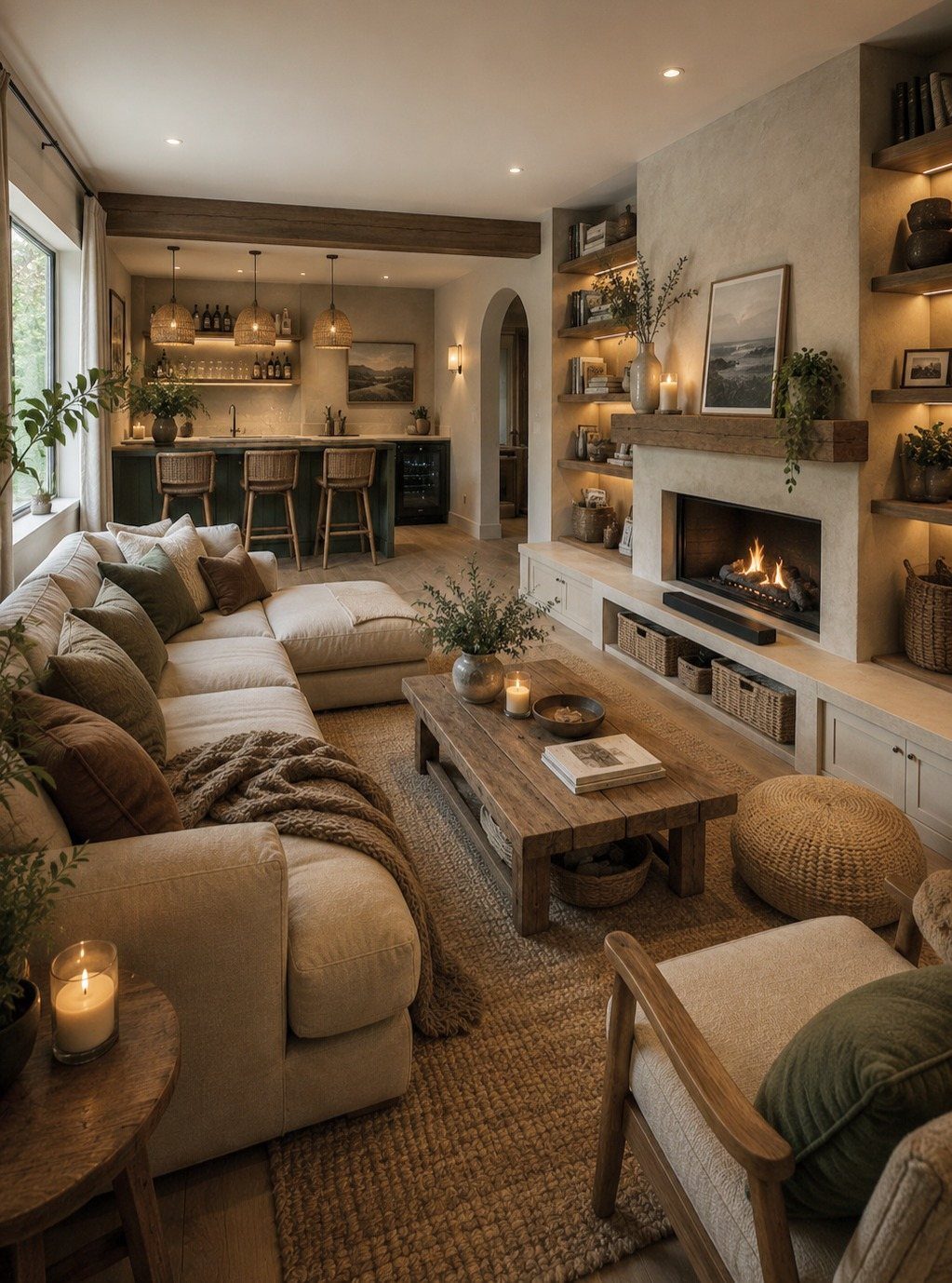
A cozy layout starts with pulling the seating close enough that conversation flows without anyone leaning forward or raising their voice.
Facing seats feel cramped when they crowd together and turn sterile when they drift apart; I aim for a conversational distance that lets people reach their drinks without stretching.
A jute rug underfoot does half the work of defining the zone, especially in an open plan where the kitchen sits just beyond.
This suits renters who cannot move walls but can still claim a corner for living. Traffic flow behind the main seating matters as much as the grouping itself; a clear path keeps every entrance from becoming an interruption.
8. Natural Materials
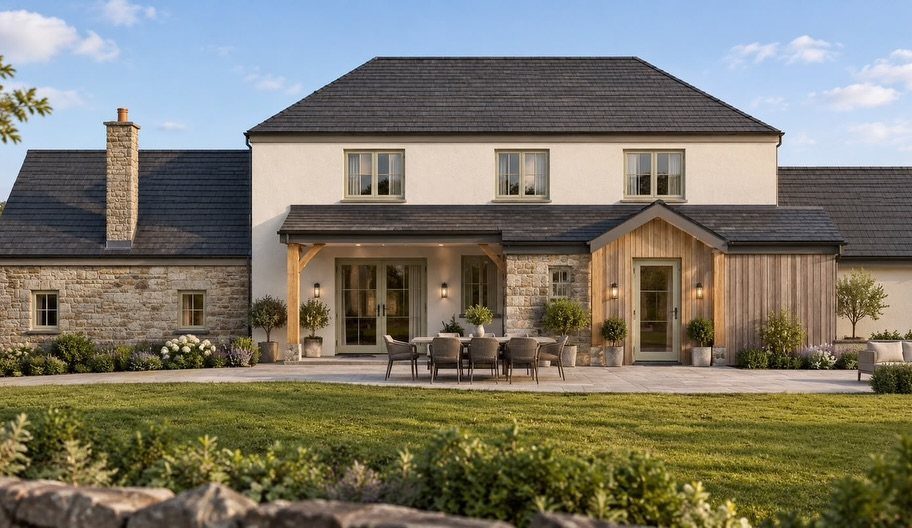
Wood, stone, and stucco age together when each is allowed to weather rather than kept pristine; competing finishes fight each other, but materials that share time grow into the same story.
Inside, I would start with what is underfoot: hardwood floors or a stone hearth that grounds the room before anything else arrives.
Exposed beams overhead repeat the same gesture vertically, though in a rental you are more likely to fake that weight with a heavy wooden mantel or a thick reclaimed coffee table.
A stone chimney reads as original to a cottage when it carries some weathering; trying to keep it pristine would fight the mood.
Mixing tones matters more than matching them. Light oak, dark walnut, and gray stone can share one room if each has enough presence to hold its corner.
Someone working with hand-me-downs or thrifted finds has an advantage here, since the variation is already built in.
9. Comfortable Furniture
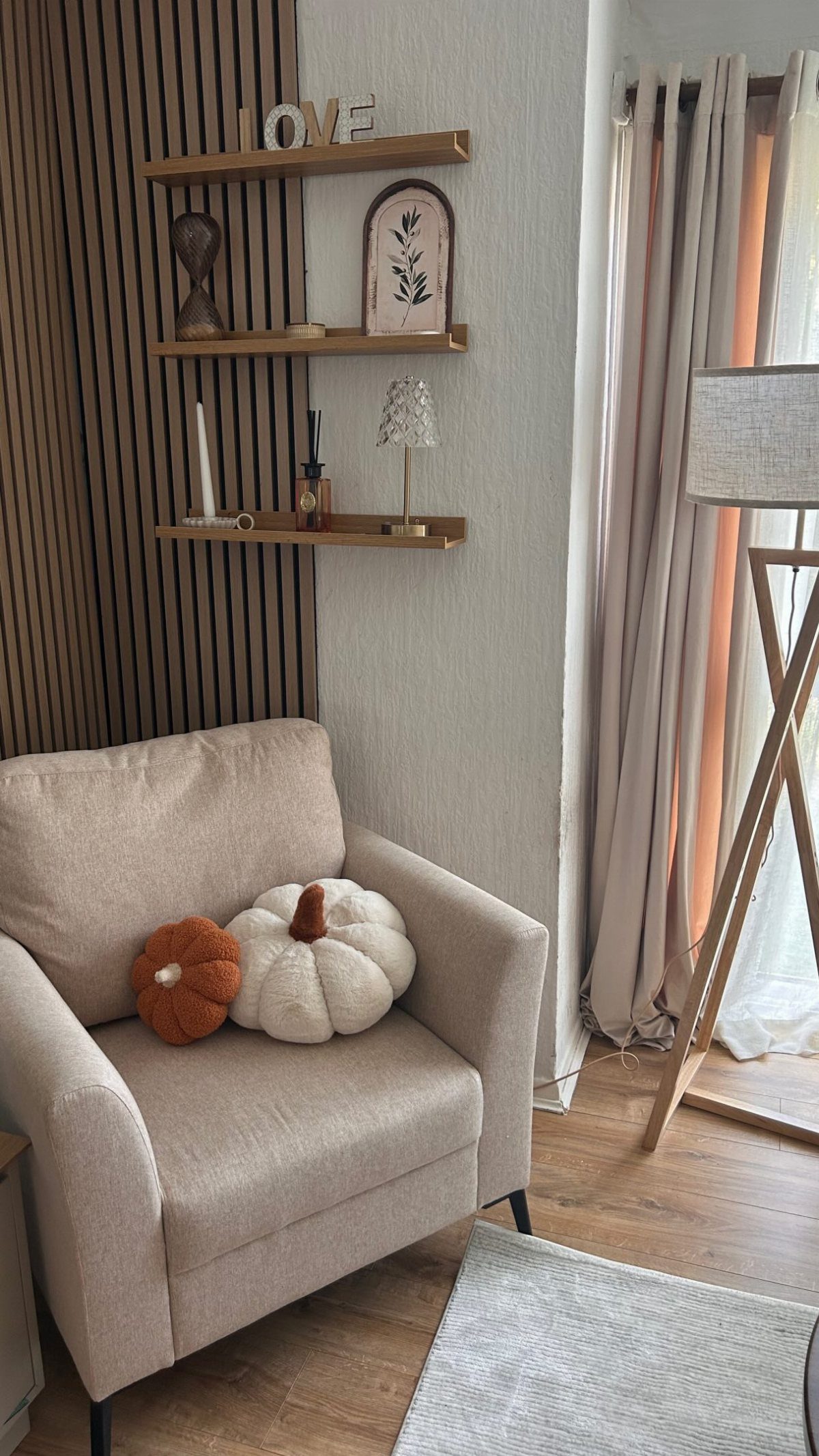
Comfortable furniture in a modern cottage living room means pieces that invite you to sit down and stay there.
A neutral fabric on an armchair hides the coffee spills that happen in real rooms; linen and cotton earn their place by looking good after they have been lived with.
I would pair a rolled-arm sofa with a single deep chair for reading; the scale matters more than the style, since a too-small sofa makes the room feel tentative and a too-large one swallows the floor.
Slipcovers earn their keep in a house with pets or kids, and they let you wash the wear instead of living around it.
This is where the budget goes, and where it should. A frame that outlasts two rounds of upholstery is worth the initial cost.
Custom pieces take time to arrive; plan ahead, or buy floor models and re-cover later.
10. Scalloped Details
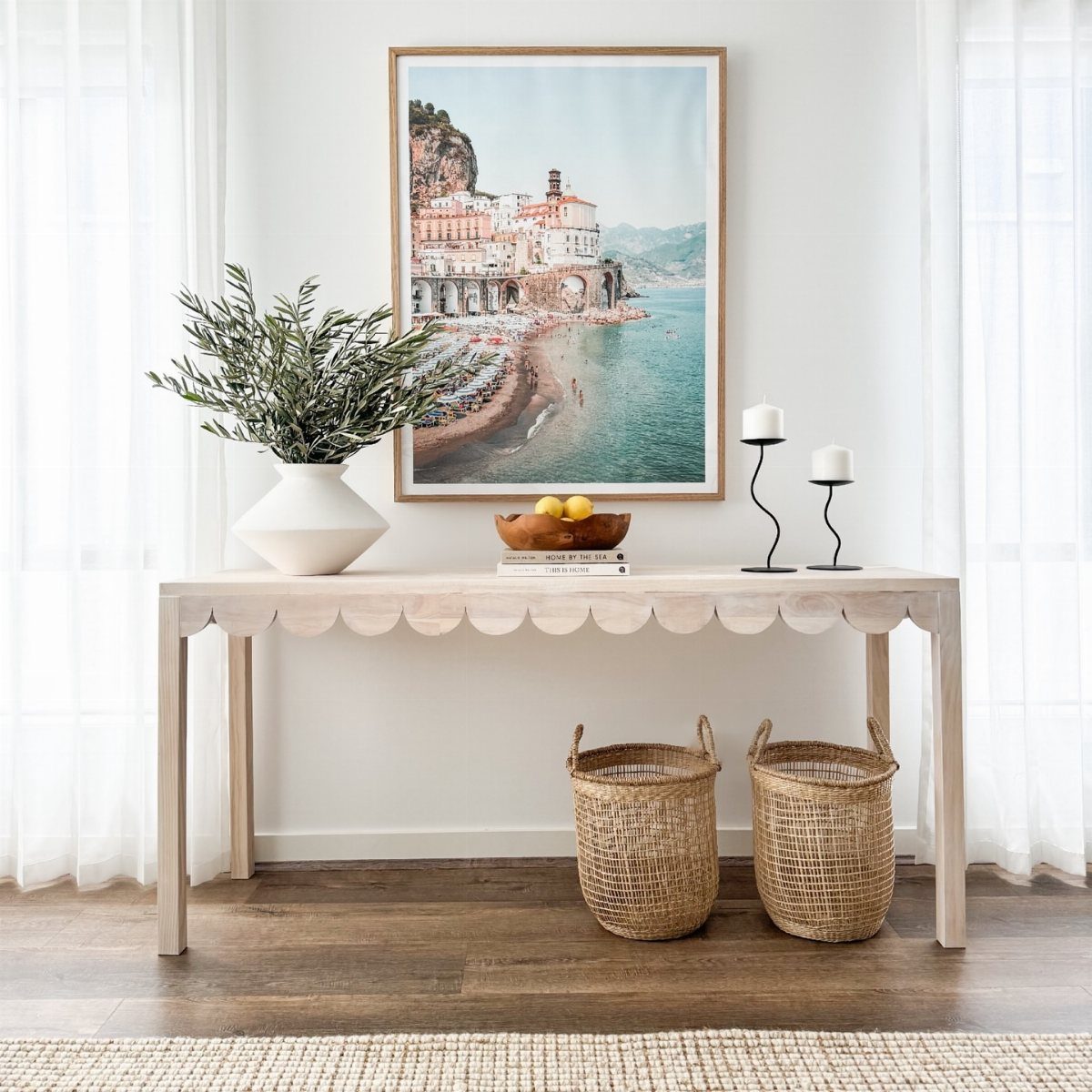
A scalloped edge softens furniture that would otherwise read as blocky or severe.
A console with a repeating curve along its front breaks up the straight lines of the wall and whatever hangs above it.
The same detail turns up on lampshades, pillow trims, and mirror frames; it works when it stays small enough to feel playful rather than cute.
The maker of this piece built it for under $300 in materials, which puts a custom profile within reach of a weekend project with a jigsaw and patience.
Painting the scalloped piece the same color as the wall behind it keeps the silhouette quiet; contrasting it in wood tone or paint makes it the event.
Best for someone who likes a little ornament but not fuss; the wrong room for this is one already full of competing patterns.
11. Open Shelving
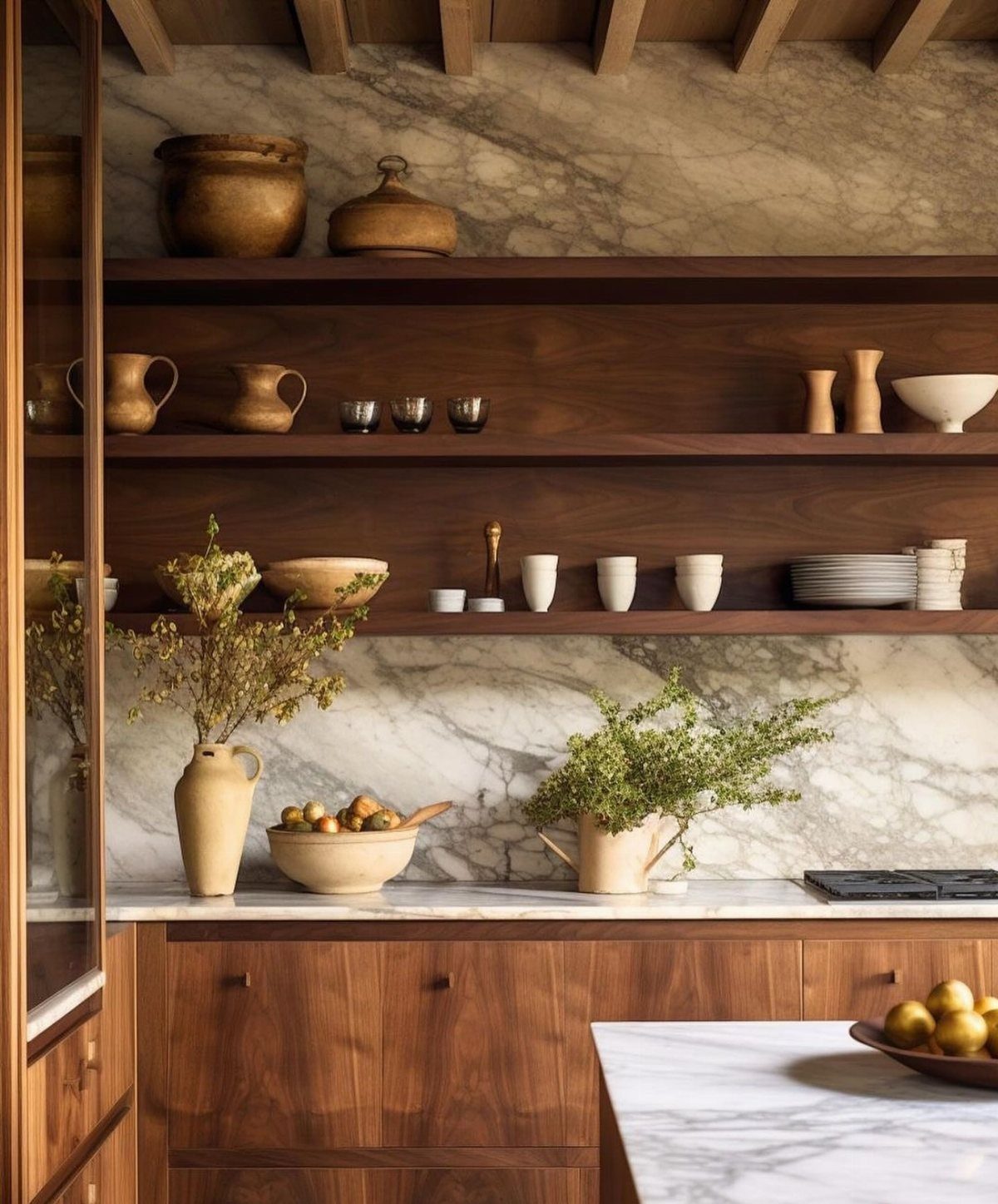
Open shelving turns storage into something the room does rather than hides.
Pottery at varying heights keeps dark wood shelves from reading as inventory; a uniform row of identical bowls is storage, not display.
I leave headroom above the tallest piece on each shelf, and I group by material or color rather than by function.
A marble backsplash gives open shelves a finished edge that painted drywall would not; a coat of high-gloss white paint on the wall behind can substitute in a rental.
This setup trades away the forgiveness of a closed cabinet; every item earns its place, and dusting is weekly work.
For a reader mid-project with a collection of mismatched pieces, it is a chance to curate what shows and box what does not.
12. Functional Decor
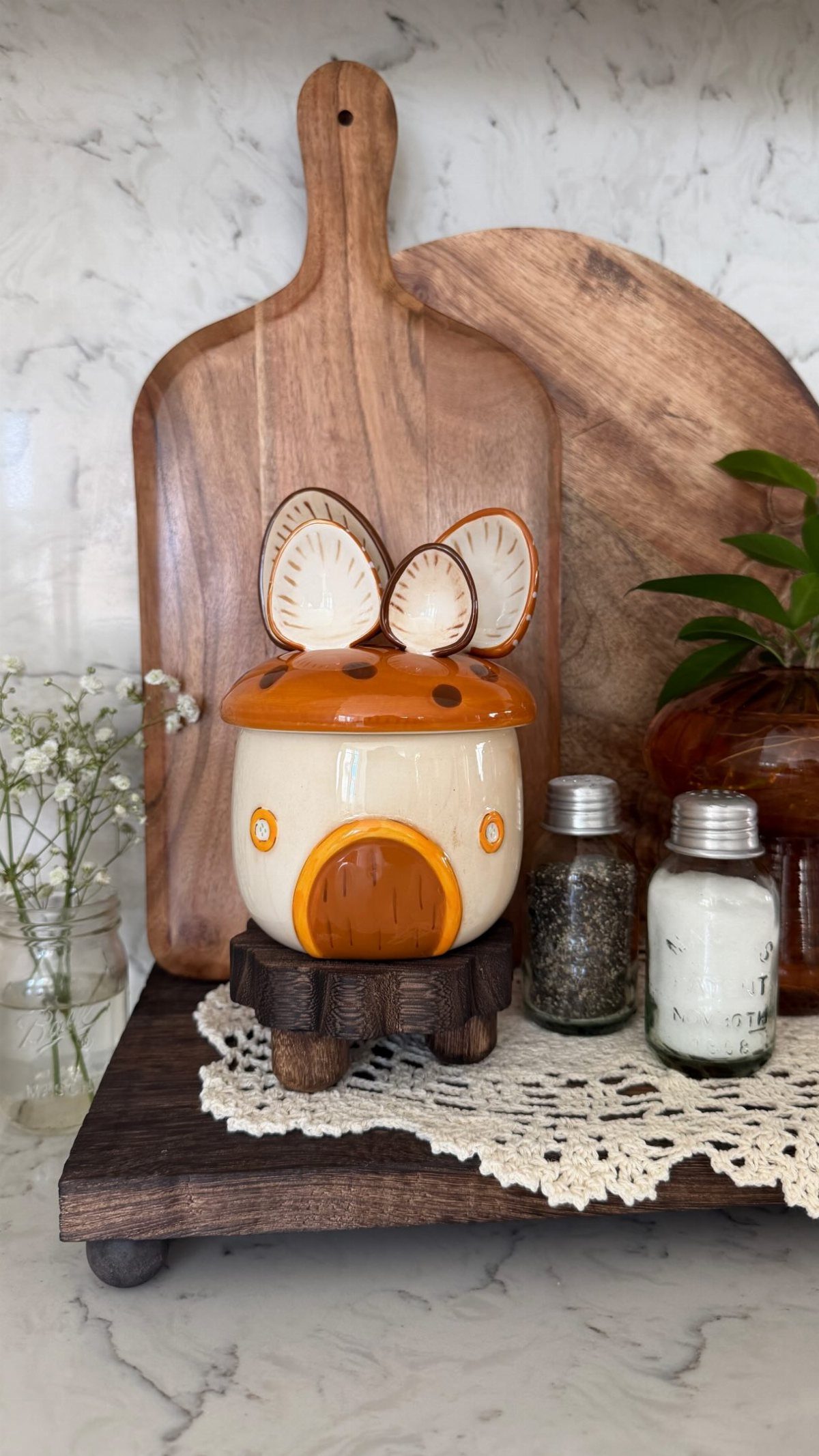
Functional decor is the answer to a small cottage living room that cannot afford single-purpose objects.
I look for storage that does not announce itself, like ottomans with hollow centers or baskets woven tight enough to hide papers.
A wooden bowl on a coffee table collects remotes; a bench under a window holds linens inside and guests on top.
The risk is clutter that pretends to be design. One or two functional pieces per surface is enough; beyond that, the room starts to feel like a general store.
Best for the reader whose square footage is limited and whose budget demands that every purchase work twice.
13. Antique Finds
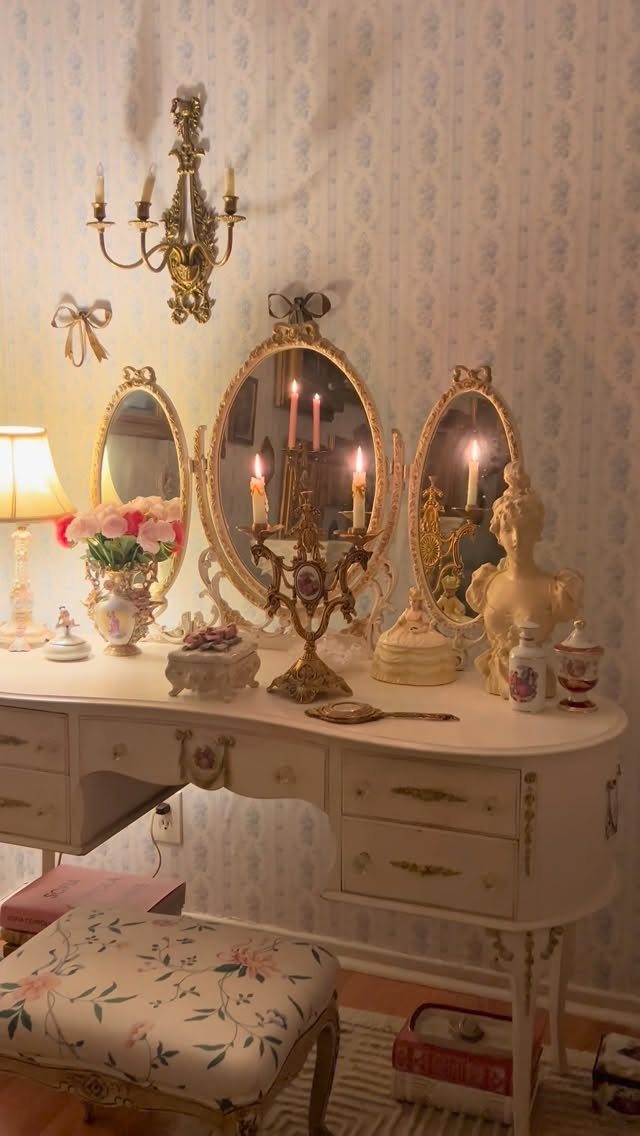
A chipped mirror from a flea market or a stack of foxed hardcovers does more than fill space; it carries weight that new pieces borrow at markup.
I look for items with one obvious flaw, a water ring or a tarnished frame, because those are the ones priced low enough to risk.
A brass candelabra that leans slightly, a vanity stool with worn velvet: the imperfection is what stops the room from looking assembled overnight.
Patience is the price. You are hunting, not shopping.
For anyone who wants the look this weekend, reproductions work; for the rest of us, one real find outlastes three replacements.
14. Wall Treatments
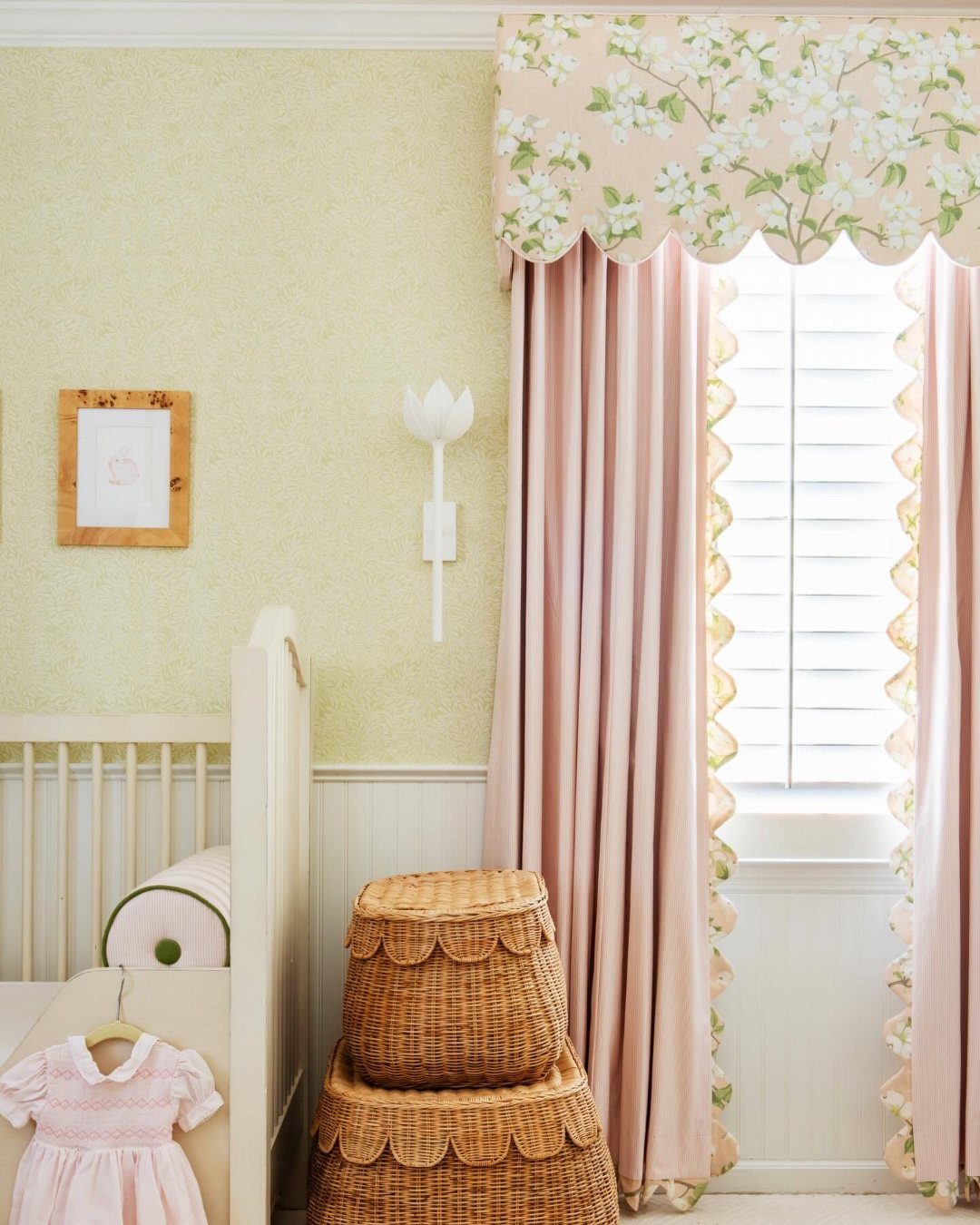
Beadboard reads cottage faster than almost anything you can nail to a wall, and it hides scuffed drywall underneath.
Chair-rail height works, and in rooms with low eaves taking it to the ceiling draws the eye up with the vertical lines. Shiplap costs more and needs truer walls; beadboard forgives a room that has settled.
Paint it in place if you want the gaps to stay sharp, or pre-paint boards on sawhorses if you have the floor space and hate cutting in.
Wallpaper is the faster route for pattern, but it peels where bathrooms back up to living walls. I would board a high-traffic room and paper an alcove that sees less wear.
15. Artwork and Mirrors
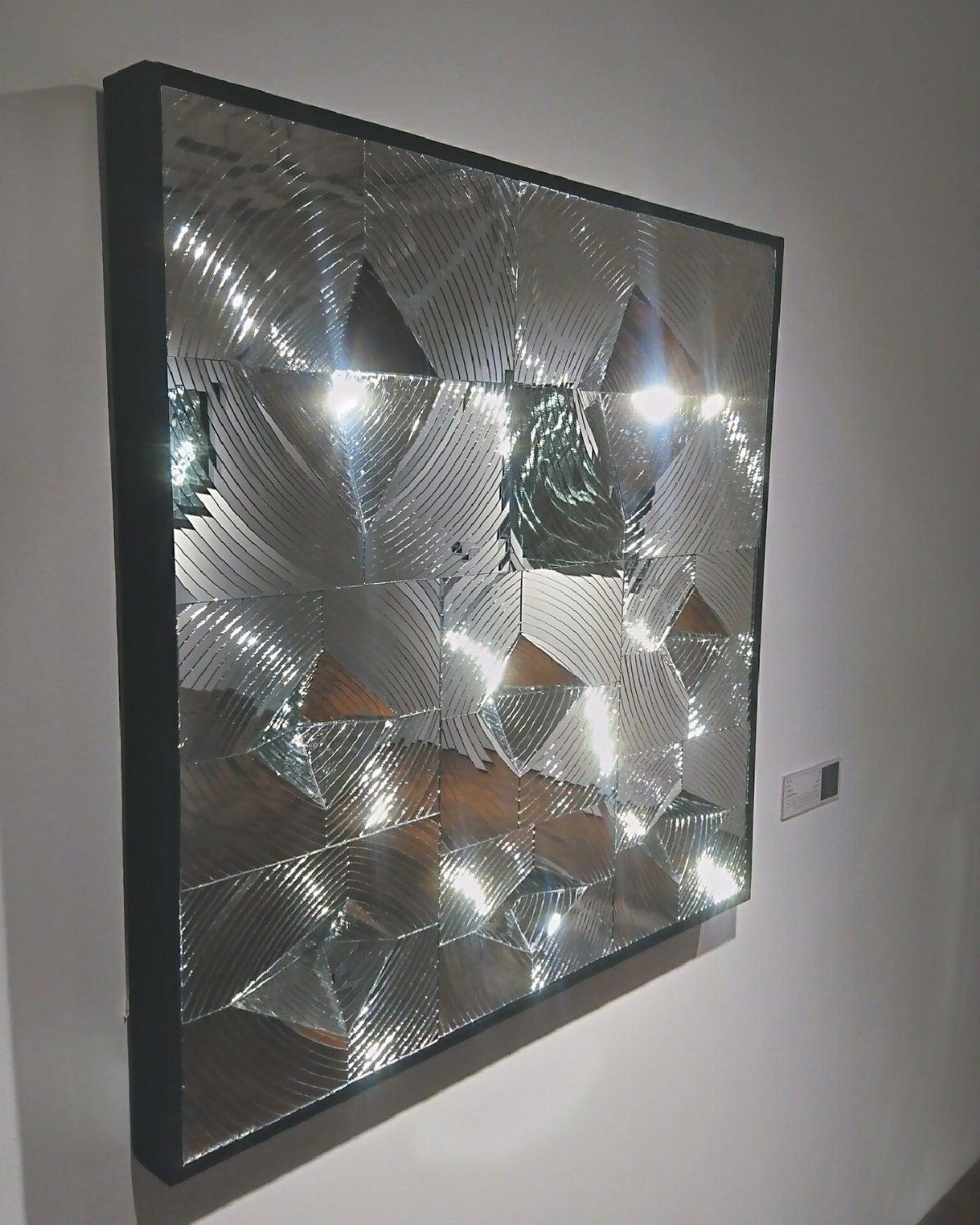
A mirror placed opposite a window returns the light twice, which matters in cottages where deep eaves and small openings can leave a room in shadow even at noon.
I hang mirrors low enough to catch seated sightlines, not just the ceiling; a mirror the viewer has to stand to see is working for the architecture, not the person in it.
Simple frames let the subject carry the cottage feel: botanical prints, small landscapes, anything that looks found rather than commissioned.
One large mirror outperforms a cluster of small ones for brightness. If the wall can take only one piece and the room feels tight, I would choose reflection over image every time.
16. Faux Mantel
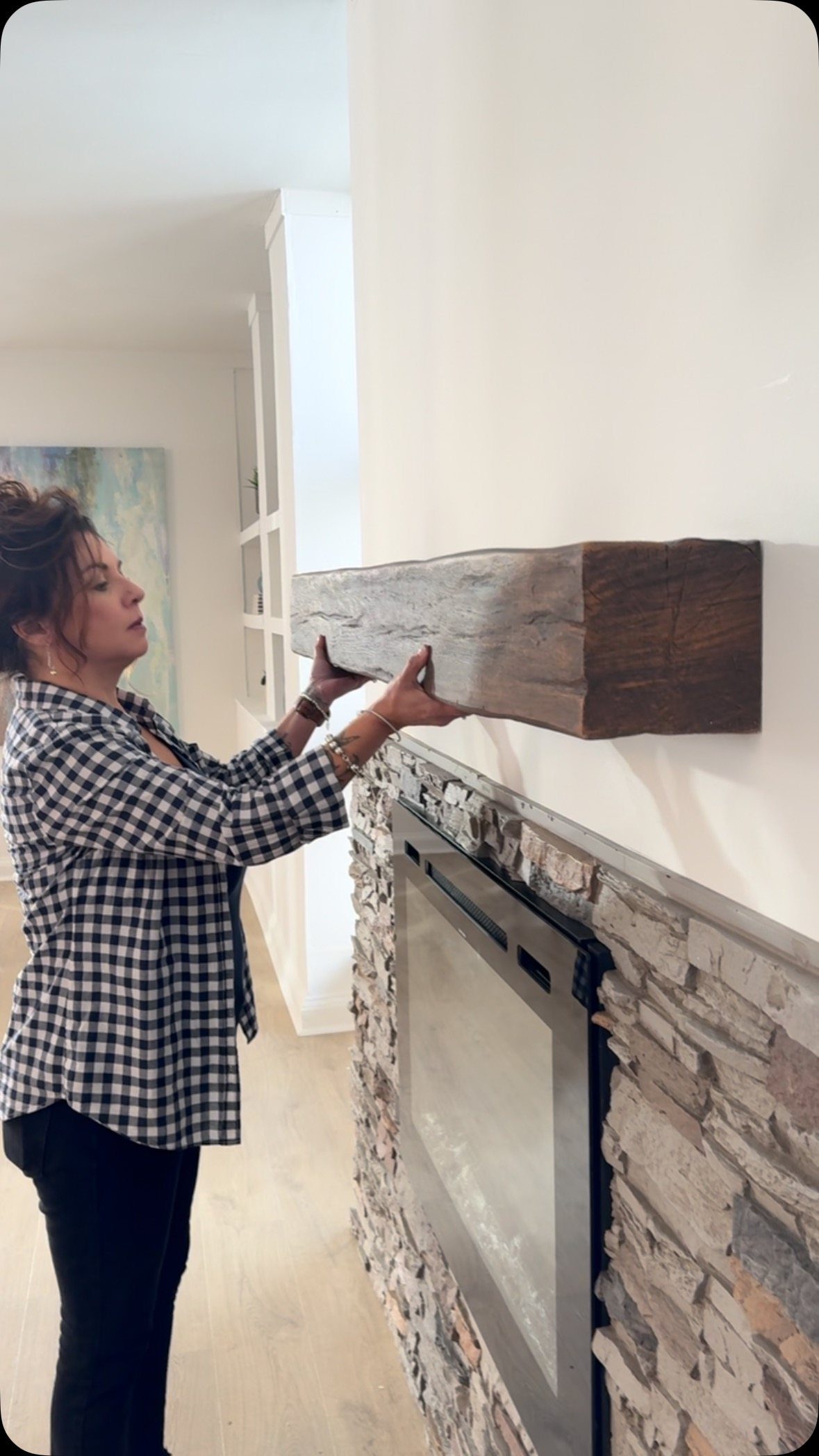
A mantel without a fireplace is pure gesture, and that is exactly the point in a modern cottage where the architecture lacks the chimney but the mood demands the hearth.
A single heavy beam, stained to match existing trim, mounts on brackets above a console or radiator. It gives the eye a horizontal line to rest on and creates a shelf that does not look like storage.
The depth matters more than the length; a 6-inch ledge holds a small vase and two candles, a 10-inch one takes books and a framed photo without crowding.
Function is what you give up. A real mantel shelters a fire; this one only suggests the gathering.
For some rooms, that suggestion is enough.
17. Plank Doors
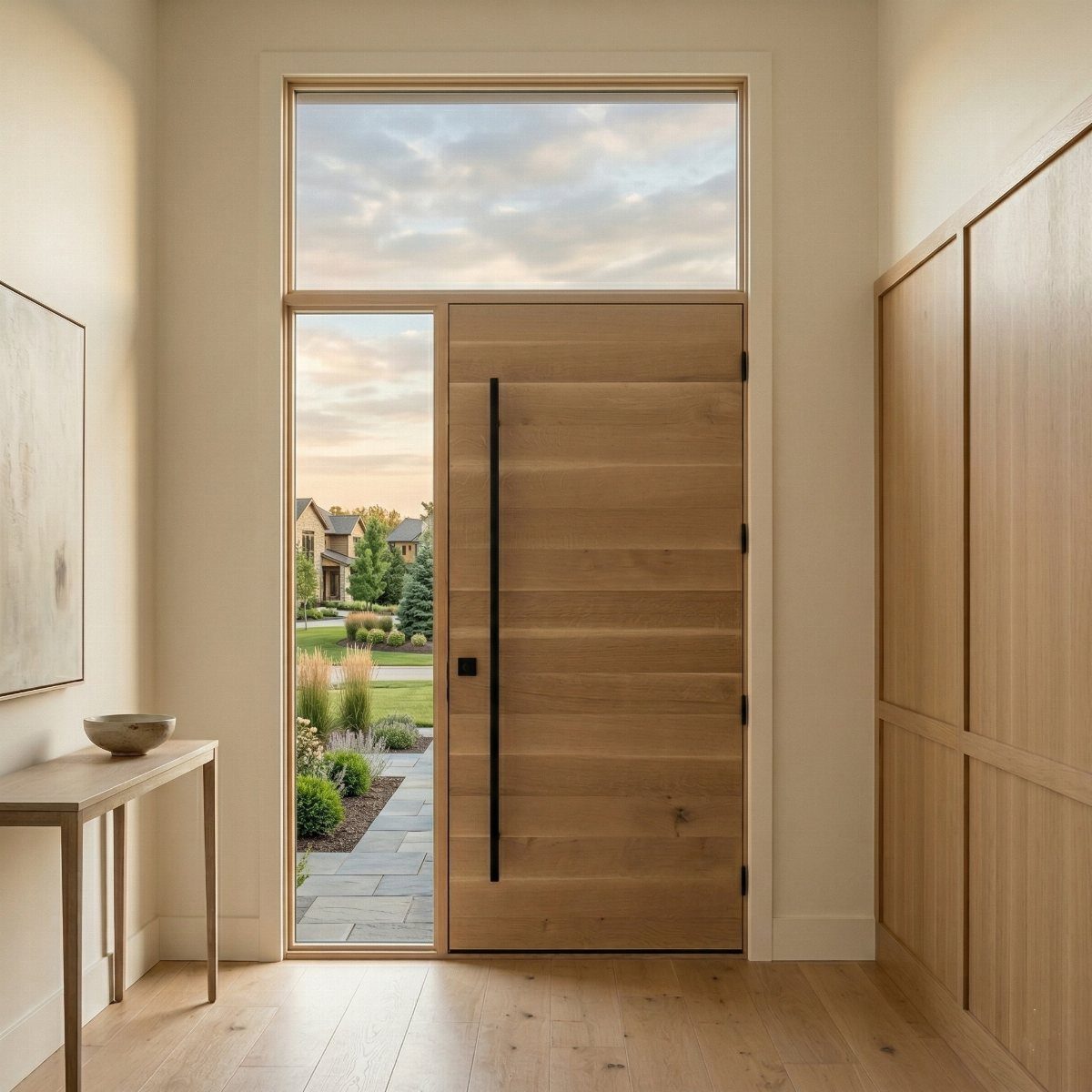
A hollow-core door, the standard in most rentals and builder-grade homes, becomes something else with glued-and-nailed planks applied to its face.
The technique is straightforward: rip 1x material to width, attach with construction adhesive and finish nails, fill and sand, then paint or stain. A circular saw and a borrowed brad nailer handle it in a weekend.
The visible fasteners, slightly off centers or a gap that widens toward the floor, read as handmade if you do not call attention to them.
Not every door in the house needs the treatment. I would start with the one that faces the living room from the entry hall, the door guests see first.
Creating a Cozy Atmosphere
Soft textures do the heavy lifting in a cottage living room. A wool throw draped over a linen sofa invites someone to sit longer than they planned.
Warm colors follow the same rule: terracotta, faded sage, and cream work harder than stark white ever could.
Layered lighting matters more than any single fixture. I start with what the windows give, add a floor lamp for reading corners, and keep a few candles ready for after dinner.
The double doorway that once felt like a problem becomes an asset when light moves through it freely.
A room feels held together when the pieces talk to each other, not when they answer to a theme.
Mixing Old and New
Tricorn Black by Sherwin Williams on a front door sounds bold for cottage style, but country cottage has always made room for contrast. That same front door can sit close to a modern sofa and still make sense.
The pieces worth keeping share a color palette and a patience for being moved around. A lamp from a previous house, a painting bought years ago, a dresser with water rings: these carry the rhythm of actual life.
I choose timeless over trendy because I know I will rearrange.
Vintage and modern do not need to balance evenly. One strong antique against clean-lined furniture often works better than half and half.
While the actual design principles of modern cottage style can be as nebulous as the term used to describe them, there are a few key elements that are emblematic of this growing style.
Personalization
A room feels lived-in when it contains evidence of actual living. A painting with a story behind it beats one that matched the sofa every time.
The ceramic bowl with the chip stays out because that chip marks a Tuesday night.
Meaningful items do not announce themselves. They sit where they are used, not where they photograph best.
A postcard wedged in a mirror frame. The book left open on a side table.
These small presences accumulate into something no styled shelf achieves.
I would rather see one thing with a story than ten things with a price tag still attached.
Frequently Asked Questions
What is a modern cottage style living room?
It is a blend of rustic charm and modern convenience, built around cozy furnishings and natural materials that feel lived-in rather than staged.
Wood, stone, and linen share space with clean-lined pieces, and the light stays warm at 2700K or lower. The look depends more on how pieces age together than on matching sets bought at once.
How do I make my living room cottage style?
Start with soft colors like terracotta, faded sage, and cream, then add natural materials that are allowed to weather rather than kept pristine. Warm bulbs at 2700K and a pulled-in seating arrangement do more than any single purchase.
What is the new trend for living rooms?
Comfort-first layouts, natural materials that show age, and lighting warm enough to change how paint and fabric read after dark. Personalized decor, one piece with a story given real wall space, beats shelves filled to match.
The trend is away from themed rooms and toward spaces that contain evidence of actual living.
What is replacing cottagecore?
Modern cottage style is emerging as a refined, more livable take on cottagecore aesthetics. It keeps the warmth and natural materials but drops the excess ornament in favor of functional pieces and cleaner lines.
A single scalloped detail or one antique find with a flaw matters more than accumulating props.