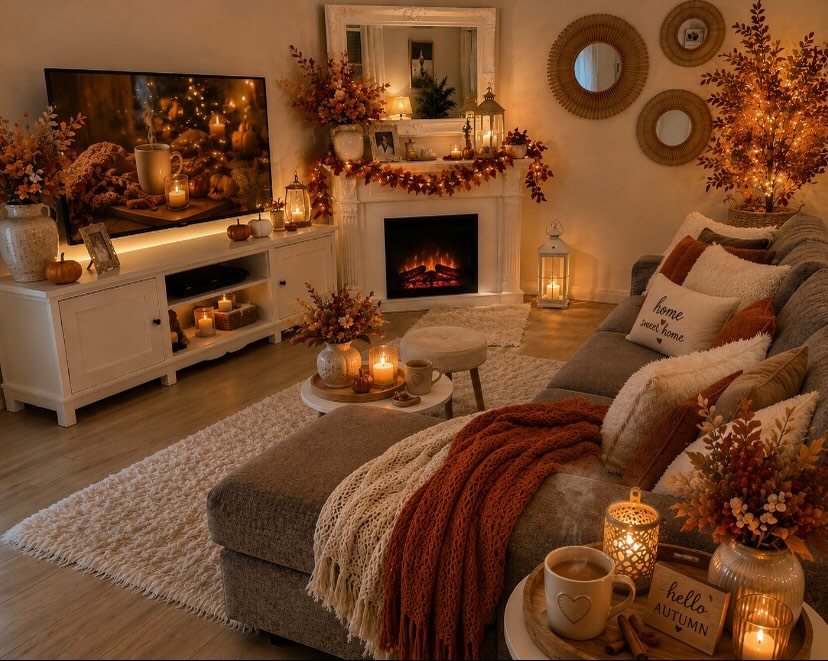
These ideas run from a folded throw to a grocery-store pumpkin, with most of the work doable in an afternoon. Which one fits depends on whether your living room opens straight onto the front door or has walls to spare.
A 2700K bulb swap costs nothing if you already own lamps, and it does more than any centerpiece on the list.
1. Layered Table Settings
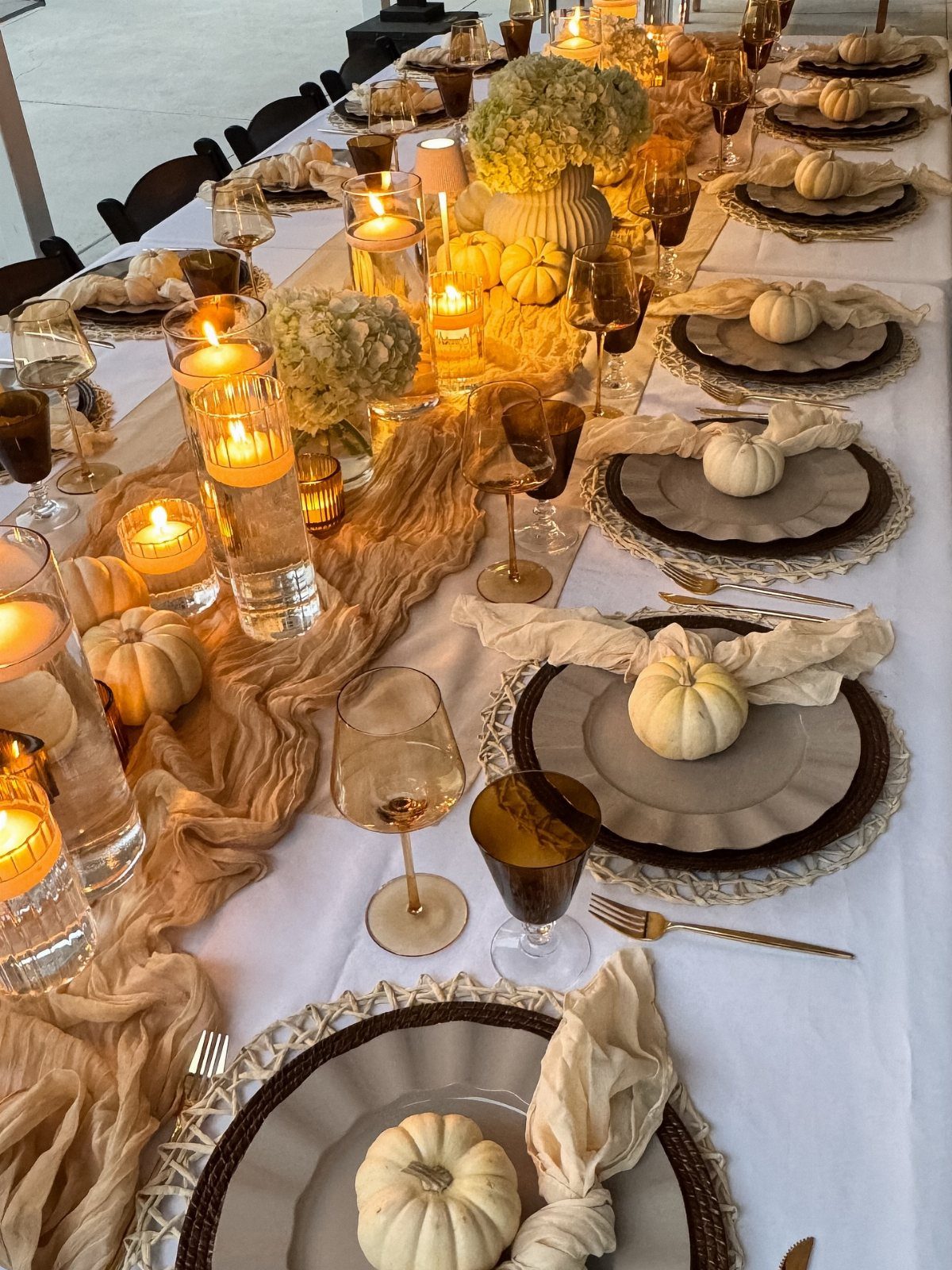
A layered table setting builds warmth by stacking neutral linens against seasonal accents like small white pumpkins and glass candle holders.
A tan runner and scattered arrangements let you reuse the same base for Christmas by swapping out the autumn pieces.
Start with beige or cream linens, then add color through napkins or a runner you can remove.
One host who assembled a similar table for a small gathering used soft nude tones with pumpkin accents, keeping the palette quiet enough that the candles and greenery carried the mood.
Wood chargers or metal flatware add the texture mixing that makes a table feel considered without extra spending.
This suits someone who wants the table to feel dressed up but not unapproachable, and who will use those neutral linens again.
2. Cozy Textures
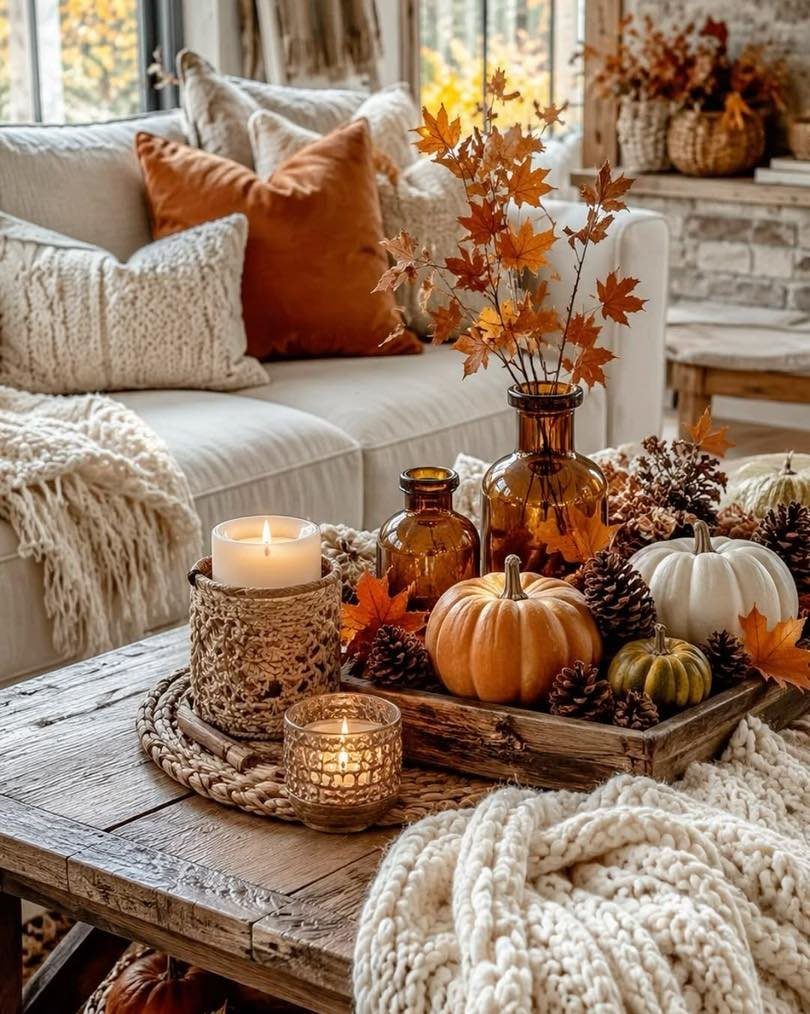
Cozy textures in a living room usually mean the soft things you can pull in without rearranging furniture.
The photo showed the combination: a chunky knit blanket, woven coasters, and natural elements like pinecones and small pumpkins grouped on a wooden surface.
I would start with what you already own. A thick throw over the sofa arm, a basket of firewood or dried leaves beside it, and one woven piece like a tray or mat on the coffee table.
The pumpkins and leaves are seasonal accents that cost little at a grocery or farm stand; the candles in textured holders give evening light when the afternoon fades early.
Mixing wood, soft fabric, and something woven adds depth without buying a whole new room.
Best for renters who cannot paint or mount anything, and for anyone keeping a weekend budget tight.
3. Mantel Decor
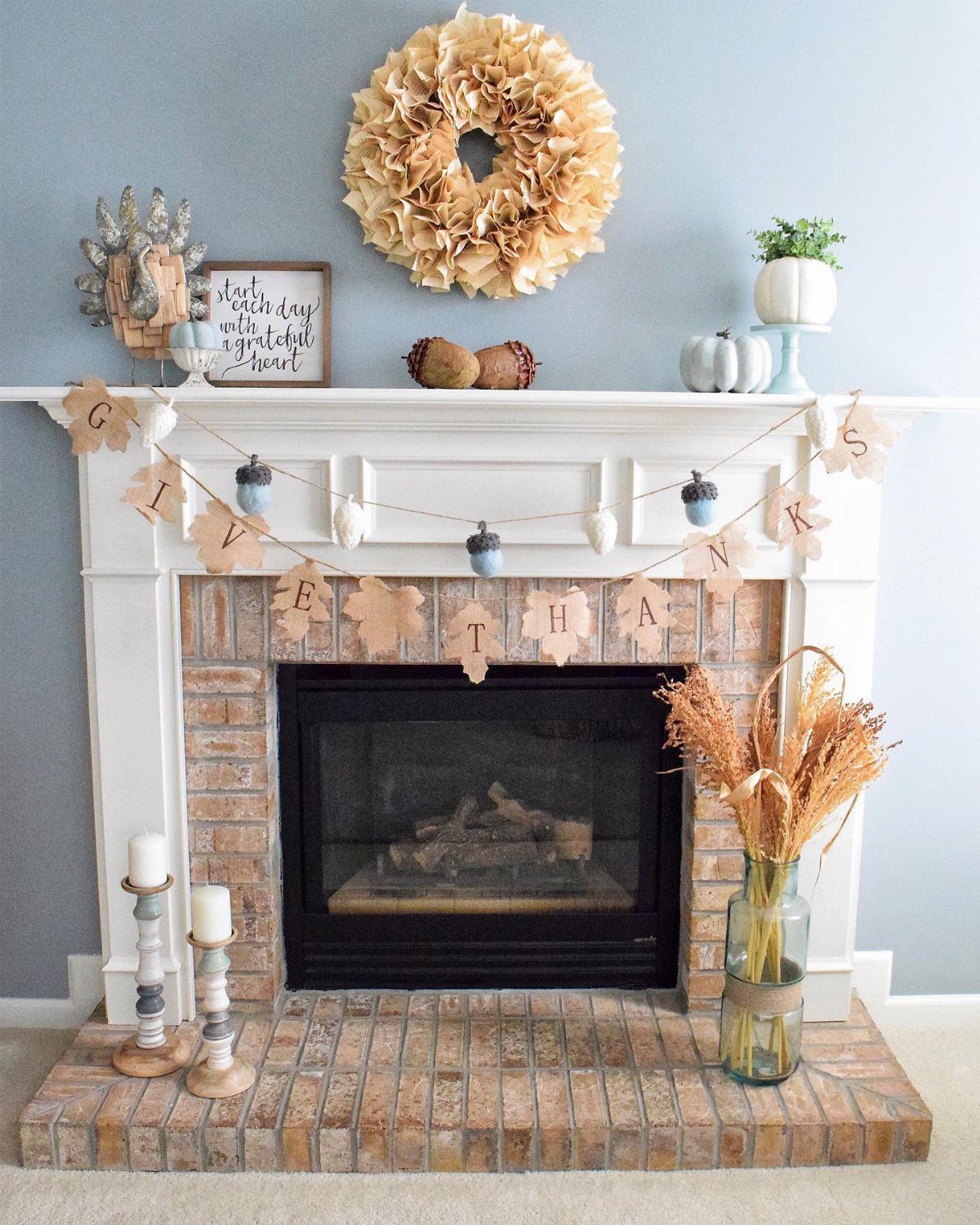
A mantel is the one place in most living rooms that already reads as a display, so seasonal styling there feels natural rather than added on.
The balance comes from mixing heights and materials without crowding the ledge. A garland or banner gives horizontal structure; group shorter items like pumpkins or acorns at the ends so the center stays open.
Candles on the hearth rather than the mantel itself keep the firebox area active after dark.
One creator working with similar elements kept the palette to dried greens, whites, and natural wood so the setup lasted from early November through Thanksgiving without looking tired.
This works best when you want one strong focal point rather than decor scattered everywhere.
4. DIY Centerpieces
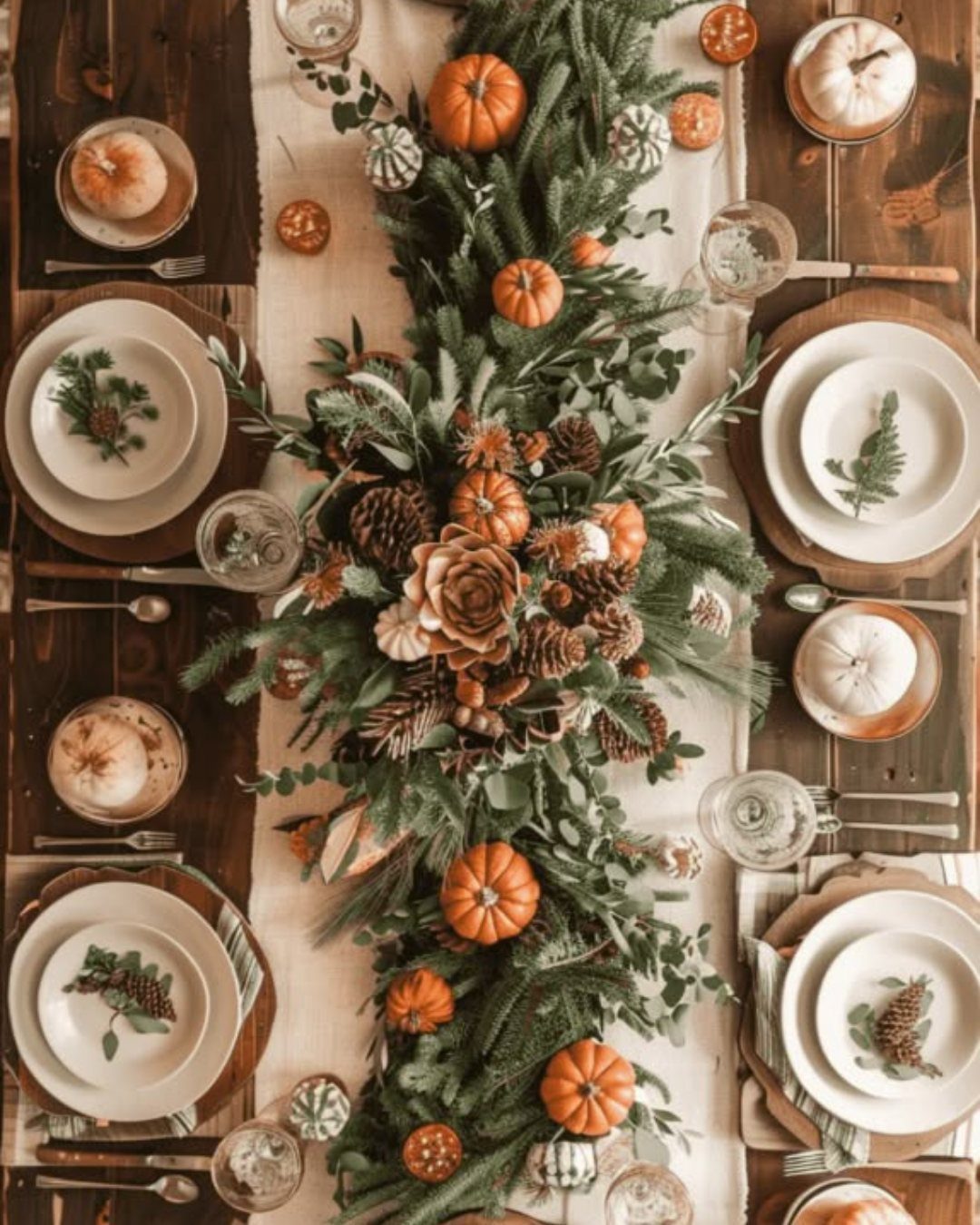
A DIY centerpiece lets you build around what the table actually needs instead of buying a generic arrangement.
An evergreen garland studded with small pumpkins and pinecones looks gathered rather than purchased; wooden chargers and white plates keep the table from feeling too busy.
Start with a base: a wooden tray, a ceramic bowl, or a length of garland down the center.
Add three elements in odd numbers, which the eye reads as calmer: small pumpkins, sprigs of greenery, and tea lights or taper candles.
Chicken wire and rope shaped into a cornucopia hold feathers and fall items well; the technique matters more than the specific contents. If your table seats more than eight, keep the centerpiece low so guests can see across.
An hour of gathering and arranging beats a florist arrangement that dominates the room.
5. Buffet-style Serving

Buffet-style serving changes the flow of a gathering from seated and formal to relaxed and self-directed.
This setup suits a living room that cannot fit a full dining table, or a host who would rather not time courses to a clock.
Set the buffet against a wall or behind the sofa so traffic moves away from the conversation area.
One host who planned a similar gathering mixed classic blue and white serving pieces with fall pumpkins, proving the dishes do not need to match as long as the palette holds.
A drink station in the corner, even just a cart with wine and glasses, keeps people from clustering.
Tradeoff: the food stays warm on heating trays or chafing dishes, or you serve things that taste fine at room temperature.
6. Welcoming Entryway
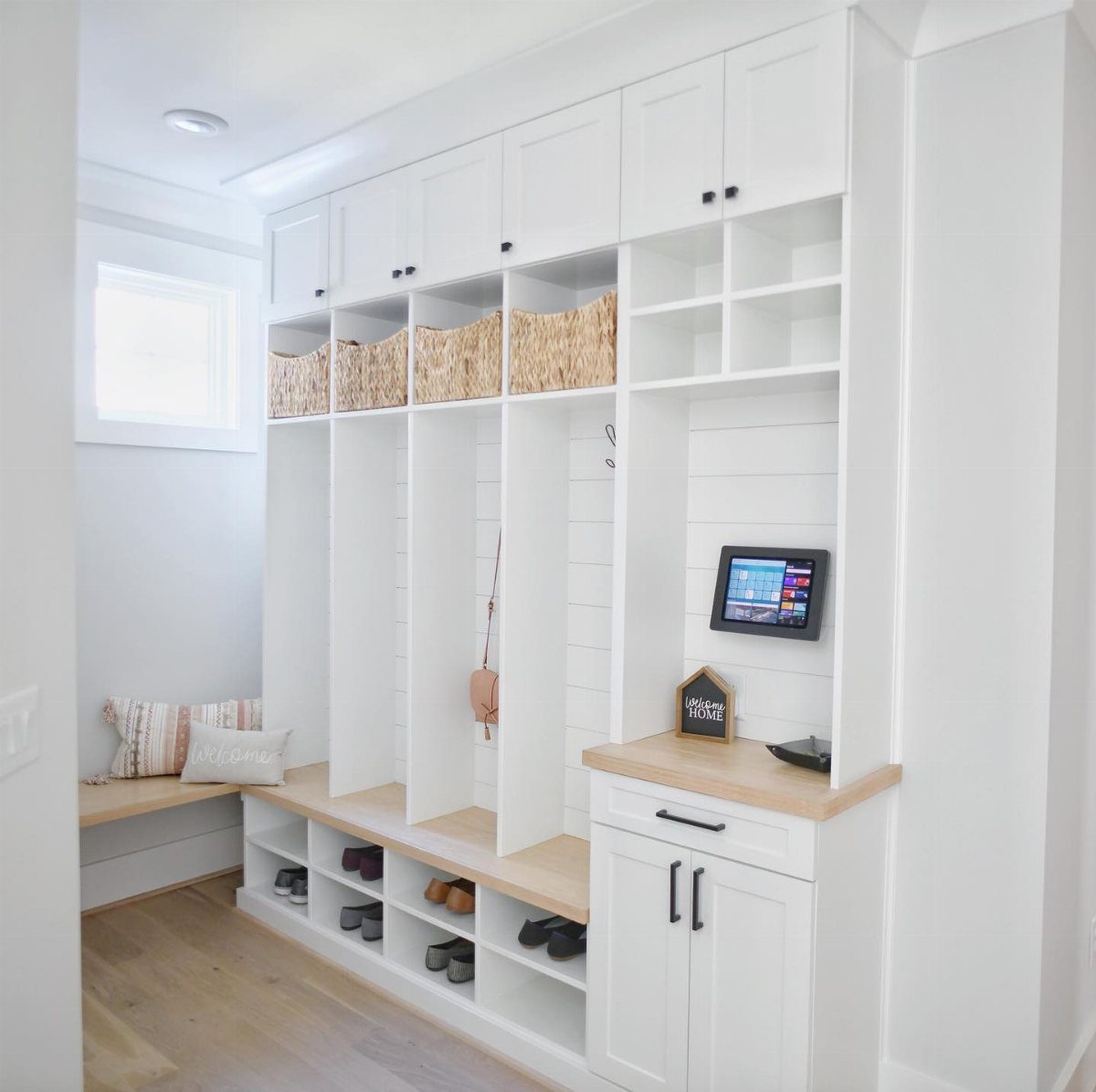
A welcoming entryway sets expectations before anyone reaches the living room. A white built-in with cubbies, baskets, and a wooden bench works year-round; a small wooden sign and natural materials already there do the seasonal lifting.
A console table with a tray and a few hooks on the wall gets you the same result.
A bench with a basket underneath for shoes, a hook or two for coats, and one seasonal item like a small pumpkin or a sprig of greenery on a shelf does the same work.
Having a place for guests to set things down matters, because hands full of coats and bags make everyone feel less at ease. Fresh greenery lasts the weekend; dried wheat or a wooden sign lasts the season.
This matters most when your front door opens directly into the living space, which is common in apartments and smaller homes.
7. Seasonal Scents

Small pouches of dried orange, cinnamon, and greenery hung on knobs or tucked into a bowl give guests something to notice before they ever smell it. The warmth hits a few seconds later.
A batch of these made up in November costs almost nothing and lasts the whole month. Dried slices go into thin muslin or cellophane bags with a stick of cinnamon and whatever evergreen trimmings I have.
A simple ribbon turns it into something intentional enough to leave out.
For a stronger throw, set the bowl near a heat vent or a sunny window. If open flame makes you nervous, this is the swap for candles.
The burnt orange candles, bowl of apples, and appetizer board of grapes and cheese, make waiting for turkey a fun "bistro" like experience.
Creating a Cozy Atmosphere
Soft lighting does more than a new centerpiece ever could. I start by swapping any daylight bulbs down to 2700K, or I skip overhead fixtures entirely and run everything on lamps and candles by five o’clock.
Tea lights in small glass holders line the windowsill and coffee table; a bag of them lasts the whole weekend and leaves plenty for next year.
A single spiced candle on the mantel, lit an hour before anyone arrives, carries farther than a diffuser and costs less. I stick to one scent per room so it doesn’t turn into a candle store.
Pumpkins and leaves from the yard, arranged in a wooden bowl, fill the gap between the lamp glow and the table settings. Nothing purchased, nothing precious.
Using What You Have
I build the whole table from what already sits in drawers. Linen napkins, if I own them, get folded without rings; wood chargers beneath everyday white plates add warmth without a new purchase.
A runner cut from brown kraft paper, weighed down at the ends with small stones, runs the center instead of a tablecloth I don’t have.
Each place setting gets one small thing: a name card handwritten on scrap cardstock, or a mini pumpkin picked up with the groceries. The pumpkin counts as food, not decor, and guests take it home.
Eucalyptus or greenery clipped from the yard fills the runner gap. If I don’t have yard clippings, a single stem per setting works fine.
Visible effort matters more than visible spending.
Frequently Asked Questions
How to decorate a room for Thanksgiving?
Start with soft lighting, warm textures, and seasonal accents that cost little. Swap daylight bulbs to 2700K, layer in chunky knit throws and woven pieces, and add pumpkins or greenery from the yard.
A single spiced candle, lit an hour before anyone walks in, fills the whole room without fighting anything else you’ve already set out.
What’s trending for living room decor?
Warm minimalism with visible effort over visible spending is what I see working. Natural materials like wood, linen, and greenery mix with soft lighting at 2700K.
Right now the rooms that work best pick one place for your eye to land, a mantel with some height and layering, instead of spreading thin across every surface.