These ideas run from a free armful of backyard branches to a painted bench setup, and the one that fits you depends on whether you own the porch or answer to a landlord.
Renters will notice how many of these leave no trace: burlap strips tied with twine, a bushel basket that moves inside after Thanksgiving, battery candles on timers with no outlet required.
1. Pumpkin Planters
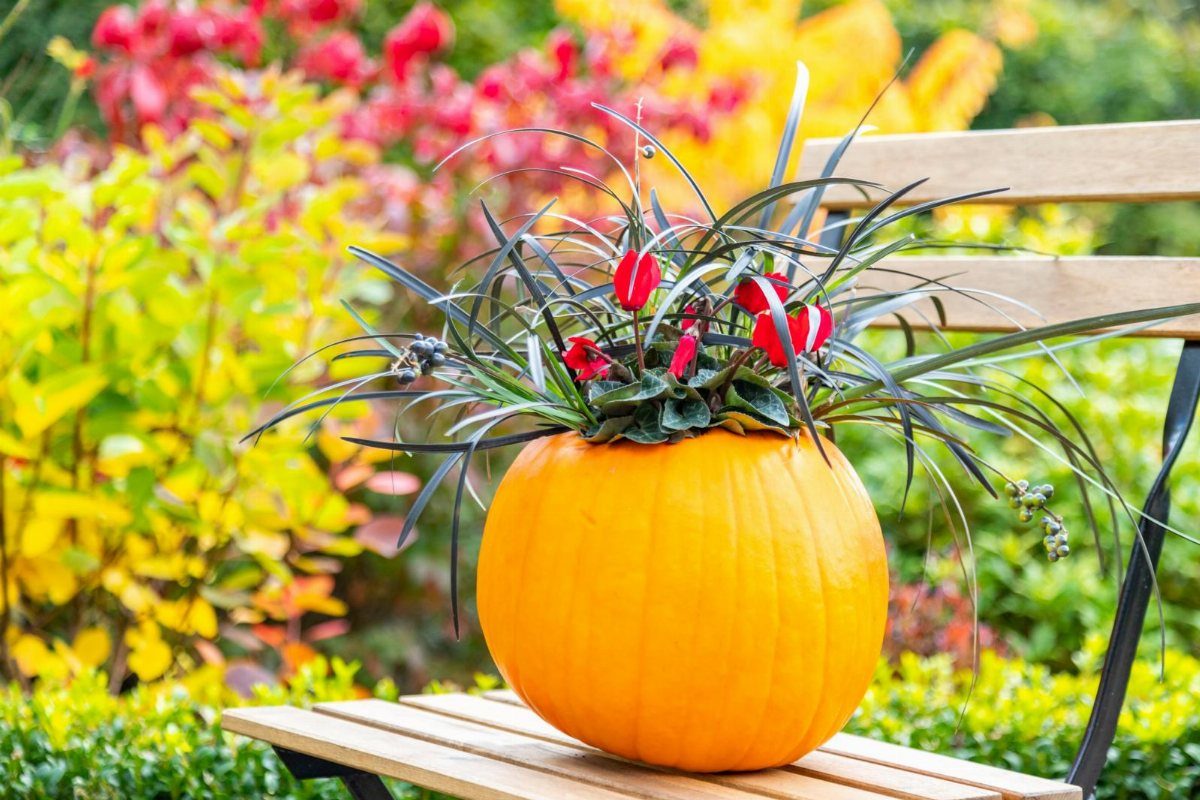
A hollowed-out pumpkin becomes the pot, and the grass and red flowers become the arrangement. I like this route because one nursery planter, already designed by someone with an eye for color, drops straight in.
A pumpkin planter lasts a few weeks outside in cool weather; when it softens, you toss the whole thing, flowers and all, and the sunk cost was one gourd and a small handful of change.
For a longer version, terracotta pumpkin-shaped planters exist. They pair well with chrysanthemums or asters and survive the season intact.
This suits renters who already own a basic planter and want one showpiece that reads designer without the designer invoice.
2. Pumpkins and Gourds
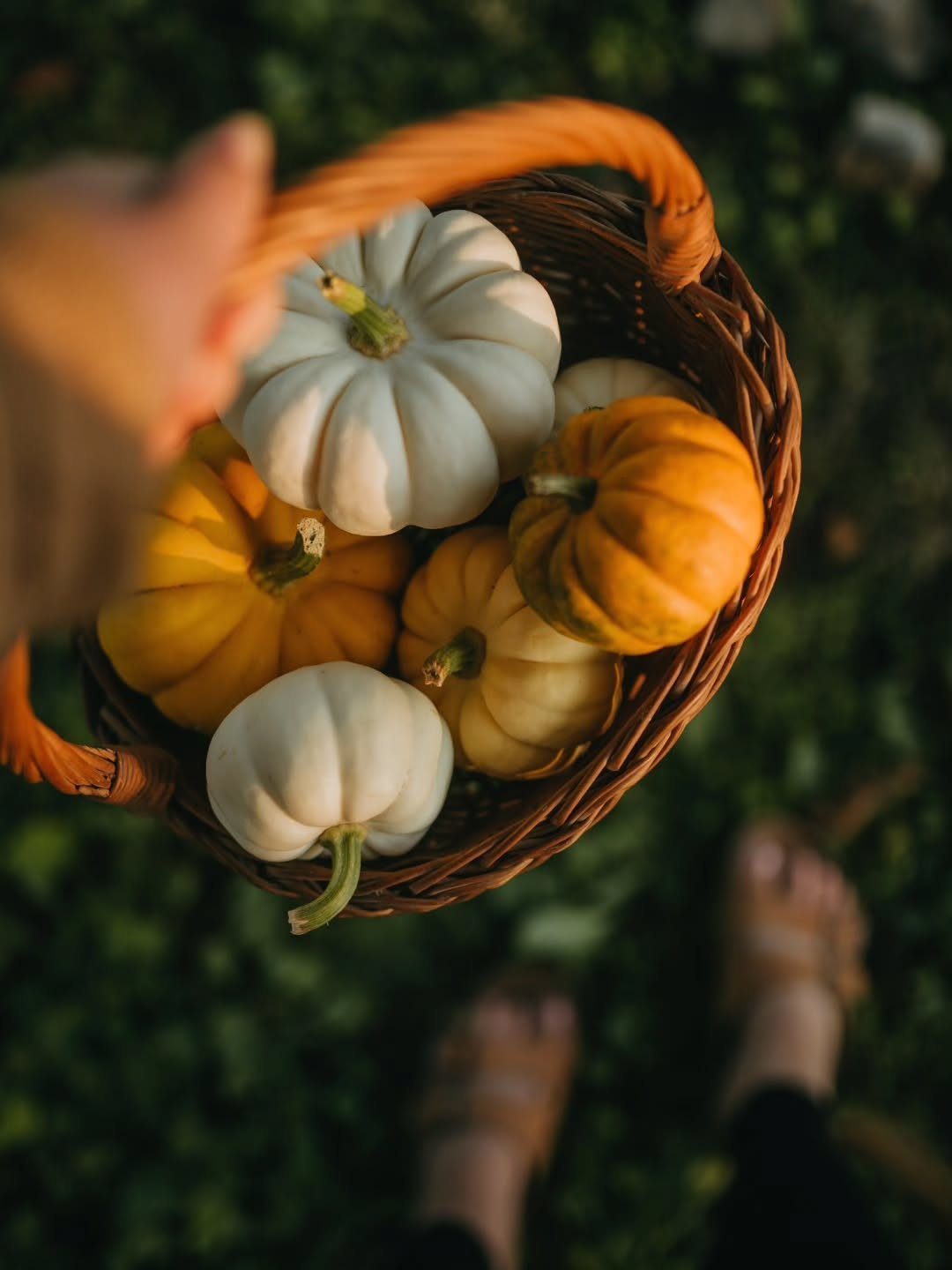
Grouping in odd numbers and mixing sizes makes a pile of pumpkins look gathered, not staged.
I buy real heirlooms for the stackable shapes, but faux foam or resin pumpkins carry year to year without the November guilt of throwing food in the trash.
A bushel basket or wooden crate from a garage sale holds them at entry level.
This is the lowest-stakes idea on the list. No wiring, no watering, and if you already own a basket, the spend is whatever pumpkins cost near you.
3. Fall Wreath
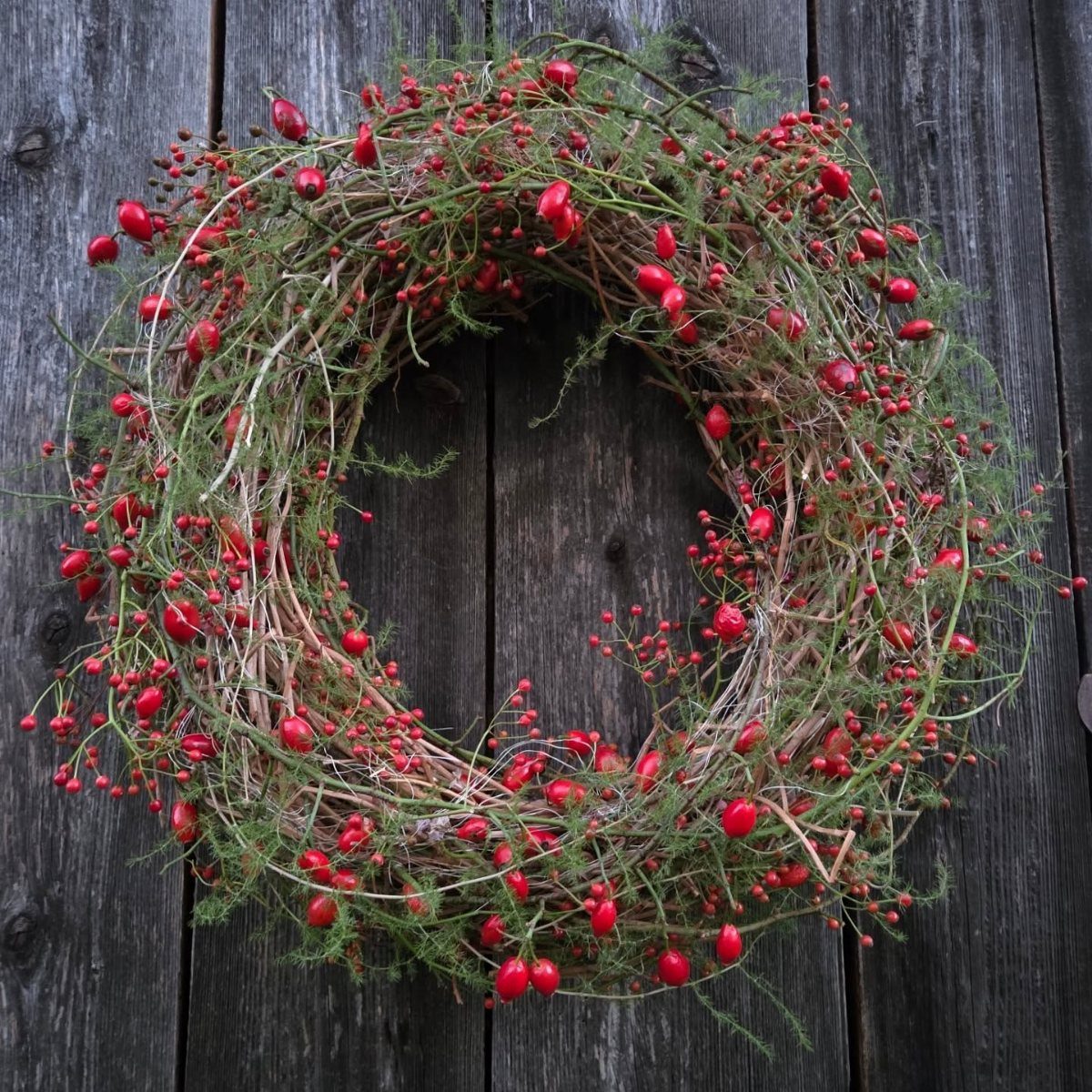
Bold color and visible texture matter more than size; this one reads from the sidewalk because the red pops against the grey.
I usually make my own, but a $20 find on Amazon works as the anchor that everything else on the porch answers to.
Live garland around the door frame pairs with it or stands alone if you want depth without the circular form.
Best for narrow stoops where floor space is zero and the door is the only stage available.
4. Mums in Planters
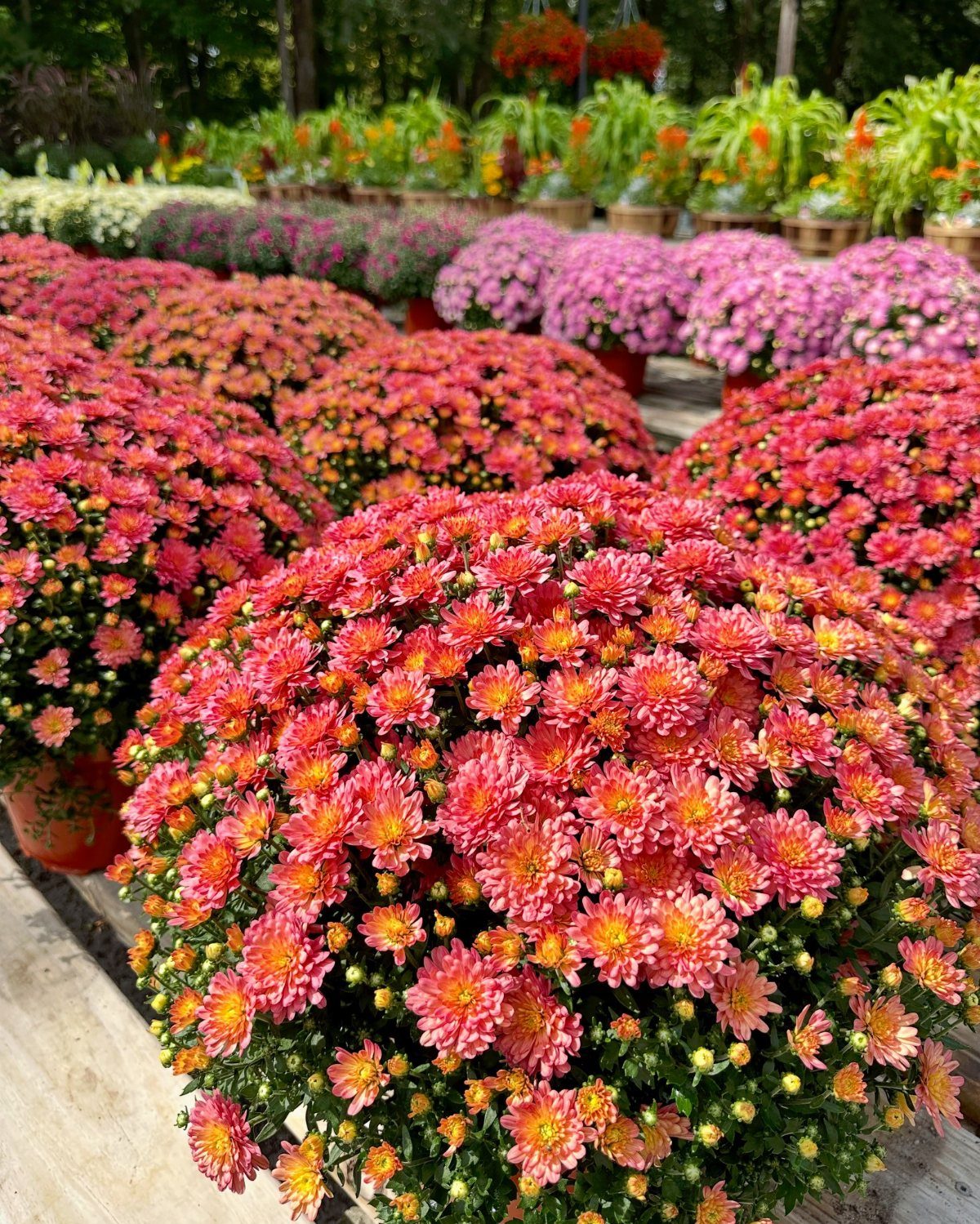
Symmetry is what makes this look intentional: two identical urns flanking a door, or one tall planter if the porch is narrow enough that two would block traffic.
Ornamental cabbage or kale fills gaps between bloom cycles and handles frost longer than the flowers. I drop nursery pots straight into planters I already own, which saves the cost of ceramic each season.
This one asks for watering and deadheading, so it suits someone who will walk past it daily and notice.
5. Cozy Lighting
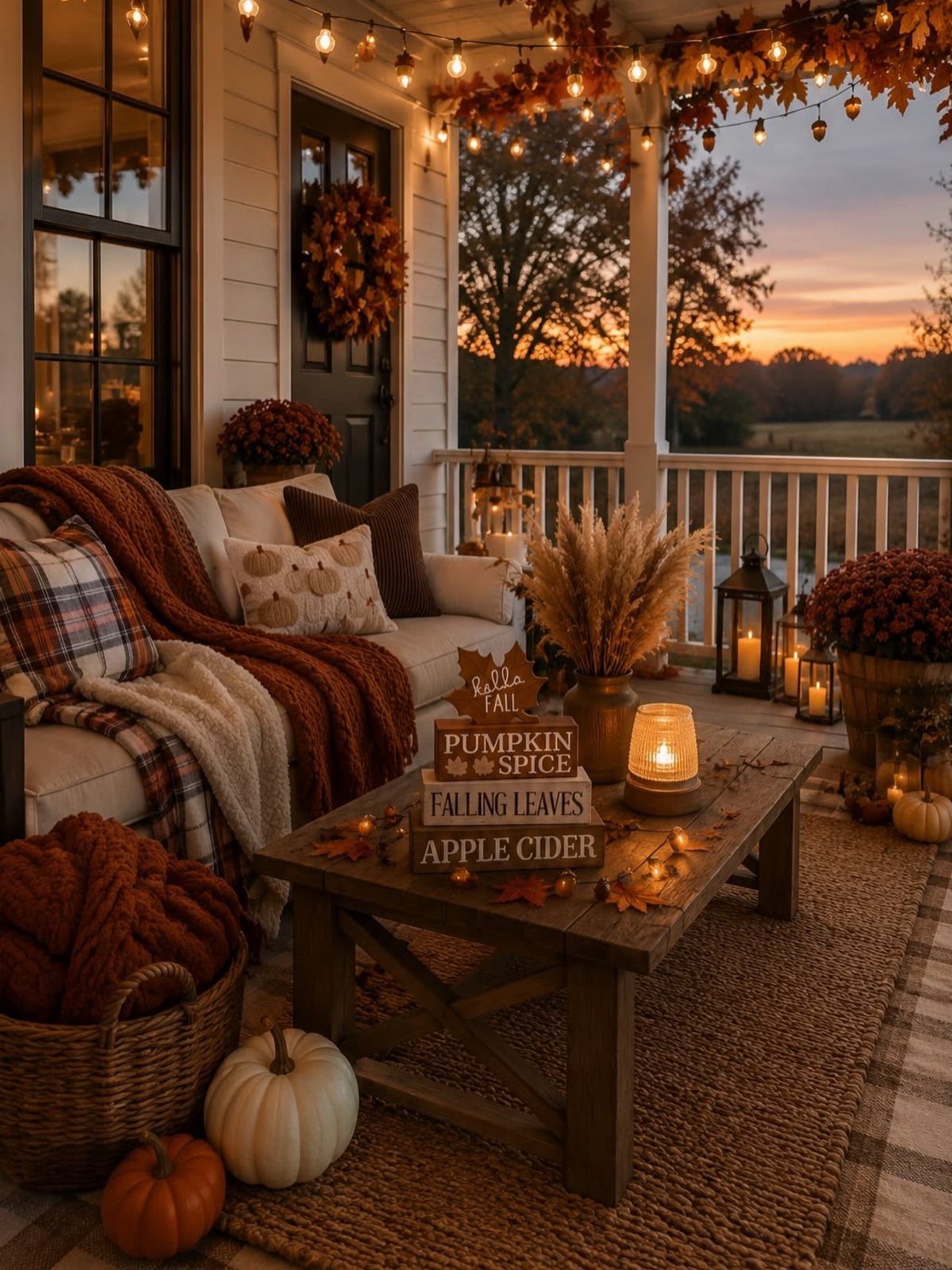
The lights do the work after 5 p.m., when most people actually see your porch.
Battery-operated candles on timers eliminate the nightly walk outside to light them. Solar stake lights along the walkway extend the glow without needing an outlet nearby.
Soft white lights tucked under a railing draw almost no power; the extension cord to reach them can cost more than the strand itself.
A little setup time buys you the longest daily return of any idea here.
6. Garlands Around the Door
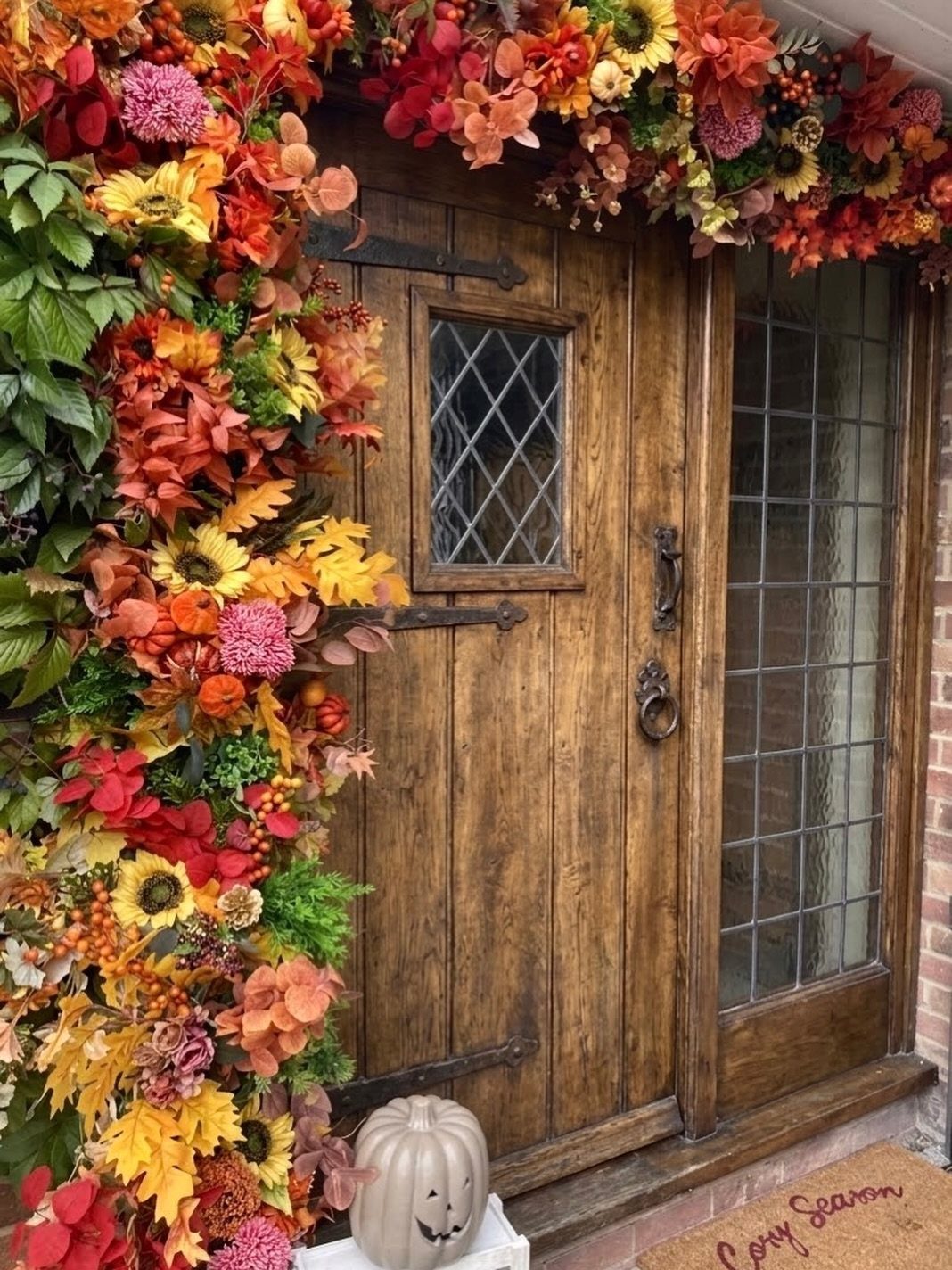
The frame becomes the display; no floor space required, which matters on a stoop that barely fits a doormat.
Live garland needs moisture and lasts weeks; faux hangs from October to November undamaged. Tones that already exist on the house pull the look together better than anything that competes with the siding or trim.
Red, orange, yellow, and pink in one garland only works when the door itself is plain wood and lets the color dominate.
Best when you want presence without the wind knocking anything over.
7. Burlap Accents
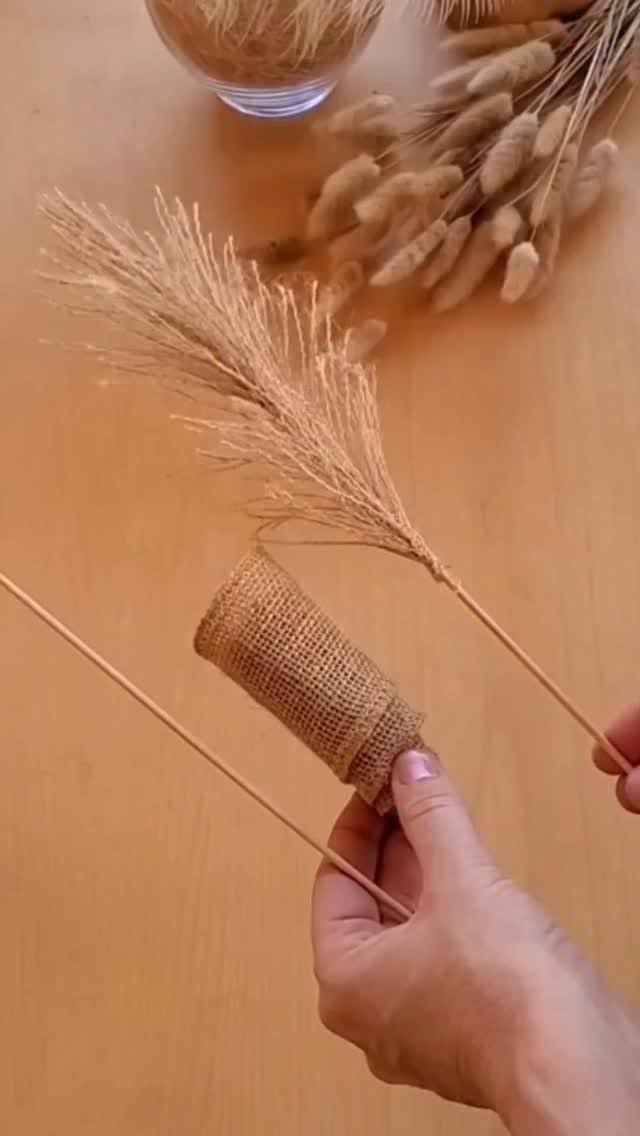
A narrow strip of burlap wrapped around a plain stick turns it into something that reads as harvest, not hardware. I like this for renters because it costs almost nothing and leaves no mark.
Tear strips from a yard of burlap, wrap them loose so the edges fray, and tie with twine rather than gluing. The texture works against smooth planters, metal buckets, or a wooden railing where paint would chip.
It browns and softens as the season goes on, which is the point.
8. Apple Baskets
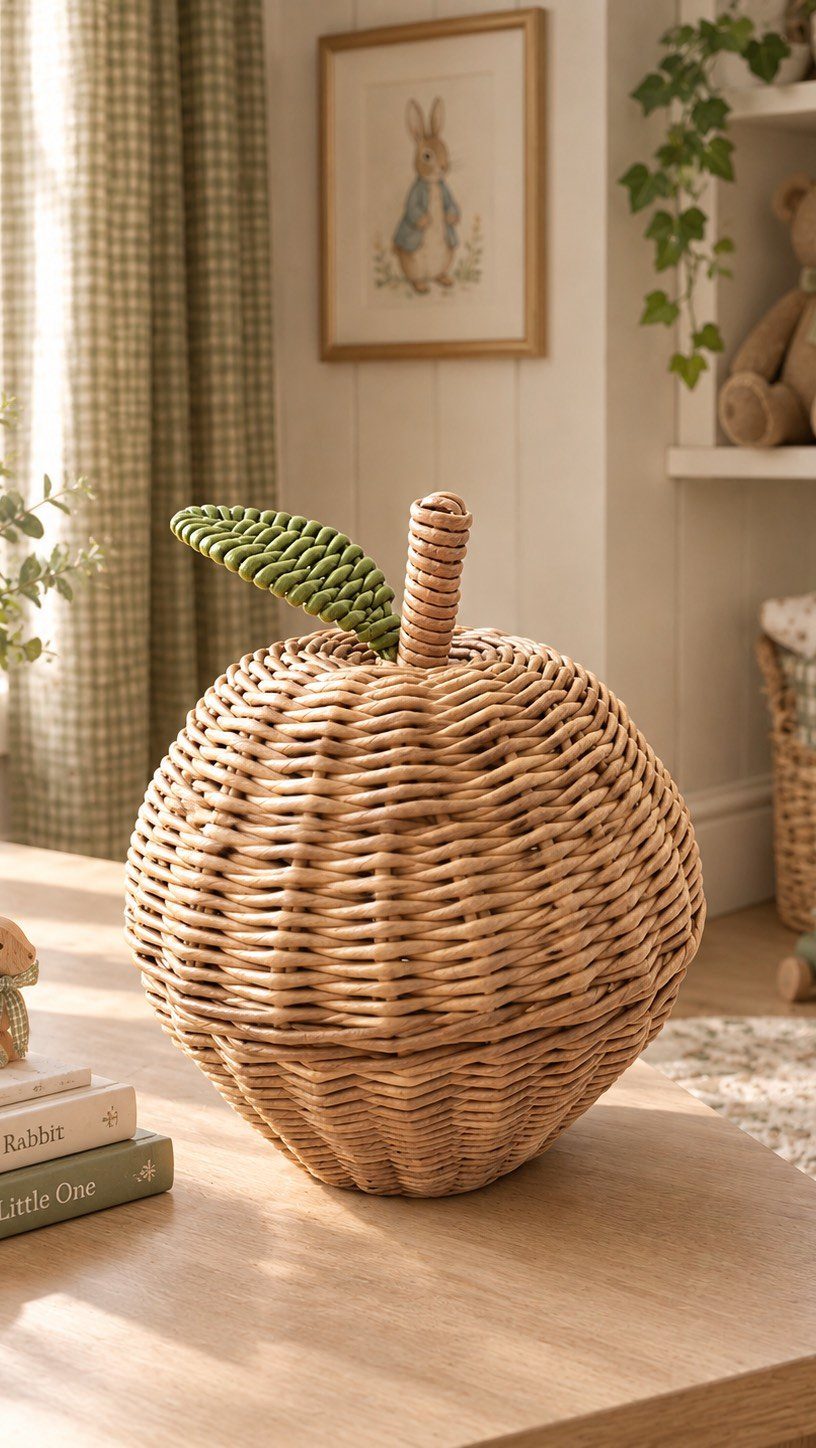
A bushel basket shaped like an apple sits on a shelf most of the year; November is its month to work. Crumpled paper fills the bottom so a single layer of real or fake fruit sits high without sinking.
The ones with a leaf detail read playful rather than farmhouse, which keeps the porch from feeling too staged.
These also work with pinecones, a potted mum still in its plastic pot, or nothing at all as a sculptural piece by the door. Move it inside after the holiday; the shape is too specific for December.
9. Layered Rugs
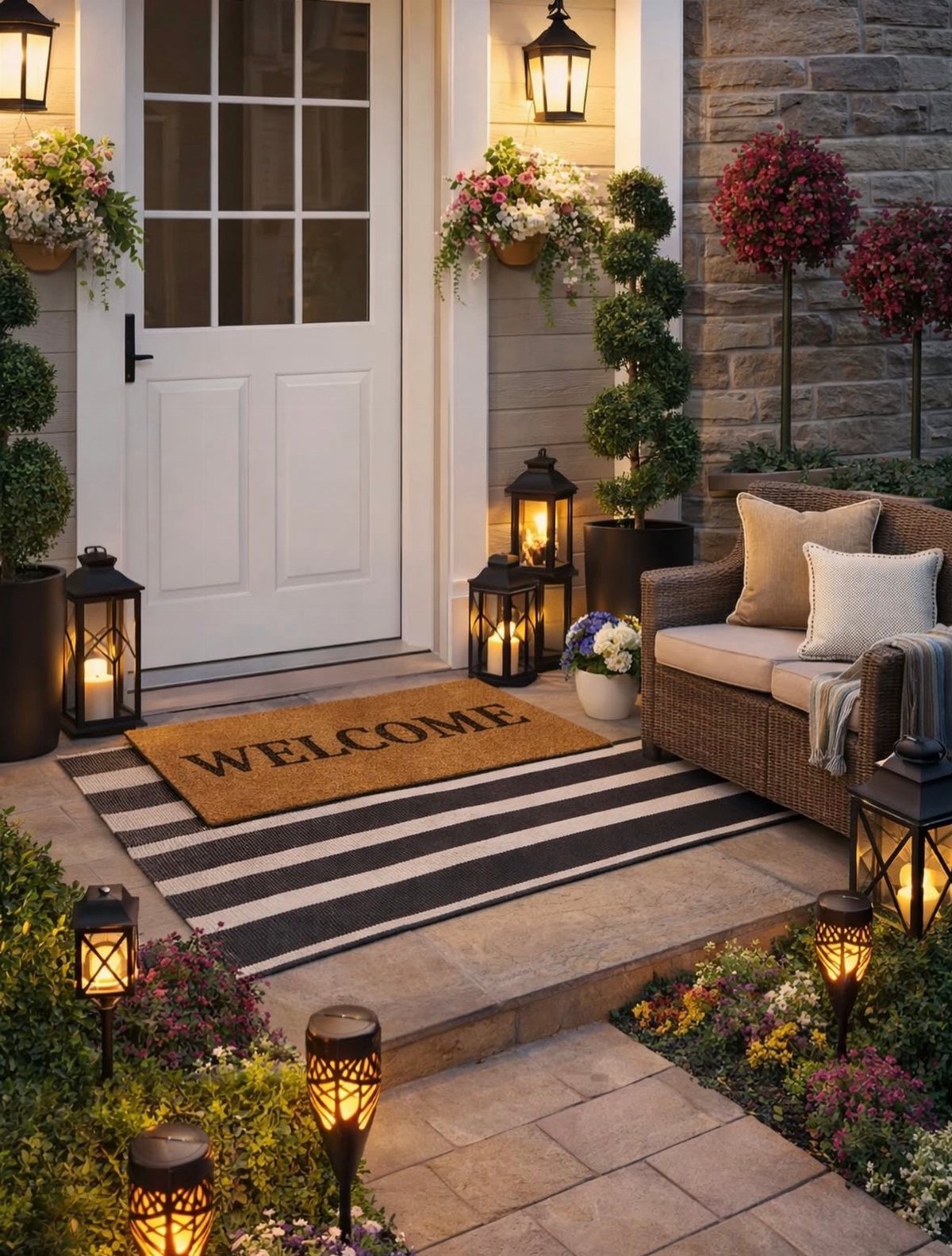
Layering a doormat over a larger rug is the simplest way to make a small porch look considered.
A striped base with a seasonal mat on top gives you two textures and a place to swap in new words each year without replacing the whole thing.
The base rug should be thin enough that the door clears it; indoor-outdoor flatweaves work better than anything plush.
A striped rug that sat outside will gray and thin; washing and sun wear them faster than indoor ones, so pick something you will not mind replacing.
If your entry is narrow, keep the base rug sized to the door width alone so the step does not feel crowded.
10. Decorative Doormats
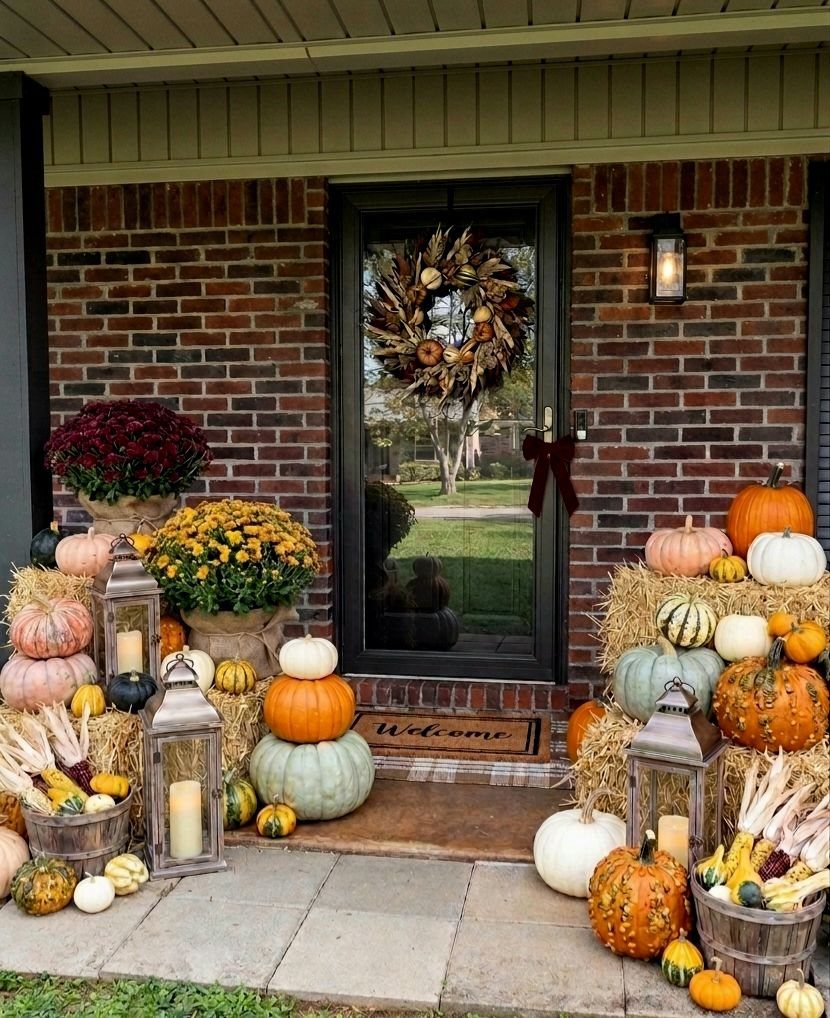
A fall-themed doormat is the one Thanksgiving purchase you will use daily until the holiday passes. The inexpensive ones clean up with a hose and last a few seasons before the words fade; at that price, replacing beats storing.
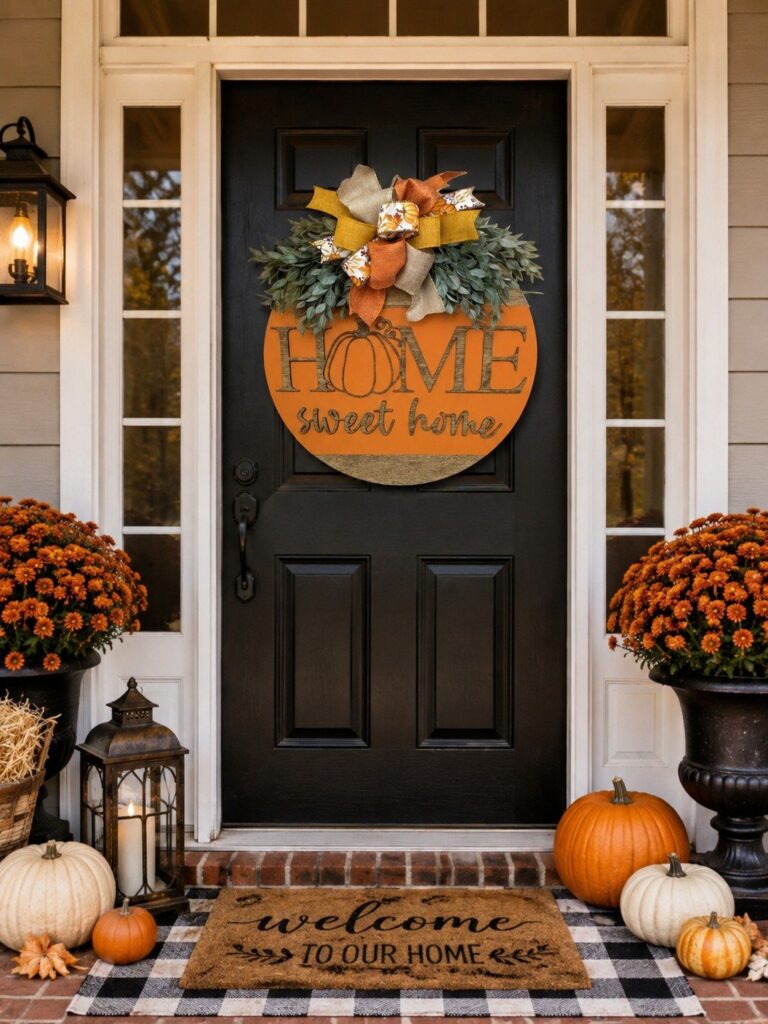
I look for mats that say something specific about the moment, not generic welcome, because the porch is already doing the welcoming. Pair it with a wreath in matching foliage tones and the door reads finished without any further clutter.
For a small stoop, skip the layered look and let the mat alone fill the space.
11. Seasonal Banners
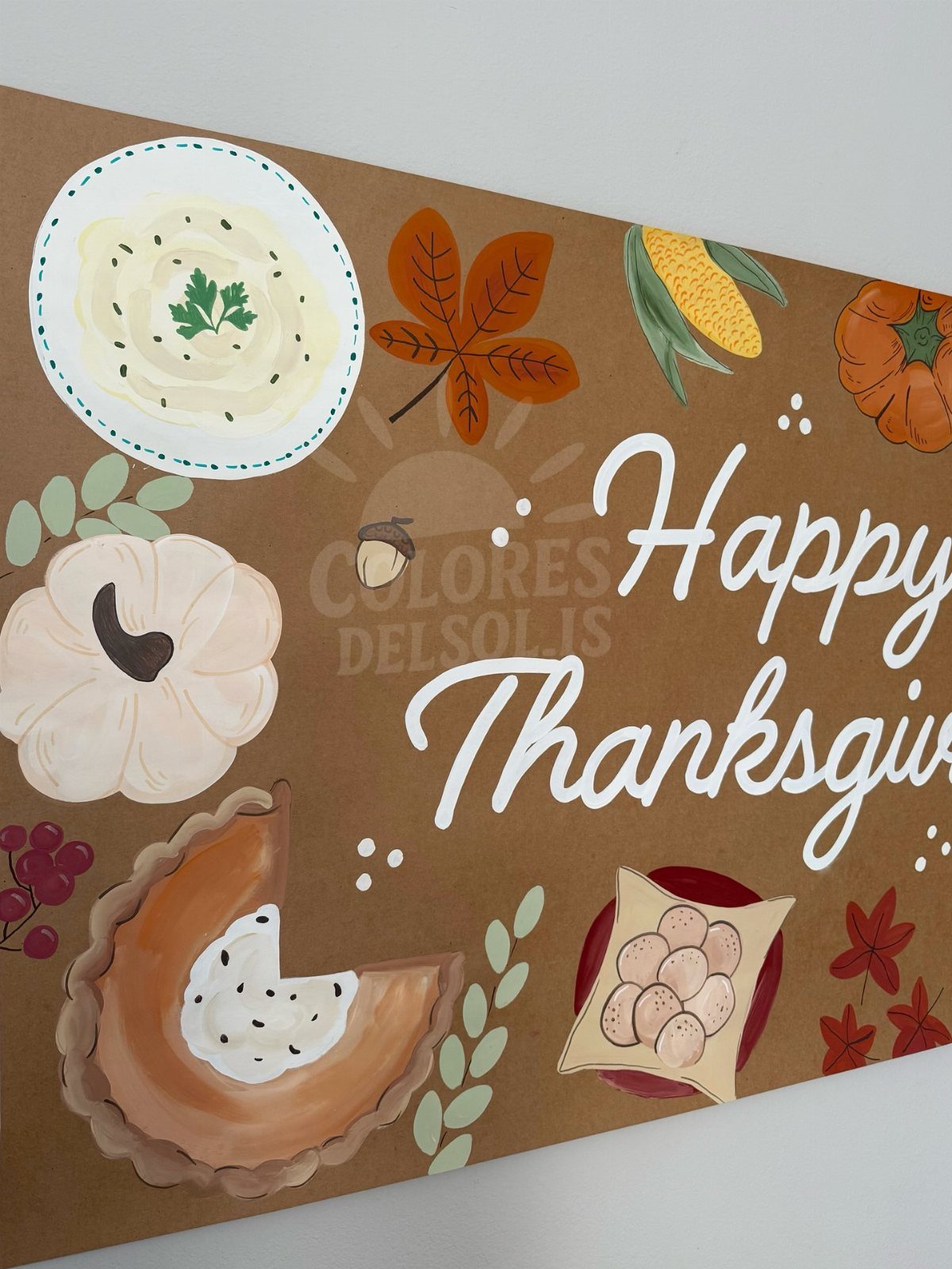
A triangular banner with hand-painted food illustrations strung across a railing or between posts turns a porch into a place someone thought about.
Burlap or canvas holds up to weather better than paper, and the paint sits on the surface where it can flake charmingly rather than soaking in to mold.
I would hang this where guests see it arriving, not behind them as they leave; a porch banner greets, it does not send off. The message matters less than the fact that someone bothered to write one.
Take it down before the first freeze if the fabric is not sealed, or bring it in overnight.
12. Dried Corn Garlands
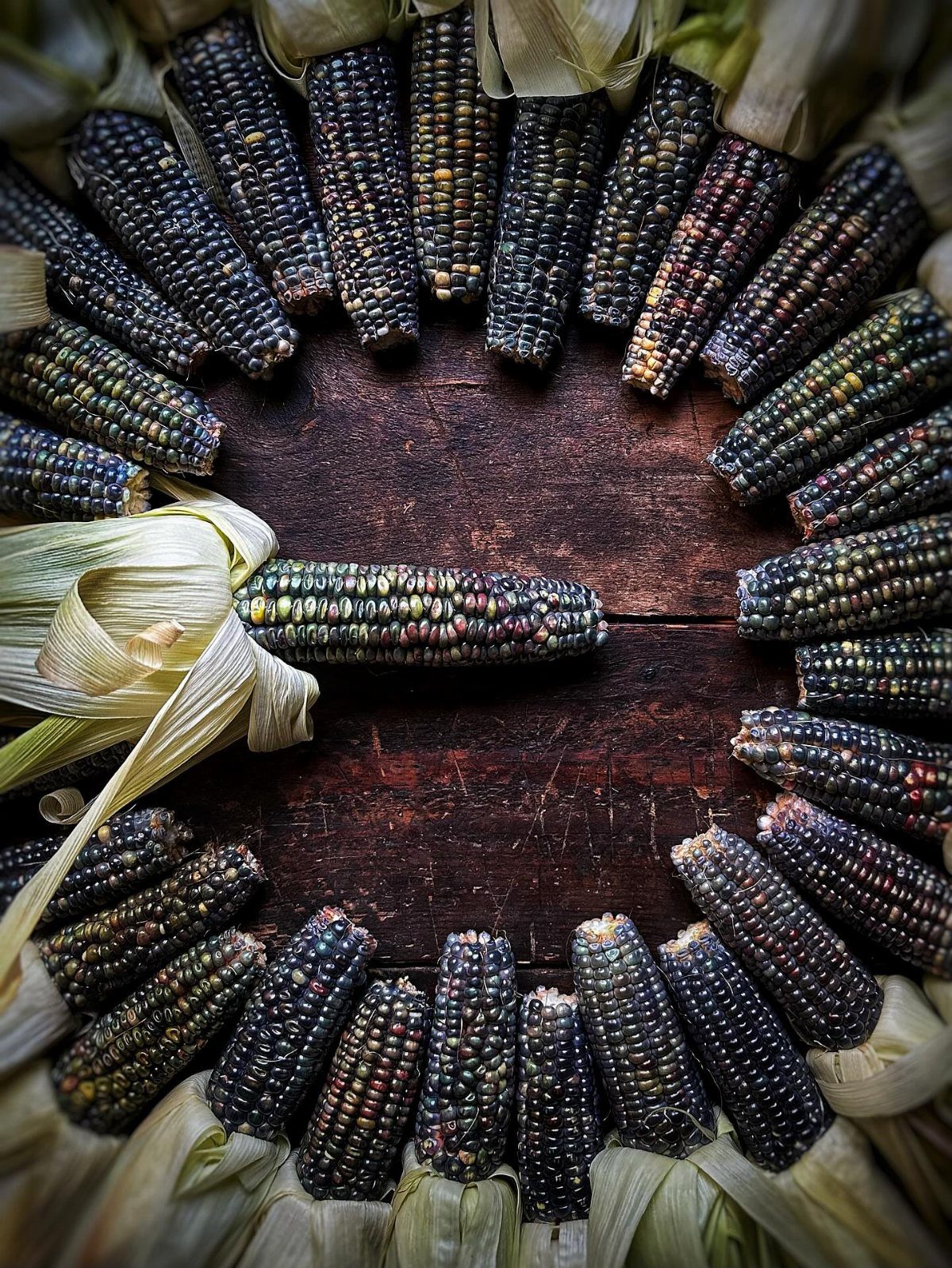
Dried flint corn in deep blue, purple, and yellow makes a garland that reads as decoration rather than leftover produce.
String the ears on heavy twine through the husks, spacing them so each color shows; too close and they blur into brown.
Most big box stores carry these by late September, or a farmer’s market will have them cheaper if you are willing to drill the holes yourself. The husks dry further and pale as autumn goes on, which is the look.
Hang the garland high enough that squirrels cannot reach, or you will find kernels scattered by Halloween.
13. FloralXchange Pumpkin Centerpiece
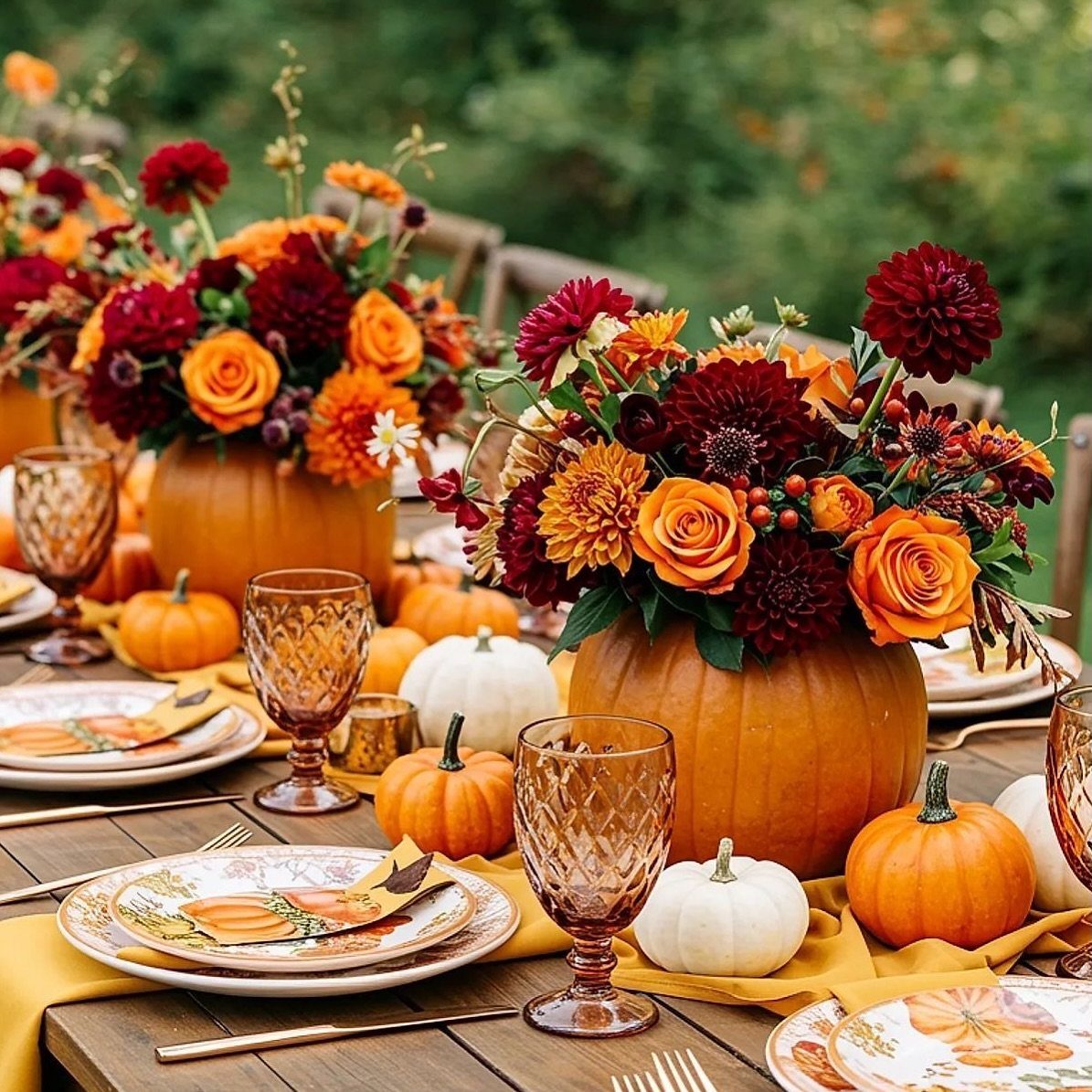
A pumpkin shell makes a natural vase for fall flowers, no watering needed if you go with faux blooms.
Faux pumpkins cut open and packed with autumn foliage sit well on a porch railing or windowsill through the whole season.
If you would rather not buy faux, a real pumpkin works as a fresh-flower holder for a short stretch; line it with a mason jar to slow the rot.
Painted freehand flowers on a real pumpkin last longer and travel better between indoors and out.
14. Thanksgiving Bench
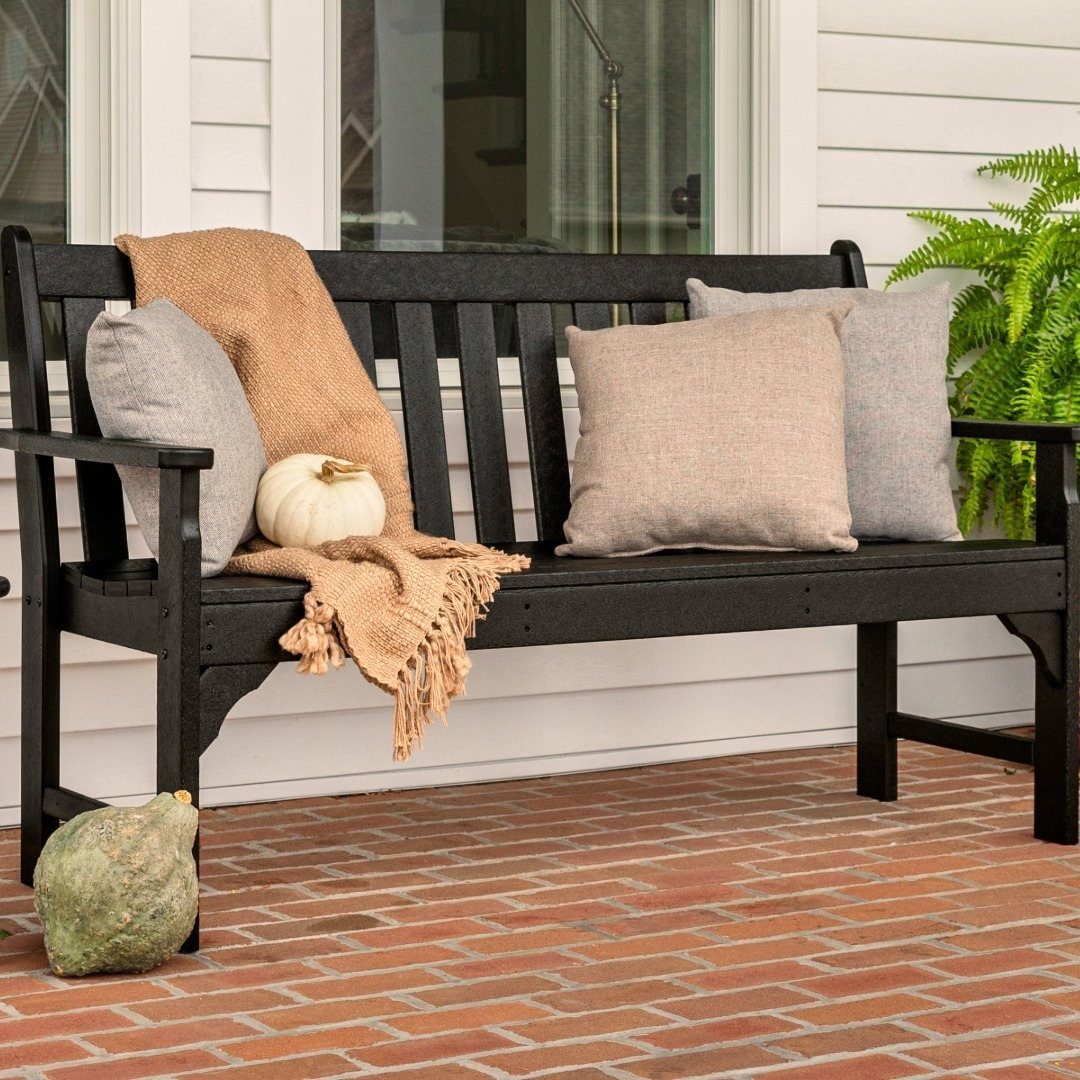
A bench turns porch space that would otherwise hold only a doormat into somewhere a guest can actually sit.
A painted bench on brick with a couple of pillows and a throw, plus a pumpkin or gourd on the floor nearby, fills the gap without crowding the seat.
Burlap or plaid pillows add warmth and stand up to outdoor weather better than linen. If the bench is metal or painted wood, a thin outdoor cushion underneath keeps the chill off in late November.
A bench facing the door invites conversation; turned sideways, it frames the entry without blocking traffic.
15. Thanksgiving Signs
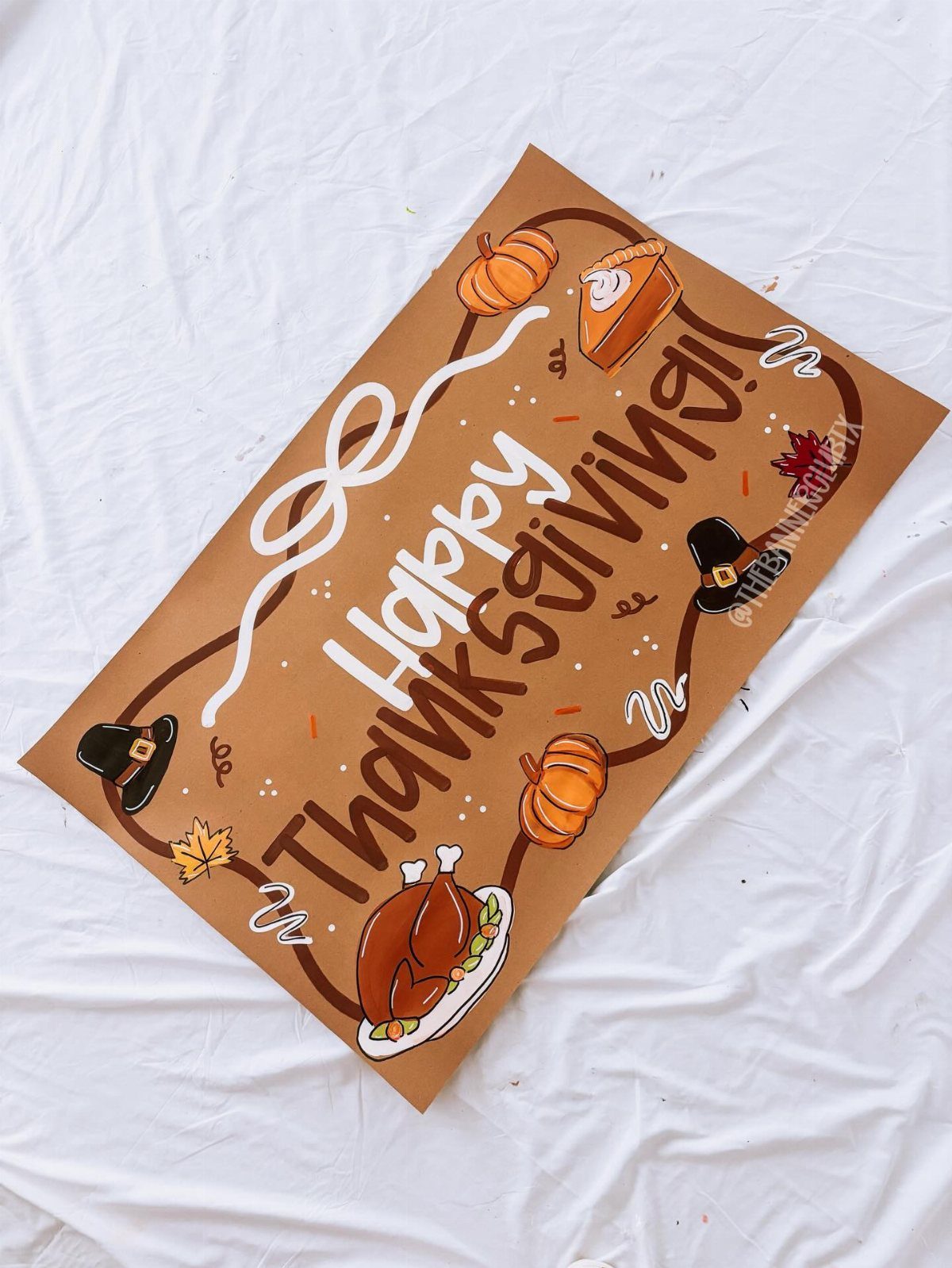
A hand-painted sign says what the season is before a guest reaches the door.
Shipping pallets or barn wood planks work as bases; distress the paint before it dries for the same weathered look. A sign this size, roughly two feet across, reads from the sidewalk without dominating a small porch.
Set it on a leaning bracket if the wall is brick or stone, or hang it with a heavy chain that will not twist in wind.
Placed next to mums or stacked hay bales, it fills a corner that might otherwise stay empty.
16. Throw Pillows and Blankets
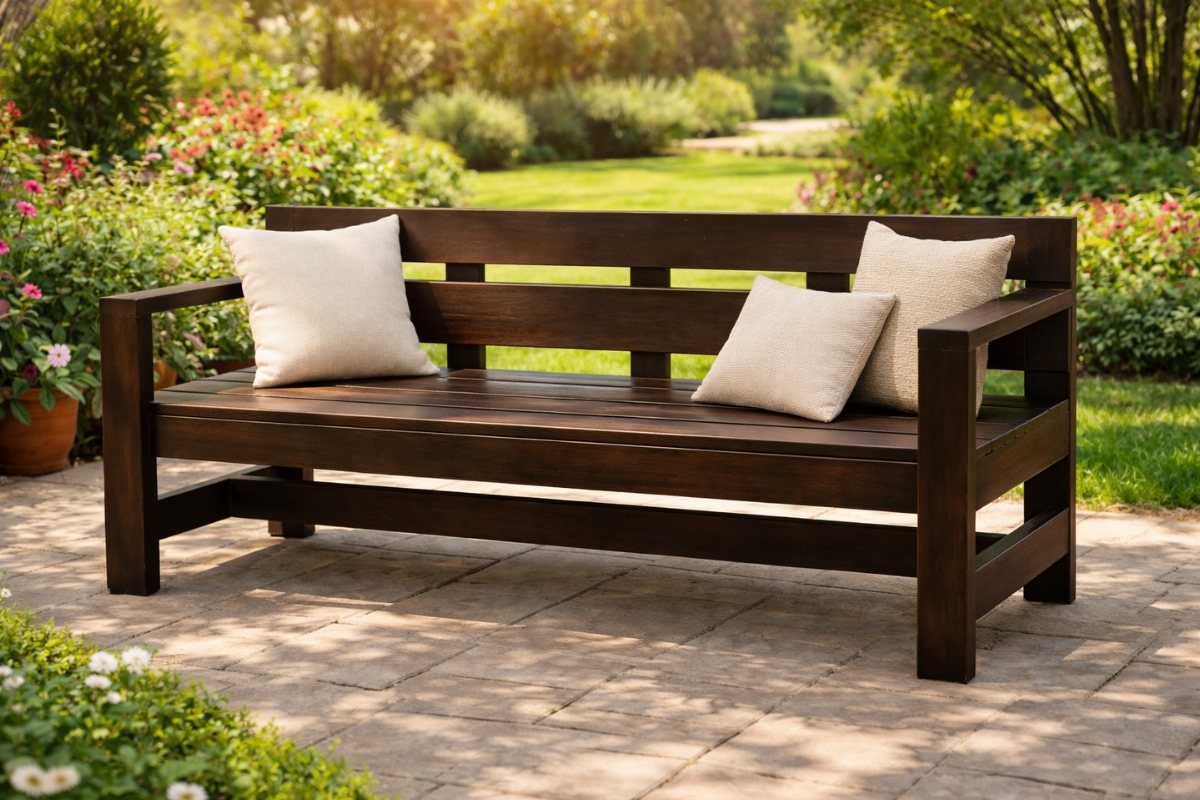
Weatherproof textiles are the fastest way to make outdoor seating feel like a room.
Cream pillows on dark wood against stone and greenery stay neutral enough to work through early winter. Outdoor-rated pillow inserts in polyester or acrylic resist mildew and dry fast after rain.
A single throw across the arm signals that someone actually uses the space, not just stages it. Plaid reads autumn; solid cream or tan works longer.
Three to five pillows fill a standard porch bench without requiring constant straightening. Store pillows and blankets in a deck box if heavy weather is coming; the little bit of hauling beats replacing mildewed stuffing.
17. Thanksgiving Figurines
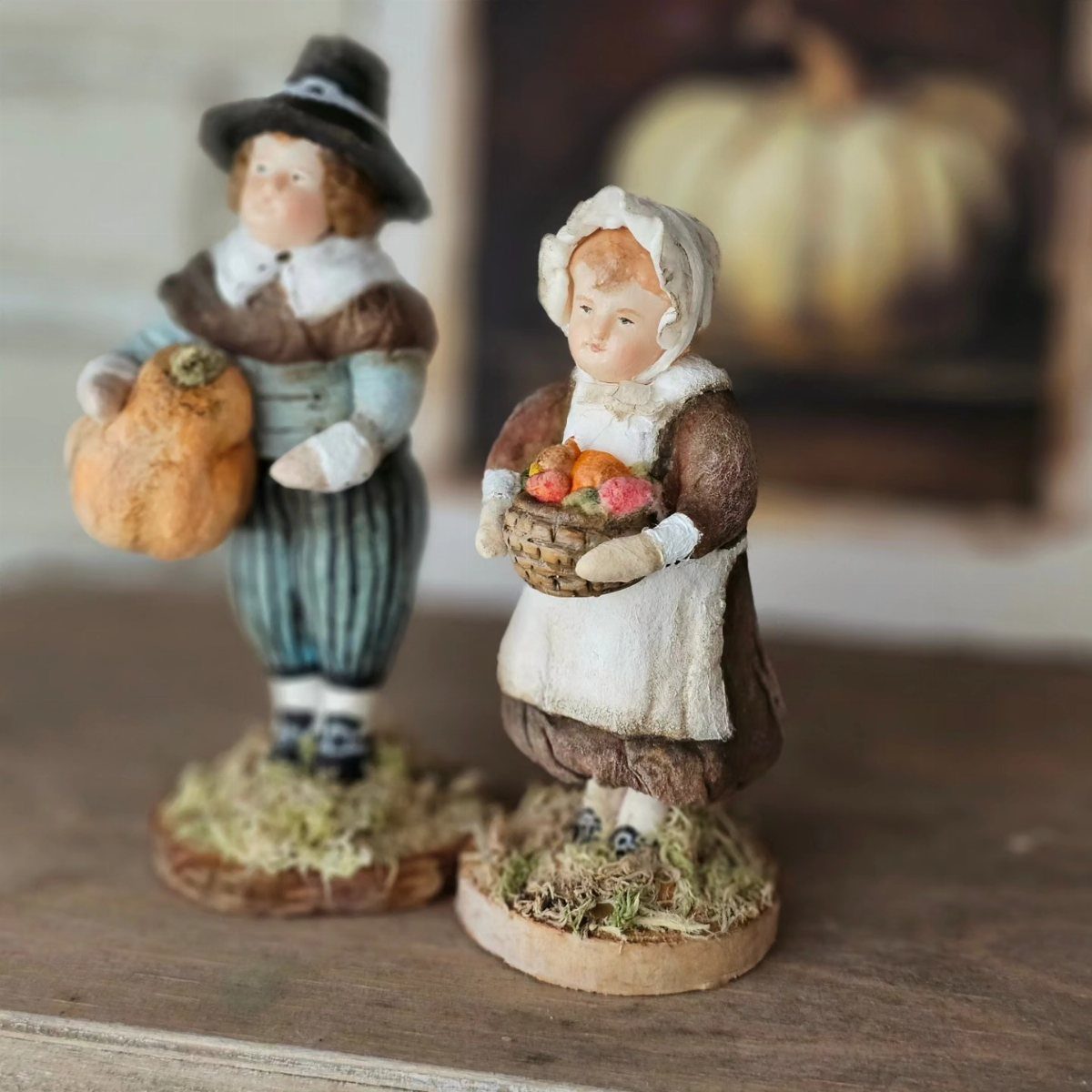
Small ceramic figures add the kind of detail that rewards a second look.
Pilgrim figurines on mossy bases read as autumn without shouting, and they tuck onto a railing or small table without needing much room.
Metal turkeys or harvest figures work outdoors year-round; ceramic belongs on a covered porch or brought in before frost. A single figure on a stack of books or a small stool gets noticed; a crowd of them reads as clutter.
Place one where the light hits it in late afternoon, when guests are most likely to be arriving.
18. Rustic Wheelbarrow Display
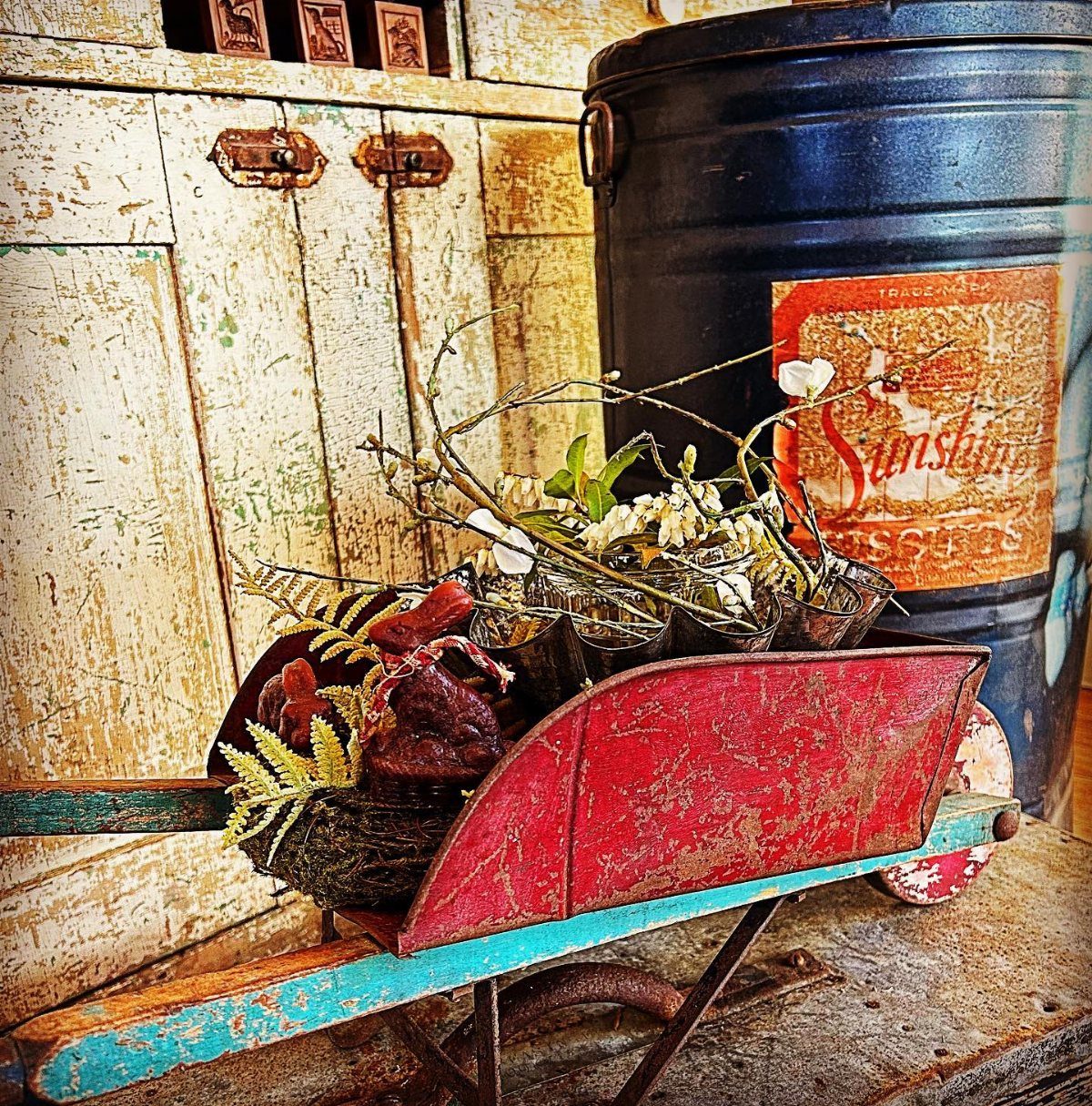
A wheelbarrow is already shaped to hold something; in fall, that something is harvest.
A small metal wheelbarrow loaded with dried branches, white flowers, and greenery turns weathered wood or a corner of the porch into a focal point.
Corn stalks, leaves, pumpkins, and pinecones all sit at angles that look natural because the wheelbarrow tilts them that way.
Load heavy items low and forward so it does not tip; the single wheel makes moving the whole display simple when you need to sweep.
A borrowed or thrifted wheelbarrow costs little and stores flat against a garage wall once the season ends.
Budget-Friendly Decorating
Natural elements from your yard cost nothing and mix well with store-bought pieces. Branches with leaves still attached, pinecones, and dried grasses fill gaps between pumpkins and give arrangements a looser shape than all-retail setups.
Starting with what you already have outside, then buying only what fills a hole, keeps the budget in check without looking spare.
A wooden turkey craft can anchor a corner without the price of metal or resin figures. Scrap wood and leftover acrylic paint handle the body; hardware-store legs and a beak finish the turkey for next to nothing.
Store-bought items stretch further when you separate them. One bag of mini pumpkins splits across three planters.
A single garland wraps the doorframe or gets cut into pieces for the mailbox and a side table. The mix reads intentional, not scattered, because the free stuff repeats the earthy tones of what you paid for.
Maximizing Small Spaces
Vertical planters draw the eye up past the floor space you do not have. Wall-mounted pots or a leaning ladder with potted mums give height without sacrificing the walking room a small porch needs.
Layering tricks the eye into seeing depth. A rug under a doormat, a bench with a pillow propped behind a basket, a tall lantern in front of a shorter pumpkin stack; each layer sits slightly behind or beside the last.
Nothing blocks the door.
One impactful piece beats crowding the space with many. On my own small porch, a single large wreath and a flanked pair of planters reads fuller than five scattered items.
Oversized ceramic pots dominate a small space without cluttering it; Old Time Pottery usually carries them in fall. Affordable impact, as they say, just means choosing scale over quantity.
Seasonal Transition
White pumpkins and neutral plaids transition cleaner than orange-and-black Halloween pieces that need boxing by November 1. I leave cream-colored gourds and wheat bundles up through Thanksgiving weekend; they read harvest without reading costume party.
A soft color palette bridges the gap to Christmas without jarring contrast. @tarynwhiteaker_designs used white charm as that bridge, and I have done similar with pale wood signs and silver eucalyptus.
The look closes out fall without rushing the next holiday.
Painted doors help too. David Land’s bright seasonal colorscape kept a coral-red door that worked for both seasons; the pumpkins changed, the door stayed.
Faux-leaf wreaths and colorful doormats swap easier than installed color. I would rather repaint once than redecorate twice.
A few pumpkins here, a pretty wreath there, and suddenly your porch is looking like autumn has officially arrived. So, consider this your inspiration for creating a welcoming space that’s just as cozy as the season itself.
Creating a Welcoming Atmosphere
Warm colors start at the threshold. Orange, rust, and deep gold signal harvest before a guest reaches the doorbell.
I arrange these in the nearest planter, not buried at the far end of the porch where they lose their greeting power.
Cozy seating invites a pause. A plaid throw over a rocking chair, a hay bale with a cushion on top, even a wide step with a pillow and lantern beside it; these say stay rather than pass through.
My own porch has only a narrow bench, but a folded blanket and a reading light make it look usable after dark.
Lighting matters most for atmosphere. Lanterns at staggered heights, a string along the railing, a single bright bulb inside a pumpkin; the mix of sources keeps the glow from going flat.
Faux foliage in window boxes catches that light and softens it. The result reads cheerful, not staged, and your guests feel it before they taste the pie.
Frequently Asked Questions
What are some ideas for decorating my porch for Thanksgiving and fall?
Wreaths, pumpkins, mums, and cozy lighting are the backbone of most Thanksgiving porches. I like grouping pumpkins in odd numbers and mixing real heirlooms with faux ones so nothing looks too arranged.
After sunset is when most neighbors and passersby actually see your porch, so battery candles on timers and solar stakes along the path handle the lighting without any work from you.
What makes a front porch look tacky?
Too many competing colors and overcrowding are the main culprits.
A garland that mixes red, orange, yellow, and pink only holds together when the door behind it is plain wood; paint or stain on the door turns that same palette into a fight.
A crowd of figurines reads as clutter where one would get noticed, and scattered small items always look sparser than one oversized piece at the right scale.
What are some ideas for outdoor Thanksgiving decorations?
Pumpkin planters, layered rugs, and garlands around the doorframe all work without needing floor space. A hollowed-out pumpkin with a nursery planter dropped inside lasts a few weeks and costs one gourd plus change.
Live greenery wants misting but survives for weeks; faux versions hang from October through November without browning, and from the street the difference is nearly impossible to call.
How can I make my front porch cozy for fall?
A wide step with a single pillow and a lantern at its edge counts as seating if it gives someone a reason to stop for a minute.
Plaid throws and burlap pillows outlast linen in damp weather and tell visitors the space gets used, not just staged.
Warm-toned plantings belong in the container closest to the door, not pushed to the far corner, so the harvest mood reaches a guest before they press the bell.