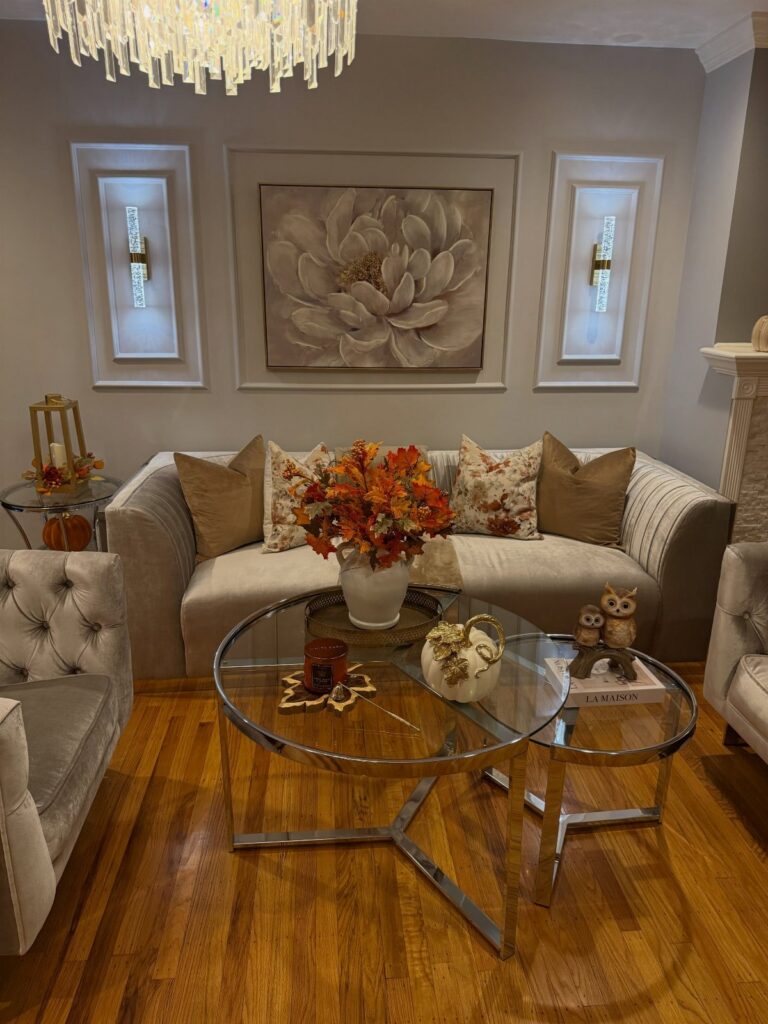
These ideas run from a single peel-and-stick wallpaper wall to a full built-in bar with plumbing, and from swapping one sofa to filling a room with pieces that need a helper to move.
The right choice depends on whether you need to reverse everything at move-out, or stay put and build in.
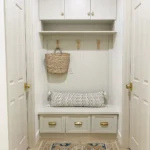
For renters, that board-and-batten ledge shows how a fixed detail can still feel portable when it is only screwed to the wall.
1. Mid-Century Modernism
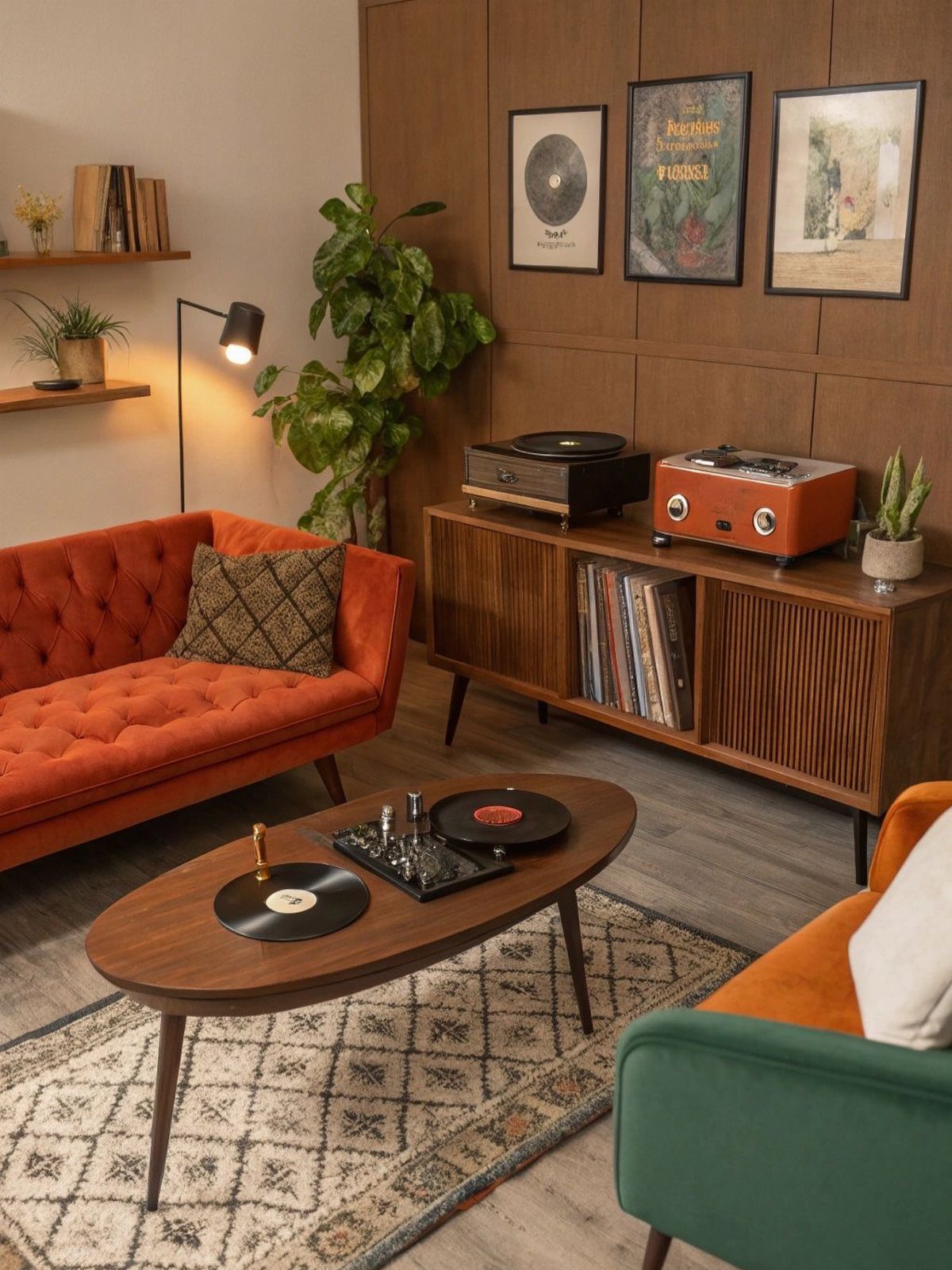
A mid-century modern living room starts with one statement piece: a sofa with a wide seat and broad headboard, or a sideboard with clean legs and visible grain.
I look for metal accents in lamp bases, clock frames, or chair legs to keep the mix from going flat.
One bold piece in a warm color carries a whole room. I would pair it with a wooden coffee table and let the vinyl records do double duty as both storage and color.
A pouf in leather or wool adds seating without a second large purchase, and the shape fits the era.
This style suits renters who can swap one sofa and call the job done. Authentic pieces cost more than reproductions; a vintage Bellini or even a good copy runs several hundred at minimum.
If the budget is tight, I would spend on the sofa and hunt secondhand for the rest.
2. Fill Up the Room
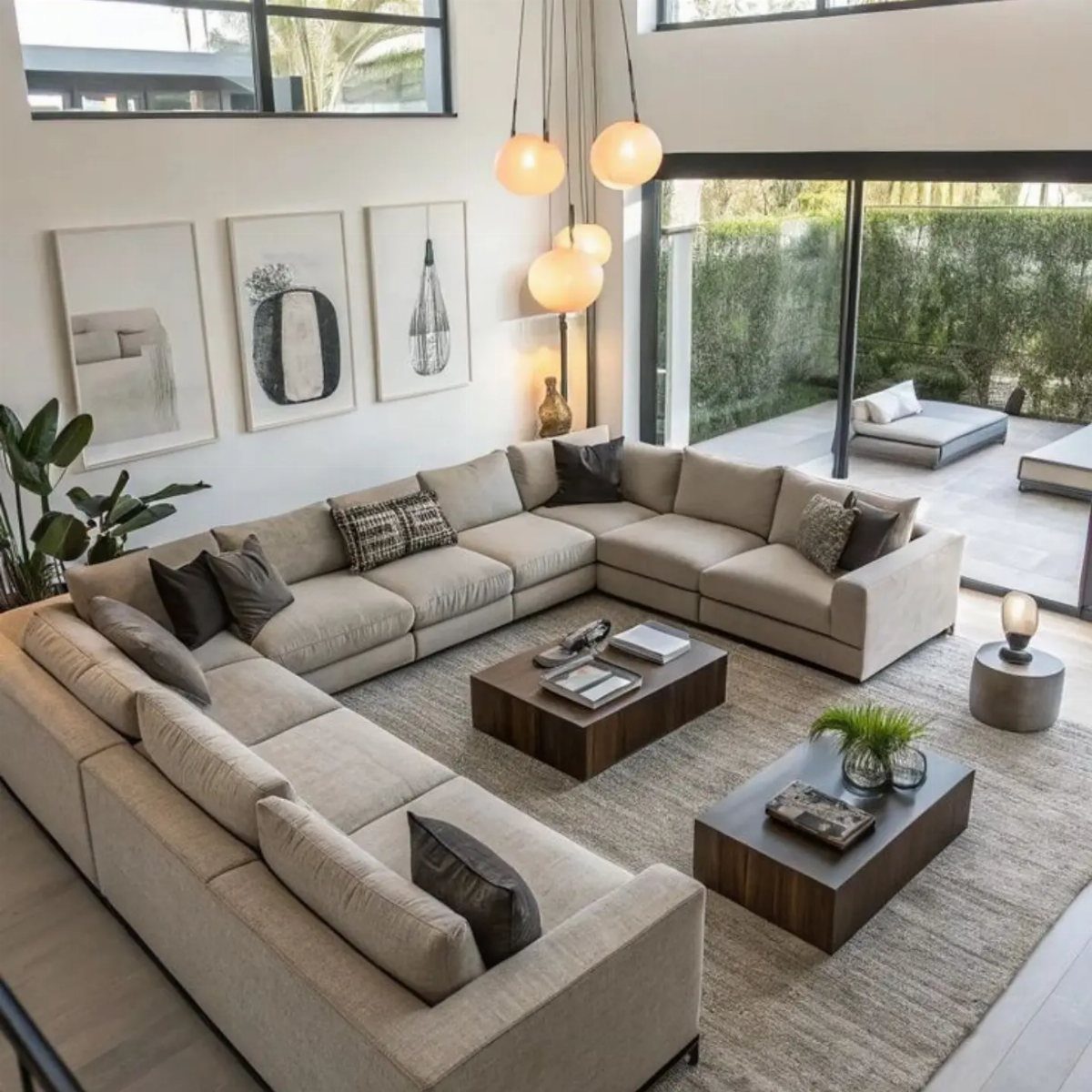
Oversized furniture in a small room sounds wrong until you try it. One large sectional, one big coffee table, and three substantial art pieces read as intentional where several small items read as clutter.
An L-shape that fills the width makes the ceiling feel higher by comparison.
Lucite or acrylic for the coffee table keeps the weight from going too far. Lucite disappears visually while still holding drinks, books, and feet.
Leave real space around each piece; that negative space lets the room breathe.
This approach works best in rooms that feel stingy or echoey. The cost runs higher than filling corners with small finds, but the result holds up for years without constant editing.
3. Keep It Minimalistic
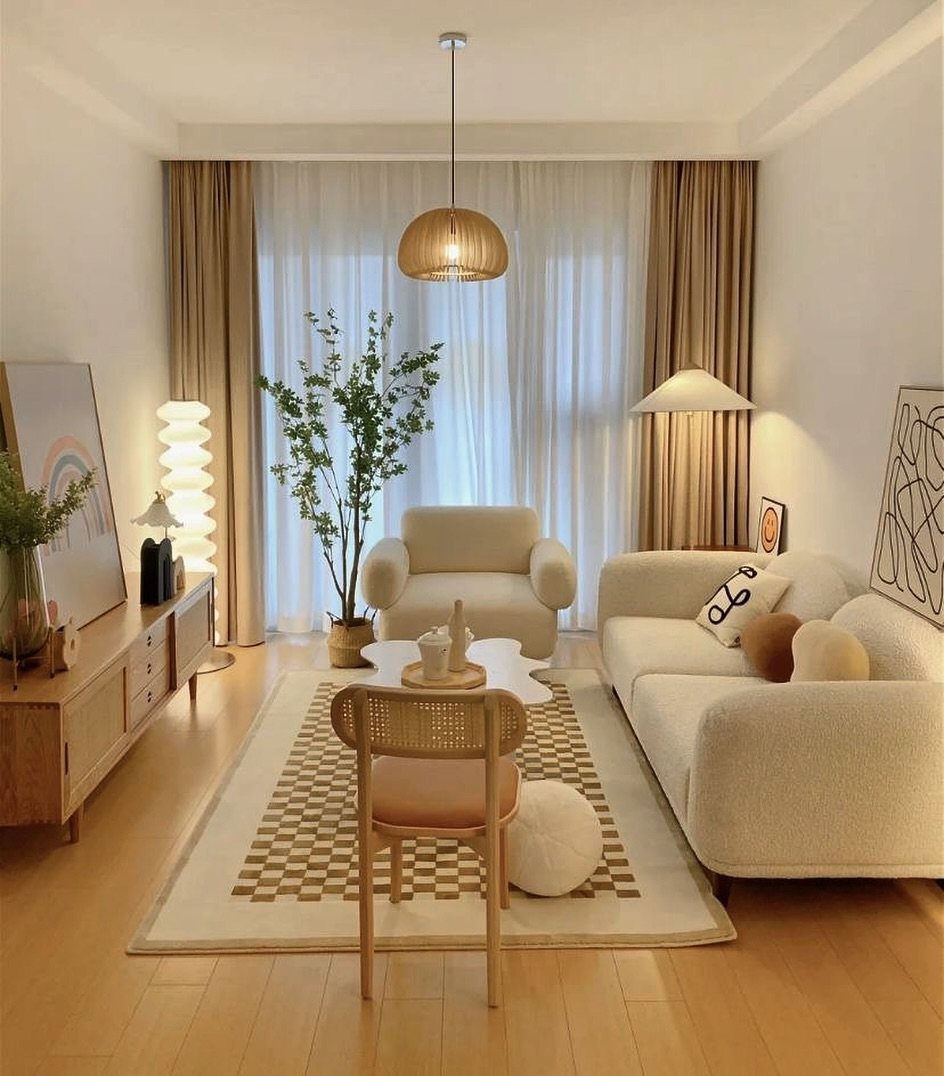
Minimalism lives or dies on the accent piece. Without one, the room becomes a waiting area; with the right one, the spareness looks chosen.
I would pick one to lead and let the others support.
The same color running across walls, furniture, and light fixtures gives the eye a clear path through the room. Wood warms the palette without breaking it; grain and storage both arrive without noise.
Textiles stay to one pattern maximum, used small.
This suits anyone who tidies constantly and wants the room to stay calm between cleanings. The limit is real: one wrong purchase, one too-busy rug, and the whole thing collapses into beige chaos.
4. Modern Bohemian Decor
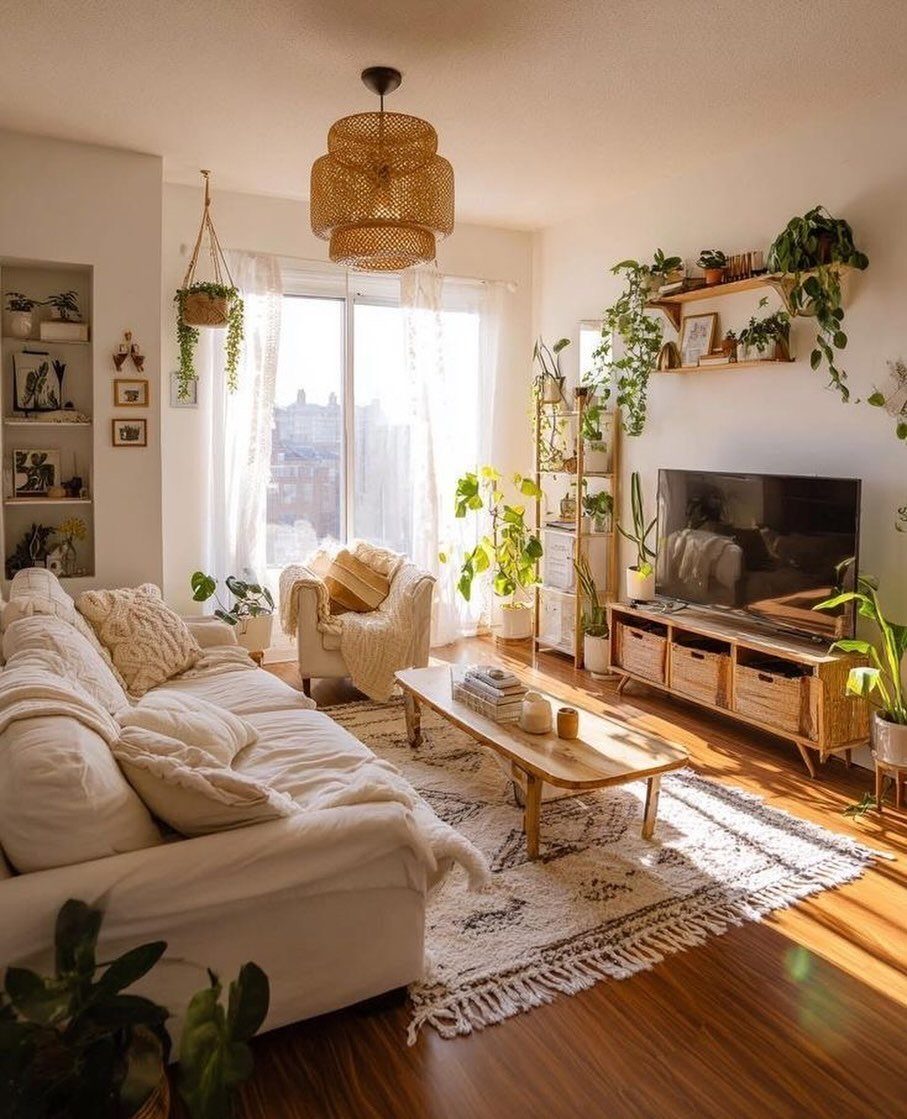
Modern bohemian decor mixes textures more than colors. Velvet against suede, a woven pendant against smooth plaster, plants against painted walls: the contrast does the work so the palette can stay restrained.
A quiet white sofa centers the room while patterned rugs, wooden shelves, and hanging weaves supply the energy.
I would add one bold piece of art or a single ethnic textile with saturated color rather than scattering small bright objects. A striped or block-printed center table adds dimension without demanding attention everywhere else.
The license to go bold is real, but spend it in one place.
This style fits renters who collect on travels or thrift runs and want to display the haul. The risk is visual noise; editing down is harder than adding.
5. Rustic Living Rooms
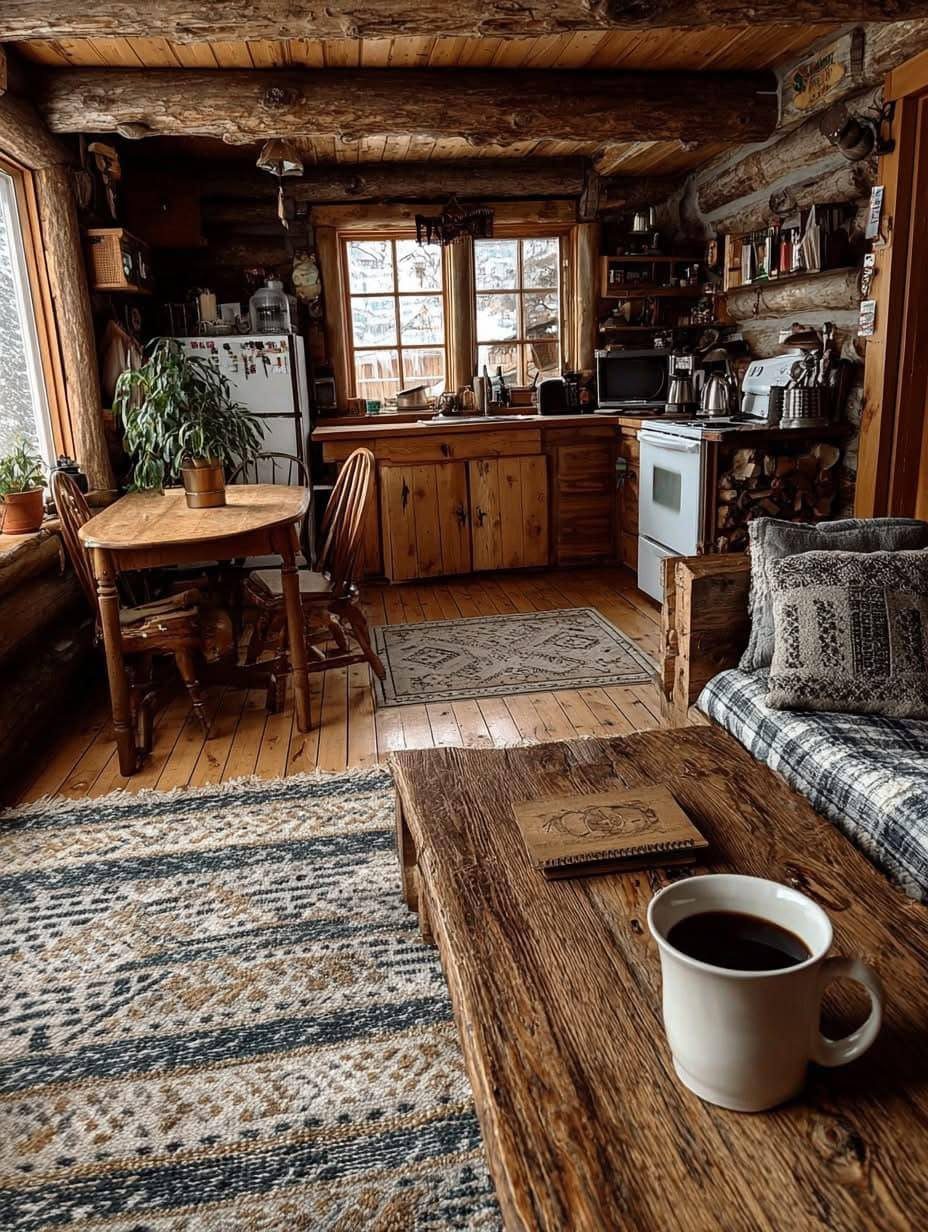
A rustic living room builds from wood accents and a neutral palette, then softens with textiles. I look for pieces I can upcycle: an old family table sanded and oiled, a bench from a dismantled barn.
Soft furnishing carries the modern half of the mix. Oatmeal linen, ivory curtains that match the wall, a woven rug underfoot: these keep the room from becoming a lodge.
One or two clean-lined modern pieces, a metal lamp or a plain ceramic vase, finish the balance.
This suits anyone with access to old wood and patience for finishing. Rustic looks fast in photos and slow in practice.
6. Tropical Theme
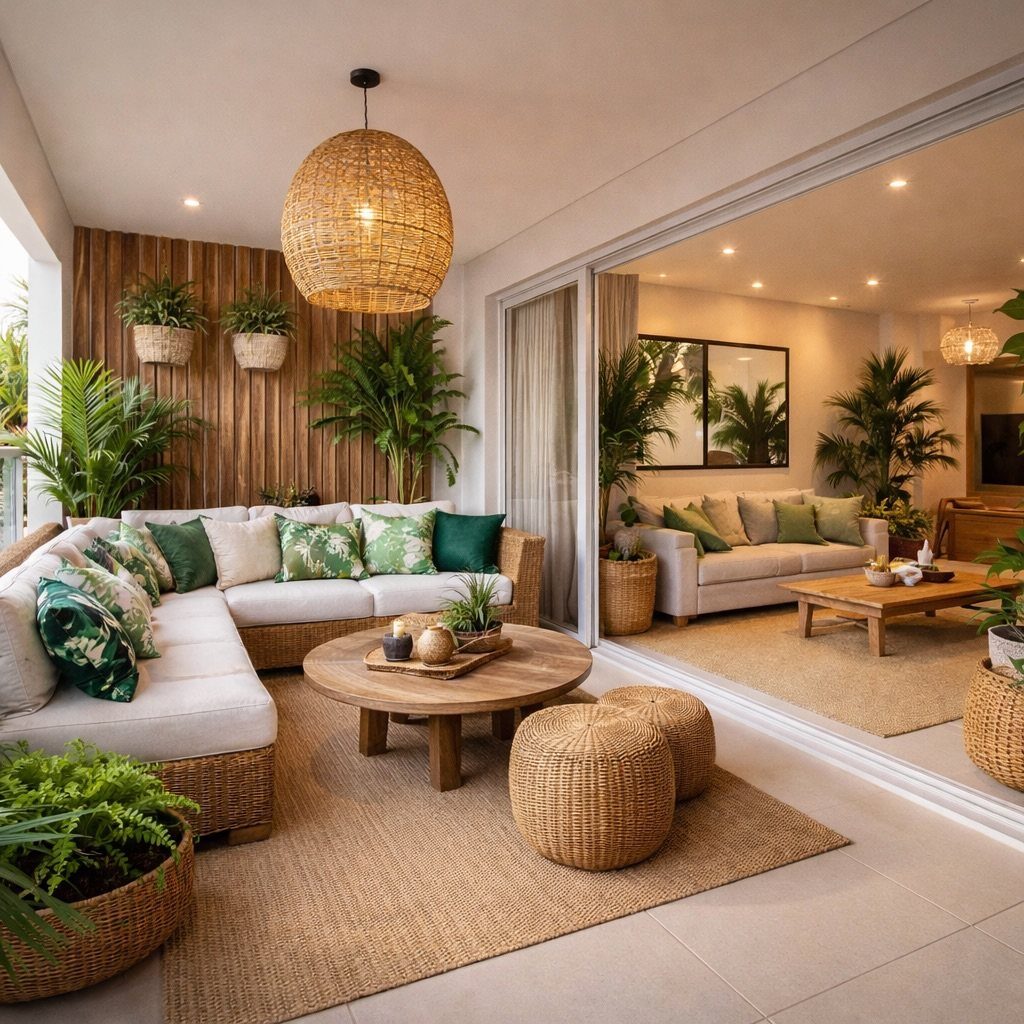
A tropical theme needs less color than the name suggests. Solid furniture in cream, peach, or beige grounds the look; the prints and plants provide the pop.
I would frame one large leaf print or paper a single highlight wall rather than scattering small botanicals everywhere.
A plush rug texture, maybe a flatweave with some loft, adds the luxury that makes the theme feel grown rather than gimmicked. Neon light fixtures or a single bright ceramic are enough drama; more competes with the plants.
This works for renters who want change without a full overhaul. The limit is seasonal drift; come winter, the room can feel stranded.
I would keep the furniture neutral enough to survive a cushion swap.
7. Transitional Designs
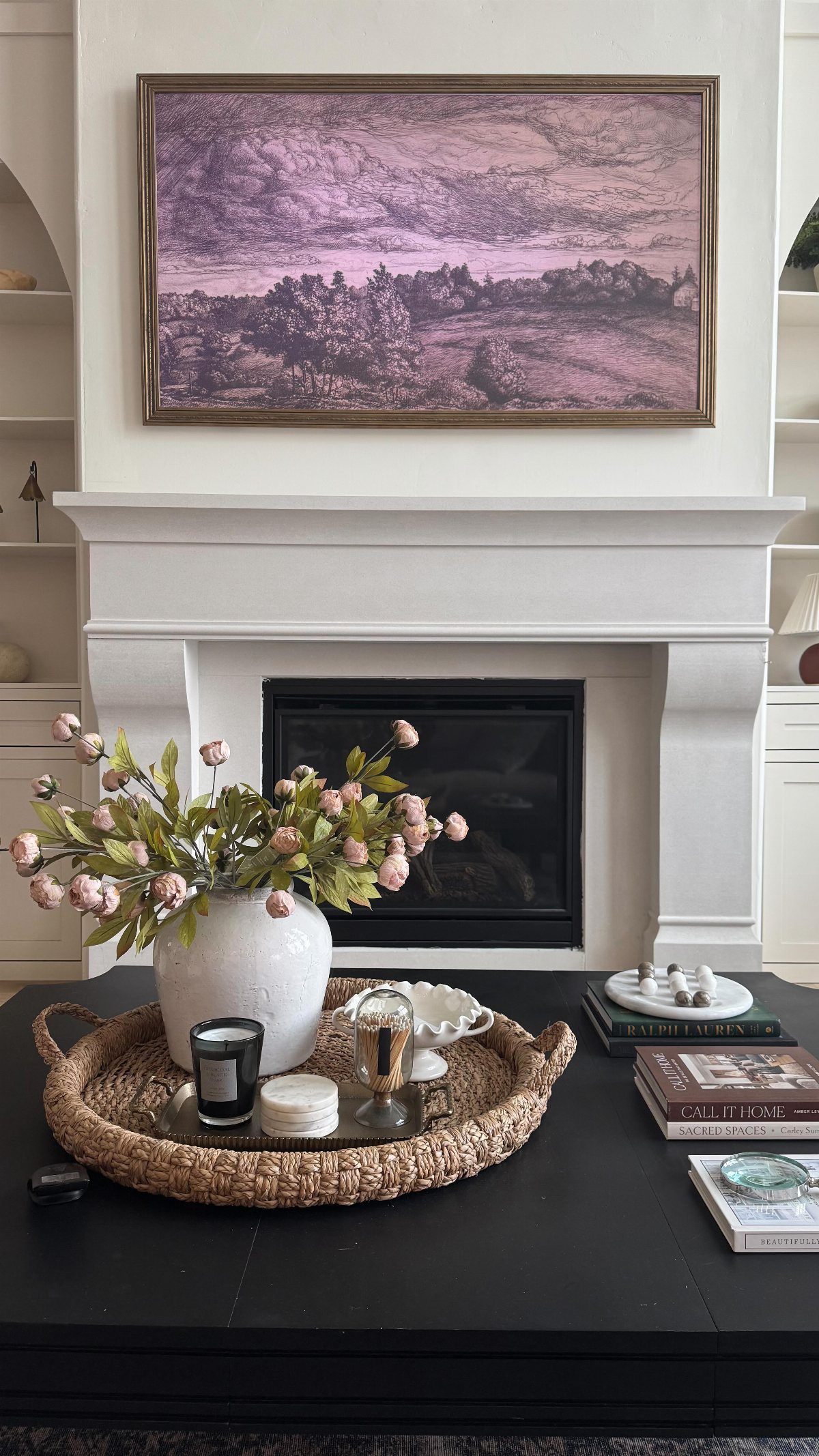
A transitional living room keeps one foot in familiar territory while the other steps somewhere new.
Start with a neutral base: cream, gray, or soft white on walls and larger pieces. Then swap in one or two modern silhouettes, a low-profile sofa or a slim console, rather than replacing everything at once.
One accent color bridges the two eras without shouting.
This suits anyone who finds pure modern too cold but wants the clutter gone. Building this mix takes longer than buying a matching set.
If you need the room finished this weekend, pick the era you already own more of and add two pieces from the other.
8. Mixing Styles
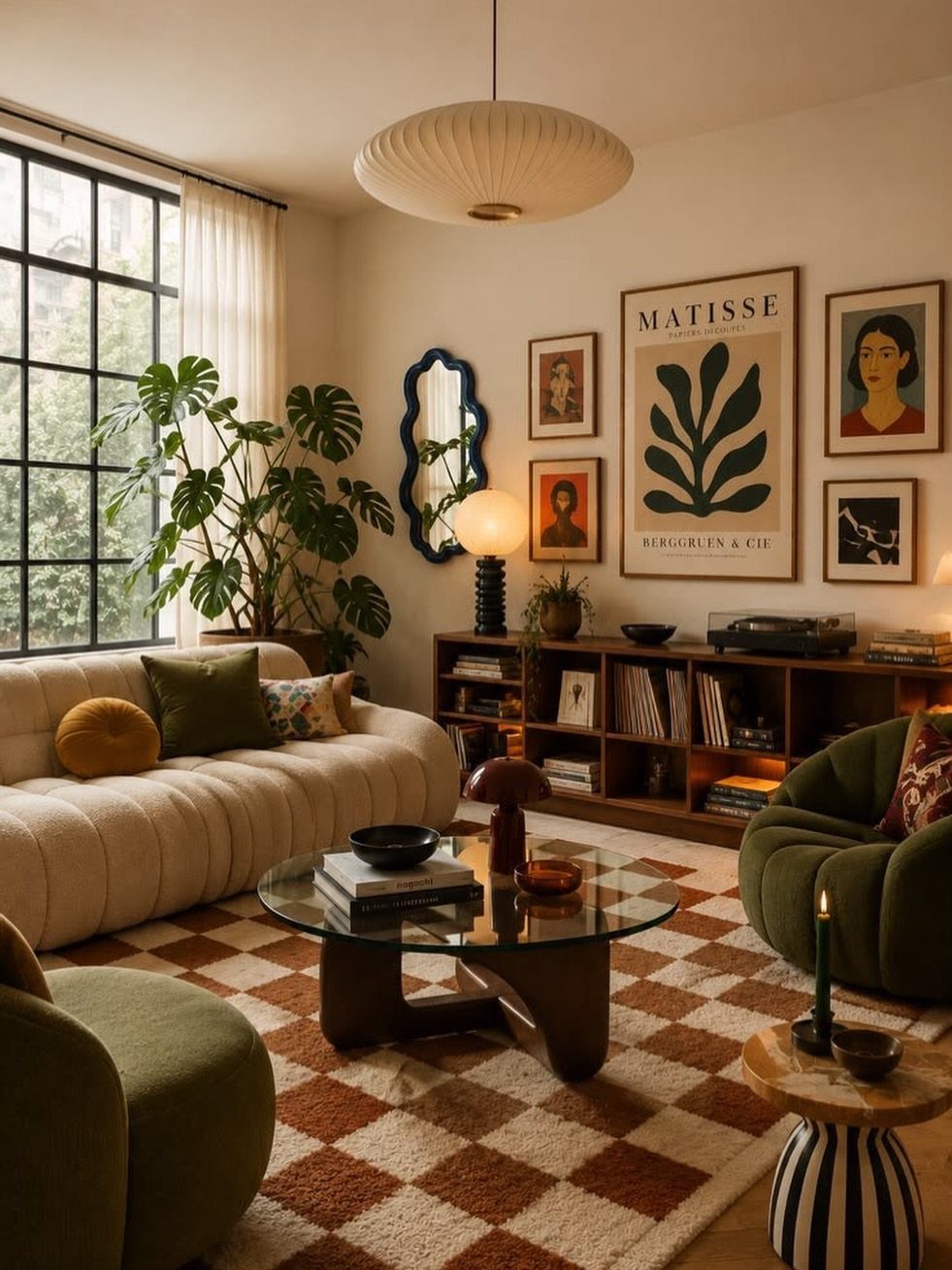
Mixing styles means finding common ground between pieces that would fight without it.
Low-profile furniture helps; it keeps sight lines open so the eye can move across different eras without getting stuck.
The thread holding it together is finish: glass, dark metal, and black in the print share a cool tone that lets color and neutral breathe.
Check your existing room for one repeated color or metal, then add pieces that share it. Without that link, the result looks like a storage unit, not a plan.
This approach costs nothing extra if you shop what you already own first.
9. Peace & Serenity
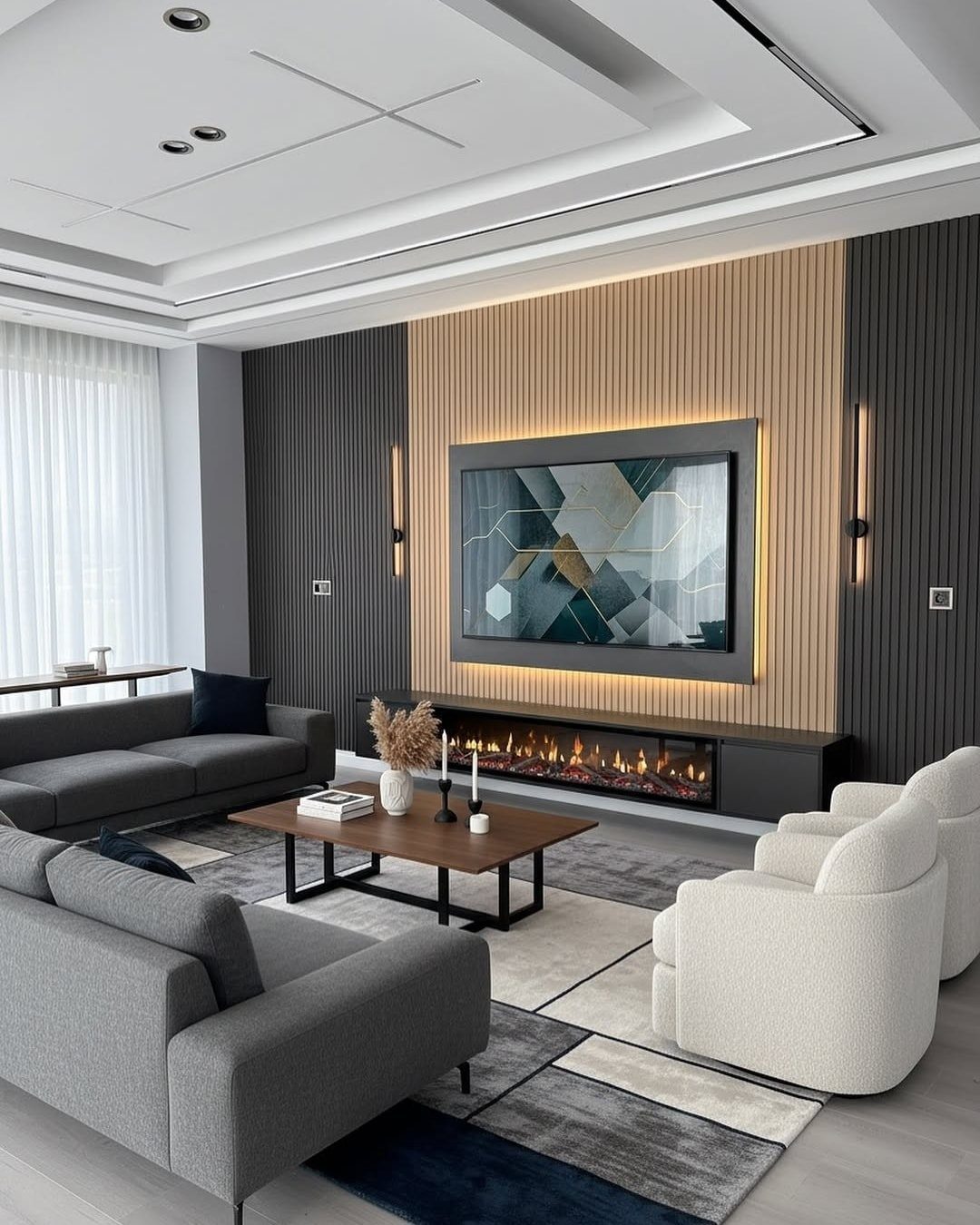
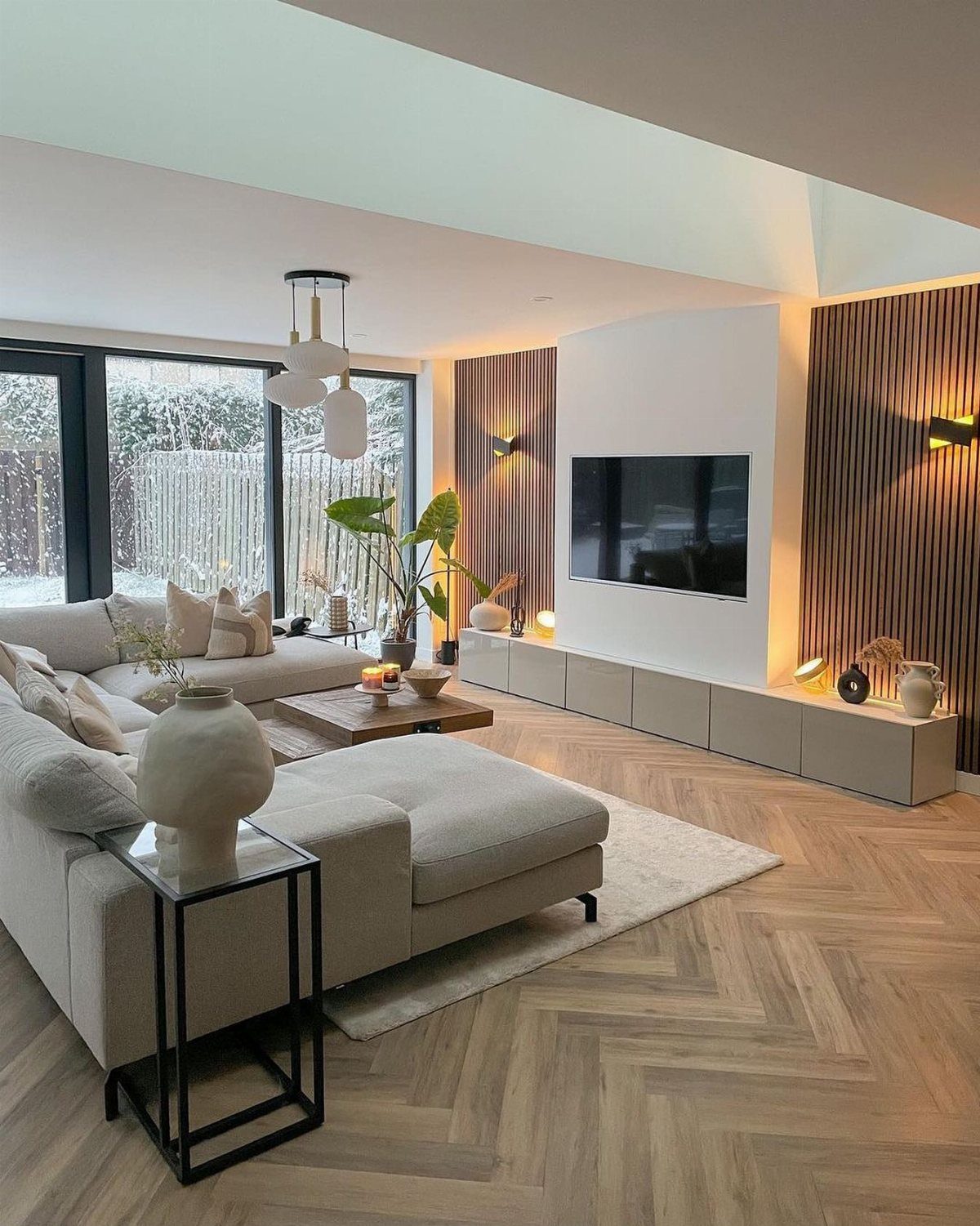
Gray sofas, white chairs, and wood slats behind the television make a quiet room that still has enough texture to keep you awake.
The fireplace below the screen helps; it gives the eye somewhere soft to land in a wall of electronics.
Texture matters more than color in a serene space. The vertical slats, the rough panels flanking them, and the fabric on the seating all read as different materials without breaking the palette.
Add one natural element, a wooden table or a single plant, and the room stops feeling designed and starts feeling lived in.
A low, wide coffee table in a light tone stretches the floor visually.
If your room is small, skip the dark rug; the white or pale gray underfoot here does more for the sense of calm than any wall color could.
This is for evenings when you want the room to slow down before you do.
10. Embrace Airiness
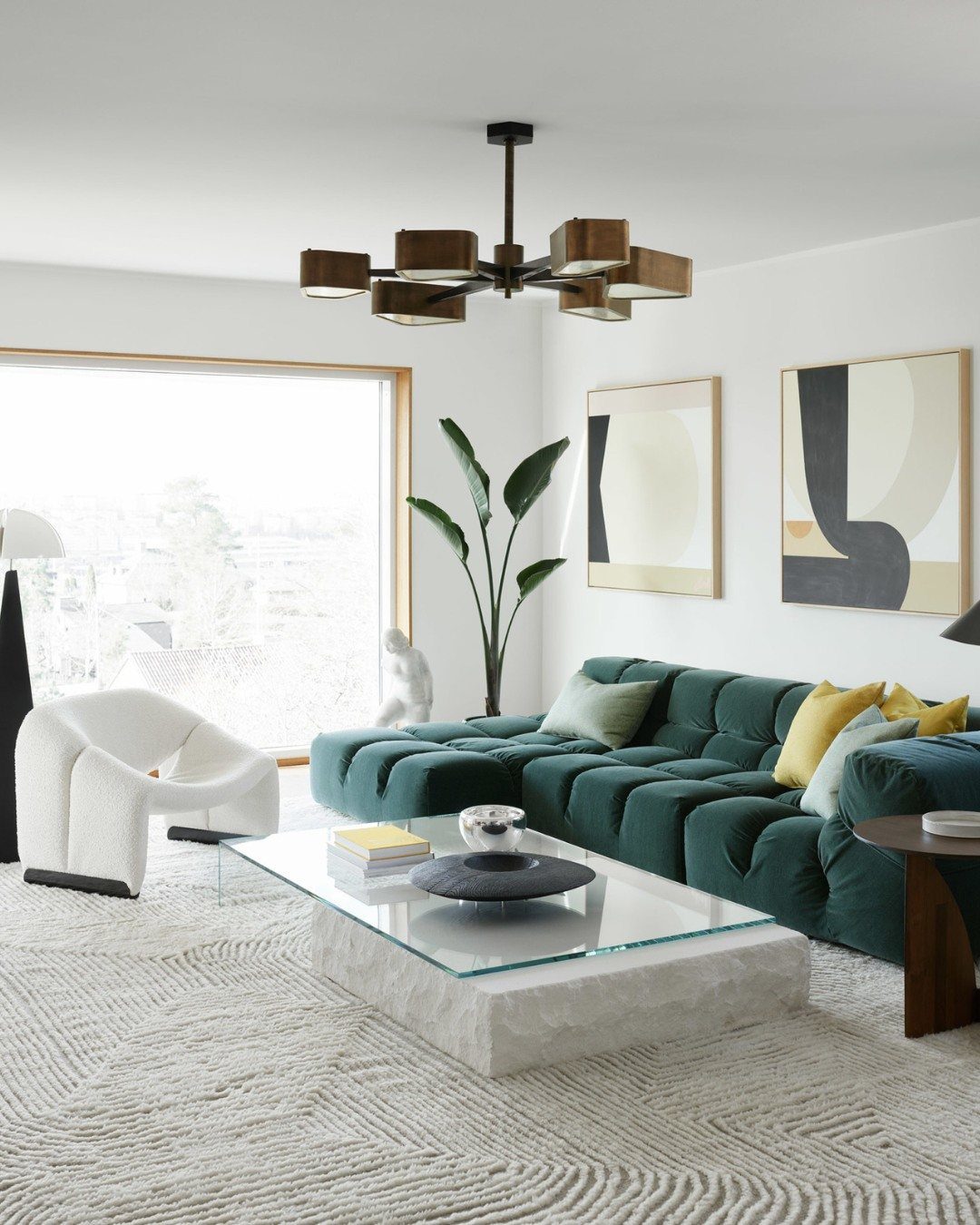
A low-back sectional, especially one floated away from the walls, makes a living room feel larger than its measurements.
A substantial sofa anchors the space, but the low profile keeps sight lines open to the windows and the white walls beyond it.
Light colors on walls and floors do the heavy lifting for airiness; the furniture just has to get out of the way.
A single sculptural chair, something with an unexpected silhouette, adds interest without the visual weight of a second sofa or a bulky recliner.
Natural light is the cheapest tool here. If your windows are small, keep furniture low and walls pale to bounce what light you get.
Airy rooms rarely hide clutter well.
11. Anchor the Space with a Bar
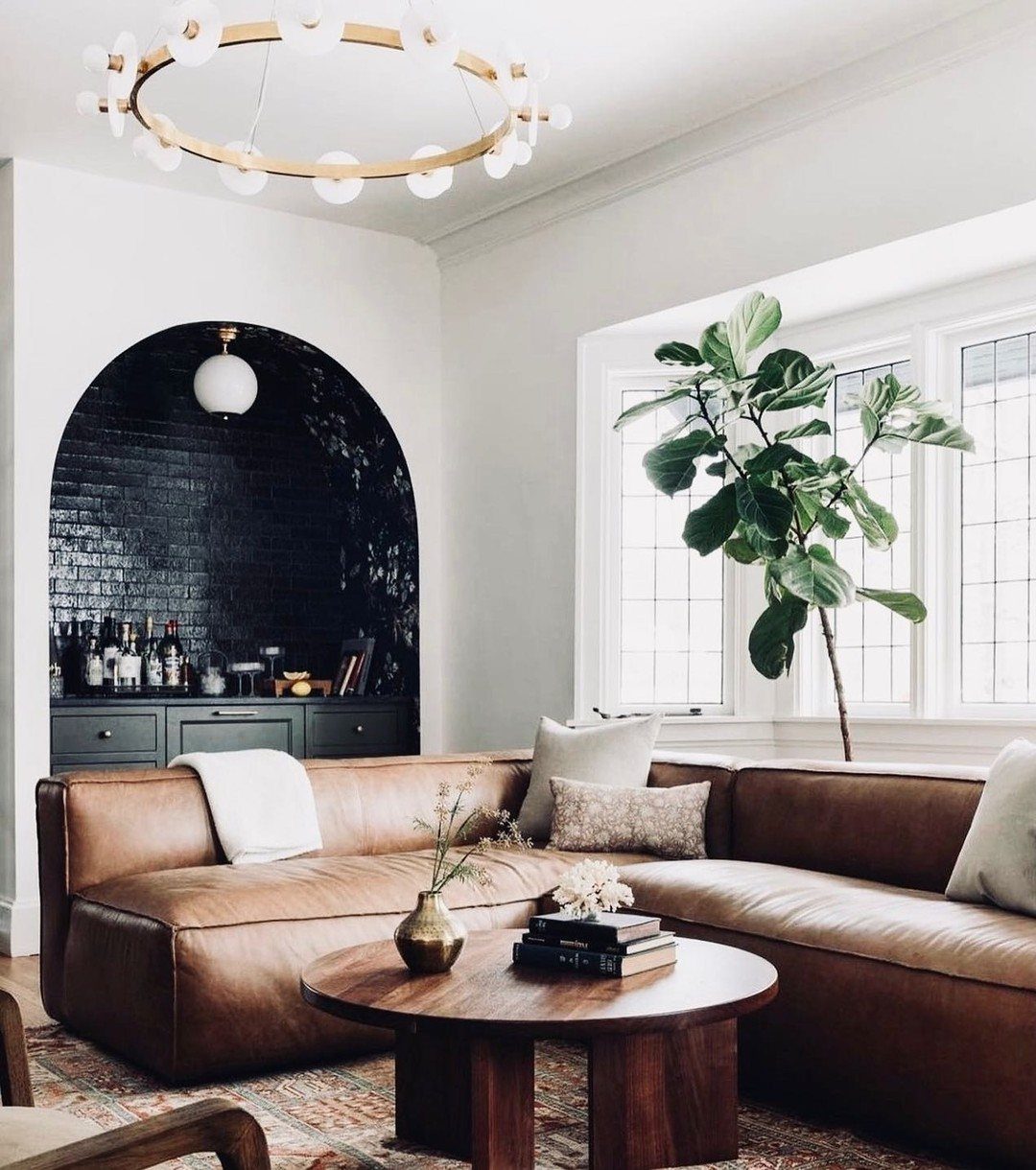
A built-in bar turns a living room corner into the place people gather without asking. The arched niche here, tiled and shelved, works as a focal point even when no one is pouring a drink.
Brass or another warm metal against dark tile adds the luxe note that makes the bar feel intentional, not leftover. The rest of the room can stay simpler; the bar carries enough interest for the whole wall.
A leather sofa nearby gives guests somewhere to settle with a glass, and a large plant, something like the fiddle leaf fig here, softens the edge between social space and furniture.
This needs planning if you are building from scratch: plumbing for a sink, or at least an outlet for a small fridge.
If you are retrofitting, a narrow console with a mirror above and a tray for bottles does a similar job on a smaller budget. Using what you already have to make something new works at any scale.
12. Pluck Out Oversized Art
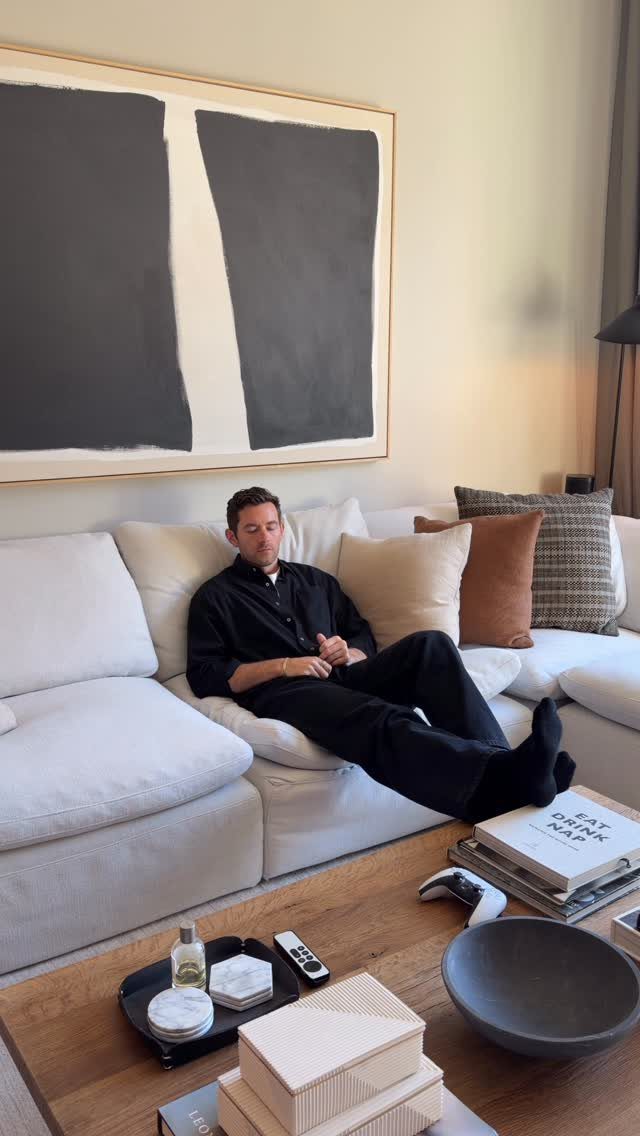
One massive piece of art does the work of a dozen smaller frames without the grid of spacing and measuring.
The black and white canvas here fills the wall above the sofa and gives the room its entire personality in a single glance.
The scale is the point. A piece this size needs a wall tall enough to hold it and a sofa low enough that the art still dominates the vertical space.
Small stools or slim side tables below keep the floor functional without competing; they tuck away when you need the room open.
If original art at this scale is out of reach, a printed canvas or a framed textile can hit the same note for less.
The maker of this piece notes it is part one of a series; the same approach works room by room if the budget spreads thin.
13. Wow with Wallpaper
A single wall of bold wallpaper does the heavy lifting when you want to change a room’s whole mood without touching the furniture.
Stripes running floor to ceiling pull the eye upward and make standard ceilings read taller than they are.
Geometric patterns with strong structure work best in tight spaces; they give the eye somewhere to rest so the room feels larger, not busier. Lighter tones keep the effect modern rather than retro.
Peel-and-stick wallpaper comes down clean when you move, which matters for renters, and the cost stays manageable enough to cover a feature wall in a weekend.
Skip the feature wall if the room already has a busy rug or a patterned sofa. One statement is enough.
14. Bank on Bookshelves
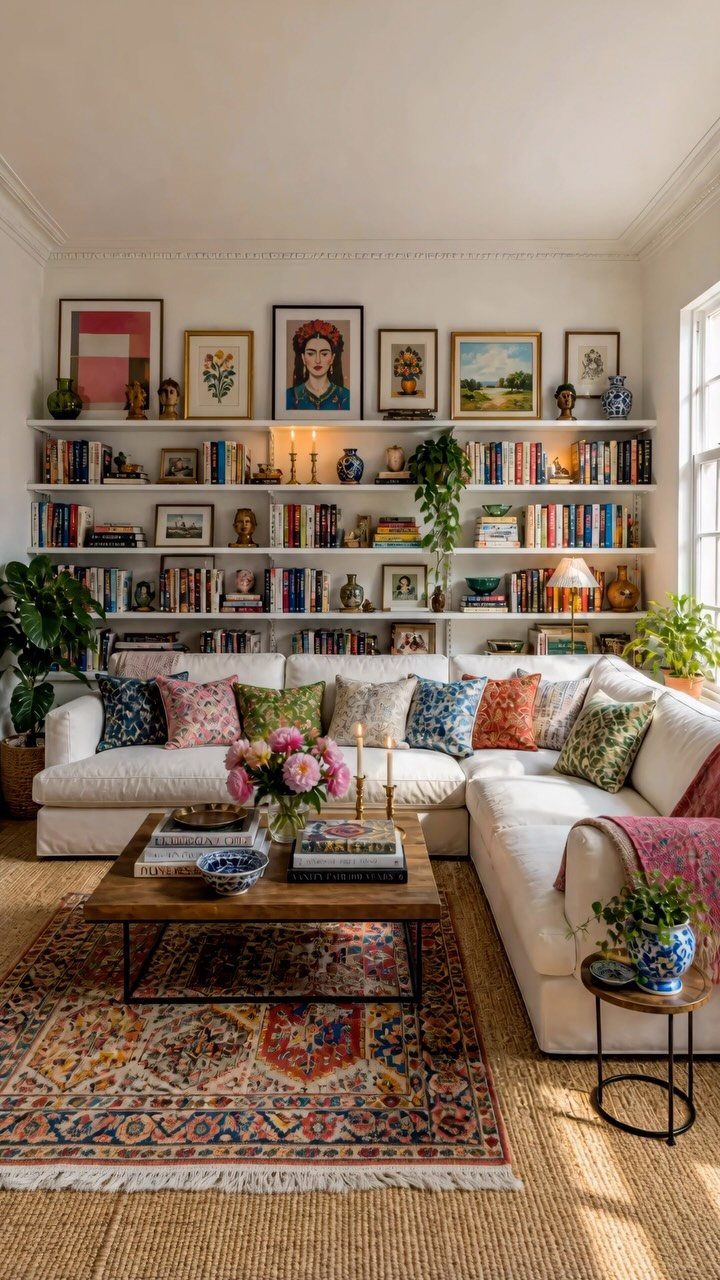
Built-in bookshelves turn a blank wall into the room’s personality. Treating bookshelves as display, not just storage, changes how the whole room reads.
I stack books both vertically and in horizontal piles to break the grid, then leave breathing room around a single object, a plant or a small frame, so the eye has places to land.
If you’re renting, three matching freestanding units painted the same color as your walls read almost built-in without the commitment. Keep the bottom shelves for heavy hardcovers and the top for lighter objects you rarely need.
The weight distribution keeps things safe and looks balanced from across the room.
15. Frame It
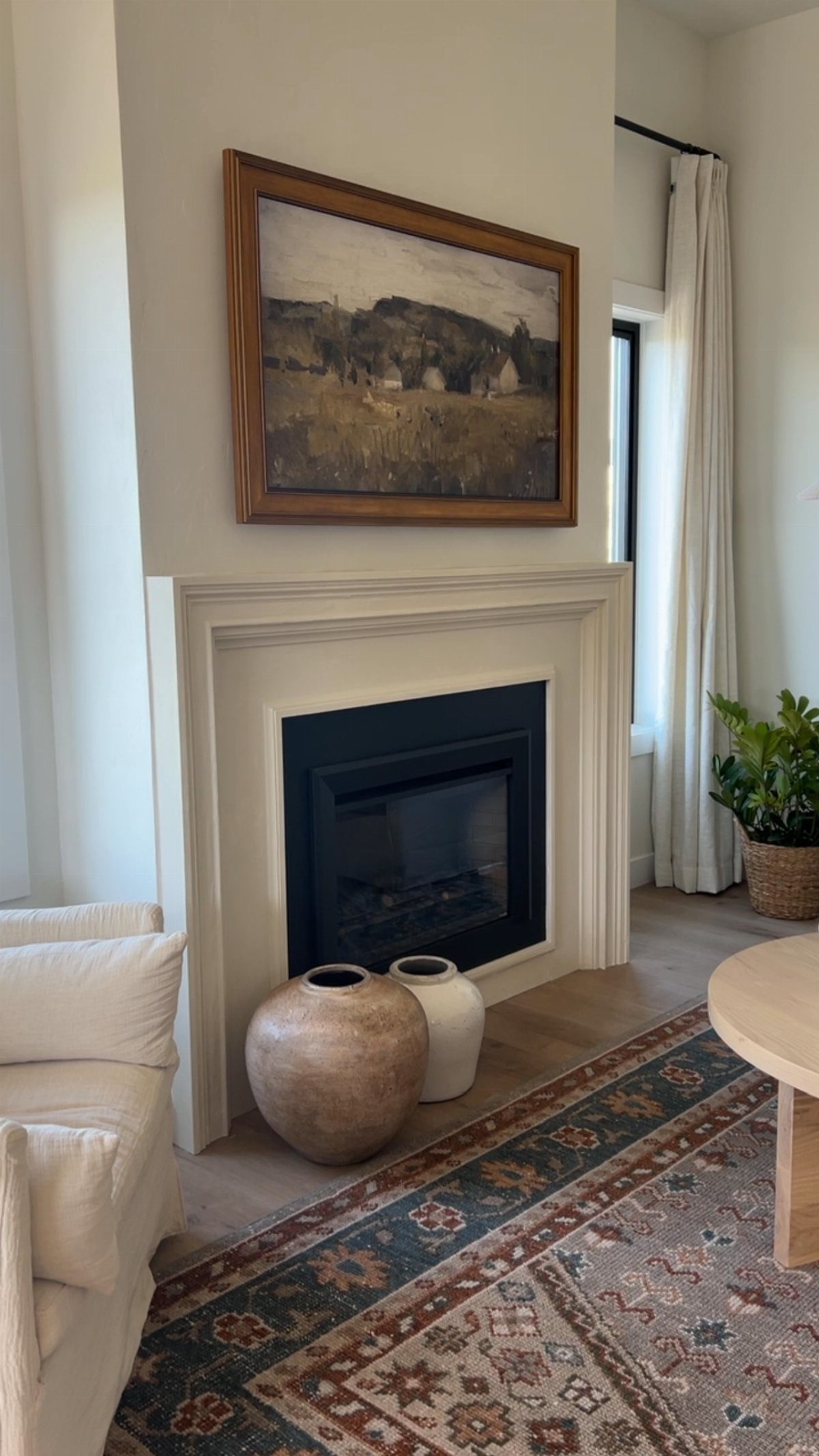
Framing is the cheapest way to make disparate pieces feel like they belong to the same room.
A single frame style repeated across every wall, even in different sizes, does what matching hardware does for a kitchen: it ties things together without demanding sameness.
Standard wood frames in one finish, maybe black walnut or raw oak, are easy to find at craft stores and cost less than custom framing.
Buy the frame one size up from your print and use the mat that comes with it; the extra border reads intentional and gallery-like.
A framed piece above a mantel or sofa should span about two-thirds of the width below it. Too small floats and looks lost; too wide crowds the furniture.
One large frame almost always wins over a cluster of small ones if you’re after a modern, uncluttered feeling.
Mixing Styles Effectively
A living room that mixes industrial bones with mid-century furniture only works when the two styles talk to each other. Low-profile seating in walnut or teak sets the modern tone without fighting exposed brick or ductwork.
A sculptural chandelier, something that reads as art more than fixture, bridges the gap even further.
The common ground matters more than the pieces themselves. Hues should repeat across both styles, metal finishes should match or at least agree, and patterns need to feel intentional rather than accidental.
Two styles with nothing shared between them collapse into clutter.
Color can also do the mixing. A neutral base with one bold accent, carried through upholstery and accessories, lets conservative and modern furniture sit in the same room without either looking lost.
The accent does the connecting work.
Importance of Color Schemes
Small living rooms reward a single-color commitment more than large ones. A monochromatic scheme, pinks and roses drawn from the brick outside the window, turns the room into an extension of the city itself.
A custom rug that echoes the sky folds the outdoors in.
The gallery wall around the television treats the screen as just another frame among museum posters.
For a transitional path into modern, start with classic neutrals on walls and floors. Add modern furniture shapes one at a time.
One accent color, repeated in a pillow, a vase, a throw, shifts the room forward without demanding a full renovation. The change stays reversible until you are sure.
Frequently Asked Questions
How do I make my living room look modern?
Start with clean lines and low-profile furniture that keeps sight lines open. Walls, furniture, and fixtures that share a single palette let the eye move through the room without stopping at every new color.
A single oversized lamp or one wall of patterned paper lands harder than five small swaps that fight each other. A clear acrylic coffee table holds drinks and magazines while barely registering in the sight line.
What living room decor is trending now?
Mixed styles and bold single statements are where the attention sits right now.
Modern bohemian decor that layers velvet against suede and woven pendant against smooth plaster is showing up often, with the palette staying restrained while textures do the work.
What are some modern living room design ideas?
Minimalism with one leading accent piece, mid-century modern with a wide-seat sofa and metal accents, and modern bohemian with restrained color but mixed textures are three solid directions.
A built-in or console bar, floor-to-ceiling wallpaper stripes, or a gallery wall built around the television as just another frame can reshape a room without a full overhaul.