
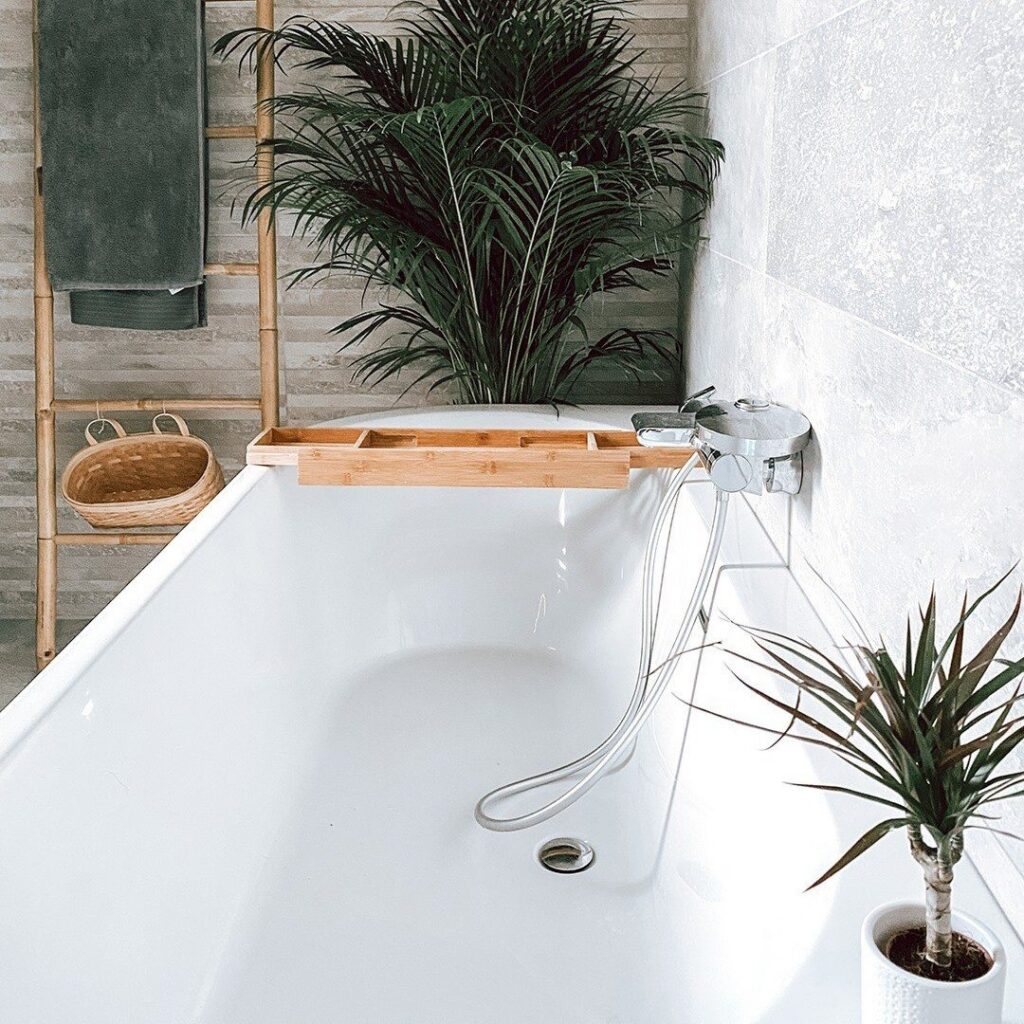
These ideas range from a sample pot of paint to a skylight install that pushes past a weekend budget, and the one that belongs to you depends on whether you rent, own, or just need the change done by Monday.
1. Earthy Color Palette
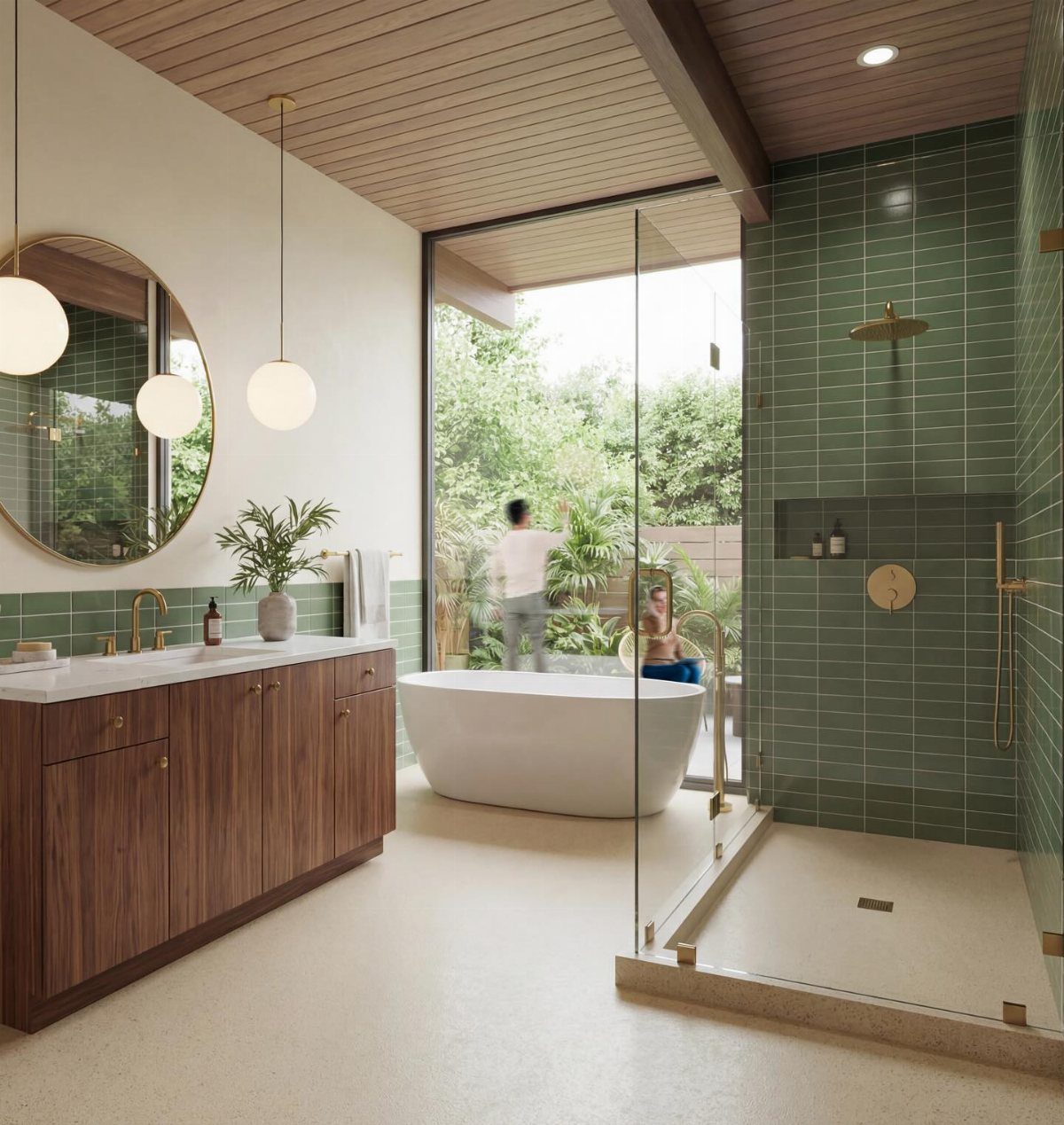
Clay, sand, and the muted side of sage green do the heavy lifting here. I like terracotta paired with cream for a rental because both read warm against white fixtures you cannot change, and neither fights landlord beige.
Paint a single accent wall rather than the whole room if your budget stops at a gallon. Sample pots cost pocket change and save you from a color that shifts at dawn versus dusk.
Skip the saturated versions. The calming effect comes from the dustier tones, the ones that look like they have already lived in sunlight for a few years.
2. Warm Lighting
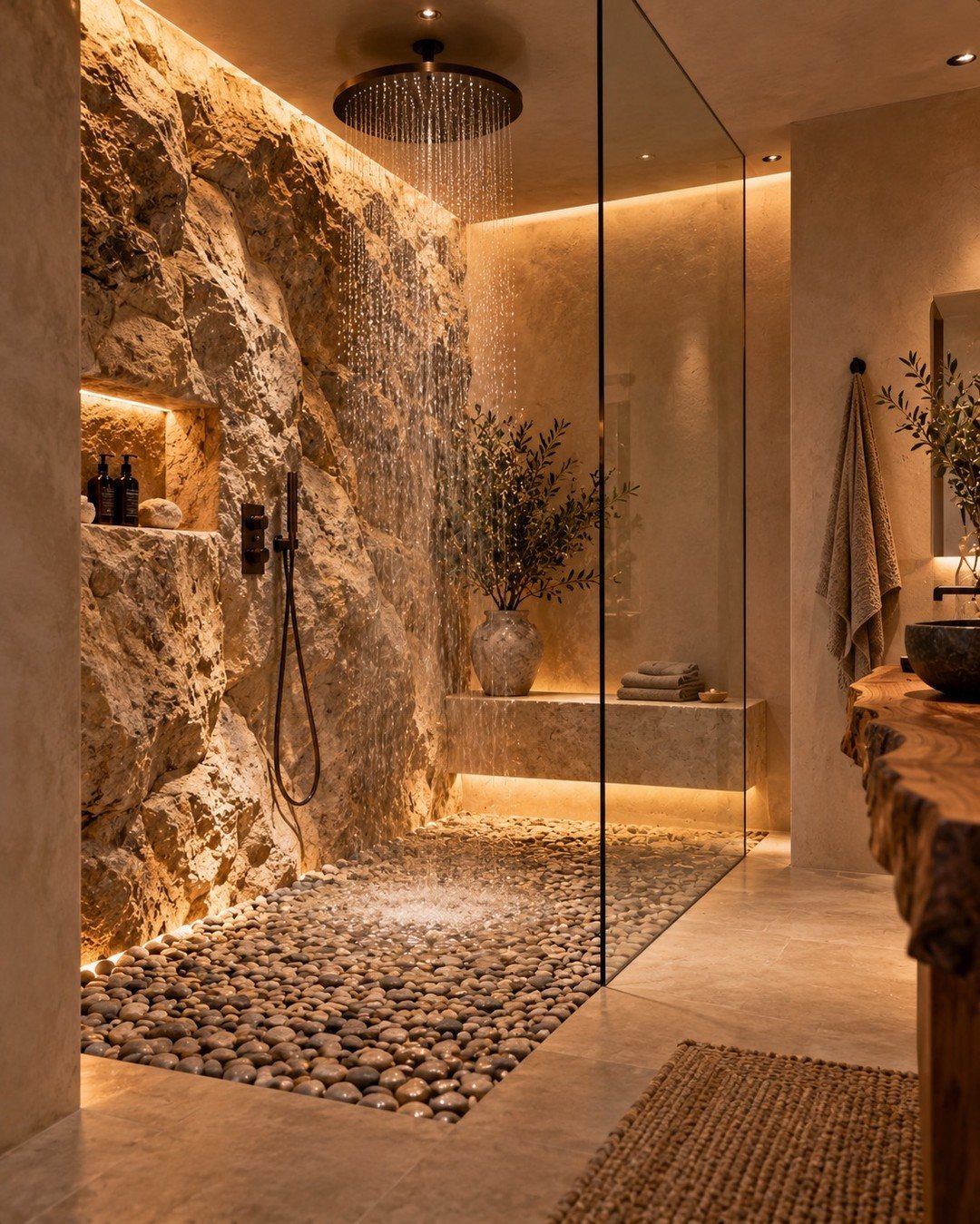
A 2700K bulb is the color of sunset through a window, not the blue-white of a grocery store freezer. That warmth is what makes stone and wood look like themselves instead of flat stage sets.
Layer the sources. Overhead fixtures handle the work, sconces near the mirror handle the detail, and a dimmable strip somewhere low handles the mood.
Bulbs with a CRI above 90 cost a few dollars more per pack but render color the way your materials actually look. For a weekend project, swap the bulbs and add a dimmer switch.
The switch itself takes no time at all if you have turned off a breaker before.
3. Add Greenery
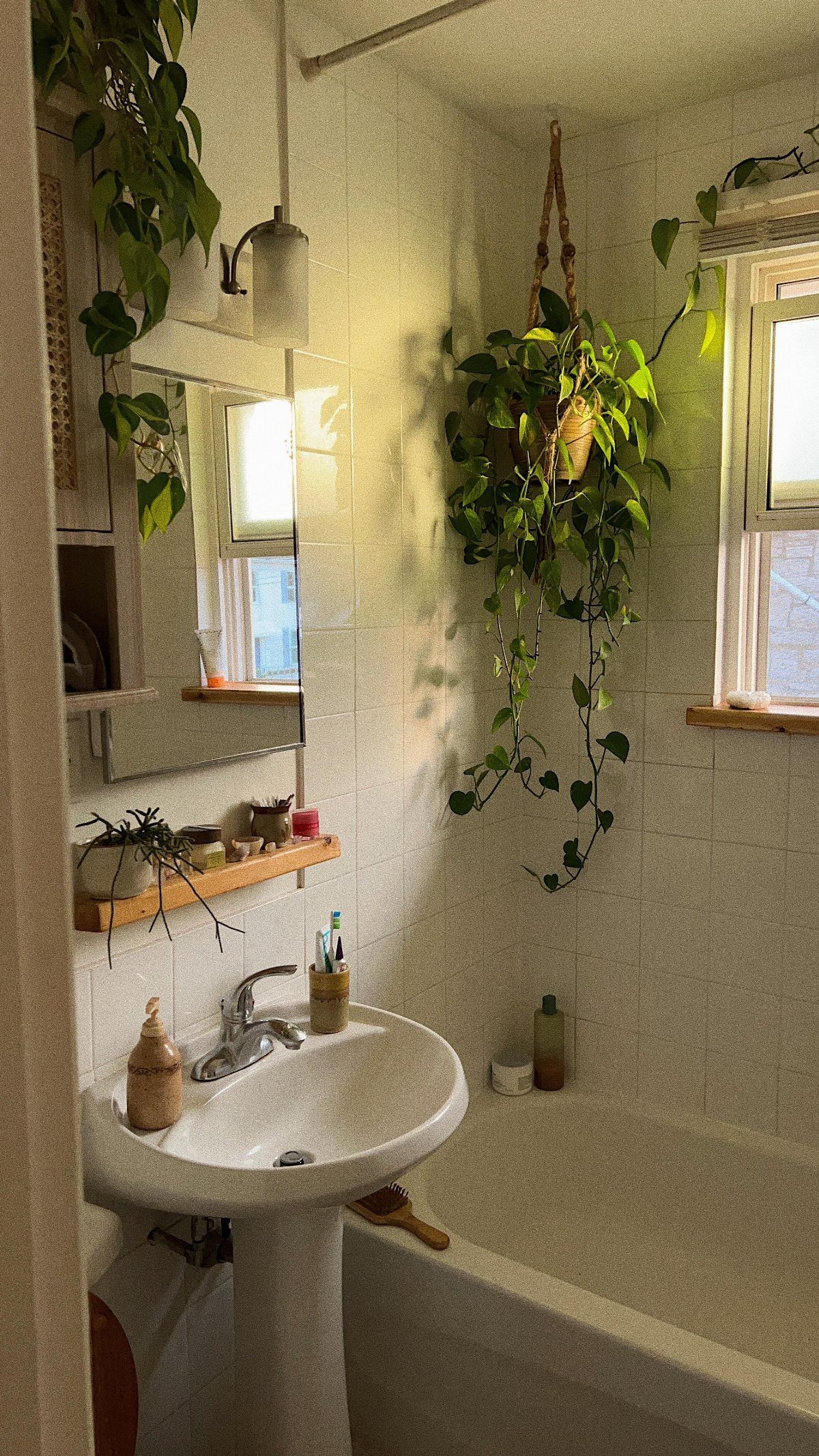
A bathroom without a window still holds enough humidity for a pothos to trail from a shelf. Ferns want more light and mist; peace lilies forgive low light and tell you when they are thirsty by drooping dramatically.
A macrame hanger from the craft store turns a basic planter into something with texture. Group plants at varying heights so the eye travels, and stick to odd numbers.
Three feels gathered; two feels accidental.
If you travel often, a snake plant survives neglect that would kill anything else. No drainage hole in that ceramic pot you love?
Layer pebbles at the bottom and water sparingly. Root rot is the usual killer, not dryness.
4. Use Natural Materials
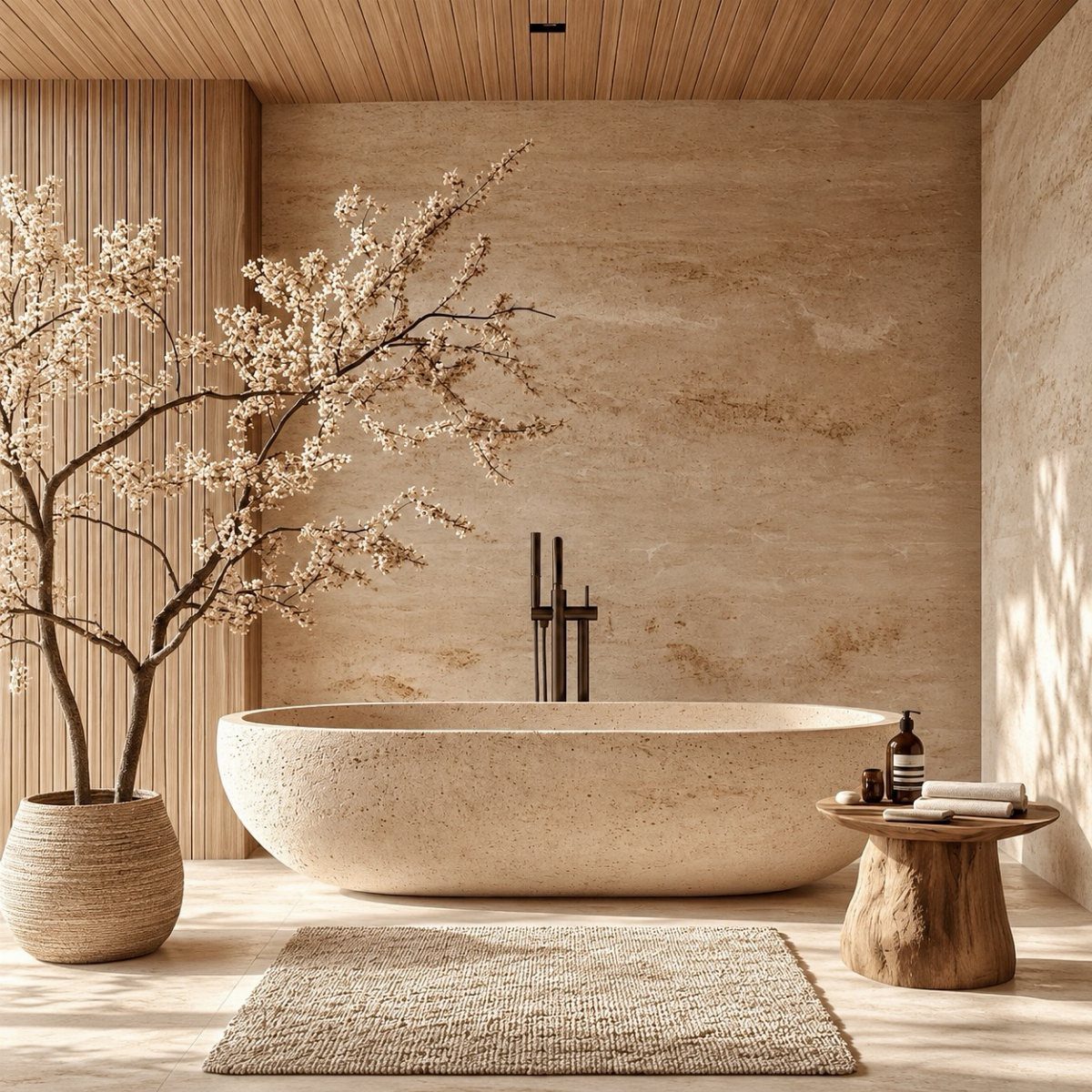
Stone and wood carry the weight that laminate pretends to. A slate floor tile is cold underfoot but indestructible; a wooden ceiling beam, even a hollow faux version, draws the eye up and makes standard-height rooms feel intentional.
A stone oval tub means mass, and that weight changes how you plan the install. Two people can wrestle a small one into place; a large one needs a plumber and a structural check on the floor joists.
For a lighter touch, a wood side table beside the tub costs less and moves with you.
Reclaimed wood for a vanity or shelf brings in grain variation that new wood spends decades trying to fake. Seal it properly.
Steam wins against unfinished wood faster than you would think.
5. Natural Textures
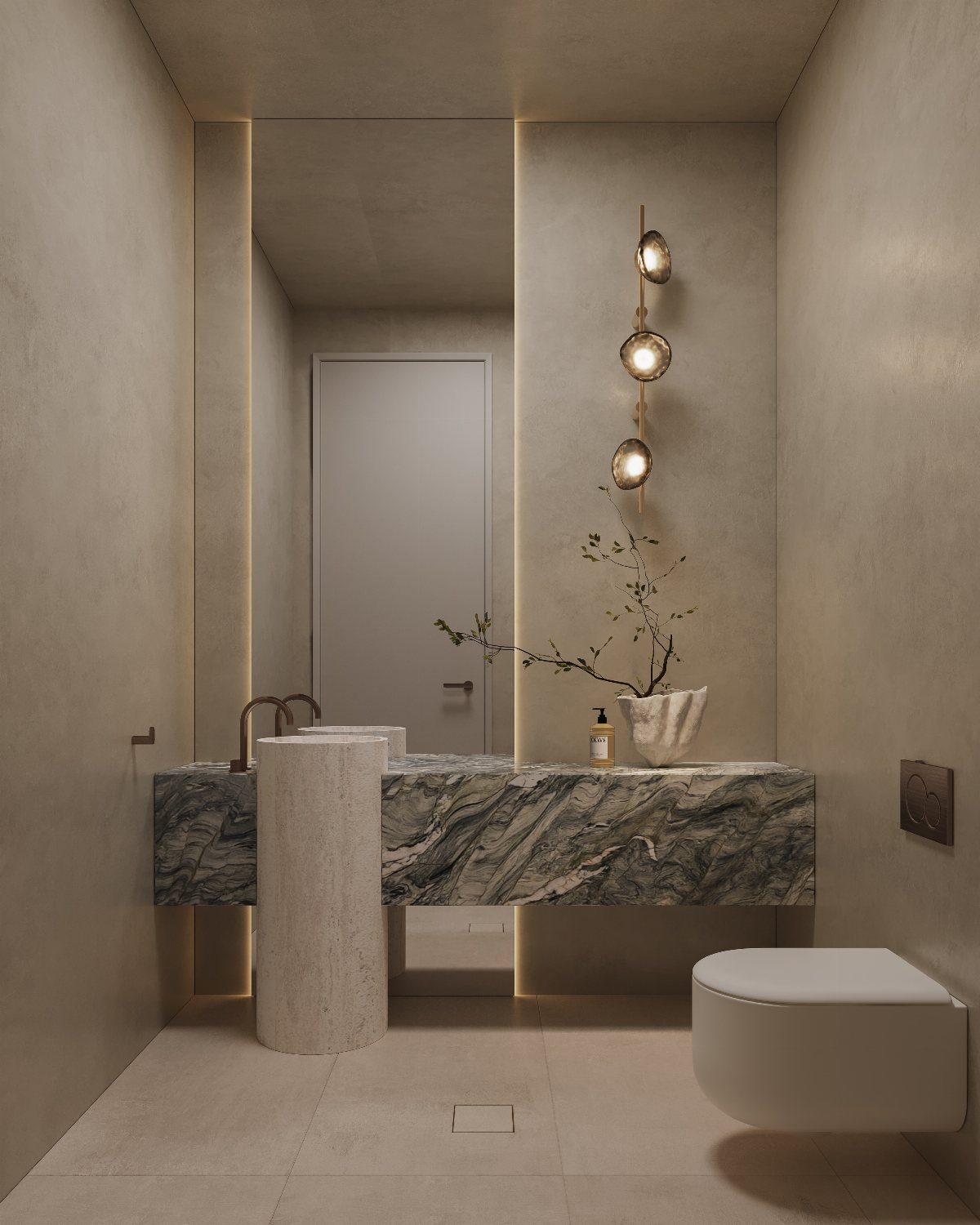
Smooth marble against rough plaster is the tension that makes both textures readable. If everything is polished, nothing stands out; if everything is raw, the room feels unfinished.
A woven rug adds warmth underfoot, though you will want a proper bath mat somewhere else for soaking up water.
It is probably jute or a jute blend, which means it lives outside the splash zone and adds warmth where tile meets bare feet. Stone counters stay cool and hard; a wooden shelf at elbow height breaks the contact.
Layer at least three textures in a small bathroom. Two reads as accident, four reads as effort.
Handmade tiles with deliberate variation turn a vanity into something that looks lived in; the natural imperfections are the point, not a flaw to avoid.
6. Natural Scents
Eucalyptus in a diffuser cuts through humidity and smells like a spa for the cost of oil and water. Lavender leans floral; cedarwood reads like a cabin.
Pick one and let it be the signature rather than mixing three and creating a fog.
Soy candles in stone or ceramic holders continue the material story while they work. A three-wick candle throws enough scent for a standard bathroom; a single wick is plenty if the space is small.
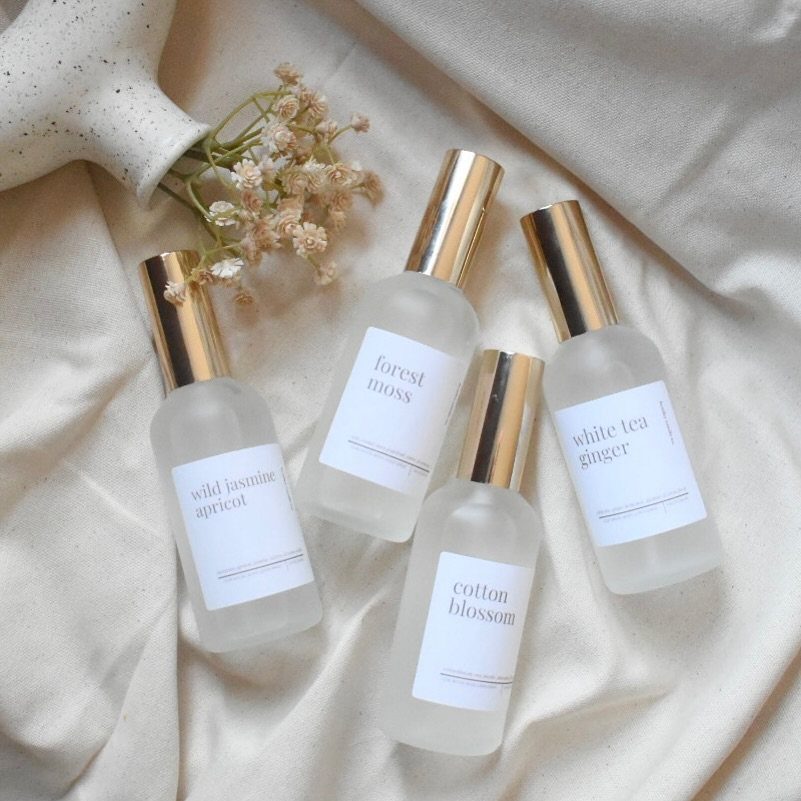
Labeled spray bottles look pretty on a shelf, but a plain glass bottle and a dropper of essential oil do the same job without the branding tax.
Refresh the scent every few months; nose blindness is real, and guests will notice what you no longer can.
7. Hide Your Storage
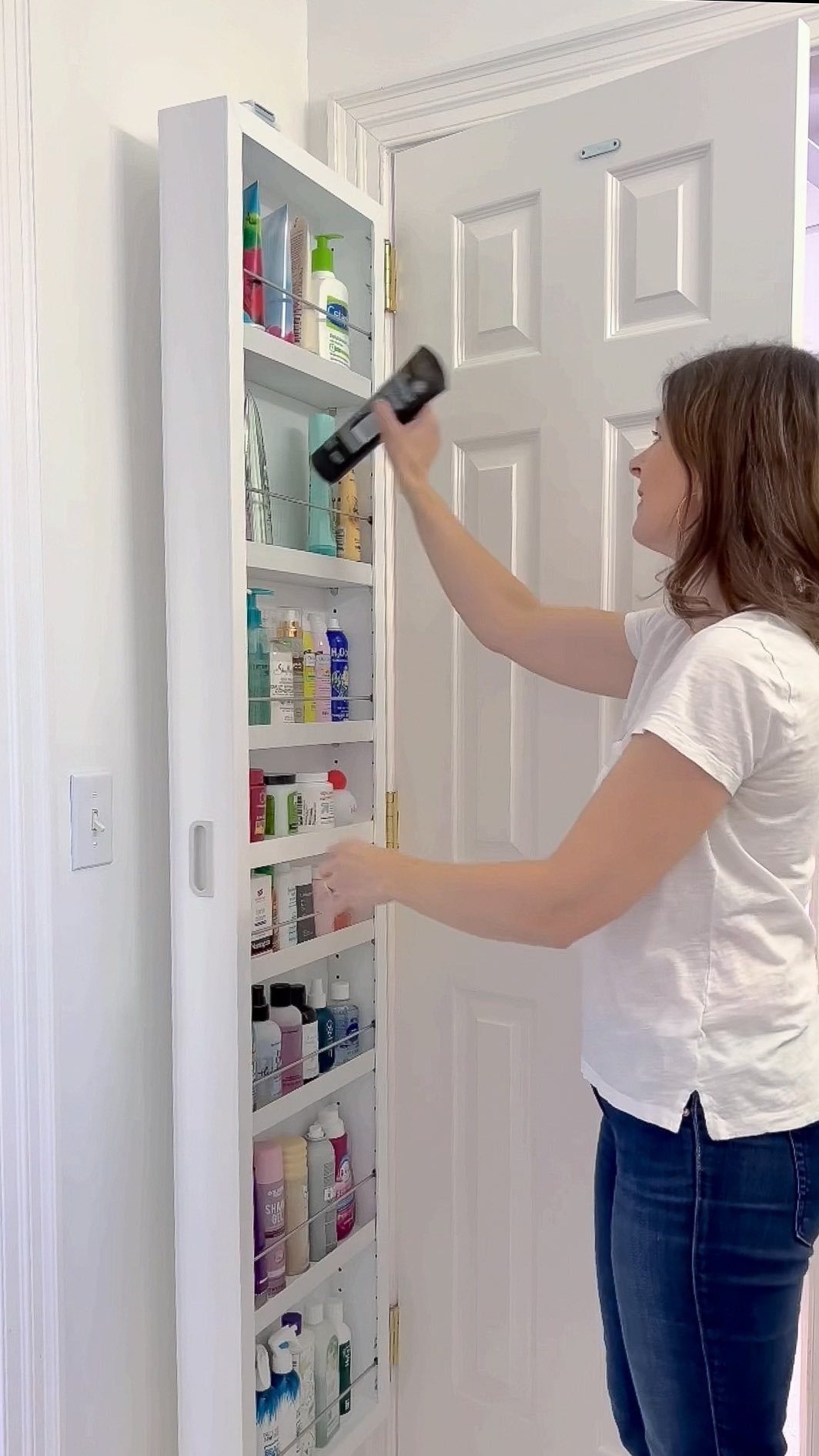
A tall cabinet tucked beside the door keeps bottles off the counter and out of sight. I like woven baskets inside for grouping smaller items, and a wooden shelf run across the back hides backup supplies behind the daily ones.
If your walls are open, a recessed niche in the shower does the same job with no floor footprint. Tile it to match the surround and it reads as part of the wall, not an addition.
LED strips along the top edge help you find the soap without breaking the calm.
8. Skylights for Natural Light
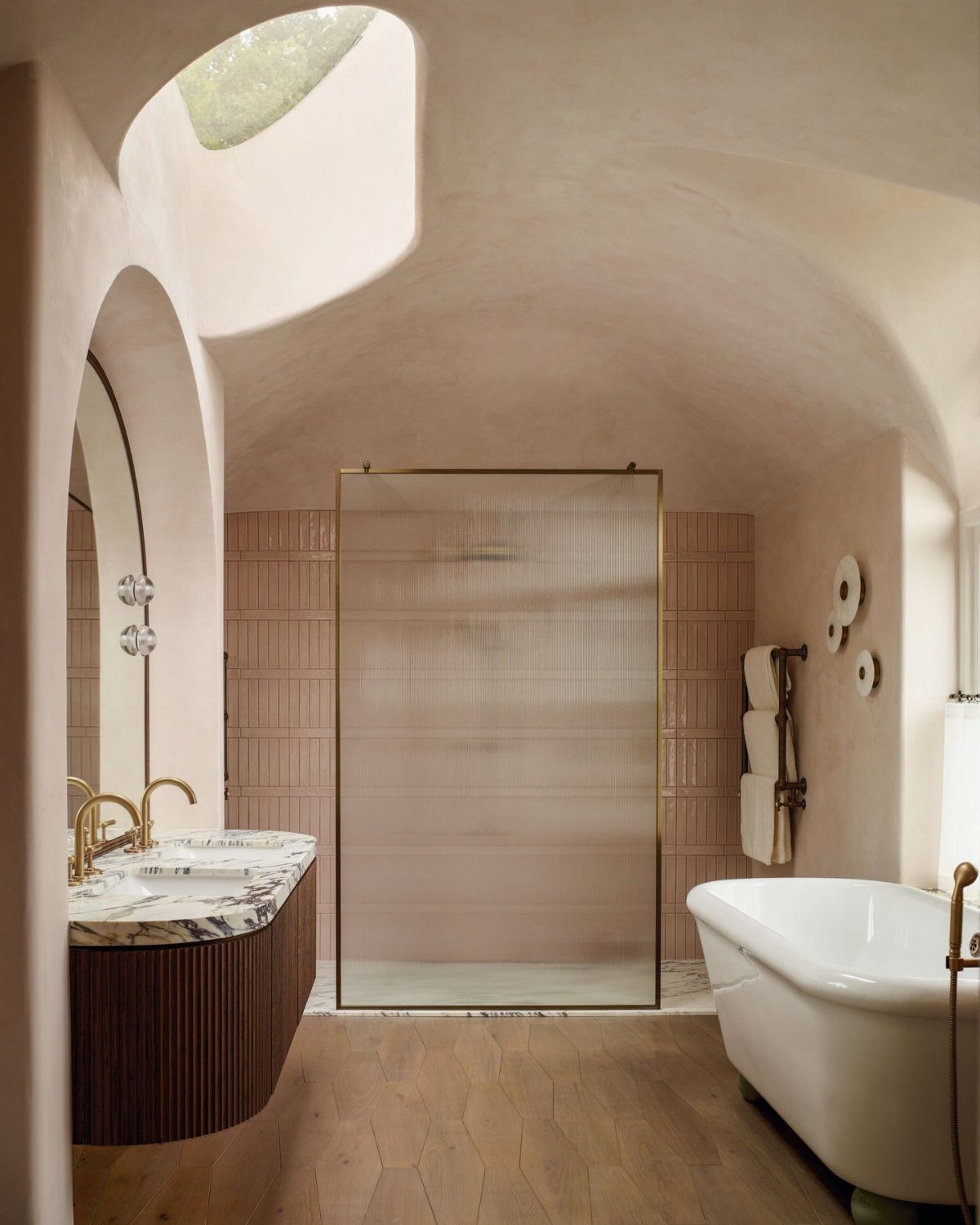
A single skylight in a vaulted ceiling tracks the sun across the room, turning the light itself into the day’s quiet clock. Light moves across the plaster through the day, and the wall color shifts with it.
A fixed skylight plus installation sits toward the higher end of a weekend project’s budget, even without the vaulted detail. Frosted glass in a regular window costs less and still keeps the view out while letting daylight in.
9. Cosmopolitan Collection Tubs
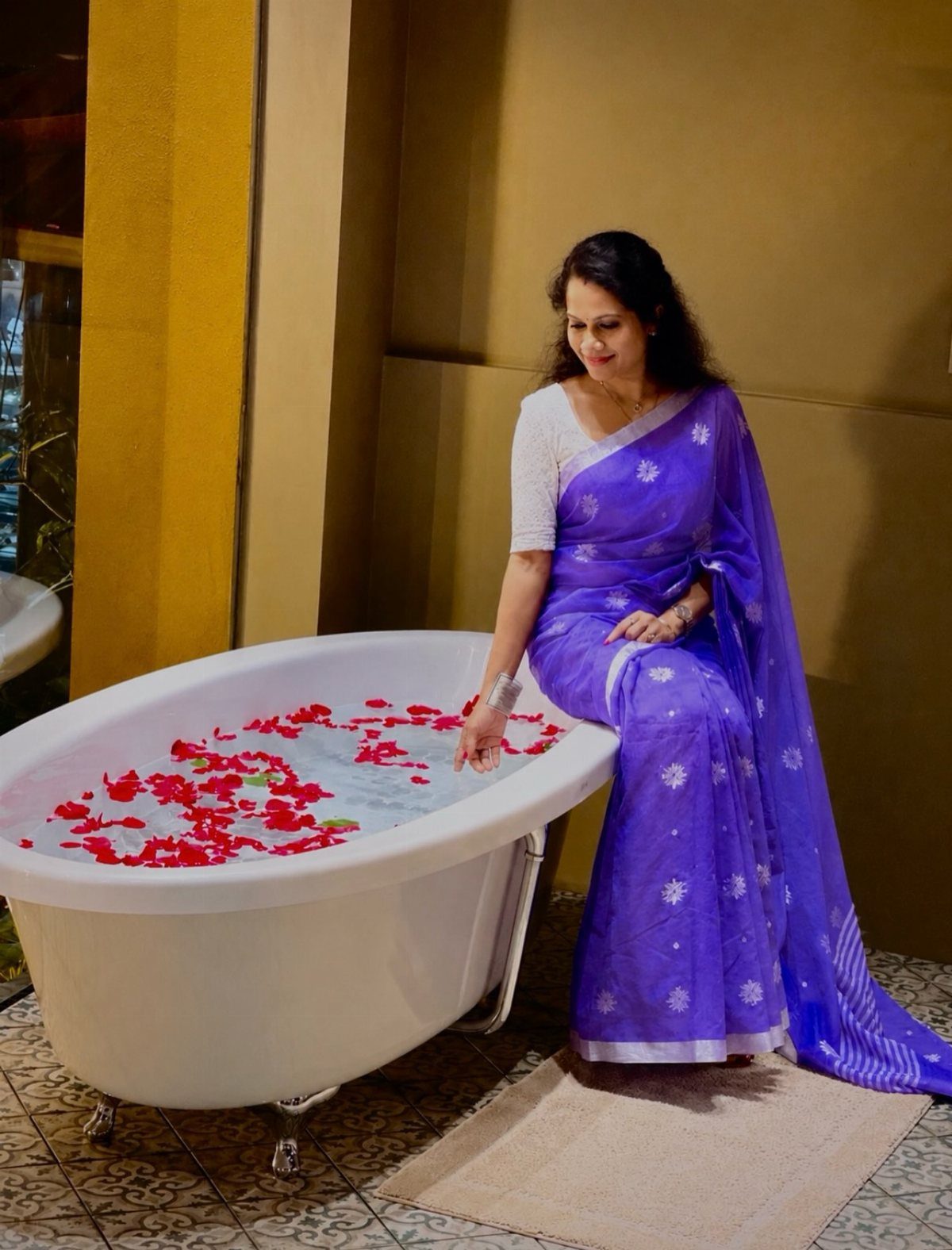
A freestanding tub becomes the reason you enter the room; place it where the door frames it first.
Cosmopolitan Collection shapes range from clean angles to softer flares, so the tub reads as sculpture or as furniture depending on the line you choose.
Each comes as a soaker or with therapeutic air jets, and the solid surface shell holds heat longer than standard acrylic.
I would pick the simple rectangle of the Almaza for a narrow space where the tub has to sit against a wall.
A small wood stool and a rolled towel in a woven basket beside the tub finish the space without clutter.
10. Incorporate Natural Artwork
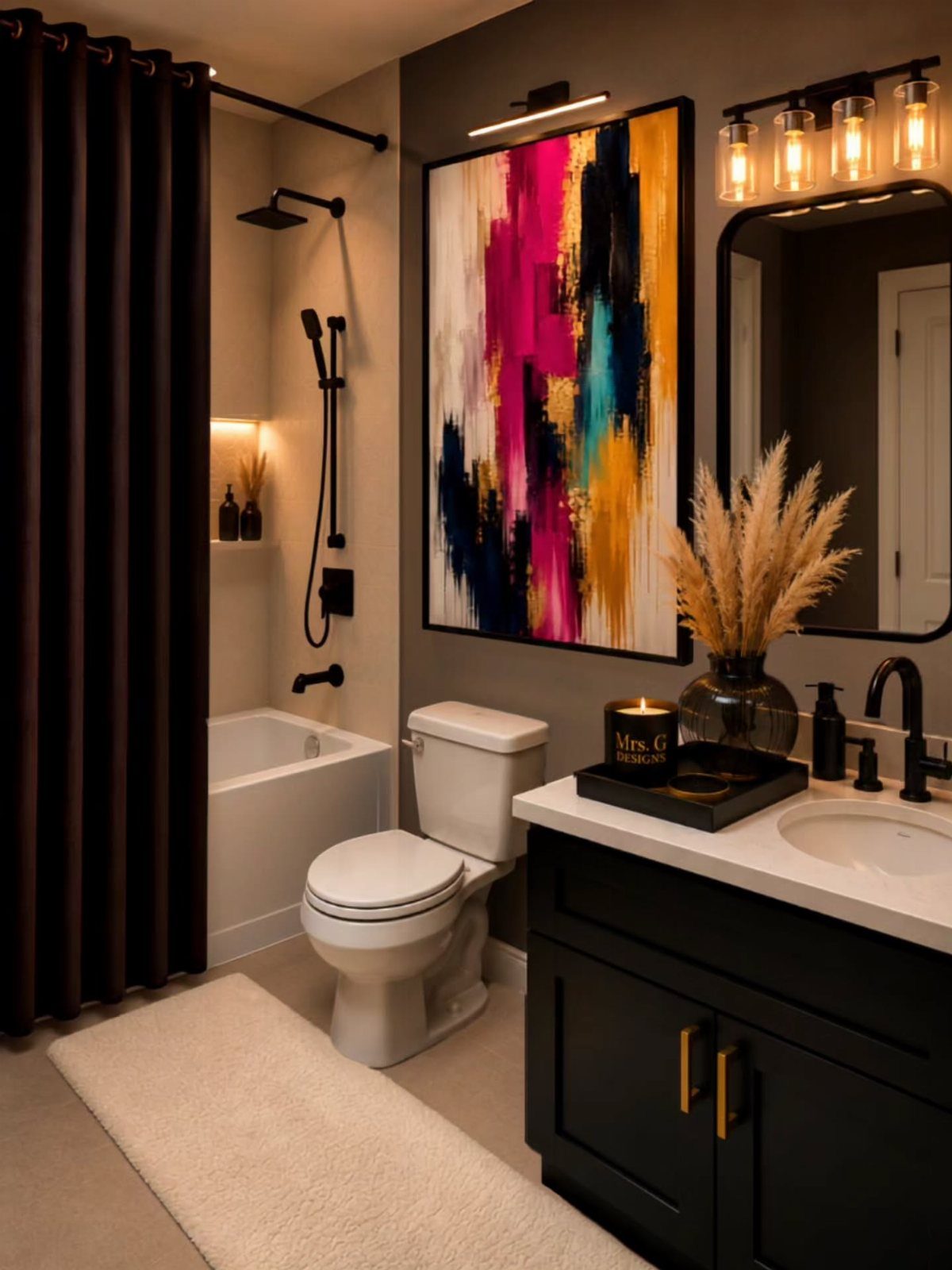
An abstract piece in green, ochre, and umber above the toilet pulls dried pampas grass into the same tonal conversation.
Framed prints of botanicals or landscapes work the same magic as original canvas; hunt the usual print shops for a size that fills the wall without crowding the fixtures.
A single vertical print of eucalyptus stems can carry a whole water closet if the scale is tall enough to read from the doorway.
The scale matters more than the price: aim for two-thirds the width of whatever sits below it, toilet or vanity. Too small floats; too large leans over you.
11. Feature Water Elements
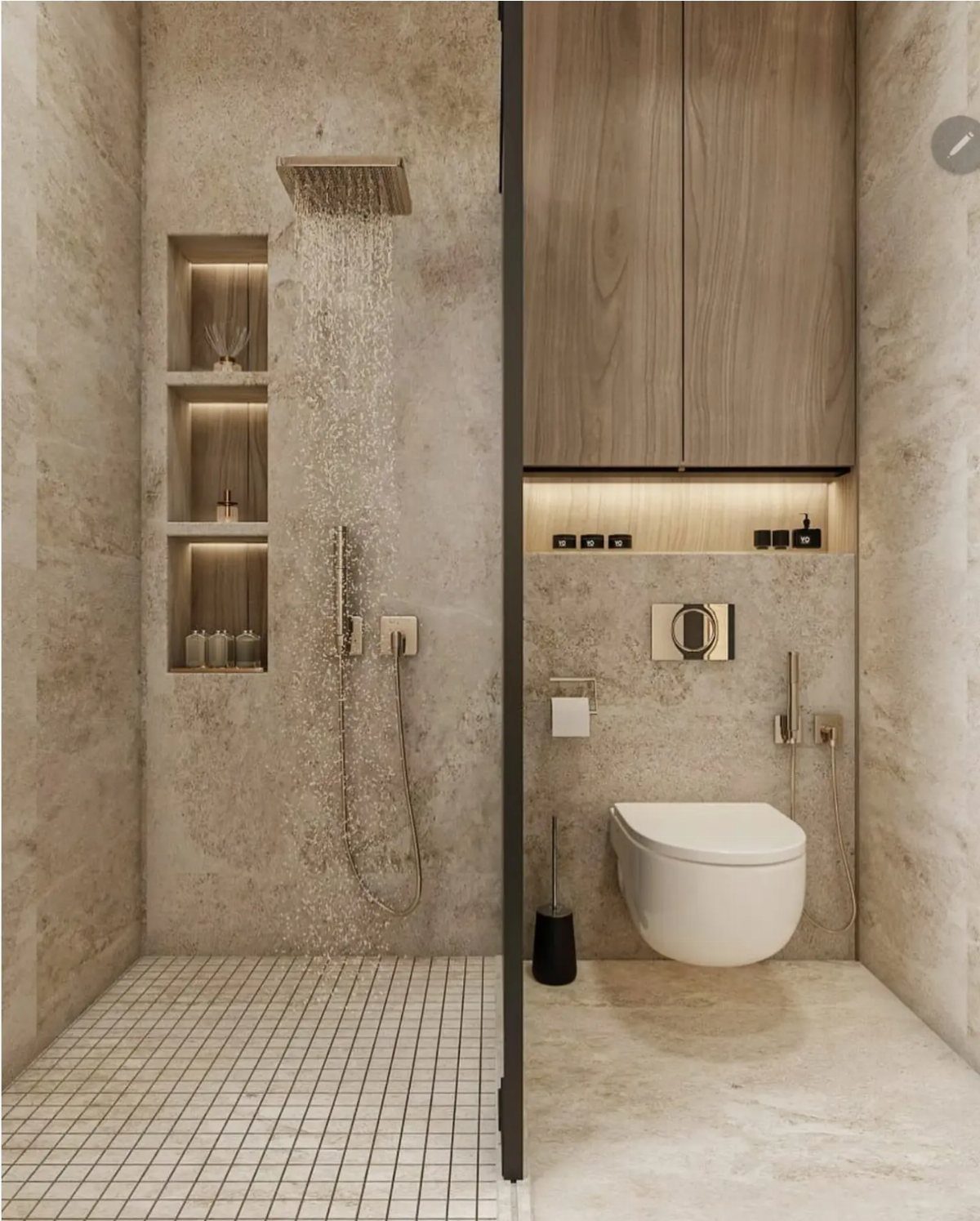
A rainfall showerhead against stone tile makes water the event, not just the function. The built-in niche with its own lighting in that walk-in shower keeps the floor clear of caddies and bottles that would break the stone’s rhythm.
A ceiling-mounted rainfall head swaps in for a standard arm when the threaded fittings match; the change is the difference between being rained on and being sprayed.
When the threaded fittings match, the swap takes an hour and leaves you standing under something that feels like weather instead of plumbing.
If your ceiling is too high or the plumbing too far off-center, a wall-mounted rainfall arm with an extension does most of the same work for half the installation headache. The sound alone changes the morning.
12. Nature-Themed Wallpaper
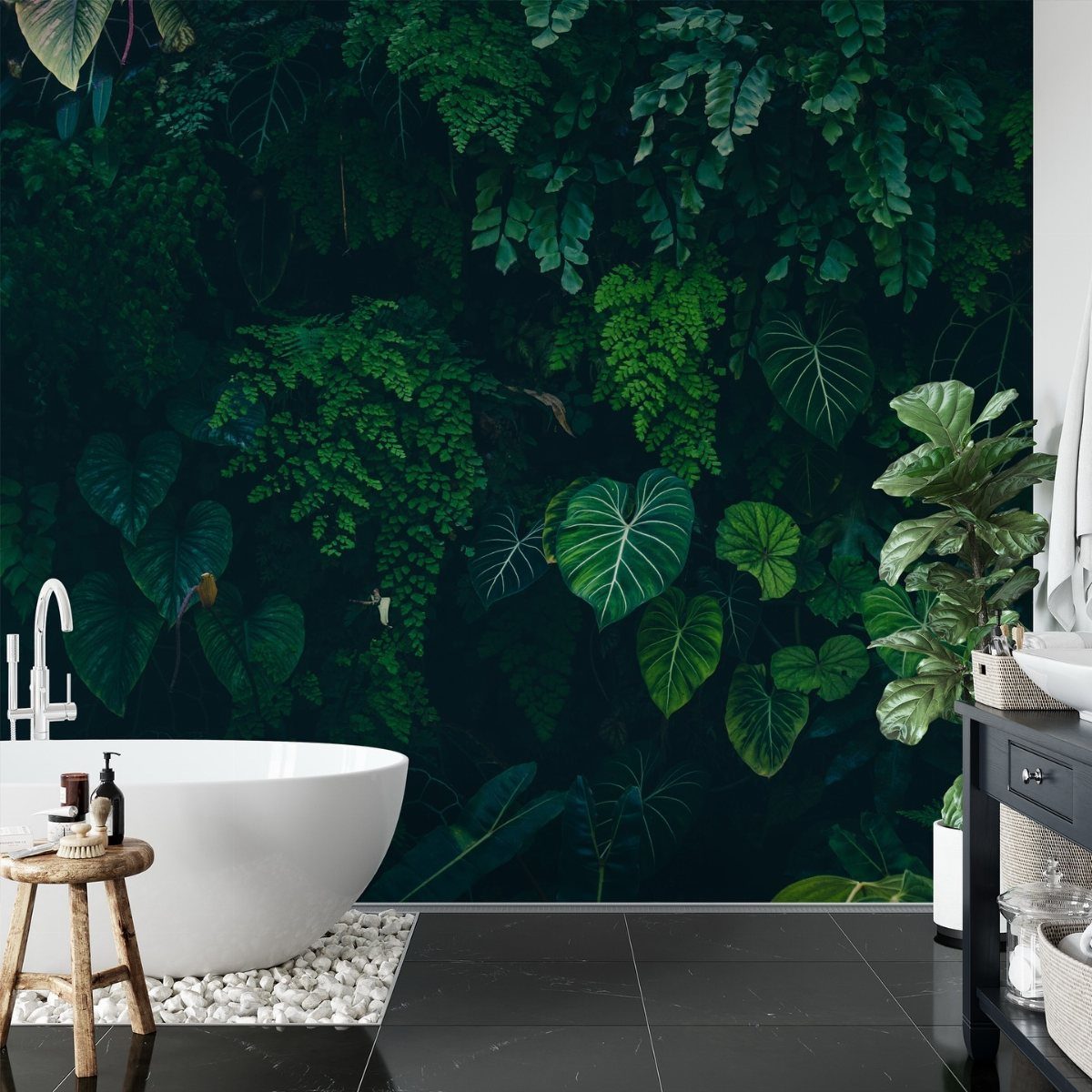
Dark green tropical leaves behind a white tub give the wall the depth of a window without the glass to clean.
Peel-and-stick wallpaper comes down when you move or tire of it; traditional paper needs a protective coating in splash zones, which adds a step and a day of drying.
A removable botanical print in a powder room with no window and no plant survival rate brings in what the architecture denies.
The pattern scale matters: large leaves like these read as landscape from across the room, small repeats read as texture up close. Order a sample, tape it up, live with it through one evening’s light before committing to the roll.
13. Sustainable Materials
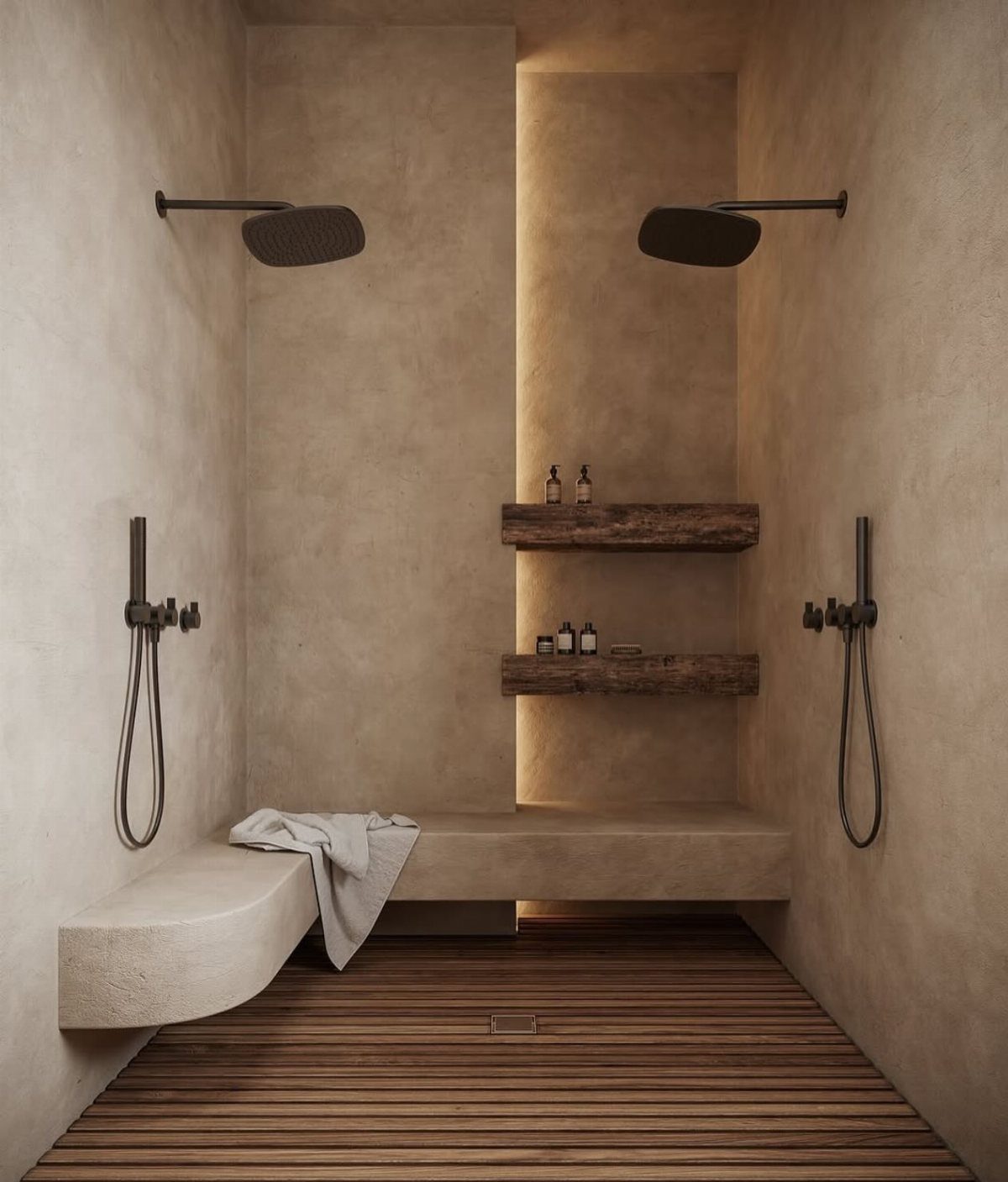
Sustainable materials in a bathroom start with what you actually bring in, not what you promise to change later.
Reclaimed wood for a floating bench or vanity adds grain and history that new lumber cannot fake, and sealed finishes handle the humidity if you reapply every few years.
Recycled glass tiles work for a backsplash or shower accent; they cost more per square foot than ceramic but less than stone, and the color variation is part of the point.
Low-VOC paint matters most in a small, poorly ventilated space where you will spend time with the door closed.
One weekend, one fixture, and a fresh coat of low-VOC paint will shift the whole room without the cost of a full gut. A full material overhaul belongs to a gut renovation.
14. Open Shelving
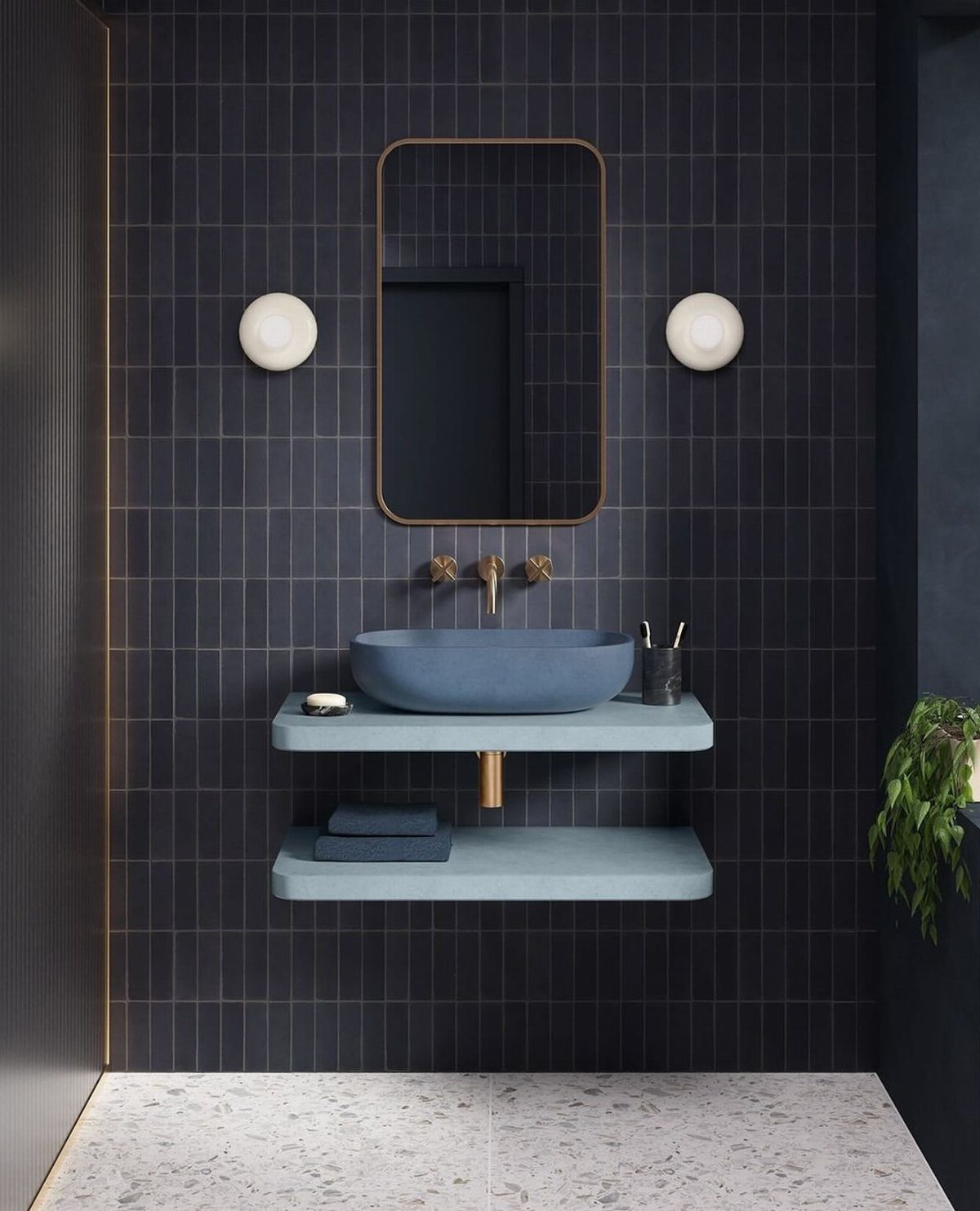
Open shelving in a bathroom lives or dies by what you are willing to leave out.
Two floating wooden shelves, thick enough to look deliberate, hold folded towels and a few glass bottles; everything else belongs in a cabinet or not at all.
The visible grain warms up tile that might otherwise read cold, and the lack of hardware keeps the wall surface clean. Acrylic shelves give the same airy look, though they scratch faster and show water spots more than glass.
Open shelves collect dust and force you to keep towels folded neat. If your household stores half-used shampoo bottles and toothbrushes in view, this idea will punish you.
15. Use Clear Glass Shower Enclosures
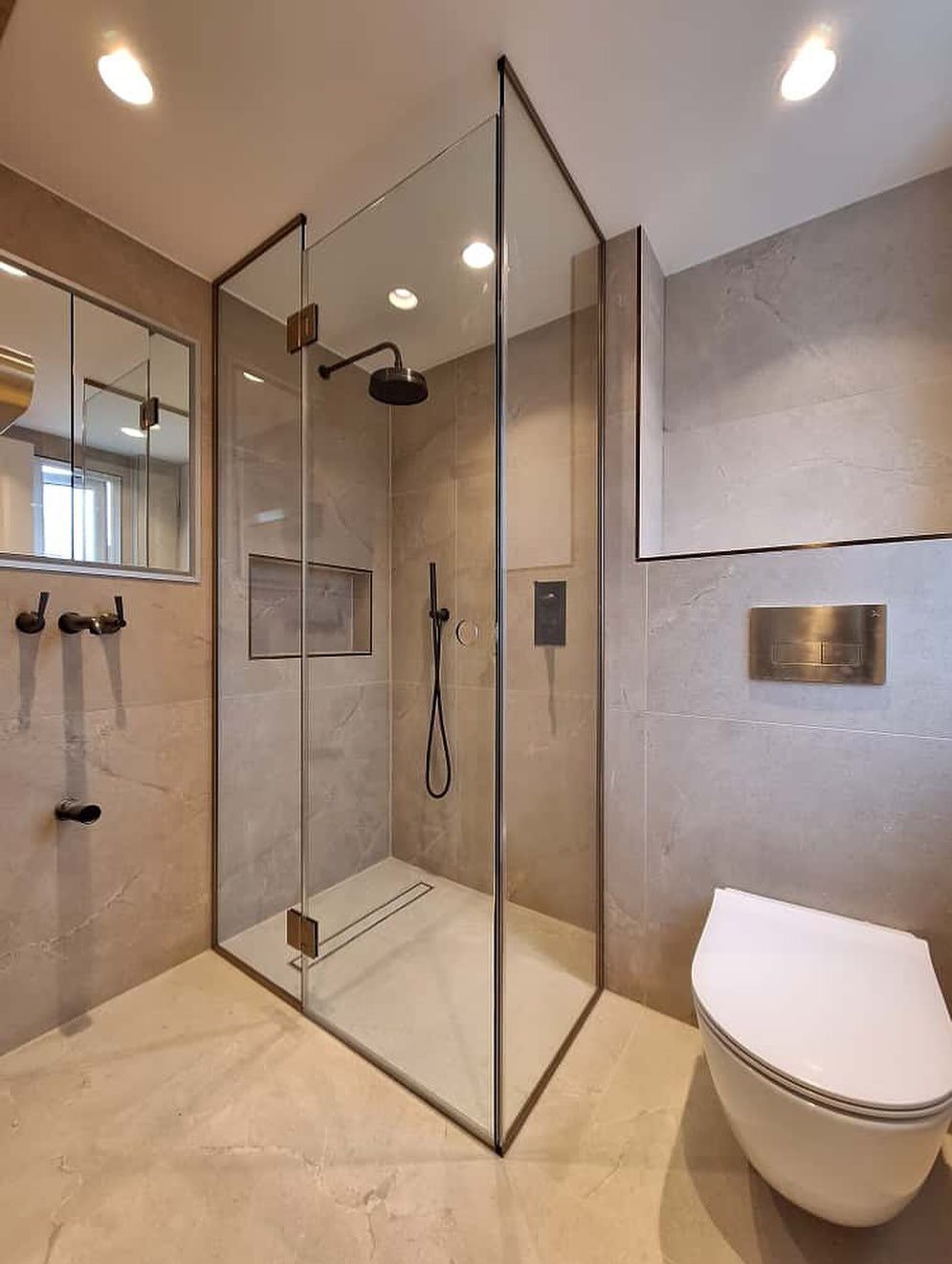
A clear glass shower enclosure does one job that a curtain or frosted panel cannot: it lets the tile work speak for itself.
Black metal framing traces the glass with a sharp graphic line; frameless hardware does the same with less weight if your tile is what you want noticed.
Either way, the enclosure keeps water contained while the eye travels straight through to the wall surface you paid for.
Installation runs higher than a rod and curtain, and the glass wants regular wiping. Skip this if your shower tile is basic white subway; show off something worth seeing.
Benefits of Nature in Design
Natural elements in a bathroom do more than look right. Research ties them to lower stress levels, better mood, and overall well-being.
A space with wood grain under your hand, living plants in your sight line, and light that changes with the day can shift how you feel during an ordinary morning routine.
I would start with one element that matters most to you, maybe the color palette or the plants, and build from there rather than forcing every trend into one room.
Choosing Plants for Bathrooms
Ferns and pothos handle bathroom humidity without fuss. They want the steam from your shower and will grow steadily in low light.
Air plants suit renters or anyone short on counter space because they need no pot and only occasional misting. One oversized plant, maybe a fiddle-leaf fig, shifts the whole mood in a small bathroom where square footage is tight.
I would choose based on your light situation and how much attention you will actually give it.
Importance of Natural Light
A skylight brings in daylight while you shower and keeps the space feeling open even on gray days. Frosted or textured glass windows give you the same benefit with privacy intact.
If you cannot remodel, daylight-simulating LED mirrors are a workaround that mimics natural color temperature. I would put the real thing first where the roof allows it, since no bulb fully matches the shift of actual sun through a morning.
Creating a Spa-Like Atmosphere
A rainfall showerhead changes the sound and feel of washing up. Walking on natural pebble flooring gives your feet something to notice, a texture that pulls in the feel of a riverbed or a shoreline.
Soft neutrals or stone-inspired tile keep the eye calm and continuous. At night, warm bulbs around 2700–3000K keep the room flattering and restful rather than bright and clinical.
I would pick the showerhead first as the element you use every single day.
Frequently Asked Questions
What are some earthy ideas for a bathroom?
Clay, sand, and muted sage green set the tone, paired with natural materials like stone, wood, and living plants. Dustier tones carry that lived-in sunlight quality that actually calms the eye.
What are some natural bathroom ideas?
Start with an earthy palette, layer at least three natural textures, and add greenery that suits your light and attention level. Pothos handles bathroom humidity and neglect; ferns need more light and mist.
What are the most regretted bathroom upgrades?
Open shelving punishes anyone who leaves half-used bottles or toothbrushes in view, and natural stone or cement tiles demand regular sealing in wet areas.
Skip the full material overhaul unless you are doing a gut renovation; one weekend, one fixture, and a fresh coat of low-VOC paint shifts the room without the upkeep burden.
What are the bathroom trends for 2026?
Biophilic design, natural materials, and sustainable choices are where the focus lands. Reclaimed wood, recycled glass tiles, and low-VOC paint in small, poorly ventilated spaces matter more than chasing what is new.
Timeless materials that age well beat trends that require heavy maintenance.





