
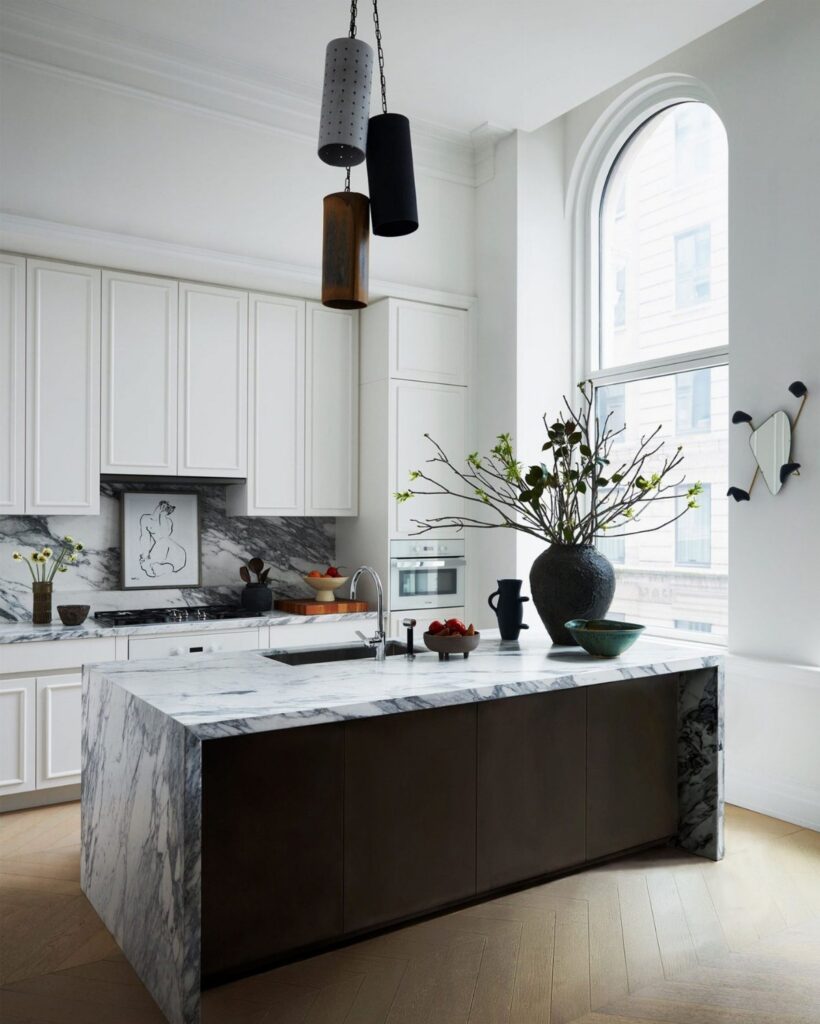
White kitchens run from a Saturday afternoon swapping in peel-and-stick tile to a full stone arch and dramatic range hood, and the right idea depends on whether you rent, own, or simply need the room to feel finished by Sunday night.
Brass hardware against white paint, tubular skylights that install without structural change, and Calcutta marble’s grey veins reading as a second neutral all made the cut.
1. Combine Wood and White Pieces
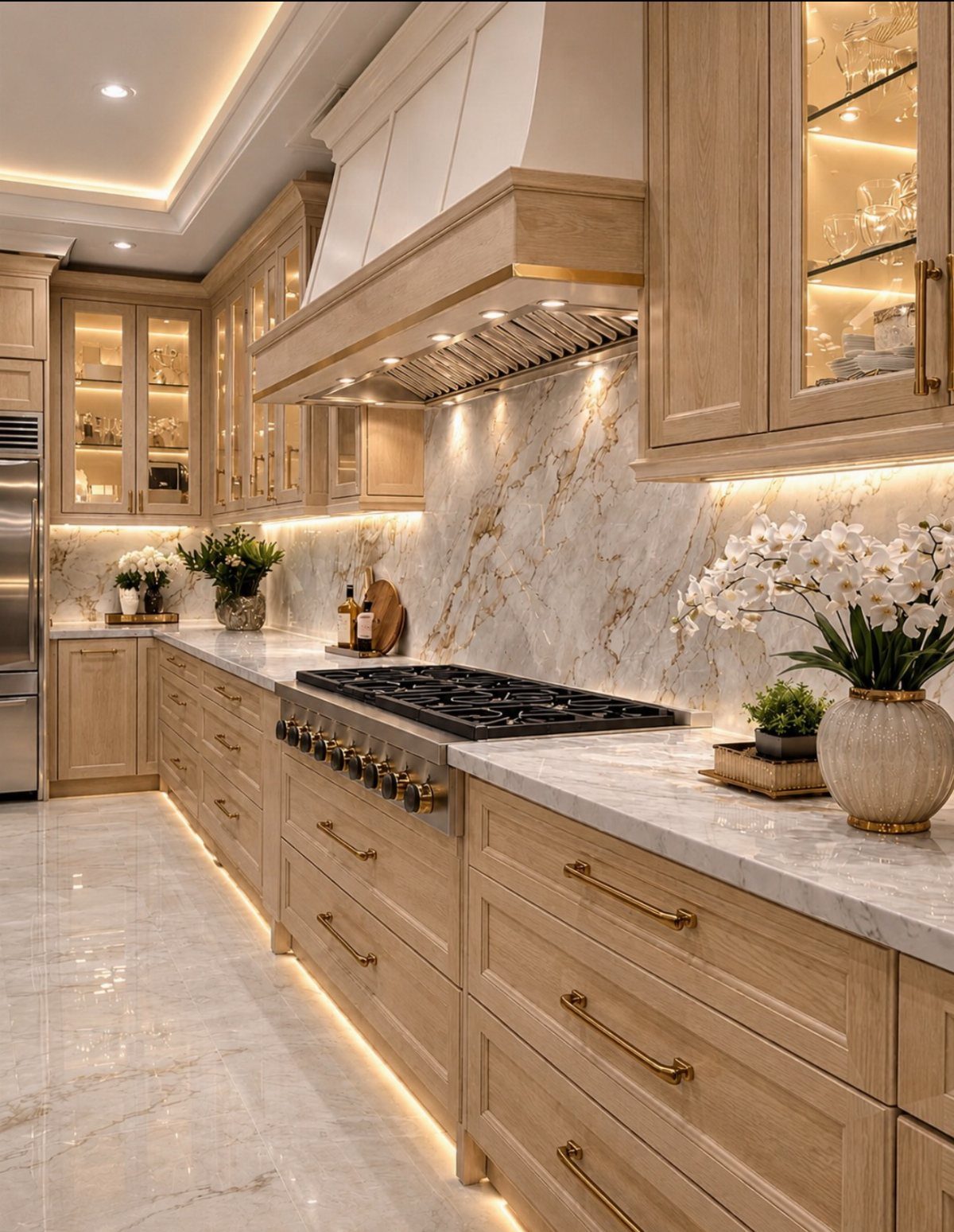
Light wood against white marble stops an all-white kitchen from going flat. One approach is to frame the white with timber: run a light oak base along the bottom cabinets, or add a darker wood island for weight.
A dry sink pulled apart and fitted under a window in pieces adds storage with almost no material cost beyond the hunt and the fitting.
That kind of mixed-wood framing beats a single tone because the grain does what paint cannot.
Best for renters who can swap hardware and surfaces but not the cabinets themselves; if you cannot change the wood, change the hardware to brass and add a timber cutting board that lives on the counter.
2. Mix and Match
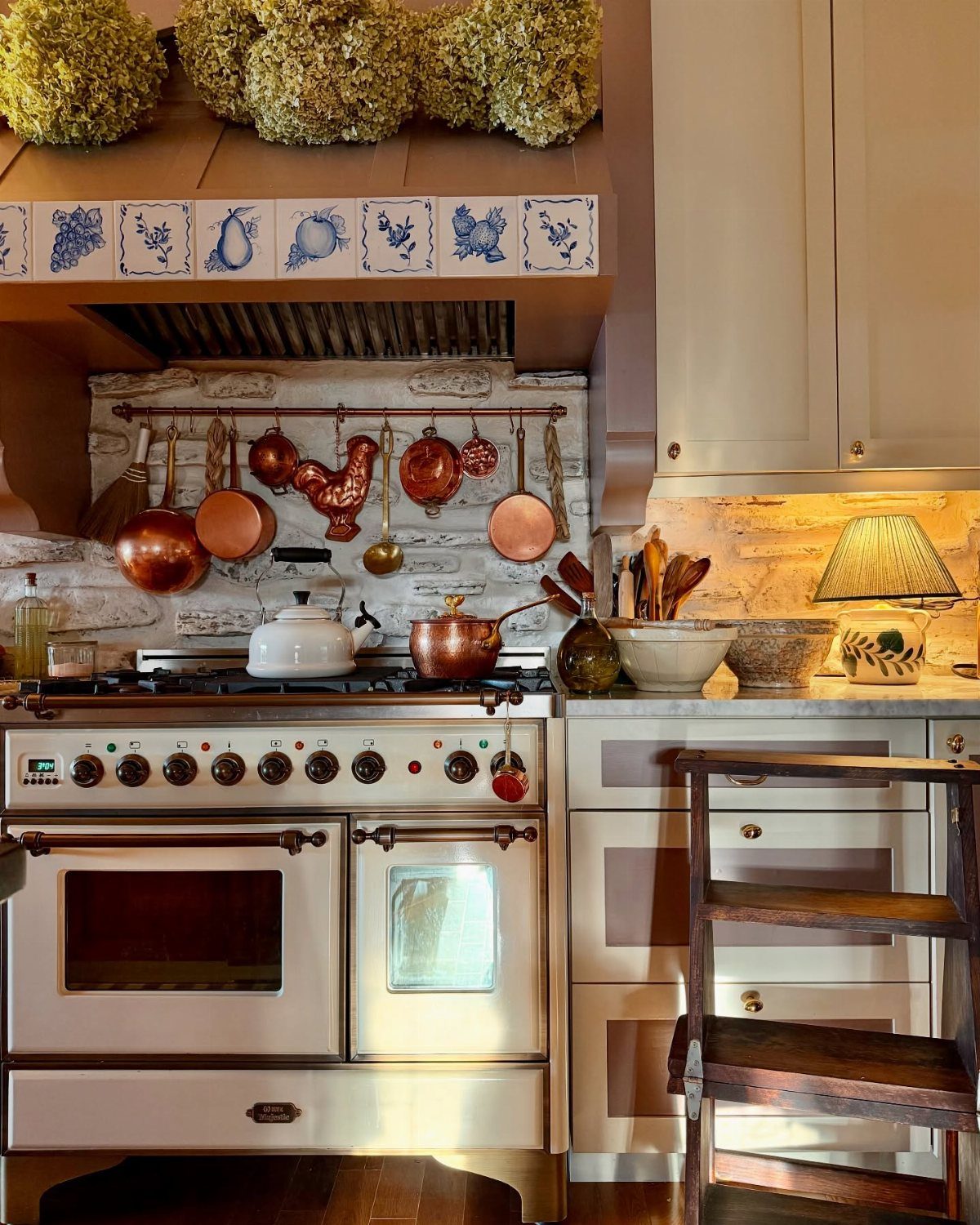
A white kitchen lets you borrow from any era without the clash. Pick one old element and one new, then let white tie them together.
A vintage-style range with copper pots above it reads as collected, not random, when the cabinets around it are clean and modern.
I would start with the thing you already own: a handed-down hutch, a set of ironstone plates, a brass faucet you found at a salvage yard. Build the rest white and plain.
The risk is looking like a showroom, so avoid matching sets. One maker paired a ribbed wood island base with Cristallo quartzite counters; the white surround kept it from feeling like a furniture store display.
Costs run from a few hundred for hardware and paint to thousands for stone, but the method works at either end.
3. Natural Light
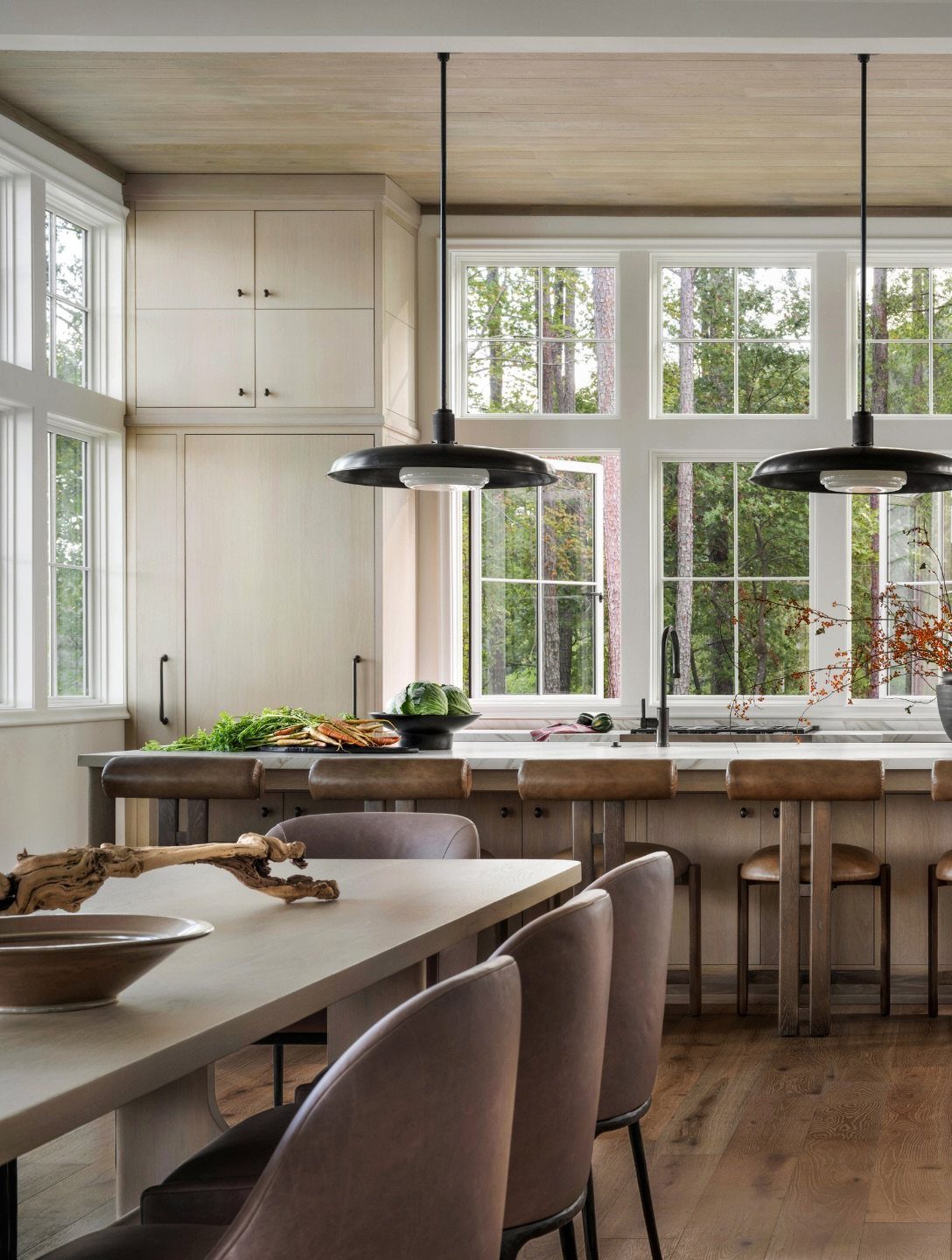
White surfaces bounce light, but only if the light reaches them. Adding a window to the central wall breaks up vertical blankness and warms the room in a way bulbs cannot.
A tubular skylight installs in a day with no structural change, and the cost stays far below a full window replacement.
The placement matters more than the size: aim for where you stand to prep, not the corner you never use. If even that is out, swap to bulbs labeled 2700K or lower; anything cooler turns white cabinets sterile.
Island stools facing a forest view catch light that makes a pale counter glow without any under-cabinet strips. Glare on glossy cabinets in bright rooms pushes me toward matte or satin finishes instead.
4. Use Patterned Floors
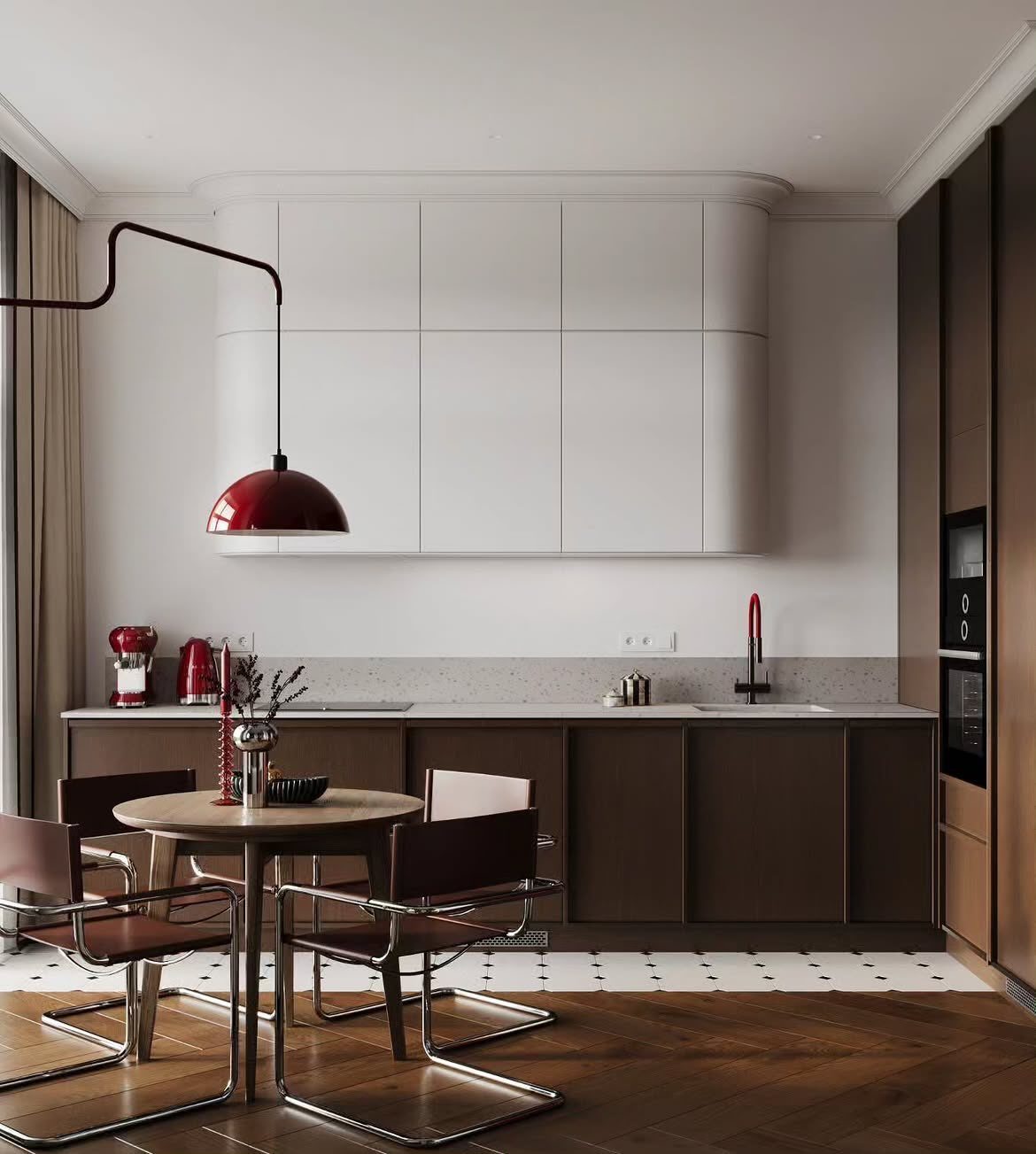
Patterned floors do the work of a rug without the cleaning hassle. In a small kitchen, run the pattern’s lines parallel to the entrance so they pull the eye lengthwise and widen the space.
A herringbone wood transitioning to white tile does this naturally; so does a painted floor in a simple checkerboard or stripe.
Peel-and-stick tiles take a Saturday to lay and beat most flooring on price, though natural stone like Crema limestone costs more and ages better. I would not pattern the floor and the backsplash both; one statement is enough.
This suits galley kitchens and open plans where the floor is visible from the next room. If your cabinets are already busy with hardware or open shelving, keep the floor quiet.
5. White Cabinets with Dramatic Black Countertops
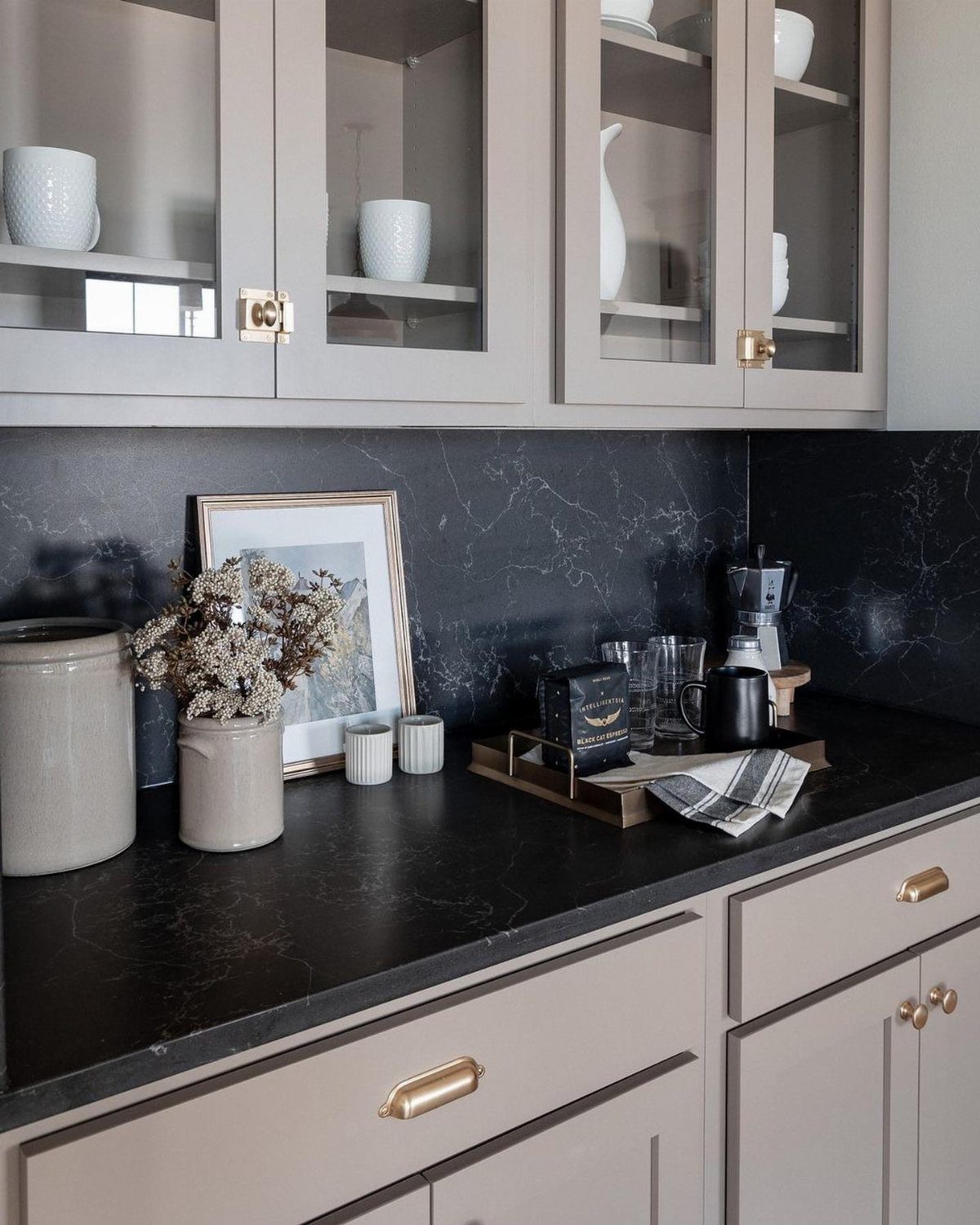
Black countertops against white cabinets read as intentional, not accidental.
The veining matters more than the color: a stone with white threads through the black, like Vanilla Noir, keeps the two surfaces in conversation instead of shouting across a hard line.
Brass or gold hardware warms the pairing; matte black can tip it toward a commercial kitchen. I would add a Zellige tile backsplash in the same black-and-white scheme; the texture keeps it from feeling like a period reproduction.
The cost runs standard for quartzite or granite; the drama comes free. Not for small, dark kitchens, where the black can swallow the light you have.
In that case, reverse it: black lowers, white uppers, and the ceiling stays high.
6. Use Open Shelving
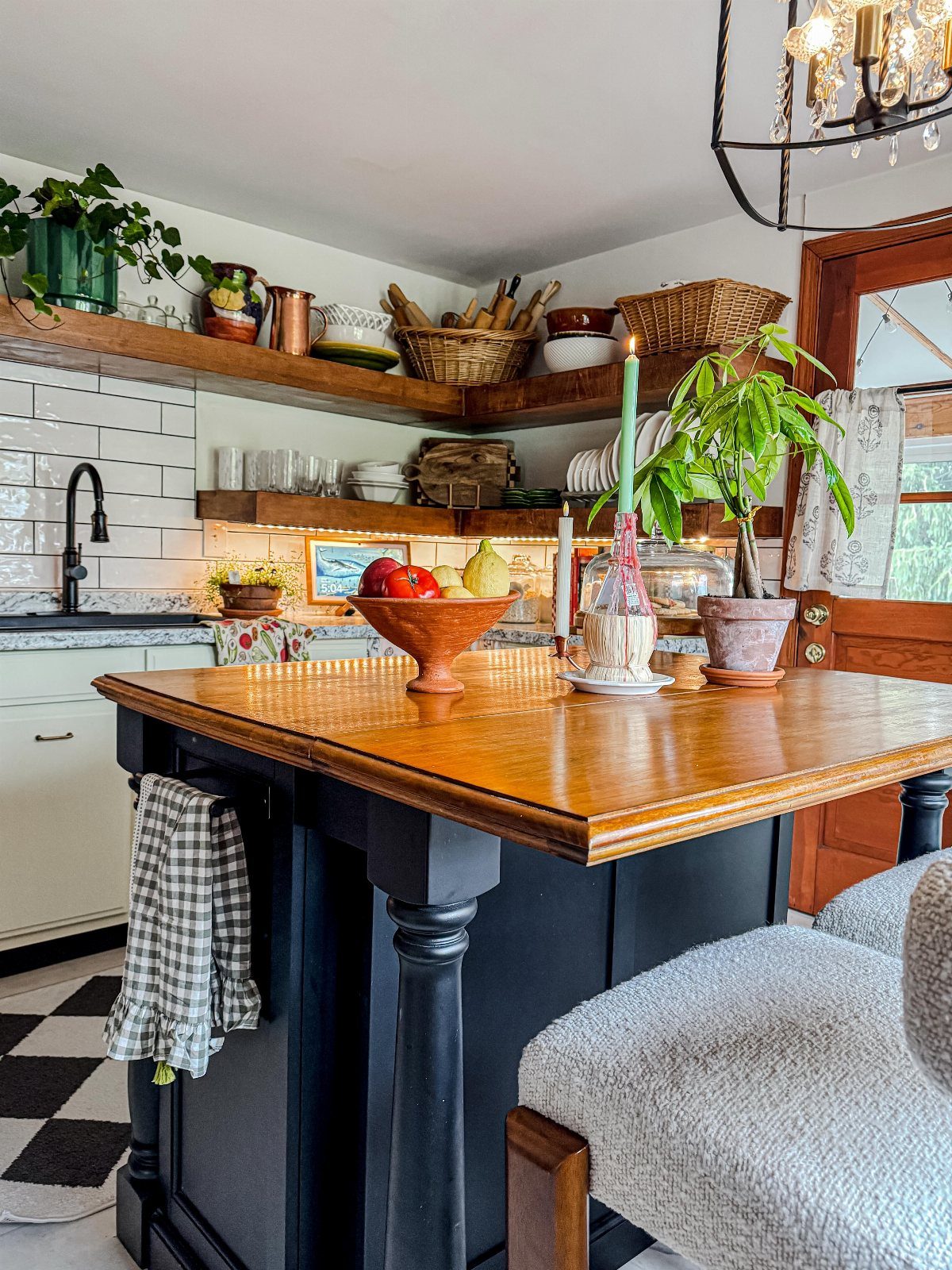
Open shelving replaces upper cabinets with something you can change in an afternoon. Brackets and lumber for a single wall cost less than a dinner out; the skill is in what you put there.
Baskets hide what you use daily, bowls and plants fill the middle shelves, and the top row stays empty for breathing room.
I would not do this on a wall above the stove unless you clean grease weekly; coffee and wine bar areas are safer bets.
The wood tone should relate to something else in the room, a floor or an island top, or the shelves float untethered.
A maker used floating white shelves against white tile to let the dishes provide the color, which works until you own mismatched mugs. Then oak or walnut shelves become the better frame.
7. Layer Various Neutral Hues
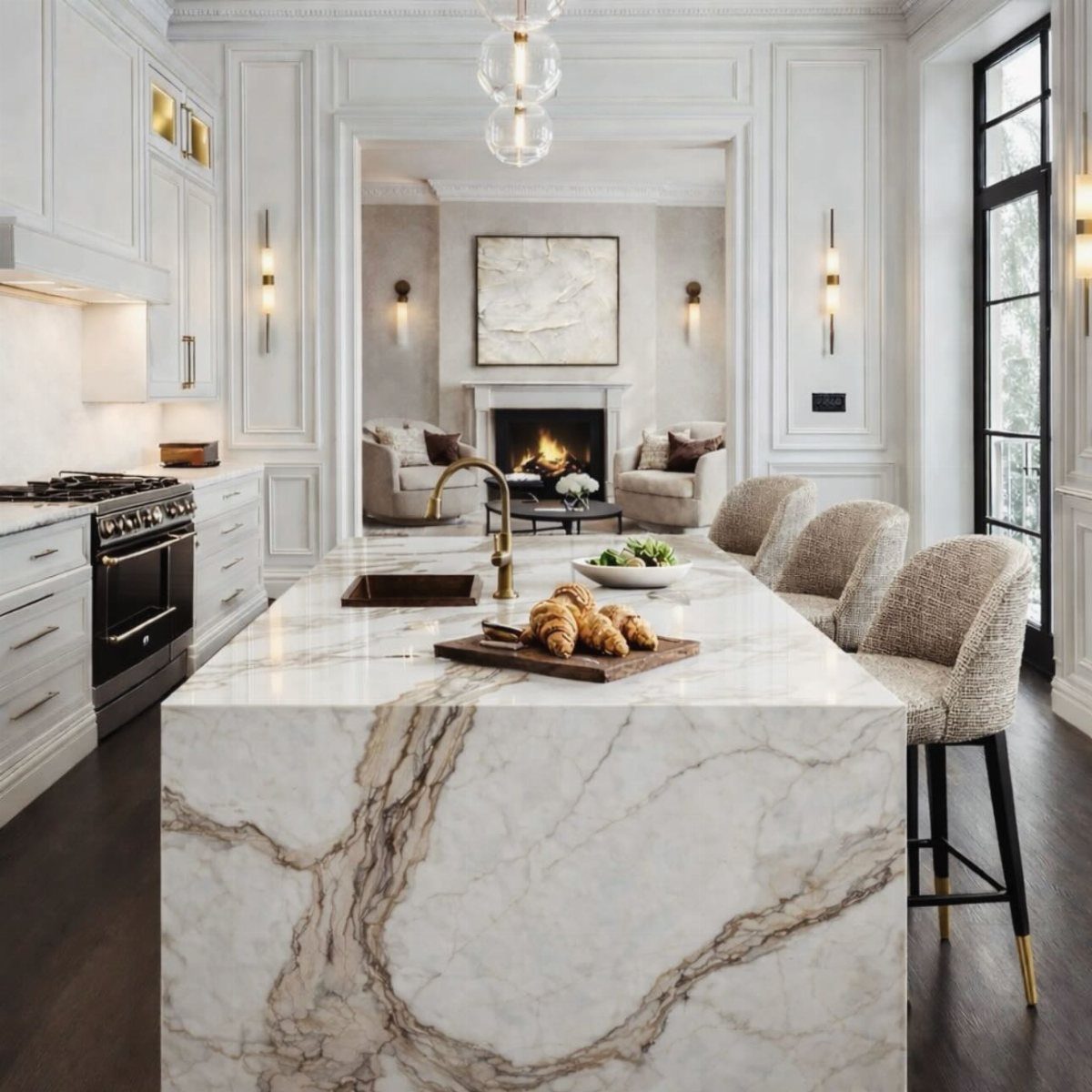
A single shade of white can flatten a kitchen faster than you’d expect. The fix is layering: pairing a warmer cream on walls with a crisper white on cabinets, or letting Calcutta marble’s grey veins read as another neutral entirely.
In one Florida cottage, whitewashed plywood floors sit a step darker than the painted walls, and burlap cabinet skirts add texture that keeps the palette from feeling sterile.
Venetian plaster that picks up gold at certain hours of the day does similar work without adding a second material.
Finishes need enough difference to notice, not enough to clash. Start with your fixed element, usually the counter, and build outward.
8. Add Feature Lighting
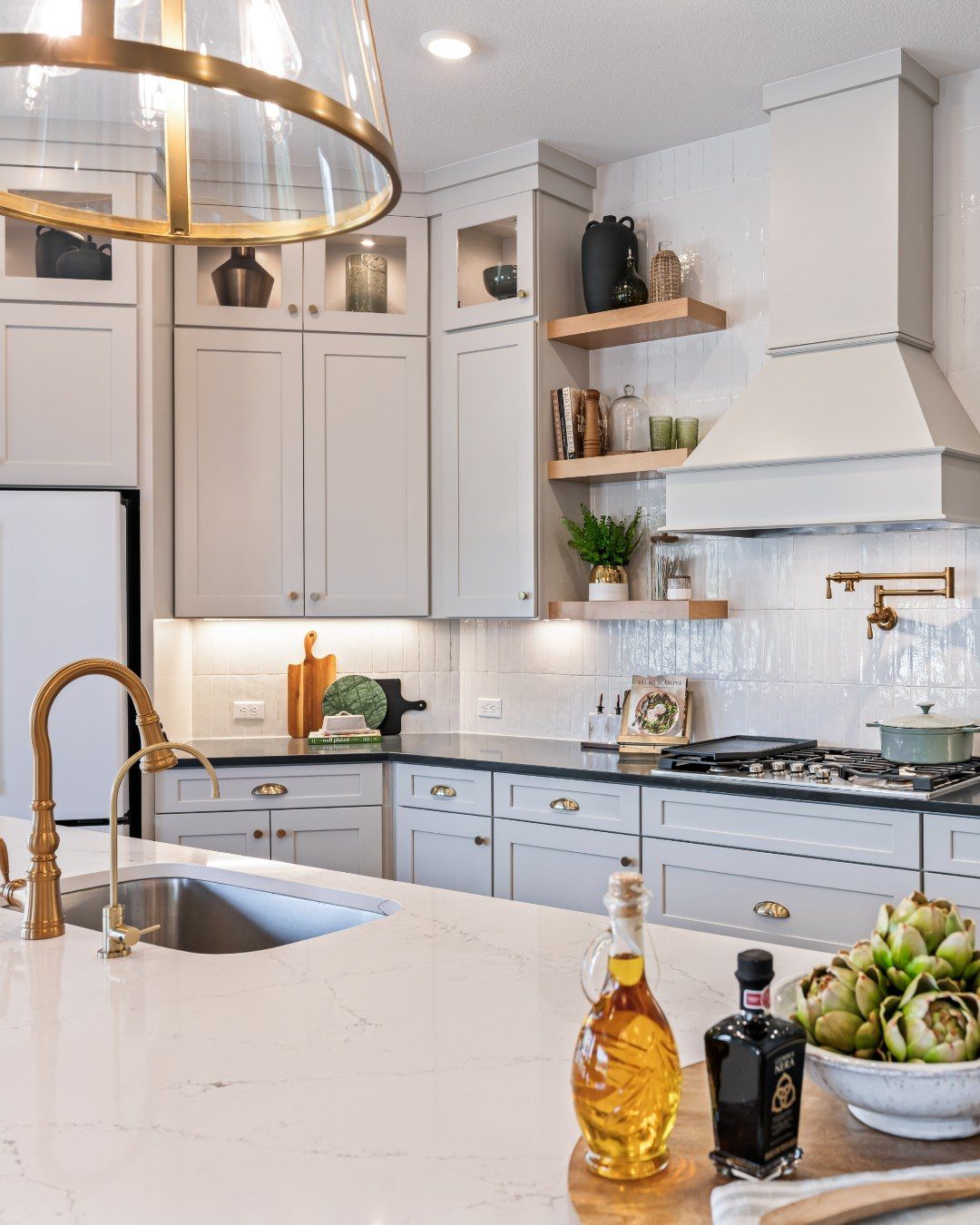
White kitchens need light that does more than illuminate. A single brass pendant over an island, scaled large enough to hold its own against marble and black counters, becomes the room’s jewelry.
The fixture matters more than the bulb, though if natural light is scarce, tubular skylights install without cutting a full window. Where that’s not possible, warm bulbs beat daylight-temperature ones; cool light against white surfaces reads institutional fast.
One Manhattan Beach kitchen pairs its pendants with backless stools so sightlines stay open. The lighting frames the view as much as the task.
9. Use Vintage-Inspired Hardware
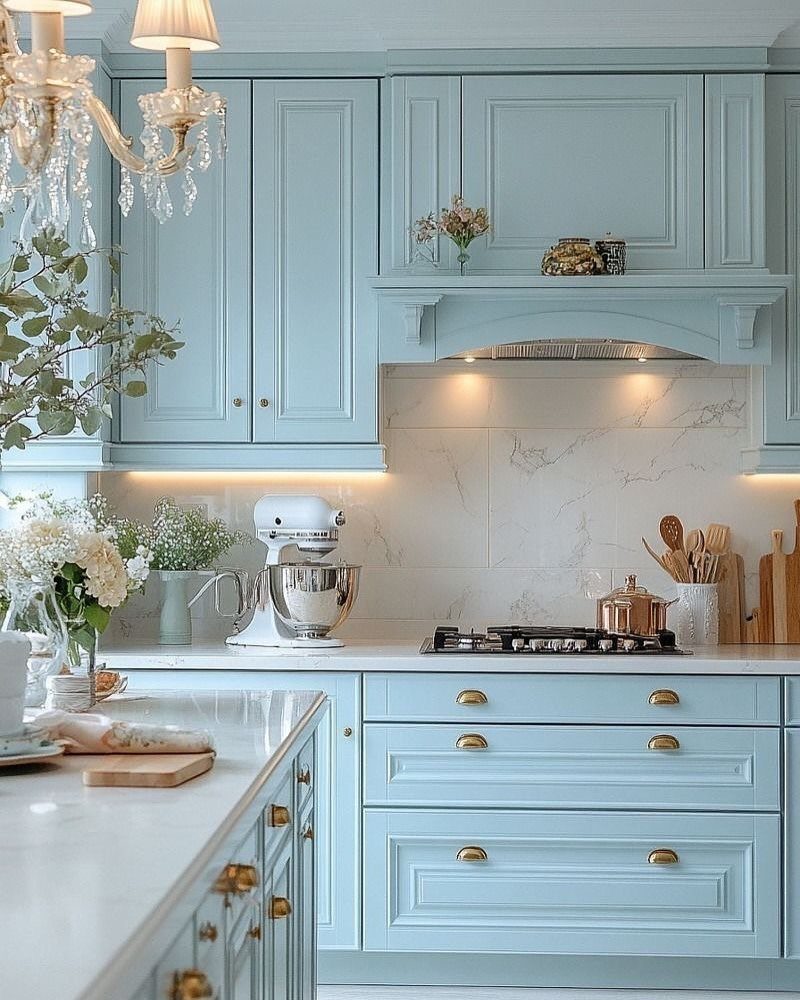
Standard hardware makes standard cabinets. Oil-rubbed bronze or iron pulls, especially bin-style for drawers, add the slight irregularity that reads as collected rather than installed.
Surface-mount butterfly hinges, left exposed, do the same on doors. The vintage look works because it introduces shadow and weight; white cabinetry alone can look too smooth, too new, too much like a showroom.
Rejuvenation and Van Dyke’s both carry hinges and pulls in this vein, though salvage yards often beat their prices. Mix finishes within the same family, brass with aged brass, rather than across it.
10. Use Colorful Backsplash Tile
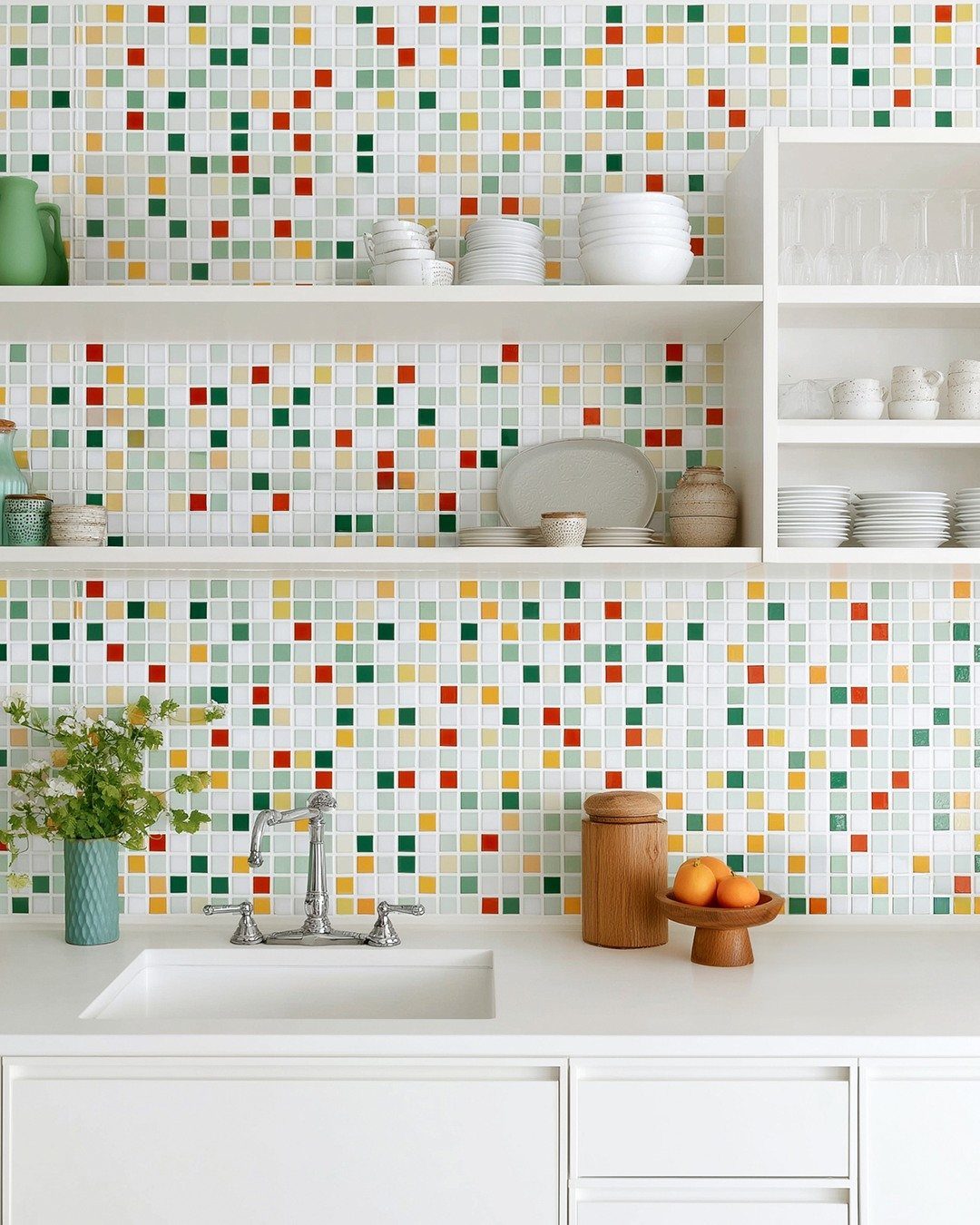
A white kitchen offers the perfect ground for a backsplash that actually dares. Small square tiles in saturated color, set in a running pattern, pull the eye straight to the cooking wall without overwhelming the room.
The rest of the kitchen stays quiet: white counters, white open shelving, white dishes, so the tile does not compete.
Reclaimed wood run to the ceiling works too, though it reads rustic where tile reads playful. Either way, the backsplash is where a white kitchen can afford its one bold move.
Keep the grout neutral so the color stays the story.
11. Go Old-World
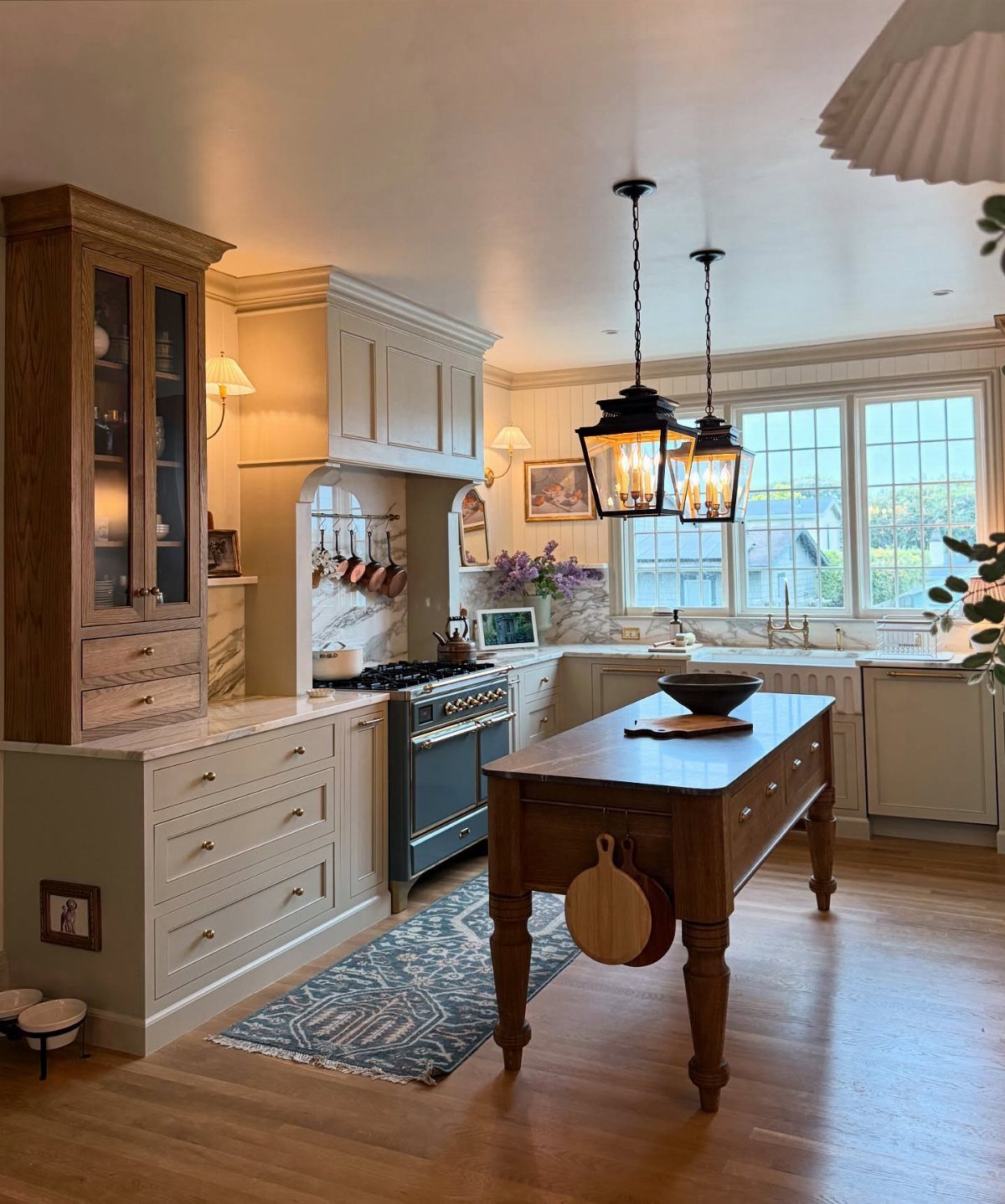
Stone and brass age better than almost anything. A stone arch framing the range, with lantern pendants hung low enough to pool light, gives a kitchen the sense that it was built around cooking rather than fitted for it.
White subway tile keeps the backdrop simple; one painted cupboard in green adds depth without starting a palette war.
The Connecticut kitchen that pulled this off used a marble-topped tavern island long enough to seat six, the stone arch as its architectural anchor. Wood lower cabinets with white uppers bridge old and new without committing fully to either.
12. Cozy Cottage Kitchen
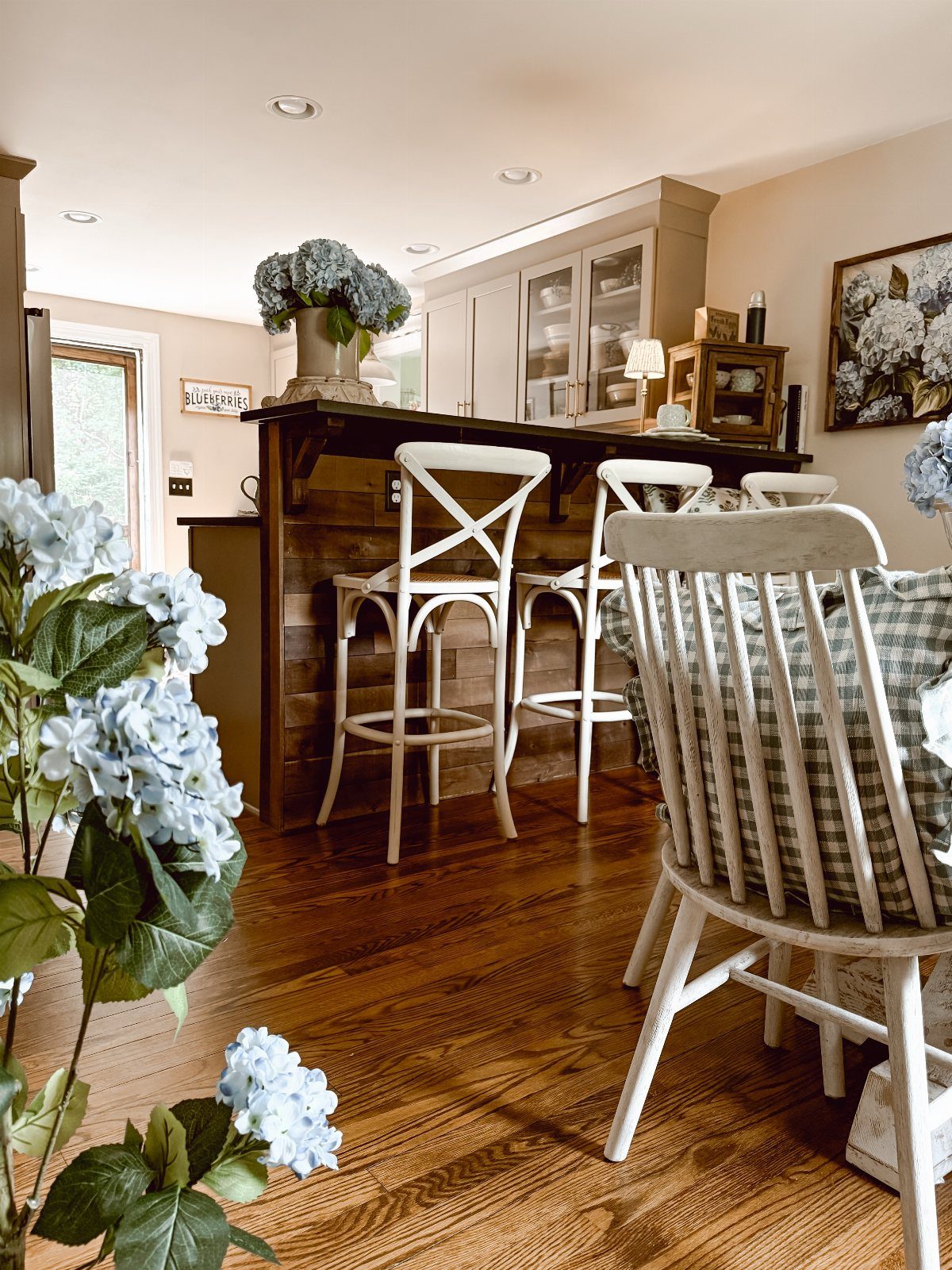
A blue ceiling in a white kitchen sounds like a risk until you see it against hand-painted tile and dark wood floors.
The white here is not the star; it is the fresh note that keeps the room from going too heavy. Benjamin Moore’s Silvery Blue, carried overhead, reads as sky rather than statement.
This works best where the architecture already has something to say: original windows, worn floors, a breakfast bar with X-back stools that have seen use. The white you choose should match the trim, not fight it.
In a 1920s cottage, that usually means something with enough warmth to live with wood.
13. White Kitchen Cupboards with Stainless Steel
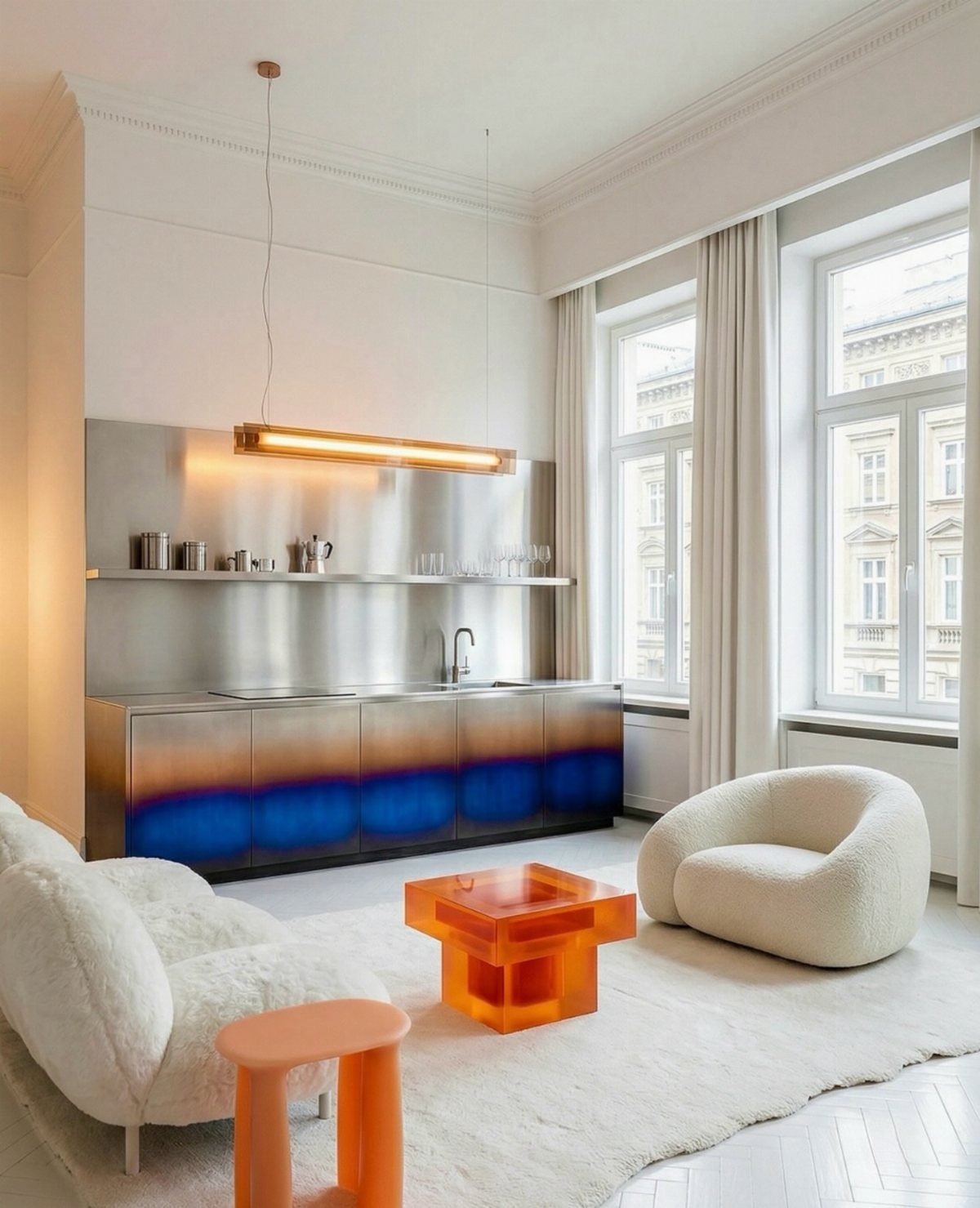
Stainless steel against white cabinets reads clinical until you add something warm beside it. A wood island or even a few cutting boards left out changes the whole temperature.
A custom hood in brushed steel, like one a designer had built by GrayLeaf Studio for an Arizona cottage, can become the room’s center of gravity. The maker noted it drew the eye immediately in that white-oak and Calacatta space.
For renters, matching appliances already does half the work. If the finish feels too cold, wood open shelves or a rift-cut oak island bridge the gap without softening the modern edge too far.
14. Install White Kitchen Countertops
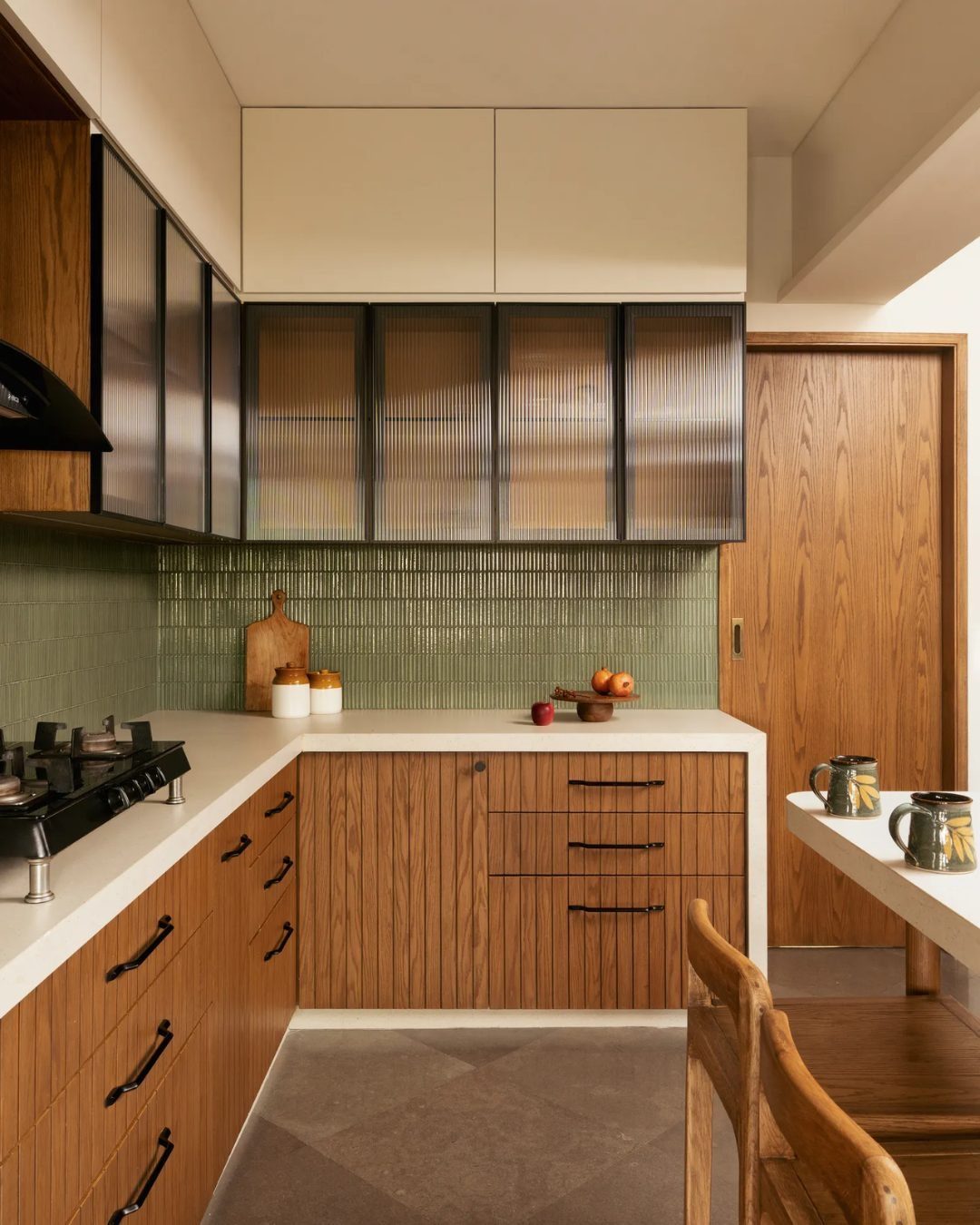
Plain white quartz risks looking like a lab counter. Soft veining, warm beige backgrounds, or faint gray movement keeps the surface in the white family while giving your eye somewhere to land.
White countertops paired with white cabinets go flat when the veining fights rather than flows, so I look for slabs where the movement carries the eye instead of stopping it.
When the cabinet and counter are the same tone, a quieter slab or one with barely-there brown veins works better than high-contrast marble patterns.
Quartz with a cream base and soft brown or gray veins runs warmer than stark white. That warmth matters in a room that can read sterile under overhead lighting.
15. Incorporate Geometric Patterns
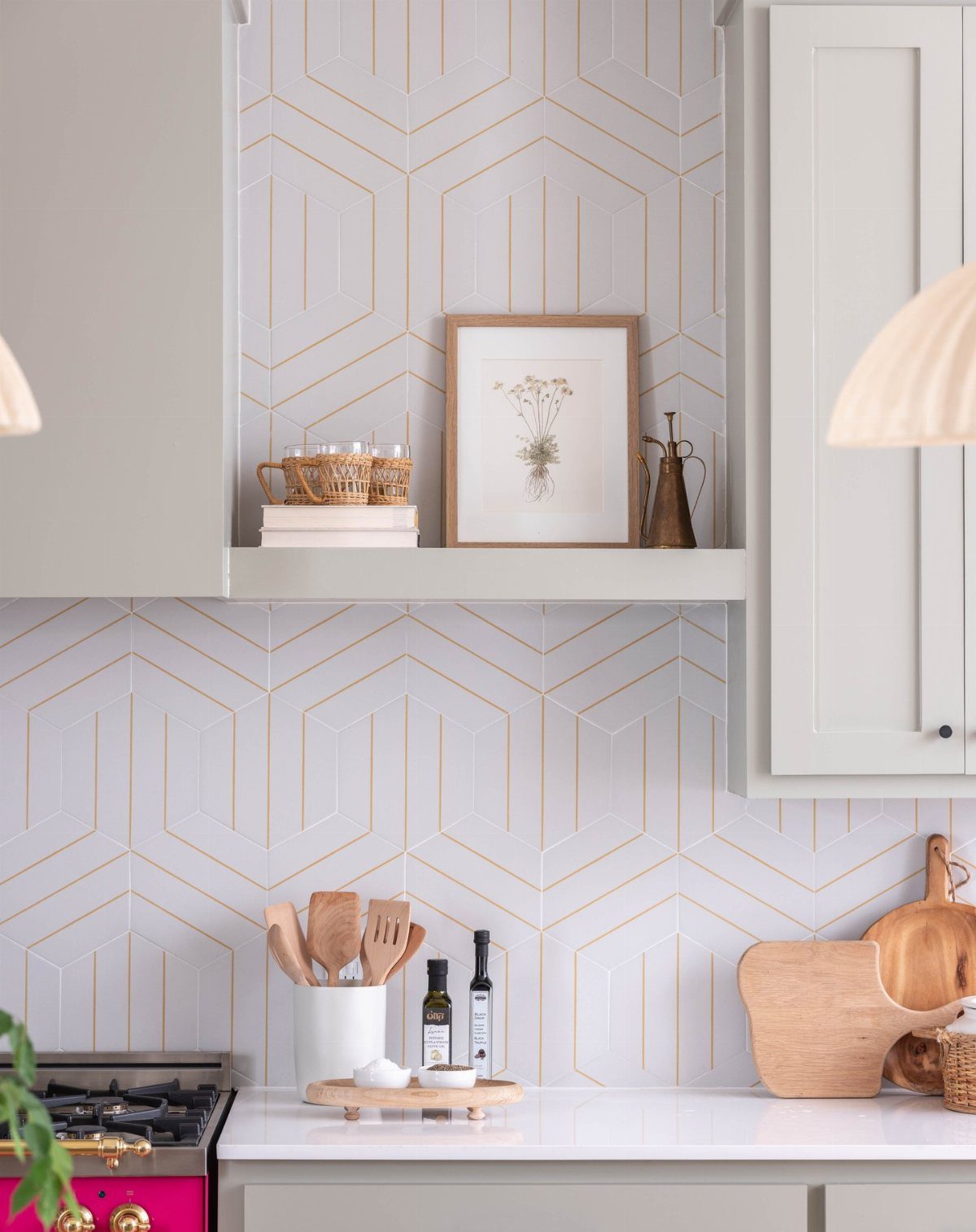
A geometric backsplash does the pattern work so the rest of the kitchen can stay quiet. Light gray tiles set in a gold outline, arranged in a repeating angular shape, add depth without demanding a second color anywhere else.
Wood shelves above keep the geometry from feeling too precise. The natural grain loosens what the tile tightens.
For a weekend project, peel-and-stick geometric tile exists now in actual convincing finishes, though real ceramic in a simple herringbone or hex pays off if you rent long-term.
Either way, the pattern does best when it stops at eye level; running it to the ceiling turns texture into noise.
16. Dramatic White Range Hood
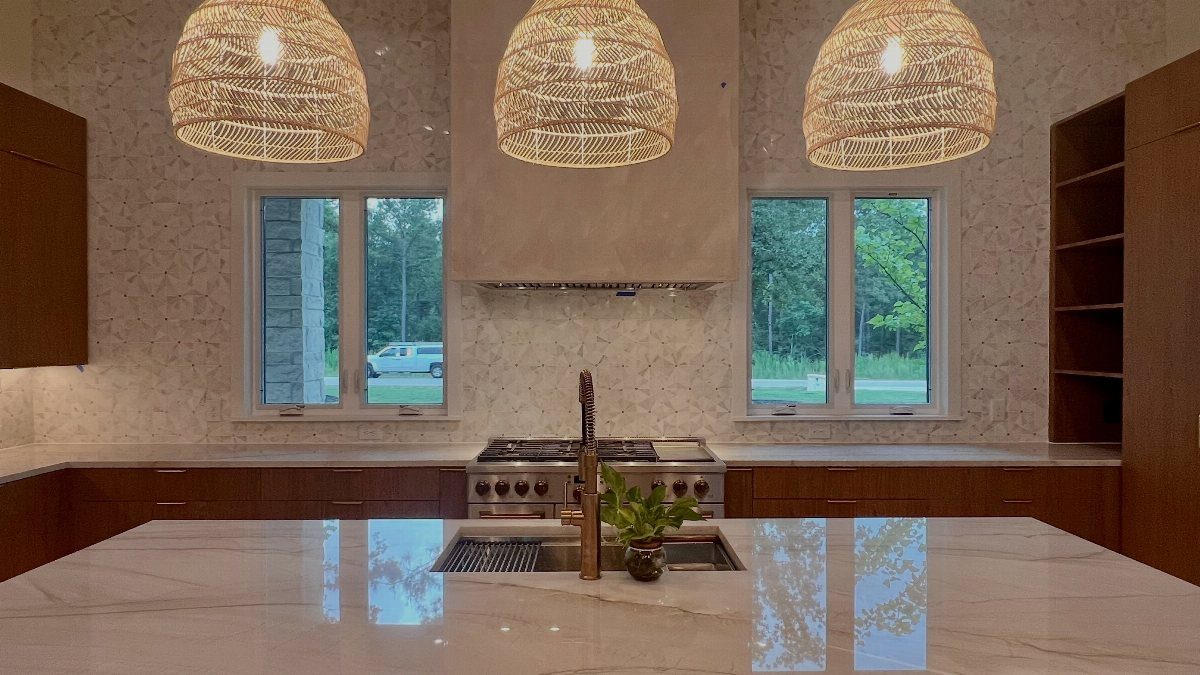
A curved or sculptural hood in matte white draws the eye upward and gives a kitchen its one dramatic moment.
In one renovation, a homeowner paired fresh white cabinets with grey quartz and let the hood’s curve carry all the personality.
Cleaning is the real cost of a dramatic hood, and I plan for it.
Smooth white plaster or painted wood shows grease faster than stainless, so the shape you choose should be one you can wipe down without contorting around corners.
Oversized woven pendants below echo the hood’s scale and keep the room from feeling top-heavy. If your ceiling is low, a slimmer profile in the same material still reads as intentional without eating headroom.
17. Contrasting Blue Kitchen Island
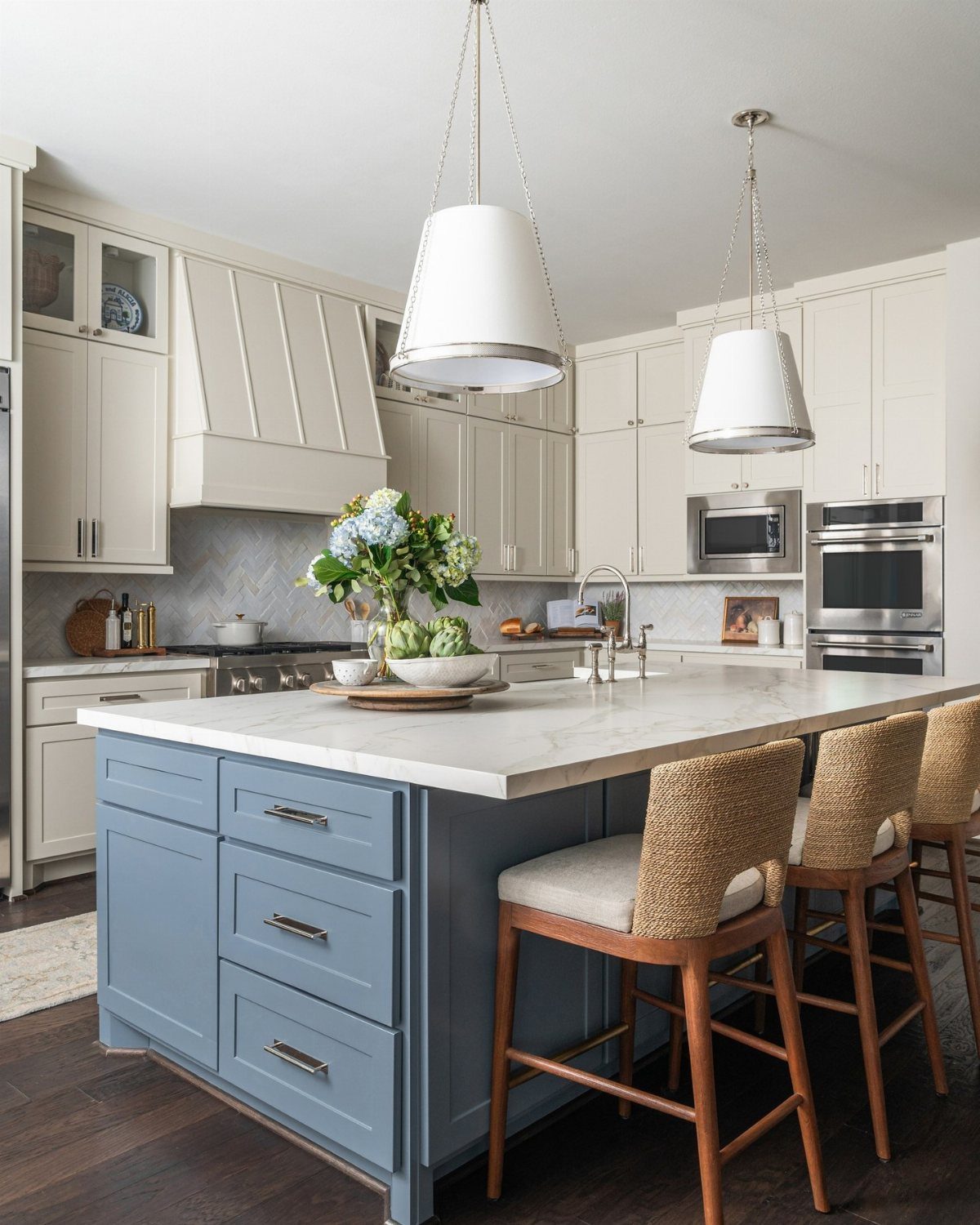
A blue island in a white kitchen gives you one bold move without repainting every cabinet.
A deep, almost navy island base with a white marble top and woven stools keeps the look out of beach-house territory; the marble’s coolness and the seat texture do as much work as the color contrast.
I would check my floor before committing. Warm wood or brick handles a blue island better than cool gray tile, which can leave the room feeling flat.
If your kitchen opens to a living space, carry one blue accent into that room so the island does not float alone.
The trade: a colored island becomes the focal point, which means your other choices stay quiet. No competing pendant drama, no busy rug underneath.
18. Brushed Gold or Brass Fixtures
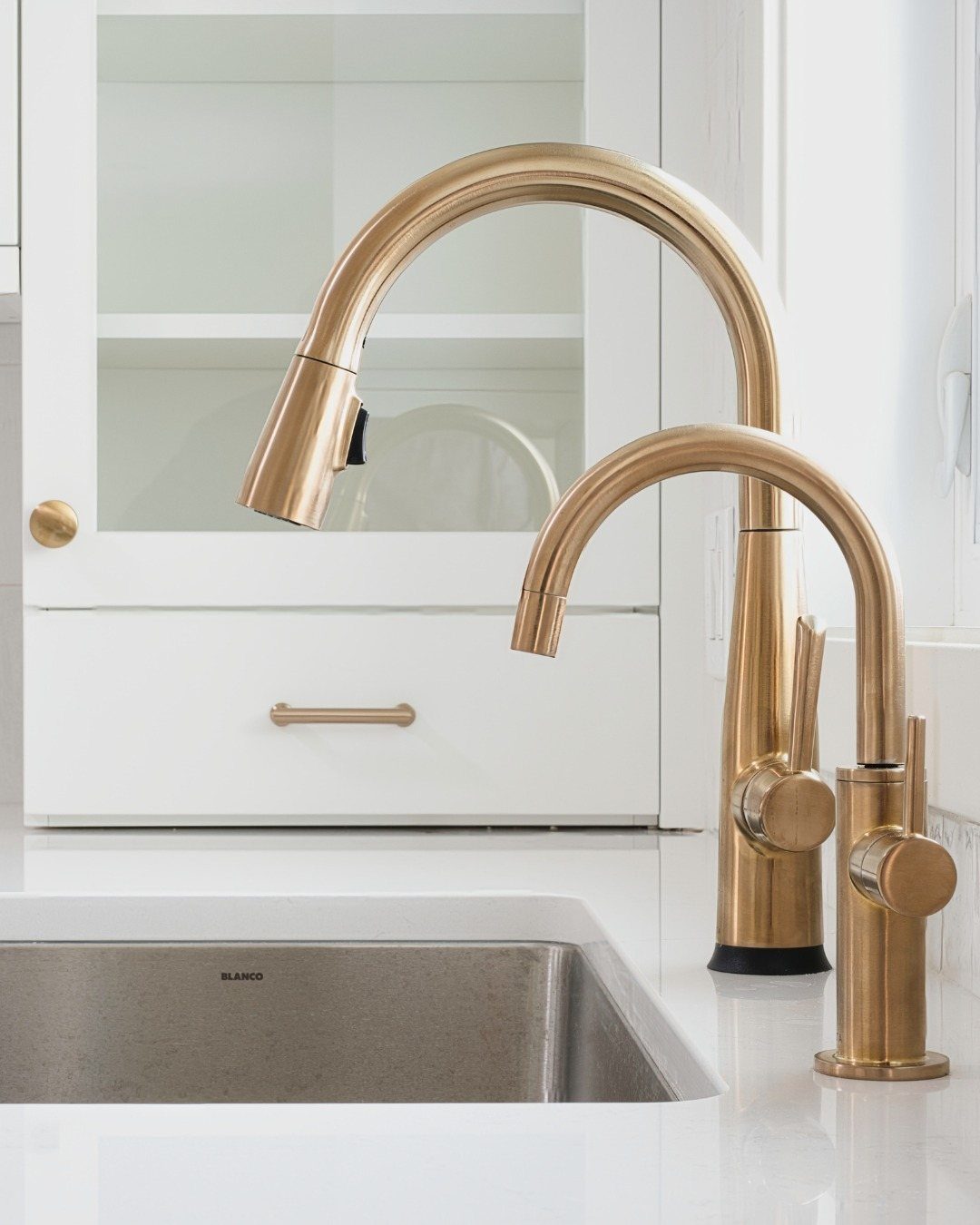
Brushed gold reads warmer than polished chrome and softer than raw brass, which is why it works with white without looking like a hotel lobby.
Brushed gold or brass faucets against white cabinets and counters catch light differently as the day shifts; morning reads buttery, evening turns moodier.
Schoolhouse hardware in satin brass is the reference I keep in mind for small kitchens, since the satin catches fewer fingerprints than a high polish.
Pair it with a honed marble or a matte quartz; glossy counters fight the brushed texture.
This one asks for consistency. If your faucet is gold, your pulls and your pendant trim should follow.
Mixed metals can work, but not by accident, and this particular combination needs the discipline to look intentional rather than inherited.
Avoiding a Cold Look
Natural materials keep an all-white kitchen from feeling like a showroom. Wood cutting boards, cane stools, or a woven runner add warmth without breaking the palette.
I like brass hardware against white paint; it picks up the tone of faucets and appliances without matching too exactly. Seating matters more than people expect.
A pair of wooden stools at the island gives someone a place to land, and the grain keeps the room from reading as sterile. Texture does the work that color usually does.
Choosing the Right White
White paint is not one color. Chantilly Lace by Benjamin Moore reads crisp and bright, almost coastal, with enough sheen to bounce light around a room that started out brown and dim.
Cooler whites like it feel clean and open. Warmer whites, the ones with a drop of yellow or red, shrink a space visually but make it feel lived-in.
The same cabinet painted in two different whites can look like entirely different kitchens. Test boards at different times of day, not just under the showroom fluorescents.
A good general rule of thumb is that cooler whites will give your space a crisp, airy look, while warmer whites feel calm and cozy. White walls and cabinetry can also help a small kitchen feel larger!
Importance of Storage Design
High-gloss white cabinets reflect light and hide almost nothing. Every fingerprint, every cereal box left on the counter, shows up immediately.
Storage has to do more than hold things; it has to make them vanish.
Drawers deep enough for pots, pull-outs that swallow the mixer and the blender, a toe-kick drawer for trays: these keep the surfaces clear that the eye lands on first.
I would put the daily items behind doors and leave open only what is genuinely good-looking. The clean look depends on what you do not see.
Lighting Considerations
White surfaces flatten under bad light. Tubular skylights install in a morning and throw daylight onto a backsplash that would otherwise go dim by afternoon.
When artificial light is the only option, bulbs that read soft and warm keep the cabinets from looking gray and clinical. Avoid cool white bulbs; they fight the paint rather than support it.
Layer the sources so the island gets task light and the perimeter gets ambient, and nothing sits in shadow.
Frequently Asked Questions
What color goes well with a white kitchen?
Black, gray, and natural wood are the most reliable partners for white cabinets. I would start with wood if the kitchen feels cold: a light oak base on lower cabinets or a darker island adds grain that paint cannot fake.
For contrast, black countertops with white threading through the stone keep the two surfaces talking rather than shouting. Brass hardware warms either pairing without matching too exactly.
Is a white kitchen still in style?
Yes. White kitchens have outlasted enough trend cycles to count as a baseline rather than a passing look.
The light color opens small rooms and bounces what natural light there is, which matters in apartments and older houses where windows are fixed.
The trick now is keeping it from looking like a showroom display, not whether to do it at all.
What are some good decor ideas for a white kitchen?
Start with hardware that reads collected rather than installed: oil-rubbed bronze bin pulls or exposed butterfly hinges add shadow and irregularity.
A single bold backsplash in saturated color, small square tiles in a running pattern, gives the room its one daring move while everything else stays quiet.





