
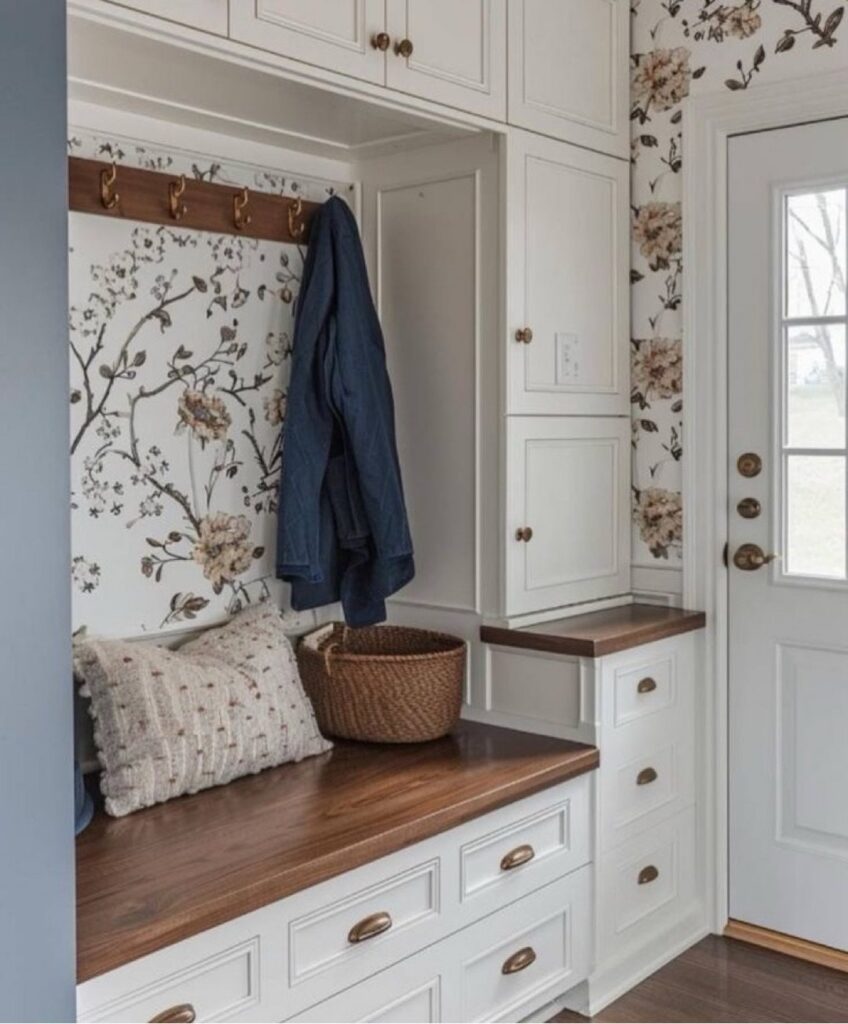
These ideas run from a basket of dried stems you already own to a wooden bench you can knock together in an afternoon, so the deciding factor is how permanent your space is and whether your landlord returns calls.
1. Wall Hooks
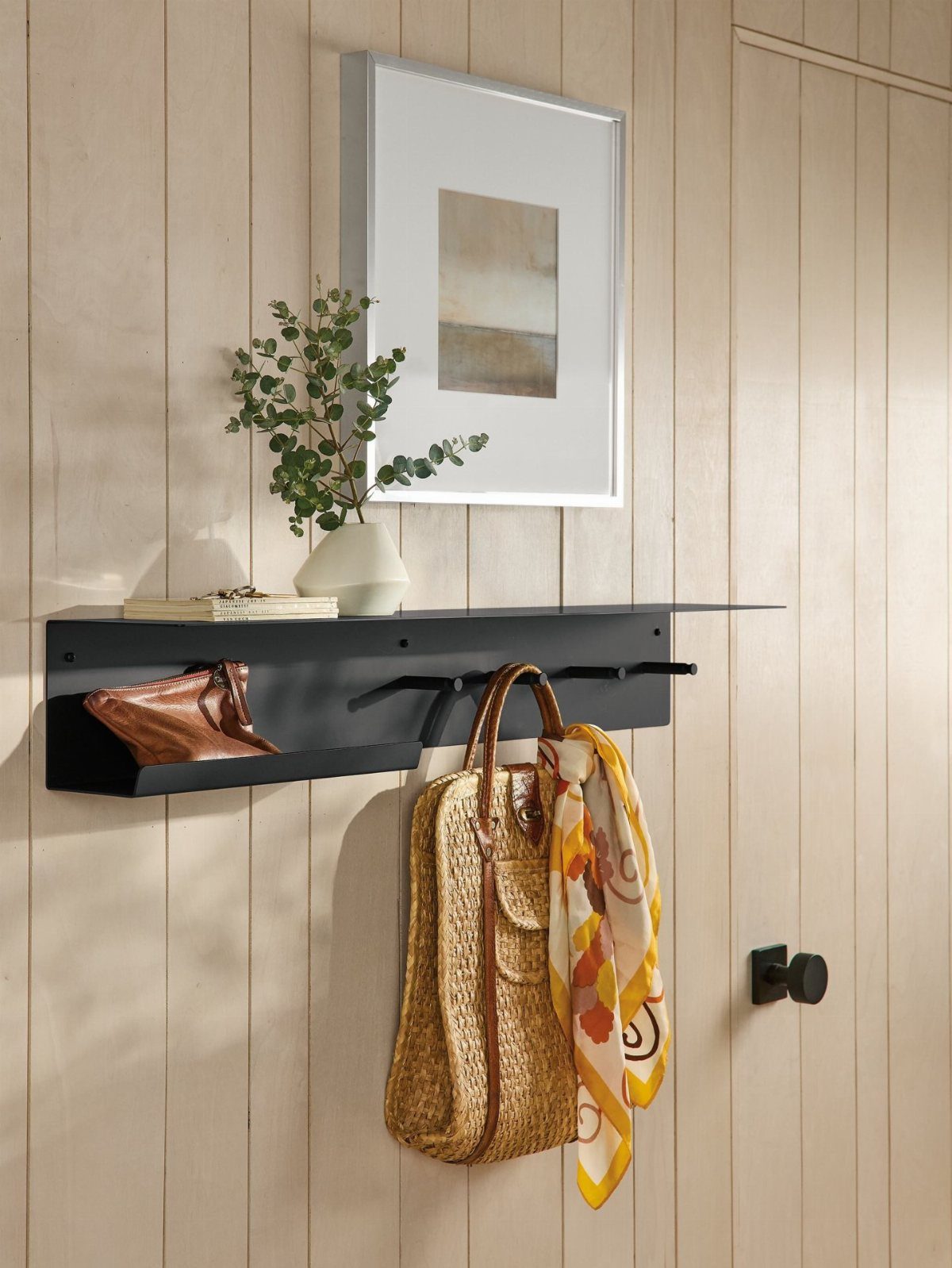
A row of wall hooks by the door turns chaos into order fast enough that you still have the afternoon free.
Mounting hooks at two heights, one for coats and one for bags and leashes, keeps the floor clear all day.
A shelf above the hooks holds a small vase or a book, which keeps the wall from reading as pure hardware. For renters, a French cleat or heavy-duty Command strips rated for 15 lb or more spare the drywall.
Integrated ledges on wall hooks are worth the extra cost if your entry is narrow.
2. Reclaimed Wood
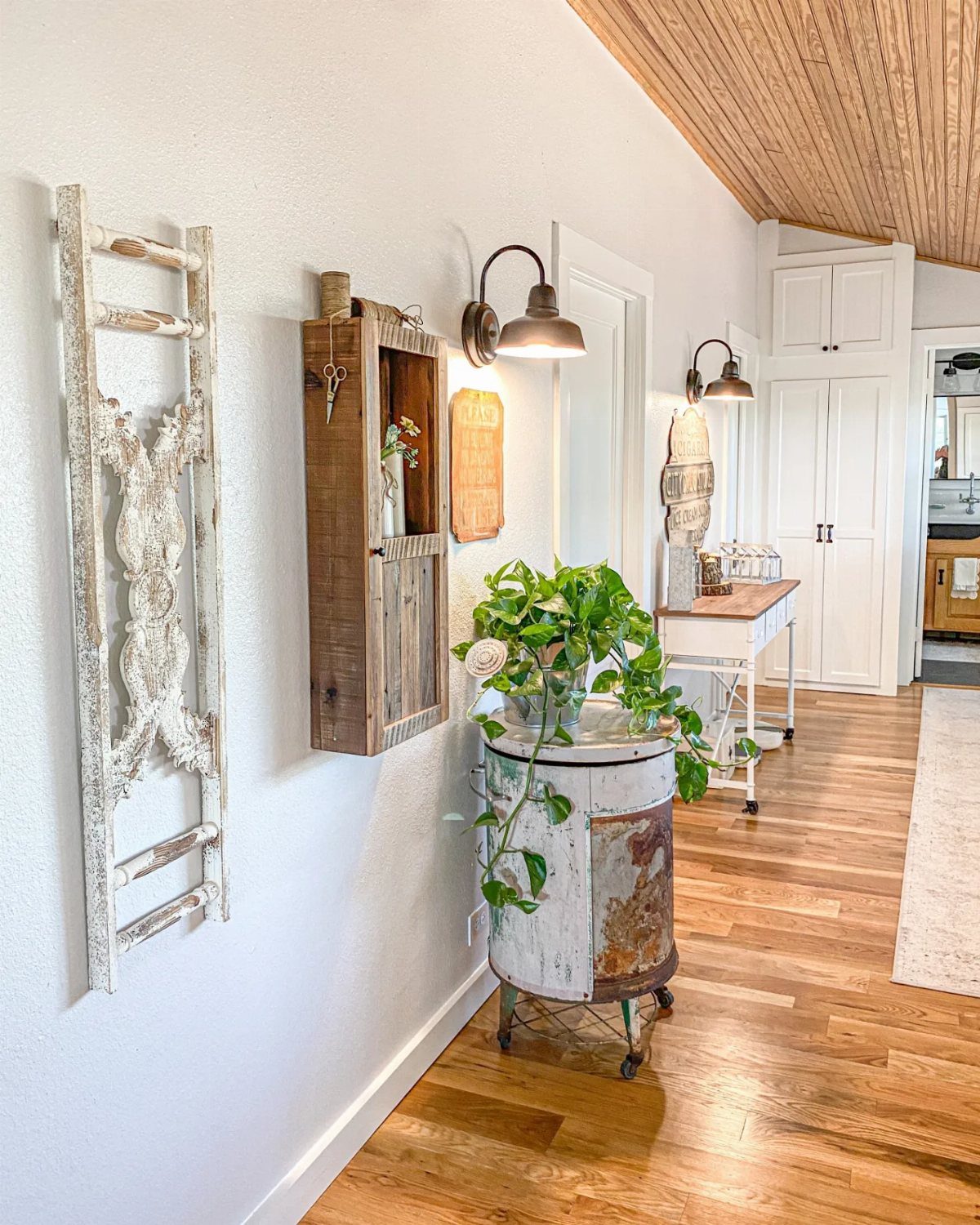
Reclaimed wood carries marks no factory finish can copy: nail holes, saw scars, grain opened by decades of weather. That history is what gives a farmhouse entry its weight, and a single piece is often enough.
Barn siding builds wall cabinets with a surface that only gets better as it ages. A smaller piece like this is cheap at most salvage shops, less if you have the tools to clean and seal it yourself.
I would seal it; raw barn wood sheds splinters and dust for months.
3. Natural Textures
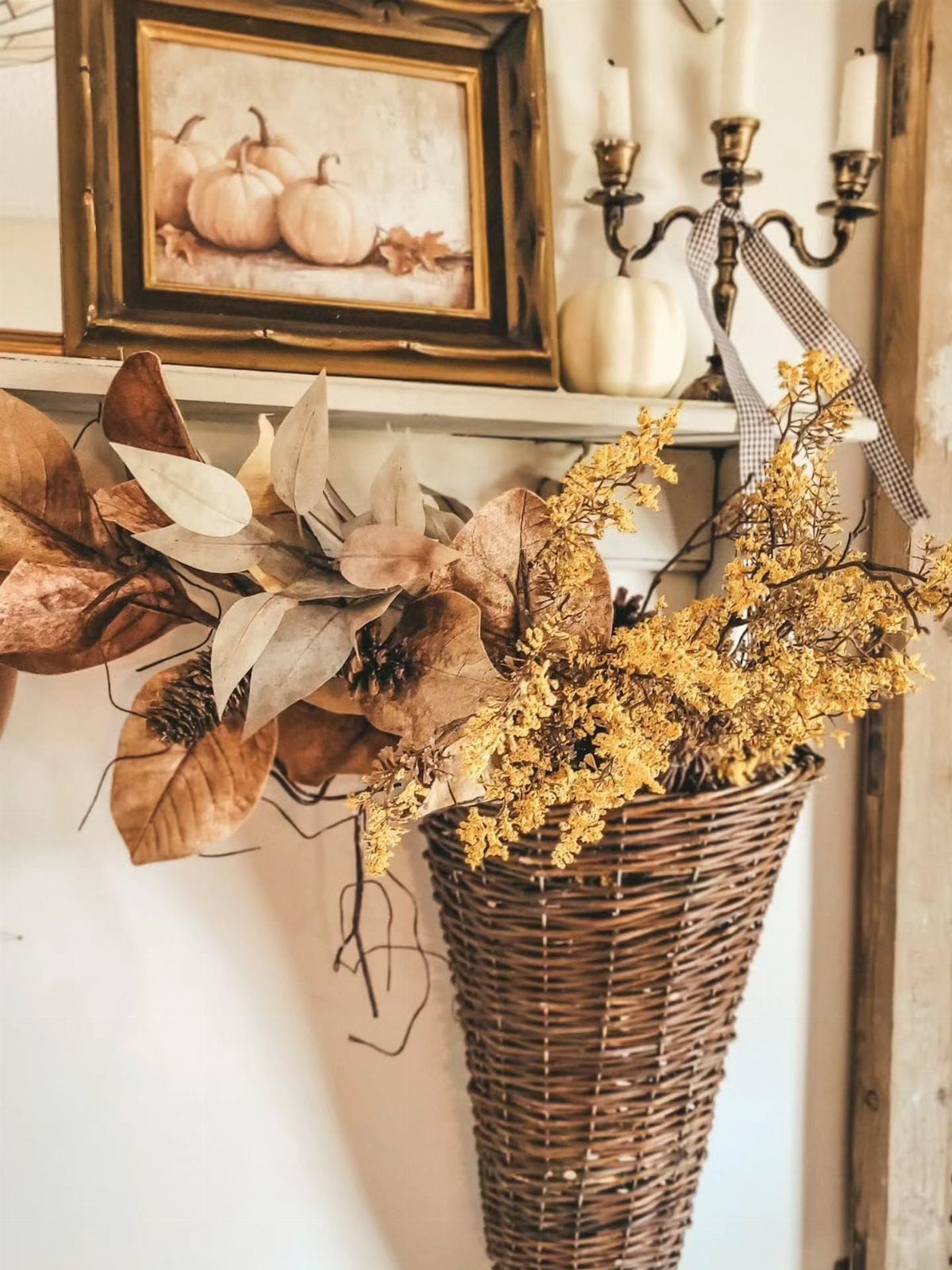
Farmhouse palettes live in whites, creams, and weathered grays, which can flatten to boring without something alive underfoot or in hand. Jute, wicker, and unfinished wood add the warmth that color usually provides.
A basket stuffed with dried stems costs nothing extra if you already own the basket and swap its contents with foraged seed heads from late summer.
A small jute rug wears well under boots and costs less than a takeout dinner for two. Mix at least two textures so the eye has somewhere to land.
4. Lighting
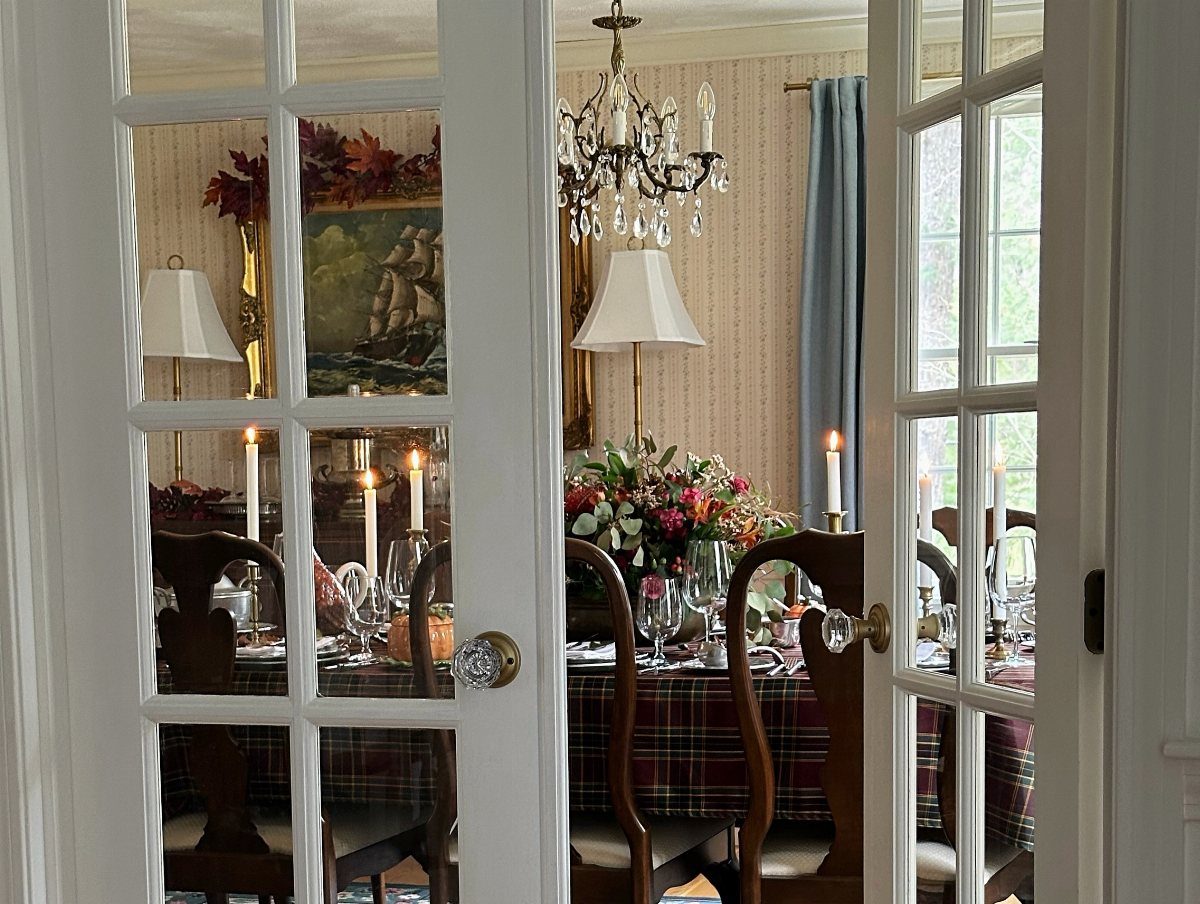
Entryway lighting does the work of a host, greeting you before you have hung your coat. A small chandelier on a dimmer holds a space rather than merely lighting it; the difference is immediate.
Warm bulbs, 2700K or lower, keep the glow from turning clinical. Light layering from above, from lamps, and from candles is the ideal but not the requirement.
One good fixture centered in the space, or a pair of sconces flanking a mirror, is enough for most entries under 80 square feet.
5. Storage Solutions
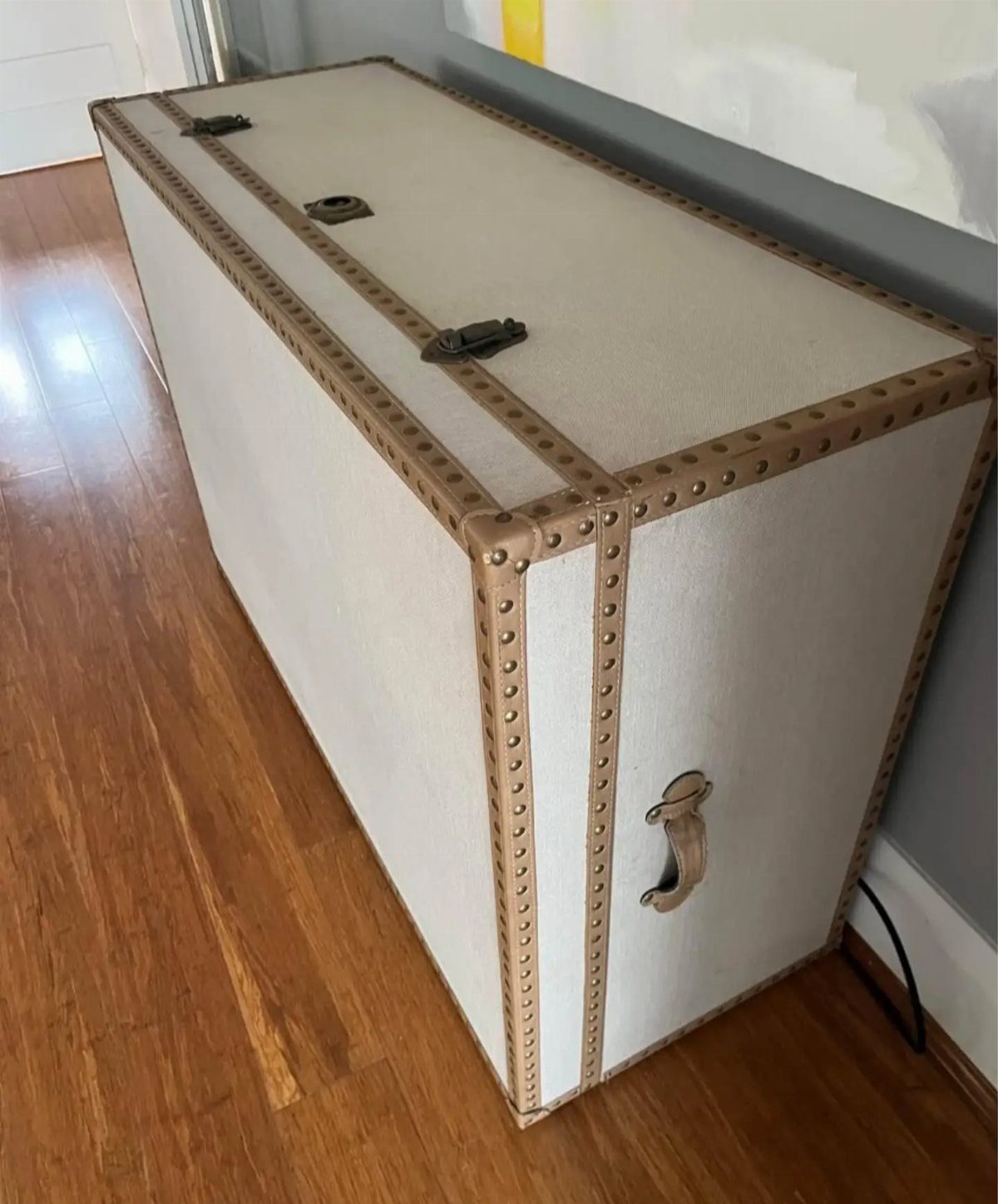
A trunk at the door swallows what you do not want to see: out-of-season shoes, leashes, the mail you will sort tomorrow. Studded leather in cream has the look of old luggage, which fits farmhouse without trying too hard.
Built-in benches with basket cubbies cost more in lumber and a full day, though still less than buying one finished.
I prefer the trunk for rentals and for anyone whose entry shifts shape; it moves to the foot of a bed when you rearrange.
The maker of a similar built-in recommends woven baskets sized to the cubby so nothing wobbles when you pull it free.
6. Console Table
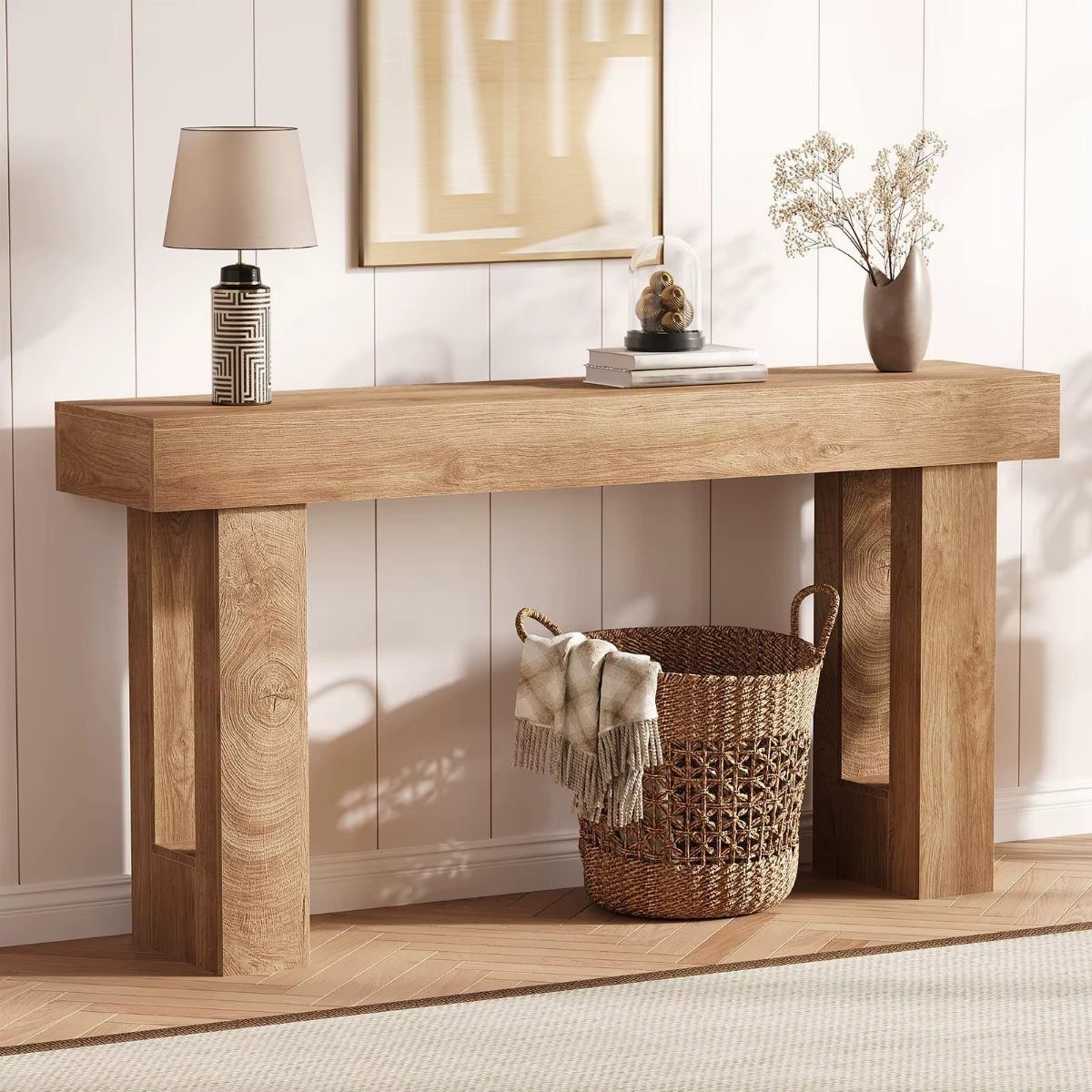
A console table gives you a surface to build on, and the narrow profile keeps traffic moving. The light wood one shown runs about 14 inches deep, which is the limit for most hallways; measure your clear width before you buy.
I style mine in threes: a lamp for height, a low stack for mass, something organic to soften the line.
The woven basket underneath is not decoration; it is where I drop gloves and dog bags so they do not hit the floor. For tall foyers, a longer, lower piece balances the vertical space better than something small and precious.
7. Wreaths
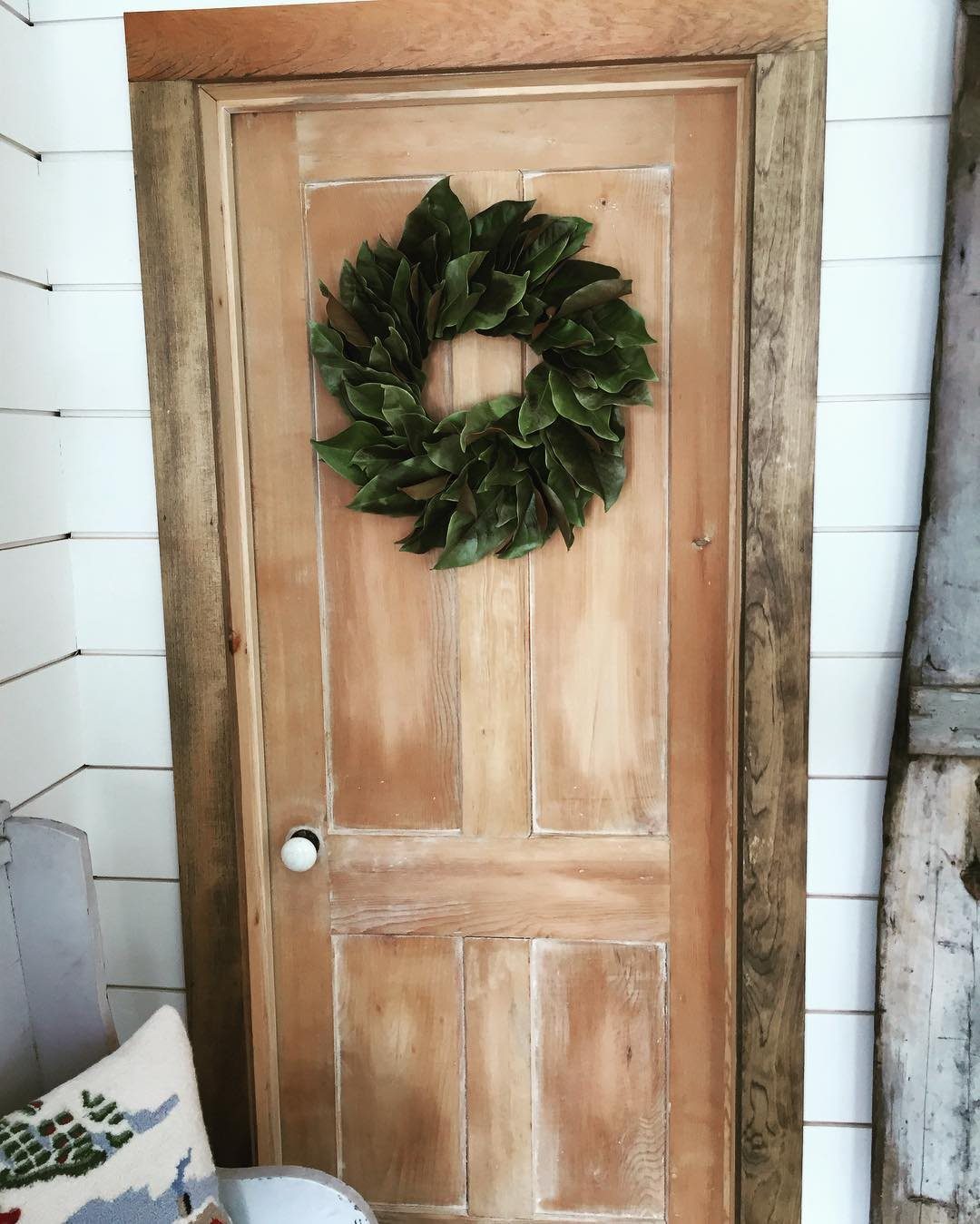
A wreath turns your door into a handshake. A wreath against natural wood paneling reads sharper than against painted white; raw grain gives the green something to push against.
For year-round use, boxwood holds its shape without water and costs less than fresh swaps each season. I hang mine with a simple ribbon loop, not a nail hole, so the door stays clean when I take it down.
A ledge above your bench lets you rest the wreath inside during bad weather, layered with whatever the month calls for.
This works best if your entry already has some wood tone to echo; on a steel door, the warmth can feel stranded.
8. Mirrors
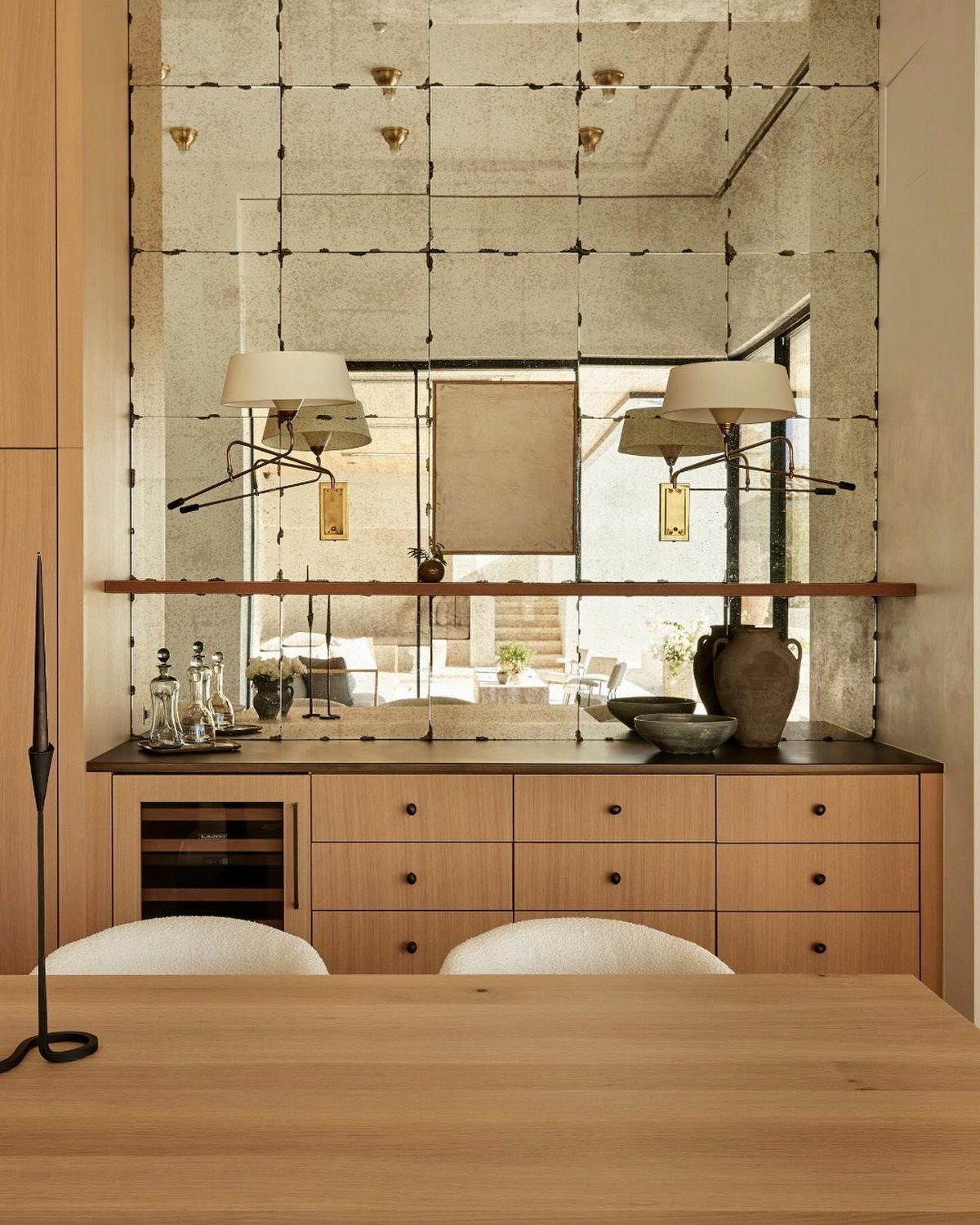
A mirror bounces daylight into corners that never see it directly. A grid mirror spanning most of a wall gains a slim shelf across its face for keys or a small vase.
I look for aged glass, not perfect reflection; the slight cloudiness softens what it throws back and keeps the room from feeling like a dressing area.
The frame wants to be wood, nothing glossy, and the scale should push toward too large rather than too safe. Style tight around it: a lamp, a bowl, done.
Every extra object competes with the light you just bought.
In a narrow entry, this is the single change that stops the squeeze.
9. Vintage Finds
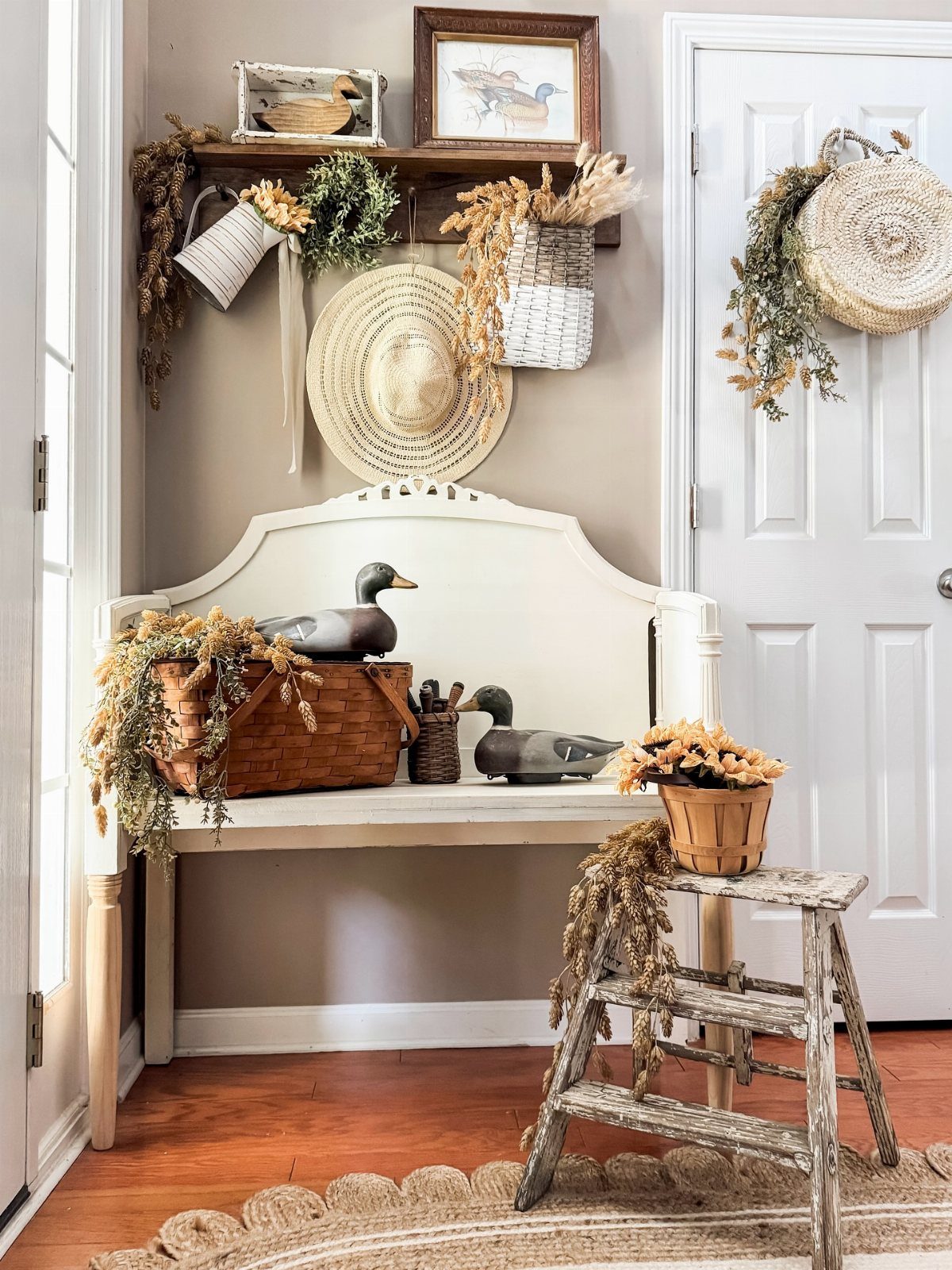
Vintage pieces carry weight that new goods spend years trying to earn.
I pick one era to anchor the mix, usually farm pieces with a century of wear or mid-century utilitarian, and let the rest orbit that. Baskets and crates underneath hide shoes; a small ladder leans nearby for height without bulk.
The maker of this piece piles on textures: greenery, woven storage, folded blankets. I stop at three textures per surface, four if one of them is small.
This asks for patience. Flea markets, estate sales, and your own attic outpace antique shops on price.
10. Boxwood Monogram
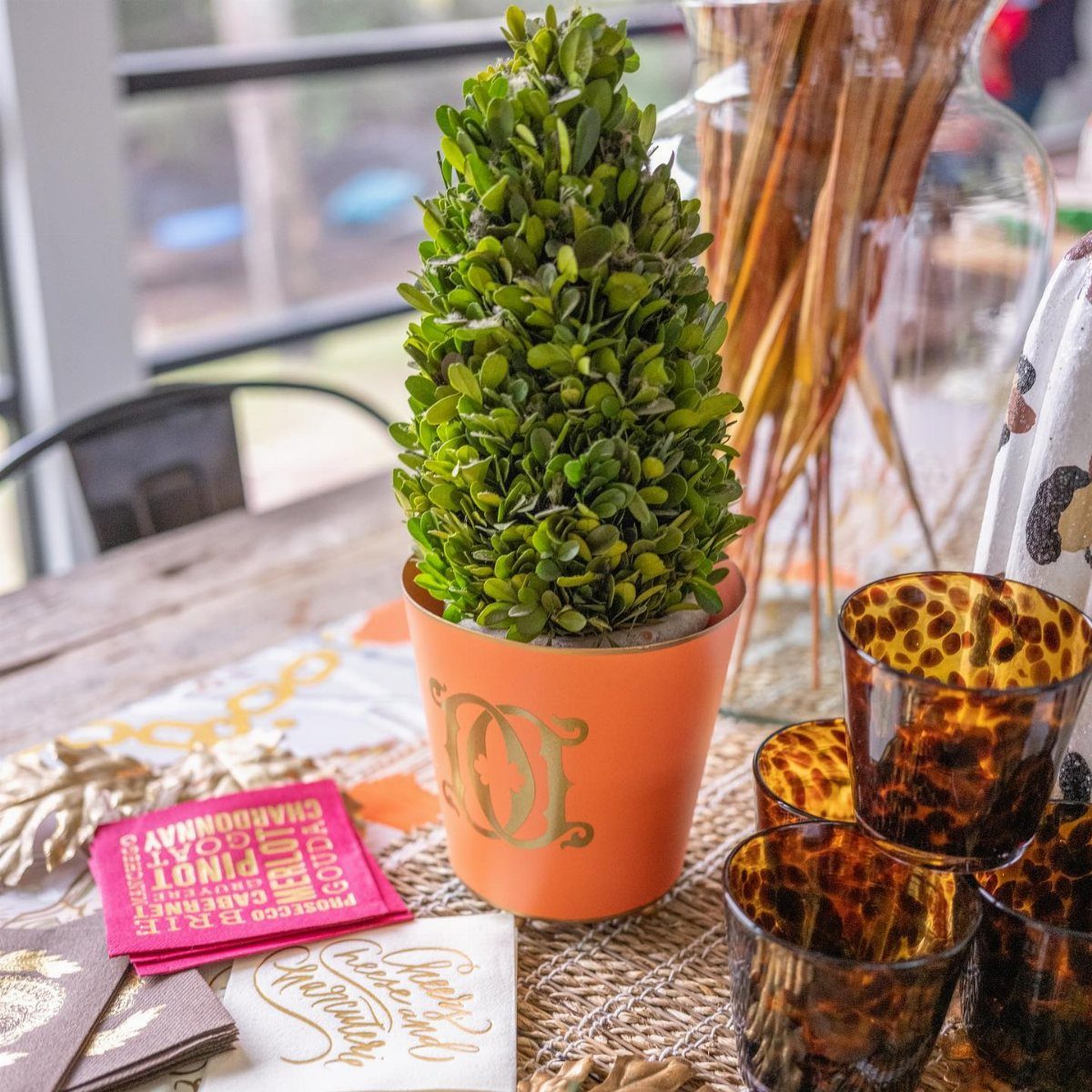
A boxwood monogram stakes a single letter as yours. Boxwood shaped into a cone and set in terracotta carries a bold letter cut from the center.
These work on sliding barn doors, above hooks, or centered on a plain panel. The form stays tight with artificial boxwood; fresh would need misting and would brown at the edges within a month.
A 12-inch size reads from the sidewalk without crowding the door itself. Pair it with nothing else on that surface, or the letter loses its claim.
This suits renters who cannot paint or nail permanently; command strips on the back of the pot handle the weight.
11. Wooden Bench
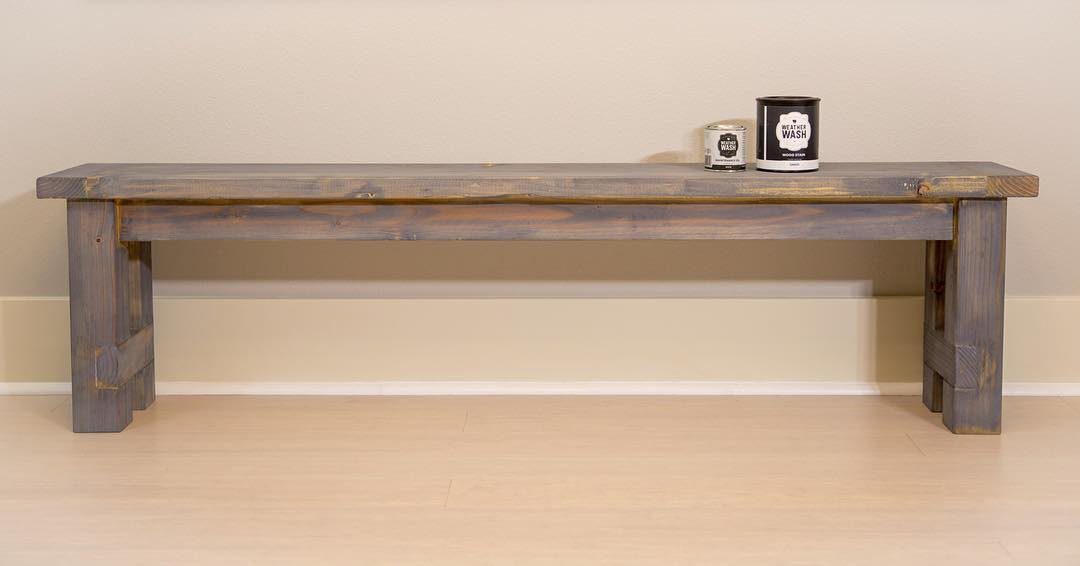
A bench gives you somewhere to wrestle boots without tipping onto the hall rug. Thick timber weathered to gray, with the grain still showing through, gives a bench its character before anyone sits down.
I add one cushion at most, something flat that won’t slide, and store the rest underneath in a crate. Turned legs bring heirloom character against plain drywall; a slab bench reads more modern than farmhouse.
The height should let your thighs stay level, usually 18 inches, so standing back up does not become a project.
This trades away hidden storage for open simplicity. If you need every shoe out of sight, a lidded bench serves better, though it rarely looks this calm.
12. Gallery Wall
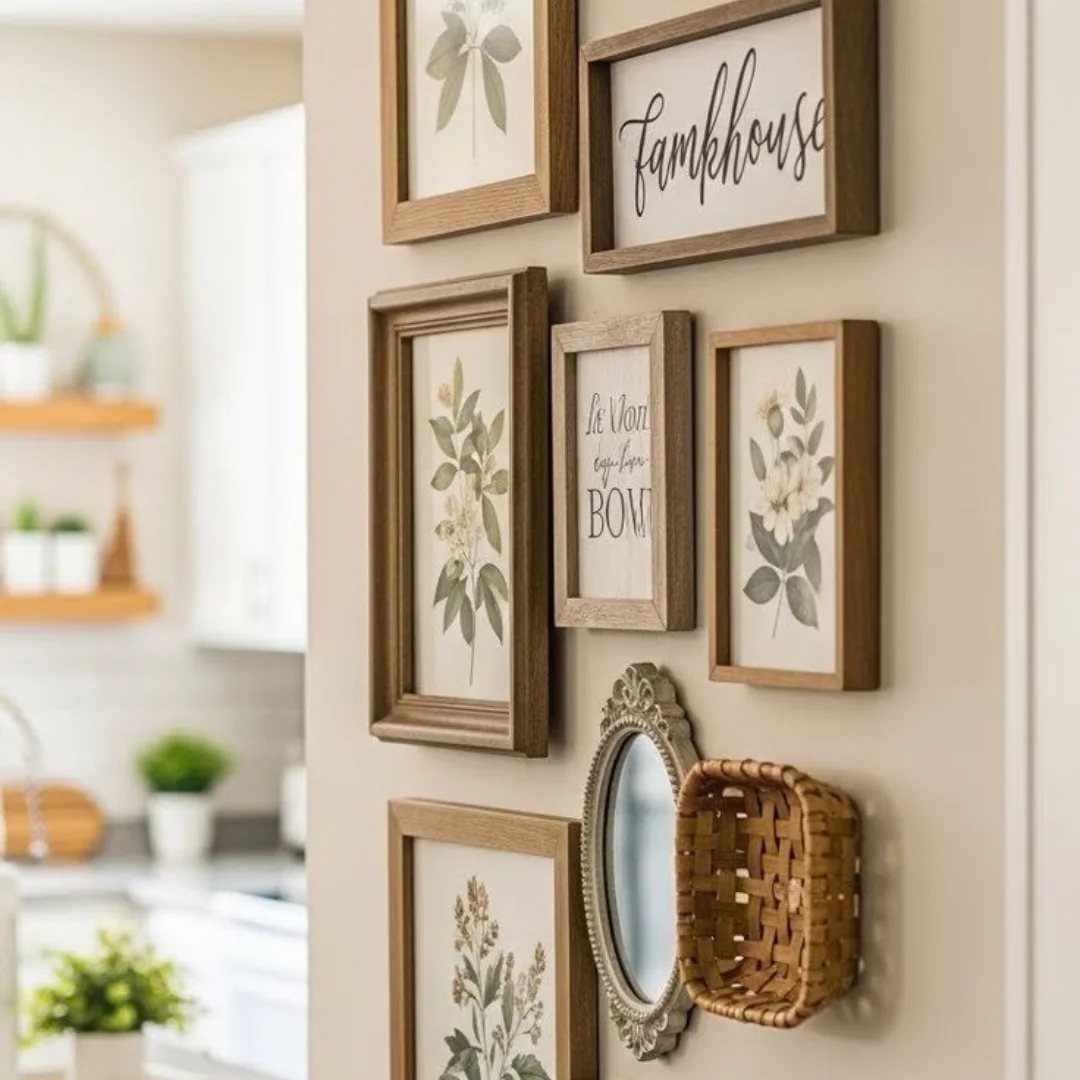
A gallery wall lets the entry speak for the people who live past it. A gallery wall mixes botanical prints, a small oval mirror, a woven basket, and one sign spelling farmhouse in plain type.
I start with the largest piece slightly off-center, not dead middle, and build outward in an L or a loose grid. Frames in one wood tone hold the chaos together; three finishes and the wall starts to jitter.
A slim ledge above hooks gives you the same height without forty nail holes, and you can swap prints seasonally without filling spackle.
This asks for collected pieces, not a single shopping trip. Begin with what you own, add one frame a month, and stop when the wall feels full, not when you run out of wall.
13. Seasonal Decor
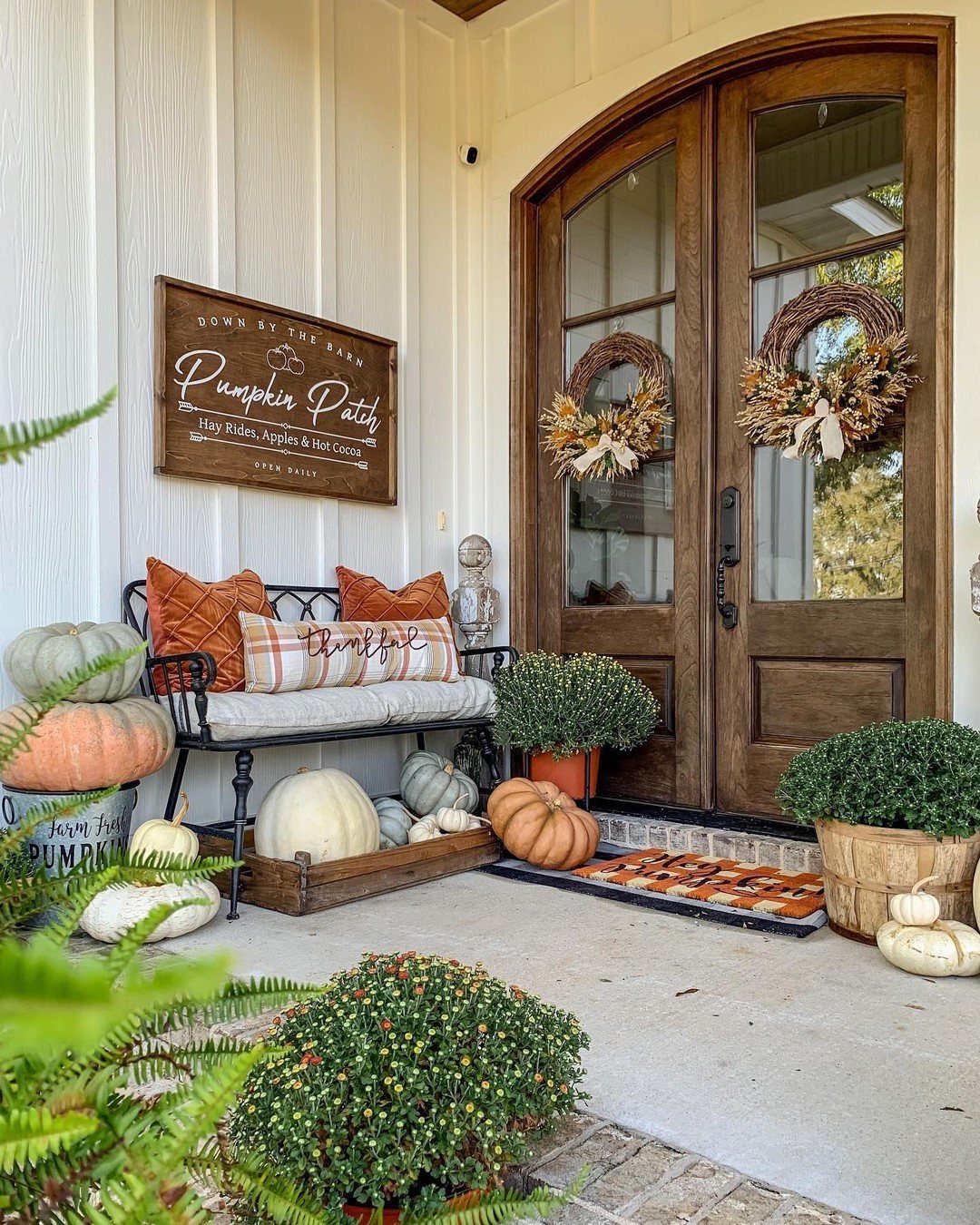
A grapevine wreath swapped out with the seasons costs less than one new piece of furniture and keeps the entryway from going stale.
I hang mine in early September with dried stems and a plaid bow, then switch to bare branches and white berries after New Year’s. Porch pumpkins work right on the step; no table needed.
Keep one anchor piece year-round, like the wooden sign, and change only what clips on or leans against it. That restraint stops the look from turning into a seasonal shop display.
For renters, over-the-door hooks hold the wreath without nail holes to patch later.
14. Floor Plants
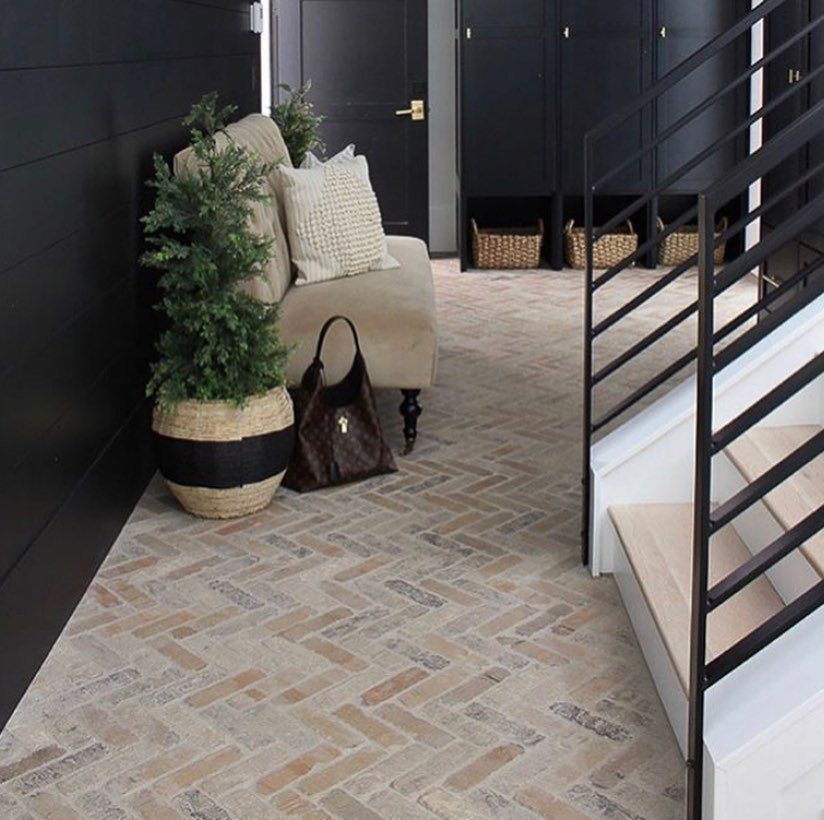
A floor plant in a woven basket softens the hard edges that entryways collect: tile, railing, front door. Green breaks up dark walls that would otherwise feel severe.
I look for plants that forgive low light and irregular watering. A snake plant or ZZ plant survives the dim corner by the stairs where water and attention are scarce.
The basket matters more than the pot; natural weave reads farmhouse where glossy ceramic reads modern.
One large plant beats three small ones for impact in a narrow space. Water it in the sink, not on the herringbone tile, unless you want to mop.
15. Accent Rugs
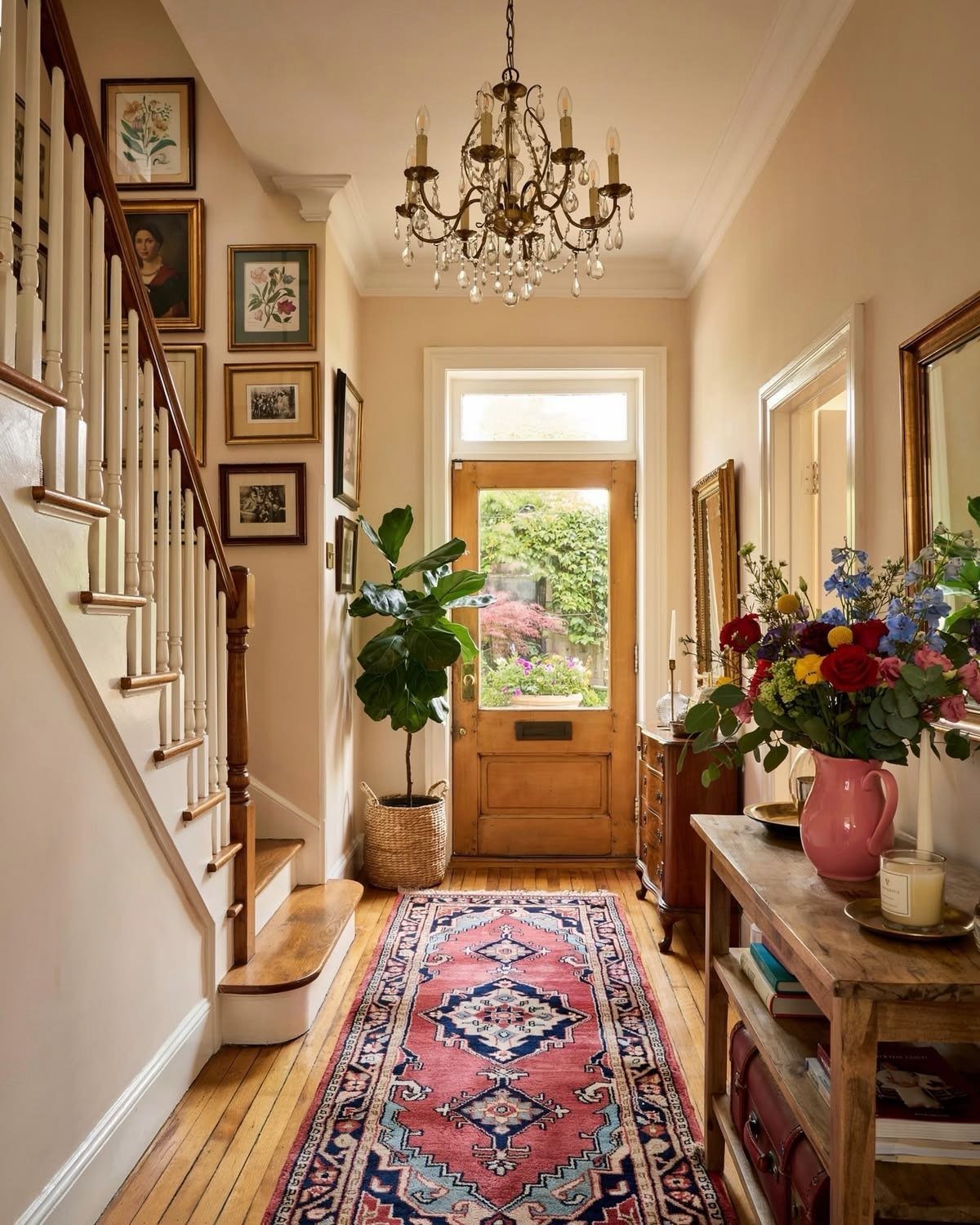
A runner defines where the entryway ends and the living room begins, especially in an open plan where walls don’t do the job.
A red pattern draws the eye straight down the length, making a narrow space feel intentional rather than cramped.
Washable rugs changed how I use my entryway. A Ruggable runner holds up after muddy boots ruin wool in a single rainy week.
Machine wash, line dry, back down by evening.
Measure the full length including door swing; a rug that catches the edge frustrates everyone who walks in.
16. Crock for Umbrellas
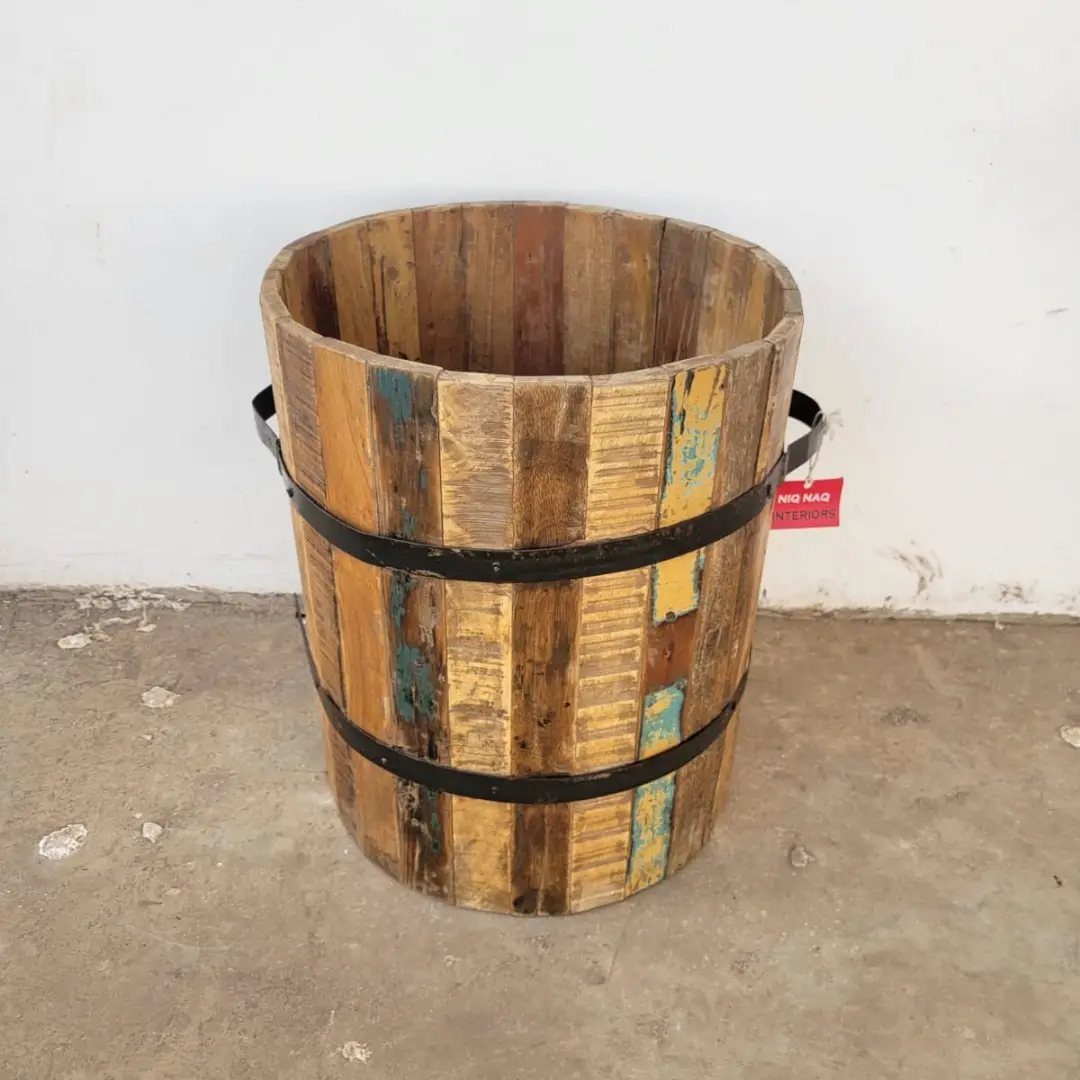
A crock by the door catches umbrellas before they drip across the floor. Weathered planks and metal bands look found rather than bought, the honest aim of farmhouse storage.
Three small holes drilled in the bottom let rainwater escape instead of pooling for days. Standing water rusts metal bands and warps wood.
A crock this size, about knee height, holds four or five umbrellas without tipping; anything taller gets awkward to reach into.
For a tighter space, a single umbrella stand tucks beside the console table. The crock suits the reader with a wide porch or mudroom corner and enough rain to justify the floor space.
Color Schemes
Start with what the light in your space actually does. A north-facing entry or one with no windows reads cold and flat; white paint or a soft warm gray opens it up.
If you get afternoon sun, a deeper taupe or greige keeps the room from feeling washed out at 5 p.m.
Modern farmhouse does run light, but white is not your only option. Light taupes, warm greys, and muted colors with deep undertones hide the scuff marks that collect where boots land and backpacks drop.
Greenery reads as neutral in this palette, so a eucalyptus stem or a small fern ties in without fighting the wall color.
Keep the trim one or two steps lighter than the body color for the contrast that makes board and batten or shiplap read as architecture, not flat boards.
Creating Warmth
Wood, jute, and living plants do the work of making a farmhouse entry feel lived-in, not staged. A woven runner underfoot changes the sound of the space; it softens heel clicks and gives the eye something organic to land on.
Greenery, real or good fake, breaks up the straight lines of benches and coat racks.
Layer textures rather than matching them. A smooth painted bench next to a rough basket, a ceramic pot on a wood slab: the variation is what reads as collected over time.
Warmth in a farmhouse space comes from material contrast, not from color alone.
Practicality
A bench you can actually sit on to pull off boots changes how you use the entry. Wall hooks at three heights let kids reach their own and give adults a spot for bags.
A lidded bench or a console with drawers hides what you do not want to look at; open baskets hold what you grab daily.
The best farmhouse entries work because nothing has to travel far. Shoes land in a tray, not the hallway.
Keys hook by the door, not the kitchen. Build the route your family already takes, then put storage exactly where the clutter lands.
Personal Touches
Vintage pieces carry the weight that makes a farmhouse entry feel like yours, not a catalog spread.
A clock with worn paint, a ladder propped to hold blankets, a wire basket from a flea market: these items need no matching set to earn their place.
The trick is restraint. One or two pieces with age anchor the room; more than that and the look turns to clutter.
A single monogram, a small stack of old books, a ceramic piece with a chip you have chosen not to hide: these marks of actual use read as style because you have given them space to matter.
Frequently Asked Questions
What are some unique ideas for a farmhouse front entrance?
A sliding barn door with a boxwood monogram clipped to it makes the entrance read as yours without paint or permanent hardware. A single board of old barn siding, maybe 6 inches deep, makes a shelf above a row of hooks.
The saw marks and the gray where the paint wore through are the decoration; nothing from a store has that history.
Is farmhouse decor still in style in 2026?
Farmhouse décor stays current because it is built on comfort and materials that age rather than trends that turn.
The style has shifted toward lighter, cleaner versions than the heavy black-and-white look of a few years back, but the core of wood, texture, and useful storage still fits how most people actually live.
What are some good ideas for decorating an entryway in 2026?
Start with what your family actually drops when they walk in, then put storage exactly there. Layer one or two natural textures like jute or unfinished wood against the paint so the space reads warm rather than staged.





