A kitchen organization pantry is a storage system that only works if you measure before you buy.
The 12-inch turntable that looks generous in the store aisle will catch on your cabinet hinge and rotate halfway, and the bin that fits your shelf height will still fail if it blocks the door swing.
I keep three numbers in my phone now: shelf depth, shelf height at front and back, and door clearance.
Lazy Susans for Condiments and Jars
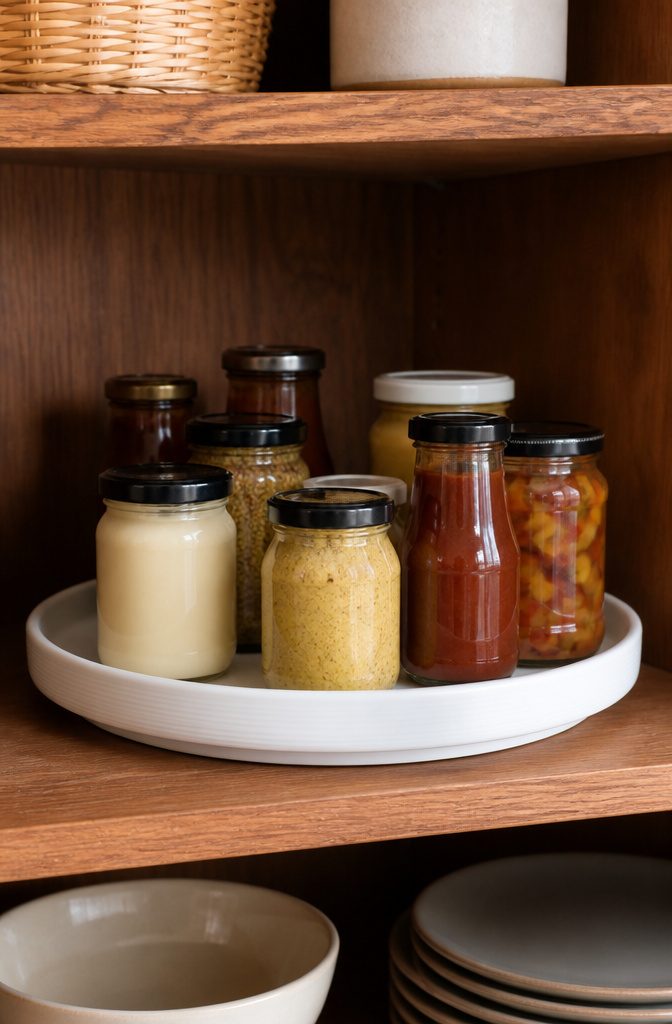
Turntables turn a deep pantry shelf into something you can actually use without unloading half the cabinet first.
The back half of a standard shelf becomes a dead zone for jars and bottles, especially condiments that get shoved behind taller items and forgotten until they expire.
A 10-inch turntable fits most standard pantry shelves; anything wider and the thing bumps the door frame or wedges against the side wall.
I learned this after buying a 12-inch model that looked generous in the store aisle. It rotated exactly halfway before catching on my cabinet’s interior hinge.
The diameter matters more than the height for pantries, since vertical clearance is rarely the problem. A two-tier turntable adds useful layers for shorter jars, but the bottom tier still needs to spin freely.
For condiments specifically, the open wire styles let sticky drips fall through to the shelf below, which is not a feature you want.
Solid plastic or coated metal surfaces wipe clean and keep the turntable itself from becoming the thing that needs scrubbing.
Jars with sloped shoulders, like most mustards and sauces, sit more stable on a slightly ridged surface than on glossy smooth plastic that lets them slide.
The hardware-store turntables with rubber grip rings cost a few dollars more and stay put on wire shelving without sliding. That matters when you’re spinning one-handed while holding a hot pan in the other.
Shelf Bins for Sorting Snacks
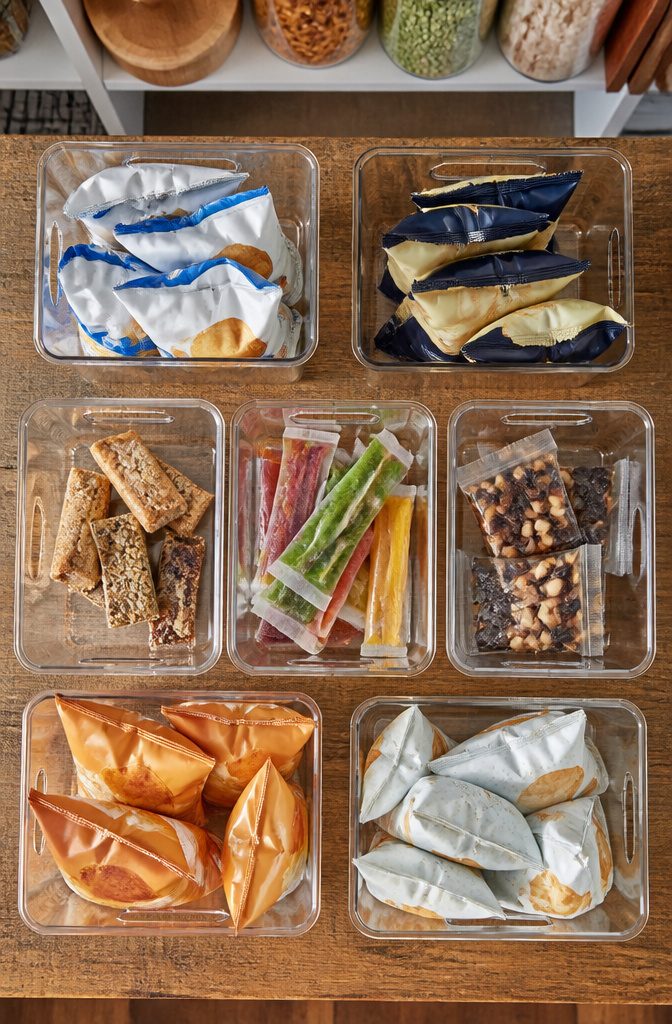
Open bins let you group loose snacks without locking yourself into fixed dividers that might not fit the next brand of crackers you buy.
The flexibility matters more than it sounds: one week my bins held individual chip bags and fruit strips, and the next they swallowed a bulk bag of pistachios that would have spilled over any rigid partition.
Measure the shelf height from the wire or wood surface to the underside of the shelf above it, then subtract half an inch for the bin lip and whatever sticks up inside.
I skipped that step once and ended up with bins tall enough to hold plenty but too tall to slide out without tilting, which defeats the whole point of quick access.
Now I keep a folded index card in my phone case with that number written on it, and I check it against the bin dimensions in the listing before I order.
Spice Racks in Various Sizes
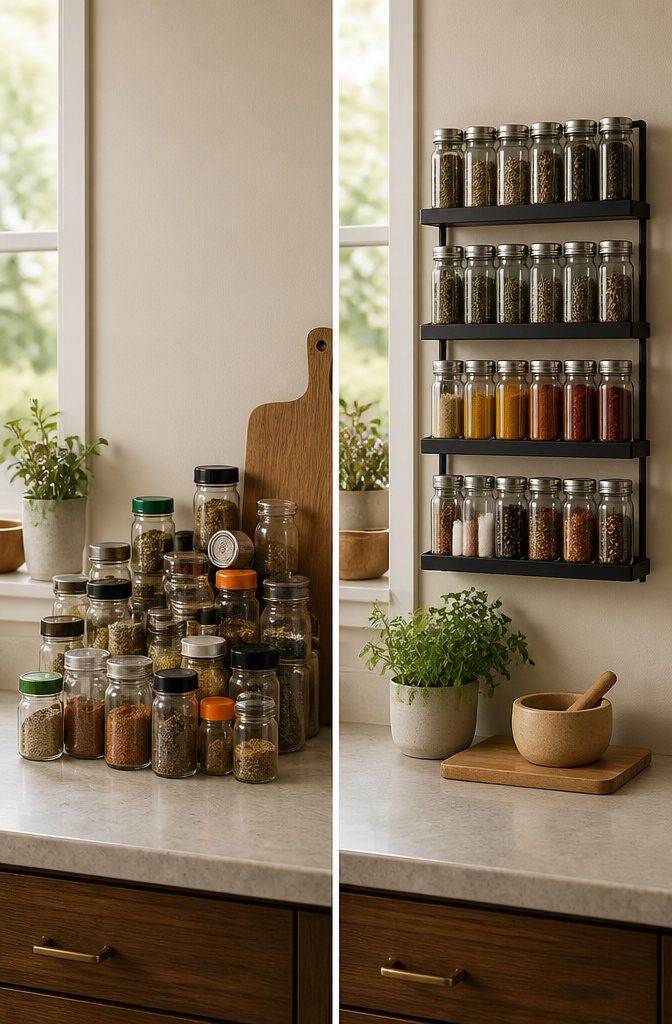
Wall-mounted spice racks keep jars visible and off the counter, though renters should check lease rules about drilling into cabinetry.
Drawer inserts work best when the drawer itself is deep enough that the tallest jar still clears the frame; I learned this after installing one whose 4.5-inch jars caught on the drawer above every time I pulled it out.
Counter-top tiered racks seem convenient until they block something else from functioning.
My tiered counter rack sat against the pantry wall and looked fine with the door open. The total depth, rack plus a standard jar, ran about six and a half inches, and my pantry door swings inward.
The first time I closed the door fully, the top tier jammed against the handle side and left the door ajar by an inch.
Six months of bumping that door finally warped the latch. A rack under five inches deep would have cleared the swing radius, but I never thought to measure the door arc before buying.
Airtight Canisters for Dry Food
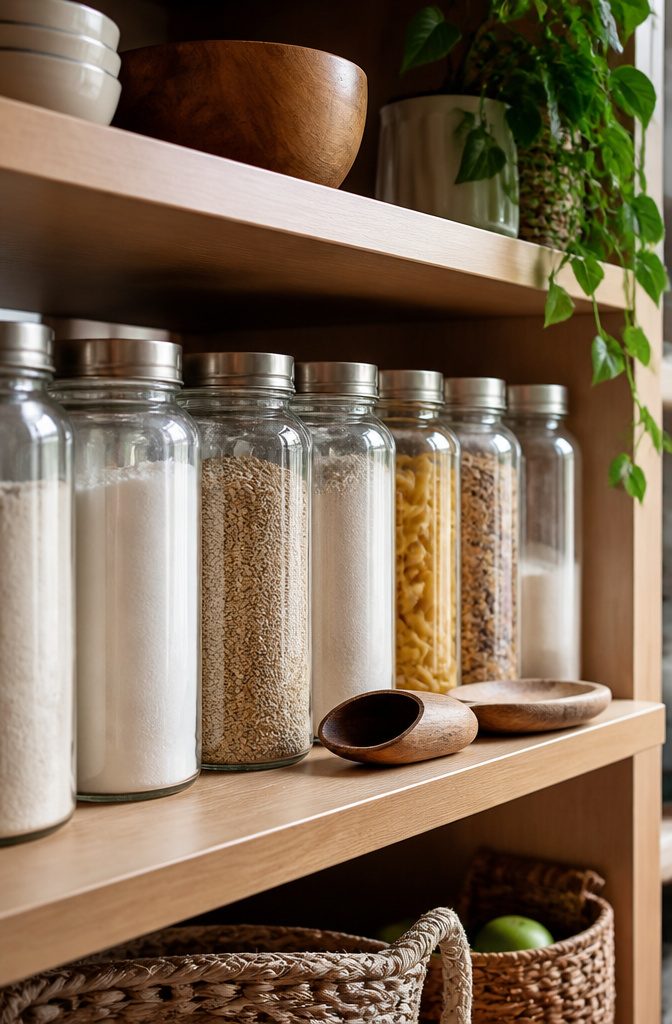
Flour left in the paper bag it came in picks up moisture from humid summer kitchens and attracts every pantry moth within range.
I learned that the hard way after finding webbing in a half-used sack of whole wheat flour I’d shoved behind the cereal boxes.
Sealed dry food storage with airtight canisters stops that cycle entirely: the gasketed lid keeps weevils and moths out, keeps humidity from turning brown sugar into a single brick, and extends how long grains and legumes stay usable.
The difference in shelf life is real. White flour in an airtight container stays fine roughly twice as long as flour in its original packaging, and whole grains last dramatically longer when oxygen exposure drops.
I skipped this step for my first apartment pantry and ended up tossing three pounds of jasmine rice that smelled like old cardboard.
The canisters don’t have to match your kitchen. They have to seal.
Stacking Bins for Vertical Space
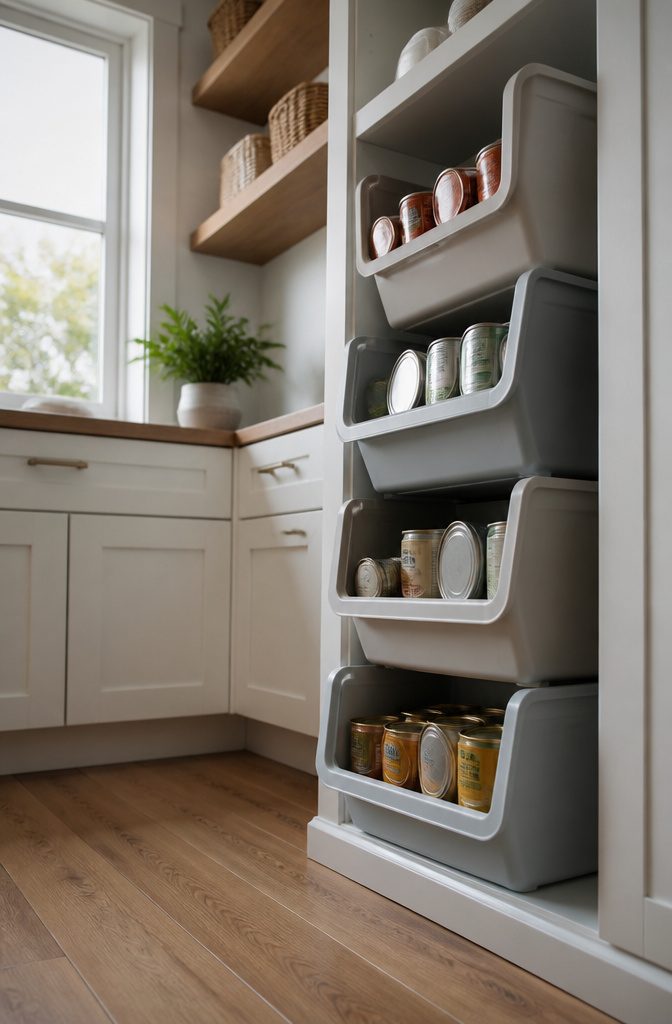
Stackable bins turn a single shelf into two or three usable surfaces by building upward instead of outward.
The footprint stays the same but the storage capacity multiplies, which matters when you are working with the standard 12-inch depth most rental pantries give you.
I learned about weight distribution the hard way after loading a tall stack of bins with canned goods and watching the whole column tilt toward me one evening.
The heavy stuff belongs in the bottom bin, always, and anything above it should be light enough that a nudge does not start a domino effect.
I now test a stack by pressing the side of the top bin before I walk away. If it rocks, I redistribute.
Plastic bins with interlocking lids grip each other better than the kind that simply nest. The connection points are small but they matter once you are reaching past them for something behind.
Drawer Organizers for Small Items
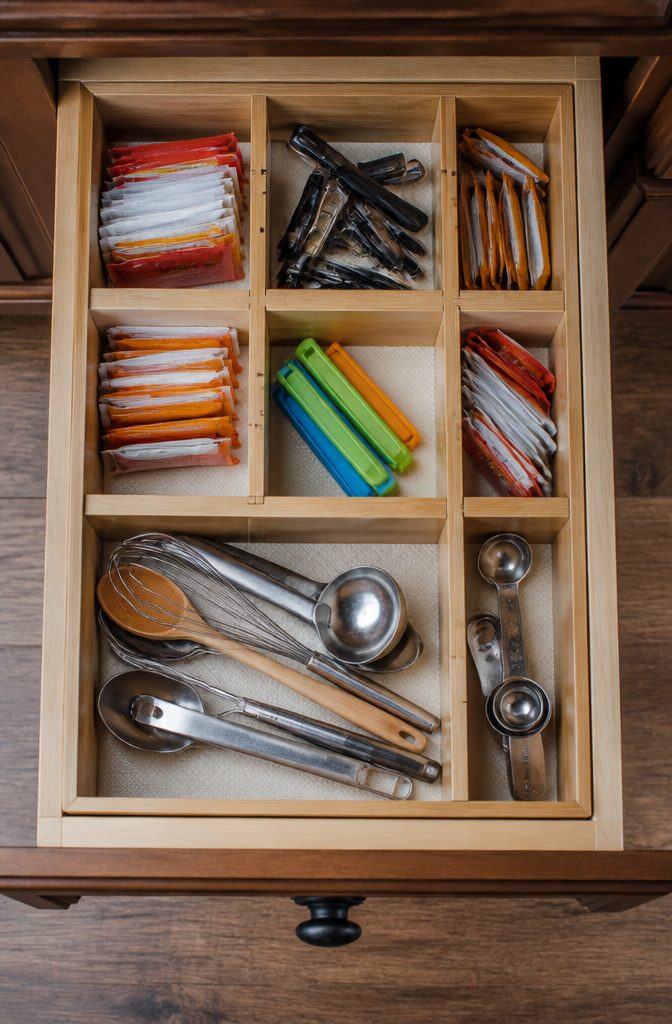
Shallow pantry drawers collect debris faster than anything else in the kitchen.
I used to dump packets, bag clips, and stray utensils into a single junk drawer and call it organized. Rubber bands migrated under spice envelopes.
The tape measure I kept for quick furniture checks somehow burrowed to the bottom every time. That system held for about three weeks before I was fishing through crumbs to find a chip clip.
Adjustable dividers fixed the drift. I bought a set with spring-loaded ends that grip the drawer sides, then laid out everything in a single layer so nothing stacks or hides.
The shallow height matters: deep bins would let items skate underneath, but these sit flush to the drawer bottom.
I set one section for sauce packets, one for clips and ties, one for the odd tools that do not belong in the utensil crock. Rearranging takes thirty seconds when a new shape shows up.
The dividers I chose run about fifteen dollars for a four-pack, which felt steep until I calculated the cost of the third junk-drawer purge I was skipping.
Cereal and Pasta Canisters
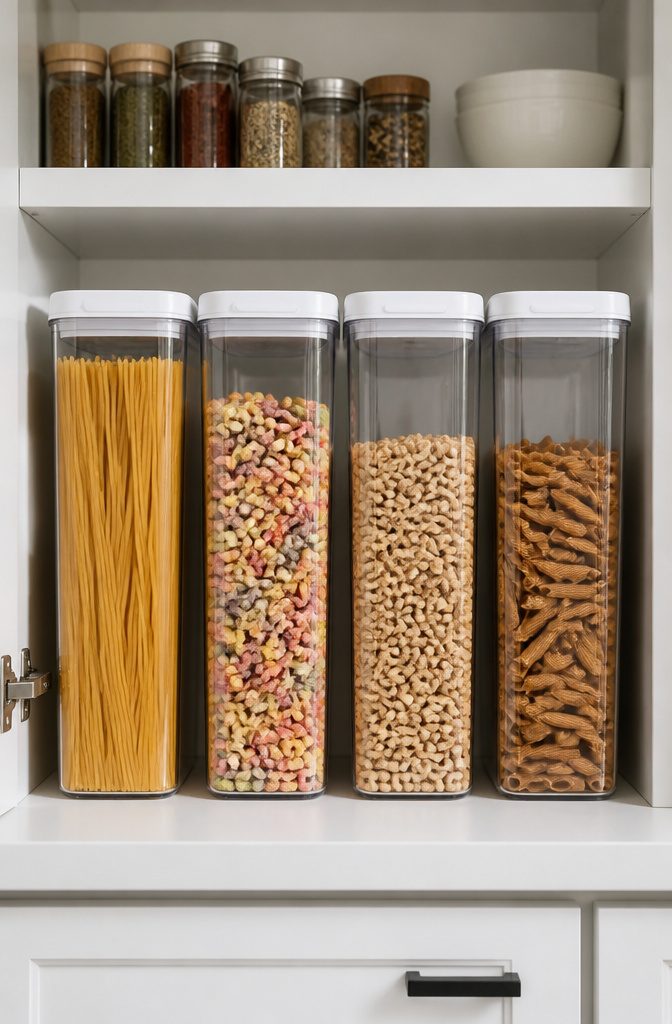
Tall, narrow canisters for spaghetti and penne sit flat against a cabinet wall without the quarter-inch gaps that round ones leave on every side.
I learned that shape costs more than it saves after buying a set of purpose-built pasta containers with flip-top pour spouts.
The spout on the largest one cracked halfway across the lid after two months of regular use, letting humidity into the remaining rigatoni and turning the measurement window foggy.
For cereal, a rectangular footprint lines up three boxes deep on a standard shelf where round ones manage two with awkward space between.
My current set has screw-on lids without the convenience features, and while I miss the one-handed pour, I do not miss the replacement order.
Expanding Shelves for Adjustable Storage
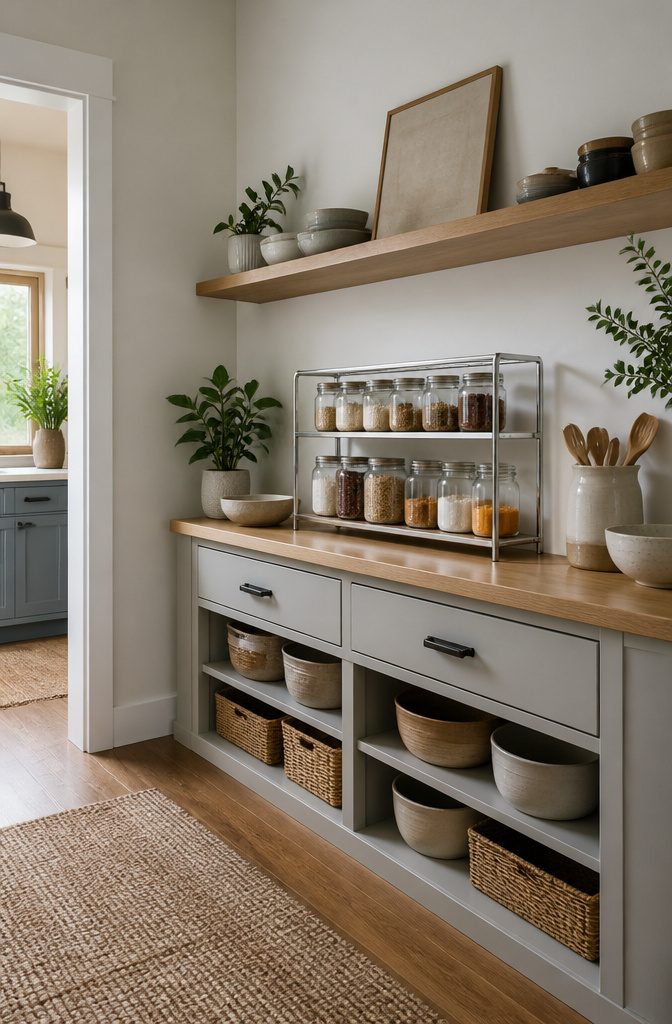
Width-adjustable shelves bend to fit the cabinet you actually have, not the one the builder imagined.
I measured my own pantry assuming the walls were square; they were not, and a gap at the back corner let small jars slip through until I found a rack that telescopes from 18 to 30 inches and locks with a twist.
The adjustment mechanism matters more than the width range.
Check the weight rating before you load anything. I skipped that step once, sliding a five-pound bag of rice onto an expandable wire shelf whose brackets looked sturdy enough.
The brackets held; the center bar did not. The shelf sagged, the locking tabs popped, and I spent twenty minutes sweeping jasmine rice out of a cabinet that smelled like it for a month.
Metal shelves with threaded collars hold better than those with spring-loaded pins, which fatigue after a few moves. For renters, pressure-mounted width adjusters save drilling, but they top out around fifteen pounds.
A fixed mount into the wall stud buys you forty or fifty pounds on the same shelf, and the holes are small enough to fill with spackle when you leave.
Woven Bins for a Decorative Touch
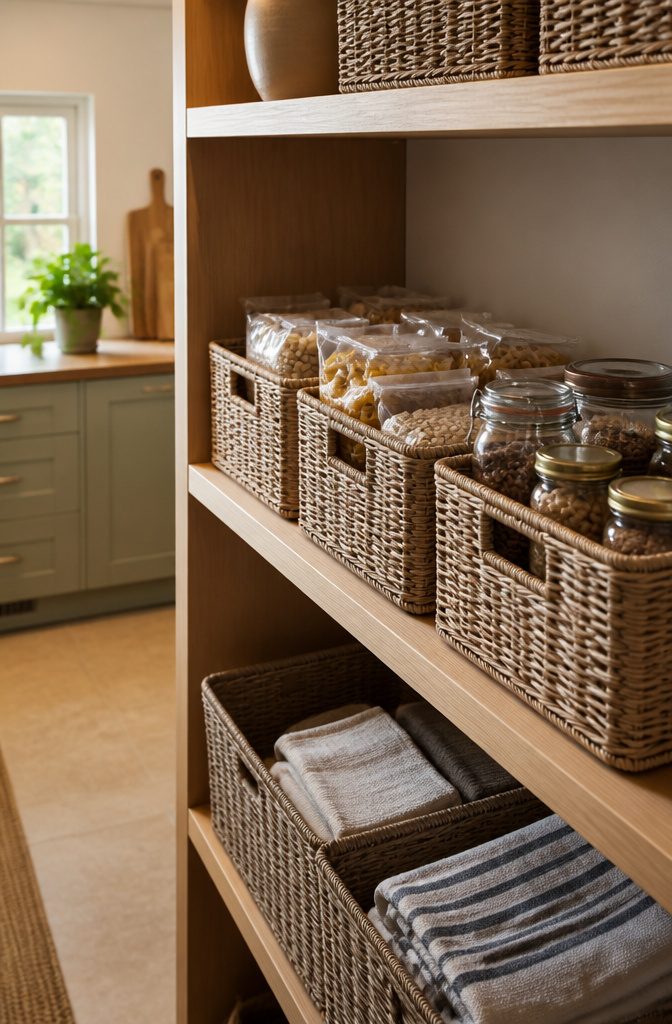
Woven bins add warmth to open pantry shelving that can otherwise look like a hardware store aisle. The texture breaks up rows of glass and plastic without sacrificing function; everything inside stays out of sight but within reach.
I learned the material matters more than the weave pattern. A seagrass bin I set on a shelf above the stove vent grew a thin layer of mold within two months.
The warm, damp air settled into the natural fibers and stayed there. Keep woven storage away from heat sources and vents, even in a pantry that seems dry overall.
Synthetic rattan or coated paper weaves hold up better in kitchen humidity and wipe clean with a damp cloth. They cost about the same as natural fiber but last years longer in practice.
Glass Canisters for Stylish Storage
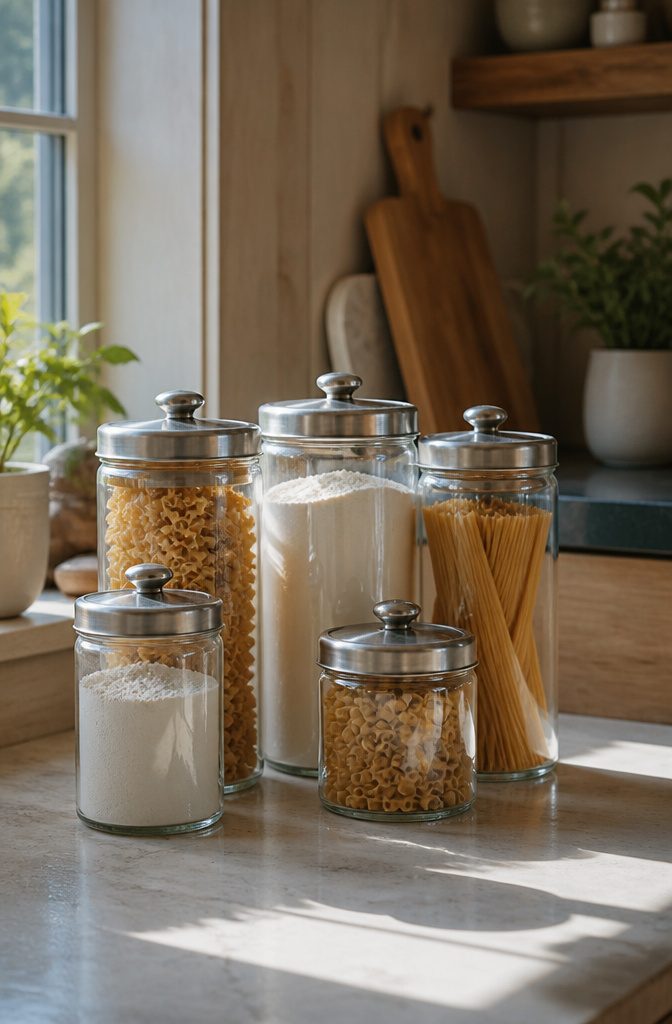
Glass shows you exactly how much pasta or flour is left without pulling the lid off, and that visibility is what makes it worth the counter space in a small pantry.
Plastic is lighter and bounces instead of shattering when a kid yanks the door open, but it clouds over time and starts looking like a takeout tub.
The weight of a full glass canister is real; I learned that lifting a five-pound sugar jar onto an upper shelf with one hand while holding a step stool with the other.
The chipped rim on a canister I stacked two high taught me the hard limit: glass belongs on its own level, never loaded above.
Whether the look justifies the price depends on how much of your pantry is open shelving versus behind a door.
I would not pay the premium for glass that sits in a cabinet no one sees, but for a walk-in or open rack where the containers are part of the room, the difference is noticeable every time you walk by.
What I Measure Before Buying Anything
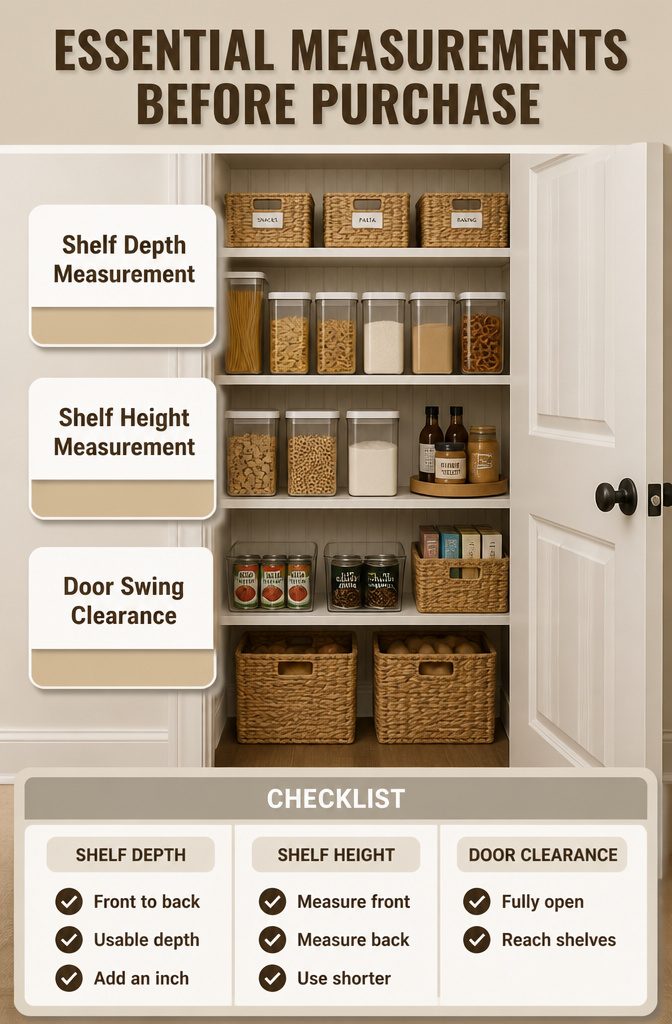
Most pantry organization tutorials jump straight to the pretty containers. I write three numbers down before I open a single product page, because every return I’ve made came from skipping one of them.
- Shelf depth from front lip to back wall. Shallow shelves need slim bins or everything hides behind everything else. Deep shelves reward you with stepped risers, but only if that back corner is actually reachable.
- Shelf height, measured at both the front lip and the back wall. Pantry walls lean, shelves sag, and that half-inch difference decides whether a tall cereal box slides in clean or jams the door.
- Door swing clearance with the door fully open. A bin that fits the shelf beautifully still fails if it blocks the door from closing, or worse, from opening far enough to reach the shelf beside it.
I keep those three numbers on my phone’s notes app.
In the store aisle, I check the product depth against my shelf depth and add an inch for my fingers to grab. The height gets compared to my shorter measurement, never the optimistic one at the front.
How I Install Without a Full Saturday
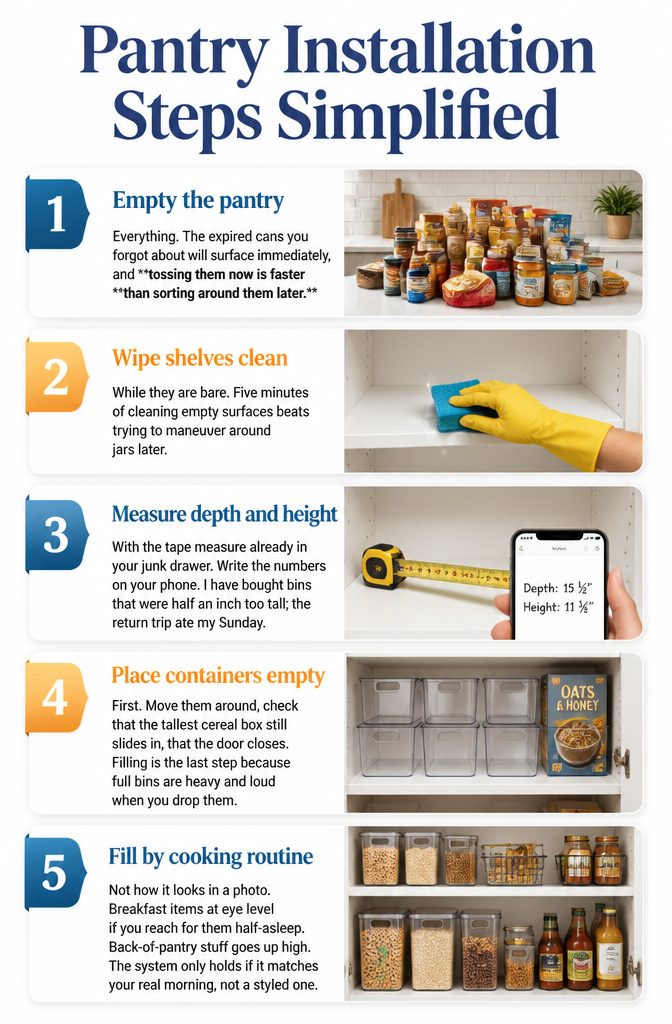
- Empty the whole pantry onto the counter. Everything. The expired cans you forgot about will surface immediately, and tossing them now is faster than sorting around them later.
- Wipe every shelf with warm soapy water while they are bare. Five minutes of cleaning empty surfaces beats trying to maneuver around jars later.
- Measure shelf depth and height with the tape measure already in your junk drawer. Write the numbers on your phone. I have bought bins that were half an inch too tall; the return trip ate my Sunday.
- Place every container empty first. Move them around, check that the tallest cereal box still slides in, that the door closes. Filling is the last step because full bins are heavy and loud when you drop them.
- Fill in order of how you actually cook, not how it looks in a photo. Breakfast items at eye level if you reach for them half-asleep. Back-of-pantry stuff goes up high. The system only holds if it matches your real morning, not a styled one.
Decorative Against Plain: What Lasts
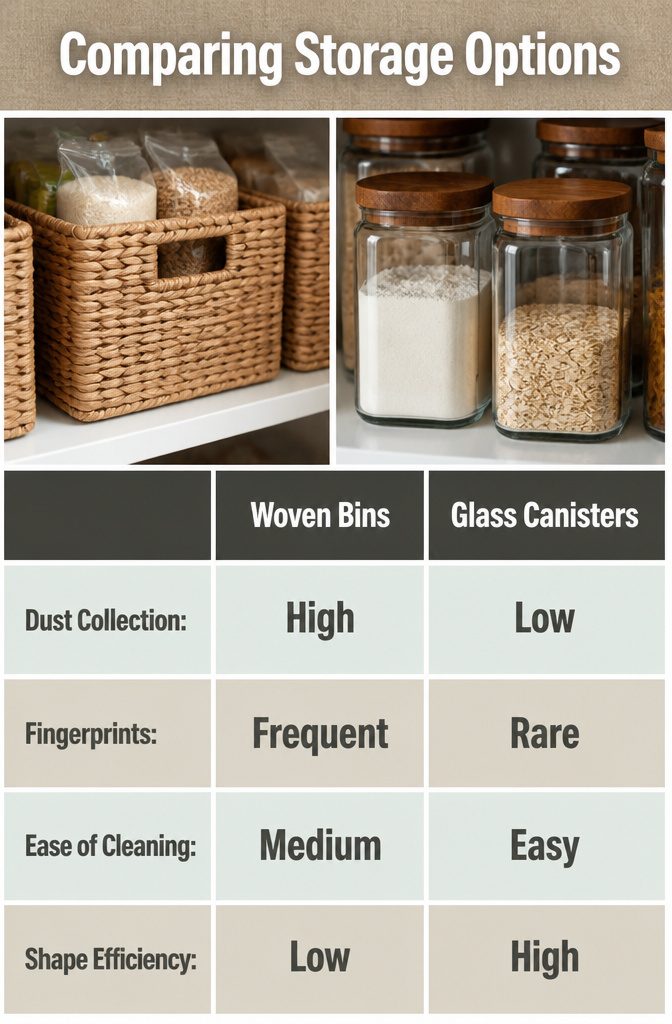
Woven bins and glass canisters photograph beautifully, which is exactly why I bought them first.
The Montauk woven rectangles from The Container Store sat on my top shelf for two months before I admitted that the texture trapped flour dust and the handles snagged on adjacent bins every time I pulled one out.
The Anchor Hocking Montana glass canisters with acacia lids looked like pantry goals until I realized I was washing fingerprints off them weekly and the lids needed drying separately to prevent mold.
What actually lasted in my kitchen organization pantry were the plain plastic bins and the OXO Good Grips POP canisters.
The plastic bins slide without catching, wipe clean in seconds, and let me see contents through the sides without constant polishing. The OXO canisters seal tight and their rectangular shape wastes no shelf depth.
Lazy Susan’s provide effortless access to your pantry essentials. Perfect for condiments, jars, and bottles, these rotating organizers are a game-changer in pantry efficiency.
That efficiency claim holds for the functional pieces too.
Decorative storage only works where you will not touch it daily. Glass or woven makes sense for a single display shelf at eye level, or for holding sealed backup stock you rotate into plainer daily-use containers.
The rest of the pantry should be the material you can wipe down at 6 PM without thinking about it.
Frequently Asked Questions
What are the best products for pantry organization?
The best products for kitchen organization pantry setups include turntables, open shelf bins, airtight canisters, stackable bins, and adjustable drawer dividers. A 10-inch turntable fits most standard pantry shelves and keeps condiments from disappearing in back corners.
Plain plastic bins and OXO Good Grips POP canisters outlast decorative options for daily use, since they wipe clean quickly and seal tightly without extra maintenance.
How can I maximize space in my pantry?
Stackable bins multiply storage capacity by building upward within the same shelf footprint, and expanding shelves telescope to fill width gaps where walls are not square.
Heavy items always go in bottom bins to prevent tipping, and interlocking lids grip better than simple nesting when you need stability.
Measure shelf depth, height at both front and back, and door swing clearance before buying anything, since a bin that fits the shelf beautifully still fails if it blocks the door.
What are the benefits of using airtight containers?
Airtight canisters with gasketed lids keep pantry moths and weevils out, block summer humidity from turning brown sugar into a brick, and roughly double the shelf life of white flour compared to original packaging.
Whole grains last dramatically longer when oxygen exposure drops. The seal matters more than how the containers look, and screw-on lids without pour spouts hold up better than flip-top features that crack and let moisture in.