These ideas run from a simple oak hook to a full floating vanity install, and the deciding factor is whether you rent or own.
Renters will find the battery sconces, peel-and-stick wallpaper, and Turkish cotton towel swaps; owners get the mosaic tile and the wall-mounted oak unit with its open shelf below.
The ledge height from the board-and-batten post is not here, but the same math applies when you mount three staggered shelves and need to clear the toilet handle.
1. Potted Plants
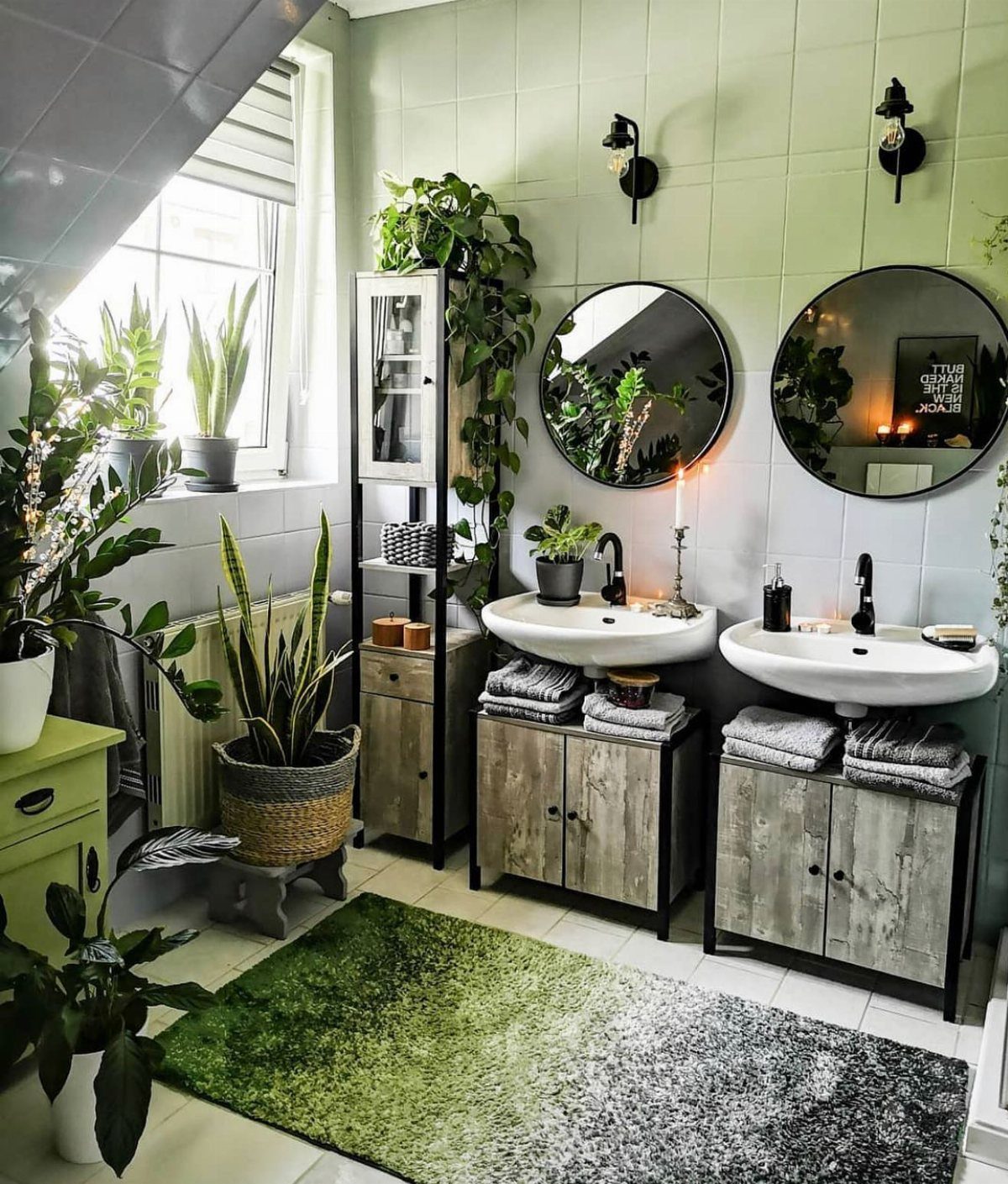
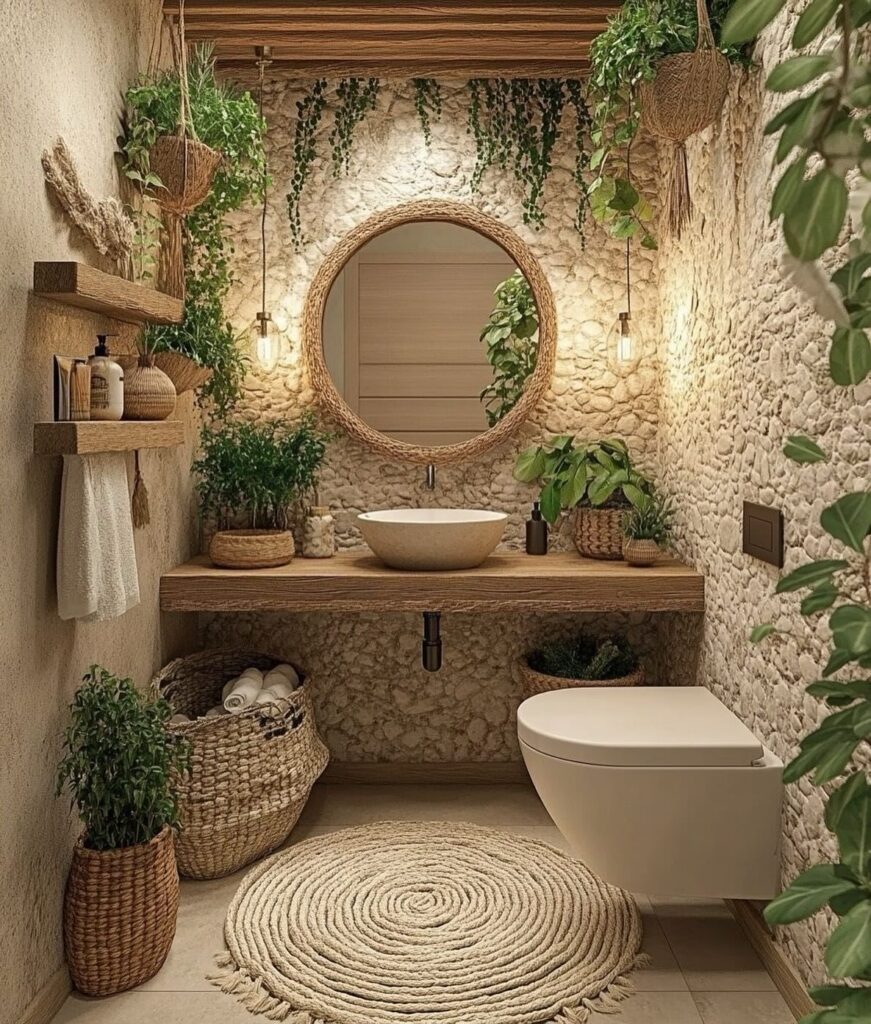
A bathroom full of plants stops feeling like a utility room and starts feeling like a space you actually want to linger in.
Ferns, snake plants, and spider plants handle humid air better than most, so they will not turn brown at the first steamy shower.
I set mine at different heights using simple plant stands and a couple of woven wall baskets for the trailers.
A small bathroom still works; one tall snake plant on the floor and a pothos on the windowsill is enough to soften the edges.
2. Add Color
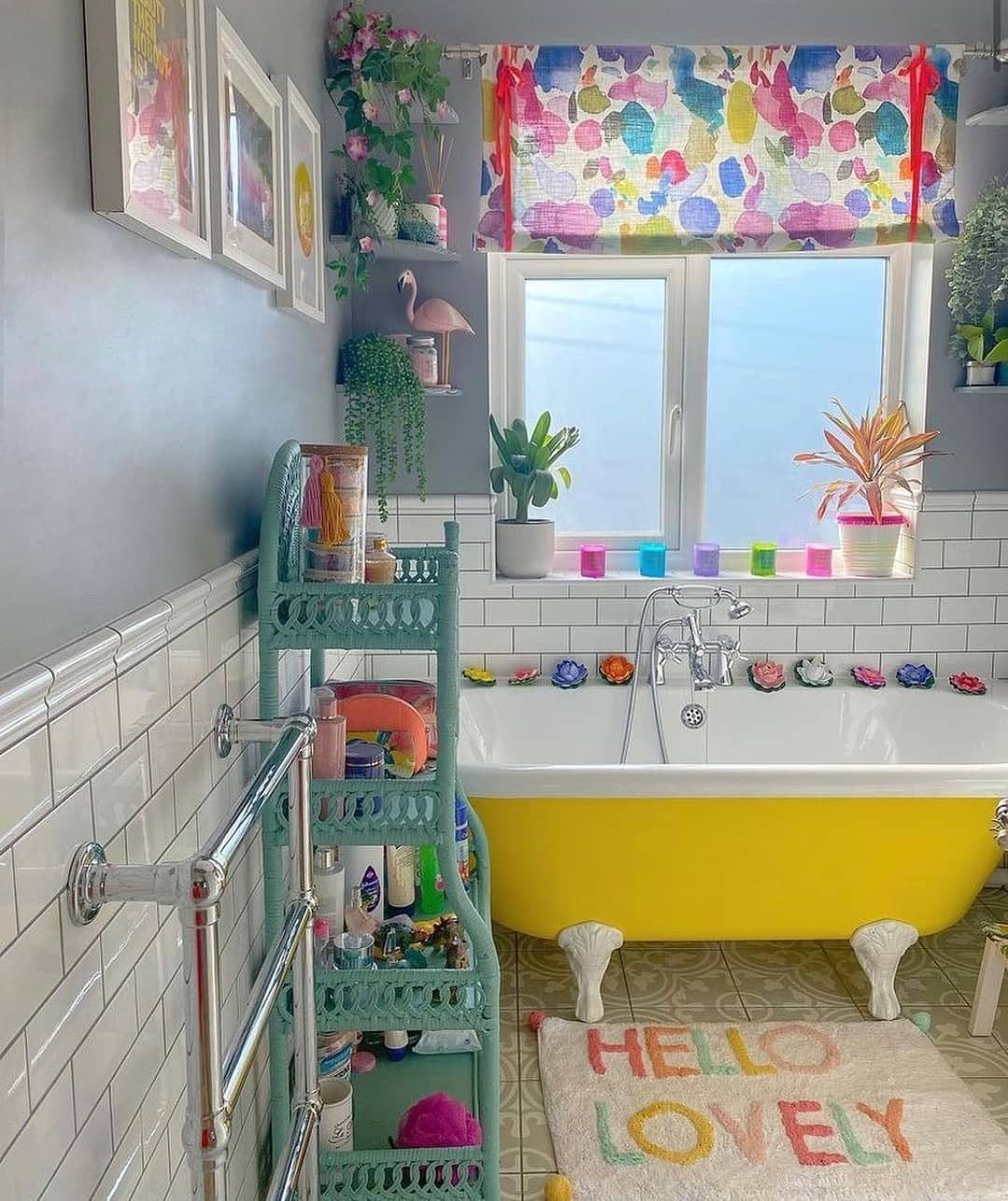
A boho bathroom can carry a bold color choice without apology. Terracotta and muted green stay warm without shouting; a teal cart adds the needed jolt.
If you rent and cannot paint, keep the walls white and let your towels, a shower curtain, or a small rug carry the color. One bold piece usually beats five competing ones.
3. Layered Textures
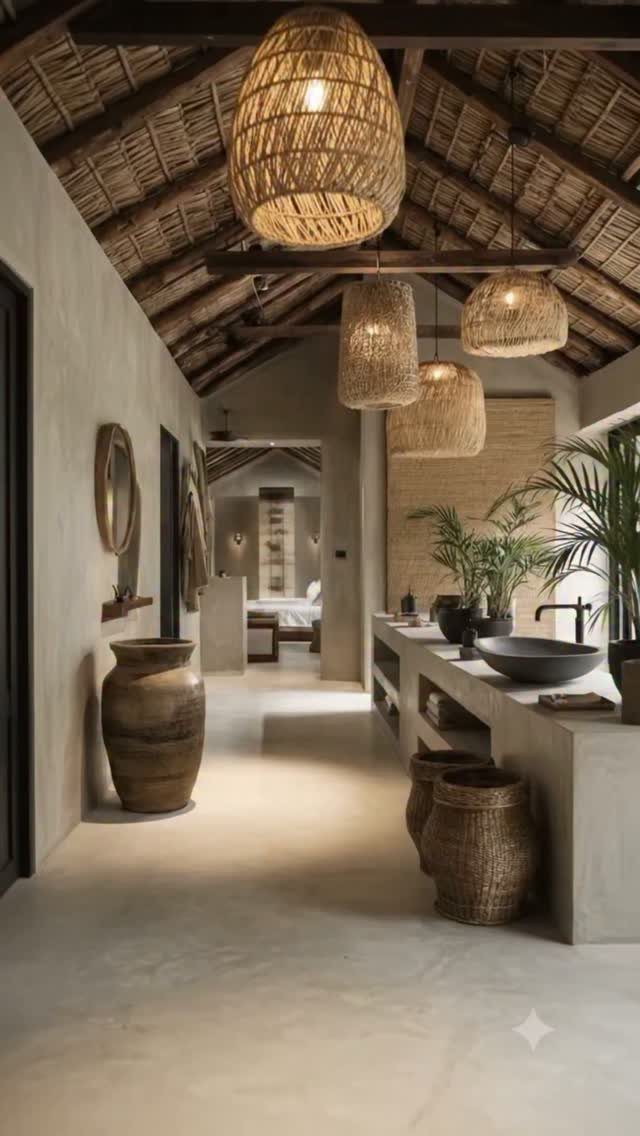
Concrete, rattan, and woven fiber in the same room sounds like a lot until you see it layered right. Mix hard and soft: a smooth vanity against a nubby basket, a flat wall behind a macramé hanger.
I add texture through things I can swap, a washable shag rug, a tasseled hand towel, a seagrass bin for extra toilet paper. Nothing permanent, nothing that commits you to one look past next spring.
4. Mosaic Tiles
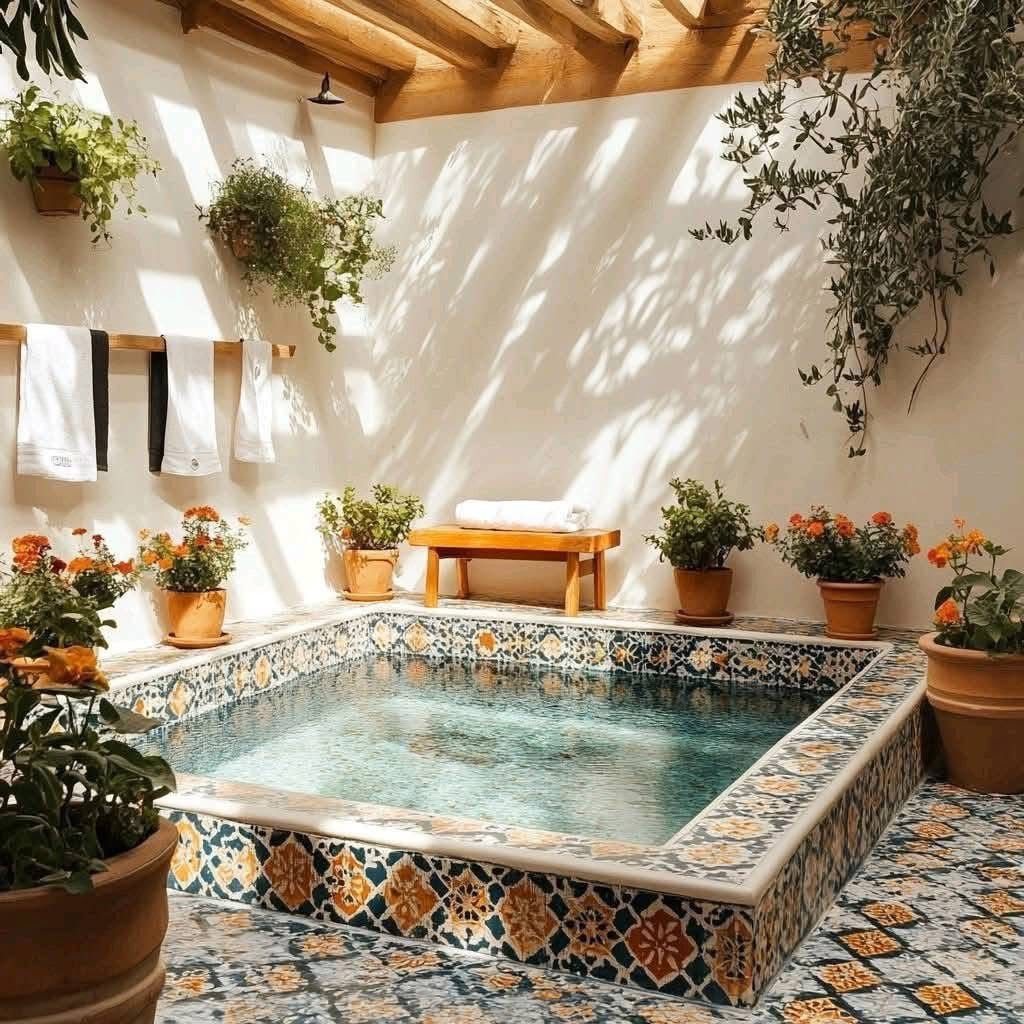
Mosaic tiles turn a floor or a single wall into the whole story. Earthy rust and olive tones feel grounded; turquoise goes bolder if that is your speed.
Mosaic tiles work best as a rim or a single accent wall rather than wrapping every surface, which gets busy fast. Small sheets install like standard tile, so the skill level is weekend, not contractor.
5. Use Patterns
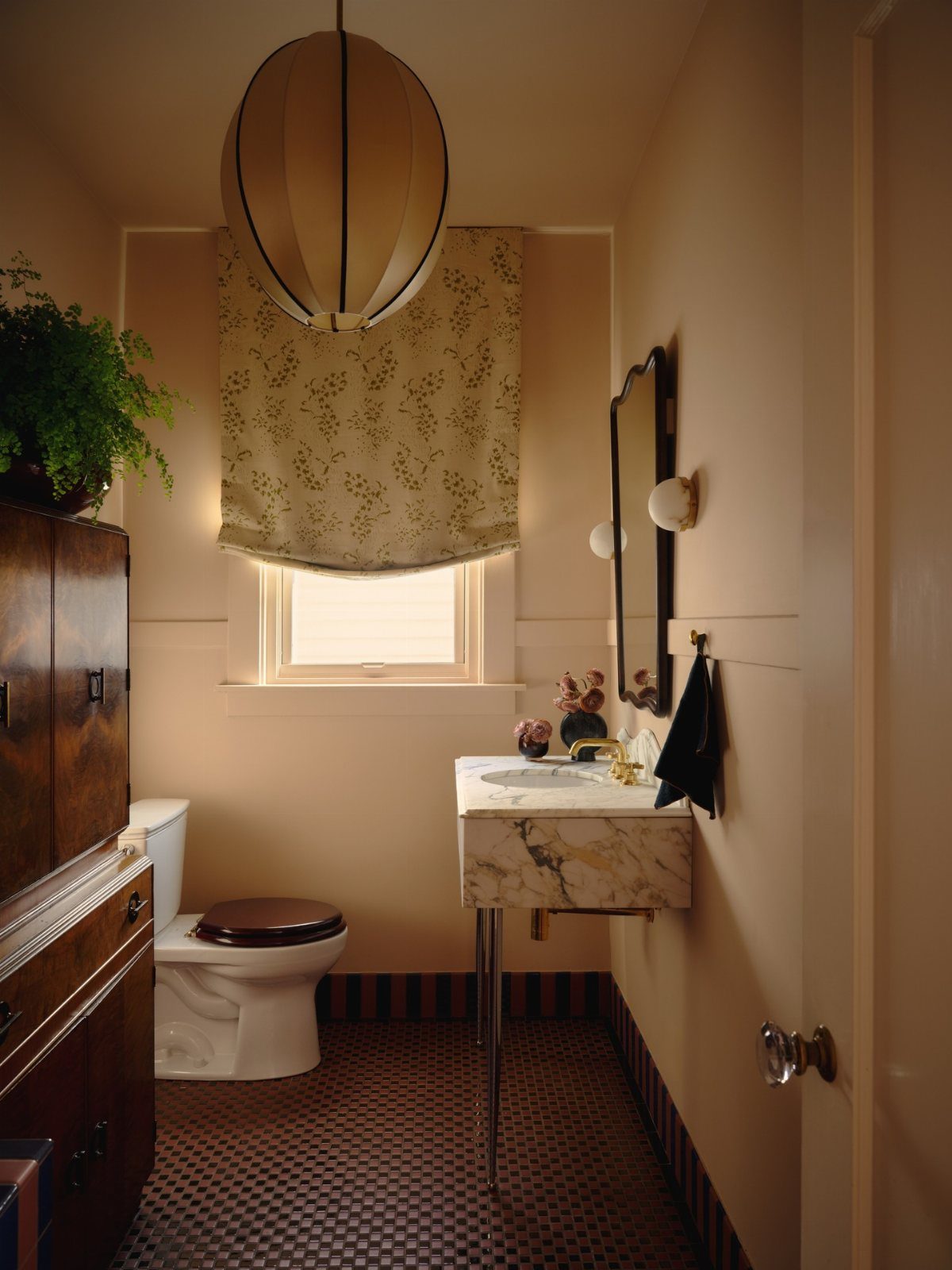
Patterns in a small bathroom can feel risky, but one strong move beats tentative half-measures. I pick a single focal point, a geometric shower curtain, a floral shade, a patterned floor, and keep everything else near-solid.
Moroccan tile prints read boho without trying too hard. The limit is your own eye: if you stop seeing the sink, you have added one pattern too many.
6. Vintage Accessories
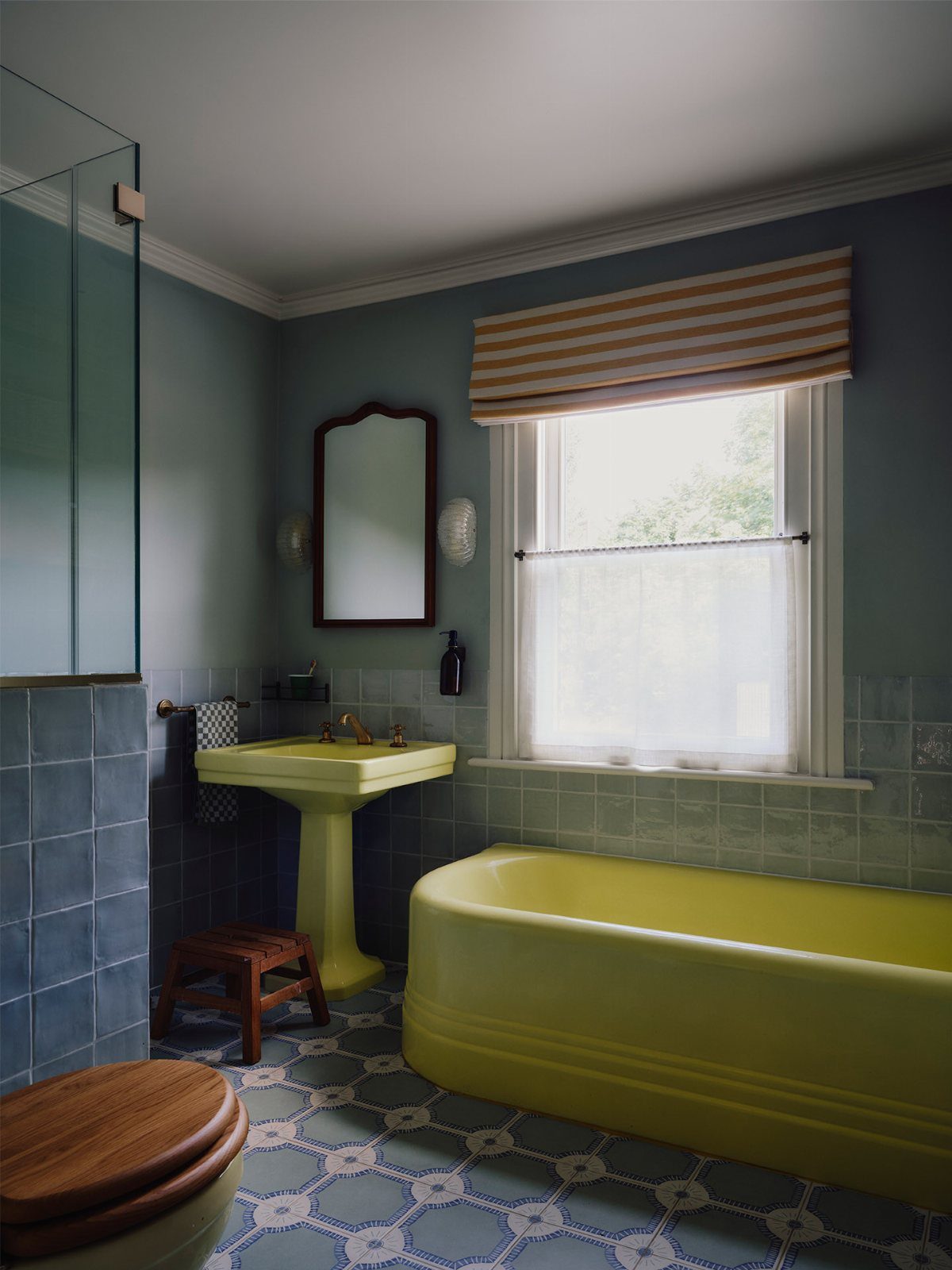
A vintage mirror or a set of old pharmacy jars gives a bathroom the sense that someone collected this over time, not bought it in an afternoon.
I look for brass that has dulled to a soft gold, or a frame with the kind of wear that reads as history, not damage. Estate sales and flea markets beat reproductions on price and on story.
One real old piece anchors the room; the rest can be new and nobody notices.
7. Soft Lighting
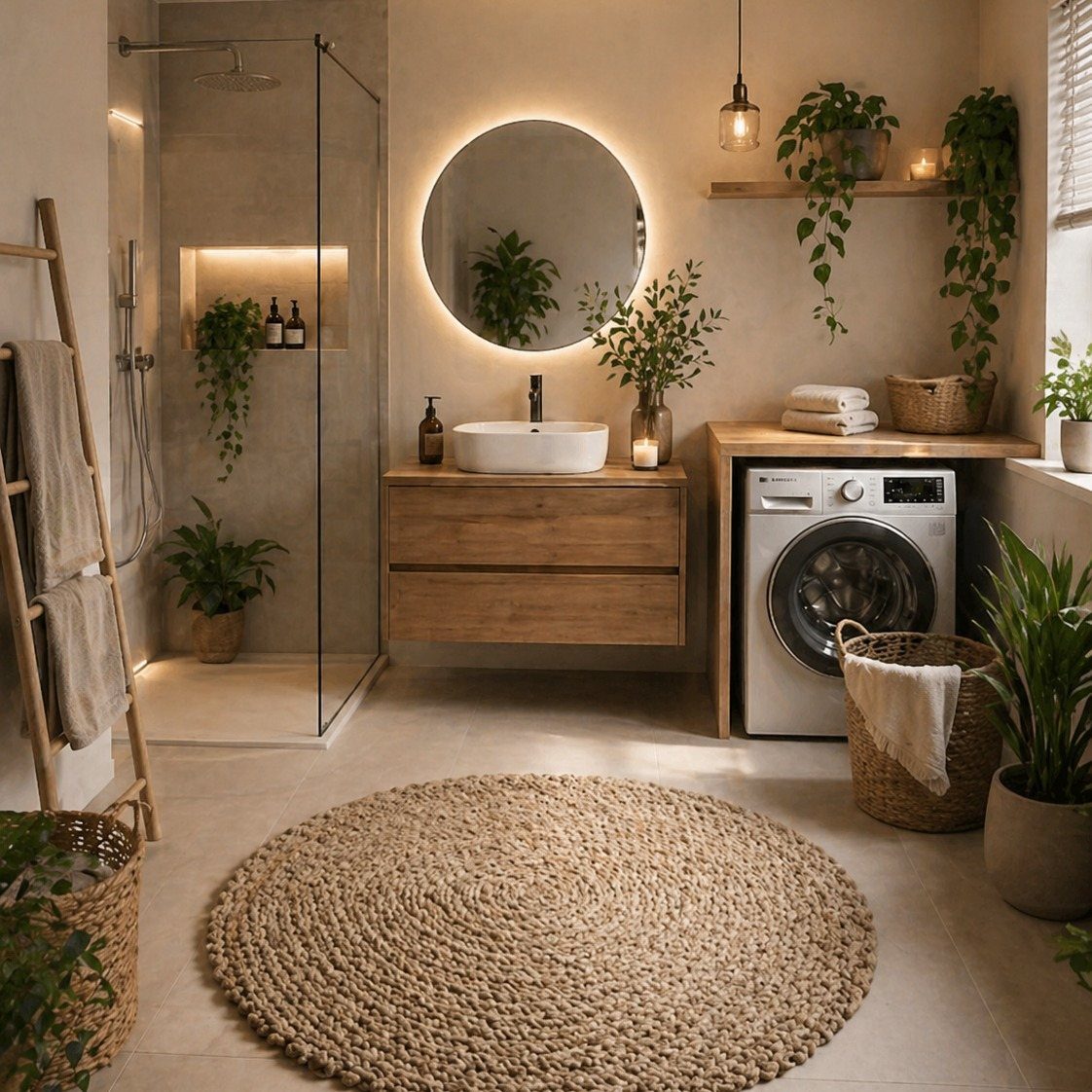
Harsh overhead light kills the relaxed mood a bohemian bathroom needs. A backlit mirror paired with warm-toned wall sconces replaces harsh ceiling light without needing a full electrical overhaul.
The layered glow turns a rushed morning routine into something calmer.
Pendant lights with rattan or linen shades cast softer shadows than standard flush mounts. Battery-operated sconces and a string of small lights behind the mirror do most of the same work for renters who can’t rewire.
A few candles on the counter finish the warm light, though keeping them unlit until you’re in the room is the safer habit.
8. Floating Shelves
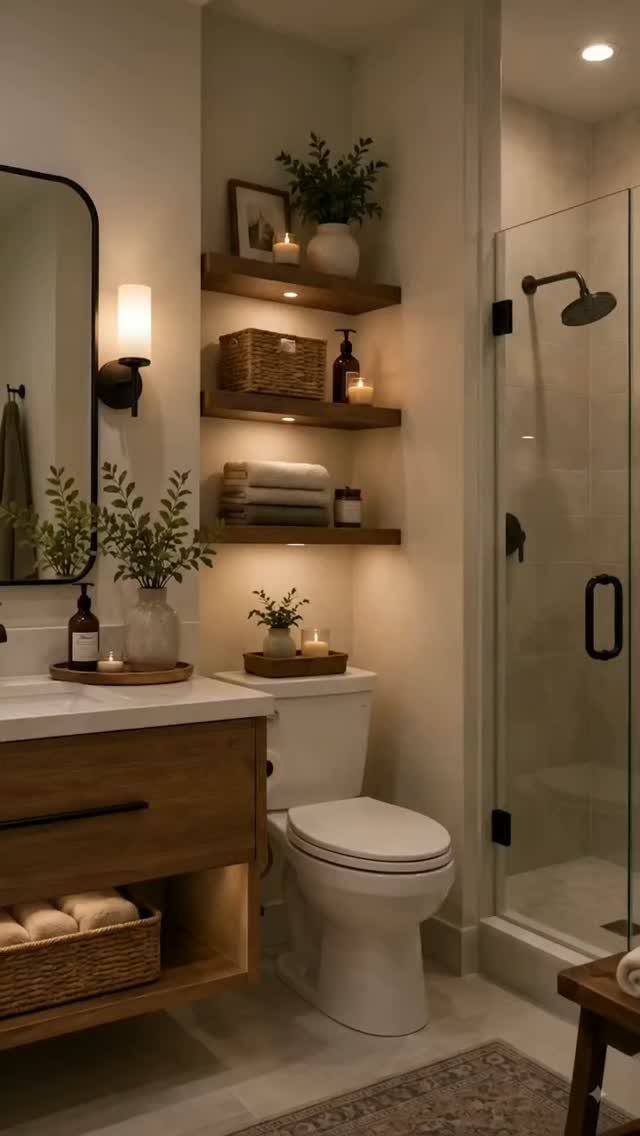
Three slim shelves above the toilet turned an awkward wall into storage I actually use. Wood brackets against a white wall work best when objects are spaced so the eye can rest between them.
Mounting shelves at staggered heights above the tank clears the flush handle and leaves room for a small basket on top. Natural wood or rattan keeps the look warm; painted MDF reads more utilitarian than bohemian.
Asymmetry helps. One long shelf with a shorter partner above it looks collected over time, not installed in an afternoon.
Brackets set slightly off-center break the rigid grid and still hold weight fine.
9. Textured Rugs
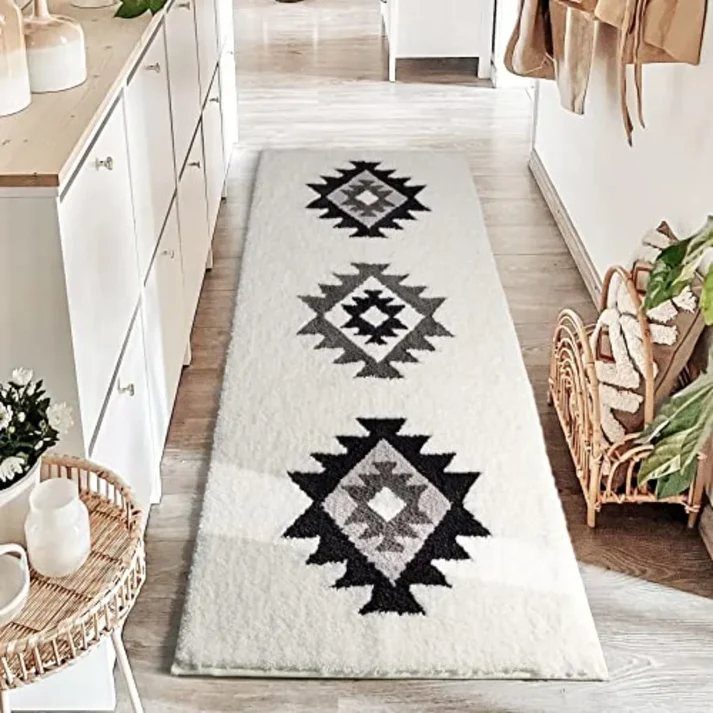
Cold tile at 6 a.m. is reason enough to add a runner. A runner-sized bath mat fits most standard layouts without crowding the door swing.
Cotton absorbs better than jute, which looks right for boho but stays damp too long.
The maker of this piece uses a soft, highly absorbent weave; I’d check the underside before buying anything labeled "boho" that turns out to be mostly decorative.
Layering helps if you have the floor space. A flat woven base with a smaller patterned rug on top adds depth and catches the water that drips past the first line of defense.
10. Accent Walls
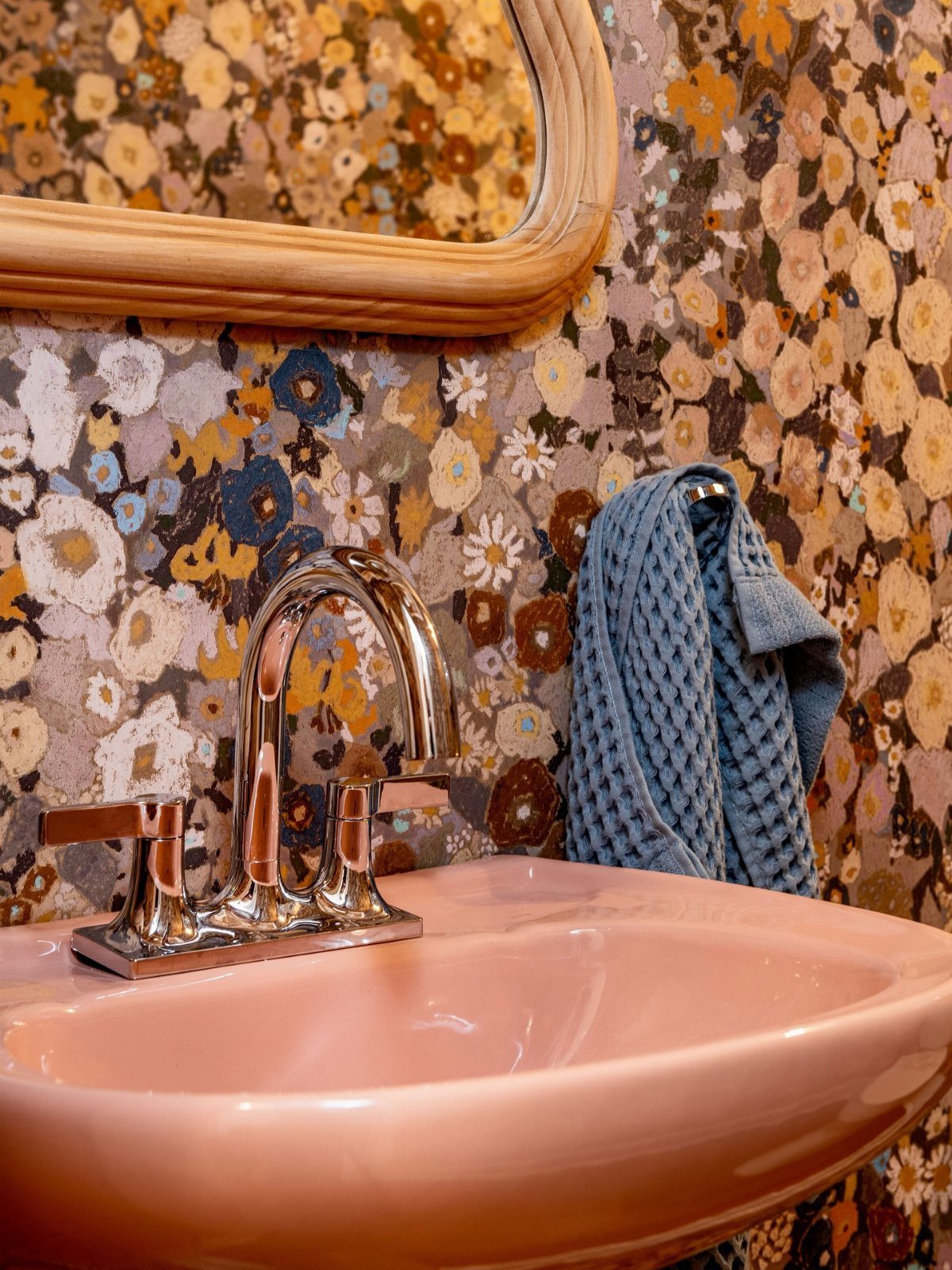
One bold wall does more for a small bathroom than four half-measures. The floral paper behind this pedestal sink turns a basic fixture into a deliberate choice.
Tile works too, though the cost jumps fast. Peel-and-stick mosaic for a shower surround priced out high per square foot, so a remnant roll of wallpaper covered the same area for less total cost.
The paper went up in an afternoon with a buddy and a spray bottle; the tile would have taken a weekend I didn’t have.
Pattern scale matters in tight quarters. Large florals or oversized geometrics read as texture from across the room, while small busy prints feel cluttered at bathroom distances.
11. Natural Wood Features
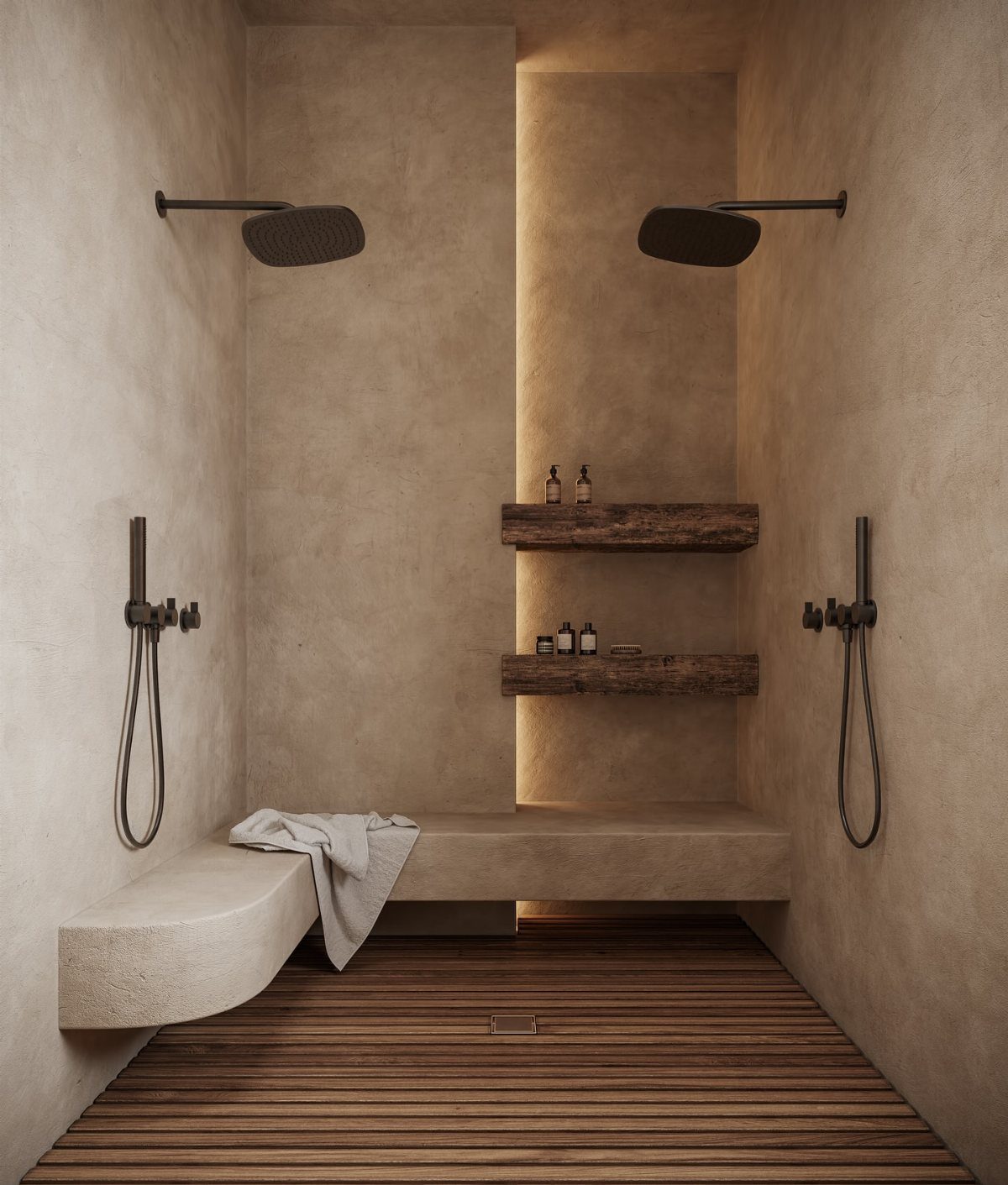
Wood brings warmth to all the white and chrome that builders default to. Dark slat flooring and floating shelves against plaster walls bring in warmth that reads as intentional, not temporary.
A wood-framed mirror and a small teak stool add natural material to a rental bath, both movable when the lease ends. A wall-mounted towel rack in oak or bamboo costs less than most people guess and installs with two screws.
The finish changes the mood. Light, raw wood reads Scandinavian; darker, more weathered tones lean bohemian.
A cheap pine shelf takes walnut stain well and wears in naturally over time. Steam and splashes eventually darken the grain in ways that look intentional rather than damaged.
12. Floating Vanity
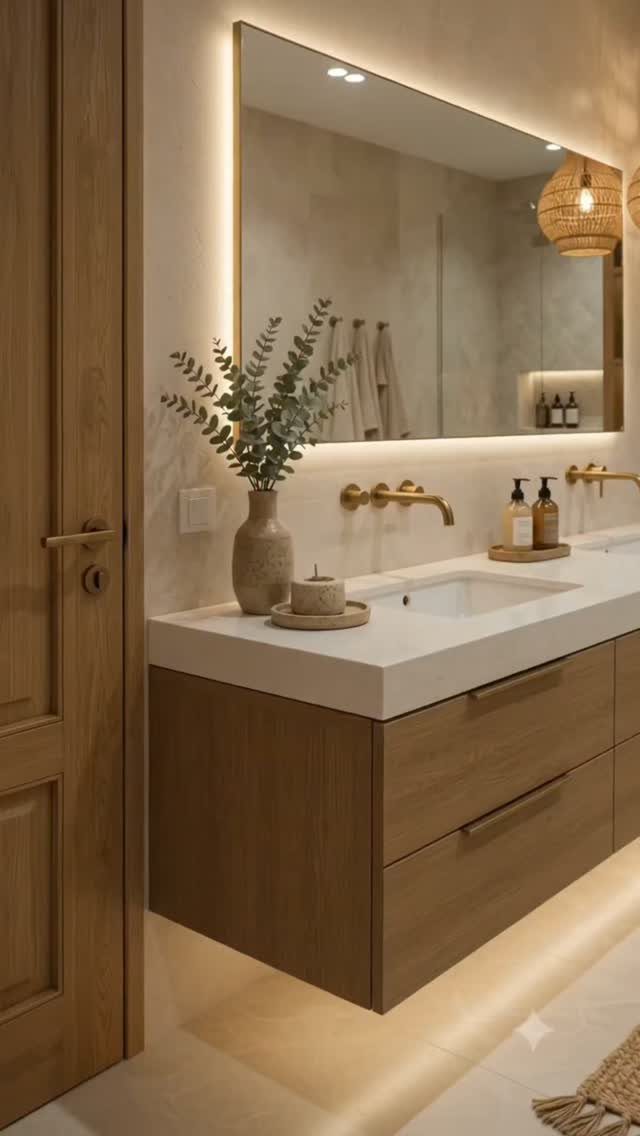
A vanity that floats off the floor tricks the eye into seeing more space than exists. Light passing underneath a wall-mounted unit makes the room feel less boxed in than a cabinet that sits on the floor.
A wall-mounted oak unit with an open shelf below runs about the same as a basic cabinet on legs. You lose the hidden cavern where half-used bottles go to die.
Wicker baskets on that open shelf recover some of the function and look better than a slammed drawer full of clutter.
Installation needs a stud or heavy-duty toggle bolts. A solo mount can leave the sink slightly, visibly, catastrophically tilted; a second pair of hands and a good level fix that.
The second try, with a level and a friend, went fast enough to wonder why the first attempt happened at all.
13. Artisan Finishes
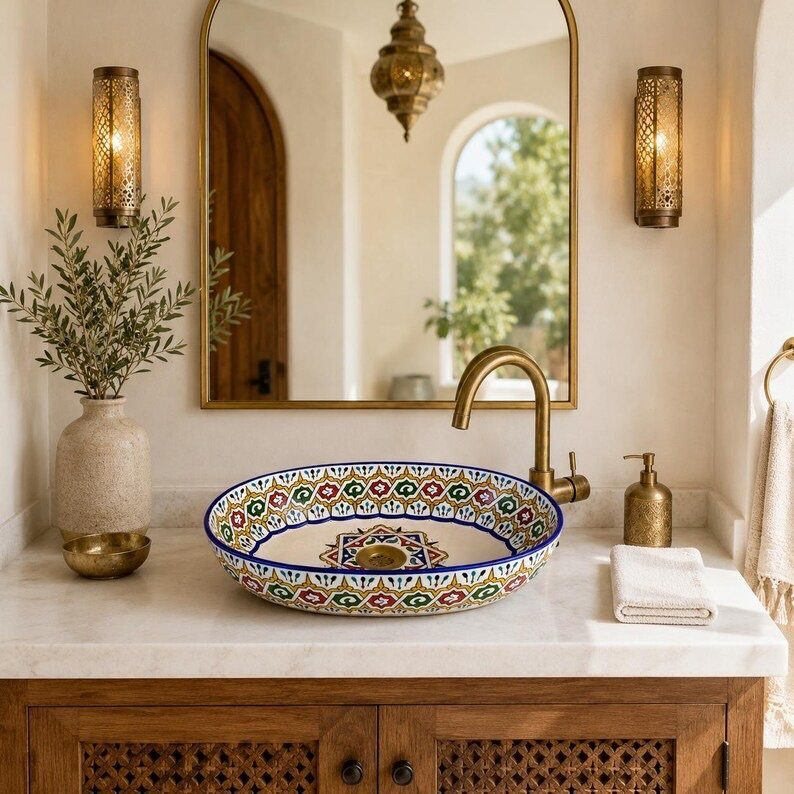
A hand-thrown ceramic sink or a carved wood vanity front turns the bathroom into something no big-box showroom copied.
A patterned vessel sink works best with brass that has some weight to it, not the thin stuff that dents when you bump it with a hairdryer.
I look for artisans at weekend markets or on Instagram, then ask whether they do custom sizes. Most do not, so I measure my cutout before I fall in love.
A 16-inch vessel needs at least 21 inches of counter depth to leave room for the faucet and your hands.
Patience matters. Returns are rare, so plan for a long wait.
If your only bathroom is out of order for a month, buy the stock sink now and swap it when the handmade piece arrives.
14. Wall-Mounted Shelves
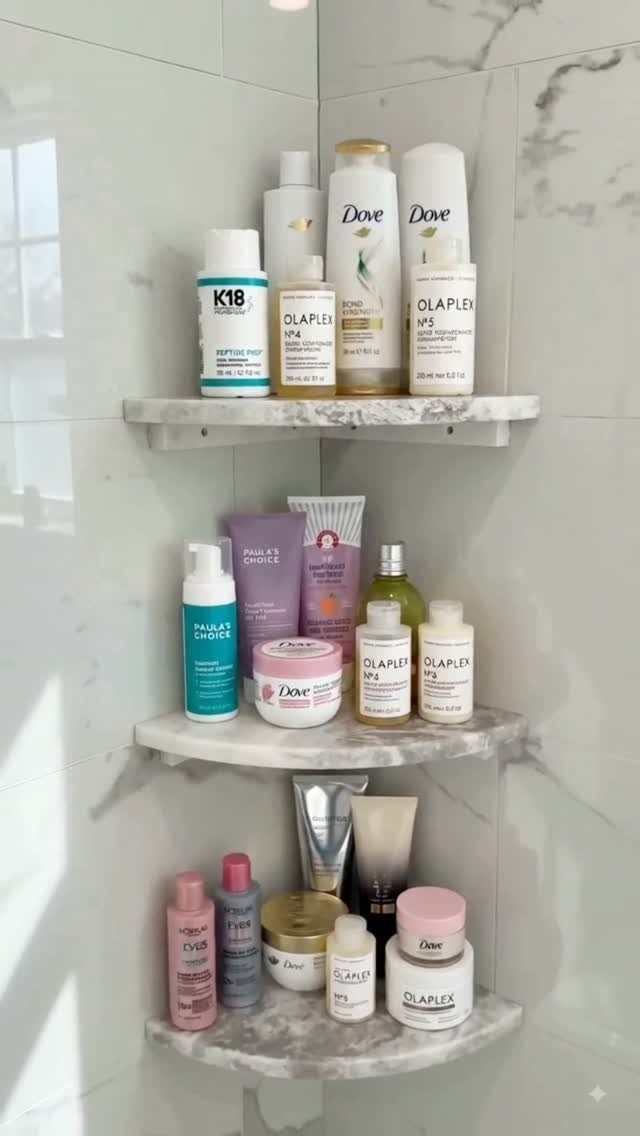
Marble corner shelves look built-in because they are cut from the same slab as the wall.
That is a splurge; the look I get for less is a floating oak shelf in a warm stain, mounted with hidden brackets from the hardware store.
Three shelves at staggered heights, roughly 12 inches apart, let me stack rolled towels on the lowest and keep daily bottles at eye level. The asymmetry keeps it from looking like a retail display.
I drill into studs when I can; in tile, I switch to toggle bolts rated for 50 pounds and accept that the hole is permanent.
Rattan or woven shelves work too, though I limit them to lightweight items. A full bottle of shampoo will sag the weave over time.
15. Colorful Towels
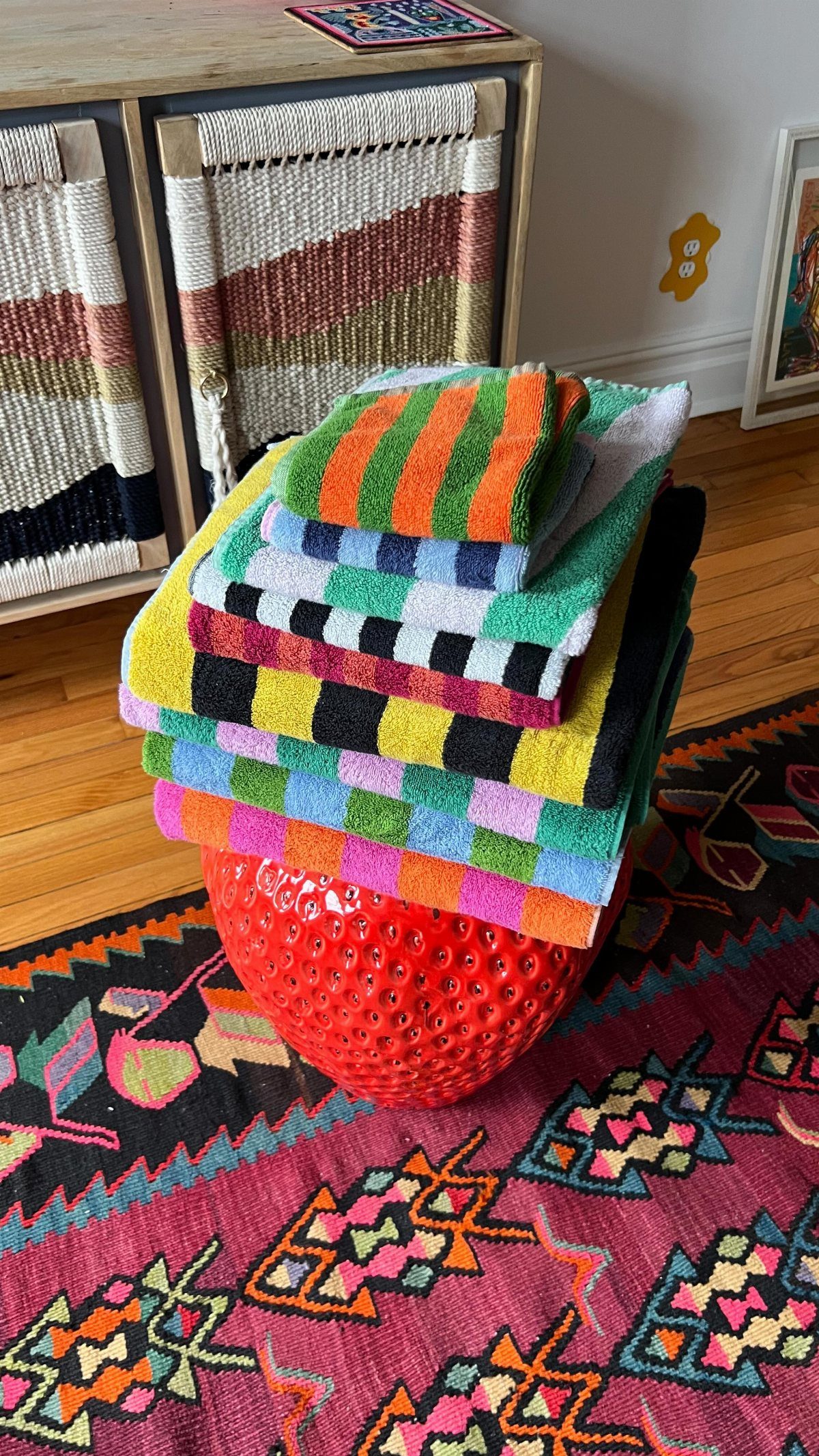
Towels are the fastest color swap in a bathroom. A stack of colorful towels sits better on a stool that picks up one of the towel colors; that repetition is what keeps it from looking like a laundry pile.
I buy Turkish cotton or a cotton-linen mix for bath towels, in a pattern busy enough to hide the water spots my hard water leaves. Two sets rotate: one in use, one in the wash.
Sale prices on sets make it affordable to tire of a color and switch.
The risk is fading. I wash in cold water and accept that the red will soften to coral eventually.
That is part of the look, not a flaw.
16. Decorative Towel Hooks
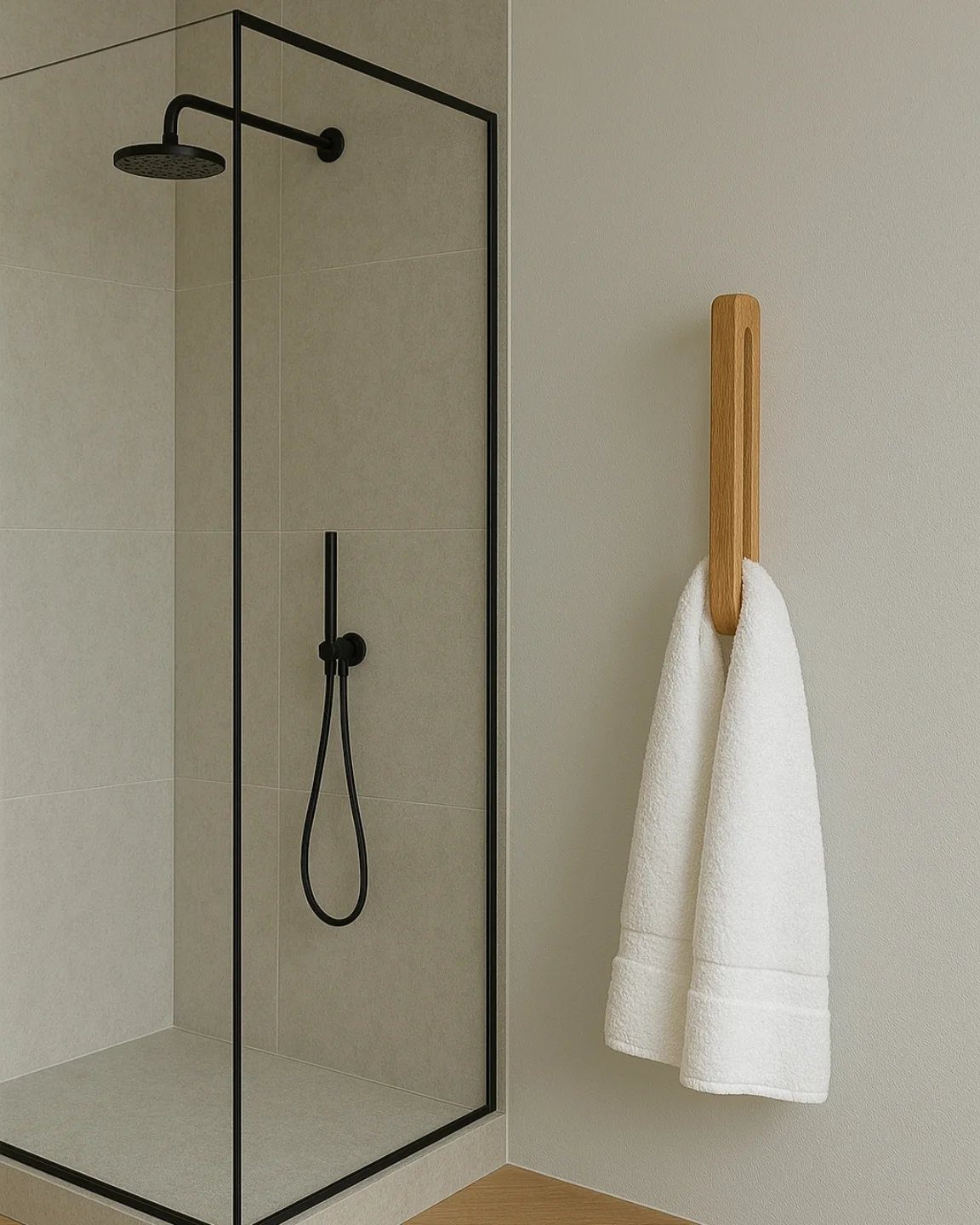
A single hook shaped from solid oak, mounted where you actually dry your hands, beats a row of chrome pegs you never use. Reclaimed wood with visible grain and a thick hook holds a heavy towel without splitting.
I place mine high enough to catch a towel folded in thirds without dragging. One hook per person who uses the bathroom daily; extras become clutter.
If the wall is drywall, I use a wall anchor rated for 30 pounds, not the cheap plastic kind that spins freely after one tug.
Brass or black iron work the same way. The finish should talk to another metal in the room, the faucet or the mirror frame, so the hook feels chosen rather than leftover.
Importance of Layering
Layering is what separates a boho bathroom from a room that just bought the right catalog.
Start with a base, like a flatweave rug on tile, then build up: a woven basket on the floor, a macramé plant hanger at eye level, a small ceramic dish on the counter.
Each piece adds its own texture and its own era, so the room stops reading as one-note.
Color works the same way. A single rust towel on white subway tile looks like an accident.
Add a second towel in mustard, a small brass tray, and a plant with deep green leaves, and the palette starts talking to itself. The warmth comes from overlap, not from any one thing.
Materials matter too. Rattan, terracotta, unglazed ceramic, and worn brass all age differently and catch light differently.
The room changes hour by hour when you mix them, and that restlessness is what keeps the style alive.
Mixing Vintage and Modern
A vintage piece in a new bathroom needs something current holding its hand. Glossy pale blue tile wrapping a shower reads retro on its own; paired with brass fixtures and a single plant, it feels intentional rather than themed.
The marble floor helps, grounding the color with something natural and quiet.
Art is an easier entry point than tile. A few nature-centric paintings or drawings in rich tones, hung on an otherwise plain wall, pull the room toward boho without a renovation.
European claw foot tubs work the same way if you have the space and the floor strength, though most renters will stick to smaller moves.
The balance to watch is quantity. One vintage piece against clean modern lines creates tension; three or four start looking like a set.
I’d pick the art for a small group, the tub only if the room can handle the visual weight.
Frequently Asked Questions
Is boho decor out of style in 2026?
Boho is still current in 2026, though the look has shifted toward richer, more grounded versions. Mediterranean-boho mixes with copper tubs and deep teal walls, while industrial-boho pairs rustic wood with black fixtures and exposed brick.
The style keeps moving; what dates it is the overly polished finish, the thing that looks too done.
What are some trendy bathroom decor ideas for 2026?
Layered textures, natural wood features, and artisan finishes are running strong this year. A floating vanity with open wicker storage, mosaic tile on a single accent wall, and hand-thrown ceramic sinks all hit the mark.
Warm lighting from rattan pendants or battery sconces replaces harsh overheads, and one bold pattern, a geometric shower curtain or floral wallpaper, beats scattered half-measures.
What are some good bohemian bathroom accessories?
Vintage pharmacy jars, a brass mirror with real age, and woven baskets for storage all fit without looking bought-in-a-kit. Macramé plant hangers, tasseled hand towels, and small ceramic dishes add texture you can swap out seasonally.
Solid oak towel hooks beat chrome pegs, and a teak stool brings in natural wood you can take with you when you move.
What are common mistakes in boho decor?
Overcrowding the space is the main one; three or four vintage pieces start looking like a set instead of a find. Overly polished finishes kill the relaxed mood, the brass should show some age, the wood some wear.
Another slip is competing patterns; one strong focal point and near-everything else solid keeps the eye from exhausting itself.
What actually makes a bathroom ‘Boho’?
Earthy tones, natural materials, and layered textures create the foundation, but the real marker is a collected-over-time feeling.
Rattan, terracotta, unglazed ceramic, worn brass: each ages at its own pace and catches its own light, so the room keeps shifting through the day.
The warmth builds from overlap, a rust towel dropped on mustard tile with deep green leaves nearby, not from any single item labeled ‘boho’.