These ideas range from a quick hardware swap to a full built-in wardrobe, and the right one depends on whether you rent or own.
A renter in a weekend mood can get most of the effect with layered textiles, a mirror with LED backing, or pale blue bedding against white wainscoting.
Someone staying put might start with the four-poster bed that sets the room’s rhythm, or a narrow ledge that balances lamps against a board and batten wall.
1. Dressing Vanity
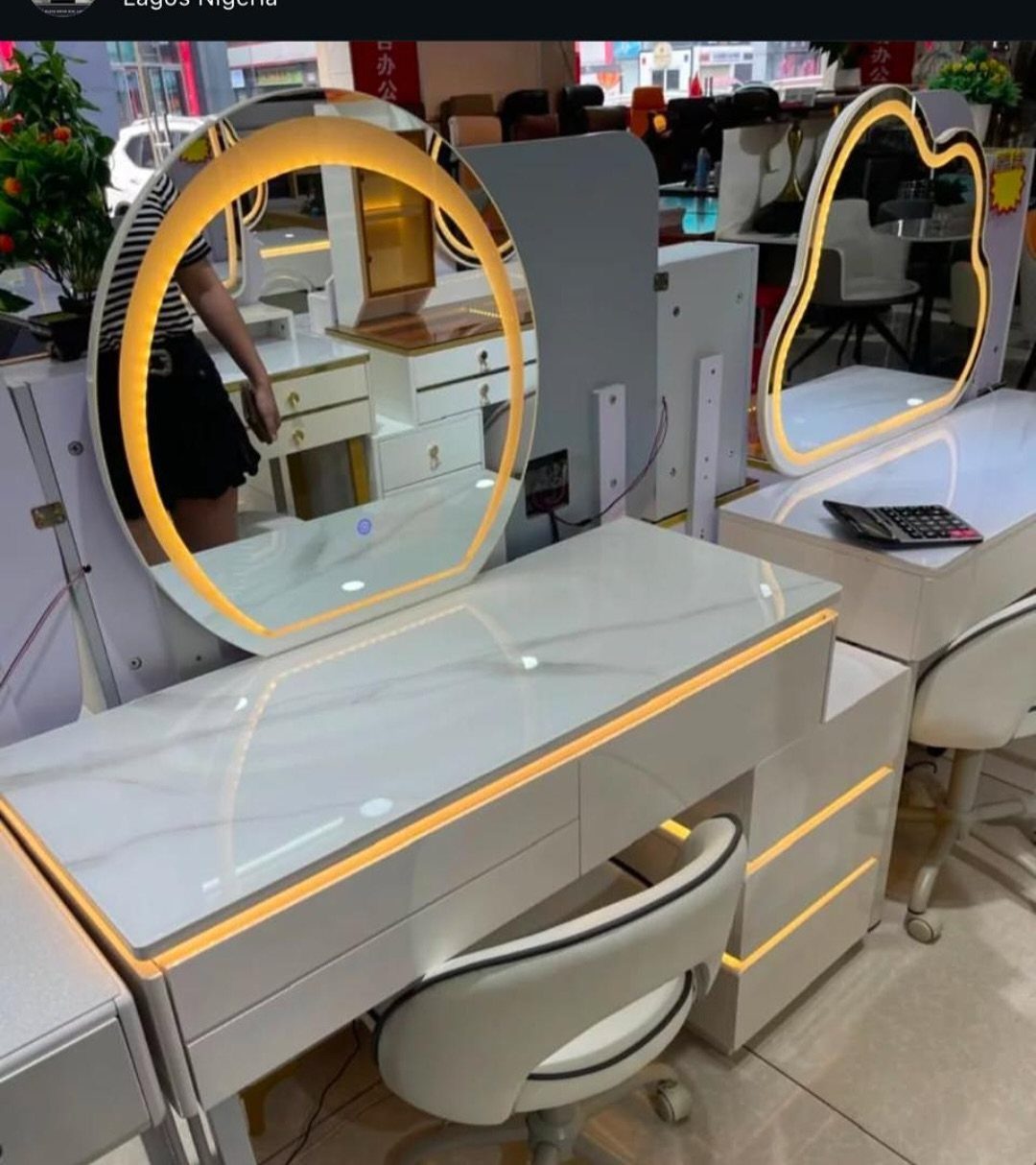
A dressing vanity gives morning routines their own territory inside the bedroom. LED strips behind the mirror and a frame that reaches the wall turn any table into a vanity that feels built for the room.
For a rental or first setup, a narrow console with a wall-mounted mirror and a small upholstered stool does almost the same job. I would keep the mirror within 60–75% of the furniture width so the proportions hold.
Drawers matter more than looks; makeup and skincare disappear fast without them.
If floor space is tight, skip the chair and use a padded bench that tucks underneath.
2. Statement Headboard
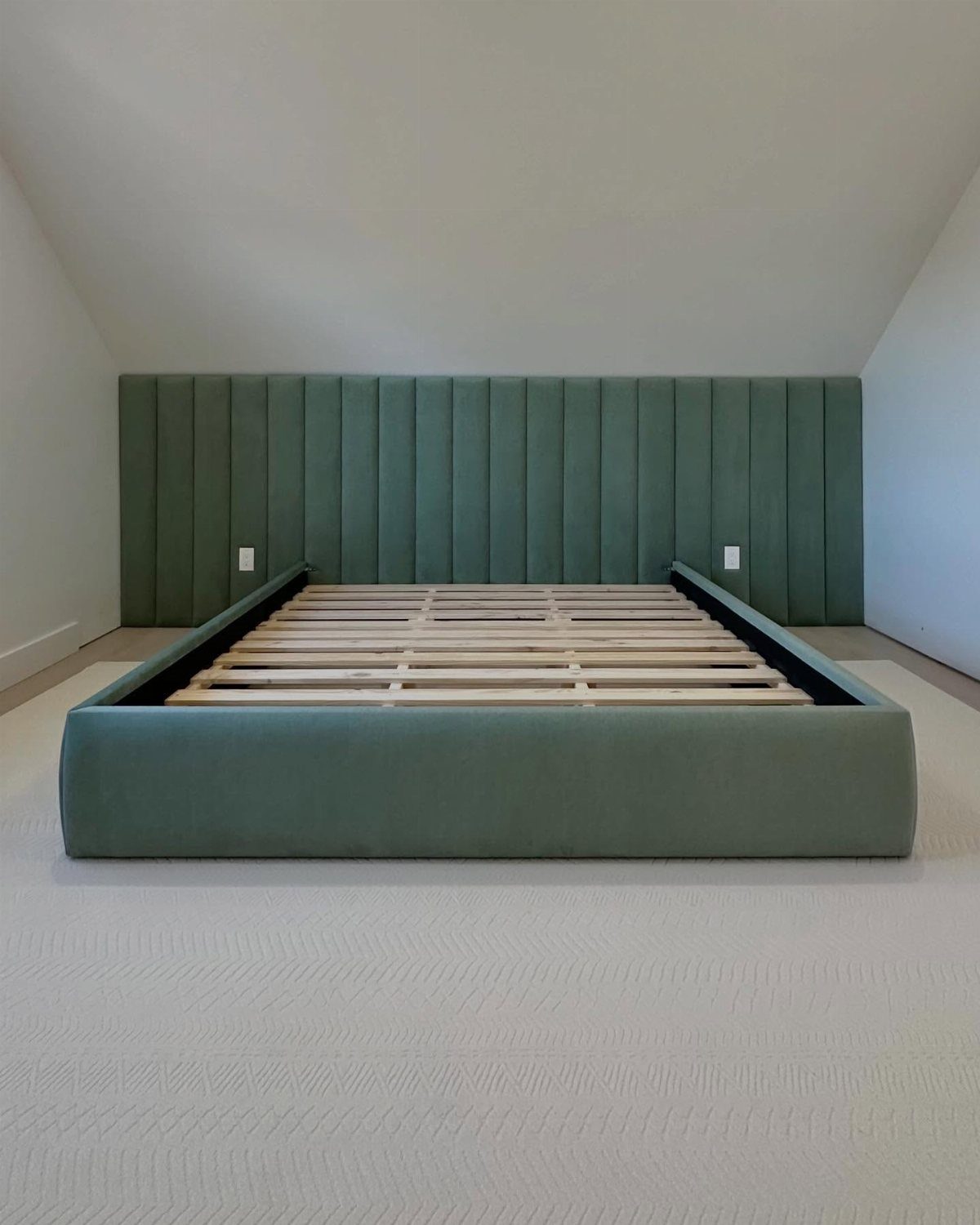
The channel tufting on this headboard runs vertical, which pulls the eye up and makes standard ceilings read taller. Upholstered headboards in velvet or leather add softness against painted walls and muffle sound better than wood.
Mounted reading lights attached to the wall or headboard itself keep bedside tables clear. I find this matters more than the fabric choice; a cluttered table undoes the calm faster than a cheaper textile.
For a weekend project, a prefab upholstered frame bolts to a standard metal base in about an hour. Custom millwork costs more but lets you match the exact wall width.
3. Hotel-Style Bedding
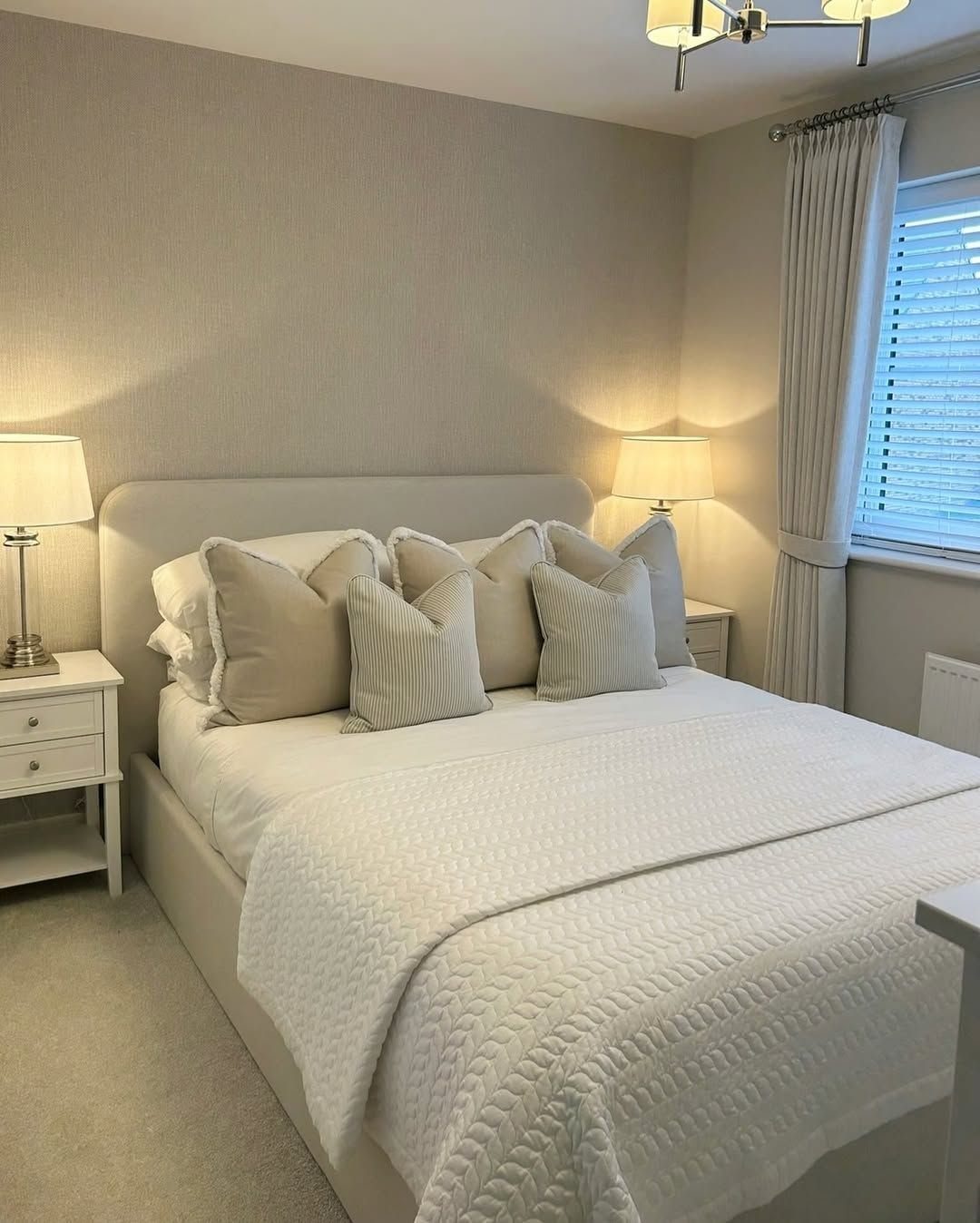
Hotel beds read luxurious because every layer has a job. Layer a fitted sheet, flat sheet, and duvet; the three-piece stack is what gives hotel beds that finished weight.
Sateen weaves look polished and feel cooler than flannel; percale crinkles more but lasts longer.
Thread count helps, though the fiber matters as much as the number. Cotton percale or linen both breathe well across seasons.
I layer a throw at the foot more for weight than warmth; it signals "finished" even when the bed is just made, not styled.
Two or three pillows in matching shams, plus one lumbar or round accent, hit the right density without requiring a staging budget.
4. Statement Rugs
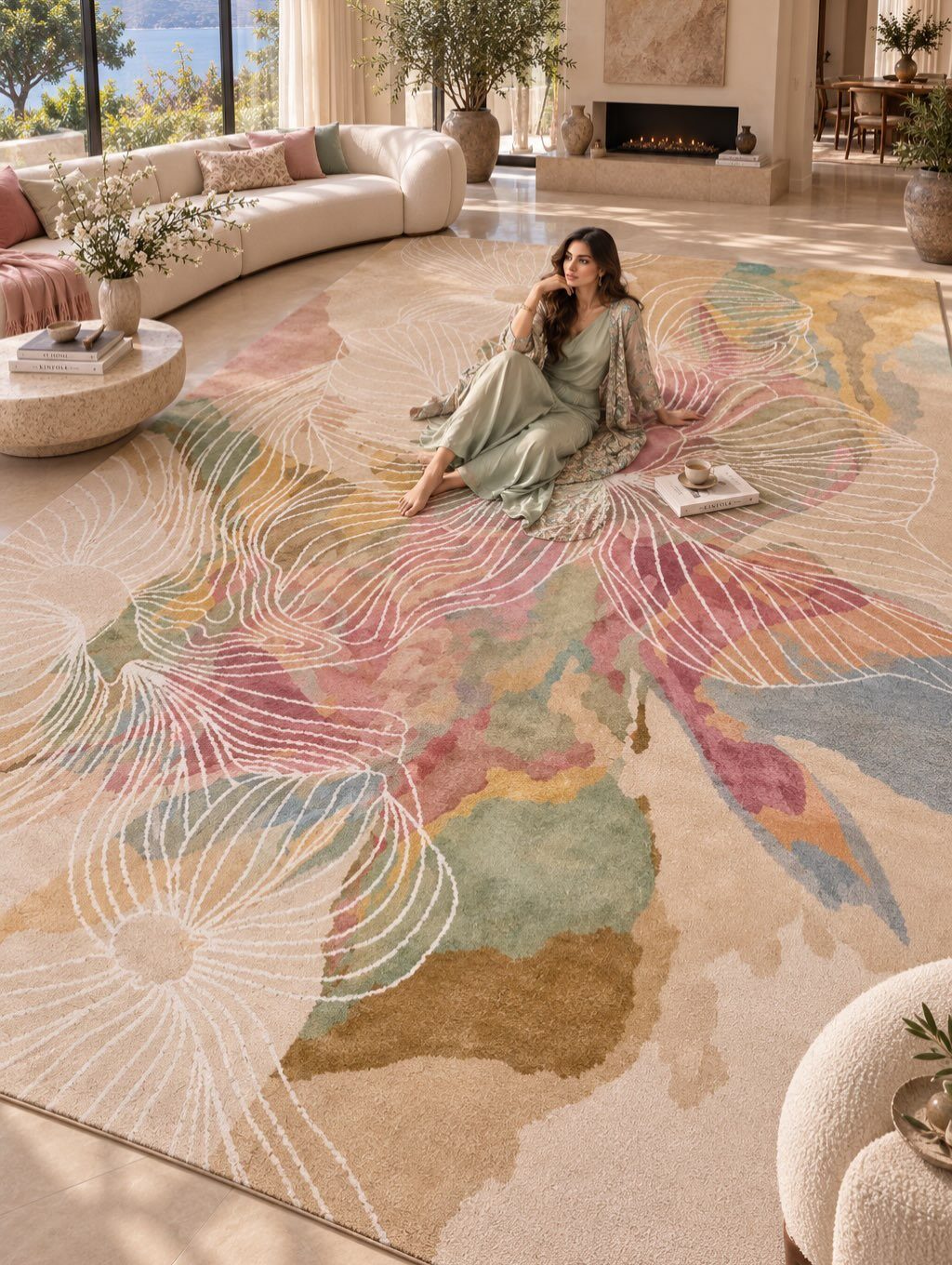
A rug that fills most of the floor, leaving 18 to 24 inches of bare wood or carpet around the edges, reads intentional rather than leftover.
A bold pattern on the floor can carry the room when wall space is scarce or already spoken for.
For warmth underfoot, a Flokati or high-pile wool in cream or beige gives that 1970s shag feeling without the harvest gold. Jute or cotton flatweaves cost less and suit warmer climates, though they shift more on smooth floors.
Measure before you browse. A rug that stops short of the bedside tables looks like a bath mat that lost its nerve.
5. Textured Finishes
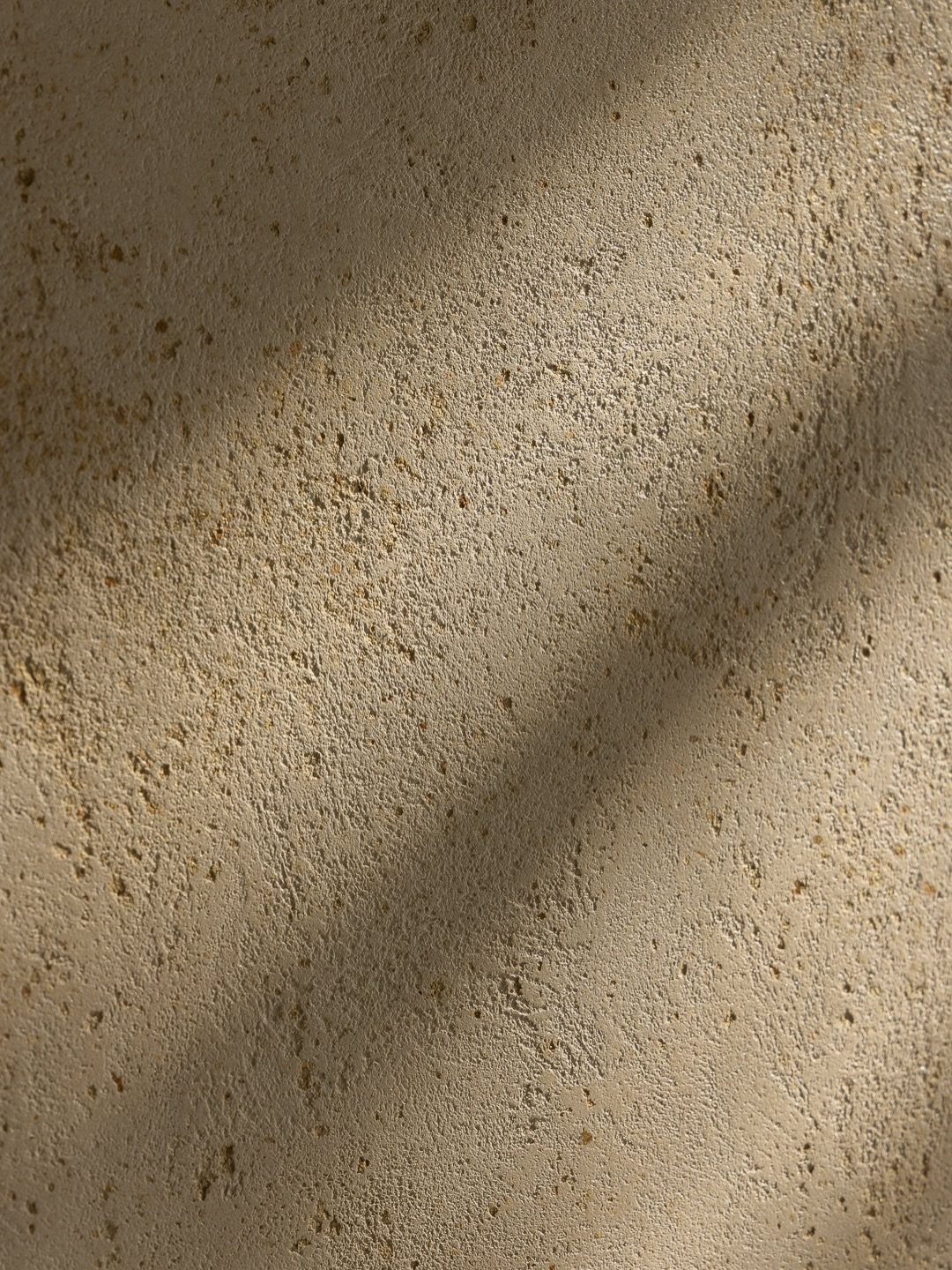
Texture shows up in the small stuff: a bouclé headboard, linen curtains that catch light differently at noon than at dusk, a wall treatment with enough grain to cast faint shadows.
One color holds plenty of interest when the surface itself shifts; plaster, limewash, or a hand-troweled finish all do the work.
I mix velvet, linen, and leather not all at once but in two or three places. A velvet pillow against linen bedding, or a leather pull on a woven basket, gives the eye something to register without competing for attention.
Start with what you touch most. Bedding upgrades first; ceiling beams come later if they come at all.
6. Ornate Wallpaper
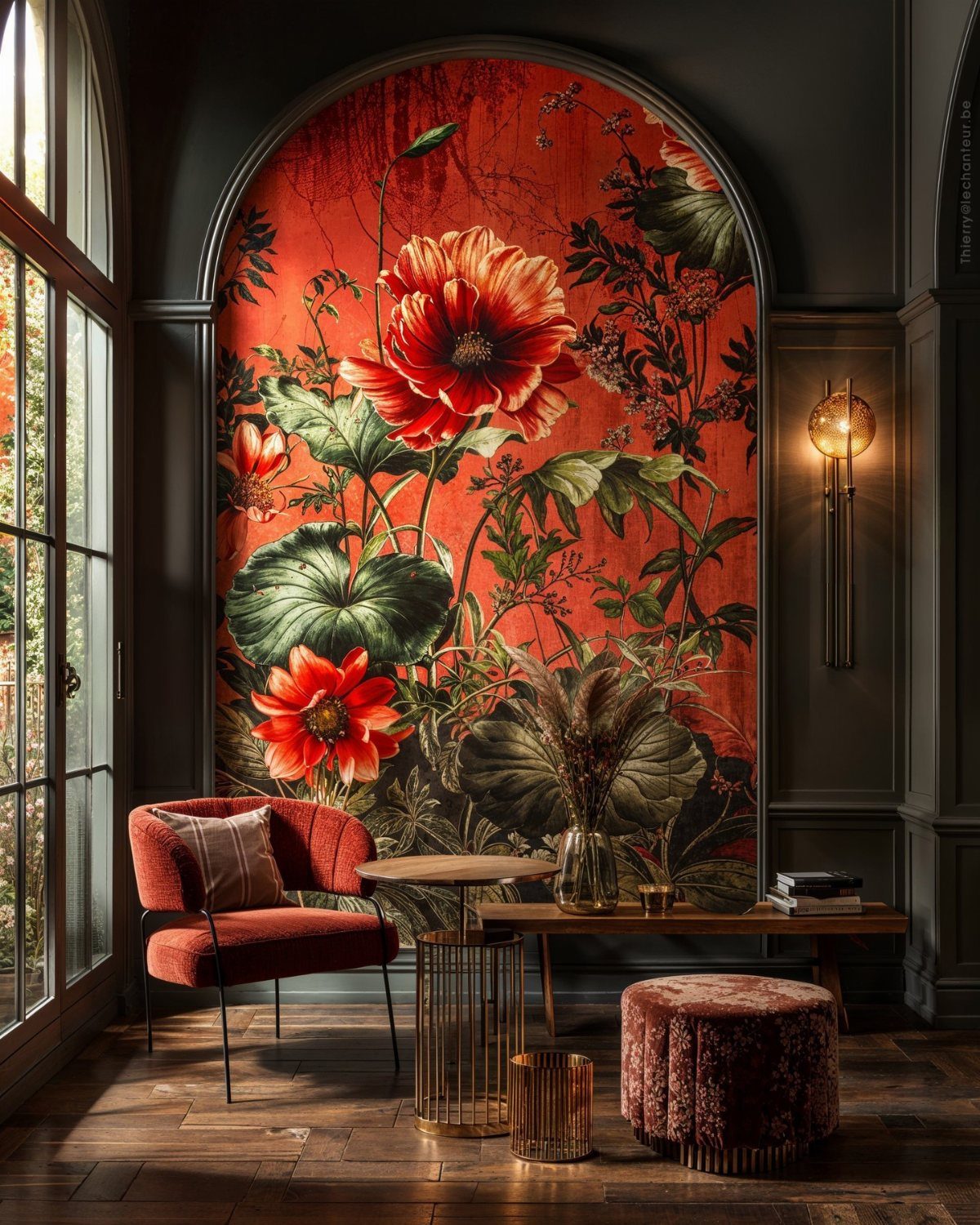
Wallpaper this bold becomes the room’s entire color story. Red floral paper in an arched alcove stays elegant when every other choice, down to the flowers and the lamp base, pulls from the same palette.
For a single accent wall, measure the repeat and buy one extra roll. Pattern matching eats more paper than solids, and out-of-stock reorders can stall a weekend project for weeks.
If the print is leafy or floral, pull two colors from it: one for a textile, one for a small object. The match does not need to be exact.
Close enough reads as intention; perfect reads as package deal.
A room this saturated suits someone who wakes well to strong visual cues. For lighter sleepers, keep the bold paper to a wall they face only during daylight hours.
7. Layered Textiles
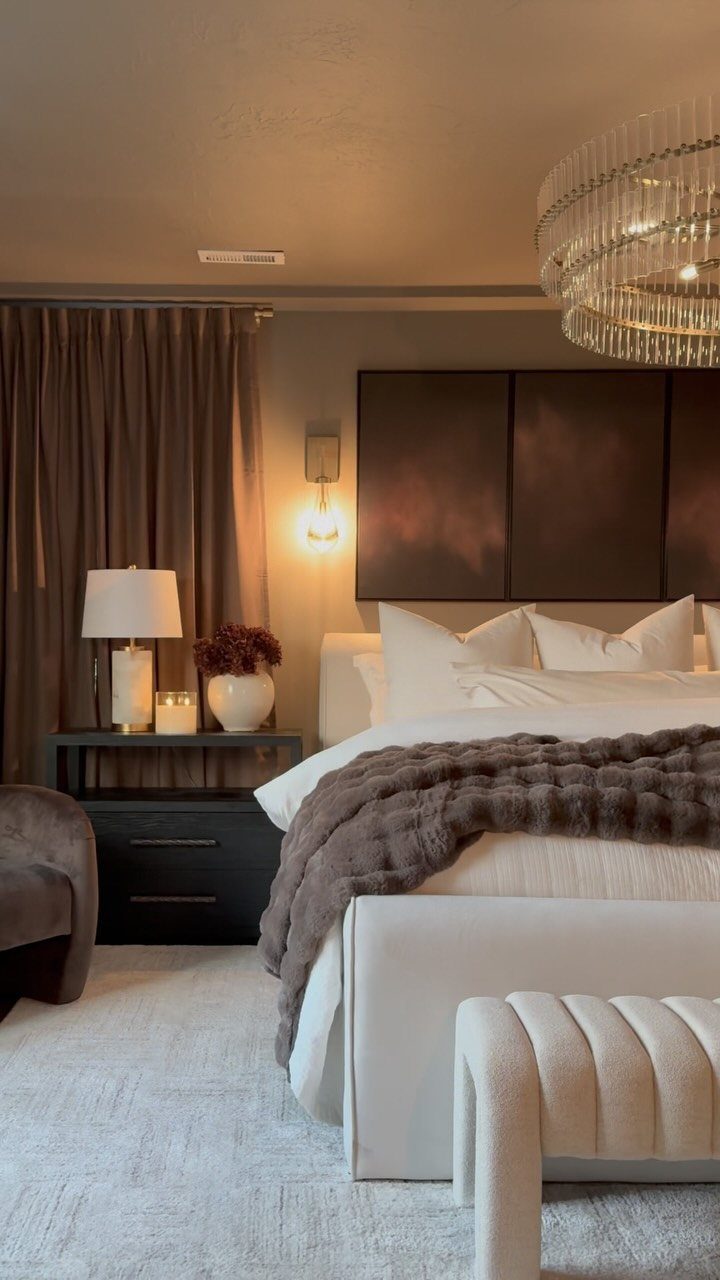
Layered textiles build warmth without demanding a full renovation. I start with crisp cotton sheets, add a chunky knit throw at the foot, and finish with a faux fur blanket draped where the eye lands first.
Bouclé pillows against smoother shams give the bed that hotel-suite depth.
Woven textiles and natural stone surfaces nearby, on a nightstand or windowsill, extend the same logic beyond the bed. The mix matters more than any single piece.
Textiles do what new furniture cannot at a fraction of the cost.
8. Layered Lighting
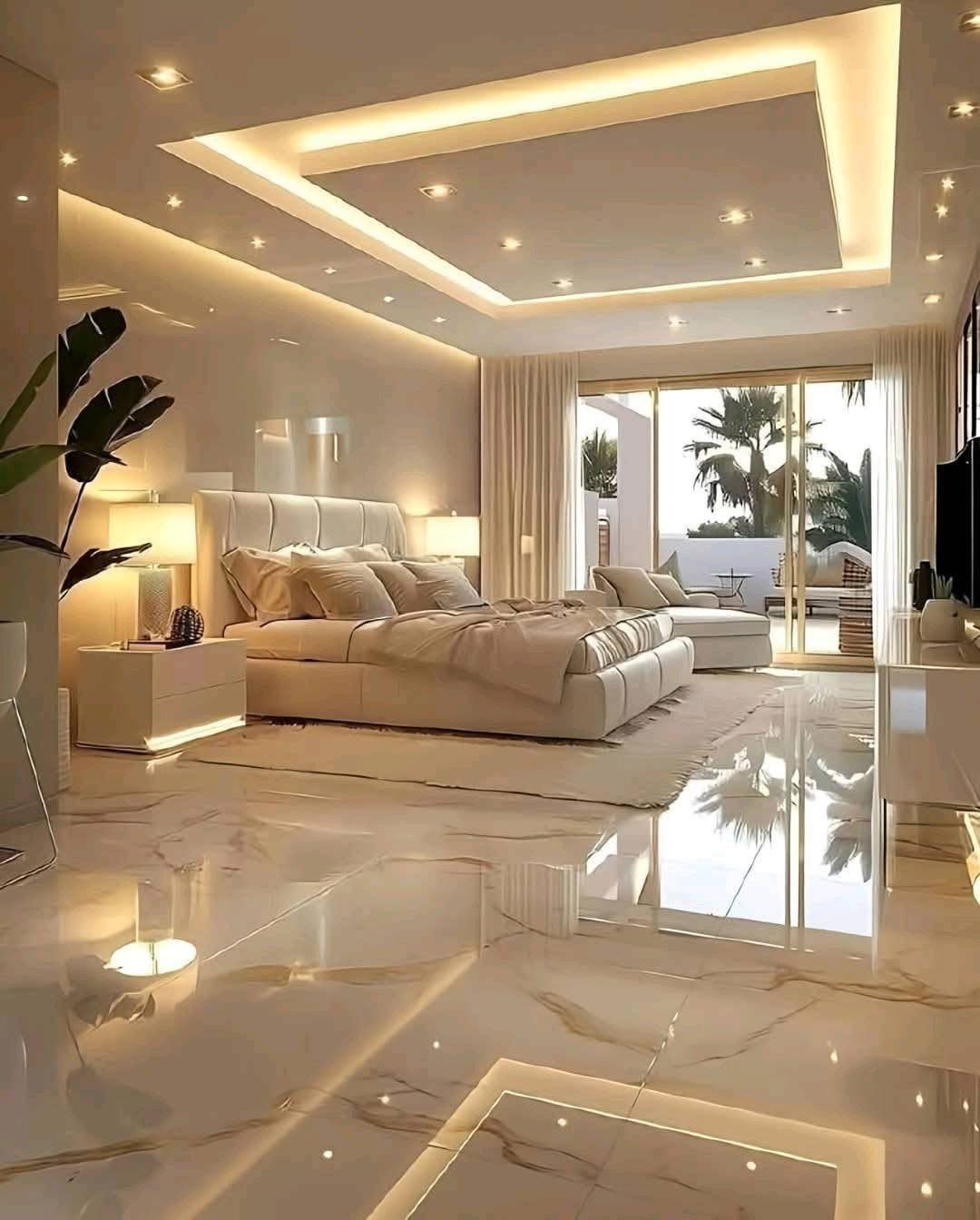
One overhead fixture flattens a room no matter how expensive it is. A statement pendant alone leaves you reaching for a phone flashlight; bedside sconces or a dimmable lamp at the dresser fix that.
Now I run three sources minimum: recessed or cove lighting overhead, bedside lamps at sitting height, and something directional for a corner or piece of art.
Dimmable everything is non-negotiable. Hidden perimeter lighting, tucked behind crown molding or under a floating headboard, washes walls with warmth that lamps alone cannot reach.
Choose your light level by task and hour, not settle for what the switch gives.
9. Four-Poster Bed
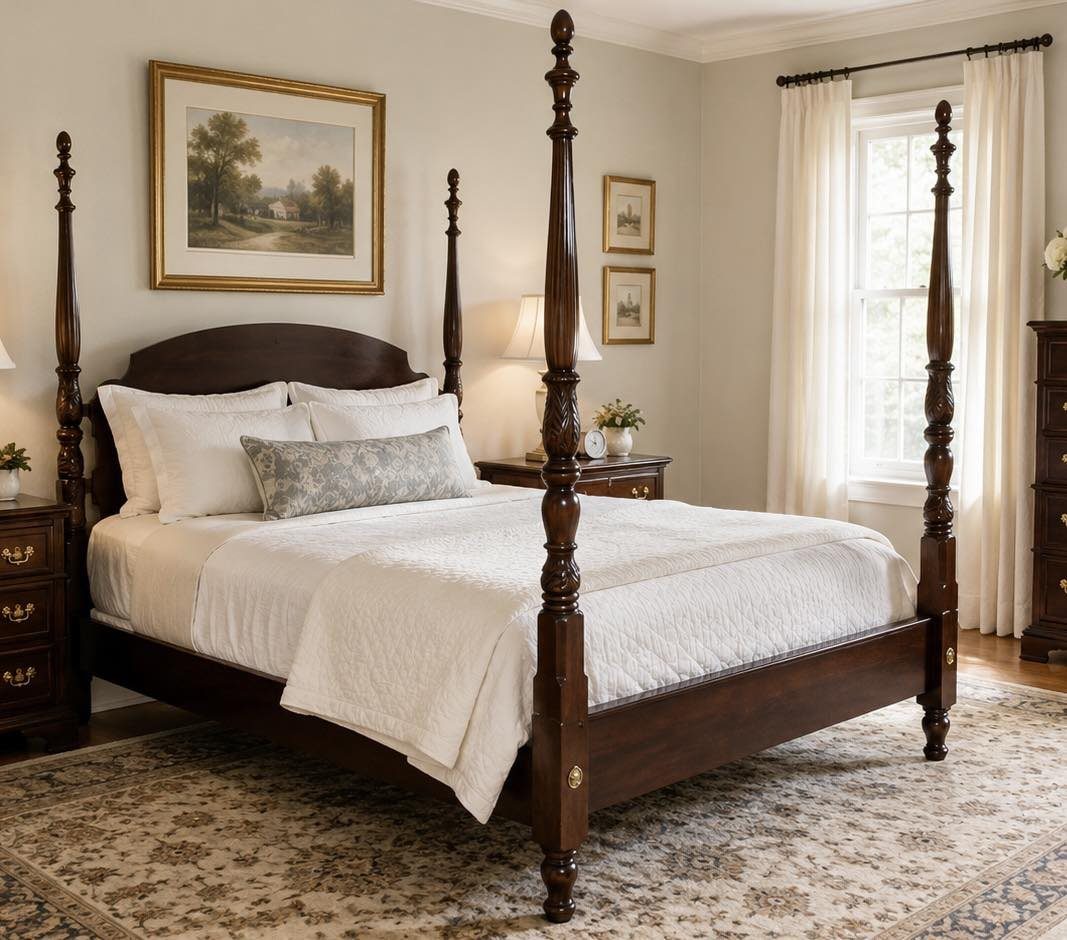
A four-poster bed commands space in a way standard frames never manage. The turned posts in dark wood suit traditional rooms, but cleaner-lined versions work in modern spaces too.
I would measure ceiling height first; under 9 feet, a low canopy frame or bare posts keep the room from feeling boxed.
The bed itself sets the room’s rhythm. Everything else, from nightstand scale to rug placement, answers to it.
Walnut against warm walls deepens the effect without extra color. This is a piece to buy once and keep through moves.
10. Monochromatic Color Scheme
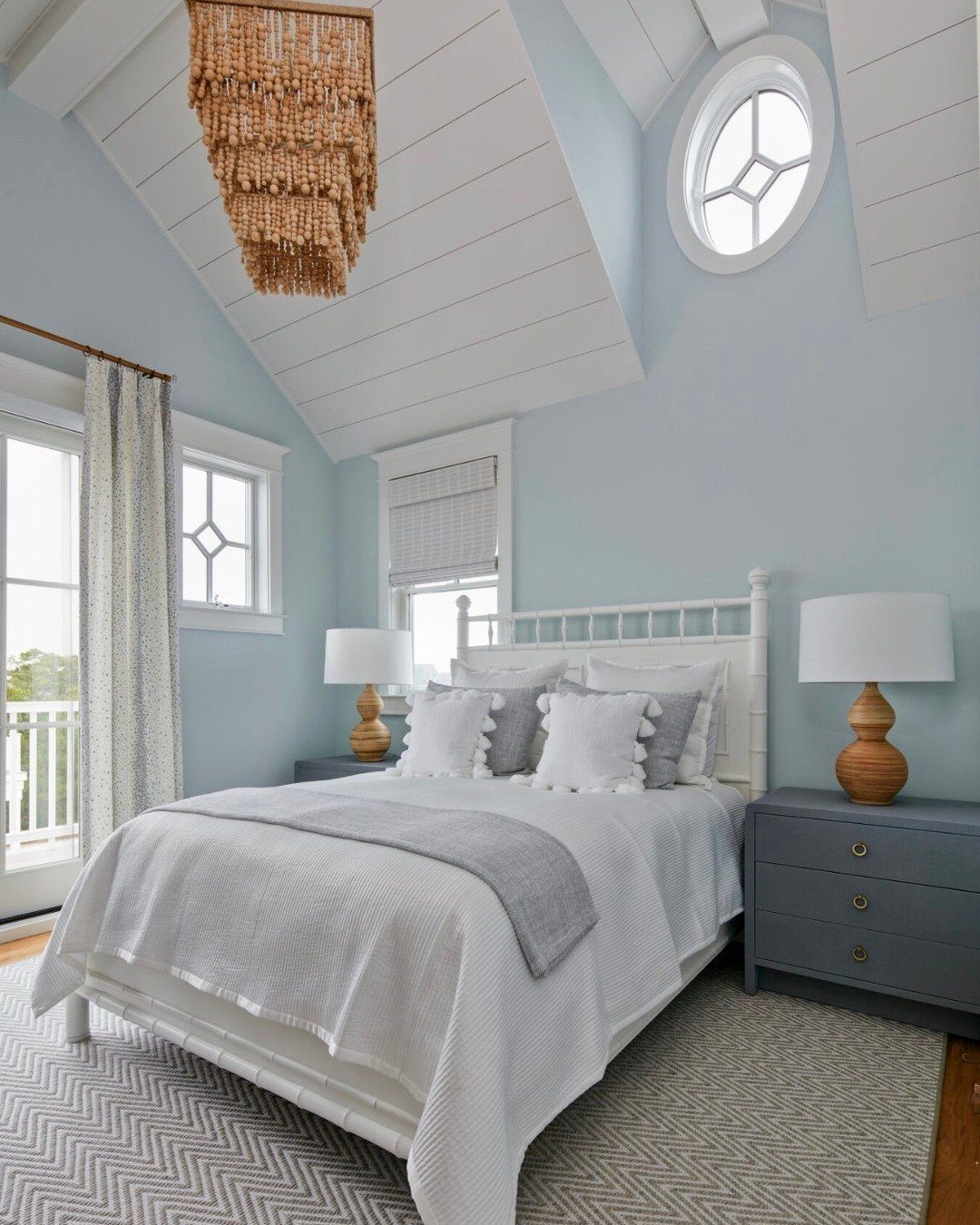
A single color family, pushed through several values, reads as intentional in a way mixed palettes rarely achieve. I stick to warm whites, creams, and one mid-tone gray, then let texture carry the interest.
Bouclé, woven linen, hand-finished metal, and natural stone each read as distinct within the same quiet palette.
Execution makes or breaks it. One off-tone piece, too warm or too cool, collapses the whole effect.
I test swatches in the room’s actual light, morning and evening, before committing. For renters, this approach shines: everything coordinates by default, and replacements slip in without fresh planning.
11. Oversized Wall Art
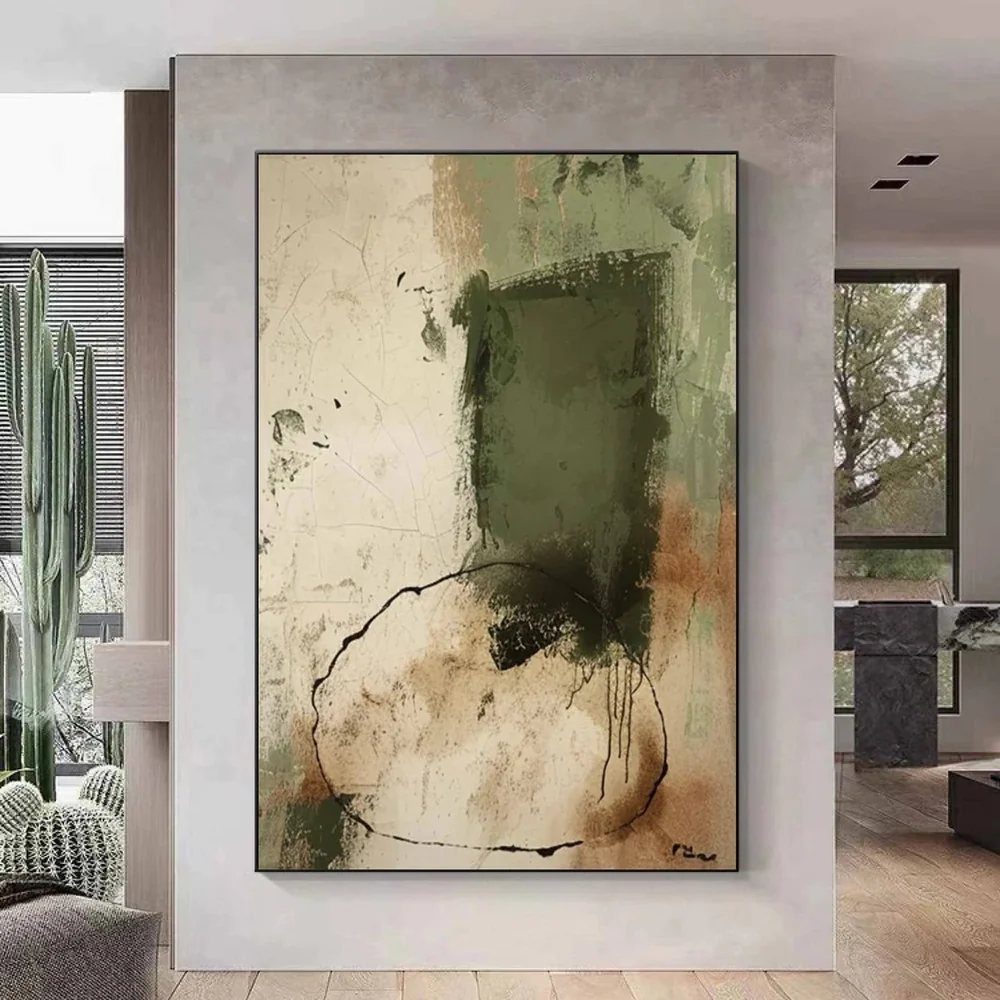
One oversized piece above the bed beats a gallery wall for impact every time. I look for vertical orientation when the ceiling allows, or horizontal if the bed is wide and the wall low.
The motif should speak to something already in the room, bedding or a rug, without matching too closely.
Scale is the common mistake. A piece that reads large in a 10×10 store vignette can vanish above a king bed.
I measure the wall, then aim for art that fills two-thirds to three-quarters of the headboard width. Printed canvas or a framed textile reaches the same presence for far less.
12. Luxury Bedside Tables
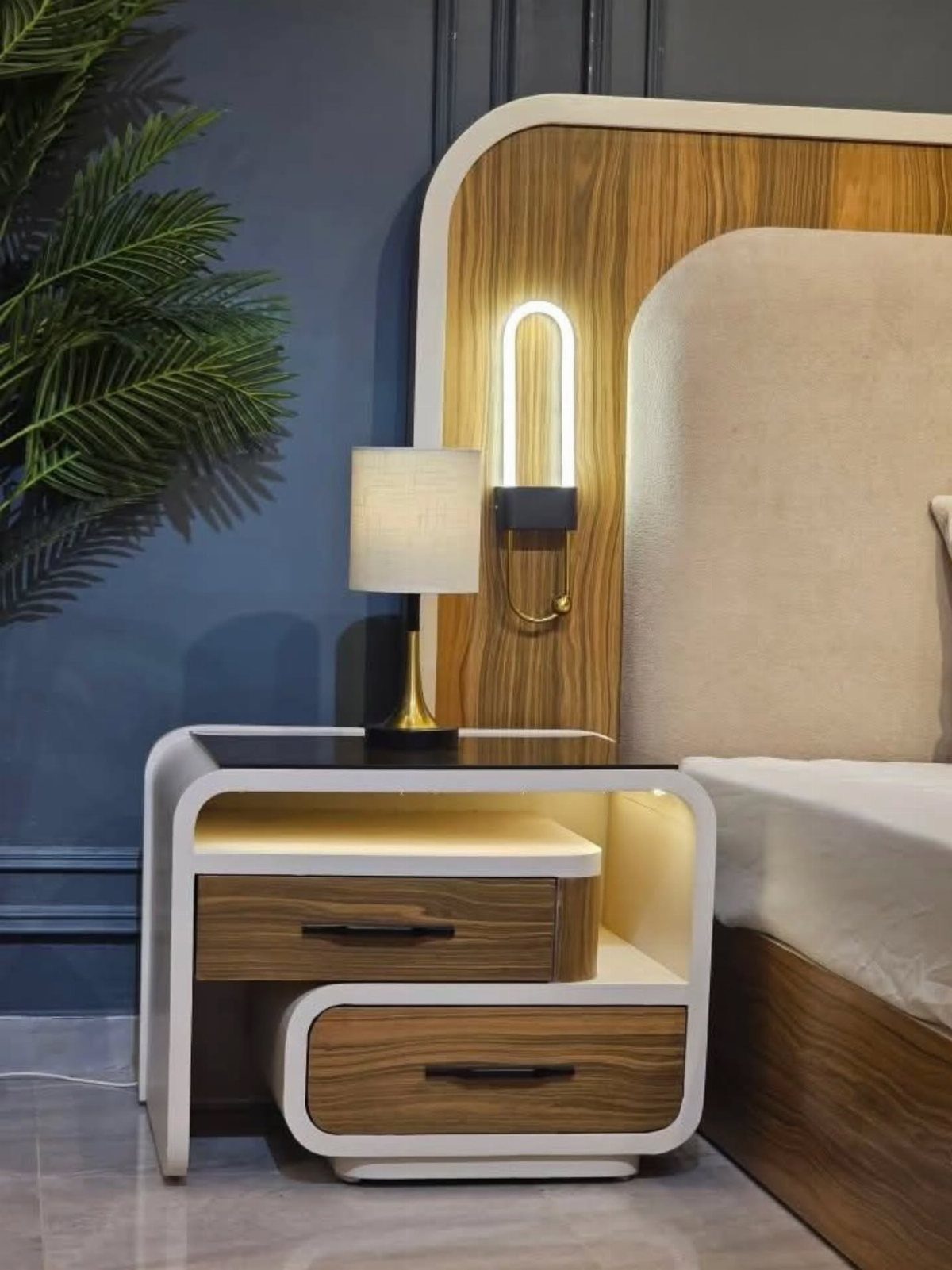
Bedside tables work harder than almost any bedroom piece. I want surface for lamp and water, storage for what clutter looks worst at 11 PM, and enough presence to balance whatever sits opposite.
Marble-topped or mirrored finishes catch light and read as deliberate, not leftover.
A curved white frame with wood-grain drawers solves the storage question without heaviness. Integrated lighting underneath, warm and subtle, replaces a second lamp for late-night navigation.
For small rooms, a single narrow table between bed and wall, mirror-faced to recede, trades surface for breathing room.
13. Custom-Built Furniture
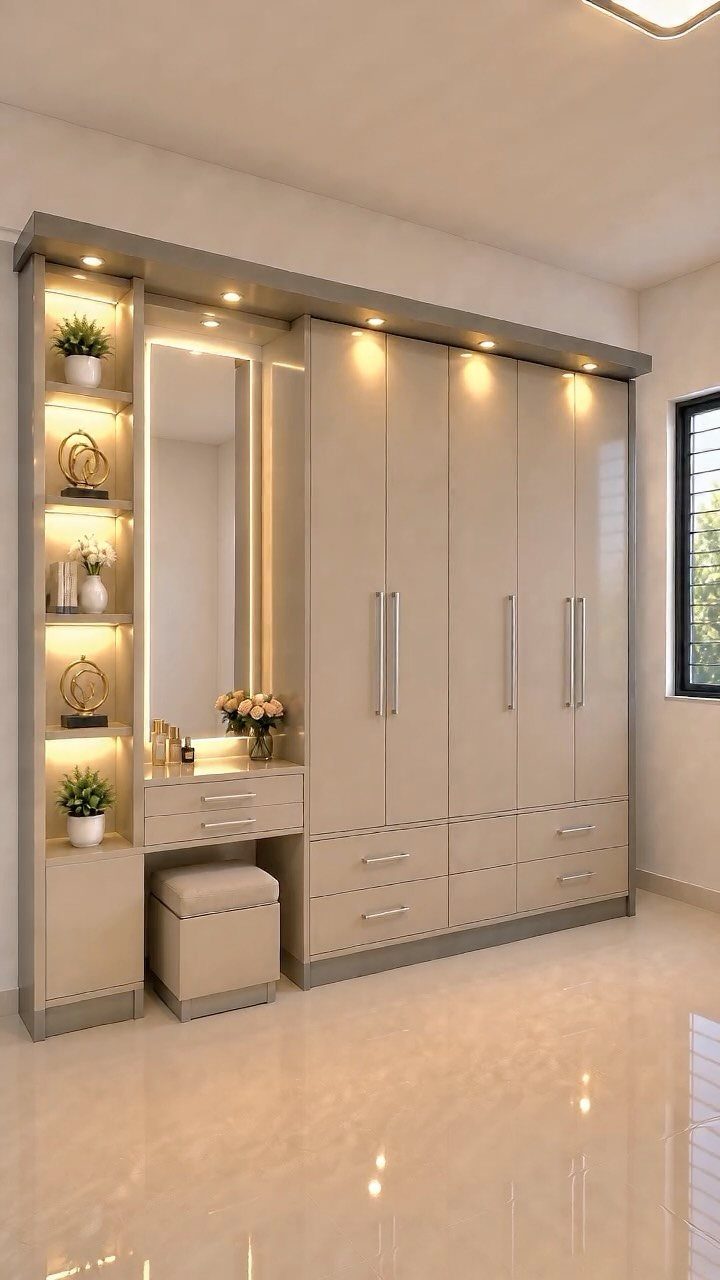
A built-in wardrobe that runs the full wall turns dead space into something you actually want to open every morning.
Custom work costs more than flat-pack, but it buys back square footage no freestanding piece can reclaim. I would start with the wall that faces the bed, since that is where the eye lands first.
A local cabinetmaker can match the finish to existing trim once measurements are firm.
Skip this if you rent, unless your landlord is unusually flexible. Renter’s workaround: two identical armoires placed side by side, painted the same color, with matching hardware.
14. Play with Mirrors
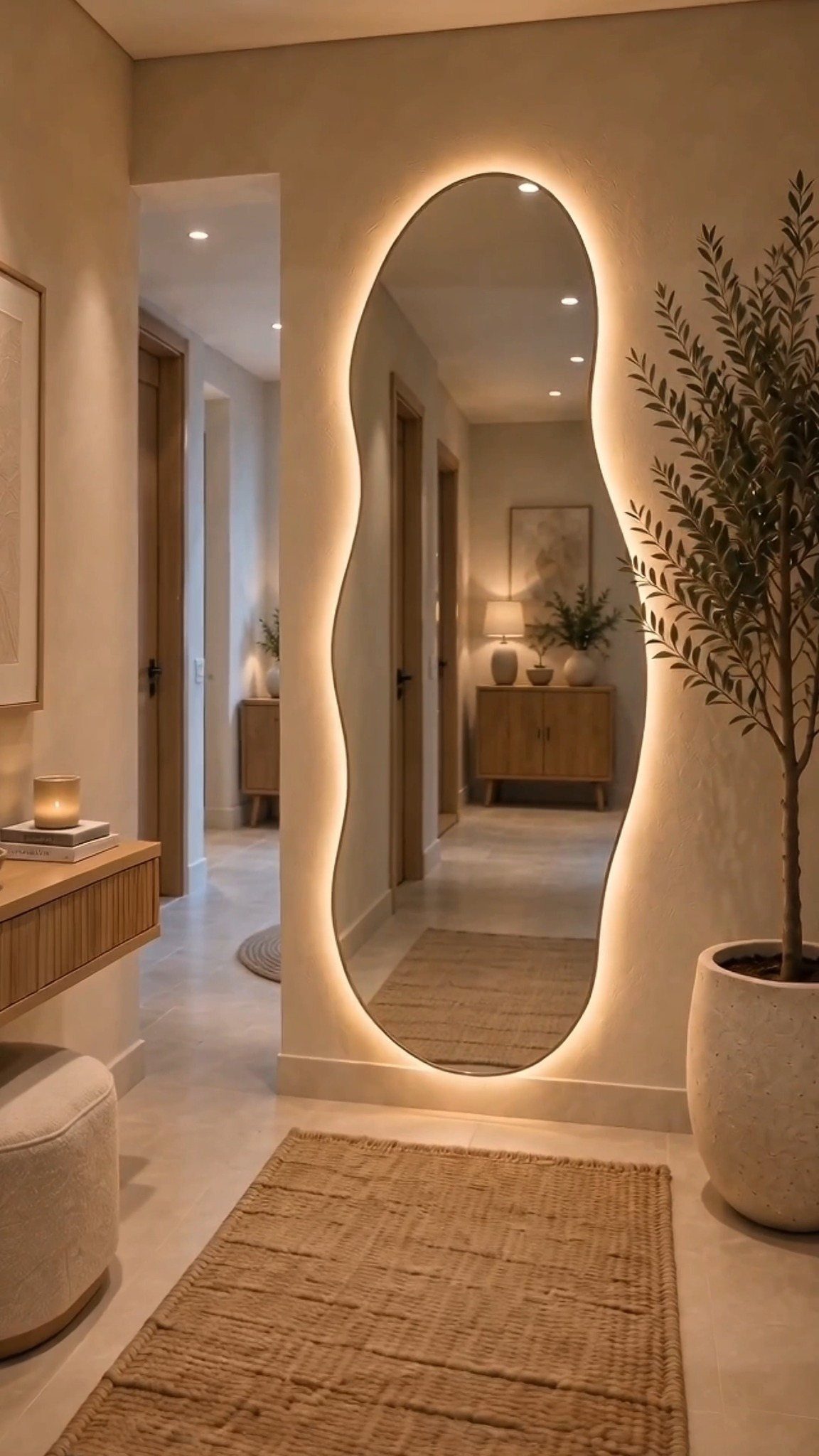
Three floor mirrors lined up behind a painting sounds excessive until you see the light bounce.
Designer Benjamin Dhong used that exact setup in his Napa house, and the result is less about vanity than about making a dark corner feel like it has windows.
An organic shape with built-in glow handles the same job in a single piece. LED backing costs more than an unlit mirror but removes the need for a nearby lamp.
I would lean it at a slight angle rather than hang it flat; the reflection opens up more of the room that way.
A gilt French-style frame reads formal, while a thin metal edge works in modern spaces. Either way, place it where it catches daylight or a lamp, not where it reflects the bed at 3 a.m.
15. Natural Materials
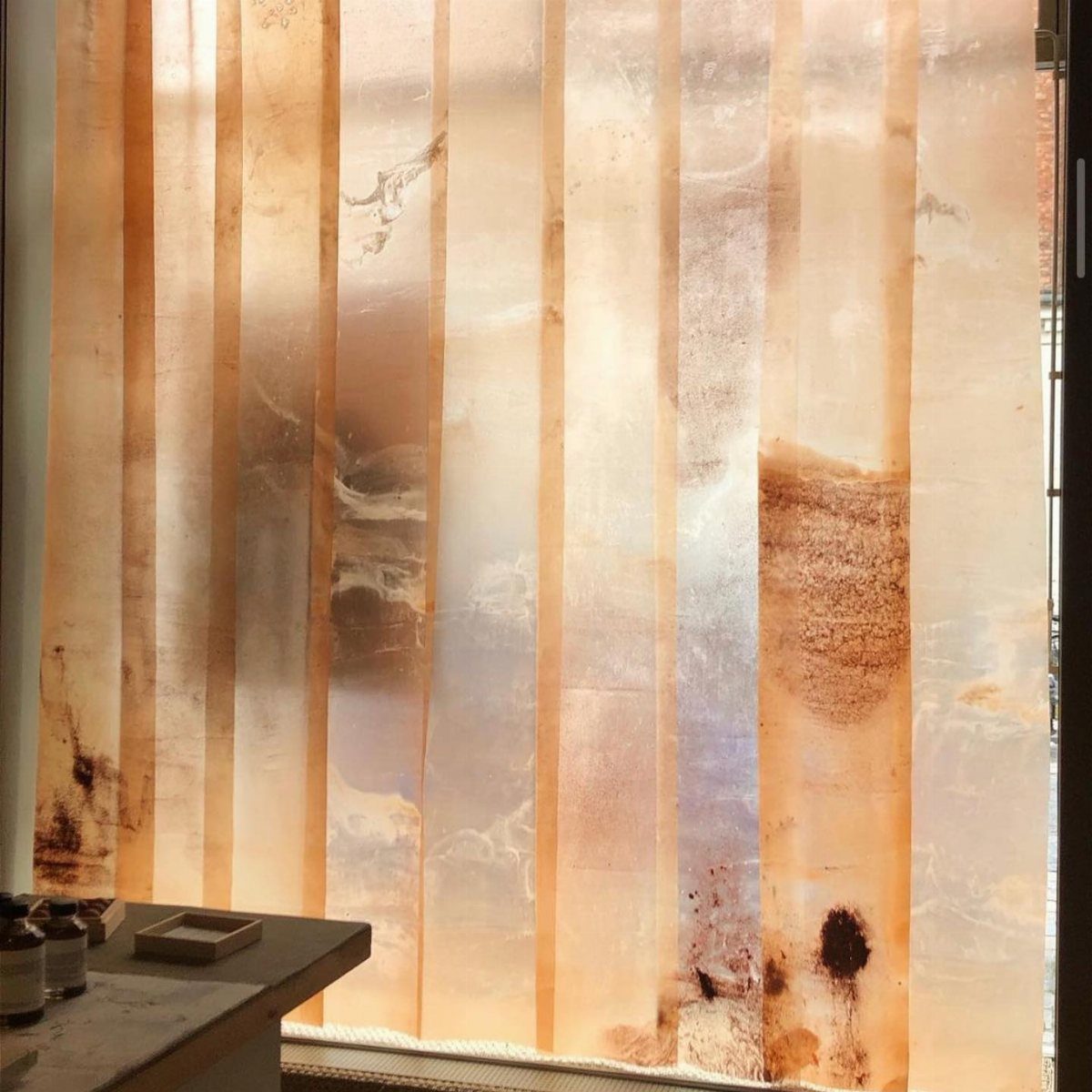
Translucent panels with mottled color variation do what paint cannot: they shift as the light moves. Strips of handmade paper or silk, held in a simple frame, read more like a window onto something natural than like wall decoration.
Wood, stone, and linen each bring that same quality of never repeating exactly. Walnut grain, marble veining, the slub in raw linen: these are patterns made by time, not machines.
I would mix two at most in a small bedroom, three in a larger one, so the room stays restful rather than busy.
A stone remnant yard often sells small travertine or limestone pieces for tabletops at half the price of full slabs. For walls, thin stone veneer installs like tile.
16. Elegant Chandeliers
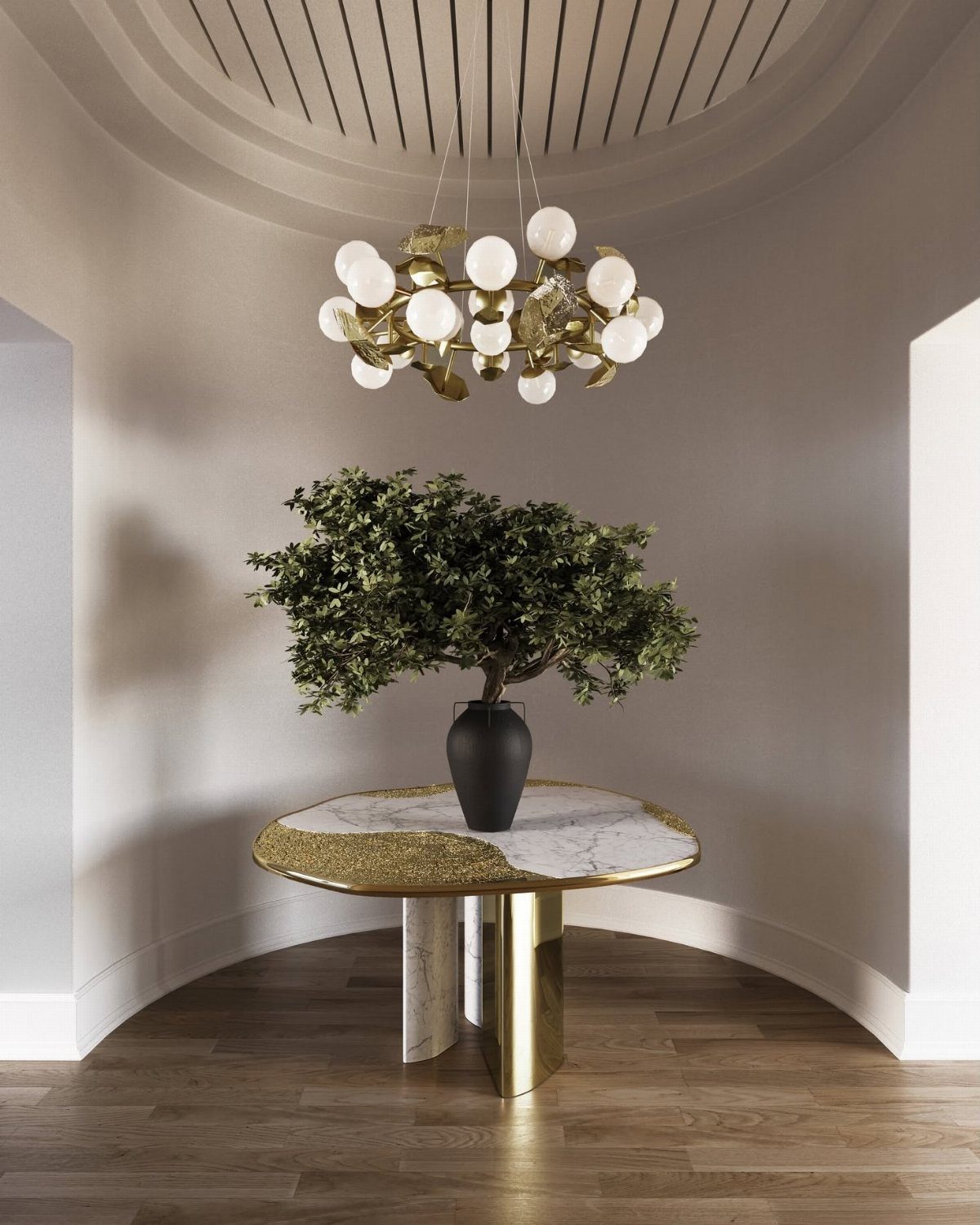
A chandelier in a bedroom still feels slightly daring, which is exactly why it works. A gold and white globe fixture turns a passageway into something worth pausing for.
Crystal or crystal-encrusted pieces add sparkle that reads expensive even at moderate sizes. I would keep the diameter modest for lower ceilings, and always put it on a dimmer.
Bright overhead light in a bedroom is useful only when you are searching for a lost earring; the rest of the time, you want it low.
Installation runs more than you might expect if you are not comfortable with electrical work. Ceiling junction box placement matters: centered over the bed is traditional, but slightly off-center can feel more intentional.
17. Nature-Inspired Decor
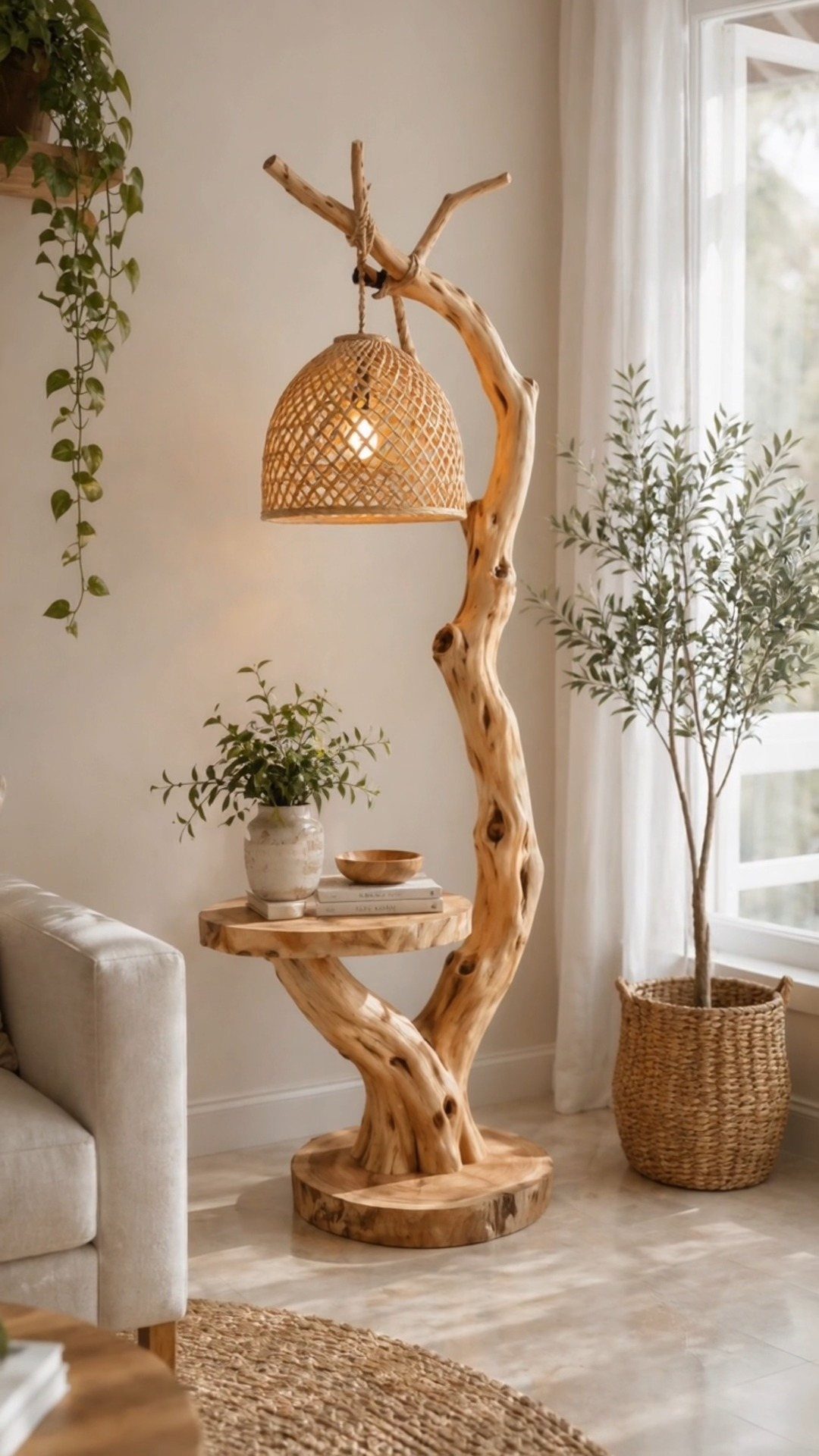
The branch has to read as structural, not decorative glued-on bark, and the shade should echo the organic form without matching it too closely.
Bringing the outdoors inside works best when the materials are honest rather than cute. A real branch, raw linen, unglazed clay: these read as choices, not themes.
I would add one living plant for every 100 square feet of bedroom, placed where you will actually water it.
Art with landscape imagery is an easier step if you lack floor space. Leaf prints or river scenes on paper keep the palette grounded without the maintenance.
18. Vintage Rugs
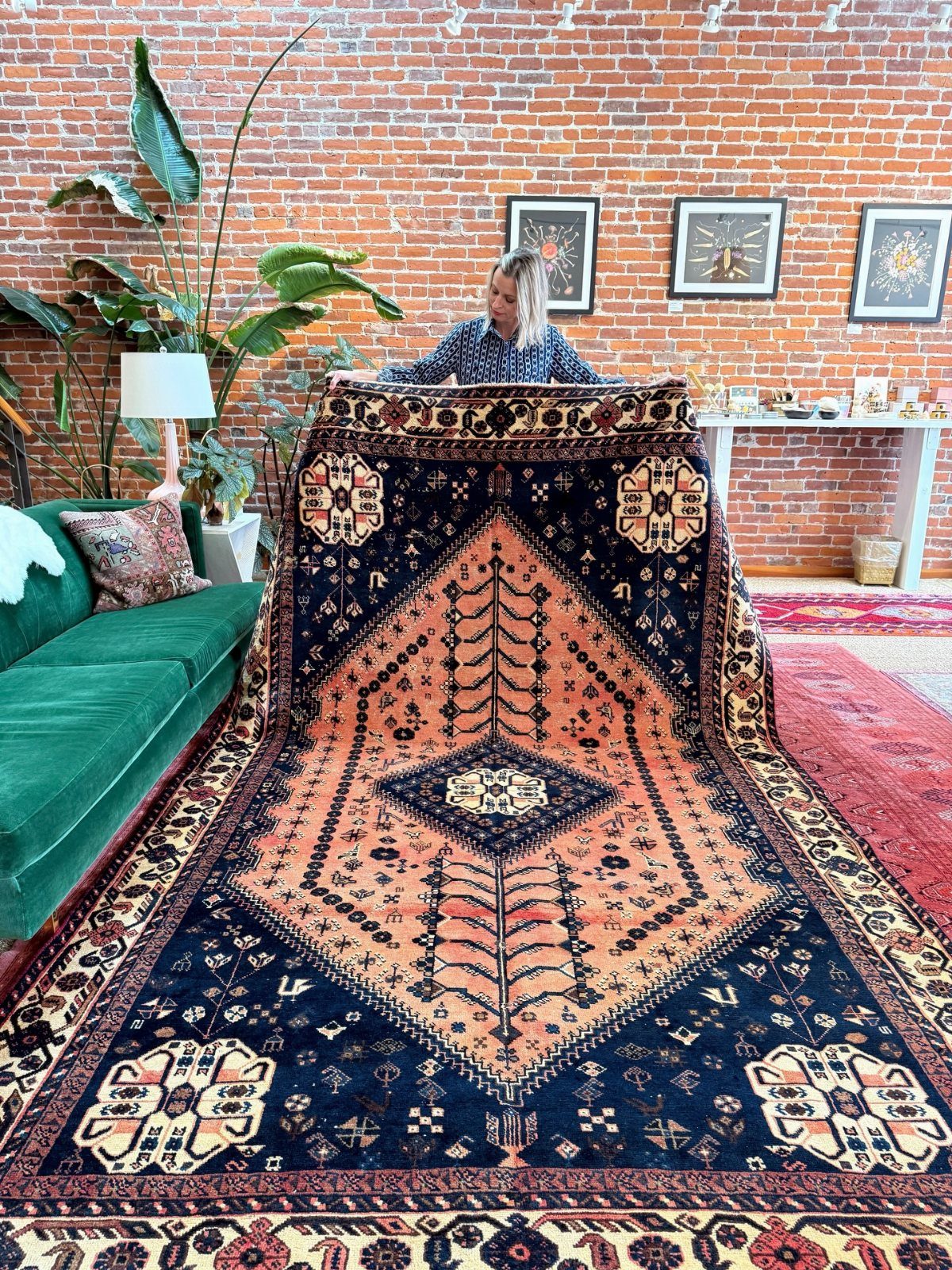
A vintage rug draped over a surface, pattern side out, is a display trick I first saw in a shop and now use at home.
Navy and terracotta geometry would work equally well on a dark wood floor or as a counterweight to pale upholstery.
Old rugs have the advantage of already being worn soft, and the irregularities in hand-knotted pieces hide new stains better than uniform machine weaving.
I would budget for a vintage piece in usable condition, less if you are willing to repair edges yourself.
Layer it over a larger, plain natural-fiber rug for sound absorption and to protect the vintage piece from direct wear. The bottom rug does not need to be expensive; the top one does the talking.
19. Coastal Bedroom
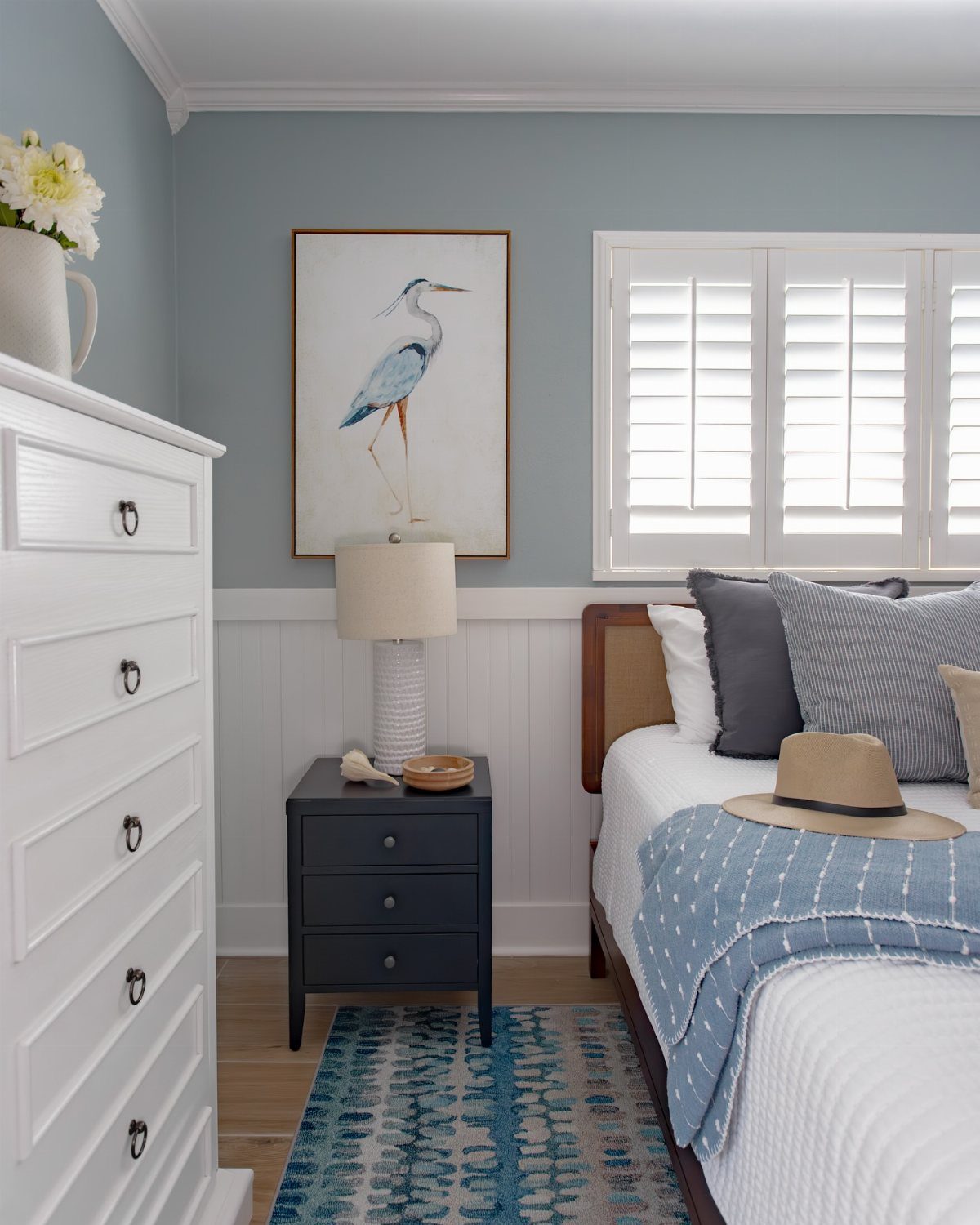
A coastal bedroom starts with the light itself, not the color. White wainscoting and plantation shutters bouncing daylight around pale blue walls do more work than any single accent.
Soft blues, sandy neutrals, and driftwood tones layer easily because they share the same muted saturation. Linen upholstery and woven accents add texture without weight, while light woods keep the floor plane open.
I would skip the nautical kitsch entirely; one heron print or a piece of weathered driftwood on a shelf says enough.
This suits renters who can paint walls and swap hardware but cannot change windows or flooring.
The shutters are a permanent fixture, but a bed dressed in blue-and-white bedding against a neutral wall gets most of the effect for a fraction of the cost.
20. Sitting Area
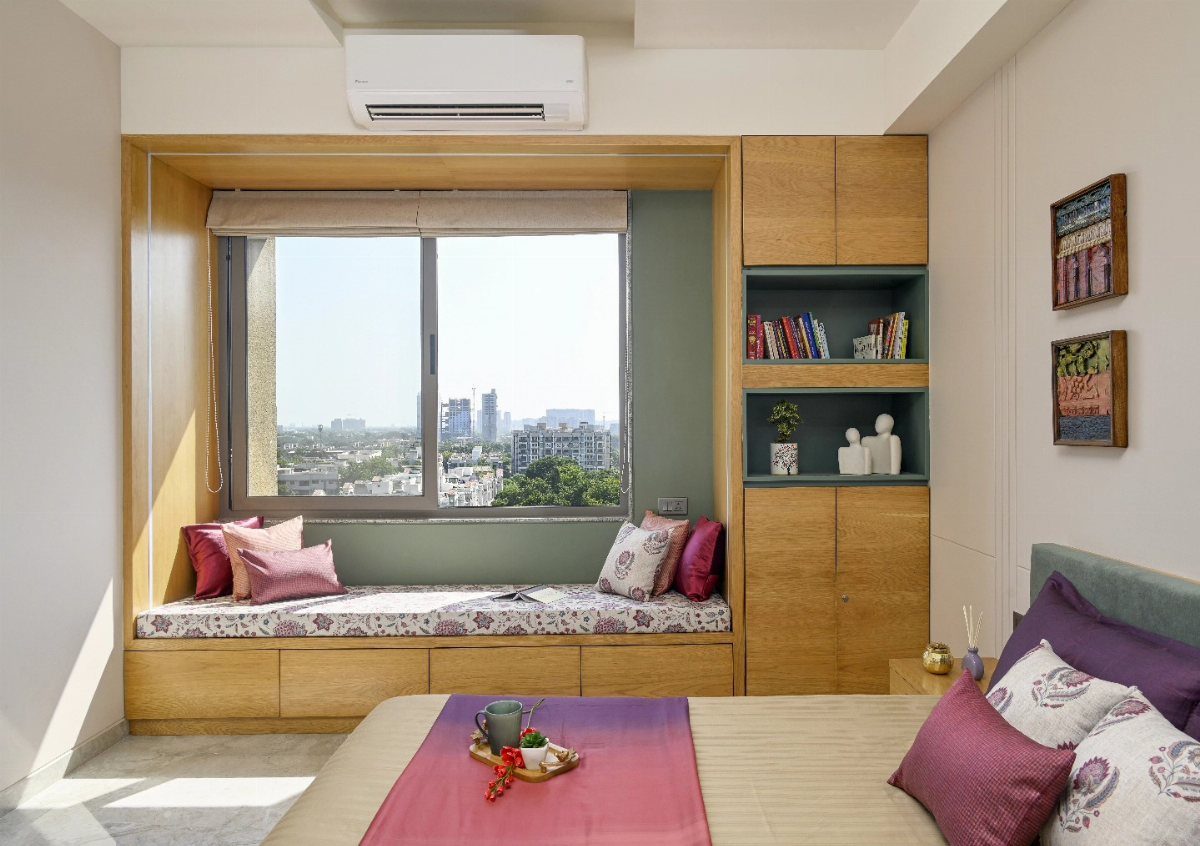
A sitting area turns the bedroom into a suite with two destinations instead of one.
Uphholstered lounge chairs or a pair of tailored armchairs around a small table work even without an alcove. Give the corner its own identity while keeping the textiles and wood tones in conversation with the sleeping area.
Rich fabrics and handcrafted lighting, a table lamp or a small pendant, establish warmth without demanding a separate room.
This trades floor space for function. In a bedroom under 12 by 14 feet, a single chair angled toward the window is often enough.
I would rather one good seat with a view than two squeezed in with no breathing room.
21. Gold Accents
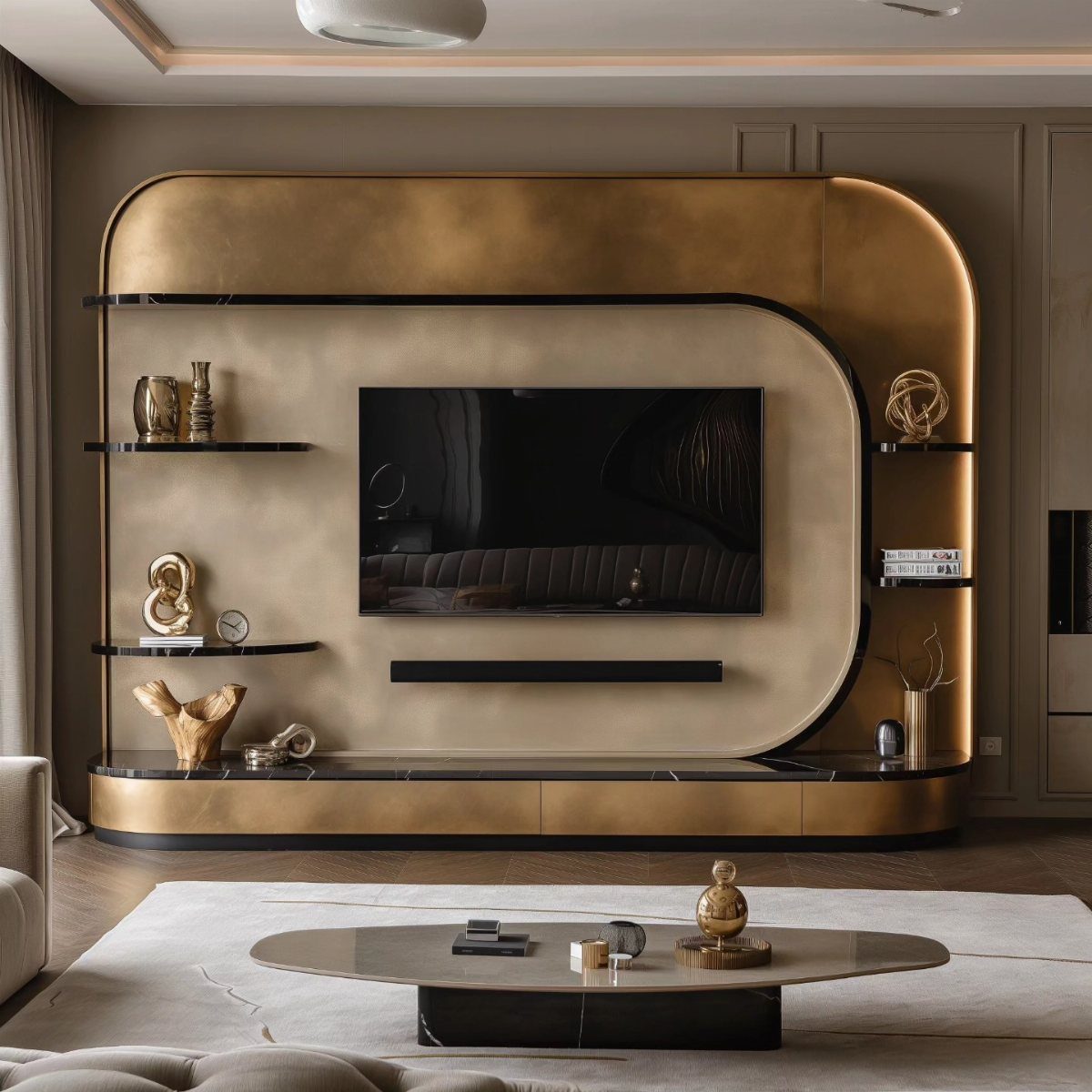
Gold accents read as opulence only when they stay small and scattered. A curved wall unit makes a statement, but for most bedrooms the move is quieter: drawer pulls, picture frames, a lamp base, maybe the rim of a mirror.
Brass or brushed gold finishes warm up cool palettes without the coldness of chrome. Small sculptures, Roman or tribal figures in brass or terracotta, add personality on a nightstand or shelf.
Keep the metal to one or two finishes total; mixed golds and silvers fight each other in a small space.
Hardware swaps across a bedroom cost less than a new lamp and read just as expensive. It suits someone who likes the idea of glamour but finds all-gold fixtures too showroom.
Start with the pulls and one object, then stop before it looks deliberate.
22. Elegant Window Treatments
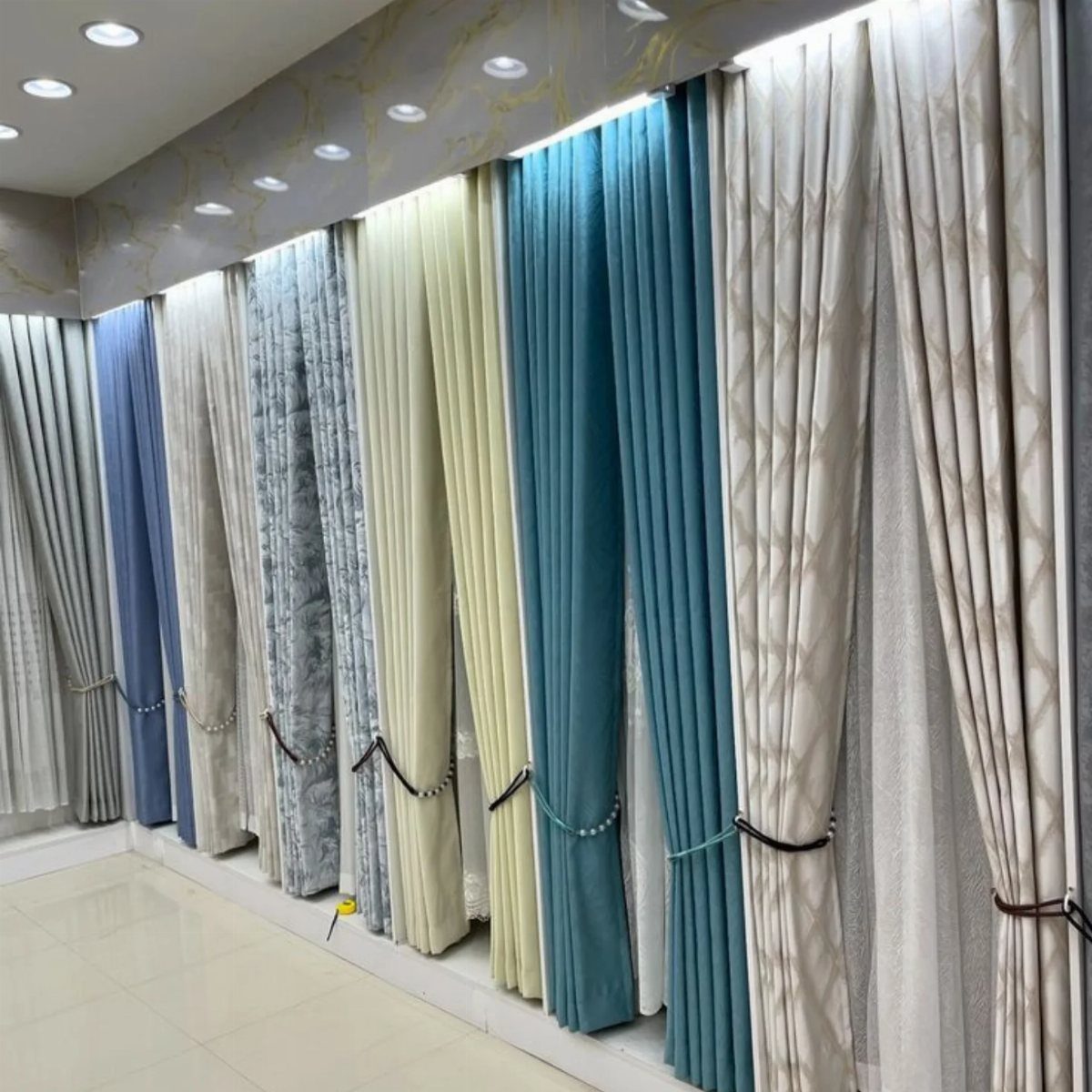
Floor-to-ceiling drapery does two jobs at once: it frames the window and it stretches the wall upward.
Full-height panels emphasize ceiling height even when the windows do not reach that high. Mount the rod 6 to 12 inches above the frame and let the hem puddle slightly or just brush the floor.
Layered systems, a sheer shade for privacy with heavier panels for darkening, give control over light without sacrificing the view.
Patterned drapes add character in neutral rooms; solid colors calm busier spaces. I would spend the money on good lining, it protects fabric and controls temperature, before upgrading to custom prints.
Ready-made lengths in quality cotton or linen run less than custom work and look nearly as finished.
23. Moroccan Motifs
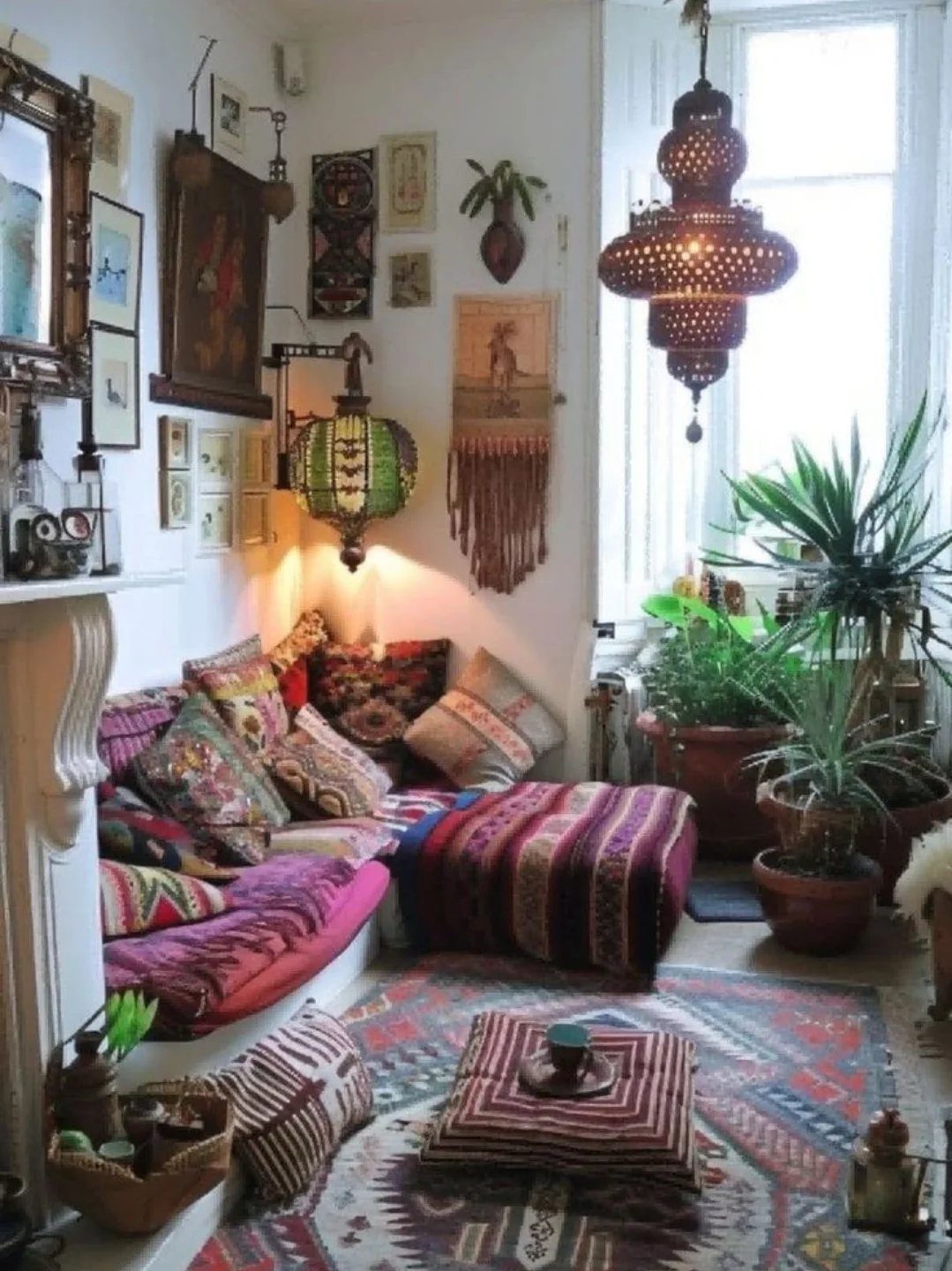
Moroccan motifs bring pattern and low-slung comfort into a room that might otherwise feel too upright.
Intricate carvings and geometric textiles layer well against plain walls because they carry their own complexity. A dark carved bedframe, like the 19th-century Indian rug that anchored one California bedroom, grounds pale colors without darkening the whole room.
Oversized wall pieces above the bed can pick up the same motifs at scale.
This trades minimalism for warmth. Someone who finds all-white bedrooms sterile but fears clutter might start with one rug and a lantern, then add cushions only if the space still feels spare.
Perforated metal shades, colored glass, mixed materials read collected rather than matched.
24. Spa-Style En Suite
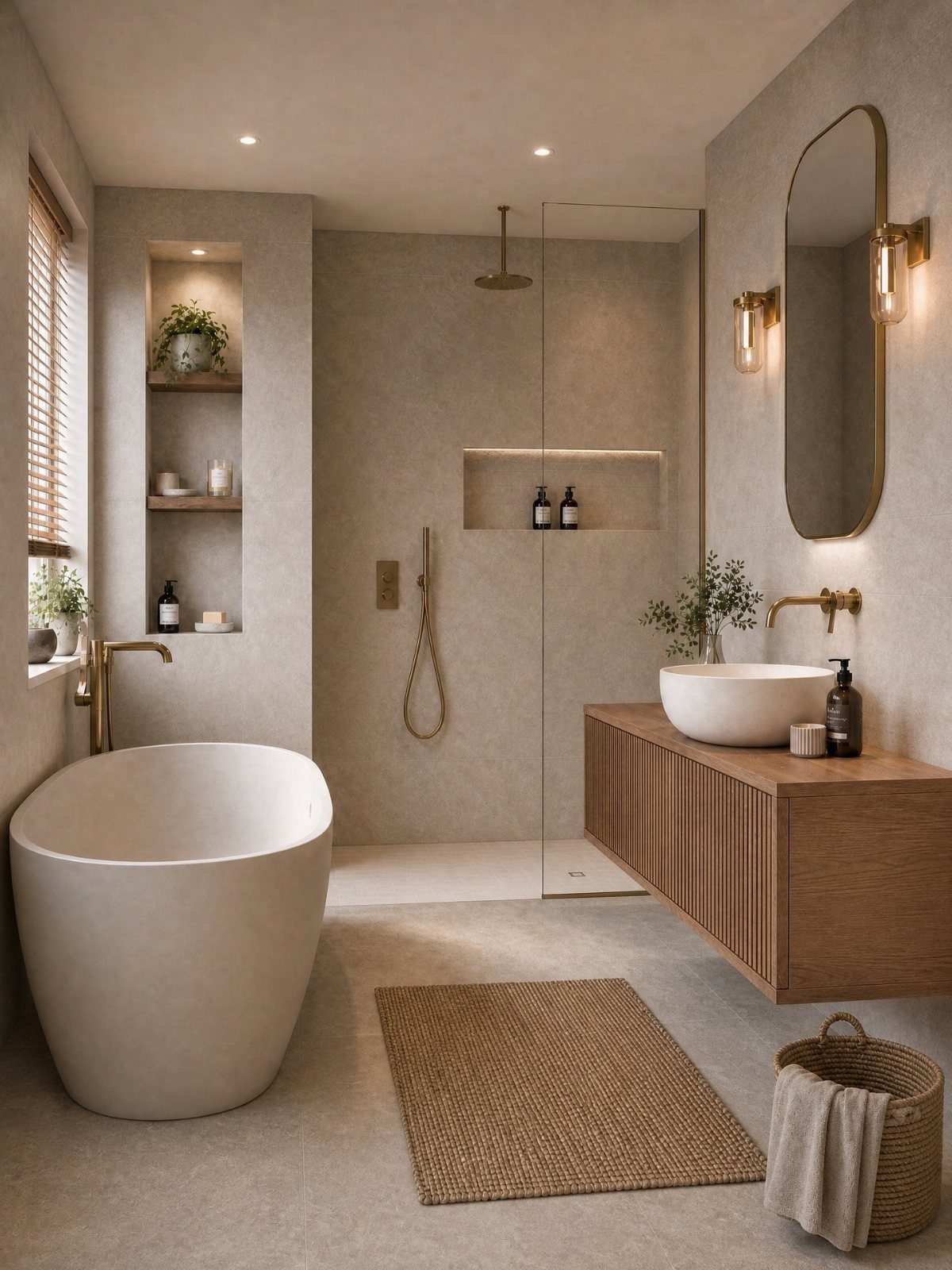
A spa-style en suite extends the bedroom’s calm into the bathroom itself.
Freestanding tubs, rainfall showerheads, and open transitions between rooms create the continuity. Repeating finishes, stone surfaces, wood tones, metal colors, across the doorway makes both spaces feel intentional.
Wide doorways and aligned sightlines help, but even a standard bathroom door left open to a matching palette gains something.
This is renovation territory, not a weekend project. A freestanding tub is the headline grabber, though the same calm comes from matching what you already have across the threshold.
For renters or smaller budgets, I would focus on what carries: soft lighting, natural materials where possible, and keeping the counter clear.
One wicker basket for towels, one good soap dish in stone or wood, and the mood shifts even if the layout cannot.
Creating a Luxurious Atmosphere
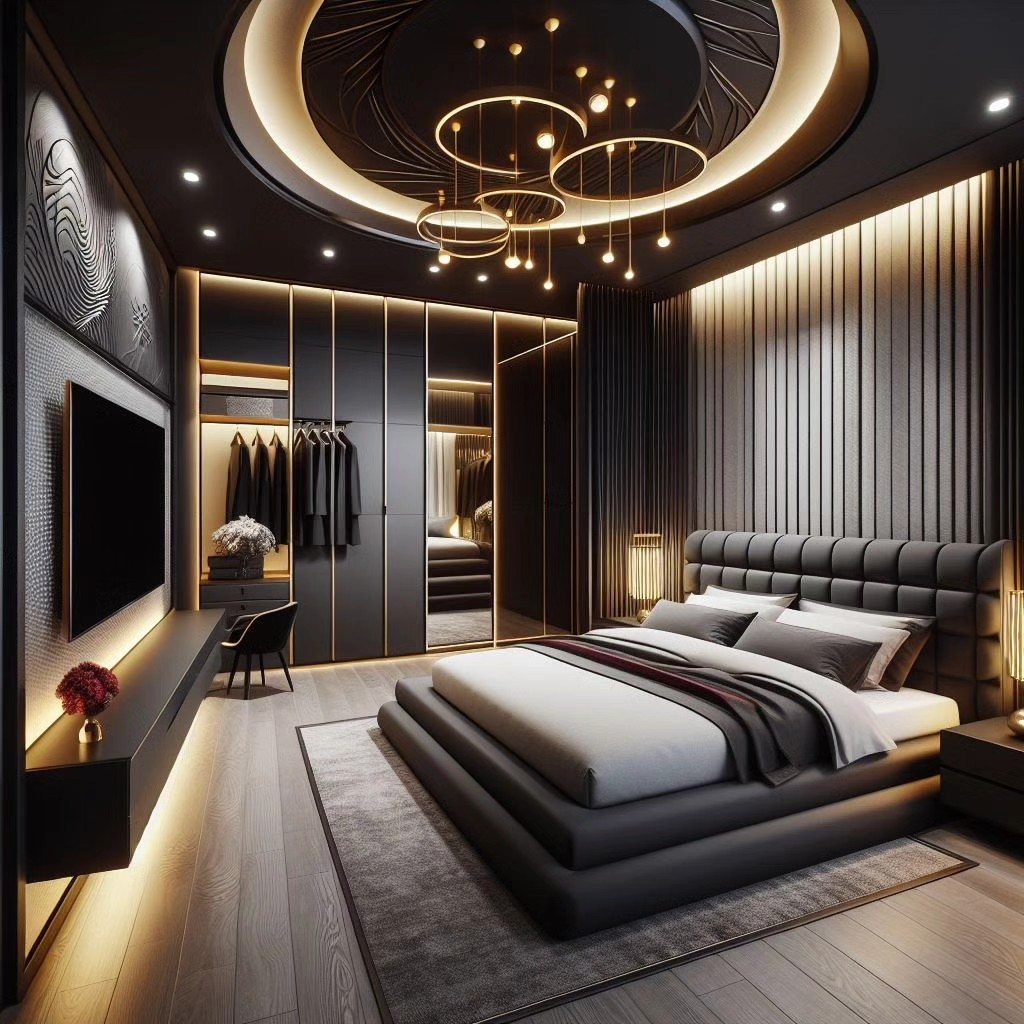
A single bold fixture does more for a bedroom’s mood than recessed lights ever will. I look for pieces that cast downward and outward at once, so the glow pools on the bed and washes the ceiling too.
Dark wood paneling, mid-century or not, drinks that light in and turns it warm. The fixture itself should be the first thing noticed and the last thing named; the feeling matters more than the label.
A room meant for sleeping should feel smaller at night than it does in daylight, and the word that keeps surfacing for this is intimacy. A lamp too bright or too high breaks that.
Bedside light sources work best kept low, around 24 inches above the mattress, and on dimmers. The switch is cheap.
The difference is not.
Choosing the Right Colors
White, cream, or gray, kept to one family, reads as intentional rather than unfinished. I add depth with texture instead of a second color: a nubby linen duvet against smooth cotton sheets, or velvet pillows on a wool throw.
The eye registers the variation even when the tone stays flat.
Fabric wall hangings with real embroidery carry the stitches that cast tiny shadows under lamplight. Kutch work and Phulkari both carry enough pattern to stand alone; no frame, no competing art nearby.
The textile does the color work, so the rest of the room can stay quiet. I hang them slightly lower than eye level, where the detail is close enough to notice.
Frequently Asked Questions
How do I make my bedroom look luxurious?
Three layers on the bed, fitted sheet to duvet, give that tucked-in feeling hotels nail without trying.
A rug that leaves 18 to 24 inches of floor bare at the edges anchors the room, and three dimmable light sources let you shift the mood after dark.
Texture carries a single-color palette further than mixed colors ever could; bouclé, linen, and velvet each read as distinct within warm whites and creams.
What are the current trends in bedroom decor?
Quiet luxury shows up in monochromatic palettes where texture does the work, and in natural materials like walnut, marble, and raw linen that shift with the light.
Nature-inspired decor favors honest materials over themed accessories: real branches, unglazed clay, one living plant per 100 square feet. Layered textiles build warmth without renovation, and vintage rugs layered over plain natural-fiber bases replace uniform wall-to-wall.
Timeless materials and classic forms outlast seasonal specifics.
What are some luxury bedroom ideas for 2026?
Bedside tables in marble or mirror bounce light around and look intentional, and a strip of light underneath keeps you from fumbling at 2 AM.
A full-length mirror backed with LED strips replaces a corner lamp and pushes light into shadowed spots, especially when you lean it just off the wall.
For walls, translucent panels of handmade paper or silk in simple frames shift as daylight moves, doing what paint cannot. Floor-to-ceiling built-ins swallow clutter and turn a blank wall into storage you actually want to use.
What defines luxury bedroom design?
A luxurious bedroom reads as calm first: everything in its place, materials that feel solid in your hand, and colors that talk to each other instead of competing.
The bedrooms that stay with me mix textures you want to touch, pieces made with care, and an arrangement that feels settled, not copied from a single look. Every detail finding its place matters more than any individual piece’s price.