
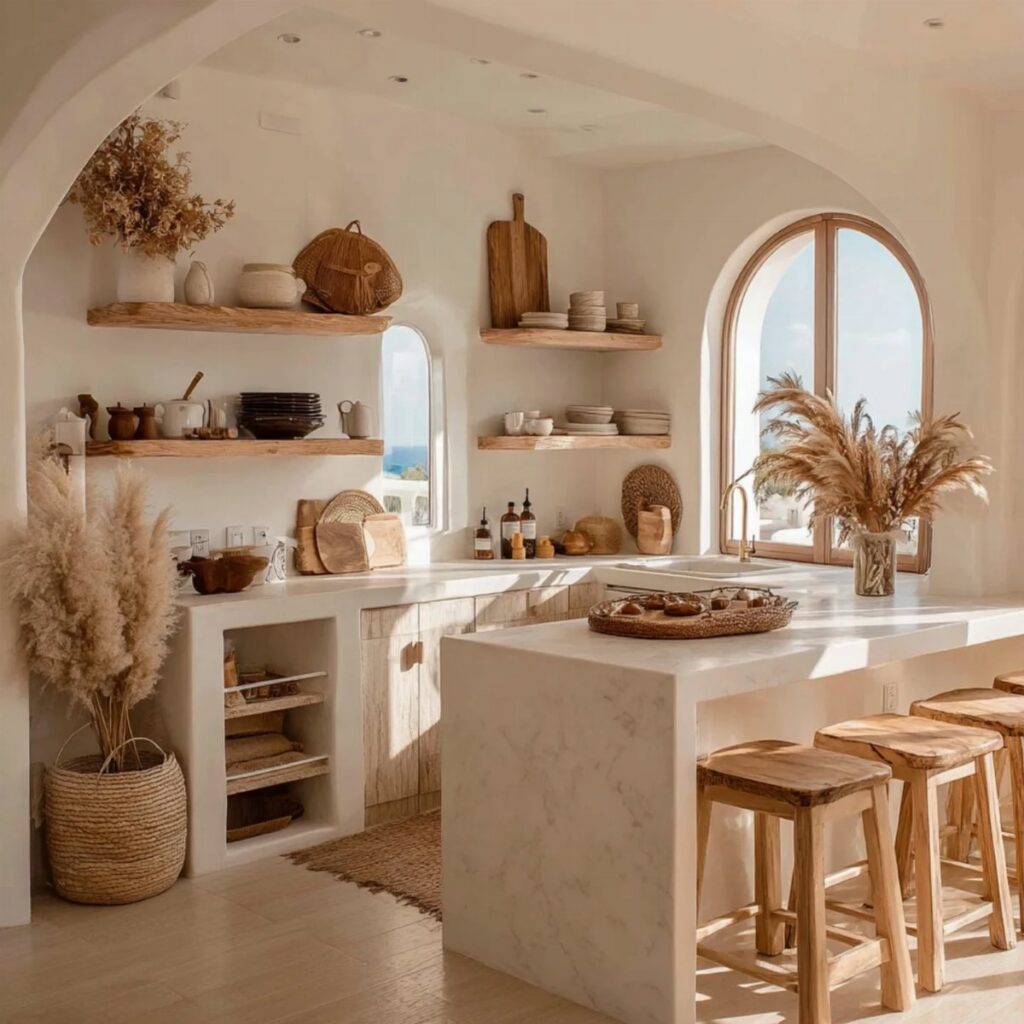
These ideas run from a plate hanger to a farmhouse sink that needs custom cabinet work, and the one that fits you depends on whether you are renting tonight or staying for good.
Renters will find hardware swaps, layered rugs, and macrame planters; homeowners can knock down drywall for open shelving or expose ceiling beams.
The proof is in the hardware I would pick: a pot rack rated for real weight, wood shelves thick enough to stop sag, and an apron-front sink that demands its own base cabinet before you order.
1. Farmhouse Sink
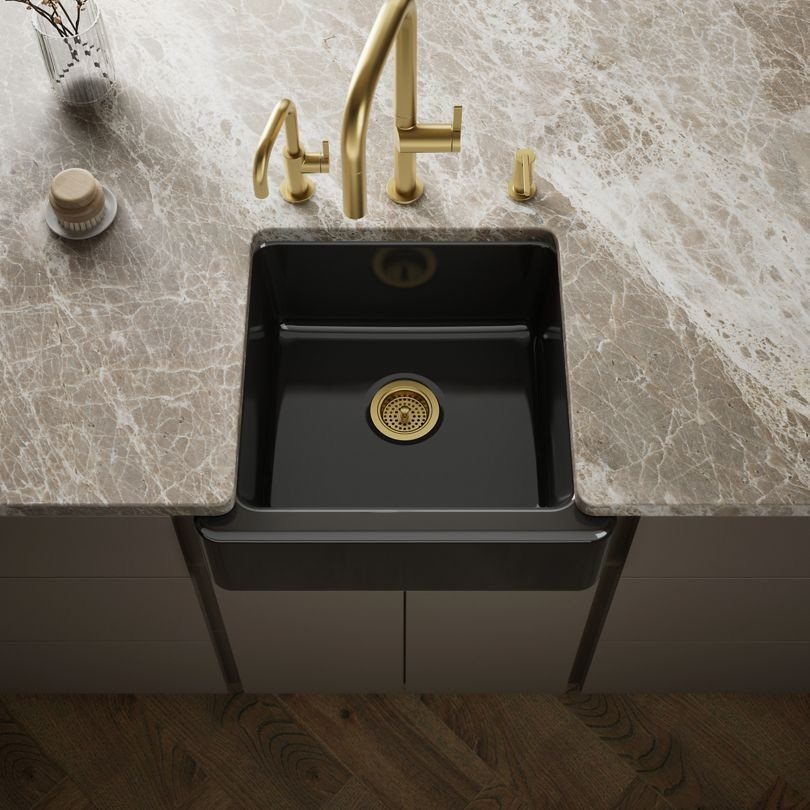
A farmhouse sink sits forward of the counter, its apron front showing like a piece of furniture.
A black farmhouse sink reads more modern than traditional white ceramic, but either one works for boho style if you keep the edges soft and the hardware warm. I like brass with black; oil-rubbed bronze also plays well here.
The sink itself runs larger than standard, so check your base cabinet width before ordering.
A standard farmhouse sink still needs a custom cabinet or a retrofit apron-front base, so measure your existing setup before you fall in love with one.
2. Open Shelving
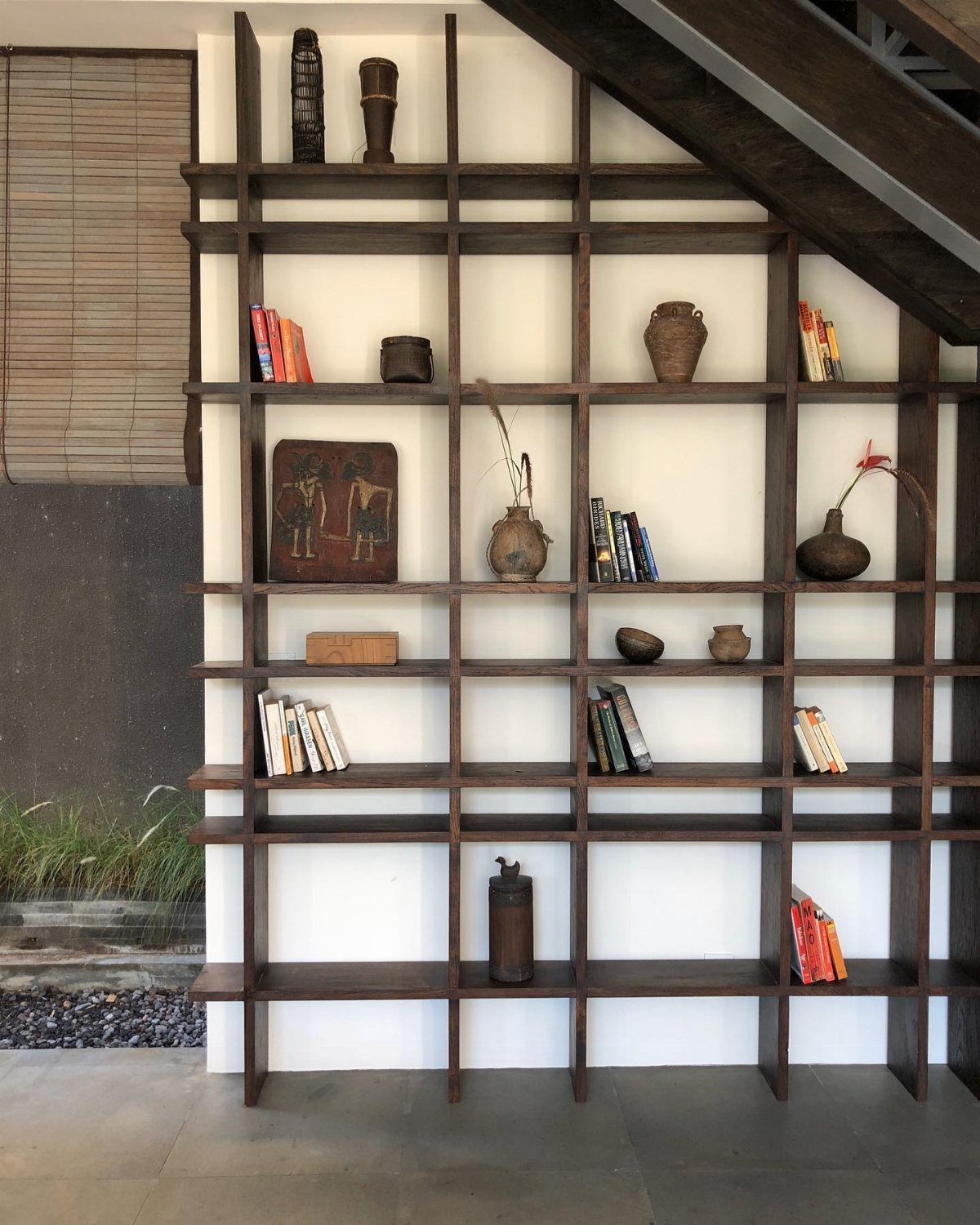
Dark wood shelves hold books, vases, and small sculptures in a living room, but in a kitchen I would load them with the ceramics you actually use, a few potted herbs, and one or two vintage finds that can handle grease and steam.
Wood thickness matters for sag; 1.5 inches is my minimum for spans over 30 inches, and I always add a hidden bracket in the middle.
The look is casual, but the install is not: find studs, or use serious toggle anchors, because plates are heavier than they look.
3. Hanging Pot Rack
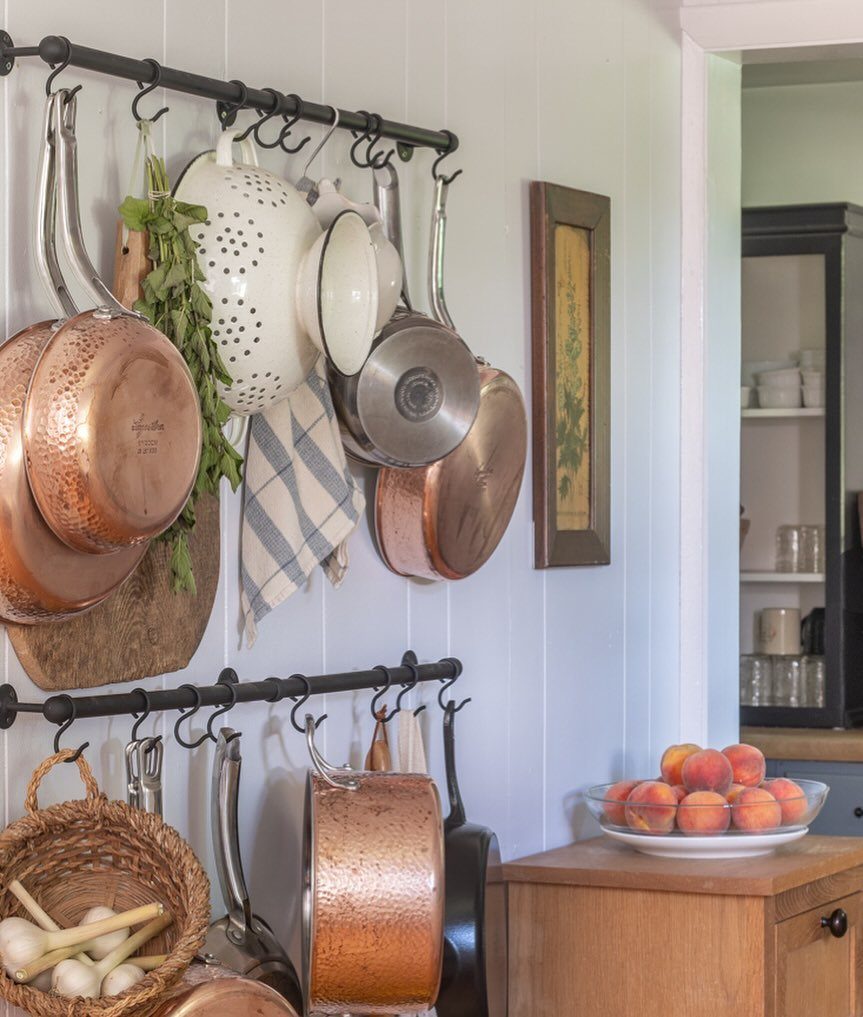
Copper and cast iron belong where you can see them. Two black rails hold pots, a colander, and a towel, turning tools into a wall composition that saves drawer space and keeps the right pan within reach.
Mount into studs or ceiling joists, never drywall alone; a loaded 36-inch rail can hold 40 pounds. The maker of this kitchen mentioned life getting in the way of renovation timelines, which is worth remembering.
A pot rack goes up in an afternoon and reads as finished even when the rest of the room is not.
4. Mixing Textures and Patterns
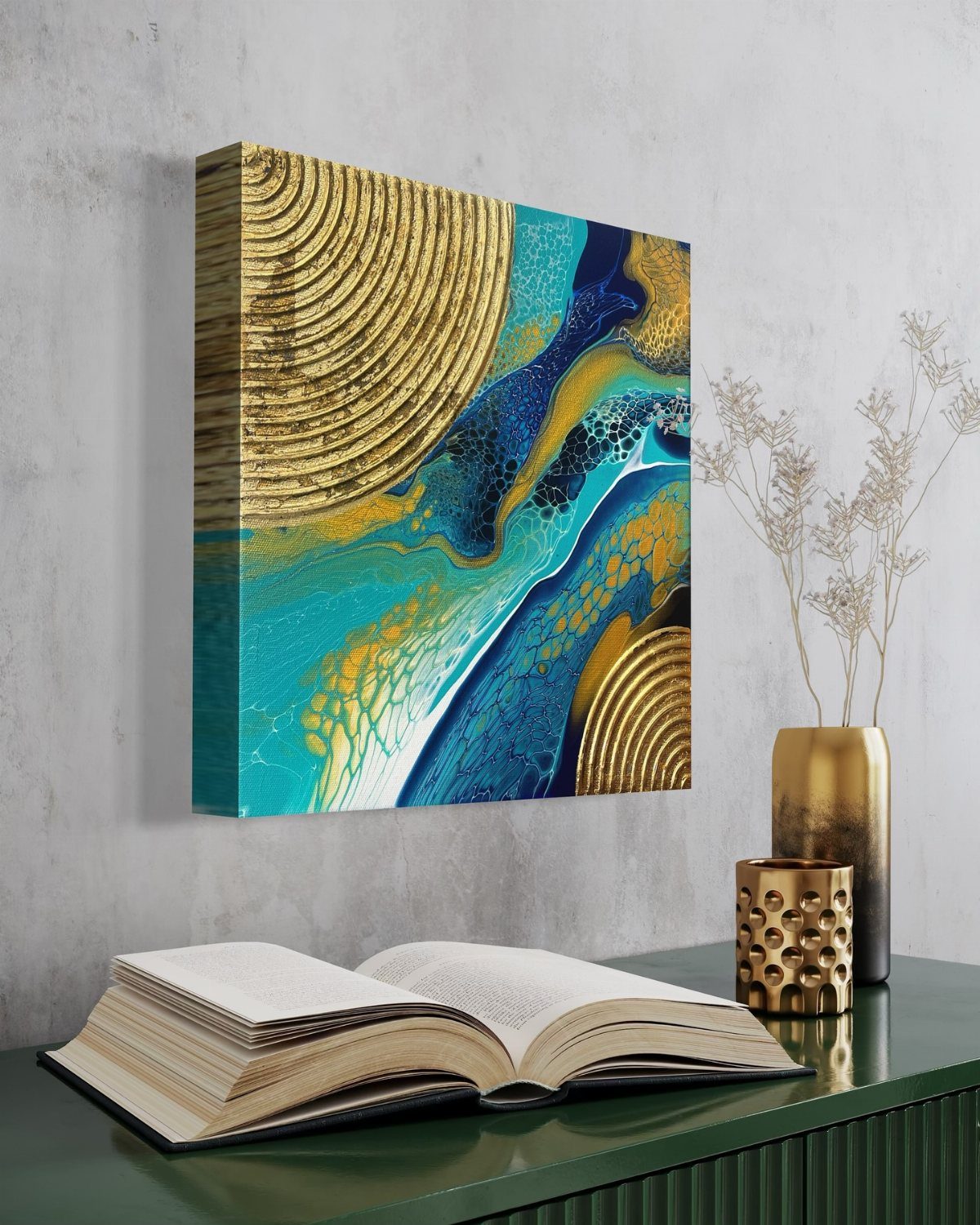
Boho kitchens get their energy from friction, not matching sets. Swirling teal and gold against a green surface is doing exactly that: bold pattern against solid color, smooth paint against whatever texture sits below.
In a kitchen, I would translate this to a woven rug underfoot, linen curtains at the window, maybe terracotta on the counter, and a patterned tile or textile somewhere the eye lands first.
The limit is cohesion through color, not through material. Pick two or three tones and let everything else disagree happily.
5. Exposed Wooden Beams
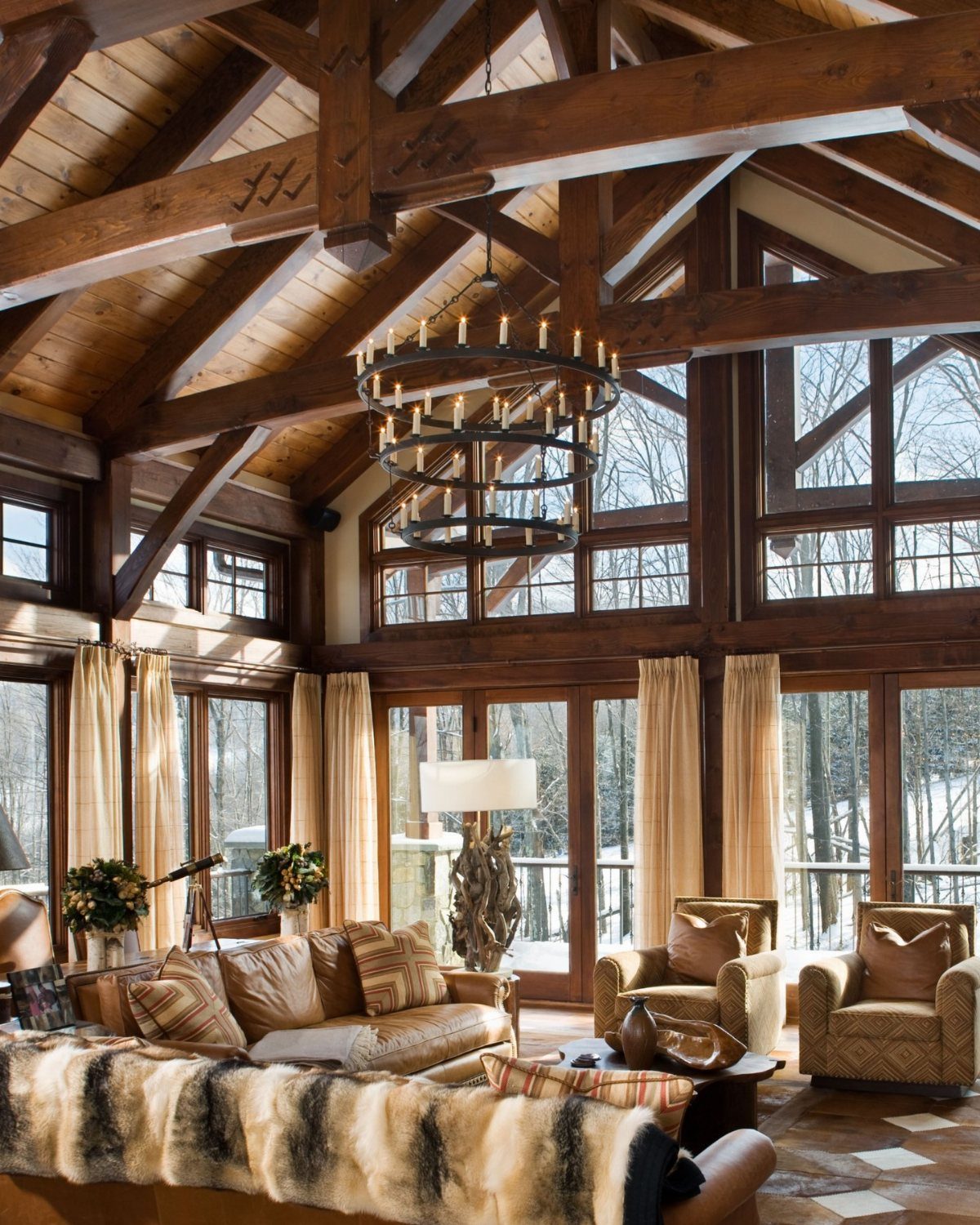
Dark timbers stretch across a vaulted living space, but the same logic works over a kitchen island or running the length of a galley.
Real structural beams need engineering; decorative box beams made of hollowed timber or even stained MDF give the look for less weight and less money. Ceiling height is the real constraint.
Below 9 feet, beams can press down; above that, they draw the eye up and make the room feel larger, not smaller.
6. Natural Wood Accents
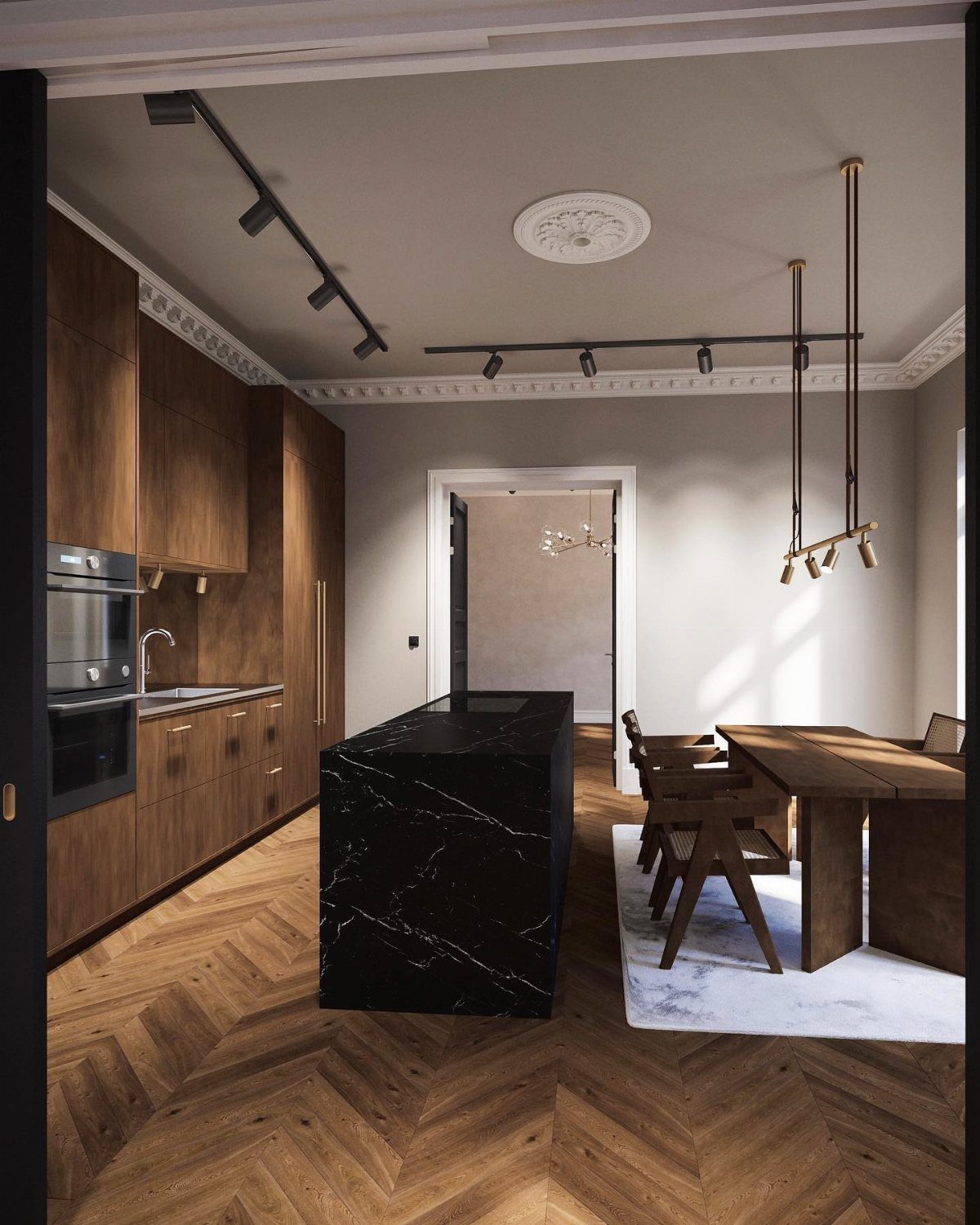
Reclaimed wood brings grain and history that factory finishes cannot fake.
Dark wood for cabinetry, flooring, and furniture is one approach, but the boho move is lighter and more mixed: a single reclaimed counter, open shelves with the saw marks still visible, or a dining table that shows its age.
Reclaimed lumber costs more than pine from the home center and less than most stone, with the price swinging hard depending on species and where you source it. The character it adds costs nothing extra.
7. Layered Textured Rugs
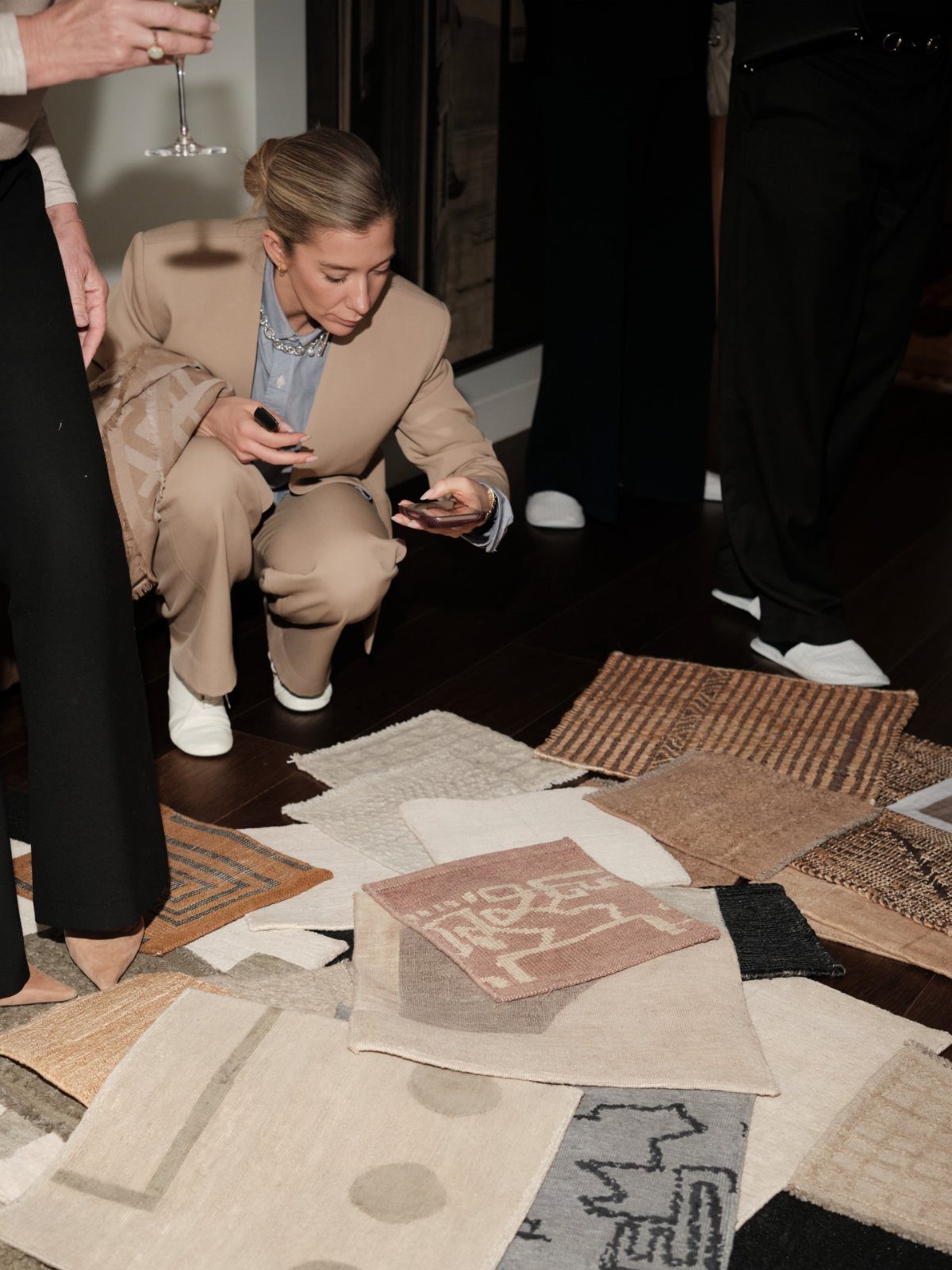
A stack of kilim or Moroccan rugs turns a cold kitchen floor into the warm center of the room.
Two overlapping vintage rugs with red and gold tones under a breakfast table can make the space feel finished rather than forgotten.
Start with one rug that covers the main traffic path, then add a smaller one at an angle where you stand to cook.
The overlap should be about a third of the smaller rug, enough to look intentional but not so much that either pattern disappears.
This works best if your cabinets and counters stay fairly quiet. Too many competing patterns and the floor loses its grounding effect.
8. Patterned Tile Backsplash
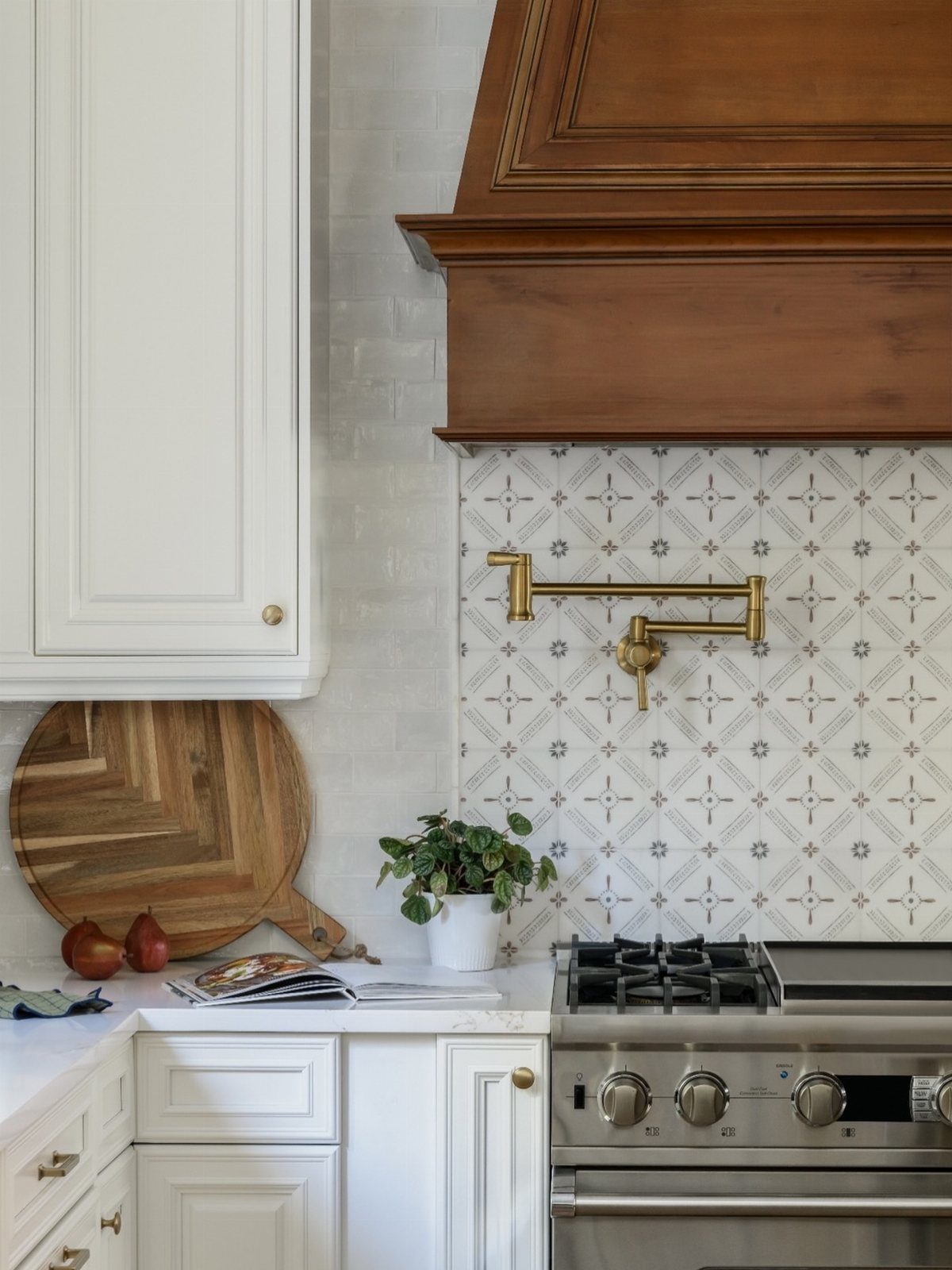
A patterned backsplash carries the whole room when everything else stays simple. Grey and white geometric tiles need only brass hardware and a wooden range hood to feel complete; no open shelving, no hanging plants, no competing focal points required.
Moroccan or Mediterranean-style tiles with a handmade look add movement that flat subway tile cannot touch. I would use them on the wall behind the stove where the eye lands first, and keep the surrounding walls plain.
Tile backsplashes run the gamut from bargain finds to handmade pieces, and installation adds more if you hire it out.
Doing it yourself over a weekend is possible if the wall is already smooth and the pattern repeats in a way you can dry-fit first.
This idea suits renters only if your landlord approves, since removal means replacing drywall.
9. Macrame Wall Art
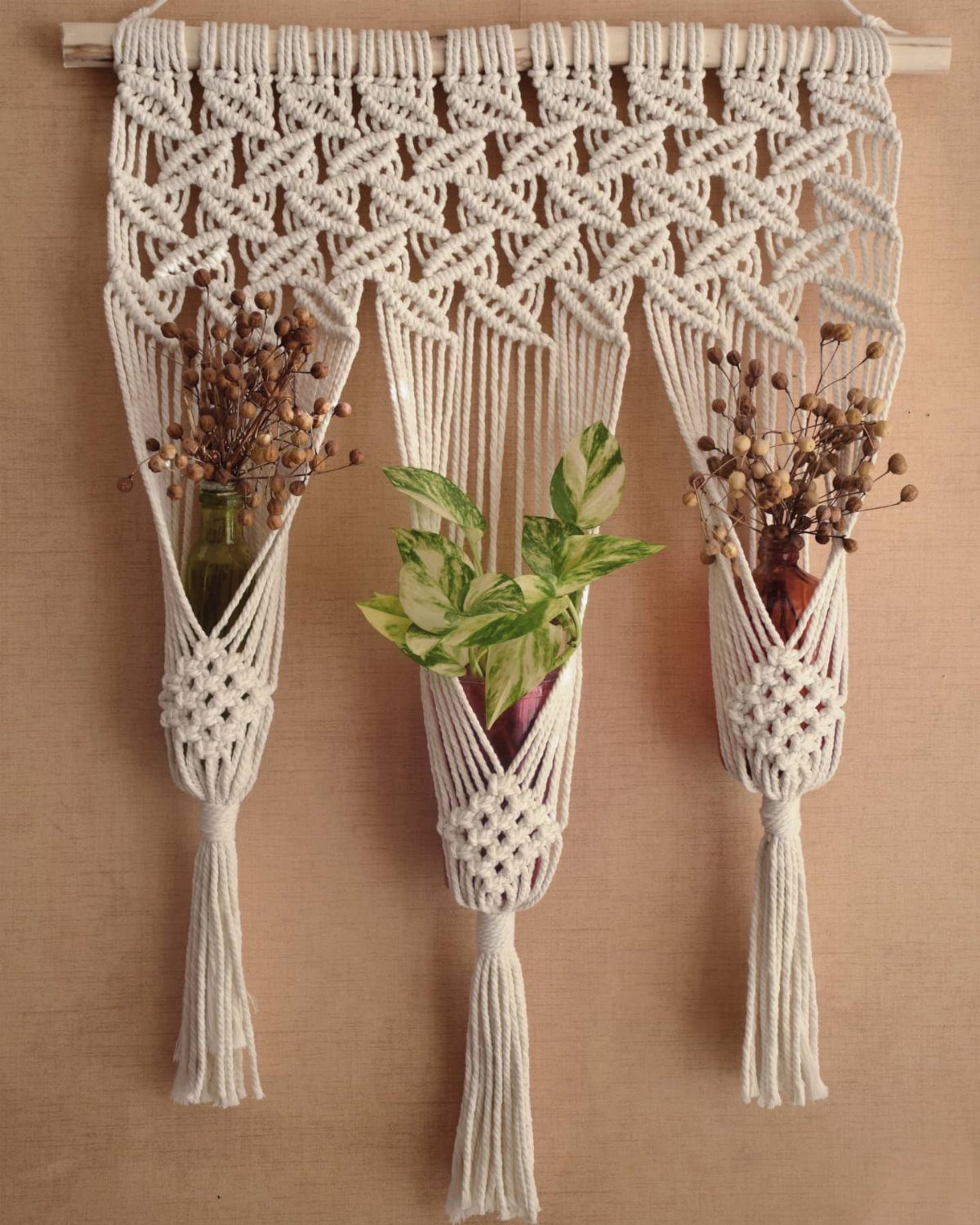
Macrame softens a kitchen wall without demanding a single tool beyond a hammer and nail. Cream-colored macrame hangs from a simple wooden rod, bringing in texture that paint or framed prints cannot match.
A wall near your breakfast nook or an empty corner that collects clutter anyway is the right spot.
Keep it away from the stove and sink; cotton cord absorbs grease and splatter, and washing macrame tends to leave it slightly misshapen.
A medium-sized wall hanging from most makers costs less than a framed print, or a few hours and a spool of cord if you know the knots already.
Premium materials and elegant finishes give macrame a modern, sophisticated touch that reads closer to textile art than dorm room.
10. Unique Cabinet Hardware
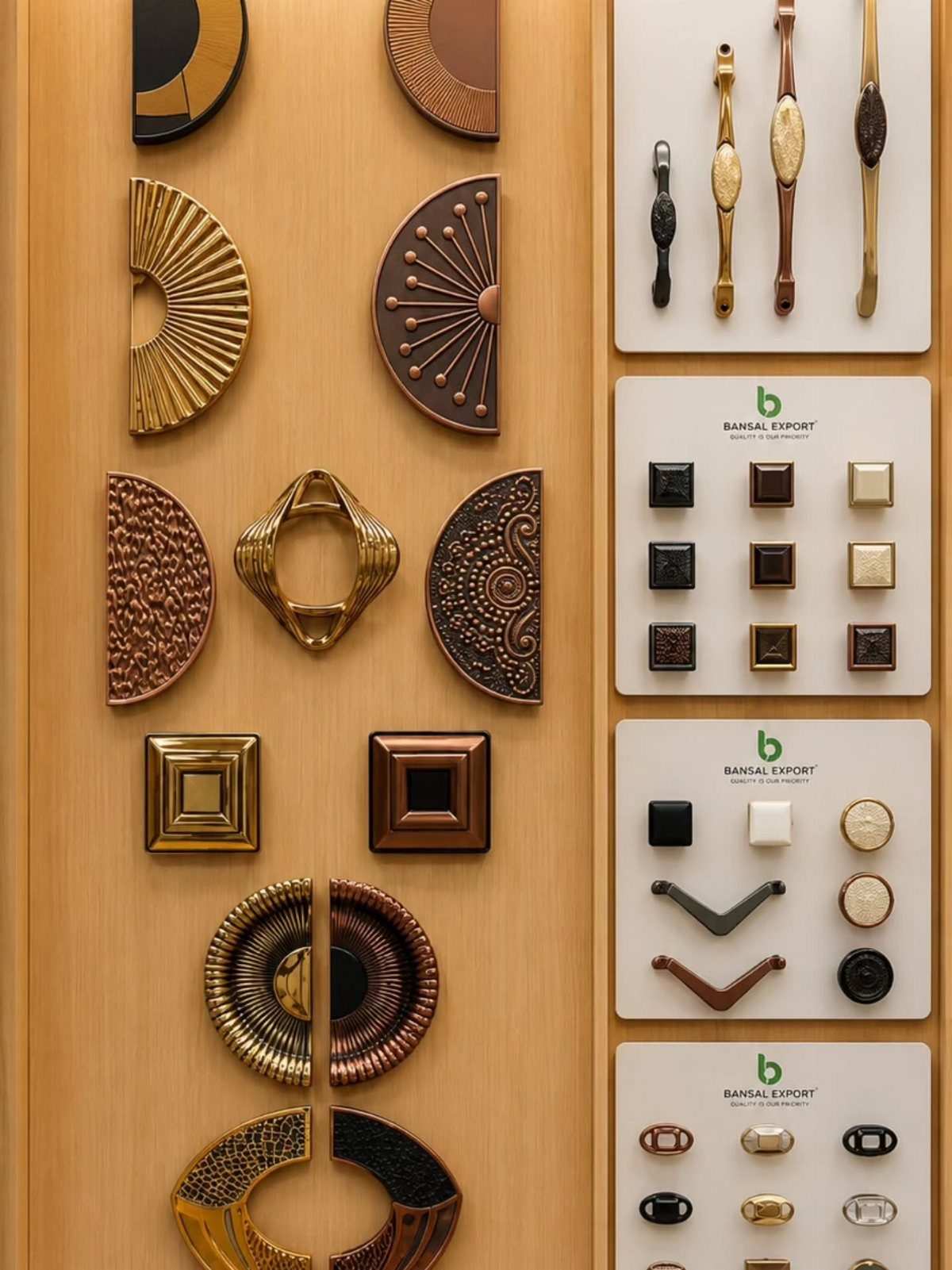
Swapping cabinet hardware is the quickest afternoon project with the most visible change for the effort involved. Ceramic or brass knobs change how the whole kitchen reads without touching a single wall.
Aged brass pulls can replace standard brushed nickel on rental cabinets using only a screwdriver, with the originals stored in a labeled bag under the sink for move-out day.
Leather pulls paired with sage green or terracotta paint add even more dimension if you are ready for that step.
Count your doors and drawers before ordering; I forgot the false drawer front under my sink and had to place a second order.
Hardware prices vary widely, so a small kitchen stays affordable if you choose carefully and avoid the specialty boutique markup.
11. Mismatched Dining Chairs
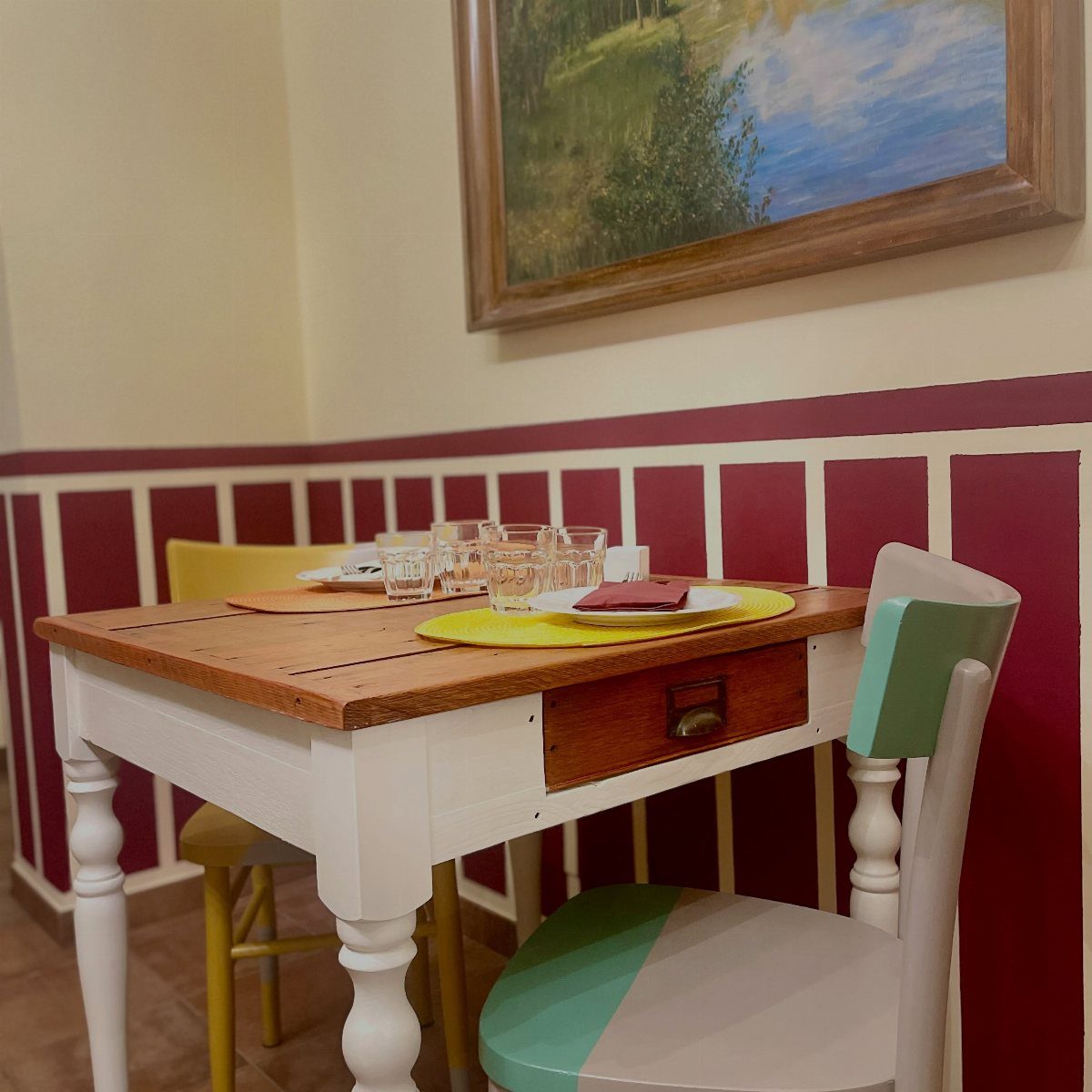
Matching dining sets read as showroom floor to me. Mixing chair styles around a single table creates the collected-over-time look that defines boho spaces without actually waiting years to collect.
Start with two chairs you already own that share nothing but approximate seat height. Add a bench on one side, a found chair from a flea market on the other.
Paint can unify what shape does not; a yellow chair and white chair with green accents work together because their saturation levels match even though their colors do not.
This approach trades the clean line of a matching set for personality. If you host large dinners often, the slight height and stability differences between mismatched chairs will annoy you by dessert.
12. Decorative Plates on Walls
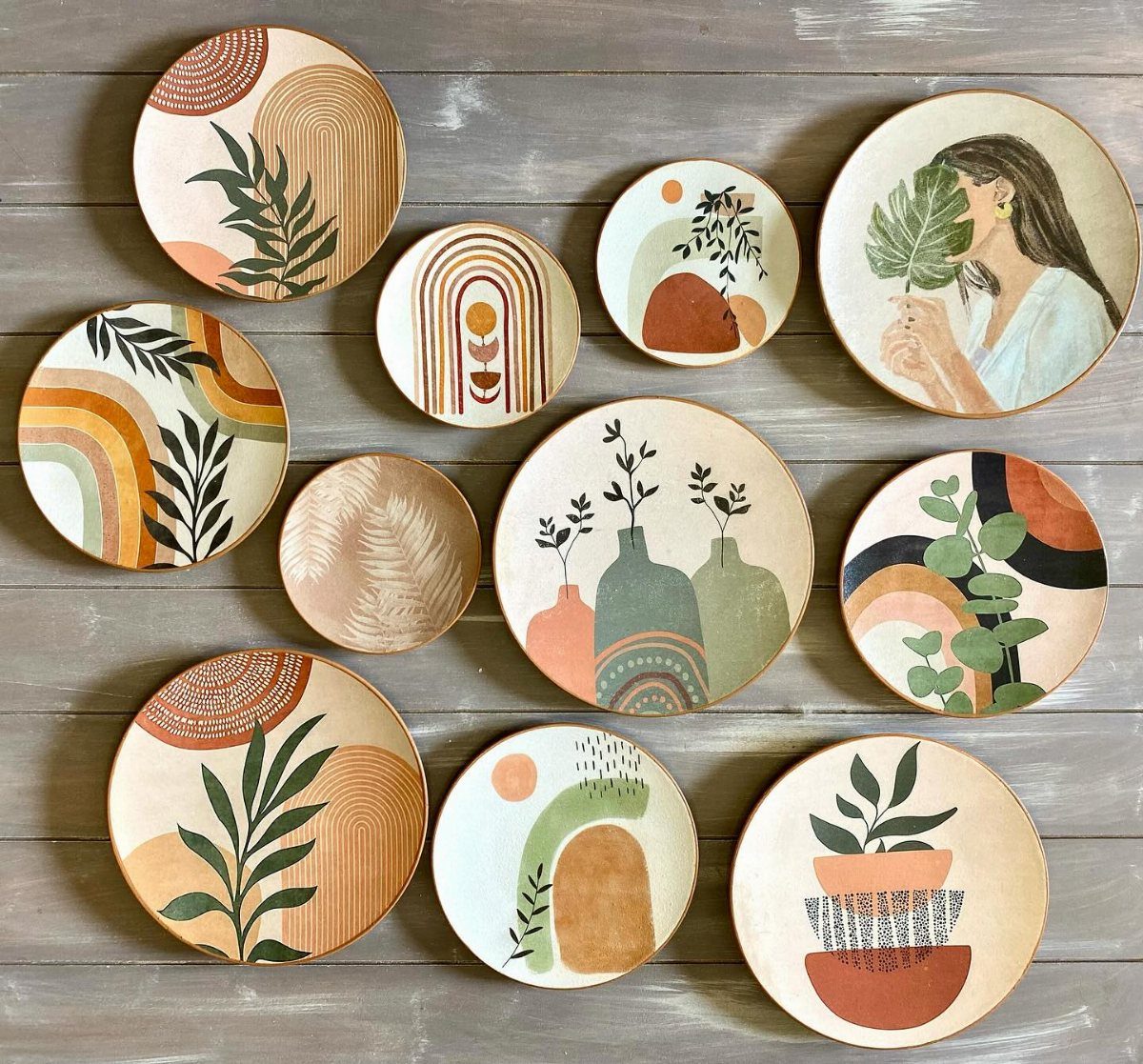
Decorative plates hung in a loose cluster bring the same warmth as a gallery wall without demanding frames or careful spacing.
Botanical and abstract plates in earthy tones read best against weathered wood or plain plaster that lets the patterns do the work.
Start with one plate you love and build outward, or buy a set of three to five that share a color palette but vary in size.
Plate hangers with spring wire grips cost a few dollars each and leave smaller holes than drilling for anchored shelves.
I would avoid hanging plates where they compete with open shelving or a busy backsplash. One clear wall above a counter or in a breakfast nook is enough.
13. Layered Lighting
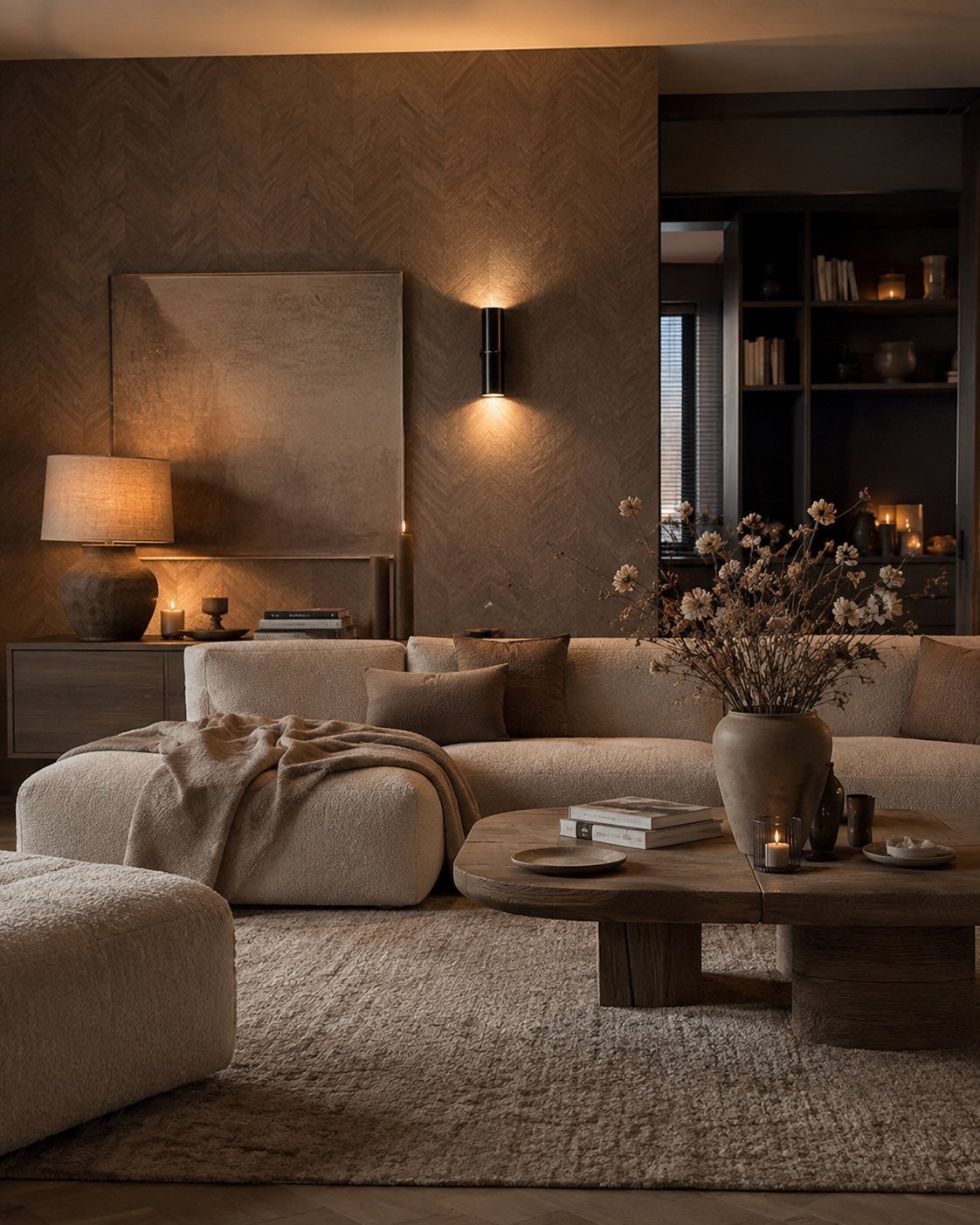
Pendant lights, candles, and a small lamp on a shelf together do what one overhead fixture cannot: they let you choose how the room feels after dark.
I start with one warm pendant over the sink or island, then add battery candles on the windowsill and a corded lamp where counter space allows.
The gold tones in the lamp matter more than the lamp itself; anything with a textured ceramic or rattan shade reads softer than metal alone.
This suits renters who cannot rewire and homeowners who want change without an electrician. Cords are the only downside, and a hook routed behind the backsplash handles most of that.
14. Antique or Vintage Rugs
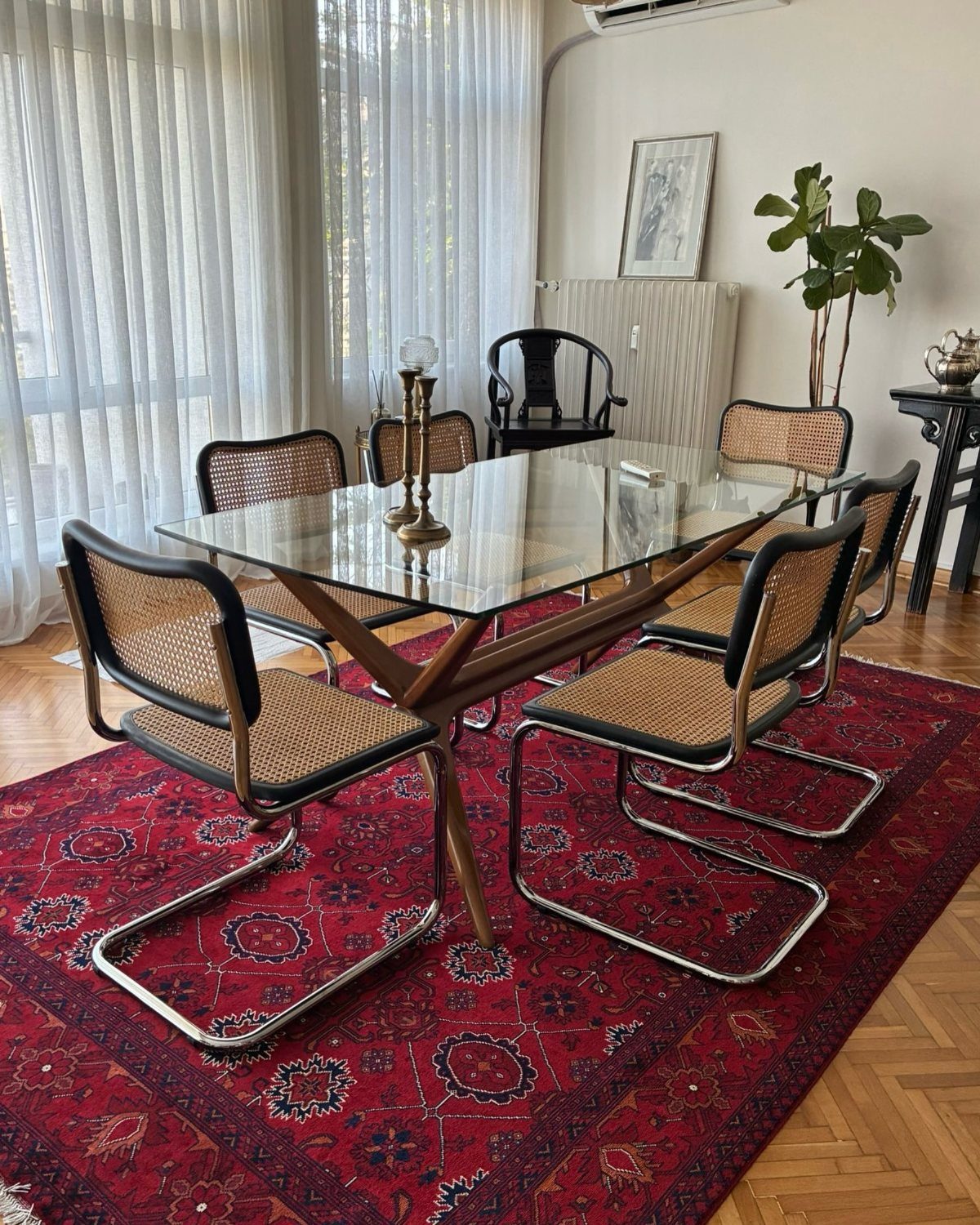
A worn Persian or kilim under the table costs less than new flooring and moves with you when you leave.
A 4-by-6-foot rug works as a runner down a galley kitchen with the frayed edges turned under and held with corner grips so it lies flat. The red and gold patterns hide the spills that would ruin something plainer.
Vintage rugs demand a rug pad, especially on tile, and they shed for the first month. For narrow kitchens, a long runner from a larger cut piece works; ask the seller before you buy, since not every dealer will cut.
15. Hanging Macrame Planters
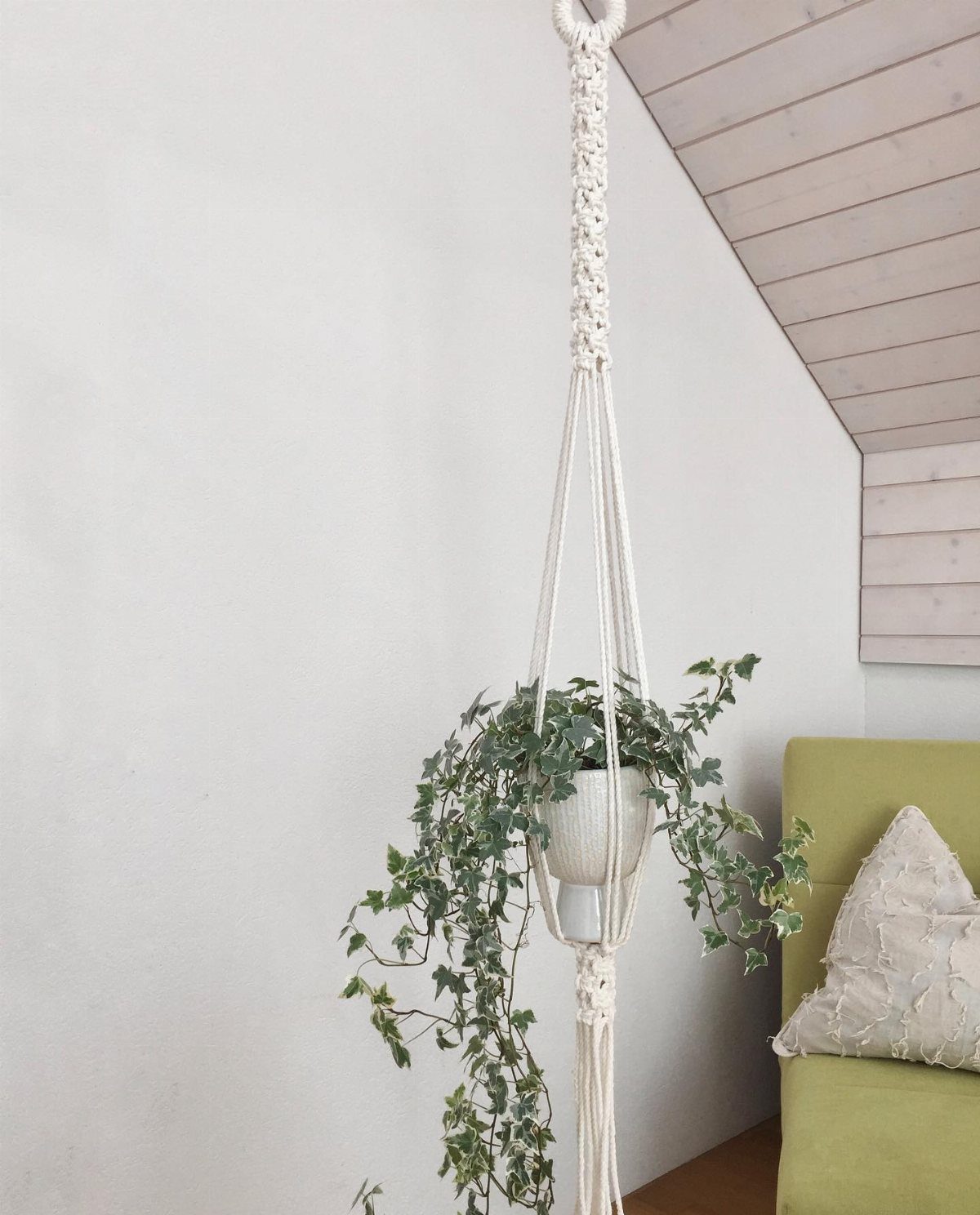
Macrame hangers soften the hard lines of a kitchen corner the way nothing else does, and the knots themselves are the decoration.
A single hanger with a trailing pothos near a breakfast nook installs on a ceiling hook rated for the weight of wet soil and a ceramic pot. White cotton reads clean against walls; natural undyed fiber goes warmer.
The plant needs light, so this is for windows or glass doors, not the dim interior wall. If the ceiling is textured or you cannot drill, a tension rod across the window frame holds a short hanger just as well.
16. Candle Decor Lights
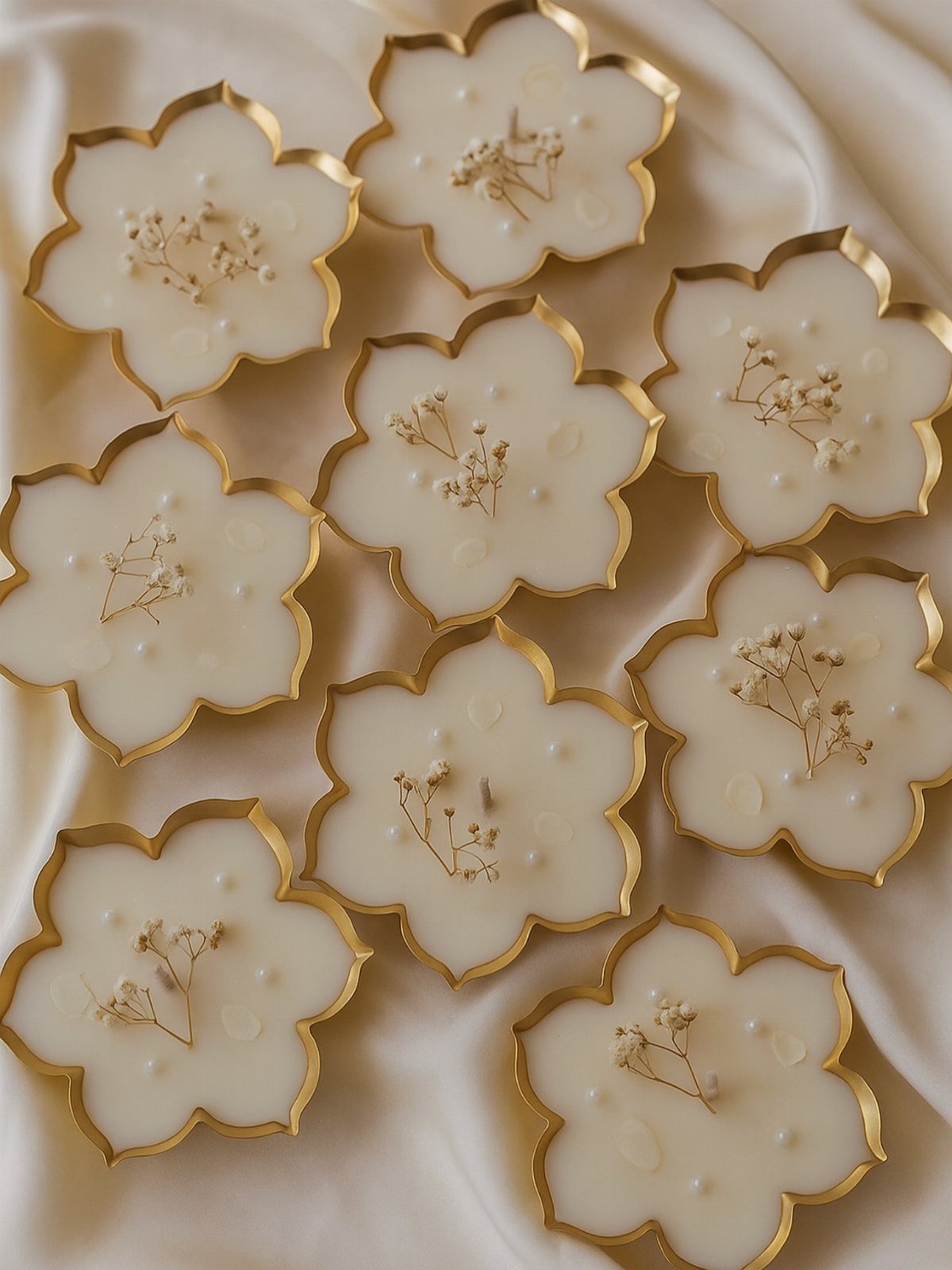
Flower-shaped candles with gilded edges sit on fabric rather than in holders, which tells you how little structure boho lighting actually needs.
I cluster three of varying heights on a folded linen runner where the counter meets the wall, far enough from the stove that splatter is not an issue.
The glow is the point, not the illumination; these are for after dinner, not for chopping onions.
Real flame is not for every household. LED pillars in beeswax tones flicker convincingly now, and no one checks closely at table height.
17. Use of Unique Textiles
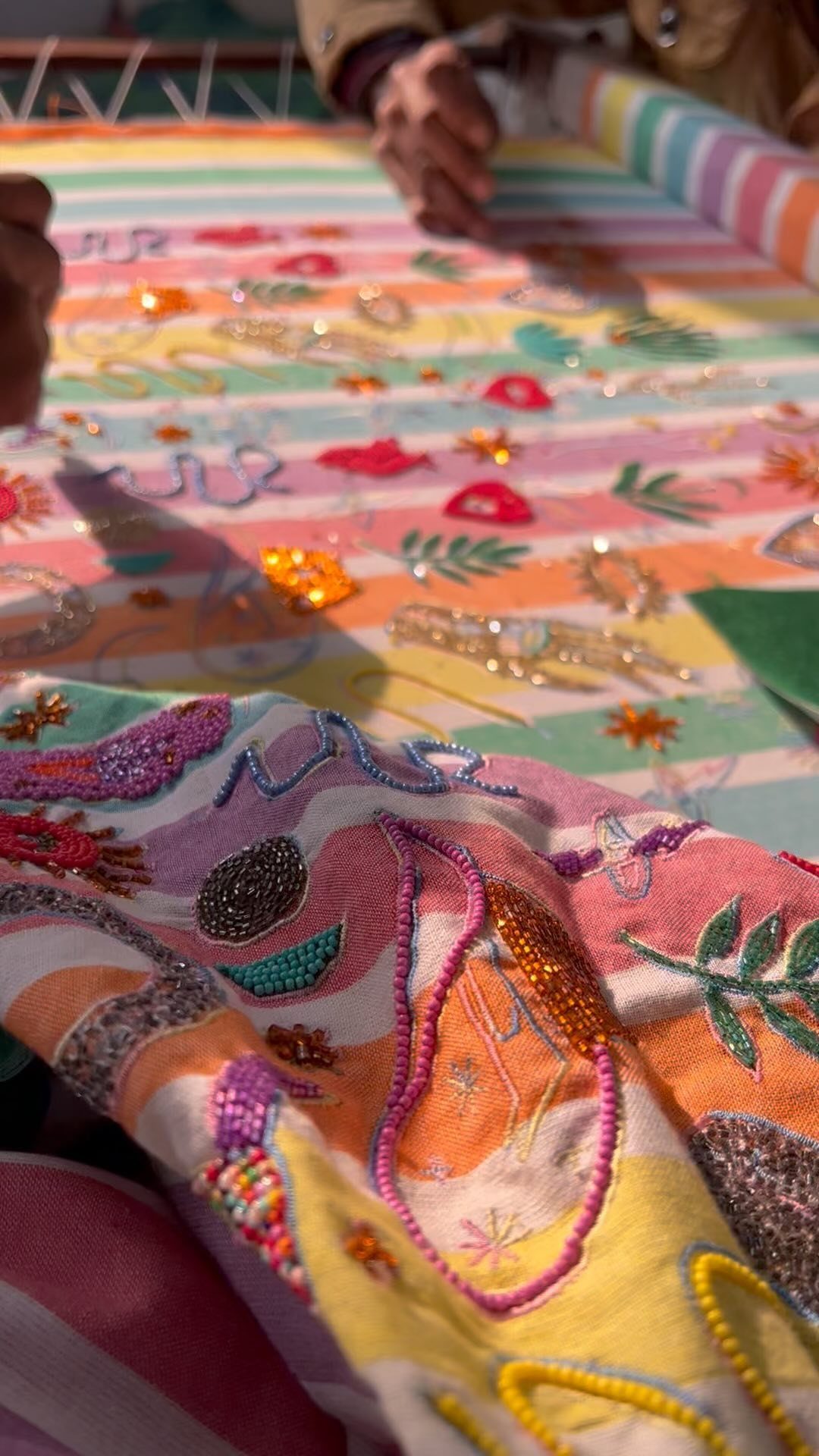
Beadwork and embroidery together are more than most kitchen fabrics attempt. A runner with this much detail belongs on a side table or draped over a chair back, not under hot plates.
I look for hand-embroidered pieces at estate sales and cut them into placemats if the size is wrong; the raw edge frays to a soft border in two washes.
Cotton or linen backing extends the life. Without it, the beads catch and the seams stress.
This is weekend work with a needle, not a machine, and the result is slower for it.
18. Plants and Greenery
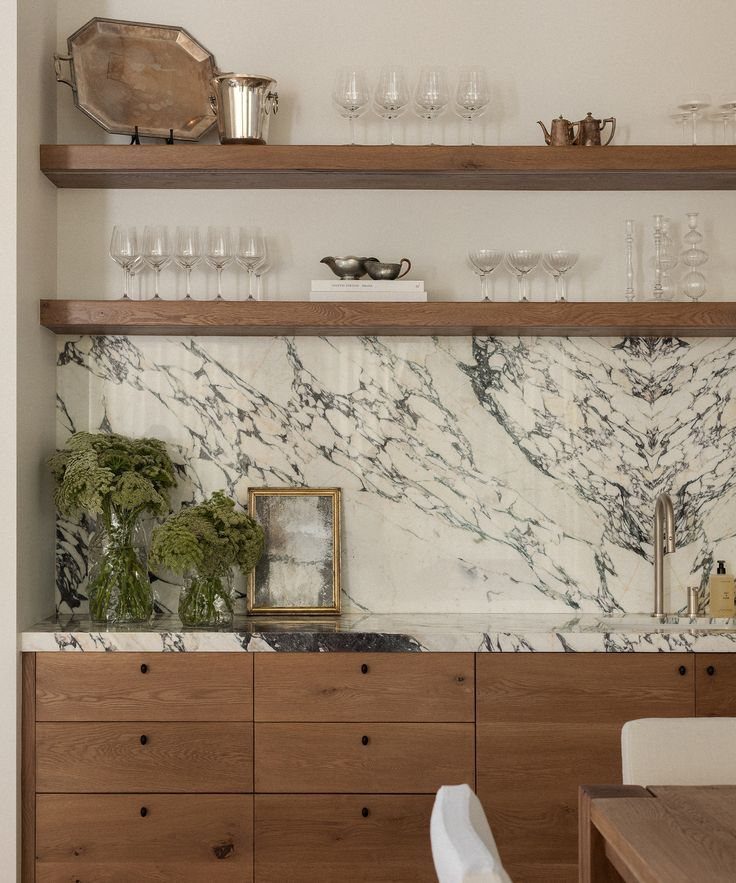
Two shelves of glassware above marble, with nothing living in sight except the trailing vine on the counter below. That placement matters: the plant sits where the eye lands after the shelves, not competing with them.
Pothos in water roots easily in a small pitcher; change the water weekly or it clouds.
Herbs need sun and drainage, so the windowsill or a ledge with a saucer works better than a shelf.
For renters, a suction-cup hanger on the window glass holds a small pot without marking the wall, and moves with the light.
19. Gallery Wall of Art
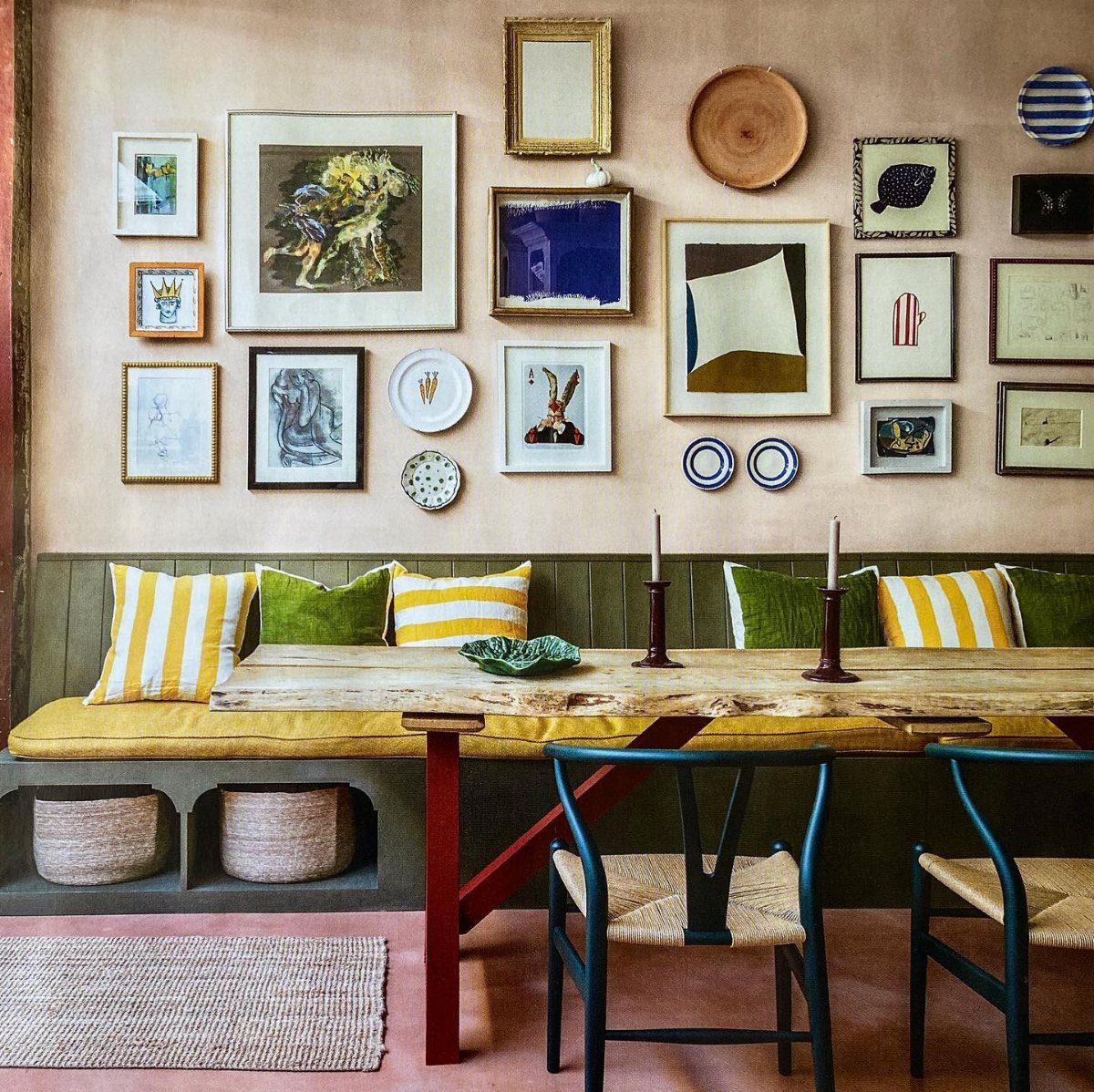
A gallery wall lets you hang what you already own and call it finished.
Framed sketches, small textiles, and a plate or two work together when you keep the spacing tight and let the wall color show through as breathing room.
Start with the largest piece slightly off-center and build outward; nothing needs to match.
I’d pick thin black frames or bare wood for a kitchen, since both handle grease and glare better than glass-heavy styles.
A gallery wall works harder when it sits above something you actually use; the art becomes part of daily life instead of a museum display.
20. Colorful Glassware
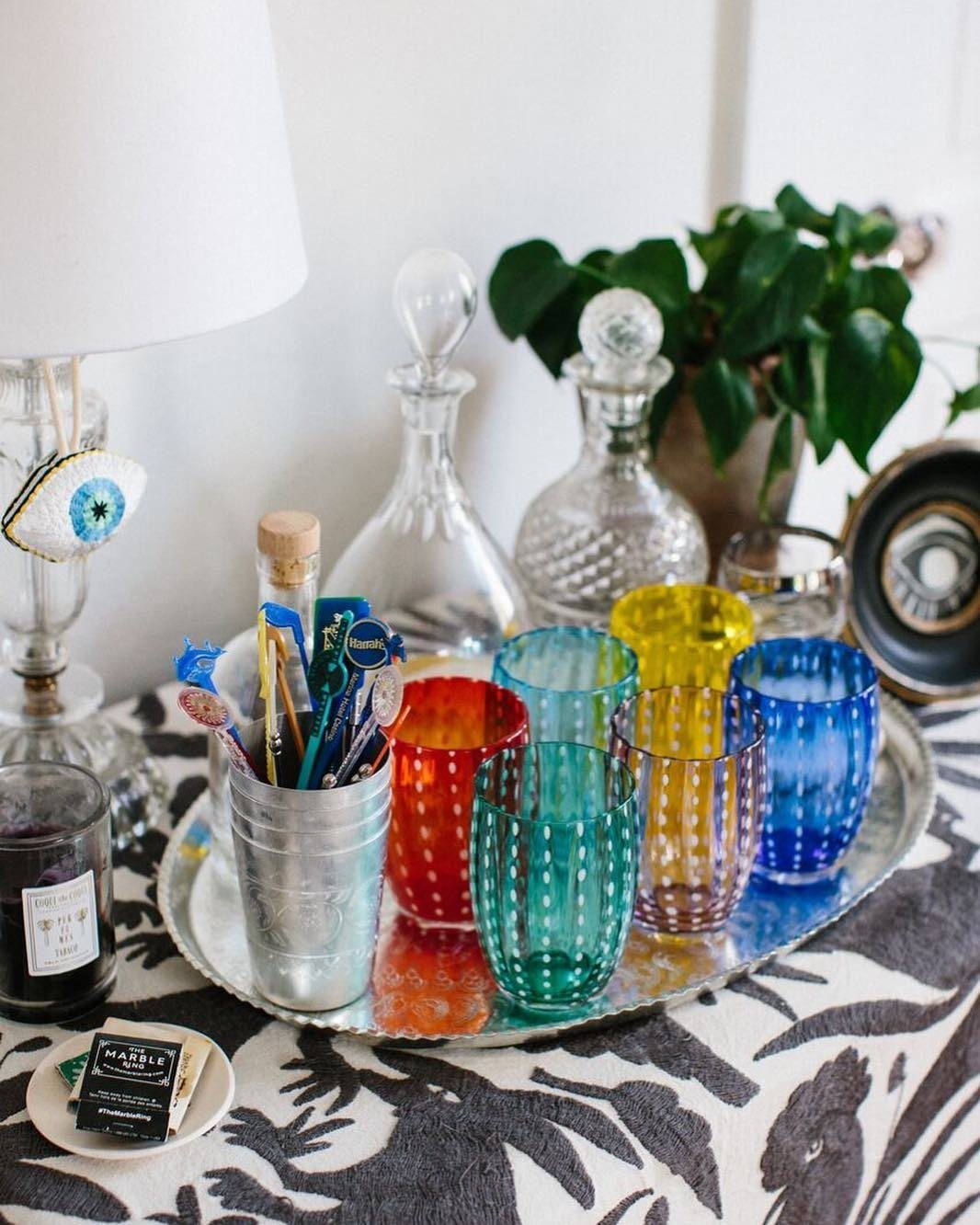
Colorful glassware is one of the few decorative buys that earns its shelf space every morning.
Drinking glasses in red, teal, and yellow sit out on a tray, not hidden in cabinets, and become a color block you rotate like flowers.
Mismatched glassware from a flea market works fine when the pieces stay within the same warm palette. Amber and green read more subdued; blue and yellow hold up under fluorescent kitchen lighting.
Display them stem-down to keep dust out, or pile them in a wire basket if counter space is tight.
21. Chalkboard Wall
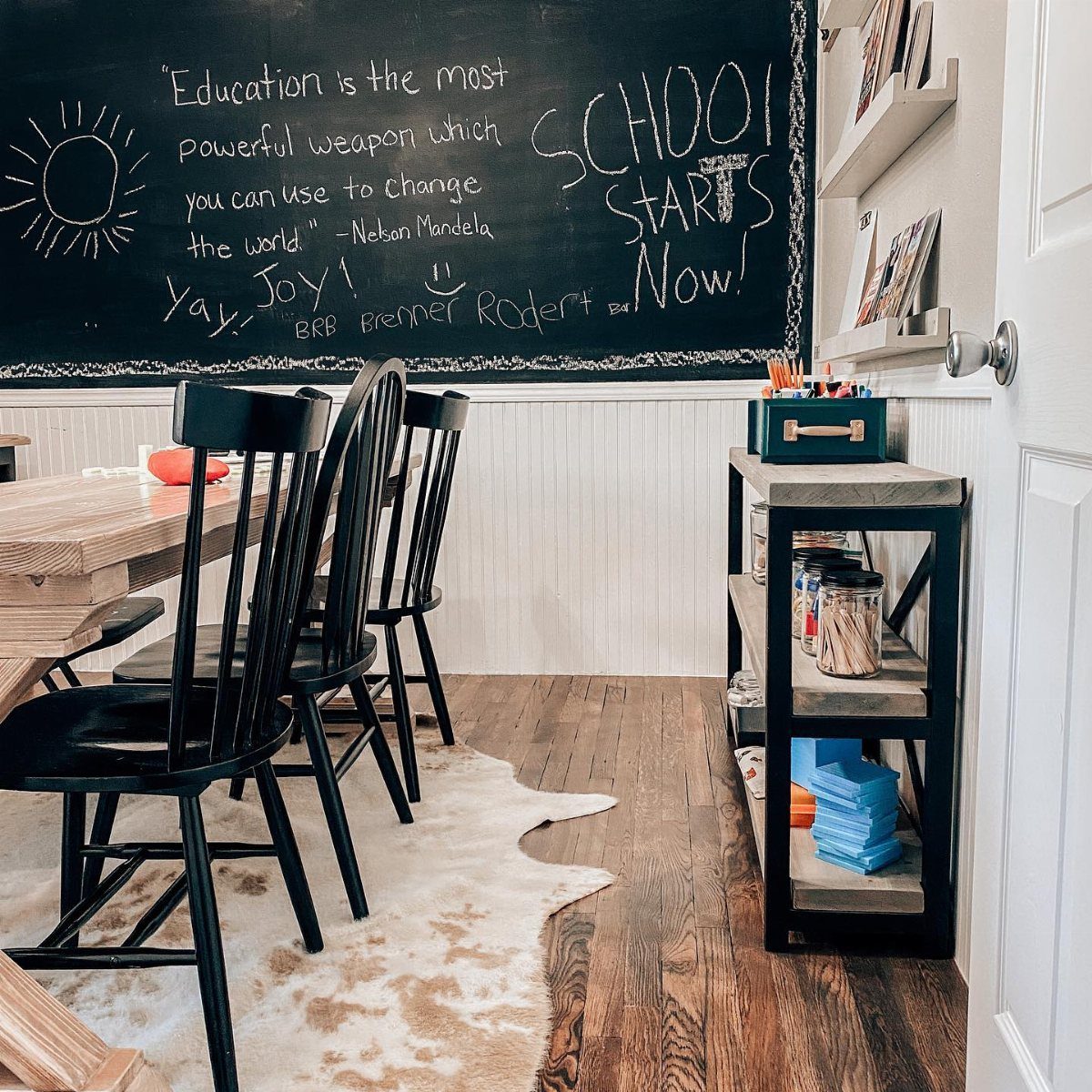
A chalkboard wall turns the space between cabinet and chair rail into something you actually use. White wainscoting below a chalkboard surface keeps it from feeling like a classroom; loose handwriting matters more than perfect lettering.
Real chalk erases cleanest, though dust falls forward onto the floor. Chalk markers stay sharp longer but need a damp cloth.
I would size this to the wall you face while cooking, not the one guests see first; grocery lists and recipe notes belong in your working sightline, not the display zone.
22. Use of Vintage Canisters
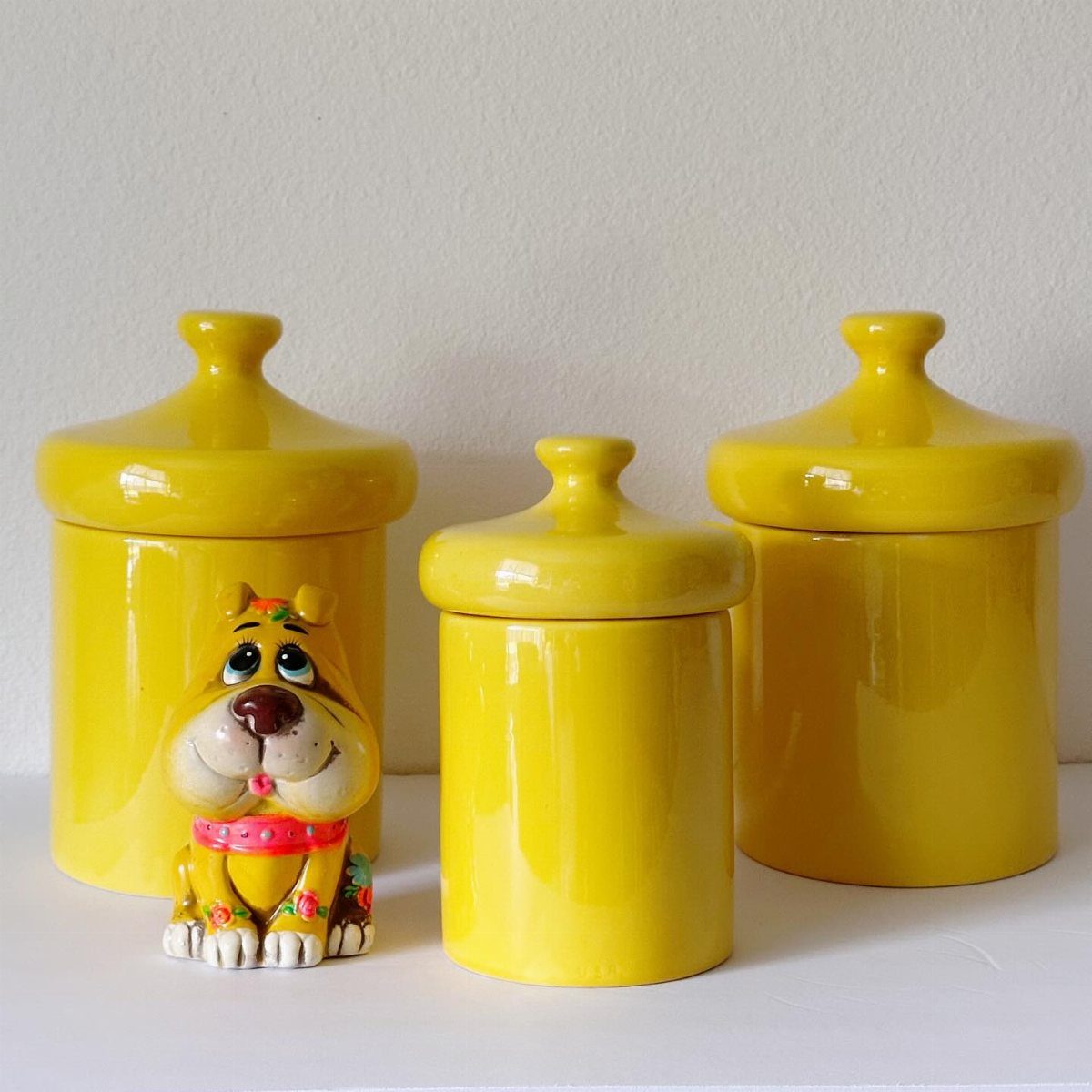
Vintage canisters store flour and sugar where you reach for them, and bright yellow ceramic does more visual work than any plain glass jar. Three matching pieces line up without looking too careful when a small figurine breaks the row.
Thrift stores and estate sales carry these for next to nothing; chips in the glaze matter less when the set already mixes decades.
I look for lids that seat firmly, since humid kitchens ruin contents faster than pretty storage helps anyone. If the color clashes with your walls, white ceramic with painted bands reads softer and stores just as well.
23. Bamboo Blinds
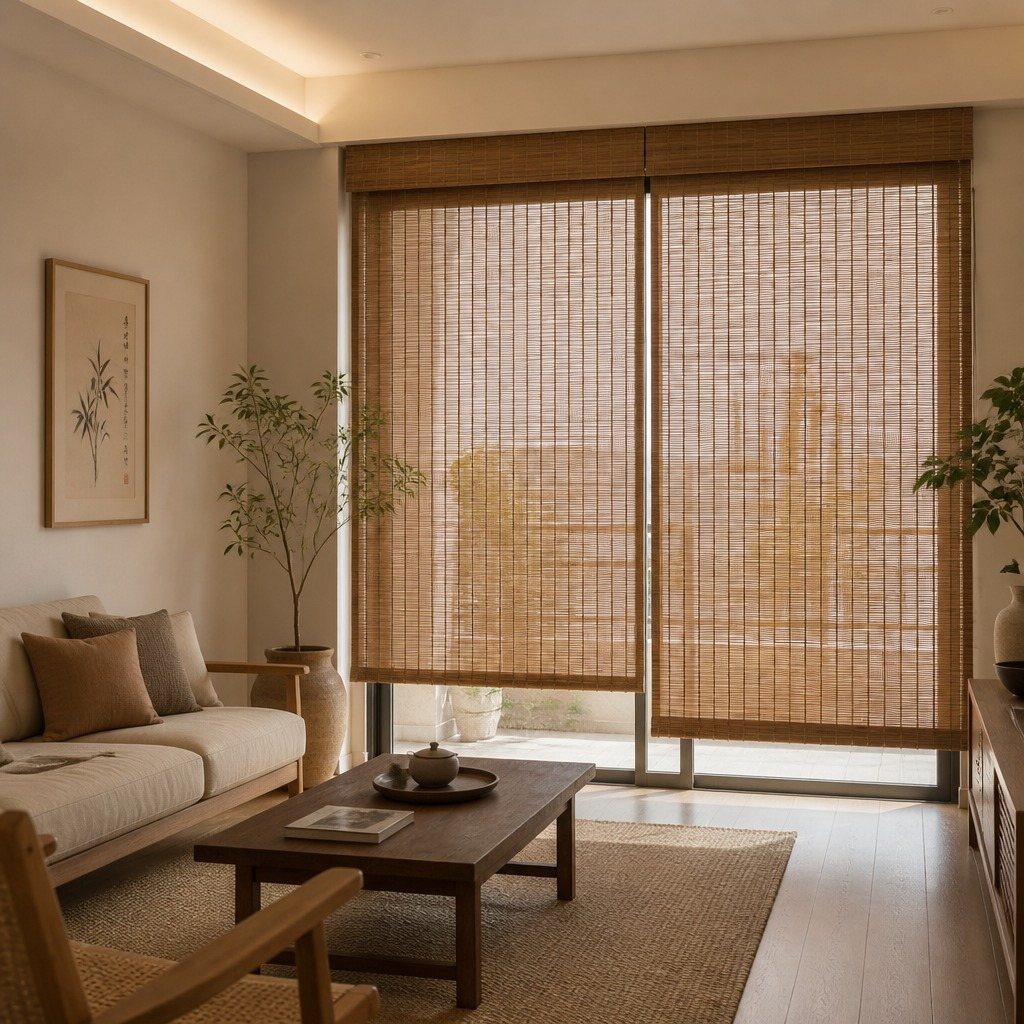
Bamboo blinds filter light without the weight of curtains, and the natural tone matches almost any wall color you already have.
They stack flat when raised, which matters in a kitchen where windows sit above sinks and counters that you need to reach across.
I installed these on a 72-inch slider in an afternoon; the hardware is lighter than wood blinds demand, though the valance must be mounted into studs or proper anchors.
They darken more than sheer curtains, so pair them with a pendant or under-cabinet light if your kitchen faces north.
24. Colorful Table Linens

Bright table linens are the fastest way to shift a kitchen from weekday to weekend without buying furniture.
Folded fabrics in red, orange, and teal read as one spectrum when the weave stays similar, rough linen or slub cotton rather than polished hotel cotton.
Two sets in rotation, allowed to fade slightly, fit the boho look better than formal dining ever could. Machine-wash cold and pull them out damp to avoid the creases that ironing would undo the casual effect.
A small vintage rug underneath, visible at the edge here, grounds the color and catches the drips a bare table would absorb.
25. Use of Mirrors
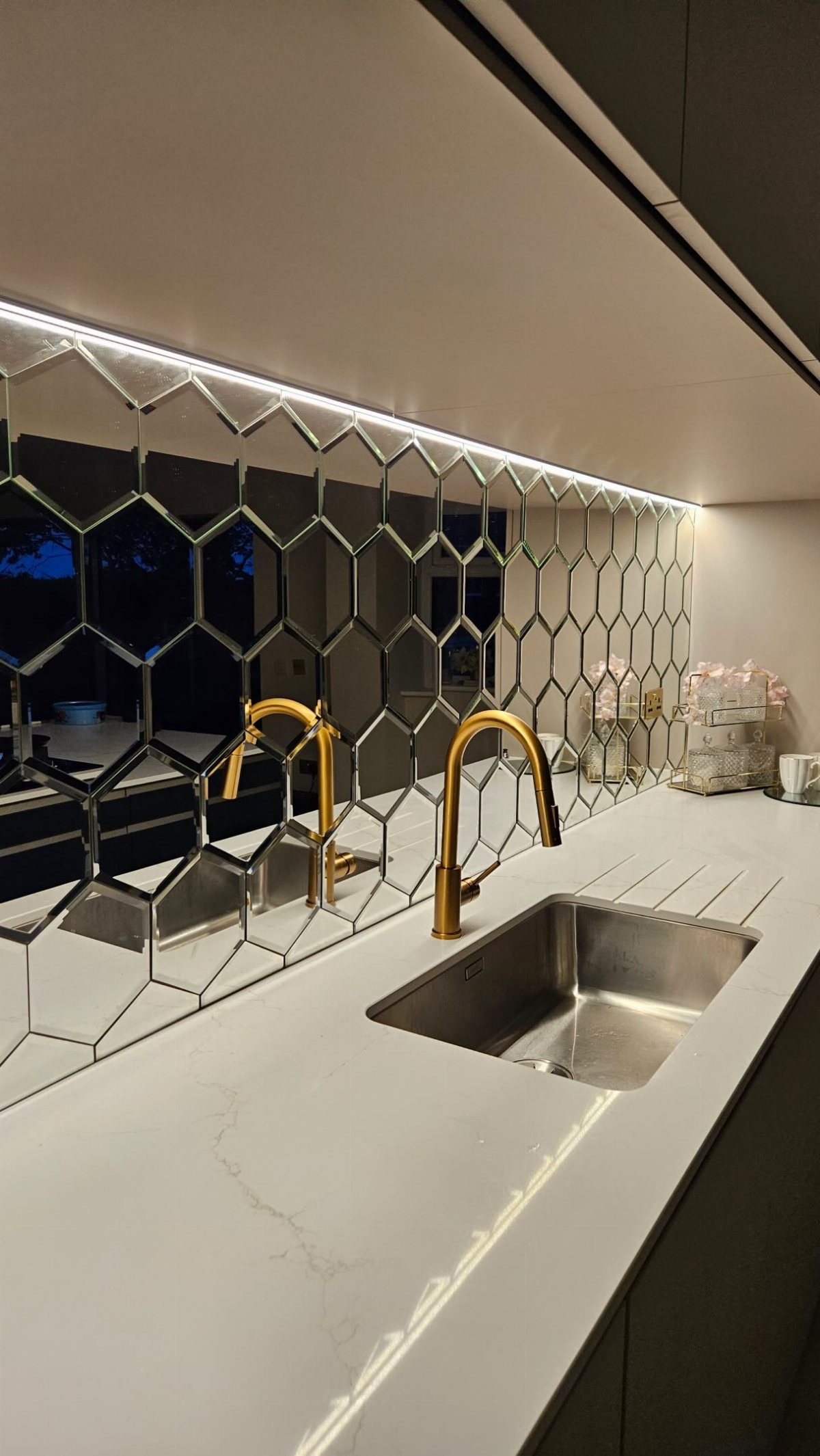
A mirror backsplash catches whatever light your kitchen gets and throws it back into the room, which matters when you are working with a single window and a tight budget.
Hexagonal tile breaks the reflection into pieces so it reads as texture, not vanity. You can get the same effect with any small mirror tile, mounted on mesh backing the way mosaic glass comes.
A small sheet covers enough for a stove-height backsplash if the wall is already flat, and the job takes a weekend.
This trades away the softness of a textile or woven piece. If your kitchen already has macrame or open shelving, the hard surface balances it.
If the room is all hard surfaces already, a woven-framed round mirror above the sink is the gentler choice.
Mixing Styles and Elements
Boho kitchens work best when nothing matches too neatly. A Mediterranean tile pattern next to a tracery ceiling sounds like a risk, but the texture is what ties it together.
The same goes at ground level: pair a smooth stone countertop with rough ceramic canisters, or set a sleek metal rack against a wall of hand-painted tile.
Start with one piece that has real age to it, something with dents or faded color. Build around that instead of buying everything new in the same "eclectic" style.
The warmth comes from the clash, not the coordination.
Open shelving, mixed patterns and textures, or a touch of vintage in accessories or appliances are the key ingredients for a bohemian kitchen.
Creating a Cozy Atmosphere
A kitchen that actually gets used needs layers you can stand on, wipe down, and replace when they wear out.
Stack a smaller vintage rug on top of a larger flatweave so the bottom one anchors the room and the top one takes the spills.
Add one trailing plant on a shelf and another on the floor in a woven basket; the height difference matters more than the species.
Textiles soften hard surfaces fast. A length of linen across a window, a folded throw on a chair seat, a stack of faded tea towels hanging from a hook: each layer adds something the bare room doesn’t have.
The result reads as relaxed because it is relaxed. Nothing is too precious to use.
Incorporating Personal Touches
The boho look depends on objects that carry weight from somewhere else.
A kitchen scale with rust spots and a dial that sticks, brought home from an estate sale or pulled from a grandparent’s cabinet, does more than a matching set ever could.
The same for a single hand-painted tile propped on a sill, or a bowl shaped by someone local whose name you know.
Arrange these pieces where you’ll actually handle them. The scale sits out on the counter; the ceramics hold fruit or garlic, not dust.
The story they tell should be yours, not one you bought in a bundle. That is the difference between collected and decorated.
Importance of Natural Materials
Reclaimed wood, terracotta, rattan, bamboo, and stone are the materials that read as boho because they show what happened to them. A countertop with saw marks or a backsplash with irregular glaze catches light differently than factory-perfect surfaces.
The imperfections are the point.
Natural light helps too. A kitchen full of wood and woven shades still falls flat under yellow bulbs in a windowless corner.
If you have one good window, keep the treatment simple: bamboo blinds that filter rather than block. The materials and the light work together, or they don’t work at all.
Frequently Asked Questions
Is boho decor out of style in 2026?
Boho kitchens still work because the style depends on personal pieces rather than trend cycles. Layered rugs, mixed textures, and collected-over-time furniture do not date the way matching sets do.
The kitchens that look tired are the ones that bought the look in a single shopping trip; the ones that grew slowly stay current.
What is boho style kitchen?
A boho kitchen layers natural materials, personal pieces, and patterns that do not match on purpose. It mixes wood tones, adds textiles where other styles would not, and displays what you use instead of hiding it.
Relaxed boho kitchens mix eras and sources so nothing looks like it arrived on the same truck.
What colors work in a boho kitchen?
Terracotta, mustard, deep greens, and warm neutrals form the base, with brighter accents coming from glassware, rugs, or tile.
Quiet cabinets and counters let color shift with new tea towels, a swapped rug, or a different ceramic bowl on the counter. Two or three tones held across mismatched materials keeps the room from feeling random.
How can I achieve a boho look in my kitchen without a full renovation?
Swap cabinet hardware, hang a macrame piece, layer a vintage rug, and add open shelving for the ceramics you already own. These are weekend projects with visible impact, not demolition.





