These ideas run from a free morning-light rearrangement to a full bamboo slat wall you can install yourself, with most needing only a free Saturday and whatever cash you had set aside for the month.
The right choice depends on whether you rent or own, since the low platform beds, removable bamboo panels, and low credenzas move with you while that fixed slat wall stays behind.
The 8–12 inch bed height and the 2700K bulb temperature recur across the list because both are cheap to change and immediately reset how the room feels.
1. Create Calm with Light-Filled Spaces
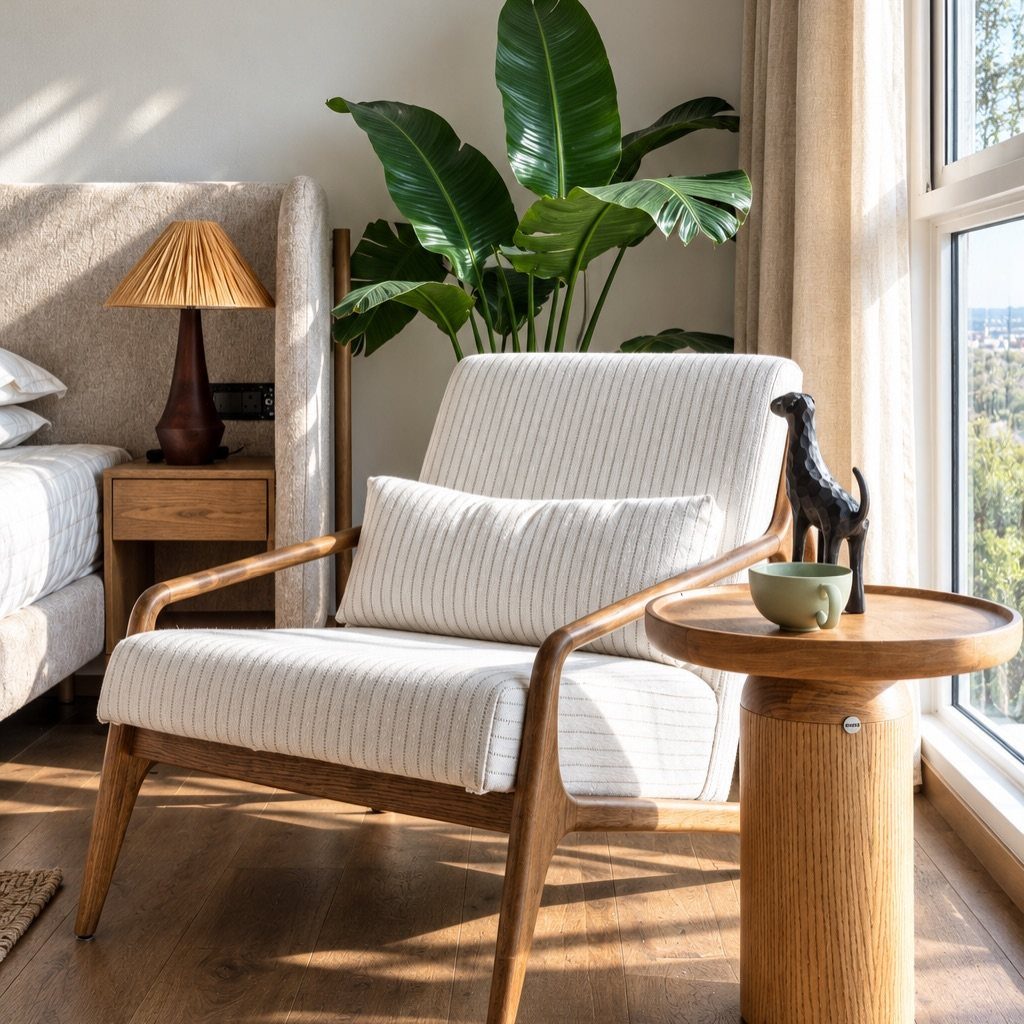
Morning light does more than brighten a room; it changes how the space feels to wake up in. Sheer linen curtains filter light instead of blocking it, and keeping windows clear of heavy drapes keeps the room calm.
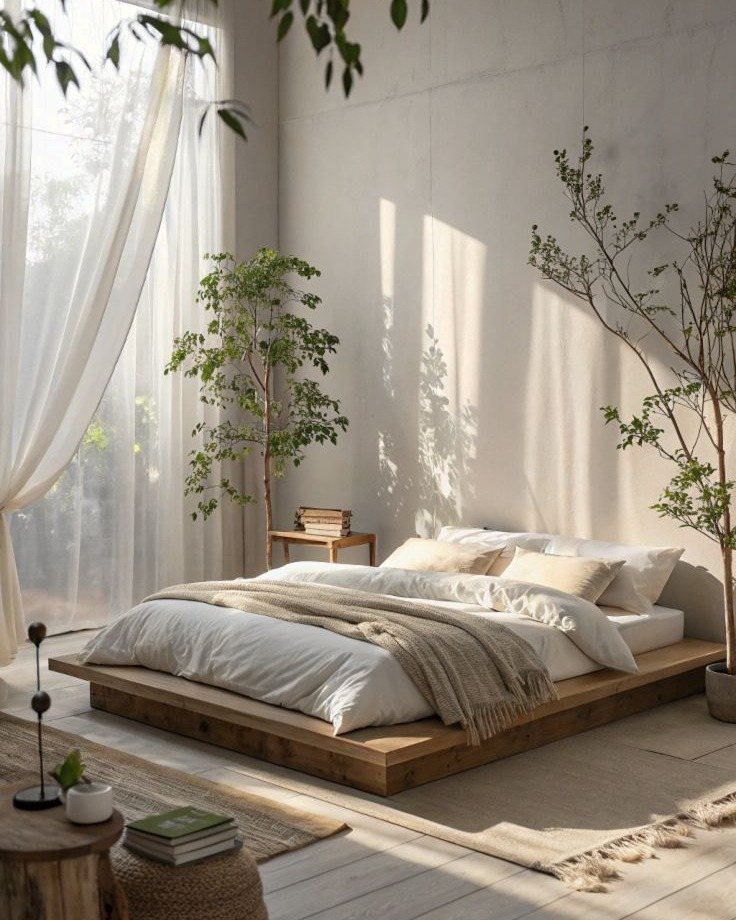
A low wooden bed placed where the first sun hits makes the whole point of Japandi clear: the room should feel like it breathes. For east-facing bedrooms, this costs almost nothing.
For others, a simple blind in natural fiber still lets light through while keeping privacy after dark.
2. Be Clever with Lighting
A single paper lantern or a minimalist pendant with a diffused bulb replaces the harsh overhead fixture most bedrooms come with.
I look for warm-toned LEDs around 2700K, the color of late afternoon light, and mount them low enough that the glow spreads across the ceiling rather than pooling in one spot.
Task lighting is the answer; a small bedside lamp with a linen shade fills that gap without breaking the calm.
A new bedside lamp installs in one afternoon if the box is already there, and the fixture itself is the kind of upgrade that pays back every evening.
3. Low Furniture
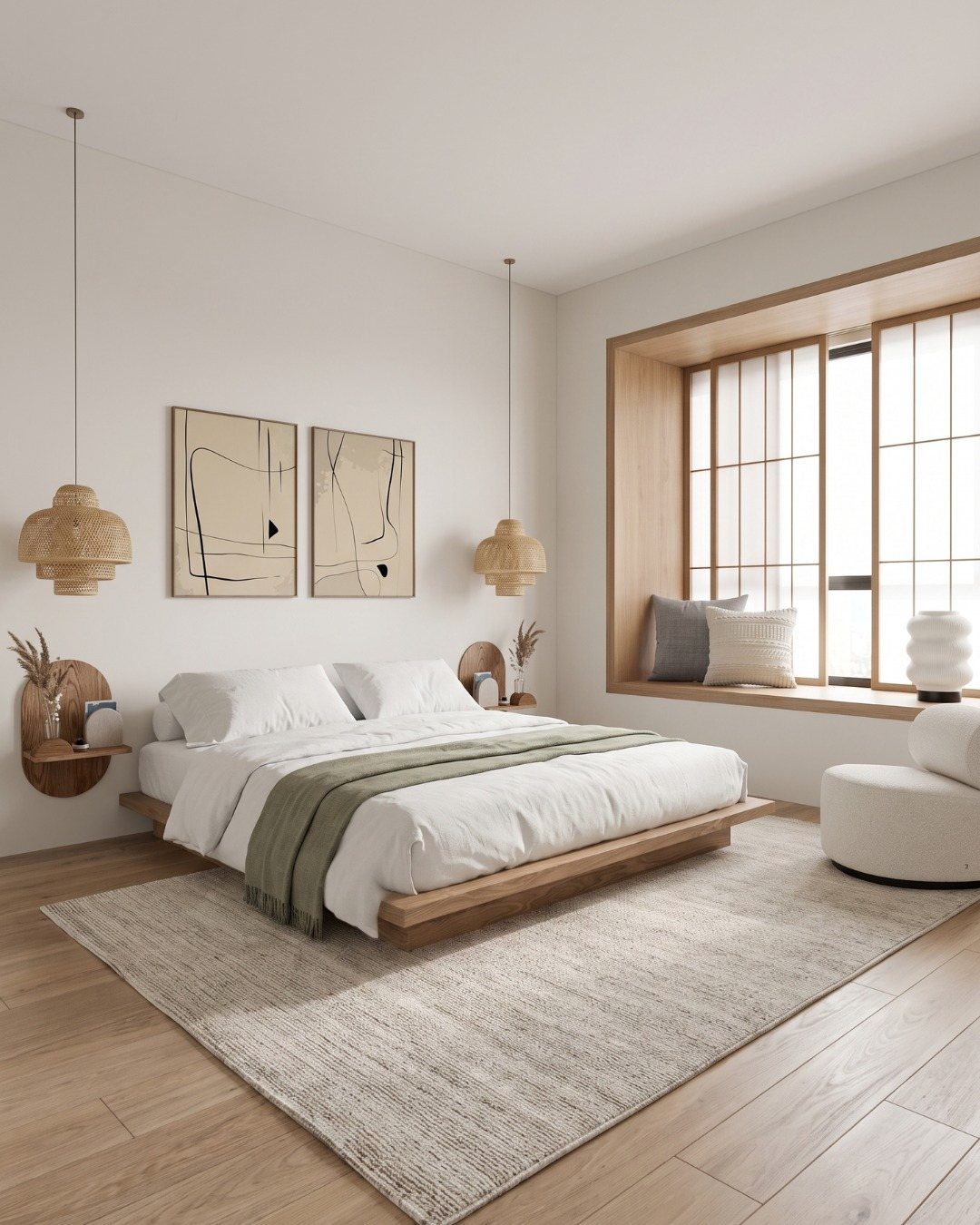
A platform bed or low frame, 8–12 inches off the floor, changes how a bedroom proportions itself. The ceiling reads higher, the floor plane widens, and the whole room settles.
I pair mine with a simple block stool as a bedside surface; at that height, it functions as both table and seat. For renters, a low futon-style frame on legs avoids wall attachment and moves with you.
The grounded feeling this gives is immediate, and the cost sits in the same range as standard bed frames if you skip the storage drawers.
4. Natural Neutrals
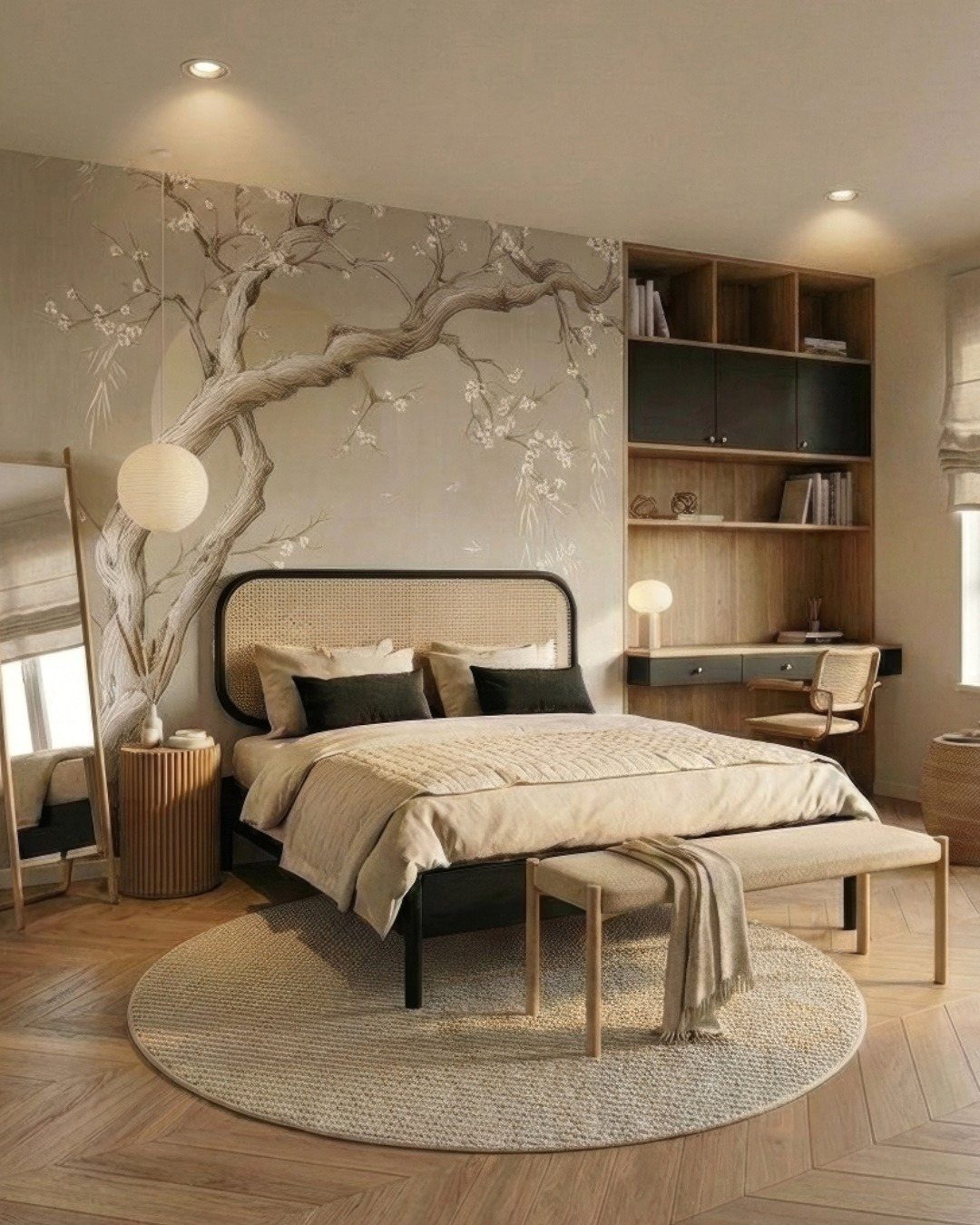
Taupe, beige, soft gray, and white form the base; muted olive, warm brown, or a dusty blue-green add depth without breaking the calm.
I start with bedding in the lightest tone and build outward: walls one step darker, textiles one step warmer. Keeping everything within the same muted intensity means no single color shouts.
A black accent, a lamp base or a thin frame, gives the eye a place to rest. Doing the painting yourself keeps the cost reasonable, and the difference from a standard white is subtle until you live with it.
5. Layer Different Textures
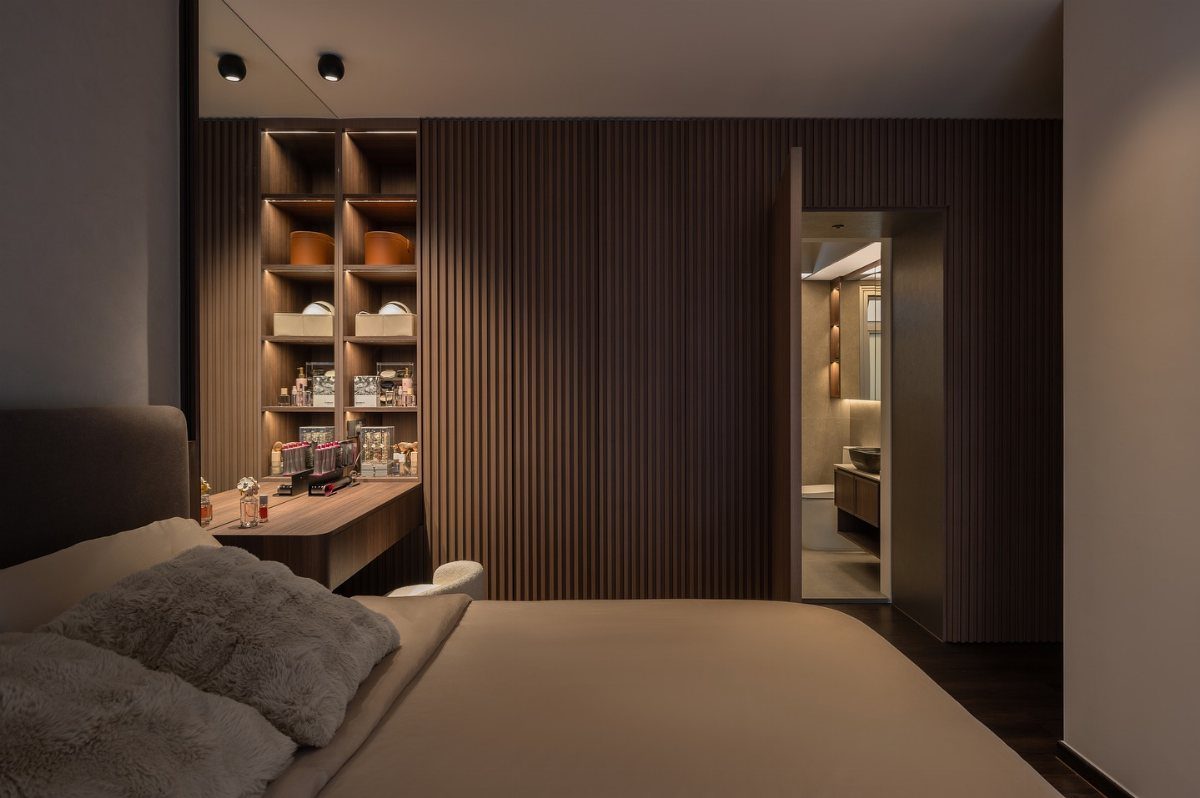
Linen bedding, a wool throw, and raw wood grain can all read as the same neutral while feeling completely different to the touch.
I layer them deliberately: smooth sheets against a nubby weave, a soft rug under bare floor at the bed’s edge. Vertical slats add shadow and movement without introducing a second color.
For a weekend project, a single textured element changes the room; a woven pendant or a hand-loomed pillow cover does the work of three decorative objects.
6. Choose Different Wood Tones
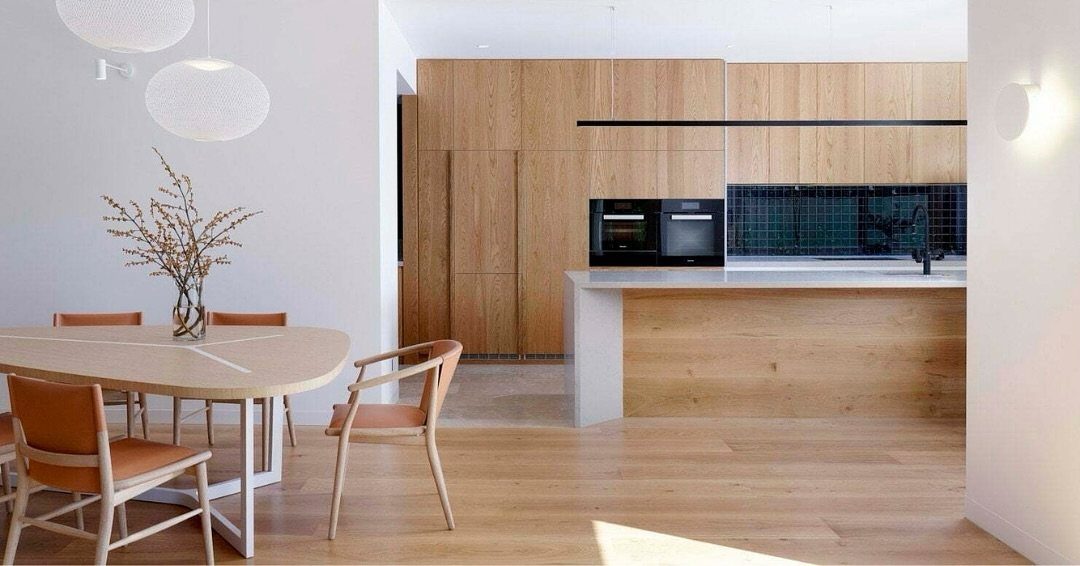
Mixing wood tones, light oak against walnut or ash against a darker stain, keeps a neutral room from going flat.
I use the lighter tone for larger surfaces, flooring or a bed frame, and the darker for smaller pieces that anchor the space, a chair or a narrow shelf.
The contrast works because both share the same warm undertone; two woods of equal visual weight fight each other.
In my own bedroom, the floor is white oak and the headboard a richer teak; the combination took no extra planning, just restraint in not matching everything to one finish.
7. Streamline Your Storage
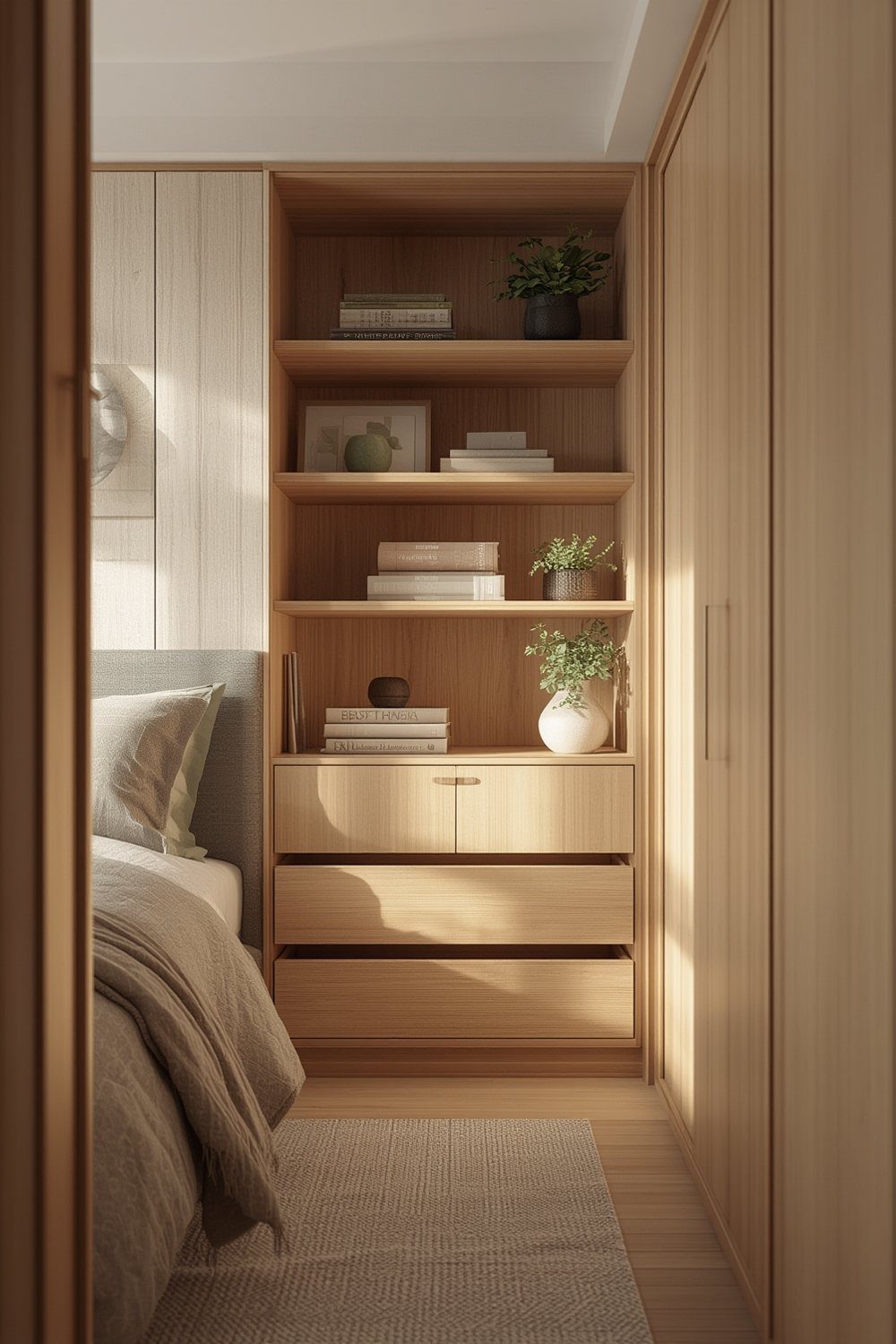
Built-in storage keeps the bedroom calm because nothing sits out that does not need to. Flat-front drawers and handle-free doors in light oak or ash hide clothes, linens, and the small objects that collect on open surfaces.
I would run the unit wall to wall if the room allows; the clean plane reads as architecture, not furniture. For renters, a single low credenza with push-latch drawers gives a similar effect without the commitment.
Planning takes the front seat: every item needs a designated compartment, or the clutter reappears on top.
8. Bamboo Feature Wall
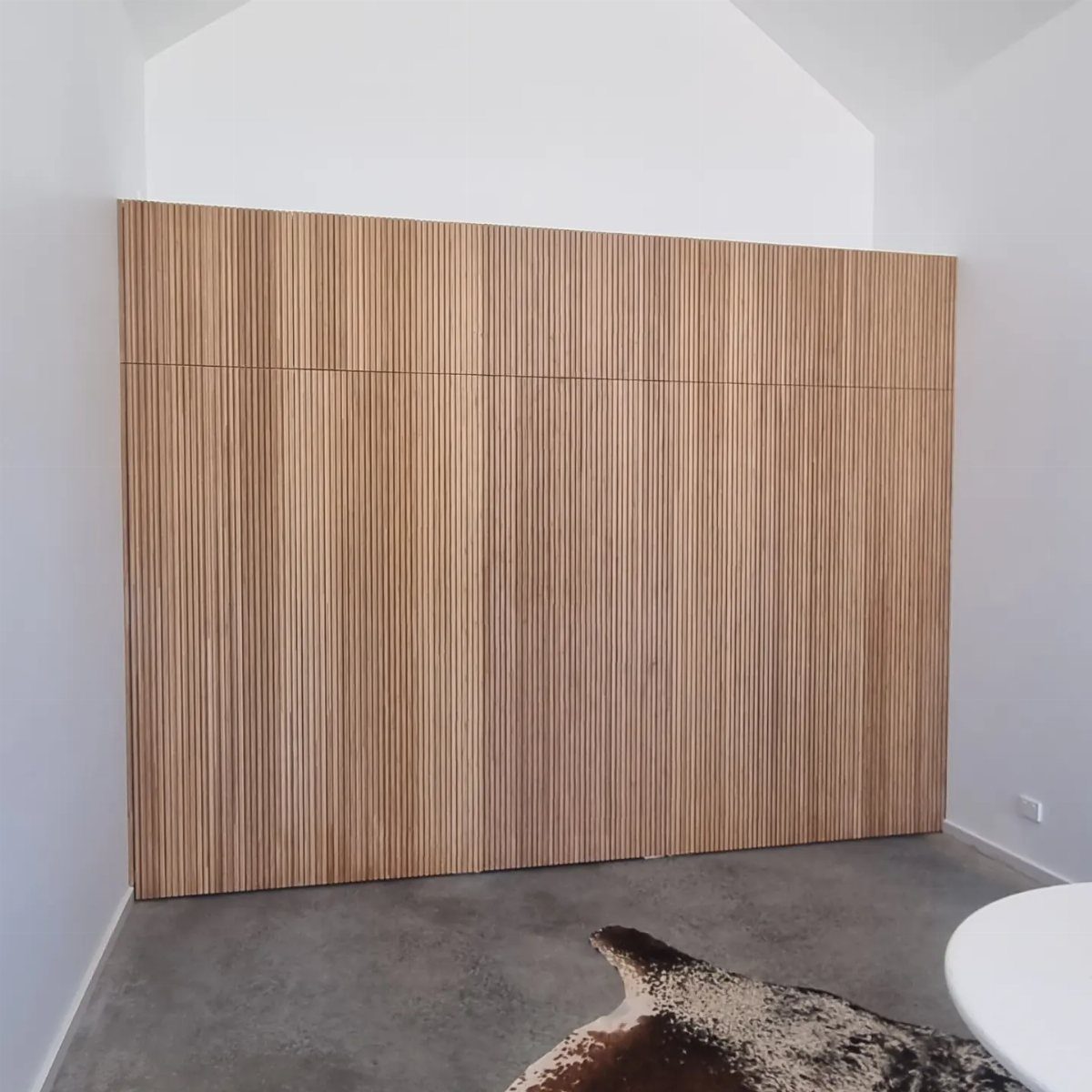
A bamboo slat wall behind the bed adds warmth and rhythm without pattern or color. Vertical strips set close together, roughly 1 to 2 inches apart, draw the eye upward and make standard ceiling heights feel taller.
The material takes stain well; I would keep it in the pale range to match Japandi’s muted palette. Installation takes a weekend and basic tools: furring strips, a level, and a nail gun.
Renters might try a removable slat panel system instead, though the cost runs higher. Either way, the wall becomes the room’s single bold move.
9. Warmth & Simplicity
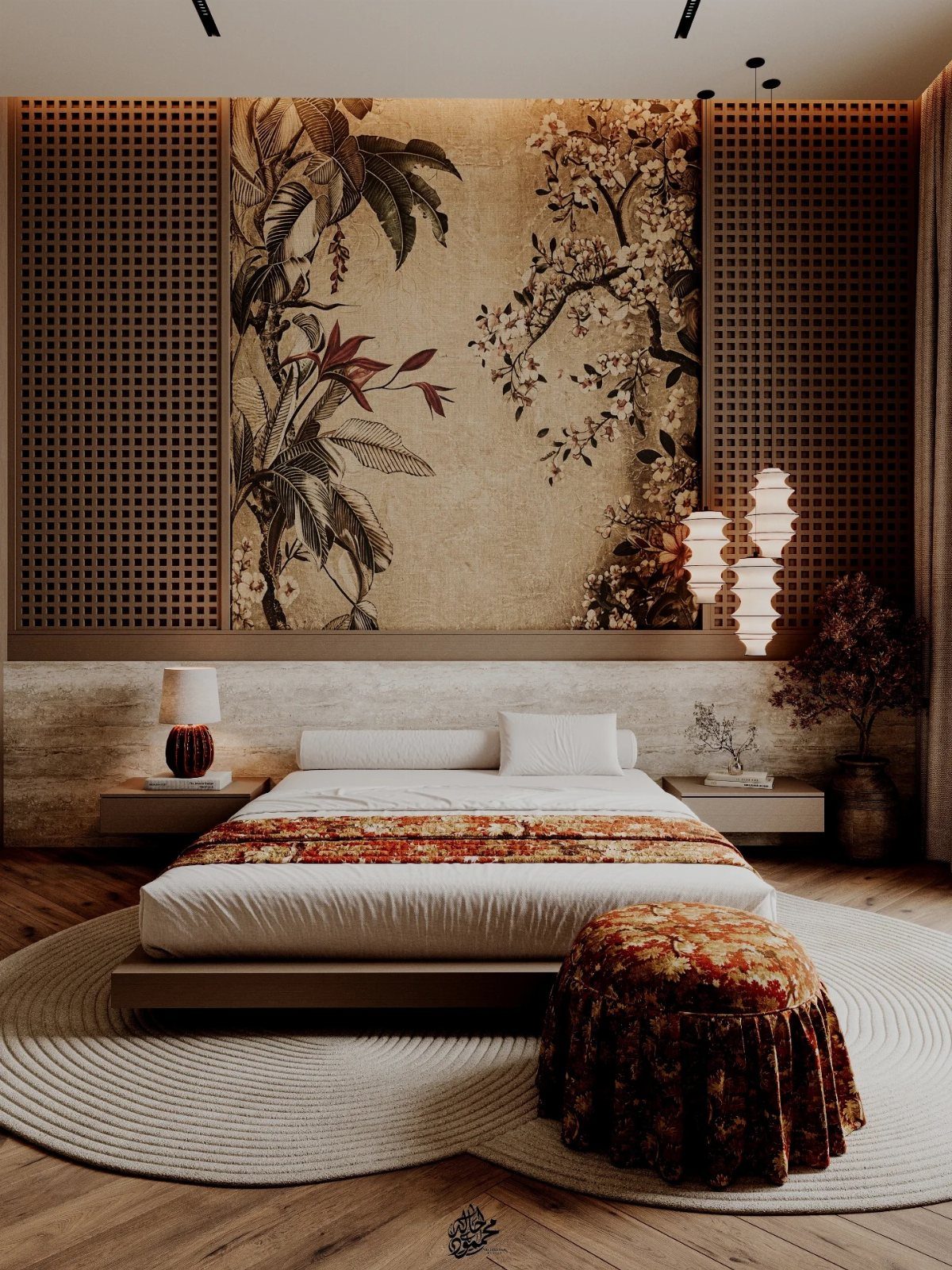
Warmth in a Japandi bedroom comes from what you touch, not what you see first.
A heavy linen duvet in oatmeal or undyed cotton, a wool throw at the foot of the bed, and a single paper or rattan shade on the bedside lamp soften the spare lines without adding clutter.
2700K bulbs mimic candlelight and suit the mood better than bright white. The risk is over-layering: one textile per surface, two at most, or the calm dissolves into coziness that belongs to a different style entirely.
10. Make a Statement with Stylized Pattern
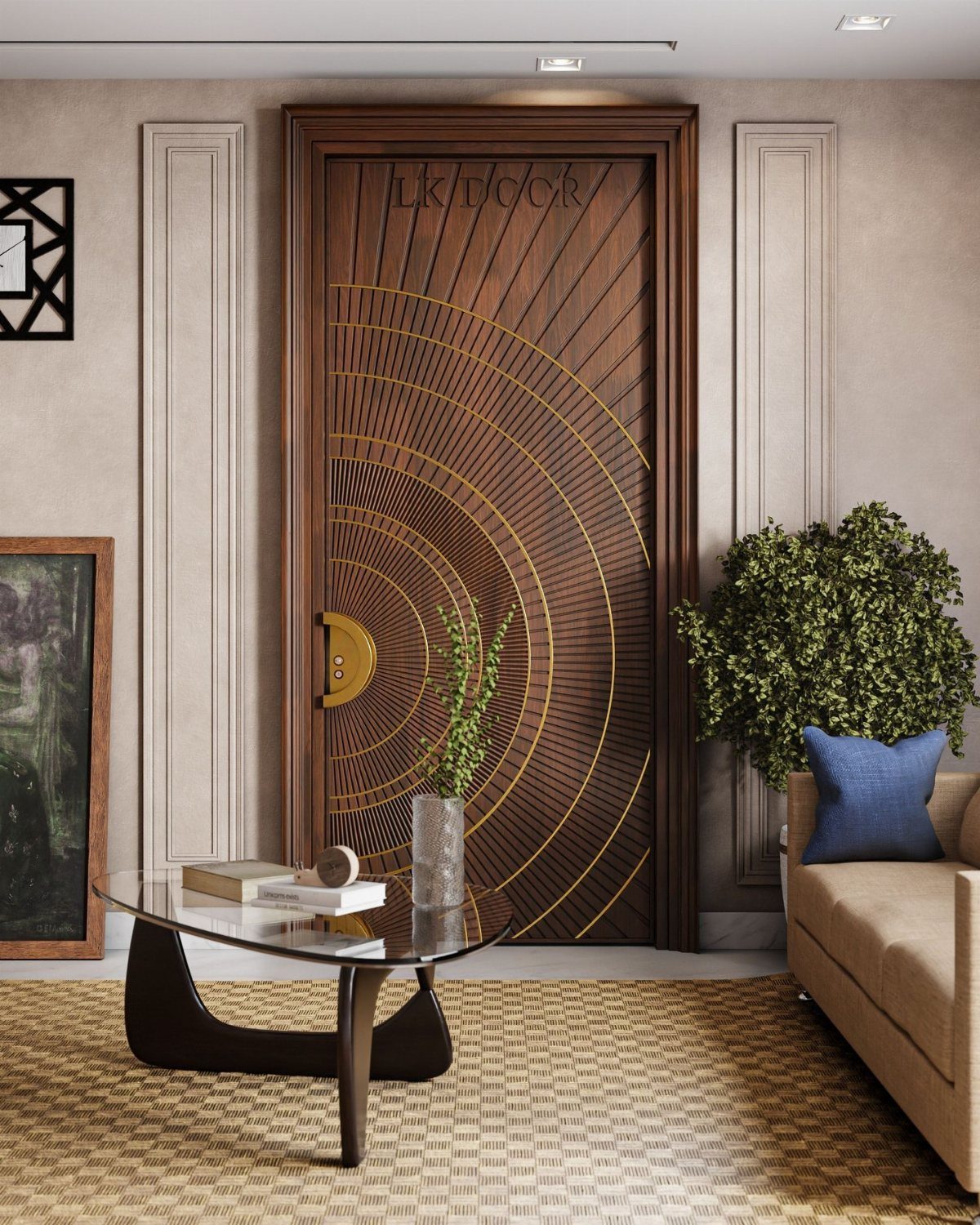
One strong pattern, used once, becomes the room’s focal point without disturbing the quiet.
A landscape mural or stylized sunburst on a single door, headboard wall, or textile draws the eye and gives the neutral palette a reason to hold together.
I would choose the pattern first, then pull two muted tones from it for the walls and bedding. The rest of the room stays solid and subdued.
This works for someone who wants personality without busyness; the pattern must be carefully placed, or it competes with itself.
11. Decorate with Delicate Patterns
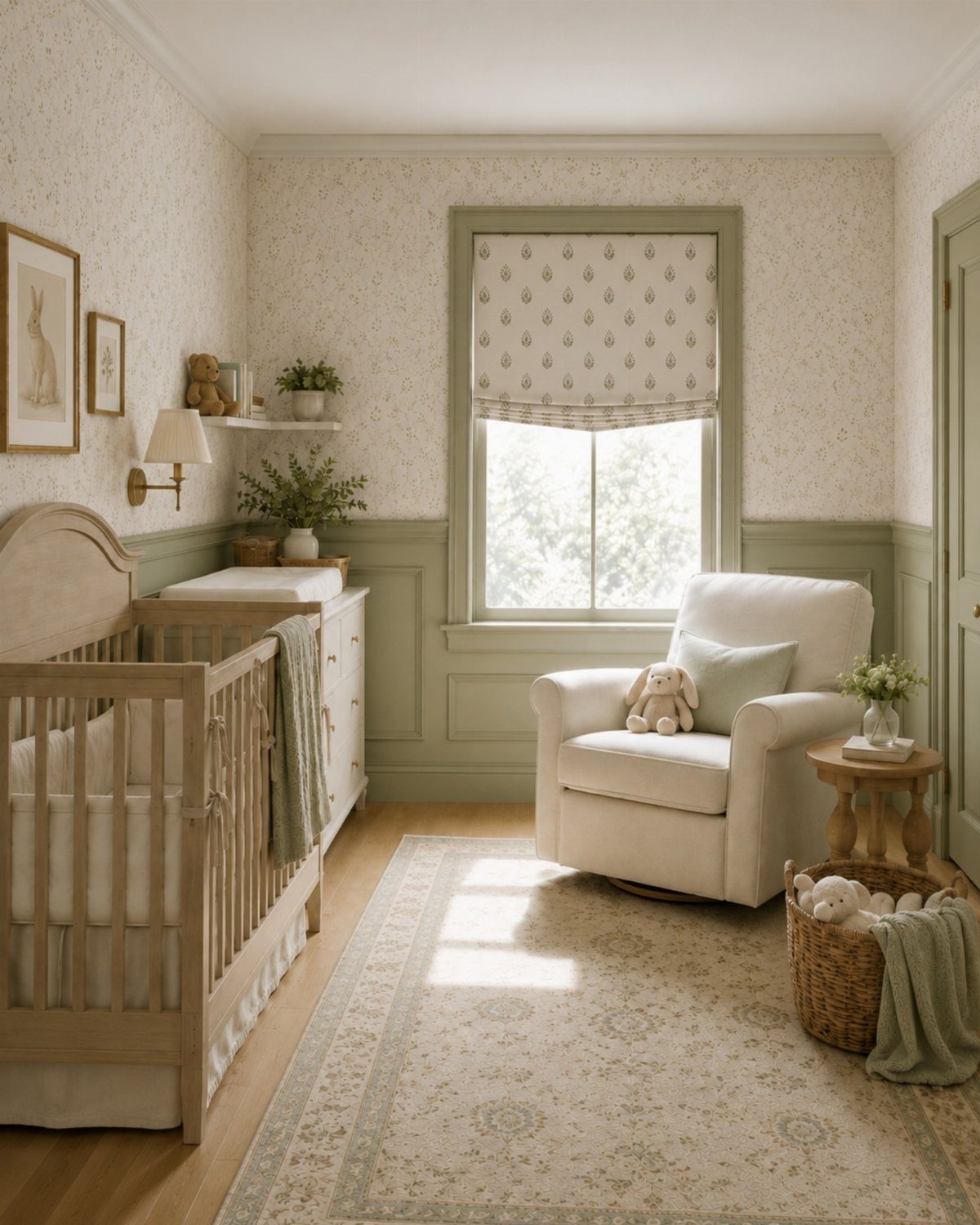
Small-scale florals or grasses on wallpaper, a Roman shade, or bed linens add interest where solid color would read flat. Loose, hand-drawn lines rather than crisp repeats do the work here, in colors that stay within the room’s neutral range.
I would use the pattern on one element only, the shade or the bedding, and keep the other plain. This works well in smaller bedrooms where a large mural would overwhelm, and it costs less than a full feature wall.
The limit is the pattern’s scale; anything too bold reads decorative rather than serene.
12. Seek Streamlined Surfaces
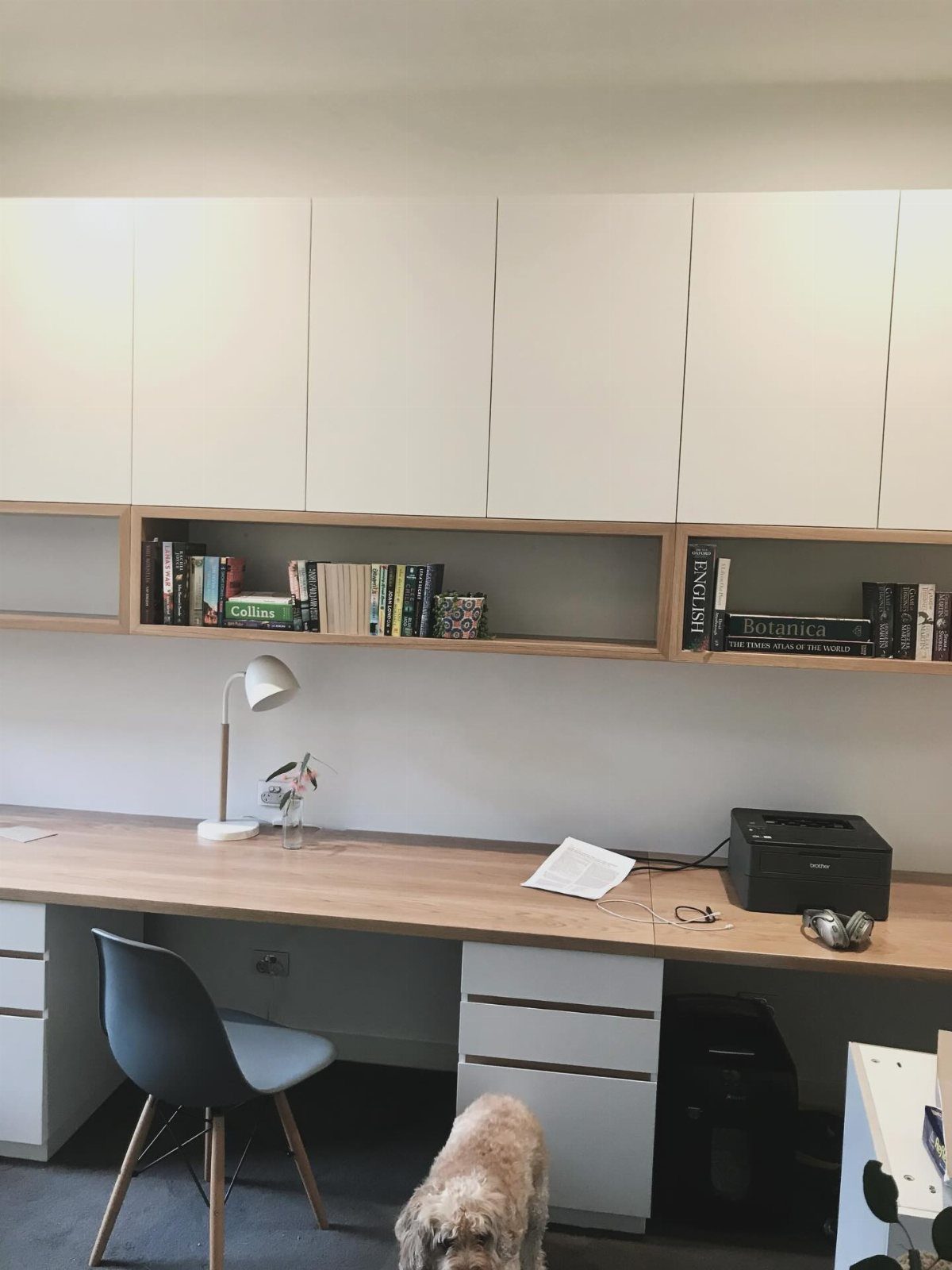
Handle-free cabinets and drawers in light wood or matte lacquer keep the eye moving without stopping on hardware. The grain becomes the ornament, and the surface stays uninterrupted.
I would choose push-latch or recessed channel openings over touch-latch mechanisms; the latter fail more often and the repair breaks the calm.
Built-in wardrobes suit this best, but a standalone dresser with flat slab fronts and legs lifted off the floor gives a similar effect for less.
The discipline is inside: the drawers must stay organized, or the streamlined shell becomes a hiding place for chaos.
13. Incorporating Greenery
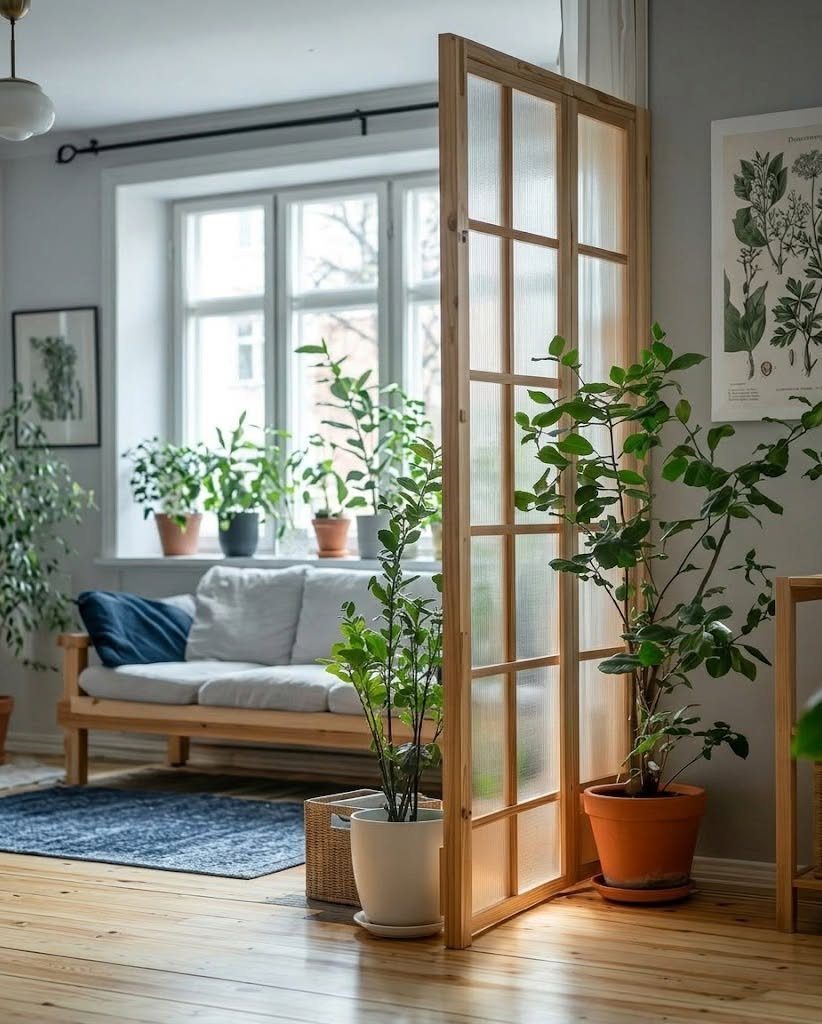
One fern on a windowsill does more for a Japandi bedroom than a shelf full of gadgets.
Plants matter in this style because both Japanese and Scandinavian traditions treat nature as part of the room, not decoration added on top.
A single low-maintenance choice, a succulent or a small fern, keeps the calm instead of becoming another chore.
I place mine where morning light hits, which usually means the window ledge or the floor beside it, and I skip anything that needs misting or repotting on a schedule.
A small grouping works if the pots share a material, wood or unglazed clay, but three is my limit. More than that, and the room starts to feel like a greenhouse instead of a bedroom.
14. Be Mindful of Quality
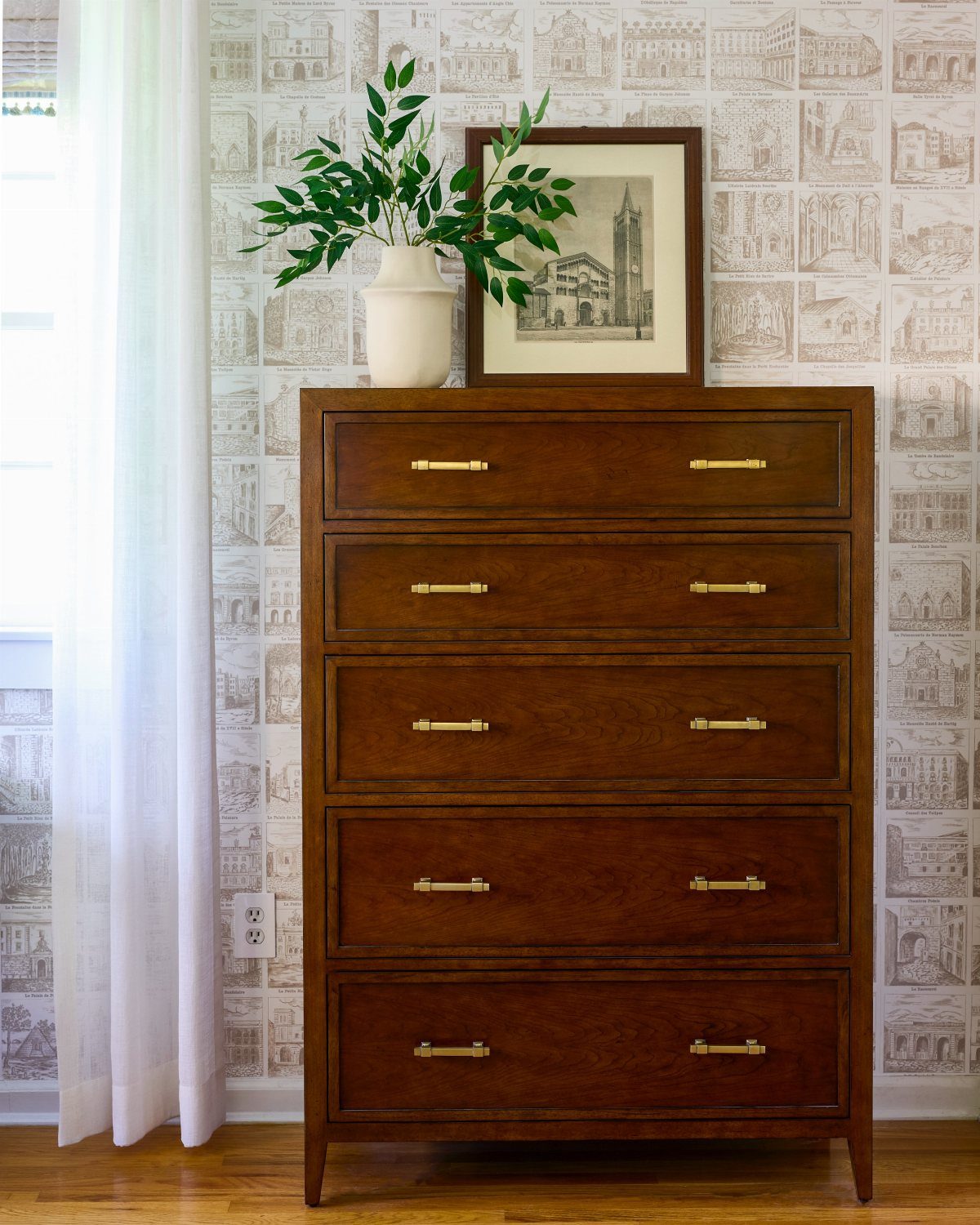
A dresser that carries the room needs dark wood, clean joints, and hardware that looks considered rather than default.
Japandi asks you to buy less, but buy it better. That does not mean every item comes from a gallery.
I look for solid wood over veneer, dovetail or mortise joints over staples, and hardware that someone chose rather than accepted.
Secondhand scores count for more here, not less, a mid-century dresser refinished or a vintage paper fan framed on the wall.
The trade is time. A weekend hunting estate sales or waiting for the right auction lot beats a Saturday at the big-box store.
The cost evens out over time, sometimes drops, and the piece stays with the room instead of wearing out.
Focus on Quality Craftsmanship
A Japandi bedroom rewards the same instinct that makes someone keep a hand-me-down dresser and refinish it instead of replacing it.
The look depends on pieces that carry honest construction: visible joinery, natural grain, surfaces that age rather than wear out.
Shanty Wijaya of Allprace put it plainly: this style finds beauty in simple things that come with imperfections, and that means buying less but choosing better.
That does not have to mean spending more.
A vintage paper fan on the wall, a second-hand ceramic lamp, a solid wood frame from the flea market: small investments in real handwork read louder than matching sets from a big-box store.
The test is whether the object still looks right after years of daily use, not whether it fills the room now.
Maximize Natural Light
Windows in a Japandi bedroom should stay as open as the floor plan allows. Soft desert hues and natural textures work best when they catch and hold daylight instead of fighting against it.
Sheer linen or cotton curtains filter glare without blocking the warmth that makes pale wood and neutral walls come alive.
Horizontal wood slats across a window wall can do the same work as vertical ones behind a bed: they add grain and shadow while the light moves through.
Sunlight should read as one of the materials in the room, not just the backdrop.
Emphasize Functionality
Every piece of furniture in a Japandi bedroom should earn its square footage. A platform bed with drawers underneath removes the need for a separate dresser.
A single wall-mounted shelf beside the bed holds a book and a cup; two small drawers inside the headboard hide the charger and the sleep mask. The minimalist look is a side effect of this discipline, not the goal itself.
Storage that shows its structure, joinery, or material, rather than hiding behind false fronts, keeps the room honest.
A woven basket for laundry, a wooden box for blankets: the container is part of the decoration because the function is visible and accepted.
Create a Calm Atmosphere
The calm in a Japandi bedroom comes from restraint in every layer. Soft linens against warm wood, one gentle light source, a single vertical panel behind the bed for texture without pattern.
The palette stays in the same family: warm white, soft beige, greige, the tone of unpainted plaster or sun-bleached stone. No single color steps forward.
A clutter-free surface is not achieved by moving objects out of frame; it happens when everything has a designated place and most of those places are closed.
The feeling is that of a quiet exhale, a room that slows the morning rather than rushing it.
The Japandi aesthetic blends Japanese design sensibilities, such as the wabi-sabi style, with the Scandinavian hygge ethos to create a calming, practical space. These two aesthetics combine to form one minimalist, functional, warm, and serene environment that is perfect for a bedroom.
Frequently Asked Questions
What are the 2026 bedroom trends?
Natural materials, neutral palettes, and minimalistic designs lead the way. Japandi bedrooms specifically favor light-filled spaces with sheer linen, low wooden furniture, and warm wood tones mixed deliberately.
The look rewards restraint: one pattern per room, handle-free storage, and 2700K lighting that mimics late afternoon sun.
Is Japandi style still trending?
Yes, and it has shifted toward warmth over starkness. Minimalist bedrooms can turn sterile fast, but Japandi keeps the spare lines and warms them up with tactile layers: visible wood grain, soft linen bedding, and a few hand-chosen objects.
What are the essentials for a Japandi bedroom?
Natural materials, neutral colors, low furniture, and a clutter-free environment form the core. Storage matters as much as surface: flat-front drawers or a low credenza with push-latch openings keep objects out of sight without visual noise.
What are some common mistakes to avoid when designing a Japandi bedroom?
Overcrowding with decor and losing the balance between minimalism and warmth trip people up most often.
A single shelf crowded with plants reads greenhouse, not bedroom, and piling more than two textiles onto one surface drifts toward cottage coziness instead of Japandi calm.
Overhead fixtures left unswapped read harsh, and touch-latch hardware fails often enough that the repair itself breaks the quiet.