
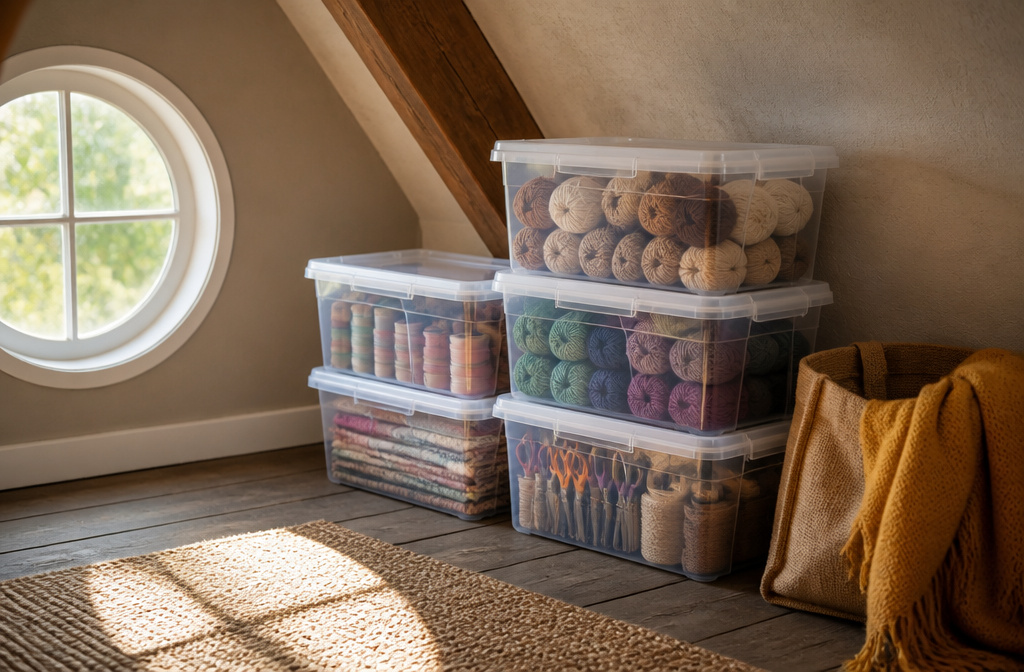
Clear storage containers with lids are plastic boxes built around a single premise: you should see what you own without opening anything.
The catch is that the lid determines where they actually work. A snap-top lid fine for closet linens fails in a damp garage where a gasketed seal earns its price.
The Member’s Mark 13 quart set runs $8.98 for four, about 17 cents per quart, and that math only holds because the lids are simple press-fit plastic with no rubber seal.
Member’s Mark 13 Quart Clear Storage Containers
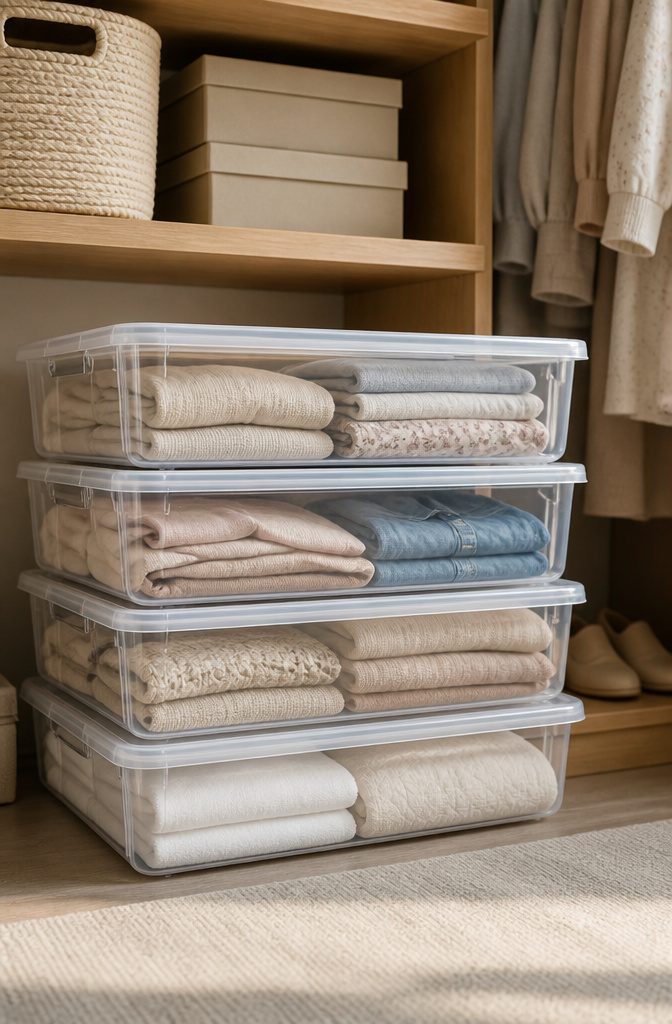
The Member’s Mark 13 quart clear storage containers with lids land at a price that makes bulk buying worth it before you even leave the store.
That four-pack runs $8.98, which breaks to about $2.25 per container, or roughly 17 cents per quart of storage.
Singles in this size usually run closer to $4–$5 each, so the math works out fast even if you only need three and stash the fourth under the sink.
At 10.9 inches deep by 16.4 inches wide and just 6.4 inches tall, these sit low.
The shallow height is what makes them useful under a bed, on a closet shelf where double-stacking would block the light, or slid into the cabinet above a refrigerator where vertical space dies anyway.
I would not use them for flour or tall cereal boxes. They excel at linens, folded kids’ clothes, or the half-empty bags of pasta and rice that otherwise avalanche out of upper cabinets.
The lids snap on without a gasket, so these are not the choice if you need airtight for pantry moths or basement damp.
For dry closet storage or kitchen goods that turn over within a month or two, they do exactly what the price promises.
Cambro Round Translucent Container with Lid
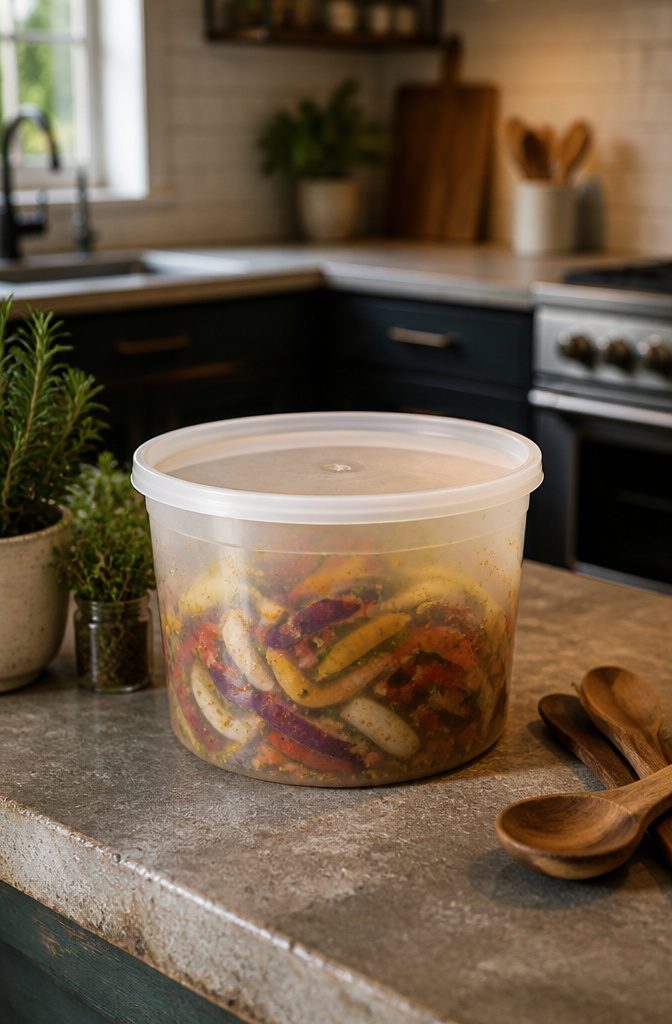
Round containers never quite fit the shelf the way squares do, but that same curve makes a difference the moment you need to stir yesterday’s soup or scoop the last of the hummus.
The walls have no corners for a spoon to miss, so everything moves toward the center with less scraping.
These particular rounds carry a commercial kitchen pedigree, the kind of thing you would see in a back-of-house line before it crossed over to home pantries.
That heritage shows in the plastic itself: translucent rather than glass-clear, a fogged finish that diffuses light instead of letting it pass straight through.
You learn to read contents by silhouette and color tone rather than sharp detail, which sounds like a drawback until you realize a bright tomato sauce or dark coffee beans announce themselves instantly without the visual noise of full transparency.
The six-quart size lands in a useful middle ground, large enough for a batch of marinated vegetables or a few pounds of dried beans, small enough that two of them still leave room on a standard depth shelf.
IRIS USA WeatherPro 60 Quart Storage Box
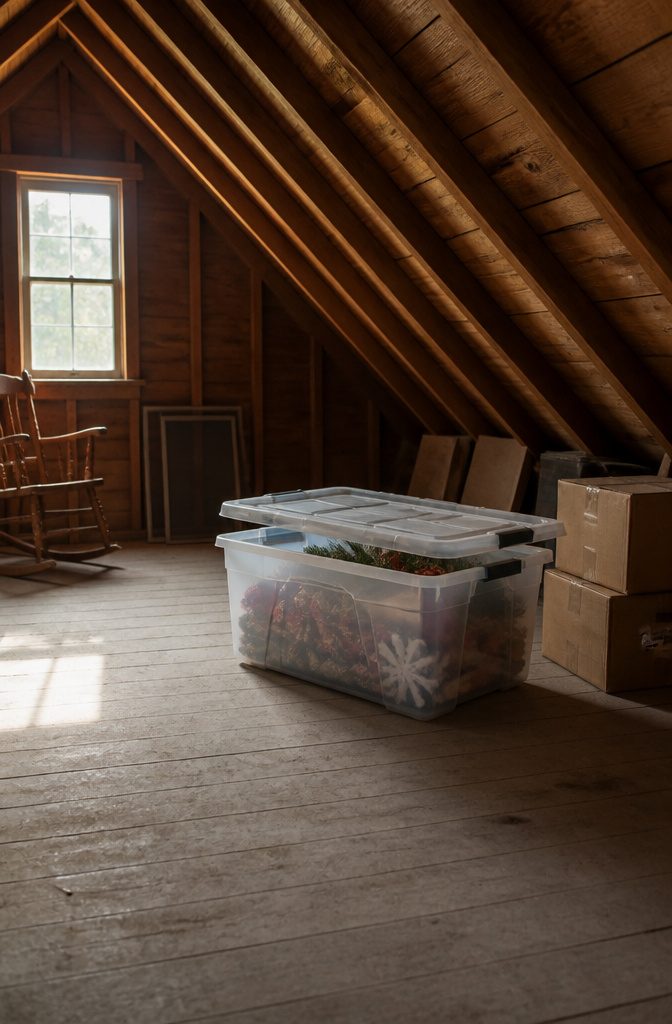
A four-piece set of IRIS USA WeatherPro 60 Quart Storage Boxes runs $69.98, with each box measuring 17.75 inches wide, 23.6 inches long, and 11.22 inches high.
The gasket sits in a groove around the lid perimeter and compresses against the box rim when the four latches snap down, forming a seal against dust, moisture, and the kind of slow air exchange that leaves cardboard smelling like basement after a humid summer.
That weatherproofing pays off in garages where meltwater tracks under the door, attics that hit 120 degrees and swing back down to freezing, and basements where the dehumidifier quits on a Friday night.
The gasket is silicone or a similar rubber, not a foam strip that takes a set and stops bouncing back after a year of being latched.
For an indoor closet with stable temperature and no plumbing overhead, the seal is probably more than the contents demand.
Clothing in seasonal storage, extra linens, or holiday decorations do fine in a snap lid that keeps out dust and pet hair.
The WeatherPro becomes worth the extra latch effort and the higher price per quart only when the storage location itself works against you, or when the contents are too expensive to risk mildew or rodent intrusion.
iDesign 6-Piece Recycled Kitchen Organization Set
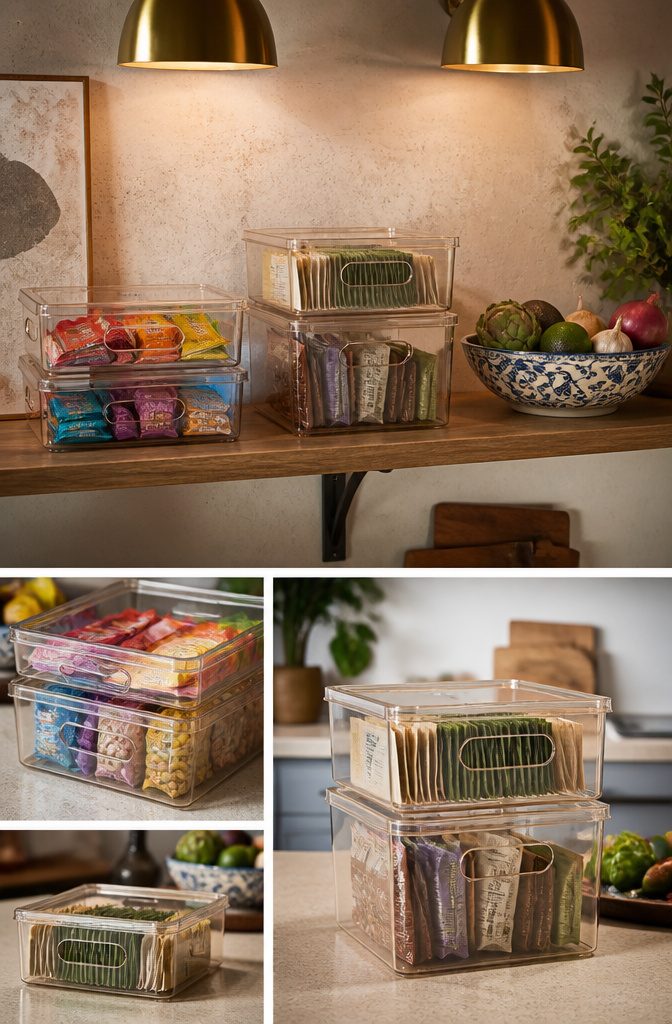
Recycled plastic in kitchen bins usually carries a faint swirl or a slightly warm, butter-toned cast that virgin polypropylene avoids.
The iDesign set shows this honestly rather than hiding it under opaque dye, which matters if you are leaving lids visible on open shelving.
The six pieces split into two shallow trays and four deeper bins, a ratio that works better for silverware drawers than for tall pantry shelves where you would want another large unit stacked on top.
The environmental claim rests on post-consumer resin content, not a full loop back to food-grade standard.
For dry storage, that tradeoff is reasonable. For anything that might hold damp produce or sit near a sink splash, the slightly more porous surface of recycled material means you wipe it dry promptly rather than letting it air-dry stacked.
I would use these for tea bags, snack pouches, or drawer dividers, and keep virgin plastic for the refrigerator bins where I wash more often and stack wet.
Smart Design 18 Clear Refrigerator and Freezer Bins
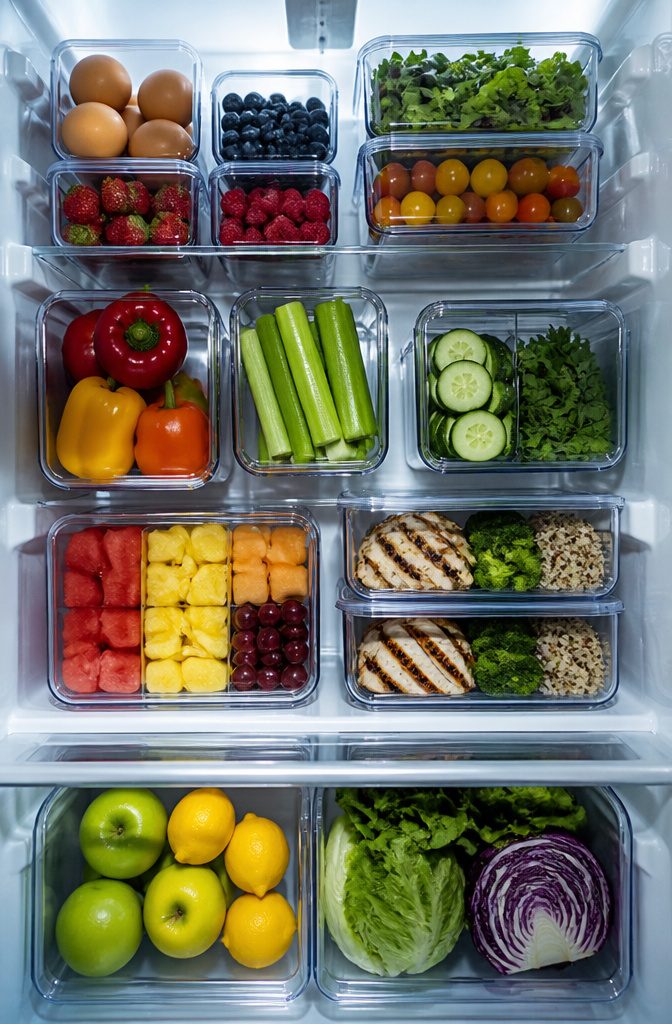
Cold storage bins live or die by whether they actually fit where they are supposed to go.
The Smart Design 18-piece set is built around standard refrigerator shelf depths, with low profiles that slide under fixed shelves and longer bins meant for the full width of a freezer drawer.
That specificity matters more than it sounds like it would: a bin that sits half an inch too tall wastes the space above it, and one that leaves a four-inch gap at the back turns into a graveyard for forgotten cheese.
The plastic here is the same PET or acrylic blend you see in most refrigerator bins, which means it stays clear and crack-resistant down to typical freezer temperatures but can turn brittle if it takes a hard knock at 0°F. I would not use these for the deep freezer in the garage where things get tossed around; for the kitchen freezer drawer they are fine.
Whether 18 pieces is the right number depends on how you actually store food.
A typical refrigerator layout has two to three shelves plus drawers and door space. Eighteen bins fills that aggressively, maybe too aggressively.
If you are not pre-portioning a full week of lunches or separating every vegetable by type, you will end up with empty bins taking up the very space you bought them to save.
For a household that does dedicated meal prep, the count works. For everyone else, the 18-piece set is probably three to six bins more than the fridge can usefully hold.
IRIS USA 58-Quart Snap Top Storage Box
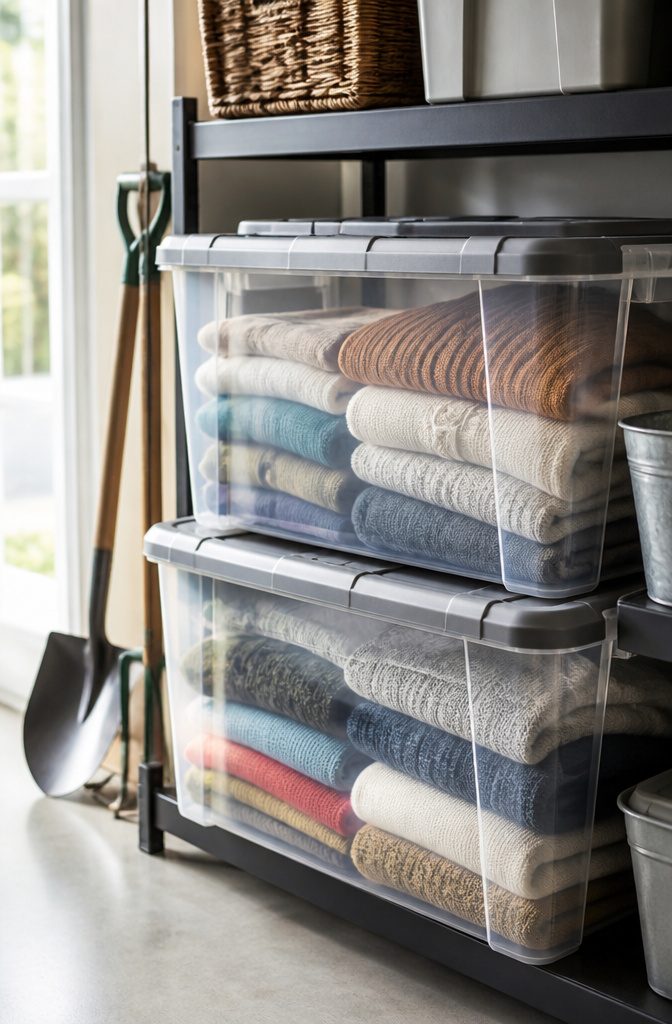
Gray snap lids sit on these 58-quart boxes instead of the black gasketed ones IRIS USA uses on its WeatherPro line.
That trade saves a few dollars per box and drops the water resistance you would want for a garage or basement, but for closet storage of clothes or linens the snaps close fast and stay closed through a move.
The two-quart gap between this and the 60-quart WeatherPro sounds trivial until you stack them.
A full set of five 58-quart boxes lines up flush where a mixed stack would rock on the lid ridges. Load the bottom box with books and that even stack matters more than the extra volume would.
What the snap mechanism gives up is the audible seal of a gasket. You press down and feel the tabs catch, not the soft compression of rubber against rim.
For seasonal storage where you open the box twice a year, that difference fades. For anything you reach into monthly, the faster open and close wins back the time.
Really Useful Box 17.96 Quart Latching Lid
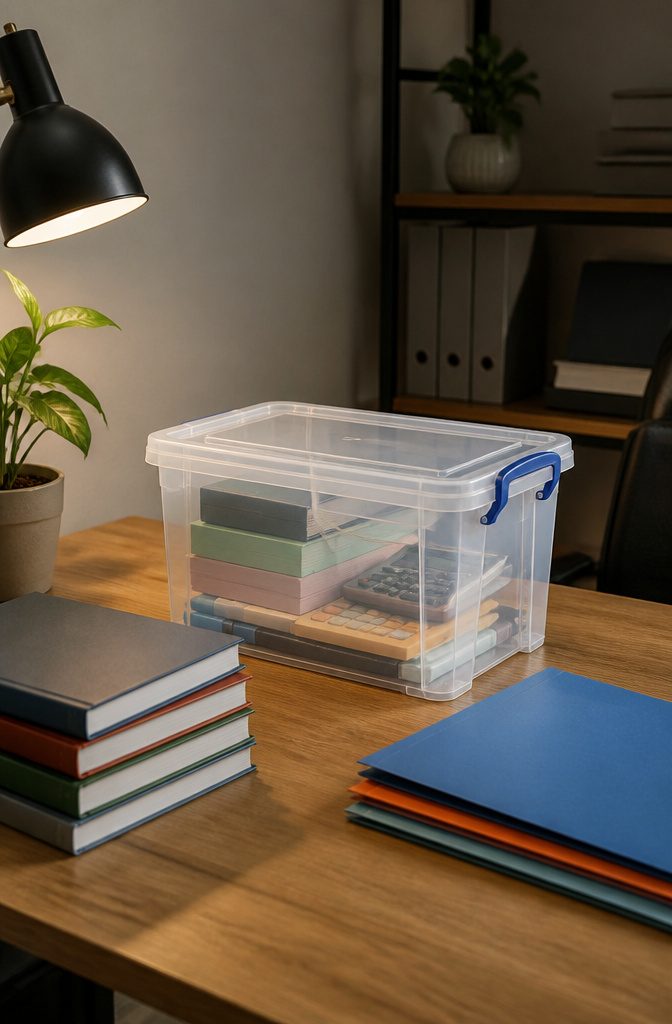
Latches on the Really Useful Box 17.96 Quart close with a two-motion grip: lift the tab, press down to secure.
That extra step keeps the lid flat under weight in a way snap lids do not, though it takes both hands where a hinged design needs only one.
I find the 0.04 quart tacked onto the name telling; the brand counts volume to the ounce, not rounding to 18, which matters when you are stacking five of these in a closet and every half-inch of height counts.
The size lands in the gap that makes most organizers stumble. Shoe boxes run too small for board-game stacks or winter-knit storage; blanket bins swallow those same items and waste the air above them.
This box fits the middle load: a full set of sheet pans, a semester of textbooks, two weeks of meal-prepped lunches in stacked trays.
I have used it for off-season sweaters and found the lid held through two apartment moves without cracking at the hinge points, which is where cheaper latch boxes fail first.
TRU RED 78.4 Quart Stackable Storage Bin
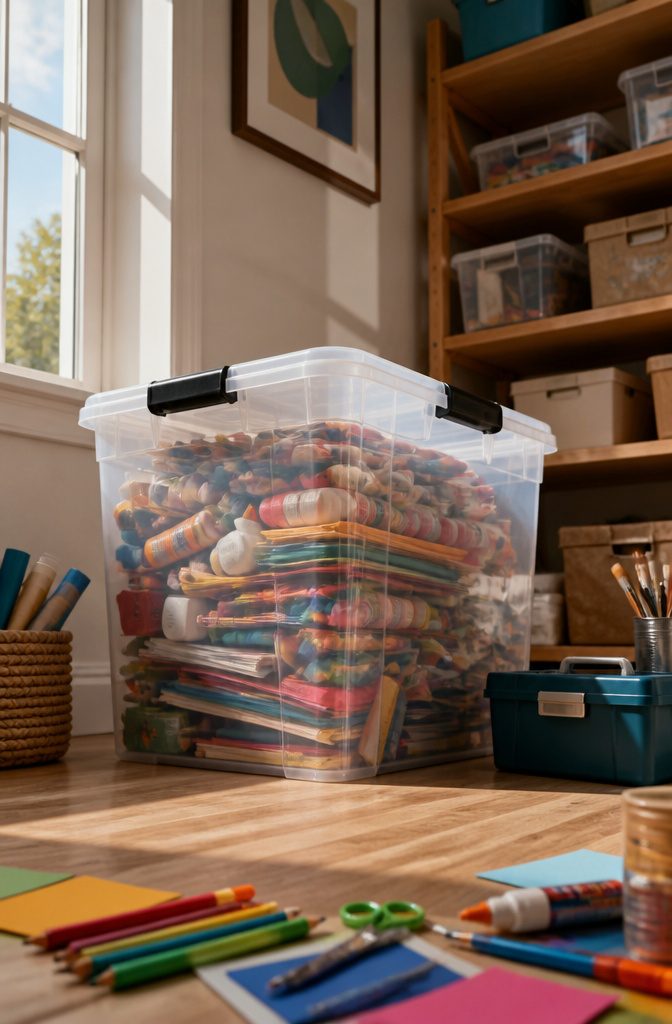
A 78.4 quart volume lands in that awkward middle ground where most people overestimate what fits.
The empty bin itself runs heavy enough that carrying it upstairs with anything inside becomes a two-trip decision, and the floor of the thing flexes if you try to slide it loaded.
That 78.4 number translates to roughly two full-size comforters pressed flat, or a six-foot artificial tree broken into sections with the stand.
The latches snap down with a pronounced click that feels secure in the moment, though after a few months of stack pressure the plastic begins to fatigue where the lid clips grip the body.
Hairline stress marks show up first at those clip points, and once they appear the seal loosens enough that dust gets in.
Stacking works on paper: the lid has a recessed footprint that mates with the bin below.
In practice the walls taper slightly, so a tower of three drifts enough that the bottom bin’s latches carry lateral load they were not built for.
For seasonal storage that gets touched once a year this is acceptable. For anything rotated quarterly, the crack propagation at those grip points becomes the failure mode that retires the bin.
What Clear Storage Containers Are Made Of
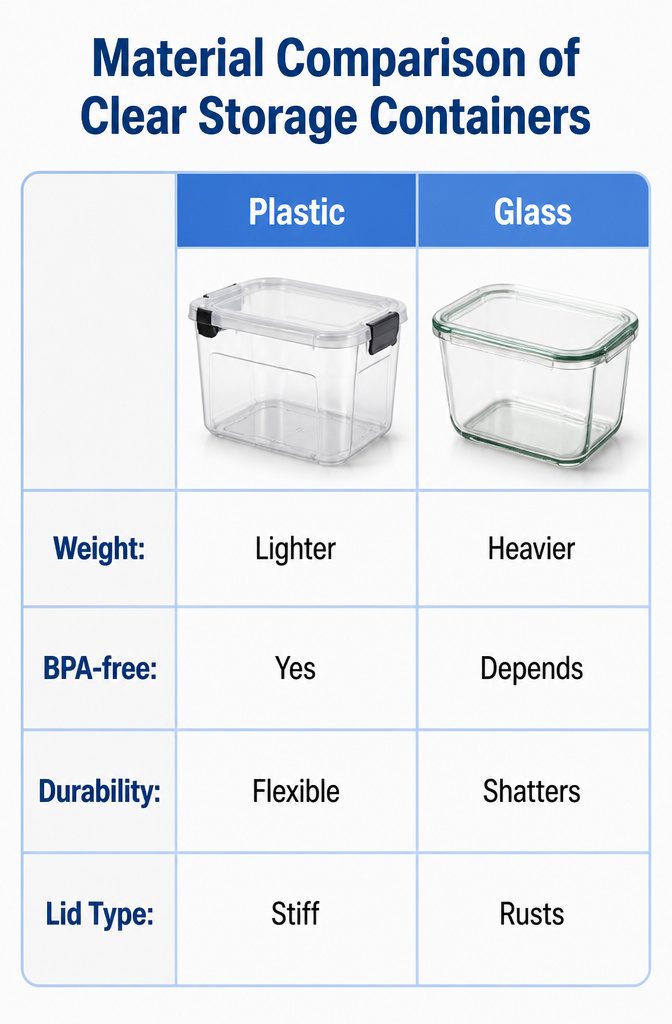
Every container in this range is plastic, and that choice makes sense once you handle them.
Glass would double the weight before you add contents, and a 60-quart bin full of seasonal clothes already pushes what most closet shelves can take.
Metal lids rust where basements get humid. Plastic bends instead of shattering when a box slips off a stack.
The labels all say BPA-free now, which matters for the kitchen sets more than the garage bins.
Bisphenol A is an additive that keeps plastic hard and clear; without it, the walls get slightly softer and cloud faster. For the refrigerator bins and dry-goods canisters, that tradeoff is worth it.
For the 78-quart basement box holding holiday decorations, BPA-free is mostly marketing. You are not heating it, not eating from it, and the container will scratch and retire before any chemical question becomes real.
BPA-free matters for food contact; for hardware or fabric storage, it is not the detail that should decide your buy.
The plastics themselves vary by thickness, not by type named on the tag. The snap-top lids are stiffer than the gasketed ones, which tells you the wall formula changed to let the rim flex for a tight seal.
That is the practical difference: a stiffer plastic cracks under cold garage air, while the softer stuff bows when you overstack. Pick the lid behavior first, and the plastic follows.
Size Range From 6 to 78 Quarts
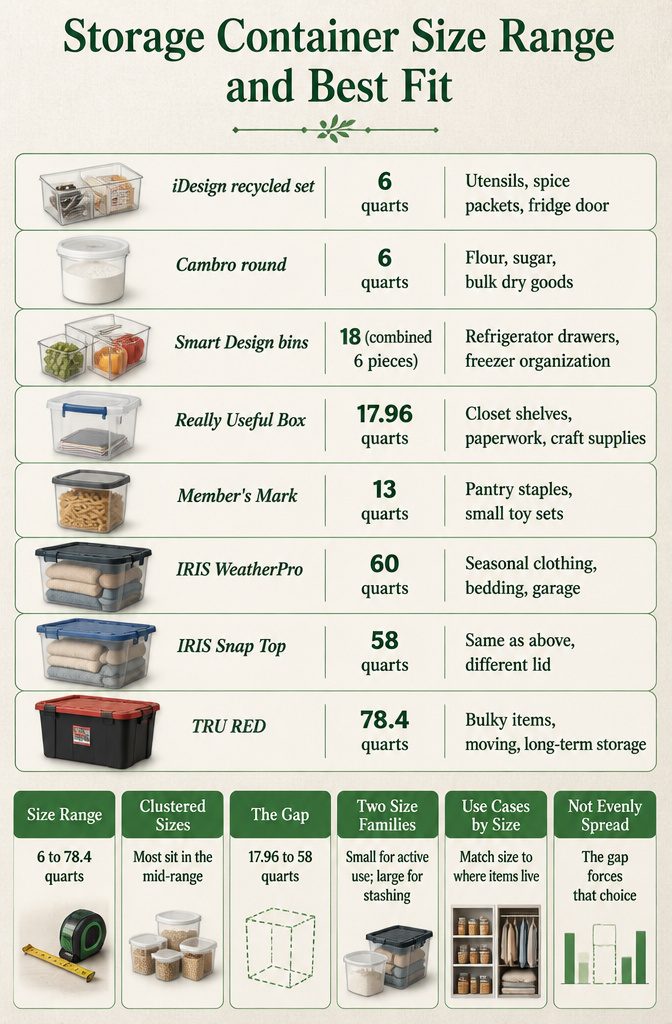
The eight containers I looked at span from 6 to 78.4 quarts, but they do not spread evenly. Most cluster in the mid-range, and that clustering leaves a gap between 17.96 and 58 quarts that matters more than the numbers suggest.
| Container | Quarts | Best fit |
|---|---|---|
| iDesign recycled set | 6 | Utensils, spice packets, fridge door |
| Cambro round | 6 | Flour, sugar, bulk dry goods |
| Smart Design bins | 18 (combined 6 pieces) | Refrigerator drawers, freezer organization |
| Really Useful Box | 17.96 | Closet shelves, paperwork, craft supplies |
| Member’s Mark | 13 | Pantry staples, small toy sets |
| IRIS WeatherPro | 60 | Seasonal clothing, bedding, garage |
| IRIS Snap Top | 58 | Same as above, different lid |
| TRU RED | 78.4 | Bulky items, moving, long-term storage |
The 6-quart tier handles daily kitchen traffic.
The 13–18 quart range covers closet and pantry work. Then nothing sits between that and the 58–60 quart boxes until you reach the 78.4 quart outlier.
For buyers, this means you will likely end up with two size families: small ones for active use and large ones for stashing. The gap forces that choice rather than letting you scale gradually.
Snap, Hinge, Latch, and Gasket Lid Types
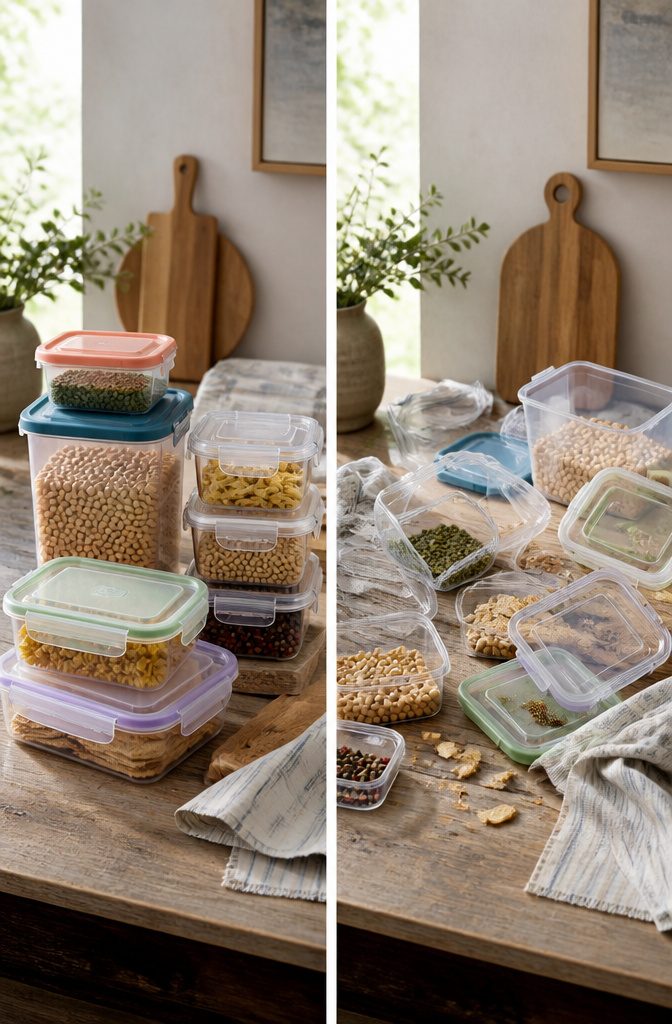
Lids on clear storage containers fall into four mechanisms, and the difference between them is whether your flour stays dry or your holiday decorations just stay inside.
Snap lids, like the one on the Greenmade 27 Gallon bin, press on and off in one motion.
That speed costs you: the seal is friction, not gasket, so dust and moisture find their way in over months in a basement. Fine for camping gear, risky for anything that spoils.
Hinged lids, such as the IRIS 13.5 Quart with hinged lid, stay attached to the box. You open, you drop the item in, you close, all one-handed.
The hinge is a living joint though; after enough cycles it loosens, and then the lid does not sit square. Plan on replacing the whole unit when that happens, not repairing it.
Latching lids dominate this lineup.
The IRIS Stack & Pull 5.7 Qt., the Staples 20 Qt., the TRU RED 78.4 Qt., the IRIS 4.3 Qt. six-pack, the Really Useful Box 17.96 Quart, the IRIS 54 Qt. carton, and the IRIS 72 Quart all use two latches that hook the lid to the base.
The latches add seconds to every open and close, but they keep the lid under tension. That tension is what passes for airtight in this price range: better than a snap, not laboratory tight.
For true gasket sealing you would need a rubber perimeter seal, and none of these eight containers list one. The latches are the compromise most buyers accept.
Lift-off lids, like the IRIS 13.5 Qt. lift-off model, are the fourth type and the simplest. No mechanism to fail, which also means no mechanism to hold.
Stack them and the lid can slide; bump the pile and it definitely slides. I would use these only where I open weekly, not where I store yearly.
Where These Containers Actually Get Used
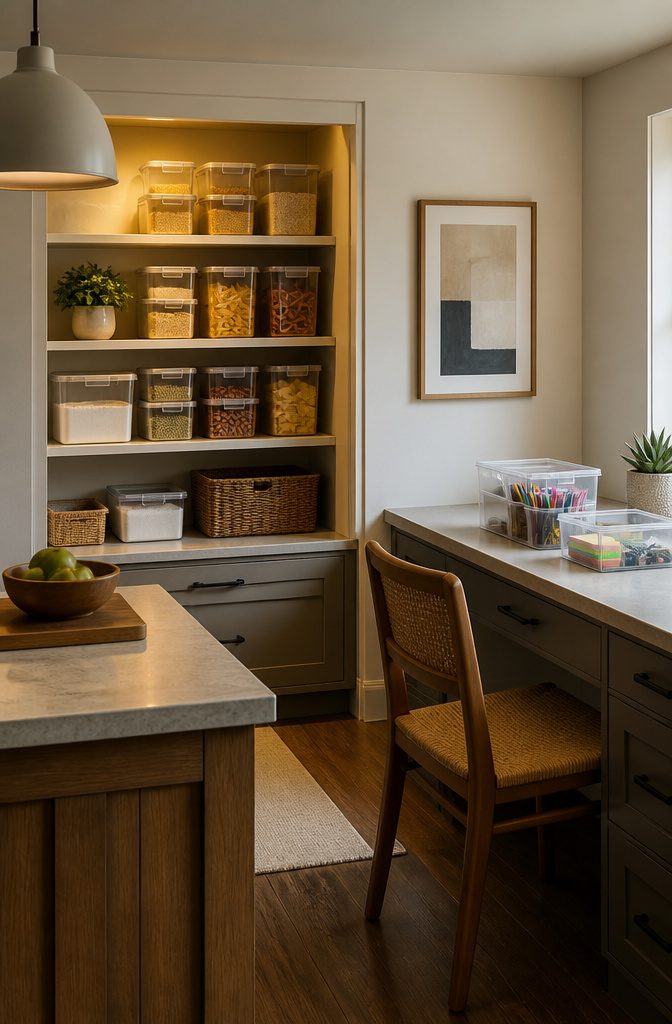
Most of us end up with clear storage containers in more places than we planned. The kitchen is the obvious starting point: pantry shelves, refrigerator drawers, and freezer bins all benefit from seeing what you have before you open it.
Closet use follows fast, especially for shoes, accessories, and out-of-season clothing you want to identify without rummaging.
Basements and garages push the limits.
Standard lids keep dust out but weather resistance matters if the container sits near a window, a door, or any space that sees temperature swings and humidity. The snap-top and gasket-sealed options handle that shift better than basic latches.
Office use tends toward smaller sizes: desk supplies, cords, and documents you need to spot quickly. Stackability becomes the deciding factor there, since floor space is usually tighter than in a home storage room.
I have not found a single lid type that works everywhere. The hinge lids I like for kitchen access feel clumsy in a closet where I want the top completely off.
The container that seals tight enough for garage storage is often the same one I fight with at my desk when I only need a paper clip.
Stackability and What It Costs
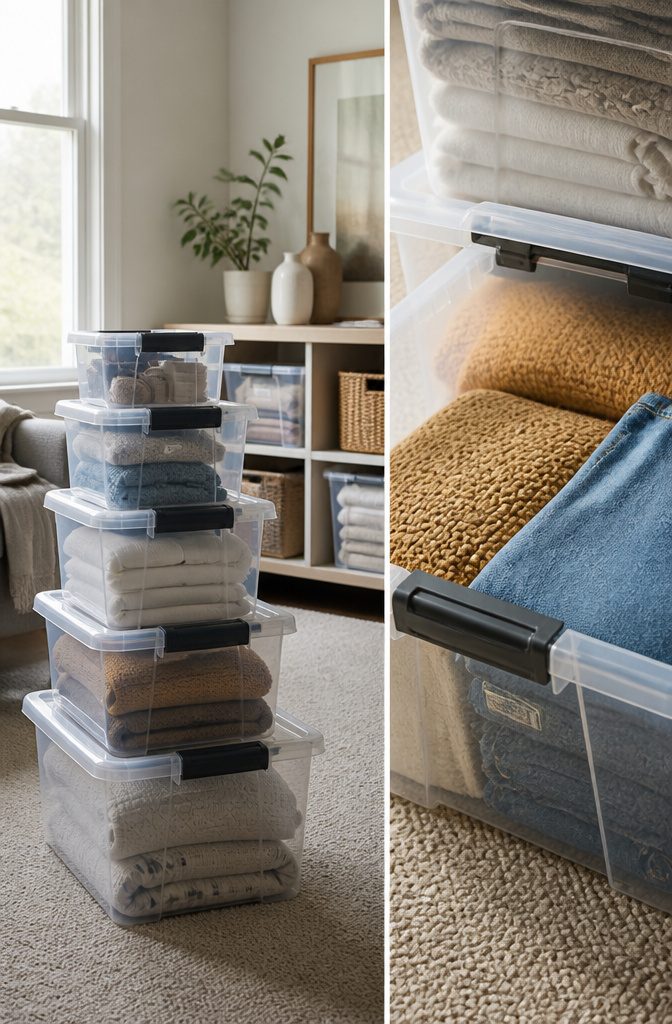
Stackability is where lid design earns its keep or fails outright. The IRIS Stack & Pull line, at 5.7 quarts and 54 quarts, builds in recessed lids that let another bin sit on top without skating sideways.
That recess is the difference between a stable tower and a slow-motion avalanche every time you brush past it.
Latching lids generally handle this better than hinged or lift-off styles.
The latch mechanism sits flush or nearly flush, so the upper container’s weight presses down on the rim, not on a protruding handle. Hinged lids, like the Iris 13.5 Qt.
Lift Off Lid tote, leave a bump or gap that shifts the load to one side. Lift-off lids are worse; they’re meant to come off entirely, and stacking on them is an afterthought at best.
At 60 quarts and above, the problem changes. An Iris 60 Quart or 72 Quart bin, fully loaded, can push past 50 pounds.
The lid below has to take that straight down, not flex. The 60+ quart sizes need either a rim-recessed lid or they belong on the floor of the stack, not mid-tower, because even good plastic deforms under sustained point pressure.
The Greenmade 27 Gallon (roughly 108 quart) bin sits in this territory; its snap lid is flat enough to stack on, but snap lids lack the positive lock that keeps a loaded upper bin from drifting.
What happens to the lower lid over months matters too. A latched lid on a 54 quart IRIS bin, holding 40 pounds of winter clothes for a season, will show a slight dish in the center where the upper bin sat.
That dish becomes a catch point for the next stack, and eventually the lid cracks at the latch. The cost of ignoring this is replacing the whole bin, not just the lid, since few manufacturers sell lids separately.
Frequently Asked Questions
What sizes do clear storage containers with lids come in?
The containers covered range from 6 quarts up to 78.4 quarts, but sizes cluster unevenly.
Most fall in the mid-range, leaving a gap between roughly 18 and 58 quarts where few options exist. That clustering pushes most buyers toward two size families: smaller bins for daily kitchen and closet use, and large 58–78 quart boxes for long-term storage.
Are clear storage containers with lids BPA-free?
Most clear storage containers with lids sold now carry a BPA-free label.
The article notes this matters most for kitchen and refrigerator bins that contact food; for basement or garage storage of hardware, decorations, or fabrics, BPA-free status is largely a marketing detail rather than a practical deciding factor.
What are the best uses for clear storage containers with lids?
Kitchen pantries, refrigerator drawers, and freezer bins are the starting point, followed by closets for clothing, shoes, and accessories.
Basements and garages work for seasonal items only if the lid seals against dust and moisture. Offices suit smaller sizes for supplies and documents, though no single lid type handles every location equally well.





