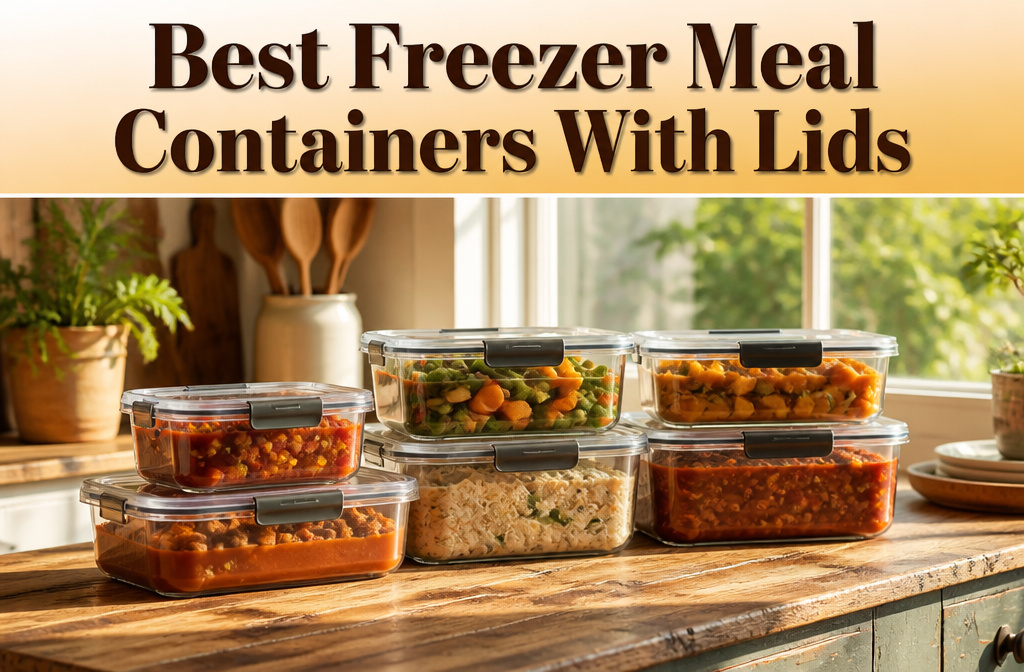
Rubbermaid Brilliance is the container most people should buy first.
The lids snap tight after years of freezer cycles, the sizes range from 3.2-cup to 9-cup so you are not cramming half-empty tubs, and the clear walls let you spot chili without popping the seal.
Only skip it if you are already avoiding plastic contact with food entirely, in which case tempered glass is your next stop and you will need to measure your freezer shelves first; those rigid rectangles do not squeeze down like bags.
1. Glass Containers
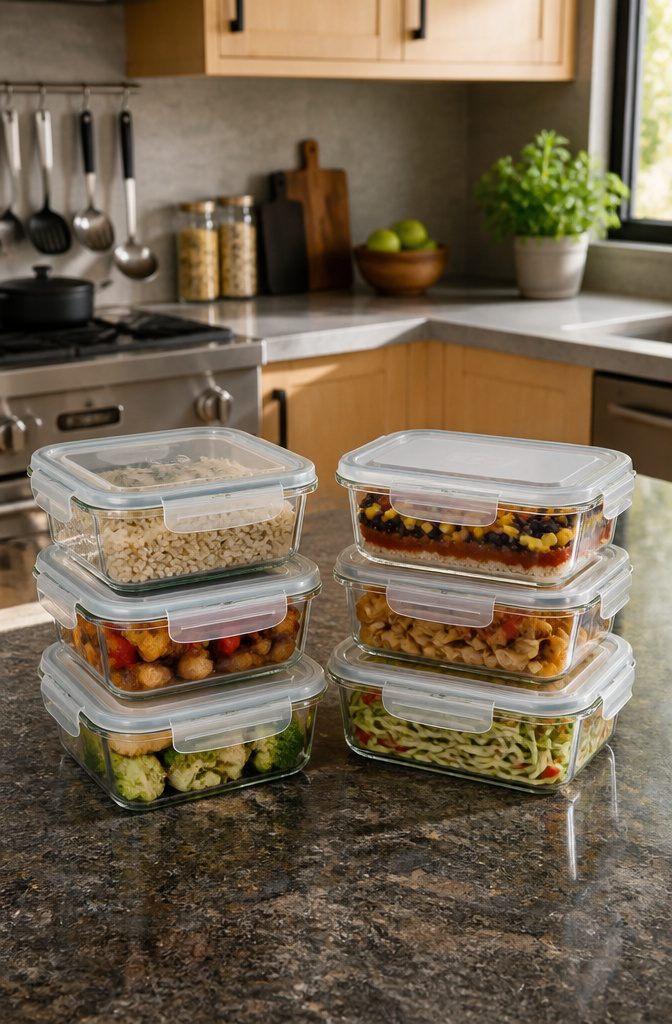
Tempered glass handles temperature swings better than regular glass, which makes it the only kind that belongs in a freezer. Even then, the food needs about 3/4 inch of headspace below the lid so expansion does not crack the base.
Snapware’s glass line uses Pyrex bases that move from freezer to microwave to oven without a transfer step, and the lids still snap tight after years of use.
I would not run them straight from freezer to microwave in daily practice, though the glass itself can take it.
These containers suit cooks who freeze single portions and reheat in the same dish.
Anyone with narrow freezer shelves should measure first; the rigid rectangles do not squeeze down like bags. If you drop things regularly, the weight and breakability make this a poor match.
2. Plastic Containers
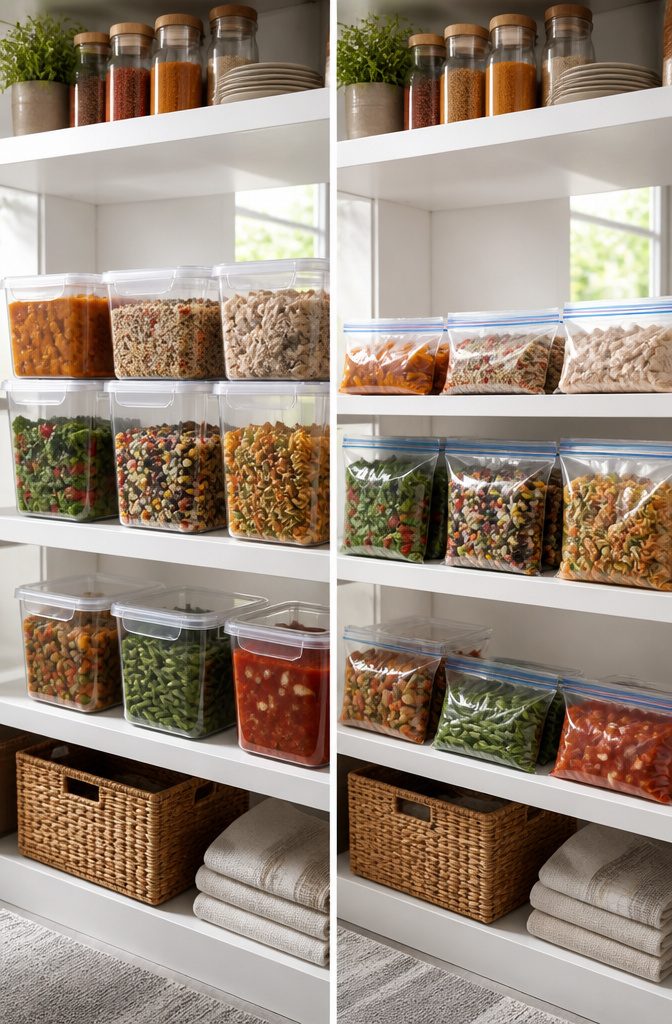
Not every plastic belongs in the freezer. The ones that do are labeled with resin codes you can actually check: HDPE, LDPE, PP, and PET.
Each handles sub-zero temperatures without turning brittle, though acidic foods like tomato sauce can still degrade certain plastics over time. Cracked or worn containers should get tossed, not repurposed for another round of soup.
For clear containers that let you spot the chili without opening the lid, Rubbermaid Brilliance has become the standard recommendation.
The lids snap tight, they survive the dishwasher, and the range of sizes means you are not cramming a half-empty 9-cup tub where a 3.2-cup one fits better. The multi-packs at Costco usually beat other retailers on price per piece.
If you are stocking a kitchen from scratch, the IKEA 365+ line costs less and still holds up. The snap lids work fine in the freezer, though the bamboo lids are a separate purchase and not dishwasher-safe.
Either way, skip plastic entirely if you are already avoiding food contact with it; the convenience of seeing your inventory through the wall matters less when the material itself is the dealbreaker.
3. Freezer Bags
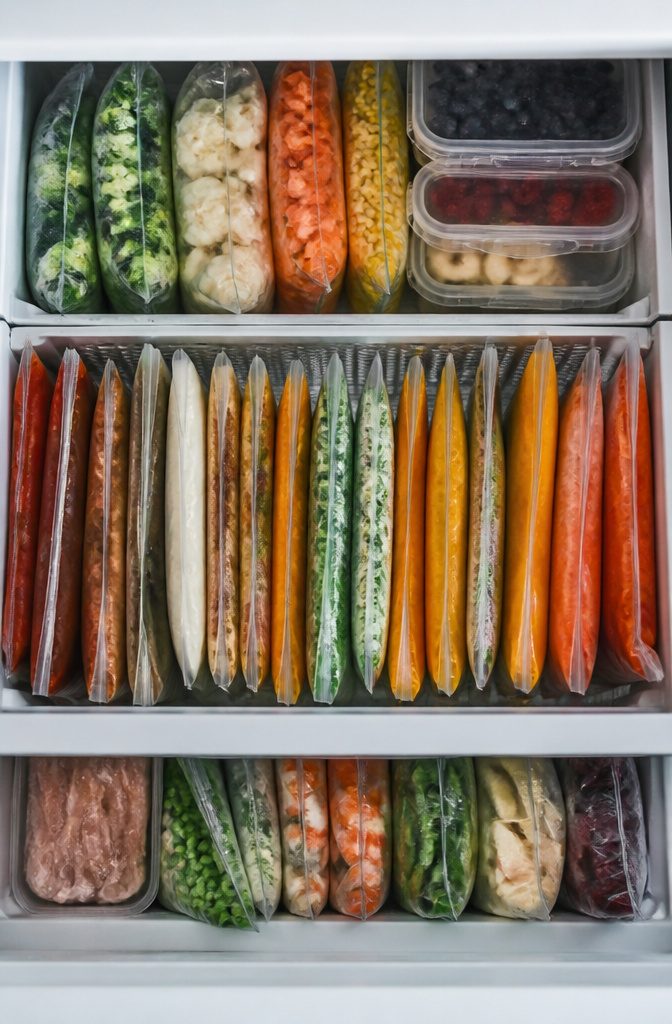
Resealable freezer bags are the most space-efficient option for freezer meal containers with lids, and the brand name matters more here than with any other category.
Ziploc freezer bags hold up against leaks where store brands have failed me, especially once you start thawing under running water or stacking heavy items on top.
Gallon-sized bags work for family meals; quart-sized bags fit individual portions or dinners for two. The trick is how you freeze them.
Lay each bag flat on a baking sheet until solid, then stack them upright like books on a shelf. That shift from flat to vertical is what makes a small freezer over the fridge actually usable for bulk prep.
What bags cannot do is protect crushable food.
Sauces, soups, marinated proteins, and precooked fillings are where they shine. If you need rigid structure to prevent lasagna layers from sliding or delicate items from cracking, skip the bags entirely and move to foil pans or plastic containers.
4. Silicone Containers
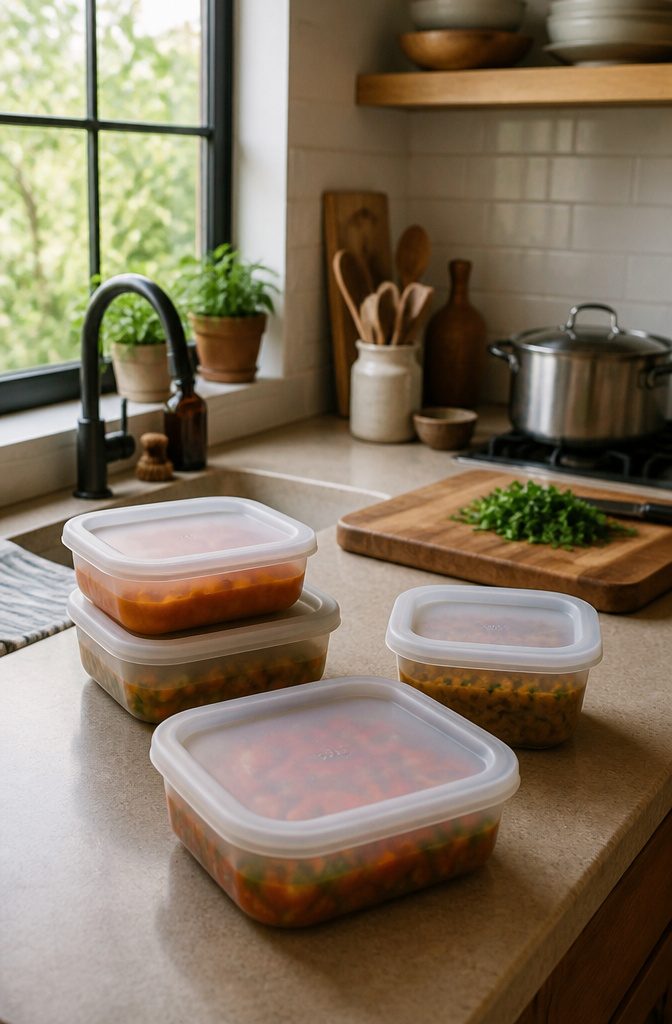
Silicone containers with lids have one trait that splits the room before they ever hit the freezer: the material grabs onto smells and stains, and it does not let go.
Tomato sauce, curry, even strong coffee grounds will linger through washes, so anyone sensitive to odors should skip this category entirely.
The same goes if you want to see your lasagna layers or soup stock clearly without popping the top; silicone gives you a muted, frosted view at best.
The Anyday Anydeli set, built from silicone with an embedded stainless steel rim, handles dishwasher cycles and microwave reheating better than you’d expect from something this flexible.
Its press-and-seal lid held up to shaking and squeezing in testing, though I would not trust it rolling around in a packed bag all day.
The volumetric markings on the side matter more than people think for portioning out meal prep.
What costs you is storage space.
These do not nest neatly like rigid deli containers, so the cabinet footprint adds up fast. That is the trade: flexibility and resilience against a permanent tomato tint and a bigger stack in your drawer.
A word of caution from testing across materials: if a container claims to be leakproof, stainproof, or shatterproof, take it with a grain of salt. Many of those promises fall short once they actually get used.
If a food storage container claims to be either leakproof, stainproof, or shatterproof, take it with a grain of salt.
For the reader, that means silicone works when you value durability and heat tolerance over pristine appearance, but not when you need certainty that tonight’s dinner will not taste like last week’s garlic.
5. Foil Pans
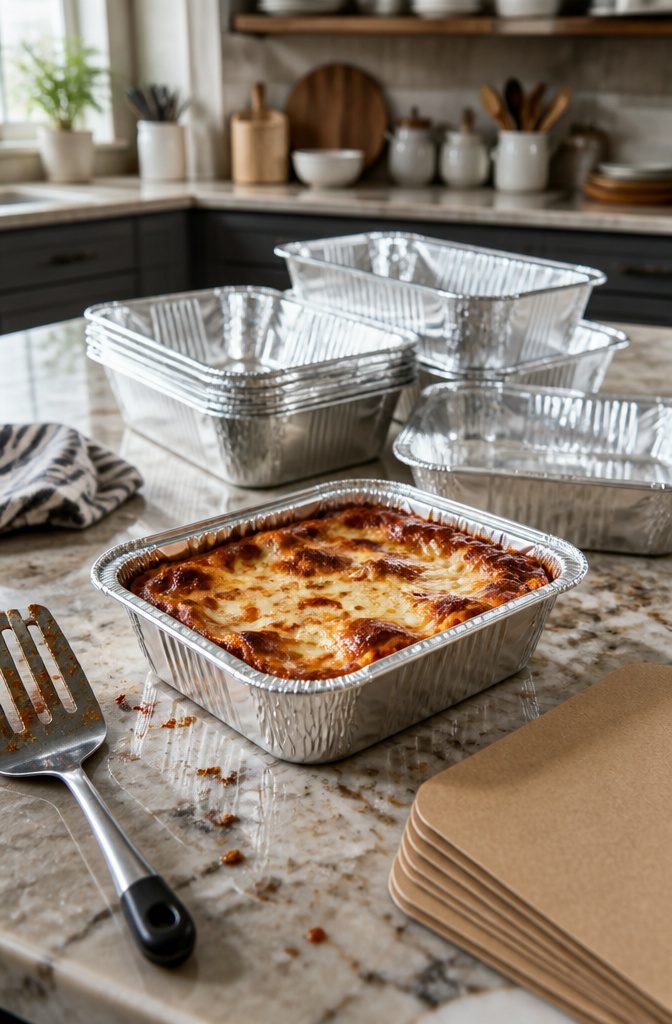
Foil pans are the one container that lets you skip the thaw. A 9×13 pan goes from the freezer straight into the oven, cardboard lid and all, which makes them the default for lasagna, enchiladas, and manicotti.
I keep a stack on hand because they cost next to nothing at dollar stores and restaurant supply shops, and when the meal is done the pan gets tossed instead of washed.
Writing cooking instructions on the lid before freezing saves the guesswork later.
The catch is built in: these are single-use.
The cardboard lids soften if they sit too long, and acidic sauces, tomato especially, can eat a hole through the foil if the pan stays frozen for months. There is also no microwave path here.
Anyone who wants reusability or a quick reheat should look elsewhere. If you are bringing dinner to a friend, though, nothing beats not needing your container back.
6. Souper Cubes
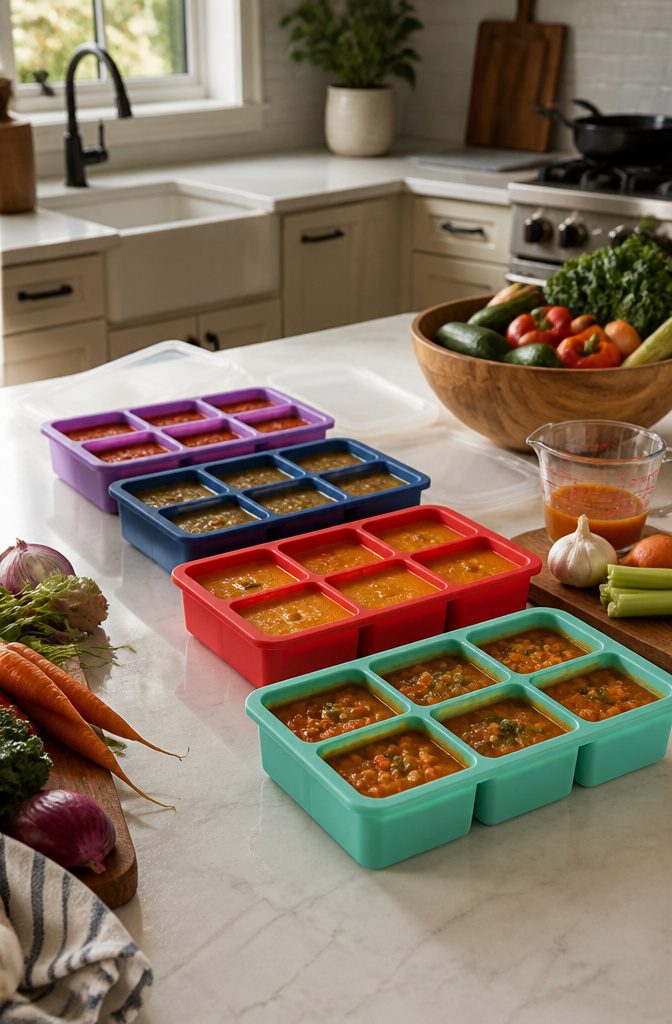
Souper Cubes trays work best when you already know your serving size.
The 1 cup and 2 cup trays get the most use for individual portions, and the 2-cup size in particular handles a full bowl of soup or chili without the overflow you get from guessing at a round container.
The silicone releases cleanly once frozen, so you can pop out a single cube and reheat it straight.
A steel rod running through the tray keeps the silicone from sagging when you move it from counter to freezer, which matters more than I expected before I tried loading one with hot broth.
The same structure makes these oven-safe, so the 1-cup sections double for mini meatloaves or single brownies.
These are not the right pick if you are freezing a full casserole or cooking for more than two people at once.
A lasagna or a four-person stew will fill a tray in awkward fractions, and you will end up with too many partial cubes or not enough total volume.
For that job, a foil pan or a lidded glass dish stores the whole recipe in one flat stack.
Dishwasher-safe silicone means the trays clean up after the oily stuff, and they have not held stains or odors across uses. In practice, they suit anyone building a freezer stash one lunch at a time.
7. Jars
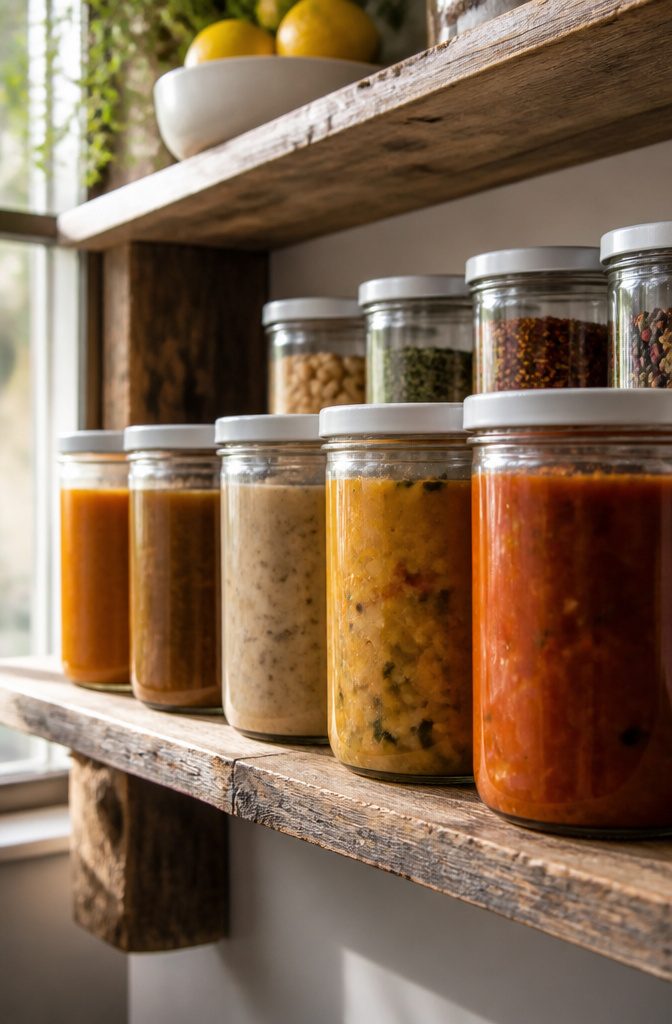
Old pasta sauce jars and pickle jars crack in the freezer because the glass is too thin and the shoulders curve inward, leaving no room for soup or broth to expand upward.
Pressure builds at that narrow neck, and the jar splits right there or shatters when you set it on the counter to thaw.
Only straight-sided jars marked freezer-safe or canning jars belong in the freezer, and even then you fill them three-quarters full, cool the food completely first, and leave the lid ajar until the contents are frozen solid.
Bernardin makes plastic freezer jars with fill lines and screw caps that take the guesswork out of expansion space. One-quart wide-mouth mason jars work too, though the tapered kind that narrow at the top carry more risk than straight-sided ones.
Labels matter as much as the jar itself; erasable labels that survive the freeze-thaw cycle and the dishwasher keep you from playing guessing games with a frosted lid six months later.
Anyone still using repurposed food jars should skip this category entirely and stick to plastic containers or bags until they invest in proper freezer glass.
What Freezer-Safe Means
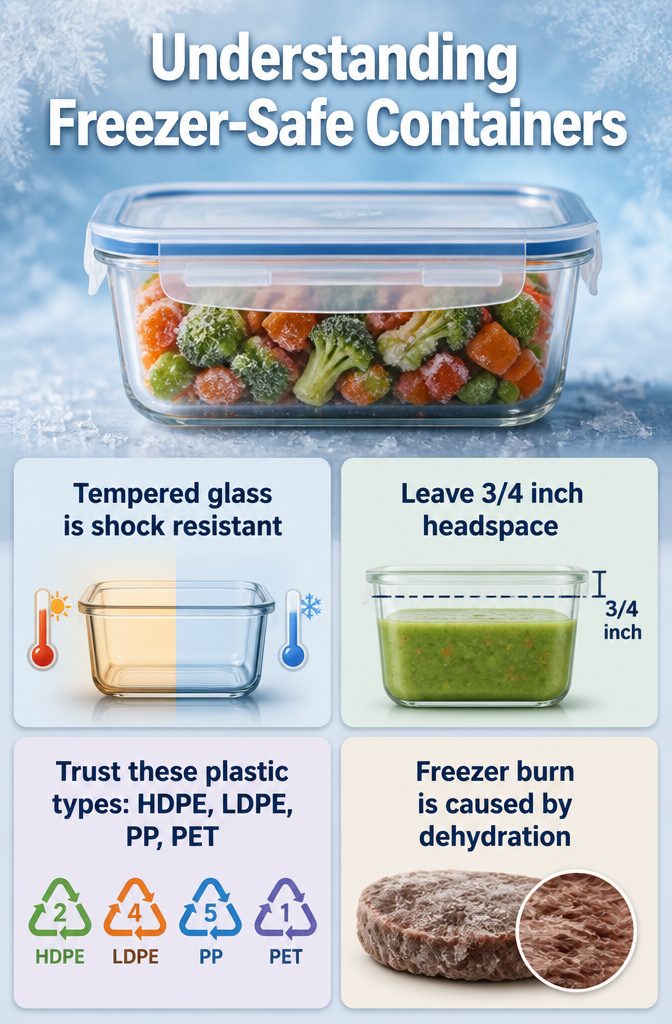
Tempered glass handles the drop from hot to cold without shattering, which is why it earns the label.
Ordinary glass, including most old food jars, carries no such guarantee; the thermal shock of a freezer can crack it outright as contents expand.
Leave three-quarters of an inch between food and lid even with freezer-safe glass, since that expansion has nowhere else to go.
Plastic types tell a clearer story.
HDPE, LDPE, PP, and PET each tolerate freezing without turning brittle, and containers marked with those codes are the ones to trust. Worn or cracked plastic is a different risk, letting air creep in where the seal should hold.
Freezer burn is not temperature damage; it is dehydration. Air reaches the surface of food, ice crystals form there, and texture goes flat.
A lid that seats tight, with no gap from overfilling, is the simplest defense. Cooling food fully before it goes in helps too, since warm contents release moisture that later frosts over.
Stacking and Storing
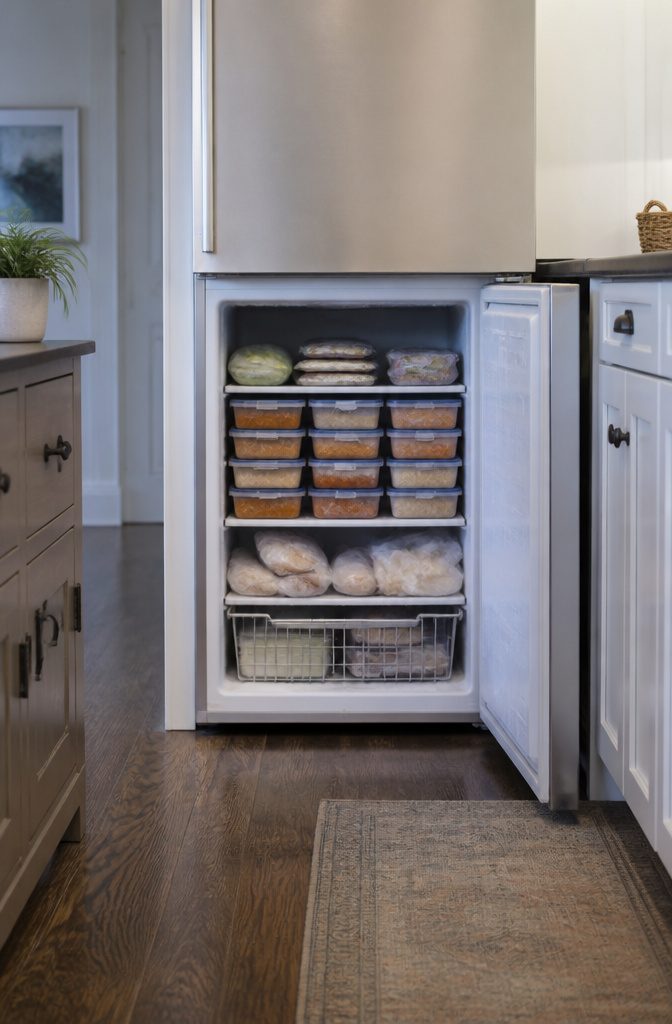
Freezer space is too expensive to waste on round containers that leave gaps between them.
Rectangle containers of the same size stack like building blocks, and a shelf filled edge to edge is what lets you store ten meals where six used to fit.
I freeze bags flat on a baking sheet first, then stand them upright like books once they hold their shape.
That switch from flat to vertical is what turns a crowded top-freezer into usable space; gallon bags for family portions, quart bags for single servings.
The flat freeze also keeps soups and sauces in an even layer, so thawing under warm water breaks them up fast without half the bag still solid.
Staple a smaller bag of cheese or toppings above the seal of the main bag, not through it, and you keep the pair together without punching holes that turn into leaks.
Brand name bags have held up better for me than store labels on that point; the few cents extra buys a seal that does not split across the corner.
Labeling What You Freeze
A frozen container is only useful if you know what’s inside and how long it’s been there.
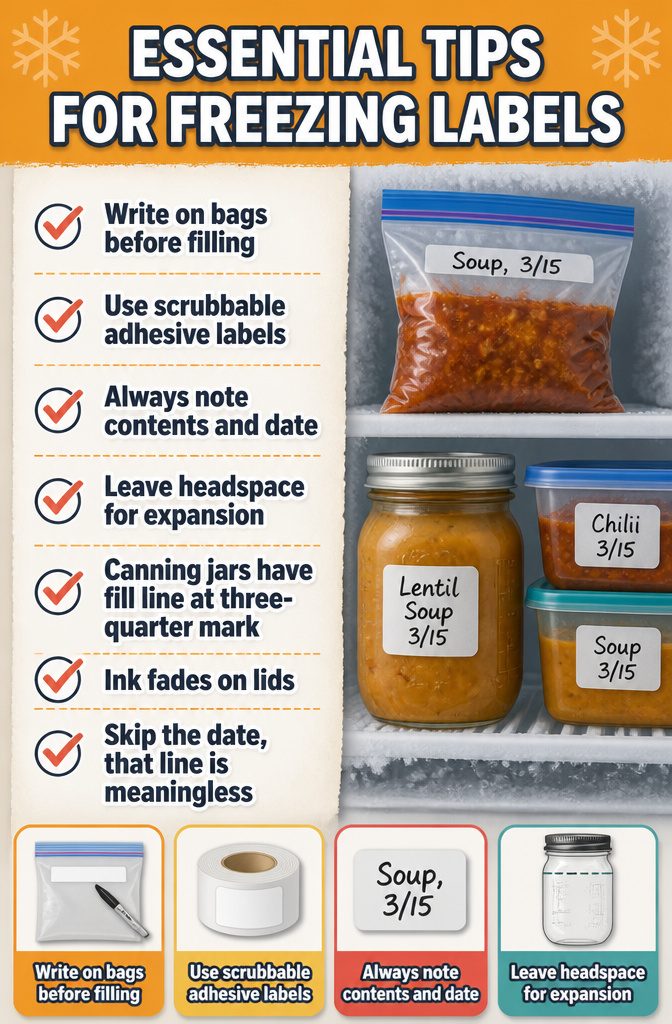
Sharpie on a plastic lid looks fine in the kitchen, but the ink fades in freezer air and moisture smears it into a blue blur inside a month.
I learned to stop trusting my own handwriting after thawing what I thought was chili and finding lentil soup.
For freezer bags, the fix is writing on the strip before filling it.
The bag stays flat, the ink bonds to the plastic, and nothing rubs off against the ice. Jars need a different approach: adhesive labels that survive the freeze-thaw cycle and a trip through the dishwasher.
The ones that work use a scrubbable surface, so one label lasts through dozens of meals instead of peeling off and leaving paper pulp on the glass.
Contents and date belong on every package, no exceptions.
"Soup, 3/15" is enough; your future self does not need a recipe code. Canning jars have a fill line etched at the three-quarter mark, which also serves as a reminder to leave headspace for expansion.
Skip the date and that line becomes meaningless, because you will not remember whether you froze it last Tuesday or last year.
Frequently Asked Questions
Can you freeze food in glass containers?
Yes, but only if the glass is tempered or marked freezer-safe.
Leave about 3/4 inch of headspace below the lid so expanding food does not crack the base. Ordinary glass jars, like old pasta sauce jars, will shatter because they cannot handle thermal shock or the pressure of expanding contents.
What is the best container to freeze food in?
The best container depends on what you are freezing and how you plan to reheat it.
Glass works for oven or microwave reheating of single portions, plastic offers visibility and stackability, bags save the most space for sauces and soups, and foil pans let you bake straight from frozen without thawing first.
A tight lid that seals out air matters more than the material itself for preventing freezer burn.
Is it safe to freeze food in plastic containers?
Yes, if the container is labeled freezer-safe or made from HDPE, LDPE, PP, or PET resins.
Those plastics stay flexible below zero without turning brittle. Avoid cracked or worn containers, and do not store acidic foods like tomato sauce in plastic long term since they can degrade certain types over time.