These ideas run from a quick bulb swap to built-in carpentry that takes a weekend or more, and the deciding factor is how permanent your situation is.
Renters will gravitate toward plug-in pendants, throws that leave with them, and accent walls in paint that can go back to white; first-home owners can start notching shelves into wall panels or hanging hollow box beams that read as inherited.
The 2700K bulb temperature appears in three separate sections because it is the detail that holds the whole style together, daylight LEDs fight every warm neutral in the room.
1. Neutral Color Palette
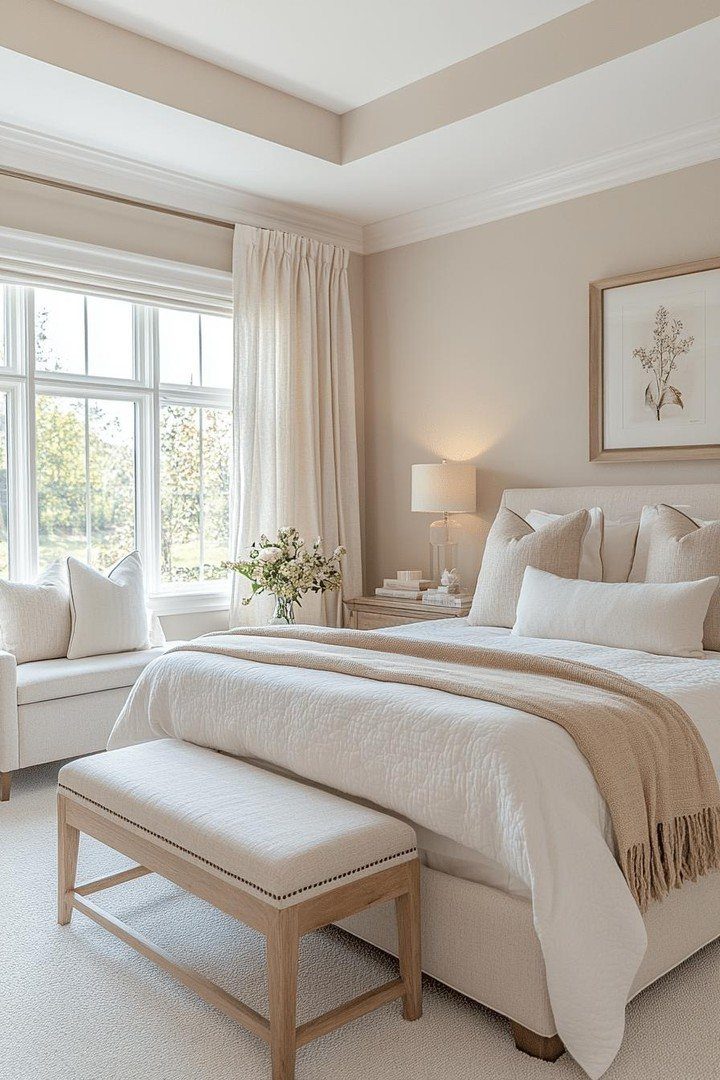
A neutral color palette starts with the wall color and builds outward. Benjamin Moore’s Seapearl is the kind of warm white that reads as quiet rather than sterile, and it pairs with wood furniture without fighting it.
For a rental, paint is still the cheapest full-room change you can make in a weekend. Soft whites, warm grays, and muted beiges layer together without demanding exact matches.
Keep every tone warm; a cool gray against wood reads as office, not farmhouse.
I’d pick this for anyone working around existing pieces that don’t share a finish. Everything calms down and looks intentional.
2. Comfortable Seating
Oversized seating matters more in a farmhouse living room than in most styles because gathering is what the room is for. A deep sofa or a swivel chair you can actually curl into changes how people use the space.
Rowe Furniture makes swivel chairs that turn toward the conversation or the fireplace without dragging the whole frame across the floor. The size matters more than the pattern; a solid linen or a subtle stripe ages better than something trendy.
3. Accent Furniture
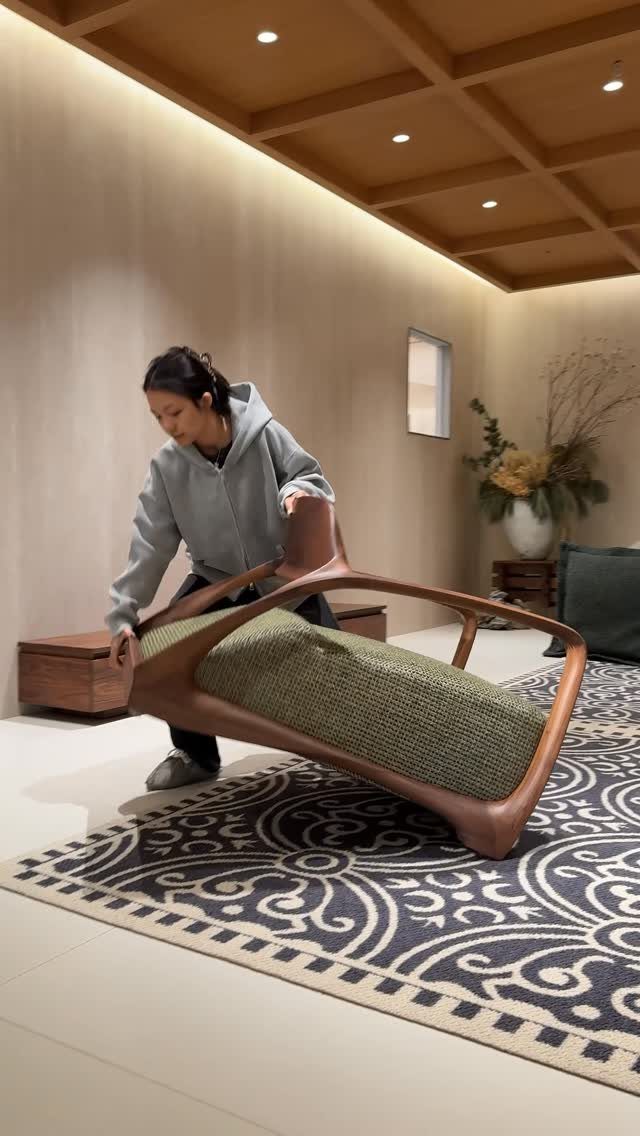
One curved accent chair can shift a whole room from catalog to collected. The shape does the work; matching nothing else is the point.
An antique English farm bench against a modern sofa, or a single sculptural chair in a corner, gives the eye somewhere to land. The rule I follow: one piece per room that someone asks about.
For renters, weight is the limit. A solid wood bench or chair can move with you and survive doorways.
Skip anything with a glass top or a wobble; the farmhouse look depends on things that look like they’ll last.
4. House Plants
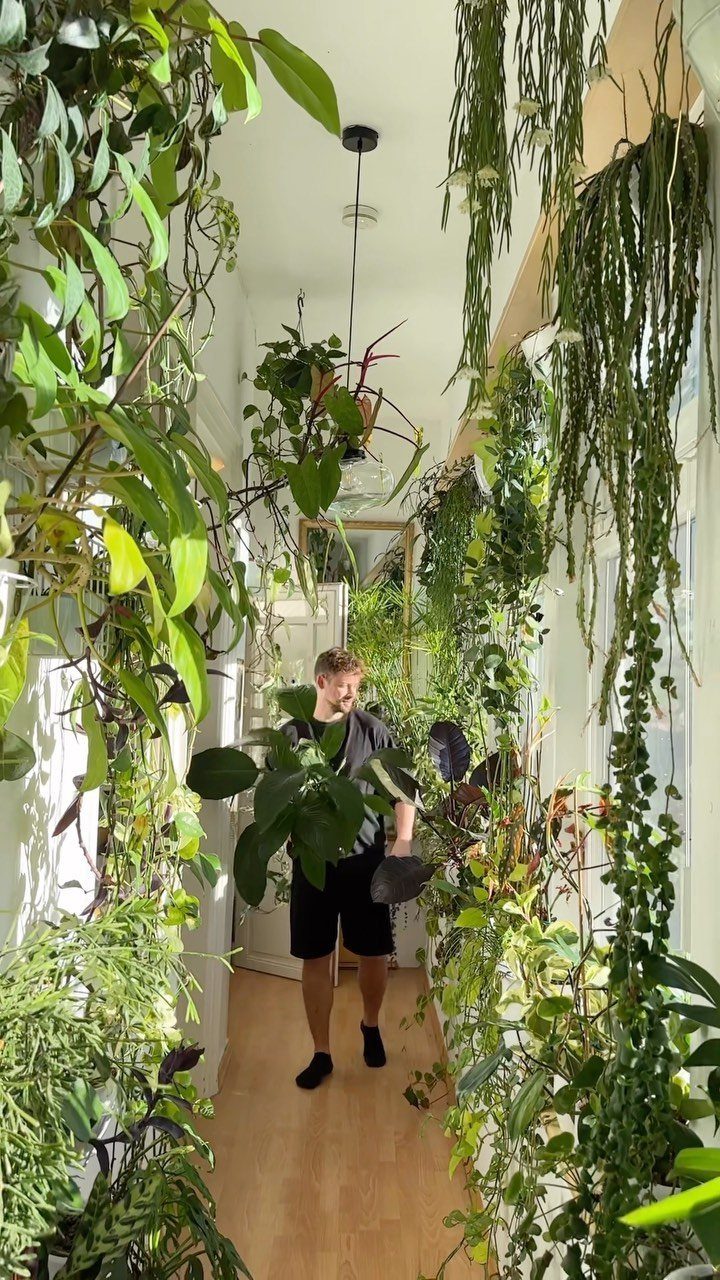
A fiddle leaf fig is the plant that signals modern farmhouse, but only if your light supports it.
Lavender in smaller terracotta or zinc pots adds color and actual scent, which most living rooms lack entirely.
Start with one large plant and one small. The hallway full of greenery looks amazing in photos; in practice, twenty plants is a part-time job.
One good olive tree and a pot of lavender on the coffee table gets the idea across without the maintenance panic.
5. Layered Textures
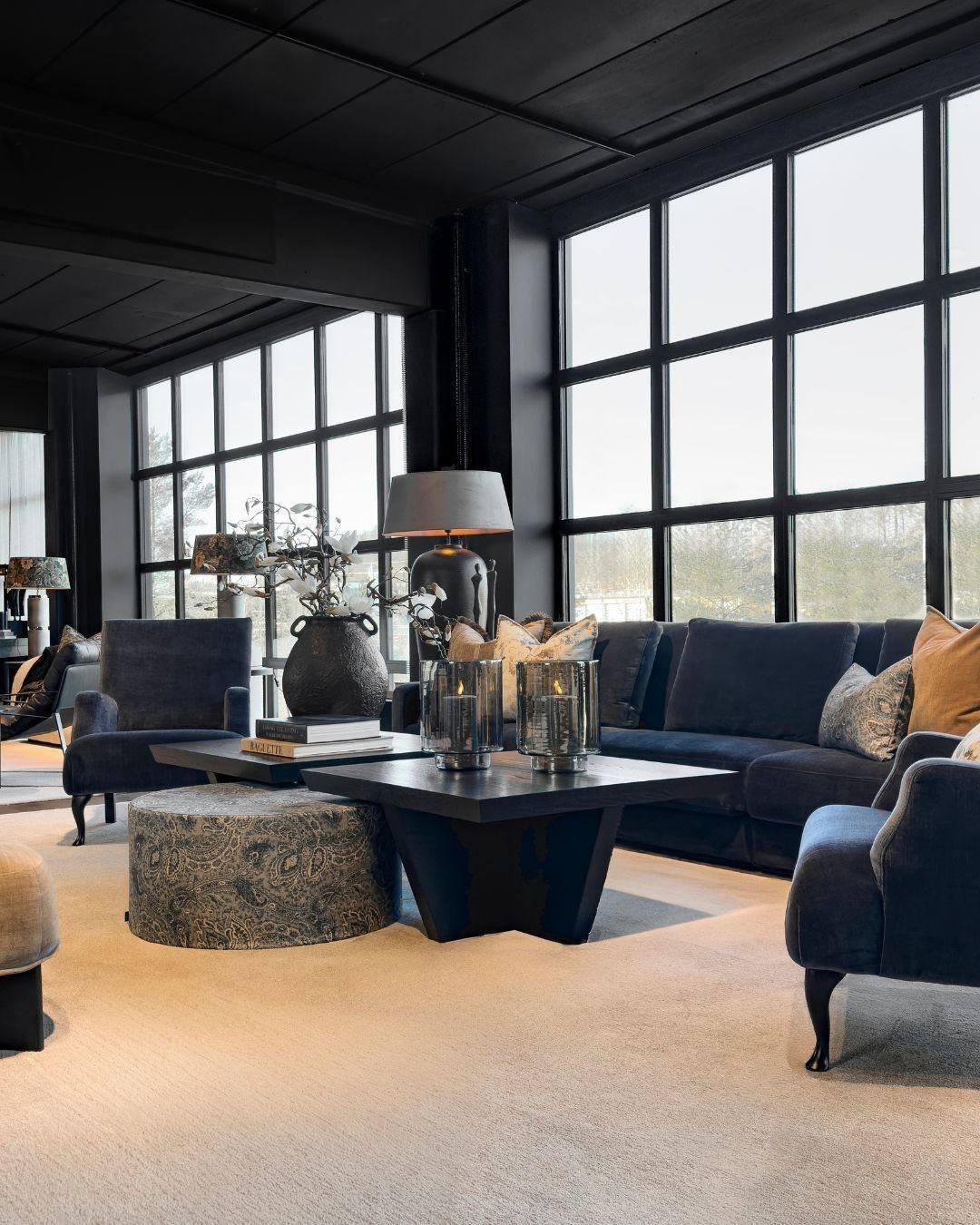
Texture covers a lot of the sins in a mixed-style room. A jute rug over wood floors anchors the farmhouse side; velvet or boucle pillows pull in the modern.
The contrast is the point, not a problem to solve.
Start with the rug. Jute is cheap, hard-wearing, and reads as intentional rather than temporary.
Layer a smaller soft rug on top if the jute scratches bare feet.
I buy them last, after the big pieces are settled, because they fix whatever still feels flat.
6. Colorful Accents
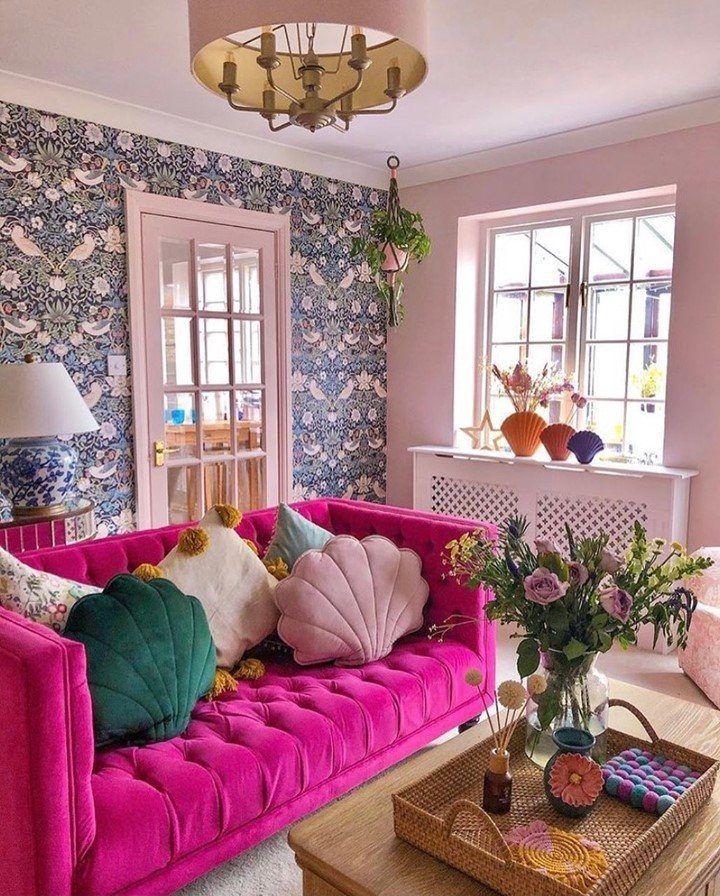
Color in a modern farmhouse living room works best as punctuation, not paragraph. A pink sofa against neutral walls makes the statement; the rest of the room gets to stay calm.
For renters or anyone repainting sounds like too much, colorful throw pillows or one abstract painting with green tones do the same job with less commitment. Striped pillows mix with solids without the busy-ness of pattern-on-pattern.
The painting above the sofa is where I’d put the money. It hangs at eye line and sets the tone for everything else.
Everything else, the pillows and the small stuff, rotates out when you’re bored.
7. Built-in Shelving
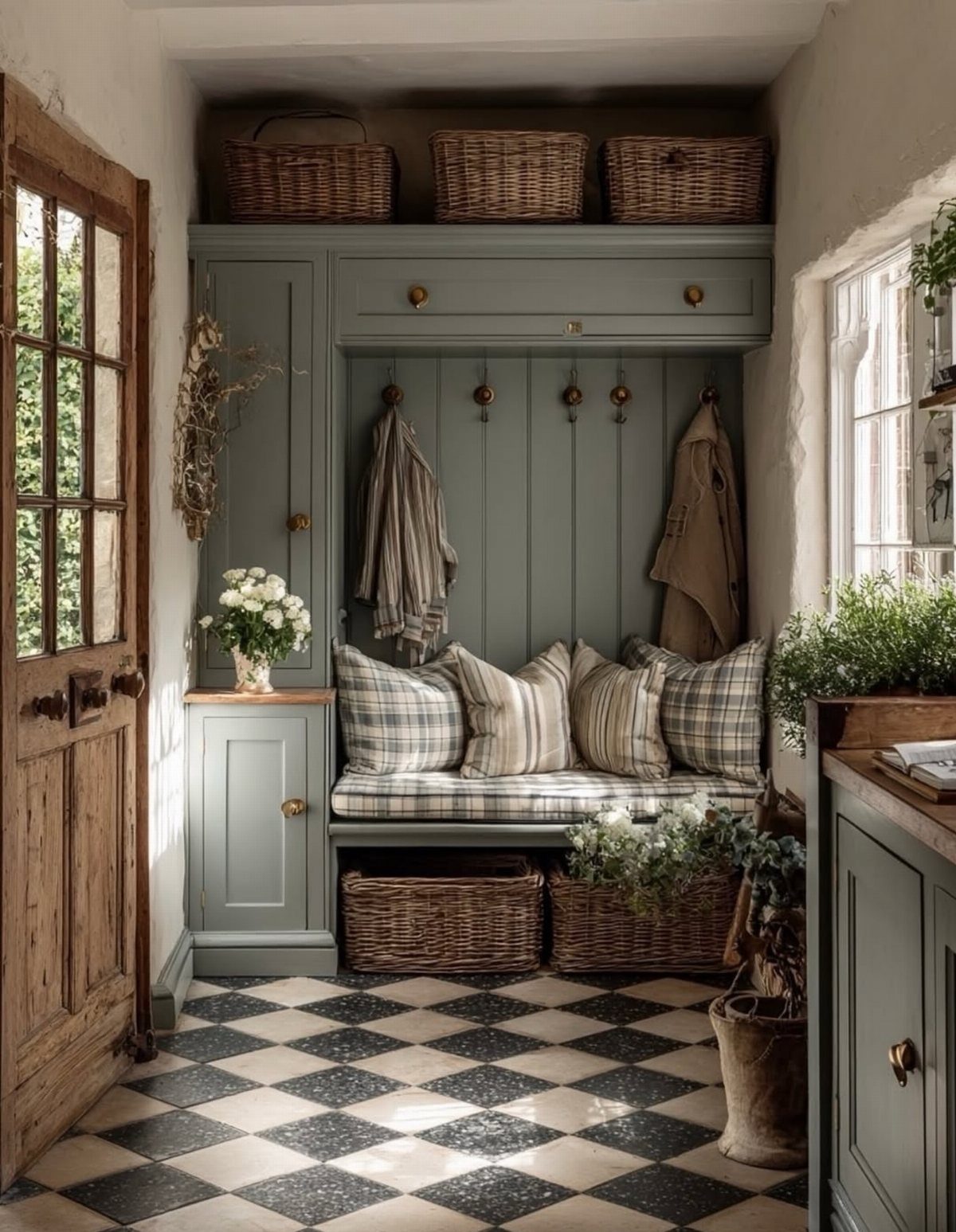
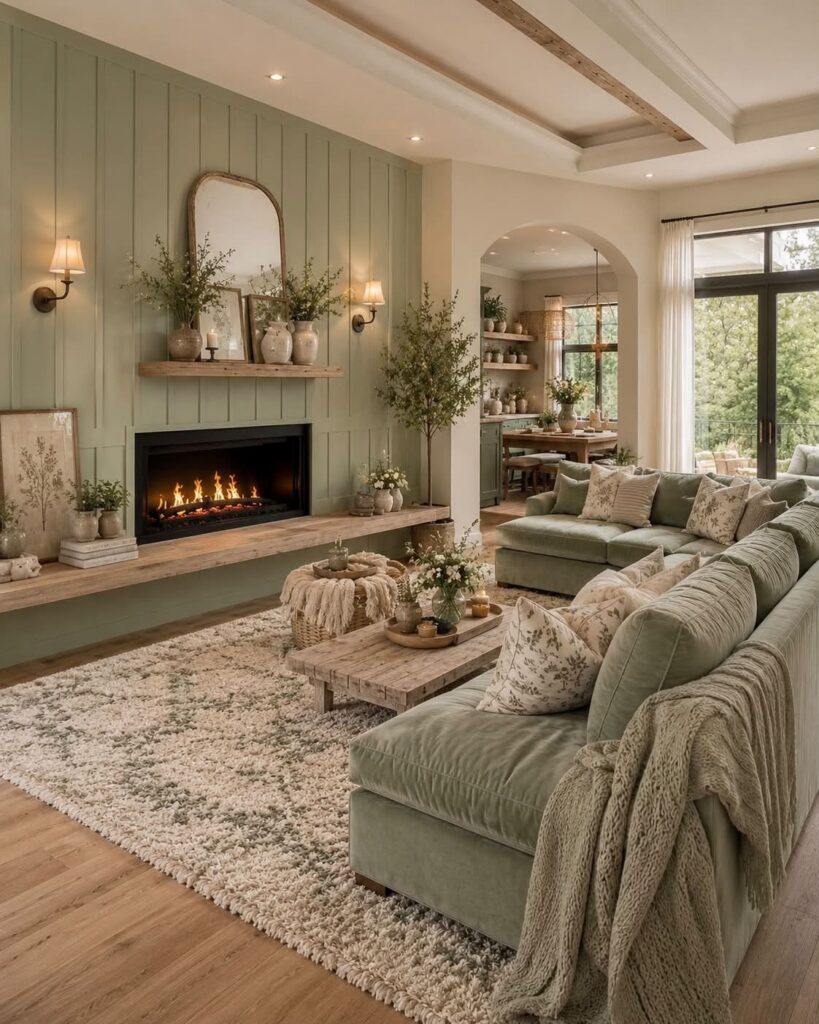
Built-in shelving turns dead wall space into storage that actually earns its keep. Sage green paint keeps a built-in quiet while the structure does the work.
In a living room, run shelves floor to ceiling on one wall and paint them the wall color so they read as architecture, not furniture.
Leave some bays open for books and brass candlesticks, and fit others with doors to swallow the stuff you do not want to display.
A bench below, if the wall allows, gives you a place to drop bags without adding another piece of furniture to the room.
8. Textured Pillows
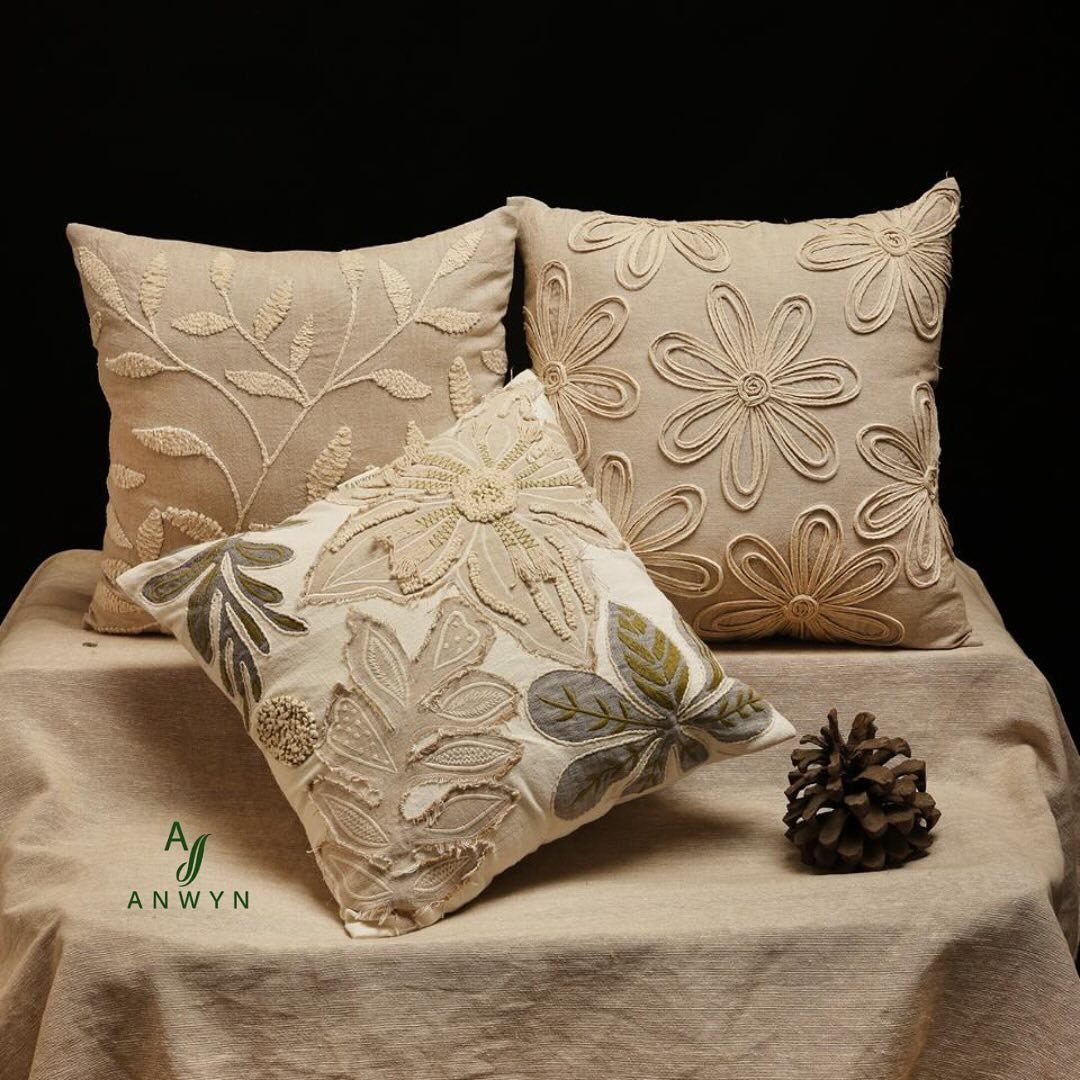
Embroidered texture on a neutral linen ground lets the stitching do the talking while the colors stay soft.
I look for cotton or linen covers with visible weave, maybe a slub or a faint stripe, and mix in one with a small pattern so nothing competes.
On a sofa, three pillows in different textures but the same tone read as intentional; two matching prints look like you bought the set. The cost stays low because you can swap covers seasonally without replacing the inserts.
A 20-inch square is the size I reach for most.
9. Built-in Benches
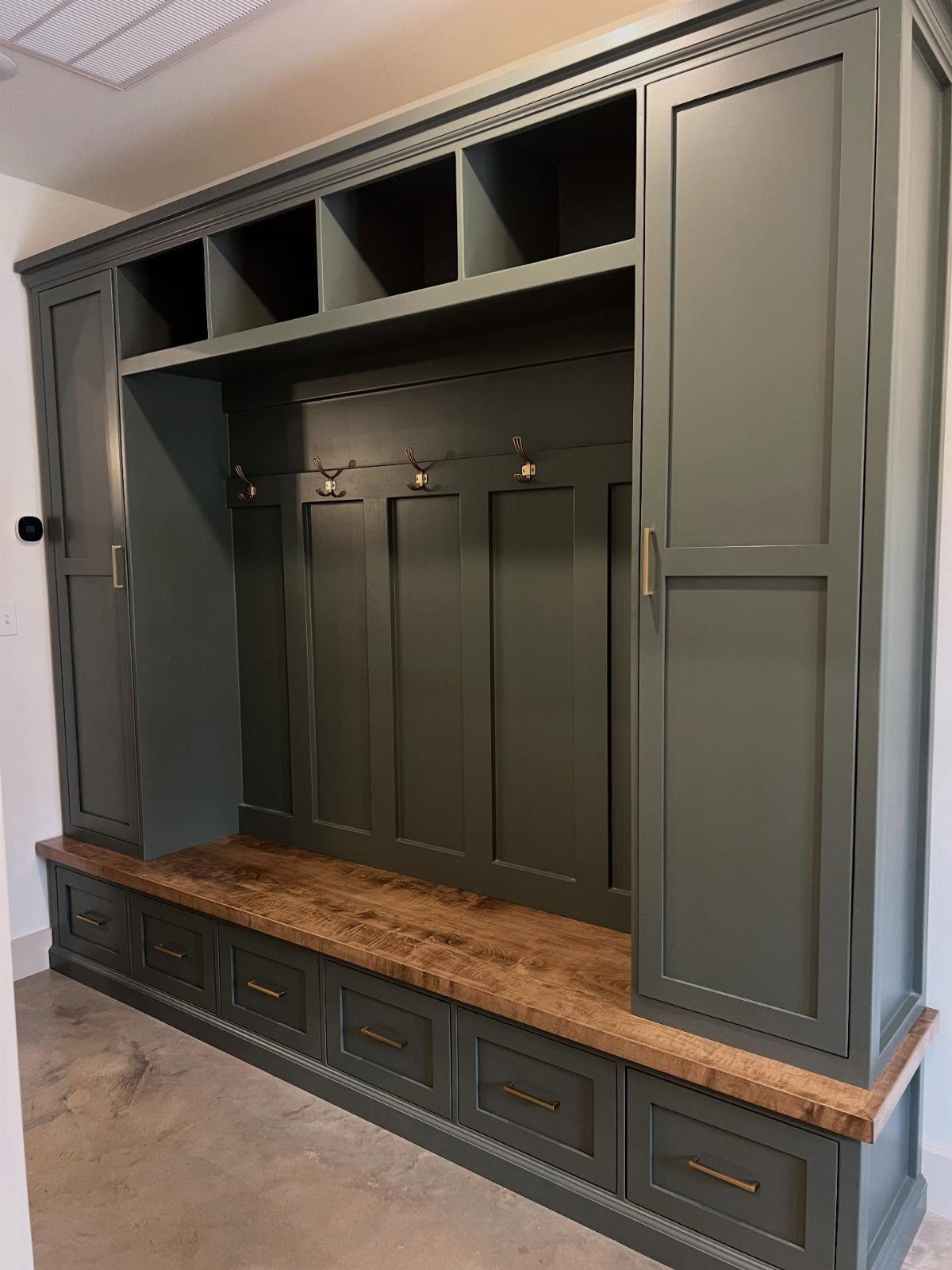
A built-in bench turns a window wall into a seat with a view. Storage above, below, and behind the backrest is how you justify the carpentry cost against buying a storage ottoman and calling it done.
I would upholster the cushion in something that handles sun fading; a gray twill or a tight weave in a mid-tone hides the wear.
Keep the depth to 18 inches if you want people to sit back comfortably, and add a drawer beneath for the blankets you promise yourself you will use.
This suits a bay window or any spot where the view is the point.
10. Oversized Rugs
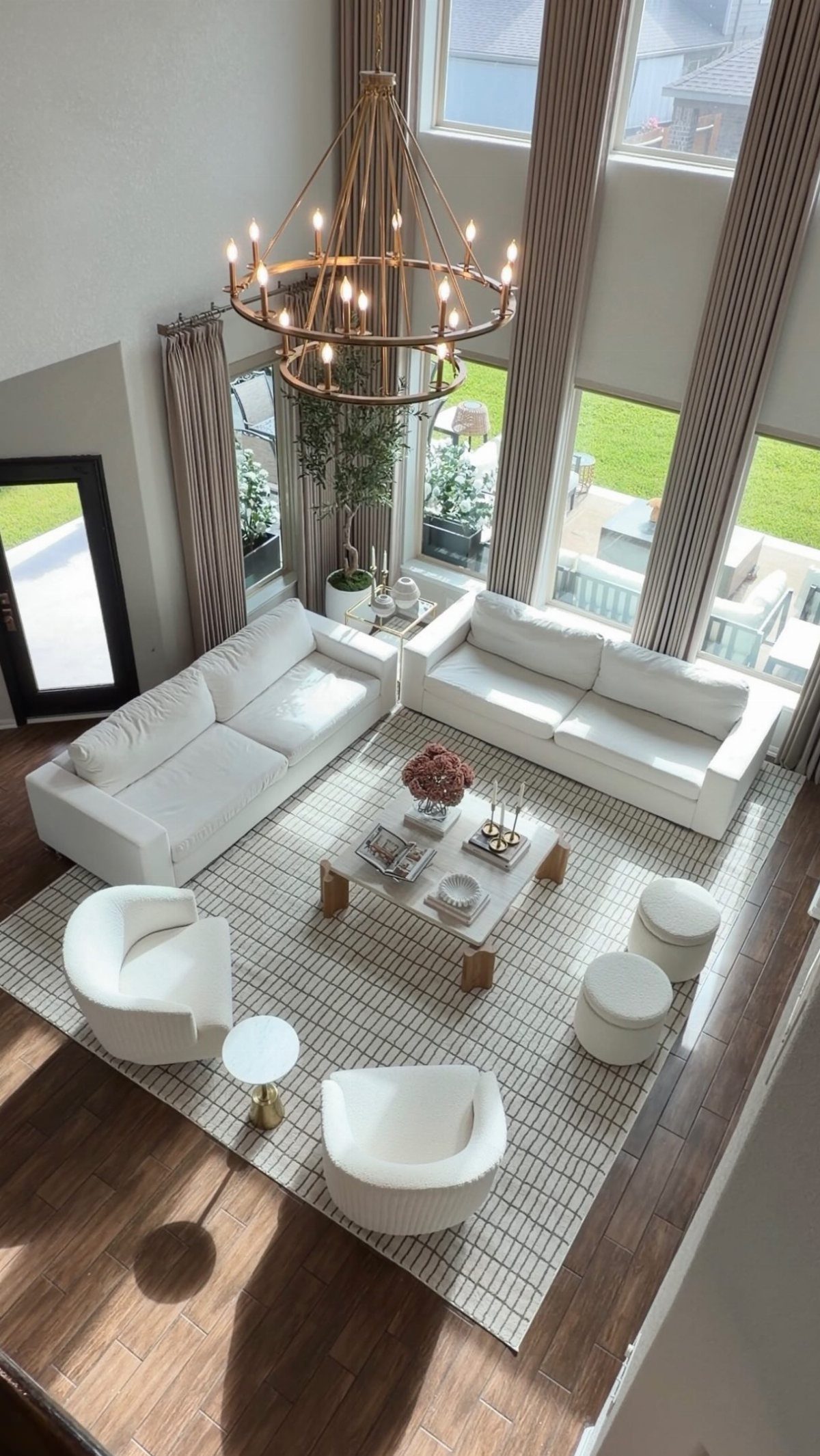
The front legs of every seat in a grouping should rest on the rug; a light pattern holds white furniture together against dark floors. Jute or sisal gives you the farmhouse texture for less, though it is rough underfoot.
If you already own a smaller rug you like, layer it centered on a larger natural-fiber base; the combination reads as collected, not budget.
An 8 by 10 foot rug works for a standard four-piece arrangement, and 9 by 12 for anything with a sectional. Measure before you shop; rug returns are a pain.
11. Exposed Beams
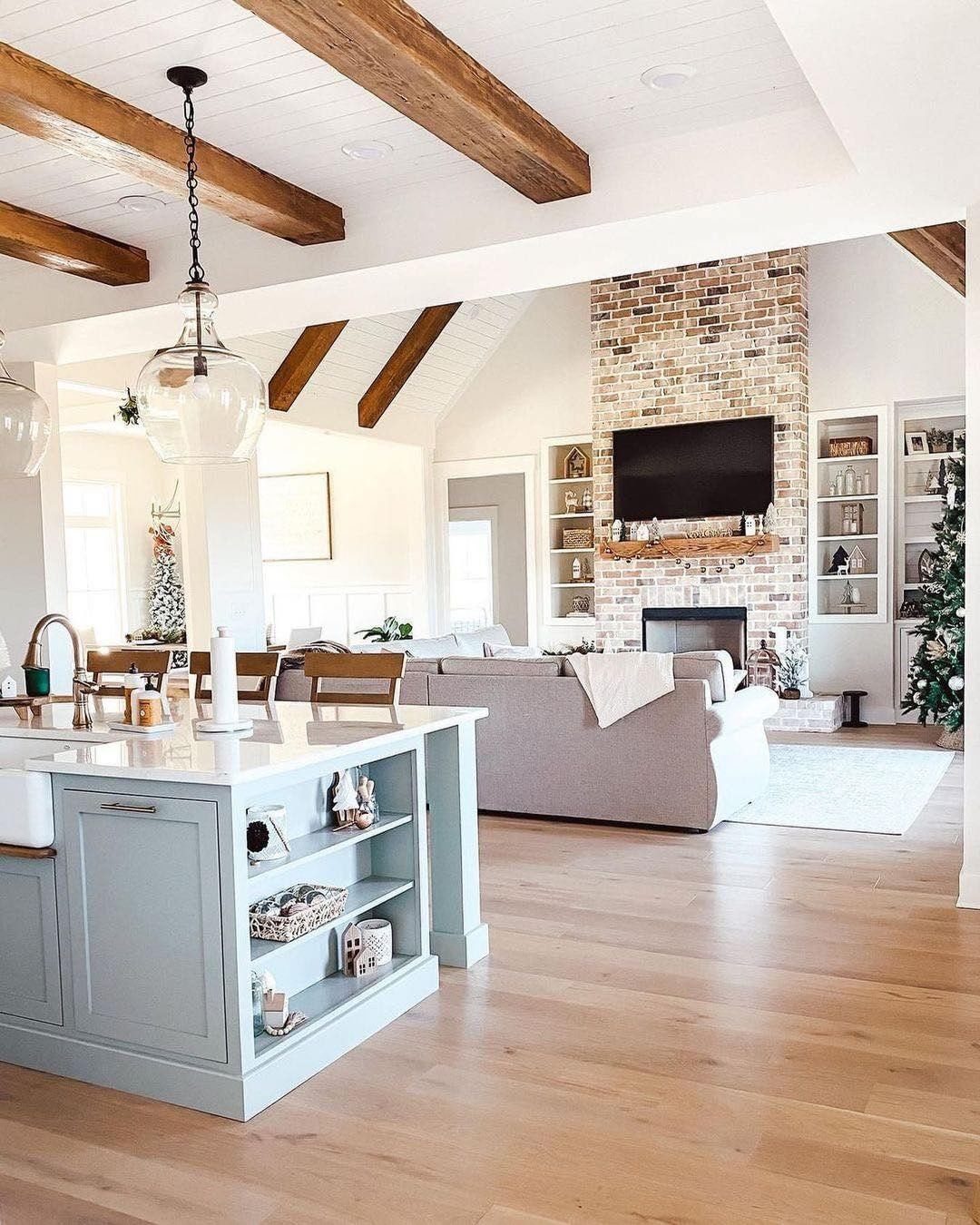
Reclaimed beams add age that new construction cannot fake. Heavy timbers against white ceilings create the contrast that makes beams read as architecture rather than clutter.
Real salvaged wood is expensive and heavy; hollow box beams wrapped in distressed veneer give the same visual weight for less hassle and no structural engineer.
I would keep the finish matte and slightly varied, not uniform stain, so they look inherited. This works best where ceilings feel generous; cramped height and beams can press down on you.
12. Cozy Nooks
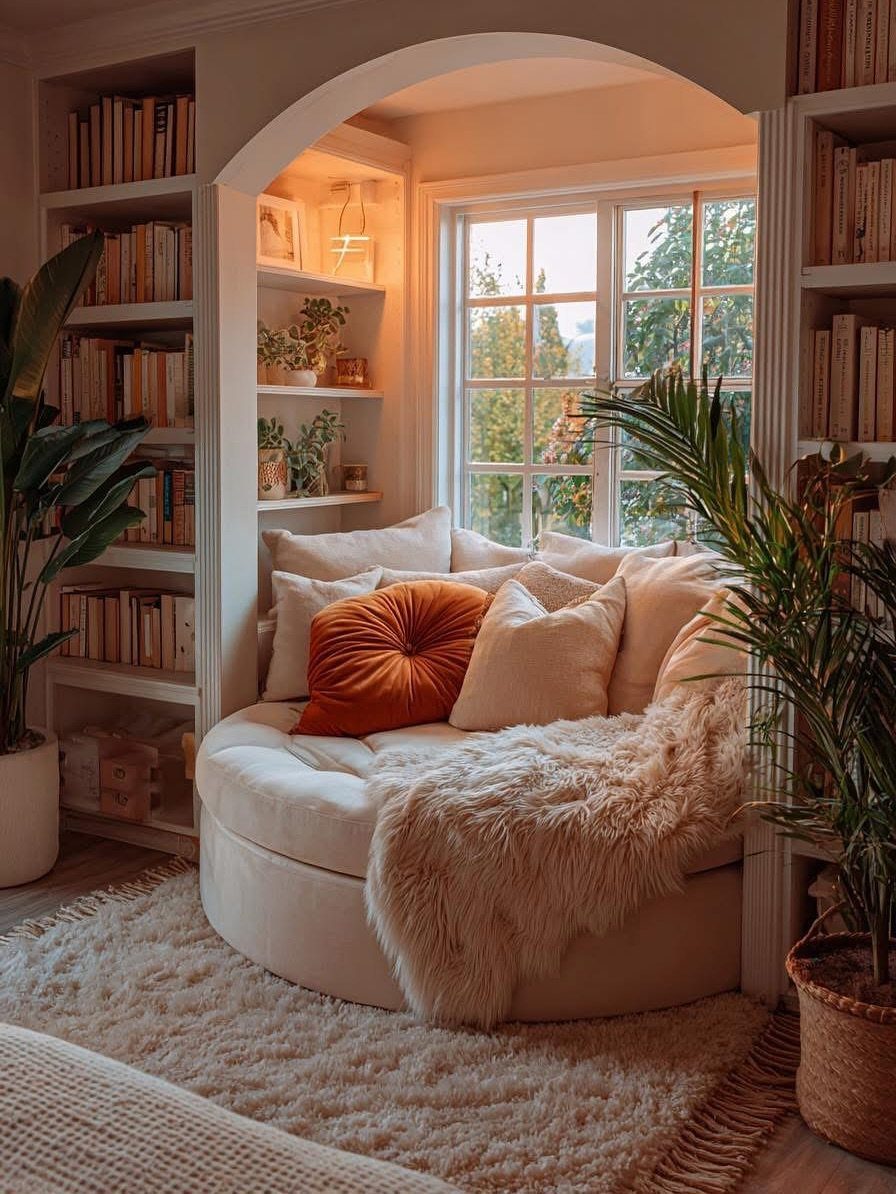
A window seat with shelves on both sides turns a blank corner into a room people actually use. Velvet pillows and a fuzzy throw layered onto a hard built-in make it feel like a nest.
A cushion with enough depth to sit against makes the difference; anything thin feels like a bench, not a seat. Add a reading light on one side, not overhead, so the glow stays warm and directional.
A window seat in a bedroom alcove catches light that shifts through the day.
13. Cozy Throws

A throw that looks thick enough to sleep under does more than sit there; it invites someone to actually use it. Two or three folded over the sofa back works in winter, none of them matching, all of them machine-washable.
Faux fur in a standard throw size covers one person properly without dragging on the floor. The weight matters more than the brand; I pick them up in person when I can, to test that.
For renters, this is damage-free warmth. No nails, no holes, and you carry them to the next place.
14. Natural Textures and Materials
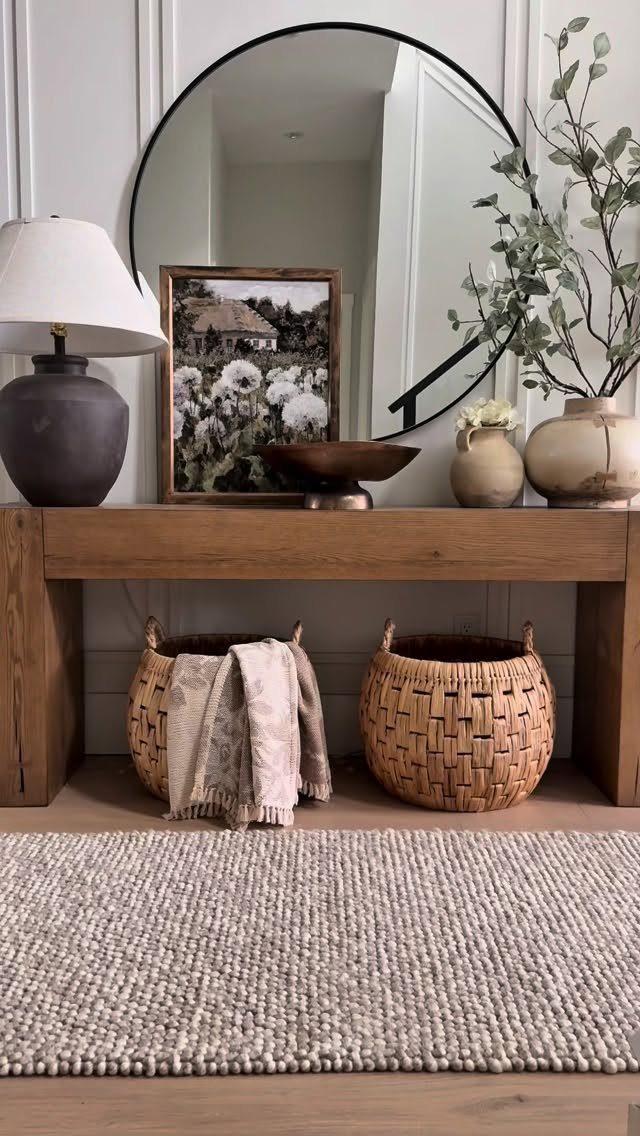
Reclaimed wood, raw linen, cotton duck, woven seagrass: these are the materials that stop a modern farmhouse from feeling like a showroom.
A single oak console from a local salvage yard, water stains still on it, can anchor a room; build outward from that rough surface.
Linen upholstery softens with washing; cotton tightens. I buy linen throws expecting them to look worse before they look right.
A seagrass basket under a table costs little, hides cables or dog toys, and adds the kind of irregular texture that painted drywall cannot fake.
Maintenance is the cost of using real wood and fiber. Raw wood needs oiling; natural fibers stain.
I accept this as part of the character.
15. Mix Vintage and Modern Pieces
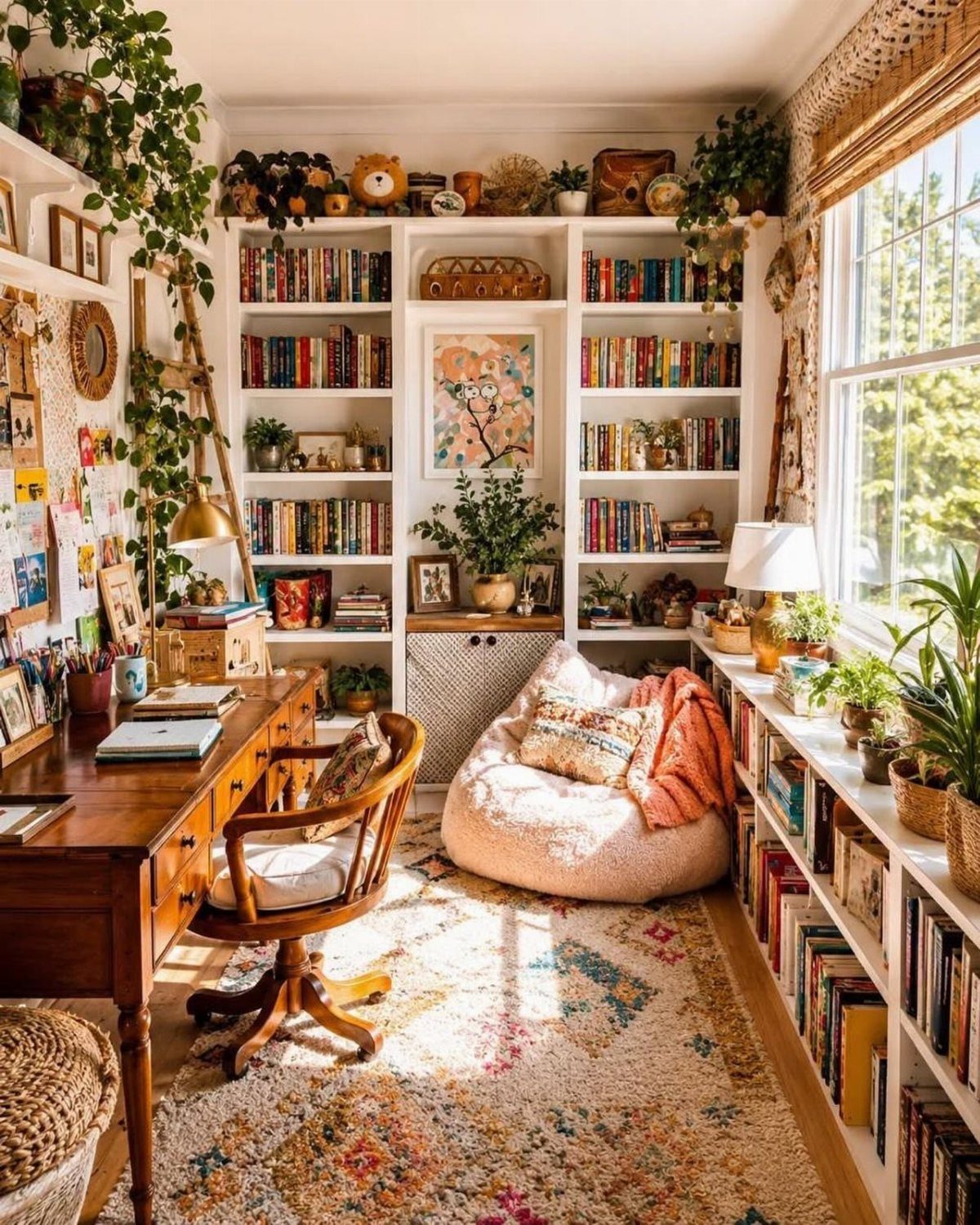
A room where every piece arrived in the same decade feels flat, no matter how expensive.
I like one item with a story I cannot fully know: a desk with drawer pulls worn to brass, a mirror from a medical office, a factory cart that now holds plants.
The vintage piece should be the thing someone asks about.
The modern half needs to earn its place. Clean lines, solid function, nothing pretending to age.
I place the two in conversation across the room, not mixed into the same corner, so the eye travels between eras.
Shipping hurts, so I rent a truck with a friend and make a day of it.
16. Statement Lighting
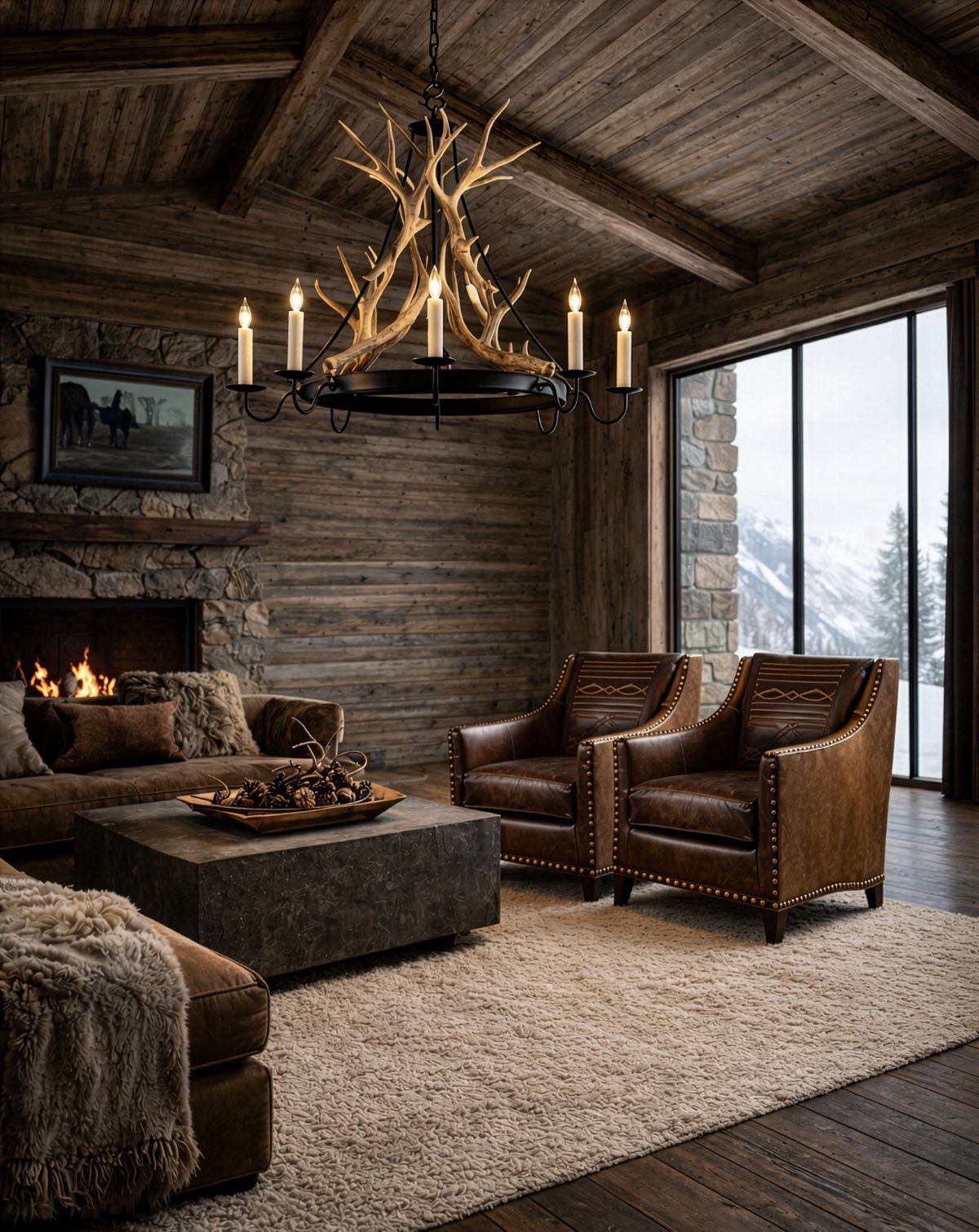
The fixture that fills a farmhouse ceiling does not apologize for its size.
An antler or wagon-wheel chandelier in a living room with standard 8-foot ceilings needs careful hanging; I leave 7 feet of clearance minimum, which often means a smaller diameter than I first wanted.
In a room with exposed beams, the math changes and you can go bigger.
Candle-style bulbs in warm 2700K keep the mood right; daylight LEDs fight the whole idea.
I have paid too little for a decent iron fixture and too much for one that was not noticeably better built, so I shop the structure and the finish, not the label.
Renters: a plug-in swag version exists. A plug-in pendant or swag kit buys time before committing to hardwiring.
17. Shiplap Walls
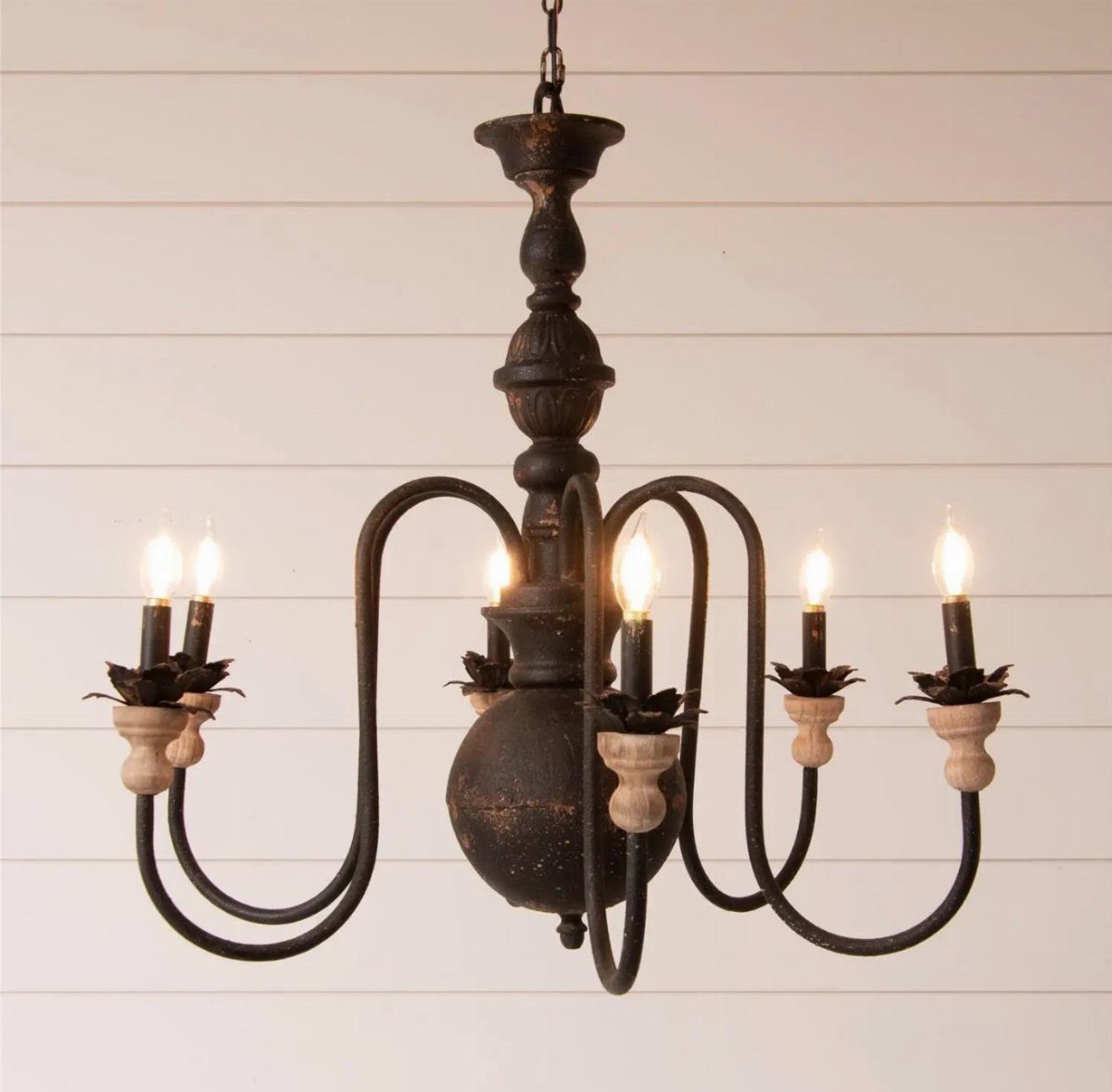
Shiplap is the shadow between boards that gives a wall its rhythm.
Original shiplap, the kind found under old paneling, runs with irregular gaps and nail holes that paint only partly fills; this is the look I prefer, and it costs only labor if you are stripping a wall anyway.
New shiplap from the lumber yard is cleaner, cheaper by the sheet, and reads as siding unless you beat it up a little first.
I distress new boards with a bag of screws dragged across the grain, then stain before painting so the dents show through.
Horizontal is traditional; vertical fools the eye into seeing higher ceilings. I have done both, and vertical reads more modern than farmhouse to me, which is not always wrong.
18. Eclectic Elements
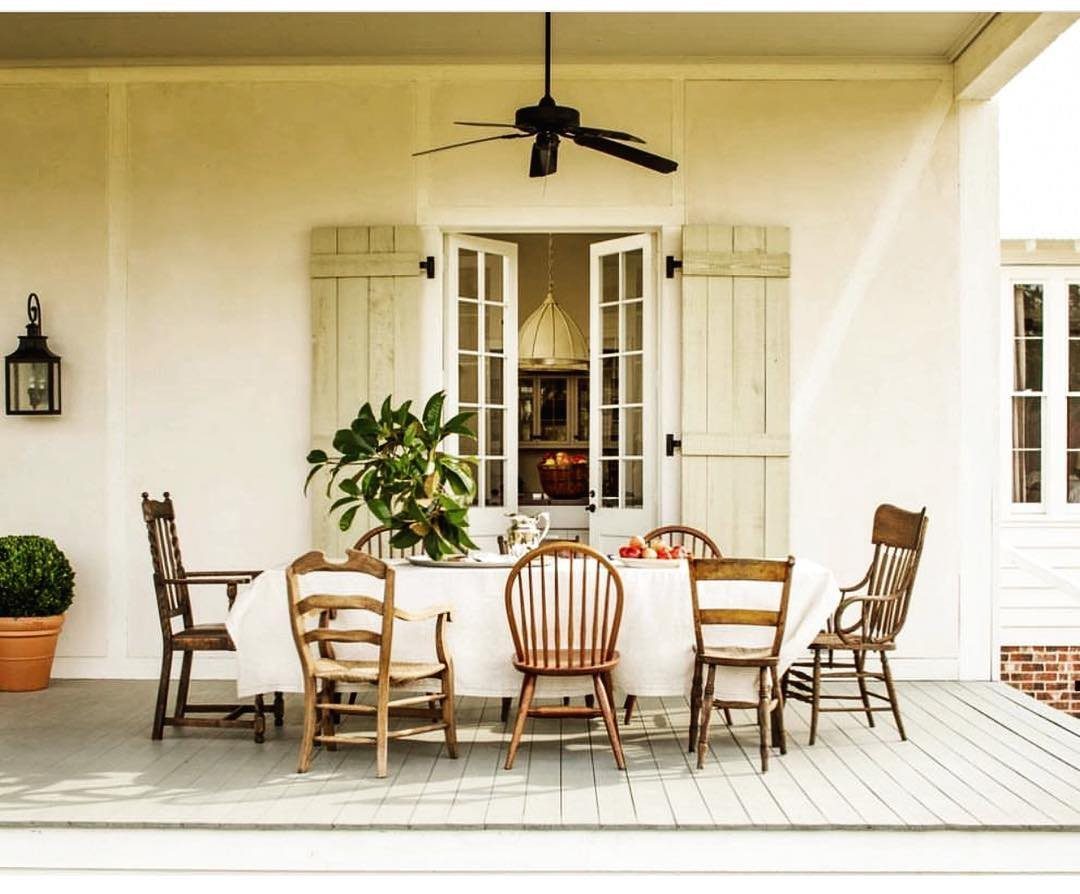
The modern farmhouse formula can tighten into something too predictable; one strange object breaks that grip.
A brass rabbit candlestick that makes no sense with the rest of the room, or a pom-pom pillow in colors I would not otherwise choose, keeps the eye from settling too comfortably.
The rule is: the odd piece must be something you actually like, not bought to be quirky.
Handmade counts. A friend’s thrown bowl, a quilt with one crooked corner, a sign from an actual job your grandfather worked: these carry weight that store-bought narrative cannot match.
I limit myself to three such items per room, enough to notice, not enough to crowd.
19. Window Treatments
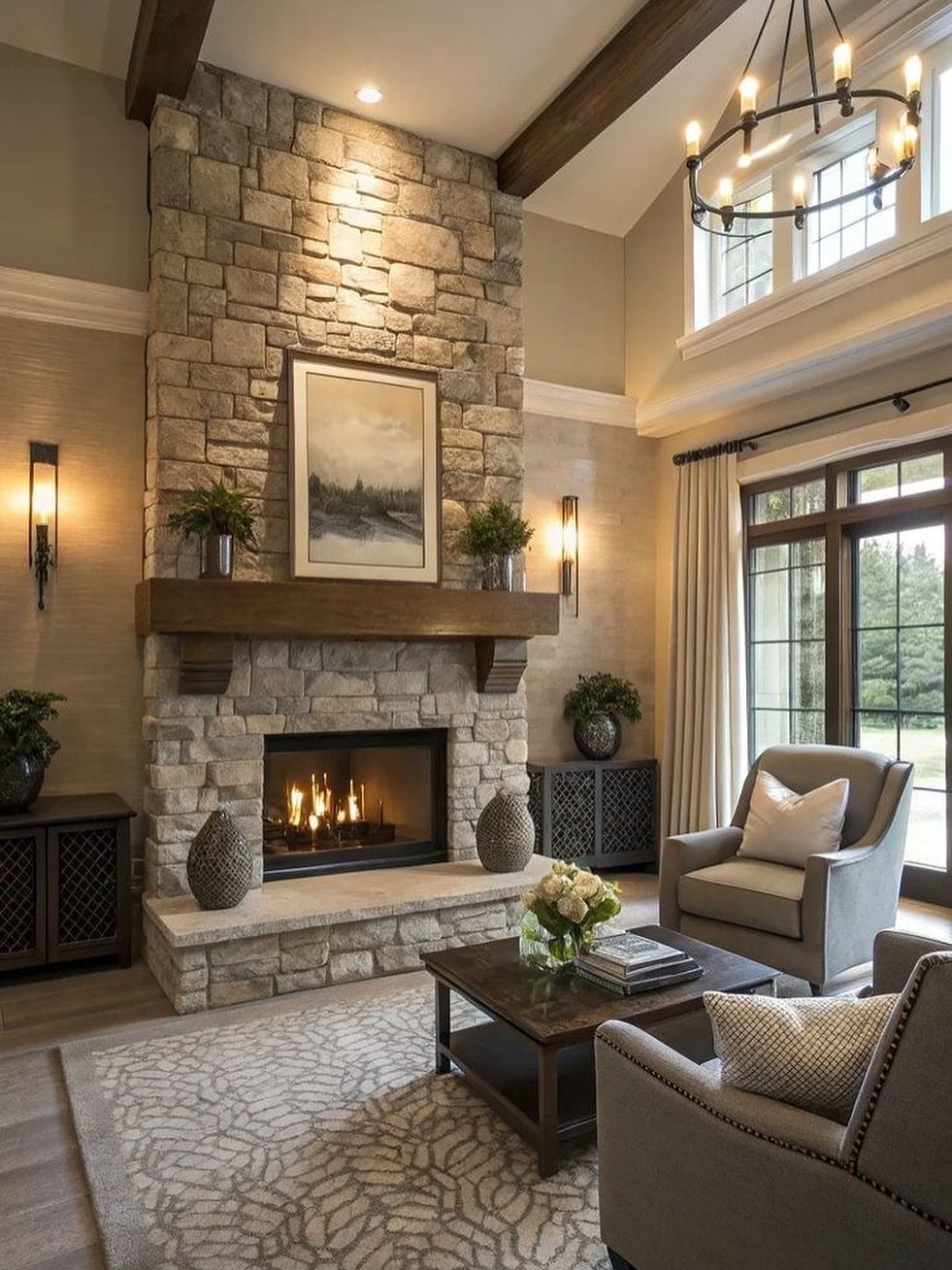
Long beige curtains against glass doors soften the hard lines that modern farmhouse builds in everywhere else. I like bamboo blinds for the same reason; they pick up the warm tone of primitive wood furniture without adding fuss.
Most modern homes skip curtains entirely, but fabric around a window adds coziness you cannot get from bare trim. For a bay window or a sliding door, simple panels in oatmeal or flax work better than pattern.
If the room already runs busy with texture, bare windows with painted trim keep the light moving. Painting the window trim a strong color against white walls frames the view instead of hiding it behind curtains.
20. Accent Walls
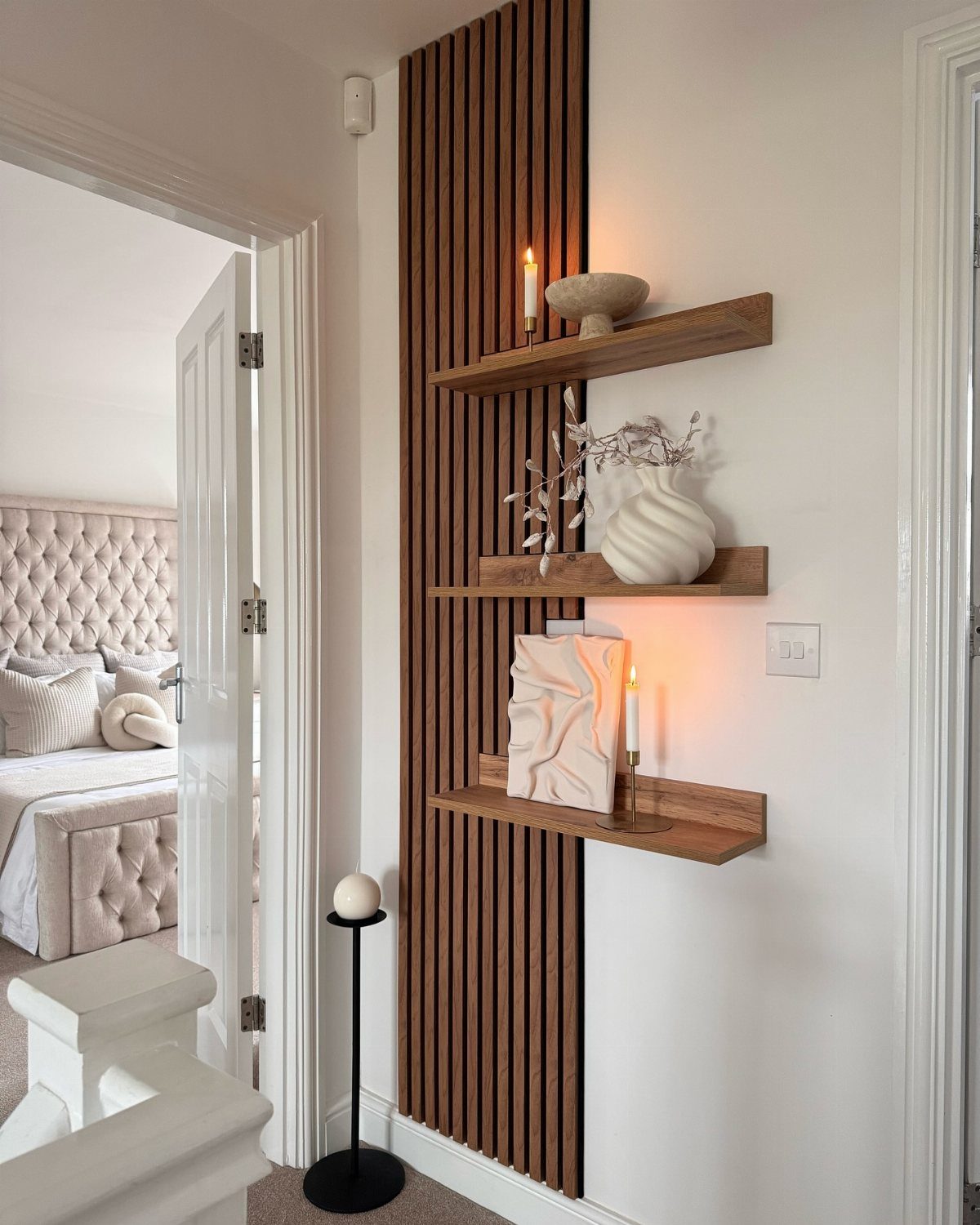
Wooden slat panels with floating shelves turn one wall into storage and shadow play at once. The maker notched their shelves into warm oak InsuSlat panels so the whole unit reads as built-in, not added on.
Paint works too. A single deep green or charcoal wall behind a sofa breaks up neutral runs without the texture commitment.
Wallpaper in a subtle stripe or faded botanical does the same job with more pattern.
The risk is overdoing it. One accent wall per room is usually the limit; two fight each other and the calm that modern farmhouse needs.
21. Sliding Barn Doors
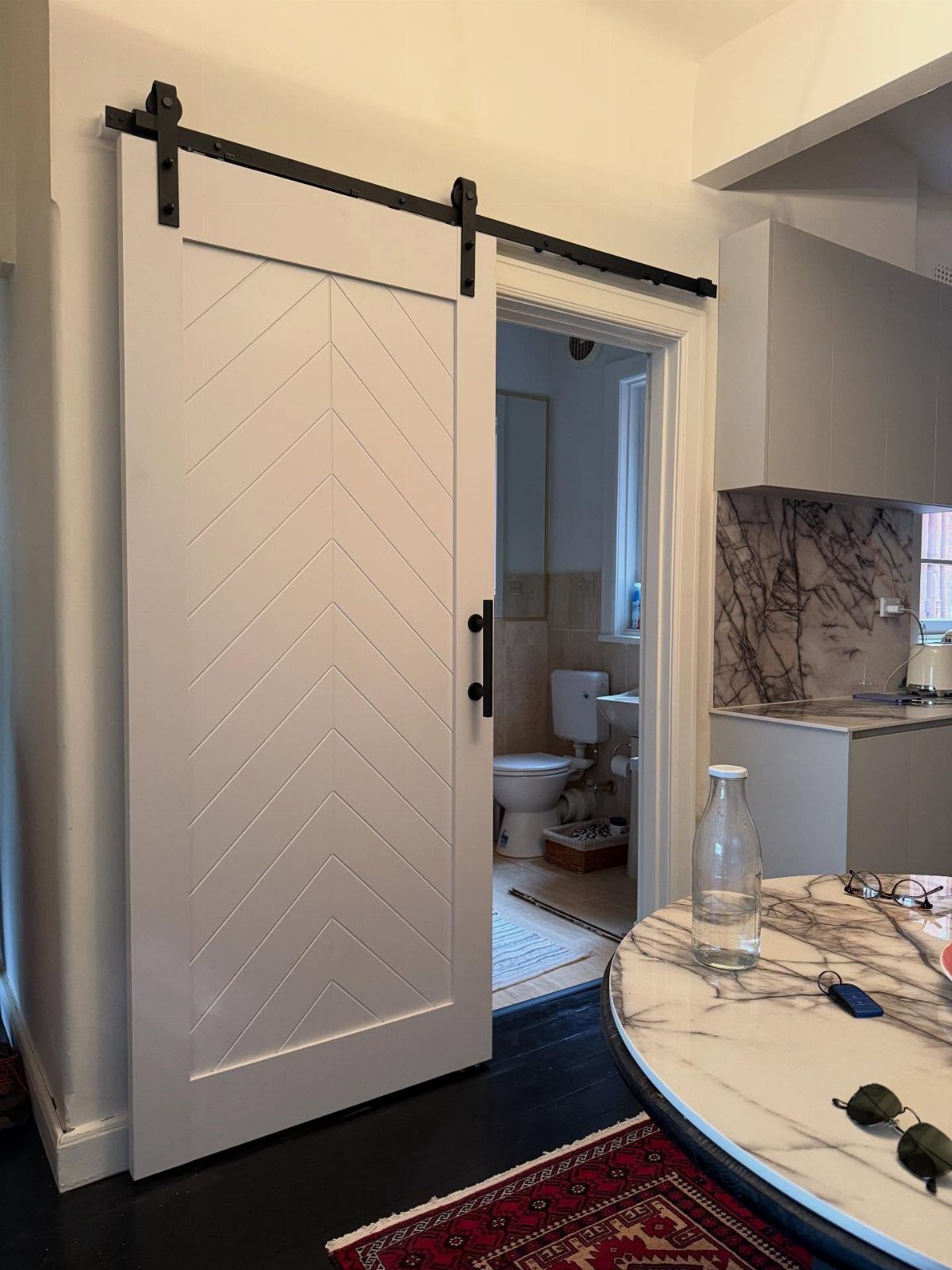
A white barn door on black hardware splits a room when you want privacy, then slides back to open the flow again.
A chevron pattern on the door itself adds just enough geometry to keep the rustic look from going sloppy.
Navy, sage, even terracotta against white walls all work better than the usual raw wood finish. The contrast works because the door stays one flat color, not decorated up.
Metal track hardware is the detail that sells the farmhouse reference; skip the fake-distressed wood and the look goes modern on its own.
For small rooms, the floor space a swinging door needs becomes a shelf or a chair instead.
22. Artwork and Decor
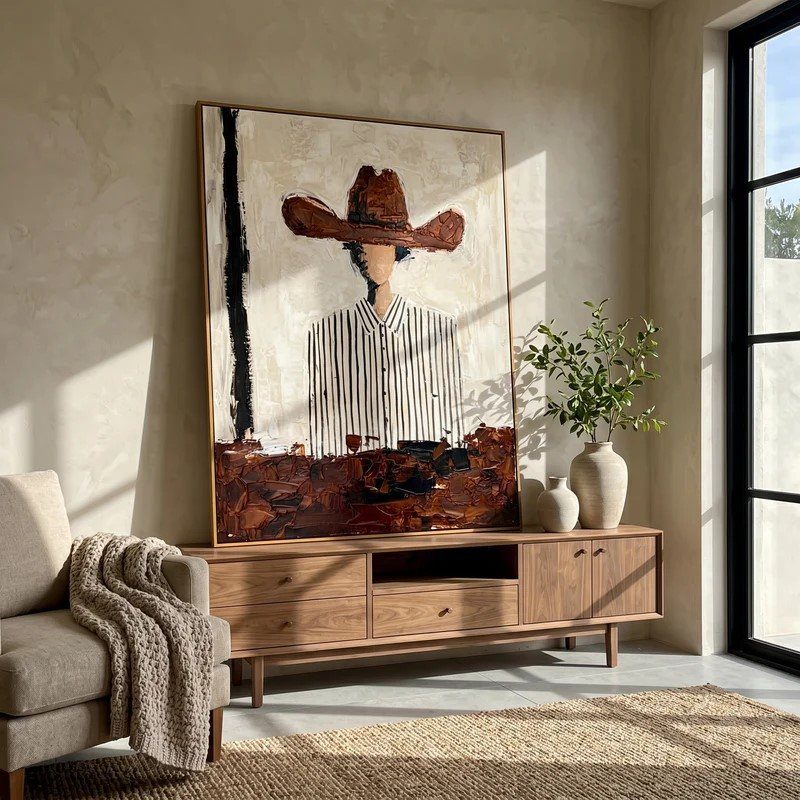
Leaning a single large painting on a sideboard instead of hanging it lets you swap pieces without filling holes. You can swap it seasonally without patching plaster, and the casual placement keeps the room from feeling staged.
The cowboy hat in this piece nods to farmhouse without being literal. I mix abstracts with vintage prints, old signage, or a single framed botanical.
The rule is one style per wall, not per room; an abstract against a shiplap wall works because the textures talk, not because they match.
Frames in raw wood or thin black metal bridge modern and rustic without committing fully to either.
23. Open Floor Plans
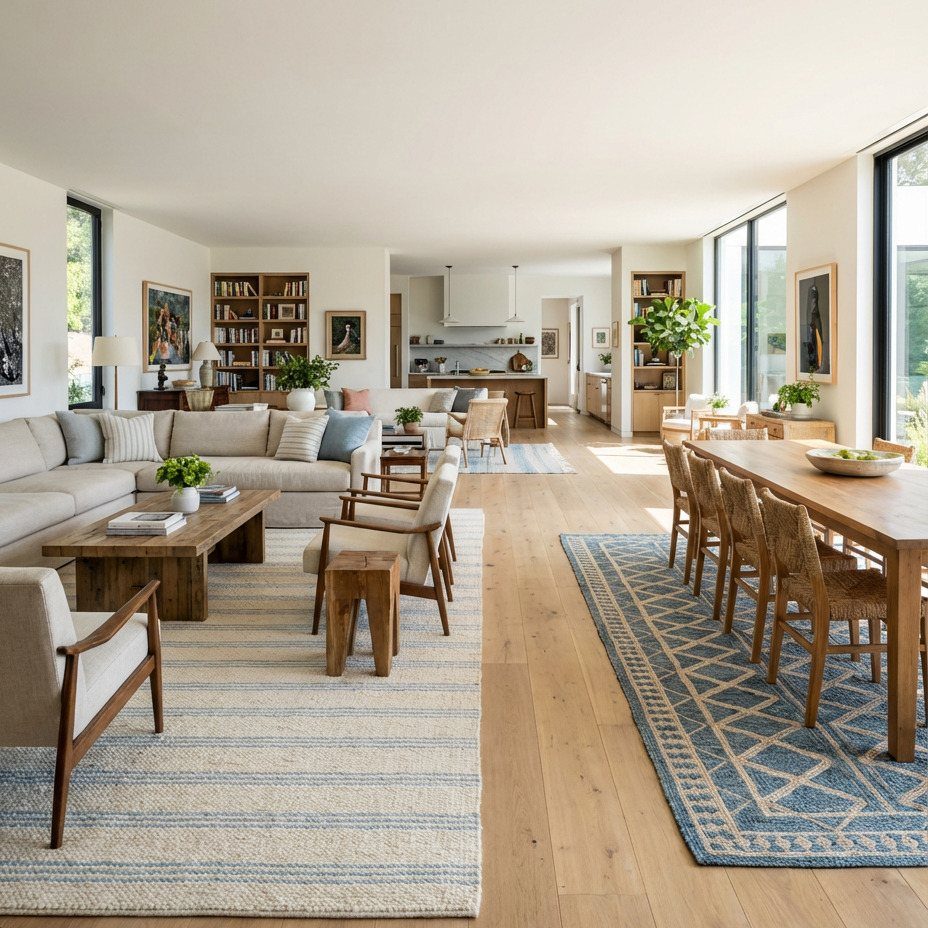
Open plans let a living area breathe into the dining space and kitchen, but the lack of walls means you have to build boundaries yourself.
In an old farmhouse, a barn joined to the house created one soaring space that needed dividing into "rooms" with furniture groupings and a large iron chandelier to drop the ceiling visually.
The same trick works in newer builds: a wicker trunk as coffee table, a banner weather vane on the wall, pieces with history that stop the eye and slow the movement through.
Light wood floors running the full length keep the connection alive even when the zones separate.
24. Functional Coffee Tables
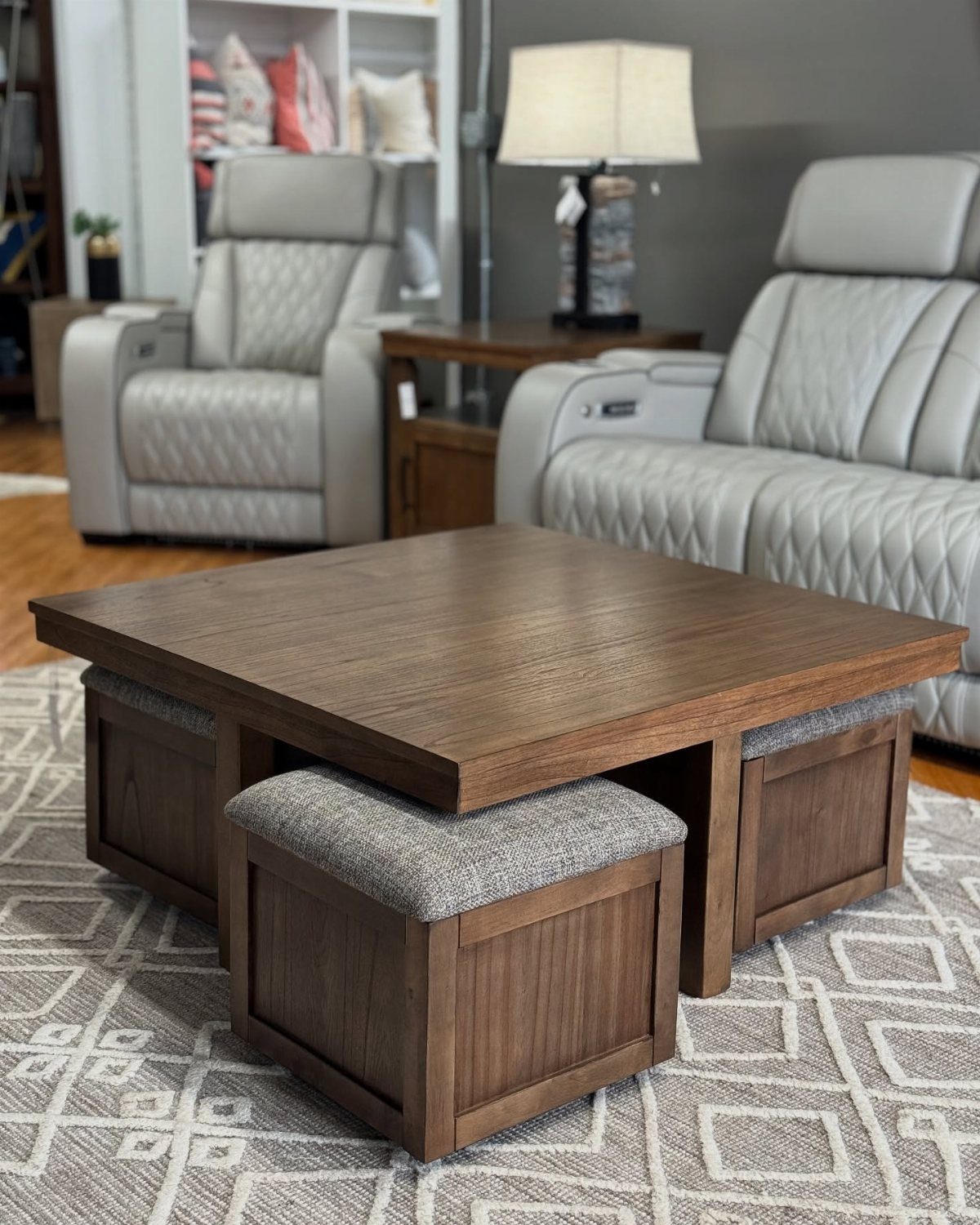
A coffee table with four ottomans tucked underneath stores seating you only pull out when guests arrive.
The rest of the time the surface stays clear for books, drinks, or the dried florals that add life to a farmhouse room without maintenance.
I look for tables with a lower shelf for baskets, or a lift-top that hides laptop clutter. Distressed wood pairs with the beams and the shiplap; a cleaner line in oak or walnut shifts the same shape toward modern.
Lighter materials move easier, but they also shift when you bump them. A solid table that stores well is heavy to move when you vacuum.
Casters solve it, or a lighter frame with a single drawer instead of full enclosure.
25. Warm Lighting
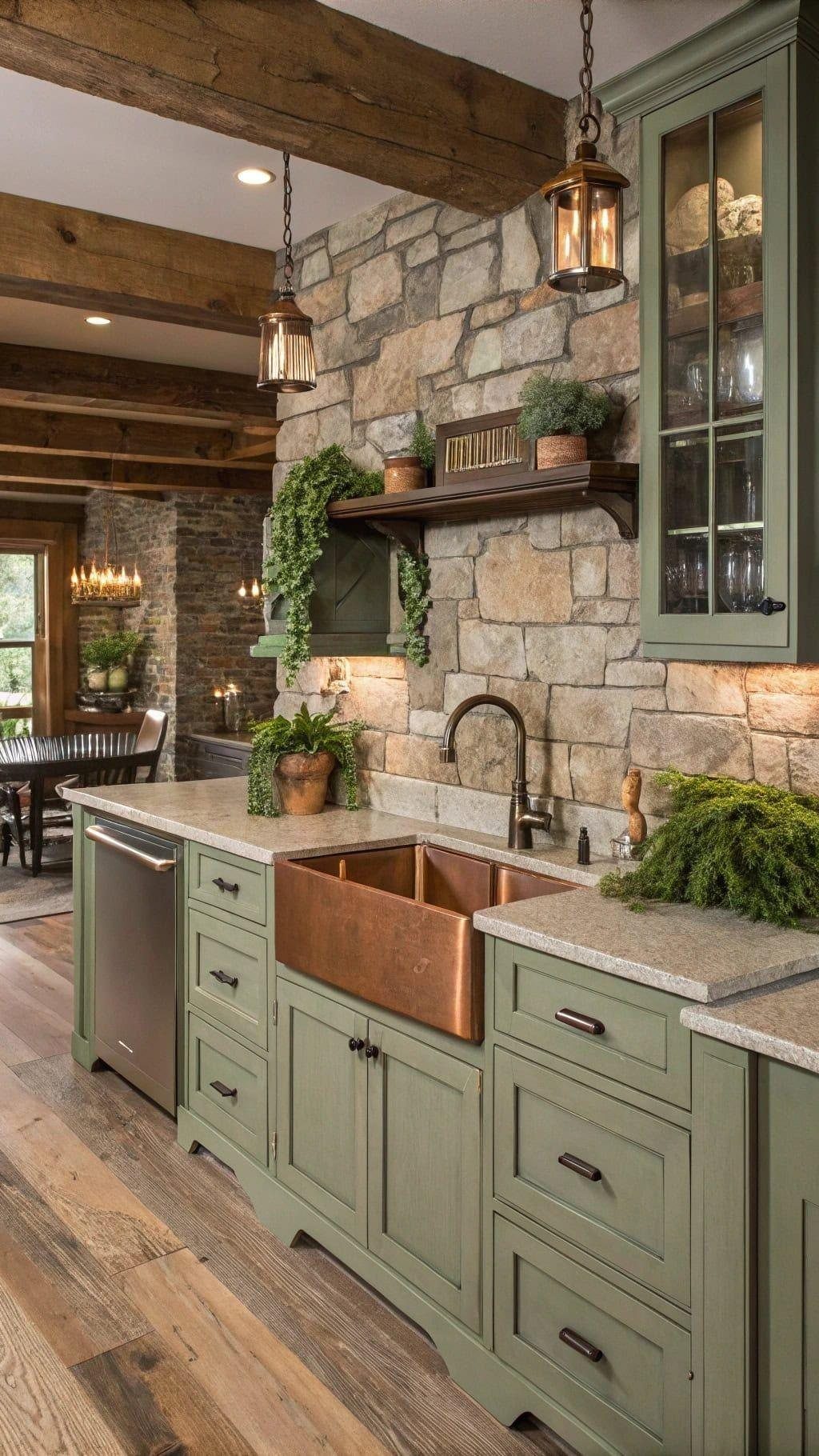
Warm lighting in a modern farmhouse living room comes from the bulbs, not just the fixtures.
Warm white bulbs around 2700K make a room feel livable the same evening you install them, while daylight bulbs at 5000K leave everything looking like a clinic.
For pendants, lanterns with clear glass spread the glow rather than trapping it underneath. Under-cabinet or shelf lighting at 2700K does the same work in a kitchen pass-through or built-in unit.
Dimmer switches let a single fixture run bright for tasks, low for evenings, and the payback comes in utility bills and not needing extra lamps. That flexibility matters more than buying extra lamps.
Skip cool-toned LEDs entirely. They fight every warm neutral and natural wood tone in the style.
Mixing Styles
A modern farmhouse living room doesn’t have to stay in one lane. The look pulls in pieces from other directions easily, and each one needs to complement what is already there.
A sleek, pared-back design keeps the modern side sharp. Pair that with rustic wood or a worn metal finish and the contrast does the work for you.
The result reads as collected, not crowded.
I would start with one piece that feels out of genre, a marble table or a single vintage find, and build around it. If everything nods to the same era, the room goes flat.
Creating Focal Points
Every room needs one place the eye lands first. Without it, furniture floats and the space loses its anchor.
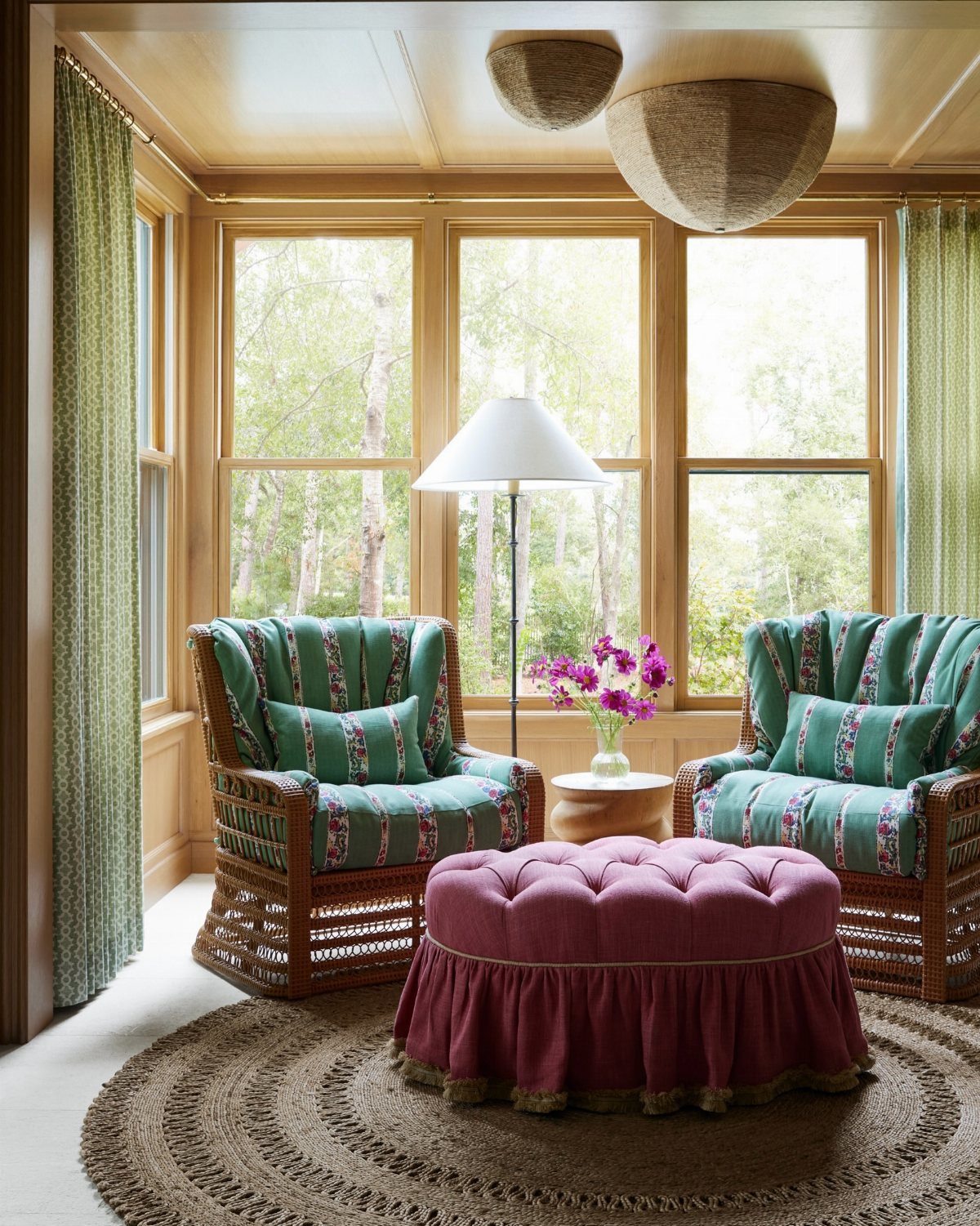
Two armchairs and an ottoman in a floral pattern turn the hearth into a destination, not just a feature.
Lighting can carry the same weight. The fixture became the center of attention without shouting.
I would pick the focal point before buying anything else. A fireplace, a large piece of artwork, or a single dramatic light fixture will settle every decision that follows.
Frequently Asked Questions
What does a modern farmhouse living room look like?
It pairs contemporary comfort with rustic materials that look like they’ll last. The modern half earns its place with clean lines and solid function, nothing pretending to age.
What colors look good in a farmhouse living room?
Soft whites, warm grays, and muted beiges layer together without demanding exact matches. Color works best as punctuation, not paragraph: a pink sofa against neutral walls, or green tones in one abstract painting above the sofa.
Is modern farmhouse still in style in 2026?
The style has tightened into something predictable enough that one strange object now serves a real purpose. That evolution suggests the look is still alive but needs personal weight to avoid showroom flatness.
What trend is replacing modern farmhouses?
The direction runs toward rooms where the formula has tightened into predictability; one handmade or genuinely odd piece breaks the grip.
The modern farmhouse that survives seems to be the one that absorbs these personal layers rather than staying pure to the look.