
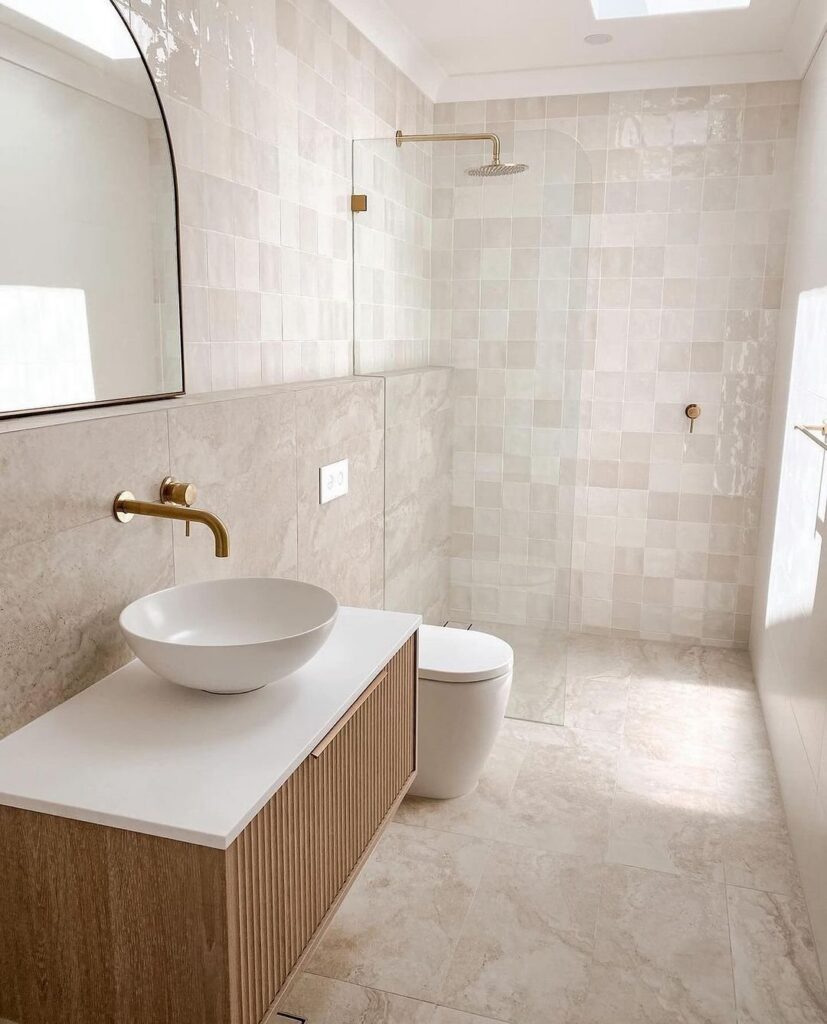
These ideas run from a $250 flat-pack vanity swap to microcement walls that need skilled labor and days out of use, so the deciding factor is how much of your bathroom you can take offline.
Patterned vinyl tile laid over existing flooring needs no demolition; a freestanding tub may need a crane through the window if you choose the 350-pound cast-iron model.
1. Layer Textured Tiles and Materials
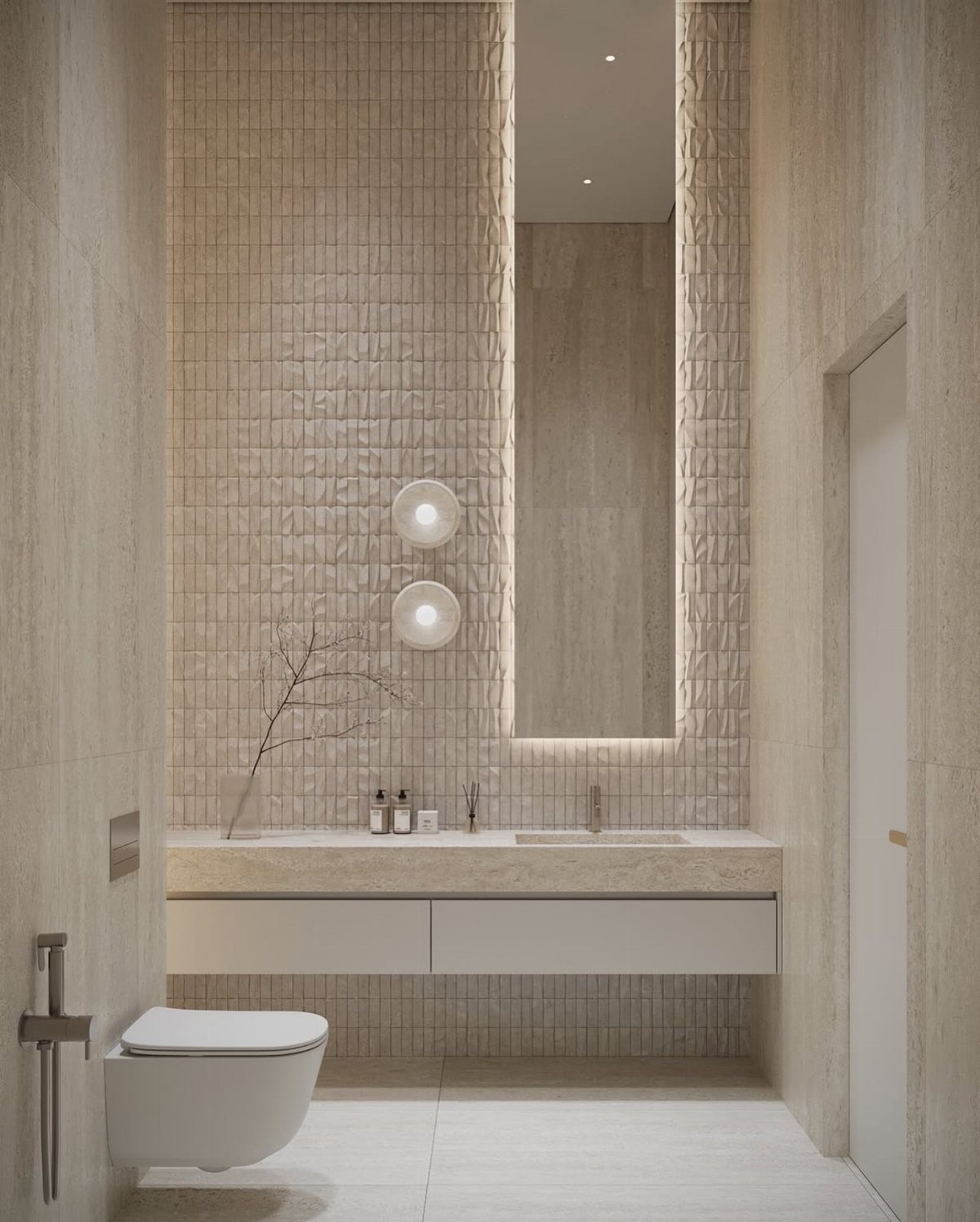
A bathroom with only smooth surfaces reads cold no matter what color you paint it. I like pairing them with marble countertops and warm wood cabinetry; the combination stays clean but gives your hand something to notice.
Pearlescent finishes catch the light differently than flat paint, so they work well in bathrooms that rely on overhead fixtures. If your budget runs tight, focus the tile on one wall behind the vanity rather than wrapping the whole room.
2. Warm Neutral Color Palette
The biggest mistake with neutrals is picking ones that run too cool. Bright white suites against gray tile can turn a bathroom sterile fast, which is the opposite of warm.
I stick to taupe, clay, and soft whites with yellow or pink undertones; they read cozy under artificial light and still feel clean.
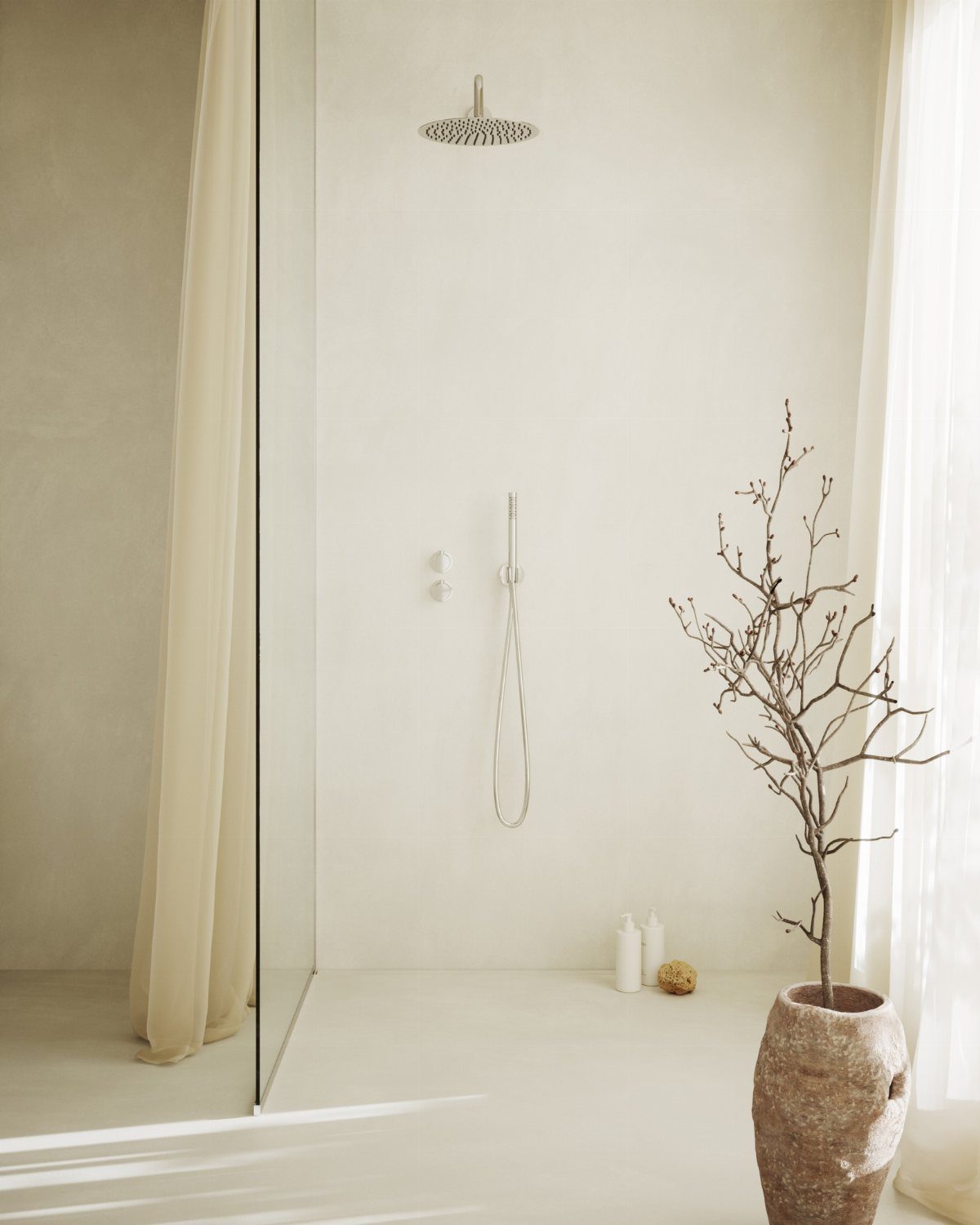
The plaster walls and floor in this shower lean cream rather than stark white, and that small shift changes the whole mood.
If you are testing paint, buy three sample pots and look at them at night under your actual bulbs. The one that looks warm at 9 p.m. is the one to trust.
3. Patterned Tiles
Patterned floor tiles do the heavy lifting in a neutral bathroom because they add personality without forcing you to commit to a wall color.
Geometric or floral patterns break up the monotony of large plain surfaces, and they hide water spots better than solid pale stone.
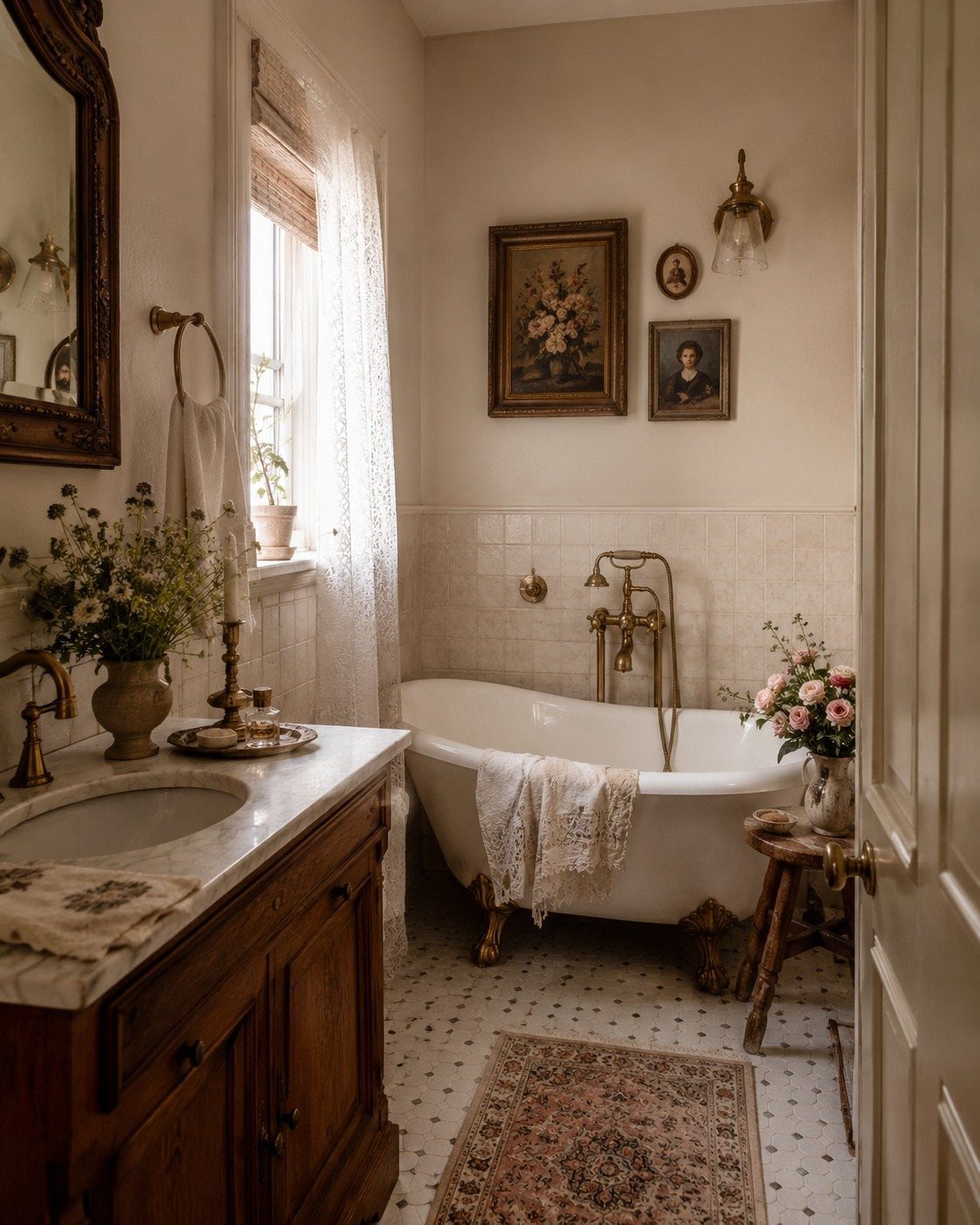
This vintage-style setup uses patterned tiles as the single busy element against a white tub and simple vanity, which keeps the room from feeling cluttered. Glass shower dividers help light move through so the pattern does not darken the space.
Swapping in patterned vinyl tile over existing flooring takes a weekend, needs no demolition, and costs far less than ripping anything out.
4. Accent Walls
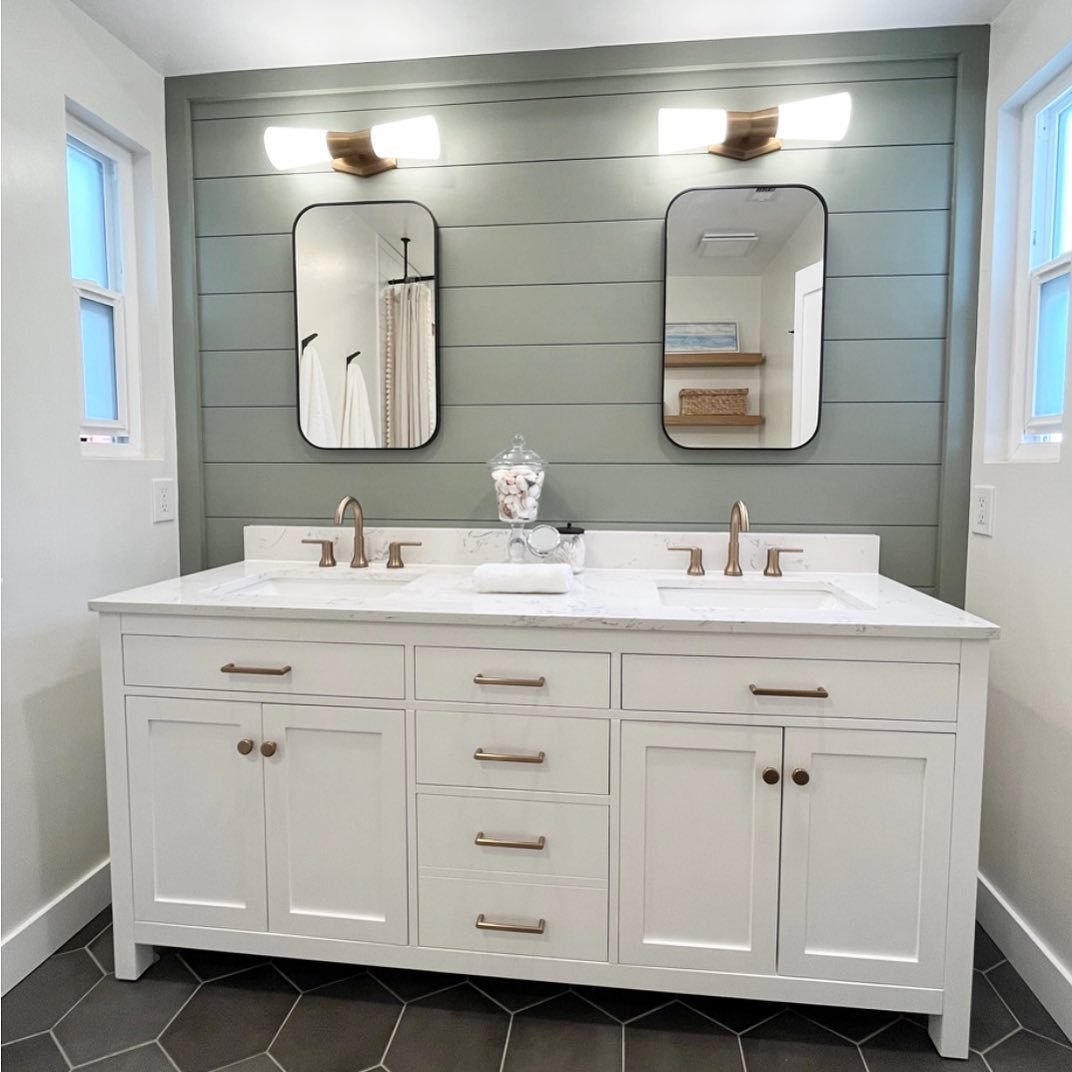
One painted wall changes a bathroom faster than replacing any fixture. I prefer warm shades with some gray in them, like olive or clay, because pure bright colors fight the neutral palette around them.
Natural wood elements against that painted wall pick up extra warmth, and the contrast feels intentional rather than accidental.
If your bathroom is small, keep the accent wall to the one you face on entry; wrapping all four sides shrinks the space visually.
5. Contemporary Neutral Bathroom
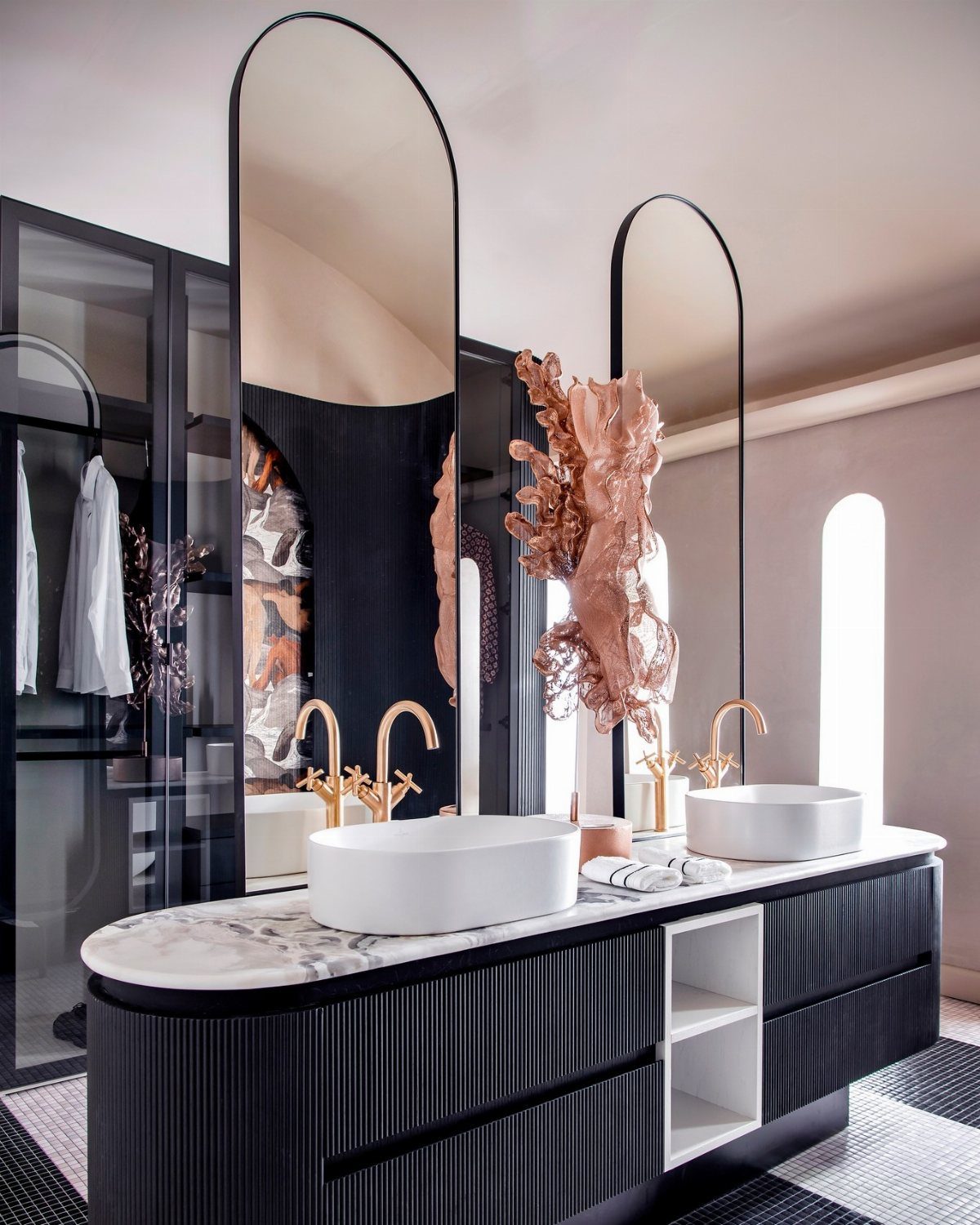
Terrazzo underfoot brings energy that plain tile cannot match, and warm wood cabinetry grounds it so the room does not feel like a diner floor.
The ribbed vanity and sculptural mirrors here layer in just enough drama without turning the bathroom into a showroom. I would keep the walls quiet when the floor is busy; let one element carry the personality.
For renters or anyone watching costs, terrazzo-look porcelain costs less than poured terrazzo and installs like standard tile. Choose chips in warm neutrals, cream and tan and soft gray, rather than bold primary colors.
6. Accessories to Add Warmth
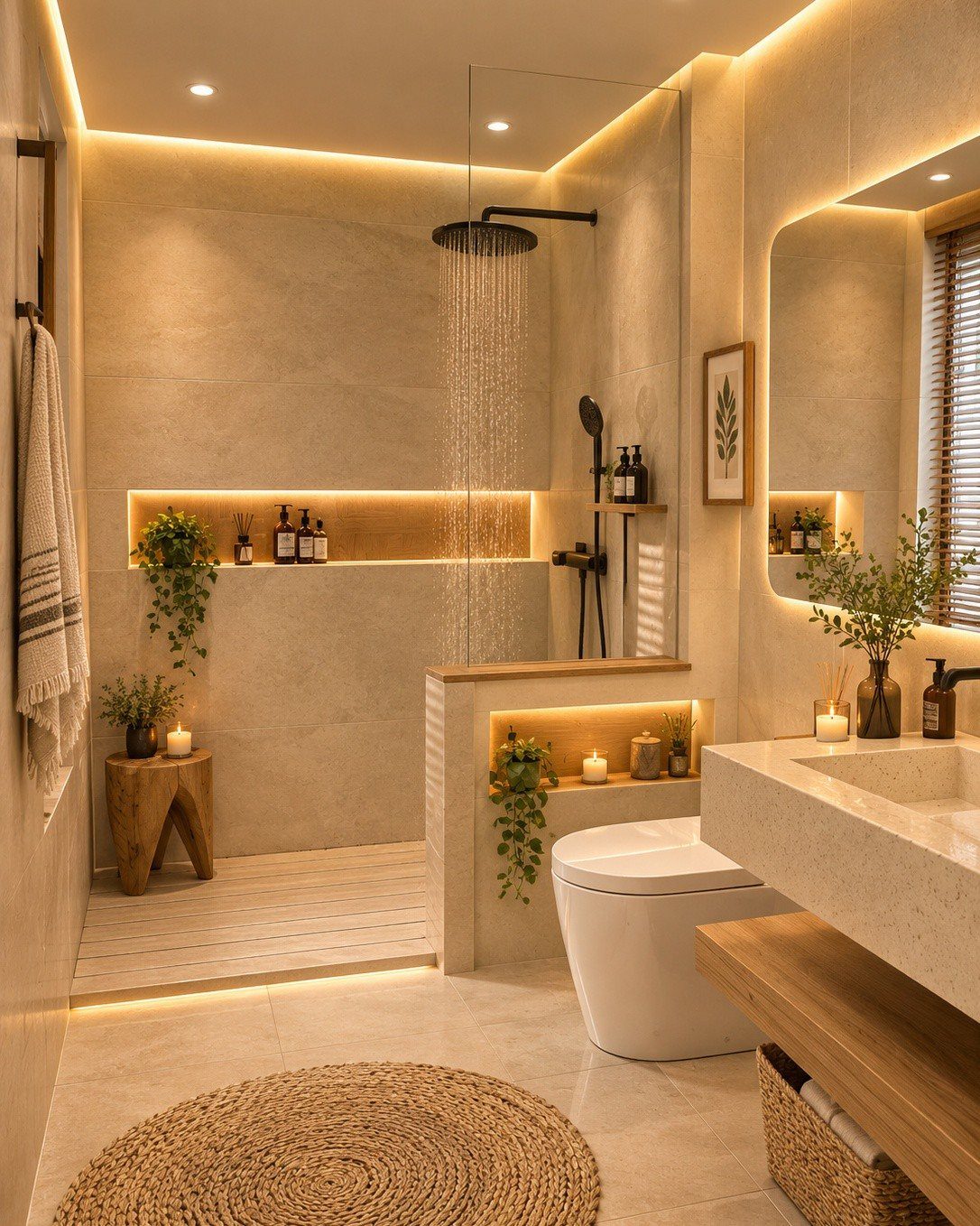
Towels and bowls do more work than people expect in a neutral bathroom. Swapping cool white linens for thick cotton or bamboo in terracotta or warm beige shifts the whole room toward cozy without touching a wall.
Handmade pottery in varying sizes, collected from different ceramic artists, adds texture that factory pieces miss. A turned wood bowl by the sink holds nothing but looks right just sitting there.
This setup also tucks small plants onto built-in shelves; ferns and peace lilies handle humidity well if your bathroom gets any natural light. The whole update stays cheap if you hunt secondhand shops for the ceramics.
7. Natural Light
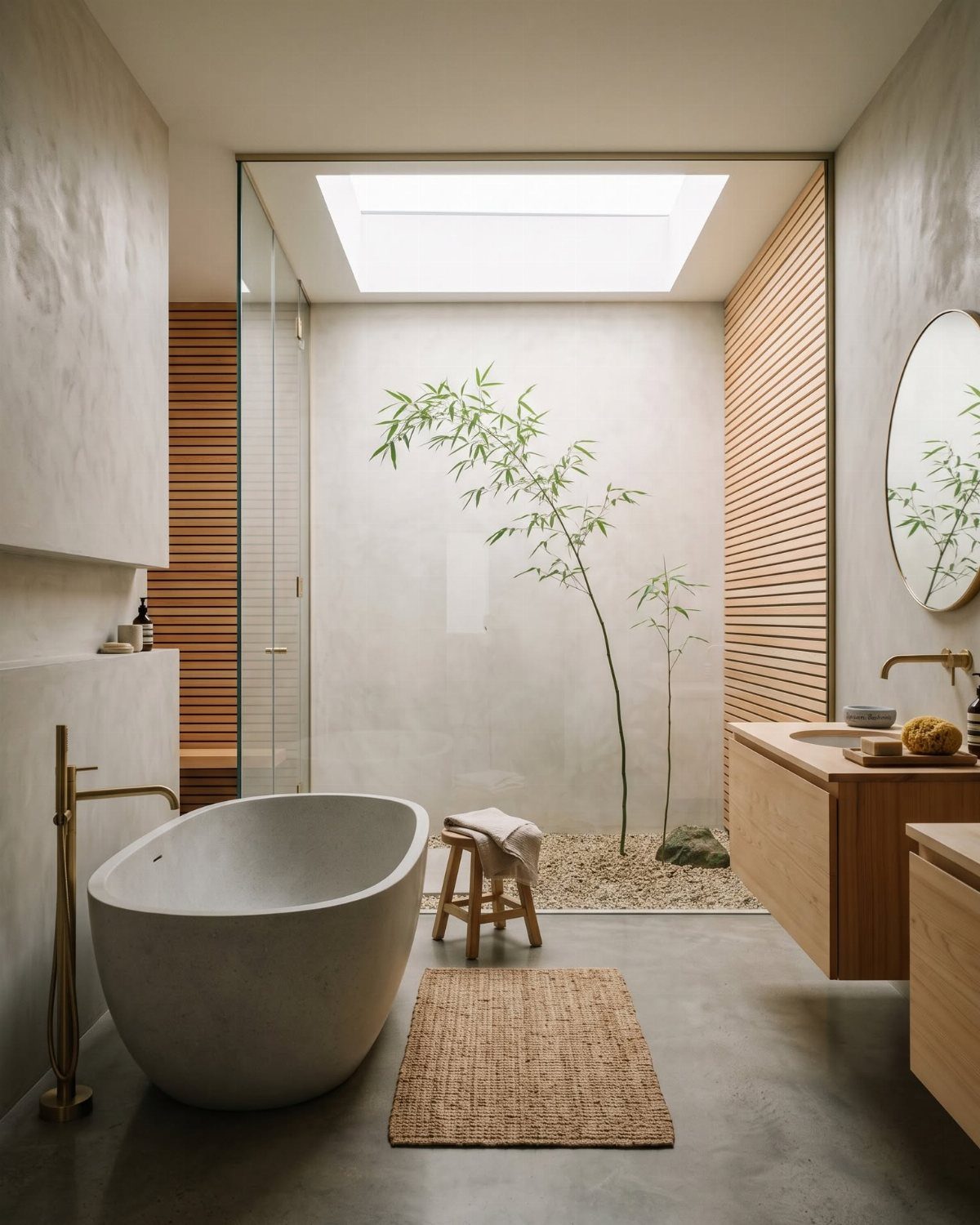
A skylight over a stone tub turns morning light into the room’s main feature. In a small bathroom, that overhead source does more than any fixture to open up the space.
Wall-hung furniture helps what light you have bounce around. Light warm tones on the walls do the same work in a terrace-sized room, where every reflected inch matters.
If you are adding a window, place it where the sun hits the tub or the vanity, not just the floor. A thin bamboo under glass needs no maintenance and softens the edge of all that concrete.
This suits bathrooms that feel boxed in. Privacy takes a hit with clear glass; frosted panes or a high placement fix that without losing the glow.
8. Spa-like Features
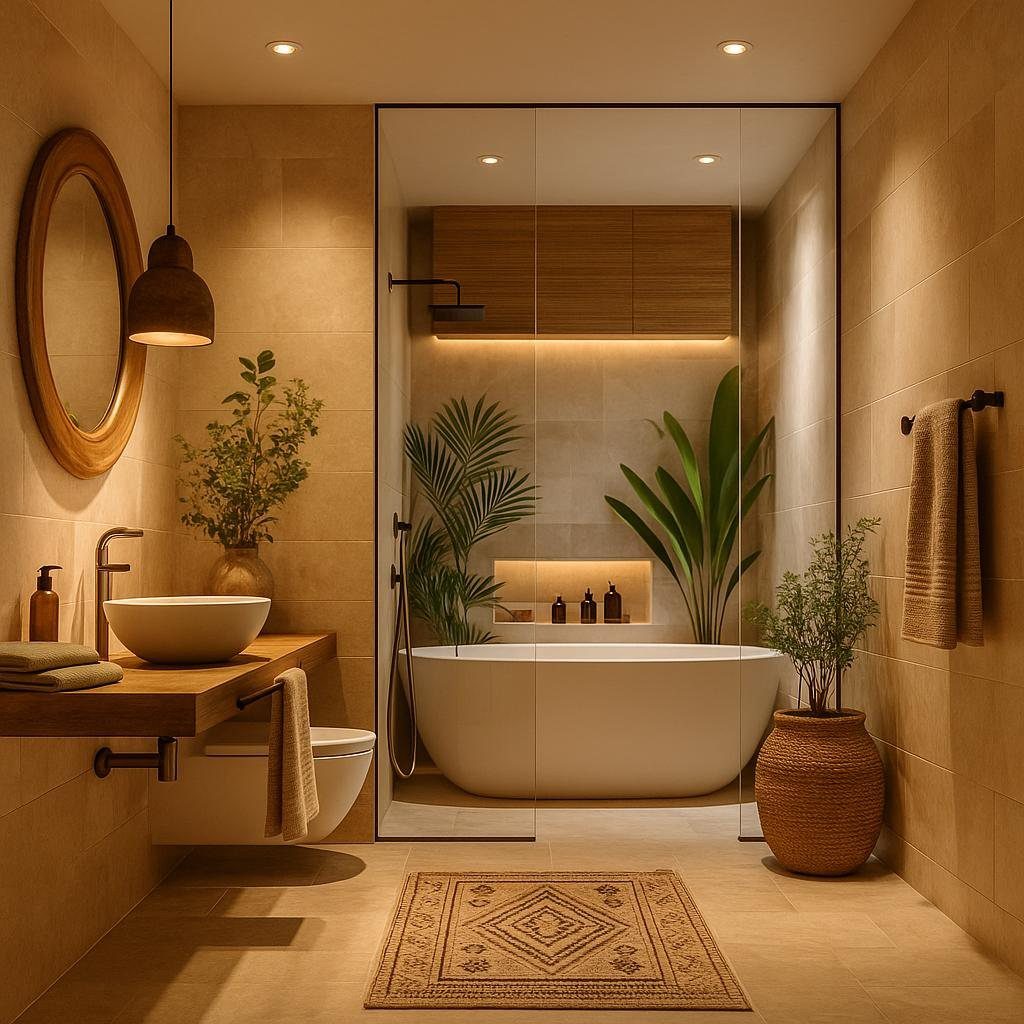
The spa feel comes from having everything within reach and nothing harsh in sight.
Soft textiles help: a stack of warm-toned towels, a bath mat with some weight to it. Natural materials on every surface, from the vanity to the plants, keep the room from feeling clinical.
Running the same large-format beige tile from wall to floor wraps the space without a break. That continuity is what reads as calm.
This works best when you have the square footage to spare. In a tight bathroom, pick one element, the tub or the wood, and let it carry the mood.
9. Warm Wood Accents
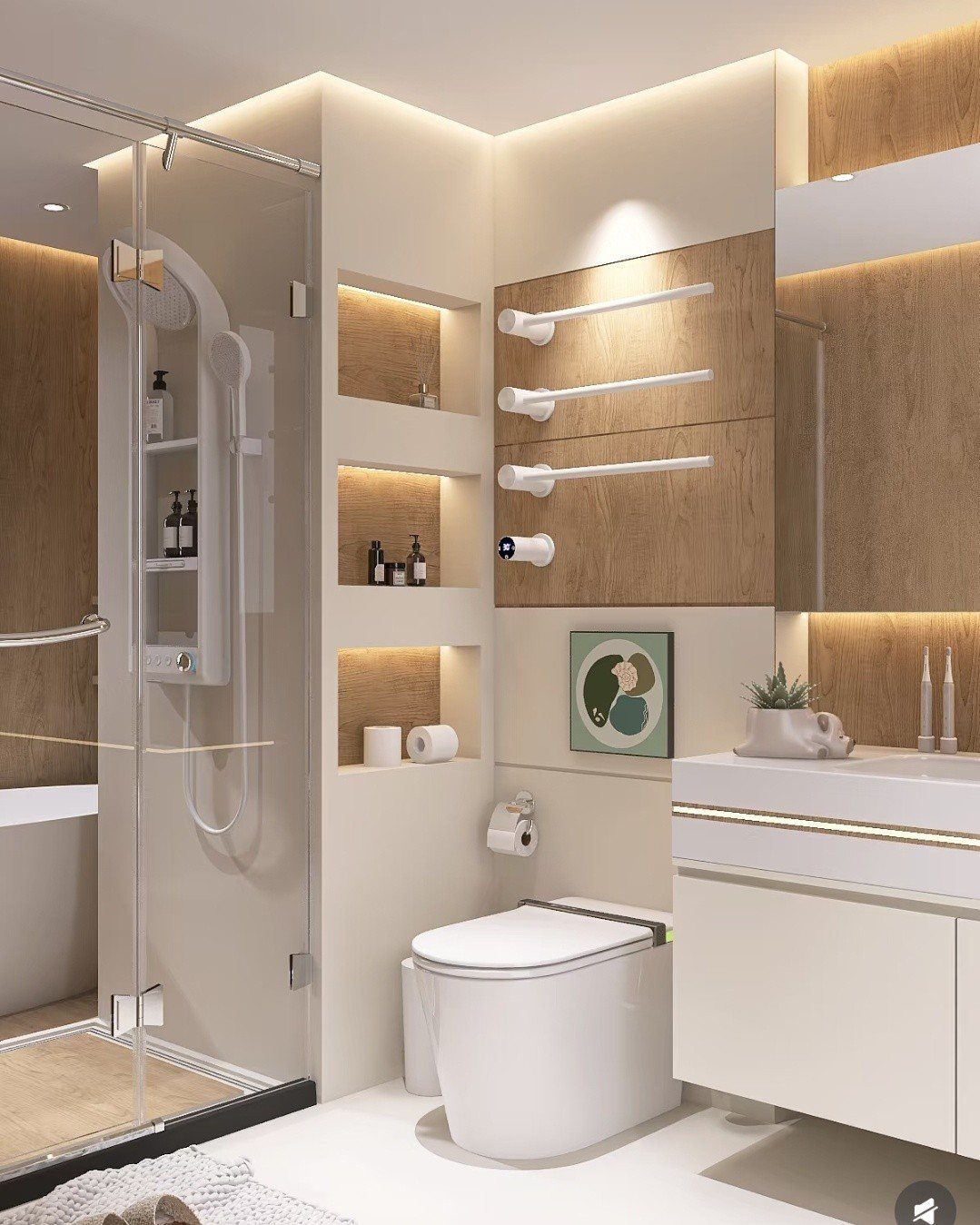
Wood behind the shower, in vertical panels, adds texture that paint or tile cannot match. Illuminated niches set into the same plane prove that wood and modern lighting live together fine.
Real wood in a bathroom needs sealing at every edge and cutout, and the room needs ventilation that works. Most people choose moisture-resistant MDF with a veneer, or a porcelain that reads like wood without the worry.
A flat-pack vanity runs about £250; bespoke joinery climbs past £1,500. Cheap MDF swells fast if the sealing is skipped, while a quality unit, installed right, holds up for years.
Darker wood and dimmer light go intimate rather than airy. That is the version for evening baths and smaller windows.
10. Elegant Fixtures
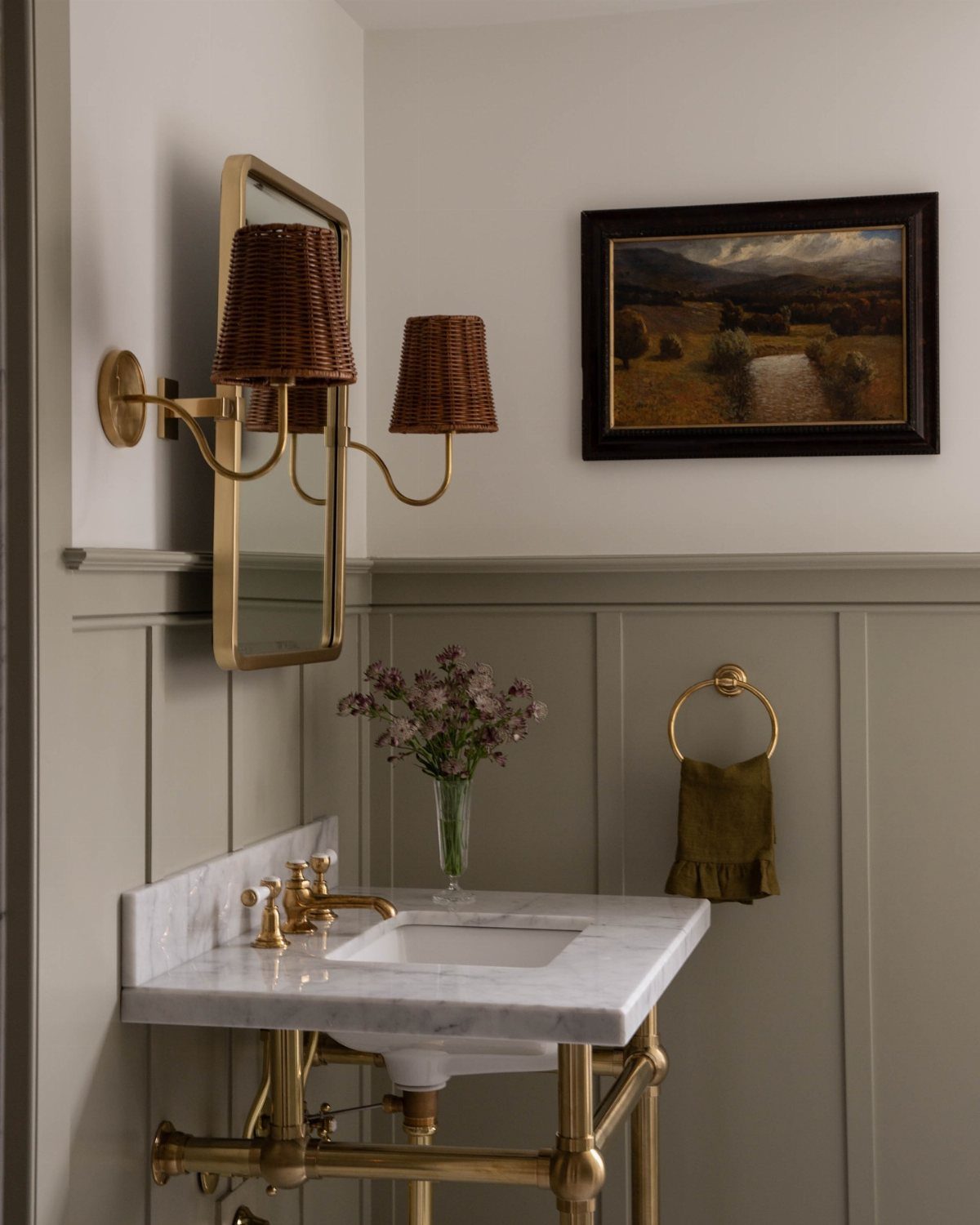
Gold-toned legs on a marble sink, with matching mirror frame and sconce shades, pull a neutral room toward warmth without adding color. The fixtures do the work.
In a cream-walled room with gray floors, this metal choice reads as elegance rather than flash. One gold piece looks accidental; three look intentional.
Wicker shades soften the metal’s shine and keep the room from feeling too finished.
Select faucets and lighting that share a finish, then let that finish appear at least twice more in the room.
This suits renters who can swap hardware and lighting but not tile. The cost is in the fixtures themselves; there is no structural work.
11. Microcement and Plaster Finishes
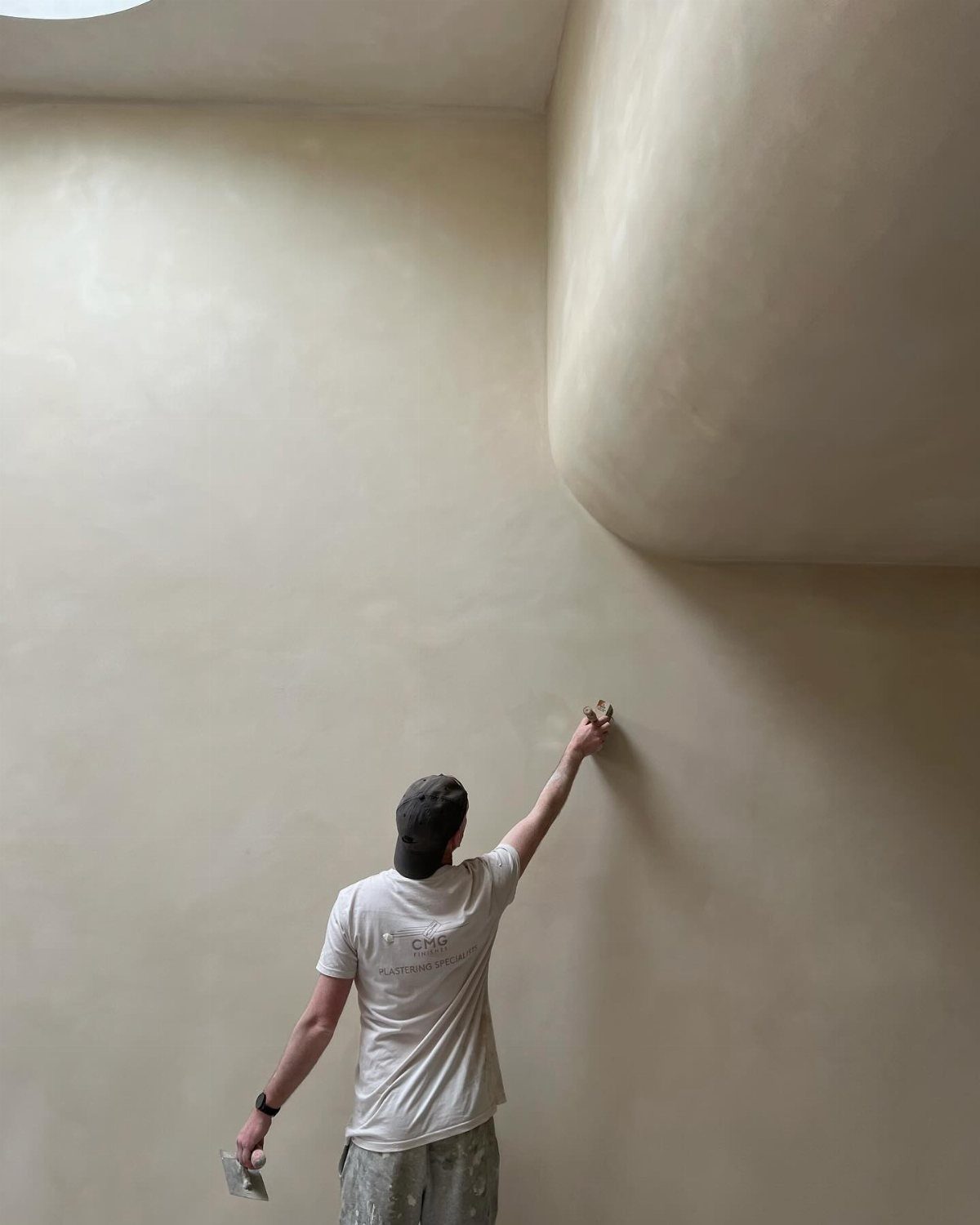
Microcement gives walls and floors one continuous skin, no grout lines to break the surface. A curved wall troweled by hand builds that smoothness layer by layer.
Poor application cracks or lets water in. Done right, it lasts 10 to 15 years before resealing.
Plaster finishes carry the same look with a softer, more hand-worked texture. Either choice works best in a bath where the architecture itself is simple; the surface becomes the detail.
This is not a weekend project. Budget for skilled labor, and expect the room to be out of use for longer than a tile job.
12. Layered Lighting
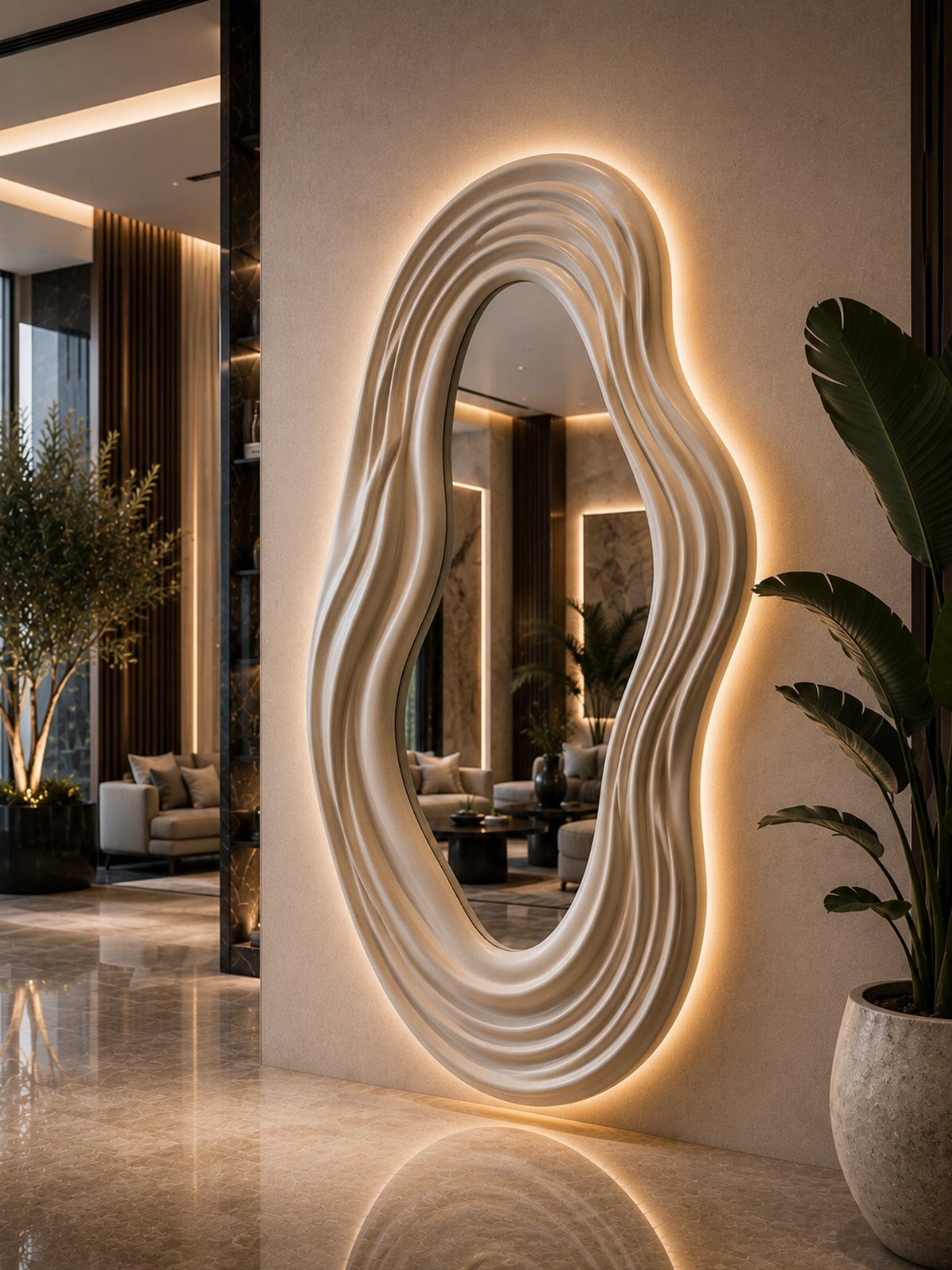
A mirror with its own backlight is one layer in a system of three. Ambient light from the ceiling gets you in the room.
Task light at the mirror lets you work. Accent light, in niches or under vanities, sets the mood after dark.
A row of globe lights across a mirror, bouncing evenly, turns a compact layout into something that feels considered.
LED strips in niches or under a floating vanity add the last layer without visible fixtures. The cost is in the wiring, not the strips themselves; plan it during any electrical work, not after.
This suits anyone who uses the bathroom at different hours. That adds complexity at the switch plate.
13. Vintage Accents
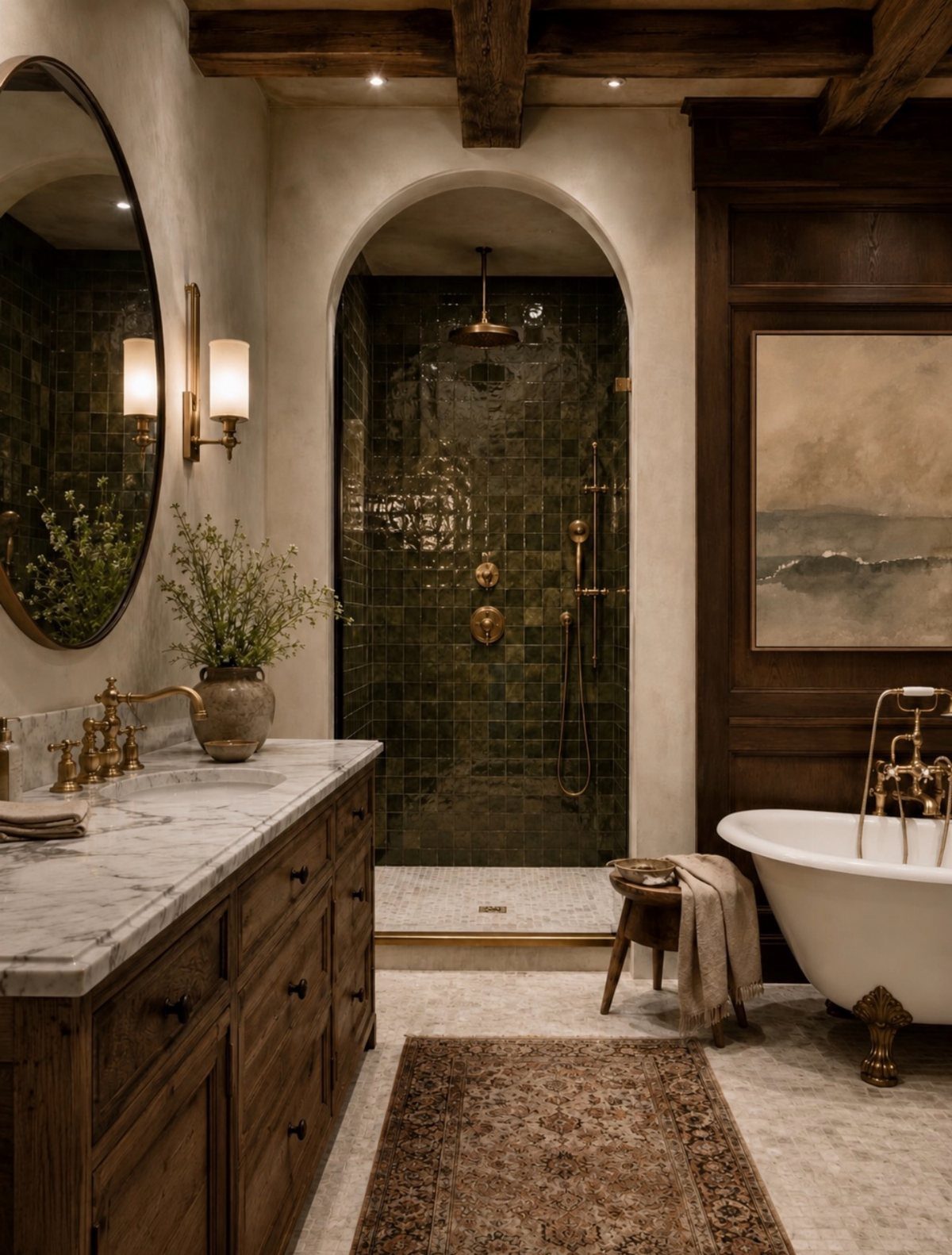
A clawfoot tub or a pair of vintage sconces turns a neutral bathroom into something with memory. Aged brass fixtures carry more visual weight than chrome, and the metal reads warmer as it darkens.
I would hunt salvage yards for a cast-iron tub with original feet, or source a reproduction if the floor loading worries you.
Vintage lighting works anywhere: a brass schoolhouse pendant over the vanity, or a pair of aged sconces flanking the mirror. Unlacquered brass darkens over time and needs occasional polishing, which I prefer but some find tedious.
Skip this if your bathroom runs small; a clawfoot needs clearance on all sides and can swallow 40 inches where a built-in would take 30.
14. Candlelight Ambiance
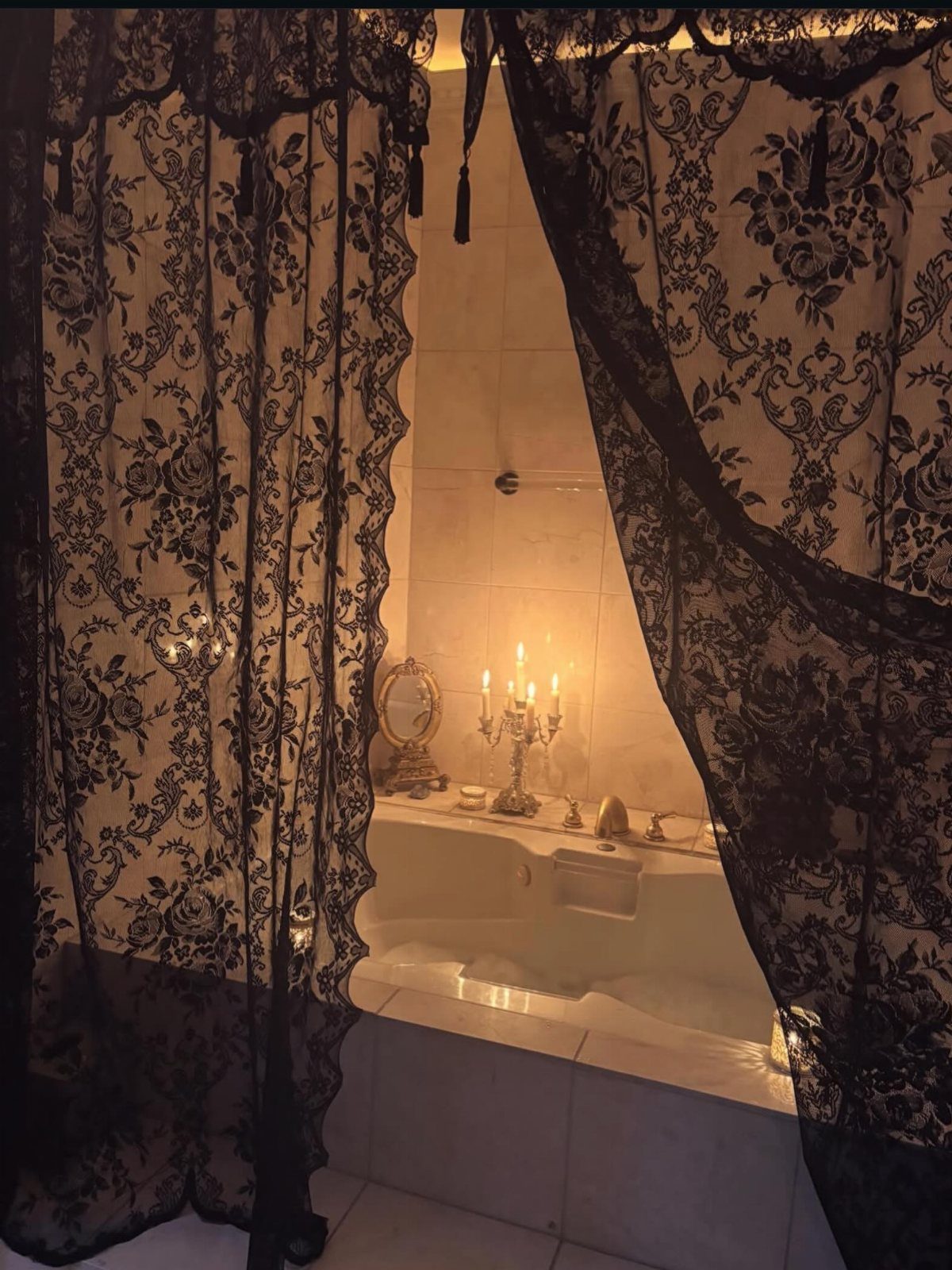
Candlelight does what overhead fixtures cannot; it drops the ceiling visually and slows the room down. Lace curtains filter daylight soft enough for candles to finish the job after dark.
Pillar candles on the tub deck work best in a cluster of varying heights, never scented; the steam amplifies fragrance to headache levels.
Battery-operated LEDs have improved enough to fool the eye from a distance, and I use those when I plan to actually fall asleep in the water.
A metal candelabra, even a cheap one from a thrift store, reflects more light than ceramic or wood.
The risk is real fire near water and fabric; I place candles where a splash cannot reach and never on a surface I would need to cross to exit.
15. Freestanding Tub
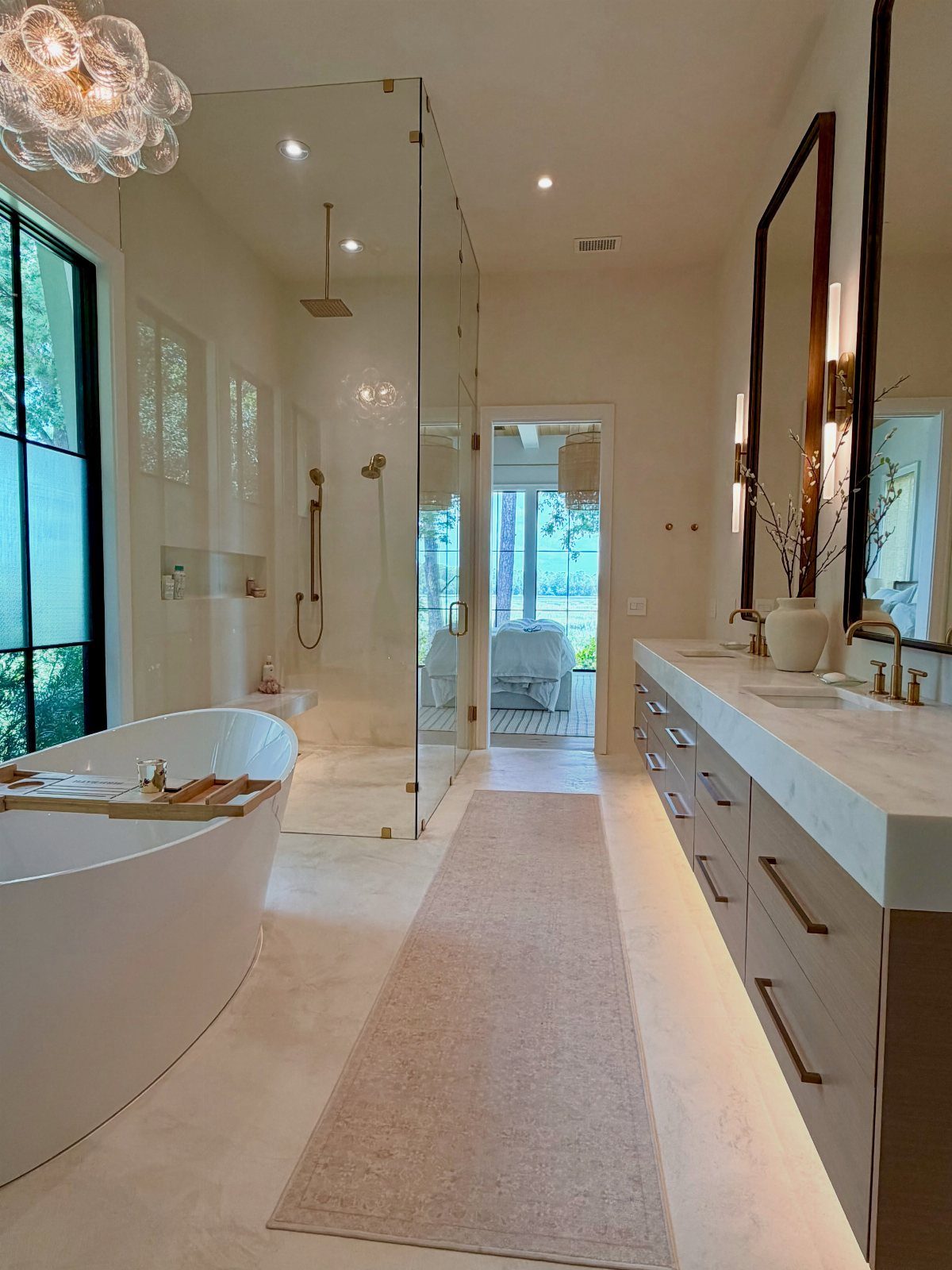
A freestanding tub claims the floor as its stage, which is why it works best at the end of a long sightline, the way the photo places it. The sculptural shape becomes the room’s punctuation.
A standard freestanding tub fits through a 30-inch door frame before installation; the longer models look grander but may need a crane through a window. Acrylic keeps the weight under 150 pounds, cast iron hits 350 and needs reinforced joists.
The warm neutral palette means the tub itself should read as warm white or biscuit rather than stark clinical white, which can pull cool against beige tile.
A freestanding tub costs you the deck space and hidden plumbing a built-in provides. A narrow side table, 12 to 16 inches wide, solves some of that.
16. Floating Vanity
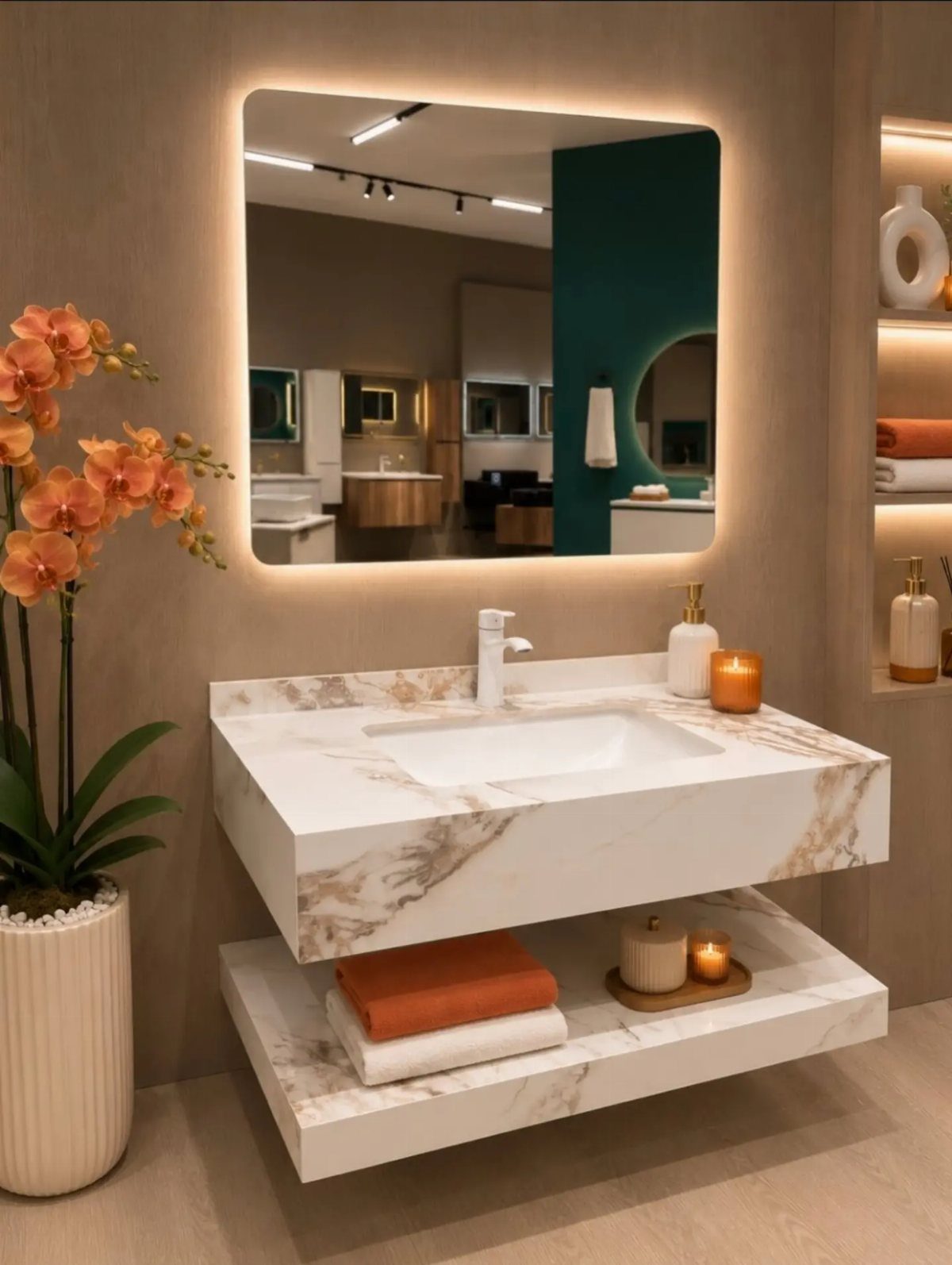
A floating vanity opens the floor and lets the tile run uninterrupted, which matters in a small bathroom where every visual inch counts. Gold veining in a marble top picks up warmth without adding a separate color.
Mounting a floating vanity slightly higher than standard changes the comfort depending on your height and whether you lean in to apply makeup or stand straight to shave.
The wall behind must be solid blocking, not just drywall, to carry 200 pounds of cabinet, stone, and sink.
Natural wood warms the space more than painted finishes; seal it with a marine varnish if the bathroom lacks a separate water closet.
The gap underneath collects dust and requires a robot vacuum or a long reach; I consider that fair payment for the spaciousness.
17. Sculptural Mirrors
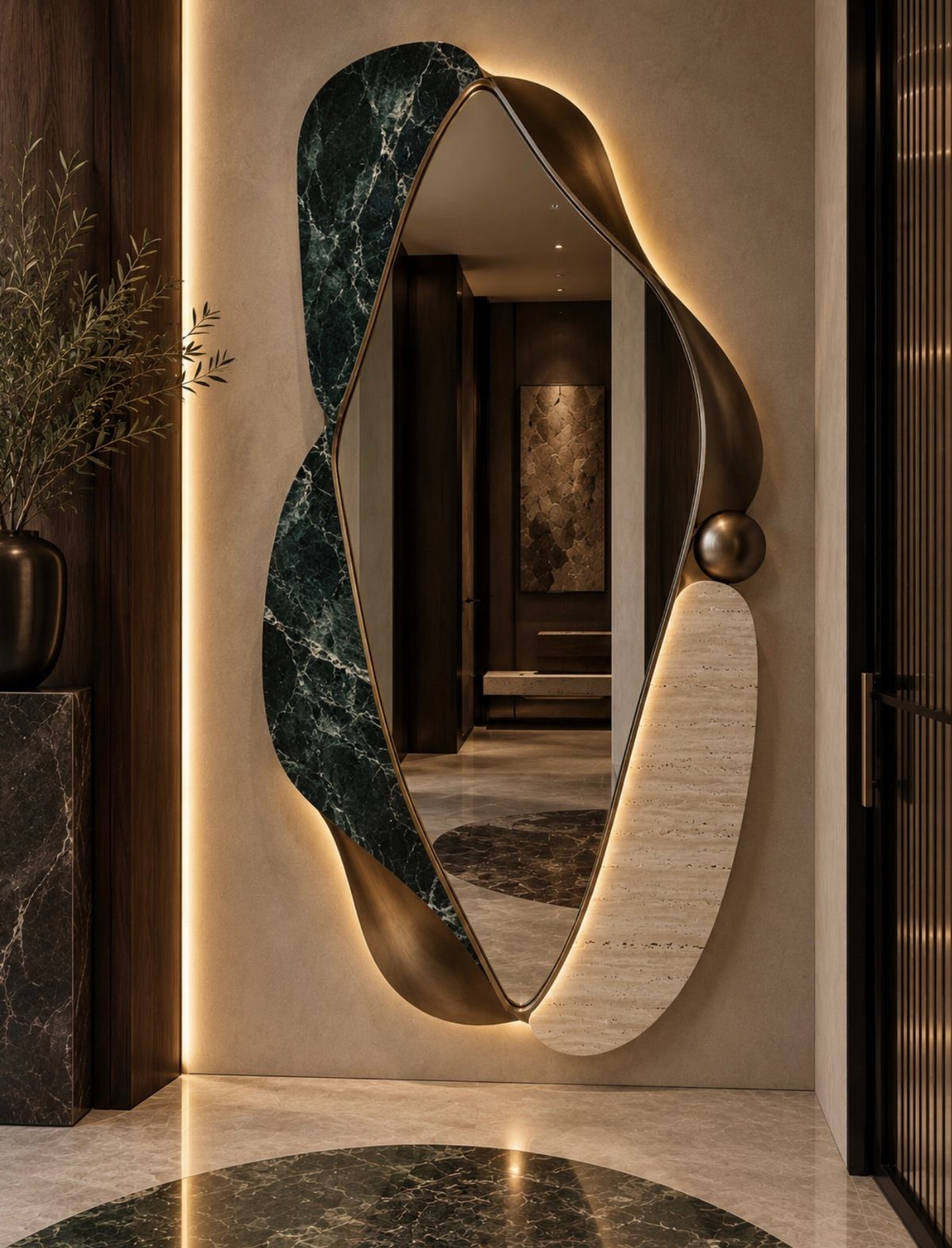
A mirror with an irregular edge breaks the tyranny of straight lines in a bathroom, where tile grids and rectangular vanities dominate.
Dark green marble and bronze in a mirror frame pull a neutral palette toward something richer without leaving it.
Hang a sculptural mirror at eye level, the center the same height as art; backlighting needs a dedicated circuit planned before drywall.
The organic shape means you cannot rely on the mirror to visually expand the room the way a full-width rectangular mirror would; I use one when the space already feels large enough and needs character instead.
A plain round mirror with a thin brass band costs far less and still carries the warmth. The curve still interrupts the grid, just more quietly.
Choosing the Right Color Palette
Beige can turn gray or pink under the wrong light, and once the paint is up, the mistake is right there every morning.
Bright white suites paired with cool gray tiles read sterile fast, and the fix is in the undertone. Beige, taupe, and soft whites carry warmth that keeps the room from feeling like a showroom floor.
A warm tan reads differently on a flat wall than against nubby linen or a rough clay tile, which is why the same color can look rich in one bathroom and flat in another.
A bathroom that actually gets used needs surfaces that forgive water spots and color that still looks good at 6 a.m. I would pick a warm base first, then build around it, rather than trying to warm up a cool palette after the fact.
Importance of Texture
Texture does the real work in a warm neutral bathroom. Flat surfaces read cold even in the right color, so mixing how materials handle light and moisture matters more than adding more color.
A mirror framed in oak with a thin brass strip catches the light differently than a flat slab, and that small shadow line keeps a beige wall from reading as one solid block.
I would vary at least three surface types; tile, wood or metal, and fabric. The interaction between them creates warmth that a single material cannot carry alone.
Frequently Asked Questions
What are the bathroom trends for 2026?
Warm neutral tones are trending for a cozy and inviting atmosphere.
What is a good warm neutral paint color for a bathroom?
Taupe, clay, and soft whites with yellow or pink undertones work best. Beige shifts under bathroom lighting in ways the paint chip won’t show you; I learned to tape up samples and check them after dark before committing.
The one that still looks warm at 9 p.m. is the one to trust.





