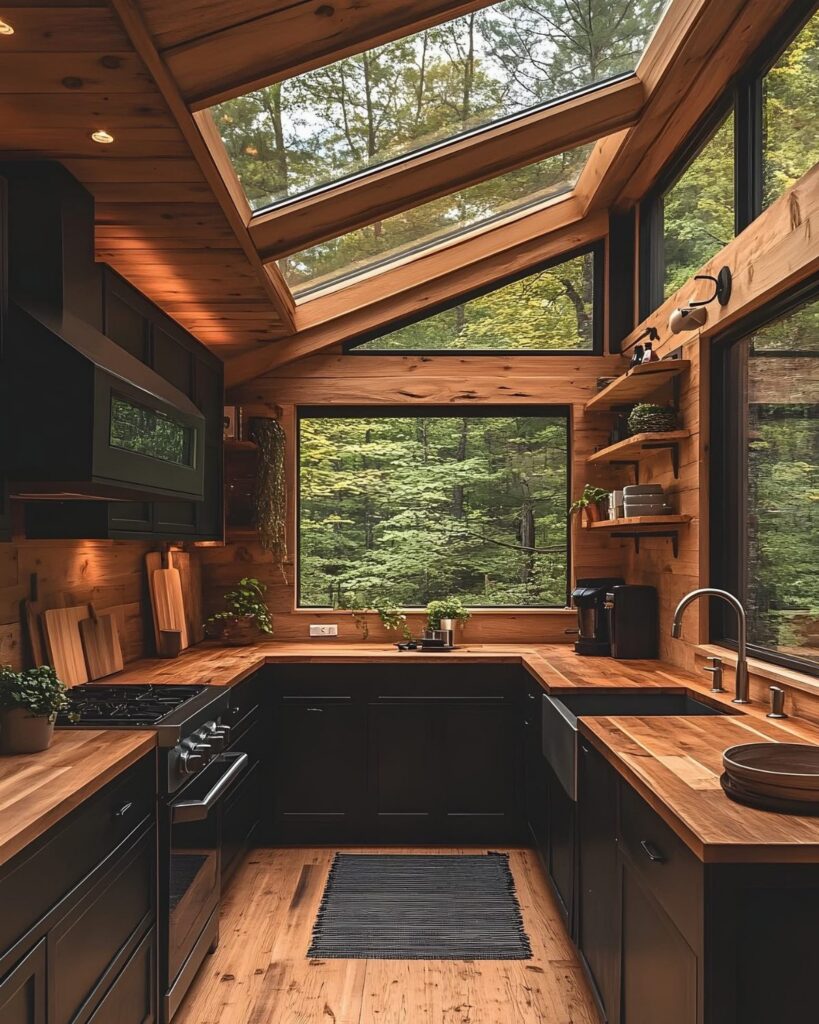
These ideas run from a quick hardware swap and a fresh coat of paint to a full waterfall island with stone that carries over the edge.
What settles the choice is whether you want a weekend project you can undo later or something permanent that changes the whole layout.
The proof that this range is real: Benjamin Moore’s high-gloss enamel takes three coats minimum, while a running bond white subway tile backsplash and brass trim at the counter junction can be finished between Saturday morning and Sunday evening.
1. Contrasting Backsplash
A backsplash that fights back against the darkness is what keeps black cabinets from flattening a kitchen into a cave.
White marble with heavy gray veining does this with little effort, and the stone’s natural movement gives the eye somewhere to rest.
For a tighter budget, a white subway tile in a running bond pattern hits the same bright note without the quarry bill. I would skip small mosaic sheets here; the grout lines turn busy against solid black faces.
Brass or copper trim at the counter junction warms the pairing without softening it. This suits renters who can tile a single strip in a weekend and landlords willing to approve one vertical change.
2. High-Gloss Black Cabinets
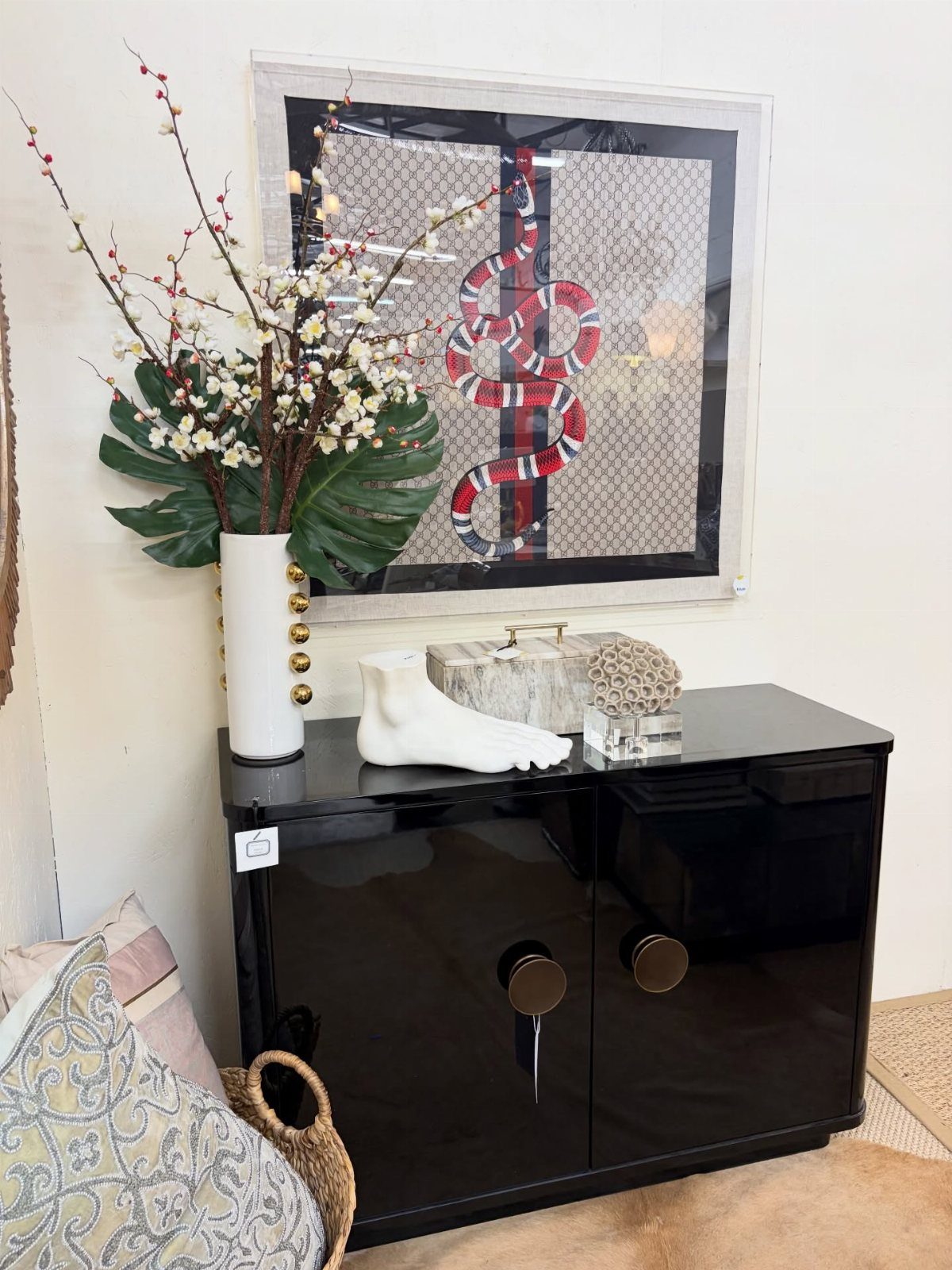
Light bounces off high-gloss black the way it does off a piano lid, which makes these cabinets a practical choice for kitchens that lack windows.
Benjamin Moore’s high-gloss enamel is the paint most often specified for this finish, and the application demands patience: sand between coats, expect three minimum, and hire a sprayer if you want the mirror effect without brush marks.
Gold or chrome hardware sits proud against the reflective surface without disappearing. Fingerprints show on every swipe of high-gloss black, so keep a microfiber cloth on a hook inside the sink cabinet.
I would reserve this for upper cabinets only in a house with small children, or commit to the wipe-down rhythm.
3. Open Shelving
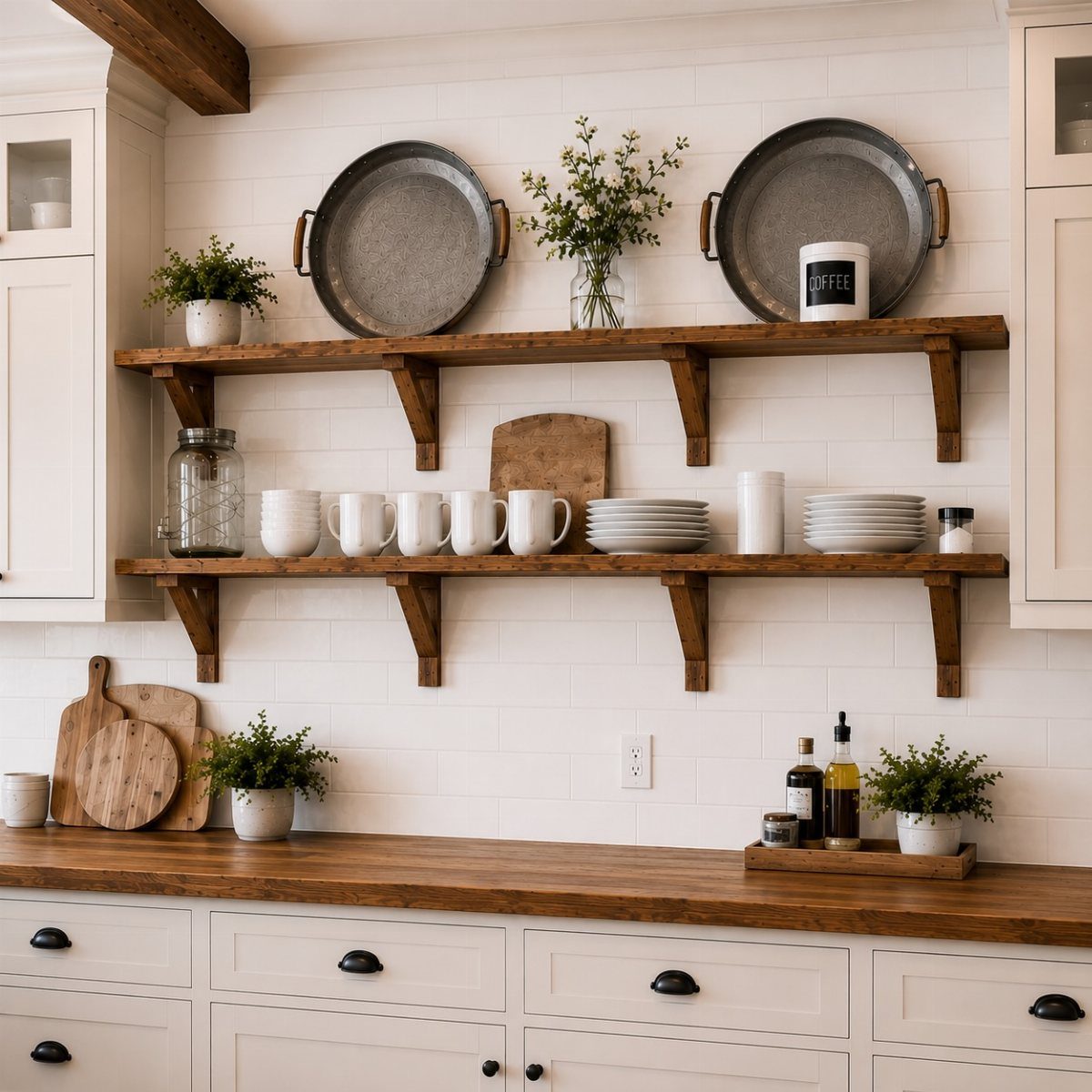
Black cabinet frames with open shelves between them let you store the daily dishes where you can see them, which turns storage into something like a display.
Mount with a hidden bracket or a ledger board screwed to studs; the black frame below hides the hardware. White painted shelves against black add brightness, though natural pine warms the room in a different direction.
This works when you own your dishes and want to look at them.
4. Black and White Contrast
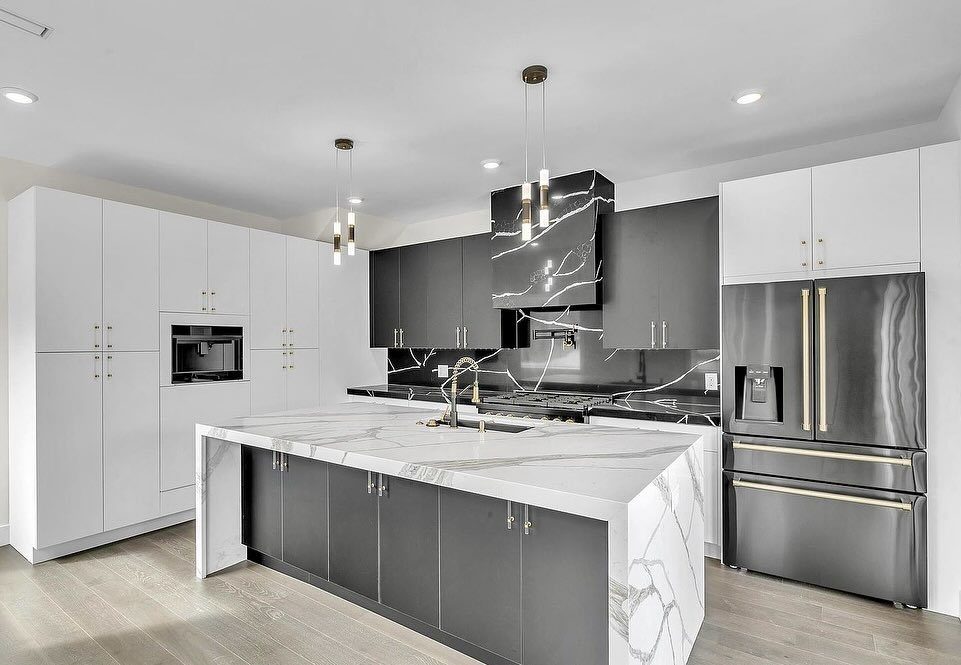
Black lower cabinets ground the room while white uppers keep the ceiling height you paid for.
A marble countertop with dark veining bridges the two tones without choosing sides; that stone is where I would put the money in this scheme.
White walls behind white uppers read as one continuous plane, which makes a small kitchen feel larger than a fully black bank would. Stainless appliances slip in without adding a third strong color.
For a rental, peel-and-stick white vinyl on upper cabinet faces and matte black on lowers approximates this look if the existing boxes are sound.
5. Matte Black Cabinets
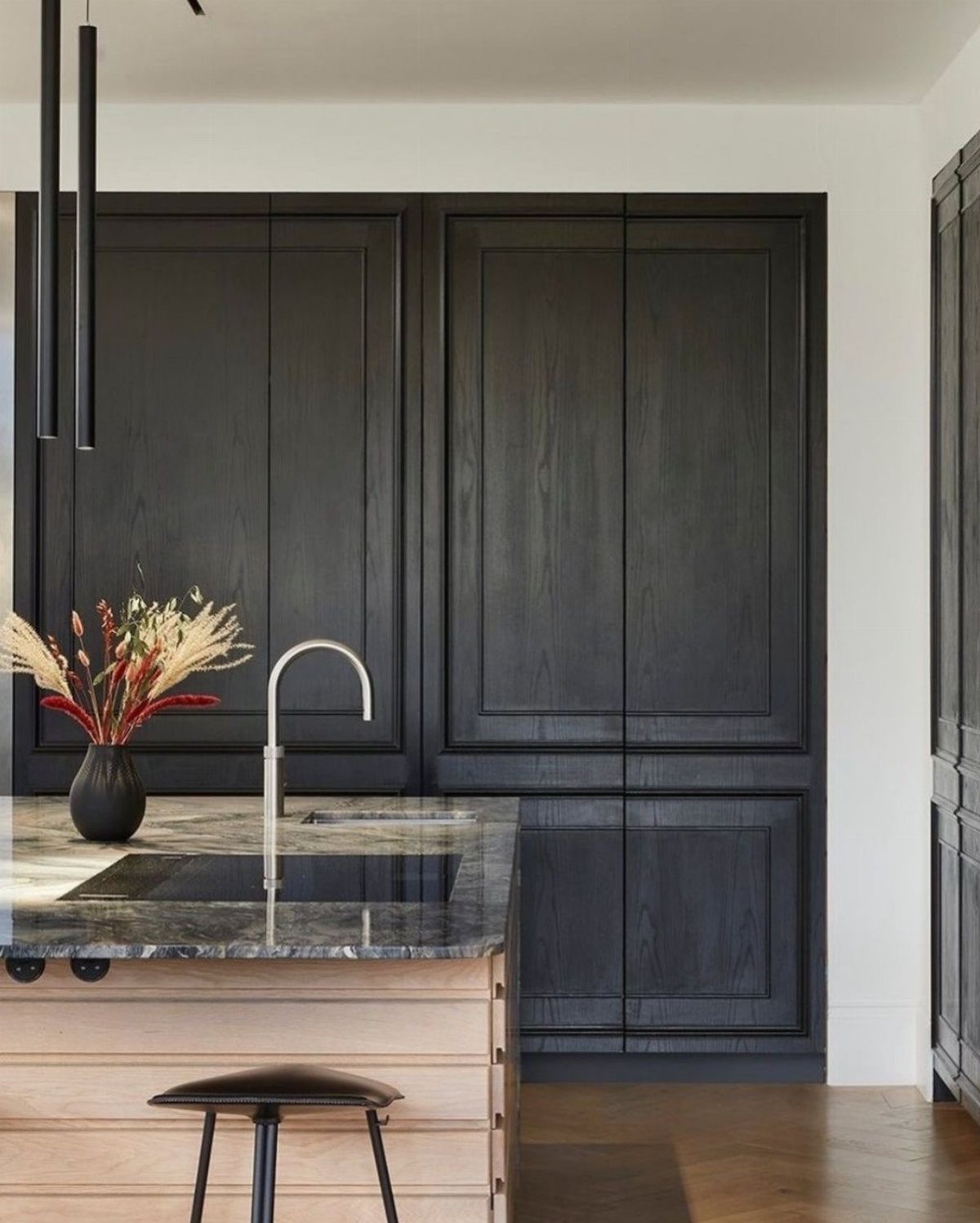
Matte black absorbs light instead of throwing it back, which quiets a kitchen that otherwise has too many competing surfaces.
Wood grain texture keeps a matte black finish from reading as flat plastic; request that subtle variation from your supplier if you are ordering new.
Fingerprints and water spots hide better here than on gloss, though grease needs a degreaser weekly if you cook with oil at high heat. Brass or copper hardware pops against the muted surface in a way that chrome does not.
I would pair matte black with a honed marble counter rather than polished; both finishes agree to stay understated.
6. Waterfall Countertops
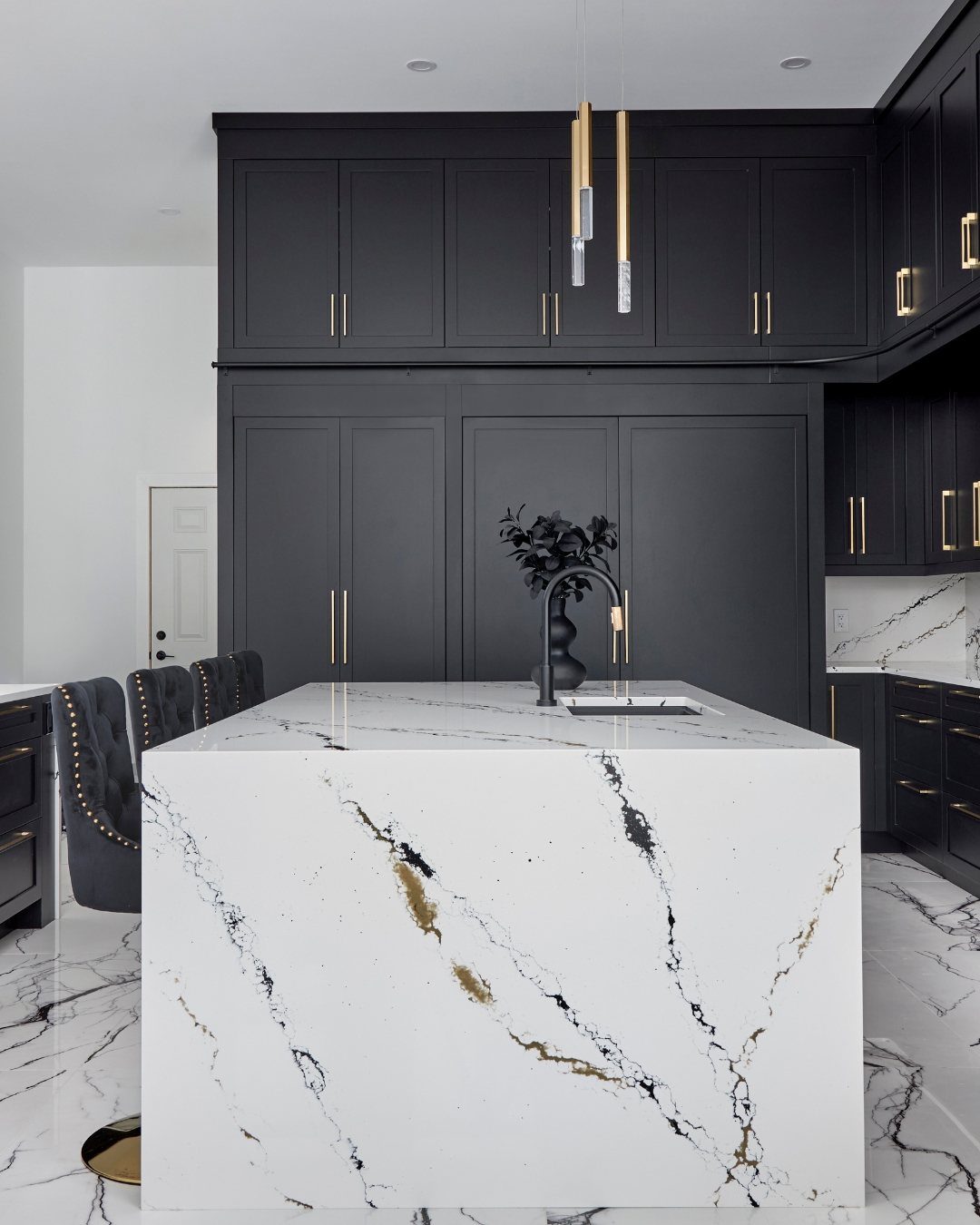
A waterfall countertop drops vertically down both short ends of the island, turning the stone into something that looks carved from a single block.
Black base cabinets beneath white marble let the stone be the sculpture while the cabinets do the quiet work of storage.
Veining that runs the same direction on the top and the sides of a waterfall edge requires fabricating from one continuous slab; ask your fabricator about the stone cost difference before you commit.
A standard edge with a panel-matched facade costs less and reads almost as clean from the approach side. I would spring for the full waterfall only on an island that faces the entry; against a wall, nobody sees the return.
7. Black Cabinets with Stainless Steel Appliances
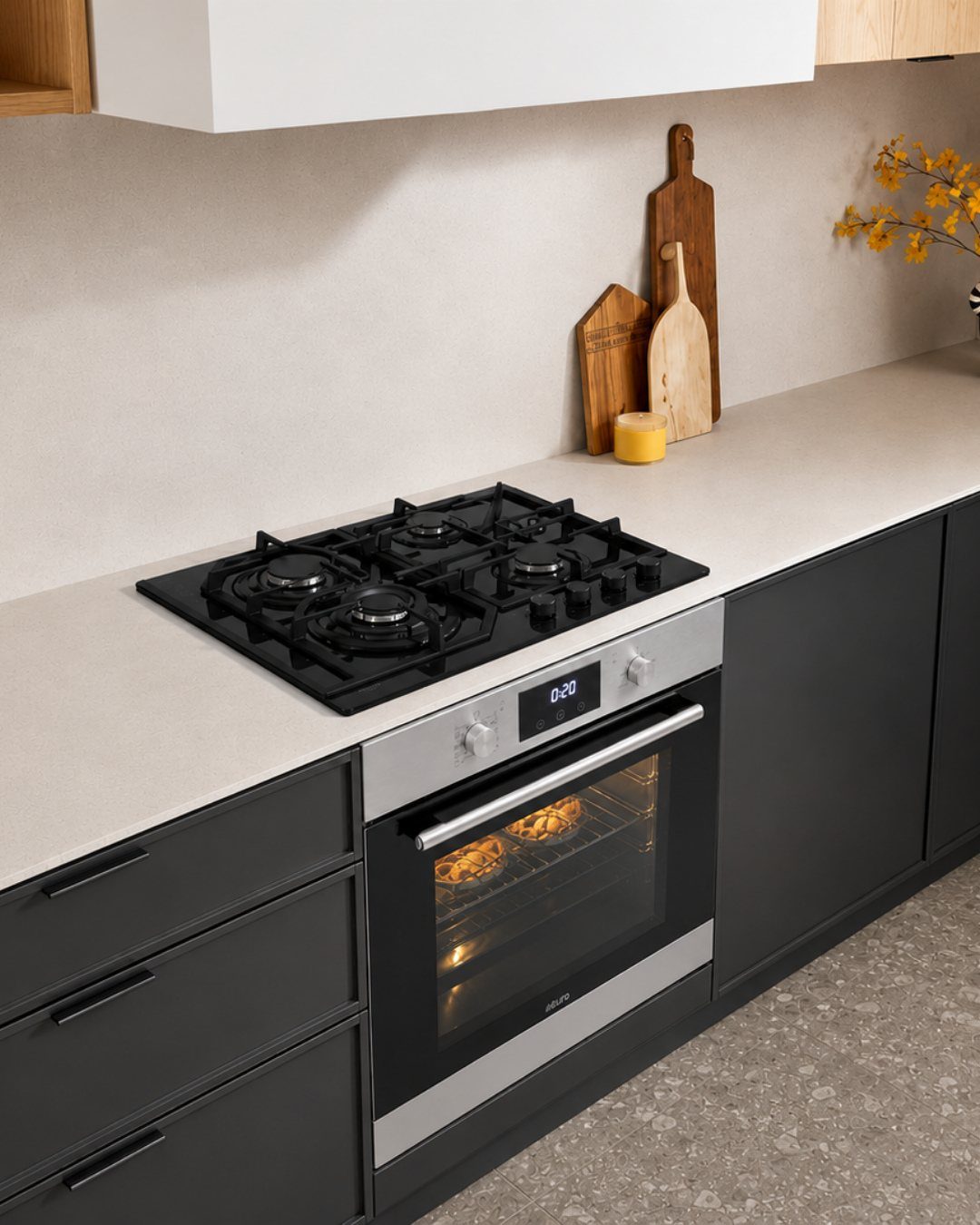
Stainless steel appliances read as neutral against black cabinets, which keeps the kitchen from feeling like a showroom. Chrome or silver-toned hardware carries that cool tone through the cabinetry so the finishes talk to each other instead of competing.
Brass or black hardware would fight the steel; I let the appliances do the work instead. An exposed brick wall or an archway into another room softens the industrial edge if the space starts feeling too clinical.
This pairing suits renters who inherited appliances and want the cabinets to meet them where they are.
8. Black Cabinets with Green Tiles
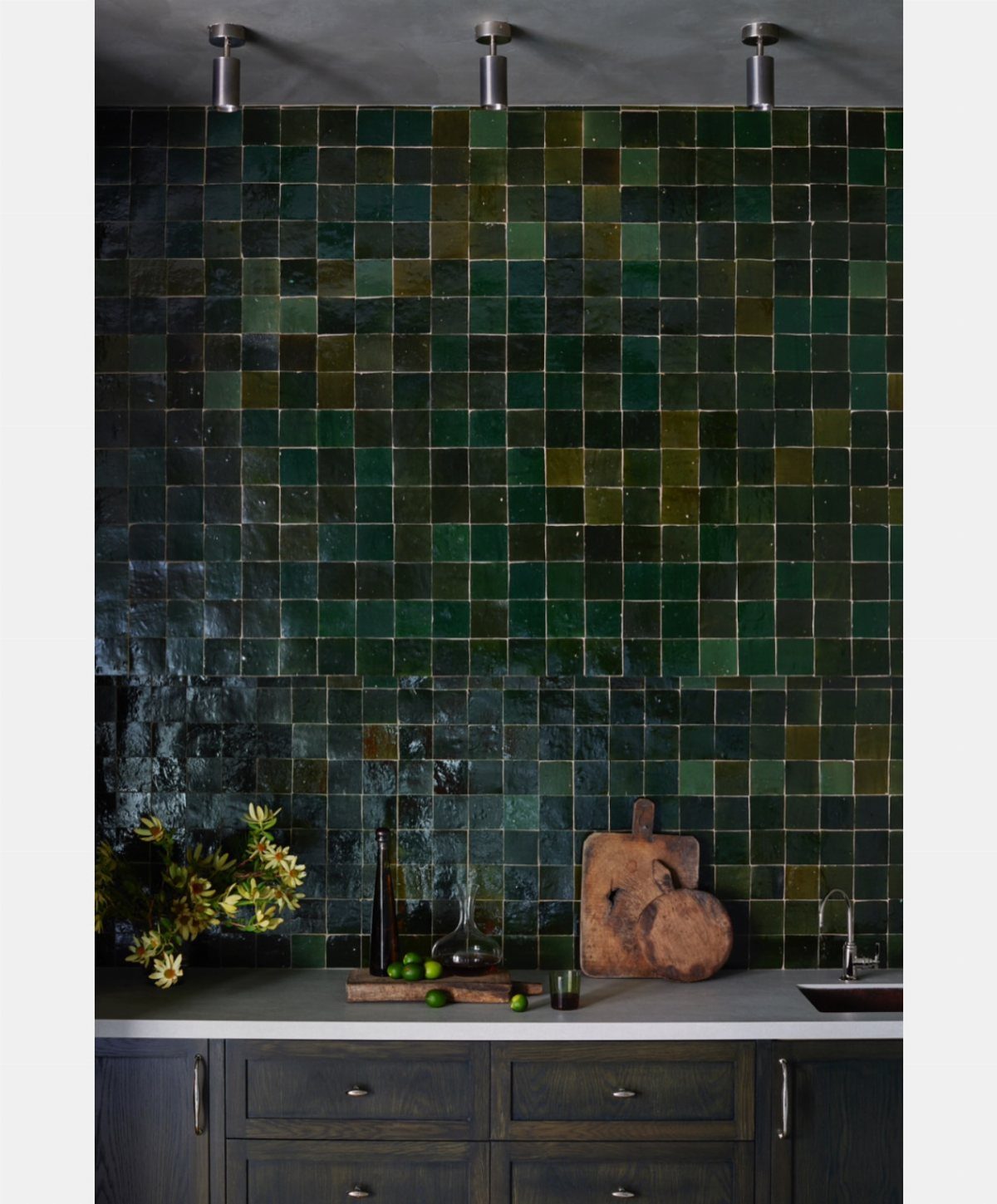
Small glossy green tiles in shifting shades give black cabinets something alive to sit next to. The variation in the green keeps the eye moving so the darkness does not flatten the room.
Floating wood shelves above the counter carry the organic feeling further and give you open storage for pieces that would clutter a closed cabinet.
I would keep the countertop light; white or pale stone bounces light back up at the tiles. This is a strong move for someone who wants their kitchen to feel like a corner pub rather than a design magazine spread.
9. Black Cabinets with Gold Features
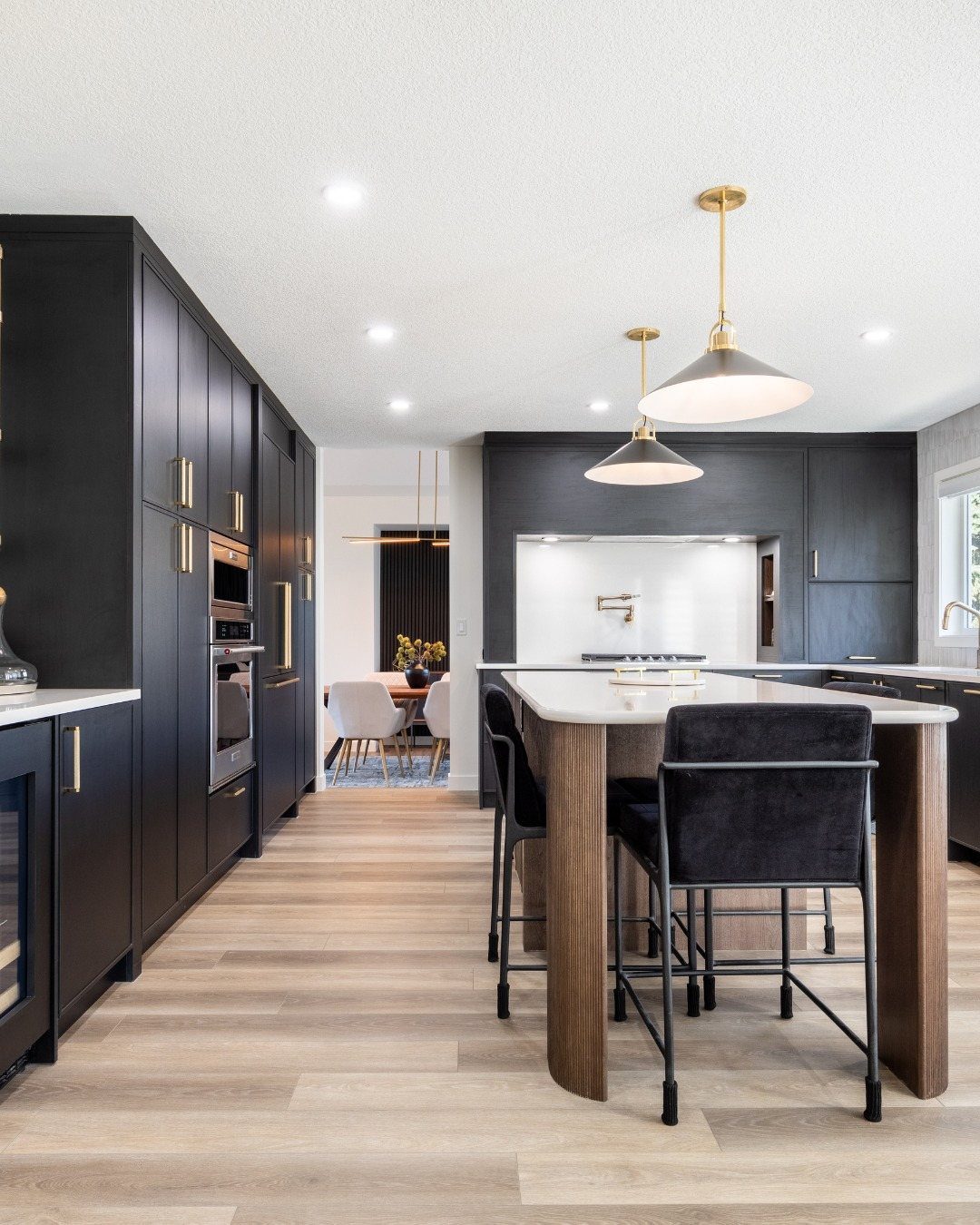
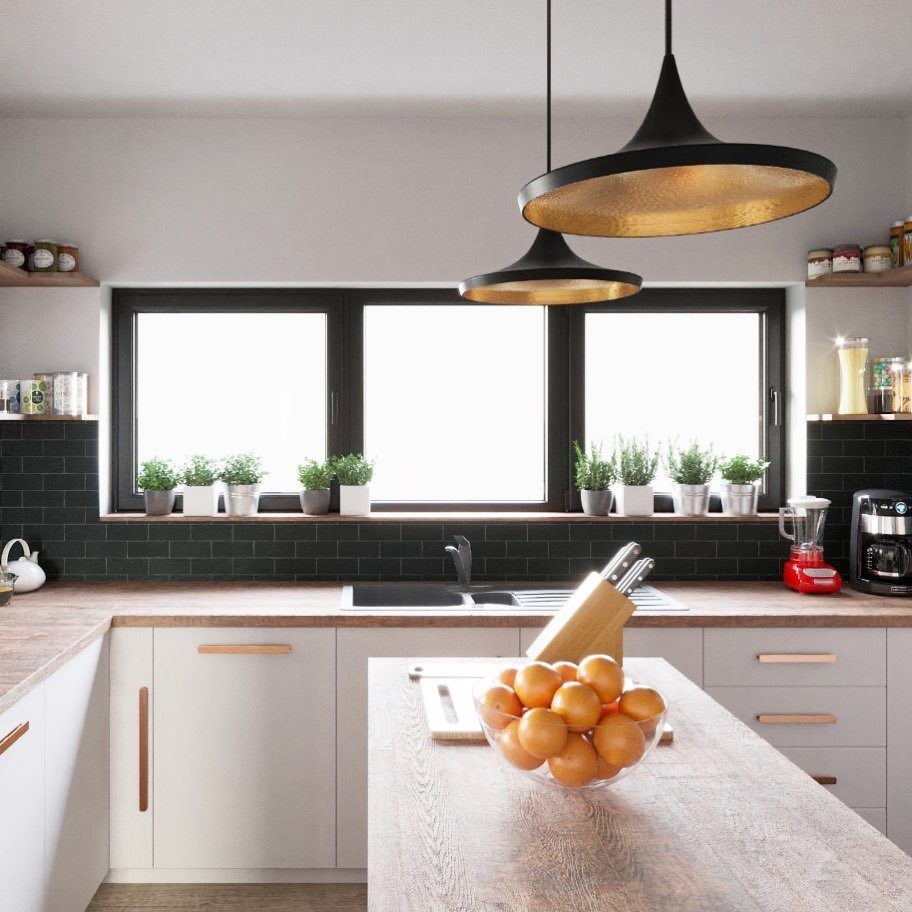
Gold against black reads warm where silver reads cool, and the difference changes the whole room. Matte black cabinetry with gold hardware and a white subway tile backsplash hits a balance that feels considered rather than accidental.
The gold does not have to shout. Pendant lights over the island, slim bar pulls, or even the feet on a range hood carry enough of it.
I would stop at two or three gold elements; more than that and the kitchen starts performing luxury instead of living in it. This one works for a first-home owner who wants one bold choice that still feels safe.
10. Black Cabinets with Exposed Brick Walls
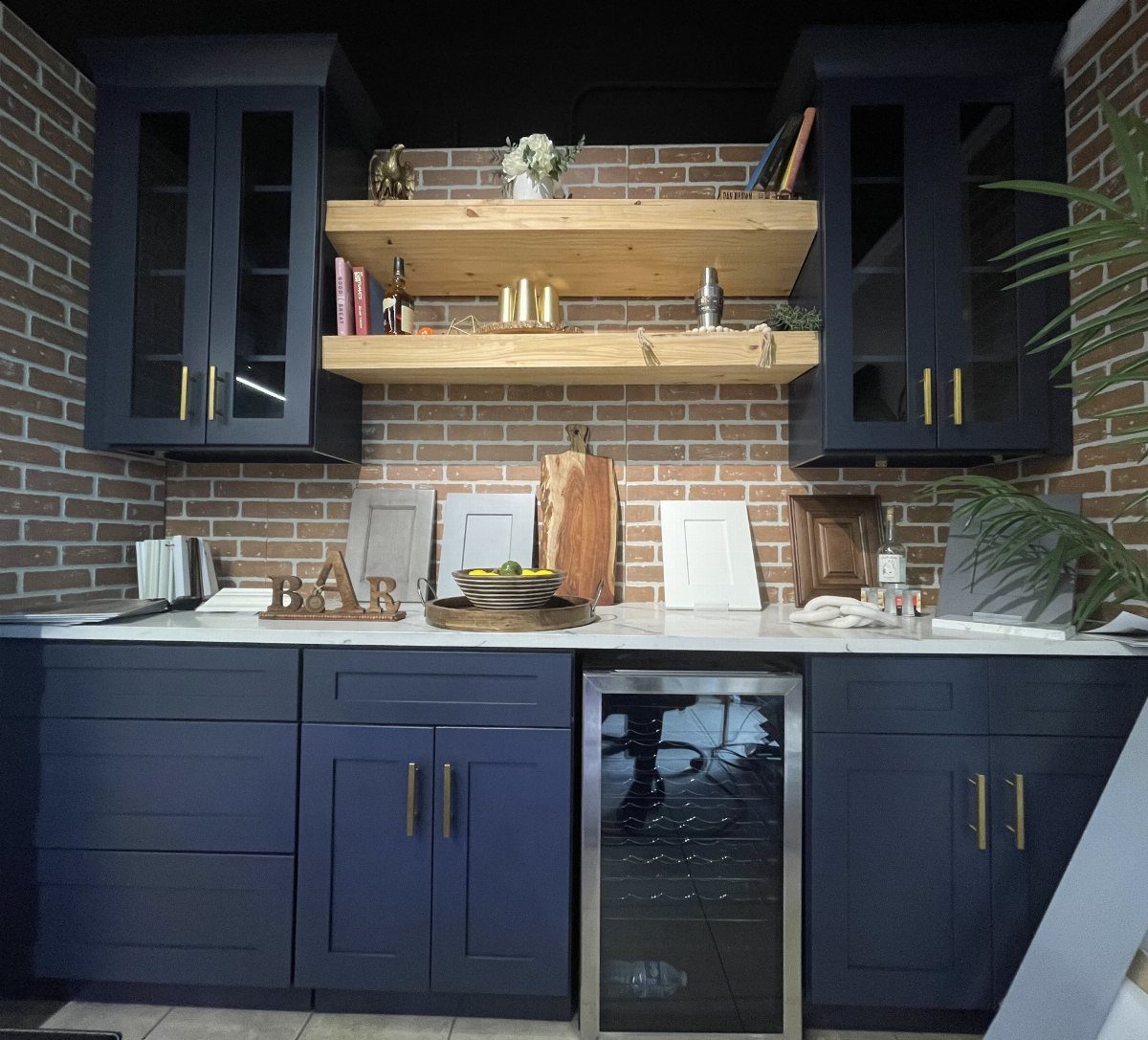
Exposed brick gives black cabinets something rough to play against. The red tones in the brick warm the space in a way paint cannot, and the texture breaks up the smooth planes of matte or glossy black.
A full wall behind the stove makes the biggest statement, though even a partial section at the sink does the job. Natural wood shelves and brass hardware extend the rustic side without turning the kitchen into a theme.
Navy shaker cabinets against red brick, with natural wood open shelving and brass hardware, prove the same logic holds for black. Best for old houses with good bones or any space that needs to feel grounded.
11. Anchor with Black Base Cabinets
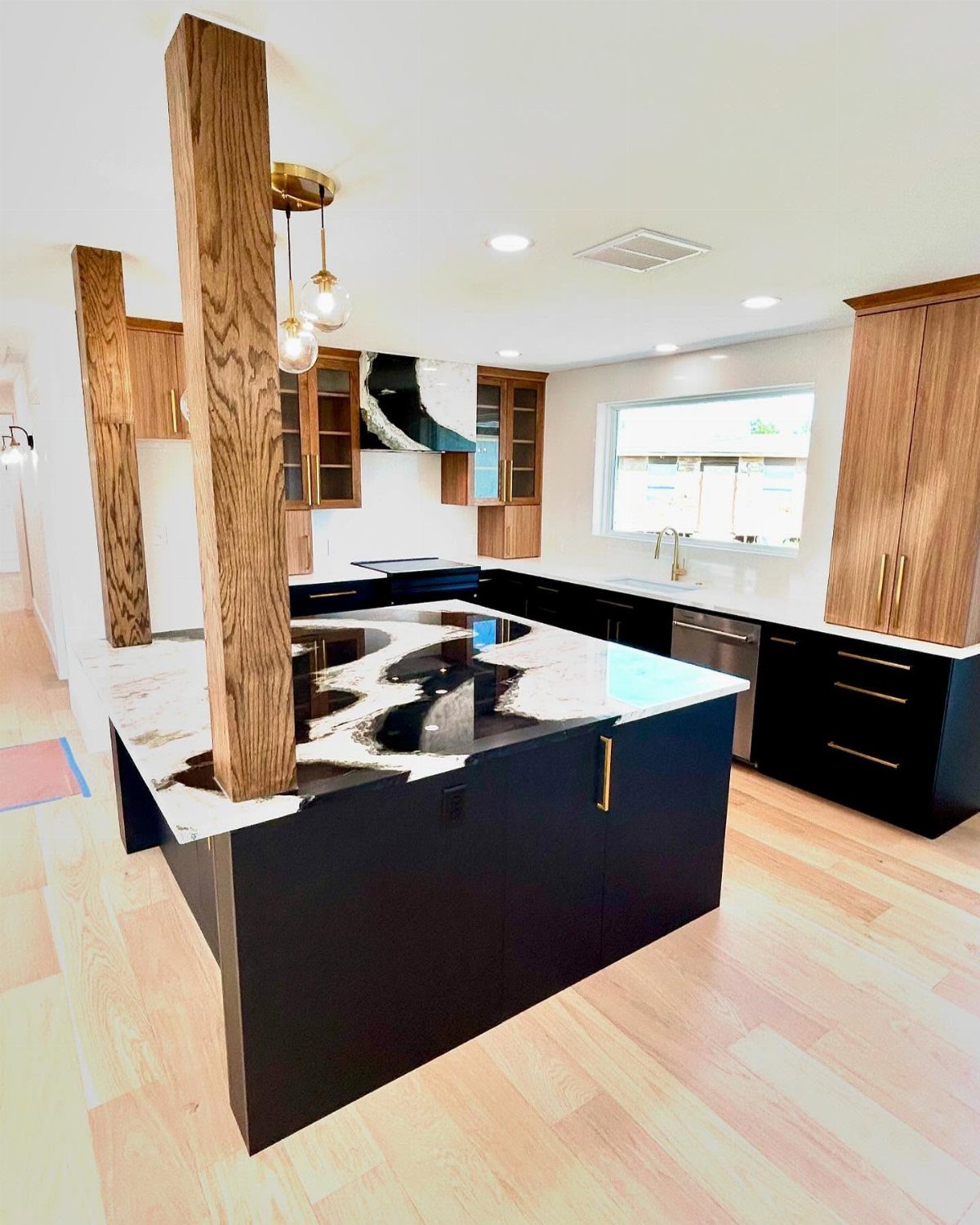
Black base cabinets with a light countertop above them anchor the room at the floor and keep the ceiling feeling high. Shaker-style doors keep the look simple; the profile is enough detail without adding noise.
White quartz on the perimeter and a massive Panda Marble island with a matching vent hood keep the black from sinking the room.
I would borrow the contrast principle even with humbler materials; a light laminate reads the same way from across the room. Upper cabinets in natural wood, as the example shows, soften the two-tone effect.
This suits anyone who wants the drama of black without committing the whole kitchen to it.
12. Layered Lighting
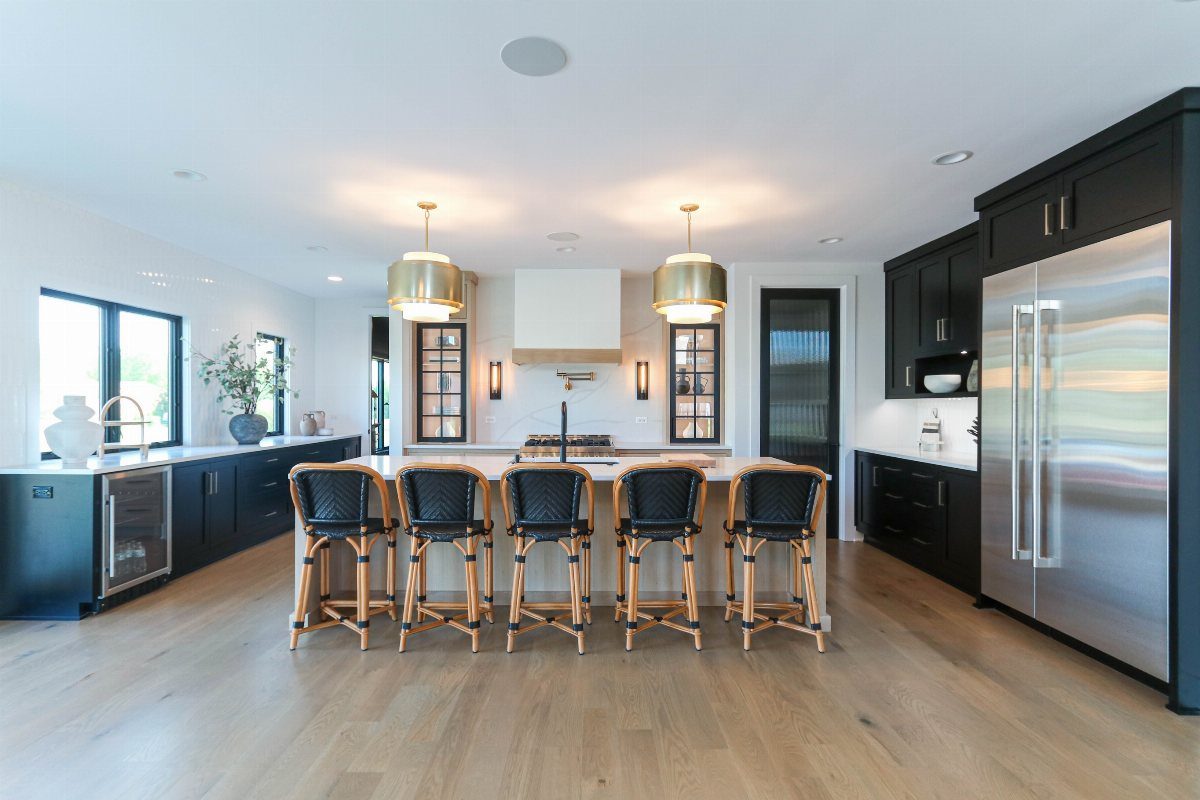
Dark surfaces swallow light, so a single overhead fixture leaves black cabinets flat and the workspace shadowed. Layered lighting means under-cabinet LED strips for the counters, puck lights inside glass-front doors, and pendants that pull their own weight.
The example shows gold pendants over a white island under recessed ceiling lights; three sources, three jobs. I would add the LED strips first if the budget is tight; they do the most work for the least money.
A full wall of black cabinets from floor to ceiling, as one maker did in a Harlem apartment, needs this even more. Do not skip this step; the cabinets you chose deserve to be seen.
13. Two-Toned Cabinets
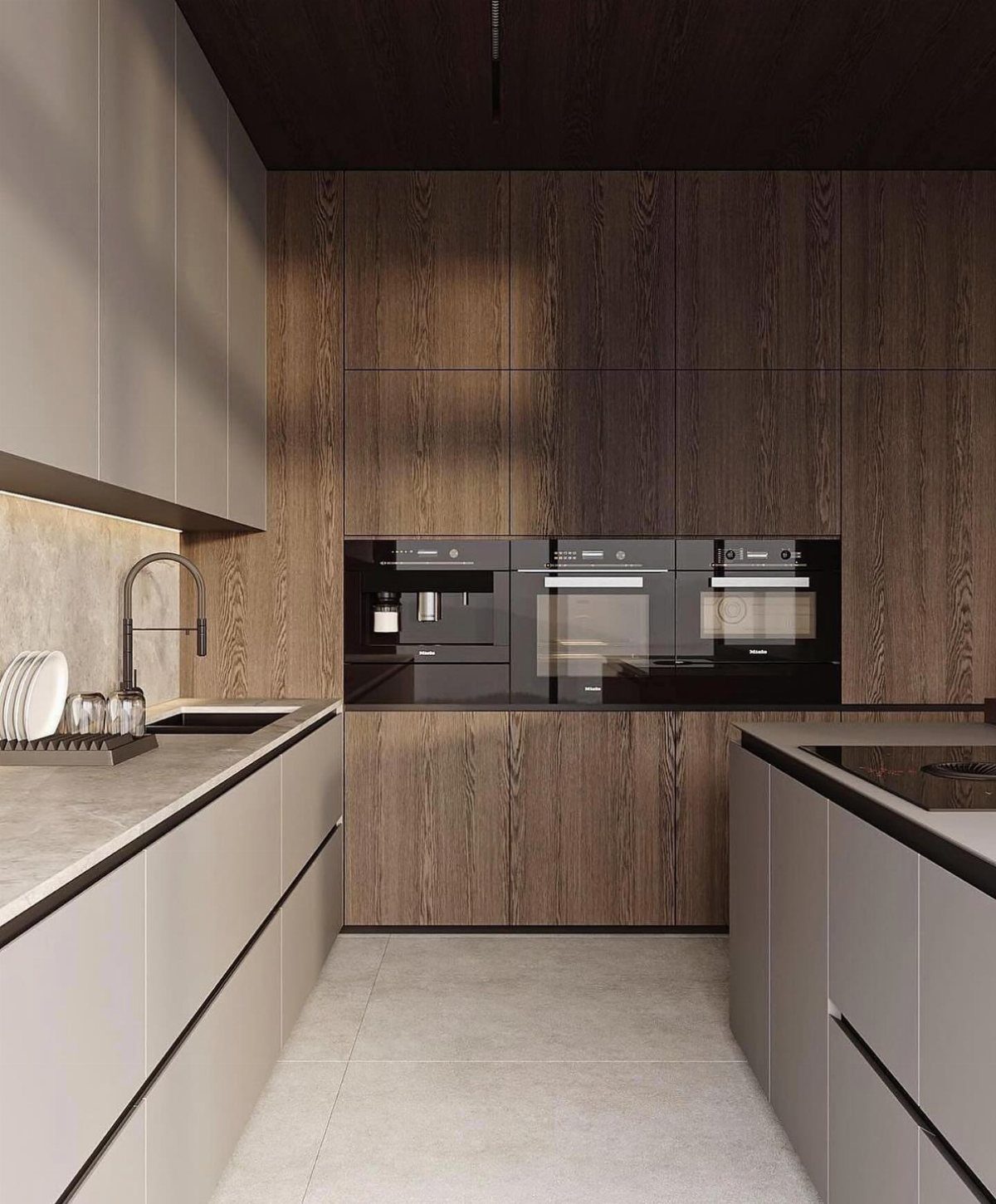
Two-toned cabinets let you test black without committing the whole room to it.
I like black on the lower cabinets with white or light uppers; the dark mass grounds the space while the pale top half keeps the room from feeling boxed in. The split also hides scuffs where hands actually reach.
A modern look keeps the line clean: same door style top and bottom, hardware that repeats. The contrast does the work, so fussy details fight it.
Keeping the upper cabinets light stops the room from closing in, which matters when the square footage is tight. Two finishes means two samples to match to floors, counters, and paint; coordination takes more legwork.
14. Black Cabinets with Glass Inserts
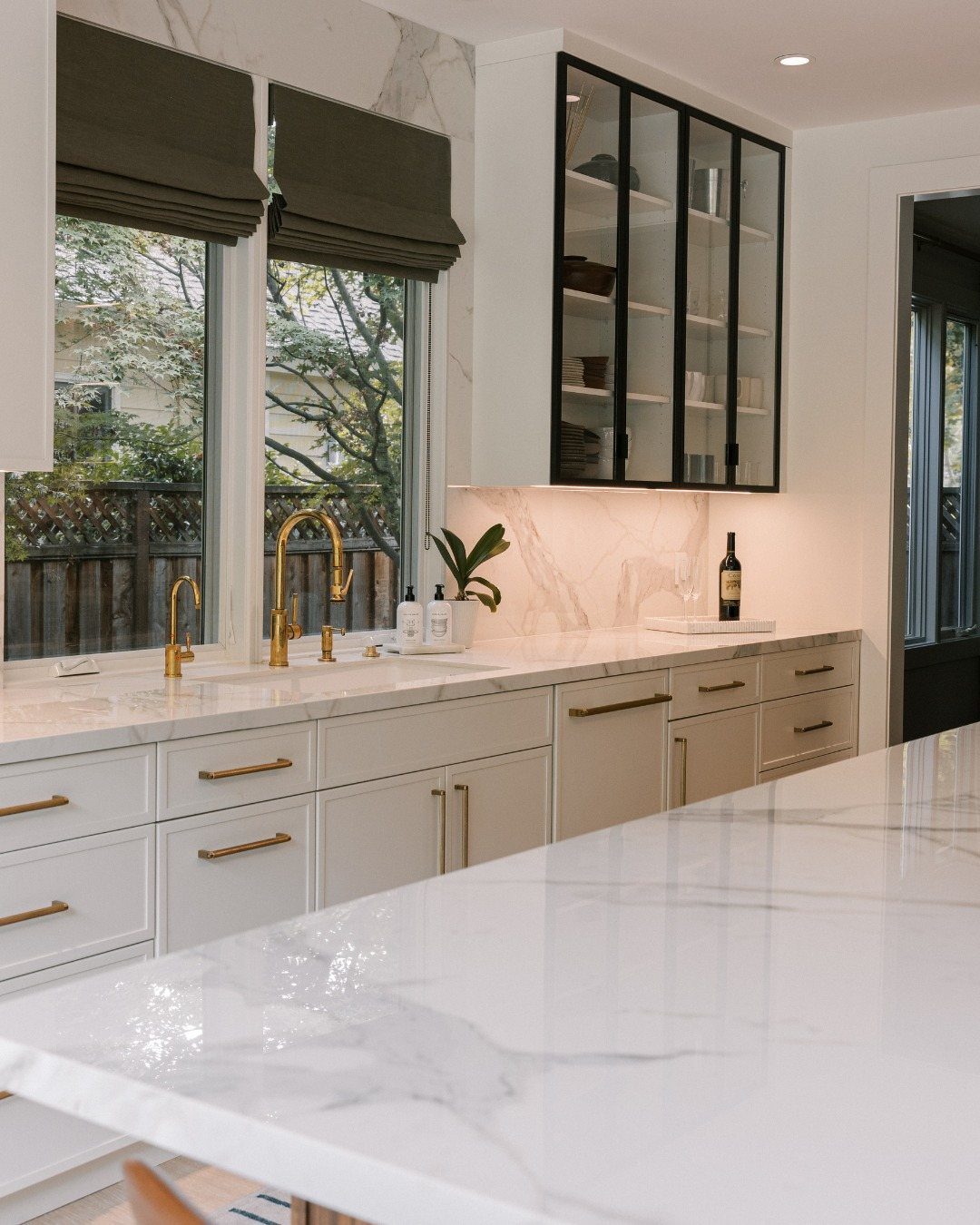
Glass inserts in a black cabinet door break up the solid wall and give you somewhere to show actual dishes. Clear glass reads open and casual; frosted reads quieter and hides a jumble.
Either way, the black frame keeps the sleek line intact.
Puck lights inside the cabinet turn the contents into a display after dark, and they help offset how much light black surfaces swallow. Under-cabinet strips nearby keep the prep surface usable.
This works best if you own dishes worth looking at and can keep them orderly. If your everyday plates are mismatched survivors, the inserts become a daily reminder to edit.
15. Black Range Hood with Metallic Trim
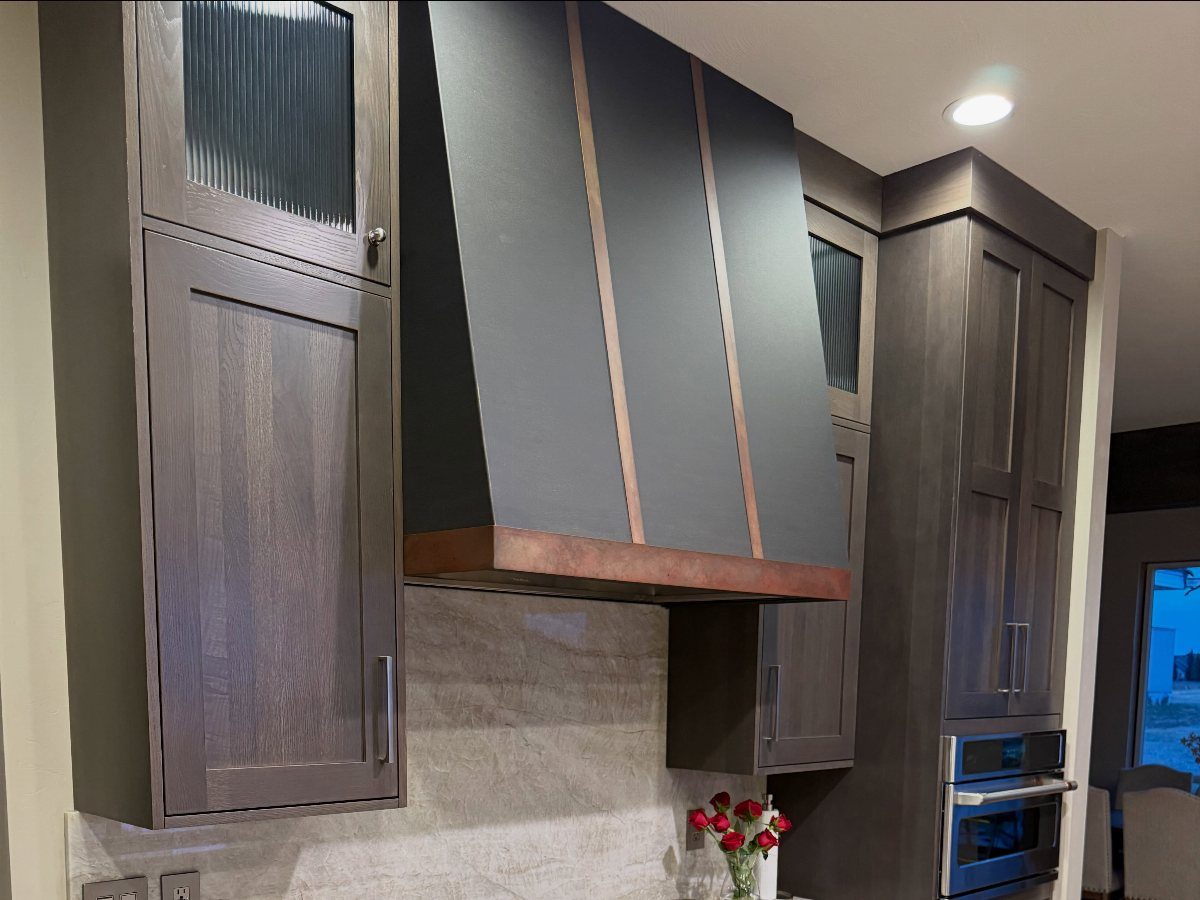
A black range hood with metallic trim turns the cooking wall into the room’s focal point without needing much depth to protrude from the wall.
Copper or bronze trim against black paint reads warmer than silver would, which matters in kitchens where the cabinets carry a dark stain rather than a flat painted finish.
White oak cabinetry finished in a deep wash stain keeps the vertical grain visible; that warmth is what lets the copper trim feel intentional rather than random.
This setup suits renters who cannot change cabinetry but can swap a hood, or homeowners with solid existing cabinets who need one statement piece.
The trade is counter space: the hood projects forward and the wall ovens beside it need landing room.
Check your ceiling height before ordering. A tall hood in a standard-height room can feel like a tunnel; give it more ceiling height and the same hood opens up.
Color Combinations
White, gray, and pastels all hold their own against black cabinets without fighting for attention. A white Cambria quartz countertop against black cabinetry gives you that high-contrast look that photographs well and lives even better.
Beige softens the edge if pure white feels too stark. Sage green or a muted pastel blue adds color without overwhelming the room.
Brown works too, though I’d keep it to lighter tones so the space doesn’t cave inward. The finish on your cabinets matters here; glossy black throws light around differently than matte, and that changes how the pairing reads.
Before you commit to a wall color or backsplash, hold a sample against the actual cabinet door, not a screen. The same gray that looks airy in a photo can turn muddy under your kitchen’s bulbs.
Maintenance Tips for Black Cabinets
Warm water and mild soap on a soft cloth is the routine. Harsh chemicals will dull the finish over time, so skip the heavy-duty cleaners even when the grease builds up.
Fingerprints do show on black, especially on glossy surfaces; catch them early and they wipe off without a trace. A specific wood polish helps for touch-ups, though I’d test it on the back of a door first.
Direct sunlight fades black cabinets more than you’d expect, so check what your windows do across the day. Moisture and temperature shifts stress the finish too; keep an eye on the sink cabinet and anywhere near the dishwasher.
Black cabinets are not high-maintenance by nature, but they do ask you to clean smudges when you see them rather than letting them compound into a project.
Choosing the Right Finish
Matte black reads as understated, almost architectural. I’d pick it for a large kitchen with good natural light, where the finish can absorb some brightness without turning the room cave-like.
Match the range hood and backsplash in the same flat tone and you get that paired-back Scandinavian feel.
Glossy black bounces light around and makes more sense in a smaller space, or anywhere you want the cabinets to feel like an event rather than a backdrop. A little texture goes a long way on black cabinets.
I like how distressed or shaker-style fronts catch light differently than a flat slab, so the color reads as dimensional instead of one big solid block.
Wood grain under the paint changes the game too; it catches light at angles that uniform color cannot. Consider your kitchen’s size and its windows before you settle on a finish.
One wall of all-black cabinetry in a small kitchen works better than wrapping the whole room.
“Black cabinets are urbane, sophisticated, and sexy,” says interior designer Oliver M. Furth, who cooked up a kitchen with dark, high-gloss cupboards for a couple in Beverly Hills.
Lighting Importance
Dark surfaces drink light, so you need more sources than you would with white or pale wood. Under-cabinet LED strips are the first layer; they put light on the counter where you actually work.
Puck lights behind glass doors do two jobs at once: they show off whatever is inside and create bright rectangles that cut through all that dark cabinetry.
A statement pendant over the island or table gives the room a focal point and pools light where people gather. Black cabinets swallow light, so a single overhead fixture leaves pockets of shadow that make the whole kitchen feel smaller.
I plan for layers: under-cabinet strips, pucks behind glass, and something overhead that spreads instead of spots. Floor-to-ceiling black cabinetry looks dramatic, but without that layered plan it can turn oppressive fast.
I’d rather see three modest fixtures at different heights than one impressive chandelier trying to do everything alone.
Frequently Asked Questions
Are black kitchen cabinets a good idea?
Yes, if you plan for light and contrast.
Black cabinets ground a kitchen and hide scuffs better than pale finishes, but they swallow light and can flatten a room without a bright backsplash, light countertops, or layered lighting to push back.
I would commit to at least one strong light source, like under-cabinet LED strips, before the cabinets go in.
Are black kitchen cabinets in style in 2026?
Yes, they still hold. Black cabinets work across modern, industrial, and traditional kitchens because the color acts as a neutral that lets other materials do the talking.
The finish matters more than the year; matte black reads current in a way high-gloss can read dated if the rest of the kitchen does not support it.
What colors go with black kitchen cabinets?
White, gray, beige, and muted pastels like sage green or soft blue all balance black without competing.
I would hold a physical sample against the actual cabinet door before committing; the same gray that looks airy in a photo can turn muddy under your kitchen bulbs.
What makes a kitchen look cheap?
A single overhead fixture trying to light dark cabinets is one fast route; black surfaces swallow light and leave the workspace shadowed, which reads as unfinished.
Mismatched hardware finishes fight each other instead of coordinating, and glossy black with visible brush marks or cheap laminate pretending to be stone both signal where the budget stopped.
I would put money into lighting and one honest material rather than spreading it thin across surfaces that cannot carry the lie.