These 16 ideas stretch from a piece of driftwood you can pick up for nothing to a built-in bench that takes a weekend, and the right match depends on whether you are working with a tight rental hallway or a foyer wide enough to stop and set down your bag.
A jute rug sized 2–3 inches short of the walls on every side grounds either look; from there, you either add a striped runner on top or let the natural weave speak for itself.
1. Coastal Wall Art and Mirrors
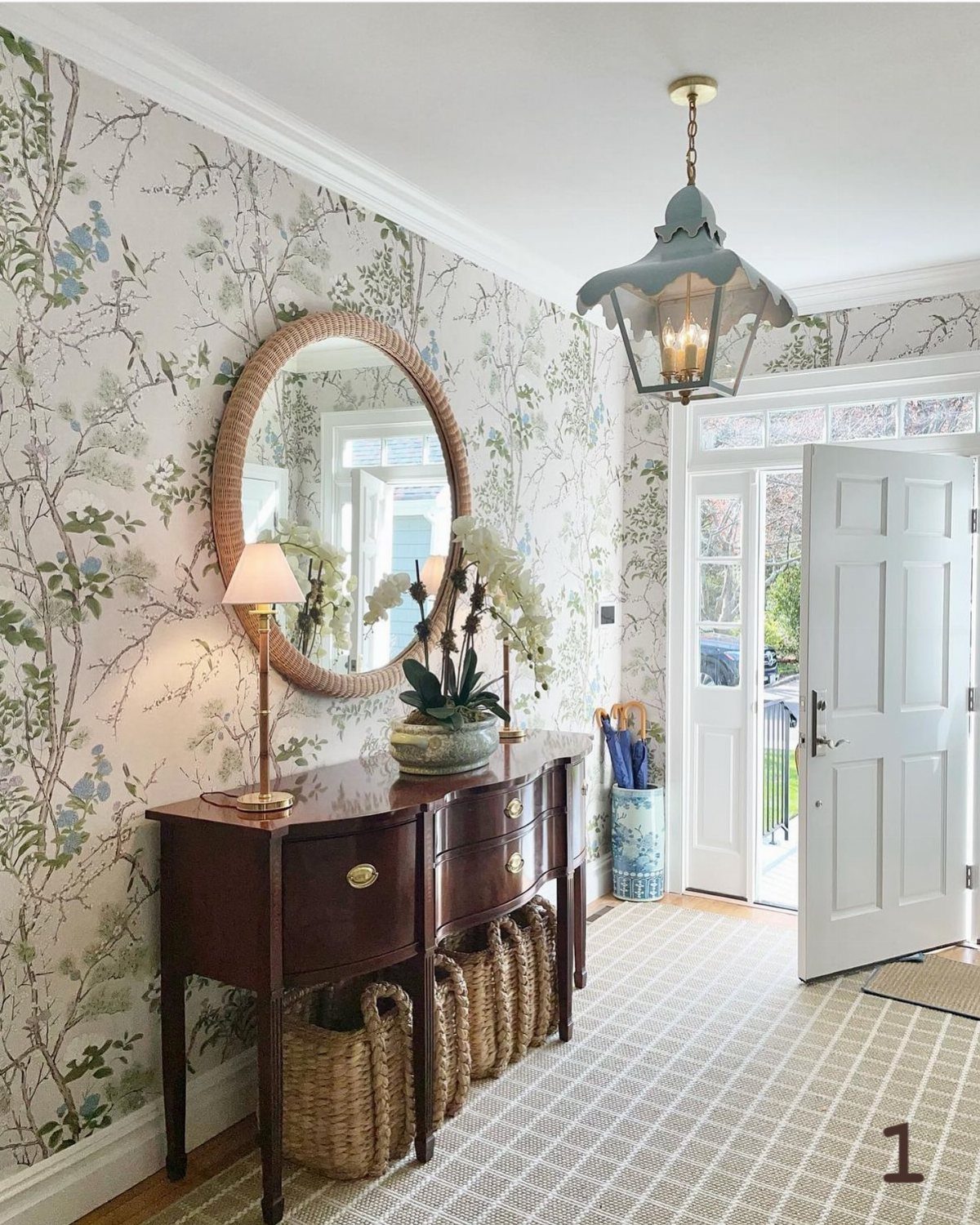
A round woven mirror above a console table catches light the way a porthole catches morning sun off the water. That is the move: pick art and mirrors that read coastal without screaming it.
I hang mirrors opposite windows when I can, since doubling the light matters more in a small rental entryway than any paint color.
For frames, rattan or light wood keeps the tone relaxed; for art, soft blues, abstract ocean prints, or textured neutrals above a console read intentional without clutter.
A single driftwood mirror carries a wall better than a cluster of smaller pieces. Glass vases with a sea-washed finish do more than a dozen themed objects.
One mirror, one piece of art, done.
2. Coastal Entryway Furniture
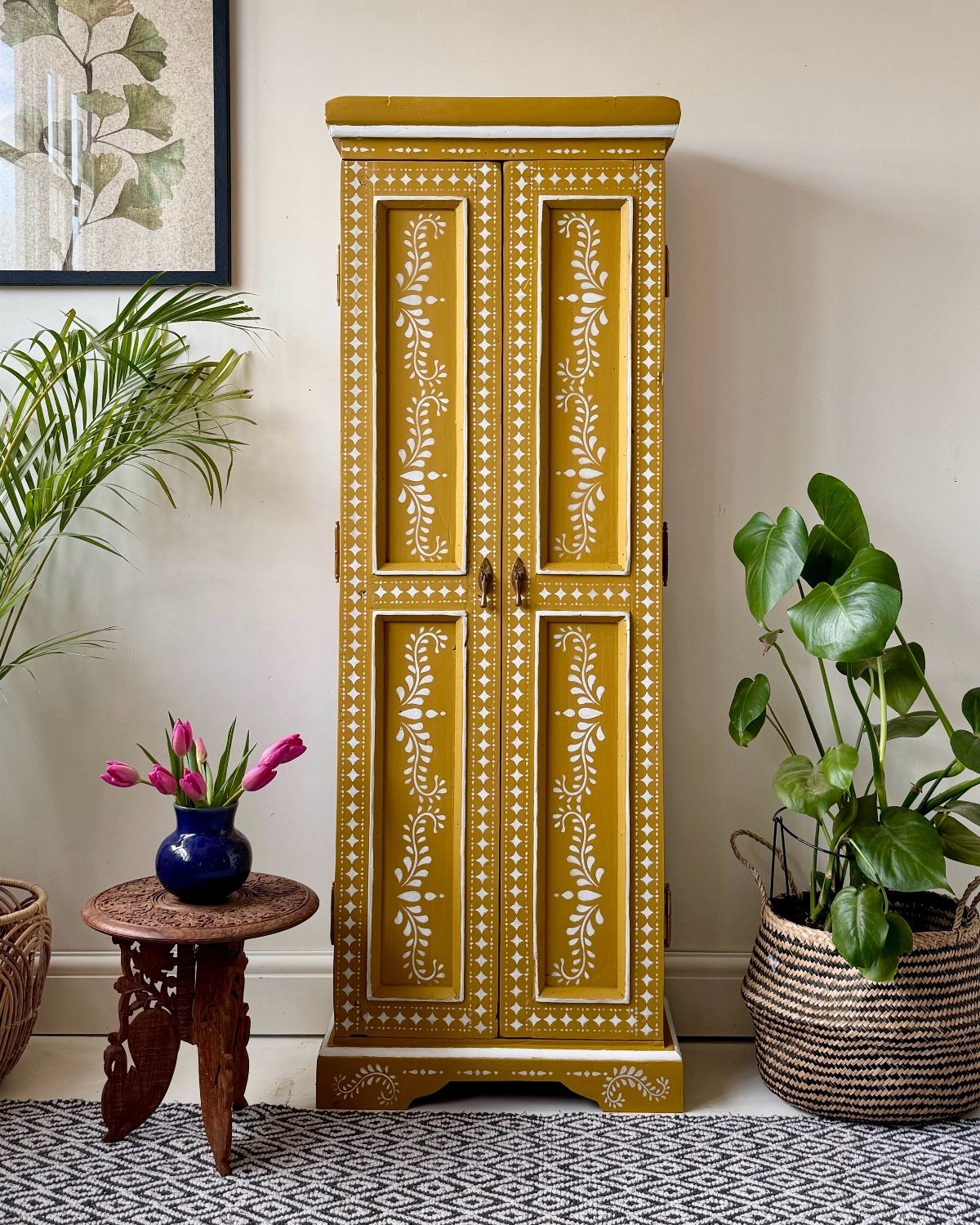
Coastal furniture can carry color without depending on blue; paint and stencils on natural wood keep the beach-house feel. Material matters more than paint: natural wood, rattan, or cane reads beach house even in ochre or coral.
I look for console tables with open legs, since air underneath keeps a narrow entryway from feeling stuffed. A solid cabinet works better when you need the storage, but a slim-legged piece leaves room to pass in a narrow entry.
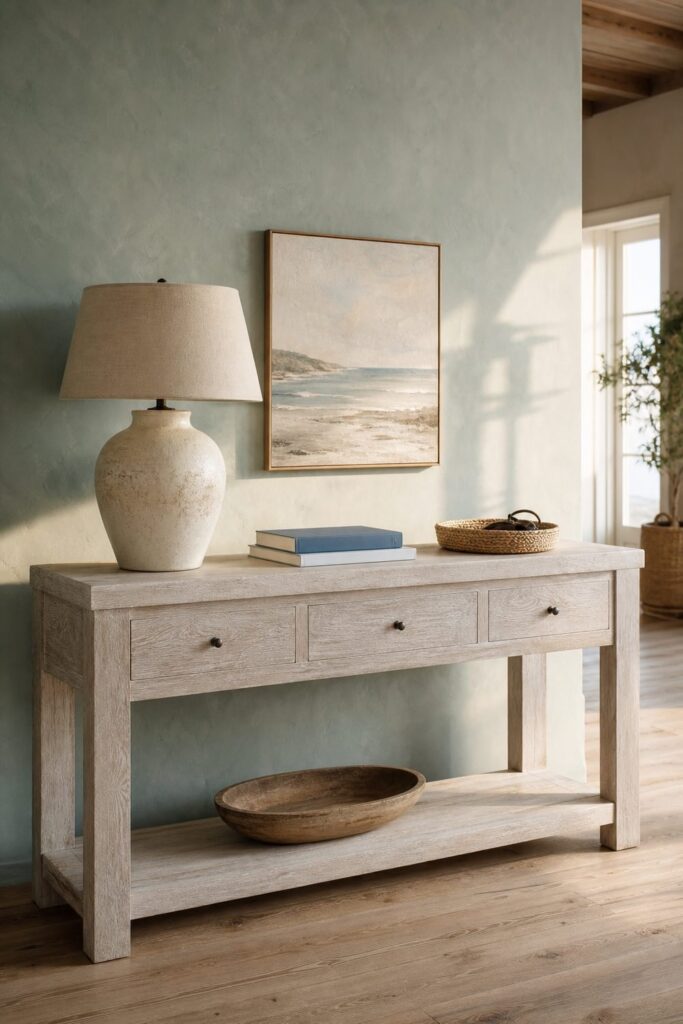
Scale beats quantity on the surface. One large lamp, one substantial vase, and the eye rests easy.
One tall piece brings more calm than a crowd of small objects.
For renters, a console on legs also lifts over baseboard heaters and uneven floors.
3. Driftwood Accents
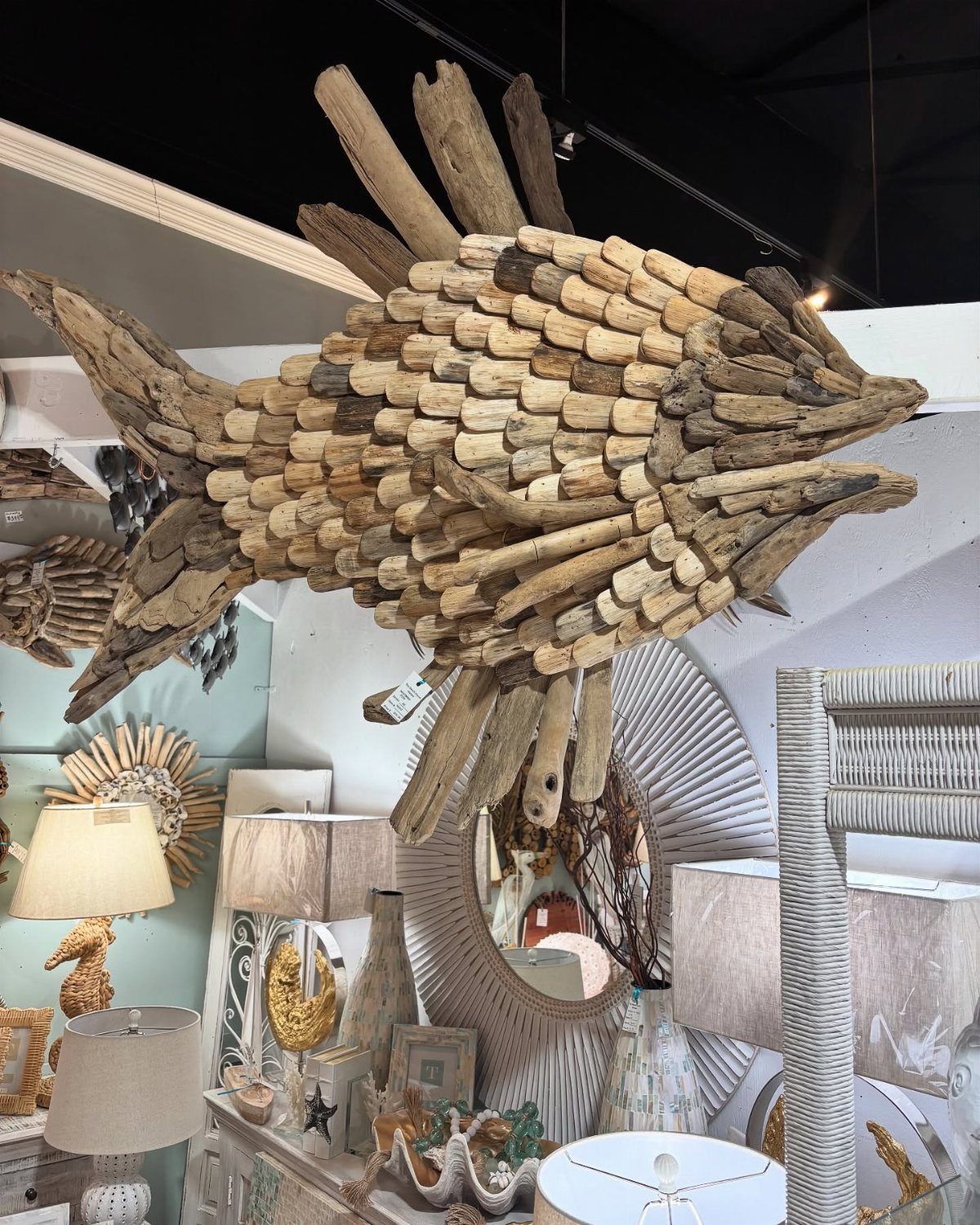
A driftwood fish sculpture is the kind of piece that stops people at the door. The material does the work: weathered gray wood, bleached by salt and sun, carries the coast without any nautical symbol needed.
Driftwood works two ways in an entry. Found pieces cost nothing but time and a good eye at the beach; finished decor, mirrors and sculptures made from collected wood, costs more but saves the hunt.
The found route means sanding, sealing with clear matte finish, and often a wire bracket to hang straight.
A mirror framed in driftwood became the center of my last entryway. The maker noted that pairing it with glass vases, plain and sea-washed in shape, completed the feeling without adding clutter.
One driftwood piece per space is enough. Two competes.
4. Coastal Color Palette
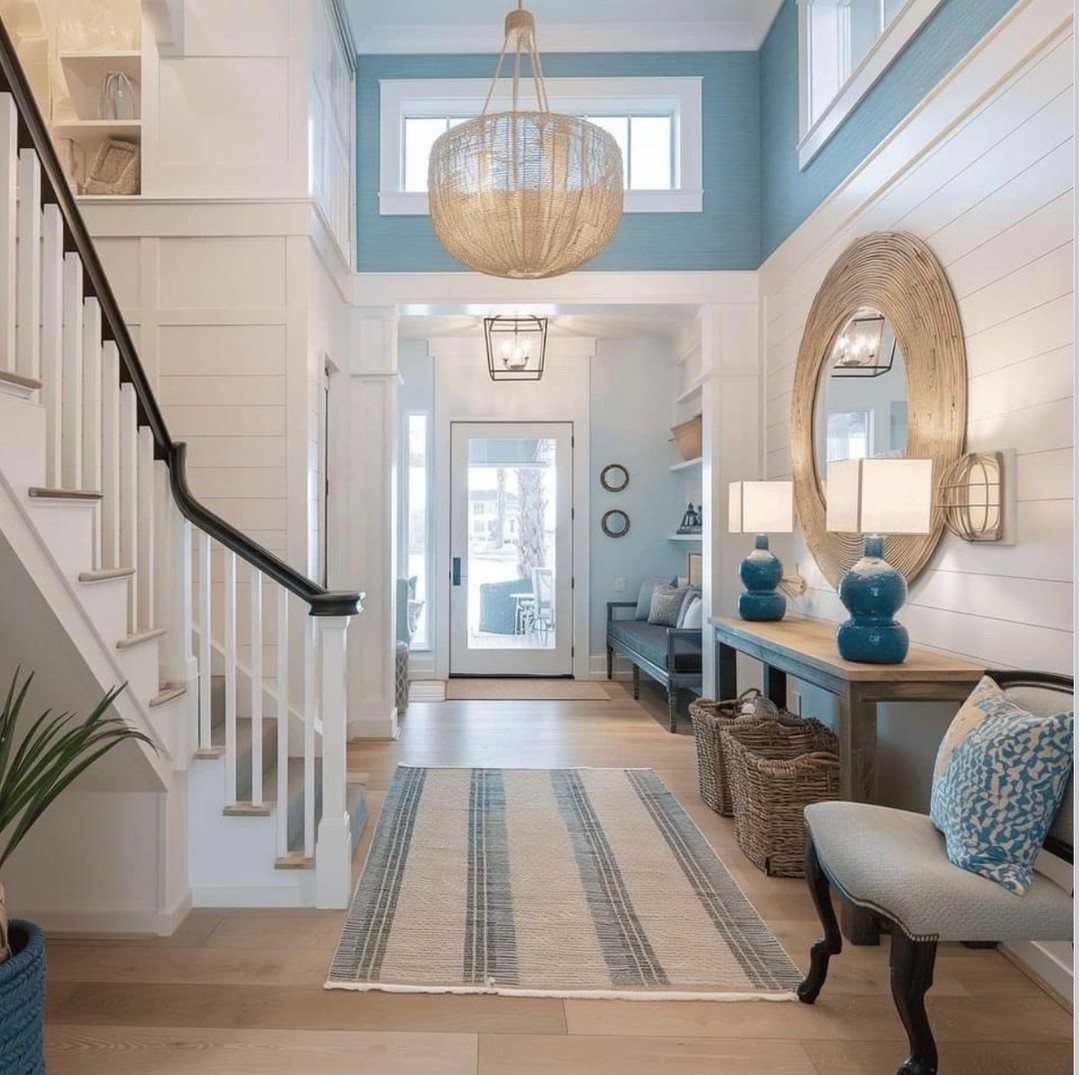
Light blue and white is the coastal palette people picture first. It works, but the better move is pulling from actual shore colors: sand, weathered gray, coral faded by sun, the green of dune grass.
I start with white or off-white walls, since rentals usually demand one or the other anyway.
Then I layer in color through objects I can take when I leave: a ceramic lamp in slate blue, a striped rug with coral thread, a garden stool in muted green.
Benjamin Moore’s "Come Sail Away" is the blue I point friends toward when they want something softer than navy.
The mistake is bright, saturated blue against stark white. Lauren Kavanagh at Hovia suggests washy watercolor tones instead, like tide pools shifting color.
Abstract wallpaper in those tones works if your lease allows it; if not, a large framed print gives the same effect with a hammer.
5. Natural Rugs
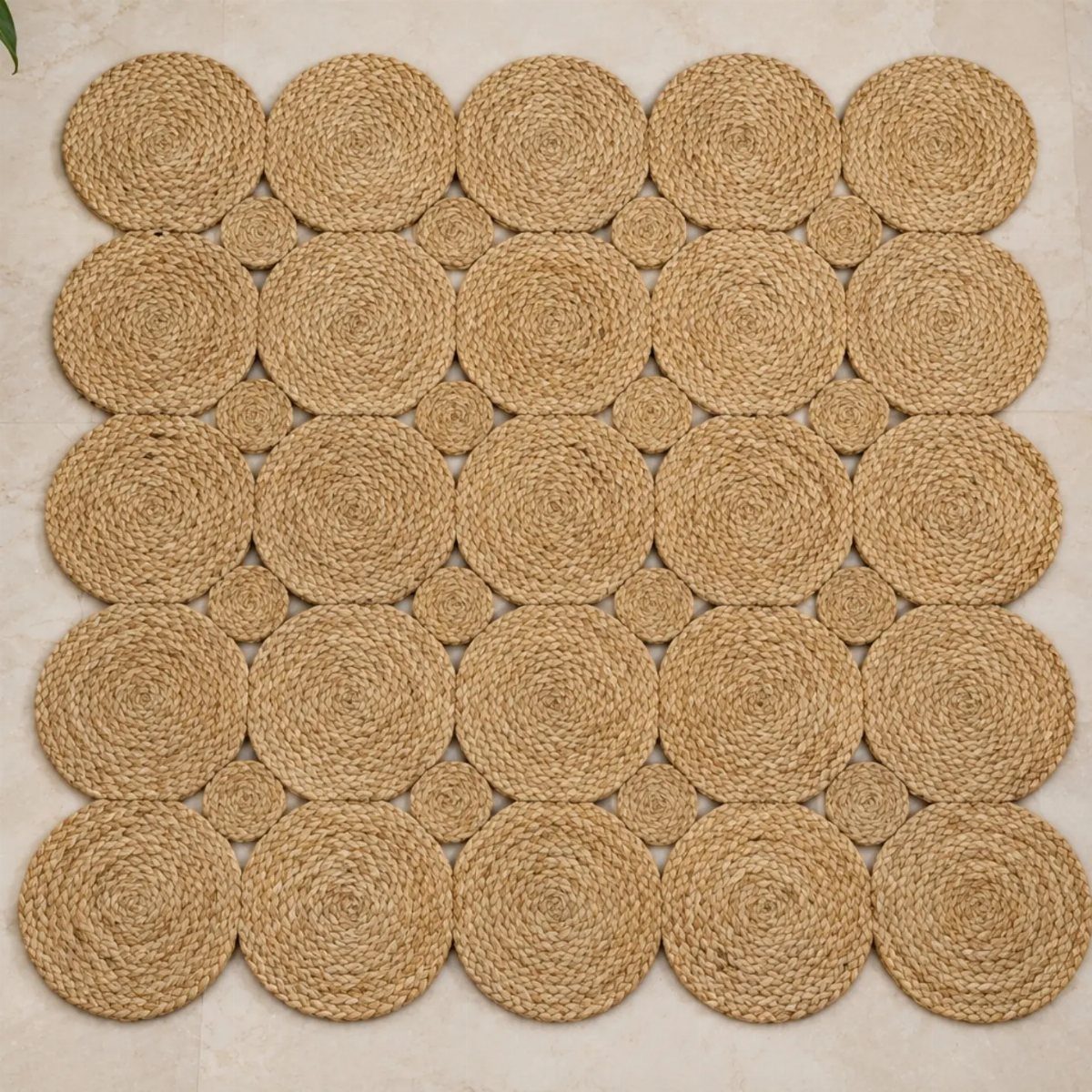
A rug made of woven jute discs, tan and rough underfoot, is the first thing that makes an entryway feel finished.
Natural fiber rugs pick up dirt, which sounds like a flaw until you realize that is exactly what an entryway rug should do.
Jute or seagrass works for the base layer, small for a narrow entry or larger for something wider. The texture hides wear, and replacement does not sting when the dog or the kids finally win.
Wool blends soften the step but need more cleaning; pure jute lasts longer and sweeps clean.
A thin pad underneath helps, since jute on hardwood can slide and scratch.
6. Layering Rugs
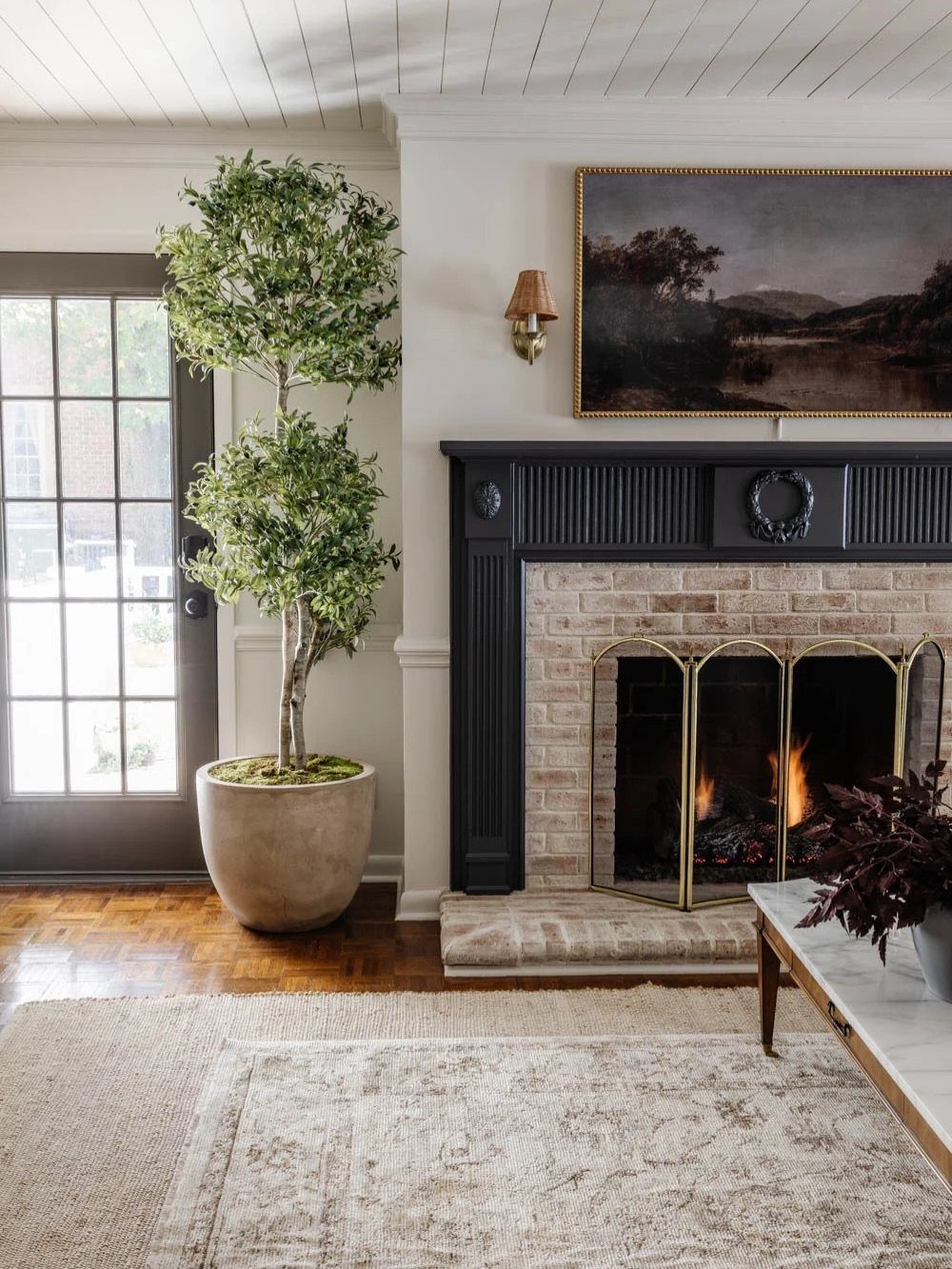
Layering rugs is the trick that looks expensive and costs almost nothing extra. A jute base, striped cotton runner on top: the combination reads coastal because it reads collected, not purchased as a set.
I start with the larger natural fiber rug, usually 2–3 inches smaller than the floor area on all sides. The top layer, a patterned runner or even a small doormat, sits centered or offset depending on what the door swing allows.
The same layering logic that works in a living room shrinks to a 3-foot hallway.
The base catches grit; the top layer adds color and takes the washing. I rotate my top rug every few months to even wear, and when one layer fails, the other still holds the space together.
Coordinating the indoor base with a striped outdoor mat at the door unifies the threshold without matching exactly.
7. Open, Airy Feeling
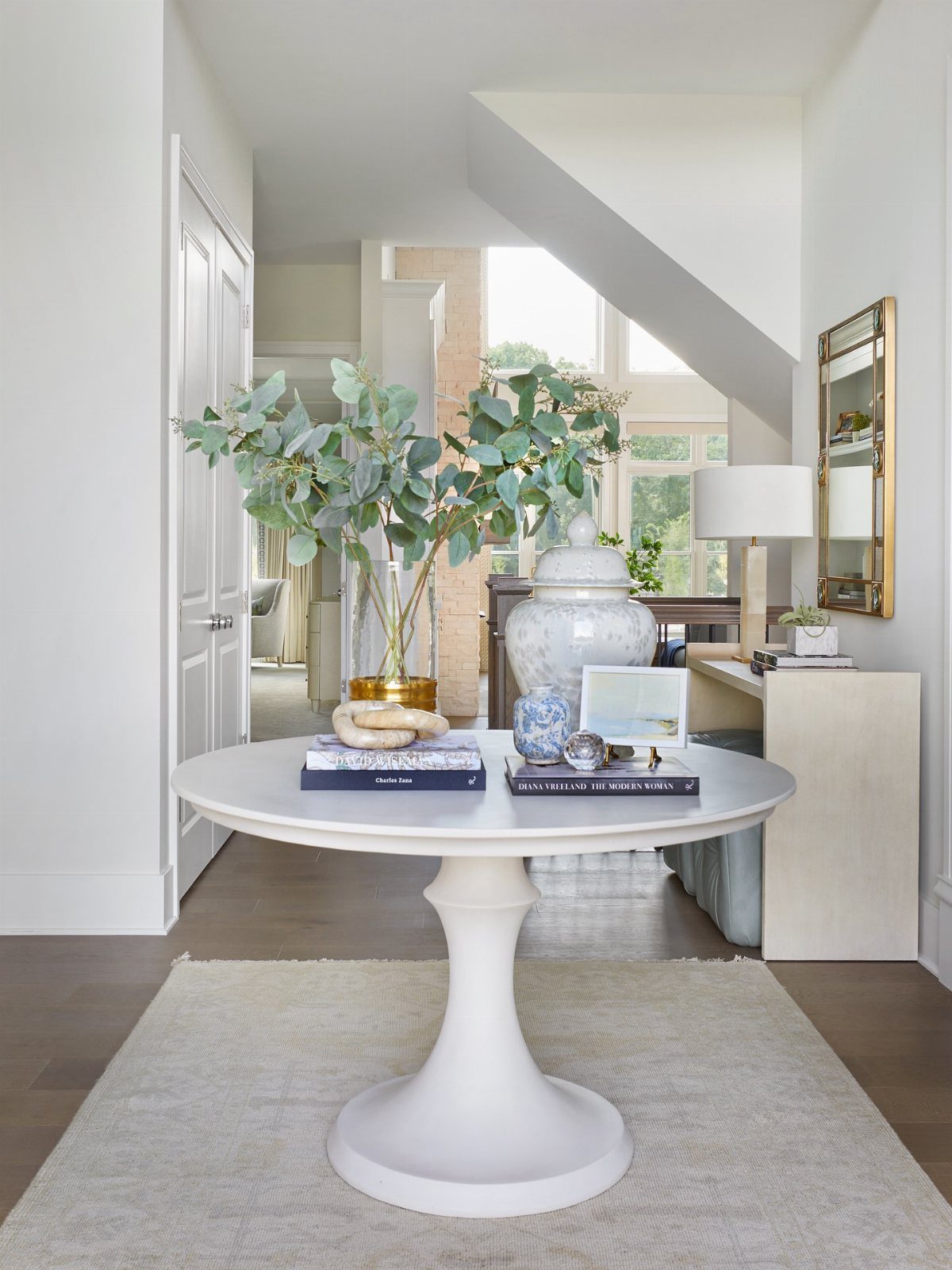
A bright entryway reads coastal before a single shell appears. White walls bounce light around, and a pedestal table keeps the floor clear so the eye travels straight through.
An almost-empty surface reads calmer than a styled one: a vase of eucalyptus, a stack of books, nothing else. If your entrance feels cramped, a mirror opposite any window doubles what light you have.
For dark foyers without overhead fixtures, a table lamp on a slim console does more than brighten; it slows people down so they don’t rush past.
This suits renters who can’t add windows. That openness takes discipline; every flat surface invites mail, shoes, bags.
A small bowl for keys is the only clutter I allow.
8. Seamless Indoor-outdoor Flow
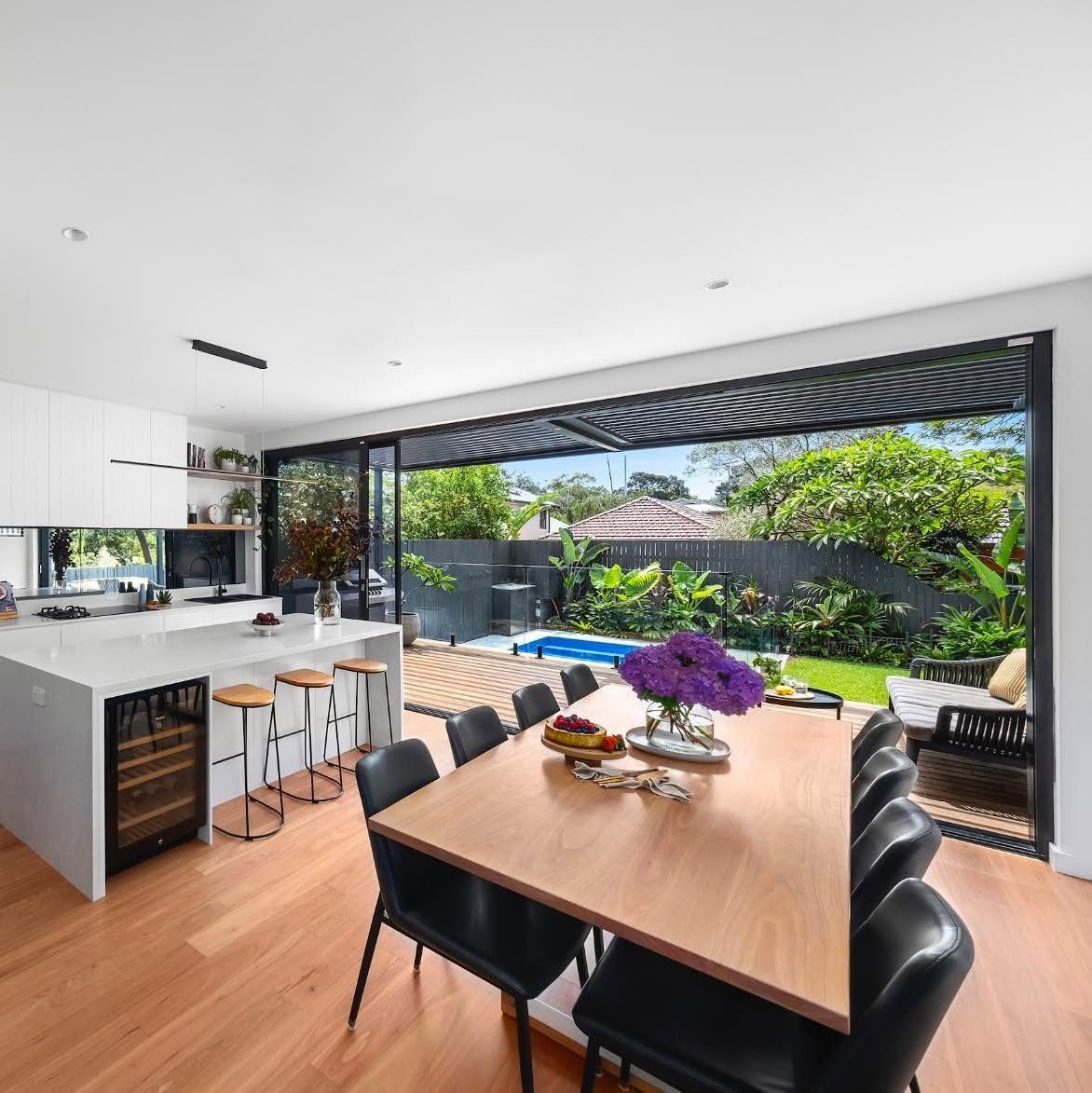
The best coastal homes erase the line between porch and hall. Matching tones do the heavy lifting: blue planters outside, a woven tray inside, the same pale wood under both sets of feet.
A wall that folds entirely away erases the line between inside and out better than any paint color. The pool became a reflecting pond for the kitchen.
Most of us won’t rebuild walls, but paint and repetition work on any budget. Echo your front door color on a bench cushion, or carry the same terracotta from outdoor pots to an indoor stool.
Renters with concrete stoops can still link spaces through color. The risk is overmatching; two or three shared notes beat a full set.
9. Coastal-themed Pillows
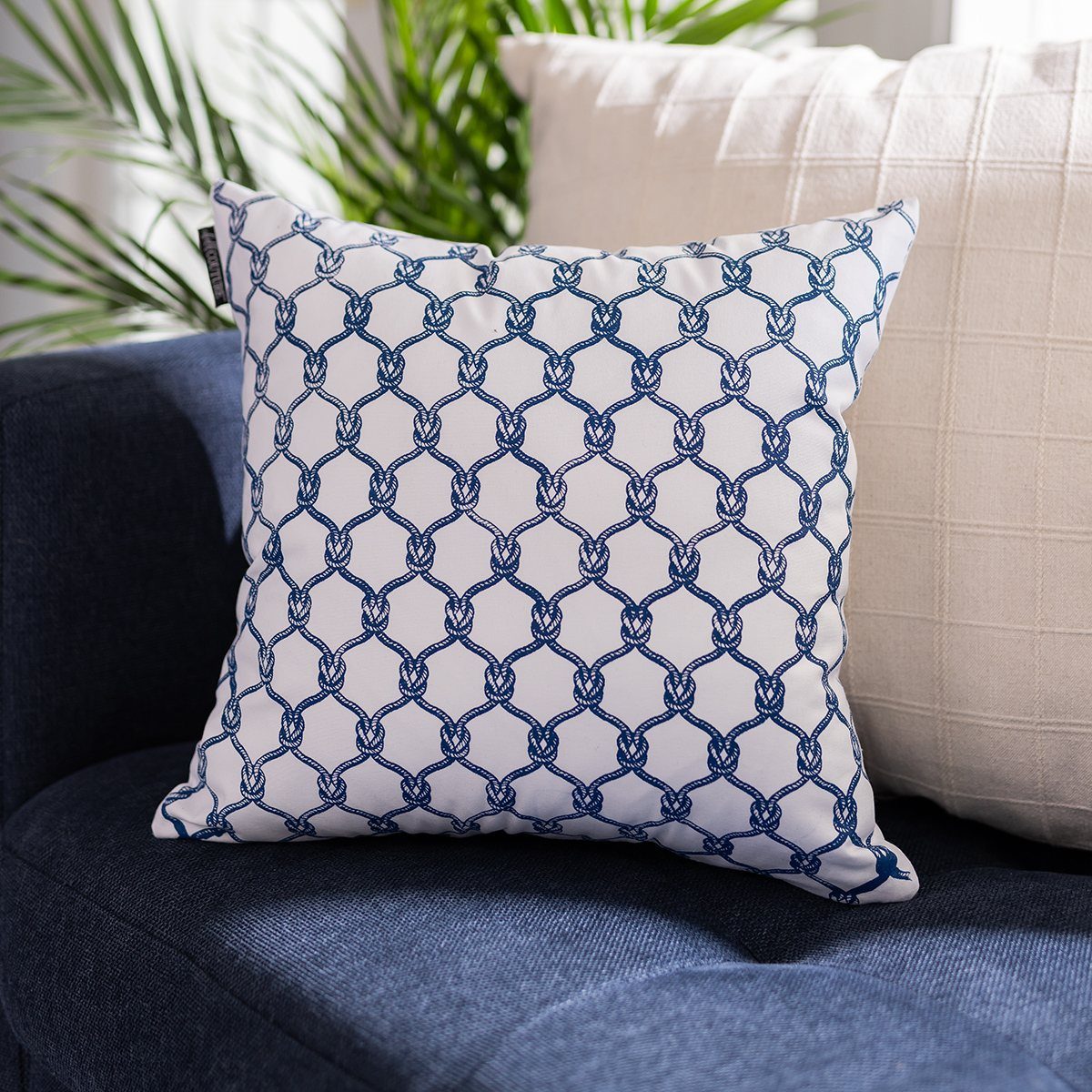
Pillows soften hard entryways fast. A rope-knot print on white cotton nods to sailing without shouting beach house, and the texture hides the wear of actual sitting.
I move mine from room to room rather than buying new. The blue ones from my sofa winter in the hall bench; cream neutrals from the bedroom fill gaps.
For a tight budget, two pillows do the work of four if you flip them seasonally.
Washable covers matter here. Entryway pillows collect more dirt than living room ones.
I’d pick a hidden zipper and a cotton or linen blend that launders flat. This works best if your entry has a seat; without one, pillows read as clutter on a console.
10. Gold Chandelier and Sconces
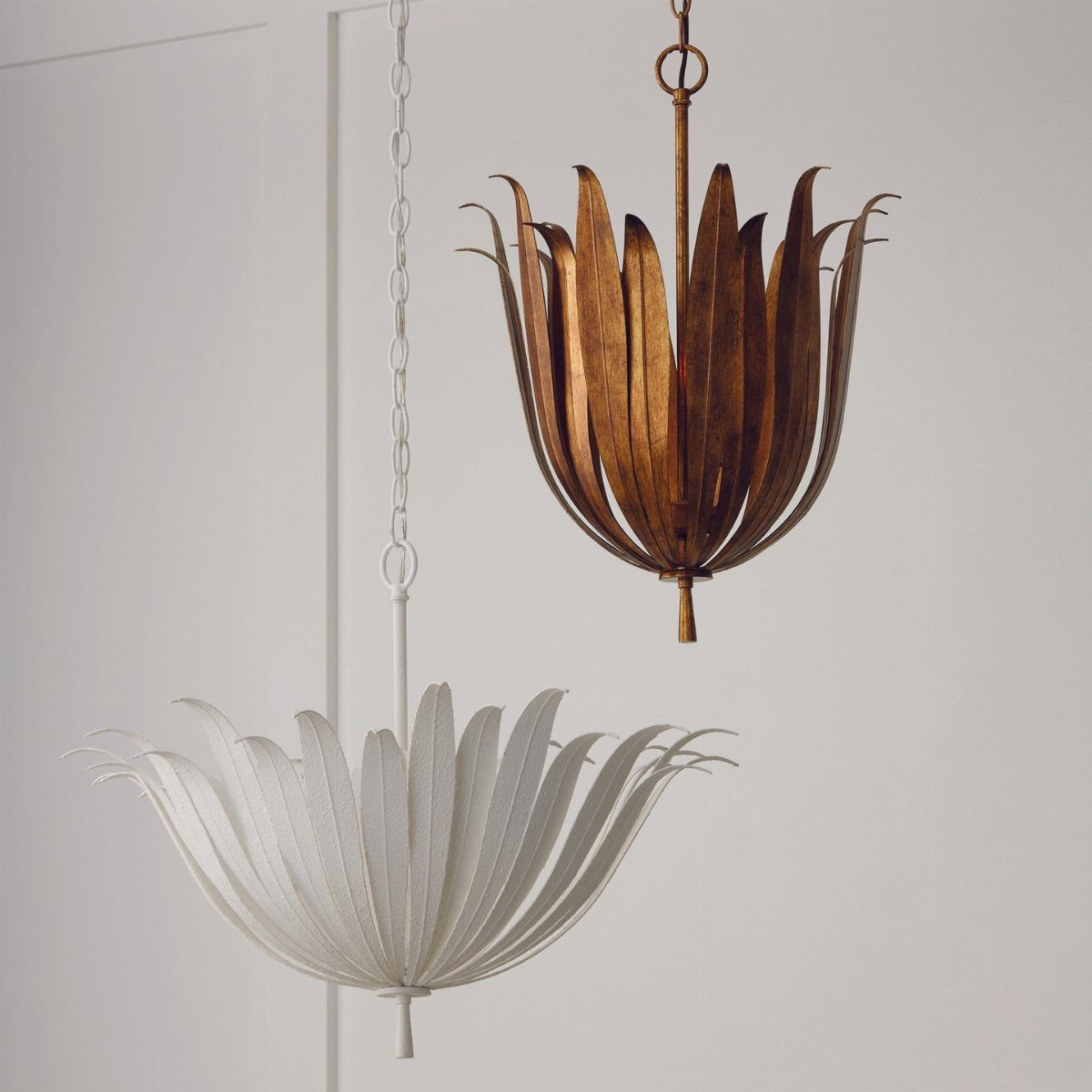
Gold fixtures warm up coastal white without turning brassy. Two petal pendants at different finishes, one gold and one white, layer interest at the ceiling where most entryways go bare.
I rely on sconces when natural light fails. A pair flanking a narrow hall brightens the full length, and the metal reflects what daylight does arrive.
For rentals without hardwired options, plug-in sconces with cords painted to match the wall work nearly as well.
This choice trades simplicity for glow. One statement pendant is easier; layered lighting is better in dark spaces.
I’d spend here if the entry feeds a long corridor, skip it for a single bright room.
11. Wood-Toned Console with Poufs
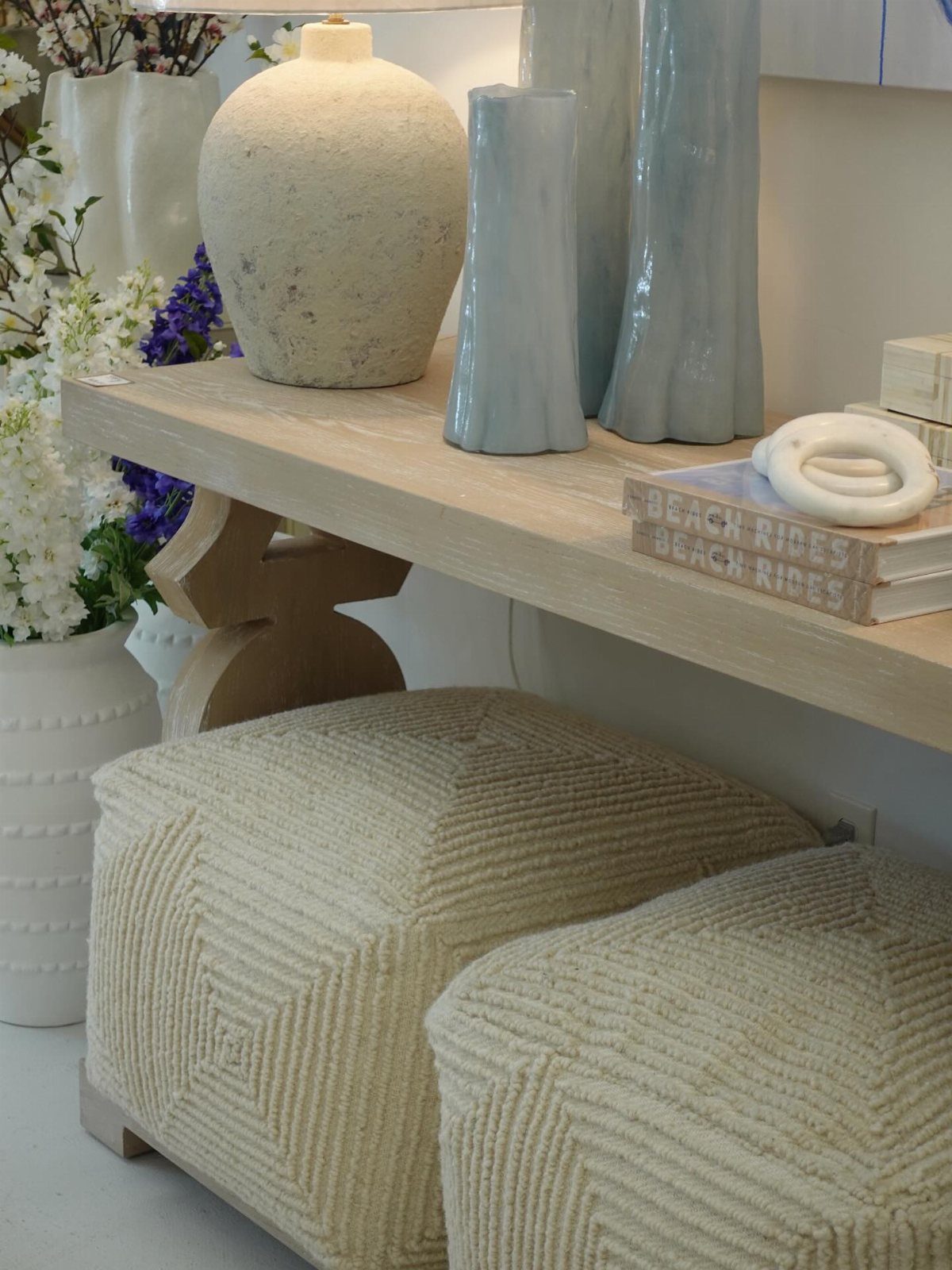
A wood console with poufs underneath solves two entry problems: surface for keys, seating for lacing shoes. The light tone keeps the visual weight low, and cream textured poufs tuck away when the path needs clearing.
Ceramic vases in soft blue and cream suit a warm wood finish without competing. I arrange odd numbers, varying height, and leave breathing room.
Books stacked flat raise a small object to eye level without costing shelf space.
Poufs wear faster than benches; the fabric here is forgiving but not eternal. I’d replace them every few years rather than buy stiff ones that nobody uses.
Best for households where people actually sit to remove boots, not for purely decorative entries.
12. Coastal Entryway Table
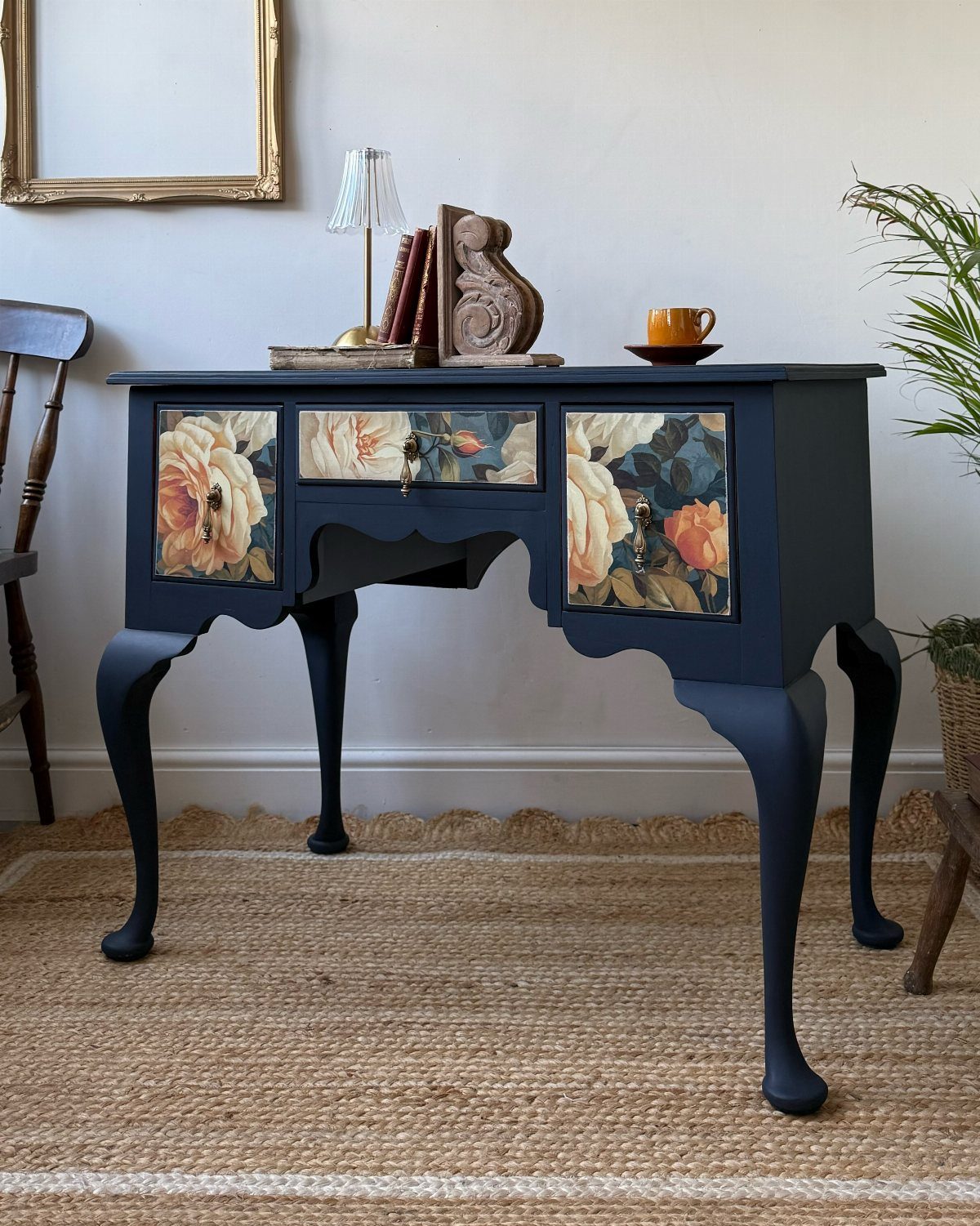
A painted console with patterned drawers anchors an entry with personality. A deep blue base hides scuffs, and drawers with pattern let the top stay almost bare.
Ana White’s plans adapt well; a few alterations turn the standard build into something that fits a specific space. If you’re buying, look for cane, rattan, or whitewashed wood to keep the coastal airiness.
The surface needs only three things: a lamp for light, a tray for keys, one piece that changes with the season.
Overfilling is the common mistake. This table suits someone who wants a landing pad, not a display case.
Refresh it quarterly; a new book, a different vase, keeps the entry from going stale without spending much.
13. Natural Textures and Materials
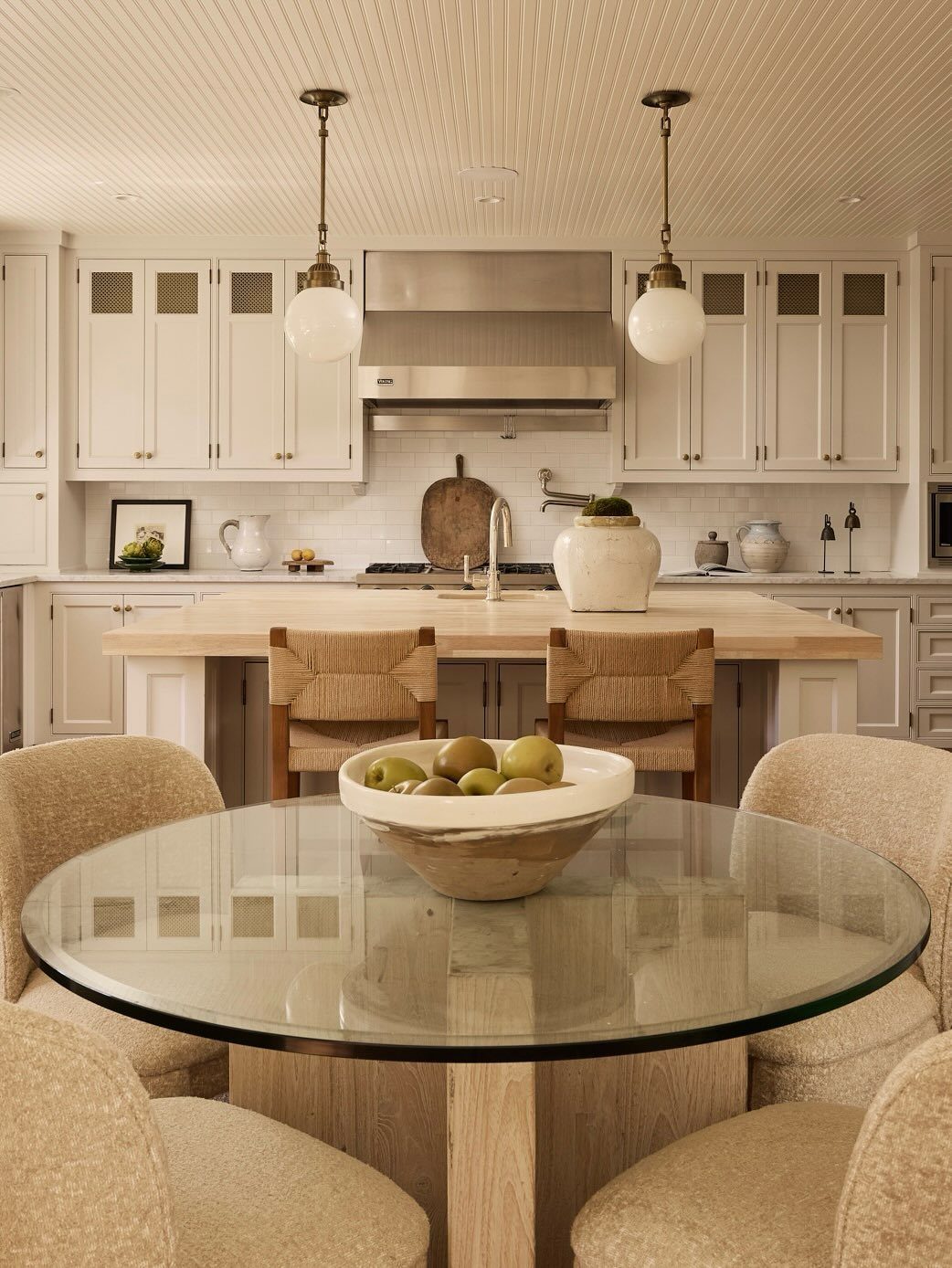
Wood, rattan, and woven textures bring the outside in without trying too hard. A seagrass bin under the console hides leashes and dog wipes; a belly basket corrals shoes.
A wooden base with woven rattan stools against a glass top hits the right balance: one natural material against a cleaner surface so the room doesn’t turn into a craft fair.
Faux eucalyptus stems or a small olive tree finish it. Real plants die in my entryway from light that barely reaches the hall; the fake ones keep the color and skip the guilt.
This works best when you already own one piece in the wrong finish. Paint the metal frame, keep the woven seat, and the room reads coastal without a full replacement.
14. A Spot to Sit
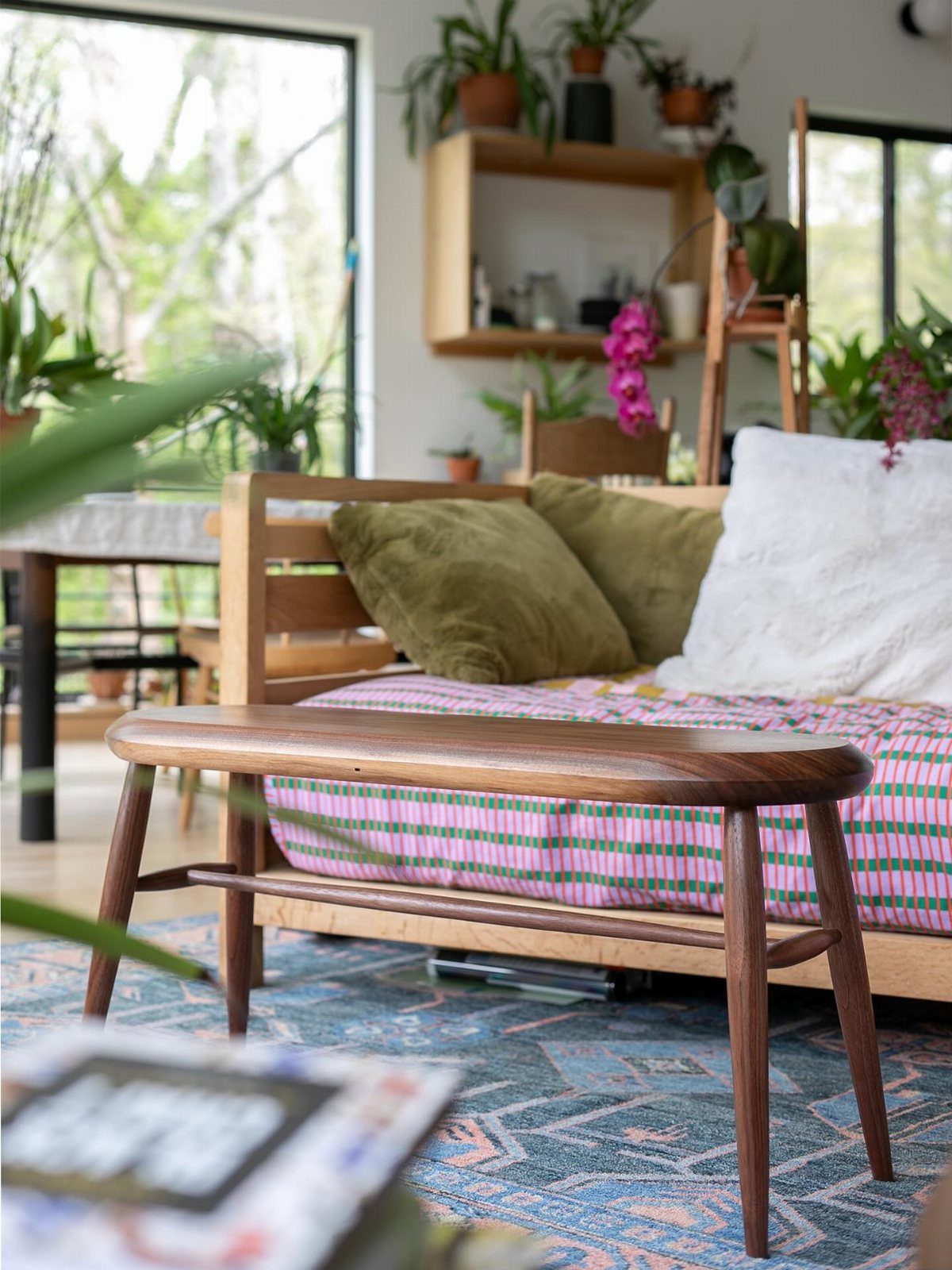
A bench or stool in the entry means guests can unlace boots without hopping on one foot. A folding stool or upholstered cube does the same job as a daybed in half the footprint.
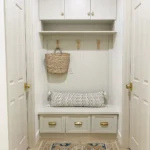
I like a built-in bench when the wall allows it; the storage underneath swallows reusable bags and out-of-season hats. For renters, two small ottomans under a console slide out only when needed and count as seating in a pinch.
Traffic flow matters more than seating depth in a narrow hall. A bench under 15 inches deep leaves room to pass in a standard hall; anything deeper blocks the door swing.
Measure before you buy, and test the path with the door fully open.
15. Coastal Entryway Decor Updates
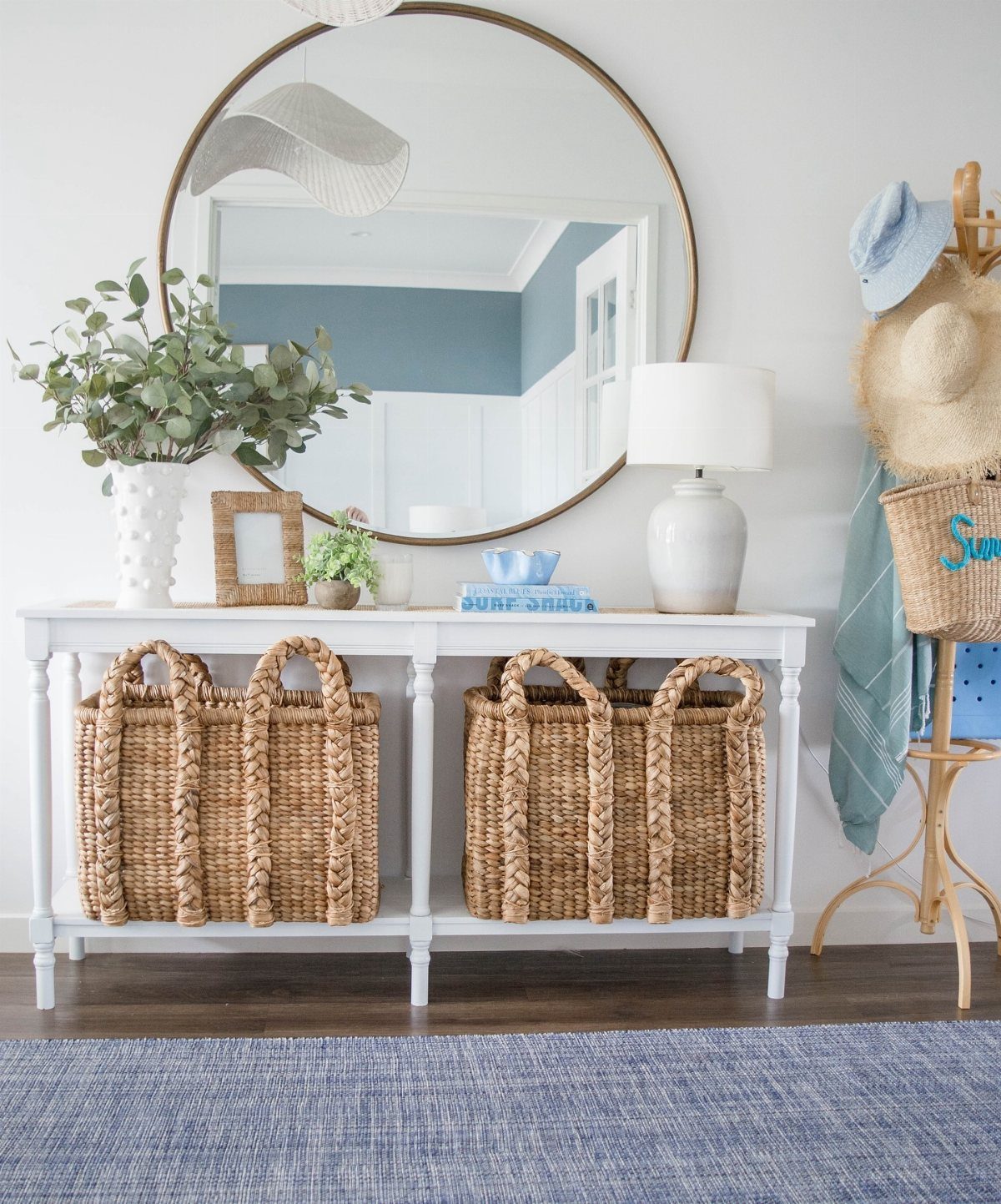
Small swaps keep an entry from going stale without touching the layout. Moving a piece from the bedroom or living room costs nothing and reads as new in different light.
I evaluate what stays by whether it still functions. The shape was right; the finish just needed company.
A new tray for keys, shifted artwork, or a different ceramic vase shifts the mood if you shop what you own first.
This suits the person mid-project who is tired of the same view. It trades the satisfaction of a full redo for a weekend’s work and a grocery-trip budget.
16. Functional Hooks
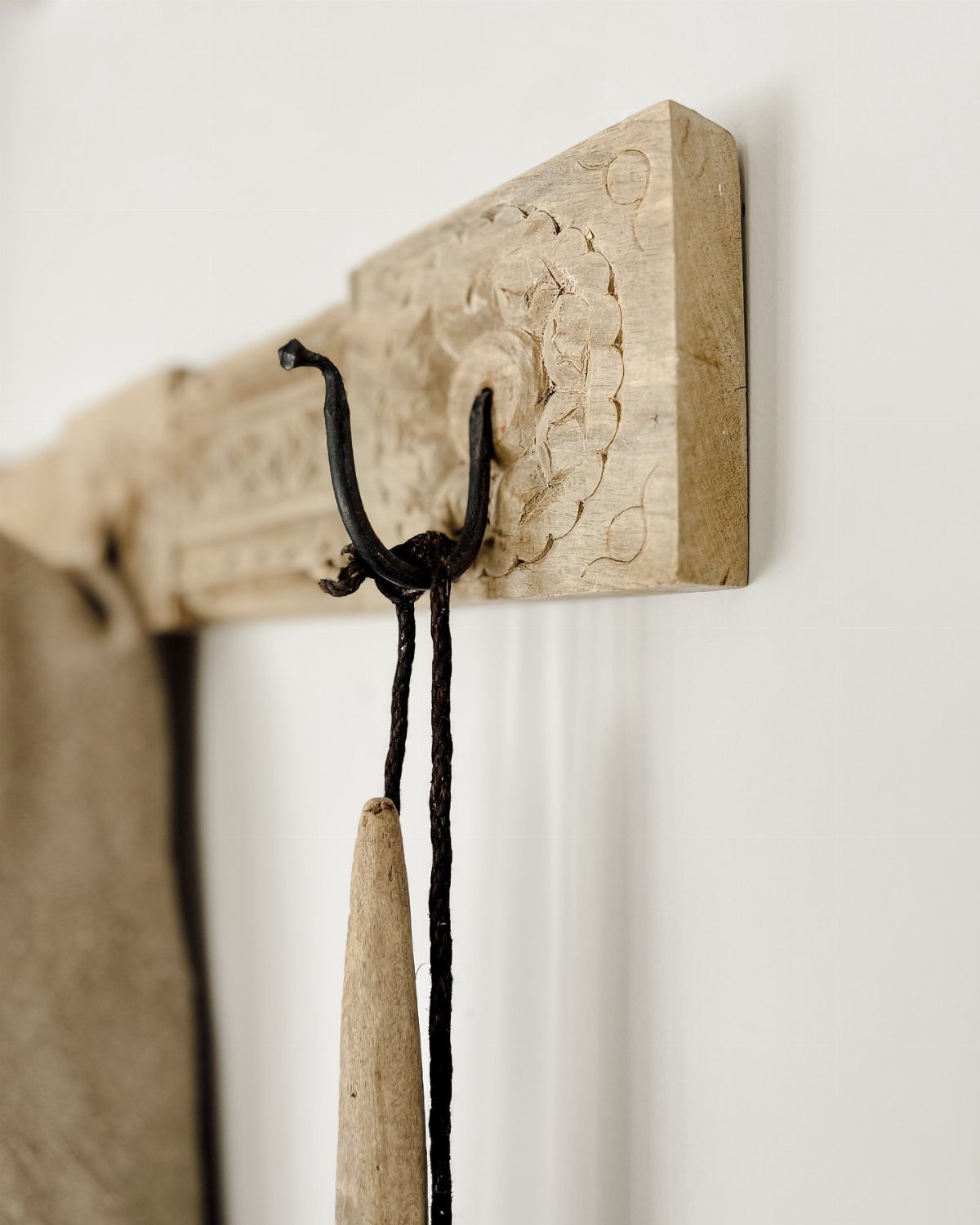
A single hook keeps a coat from the back of the sofa; a row of them replaces the chair pile entirely. One black metal hook as accent is enough hardware for a bag and a light jacket.
I mount hooks high for adult coats and a second row lower for kids’ backpacks. In a rental, a leaning coat rack or over-the-door hardware skips the drywall patch later.
Carved detail adds the coastal note without a shell motif.
This is the first upgrade to make when clutter wins. One hook by the door beats a decorative bowl that swallows keys and nothing else.
Creating a Welcoming Atmosphere
Light, airy designs with natural materials and colors set the tone for a calming entryway that actually welcomes guests. I focus on measured updates rather than piling in furniture or decor.
Editing, texture, and scale matter more than quantity; the layout stays clear and functional that way.
Repeating materials, finishes, and color choices from room to room supports continuity. The entry can signal what the rest of the home holds without demanding square footage it does not have.
A pale blue runner, one pillow, or a framed print nods to the water without repainting a wall. Underfoot, a jute or sisal weave gives long hallways the texture and toughness they need.
A round mirror breaks up all those straight door frames and bounces daylight deeper into the hall.
Kathy Kuo, interior designer and CEO of Kathy Kuo Home, says coastal-style entryways that integrate environmental elements ‘echo the calm feeling of spending time by the ocean’ – a feeling that truly can’t be beat.
Balancing Style and Functionality
Practical storage and style can share the same entry. Lidded baskets corral the mess of daily life and still read beach-house relaxed.
Tucked beneath a console, a belly basket holds shoes or dog leashes without looking like a storage unit.
A pendant or wall sconce draws the eye up and leaves the floor clear for traffic. For fixtures, I look to woven shades, beaded chandeliers, or metal with a warm brass tone.
A wide foyer can take a bench, ottomans, shelving, and a console without choking the walkway. A tight entry needs editing: maybe one bench and a single basket.
A table lamp or chandelier layers light where overhead fixtures fall short. I would pick a woven shade for a small entry; it diffuses light without visual weight.
Using Natural Elements
Natural textures and materials are what make coastal style feel relaxed rather than decorated. On tile or wood flooring, they soften the space while adding color and pattern.
Woven baskets are the most useful natural element in an entry. I use them for leashes and dog wipes.
A seagrass bin under a console hides clutter without looking like storage.
An olive tree or eucalyptus stems make the space feel alive without the maintenance. The texture matters more than whether it is real.
Layering natural materials, a rug under a woven basket under a console, builds depth without adding objects. The entry stays functional because every piece works.
Updating Existing Decor
Swapping a lamp, a rug, or the console top shifts the mood while the bones stay put.
These changes work because they repeat what is already there rather than introducing contrast.
Frequently Asked Questions
What are some ideas for a beachy entryway?
Natural materials, a coastal color palette, and functional decor create the right atmosphere. A jute or seagrass rug sets the base, one piece of driftwood or rattan adds texture, and surfaces stay nearly bare so the space breathes.
A round woven mirror opposite a window doubles the light, which matters more than any shell or anchor motif.
What is the best color palette for a coastal entryway?
Soft blues, greens, sandy beiges, and warm whites work best, pulled from actual shore colors rather than bright navy against stark white.
I start with white or off-white walls, then layer in slate blue, coral, or muted green through objects I can take when I leave.
For a blue that reads tide pool instead of theme park, Benjamin Moore’s "Come Sail Away" sits softer than navy without washing out.
How do I keep my entryway looking tidy?
Baskets and hooks do the heavy lifting. I mount one hook by the door for bags and a light jacket, and I allow only a small bowl for keys on any surface.
Every flat surface invites mail and clutter, so discipline matters more than storage volume.